

Cells of the adult human heart
Open accessThe DOI matches its Crossref record; 115 of the 115 references it cites were found in a registry or an index.
Abstract
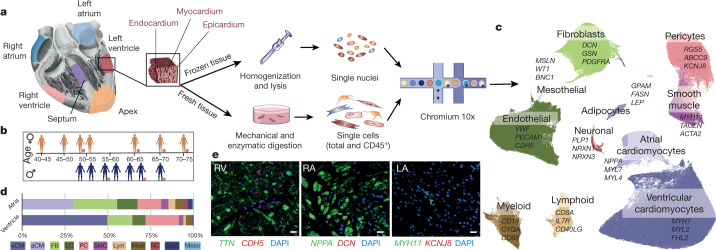
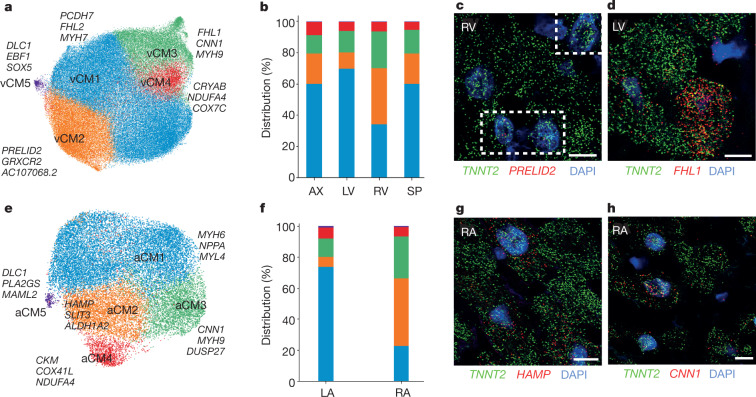
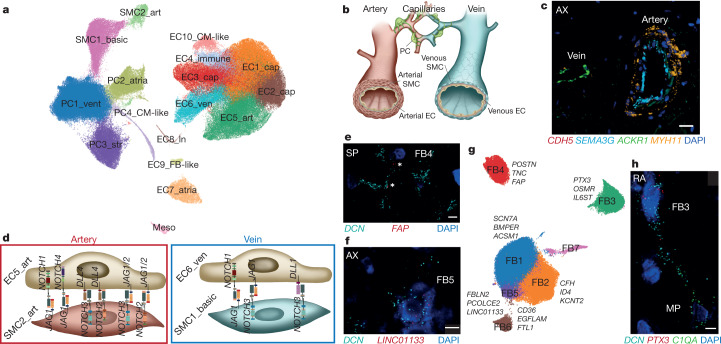
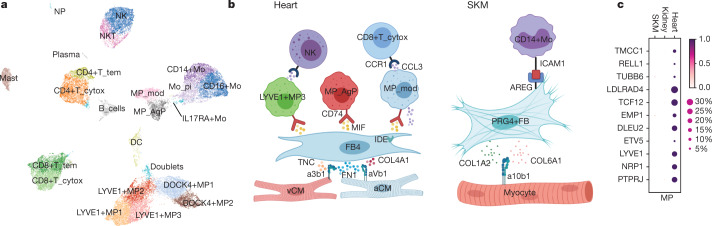
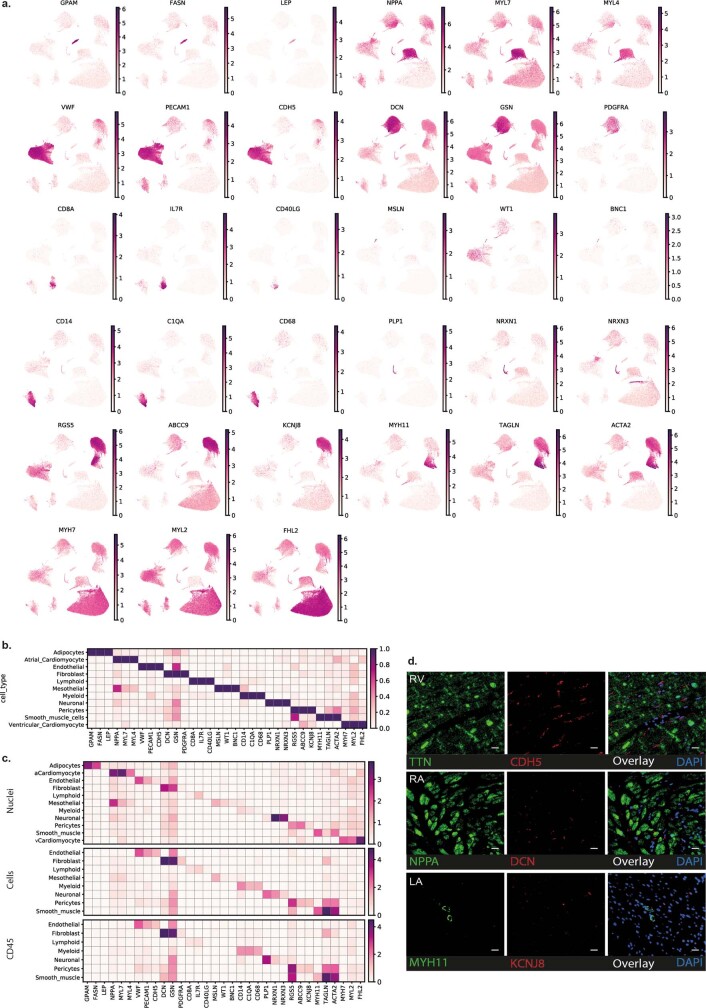
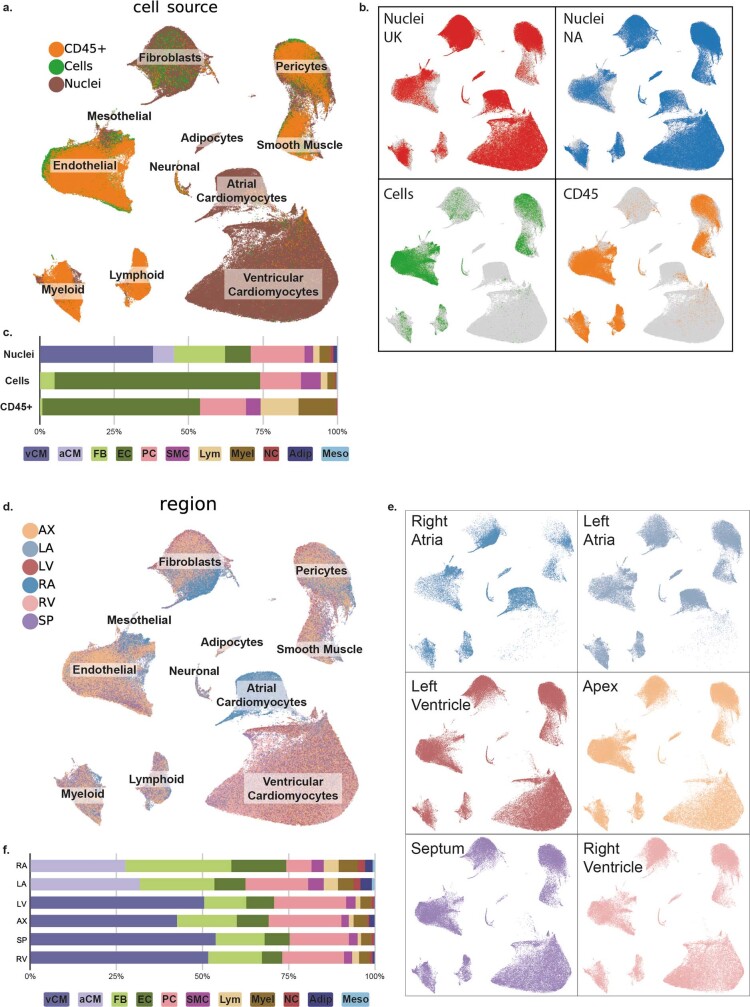
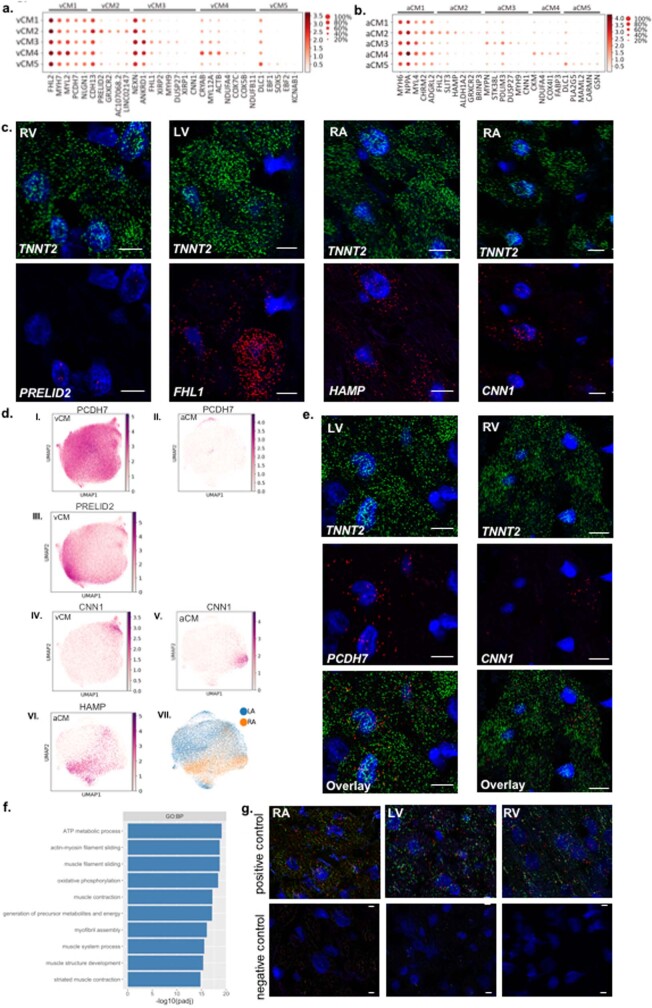
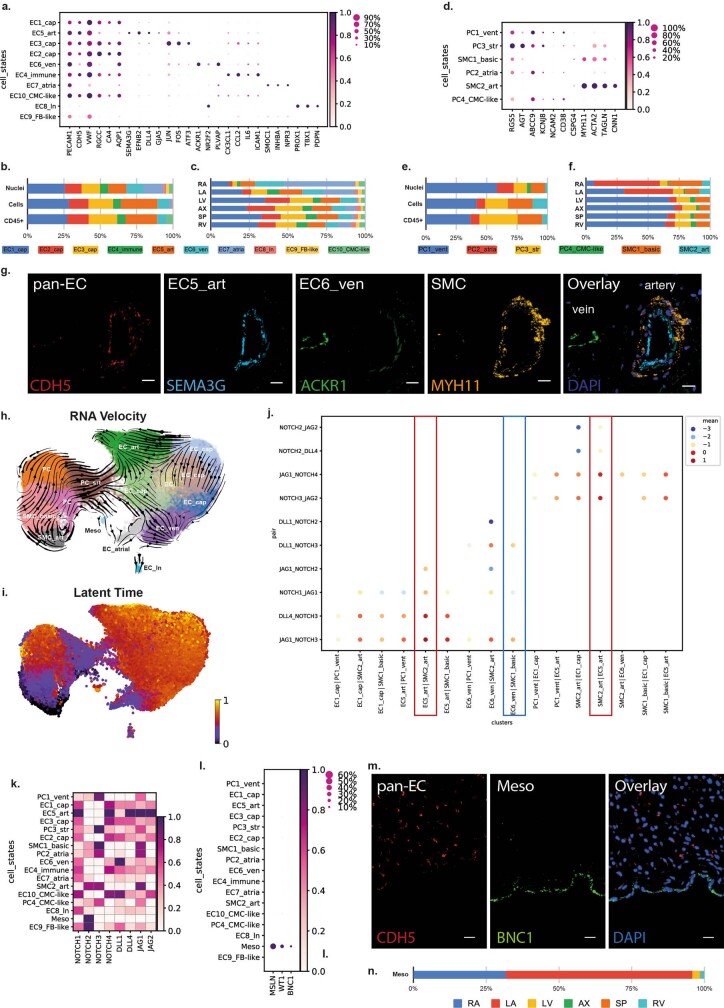
Cardiovascular disease is the leading cause of death worldwide. Advanced insights into disease mechanisms and therapeutic strategies require a deeper understanding of the molecular processes involved in the healthy heart. Knowledge of the full repertoire of cardiac cells and their gene expression profiles is a fundamental first step in this endeavour. Here, using state-of-the-art analyses of large-scale single-cell and single-nucleus transcriptomes, we characterize six anatomical adult heart regions. Our results highlight the cellular heterogeneity of cardiomyocytes, pericytes and fibroblasts, and reveal distinct atrial and ventricular subsets of cells with diverse developmental origins and specialized properties. We define the complexity of the cardiac vasculature and its changes along the arterio-venous axis. In the immune compartment, we identify cardiac-resident macrophages with inflammatory and protective transcriptional signatures. Furthermore, analyses of cell-to-cell interactions highlight different networks of macrophages, fibroblasts and cardiomyocytes between atria and ventricles that are distinct from those of skeletal muscle. Our human cardiac cell atlas improves our understanding of the human heart and provides a valuable reference for future studies.
Overview
The claims and statistics of this paper haven’t been checked yet.
Free: it reads the open-access text and checks the first 5 claims that cite a source we can check. Create a free account to check every claim.
Integrity signals
Registry
Cites
Statistics
Figures
Verification
Claims the paper makes
The claims and statistics of this paper haven’t been checked yet.
Free: it reads the open-access text and checks the first 5 claims that cite a source we can check. Create a free account to check every claim.
Claims other papers make about this one
Each is checked against this paper’s own text: does it say what the citing paper says it does?
The cited source doesn’t support the claim as written.
In the citing paper
“However, these studies rely on nuclear RNA information and lack cellular transcriptomic, epigenetic and proteomic profiling information necessary to obtain a granular picture of the precise immune and fibroblast populations that emerge in the failing human heart and collaborate to drive cardiac fibrosis.”
From Targeting immune–fibroblast cell communication in heart failure (2024) · cites this paper as [21]
Checked by a reasoning model — may be wrong.
Experimental — accuracy not yet measuredThe source backs part of the claim, not all of it — or backs it for a different population, condition or comparison.
In the citing paper
“The monocyte and macrophage lineage constitute the most abundant immune cell population in the hearts of healthy adults and under myocarditis conditions”
From Autoimmune Myocarditis, Old Dogs and New Tricks. (2024) · cites this paper as [106]
Experimental — accuracy not yet measuredThe source backs part of the claim, not all of it — or backs it for a different population, condition or comparison.
In the citing paper
“Interestingly, Geneformer was able to distinguish central versus peripheral factors in the N1-dependent network with fine-tuning on this very minimal data to a better degree than the alternative methods’ predictions trained on the larger dataset of ~30,000 ECs32, demonstrating the strength of pretraining in enabling predictions from increasingly limited data (Fig. 4d, Extended Data Fig. 9b).”
From Transfer learning enables predictions in network biology (2023) · cites this paper as [32]
Experimental — accuracy not yet measuredThe source backs part of the claim, not all of it — or backs it for a different population, condition or comparison.
In the citing paper
“Again, Geneformer significantly boosted the ability to predict central versus peripheral factors compared to alternative methods (AUC 0.81) (Fig. 4a, Extended Data Fig. 8e).”
From Transfer learning enables predictions in network biology (2023) · cites this paper as [32]
Experimental — accuracy not yet measuredThe cited source says what the claim attributes to it.
In the citing paper
“Numerous single-nucleus RNA sequencing (snRNA-seq) studies have investigated the healthy and failing human heart18–22.”
From Targeting immune–fibroblast cell communication in heart failure (2024) · cites this paper as [21]
1 more claim about this paper
Create a free account to see every claim other papers make about this one.
Self-check
Percentages, sums and reported differences re-computed from the paper’s own numbers.
The self-check needs the paper’s full text.
Citations
Cites
Fiji: an open-source platform for biological-image analysis
Schindelin, J., Arganda-Carreras, I., Frise, E., Kaynig, V., Longair, M., Pietzsch, T., Preibisch, S., Rueden, C., Saalfeld, S., Schmid, B., et al. (2012) · Nature Methods · doi:10.1038/nmeth.2019 · Cited by 66,890
Clinical features of patients infected with 2019 novel coronavirus in Wuhan, China
Huang, C., Wang, Y., Li, X., Ren, L., Zhao, J., Hu, Y., Zhang, L., Fan, G., Xu, J., Gu, X., et al. (2020) · The Lancet · doi:10.1016/s0140-6736(20)30183-5 · Cited by 48,884
Hoffmann, M., Kleine-Weber, H., Schroeder, S., Krüger, N., Herrler, T., Erichsen, S., Schiergens, T. S., Herrler, G., Wu, N.-H., Nitsche, A., et al. (2020) · Cell · doi:10.1016/j.cell.2020.02.052 · Cited by 20,286
Enrichr: a comprehensive gene set enrichment analysis web server 2016 update
Kuleshov, M. V., Jones, M. R., Rouillard, A. D., Fernandez, N. F., Duan, Q., Wang, Z., Koplev, S., Jenkins, S. L., Jagodnik, K. M., Lachmann, A., et al. (2016) · Nucleic Acids Research · doi:10.1093/nar/gkw377 · Cited by 10,799
UMAP: Uniform Manifold Approximation and Projection
McInnes, L., Healy, J., Saul, N., & Großberger, L. (2018) · Journal of Open Source Software · doi:10.21105/joss.00861 · Cited by 9,826
SCANPY: large-scale single-cell gene expression data analysis
Wolf, F. A., Angerer, P., & Theis, F. J. (2018) · Genome Biology · doi:10.1186/s13059-017-1382-0 · Cited by 8,881
UMAP: Uniform Manifold Approximation and Projection for Dimension Reduction
McInnes, L., Healy, J., & Melville, J. (2018) · arXiv · doi:10.48550/arxiv.1802.03426 · Cited by 7,101
From Louvain to Leiden: guaranteeing well-connected communities
Traag, V. A., Waltman, L., & van Eck, N. J. (2019) · Scientific Reports · doi:10.1038/s41598-019-41695-z · Cited by 5,635
La Manno, G., Soldatov, R., Zeisel, A., Braun, E., Hochgerner, H., Petukhov, V., Lidschreiber, K., Kastriti, M. E., Lönnerberg, P., Furlan, A., et al. (2018) · Nature · doi:10.1038/s41586-018-0414-6 · Cited by 4,118
MAGMA: Generalized Gene-Set Analysis of GWAS Data
de Leeuw, C. A., Mooij, J. M., Heskes, T., & Posthuma, D. (2015) · PLOS Computational Biology · doi:10.1371/journal.pcbi.1004219 · Cited by 3,653
Cited by
Items 601–700 of 1,014
The heart under pressure: immune cells in fibrotic remodeling
Theall, B. P., & Alcaide, P. (2022) · Current Opinion in Physiology · doi:10.1016/j.cophys.2022.100484 · Cited by 21
Brundel, B. J. J. M., Ai, X., Hills, M. T., Kuipers, M. F., Lip, G. Y. H., & de Groot, N. M. S. (2016) · Nature Reviews Disease Primers · doi:10.1038/nrdp.2016.17 · Cited by 19
Yang, H.-T., Li, L., Li, S., Wu, J., Chen, K., Song, W., Zhang, G., Ma, J., Fu, H., Cao, S., et al. (2022) · Cardiovascular Diagnosis and Therapy · doi:10.21037/cdt-21-743 · Cited by 18
“Research has shown that pro-inflammatory macrophages are recruited to the infarct site where they promote inflammatory factor expression and further regulate cardiomyocyte function in a paracrine manner, influencing the incidence post-MI ventricular arrhythmias by mediating NF-κB pathway activation (37-40).”
BackgroundQuaife, N. M., Chothani, S. P., Schulz, J. F., Lindberg, E. L., Vanezis, K., Adami, E., O’Fee, K., Greiner, J., Litviňuková, M., van Heesch, S., et al. (2022) · Journal of Cardiovascular Translational Research · doi:10.1007/s12265-022-10288-z · Cited by 19
Self-citationLi, J., Wiesinger, A., Fokkert, L., Boukens, B. J., Verkerk, A. O., Christoffels, V. M., Boink, G. J. J., & Devalla, H. D. (2022) · Journal of Tissue Engineering · doi:10.1177/20417314221127908 · Cited by 23
The opportunities and challenges of using Drosophila to model human cardiac diseases
Zhao, Y., van de Leemput, J., & Han, Z. (2023) · Frontiers in Physiology · doi:10.3389/fphys.2023.1182610 · Cited by 20
“Whereas single-cell RNA sequencing technology has provided detailed transcriptomic profiles of the developing heart in humans (Asp et al., 2019; Cui et al., 2019; Litvinukova et al., 2020; Tucker et al., 2020) and several model systems, including mouse (DeLaughter et al.”
BackgroundHe, H., Huang, W., Pan, Z., Wang, L., Yang, Z., & Chen, Z. (2024) · Pharmacological Research · doi:10.1016/j.phrs.2024.107555 · Cited by 17
Tong, Z., Yan, X., Chen, T., Song, W., Su, D., Wang, N., Zhang, Y., Kong, Y., Wang, D., Wang, P., et al. (2025) · Circulation · doi:10.1161/circulationaha.125.073836 · Cited by 21
Li, G., Qin, Y., Cheng, Z., Cheng, X., Wang, R., Luo, X., Zhao, Y., Zhang, D., & Li, G. (2022) · Oxidative Medicine and Cellular Longevity · doi:10.1155/2022/3235250 · Cited by 19
“Single cell sequencing allows for analysis of cell heterogeneity, intercellular communication, and cell developmental trajectories, which are important in the study of tissue development and pathology [15].”
Conserved chamber-specific polyploidy maintains heart function in Drosophila
Chakraborty, A., Peterson, N. G., King, J. S., Gross, R. T., Pla, M. M., Thennavan, A., Zhou, K. C., DeLuca, S., Bursac, N., Bowles, D. E., et al. (2023) · Development · doi:10.1242/dev.201896 · Cited by 18
Epicardial fat and ventricular arrhythmias
Załęska‐Kocięcka, M., Wojdyńska, Z., Kalisz, M., Litwiniuk, A., Ma̧czewski, M., Leszek, P., & Paterek, A. (2023) · Heart Rhythm · doi:10.1016/j.hrthm.2023.11.008 · Cited by 18
Liu, X., Shen, H., Yu, J., Luo, F., Li, T., Li, Q., Yuan, X., Sun, Y., & Zhou, Z. (2024) · Clinical and Translational Medicine · doi:10.1002/ctm2.1581 · Cited by 17
Adipocyte-mediated electrophysiological remodeling of human stem cell - derived cardiomyocytes
Morrissette-McAlmon, J. B. F., Xu, W. R., Teuben, R., Boheler, K. R., & Tung, L. (2024) · Journal of Molecular and Cellular Cardiology · doi:10.1016/j.yjmcc.2024.02.002 · Cited by 17
Frameshift variants in C10orf71 cause dilated cardiomyopathy in human, mouse, and organoid models
Li, Y., Ma, K., Dong, Z., Gao, S., Zhang, J., Huang, S., Yang, J., Fang, G., Li, Y., Li, X., et al. (2024) · Journal of Clinical Investigation · doi:10.1172/jci177172 · Cited by 17
Zhang, J., Zhao, Y., Yan, L., Tan, M., Jin, Y., Yin, Y., Han, L., Ma, X., Li, Y., Yang, T., et al. (2024) · iScience · doi:10.1016/j.isci.2024.110448 · Cited by 22
“54 This means that cardiomyocytes play a very important roleinmaintaining heart function.”
Revealing the crucial roles of suppressive immune microenvironment in cardiac myxoma progression
Jiang, Z., Kang, Q., Qian, H., Xu, Z., Tong, H., Yang, J., Li, L., Li, R., Li, G., Chen, F., et al. (2024) · Signal Transduction and Targeted Therapy · doi:10.1038/s41392-024-01912-2 · Cited by 17
“Therefore, we integrated immune cells of cardiac myxoma tissue and published normal adult heart 17 to further analyze the cell states of all immune cells and compare the differences.”
MethodFrom Cell to Gene: Deciphering the Mechanism of Heart Failure With Single‐Cell Sequencing
Zhang, D., Wen, Q., Zhang, R., Kou, K., Lin, M., Zhang, S., Yang, J., Shi, H., Yang, Y., Tan, X., et al. (2024) · Advanced Science · doi:10.1002/advs.202308900 · Cited by 20
The multifaceted role of mitochondria in cardiac function: insights and approaches
Ravindran, S., & Rau, C. D. (2024) · Cell Communication and Signaling · doi:10.1186/s12964-024-01899-x · Cited by 19
“…the heterogenous cellular populations of the heart, providing researchers with enormous amounts of data compiled in Tabula Muris [296], human heart [297] and the ENCODE project [298] on transcriptomic heterogeneity not only in normal but also in diseased hearts across multiple distinct cell…”
BackgroundNiu, R., Xu, H., Tian, H., Zhang, D., He, C., Li, X.-L., Li, Y., & He, J. (2024) · Basic Research in Cardiology · doi:10.1007/s00395-024-01087-5 · Cited by 20
“Recent studies have compiled single-cell transcriptomic data from all major human organs, including the brain, spinal cold, heart, liver, kidney, lung, skin and so on [37, 45, 74, 82].”
Single-Cell RNA Sequencing of the Adult Mammalian Heart—State-of-the-Art and Future Perspectives
Gladka, M. M. (2021) · Current Heart Failure Reports · doi:10.1007/s11897-021-00504-3 · Cited by 19
“On the other hand, microfluidic platforms like 10x Genomics [17, 18, 20, 34, 38] or Drop-seq [37] are commercially available droplet-based platforms that allow for rapid profiling of thousands of individual cells.”
MethodResultInfluentialRamos-Marquès, E., García‐Mendívil, L., Pérez‐Zabalza, M., Badules, H. S., Srinivasan, S., Oliveros, J. C., Torres‐Pérez, R., Cebollada, A., Vallejo‐Gil, J. M., Fresneda‐Roldán, P. C., et al. (2021) · Aging Cell · doi:10.1111/acel.13383 · Cited by 21
Shang, R., Lal, N., Lee, C. S., Zhai, Y., Puri, K., Seira, O., Boushel, R., Sultan, I., Ramste, M. O., Alitalo, K. K., et al. (2021) · American Journal of Physiology-Endocrinology and Metabolism · doi:10.1152/ajpendo.00219.2021 · Cited by 18
Pressler, M., Horvath, A., & Entcheva, E. G. (2022) · Frontiers in Cardiovascular Medicine · doi:10.3389/fcvm.2022.941890 · Cited by 17
“Ideally, single-cell or spatial transcriptomics data (69), combined with the framework developed here, can improve the mechanistic understanding of the action of histone acetylation modifiers in the heart.”
BackgroundTargeting transcription in heart failure via CDK7/12/13 inhibition
Hsu, A., Duan, Q., Day, D. S., Luo, X., McMahon, S., Huang, Y., Feldman, Z. B., Jiang, Z., Zhang, T., Liang, Y., et al. (2022) · Nature Communications · doi:10.1038/s41467-022-31541-8 · Cited by 18
Spatial Gene Expression Changes in the Mouse Heart After Base-Targeted Irradiation
Walls, G., Ghita, M., Queen, R. A., Edgar, K. S., Gill, E. K., Kuburas, R., Grieve, D., Watson, C. J., McWilliam, A., van Herk, M., et al. (2022) · International Journal of Radiation Oncology*Biology*Physics · doi:10.1016/j.ijrobp.2022.08.031 · Cited by 17
Immunoregulatory Endothelial Cells Interact With T Cells After Myocardial Infarction
Tombor, L., Lautenschläger, T., Glaser, S.-F., Fischer, A., Merten, M., Hille, S. S., Müller, O. J., Kupatt, C., Bozoglu, T. M., Kugler, C., et al. (2025) · Circulation Research · doi:10.1161/circresaha.125.326145 · Cited by 19
“23”
Mesfin, J. M., Ninh, V. K., Diaz, M. D., Nguyen, M. B., Chen, A., Wang, R. M., Wong, E. G., Karkanitsa, M. L., Hunter, J. D., Yu, J. D., et al. (2025) · Nature Communications · doi:10.1038/s41467-025-65351-5 · Cited by 23
Sanwlani, R., & Camelliti, P. (2025) · Cardiovascular Drugs and Therapy · doi:10.1007/s10557-025-07828-5 · Cited by 19
“The heart is a structurally and functionally complex organ composed of four chambers and a tri-layered wall: the outer epicardium, the thick contractile myocardium, and the inner endocardium [27].”
InfluentialAdvancing Cardiovascular Research With Single-Cell and Spatial Transcriptomics
Li, K., Samiei, S., Pikulska, D., Foecking, S., & Kuppe, C. (2026) · Circulation Research · doi:10.1161/circresaha.125.325795 · Cited by 19
Qian, J., Liang, S., Wang, Q., Xu, J., Huang, W., Wu, G., & Liang, G. (2022) · The FASEB Journal · doi:10.1096/fj.202201345r · Cited by 18
Immune Cells in Cardiac Injury Repair and Remodeling
Zambrano, M. A., & Alcaide, P. (2023) · Current Cardiology Reports · doi:10.1007/s11886-023-01854-1 · Cited by 19
Single‐Cell Atlas of Neonatal Mouse Hearts Reveals an Unexpected Cardiomyocyte
Shen, J., Ma, L., Hu, J., & Li, Y. (2023) · Journal of the American Heart Association · doi:10.1161/jaha.122.028287 · Cited by 20
“12 Next, a gene-barcode matrix was generated for each sample by counting UMIs and filtering non–cell-associated barcodes.”
BackgroundMethodSiFT: uncovering hidden biological processes by probabilistic filtering of single-cell data
Piran, Z., & Nitzan, M. (2024) · Nature Communications · doi:10.1038/s41467-024-44757-7 · Cited by 18
“5).”
CAR‐T cell therapeutic avenue for fighting cardiac fibrosis: Roadblocks and perspectives
Abdalla, A. M. E., Yu, M., Ahmed, A. I. M., Meng, N., & Ouyang, C. (2024) · Cell Biochemistry and Function · doi:10.1002/cbf.3955 · Cited by 16
Genome-wide enhancer-associated tandem repeats are expanded in cardiomyopathy
Mitina, A., Khan, M., Lesurf, R., Yin, Y., Engchuan, W., Hamdan, O., Pellecchia, G., Trost, B., Backstrom, I., Guo, K., et al. (2024) · EBioMedicine · doi:10.1016/j.ebiom.2024.105027 · Cited by 16
“41 Pre-processing of the data was carried out as suggested in the Seurat Guided Clustering Tutorial.”
MethodGrassow, L., Gröschel, J., Saad, H., Krüger, L. D., Kuhnt, J., Müller, M. L., Hadler, T., Błaszczyk, E., & Schulz‐Menger, J. (2024) · Clinical Research in Cardiology · doi:10.1007/s00392-024-02430-5 · Cited by 16
“Litviňuková et al. mentioned higher proportions of ventricular cardiomyocytes in women despite an overall lower total mass compared to men [40].”
PBX/Knotted 1 homeobox-2 (PKNOX2) is a novel regulator of myocardial fibrosis
Chen, L., Li, H., Liu, X., Zhang, N., Wang, K., Shi, A., Gao, H., Akdiş, D., Saguner, A. M., Xu, X., et al. (2024) · Signal Transduction and Targeted Therapy · doi:10.1038/s41392-024-01804-5 · Cited by 17
“Moreover, our snRNA-seq results presented signi fi cantly lower numbers of mitochondrial and ribosomal RNAs than are in previously published datasets, 5,9,11,14 suggesting less contamination by cytoplasmic RNA.”
BackgroundMethodResultInfluentialOrgan Evolution: Emergence of Multicellular Function
Parker, J. (2024) · Annual Review of Cell and Developmental Biology · doi:10.1146/annurev-cellbio-111822-121620 · Cited by 19
“…of phylogenetically broad depictions of organ evolution, including eyes (Gregory 2008, Randel & Jékely 2016) and the heart [from a myoepithelial tube in stem bilaterians to three-or four-chambered amniote hearts (Olson 2006) composed of numerous cardiac cell types (Litviˇnuková et al. 2020)].”
BackgroundTin, H. V., Rethi, L., Higa, S., Kao, Y., & Chen, Y. (2024) · Cells · doi:10.3390/cells13161331 · Cited by 16
Holman, A. R., Tran, S., Destici, E., Farah, E. N., Li, T., Nelson, A. C., Engler, A. J., & Neil, C. (2024) · Cell Genomics · doi:10.1016/j.xgen.2024.100680 · Cited by 19
Adao, D., Ching, C., Fish, J. E., Simmons, C. A., & Billia, F. (2024) · Clinical Science · doi:10.1042/cs20241084 · Cited by 19
Lin, H., Cheng, J., Zhu, C., Yang, Z., Shen, Q., Zou, Y., Huang, Y., Lv, F., Bai, H., & Wang, S. (2025) · Angewandte Chemie International Edition · doi:10.1002/anie.202503252 · Cited by 16
Lee, S.-J., Kim, H., Kim, S. J., & Lee, H. (2021) · Biomedicines · doi:10.3390/biomedicines9121952 · Cited by 16
“Therefore, we hypothesized that inhibiting the cell cycle controller Aur-A in hiPSCs would affect Wnt signaling via p53 and that this would affect differentiation of the mesoderm subpopulation, which comprises the main cellular composition of the heart [45].”
BackgroundCodden, C. J., Larson, A., Awata, J., Perera, G., & Chin, M. T. (2022) · Cardiology and Cardiovascular Medicine · doi:10.26502/fccm.92920277 · Cited by 17
“Single cell and single nucleus transcriptomic analysis have facilitated an understanding of cellular phenotypes and interactions occurring in complex tissues such as the heart and high quality datasets of the normal human heart have been published [13-15].”
BackgroundThe progressive application of single-cell RNA sequencing technology in cardiovascular diseases
Yang, K., Huang, J.-Y., Zhou, P., Wang, Y., Xing, N., Yang, J., Lin, K.-X., Yi-fan, S., Lin, H.-B., & Li, R. (2022) · Biomedicine & Pharmacotherapy · doi:10.1016/j.biopha.2022.113604 · Cited by 18
Equal force generation potential of trabecular and compact wall ventricular cardiomyocytes
Faber, J. W., Wüst, R. C. I., Dierx, I., Hummelink, J. A., Kuster, D. W. D., Nollet, E. E., Moorman, A. F. M., Sánchez‐Quintana, D., van der Wal, A. C., Christoffels, V. M., et al. (2022) · iScience · doi:10.1016/j.isci.2022.105393 · Cited by 16
Cameron, A., Wakelin, G., Gaulton, N., Young, L. V., Wotherspoon, S., Hodson, N. W., Lees, M. J., Moore, D. R., & Johnston, A. P. W. (2022) · American Journal of Physiology-Cell Physiology · doi:10.1152/ajpcell.00364.2022 · Cited by 17
Isidoro, C. A., & Deniset, J. (2023) · Frontiers in Immunology · doi:10.3389/fimmu.2023.1111819 · Cited by 16
“Further populations, including DOCK4 macrophages and described monocyte-derived macrophages that are also Lyve1 and Folr2, have also been identified (20).”
BackgroundMechanisms regulating vascular and lymphatic regeneration in the heart after myocardial infarction
Berkeley, B., Tang, M. N. H., & Brittan, M. (2023) · The Journal of Pathology · doi:10.1002/path.6093 · Cited by 19
“proportion of ventricular cardiomyocytes was higher in human female hearts and showed a negative correlation with fibroblasts compared with males [100].”
BackgroundShi, Y., He, L., Ni, J., Zhou, Y., Yu, X., Du, Y., Li, Y., Tan, X., Li, Y., Xu, X., et al. (2025) · Clinical and Translational Medicine · doi:10.1002/ctm2.70315 · Cited by 15
Murray, K. O., Brant, J. O., Kladde, M. P., & Clanton, T. L. (2022) · Physiological Genomics · doi:10.1152/physiolgenomics.00147.2021 · Cited by 16
Sulicka‐Grodzicka, J., Szczepaniak, P., Józefczuk, E., Urbański, K., Siedliński, M., Niewiara, Ł., Guzik, B., Filip, G., Kapelak, B., Wierzbicki, K., et al. (2023) · Frontiers in Cardiovascular Medicine · doi:10.3389/fcvm.2023.1230051 · Cited by 18
Ozcebe, S. G., & Zorlutuna, P. (2023) · Aging Cell · doi:10.1111/acel.13966 · Cited by 15
Mast Cells in Cardiac Remodeling: Focus on the Right Ventricle
Mamazhakypov, A., Maripov, A., Шогаибович, С. А., SCHERMULY, R. T., & Sydykov, A. S. (2024) · Journal of Cardiovascular Development and Disease · doi:10.3390/jcdd11020054 · Cited by 15
Palmatine alleviates cardiac fibrosis by inhibiting fibroblast activation through the STAT3 pathway
Lin, S., Zhang, S., Zhan, A., Feng, J., Yang, Q., Li, T., Liu, Z., Mo, Q., Fan, H. J., Wang, K., et al. (2024) · European Journal of Pharmacology · doi:10.1016/j.ejphar.2024.176395 · Cited by 15
Deng, L., Pollmeier, L., Bednarz, R., Cao, C., Laurette, P., Wirth, L., Mamazhakypov, A., Bode, C., Hein, L., Gilsbach, R., et al. (2024) · Science Advances · doi:10.1126/sciadv.adj5101 · Cited by 17
Gender-specific genetic and epigenetic signatures in cardiovascular disease
Bridges, J., Ramirez-Guerrero, J. A., & Rosa‐Garrido, M. (2024) · Frontiers in Cardiovascular Medicine · doi:10.3389/fcvm.2024.1355980 · Cited by 16
Hassanabad, A. F., Zarzycki, A. N., & Fedak, P. W. M. (2024) · Cardiovascular Pathology · doi:10.1016/j.carpath.2024.107635 · Cited by 20
Cheng, W., Yin, C., Yu, S., Chen, X. X., Hong, N., & Jin, W. (2024) · Nucleic Acids Research · doi:10.1093/nar/gkae821 · Cited by 19
Interleukin 11 therapy causes acute left ventricular dysfunction
Sweeney, M., O’Fee, K., Villanueva-Hayes, C., Rahman, E., Lee, M., Tam, C. N., Pascual-Navarro, E., Maatz, H., Lindberg, E. L., Vanezis, K., et al. (2024) · Cardiovascular Research · doi:10.1093/cvr/cvae224 · Cited by 16
“22,23 Nuclei were purified by fluorescent activated cell sorting, and libraries were sequenced using HiSeq 4000 (Illumina, CA, USA) with a minimum depth of 20 000–30 000 read pairs per nucleus.”
Self-citationSuzuki, Y., Emoto, T., Sato, S., Yoshida, T., Shoda, M., Endoh, H., Nagao, M., Hamana, T., Inoue, T., Hayashi, T., et al. (2024) · Communications Biology · doi:10.1038/s42003-024-07308-w · Cited by 17
Protective effect of UDCA against IL-11- induced cardiac fibrosis is mediated by TGR5 signalling
Reilly-O’Donnell, B., Ferraro, E., Tikhomirov, R., Núñez-Toldrà, R., Shchendrygina, A., Patel, L., Wu, Y., Mitchell, A., Endo, A., Adorini, L., et al. (2024) · Frontiers in Cardiovascular Medicine · doi:10.3389/fcvm.2024.1430772 · Cited by 19
Bioprinting approaches in cardiac tissue engineering to reproduce blood-pumping heart function
Kim, M. J., Hwang, D. G., & Jang, J. (2024) · iScience · doi:10.1016/j.isci.2024.111664 · Cited by 22
Shi, R., Chen, Y., Wu, W., Diao, X., Chen, L., Liu, X., Hai-jiang, W., Wang, J., Zhu, L., & Cai, Z. (2025) · Environmental Science & Technology · doi:10.1021/acs.est.4c09874 · Cited by 19
Tang, Z., Alrumaihi, F., Alwanian, W. M., Alharbi, H. O., Allemailem, K. S., Alissa, M., Alasmari, O., Almousa, S., Ainsworth, T., & Chen, X. (2025) · Current Problems in Cardiology · doi:10.1016/j.cpcardiol.2025.103005 · Cited by 18
Keefe, J. A., Wang, J., Song, J., Ni, L., & Wehrens, X. H. T. (2025) · Cardiovascular Research · doi:10.1093/cvr/cvaf017 · Cited by 18
Gottschlich, A., Grünmeier, R., Hoffmann, G. V., Nandi, S., Kavaka, V., Müller, P. J., Jobst, J., Öner, A., Kaiser, R. W. J., Gärtig, J., et al. (2025) · Blood · doi:10.1182/blood.2023022197 · Cited by 15
A systems view of cellular heterogeneity: Unlocking the “wheel of fate”
Movasat, H., Giacopino, E., Shahdoost, A., Nokoorani, Y. D., Abrbekouh, A. H., Tahamtani, Y., & Shakiba, N. (2025) · Cell Systems · doi:10.1016/j.cels.2025.101300 · Cited by 19
Thomas, D., & Wu, J. C. (2025) · iScience · doi:10.1016/j.isci.2025.113003 · Cited by 16
“24 More recently, detailed studies using single-cell or single-nu-cleus transcriptomics have created comprehensive human heart atlases 4–6, 25 mapping six distinct anatomical domains including : the left ventricle , right ventricle, right and left atria , apex and interventricular septum.”
Chen, X., Zhabyeyev, P., Azad, A. K., Vanhaesebroeck, B., Grueter, C. E., Murray, A. G., Kassiri, Z., & Oudit, G. Y. (2021) · Journal of Molecular and Cellular Cardiology · doi:10.1016/j.yjmcc.2021.04.004 · Cited by 15
Self-citationMajor cardiac concerns in therapy and vaccinations for COVID-19
Junapudi, S. S., Junapudi, S., Ega, K., & Chidipi, B. (2021) · Metabolism Open · doi:10.1016/j.metop.2021.100102 · Cited by 15
Arrhythmia Patterns in Patients on Ibrutinib
Fazal, M., Kapoor, R., Cheng, P. P., Rogers, A. J., Narayan, S. M., Wang, P. J., Witteles, R. M., Perino, A. C., Baykaner, T., & Rhee, J. (2022) · Frontiers in Cardiovascular Medicine · doi:10.3389/fcvm.2021.792310 · Cited by 15
“These are several-fold higher than the reported incidence of both AF and NSVT on patients with noncancer who received event monitors (10, 11).”
BackgroundBilkic, I., Sotelo, D., Anujarerat, S., Ortiz, N. R., Alonzo, M., Khoury, R. E., Loyola, C. D., & Joddar, B. (2021) · Heliyon · doi:10.1016/j.heliyon.2022.e12250 · Cited by 15
Li, X., Lian, Y., Wu, Y., Ye, Z., Feng, J., Zhao, Y., Guo, X., & Kang, J. (2023) · International Journal of Molecular Sciences · doi:10.3390/ijms24043196 · Cited by 16
“Moreover, by re-analyzing the single-cell transcriptome data of seven healthy human hearts [40], we found that except SCARB1, the rest of four EC receptors (KDR, ITGA6, TEK, and CD36) are conservatively expressed in cardiac ECs (Supplementary Figure S8A,B).”
Ismaili, D., Schulz, C., Horváth, A., Koivumäki, J. T., Mika, D., Hansen, A., Eschenhagen, T., & Christ, T. (2023) · Frontiers in Physiology · doi:10.3389/fphys.2023.1132165 · Cited by 16
Nguyen, T. M., Wei, Y., Nakada, Y., Chen, J. Y., Zhou, Y., Walcott, G. P., & Zhang, J. J. (2023) · Scientific Reports · doi:10.1038/s41598-023-32293-1 · Cited by 17
Cardiomyocyte Ploidy, Metabolic Reprogramming and Heart Repair
Elia, A., Mohsin, S., & Khan, M. (2023) · Cells · doi:10.3390/cells12121571 · Cited by 16
Single-cell profiling of the developing embryonic heart in Drosophila
Huang, X., Liu, H., Fu, Y., Zhang, P., Lee, H., Yang, W., van de Leemput, J., & Han, Z. (2023) · Development · doi:10.1242/dev.201936 · Cited by 16
Kim, G., & Chun, H. (2023) · BMC Bioinformatics · doi:10.1186/s12859-023-05552-1 · Cited by 15
Rong, W., & Zhou, Y. (2025) · Frontiers in Cell and Developmental Biology · doi:10.3389/fcell.2025.1710474 · Cited by 17
“Adult cardiomyocytes are large and tightly connected, leading to low capture efficiency and transcriptional bias during dissociation (Litviňuková et al., 2020).”
Shi, S. Y., Luo, X., Yamawaki, T., Li, C.-M., Ason, B. L., & Furtado, M. B. (2021) · Current Cardiology Reports · doi:10.1007/s11886-021-01517-z · Cited by 14
Beà, A., Valero, J. G., Irazoki, A., Lana, C., López‐Lluch, G., Portero‐Otín, M., Perez-Galan, P., Inserte, J., Ruiz‐Meana, M., Zorzano, A., et al. (2021) · FEBS Journal · doi:10.1111/febs.16283 · Cited by 14
Martyniak, A., Jeż, M., Dulak, J., & Stępniewski, J. (2022) · IUBMB Life · doi:10.1002/iub.2685 · Cited by 17
“The numbers of cells vary between species and methods used for their assessment.(95,96) According to Litviňukov a et al.”
MethodCytosolic DNA sensing protein pathway is activated in human hearts with dilated cardiomyopathy
Rouhi, L., Cheedipudi, S. M., Cathcart, B., Gurha, P., & Marian, A. J. (2023) · The Journal of Cardiovascular Aging · doi:10.20517/jca.2023.20 · Cited by 14
“The findings also might be influenced by the presence of regional differences in the myocardial gene expression and cellular composition, as the exact segment(s) of the left ventricles that were excised and used in these experiments were not defined at the time of sample collection[21,22].”
BackgroundTanaka, Y., Kadota, S., Zhao, J. H., Kobayashi, H., Okano, S., Izumi, M., Honda, Y., Ichimura, H., Shiba, N., Uemura, T., et al. (2023) · Stem Cell Research & Therapy · doi:10.1186/s13287-023-03468-4 · Cited by 15
“A single-cell RNA-seq study of adult human hearts revealed that CRYAB expression was upregulated in less than 10% of the population of ventricular CMs, which can tolerate stress conditions and high workloads [66].”
BackgroundFine tuning contractility: atrial sarcomere function in health and disease
Burnham, H. V., Cizauskas, H. E., & Barefield, D. Y. (2023) · American Journal of Physiology-Heart and Circulatory Physiology · doi:10.1152/ajpheart.00252.2023 · Cited by 16
Xie, M., Cao, H., Qiao, W., Yan, G., Qian, X., Zhang, Y., Li, X., Wen, S., Shi, J., Cheng, M., et al. (2024) · Acta Biomaterialia · doi:10.1016/j.actbio.2024.02.043 · Cited by 14
Angeli, E., Jordan, M., Otto, M., Stojanović, S. D., Karsdal, M. A., Bauersachs, J. K., Thum, T., Fiedler, J., & Genovese, F. (2024) · Matrix Biology · doi:10.1016/j.matbio.2024.02.008 · Cited by 15
The fate and role of the pericytes in myocardial diseases
Frangogiannis, N. G. (2024) · European Journal of Clinical Investigation · doi:10.1111/eci.14204 · Cited by 16
“23 In the cerebral microcirculation, numerous studies have characterized the organizational hierarchy of mural cells.”
A common gene signature of the right ventricle in failing rat and human hearts
Jurida, L., Werner, S., Knapp, F., Niemann, B., Li, L., Grün, D., Wirth, S., Weber, A., Beuerlein, K., Liebetrau, C., et al. (2024) · Nature Cardiovascular Research · doi:10.1038/s44161-024-00485-1 · Cited by 15
“The same procedures were followed to re-use scRNA-seq/snRNA-seq data from the human heart atlas, version 2, comprising 704,296 individual cells representing 12 cardiac cell types (https://www.heartcellatlas.org/ index.html) 17,23 .”
Promising tools for future drug discovery and development in antiarrhythmic therapy
Mondéjar‐Parreño, G., Sánchez-Pérez, P., Cruz, F. M., & Jalife, J. (2024) · Pharmacological Reviews · doi:10.1124/pharmrev.124.001297 · Cited by 17
Genetic and molecular underpinnings of atrial fibrillation
Sweat, M., & Pu, W. T. (2024) · npj Cardiovascular Health · doi:10.1038/s44325-024-00035-5 · Cited by 14
Wu, Y., Wang, Y., Xiao, M., Zhang, G., Zhang, F., Tang, M., Lei, W., Jiang, Z., Li, X., Zhang, H., et al. (2025) · Advanced Science · doi:10.1002/advs.202409871 · Cited by 19
Self-citationMolecular gatekeepers of endogenous adult mammalian cardiomyocyte proliferation
Koopmans, T., & van Rooij, E. (2025) · Nature Reviews Cardiology · doi:10.1038/s41569-025-01145-y · Cited by 19
“…is dynamic, in particular in the first week after birth, arguably to allow the specification of cardiomyocyte subtypes during further heart maturation 193 , in accordance with the literature claiming the presence of cardiomyocyte subpopulations with varying properties 16,152,194,195 .”
Dai, F., Li, X., Li, X., Ding, Z., Xu, R., Yin, P., Wang, S., Ge, J., Wu, J., & Zou, Y. (2021) · Frontiers in Molecular Biosciences · doi:10.3389/fmolb.2021.641585 · Cited by 15
“However, the heart is composed of cardiomyocytes, fibroblasts, endothelial cells, and immune cells, not only cardiomyocytes (Litviňuková et al., 2020).”
BackgroundZiegler, R., Häusermann, F., Kirchner, S., & Polonchuk, L. (2021) · Frontiers in Cardiovascular Medicine · doi:10.3389/fcvm.2021.639824 · Cited by 17
“Moreover, a kinase inhibitor-mediated toxicity mechanism can ablate or suppress the proliferation of protective cell compartment important for heart repair (14).”
BackgroundLongenecker, J. Z., Petrosino, J. M., Martens, C. R., Hinger, S. A., Royer, C. J., Dorn, L. E., Branch, D. A., Serrano, J., Stanford, K. I., Kyriazis, G. A., et al. (2021) · Molecular Metabolism · doi:10.1016/j.molmet.2021.101343 · Cited by 15
C-MORE: A High Content Single Cell Morphology Assay for Cardiovascular Medicine
Furkel, J., Knoll, M., Din, S., Bogert, N. V., Seeger, T., Frey, N., Abdollahi, A., Katus, H. A., & Konstandin, M. H. (2021) · Cell Reports Medicine · doi:10.1016/j.xcrm.2021.100436 · Cited by 14
Advances in Single-Cell Multi-Omics and Application in Cardiovascular Research
Zhang, X., Qiu, H., Zhang, F., & Ding, S. (2022) · Frontiers in Cell and Developmental Biology · doi:10.3389/fcell.2022.883861 · Cited by 15
Rolnik, A., & Olas, B. (2022) · Nutrients · doi:10.3390/nu14173601 · Cited by 14
Metadata
- Authors
- Litviňuková, M., Talavera-López, C., Maatz, H., Reichart, D., Worth, C. L., Lindberg, E. L., Kanda, M., Polanski, K., Heinig, M., Lee, M., Nadelmann, E. R., Roberts, K., Tuck, L., Fasouli, E. S., DeLaughter, D. M., McDonough, B., Wakimoto, H., Gorham, J. M., Samari, S., Mahbubani, K. T., Saeb-Parsy, K., Patone, G., Boyle, J. J., Zhang, H., Zhang, H., Viveiros, A., Oudit, G. Y., Bayraktar, O. A., Seidman, J. G., Seidman, C. E., Noseda, M., Hubner, N., & Teichmann, S. A.
- Affiliations
- Max Delbrück Center (DE)
- European Bioinformatics Institute (GB)
- Harvard University (US)
- Sapporo Medical University (JP)
- Helmholtz Munich (DE)
- Imperial College London (GB)
- Wellcome Sanger Institute (GB)
- Brigham and Women's Hospital (US)
- University of Cambridge (GB)
- University of Alberta (CA)
- British Heart Foundation (GB)
- Corresponding author
- Seidman, J. G.
- Seidman, Christine E.
- Noseda, Michela
- Teichmann, Sarah A.
- ORCID
- Litviňuková, Monika
- Talavera-López, Carlos
- Maatz, Henrike
- Reichart, Daniel
- Worth, Catherine L.
- Lindberg, Eric L.
- Kanda, Masatoshi
- Polanski, Krzysztof
- Heinig, Matthias
- Lee, Michael
- Nadelmann, Emily R.
- Roberts, Kenny
- Fasouli, Eirini S.
- DeLaughter, Daniel M.
- McDonough, Barbara
- Wakimoto, Hiroko
- Gorham, Joshua M.
- Mahbubani, Krishnaa T.
- Saeb-Parsy, Kourosh
- Patone, Giannino
- Boyle, Joseph J.
- Zhang, Hongbo
- Zhang, Hao
- Viveiros, Anissa
- Oudit, Gavin Y.
- Bayraktar, Omer Ali
- Seidman, J. G.
- Seidman, Christine E.
- Noseda, Michela
- Hubner, Norbert
- Teichmann, Sarah A.
- Venue
- Nature
- Published
- 2020-09-24
- Volume
- 588
- Issue
- 7838
- Pages
- 466-472
- ISSN
- 0028-0836 (ISSN-L)
- 1476-4687
- PMC
- PMC7681775
- OpenAlex
- W3088401235
- Cited by
- 1,729
- References
- 104
- Citations by year
- 2026: 281 · 2025: 320 · 2024: 371 · 2023: 283 · 2022: 273 · 2021: 186 · 2020: 13
- FWCI
- 61.91
- Type
- journal article
- Language
- en
- Open access
- hybrid
- doi.org
- Licence
- cc-by
- www.springernature.com/gp/researchers/text-and-data-mining (tdm)
- www.springernature.com/gp/researchers/text-and-data-mining (vor)
- Locations
- Nature (publishedVersion, cc-by)
- PubMed Central (publishedVersion, cc-by)
- PubMed (publishedVersion)
- MDC Repository (Max-Delbrueck-Center for Molecular Medicine) (acceptedVersion)
- RePEc: Research Papers in Economics (submittedVersion)
- BOA (University of Milano-Bicocca) (submittedVersion, cc-by)
- Site cant be reached (submittedVersion, cc-by)
- PuSH - Publication Server of Helmholtz Zentrum München (submittedVersion, cc-by)
- Spiral (Imperial College London) (submittedVersion, cc-by)
- Funders
- National Science Foundation (1647837)
- Howard Hughes Medical Institute
- Heart and Stroke Foundation of Canada
- Alexander von Humboldt-Stiftung
- Wellcome Trust (211276/Z/18/Z, 206194)
- Deutsches Zentrum für Herz-Kreislaufforschung (SP/19/1/34461)
- Sarnoff Cardiovascular Research Foundation
- Chan Zuckerberg Initiative
- University of Alberta
- British Heart Foundation (SP/19/1/34461, FS/13/12/30037, PG/17/71/33242, PG/15/57/31580, PG/16/47/32156)
- European Commission (HORIZON2020)
- Deutsche Forschungsgemeinschaft (13/12)
- Bundesministerium für Bildung und Forschung (031L0075A)
- China Scholarship Council
- Alberta Innovates
- National Institutes of Health
- Canadian Institutes of Health Research
- National Heart, Lung, and Blood Institute (UM1HL098166, R01HL080494)
- H2020 European Research Council (788970)
- Topics
- Life Sciences › Biochemistry, Genetics and Molecular Biology › Molecular Biology › Single-cell and spatial transcriptomics
- Life Sciences › Biochemistry, Genetics and Molecular Biology › Molecular Biology › Congenital heart defects research
- Health Sciences › Medicine › Cardiology and Cardiovascular Medicine › Cardiac electrophysiology and arrhythmias
- Keywords
- adult human heart, cardiomyocytes, pericytes, cardiac fibroblasts, cardiac vasculature, cardiac macrophages, cell-cell interactions, single-cell transcriptomics, single-nucleus transcriptomics, heart development, cardiovascular disease
- MeSH terms
- Receptors, Coronavirus, Angiotensin-Converting Enzyme 2, SARS-CoV-2, Adult, Epithelial Cells, Epithelium, Female, Fibroblasts, Heart Atria, Heart Ventricles, Homeostasis, Humans, Macrophages, Male, Myocardium, Neurons, Stromal Cells, Adipocytes, Muscle, Skeletal, Pericytes, Gene Expression Profiling, Myocytes, Cardiac, Genome-Wide Association Study, Single-Cell Analysis, Transcriptome
About these checks
Registry, retraction, Cites and statistics results are computed, not judged, with one exception: a printed reference that no index lists is read once by a model before it counts as a citation error. Claims are extracted by a model and kept only when their quote appears verbatim in the text; each cited source is then checked, with a model’s help, for whether it says what the claim relies on. Those verdicts can be wrong — read the claim’s quote and the cited source before relying on one.
Statistics and arithmetic are recomputed, not judged.
Confidence bands are shown only for fields calibrated on our annotated test set. None is calibrated yet, so no band is shown.
What counts as a claim ›How we measure confidence ›How we check this ›
Are you an author, or do you see a problem with this page? Request a review
Data sources
Bibliographic data: Semantic Scholar, OpenAlex, Crossref.
Contains information from the Semantic Scholar Academic Graph Datasets, made available under the ODC Attribution License (ODC-BY 1.0).
Semantic Scholar’s data is described in: Kinney, R., et al. (2023). The Semantic Scholar Open Data Platform. arXiv:2301.10140.
