

Cells of the adult human heart
Open accessThe DOI matches its Crossref record; 115 of the 115 references it cites were found in a registry or an index.
Abstract
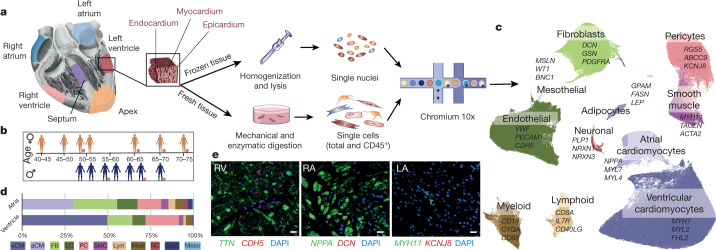
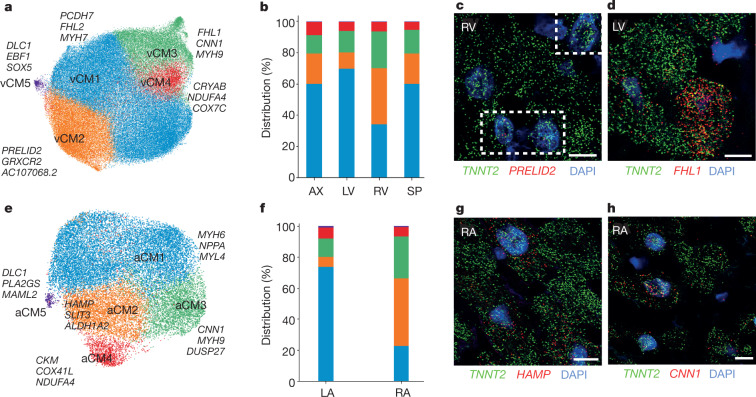
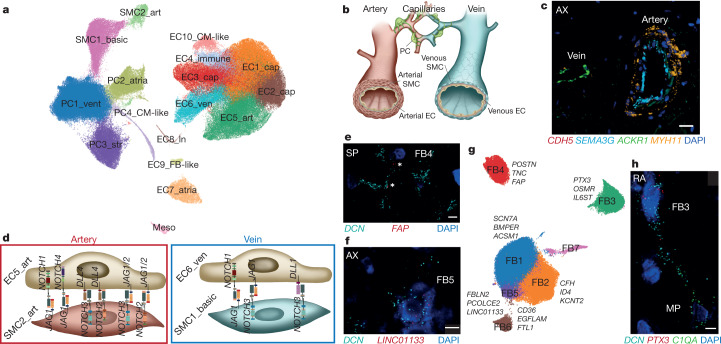
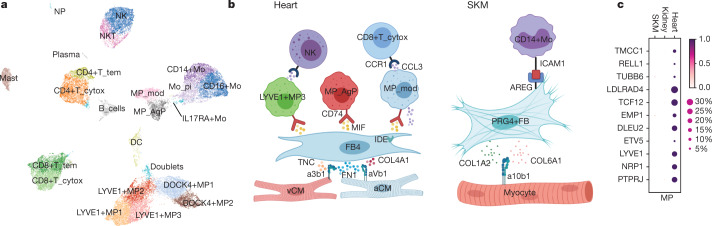
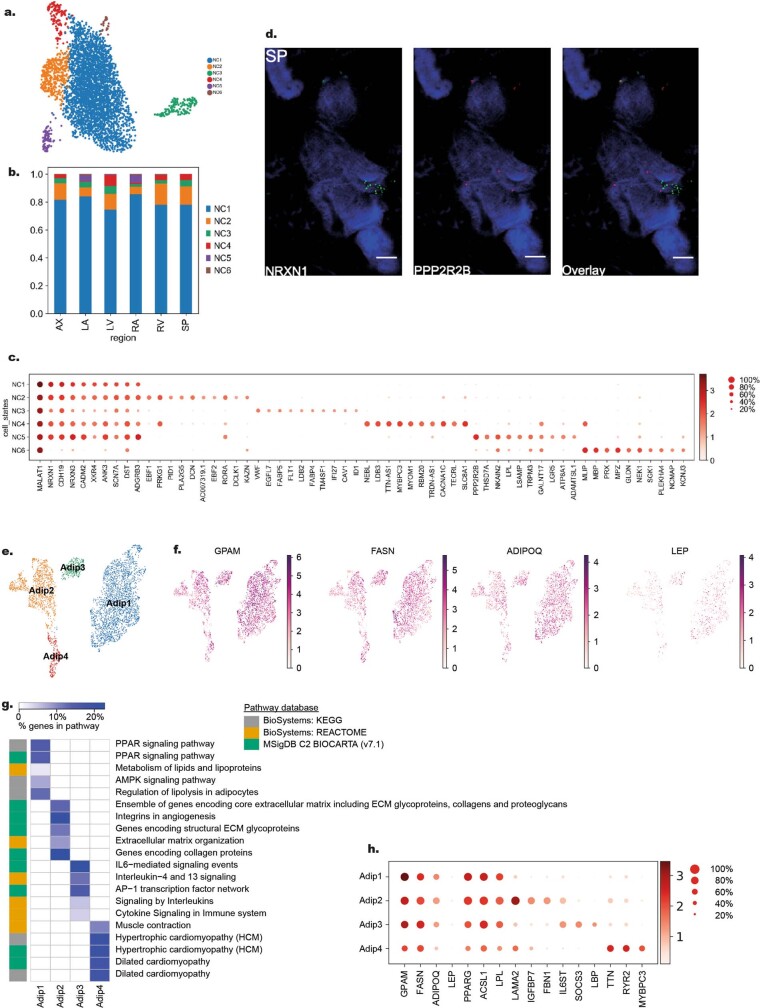
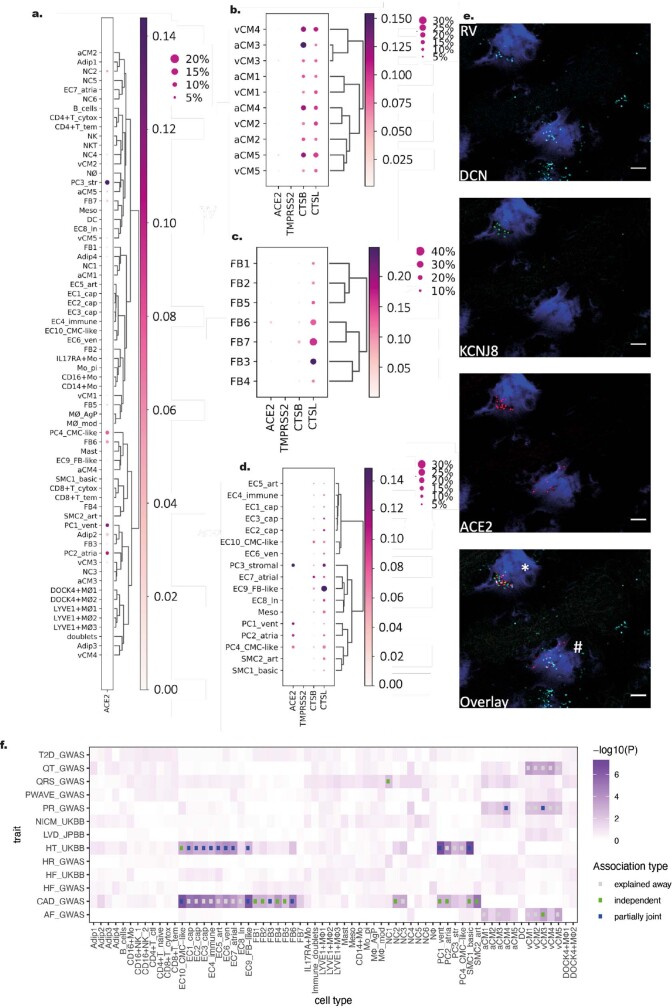
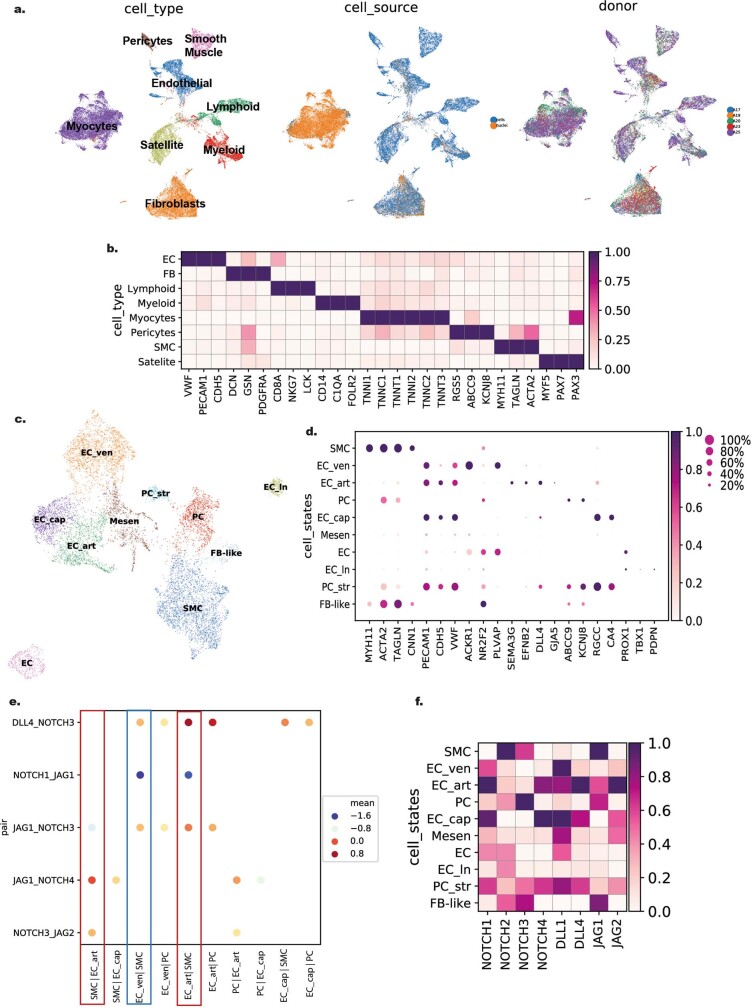
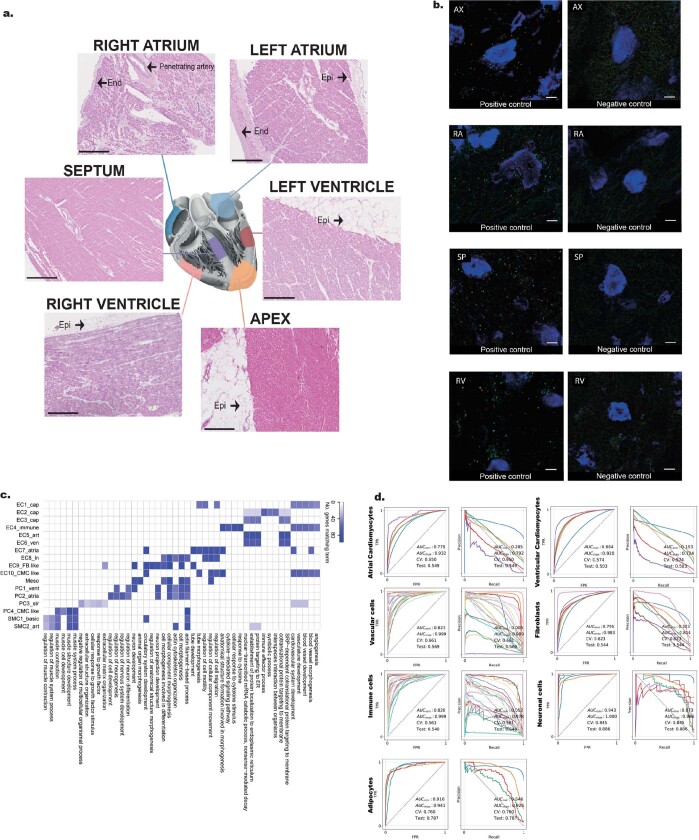
Cardiovascular disease is the leading cause of death worldwide. Advanced insights into disease mechanisms and therapeutic strategies require a deeper understanding of the molecular processes involved in the healthy heart. Knowledge of the full repertoire of cardiac cells and their gene expression profiles is a fundamental first step in this endeavour. Here, using state-of-the-art analyses of large-scale single-cell and single-nucleus transcriptomes, we characterize six anatomical adult heart regions. Our results highlight the cellular heterogeneity of cardiomyocytes, pericytes and fibroblasts, and reveal distinct atrial and ventricular subsets of cells with diverse developmental origins and specialized properties. We define the complexity of the cardiac vasculature and its changes along the arterio-venous axis. In the immune compartment, we identify cardiac-resident macrophages with inflammatory and protective transcriptional signatures. Furthermore, analyses of cell-to-cell interactions highlight different networks of macrophages, fibroblasts and cardiomyocytes between atria and ventricles that are distinct from those of skeletal muscle. Our human cardiac cell atlas improves our understanding of the human heart and provides a valuable reference for future studies.
Overview
The claims and statistics of this paper haven’t been checked yet.
Free: it reads the open-access text and checks the first 5 claims that cite a source we can check. Create a free account to check every claim.
Integrity signals
Registry
Cites
Statistics
Figures
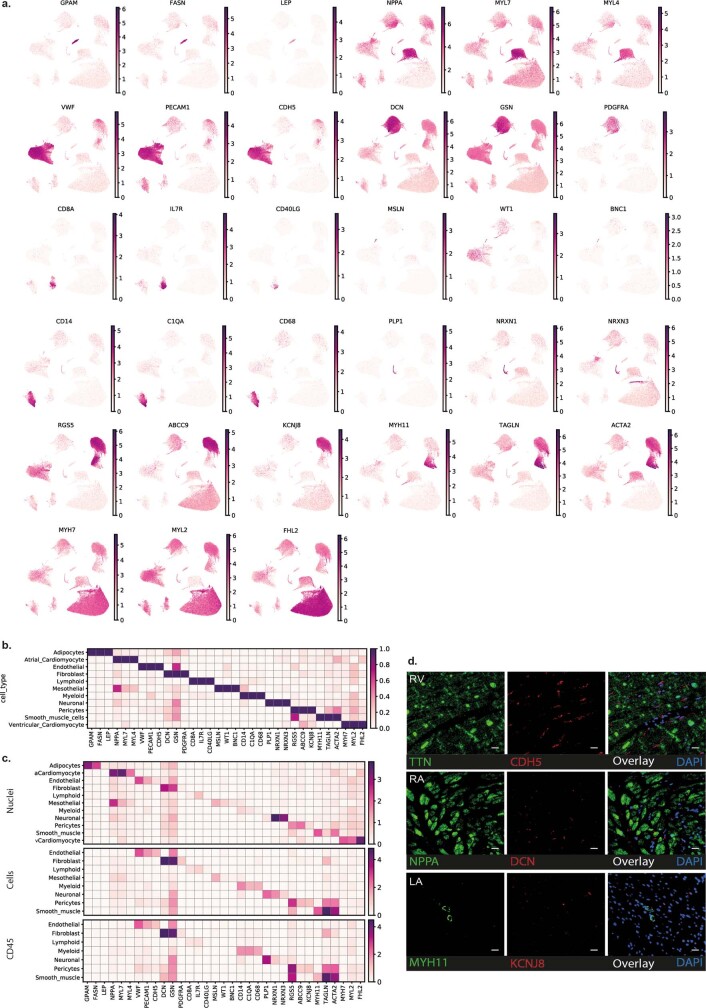
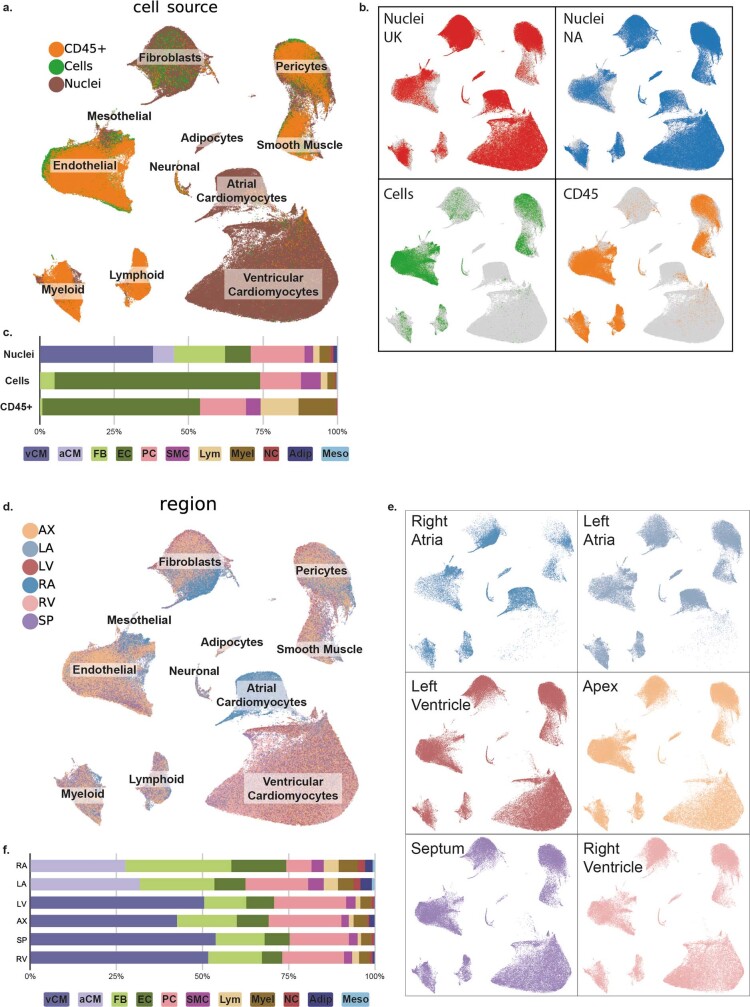
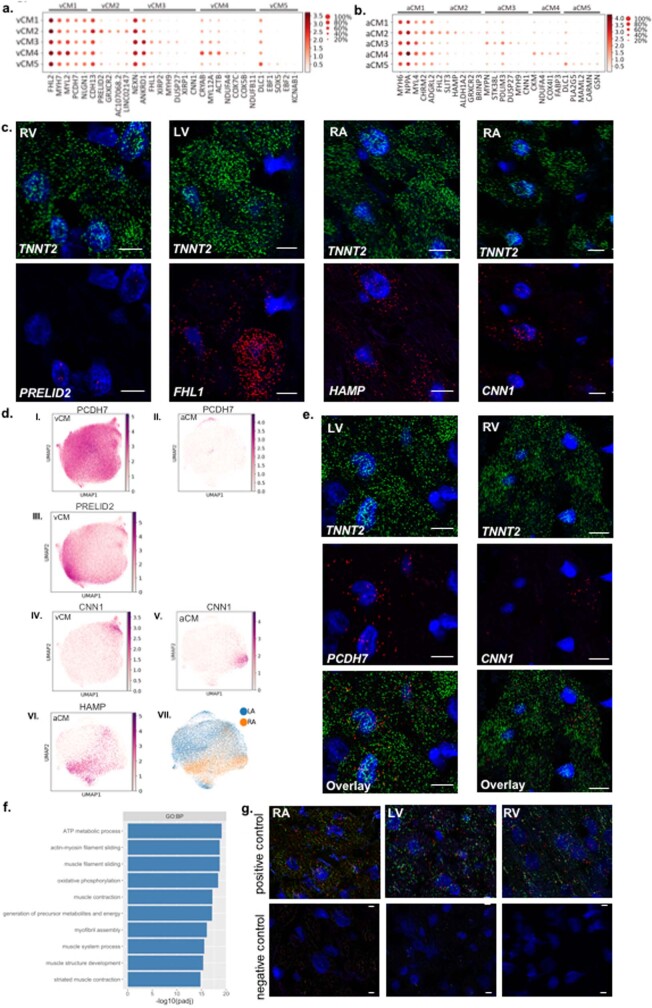
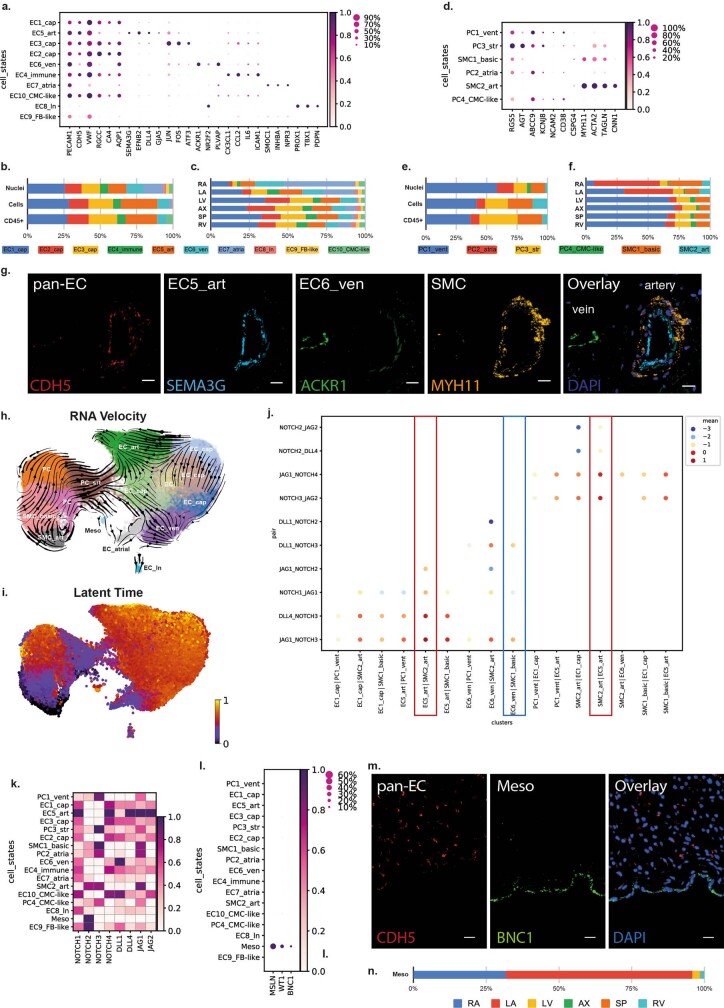
Verification
Claims the paper makes
The claims and statistics of this paper haven’t been checked yet.
Free: it reads the open-access text and checks the first 5 claims that cite a source we can check. Create a free account to check every claim.
Claims other papers make about this one
Each is checked against this paper’s own text: does it say what the citing paper says it does?
The cited source doesn’t support the claim as written.
In the citing paper
“However, these studies rely on nuclear RNA information and lack cellular transcriptomic, epigenetic and proteomic profiling information necessary to obtain a granular picture of the precise immune and fibroblast populations that emerge in the failing human heart and collaborate to drive cardiac fibrosis.”
From Targeting immune–fibroblast cell communication in heart failure (2024) · cites this paper as [21]
Checked by a reasoning model — may be wrong.
Experimental — accuracy not yet measuredThe source backs part of the claim, not all of it — or backs it for a different population, condition or comparison.
In the citing paper
“The monocyte and macrophage lineage constitute the most abundant immune cell population in the hearts of healthy adults and under myocarditis conditions”
From Autoimmune Myocarditis, Old Dogs and New Tricks. (2024) · cites this paper as [106]
Experimental — accuracy not yet measuredThe source backs part of the claim, not all of it — or backs it for a different population, condition or comparison.
In the citing paper
“Interestingly, Geneformer was able to distinguish central versus peripheral factors in the N1-dependent network with fine-tuning on this very minimal data to a better degree than the alternative methods’ predictions trained on the larger dataset of ~30,000 ECs32, demonstrating the strength of pretraining in enabling predictions from increasingly limited data (Fig. 4d, Extended Data Fig. 9b).”
From Transfer learning enables predictions in network biology (2023) · cites this paper as [32]
Experimental — accuracy not yet measuredThe source backs part of the claim, not all of it — or backs it for a different population, condition or comparison.
In the citing paper
“Again, Geneformer significantly boosted the ability to predict central versus peripheral factors compared to alternative methods (AUC 0.81) (Fig. 4a, Extended Data Fig. 8e).”
From Transfer learning enables predictions in network biology (2023) · cites this paper as [32]
Experimental — accuracy not yet measuredThe cited source says what the claim attributes to it.
In the citing paper
“Numerous single-nucleus RNA sequencing (snRNA-seq) studies have investigated the healthy and failing human heart18–22.”
From Targeting immune–fibroblast cell communication in heart failure (2024) · cites this paper as [21]
1 more claim about this paper
Create a free account to see every claim other papers make about this one.
Self-check
Percentages, sums and reported differences re-computed from the paper’s own numbers.
The self-check needs the paper’s full text.
Citations
Cites
Fiji: an open-source platform for biological-image analysis
Schindelin, J., Arganda-Carreras, I., Frise, E., Kaynig, V., Longair, M., Pietzsch, T., Preibisch, S., Rueden, C., Saalfeld, S., Schmid, B., et al. (2012) · Nature Methods · doi:10.1038/nmeth.2019 · Cited by 66,890
Clinical features of patients infected with 2019 novel coronavirus in Wuhan, China
Huang, C., Wang, Y., Li, X., Ren, L., Zhao, J., Hu, Y., Zhang, L., Fan, G., Xu, J., Gu, X., et al. (2020) · The Lancet · doi:10.1016/s0140-6736(20)30183-5 · Cited by 48,884
Hoffmann, M., Kleine-Weber, H., Schroeder, S., Krüger, N., Herrler, T., Erichsen, S., Schiergens, T. S., Herrler, G., Wu, N.-H., Nitsche, A., et al. (2020) · Cell · doi:10.1016/j.cell.2020.02.052 · Cited by 20,286
Enrichr: a comprehensive gene set enrichment analysis web server 2016 update
Kuleshov, M. V., Jones, M. R., Rouillard, A. D., Fernandez, N. F., Duan, Q., Wang, Z., Koplev, S., Jenkins, S. L., Jagodnik, K. M., Lachmann, A., et al. (2016) · Nucleic Acids Research · doi:10.1093/nar/gkw377 · Cited by 10,799
UMAP: Uniform Manifold Approximation and Projection
McInnes, L., Healy, J., Saul, N., & Großberger, L. (2018) · Journal of Open Source Software · doi:10.21105/joss.00861 · Cited by 9,826
SCANPY: large-scale single-cell gene expression data analysis
Wolf, F. A., Angerer, P., & Theis, F. J. (2018) · Genome Biology · doi:10.1186/s13059-017-1382-0 · Cited by 8,881
UMAP: Uniform Manifold Approximation and Projection for Dimension Reduction
McInnes, L., Healy, J., & Melville, J. (2018) · arXiv · doi:10.48550/arxiv.1802.03426 · Cited by 7,101
From Louvain to Leiden: guaranteeing well-connected communities
Traag, V. A., Waltman, L., & van Eck, N. J. (2019) · Scientific Reports · doi:10.1038/s41598-019-41695-z · Cited by 5,635
La Manno, G., Soldatov, R., Zeisel, A., Braun, E., Hochgerner, H., Petukhov, V., Lidschreiber, K., Kastriti, M. E., Lönnerberg, P., Furlan, A., et al. (2018) · Nature · doi:10.1038/s41586-018-0414-6 · Cited by 4,118
MAGMA: Generalized Gene-Set Analysis of GWAS Data
de Leeuw, C. A., Mooij, J. M., Heskes, T., & Posthuma, D. (2015) · PLOS Computational Biology · doi:10.1371/journal.pcbi.1004219 · Cited by 3,653
Cited by
Items 801–900 of 1,014
Logotheti, S., Pavlopoulou, A., Rudsari, H. K., Galow, A.-M., Kafalı, Y., Kyrodimos, E., Giotakis, A. Ι., Marquardt, S., Velalopoulou, A. P., Verginadis, I. I., et al. (2024) · Pharmacology & Therapeutics · doi:10.1016/j.pharmthera.2024.108670 · Cited by 11
Zheng, K., Hao, Y., Xia, C., Cheng, S., Yu, J., Chen, Z., Li, Y., Niu, Y., Ran, S., Wang, S., et al. (2024) · Frontiers in Cell and Developmental Biology · doi:10.3389/fcell.2024.1429020 · Cited by 11
Self-citationFine, J. M., Kosyakovsky, J., Bowe, T. T., Faltesek, K. A., STROEBEL, B. M., Abrahante, J. E., Kelly, M. R., Thompson, E. A., Westby, C. M., Robertson, K. M., et al. (2025) · Frontiers in Neuroscience · doi:10.3389/fnins.2024.1528374 · Cited by 10
“The power of transcriptomics stems from this method’s ability to synthesize a vast array of seemingly disparate gene expression data into functional pathways and modules with known correlation to function and disease (Pairo-Castineira et al., 2021; Litvinukova et al., 2020; Grant et al., 2021).”
Sabit, H., Arneth, B. M., Altrawy, A., Ghazy, A., Abdelazeem, R. M., Adel, A., Abdel-Ghany, S. E., Alqosaibi, A. I., Deloukas, P., & Taghiyev, Z. T. (2025) · Biomedicines · doi:10.3390/biomedicines13020485 · Cited by 11
“Personalized medicine, incorporating genetic and epigenetic profiling, can play a pivotal role in mitigating long-term cardiovascular risks in viral infection survivors, shaping a future where tailored interventions reduce the impact of viral diseases on heart health.”
Schneider, L., Begovic, M., Zhou, X., Hamdani, N., Akın, İ., & El‐Battrawy, I. (2025) · Journal of the American Heart Association · doi:10.1161/jaha.124.038308 · Cited by 13
“71 In specific heart regions, such as the atria and ventricles, the distribution changes, with cardiomyocytes making up 30% to 50% of cells, and endothelial cells and fibroblasts contributing 10% and 20%, respectively.”
The single-cell atlas of short-chain fatty acid receptors in human and mice hearts
He, X., Wang, Q., Long, Q., Zhong, Y., Qi, Z., Zhang, Y., Chang, L. Y., Qian, B., Huang, S., Wang, X., et al. (2025) · Frontiers in Immunology · doi:10.3389/fimmu.2025.1538384 · Cited by 14
Wang, K., Li, M., Sartor, M. A., Colacino, J. A., Dolinoy, D. C., & Svoboda, L. K. (2025) · Environmental Health Perspectives · doi:10.1289/ehp15503 · Cited by 11
“86 Shiftsin cardiac cellularityacrossthe lifecoursehavebeen reported, including increased fi brosis in old age 130 as well as changes in the composition of epicardial fat tissue, 131 but the e ff ects of developmental exposures on changes in cellularity between weaning and middle adulthood are…”
InfluentialTang, H., Zhang, X., Hu, S., Song, Y., Jin, W., Zou, J., Zhang, Y., Guo, J., An, P., Luo, J., et al. (2025) · Targets · doi:10.3390/targets3030023 · Cited by 13
“Although the relationship be-tween vascular calcification and plaque vulnerability is not well established, calcification is strongly associated with a high incidence of adverse cardiovascular events [37].”
Spatiotemporal Proliferative Heterogeneity of Intraorgan Endothelial Cells
Han, M., Liu, Z., Liu, L., Kang, Z., Huang, X., Smart, N., Li, X., Shu, Q., & Zhou, B. (2025) · Circulation Research · doi:10.1161/circresaha.125.326748 · Cited by 10
HSPA12B Protects Against Age‐Related Endothelial Cell Senescence by Regulating STING Degradation
Li, T., Zhu, P., Adams, J., Tu, F., Wang, J., Garbe, C. G., Dalal, S., Singh, K., Zhang, X., Liu, L., et al. (2025) · Aging Cell · doi:10.1111/acel.70260 · Cited by 10
“To explore the potential role of HSPA12B in cardiac aging, we analyzed publicly available single-cell RNA sequencing datasets and observed a significant reduction in HSPA12B expression in cardiac endothelial cells from aged humans and mice (Figure 2A,B) (Litviňuková et al. 2020).”
Integrating Hierarchical Vasculature into Engineered Cardiac Tissues
Zhuang, R. Z., Chesnais, F., & Vunjak‐Novakovic, G. (2025) · Advanced Materials · doi:10.1002/adma.202509242 · Cited by 11
Youness, M., Ekhteraei‐Tousi, S., Nagaraju, C. K., Puertas, R. D., Thienpont, B., Rega, F., Sipido, K. R., & Roderick, H. L. (2025) · Genome Medicine · doi:10.1186/s13073-025-01580-z · Cited by 17
“Else-where, FB1 and FB4 have been classified as a single activated/fibrotic/MyoFB state involved in TGF-β signalling owing to their similar expression of FB activation markers [26, 28, 31].”
InfluentialDynamic cellular programs of human cardiac allograft rejection revealed by spatial transcriptomics
Amancherla, K. V., Oill, A. M. T., Bledsoe, X., Williams-Katek, A. L., Chow, N., Smith, A. J., Farrow, M. A., Zhao, S., Sheng, Q., Bearl, D. W., et al. (2026) · Nature Cardiovascular Research · doi:10.1038/s44161-026-00849-9 · Cited by 14
“Furthermore Furthermore, cardiac biopsy samples in our study were obtained from individuals without end-stage graft dysfunction, which carries a distinctive transcriptomic profile that may not reflect early, modifiable mechanisms 21,105,125–128 .”
Environmental factors influence somatic cell reprogramming to cardiomyocyte-like cells
Handel, B. V., Wang, L., & Ardehali, R. (2021) · Seminars in Cell and Developmental Biology · doi:10.1016/j.semcdb.2021.05.028 · Cited by 10
Saghafi, N., Rezaee, S. A., Momtazi‐Borojeni, A. A., Tavasolian, F., Sathyapalan, T., Abdollahi, E., & Sahebkar, A. (2022) · Life Sciences · doi:10.1016/j.lfs.2022.120392 · Cited by 11
Wu, X., Zhao, X., Xiong, Y., Zheng, M., Zhong, C., & Zhou, Y. (2022) · Frontiers in Cell and Developmental Biology · doi:10.3389/fcell.2022.792774 · Cited by 10
Single-cell transcriptomes in the heart: when every epigenome counts
Gromova, T., Gehred, N., & Vondriska, T. M. (2022) · Cardiovascular Research · doi:10.1093/cvr/cvac040 · Cited by 12
PPMS: A framework to Profile Primary MicroRNAs from Single-cell RNA-sequencing datasets
Ji, J., Anwar, M., Petretto, E. G., Emanueli, C., & Srivastava, P. K. (2022) · Briefings in Bioinformatics · doi:10.1093/bib/bbac419 · Cited by 10
“We first applied PPMS on the publicly available Human Cell Atlas (HCA) scRNA-seq dataset (array express accession number: ERP123138) generated by sequencing single-nucleus transcriptomes from the four chambers (left and right atria and left and right ventricles) of the human heart [20].”
MethodMa, Y., Cao, Y., Gao, H., Tong, R., Yi, J., Zhang, Z., Chen, R., & Pan, Z. (2023) · Drug Design Development and Therapy · doi:10.2147/dddt.s408595 · Cited by 10
“The heart is made up of many other types of cells such as CFs, smooth muscle cells, and endothelial cells, but limited research has been undertaken with these other cells.(38) CFs perform a crucial paracrine function and contribute significantly to the emergence of RA.”
BackgroundDaoud, A., Lema, D. A., Won, T., & Čiháková, D. (2023) · Frontiers in Cardiovascular Medicine · doi:10.3389/fcvm.2023.1227818 · Cited by 10
“The control snRNA-Seq dataset was retrieved using the accession code: ERP123138 (12).”
MethodBAG3 localizes to mitochondria in cardiac fibroblasts and regulates mitophagy
Martin, T. G., Sherer, L. A., & Kirk, J. A. (2024) · American Journal of Physiology-Heart and Circulatory Physiology · doi:10.1152/ajpheart.00736.2023 · Cited by 10
Mineralocorticoid receptor phase separation modulates cardiac preservation
Lei, I., Sicim, H., Gao, W., Huang, W., Noly, P., Pergande, M. R., Wilson, M. C., Lee, A., Liu, L., Ela, A. S. A. A. A. E., et al. (2025) · Nature Cardiovascular Research · doi:10.1038/s44161-025-00653-x · Cited by 12
“In addition to the graphical display, we used the FindMarkers function 58 in the Seurat package to perform DEG analysis among phenotype-associated sub-populations.”
Tian, Y., Lucena-Cacace, A., Tani, K., Elvandari, A. P., Osorio, R. S. A., Narita, M., Matsumura, Y., Paixao, I. C., Miyoshi, Y., Inagaki, A., et al. (2025) · Nature Communications · doi:10.1038/s41467-025-60934-8 · Cited by 10
Applications of Single-Cell RNA Sequencing in Cardiovascular Research
Fan, Y., Zhou, H., Liu, X., Li, J., Xu, K., Fu, X., Ye, L., & Li, G. (2022) · Frontiers in Cell and Developmental Biology · doi:10.3389/fcell.2021.810232 · Cited by 11
Role of the renin-angiotensin system in NETosis in the coronavirus disease 2019 (COVID-19)
Zhang, Q., Ling, S., Hu, K., Liu, J., & Xu, J. (2022) · Biomedicine & Pharmacotherapy · doi:10.1016/j.biopha.2022.112718 · Cited by 10
Zhang, X., Chen, L., Huang, X., Chen, H., Cai, B., Qin, Y., Chen, Y., Ou, S., Li, X., Wu, Z., et al. (2022) · Stem Cell Reviews and Reports · doi:10.1007/s12015-022-10339-7 · Cited by 10
Haematopoietic ageing through the lens of single-cell technologies
Strzelecka, P. M., & Damm, F. (2021) · Disease Models & Mechanisms · doi:10.1242/dmm.047340 · Cited by 10
“, 2020) through understanding intercellular interactions in the human body during homeostasis (James et al., 2020; Litviňuková et al., 2020; Park et al., 2020) to tracking disease-related changes (Martin et al.”
BackgroundVariational Mixtures of ODEs for Inferring Cellular Gene Expression DynamicsPreprint
Gu, Y., Blaauw, D. T., & Welch, J. D. (2022) · arXiv (Cornell University) · doi:10.48550/arxiv.2207.04166 · Cited by 17
Tsagiopoulou, M., Rashmi, S., Aguilar-Fernández, S., Nieto, J. C., & Gut, I. G. (2024) · Scientific Data · doi:10.1038/s41597-024-03152-z · Cited by 12
Aliee, H., Kapl, F., Pham, D., Çakır, B., Jimba, T., Cranley, J. J., Teichmann, S. A., Meyer, K. B., Vento‐Tormo, R., & Theis, F. J. (2024) · bioRxiv (Cold Spring Harbor Laboratory) · doi:10.1101/2024.12.06.627196 · Cited by 11
Self-citationImplications for neutrophils in cardiac arrhythmias
Hegemann, N., Barth, L., Döring, Y., Voigt, N., & Grune, J. (2023) · American Journal of Physiology-Heart and Circulatory Physiology · doi:10.1152/ajpheart.00590.2023 · Cited by 11
Catecholamine treatment induces reversible heart injury and cardiomyocyte gene expression
Bode, C., Preißl, S., Hein, L., & Lother, A. (2024) · Intensive Care Medicine Experimental · doi:10.1186/s40635-024-00632-9 · Cited by 11
Improving human cardiac organoid design using transcriptomics
Hyams, N. A., Kerr, C. M., Arhontoulis, D. C., Ruddy, J. M., & Mei, Y. (2024) · Scientific Reports · doi:10.1038/s41598-024-61554-w · Cited by 9
“(1234567890) 1) 54 .”
MethodDistinct mechanisms regulate ventricular and atrial chamber wall formation
Albu, M., Affolter, E., Gentile, A., Xu, Y., Kikhi, K., Howard, S. P., Kuenne, C. T., Priya, R., Gunawan, F., & Stainier, D. Y. R. (2024) · Nature Communications · doi:10.1038/s41467-024-52340-3 · Cited by 11
Development and application of 3D cardiac tissues derived from human pluripotent stem cells
Ohno, M., Tani, H., & Tohyama, S. (2025) · Drug Metabolism and Pharmacokinetics · doi:10.1016/j.dmpk.2024.101049 · Cited by 9
Xiao, J., Ang, J. W., Zhong, X., Wong, D. C. P., Thivakar, T., Yow, I., Lee, C. J. M., Foo, R., Kanchanawong, P., & Low, B. C. (2025) · ACS Applied Materials & Interfaces · doi:10.1021/acsami.4c15459 · Cited by 9
Neuromuscular and cardiac organoids and assembloids: Advanced platforms for drug testing
Fontanelli, L., Nisini, N., Pirola, S., & Recchia, F. A. (2025) · Pharmacology & Therapeutics · doi:10.1016/j.pharmthera.2025.108876 · Cited by 10
Charting the cardiac landscape: Advances in spatial transcriptomics for heart biology
Farah, E. N., Diaz, J. T., Bloomekatz, J. E., & Chi, N. C. (2025) · Seminars in Cell and Developmental Biology · doi:10.1016/j.semcdb.2025.103648 · Cited by 9
Caught in the crossfire: cardiac complications of cancer therapy
Guerra, G., Mergiotti, M., Ardehali, H., Hirsch, E., & Ghigo, A. (2026) · Journal of Clinical Investigation · doi:10.1172/jci198289 · Cited by 9
Mastitskaya, S., Freitas, F., Evans, L., & Attwell, D. (2026) · Nature Communications · doi:10.1038/s41467-026-69555-1 · Cited by 9
Керчева, М. А., Ryabov, V. V., Энхэевна, Г. А., Rebenkova, M., & Kzhyshkowska, J. G. (2022) · Journal of Personalized Medicine · doi:10.3390/jpm12020127 · Cited by 9
“This rapid change capacity is the basis for macrophage polarization, which is the capability of transition from one phenotype to another [19,20].”
BackgroundBermea, K. C., Kostelecky, N., Rousseau, S. T., Lin, C., & Adamo, L. (2022) · Frontiers in Immunology · doi:10.3389/fimmu.2022.973211 · Cited by 9
“In this analysis, we compared two datasets collected at different time points (human Heart Cell Atlas and PBMCs from 10X Genomics).”
MethodInfluentialSpatiotemporal changes of tissue glycans depending on localization in cardiac aging
Itakura, Y., Hasegawa, Y., Kikkawa, Y., Murakami, Y., Sugiura, K., Nagai‐Okatani, C., Sasaki, N., Umemura, M., Takahashi, Y., Kimura, T., et al. (2023) · Regenerative Therapy · doi:10.1016/j.reth.2022.12.009 · Cited by 9
“The specific functions of cardiac tissue are supported by numerous cell populations which change with aging [17].”
BackgroundLei, Y., Ye, Z., Wei, Y., Zhu, L.-P., Zhuang, X.-D., Wang, X., & Cao, H. (2023) · Scientific Reports · doi:10.1038/s41598-023-32572-x · Cited by 13
Teng, P., Wu, Y., Chen, R., Hong, L., Wu, B., Liu, L., Ma, L., Zhao, H., & Wu, S. (2023) · Bioelectrochemistry · doi:10.1016/j.bioelechem.2023.108502 · Cited by 9
Cardiac optogenetics: shining light on signaling pathways
Leemann, S., Schneider‐Warme, F., & Kleinlogel, S. (2023) · Pflügers Archiv - European Journal of Physiology · doi:10.1007/s00424-023-02892-y · Cited by 10
Tissue-specific roles of peroxisomes revealed by expression meta-analysis
Plessner, M., Thiele, L., Hofhuis, J., & Thoms, S. (2024) · Biology Direct · doi:10.1186/s13062-024-00458-1 · Cited by 11
“Cardiac tissue composition varies between heart regions but includes mostly cardiomyocytes and fibroblasts [64].”
BackgroundInfluentialSARS-CoV-2 variants divergently infect and damage cardiomyocytes in vitro and in vivo
Mok, B. W.-Y., Kwok, M., Li, H. S., Ling, L., Lai, A., Yan, B., Law, C. T., Yeung, C. H., Zhang, J., Tam, R. C.-Y., et al. (2024) · Cell & Bioscience · doi:10.1186/s13578-024-01280-y · Cited by 9
“Our hPSC-CMs were cultured for > 40 days, and, similar to adult CMs, did not express TMPRSS2 [36, 37, 46].”
BackgroundResultBorlak, J. T., Ciribilli, Y., Bisio, A., Selvaraj, S., Inga, A., Oh, J., & Spanel, R. (2024) · Journal of Translational Medicine · doi:10.1186/s12967-024-05623-8 · Cited by 9
Guo, C., Pan, X., Dou, M., Wu, J., Chen, X., Wang, B., Zhu, R., Xu, S., Peng, W., Wu, C., et al. (2024) · British Journal of Pharmacology · doi:10.1111/bph.17326 · Cited by 10
“Finally, a previous study showed that one-third of the cells were cardiomyocytes in the heart (Litvi ˇ nuková et al., 2020).”
Kip, P., Sluiter, T. J., MacArthur, M. R., Tao, M., Kruit, N., Mitchell, S. J., Jung, J., Kooijman, S., Gorham, J., Seidman, J. G., et al. (2024) · Nature Communications · doi:10.1038/s41467-024-53844-8 · Cited by 9
Self-citationThe Role of Human-Induced Pluripotent Stem Cells in Studying Cardiac Channelopathies
Begovic, M., Schneider, L., Zhou, X., Hamdani, N., Akın, İ., & El‐Battrawy, I. (2024) · International Journal of Molecular Sciences · doi:10.3390/ijms252212034 · Cited by 9
Kim, D. W., Kim, Y. H., Lee, G., Lee, E., Bhang, S. H., & Lee, K. (2024) · Biofabrication · doi:10.1088/1758-5090/ad9cc3 · Cited by 10
“As a result, these approaches often fail to replicate the mechanical properties of the heart [38] or only incorporate some of the multicellular components [39].”
Nomura, A., Takeji, Y., Shimojima, M., & Takamura, M. (2025) · Circulation Journal · doi:10.1253/circj.cj-24-0865 · Cited by 10
Mechanisms and strategies for a therapeutic cardiac immune response
Ferrari, I., & Vagnozzi, R. J. (2021) · Journal of Molecular and Cellular Cardiology · doi:10.1016/j.yjmcc.2021.05.013 · Cited by 10
Nonproductive Splicing Prevents Expression of MYH7b Protein in the Mammalian Heart
Lee, L. A., Broadwell, L. J., Buvoli, M., & Leinwand, L. A. (2021) · Journal of the American Heart Association · doi:10.1161/jaha.121.020965 · Cited by 9
Engineering Models of the Heart Left Ventricle
Okhovatian, S., Mohammadi, M. H., Rafatian, N., & Radisic, M. (2022) · ACS Biomaterials Science & Engineering · doi:10.1021/acsbiomaterials.1c00636 · Cited by 10
Modeling the human heart ex vivo—current possibilities and strive for future applications
Kałużna, E. M., Nadel, A., Zimna, A., Rozwadowska, N., & Kolanowski, T. J. (2022) · Journal of Tissue Engineering and Regenerative Medicine · doi:10.1002/term.3335 · Cited by 11
Rogalska, M. E., Vafiadaki, E., Erpapazoglou, Z., Haghighi, K., Green, L., Mantzoros, C. S., Hajjar, R. J., Tranter, M., Karakikes, I., Kranias, E. G., et al. (2022) · Metabolism · doi:10.1016/j.metabol.2022.155344 · Cited by 9
Influenza A virus modulates ACE2 expression and SARS-CoV-2 infectivity in human cardiomyocytes
Wu, Q., Kumar, N., Lafuse, W. P., Ahumada, O. S., Saljoughian, N., Whetstone, E., Zani, A., Patton, A. K., Refaey, M. E., Webb, A., et al. (2022) · iScience · doi:10.1016/j.isci.2022.105701 · Cited by 9
Tambi, R., Zehra, B., Nandkishore, S., Sharafat, S., Kader, F., Nassir, N., Mohamed, N., Ahmed, A., Hameid, R. A., Alasrawi, S., et al. (2023) · Physiological Genomics · doi:10.1152/physiolgenomics.00070.2023 · Cited by 10
Mechanism of pro-MMP9 activation in co-culture of pro-inflammatory macrophages and cardiomyocytes
Egorov, D., Kopaliani, I., Ameln, A. K., Speier, S., & Deußen, A. (2023) · Experimental Cell Research · doi:10.1016/j.yexcr.2023.113868 · Cited by 9
Vuorenpää, H., Valtonen, J., Penttinen, K., Koskimäki, S., Hovinen, E., Ahola, A., Gering, C., Párraga, J. E., Kelloniemi, M., Hyttinen, J., et al. (2024) · Cytotechnology · doi:10.1007/s10616-024-00630-5 · Cited by 9
“…of adult human heart cellular composition revealed eleven main cell types including atrial and ventricular cardiomyocytes, fibroblasts, endothelial cells, pericytes, smooth muscle cells, myeloid and lymphoid immune cells, adipocytes, mesothelial cells and neuronal cells (Litviňuková et al. 2020).”
BackgroundPearson, H. C. L., Hunt, K. V., Trahair, T. N., Lock, R. B., Lee, H. J., & de Bock, C. E. (2022) · HemaSphere · doi:10.1097/hs9.0000000000000734 · Cited by 10
Wang, J., Morgan, W. F., Saini, A. S., Liu, T., Lough, J., & Han, L. (2022) · Frontiers in Cell and Developmental Biology · doi:10.3389/fcell.2022.895162 · Cited by 9
“For example, single-cell RNA analyses of in vivo human andmouse heart tissue have revealed highly detailed transcriptional profiles and novel features of cellular heterogeneity during cardiomyocyte specification and maturation (DeLaughter et al., 2016; Li et al., 2016; Cui et al., 2019; de Soysa et al., 2019; Litvinuk…”
BackgroundBioengineering of a human innervated cardiac muscle modelPreprint
Schneider, L. V., Bao, G., Methi, A., Jensen, O., Schmoll, K. A., Setya, M. G., Sakib, M. S., Fahud, A. L., Brockmöller, J., Fischer, A., et al. (2023) · bioRxiv (Cold Spring Harbor Laboratory) · doi:10.1101/2023.08.18.552653 · Cited by 10
The Macrophage–Fibroblast Dipole in the Context of Cardiac Repair and Fibrosis
Psarras, S. (2024) · Biomolecules · doi:10.3390/biom14111403 · Cited by 9
Wang, X., Cao, L., Chang, R., Shen, J., Ma, L., & Li, Y. (2024) · iScience · doi:10.1016/j.isci.2024.111596 · Cited by 11
Shirbaghaee, Z., Sorenson, C. M., & Sheibani, N. (2025) · International Journal of Molecular Sciences · doi:10.3390/ijms26115333 · Cited by 11
“PCs are the second most prevalent cell type in the ventricles, making up 20% of the total heart cell population [142].”
The impact of aging and biological sex on cardiac collagen metabolism
Pandya, K., Menendez, A., MacAskill, M. G., Gray, G. A., & Tavares, A. (2025) · Mechanisms of Ageing and Development · doi:10.1016/j.mad.2025.112079 · Cited by 9
“%) and are the major cell type involved in the regulation of myocardial ECM production (Jugdutt, 2003; Litvi ˇ nukov ´ a et al., 2020).”
Cellular Reprogramming by PHF7 Enhances Cardiac Function Following Myocardial Infarction
Garry, G. A., Santos, M. D., Chen, K., Tan, W. H., Bezprozvannaya, S., Gan, P., Xu, L., Liu, N., Bassel‐Duby, R., & Olson, E. N. (2025) · Circulation · doi:10.1161/circulationaha.124.072733 · Cited by 9
Hua, X., Sun, Z., Wang, C., Cui, H., Shan, D., Tao, M., Cui, Z., Chang, Y., Bao, M., Mo, H., et al. (2025) · Journal of the American Heart Association · doi:10.1161/jaha.125.041401 · Cited by 11
“…by Chaffin et al. (2022), 13 Reichart et al. (2022), 40 and Koenig et al. (2022), 41 defined cardiomyocyte subpopulations based on clustering resolutions, 14,41,42 our study emphasizes the concept of cell states, capturing the continuous transitions of cardiomyocytes during HCM progression to HF.”
Metabolic and Inflammatory Mechanisms Driving Atrial Fibrillation
Stoll, L., Ha, E. E., & Lo, J. C. (2025) · The Annual Review of Pharmacology and Toxicology · doi:10.1146/annurev-pharmtox-062124-025403 · Cited by 11
Single-cell transcriptomic profiling reveals cell type heterogeneity between HFpEF and HFrEF
Xiao, X., Wu, W., Mao, Q., Li, B., Wang, J., Liu, S., Zhao, H., Long, E., & Wang, J. (2025) · Communications Biology · doi:10.1038/s42003-025-08827-w · Cited by 11
“Additionally, noncanonical CMs had been identi fi ed, with experimental validation conducted in several studies to con fi rm their existence and elucidated their speci fi c roles within the heart 24,26 .”
InfluentialB cells promote atrial fibrillation via autoantibodies
Yamazoe, M., Ting, K. K. Y., Lee, I., Bapat, A. C., Lewis, A., Xiao, L., Pulous, F. E., Mentkowski, K. I., Paccalet, A., Momin, N., et al. (2025) · Nature Cardiovascular Research · doi:10.1038/s44161-025-00724-z · Cited by 11
“Dendritic cells (DCs) and lymphocytes, adaptive immune cell classes that interact during B cell maturation and antibody production, reside in the healthy and diseased hearts of both mice 6 and humans 7,8 .”
Cyclin A2 induces cytokinesis in human adult cardiomyocytes and drives reprogramming in mice
Bouhamida, E., Madathil, S. V., Mathiyalagan, P., Ranjan, A. K., Khan, A. M., Sherman, C. D., Miller, P. E., Ghetti, A., Abi‐Gerges, N., & Chaudhry, H. W. (2025) · npj Regenerative Medicine · doi:10.1038/s41536-025-00438-7 · Cited by 8
“This suggests that CCNA2 may regulate sarcomere assembly genes during cell division, thereby facilitating cardiomyocyte proliferation 23 .”
Du, W., Ringer, M., Desai, D. A., Khandakar, G. I., Esqueda, L. T., Wang, C., Guan, J., Becker, R. C., Sadayappan, S., Fan, G., et al. (2025) · Circulation · doi:10.1161/circulationaha.124.071774 · Cited by 10
Leveraging Single-Cell Technologies to Advance Understanding of Myocardial Disease
Gardner, R. S., Tucker, N. R., & Amancherla, K. V. (2026) · Circulation Research · doi:10.1161/circresaha.125.326002 · Cited by 10
Single-cell multiomics and chromatin structure reveal gene-regulatory dynamics in heart failure
Xie, Y., Tucciarone, L., Farah, E. N., Chang, L., Yang, Q., Shankar, T. S., Elison, W. S., Tran, S., Djulamsah, J., Lie, A., et al. (2026) · Science · doi:10.1126/science.ady6893 · Cited by 14
Zhou, K., Chen, H., Wang, X., Xu, Y.-M., Liao, Y.-F., Qin, Y.-Y., Ge, X.-W., Zhang, T., Fang, Z.-L., Fu, B.-B., et al. (2022) · Biomedicine & Pharmacotherapy · doi:10.1016/j.biopha.2022.113792 · Cited by 8
Practical Considerations for Complex Tissue Dissociation for Single-Cell Transcriptomics
Pohl, S. T., Prada, M. L., Espinet, E., & Jurkowska, R. Z. (2022) · Methods in molecular biology · doi:10.1007/978-1-0716-2756-3_19 · Cited by 8
Chen, S., Wang, K., Wang, J., Chen, X., Tao, M., Shan, D., Hua, X., Hu, S., & Song, J. (2023) · Journal of Molecular and Cellular Cardiology · doi:10.1016/j.yjmcc.2023.11.005 · Cited by 10
Decoding the Impact of the Hippo Pathway on Different Cell Types in Heart Failure
Hu, C., Francisco, J. J., Re, D. P. D., & Sadoshima, J. (2024) · Circulation Journal · doi:10.1253/circj.cj-24-0171 · Cited by 9
Guerricchio, L., Barile, L., & Bollini, S. (2024) · International Journal of Molecular Sciences · doi:10.3390/ijms25116187 · Cited by 8
Zhang, Y., Lian, Q., Nie, Y., & Zhao, W. (2024) · Frontiers in Cardiovascular Medicine · doi:10.3389/fcvm.2024.1414974 · Cited by 9
“Litvi ň uková et al. (81) discovered a substantial presence of immune cells in the atrial tissues of 14 donated hearts, with immune cells constituting 10.4% of the atrial samples.”
InfluentialProtein Arginine Methyltransferases: Emerging Targets in Cardiovascular and Metabolic Disease
Zhang, Y., Wei, S., Jin, E., Jo, Y., Oh, C., Bae, G., Kang, J., & Ryu, D. (2024) · Diabetes & Metabolism Journal · doi:10.4093/dmj.2023.0362 · Cited by 8
“Gaining insights into the underlying mechanisms that drive the progression of CVDs and metabolic diseases, particularly under the context of distinct cell types, assumes paramount importance for elucidating the pathophysiological intricacies as well as developing effective treatment options [2].”
BackgroundHow the trabecular layer impacts on left ventricular function
Vișoiu, I. S., Jensen, B. K., Rimbaş, R. C., Mihaila-Baldea, S., Nicula, A. I., & Vinereanu, D. (2024) · Journal of Cardiology · doi:10.1016/j.jjcc.2024.08.008 · Cited by 8
Dai, J., Xiao, Y., Sheng, Q., Zhou, J., Zhang, Z., & Zhu, F. (2024) · BMC Public Health · doi:10.1186/s12889-024-20033-7 · Cited by 8
“Cardiovascular disease is the leading cause of death worldwide [30].”
BackgroundPRDM16 determines specification of ventricular cardiomyocytes by suppressing alternative cell fates
Wauwe, J. V., Mahy, A., Craps, S., Ekhteraei‐Tousi, S., Vrancaert, P., Kemps, H., Dheedene, W., Puertas, R. D., Trenson, S., Roderick, H. L., et al. (2024) · Life Science Alliance · doi:10.26508/lsa.202402719 · Cited by 9
“D) (Bjork et al, 2010; Arndt et al, 2013; Litvinukova et al, 2020; Wu et al, 2022).”
Bartkowiak, K., Bartkowiak, M., Jankowska-Steifer, E. A., Ratajska, A., Czarnowska, E., Kujawa, M., Aniołek, O., & Niderla‐Bielińska, J. (2024) · Histochemistry and Cell Biology · doi:10.1007/s00418-024-02327-4 · Cited by 7
“This may be owing to the fact, that these analyses involved whole cardiac tissue, which is composed of different types of cells that can respond to diabetic environment in different ways (Litviňuková et al. 2020).”
BackgroundTargeting the adaptive immune continuum in atherosclerosis and post-MI injury
Juhász, V., Charlier, F., Zhao, T. X., & Tsiantoulas, D. (2024) · Atherosclerosis · doi:10.1016/j.atherosclerosis.2024.118616 · Cited by 9
“B cells are among the immune cell subsets that naturally reside in the adult human heart [51].”
CosGeneGate selects multi-functional and credible biomarkers for single-cell analysis
Liu, T., Long, W., Cao, Z., Wang, Y., He, C. H., Zhang, L., Strittmatter, S. M., & Zhao, H. (2024) · Briefings in Bioinformatics · doi:10.1093/bib/bbae626 · Cited by 8
Huo, J., Wang, Z., Zhao, W., Chen, M., Li, H., He, F., Tian, X., Ma, Y., Husanova, F., Ma, L., et al. (2024) · Clinical and Translational Medicine · doi:10.1002/ctm2.70113 · Cited by 8
Hunter, B., Li, M., Parker, B. L., Koay, Y. C., Harney, D., Pearson, E., Cao, J., Chen, G. T., Guneratne, O., Smyth, G. K., et al. (2024) · Communications Biology · doi:10.1038/s42003-024-07306-y · Cited by 9
Nourishment of Nerves and Innervation: A Novel Approach for the Treatment of Myocardial Infarction
Yin, X., Cai, D., Song, Z., & Song, C. (2025) · Cardiology · doi:10.1159/000543513 · Cited by 9
“Gaining insights into the traits of each cell type and their interactions aids in recognizing anatomical speci fi cities, molecular attributes, intercellular networks, and spatial relationships [78].”
Gain-of-function enhancer variant near KCNB1 causes familial ST-depression syndrome
Christensen, A. H., Pan, G., Marvig, R. L., Rodríguez-González, F. G., Vissing, C. R., Silajdzija, E., Frosted, R., Girma, E. G., Gabrielaitė, M., Jensen, H. K., et al. (2025) · European Heart Journal · doi:10.1093/eurheartj/ehaf213 · Cited by 8
Yang, S., Yan, L., Chen, L., Su, G., Yang, L., Gong, L., & Liu, L. (2025) · Pharmacological Research · doi:10.1016/j.phrs.2025.107731 · Cited by 9
Phenotypic characterization of primary cardiac fibroblasts from patients with HFpEF
Zhang, Y., Laer, A. O. V., Baicu, C. F., Neff, L. S., Hoffman, S., Katz, M., Zeigler, S., Zile, M. R., & Bradshaw, A. D. (2022) · PLoS ONE · doi:10.1371/journal.pone.0262479 · Cited by 10
“suggested that the resident cardiac fibroblast population could be divided into 7 distinct clusters based on gene expression [5].”
BackgroundJung, Y., Kim, J., Jang, H., Kim, G., & Kwon, Y. (2023) · Korean Circulation Journal · doi:10.4070/kcj.2022.0295 · Cited by 8
Celik, S., Sadrian, J., Grossi, M., Czuba, T., Lundgren, J., Rådegran, G., Laurell, T., Smith, J. G., & Gidlöf, O. (2023) · JACC Basic to Translational Science · doi:10.1016/j.jacbts.2022.09.014 · Cited by 9
“TNFRSF12A reads to specific cell types, we included a panel of marker genes for the main cell types present in cardiac tissue: cardiomyocytes (TTN and NPPB), fibroblasts (DCN and CDH19), endothelial cells (VWF and ID1), smooth muscle cells (ACTA2 and RGS5), leukocytes (ARHGAP15 and IL7R), and T cells (SKAP1), identifi…”
Background
Metadata
- Authors
- Litviňuková, M., Talavera-López, C., Maatz, H., Reichart, D., Worth, C. L., Lindberg, E. L., Kanda, M., Polanski, K., Heinig, M., Lee, M., Nadelmann, E. R., Roberts, K., Tuck, L., Fasouli, E. S., DeLaughter, D. M., McDonough, B., Wakimoto, H., Gorham, J. M., Samari, S., Mahbubani, K. T., Saeb-Parsy, K., Patone, G., Boyle, J. J., Zhang, H., Zhang, H., Viveiros, A., Oudit, G. Y., Bayraktar, O. A., Seidman, J. G., Seidman, C. E., Noseda, M., Hubner, N., & Teichmann, S. A.
- Affiliations
- Max Delbrück Center (DE)
- European Bioinformatics Institute (GB)
- Harvard University (US)
- Sapporo Medical University (JP)
- Helmholtz Munich (DE)
- Imperial College London (GB)
- Wellcome Sanger Institute (GB)
- Brigham and Women's Hospital (US)
- University of Cambridge (GB)
- University of Alberta (CA)
- British Heart Foundation (GB)
- Corresponding author
- Seidman, J. G.
- Seidman, Christine E.
- Noseda, Michela
- Teichmann, Sarah A.
- ORCID
- Litviňuková, Monika
- Talavera-López, Carlos
- Maatz, Henrike
- Reichart, Daniel
- Worth, Catherine L.
- Lindberg, Eric L.
- Kanda, Masatoshi
- Polanski, Krzysztof
- Heinig, Matthias
- Lee, Michael
- Nadelmann, Emily R.
- Roberts, Kenny
- Fasouli, Eirini S.
- DeLaughter, Daniel M.
- McDonough, Barbara
- Wakimoto, Hiroko
- Gorham, Joshua M.
- Mahbubani, Krishnaa T.
- Saeb-Parsy, Kourosh
- Patone, Giannino
- Boyle, Joseph J.
- Zhang, Hongbo
- Zhang, Hao
- Viveiros, Anissa
- Oudit, Gavin Y.
- Bayraktar, Omer Ali
- Seidman, J. G.
- Seidman, Christine E.
- Noseda, Michela
- Hubner, Norbert
- Teichmann, Sarah A.
- Venue
- Nature
- Published
- 2020-09-24
- Volume
- 588
- Issue
- 7838
- Pages
- 466-472
- ISSN
- 0028-0836 (ISSN-L)
- 1476-4687
- PMC
- PMC7681775
- OpenAlex
- W3088401235
- Cited by
- 1,729
- References
- 104
- Citations by year
- 2026: 281 · 2025: 320 · 2024: 371 · 2023: 283 · 2022: 273 · 2021: 186 · 2020: 13
- FWCI
- 61.91
- Type
- journal article
- Language
- en
- Open access
- hybrid
- doi.org
- Licence
- cc-by
- www.springernature.com/gp/researchers/text-and-data-mining (tdm)
- www.springernature.com/gp/researchers/text-and-data-mining (vor)
- Locations
- Nature (publishedVersion, cc-by)
- PubMed Central (publishedVersion, cc-by)
- PubMed (publishedVersion)
- MDC Repository (Max-Delbrueck-Center for Molecular Medicine) (acceptedVersion)
- RePEc: Research Papers in Economics (submittedVersion)
- BOA (University of Milano-Bicocca) (submittedVersion, cc-by)
- Site cant be reached (submittedVersion, cc-by)
- PuSH - Publication Server of Helmholtz Zentrum München (submittedVersion, cc-by)
- Spiral (Imperial College London) (submittedVersion, cc-by)
- Funders
- National Science Foundation (1647837)
- Howard Hughes Medical Institute
- Heart and Stroke Foundation of Canada
- Alexander von Humboldt-Stiftung
- Wellcome Trust (211276/Z/18/Z, 206194)
- Deutsches Zentrum für Herz-Kreislaufforschung (SP/19/1/34461)
- Sarnoff Cardiovascular Research Foundation
- Chan Zuckerberg Initiative
- University of Alberta
- British Heart Foundation (SP/19/1/34461, FS/13/12/30037, PG/17/71/33242, PG/15/57/31580, PG/16/47/32156)
- European Commission (HORIZON2020)
- Deutsche Forschungsgemeinschaft (13/12)
- Bundesministerium für Bildung und Forschung (031L0075A)
- China Scholarship Council
- Alberta Innovates
- National Institutes of Health
- Canadian Institutes of Health Research
- National Heart, Lung, and Blood Institute (UM1HL098166, R01HL080494)
- H2020 European Research Council (788970)
- Topics
- Life Sciences › Biochemistry, Genetics and Molecular Biology › Molecular Biology › Single-cell and spatial transcriptomics
- Life Sciences › Biochemistry, Genetics and Molecular Biology › Molecular Biology › Congenital heart defects research
- Health Sciences › Medicine › Cardiology and Cardiovascular Medicine › Cardiac electrophysiology and arrhythmias
- Keywords
- adult human heart, cardiomyocytes, pericytes, cardiac fibroblasts, cardiac vasculature, cardiac macrophages, cell-cell interactions, single-cell transcriptomics, single-nucleus transcriptomics, heart development, cardiovascular disease
- MeSH terms
- Receptors, Coronavirus, Angiotensin-Converting Enzyme 2, SARS-CoV-2, Adult, Epithelial Cells, Epithelium, Female, Fibroblasts, Heart Atria, Heart Ventricles, Homeostasis, Humans, Macrophages, Male, Myocardium, Neurons, Stromal Cells, Adipocytes, Muscle, Skeletal, Pericytes, Gene Expression Profiling, Myocytes, Cardiac, Genome-Wide Association Study, Single-Cell Analysis, Transcriptome
About these checks
Registry, retraction, Cites and statistics results are computed, not judged, with one exception: a printed reference that no index lists is read once by a model before it counts as a citation error. Claims are extracted by a model and kept only when their quote appears verbatim in the text; each cited source is then checked, with a model’s help, for whether it says what the claim relies on. Those verdicts can be wrong — read the claim’s quote and the cited source before relying on one.
Statistics and arithmetic are recomputed, not judged.
Confidence bands are shown only for fields calibrated on our annotated test set. None is calibrated yet, so no band is shown.
What counts as a claim ›How we measure confidence ›How we check this ›
Are you an author, or do you see a problem with this page? Request a review
Data sources
Bibliographic data: Semantic Scholar, OpenAlex, Crossref.
Contains information from the Semantic Scholar Academic Graph Datasets, made available under the ODC Attribution License (ODC-BY 1.0).
Semantic Scholar’s data is described in: Kinney, R., et al. (2023). The Semantic Scholar Open Data Platform. arXiv:2301.10140.
