

Measuring human capital using global learning data
Open accessThe DOI matches its Crossref record; 37 of the 38 references it cites were found in a registry or an index.
Abstract
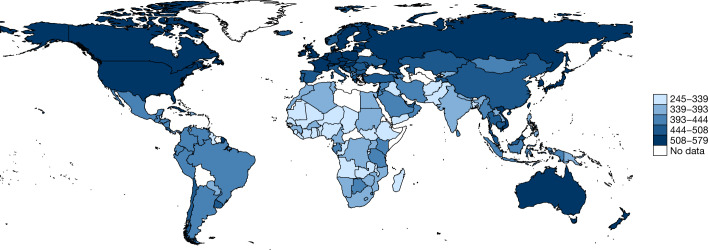
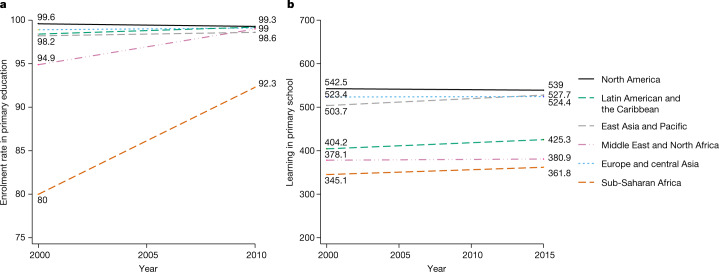
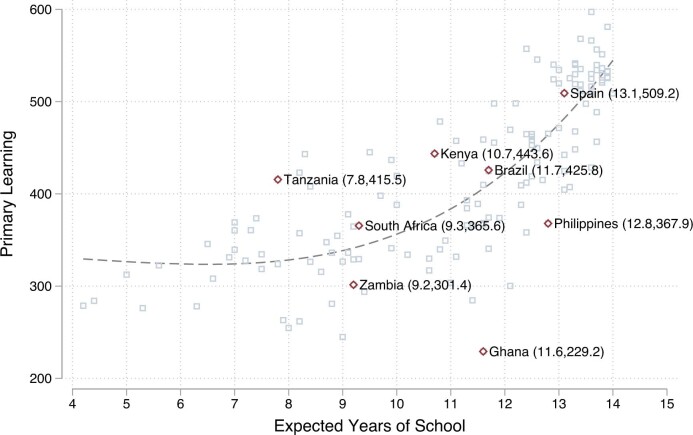
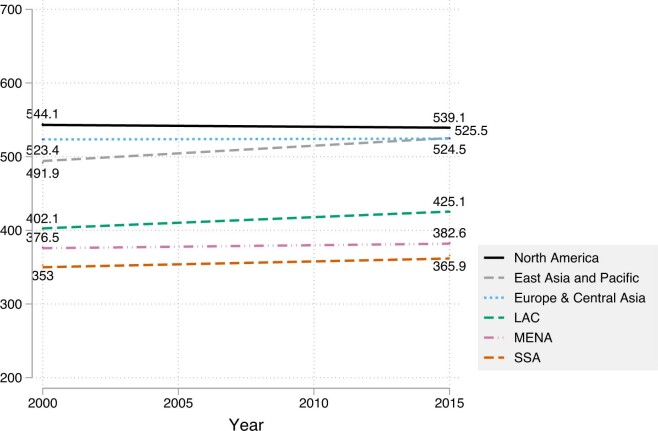
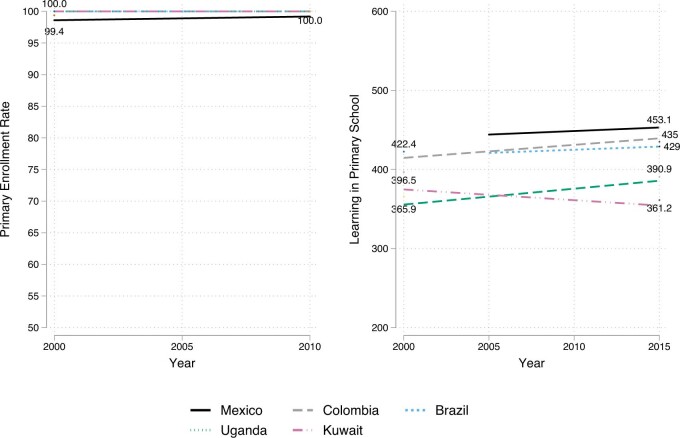
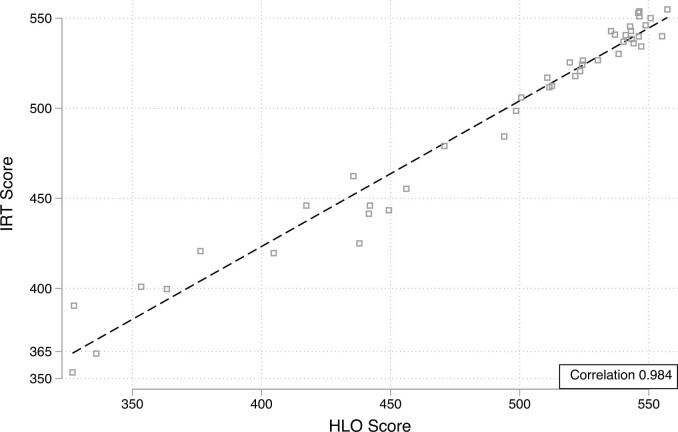
Human capital—that is, resources associated with the knowledge and skills of individuals—is a critical component of economic development 1,2 . Learning metrics that are comparable for countries globally are necessary to understand and track the formation of human capital. The increasing use of international achievement tests is an important step in this direction 3 . However, such tests are administered primarily in developed countries 4 , limiting our ability to analyse learning patterns in developing countries that may have the most to gain from the formation of human capital. Here we bridge this gap by constructing a globally comparable database of 164 countries from 2000 to 2017. The data represent 98% of the global population and developing economies comprise two-thirds of the included countries. Using this dataset, we show that global progress in learning—a priority Sustainable Development Goal—has been limited, despite increasing enrolment in primary and secondary education. Using an accounting exercise that includes a direct measure of schooling quality, we estimate that the role of human capital in explaining income differences across countries ranges from a fifth to half; this result has an intermediate position in the wide range of estimates provided in earlier papers in the literature 5–13 . Moreover, we show that average estimates mask considerable heterogeneity associated with income grouping across countries and regions. This heterogeneity highlights the importance of including countries at various stages of economic development when analysing the role of human capital in economic development. Finally, we show that our database provides a measure of human capital that is more closely associated with economic growth than current measures that are included in the Penn world tables version 9.0 14 and the human development index of the United Nations 15 .
Overview
The claims and statistics of this paper haven’t been checked yet.
Free: it reads the open-access text and checks the first 5 claims that cite a source we can check. Create a free account to check every claim.
Integrity signals
Registry
Cites
Statistics
Figures
Verification
Claims the paper makes
The claims and statistics of this paper haven’t been checked yet.
Free: it reads the open-access text and checks the first 5 claims that cite a source we can check. Create a free account to check every claim.
Claims other papers make about this one
Each is checked against this paper’s own text: does it say what the citing paper says it does?
The cited source says what the claim attributes to it.
In the citing paper
“Low-and middle-income countries were already struggling with a learning crisis before the pandemic.”
From A systematic review and meta-analysis of the evidence on learning during the COVID-19 pandemic (2023) · cites this paper as [30]
Self-check
Percentages, sums and reported differences re-computed from the paper’s own numbers.
The self-check needs the paper’s full text.
Citations
Cites
A Contribution to the Empirics of Economic Growth
Mankiw, N. G., Romer, D., & Weil, D. N. (1992) · The Quarterly Journal of Economics · doi:10.2307/2118477 · Cited by 15,119
An Inquiry into the Nature and Causes of the Wealth of Nations
Smith, A. (1776) · The Glasgow Edition of the Works and Correspondence of Adam Smith, Vol. 2: An Inquiry into the Nature and Causes of the Wealth of Nations, Vol. 1 · doi:10.1093/oseo/instance.00043218 · Cited by 11,757
Investment in Human Capital: A Theoretical Analysis
Becker, G. S. (1962) · Journal of Political Economy · doi:10.1086/258724 · Cited by 8,063
Why do Some Countries Produce So Much More Output Per Worker than Others?
Hall, R. E., & Jones, C. I. (1999) · The Quarterly Journal of Economics · doi:10.1162/003355399555954 · Cited by 7,879
The United Nations Development Programme
Oestreich, J. E. (2017) · Development and Human Rights · doi:10.1093/acprof:oso/9780190637347.003.0003 · Cited by 4,894
The Next Generation of the Penn World Table
Feenstra, R. C., Inklaar, R., & Timmer, M. P. (2015) · American Economic Review · doi:10.1257/aer.20130954 · Cited by 4,799
A new data set of educational attainment in the world, 1950–2010
Barro, R. J., & Lee, J. W. (2013) · Journal of Development Economics · doi:10.1016/j.jdeveco.2012.10.001 · Cited by 4,333
International data on educational attainment: updates and implications
Barro, R. J. (2001) · Oxford Economic Papers · doi:10.1093/oep/53.3.541 · Cited by 2,569
Schooling, Labor-Force Quality, and the Growth of Nations
Hanushek, E. A., & Kimko, D. D. (2000) · American Economic Review · doi:10.1257/aer.90.5.1184 · Cited by 2,164
Education for Growth: Why and for Whom?
Krueger, A. B., & Lindahl, M. (2001) · Journal of Economic Literature · doi:10.1257/jel.39.4.1101 · Cited by 2,060
Cited by
Items 101–200 of 326
Colonial origins and quality of education evidence from cameroon
Bekkouche, Y., & Dupraz, Y. (2023) · World Development · doi:10.1016/j.worlddev.2023.106245 · Cited by 15
A Survey of Judicial Effectiveness: The Last Quarter Century of Empirical Evidence
Bosio, E. (2024) · The World Bank Research Observer · doi:10.1093/wbro/lkae007 · Cited by 10
Cognitive ability and economic growth: how much happiness is optimal?
Burhan, N. A. S., Sabri, M. F., & Rindermann, H. (2022) · International Review of Economics · doi:10.1007/s12232-022-00409-0 · Cited by 21
Araki, S., & Li, S. (2025) · Higher Education · doi:10.1007/s10734-025-01477-1 · Cited by 8
“On the one hand, numerous studies have consistently shown that higher levels of education lead to increased income (e.g., Angrist et al., 2021; Card, 2001; Goldin & Katz, 2008; Sewell & Hauser, 1975).”
Oketch, M., Rolleston, C., Idrogo, C. B., & Araya, M. (2025) · International Journal of Educational Development · doi:10.1016/j.ijedudev.2025.103425 · Cited by 8
Perspectives on socio-ecological studies in the Northern and Southern Hemispheres
Herrera, A. H., Manríquez, M. T., Lorenzo, C., Lencinas, M. V., & Pastur, G. J. M. (2023) · Humanities and Social Sciences Communications · doi:10.1057/s41599-023-01545-w · Cited by 7
“…for the knowledge that societies gradually generate from natural systems (Palla et al., 2015), and there is a scholarly consensus about the relationship between economic development and the scientific knowledge produced by a country (King et al., 2007; Balland et al., 2020; Angrist et al., 2021).”
BackgroundThe effects of private schooling on pupil achievement: a global systemic analysis
Shakeel, M. D., & Dills, A. K. (2023) · Comparative Education · doi:10.1080/03050068.2023.2265280 · Cited by 10
“Our analysis examines student achievement data from the Harmonized Learning Outcomes (HLO) database developed by Angrist et al. (2021).”
MethodAbdulwahab, L. O. (2023) · International Journal of Business Economics (IJBE) · doi:10.30596/ijbe.v5i1.16161 · Cited by 5
“This study's methodology is based on the work of Bahizire et al. (2022), who investigated the impact of intelligence on environmental efficiency in SSA, and Angrist et al. (2021), who recognized education and health as essential elements in human capital development in their study.”
Cash Transfers Improve Economic Conditions and Reduce Maternal Stress in Rural Côte d’Ivoire
Wolf, S., Nzalé, S. K., Ogan, A., & Jasińska, K. K. (2024) · Journal of Child and Family Studies · doi:10.1007/s10826-024-02817-y · Cited by 6
“In rural West African cocoa-growing communities, where educational quality and learning outcomes are both very low (e.g., Angrist et al., 2021) and dropout rates after primary school are high, it is unclear whether unconditional cash transfers would lead cocoa-farming families to increase…”
Chen, S., Piao, X., Xie, J., & Managi, S. (2025) · PLoS ONE · doi:10.1371/journal.pone.0315166 · Cited by 8
Reducing lead toxicity with advanced nanotechnology methods
Toussi, A. G., Rafati, S. S., & Einafshar, E. (2025) · Naunyn-Schmiedeberg s Archives of Pharmacology · doi:10.1007/s00210-025-04170-3 · Cited by 8
“Studies in these countries have revealed that children’s performance on standardized tests for reading and mathematics is generally one to three standard deviations below that of children in high-income environments (Angrist et al. 2021).”
Distance education strategies to improve learning during the COVID-19 pandemic
(2022) · Nature Human Behaviour · doi:10.1038/s41562-022-01382-y · Cited by 6
Ntim, S. K. (2022) · International Journal of Education · doi:10.5296/ije.v14i3.19988 · Cited by 6
Learning Losses and Dropouts: The Heavy Cost COVID-19 Imposed on School-Age Children
Sabarwal, S., Chang, A. Y., Angrist, N., & D’Souza, R. (2023) · World Bank, Washington, DC eBooks · doi:10.1596/978-1-4648-1901-8_ch3 · Cited by 8
Self-citationInadequate teacher content knowledge and what could be done about it: evidence from El Salvador
Brunetti, A., Büchel, K., Jakob, M., Jann, B., & Steffen, D. (2023) · Journal of Development Effectiveness · doi:10.1080/19439342.2023.2213681 · Cited by 14
“Measures for learning outcomes based on various international assessments at the primary school level were recently harmonised by Angrist et al. (2021).”
BackgroundPüsküllüoğlu, E. I. (2023) · Research in Educational Administration & Leadership · doi:10.30828/real.1184741 · Cited by 7
From A to Z: Effects of a 2nd-grade reading intervention program for struggling readers
Lopes, J. A. L., Martins, P. S., Oliveira, C. R., Ferreira, J., Oliveira, J. T., & Crato, N. (2023) · Revista de Psicodidáctica (English ed ) · doi:10.1016/j.psicoe.2023.09.002 · Cited by 11
Feasibility first: Expanding access before fixing learning
Crawfurd, L. (2023) · International Journal of Educational Development · doi:10.1016/j.ijedudev.2023.102949 · Cited by 5
“The World Bank has compiled data from a range of different international assessments, finding that in contrast to the rapid growth observed in enrolment, “ progress in learning has been slow ” (Angrist et al., 2021).”
BackgroundScience Education in the USA During the Cold War
Lopez, F. S., & de Mattos, C. R. (2024) · Science & Education · doi:10.1007/s11191-024-00502-6 · Cited by 5
“…as a programme to globalise and standardise education (Osborne et al., 2017; Sjøberg, 2021) that has been used as a meas‑ ure of the quality of education in different countries throughout the human capital theory (e.g. de la Maisonneuve, Égert & Turner, 2022; Angrist et al., 2021; Giménez, 2015).”
LEARNING LOSSES: THE COMPLEXITY OF PROBLEM IN THE CONTEXT OF WAR IN UKRAINE
Топузов, О. М., Lokshyna, O., & Holovko, M. (2024) · Education Modern Discourses · doi:10.37472/2617-3107-2023-6-01 · Cited by 14
AN IMPROVED ENVIRONMENTAL MANAGEMENT MODEL FOR ASSURING ENERGY AND ECONOMIC PROSPERITY
Hai, N. T., & Duong, N. T. (2024) · Acta Innovations · doi:10.62441/actainnovations.52.2 · Cited by 5
Railway expansions and human capital growth: A 20-year causal analysis in Tokyo
Kumagai, J., Yoo, S., & Managi, S. (2024) · Journal of Transport Geography · doi:10.1016/j.jtrangeo.2024.104076 · Cited by 5
Well-Being in International Large-Scale Assessments
Borgonovi, F. (2022) · Springer international handbooks of education · doi:10.1007/978-3-030-38298-8_45-1 · Cited by 8
Projections of adult skills and the effect of COVID-19
Özdemir, C., Reiter, C., Yıldız, D., & Goujon, A. (2022) · PLoS ONE · doi:10.1371/journal.pone.0277113 · Cited by 8
The Intelligence of Nations. National IQs and CorrelatesPreprint
Henss, R. (2024) · Qeios · doi:10.32388/6ibskw · Cited by 6
Gender, Development, and Recognition of Anthropogenic Climate Change
Verner, M., Vu, H. T., Marlon, J. R., Lee, S., Carman, J., Rosenthal, S. A., & Leiserowitz, A. (2025) · World Development · doi:10.1016/j.worlddev.2025.107169 · Cited by 6
Poland Country Economic Memorandum
Bank, W. (2022) · The World Bank Open Knowledge Repository (World Bank) · doi:10.1596/38116 · Cited by 6
Hussain, Y. R., & Mukhopadhyay, P. (2023) · SAGE Open · doi:10.1177/21582440231220942 · Cited by 8
“An extensive empirical literature has emerged based on this framework (Acemoglu & Autor, 2012; N. Angrist et al., 2021; Beam et al., 2020; Becker, 1994; Collin & Weil, 2020; England & Folbre, 2023; Faggian et al., 2019; Goldin, 2016; H. A. Patrinos & Psacharopoulos, 2020).”
BackgroundIntelligence of Refugees in Germany: Levels, Differences and Possible Determinants
Rindermann, H., Klauk, B., & Thompson, J. (2024) · Journal of Controversial Ideas · doi:10.35995/jci04020020 · Cited by 4
Mobile education builds resilience during shocks in five countries
Angrist, N., Ainomugisha, M., Bathena, S. P., Bergman, P., Crossley, C., Cullen, C., Letsomo, T., Matsheng, M., Panti, R. M., Sabarwal, S., et al. (2026) · Nature · doi:10.1038/s41586-026-10990-x · Cited by 5
“Over the past several decades, education enrolments have improved worldwide, yet learning has barely budged 10,41,42 .”
Self-citationWell-Being in International Large-Scale Assessments
Borgonovi, F. (2022) · Springer international handbooks of education · doi:10.1007/978-3-030-88178-8_45 · Cited by 4
Ferber, S., & Baten, J. (2024) · The Journal of Development Studies · doi:10.1080/00220388.2024.2322974 · Cited by 13
“While in the last decades, more children than ever have been enrolled in primary school in substantial parts of Sub-Saharan Africa, the region has not experienced the expected progress in learning outcomes (Angrist, Djankov, Goldberg, & Patrinos, 2021).”
BackgroundInfluentialTeacher-led innovations to improve education outcomes: Experimental evidence from Brazil
Piza, C., Zwager, A., Ruzzante, M., Dantas, R., & Loureiro, A. (2024) · Journal of Public Economics · doi:10.1016/j.jpubeco.2024.105123 · Cited by 13
Public sector and human capital: on the mechanics of economic development
Bethencourt, C., & Perera‐Tallo, F. (2024) · Journal of Economics · doi:10.1007/s00712-024-00868-9 · Cited by 15
Predictors of harsh discipline practices among rural households in Côte d'Ivoire
Kumar, A., Chen, S., Jasińska, K. K., Ogan, A., Nzalé, S. K., & Wolf, S. (2025) · Journal of Applied Developmental Psychology · doi:10.1016/j.appdev.2025.101785 · Cited by 4
Narjabadifam, P., Karazmay, F., Noori, M. N., Cardone, D., Farsangi, E. N., Wang, T., Stirnimann, F., Hajizadeh, R., Domaneschi, M., Basu, D., et al. (2025) · Environmental Earth Sciences · doi:10.1007/s12665-025-12274-5 · Cited by 5
Kabajulizi, J. (2022) · Journal of International Development · doi:10.1002/jid.3727 · Cited by 3
“Nevertheless, recent studies have developed techniques for measuring learning outcomes, which capture the quality of education reflected in the stock of basic cognitive skills, using standardised test scores, across developed and developing countries (Angrist et al., 2021; Patel & Sandefur, 2020).”
BackgroundThe Role of Institutions on the Nexus between Inequality and Public Education
Kammas, P., Λίτινα, Α., & Palivos, T. (2023) · Journal of Economic Behavior & Organization · doi:10.1016/j.jebo.2022.12.011 · Cited by 11
Mor, S., Parekh, N., Kopala, M. R., & Ashta, A. (2024) · FIIB Business Review · doi:10.1177/23197145231217384 · Cited by 8
Demand-Side Constraints in Development: The Role of Market Size, Trade, and (In)Equality
Goldberg, P. K., & Reed, T. (2020) · National Bureau of Economic Research · doi:10.3386/w27286 · Cited by 5
Self-citationEvaluation of Educational Loss in Europe and Central Asia
Jakubowski, M., Patrinos, H. A., & Gajderowicz, T. J. (2023) · World Bank, Washington, DC eBooks · doi:10.1596/1813-9450-10542 · Cited by 10
“Due to the emergency nature of the COVID-19 pandemic, education systems around the world are facing extreme disruption.”
BackgroundInfluentialSelf-citationCrawford, M., Raheel, N., Korochkina, M., & Rastle, K. (2023) · doi:10.31234/osf.io/2qxm9 · Cited by 4
Sustainable energy transition impact on economic growth in E7 economies
Liu, J., Karikari, F. A., Boateng, S. A., Sackitey, G. M., & Opoku, A. (2025) · Discover Energy · doi:10.1007/s43937-025-00079-3 · Cited by 3
“In BRICS nations, Choi et al. [38] establish unidirectional causality from human capital to GDP, while Angrist et al. [39] estimate that human capital accounts for 20–50% of income differences across countries, highlighting its crucial role in economic development despite varying outcomes across…”
Allen, D., Drean, B., & Lycée George Sand, E. D. V. (2022) · Tamansiswa Management Journal International · doi:10.54204/tmji/vol512022009 · Cited by 4
What is inclusion? Children perspective on education at primary schools in rural Afghanistan
Trani, J., Gettinger, K., Kaplan, I., Wang, Z., Rfat, M., Zhu, Y., Rawab, H., & Bakhshi, P. (2024) · Research in Comparative and International Education · doi:10.1177/17454999241292414 · Cited by 3
“Globally, it is estimated that 244 million children and youth were out of school in 2021 (UNESCO, 2023) and many school going children are not effectively learning basic cognitive skills (such as literacy and arithmetic) (Angrist et al., 2021; UNESCO Institute for Statistics, 2017).”
Nearby armed conflict affects girls’ education in Africa
Tai, X. H. (2025) · PLoS ONE · doi:10.1371/journal.pone.0314106 · Cited by 9
Musfira, M., Hadju, V., Indriasari, R., Ibnu, I. F., Citrakesumasari, C., Thaha, A. R., & Foo, L. H. (2025) · International Journal of Adolescent Medicine and Health · doi:10.1515/ijamh-2025-0114 · Cited by 4
Maruyama, T., & Kurosaki, T. (2022) · Economic Development and Cultural Change · doi:10.1086/721768 · Cited by 5
Teacher depressive symptoms and children's school readiness in Ghana
Peele, M. E., Wolf, S., Behrman, J. R., & Aber, J. L. (2023) · Child Development · doi:10.1111/cdev.13909 · Cited by 8
The Political Acceptability of Time-Limited Labor Mobility: Five Levers Opening the Overton Window
Pritchett, L. H. (2023) · Public Affairs Quarterly · doi:10.5406/21520542.37.3.09 · Cited by 5
Is Sub-Saharan Africa a Knowledge Society or Economy?
Zavale, N. C. (2023) · Political pedagogies · doi:10.1007/978-3-031-37442-5_7 · Cited by 4
Patel, P. C. (2023) · Journal of Evolutionary Economics · doi:10.1007/s00191-023-00846-2 · Cited by 3
Maruapey, M. W., & Hamizar, A. (2024) · Jurnal Penelitian Inovatif · doi:10.54082/jupin.397 · Cited by 12
Education and the Timing of Family Formation: Evidence from Quantile Regression Analysis
Batyra, E. (2024) · Development and Change · doi:10.1111/dech.12846 · Cited by 4
System coherence for learning: applications of the RISE education systems framework
Kaffenberger, M., & Spivack, M. (2023) · Edward Elgar Publishing eBooks · doi:10.4337/9781802205930.00018 · Cited by 3
Михайловна, Д. Д., & Skobelev, D. (2023) · СЕВЕР И РЫНОК формирование экономического порядка · doi:10.37614/2220-802x.2.2023.80.001 · Cited by 22
Home Broadband and Human Capital FormationPreprint
Sanchis-Guarner, R., Montalbán, J., & Weinhardt, F. (2025) · SSRN Electronic Journal · doi:10.2139/ssrn.5226519 · Cited by 3
EFs and Motivation Uniquely Predict Children's Academic Development in CIVPreprint
Finch, J. E., Wolf, S., & Lichand, G. F. (2021) · doi:10.31234/osf.io/ux3bw · Cited by 3
The Overeducation of Immigrants in EuropePreprint
Dalmonte, A., Frattini, T., & Giorgini, S. (2024) · SSRN Electronic Journal · doi:10.2139/ssrn.4991626 · Cited by 3
Wolf, S., Ogan, A., Jasińska, K. K., Nzalé, S. K., Cannanure, V. K., Whitehead, H. L., Corbett, J. M., Tanoh, F., Wortsman, B., Lim, J., et al. (2026) · American Educational Research Journal · doi:10.3102/00028312261430679 · Cited by 3
“Coˆte d’Ivoire ranks among the bottom 30 countries globally (Angrist et al., 2021), with large inequalities between urban and rural regions (Programme on the Analysis of Education Systems [PASEC], 2020).”
The Impact of a Severe Drought on Girls’ Attendance and Learning
Nordstrom, A., & Cotton, C. S. (2025) · American Educational Research Journal · doi:10.3102/00028312251331025 · Cited by 3
“This is consistent with broader trends suggesting students around the world are not meeting basic skill proficiency, despite near-universal primary school enrollment (N. Angrist et al., 2021).”
Developing Collective Impact to Improve Foundational Learning: Evidence from Madagascar
Maruyama, T., & Igei, K. (2025) · The Journal of Development Studies · doi:10.1080/00220388.2025.2525849 · Cited by 4
“As the harmonized learning outcomes (HLO) in the database (Angrist et al., 2021a) are only available for reading in Madagascar, we calculated the micro-LAYS referring to the impact on foundational literacy in Year 1 of this research.”
Chen, S. (2025) · Population Studies · doi:10.1080/00324728.2025.2523761 · Cited by 3
“As a result, even though comparable direct measures of educational quality are increasingly available (Angrist et al. 2021; Lutz et al. 2021; World Bank et al. 2022), data that allow us to link the quality of education received to later reproductive behaviours and fertility outcomes are still…”
InfluentialAn Extended Dataset of Educational Quality Across Countries (1970–2023)
Lee, H., & Lee, J. (2025) · Data · doi:10.3390/data10080130 · Cited by 2
Delprato, M. (2026) · Engineering Applications of Artificial Intelligence · doi:10.1016/j.engappai.2026.115154 · Cited by 4
“Latin American students’ poor achievement at secondary level (Arias Ortiz et al., 2024b) and weak learning growth (Angrist et al., 2021) are of great policy concern, even more so because the region’s low learning trap is rooted in systemic and profound inequalities (Breton and Canavire-Bacarreza,…”
Suresh, J., Zimmermann, M. R., Maiteki‐Sebuguzi, C., Stahlfeld, A., Pratt, A., Mathanga, D. P., Staedke, S. G., Laufer, M. K., DRAKELEY, C. J., Bever, C. A., et al. (2025) · The Lancet Global Health · doi:10.1016/s2214-109x(25)00325-0 · Cited by 3
Parray, W. A., Shireen, A., & Shah, I. A. (2025) · Quality & Quantity · doi:10.1007/s11135-025-02521-z · Cited by 3
“This variable captures both resource allocation and policy prioritization, directly linking government investment to potential improvements in human capital and poverty reduction (UNESCO 2022; Psacharopoulos and Patrinos 2018; Angrist et al. 2021; Hanushek and Woessmann 2012).”
Hammar, N., & Djebbouri, K. B. (2026) · Environmental Impact Assessment Review · doi:10.1016/j.eiar.2026.108422 · Cited by 3
Analysis of intellectual potential measurement indicators
Hajirahimova, M., & İsmayılova, M. (2023) · Problems of Information Society · doi:10.25045/jpis.v14.i1.06 · Cited by 2
Harmonizing Progress: The Resounding Impact of Education on Women's Economic Empowerment
Ullah, R., Daraz, U., & Kamal, A. (2024) · Qlantic Journal of Social Sciences and Humanities · doi:10.55737/qjssh.267011167 · Cited by 2
Ненужные вещи, мусорная проблема и солидарные практики российских потребителей
Андриановна, Ш. М. (2024) · Journal of Economic Sociology · doi:10.17323/1726-3247-2024-2-11-42 · Cited by 13
Using social and behavioral science to address achievement inequality
Brummelman, E., van Atteveldt, N., Wolf, S., & Sierksma, J. (2024) · npj Science of Learning · doi:10.1038/s41539-024-00259-1 · Cited by 3
Vallot, P. (2024) · Formation emploi · doi:10.4000/12b54 · Cited by 3
Shi, Z., Shao, Q., Zhang, L., Zhou, X., Guo, H., & Mi, Z. (2025) · Communications Earth & Environment · doi:10.1038/s43247-025-02230-3 · Cited by 2
Tariq, I., Khan, J. I., & Tariq, A. (2025) · International Journal of Educational Development · doi:10.1016/j.ijedudev.2025.103393 · Cited by 3
Nurul, K., Suratno, S., Sudarti, S., & Dafik, D. (2022) · International Journal of Innovative Research in Education · doi:10.18844/ijire.v9i2.8581 · Cited by 1
Demand-Side Constraints in Development
Goldberg, P. K., & Reed, T. (2020) · World Bank, Washington, DC eBooks · doi:10.1596/1813-9450-9342 · Cited by 2
Self-citationEducation Systems for Girls’ Education in the Indo-Pacific Region
Newman, L., Pelosi, A., Zino, G., Crespi, S., & Gordon, R. (2021) · doi:10.19088/k4d.2021.114 · Cited by 2
Not Too Little, But Too Late: Improving Post-Primary Learning Outcomes in IndiaPreprint
Chiplunkar, G., Dhar, D., & Nagesh, R. (2021) · SSRN Electronic Journal · doi:10.2139/ssrn.3932347 · Cited by 2
Skills, Human Capital, and Economic Development
Raju, S. S., & Sosale, S. (2022) · World Bank policy research working paper · doi:10.1596/1813-9450-10032 · Cited by 4
Human Capital and Climate Change
Angrist, N., Winseck, K., Patrinos, H. A., & Zivin, J. G. (2023) · World Bank, Washington, DC eBooks · doi:10.1596/1813-9450-10316 · Cited by 3
Self-citationThe Intelligence of Nations. National IQs. Update 2023.Preprint
Henss, R. (2023) · doi:10.32388/6lbp4t · Cited by 2
Banking on Education: How Credit Access Promotes Human Capital DevelopmentPreprint
Chang, S., & Ravindran, S. (2023) · SSRN Electronic Journal · doi:10.2139/ssrn.4445490 · Cited by 7
Igarashi, T., & Suryadarma, D. (2023) · doi:10.56506/ruzq5137 · Cited by 2
Navigating the Sustainable Path: Behavioral Determinants of Ecological Conservation in Rural TourismPreprint
Tian, X., & Jiang, Y. (2024) · SSRN Electronic Journal · doi:10.2139/ssrn.4784758 · Cited by 2
Gianinazzi, V., Girard, V., Lehlali, M., & Prado, M. P. (2024) · SSRN Electronic Journal · doi:10.2139/ssrn.4994121 · Cited by 4
The Learning Crisis: Three Years After COVID-19Preprint
Gajderowicz, T. J., Jakubowski, M., Kennedy, A., Kjeldsen, C. C., Patrinos, H. A., & Strietholt, R. (2025) · SSRN Electronic Journal · doi:10.2139/ssrn.5059328 · Cited by 11
Self-citationThe Learning Crisis in the United States Three Years after Covid-19Preprint
Patrinos, H. A., Jakubowski, M., & Gajderowicz, T. J. (2025) · SSRN Electronic Journal · doi:10.2139/ssrn.5173767 · Cited by 4
“This learning crisis is not unique to low-income countries; it has also significantly impacted high-income nations, as Angrist et al. (2021) have shown, with widespread implications for students' educational outcomes globally.”
Self-citationTouati-tliba, M. (2022) · les cahiers du cread · doi:10.4314/cread.v38i3.24 · Cited by 1
“Comparing WoS and Scopus, Archambault et al. (2009) present evidence that indicators of scientific production and citations at the country level are stable and largely independent of the database.”
BackgroundInfluentialMethodological Evaluation of Human Capital in the Digital Economy
Aliyev, T. (2023) · Economic Affairs · doi:10.46852/0424-2513.2s.2023.7 · Cited by 1
Altinok, N., & Diebolt, C. (2024) · Revue d économie politique · doi:10.3917/redp.341.0081 · Cited by 1
Learning quality, its inequality and sustainable development: evidence from global learning data
Piao, X. (2024) · Discover Sustainability · doi:10.1007/s43621-024-00359-3 · Cited by 6
“…the results of regressing economic development on learning scores in math, science, and reading based on the pooled ordinary least squares model and within-country and between-country regression models using global economic development and learning score data from the IMF and Angrist et al. [18].”
InfluentialQuality of Education and Economic Growth
Chakraborty, K. (2025) · Atlantic Economic Journal · doi:10.1007/s11293-025-09826-2 · Cited by 3
“Recent studies used globally comparable human capital data developed by researchers such as Angrist (2021), Campbell and Ungor (2020), D’Souza et al. (2019), Altinok and Diebolt (2024), Kaarsen (2014), Barro and Lee (2015), and Lee and Lee (2016).”
InfluentialKorolenko, V. V., Gruzieva, T. S., & ЛАПТЄВ, С. М. (2025) · Вісник соціальної гігієни та організації охорони здоров я України · doi:10.11603/1681-2786.2025.3.15652 · Cited by 1
Cardona-Arenas, C. D., & Durán, C. A. G. (2025) · Quality & Quantity · doi:10.1007/s11135-025-02480-5 · Cited by 1
High‐Income Dominance in Education Economics: Exploring the Publishing Divide
Adkins, S., & Sunder, N. (2025) · Southern Economic Journal · doi:10.1002/soej.70006 · Cited by 1
Maruyama, J. M., Paula, C. S., Ziebold, C., Tovo‐Rodrigues, L., Santos, I. S., Barros, A. J. D., Murray, J., Evans-Lacko, S. E., & Matijasevich, A. (2025) · BMJ Public Health · doi:10.1136/bmjph-2025-003192 · Cited by 1
Quantitative assessment of human capital in Latvia
Lasmane, S., Libkovska, U., Resele, L., & Zonberga, Z. (2025) · Verslas teorija ir praktika · doi:10.3846/btp.2025.23465 · Cited by 1
“When developing the methodology for the results, Angrist et al. (2021) wrote that informa - tion on the latest test results would be available every 2–3 years, but, as of February 2025, the latest information available in the database provided in their article was for 2017, despite it last being…”
Tiruneh, D. T., Leonard, P., & Rose, P. M. (2026) · International Journal of Educational Development · doi:10.1016/j.ijedudev.2026.103548 · Cited by 4
Home and school factors associated with math trajectories before and after COVID-19 in Ghana
Gerstner, C. E., Suntheimer, N. M., Weiss, E. M., Appiah, R., Aurino, E., & Wolf, S. (2026) · Child Development · doi:10.1093/chidev/aacag018 · Cited by 1
Metadata
- Authors
- Angrist, N., Djankov, S., Goldberg, P. K., & Patrinos, H. A.
- Affiliations
- World Bank (US)
- Peterson Institute for International Economics (US)
- National Bureau of Economic Research (US)
- Corresponding author
- Angrist, Noam
- Venue
- Nature
- Published
- 2021-03-10
- Volume
- 592
- Issue
- 7854
- Pages
- 403-408
- ISSN
- 0028-0836 (ISSN-L)
- 1476-4687
- PMC
- PMC8046667
- OpenAlex
- W3135040737
- Semantic Scholar
- 75fae8a9912fe4a8a084321eec4f489258a1aaa3
- Cited by
- 328
- References
- 38
- Citations by year
- 2026: 47 · 2025: 49 · 2024: 80 · 2023: 69 · 2022: 65 · 2021: 14
- FWCI
- 43.52
- Type
- journal article
- Language
- en
- Open access
- hybrid
- doi.org
- Licence
- cc-by
- creativecommons.org/licenses/by/4.0 (tdm)
- creativecommons.org/licenses/by/4.0 (vor)
- Locations
- Nature (publishedVersion, cc-by)
- PubMed Central (publishedVersion, cc-by)
- PubMed (publishedVersion)
- London School of Economics and Political Science Research Online (London School of Economics and Political Science) (acceptedVersion)
- London School of Economics and Political Science Theses Online (London School of Economics and Political Science) (acceptedVersion)
- LSE Research Online Documents on Economics (submittedVersion)
- RePEc: Research Papers in Economics (submittedVersion)
- Funders
- United States Agency for International Development (FHI360)
- World Bank Group
- Topics
- Social Sciences › Economics, Econometrics and Finance › Economics and Econometrics › Economic Growth and Productivity
- Social Sciences › Economics, Econometrics and Finance › Economics and Econometrics › Economic Growth and Development
- Social Sciences › Development › Culture, Economy, and Development Studies
- Keywords
- human capital, learning metrics, developing countries, economic growth, educational quality, Sustainable Development Goal 4, human capital accounting, Human Development Index, Penn World Table
About these checks
Registry, retraction, Cites and statistics results are computed, not judged, with one exception: a printed reference that no index lists is read once by a model before it counts as a citation error. Claims are extracted by a model and kept only when their quote appears verbatim in the text; each cited source is then checked, with a model’s help, for whether it says what the claim relies on. Those verdicts can be wrong — read the claim’s quote and the cited source before relying on one.
Statistics and arithmetic are recomputed, not judged.
Confidence bands are shown only for fields calibrated on our annotated test set. None is calibrated yet, so no band is shown.
What counts as a claim ›How we measure confidence ›How we check this ›
Are you an author, or do you see a problem with this page? Request a review
Data sources
Bibliographic data: Semantic Scholar, OpenAlex, Crossref.
Contains information from the Semantic Scholar Academic Graph Datasets, made available under the ODC Attribution License (ODC-BY 1.0).
Semantic Scholar’s data is described in: Kinney, R., et al. (2023). The Semantic Scholar Open Data Platform. arXiv:2301.10140.
