

Measuring human capital using global learning data
Open accessThe DOI matches its Crossref record; 37 of the 38 references it cites were found in a registry or an index.
Abstract
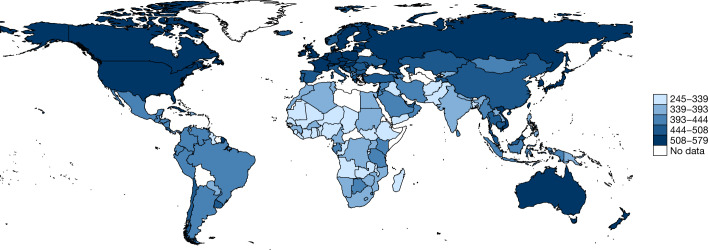
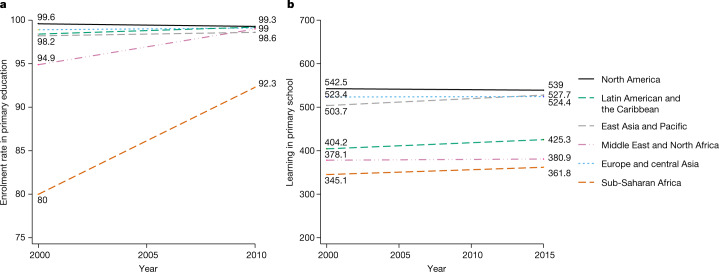
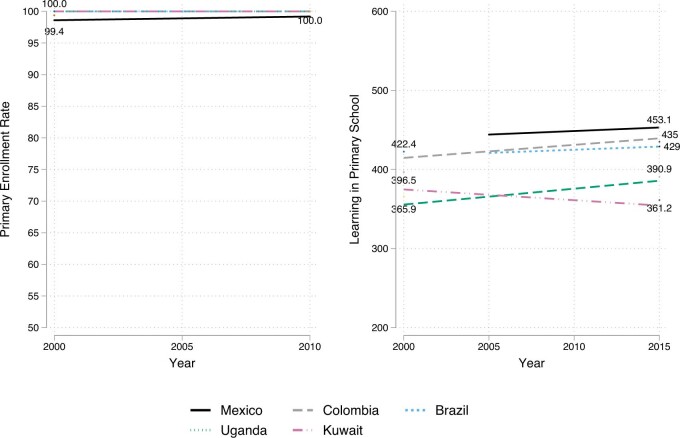
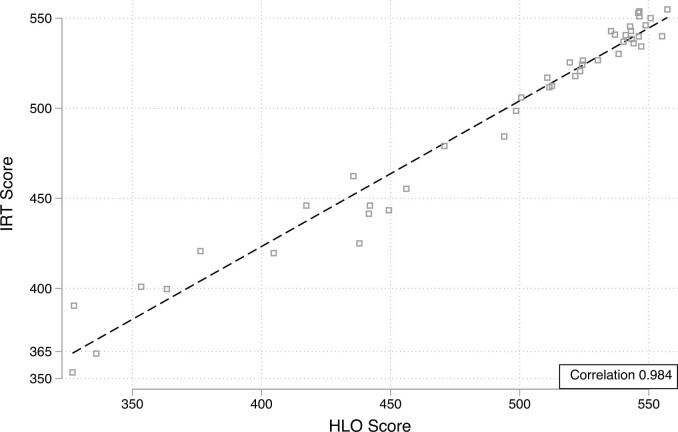
Human capital—that is, resources associated with the knowledge and skills of individuals—is a critical component of economic development 1,2 . Learning metrics that are comparable for countries globally are necessary to understand and track the formation of human capital. The increasing use of international achievement tests is an important step in this direction 3 . However, such tests are administered primarily in developed countries 4 , limiting our ability to analyse learning patterns in developing countries that may have the most to gain from the formation of human capital. Here we bridge this gap by constructing a globally comparable database of 164 countries from 2000 to 2017. The data represent 98% of the global population and developing economies comprise two-thirds of the included countries. Using this dataset, we show that global progress in learning—a priority Sustainable Development Goal—has been limited, despite increasing enrolment in primary and secondary education. Using an accounting exercise that includes a direct measure of schooling quality, we estimate that the role of human capital in explaining income differences across countries ranges from a fifth to half; this result has an intermediate position in the wide range of estimates provided in earlier papers in the literature 5–13 . Moreover, we show that average estimates mask considerable heterogeneity associated with income grouping across countries and regions. This heterogeneity highlights the importance of including countries at various stages of economic development when analysing the role of human capital in economic development. Finally, we show that our database provides a measure of human capital that is more closely associated with economic growth than current measures that are included in the Penn world tables version 9.0 14 and the human development index of the United Nations 15 .
Overview
The claims and statistics of this paper haven’t been checked yet.
Free: it reads the open-access text and checks the first 5 claims that cite a source we can check. Create a free account to check every claim.
Integrity signals
Registry
Cites
Statistics
Figures
Verification
Claims the paper makes
The claims and statistics of this paper haven’t been checked yet.
Free: it reads the open-access text and checks the first 5 claims that cite a source we can check. Create a free account to check every claim.
Claims other papers make about this one
Each is checked against this paper’s own text: does it say what the citing paper says it does?
The cited source says what the claim attributes to it.
In the citing paper
“Low-and middle-income countries were already struggling with a learning crisis before the pandemic.”
From A systematic review and meta-analysis of the evidence on learning during the COVID-19 pandemic (2023) · cites this paper as [30]
Self-check
Percentages, sums and reported differences re-computed from the paper’s own numbers.
The self-check needs the paper’s full text.
Citations
Cites
A Contribution to the Empirics of Economic Growth
Mankiw, N. G., Romer, D., & Weil, D. N. (1992) · The Quarterly Journal of Economics · doi:10.2307/2118477 · Cited by 15,119
An Inquiry into the Nature and Causes of the Wealth of Nations
Smith, A. (1776) · The Glasgow Edition of the Works and Correspondence of Adam Smith, Vol. 2: An Inquiry into the Nature and Causes of the Wealth of Nations, Vol. 1 · doi:10.1093/oseo/instance.00043218 · Cited by 11,757
Investment in Human Capital: A Theoretical Analysis
Becker, G. S. (1962) · Journal of Political Economy · doi:10.1086/258724 · Cited by 8,063
Why do Some Countries Produce So Much More Output Per Worker than Others?
Hall, R. E., & Jones, C. I. (1999) · The Quarterly Journal of Economics · doi:10.1162/003355399555954 · Cited by 7,879
The United Nations Development Programme
Oestreich, J. E. (2017) · Development and Human Rights · doi:10.1093/acprof:oso/9780190637347.003.0003 · Cited by 4,894
The Next Generation of the Penn World Table
Feenstra, R. C., Inklaar, R., & Timmer, M. P. (2015) · American Economic Review · doi:10.1257/aer.20130954 · Cited by 4,799
A new data set of educational attainment in the world, 1950–2010
Barro, R. J., & Lee, J. W. (2013) · Journal of Development Economics · doi:10.1016/j.jdeveco.2012.10.001 · Cited by 4,333
International data on educational attainment: updates and implications
Barro, R. J. (2001) · Oxford Economic Papers · doi:10.1093/oep/53.3.541 · Cited by 2,569
Schooling, Labor-Force Quality, and the Growth of Nations
Hanushek, E. A., & Kimko, D. D. (2000) · American Economic Review · doi:10.1257/aer.90.5.1184 · Cited by 2,164
Education for Growth: Why and for Whom?
Krueger, A. B., & Lindahl, M. (2001) · Journal of Economic Literature · doi:10.1257/jel.39.4.1101 · Cited by 2,060
Cited by
A systematic review and meta-analysis of the evidence on learning during the COVID-19 pandemic
Betthäuser, B. A., Bach-Mortensen, A. M., & Engzell, P. (2023) · Nature Human Behaviour · doi:10.1038/s41562-022-01506-4 · Cited by 568
Public Procurement in Law and Practice
Bosio, E., Djankov, S., Glaeser, E., & Shleifer, A. (2022) · American Economic Review · doi:10.1257/aer.20200738 · Cited by 237
Self-citationGlobal universal basic skills: Current deficits and implications for world development
Gust, S., Hanushek, E. A., & Woessmann, L. (2023) · Journal of Development Economics · doi:10.1016/j.jdeveco.2023.103205 · Cited by 171
Improving Learning in Low- and Lower-Middle-Income Countries
Angrist, N., Aurino, E., Patrinos, H. A., Psacharopoulos, G., Vegas, E., Nordjo, R. E., & Wong, B. A. (2023) · Journal of Benefit-Cost Analysis · doi:10.1017/bca.2023.26 · Cited by 140
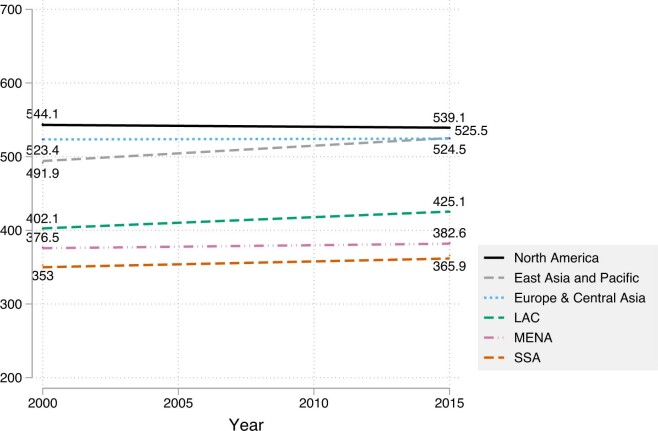
“…of learning, the Harmonized Learning Outcomes (HLO), shows a slow improvement in primary school learning from 2000 to 2015 for most developing regions of the world, but the improvement is vastly insufficient to reach high-performing education systems by 2030 or even 2050 (Angrist et al. , 2020).”
BackgroundMethodInfluentialSelf-citationSecondary School Fee Abolition in Sub-Saharan Africa: Taking Stock of the Evidence
Gruijters, R. J., Abango, M. A., & Casely-Hayford, L. (2024) · Comparative Education Review · doi:10.1086/731496 · Cited by 119
Experimental evidence on learning using low-tech when school is out
Angrist, N., Bergman, P., & Matsheng, M. (2022) · Nature Human Behaviour · doi:10.1038/s41562-022-01381-z · Cited by 105
Self-citationAngrist, N., Evans, D. K., Filmer, D. P., Glennerster, R., Rogers, F., & Sabarwal, S. (2020) · World Bank, Washington, DC eBooks · doi:10.1596/1813-9450-9450 · Cited by 119
Self-citationWho Cares about Using Education Research in Policy and Practice? Strengthening Research Engagement
OECD (2022) · Educational research and innovation · doi:10.1787/d7ff793d-en · Cited by 104
Aggregate Implications of Barriers to Female Entrepreneurship
Chiplunkar, G., & Goldberg, P. K. (2021) · National Bureau of Economic Research · doi:10.3386/w28486 · Cited by 72
“While men have more years of schooling and higher literacy rates on average than women, adjusting for their learning gives a different picture: quality-adjusted years of schooling tend to be higher for women (consistent with Angrist et al. (2021)).”
Self-citationReligion and educational mobility in Africa
Alesina, A., Hohmann, S., Michalopoulos, S., & Papaioannou, E. (2023) · Nature · doi:10.1038/s41586-023-06051-2 · Cited by 65
Home broadband and human capital formation
Sanchis-Guarner, R., Montalbán, J., & Weinhardt, F. (2025) · Economics of Education Review · doi:10.1016/j.econedurev.2025.102679 · Cited by 46
COVID-19, school closures, and student learning outcomes. New global evidence from PISA
Jakubowski, M., Gajderowicz, T., & Patrinos, H. A. (2025) · npj Science of Learning · doi:10.1038/s41539-025-00297-3 · Cited by 65
“Early on, the school closures were expected to contribute to what was already described as a learning crisis (Angrist et al. 2021; World Bank 2017).”
Self-citationAdenle, A. A., Steur, H. D., Mwongera, C., Rola‐Rubzen, M. F., de Barcellos, M. D., Vivanco, D. F., Timilsina, G. R., Possas, C. D. A., Alders, R., Chertow, M. R., et al. (2023) · PLOS Sustainability and Transformation · doi:10.1371/journal.pstr.0000085 · Cited by 58
The role of entrepreneurial absorptive capacity for knowledge spillover entrepreneurship
Kirschning, R., & Mrożewski, M. J. (2022) · Small Business Economics · doi:10.1007/s11187-022-00639-0 · Cited by 47
“1 Details on the methodology can be found in the Nature article by Angrist et al. (2021). 110”
BackgroundMethodInfluentialBuilding Resilient Education Systems: Evidence from Large-Scale Randomized Trials in Five Countries
Angrist, N., Ainomugisha, M., Bathena, S. P., Bergman, P., Crossley, C., Cullen, C., Letsomo, T., Matsheng, M., Panti, R. M., Sabarwal, S., et al. (2023) · National Bureau of Economic Research · doi:10.3386/w31208 · Cited by 63
Self-citationNtim, S. Y., Qin, J., Antwi, C. O., Aboagye, M. O., Chen, S., & Mensah, E. T. (2023) · Heliyon · doi:10.1016/j.heliyon.2023.e14053 · Cited by 53
“But in LMICs, the benefits of ECE for societal growth may be jeopardized by ECE quality problems [40].”
BackgroundVarieties of Indoctrination: The Politicization of Education and the Media around the World
Neundorf, A., Nazrullaeva, E., Northmore‐Ball, K., Tertytchnaya, K., & Kim, W. (2024) · Perspectives on Politics · doi:10.1017/s1537592723002967 · Cited by 64
“…education data mostly measure the quantity (e.g., Barro and Lee 2013; Lee and Lee 2016) or quality (e.g., Altinok, Angrist, and Patrinos 2018; Angrist et al. 2021) of education, or code factual (de jure) information based on primary or secondary archival records (Del Río, Knutsen, and…”
The Longer Students Were Out of School, the Less They Learned
Patrinos, H. A. (2023) · Journal of School Choice · doi:10.1080/15582159.2023.2210941 · Cited by 35
Self-citationWhat If We Are the WEIRD Ones? A Call (and Roadmap) for More Non-WEIRD Entrepreneurship Research
Shepherd, D. A., Wincent, J., & Chase, S. R. (2025) · Entrepreneurship Theory and Practice · doi:10.1177/10422587251347051 · Cited by 48
“In countries with less educated populations and high variability in school quality, years of schooling is a poor proxy for general human capital; instead, researchers must capture the skills students obtain from education (Angrist et al., 2021).”
Exploring factors influencing sustainable human capital development: Insights from Saudi Arabia
Abubakar, A. A., Al‐Mamary, Y. H., Singh, H. P., Sıngh, A., Alam, F., & Agrawal, V. (2024) · Heliyon · doi:10.1016/j.heliyon.2024.e35676 · Cited by 64
How to improve education outcomes most efficiently? A review of the evidence using a unified metric
Angrist, N., Evans, D. K., Filmer, D. P., Glennerster, R., Rogers, H., & Sabarwal, S. (2024) · Journal of Development Economics · doi:10.1016/j.jdeveco.2024.103382 · Cited by 78
Self-citationLee, H. (2022) · Cities · doi:10.1016/j.cities.2022.103609 · Cited by 32
Implementation Matters: Generalizing Treatment Effects in EducationPreprint
Angrist, N., & Meager, R. (2023) · SSRN Electronic Journal · doi:10.2139/ssrn.4487496 · Cited by 57
Self-citationAggregate Implications of Barriers to Female Entrepreneurship
Chiplunkar, G., & Goldberg, P. K. (2024) · Econometrica · doi:10.3982/ecta20396 · Cited by 52
Self-citationHögberg, B., & Horn, D. (2022) · European Sociological Review · doi:10.1093/esr/jcac009 · Cited by 33
Measuring human capital in middle income countries
Demirgüç‐Kunt, A., & Torre, I. (2022) · Journal of Comparative Economics · doi:10.1016/j.jce.2022.05.007 · Cited by 35
COVID-19, School Closures, and Student Learning Outcomes: New Global Evidence from PISA
Jakubowski, M., Gajderowicz, T., & Patrinos, H. (2024) · doi:10.1596/1813-9450-10666 · Cited by 25
Self-citationGlobal labour markets and workplaces in the age of intelligent machines
Ključnikov, A., Popkova, E. G., & Sergi, B. S. (2023) · Journal of Innovation & Knowledge · doi:10.1016/j.jik.2023.100407 · Cited by 45
Goldberg, P. K., & Reed, T. (2023) · Econometrica · doi:10.3982/ecta20787 · Cited by 59
Self-citationHuman Capital and Climate Change
Angrist, N., Winseck, K., Patrinos, H. A., & Zivin, J. G. (2026) · The Review of Economics and Statistics · doi:10.1162/rest_a_01444 · Cited by 34
Self-citationEducational quality and disparities in income and growth across countries
Lee, H., & Lee, J. (2024) · Journal of Economic Growth · doi:10.1007/s10887-023-09239-3 · Cited by 34
“Generally, these studies compare educational quality across countries using internationally-compa-rable test scores for primary and secondary students (Altinok et al., 2018; Angrist et al., 2021; Hanushek & Kimko, 2000; Lee & Barro, 2001).”
InfluentialQiu, J., Lyu, P., & Tian, M. (2024) · Economic Analysis and Policy · doi:10.1016/j.eap.2024.06.005 · Cited by 29
Comparative analysis of E-Government Development Index: a case study of South Asian countries
Younus, M., Pribadi, U., Nurmandi, A., & Rahmawati, I. Z. (2023) · Transforming Government People Process and Policy · doi:10.1108/tg-05-2023-0068 · Cited by 21
Verguet, S., Gautam, P., Ali, I., Husain, A., Meyer, S., Burbano, C., Lloyd-Evans, E., Coco, M., Mphangwe, M., Saka, A., et al. (2023) · BMJ Global Health · doi:10.1136/bmjgh-2023-012545 · Cited by 32
“22 When examining specific policies in terms of LAYS, a recent review found that nearly half of education interventions did not affect education, including very popular approaches, such as general-skills teacher training or increasing teacher salaries.”
BackgroundSelf-citationSoltani, A. (2024) · Energy Conversion and Management X · doi:10.1016/j.ecmx.2024.100802 · Cited by 44
Negative effects of teacher burnout on student executive function and social-emotional outcomes
Oh, J., & Wolf, S. (2023) · Educational Psychology · doi:10.1080/01443410.2023.2205067 · Cited by 29
“In LMICs, where teacher burnout is particularly high (Bennell & Akyeampong, 2007) and student learning is particularly low (Angrist et al., 2021), understanding the associations between the two may provide insights into improving educational quality and student learning outcomes.”
BackgroundCrawford, M., Raheel, N., Korochkina, M., & Rastle, K. (2024) · Nature Human Behaviour · doi:10.1038/s41562-024-02028-x · Cited by 56
How to Recover Learning Losses from COVID-19 School Closures in Asia and the Pacific
Molato-Gayares, R., Park, A. F., Raitzer, D. A., Suryadarma, D., Thomas, M., & Vandenberg, P. (2022) · ADB briefs · doi:10.22617/brf220301-2 · Cited by 37
Rising Tides of Knowledge: Exploring China’s Higher Education Landscape and Human Capital Growth
Xiao, S., Sheng, J., & Zhang, G. (2024) · Journal of the Knowledge Economy · doi:10.1007/s13132-024-02102-9 · Cited by 36
“Second, thanks to panel data analysis that utilized both fixed and random effects models, a better understanding of the intricate relationship between increased human capital and higher education degrees has been achieved (Angrist et al., 2021).”
Remote learning engagement and learning outcomes during school closures in Ghana
Wolf, S., Aurino, E., Suntheimer, N. M., Avornyo, E. A., Tsinigo, E., Jordan, J., Samanhiya, S., Aber, J. L., & Behrman, J. R. (2022) · International Journal of Educational Research · doi:10.1016/j.ijer.2022.102055 · Cited by 22
National Mean IQ Estimates: Validity, Data Quality, and Recommendations
Warne, R. T. (2022) · Evolutionary Psychological Science · doi:10.1007/s40806-022-00351-y · Cited by 24
“The final three scores listed in Table 1 are reported in studies used to calculate measures of educational achievement across multiple continents or worldwide (Angrist et al., 2021; Gust et al., 2022; Patel & Sandefur, 2020).”
Influential‘Utility’ of education and the role of transformative agency: Policy challenges and agendas
Сорокин, П. С., & Froumin, I. D. (2021) · Policy Futures in Education · doi:10.1177/14782103211032080 · Cited by 22
“For example, in the Middle East and North Africa enrollment rates achieved a high of 99% by 2010, increasing from 95% in 2000 (Angrist et al., 2021: 405).”
BackgroundGlobal Universal Basic Skills: Current Deficits and Implications for World Development
Gust, S., Hanushek, E. A., & Woessmann, L. (2022) · National Bureau of Economic Research · doi:10.3386/w30566 · Cited by 19
“…growth (Barro (1991), Mankiw et al. (1992), Hall and Jones (1999), Hanushek and Kimko (2000), Bils and Klenow (2000), Krueger and Lindahl (2001), Hanushek and Woessmann (2008, 2012a, 2012b, 2015a, 2016), Ciccone and Papaioannou, 2009, Barro et al., 2015, Lee et al., 2020, Angrist et al. (2021)).”
InfluentialExploring behavioral determinants of residents’ ecological conservation in rural tourism development
Tian, X., & Jiang, Y. (2025) · Scientific Reports · doi:10.1038/s41598-025-85571-5 · Cited by 21
“Human capital theory suggests that individuals with higher levels of education possess the knowledge and skills necessary to effectively engage in ecological protection 71–73 .”
The case for investment in eye health: systematic review and economic modelling analysis
Wong, B. A., Singh, K., Everett, B., O’Brien, K. S., Ravilla, T., Khanna, R., Chase, H., & Frick, K. D. (2023) · Bulletin of the World Health Organization · doi:10.2471/blt.23.289863 · Cited by 20
The role of human capital in driving renewable energy and sustainable development in India
Nisamudheen, P. P., & Shareef, K. H. (2025) · Utilities Policy · doi:10.1016/j.jup.2025.101969 · Cited by 16
Distributional Growth Accounting: Education and the Reduction of Global Poverty, 1980–2019
Gethin, A. (2025) · The Quarterly Journal of Economics · doi:10.1093/qje/qjaf033 · Cited by 37
The COVID-19 Pandemic as Potential Catalyst for Comparative and International Education
Wolhuter, C. C., & Jacobs, L. (2022) · International perspectives on education and society · doi:10.1108/s1479-36792022000042b001 · Cited by 16
Ntim, S. Y., Qin, J., Antwi, C. O., Aboagye, M. O., Chen, S., & Mensah, E. T. (2023) · Current Psychology · doi:10.1007/s12144-023-04494-4 · Cited by 29
“The quality challenges pose a significant threat to the benefits of preschool education as a critical period for future academic success, later flourishing socially and occupationally in adult life, and the overall societal development (Angrist et al., 2021).”
Becker, D., Coyle, T. R., Minnigh, T. L., & Rindermann, H. (2022) · Intelligence · doi:10.1016/j.intell.2022.101646 · Cited by 18
Directly assessed and adult-reported executive functions: Associations with academic skills in Ghana
Ahmed, I., Steyer, L., Suntheimer, N. M., Wolf, S., & Obradović, J. (2022) · Journal of Applied Developmental Psychology · doi:10.1016/j.appdev.2022.101437 · Cited by 18
Reimagining Education: The International Science and Evidence Based Education (ISEE) Assessment
Duraiappah, A. K., van Atteveldt, N., Buil, J. M., Singh, K., & Wu, R. (2022) · doi:10.56383/jofk3902 · Cited by 16
Children’s arithmetic skills do not transfer between applied and academic mathematics
Banerjee, A., Bhattacharjee, S., Chattopadhyay, R., Duflo, E., Ganimian, A., Rajah, K., & Spelke, E. S. (2025) · Nature · doi:10.1038/s41586-024-08502-w · Cited by 14
IMF Engagement on Social Safety Net Issues in Surveillance and Program Work
Dept., I. M. F. F. A. (2022) · Technical Notes and Manuals · doi:10.5089/9798400222504.005 · Cited by 18
Education Policies and Systems Across Modern History: A Global Dataset
del Río, A., Knutsen, C. H., & Lutscher, P. (2023) · Comparative Political Studies · doi:10.1177/00104140241252075 · Cited by 40
“Using these data, economists have found a tighter fi t with economic growth for (improvements in) education quality-than education quantity measures (e.g., Angrist et al., 2021; Hanushek & Woessmann, 2010, 2012), perhaps un-surprisingly as the former measures better approximate “ human capital ” .”
Wolf, S., & Avornyo, E. A. (2023) · Comparative Education Review · doi:10.1086/722802 · Cited by 19
“The target’s emphasis on quality is critical, as successful efforts over the last 15 years to increase access to primary education in low- and middle-income countries (LMICs) have not resulted in high learning levels (e.g., Angrist et al. 2021).”
BackgroundLearning Curve: Progress in the Replication Crisis
Angrist, N., Cullen, C., Ainomugisha, M., Bathena, S. P., Bergman, P., Crossley, C., Letsomo, T., Matsheng, M., Panti, R. M., Sabarwal, S., et al. (2023) · AEA Papers and Proceedings · doi:10.1257/pandp.20231009 · Cited by 13
“Growing evidence shows that in many education systems in low-and middle-income countries there is a learning crisis, with students learning very little in school (Angrist et al. 2021).”
BackgroundSelf-citationWhitehead, H. L., Ball, M., Brice, H., Wolf, S., Nzalé, S. K., Ogan, A., & Jasińska, K. K. (2024) · Child Development · doi:10.1111/cdev.14018 · Cited by 22
Crawfurd, L., Hares, S., Minardi, A., & Sandefur, J. (2025) · World Development · doi:10.1016/j.worlddev.2025.107140 · Cited by 17
“Primary school enrollment has increased dramatically over the last 50 years, but learning outcomes in many developing countries remain low (Angrist et al., 2021).”
Systems Thinking in International Education and Development: Unlocking Learning for All?
Faul, M. V., & Savage, L. (2023) · Edward Elgar Publishing eBooks · doi:10.4337/9781802205930 · Cited by 37
Wolf, S., Canché, M. S. G., & Coe, K. (2021) · Child Development · doi:10.1111/cdev.13608 · Cited by 16
Cliometrics of learning-adjusted years of schooling: evidence from a new dataset
Altinok, N., & Diebolt, C. (2023) · Cliometrica · doi:10.1007/s11698-023-00276-x · Cited by 15
“As indicated in Angrist et al. (2021), one advantage of this approach is that it means that any changes in test scores over the interval are due to actual progress in learning rather than changes in equating functions between tests.”
BackgroundMethodLow PISA Performance Students: Factors, Perceptions, and Improvement Strategies
AlAli, R. M., & Wardat, Y. (2024) · International Journal of Religion · doi:10.61707/nve8gj33 · Cited by 35
System Coherence for Learning: Applications of the RISE Education Systems Framework
Kaffenberger, M., & Spivack, M. (2022) · doi:10.35489/bsg-risewp_2022/086 · Cited by 11
“A global learning crisis has been widely acknowledged (World Bank, 2018; Angrist et al., 2021; Beatty et al., 2021; UNESCO et al., 2021).”
BackgroundPotential Growth: A Global Database
Çelik, S. K., Köse, M. A., Ohnsorge, F. L., & Ruch, F. (2023) · World Bank policy research working paper · doi:10.1596/1813-9450-10354 · Cited by 19
Nicolai, S., Jordan, K., Adam, T., Kaye, T., & Myers, C. (2023) · International Journal of Educational Development · doi:10.1016/j.ijedudev.2023.102841 · Cited by 24
Jin, D., & Zafar, M. W. (2024) · Natural Resources Forum · doi:10.1111/1477-8947.12405 · Cited by 11
The Effect of Lead Exposure on Children’s Learning in the Developing World: A Meta-Analysis
Crawfurd, L., Todd, R., Hares, S., Sandefur, J., & Bonnifield, R. S. (2024) · The World Bank Research Observer · doi:10.1093/wbro/lkae010 · Cited by 16
A Meta-Analytic Evaluation: Investigating Evidence for the Validity of the Cognitive Abilities Test
Ozen, Z., Pereira, N., Karatas, T., Castillo-Hermosilla, H., & Maeda, Y. (2024) · Gifted Child Quarterly · doi:10.1177/00169862241285593 · Cited by 11
“For example, some tests are vali dated only with participants from developed countries where disparities might differ significantly from other realities (Angrist et al., 2021) and language proficiency can be a fac tor in an individual’s test scores.”
Rising access and falling outcomes: educational change and the GEQIP reforms in Ethiopia
Rolleston, C., Oketch, M., Tiruneh, D. T., & Rossiter, J. (2025) · Journal of International Cooperation in Education · doi:10.1108/jice-03-2024-0012 · Cited by 10
Labor Markets in Developing Countries
Breza, E., & Kaur, S. (2025) · Annual Review of Economics · doi:10.1146/annurev-economics-091124-051650 · Cited by 23
Maruyama, T. (2022) · International Journal of Educational Research · doi:10.1016/j.ijer.2022.101977 · Cited by 19
Elsayed, M., Clerkin, A., Pitsia, V., Aljabri, N., & Al-Harbi, K. (2022) · Large-scale Assessments in Education · doi:10.1186/s40536-022-00141-9 · Cited by 24
“3 A composite indicator of learning outcomes at the country level, based on data from large-scale assessments such as TIMSS, PISA, Progress in International Reading Literacy Study (PIRLS), and early-grade reading or mathematics assessments (Angrist et al., 2021).”
MethodEvaluation of employee occupational stress by estimating the loss of human capital in Japan
Piao, X., & Managi, S. (2022) · BMC Public Health · doi:10.1186/s12889-022-12751-7 · Cited by 18
“Greater human capital growth is associated with sustainable economic development and sustainable societies [3, 4].”
BackgroundInvesting in Human Capital in Africa: A framework for research
Pritchett, L. H. (2024) · International Journal of Educational Development · doi:10.1016/j.ijedudev.2024.103048 · Cited by 18
Boman, B. (2024) · International Journal of Educational Research Open · doi:10.1016/j.ijedro.2024.100360 · Cited by 13
ICT Use and Successful Learning: The Role of the Stock of Human Capital
Giménez, G., & Vargas-Montoya, L. (2021) · Mathematics · doi:10.3390/math9141648 · Cited by 10
“For decades, schooling has been used as the main proxy for human capital, which has mostly been measured in terms of the highest educational attainment distribution of the population or the aggregated mean years of schooling [51].”
BackgroundNudging parents and teachers to improve learning and reduce child labor in Cote d’Ivoire
Wolf, S., & Lichand, G. (2023) · npj Science of Learning · doi:10.1038/s41539-023-00180-z · Cited by 20
Khoudi, Z., Nachaoui, M., & Lyaqini, S. (2024) · Híradástechnika/Infocommunications journal · doi:10.36244/icj.2024.5.2 · Cited by 14
Geographic and gender disparities in global education achievement during the COVID-19 pandemic
Wu, M., Yu, Q., Li, S. L., & Zhang, L. (2022) · International Journal of Applied Earth Observation and Geoinformation · doi:10.1016/j.jag.2022.102850 · Cited by 17
“…United States (Kuhfeld and Tarasawa, 2020; Kuhfeld et al., 2020; Christopher and Stern, 2020), but few on low- and middle-income countries due to lack of the latest education survey data (Kaffenberger, 2021; Altinok et al., 2018; Angrist et al., 2021; Patrinos and Angrist, (2000–2017), (2018).).”
BackgroundMethodThe Learning Crisis of Developing Country Elites: Lessons from PISA-D
Pritchett, L. H., & Viarengo, M. G. (2023) · The World Bank Economic Review · doi:10.1093/wber/lhad001 · Cited by 21
Cross-Country Data on Skills and the Quality of Schooling: A Selective SurveyPreprint
Fuente, A. D. L., & Doménech, R. (2021) · SSRN Electronic Journal · doi:10.2139/ssrn.3975955 · Cited by 9
“An extension of this approach has been used by Angrist et al. (2019), who also take into account an indicator of student learning or the quality of schooling.”
MethodInfluentialDesmond, C., Watt, K., Naicker, S. N., Behrman, J. R., & Richter, L. (2023) · Development Policy Review · doi:10.1111/dpr.12738 · Cited by 17
Educational and Career Trajectories of the Students Completed Vocational and Then College Degree
Korotkikh, E. (2024) · Journal of Economic Sociology · doi:10.17323/1726-3247-2024-2-88-119 · Cited by 9
Unlocking economic growth and sustainable development in sub-Saharan Africa
Osei‐Kusi, F., Wu, C., & Tetteh, S. (2024) · Heliyon · doi:10.1016/j.heliyon.2024.e33252 · Cited by 10
Liu, X., Xu, H., & Zhang, M. (2026) · Structural Change and Economic Dynamics · doi:10.1016/j.strueco.2026.03.001 · Cited by 8
Wai, J., & Brown, M. I. (2021) · Frontiers in Psychology · doi:10.3389/fpsyg.2021.716529 · Cited by 11
WAYS TO IMPROVE THE BUDGET SUPPORT OF SCHOOL EDUCATION DEVELOPMENT IN UKRAINE
Londar, S., Bakhrushyn, V., Londar, L., Gapon, V., & Proń, N. (2022) · Educational Analytics of Ukraine · doi:10.32987/2617-8532-2022-5-5-24 · Cited by 8
Capital humano y crecimiento económico: evidencia empírica para Suramérica
Losada, Ó. H. C., Tovar, M. D. L. Á. C., & Peña, C. Y. P. (2022) · APUNTES DEL CENES · doi:10.19053/01203053.v41.n73.2022.13679 · Cited by 8
Wolf, S., Aurino, E., Suntheimer, N. M., Avornyo, E. A., Tsinigo, E., Behrman, J. R., & Aber, J. L. (2022) · Child Development · doi:10.1111/cdev.13824 · Cited by 10
“Our results suggest that higher- quality ECE was a protective factor for children's educational engagement in a context where prepandemic learning outcomes were among the lowest globally (Angrist et al., 2021).”
ResultGlobal Universal Basic Skills: Current Deficits and Implications for World Development
Gust, S. (2022) · doi:10.35489/bsg-risewp_2022/114 · Cited by 8
Education and Employability: The Critical Role of Foundational Skills
Obiakor, T. E., & Newman, K. (2022) · doi:10.35489/bsg-rise-ri_2022/048 · Cited by 9
Human Capital and Climate Change
Angrist, N., Winseck, K., Patrinos, H. A., & Zivin, J. G. (2023) · National Bureau of Economic Research · doi:10.3386/w31000 · Cited by 15
Self-citationСчастье — неправильная мера: либеральный коммунитаристский ответ на популизм
Etzioni, A. W. (2024) · Journal of Economic Sociology · doi:10.17323/1726-3247-2024-2-43-57 · Cited by 6
The Impact of Socioeconomic Factors on BRICS Migrants in the Russian Federation
Valei, A., & Mamman, S. O. (2024) · Journal of Economic Sociology · doi:10.17323/1726-3247-2024-2-160-176 · Cited by 6
Сорокин, П. С., & Maltseva, V. (2024) · Foresight-Russia · doi:10.17323/2500-2597.2024.1.6.17 · Cited by 14
Investing in the Next Generation: The Long-Run Impacts of a Liquidity Shock
Agte, P., Bernhardt, A., Field, E., Pande, R., & Rigol, N. (2024) · American Economic Review · doi:10.1257/aer.20220296 · Cited by 12
LEGAL SUPPORT OF SOCIO-ECONOMIC DEVELOPMENT MODEL GENESIS IN POST-INDUSTRIAL SOCIETY
Ortynskyi, V., Tsymbaliuk, M., Гобела, В. В., & KASHCHUK, M. (2021) · Financial and credit activity problems of theory and practice · doi:10.18371/fcaptp.v5i40.245212 · Cited by 7
Impact, Y., Angrist, N., Meager, R., & Impact, Y. (2022) · doi:10.51744/cswp4 · Cited by 12
Self-citationMind the gap between education policy and practice
Angrist, N., & Dercon, S. (2024) · Nature Human Behaviour · doi:10.1038/s41562-024-02013-4 · Cited by 6
Self-citation
Metadata
- Authors
- Angrist, N., Djankov, S., Goldberg, P. K., & Patrinos, H. A.
- Affiliations
- World Bank (US)
- Peterson Institute for International Economics (US)
- National Bureau of Economic Research (US)
- Corresponding author
- Angrist, Noam
- Venue
- Nature
- Published
- 2021-03-10
- Volume
- 592
- Issue
- 7854
- Pages
- 403-408
- ISSN
- 0028-0836 (ISSN-L)
- 1476-4687
- PMC
- PMC8046667
- OpenAlex
- W3135040737
- Semantic Scholar
- 75fae8a9912fe4a8a084321eec4f489258a1aaa3
- Cited by
- 328
- References
- 38
- Citations by year
- 2026: 47 · 2025: 49 · 2024: 80 · 2023: 69 · 2022: 65 · 2021: 14
- FWCI
- 43.52
- Type
- journal article
- Language
- en
- Open access
- hybrid
- doi.org
- Licence
- cc-by
- creativecommons.org/licenses/by/4.0 (tdm)
- creativecommons.org/licenses/by/4.0 (vor)
- Locations
- Nature (publishedVersion, cc-by)
- PubMed Central (publishedVersion, cc-by)
- PubMed (publishedVersion)
- London School of Economics and Political Science Research Online (London School of Economics and Political Science) (acceptedVersion)
- London School of Economics and Political Science Theses Online (London School of Economics and Political Science) (acceptedVersion)
- LSE Research Online Documents on Economics (submittedVersion)
- RePEc: Research Papers in Economics (submittedVersion)
- Funders
- United States Agency for International Development (FHI360)
- World Bank Group
- Topics
- Social Sciences › Economics, Econometrics and Finance › Economics and Econometrics › Economic Growth and Productivity
- Social Sciences › Economics, Econometrics and Finance › Economics and Econometrics › Economic Growth and Development
- Social Sciences › Development › Culture, Economy, and Development Studies
- Keywords
- human capital, learning metrics, developing countries, economic growth, educational quality, Sustainable Development Goal 4, human capital accounting, Human Development Index, Penn World Table
About these checks
Registry, retraction, Cites and statistics results are computed, not judged, with one exception: a printed reference that no index lists is read once by a model before it counts as a citation error. Claims are extracted by a model and kept only when their quote appears verbatim in the text; each cited source is then checked, with a model’s help, for whether it says what the claim relies on. Those verdicts can be wrong — read the claim’s quote and the cited source before relying on one.
Statistics and arithmetic are recomputed, not judged.
Confidence bands are shown only for fields calibrated on our annotated test set. None is calibrated yet, so no band is shown.
What counts as a claim ›How we measure confidence ›How we check this ›
Are you an author, or do you see a problem with this page? Request a review
Data sources
Bibliographic data: Semantic Scholar, OpenAlex, Crossref.
Contains information from the Semantic Scholar Academic Graph Datasets, made available under the ODC Attribution License (ODC-BY 1.0).
Semantic Scholar’s data is described in: Kinney, R., et al. (2023). The Semantic Scholar Open Data Platform. arXiv:2301.10140.
