

Quantum logic with spin qubits crossing the surface code threshold
Open accessThe DOI matches its Crossref record; 62 of the 65 references it cites were found in a registry or an index.
Abstract
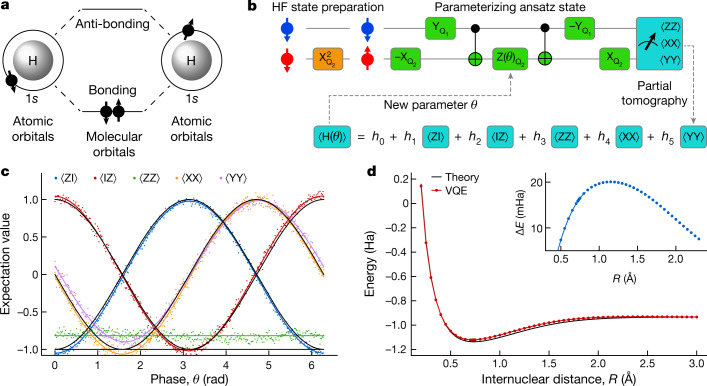
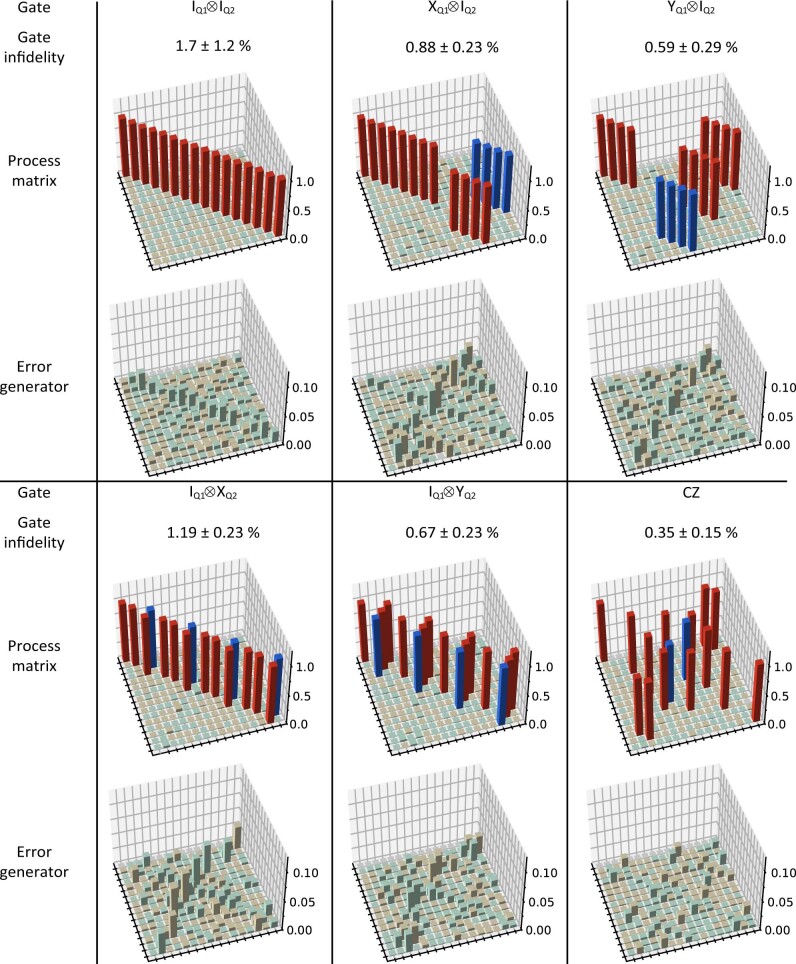
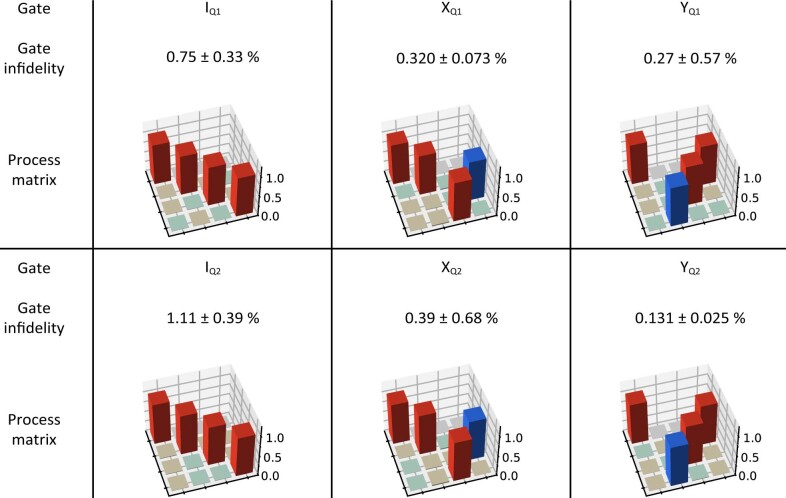
High-fidelity control of quantum bits is paramount for the reliable execution of quantum algorithms and for achieving fault tolerance—the ability to correct errors faster than they occur 1 . The central requirement for fault tolerance is expressed in terms of an error threshold. Whereas the actual threshold depends on many details, a common target is the approximately 1% error threshold of the well-known surface code 2,3 . Reaching two-qubit gate fidelities above 99% has been a long-standing major goal for semiconductor spin qubits. These qubits are promising for scaling, as they can leverage advanced semiconductor technology 4 . Here we report a spin-based quantum processor in silicon with single-qubit and two-qubit gate fidelities, all of which are above 99.5%, extracted from gate-set tomography. The average single-qubit gate fidelities remain above 99% when including crosstalk and idling errors on the neighbouring qubit. Using this high-fidelity gate set, we execute the demanding task of calculating molecular ground-state energies using a variational quantum eigensolver algorithm 5 . Having surpassed the 99% barrier for the two-qubit gate fidelity, semiconductor qubits are well positioned on the path to fault tolerance and to possible applications in the era of noisy intermediate-scale quantum devices.
Overview
The claims and statistics of this paper haven’t been checked yet.
Free: it reads the open-access text and checks the first 5 claims that cite a source we can check. Create a free account to check every claim.
Integrity signals
Registry
Cites
Statistics
Figures
Verification
Claims the paper makes
The claims and statistics of this paper haven’t been checked yet.
Free: it reads the open-access text and checks the first 5 claims that cite a source we can check. Create a free account to check every claim.
Self-check
Percentages, sums and reported differences re-computed from the paper’s own numbers.
The self-check needs the paper’s full text.
Citations
Cites
Quantum Computation and Quantum Information
Nielsen, M. A., Chuang, I., & Grover, L. K. (2002) · American Journal of Physics · doi:10.1119/1.1463744 · Cited by 21,895
Quantum computation and quantum information
Law, J. (2001) · ACM SIGSOFT Software Engineering Notes · doi:10.1145/505482.505499 · Cited by 18,842
Quantum Computing in the NISQ era and beyond
Preskill, J. (2018) · Quantum · doi:10.22331/q-2018-08-06-79 · Cited by 8,830 · cited 1×
“The higher the accuracy, or fidelity, of the operations, the higher the likelihood that near-term applications for quantum computers come in reach [6].”
BackgroundQuantum computation with quantum dots
Loss, D., & DiVincenzo, D. P. (1998) · Physical Review A · doi:10.1103/physreva.57.120 · Cited by 6,840 · cited 2×
“The native two-qubit gate for spin qubits utilizes the exchange interaction [22, 23], originating from the wavefunction overlap of electrons in neighbouring dots.”
BackgroundCoherent Manipulation of Coupled Electron Spins in Semiconductor Quantum Dots
Petta, J. R., Johnson, A. C., Taylor, J. M., Laird, E. A., Yacoby, A., Lukin, M. D., Marcus, C. M., Hanson, M. P., & Gossard, A. C. (2005) · Science · doi:10.1126/science.1116955 · Cited by 3,183 · cited 1×
“The native two-qubit gate for spin qubits utilizes the exchange interaction [22, 23], originating from the wavefunction overlap of electrons in neighbouring dots.”
BackgroundSurface codes: Towards practical large-scale quantum computation
Fowler, A. G., Mariantoni, M., Martinis, J. M., & Cleland, A. N. (2012) · Physical Review A · doi:10.1103/physreva.86.032324 · Cited by 3,059 · cited 2×
“6% and 1%, under certain assumptions, albeit at the cost of a large redundancy in the number of physical qubits [2].”
BackgroundSingle-shot read-out of an individual electron spin in a quantum dot
Elzerman, J. M., Hanson, R., Willems van Beveren, L. H., Witkamp, B., Vandersypen, L. M. K., & Kouwenhoven, L. P. (2004) · Nature · doi:10.1038/nature02693 · Cited by 1,679
Self-citationQuantum computational chemistry
McArdle, S., Endo, S., Aspuru-Guzik, A., Benjamin, S. C., & Yuan, X. (2020) · Reviews of Modern Physics · doi:10.1103/revmodphys.92.015003 · Cited by 1,621 · cited 2×
“the Bravyi-Kitaev (BK) transformation [4].”
MethodLinear transformations which preserve trace and positive semidefiniteness of operators
Jamiołkowski, A. (1972) · Reports on Mathematical Physics · doi:10.1016/0034-4877(72)90011-0 · Cited by 1,512
NMR techniques for quantum control and computation
Vandersypen, L. M. K., & Chuang, I. L. (2005) · Reviews of Modern Physics · doi:10.1103/revmodphys.76.1037 · Cited by 1,217 · cited 1×
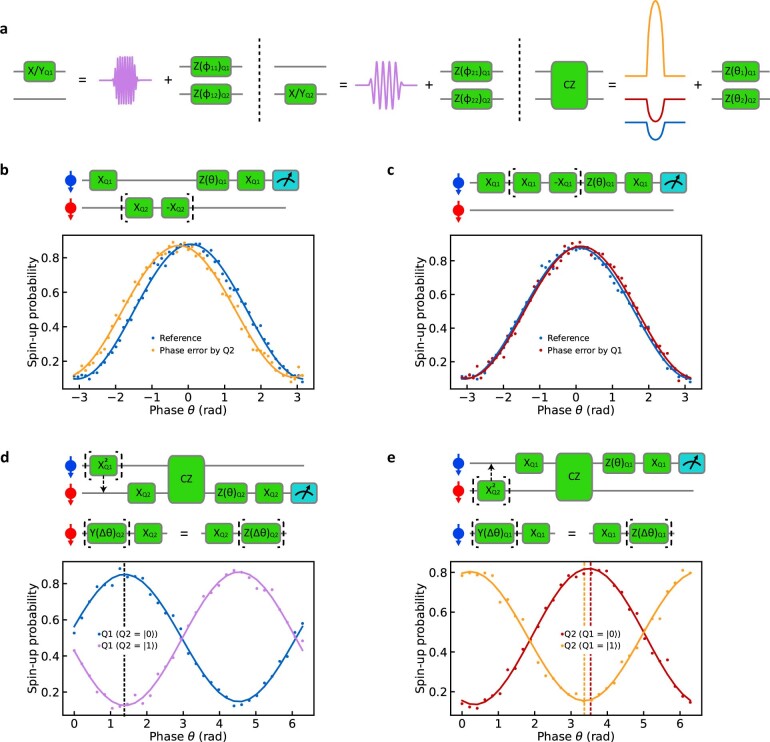
“Single-qubit X and Y gates are implemented by frequency-multiplexed microwave signals applied to gate MW, and virtual Z gates are implemented by a phase update of the reference frame [21].”
MethodSelf-citationA two-qubit logic gate in silicon
Veldhorst, M., Yang, C. H., Hwang, J. C. C., Huang, W., Dehollain, J. P., Muhonen, J. T., Simmons, S., Laucht, A., Hudson, F. E., Itoh, K. M., et al. (2015) · Nature · doi:10.1038/nature15263 · Cited by 919 · cited 2×
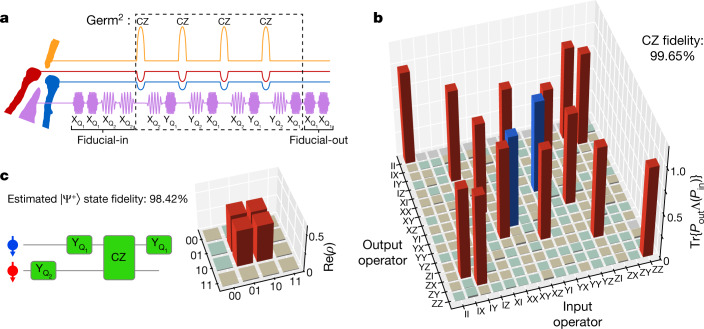
“This selectively shifts the energy of the anti-parallel spin states and thus allows for an electrically pulsed adiabatic cphase gate [7, 17, 24].”
BackgroundA quantum-dot spin qubit with coherence limited by charge noise and fidelity higher than 99.9%
Yoneda, J., Takeda, K., Otsuka, T., Nakajima, T., Delbecq, M. R., Allison, G., Honda, T., Kodera, T., Oda, S., Hoshi, Y., et al. (2018) · Nature Nanotechnology · doi:10.1038/s41565-017-0014-x · Cited by 900
Fault-Tolerant Quantum Computation with High Threshold in Two Dimensions
Raussendorf, R., & Harrington, J. (2007) · Physical Review Letters · doi:10.1103/physrevlett.98.190504 · Cited by 812
A programmable two-qubit quantum processor in silicon
Watson, T. F., Philips, S. G. J., Kawakami, E., Ward, D. R., Scarlino, P., Veldhorst, M., Savage, D. E., Lagally, M. G., Friesen, M., Coppersmith, S. N., et al. (2018) · Nature · doi:10.1038/nature25766 · Cited by 741 · cited 4×
“This has limited the two-qubit Bell state fidelities to 94% [16] and quantum algorithms implemented with spin qubits gave only coarsely accurate outcomes [17, 18].”
BackgroundMethodInfluentialSelf-citation(2013) · Cambridge University Press eBooks · doi:10.1017/cbo9781139034807 · Cited by 655
Interfacing spin qubits in quantum dots and donors—hot, dense, and coherent
Vandersypen, L. M. K., Bluhm, H., Clarke, J. S., Dzurak, A. S., Ishihara, R., Morello, A., Reilly, D. J., Schreiber, L. R., & Veldhorst, M. (2017) · npj Quantum Information · doi:10.1038/s41534-017-0038-y · Cited by 624
Self-citationElectrically driven single-electron spin resonance in a slanting Zeeman field
Pioro-Ladrière, M., Obata, T., Tokura, Y., Shin, Y.-S., Kubo, T., Yoshida, K., Taniyama, T., & Tarucha, S. (2008) · Nature Physics · doi:10.1038/nphys1053 · Cited by 600 · cited 4×
“The transverse components Bx,j induce spin-flips, thus, single-qubit gates if modulated resonantly via EDSR.”
BackgroundInfluentialResonantly driven CNOT gate for electron spins
Zajac, D. M., Sigillito, A. J., Russ, M., Borjans, F., Taylor, J. M., Burkard, G., & Petta, J. R. (2018) · Science · doi:10.1126/science.aao5965 · Cited by 552
Characterizing quantum gates via randomized benchmarking
Magesan, E., Gambetta, J. M., & Emerson, J. (2012) · Physical Review A · doi:10.1103/physreva.85.042311 · Cited by 464
OpenFermion: the electronic structure package for quantum computers
McClean, J. R., Rubin, N. C., Sung, K. J., Kivlichan, I. D., Bonet-Monroig, X., Cao, Y., Dai, C., Fried, E. S., Gidney, C., Gimby, B., et al. (2020) · Quantum Science and Technology · doi:10.1088/2058-9565/ab8ebc · Cited by 464
Quantum Chemistry Calculations on a Trapped-Ion Quantum Simulator
Hempel, C., Maier, C., Romero, J., McClean, J., Monz, T., Shen, H., Jurcevic, P., Lanyon, B. P., Love, P., Babbush, R., et al. (2018) · Physical Review X · doi:10.1103/physrevx.8.031022 · Cited by 446 · cited 3×
“[38] to using the VQE algorithm to compute the ground state of molecular hydrogen, after mapping this state onto the state of two qubits.”
BackgroundMethodResultInfluentialA four-qubit germanium quantum processor
Hendrickx, N. W., Lawrie, W. I. L., Russ, M., van Riggelen, F., de Snoo, S. L., Schouten, R. N., Sammak, A., Scappucci, G., & Veldhorst, M. (2021) · Nature · doi:10.1038/s41586-021-03332-6 · Cited by 405
Self-citationBlume-Kohout, R., Gamble, J. K., Nielsen, E., Rudinger, K., Mizrahi, J., Fortier, K., & Maunz, P. (2017) · Nature Communications · doi:10.1038/ncomms14485 · Cited by 401 · cited 2×
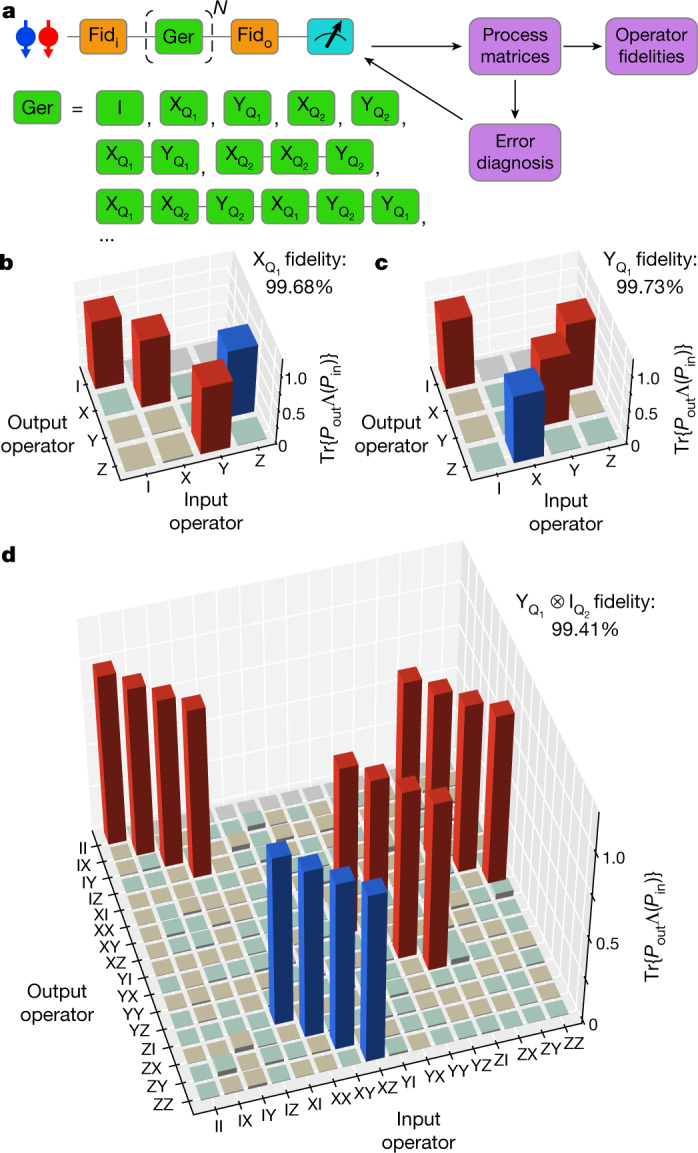
“However, due to the susceptibility of QPT to state preparation and measurement (SPAM) errors, self-consistent benchmarking techniques such as gate set tomography (GST) [28] and alternative techniques such as randomized benchmarking (RB) [29] have been developed.”
BackgroundMethodFidelity benchmarks for two-qubit gates in silicon
Huang, W., Yang, C. H., Chan, K. W., Tanttu, T., Hensen, B., Leon, R. C. C., Fogarty, M. A., Hwang, J. C. C., Hudson, F. E., Itoh, K. M., et al. (2019) · Nature · doi:10.1038/s41586-019-1197-0 · Cited by 370 · cited 1×
“9% [11–13], but the two-qubit gate fidelities reported vary from 92% to 98% [14, 15].”
BackgroundQubits made by advanced semiconductor manufacturing
Zwerver, A. M. J., Krähenmann, T., Watson, T. F., Lampert, L., George, H. C., Pillarisetty, R., Bojarski, S. A., Amin, P., Amitonov, S. V., Boter, J. M., et al. (2022) · Nature Electronics · doi:10.1038/s41928-022-00727-9 · Cited by 364 · cited 2×
“These qubits are well positioned for scaling as they can leverage advanced semiconductor technology [3].”
BackgroundSelf-citationCMOS-based cryogenic control of silicon quantum circuits
Xue, X., Patra, B., van Dijk, J. P. G., Samkharadze, N., Subramanian, S., Corna, A., Paquelet Wuetz, B., Jeon, C., Sheikh, F., Juarez-Hernandez, E., et al. (2021) · Nature · doi:10.1038/s41586-021-03469-4 · Cited by 306
Self-citationReduced Sensitivity to Charge Noise in Semiconductor Spin Qubits via Symmetric Operation
Reed, M. D., Maune, B. M., Andrews, R. W., Borselli, M. G., Eng, K., Jura, M. P., Kiselev, A. A., Ladd, T. D., Merkel, S. T., Milosavljevic, I., et al. (2016) · Physical Review Letters · doi:10.1103/physrevlett.116.110402 · Cited by 297
Scalable Gate Architecture for a One-Dimensional Array of Semiconductor Spin Qubits
Zajac, D. M., Hazard, T. M., Mi, X., Nielsen, E., & Petta, J. R. (2016) · Physical Review Applied · doi:10.1103/physrevapplied.6.054013 · Cited by 291 · cited 1×
“Among all the candidate platforms, electron spins in semiconductor quantum dots have advantages for their long coherence times [7], small footprint [8], the potential for scaling up [9, 10], and the compatibility with advanced semiconductor manufacturing technology [3].”
BackgroundNew perspectives on unitary coupled‐cluster theory
Taube, A. G., & Bartlett, R. J. (2006) · International Journal of Quantum Chemistry · doi:10.1002/qua.21198 · Cited by 254 · cited 1×
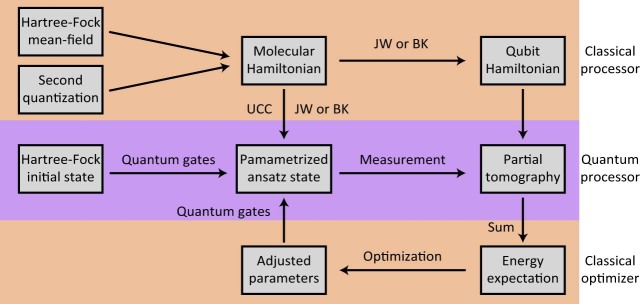
“We apply the unitary coupled cluster (UCC) theory to the parameterized ansatz state, which is widely believed to be a powerful approach and cannot be efficiently executed on a classical computer [55].”
MethodCMOS-based cryogenic control of silicon quantum circuits
Xue, X., Patra, B., van Dijk, J. P. G., Samkharadze, N., Subramanian, S., Corna, A., Wuetz, B. P., Jeon, C., Sheikh, F., Juarez-Hernandez, E., et al. (2020) · RePEc: Research Papers in Economics · Cited by 248
Self-citationOptimal Quantum Control Using Randomized Benchmarking
Kelly, J., Barends, R., Campbell, B., Chen, Y., Chen, Z., Chiaro, B., Dunsworth, A., Fowler, A. G., Hoi, I.-C., Jeffrey, E., et al. (2014) · Physical Review Letters · doi:10.1103/physrevlett.112.240504 · Cited by 247
Noise Suppression Using Symmetric Exchange Gates in Spin Qubits
Martins, F., Malinowski, F. K., Nissen, P. D., Barnes, E., Fallahi, S., Gardner, G. C., Manfra, M. J., Marcus, C. M., & Kuemmeth, F. (2016) · Physical Review Letters · doi:10.1103/physrevlett.116.116801 · Cited by 242 · cited 1×
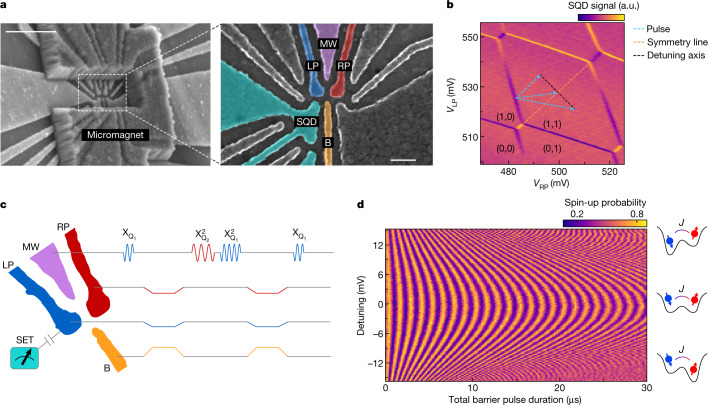
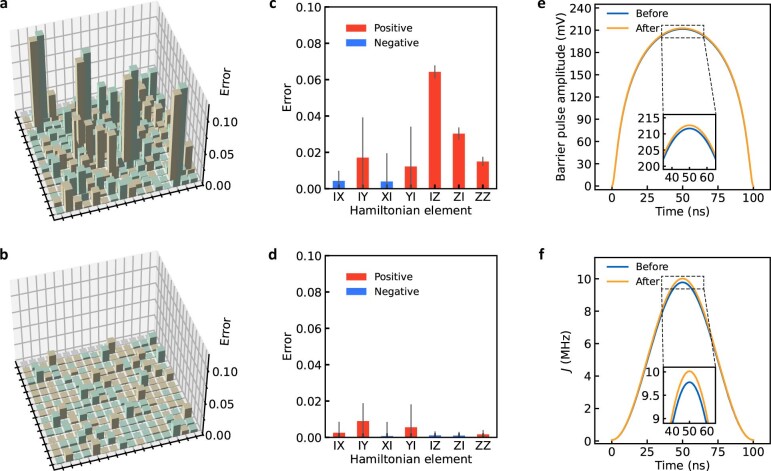
“The tunnel barrier is controlled by simultaneously pulsing gate B and compensating on LP and RP to avoid shifts of the electrochemical potentials [25].”
BackgroundPrecision tomography of a three-qubit donor quantum processor in silicon
Mądzik, M. T., Asaad, S., Youssry, A., Joecker, B., Rudinger, K. M., Nielsen, E., Young, K. C., Proctor, T. J., Baczewski, A. D., Laucht, A., et al. (2022) · Nature · doi:10.1038/s41586-021-04292-7 · Cited by 241
A crossbar network for silicon quantum dot qubits
Li, R., Petit, L., Franke, D. P., Dehollain, J. P., Helsen, J., Steudtner, M., Thomas, N. K., Yoscovits, Z. R., Singh, K. J., Wehner, S., et al. (2018) · Leiden Repository (Leiden University) · Cited by 234
Self-citationSilicon qubit fidelities approaching incoherent noise limits via pulse engineering
Yang, C. H., Chan, K. W., Harper, R., Huang, W., Evans, T., Hwang, J. C. C., Hensen, B., Laucht, A., Tanttu, T., Hudson, F. E., et al. (2019) · Nature Electronics · doi:10.1038/s41928-019-0234-1 · Cited by 201
Fast adiabatic qubit gates using onlyσzcontrol
Martinis, J. M., & Geller, M. R. (2014) · Physical Review A · doi:10.1103/physreva.90.022307 · Cited by 195
Nielsen, E., Gamble, J. K., Rudinger, K., Scholten, T., Young, K., & Blume-Kohout, R. (2021) · Quantum · doi:10.22331/q-2021-10-05-557 · Cited by 189
Rapid gate-based spin read-out in silicon using an on-chip resonator
Zheng, G., Samkharadze, N., Noordam, M. L., Kalhor, N., Brousse, D., Sammak, A., Scappucci, G., & Vandersypen, L. M. K. (2019) · Nature Nanotechnology · doi:10.1038/s41565-019-0488-9 · Cited by 176 · cited 1×
“Independent studies have shown spin qubit readout with a fidelity above 98% in only a few μs [43], with further improvements underway [44].”
BackgroundSelf-citationFidelity benchmarks for two-qubit gates in silicon
Huang, W., Yang, C. H., Chan, K. W., Tanttu, T., Hensen, B., Leon, R. C. C., Fogarty, M. A., Hwang, J. C. C., Hudson, F. E., Itoh, K. M., et al. (2019) · RePEc: Research Papers in Economics · Cited by 155
White, A. G., Gilchrist, A., Pryde, G. J., O'Brien, J. L., Bremner, M. J., & Langford, N. K. (2007) · Journal of the Optical Society of America B · doi:10.1364/josab.24.000172 · Cited by 134
Benchmarking Gate Fidelities in a Si/SiGe Two-Qubit Device
Xue, X., Watson, T. F., Helsen, J., Ward, D. R., Savage, D. E., Lagally, M. G., Coppersmith, S. N., Eriksson, M. A., Wehner, S., & Vandersypen, L. M. K. (2019) · Physical Review X · doi:10.1103/physrevx.9.021011 · Cited by 133
Self-citationGate-Efficient Simulation of Molecular Eigenstates on a Quantum Computer
Ganzhorn, M., Egger, D. J., Barkoutsos, P., Ollitrault, P., Salis, G., Moll, N., Roth, M., Fuhrer, A., Mueller, P., Woerner, S., et al. (2019) · Physical Review Applied · doi:10.1103/physrevapplied.11.044092 · Cited by 131
Detecting highly entangled states with a joint qubit readout
Chow, J. M., DiCarlo, L., Gambetta, J. M., Nunnenkamp, A., Bishop, L. S., Frunzio, L., Devoret, M. H., Girvin, S. M., & Schoelkopf, R. J. (2010) · Physical Review A · doi:10.1103/physreva.81.062325 · Cited by 117 · cited 1×
“The deviations in the odd parity expectation values indicate correlations in the readout of the two qubits [39].”
BackgroundHigh-fidelity quantum gates in Si/SiGe double quantum dots
Russ, M., Zajac, D. M., Sigillito, A. J., Borjans, F., Taylor, J. M., Petta, J. R., & Burkard, G. (2018) · Physical Review B · doi:10.1103/physrevb.97.085421 · Cited by 115
Quantum tomography of an entangled three-qubit state in silicon
Takeda, K., Noiri, A., Nakajima, T., Yoneda, J., Kobayashi, T., & Tarucha, S. (2021) · Nature Nanotechnology · doi:10.1038/s41565-021-00925-0 · Cited by 109 · cited 1×
“This has limited the two-qubit Bell state fidelities to 94% [16] and quantum algorithms implemented with spin qubits gave only coarsely accurate outcomes [17, 18].”
BackgroundGate-Efficient Simulation of Molecular Eigenstates on a Quantum Computer
Ganzhorn, M., Egger, D. J., Tavernelli, I., Filipp, S., Barkoutsos, P. K., Ollitrault, P. J., Salis, G., Moll, N., Roth, M., Fuhrer, A., et al. (2019) · RWTH Publications (RWTH Aachen) · Cited by 109
Efficient controlled-phase gate for single-spin qubits in quantum dots
Meunier, T., Calado, V. E., & Vandersypen, L. M. K. (2011) · Physical Review B · doi:10.1103/physrevb.83.121403 · Cited by 106
Self-citationOptimization of a solid-state electron spin qubit using gate set tomography
Dehollain, J. P., Muhonen, J. T., Blume-Kohout, R., Rudinger, K., Gamble, J. K., Nielsen, E., Laucht, A., Simmons, S., Kalra, R., Dzurak, A. S., et al. (2016) · New Journal of Physics · doi:10.1088/1367-2630/18/10/103018 · Cited by 96 · cited 1×
“We benchmark the fidelities of a universal gate set using gate set tomography [28, 30] (Fig.”
MethodA Taxonomy of Small Markovian Errors
Blume-Kohout, R., Silva, M. P. D., Nielsen, E., Proctor, T. J., Rudinger, K., Sarovar, M., & Young, K. (2022) · PRX Quantum · doi:10.1103/prxquantum.3.020335 · Cited by 84
Fast Gate-Based Readout of Silicon Quantum Dots Using Josephson Parametric Amplification
Schaal, S., Ahmed, I., Haigh, J. A., Hutin, L., Bertrand, B., Barraud, S., Vinet, M., Lee, C.-M., Stelmashenko, N., Robinson, J. W. A., et al. (2020) · Physical Review Letters · doi:10.1103/physrevlett.124.067701 · Cited by 78
Entanglement and Quantum Error Correction with Superconducting QubitsPreprint
Reed, M. (2013) · arXiv (Cornell University) · doi:10.48550/arxiv.1311.6759 · Cited by 78 · cited 1×
“The EDSR burst times tXY 1 and tXY 2 are initially calibrated by an AllXY calibration protocol [45].”
MethodIntroduction to Quantum Gate Set Tomography
Greenbaum, D. (2015) · arXiv (Cornell University) · doi:10.48550/arxiv.1509.02921 · Cited by 77
Probing quantum processor performance with pyGSTi
Nielsen, E., Rudinger, K., Proctor, T., Russo, A., Young, K., & Blume-Kohout, R. (2020) · Quantum Science and Technology · doi:10.1088/2058-9565/ab8aa4 · Cited by 67 · cited 2×
“We use the open source pyGSTi python package [51, 52] to perform the MLE, as well as to design a reduced GST experiment by eliminating redundant circuits, and to provide statistical error bars by computing all involved Hessians.”
MethodAchieving high-fidelity single-qubit gates in a strongly driven charge qubit with 1/f charge noise
Yang, Y., Coppersmith, S. N., & Friesen, M. G. (2019) · npj Quantum Information · doi:10.1038/s41534-019-0127-1 · Cited by 62
Randomized Benchmarking of Barrier versus Tilt Control of a Singlet-Triplet Qubit
Zhang, C., Throckmorton, R. E., Yang, X.-C., Wang, X., Barnes, E., & Sarma, S. D. (2017) · Physical Review Letters · doi:10.1103/physrevlett.118.216802 · Cited by 44
Strong photon coupling to the quadrupole moment of an electron in a solid-state qubit
Koski, J., Landig, A., Rimbach-Russ, M., Abadillo-Uriel, J. C., Scarlino, P., Kratochwil, B., Reichl, C., Wegscheider, W., Burkard, G., Friesen, M. G., et al. (2020) · Nature Physics · doi:10.1038/s41567-020-0862-4 · Cited by 44 · cited 1×
“[47, 48] to generate time-correlated time traces.”
Pathak, A. (2013) · CRC Press eBooks · doi:10.1201/b15007-10 · Cited by 42
High-fidelity gate set for exchange-coupled singlet-triplet qubits
Cerfontaine, P., Otten, R., Wolfe, M. A., Bethke, P., & Bluhm, H. (2020) · Physical review. B./Physical review. B · doi:10.1103/physrevb.101.155311 · Cited by 33
Performance Optimization for Drift-Robust Fidelity Improvement of Two-Qubit Gates
White, G. A. L., Hill, C. D., & Hollenberg, L. C. L. (2021) · Physical Review Applied · doi:10.1103/physrevapplied.15.014023 · Cited by 28
Resonant exchange operation in triple-quantum-dot qubits for spin–photon transduction
Pan, A., Keating, T., Gyure, M. F., Pritchett, E., Quinn, S., Ross, R. S., Ladd, T. D., & Kerckhoff, J. (2020) · Quantum Science and Technology · doi:10.1088/2058-9565/ab86c9 · Cited by 25 · cited 2×
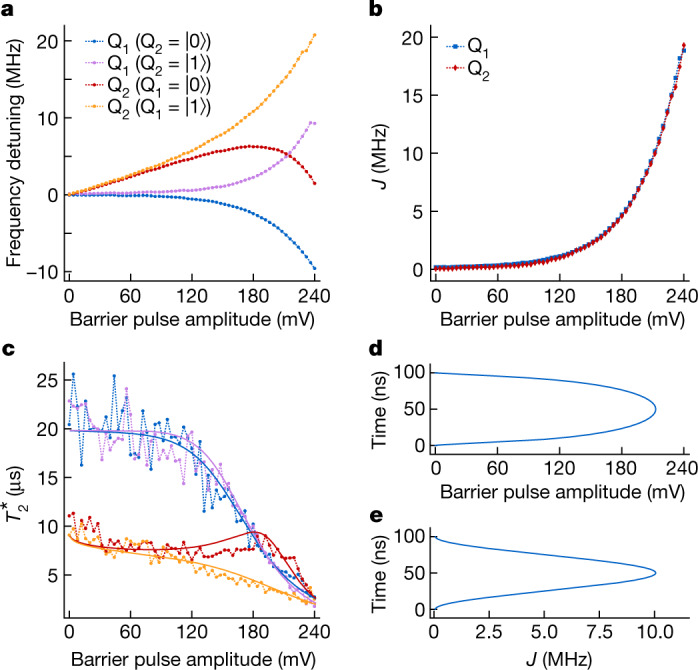
“We model J as an exponential function [34, 35]”
BackgroundMethodPrecision tomography of a three-qubit electron-nuclear quantum processor in siliconPreprint
Mądzik, M. T., & Asaad, S. (2021) · arXiv (Cornell University) · doi:10.6084/m9.figshare.c.5471706 · Cited by 7
The path to high fidelity multi-qubit gates for quantum dot spin qubits
Russ, M., Philips, S. G. J., & Vandersypen, L. M. K. (2021) · Bulletin of the American Physical Society · Cited by 1
Self-citation
Research works printed but not linked: 1
- Xue X Benchmarking gate fidelities in a Si/SiGe two-qubit device Phys. Rev. X 2019 9 021011
Cited by
Burkard, G., Ladd, T. D., Pan, A., Nichol, J. M., & Petta, J. R. (2023) · Reviews of Modern Physics · doi:10.1103/revmodphys.95.025003 · Cited by 715
Cai, Z., Babbush, R., Benjamin, S. C., Endo, S., Huggins, W. J., Li, Y., McClean, J. R., & O’Brien, T. E. (2023) · Reviews of Modern Physics · doi:10.1103/revmodphys.95.045005 · Cited by 591
“…see reports of experiments demonstrating high-quality control over multiple qubits [see e.g. Asavanant et al. (2019); Ebadi et al. (2021); Jurcevic et al. (2021); Madjarov et al. (2020); and Xue et al. (2022)], some even reaching beyond 50 qubits [see e.g. Arute et al. (2019) and Wu et al. (2021)].”
BackgroundFast universal quantum gate above the fault-tolerance threshold in silicon
Noiri, A., Takeda, K., Nakajima, T., Kobayashi, T., Sammak, A., Scappucci, G., & Tarucha, S. (2022) · Nature · doi:10.1038/s41586-021-04182-y · Cited by 471
Self-citationUniversal control of a six-qubit quantum processor in silicon
Philips, S. G. J., Mądzik, M. T., Amitonov, S. V., de Snoo, S. L., Russ, M., Kalhor, N., Volk, C., Lawrie, W. I. L., Brousse, D., Tryputen, L., et al. (2022) · Nature · doi:10.1038/s41586-022-05117-x · Cited by 410
“For small semiconductor spin qubit systems, state-of-the-art single-qubit gate fidelities exceed 99.9% 5,26,27 and two-qubit gates well above 99% fidelity have been demonstrated recently 6–8 , 10 .”
BackgroundMethodInfluentialSelf-citationReal-time quantum error correction beyond break-even
Sivak, V. V., Eickbusch, A., Royer, B., Singh, S., Tsioutsios, I., Ganjam, S., Miano, A., Brock, B. L., Ding, A. Z., Frunzio, L., et al. (2023) · Nature · doi:10.1038/s41586-023-05782-6 · Cited by 407
Metadata
- Authors
- Xue, X., Russ, M., Samkharadze, N., Undseth, B., Sammak, A., Scappucci, G., & Vandersypen, L. M. K.
- Affiliations
- QuTech (NL)
- Netherlands Organisation for Applied Scientific Research (NL)
- Corresponding author
- Vandersypen, Lieven M. K.
- ORCID
- Venue
- Nature
- Published
- 2022-01-19
- Volume
- 601
- Issue
- 7893
- Pages
- 343-347
- ISSN
- 0028-0836 (ISSN-L)
- 1476-4687
- PMC
- PMC8770146
- OpenAlex
- W4206313080
- Cited by
- 524
- References
- 65
- Citations by year
- 2026: 69 · 2025: 131 · 2024: 124 · 2023: 110 · 2022: 82
- FWCI
- 45.93
- Type
- journal article
- Language
- en
- Open access
- hybrid
- doi.org
- Licence
- cc-by
- creativecommons.org/licenses/by/4.0 (tdm)
- creativecommons.org/licenses/by/4.0 (vor)
- Locations
- Nature (publishedVersion, cc-by)
- PubMed Central (publishedVersion, cc-by)
- PubMed (publishedVersion)
- arXiv (Cornell University) (submittedVersion)
- TNO Repository (submittedVersion)
- RePEc: Research Papers in Economics (submittedVersion)
- Research Repository (Delft University of Technology) (submittedVersion, cc-by)
- Data Archiving and Networked Services (DANS) (submittedVersion, other-oa)
- arXiv (Cornell University)
- Funders
- Army Research Office (W911NF‐17‐1‐0274, W911NF)
- Topics
- Physical Sciences › Physics and Astronomy › Condensed Matter Physics › Quantum and electron transport phenomena
- Physical Sciences › Computer Science › Artificial Intelligence › Quantum Computing Algorithms and Architecture
- Physical Sciences › Materials Science › Materials Chemistry › Diamond and Carbon-based Materials Research
- Keywords
- spin qubits, fault tolerance, two-qubit gate fidelity, single-qubit gate fidelity, gate set tomography, variational quantum eigensolver, crosstalk error, NISQ devices
About these checks
Registry, retraction, Cites and statistics results are computed, not judged, with one exception: a printed reference that no index lists is read once by a model before it counts as a citation error. Claims are extracted by a model and kept only when their quote appears verbatim in the text; each cited source is then checked, with a model’s help, for whether it says what the claim relies on. Those verdicts can be wrong — read the claim’s quote and the cited source before relying on one.
Statistics and arithmetic are recomputed, not judged.
Confidence bands are shown only for fields calibrated on our annotated test set. None is calibrated yet, so no band is shown.
What counts as a claim ›How we measure confidence ›How we check this ›
Are you an author, or do you see a problem with this page? Request a review
Data sources
Bibliographic data: Semantic Scholar, OpenAlex, Crossref.
Contains information from the Semantic Scholar Academic Graph Datasets, made available under the ODC Attribution License (ODC-BY 1.0).
Semantic Scholar’s data is described in: Kinney, R., et al. (2023). The Semantic Scholar Open Data Platform. arXiv:2301.10140.
