

Quantum logic with spin qubits crossing the surface code threshold
Open accessThe DOI matches its Crossref record; 62 of the 65 references it cites were found in a registry or an index.
Abstract
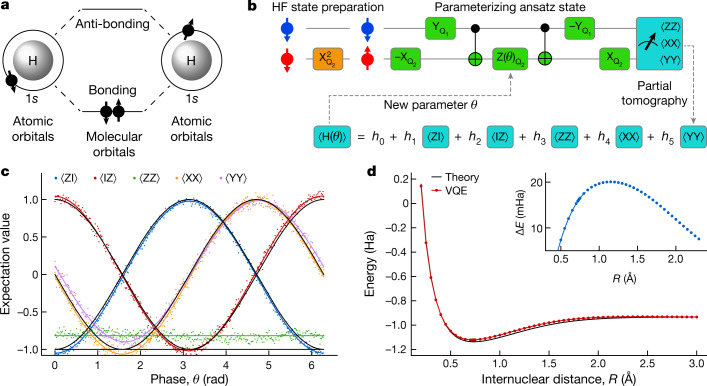
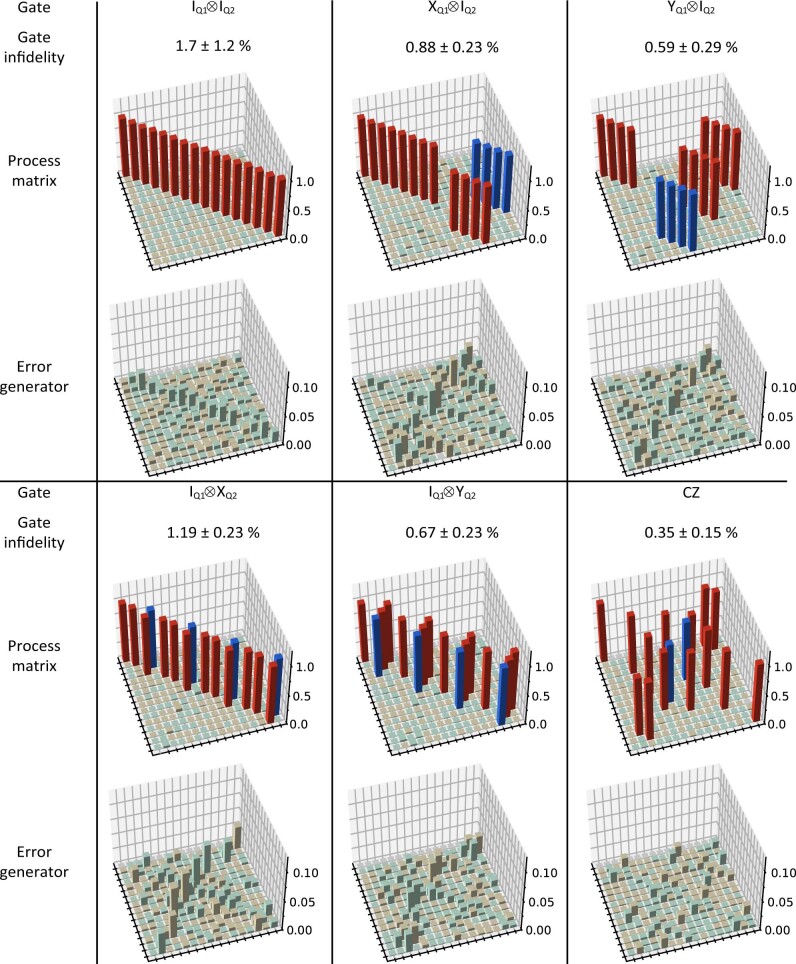
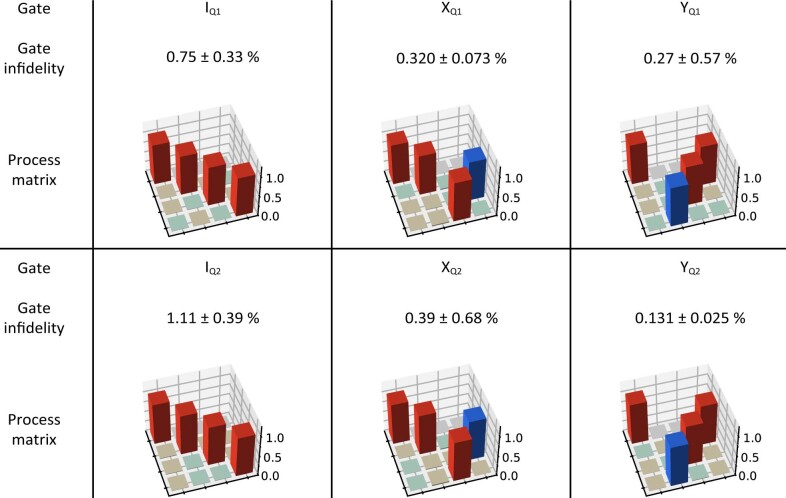
High-fidelity control of quantum bits is paramount for the reliable execution of quantum algorithms and for achieving fault tolerance—the ability to correct errors faster than they occur 1 . The central requirement for fault tolerance is expressed in terms of an error threshold. Whereas the actual threshold depends on many details, a common target is the approximately 1% error threshold of the well-known surface code 2,3 . Reaching two-qubit gate fidelities above 99% has been a long-standing major goal for semiconductor spin qubits. These qubits are promising for scaling, as they can leverage advanced semiconductor technology 4 . Here we report a spin-based quantum processor in silicon with single-qubit and two-qubit gate fidelities, all of which are above 99.5%, extracted from gate-set tomography. The average single-qubit gate fidelities remain above 99% when including crosstalk and idling errors on the neighbouring qubit. Using this high-fidelity gate set, we execute the demanding task of calculating molecular ground-state energies using a variational quantum eigensolver algorithm 5 . Having surpassed the 99% barrier for the two-qubit gate fidelity, semiconductor qubits are well positioned on the path to fault tolerance and to possible applications in the era of noisy intermediate-scale quantum devices.
Overview
The claims and statistics of this paper haven’t been checked yet.
Free: it reads the open-access text and checks the first 5 claims that cite a source we can check. Create a free account to check every claim.
Integrity signals
Registry
Cites
Statistics
Figures
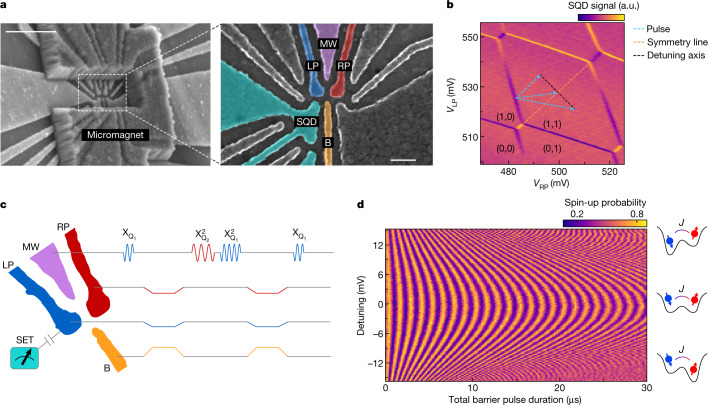
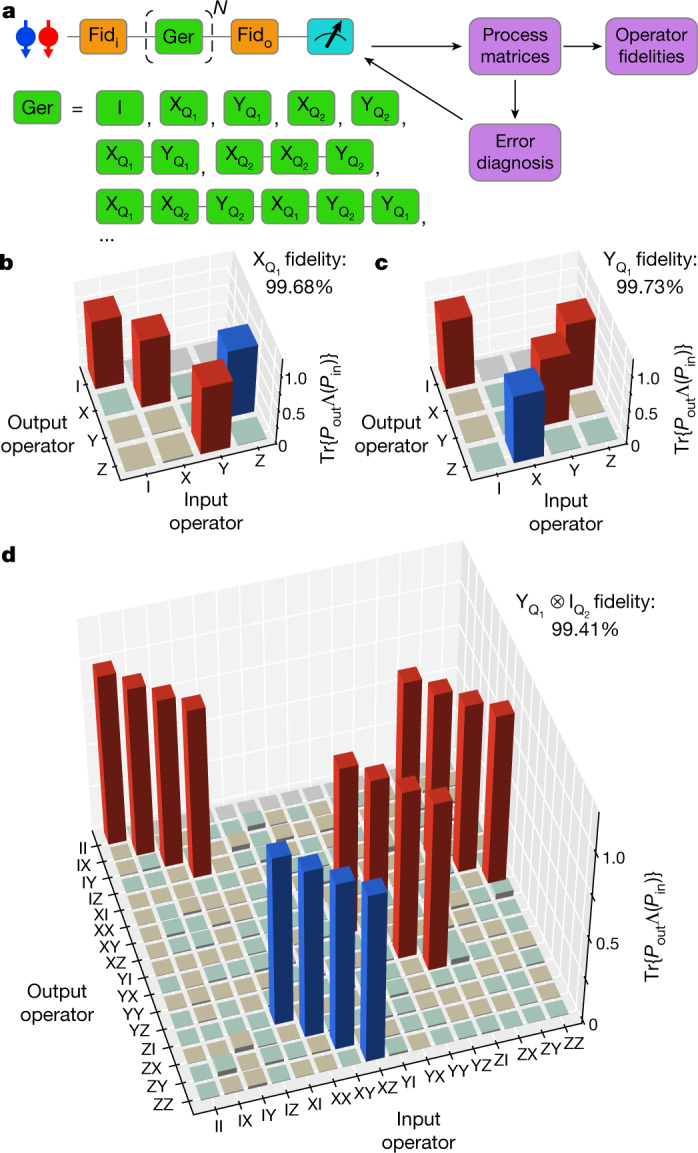
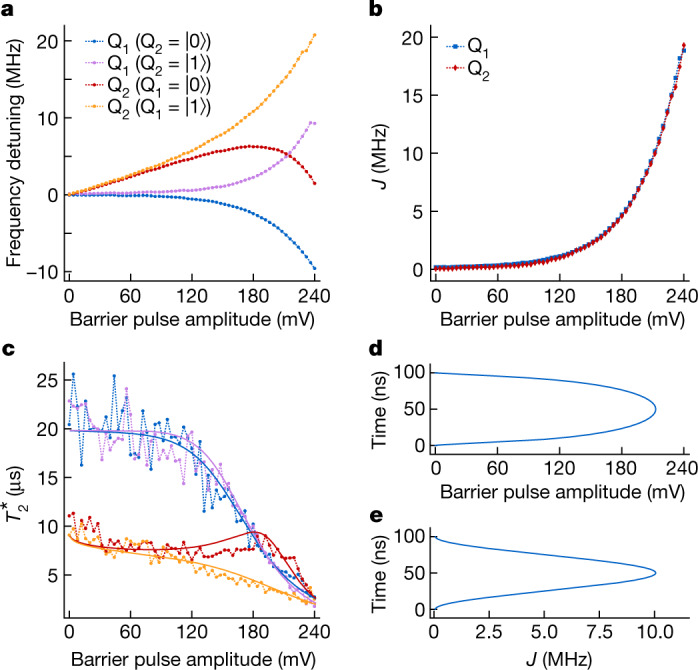
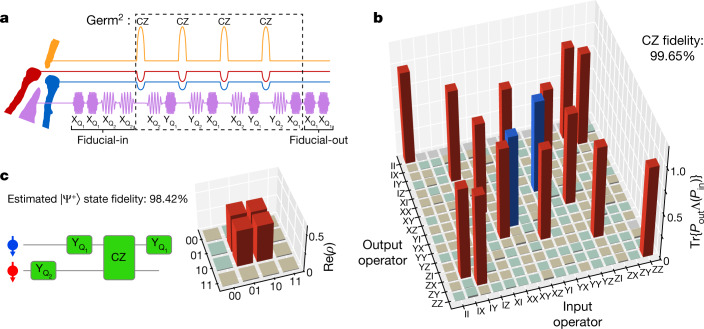
Verification
Claims the paper makes
The claims and statistics of this paper haven’t been checked yet.
Free: it reads the open-access text and checks the first 5 claims that cite a source we can check. Create a free account to check every claim.
Self-check
Percentages, sums and reported differences re-computed from the paper’s own numbers.
The self-check needs the paper’s full text.
Citations
Cites
Quantum Computation and Quantum Information
Nielsen, M. A., Chuang, I., & Grover, L. K. (2002) · American Journal of Physics · doi:10.1119/1.1463744 · Cited by 21,895
Quantum computation and quantum information
Law, J. (2001) · ACM SIGSOFT Software Engineering Notes · doi:10.1145/505482.505499 · Cited by 18,842
Quantum Computing in the NISQ era and beyond
Preskill, J. (2018) · Quantum · doi:10.22331/q-2018-08-06-79 · Cited by 8,830 · cited 1×
“The higher the accuracy, or fidelity, of the operations, the higher the likelihood that near-term applications for quantum computers come in reach [6].”
BackgroundQuantum computation with quantum dots
Loss, D., & DiVincenzo, D. P. (1998) · Physical Review A · doi:10.1103/physreva.57.120 · Cited by 6,840 · cited 2×
“The native two-qubit gate for spin qubits utilizes the exchange interaction [22, 23], originating from the wavefunction overlap of electrons in neighbouring dots.”
BackgroundCoherent Manipulation of Coupled Electron Spins in Semiconductor Quantum Dots
Petta, J. R., Johnson, A. C., Taylor, J. M., Laird, E. A., Yacoby, A., Lukin, M. D., Marcus, C. M., Hanson, M. P., & Gossard, A. C. (2005) · Science · doi:10.1126/science.1116955 · Cited by 3,183 · cited 1×
“The native two-qubit gate for spin qubits utilizes the exchange interaction [22, 23], originating from the wavefunction overlap of electrons in neighbouring dots.”
BackgroundSurface codes: Towards practical large-scale quantum computation
Fowler, A. G., Mariantoni, M., Martinis, J. M., & Cleland, A. N. (2012) · Physical Review A · doi:10.1103/physreva.86.032324 · Cited by 3,059 · cited 2×
“6% and 1%, under certain assumptions, albeit at the cost of a large redundancy in the number of physical qubits [2].”
BackgroundSingle-shot read-out of an individual electron spin in a quantum dot
Elzerman, J. M., Hanson, R., Willems van Beveren, L. H., Witkamp, B., Vandersypen, L. M. K., & Kouwenhoven, L. P. (2004) · Nature · doi:10.1038/nature02693 · Cited by 1,679
Self-citationQuantum computational chemistry
McArdle, S., Endo, S., Aspuru-Guzik, A., Benjamin, S. C., & Yuan, X. (2020) · Reviews of Modern Physics · doi:10.1103/revmodphys.92.015003 · Cited by 1,621 · cited 2×
“the Bravyi-Kitaev (BK) transformation [4].”
MethodLinear transformations which preserve trace and positive semidefiniteness of operators
Jamiołkowski, A. (1972) · Reports on Mathematical Physics · doi:10.1016/0034-4877(72)90011-0 · Cited by 1,512
NMR techniques for quantum control and computation
Vandersypen, L. M. K., & Chuang, I. L. (2005) · Reviews of Modern Physics · doi:10.1103/revmodphys.76.1037 · Cited by 1,217 · cited 1×
“Single-qubit X and Y gates are implemented by frequency-multiplexed microwave signals applied to gate MW, and virtual Z gates are implemented by a phase update of the reference frame [21].”
MethodSelf-citation
Research works printed but not linked: 1
- Xue X Benchmarking gate fidelities in a Si/SiGe two-qubit device Phys. Rev. X 2019 9 021011
Cited by
Burkard, G., Ladd, T. D., Pan, A., Nichol, J. M., & Petta, J. R. (2023) · Reviews of Modern Physics · doi:10.1103/revmodphys.95.025003 · Cited by 715
Cai, Z., Babbush, R., Benjamin, S. C., Endo, S., Huggins, W. J., Li, Y., McClean, J. R., & O’Brien, T. E. (2023) · Reviews of Modern Physics · doi:10.1103/revmodphys.95.045005 · Cited by 591
“…see reports of experiments demonstrating high-quality control over multiple qubits [see e.g. Asavanant et al. (2019); Ebadi et al. (2021); Jurcevic et al. (2021); Madjarov et al. (2020); and Xue et al. (2022)], some even reaching beyond 50 qubits [see e.g. Arute et al. (2019) and Wu et al. (2021)].”
BackgroundFast universal quantum gate above the fault-tolerance threshold in silicon
Noiri, A., Takeda, K., Nakajima, T., Kobayashi, T., Sammak, A., Scappucci, G., & Tarucha, S. (2022) · Nature · doi:10.1038/s41586-021-04182-y · Cited by 471
Self-citationUniversal control of a six-qubit quantum processor in silicon
Philips, S. G. J., Mądzik, M. T., Amitonov, S. V., de Snoo, S. L., Russ, M., Kalhor, N., Volk, C., Lawrie, W. I. L., Brousse, D., Tryputen, L., et al. (2022) · Nature · doi:10.1038/s41586-022-05117-x · Cited by 410
“For small semiconductor spin qubit systems, state-of-the-art single-qubit gate fidelities exceed 99.9% 5,26,27 and two-qubit gates well above 99% fidelity have been demonstrated recently 6–8 , 10 .”
BackgroundMethodInfluentialSelf-citationReal-time quantum error correction beyond break-even
Sivak, V. V., Eickbusch, A., Royer, B., Singh, S., Tsioutsios, I., Ganjam, S., Miano, A., Brock, B. L., Ding, A. Z., Frunzio, L., et al. (2023) · Nature · doi:10.1038/s41586-023-05782-6 · Cited by 407
Qubits made by advanced semiconductor manufacturing
Zwerver, A. M. J., Krähenmann, T., Watson, T. F., Lampert, L., George, H. C., Pillarisetty, R., Bojarski, S. A., Amin, P., Amitonov, S. V., Boter, J. M., et al. (2022) · Nature Electronics · doi:10.1038/s41928-022-00727-9 · Cited by 364
Self-citationTwo-qubit silicon quantum processor with operation fidelity exceeding 99%
Mills, A. R., Guinn, C. R., Gullans, M. J., Sigillito, A. J., Feldman, M. M., Nielsen, E., & Petta, J. R. (2022) · Science Advances · doi:10.1126/sciadv.abn5130 · Cited by 329
Scaling silicon-based quantum computing using CMOS technology
Gonzalez-Zalba, M. F., de Franceschi, S., Charbon, E., Meunier, T., Vinet, M., & Dzurak, A. S. (2021) · Nature Electronics · doi:10.1038/s41928-021-00681-y · Cited by 272
Precision tomography of a three-qubit donor quantum processor in silicon
Mądzik, M. T., Asaad, S., Youssry, A., Joecker, B., Rudinger, K. M., Nielsen, E., Young, K. C., Proctor, T. J., Baczewski, A. D., Laucht, A., et al. (2022) · Nature · doi:10.1038/s41586-021-04292-7 · Cited by 241
Fault-tolerant operation of a logical qubit in a diamond quantum processor
Abobeih, M. H., Wang, Y., Randall, J., Loenen, S. J. H., Bradley, C. E., Markham, M., Twitchen, D. J., Terhal, B. M., & Taminiau, T. H. (2022) · Nature · doi:10.1038/s41586-022-04819-6 · Cited by 230
“F p F p F = ⋅ + (1 − ) ⋅ , (8) L f L raised f L not raised”
Quantum error correction with silicon spin qubits
Takeda, K., Noiri, A., Nakajima, T., Kobayashi, T., & Tarucha, S. (2022) · Nature · doi:10.1038/s41586-022-04986-6 · Cited by 172
Heinrich, A. J., Oliver, W. D., Vandersypen, L. M. K., Ardavan, A., Sessoli, R., Loss, D., Jayich, A. B., Fernandez-Rossier, J., Laucht, A., & Morello, A. (2021) · Nature Nanotechnology · doi:10.1038/s41565-021-00994-1 · Cited by 173
Self-citationProbing single electrons across 300-mm spin qubit wafers
Neyens, S., Zietz, O. K., Watson, T. F., Luthi, F., Nethwewala, A., George, H. C., Henry, E., Islam, M., Wagner, A. J., Borjans, F., et al. (2024) · Nature · doi:10.1038/s41586-024-07275-6 · Cited by 178
“6 –9), satisfying thresholds for error correction 14 .”
InfluentialShared control of a 16 semiconductor quantum dot crossbar array
Borsoi, F., Hendrickx, N. W., John, V., Meyer, M., Motz, S., van Riggelen, F., Sammak, A., de Snoo, S. L., Scappucci, G., & Veldhorst, M. (2024) · Nature Nanotechnology · doi:10.1038/s41565-023-01491-3 · Cited by 165
Self-citationReview of performance metrics of spin qubits in gated semiconducting nanostructures
Stano, P., & Loss, D. (2022) · Nature Reviews Physics · doi:10.1038/s42254-022-00484-w · Cited by 165
“[323] Xiao Xue, Maximilian Russ, Nodar Samkharadze, Brennan Undseth, Amir Sammak, Giordano Scappucci, and Lieven M.”
BackgroundChen, S., Cotler, J. S., Huang, H.-Y., & Li, J. Z. (2023) · Nature Communications · doi:10.1038/s41467-023-41217-6 · Cited by 215
“Most currently available noisy quantum devices, such as those built from superconducting qubits [13, 15, 16, 17], trapped ions [18, 19, 20, 21], nuclear spins in silicon [22, 23, 24], or other solid-state systems [25, 26, 27], are restricted to preparing a noisy initial state, performing noisy quantum gates, and execu…”
Noisy intermediate-scale quantum computers
Cheng, B., Deng, X., Gu, X. Q., He, Y., Hu, G., Huang, P., Li, J., Lin, B., Lu, D., Lu, Y., et al. (2023) · Frontiers of Physics · doi:10.1007/s11467-022-1249-z · Cited by 182
High-fidelity spin qubit operation and algorithmic initialization above 1 K
Huang, J. Y., Su, R. Y., Lim, W. H., Feng, M., van Straaten, B., Severin, B., Gilbert, W., Stuyck, N. D., Tanttu, T., Serrano, S., et al. (2024) · Nature · doi:10.1038/s41586-024-07160-2 · Cited by 194
“Two-qubit gate fidelities in silicon have recently reached the fault-tolerant requirements 23,36,50–52 , and extending this to above 1 K becomes of great interest.”
InfluentialQuantum Computing: Fundamentals, Implementations and Applications
Bhat, H. A., Khanday, F. A., Kaushik, B. K., Bashir, F. I., & Shah, K. A. (2022) · IEEE Open Journal of Nanotechnology · doi:10.1109/ojnano.2022.3178545 · Cited by 152
Universal logic with encoded spin qubits in silicon
Weinstein, A. J., Reed, M. D., Jones, A. M., Andrews, R. W., Barnes, D., Blumoff, J. Z., Euliss, L. E., Eng, K., Fong, B. H., Ha, S. D., et al. (2023) · Nature · doi:10.1038/s41586-023-05777-3 · Cited by 124
“This could in principle be mitigated with increased averaging and self-consistent gateset tomography [10, 26, 27], but we do not explore that here.”
BackgroundA single hole spin with enhanced coherence in natural silicon
Piot, N., Brun, B., Schmitt, V., Zihlmann, S., Michal, V. P., Aprá, A., Abadillo-Uriel, J. C., Jehl, X., Bertrand, B., Niebojewski, H., et al. (2022) · Nature Nanotechnology · doi:10.1038/s41565-022-01196-z · Cited by 146
“(7) Here S = ~ 2 σ is the spin 1/2 operator and ωL(VG) = μB ~ g(VG) · B stands for the spin precession (Larmor) vector, proportional to the product of the voltage-dependent g-tensor (or g-matrix(49)) g(VG) with the external magnetic field B.”
BackgroundConveyor-mode single-electron shuttling in Si/SiGe for a scalable quantum computing architecture
Seidler, I., Struck, T., Xue, R., Focke, N., Trellenkamp, S., Bluhm, H., & Schreiber, L. R. (2022) · npj Quantum Information · doi:10.1038/s41534-022-00615-2 · Cited by 151
Industry-compatible silicon spin-qubit unit cells exceeding 99% fidelity
Steinacker, P., Stuyck, N. D., Lim, W. H., Tanttu, T., Feng, M., Serrano, S., Nickl, A., Candido, M., Cifuentes, J. D., Vahapoglu, E., et al. (2025) · Nature · doi:10.1038/s41586-025-09531-9 · Cited by 187
“One of the most widely identified main limiting factors to achieving high control fidelity and coherence with spin qubits is charge noise 3,5,6,10,41,47,48 .”
Operating semiconductor quantum processors with hopping spins
Wang, C.-A., John, V., Tidjani, H., Yu, C. X., Ivlev, A., Déprez, C., van Riggelen, F., Woods, B. D., Hendrickx, N. W., Lawrie, W. I. L., et al. (2024) · Science · doi:10.1126/science.ado5915 · Cited by 109
Self-citationSweet-spot operation of a germanium hole spin qubit with highly anisotropic noise sensitivity
Hendrickx, N. W., Massai, L., Mergenthaler, M., Schupp, F. J., Paredes, S., Bedell, S. W., Salis, G., & Fuhrer, A. (2024) · Nature Materials · doi:10.1038/s41563-024-01857-5 · Cited by 158
Early Fault-Tolerant Quantum Computing
Katabarwa, A., Gratsea, K., Caesura, A., & Johnson, P. D. (2024) · PRX Quantum · doi:10.1103/prxquantum.5.020101 · Cited by 103
“Such thresholds have become the established targets for hardware developers [74–77].”
BackgroundA shuttling-based two-qubit logic gate for linking distant silicon quantum processors
Noiri, A., Takeda, K., Nakajima, T., Kobayashi, T., Sammak, A., Scappucci, G., & Tarucha, S. (2022) · Nature Communications · doi:10.1038/s41467-022-33453-z · Cited by 123
Self-citationAssessment of the errors of high-fidelity two-qubit gates in silicon quantum dots
Tanttu, T., Lim, W. H., Huang, J. Y., Stuyck, N. D., Gilbert, W., Su, R. Y., Feng, M., Cifuentes, J. D., Seedhouse, A. E., Seritan, S., et al. (2024) · Nature Physics · doi:10.1038/s41567-024-02614-w · Cited by 96
“…a combination of better materials to reduce noise 37,38 , active use of these tomographic results to recalibrate gates against Hamiltonian errors 12,34 and pulse engineering to reduce the stochastic errors with robust gates and dynamical decoupling 39–42 (see also: Supplementary Discussion:…”
12-Spin-Qubit Arrays Fabricated on a 300 mm Semiconductor Manufacturing Line
George, H. C., Mądzik, M. T., Henry, E., Wagner, A. J., Islam, M. M., Borjans, F., Connors, E. J., Corrigan, J., Curry, M., Harper, M. K., et al. (2024) · Nano Letters · doi:10.1021/acs.nanolett.4c05205 · Cited by 139
“Electron spin-qubit devices based on gate-defined silicon quantum dots (QD) are a promising platform for quantum computing due to their small device size, scalability, long spin coherence times [1–4] and high single-qubit and two-qubit fidelities [5–7].”
The SpinBus architecture for scaling spin qubits with electron shuttling
Künne, M., Willmes, A., Oberländer, M., Gorjaew, C., Teske, J. D., Bhardwaj, H., Beer, M., Kammerloher, E., Otten, R., Seidler, I., et al. (2024) · Nature Communications · doi:10.1038/s41467-024-49182-4 · Cited by 133
Low charge noise quantum dots with industrial CMOS manufacturing
Elsayed, A., Shehata, M. M. E. K., Godfrin, C., Kubicek, S., Massar, S., Canvel, Y., Jussot, J., Simion, G., Mongillo, M., Wan, D., et al. (2024) · npj Quantum Information · doi:10.1038/s41534-024-00864-3 · Cited by 113
Reducing charge noise in quantum dots by using thin silicon quantum wells
Wuetz, B. P., Esposti, D. D., Zwerver, A.-M., Amitonov, S. V., Botifoll, M., Arbiol, J., Vandersypen, L. M. K., Rimbach-Russ, M., & Scappucci, G. (2023) · Nature Communications · doi:10.1038/s41467-023-36951-w · Cited by 122
Self-citationLangrock, V., Krzywda, J. A., Focke, N., Seidler, I., Schreiber, L. R., & Cywiński, Ł. (2023) · PRX Quantum · doi:10.1103/prxquantum.4.020305 · Cited by 97
“The fidelity of single-qubit [5, 8–10] and two-qubit gates [11] already exceeds the quantum error correction threshold [12].”
BackgroundAtomic fluctuations lifting the energy degeneracy in Si/SiGe quantum dots
Wuetz, B. P., Losert, M. P., Koelling, S., Stehouwer, L. E. A., Zwerver, A.-M., Philips, S. G. J., Mądzik, M. T., Xue, X., Zheng, G., Lodari, M., et al. (2022) · Nature Communications · doi:10.1038/s41467-022-35458-0 · Cited by 116
Self-citationLong-lived valley states in bilayer graphene quantum dots
Garreis, R., Tong, C., Terle, J., Ruckriegel, M. J., Gerber, J. D., Gächter, L. M., Watanabe, K., Taniguchi, T., Ihn, T., Ensslin, K., et al. (2024) · Nature Physics · doi:10.1038/s41567-023-02334-7 · Cited by 102
“V 28–30 , silicon-based 31–34 and germanium-based 35 heterostructures.”
Calibrated Decoders for Experimental Quantum Error Correction
Chen, E. H., Yoder, T. J., Kim, Y., Sundaresan, N., Srinivasan, S., Li, M., Córcoles, A. D., Cross, A. W., & Takita, M. (2022) · Physical Review Letters · doi:10.1103/physrevlett.128.110504 · Cited by 71
Practical Introduction to Benchmarking and Characterization of Quantum Computers
Hashim, A., Nguyen, L. B., Goss, N., Marinelli, B., Naik, R., Chistolini, T., Hines, J., Marceaux, J. P., Kim, Y., Gokhale, P., et al. (2025) · PRX Quantum · doi:10.1103/prxquantum.6.030202 · Cited by 133
Recent advances in hole-spin qubits
Fang, Y., Philippopoulos, P., Culcer, D., Coish, W. A., & Chesi, S. (2023) · Materials for Quantum Technology · doi:10.1088/2633-4356/acb87e · Cited by 102
High-fidelity single-spin shuttling in silicon
Smet, M. D., Matsumoto, Y., Zwerver, A.-M., Tryputen, L., de Snoo, S. L., Amitonov, S. V., Katiraee-Far, S. R., Sammak, A., Samkharadze, N., Gül, Ö., et al. (2025) · Nature Nanotechnology · doi:10.1038/s41565-025-01920-5 · Cited by 138
“Recent advances in this field showcase extended spin coherence [20], high-fidelity single-[21–23] and two-qubit [24–27] gates, high-temperature operation [28, 29], and universal control over up to six qubits [30].”
Self-citationNoise-correlation spectrum for a pair of spin qubits in silicon
Yoneda, J., Rojas-Arias, J. S., Stano, P., Takeda, K., Noiri, A., Nakajima, T., Loss, D., & Tarucha, S. (2023) · Nature Physics · doi:10.1038/s41567-023-02238-6 · Cited by 105
“In this work, we investigate noise correlations between neighbouring, exchange-coupled, silicon spin qubits separated by about 100 nm [6,7].”
MethodFault-tolerant connection of error-corrected qubits with noisy links
Ramette, J., Sinclair, J., Breuckmann, N. P., & Vuletić, V. (2024) · npj Quantum Information · doi:10.1038/s41534-024-00855-4 · Cited by 111
Jnane, H., Undseth, B., Cai, Z., Benjamin, S. C., & Koczor, B. (2022) · Physical Review Applied · doi:10.1103/physrevapplied.18.044064 · Cited by 92
“While spin-valley computation is universal [73], and coherent valley control has been demonstrated [74, 75], fault-tolerant fidelities have only been achieved with spins [76, 77].”
BackgroundSelf-citationColloquium : Advances in automation of quantum dot devices control
Zwolak, J. P., & Taylor, J. M. (2023) · Reviews of Modern Physics · doi:10.1103/revmodphys.95.011006 · Cited by 87
Anisotropic exchange interaction of two hole-spin qubits
Geyer, S., Hetényi, B., Bosco, S., Camenzind, L. C., Eggli, R. S., Fuhrer, A., Loss, D., Warburton, R. J., Zumbühl, D. M., & Kuhlmann, A. V. (2024) · Nature Physics · doi:10.1038/s41567-024-02481-5 · Cited by 100
“The mixing of heavy- and light-hole states on account of the 1D-confinement results in an unusually strong and electrically tunable direct Rashba spin-orbit interaction (DRSOI) with sweet spots for charge and hyperfine noise [10–12], enabling ultra-fast hole spin qubits [13, 14] hidden from the noise [15].”
BackgroundShuttling an Electron Spin through a Silicon Quantum Dot Array
Zwerver, A.-M., Amitonov, S. V., de Snoo, S. L., Mądzik, M. T., Rimbach-Russ, M., Sammak, A., Scappucci, G., & Vandersypen, L. M. K. (2023) · PRX Quantum · doi:10.1103/prxquantum.4.030303 · Cited by 91
Self-citationCoherent spin qubit shuttling through germanium quantum dots
van Riggelen, F., Wang, C.-A., de Snoo, S. L., Lawrie, W. I. L., Hendrickx, N. W., Rimbach-Russ, M., Sammak, A., Scappucci, G., Déprez, C., & Veldhorst, M. (2024) · Nature Communications · doi:10.1038/s41467-024-49358-y · Cited by 69
Self-citationUniversal control of four singlet–triplet qubits
Zhang, X., Morozova, E., Rimbach-Russ, M., Jirovec, D., Hsiao, T.-K., Fariña, P. C., Wang, C.-A., Oosterhout, S. D., Sammak, A., Scappucci, G., et al. (2024) · Nature Nanotechnology · doi:10.1038/s41565-024-01817-9 · Cited by 69
“In future experiments, the control fidelities and error channels of these qubits can be thoroughly characterized by various metrology methods such as randomized benchmarking and gate set tomography [7, 15].”
Self-citationOn-demand electrical control of spin qubits
Gilbert, W., Tanttu, T., Lim, W. H., Feng, M., Huang, J. Y., Cifuentes, J. D., Serrano, S., Mai, P. Y., Leon, R. C. C., Escott, C. C., et al. (2023) · Nature Nanotechnology · doi:10.1038/s41565-022-01280-4 · Cited by 78
Garms, L., Paraïso, T. K., Hanley, N., Khalid, A., Rafferty, C., Grant, J., Newman, J., Shields, A. J., Cid, C., & O'Neill, M. P. (2024) · Advanced Quantum Technologies · doi:10.1002/qute.202300304 · Cited by 82
Realization of High-Fidelity CZ Gate Based on a Double-Transmon Coupler
Li, R., Kubo, K., Ho, Y., Yan, Z., Nakamura, Y., & Goto, H. (2024) · Physical Review X · doi:10.1103/physrevx.14.041050 · Cited by 113
Mills, A., Guinn, C. R., Feldman, M. M., Sigillito, A. J., Gullans, M. J., Rakher, M. T., Kerckhoff, J., Jackson, C. A. C., & Petta, J. R. (2022) · Physical Review Applied · doi:10.1103/physrevapplied.18.064028 · Cited by 81
Xue, R., Beer, M., Seidler, I., Humpohl, S., Tu, J., Trellenkamp, S., Struck, T., Bluhm, H., & Schreiber, L. R. (2024) · Nature Communications · doi:10.1038/s41467-024-46519-x · Cited by 98
“Shuttling innon-polarmaterialssuchas silicon, which is highly attractive for quantum computing with electron-spins 21 – 24 , becomes more involved, as the electron transport requires a series of top gates.”
BackgroundEfficient realization of quantum algorithms with qudits
Nikolaeva, A. S., Kiktenko, E. O., & Fedorov, A. K. (2024) · EPJ Quantum Technology · doi:10.1140/epjqt/s40507-024-00250-0 · Cited by 77
Fast High-Fidelity Single-Shot Readout of Spins in Silicon Using a Single-Electron Box
Oakes, G. A., Ciriano-Tejel, V. N., Wise, D. F., Fogarty, M. A., Lundberg, T., Lainé, C., Schaal, S., Martins, F., Ibberson, D. J., Hutin, L., et al. (2023) · Physical Review X · doi:10.1103/physrevx.13.011023 · Cited by 90
“Several recent demonstrations have shown single-and two-qubit gate fidelities exceeding the requirements for fault-tolerant thresholds in the same device [1 – 3].”
BackgroundImproved quantum error correction using soft informationPreprint
Pattison, C. A., Beverland, M. E., Silva, M. P. D., & Delfosse, N. (2021) · arXiv (Cornell University) · doi:10.48550/arxiv.2107.13589 · Cited by 69
Hotter is Easier: Unexpected Temperature Dependence of Spin Qubit Frequencies
Undseth, B., Pietx-Casas, O., Raymenants, E., Mehmandoost, M., Mądzik, M. T., Philips, S. G. J., de Snoo, S. L., Michalak, D. J., Amitonov, S. V., Tryputen, L., et al. (2023) · Physical Review X · doi:10.1103/physrevx.13.041015 · Cited by 86
Self-citationPractical strategies for enhancing the valley splitting in Si/SiGe quantum wells
Losert, M. P., Eriksson, M. A., Joynt, R., Rahman, R., Scappucci, G., Coppersmith, S. N., & Friesen, M. (2023) · Physical Review B · doi:10.1103/physrevb.108.125405 · Cited by 60
“Recently, one and two-qubit gates in spin qubits in Si/SiGe quantum dots have yielded fidelities above 99% [4–6], attesting to the viability of this materials platform.”
BackgroundSelf-citationSpin relaxation in a single-electron graphene quantum dot
Banszerus, L., Hecker, K., Möller, S., Icking, E., Watanabe, K., Taniguchi, T., Volk, C., & Stampfer, C. (2022) · Nature Communications · doi:10.1038/s41467-022-31231-5 · Cited by 69
Heterogeneous integration of spin–photon interfaces with a CMOS platform
Li, L., Santis, L. D., Harris, I., Chen, K. C., Gao, Y., Christen, I., Choi, H., Trusheim, M. E., Song, Y., Errando-Herranz, C., et al. (2024) · Nature · doi:10.1038/s41586-024-07371-7 · Cited by 82
“The architecture can be expanded by incorporating a superconducting nanowire for efficient single-photon detection 39 , large-scale CMOS chip control for low-latency solid-state spin control 13,40 , reconfigurable qubit connectivity 41 and heralded spin entanglement 42 .”
Spin-EPR-pair separation by conveyor-mode single electron shuttling in Si/SiGe
Struck, T., Volmer, M., Visser, L., Offermann, T., Xue, R., Tu, J., Trellenkamp, S., Cywiński, Ł., Bluhm, H., & Schreiber, L. R. (2024) · Nature Communications · doi:10.1038/s41467-024-45583-7 · Cited by 86
“Silicon-based electron-spin qubits show single- and two-qubit gate, [1–7] as well as readout [8, 9] fidelities reaching the prerequisite for topological quantum error correction [5].”
BackgroundCrosstalk Suppression in Individually Addressed Two-Qubit Gates in a Trapped-Ion Quantum Computer
Fang, C., Wang, Y., Huang, S., Brown, K. R., & Kim, J. (2022) · Physical Review Letters · doi:10.1103/physrevlett.129.240504 · Cited by 71
Spatial noise correlations beyond nearest neighbors in 28 Si / Si-Ge spin qubits
Rojas-Arias, J. S., Noiri, A., Stano, P., Nakajima, T., Yoneda, J., Takeda, K., Kobayashi, T., Sammak, A., Scappucci, G., Loss, D., et al. (2023) · Physical Review Applied · doi:10.1103/physrevapplied.20.054024 · Cited by 57
Self-citationContemporary Quantum Computing Use Cases: Taxonomy, Review and Challenges
Singh, J., & Bhangu, K. S. (2022) · Archives of Computational Methods in Engineering · doi:10.1007/s11831-022-09809-5 · Cited by 66
“Qubits can have multiple states simultaneously in the range between 0 and 1 [ 7].”
BackgroundSingle-Shot Spin Readout in Graphene Quantum Dots
Gächter, L. M., Garreis, R., Gerber, J. D., Ruckriegel, M. J., Tong, C., Kratochwil, B., de Vries, F. K., Kurzmann, A., Watanabe, K., Taniguchi, T., et al. (2022) · PRX Quantum · doi:10.1103/prxquantum.3.020343 · Cited by 54
Lee, Y., Hu, Y., Lang, X., Kim, D., Li, K., Ping, Y., Fu, K. C., & Cho, K. (2022) · Nature Communications · doi:10.1038/s41467-022-35048-0 · Cited by 54
CMOS Integrated Circuits for the Quantum Information Sciences
Anders, J., Babaie, M., Bardin, J. C., Bashir, I., Billiot, G., Blokhina, E., Bonen, S., Charbon, E., Chiaverini, J., Chuang, I. L., et al. (2023) · IEEE Transactions on Quantum Engineering · doi:10.1109/tqe.2023.3290593 · Cited by 63
“While several experiments with scalable quantum error correction (QEC) codes have been recently reported [6], [7], [8], [9], QEC codes that sufficiently suppress errors with respect to code distance, as predicted by theory [10], are necessary for fault-tolerant quantum computing; today, state-of-the-art QEC codes are…”
BackgroundLow disorder and high valley splitting in silicon
Esposti, D. D., Stehouwer, L. E. A., Gül, Ö., Samkharadze, N., Déprez, C., Meyer, M., Meijer, I. N., Tryputen, L., Karwal, S., Botifoll, M., et al. (2024) · npj Quantum Information · doi:10.1038/s41534-024-00826-9 · Cited by 72
“We expect a quantum well of about 7 nm to be thin enough to suppress strain-release defects and also increase the valley splitting compared to the results in ref [5, 30, 45, 46].”
ResultSelf-citationRealizing quantum gates with optically addressable Yb + 171 ion qudits
Aksenov, M. A., Zalivako, I. V., Semerikov, I. A., Borisenko, A. S., Semenin, N. V., Sidorov, P., Fedorov, A. K., Khabarova, K. Y., & Kolachevsky, N. (2023) · Physical Review A · doi:10.1103/physreva.107.052612 · Cited by 52
Quantum computing and chemistry
Weidman, J. D., Sajjan, M., Mikolas, C. A., Stewart, Z. J., Pollanen, J., Kais, S., & Wilson, A. K. (2024) · Cell Reports Physical Science · doi:10.1016/j.xcrp.2024.102105 · Cited by 71
Grover’s algorithm in a four-qubit silicon processor above the fault-tolerant threshold
Thorvaldson, I., Poulos, D., Moehle, C. M., Misha, S. H., Edlbauer, H., Reiner, J.-M., Geng, H., Voisin, B., Jones, M. T., Donnelly, M. B., et al. (2025) · Nature Nanotechnology · doi:10.1038/s41565-024-01853-5 · Cited by 66
“Two-qubit gate fidelities above the fault-tolerant threshold remain scarce in Si spin qubits and have only recently been reported 8,11–14 As a final demonstration of our ability to create entangled states, we entangle all three nuclear spins to create a GHZ state using the circuit in Fig.”
Universal high-fidelity quantum gates for spin qubits in diamond
Bartling, H. P., Yun, J., Schymik, K.-N., van Riggelen, M., Enthoven, L., van Ommen, H. B., Babaie, M., Sebastiano, F., Markham, M., Twitchen, D. J., et al. (2025) · Physical Review Applied · doi:10.1103/physrevapplied.23.034052 · Cited by 67
Efficient implementation of multicontrolled quantum gates
Zindorf, B., & Bose, S. (2025) · Physical Review Applied · doi:10.1103/8blx-nfcr · Cited by 50
“R z ( θ ), R y ( θ )) are used along ∗ ben.zindorf.19@ucl.ac.uk with some fixed two-qubit gate (e.g. CNOT,CZ,ECR [19–21]) as the fundamental building blocks, such that the latter gates are usually characterized by a higher error rate and longer execution time, making them a more ”expensive”…”
Mapping of valley splitting by conveyor-mode spin-coherent electron shuttling
Volmer, M., Struck, T., Sala, A., Chen, B., Oberländer, M., Offermann, T., Xue, R., Visser, L., Tu, J., Trellenkamp, S., et al. (2024) · npj Quantum Information · doi:10.1038/s41534-024-00852-7 · Cited by 51
Simultaneous high-fidelity single-qubit gates in a spin qubit array
Wu, Y.-H., Camenzind, L. C., Bütler, P., Jin, I. K., Noiri, A., Takeda, K., Nakajima, T., Kobayashi, T., Scappucci, G., Goan, H., et al. (2026) · Nature Physics · doi:10.1038/s41567-026-03466-2 · Cited by 56
Self-citation99.92%-Fidelity cnot Gates in Solids by Noise Filtering
Xie, T., Zhao, Z., Xu, S., Kong, X., Yang, Z., Wang, M., Wang, Y., Shi, F., & Du, J. (2023) · Physical Review Letters · doi:10.1103/physrevlett.130.030601 · Cited by 59
Wang, Q., Liu, J., Lyu, D., & Wang, J. (2024) · Light Science & Applications · doi:10.1038/s41377-023-01336-7 · Cited by 60
Rapid single-shot parity spin readout in a silicon double quantum dot with fidelity exceeding 99%
Takeda, K., Noiri, A., Nakajima, T., Camenzind, L. C., Kobayashi, T., Sammak, A., Scappucci, G., & Tarucha, S. (2024) · npj Quantum Information · doi:10.1038/s41534-024-00813-0 · Cited by 60
Self-citationPhase flip code with semiconductor spin qubits
van Riggelen, F., Lawrie, W. I. L., Rimbach-Russ, M., Hendrickx, N. W., Sammak, A., Rispler, M., Terhal, B. M., Scappucci, G., & Veldhorst, M. (2022) · npj Quantum Information · doi:10.1038/s41534-022-00639-8 · Cited by 50
Self-citationColloquium : Decoherence of solid-state spin qubits: A computational perspective
Onizhuk, M., & Galli, G. (2025) · Reviews of Modern Physics · doi:10.1103/revmodphys.97.021001 · Cited by 62
Gate-Tunable Superconductor-Semiconductor Parametric Amplifier
Phan, D., Falthansl-Scheinecker, P., Mishra, U., Strickland, W. M., Langone, D., Shabani, J., & Higginbotham, A. P. (2023) · Physical Review Applied · doi:10.1103/physrevapplied.19.064032 · Cited by 47
“[43] Xiao Xue, Maximilian Russ, Nodar Samkharadze, Brennan Undseth, Amir Sammak, Giordano Scappucci, and”
BackgroundFernández de Fuentes, I., Botzem, T., Johnson, M. A. I., Vaartjes, A., Asaad, S., Mourik, V., Hudson, F. E., Itoh, K. M., Johnson, B. C., Jakob, A. M., et al. (2024) · Nature Communications · doi:10.1038/s41467-024-45368-y · Cited by 46
Nonlinear Response and Crosstalk of Electrically Driven Silicon Spin Qubits
Undseth, B., Xue, X., Mehmandoost, M., Rimbach-Russ, M., Eendebak, P. T., Samkharadze, N., Sammak, A., Dobrovitski, V. V., Scappucci, G., & Vandersypen, L. M. K. (2023) · Physical Review Applied · doi:10.1103/physrevapplied.19.044078 · Cited by 53
Self-citationGate‐Controlled Quantum Dots Based on 2D Materials
Jing, F., Zhang, Z., Qin, G., Luo, G., Cao, G., Li, H., Song, X., & Guo, G. (2022) · Advanced Quantum Technologies · doi:10.1002/qute.202100162 · Cited by 47
Coherent control of electron spin qubits in silicon using a global field
Vahapoglu, E., Slack-Smith, J., Leon, R. C. C., Lim, W. H., Hudson, F. E., Day, T., Cifuentes, J. D., Tanttu, T., Yang, C. H., Saraiva, A., et al. (2022) · npj Quantum Information · doi:10.1038/s41534-022-00645-w · Cited by 55
Advancements in superconducting quantum computing
Jiang, Y.-Y., Deng, C., Fan, H., Li, B.-Y., Sun, L., Tan, X., Wang, W., Xue, G., Yan, F., Yu, H., et al. (2025) · National Science Review · doi:10.1093/nsr/nwaf246 · Cited by 85
“The commonly seen hardware-native gates, the controlled-Z (CZ) gate [71 ,85 ,86 ] and the cross-resonance (CR) gate [65 ] are the local equivalents of the CNOT gate.”
Quantifying the effect of gate errors on variational quantum eigensolvers for quantum chemistry
Dalton, K., Long, C. K., Yordanov, Y. S., Smith, C. G., Barnes, C. H. W., Mertig, N., & Arvidsson-Shukur, D. R. M. (2024) · npj Quantum Information · doi:10.1038/s41534-024-00808-x · Cited by 43
“First, the short, gate-ef fi cient ansätze used in small-scale experimental demonstrations 12,14 – 18 face optimization dif fi culties for larger systems.”
BackgroundMethodSuper-compact universal quantum logic gates with inverse-designed elements
He, L., Liu, D., Gao, J., Zhang, W., Zhang, H., Feng, X., Huang, Y., Cui, K., Liu, F., Zhang, W., et al. (2023) · Science Advances · doi:10.1126/sciadv.adg6685 · Cited by 48
“Recent works (50-52) report that single device fidelity of more than 99% enables fault-tolerant quantum computing.”
Simple framework for systematic high-fidelity gate operations
Rimbach-Russ, M., Philips, S. G. J., Xue, X., & Vandersypen, L. M. K. (2023) · Quantum Science and Technology · doi:10.1088/2058-9565/acf786 · Cited by 53
“[31] demonstrating F = 99 .”
BackgroundMethodInfluentialSelf-citationOptical single-shot readout of spin qubits in silicon
Gritsch, A., Ulanowski, A., Pforr, J., & Reiserer, A. (2025) · Nature Communications · doi:10.1038/s41467-024-55552-9 · Cited by 58
Rapid cryogenic characterization of 1,024 integrated silicon quantum dot devices
Thomas, E. J., Ciriano-Tejel, V. N., Wise, D. F., Prete, D., de Kruijf, M., Ibberson, D. J., Noah, G. M., Gomez-Saiz, A., González-Zalba, M. F., Johnson, M. A. I., et al. (2025) · Nature Electronics · doi:10.1038/s41928-024-01304-y · Cited by 55
“Spin qubits in isotopically enriched silicon have, in particular, demonstrated control, preparation and read-out fidelities 1–5 above the threshold to perform quantum error correction 6 .”
Efficient Control of a Transmon Qudit Using Effective Spin- 7 / 2 Rotations
Champion, E., Wang, Z., Parker, R. W., & Blok, M. (2025) · Physical Review X · doi:10.1103/vbh4-lysv · Cited by 57
“The canonical approach uses qubits encoded in coupled (effective) spin-1/2 systems that can be controlled with high-fidelity owing to their strong nonlinearity [10–13].”
MethodGoto, H. (2022) · Physical Review Applied · doi:10.1103/physrevapplied.18.034038 · Cited by 60
Modeling of planar germanium hole qubits in electric and magnetic fields
Wang, C.-A., Ercan, H. E., Gyure, M. F., Scappucci, G., Veldhorst, M., & Rimbach-Russ, M. (2024) · npj Quantum Information · doi:10.1038/s41534-024-00897-8 · Cited by 39
“To provide a fair comparison, we also rescale Ω ξ ,Rabi such that for different magnetic fi eld angles the qubit resonance frequency are equal.”
BackgroundSelf-citationA Survey of Quantum Internet Protocols From a Layered Perspective
Li, Y., Zhang, H., Zhang, C., Huang, T., & Yu, F. R. (2024) · IEEE Communications Surveys & Tutorials · doi:10.1109/comst.2024.3361662 · Cited by 55
Superconducting quantum computers: who is leading the future?
AbuGhanem, M. (2025) · EPJ Quantum Technology · doi:10.1140/epjqt/s40507-025-00405-7 · Cited by 61
Exploiting strained epitaxial germanium for scaling low-noise spin qubits at the micrometre scale
Stehouwer, L. E. A., Yu, C. X., van Straaten, B., Tosato, A., John, V., Esposti, D. D., Elsayed, A., Costa, D., Oosterhout, S. D., Hendrickx, N. W., et al. (2025) · Nature Materials · doi:10.1038/s41563-025-02276-w · Cited by 54
“We estimate an integrated hyperfine noise amplitude σ f of 180(8) kHz from 73 Ge and of 47(5) kHz from 29 Si, underscoring the need for full isotopic purification of the qubit host environment.”
Self-citationDiscovery of optimal quantum codes via reinforcement learning
Su, V. P., Cao, C., Hu, H.-Y., Yanay, Y., Tahan, C., & Swingle, B. G. (2025) · Physical Review Applied · doi:10.1103/physrevapplied.23.034048 · Cited by 44
Memory and Transduction Prospects for Silicon T Center Devices
Higginbottom, D. B., Asadi, F. K., Chartrand, C., Ji, J.-W., Bergeron, L., Thewalt, M. L. W., Simon, C., & Simmons, S. (2023) · PRX Quantum · doi:10.1103/prxquantum.4.020308 · Cited by 39
Peña, L. F., Koepke, J., Dycus, J. H., Mounce, A. M., Baczewski, A., Jacobson, N. T., & Bussmann, E. (2024) · npj Quantum Information · doi:10.1038/s41534-024-00827-8 · Cited by 35
“[9] Xiao Xue, Maximilian Russ, Nodar Samkharadze, Brennan Undseth, Amir Sammak, Giordano Scappucci, and Lieven M.”
Losert, M. P., Oberländer, M., Teske, J. D., Volmer, M., Schreiber, L. R., Bluhm, H., Coppersmith, S. N., & Friesen, M. G. (2024) · PRX Quantum · doi:10.1103/prxquantum.5.040322 · Cited by 35
Metadata
- Authors
- Xue, X., Russ, M., Samkharadze, N., Undseth, B., Sammak, A., Scappucci, G., & Vandersypen, L. M. K.
- Affiliations
- QuTech (NL)
- Netherlands Organisation for Applied Scientific Research (NL)
- Corresponding author
- Vandersypen, Lieven M. K.
- ORCID
- Venue
- Nature
- Published
- 2022-01-19
- Volume
- 601
- Issue
- 7893
- Pages
- 343-347
- ISSN
- 0028-0836 (ISSN-L)
- 1476-4687
- PMC
- PMC8770146
- OpenAlex
- W4206313080
- Semantic Scholar
- 7bcfa132bc89fec7035f0da0af7464cda3722bc4
- Cited by
- 524
- References
- 65
- Citations by year
- 2026: 69 · 2025: 131 · 2024: 124 · 2023: 110 · 2022: 82
- FWCI
- 45.93
- Type
- journal article
- Language
- en
- Open access
- hybrid
- doi.org
- Licence
- cc-by
- creativecommons.org/licenses/by/4.0 (tdm)
- creativecommons.org/licenses/by/4.0 (vor)
- Locations
- Nature (publishedVersion, cc-by)
- PubMed Central (publishedVersion, cc-by)
- PubMed (publishedVersion)
- arXiv (Cornell University) (submittedVersion)
- TNO Repository (submittedVersion)
- RePEc: Research Papers in Economics (submittedVersion)
- Research Repository (Delft University of Technology) (submittedVersion, cc-by)
- Data Archiving and Networked Services (DANS) (submittedVersion, other-oa)
- arXiv (Cornell University)
- Funders
- Army Research Office (W911NF‐17‐1‐0274, W911NF)
- Topics
- Physical Sciences › Physics and Astronomy › Condensed Matter Physics › Quantum and electron transport phenomena
- Physical Sciences › Computer Science › Artificial Intelligence › Quantum Computing Algorithms and Architecture
- Physical Sciences › Materials Science › Materials Chemistry › Diamond and Carbon-based Materials Research
- Keywords
- spin qubits, fault tolerance, two-qubit gate fidelity, single-qubit gate fidelity, gate set tomography, variational quantum eigensolver, crosstalk error, NISQ devices
About these checks
Registry, retraction, Cites and statistics results are computed, not judged, with one exception: a printed reference that no index lists is read once by a model before it counts as a citation error. Claims are extracted by a model and kept only when their quote appears verbatim in the text; each cited source is then checked, with a model’s help, for whether it says what the claim relies on. Those verdicts can be wrong — read the claim’s quote and the cited source before relying on one.
Statistics and arithmetic are recomputed, not judged.
Confidence bands are shown only for fields calibrated on our annotated test set. None is calibrated yet, so no band is shown.
What counts as a claim ›How we measure confidence ›How we check this ›
Are you an author, or do you see a problem with this page? Request a review
Data sources
Bibliographic data: Semantic Scholar, OpenAlex, Crossref.
Contains information from the Semantic Scholar Academic Graph Datasets, made available under the ODC Attribution License (ODC-BY 1.0).
Semantic Scholar’s data is described in: Kinney, R., et al. (2023). The Semantic Scholar Open Data Platform. arXiv:2301.10140.
