

The WHO estimates of excess mortality associated with the COVID-19 pandemic
Open accessPublished version of a preprint
The DOI matches its Crossref record; 21 of the 21 references it cites were found in a registry or an index; 9 of the 14 sources its claims cite were checked for support.
Abstract
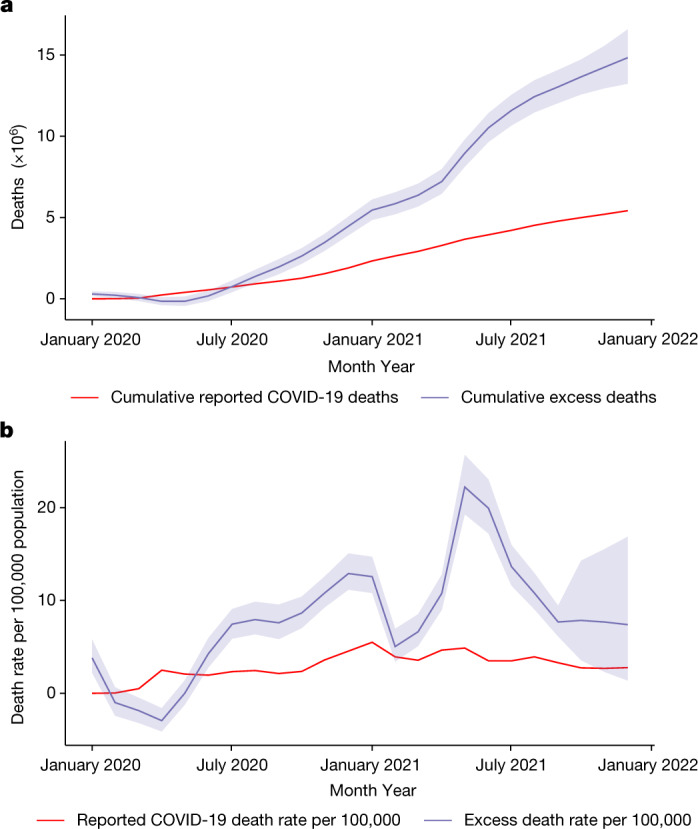
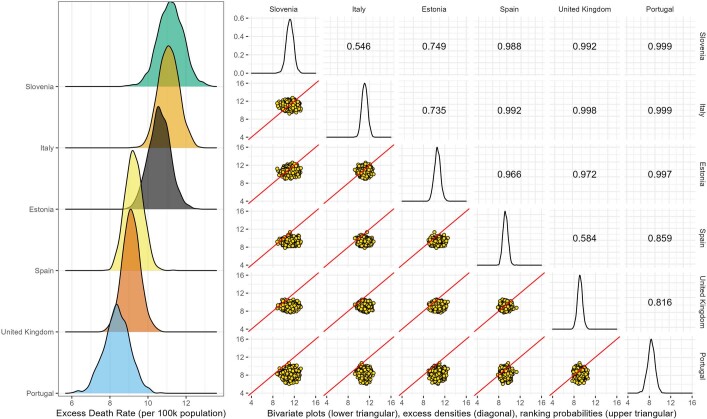
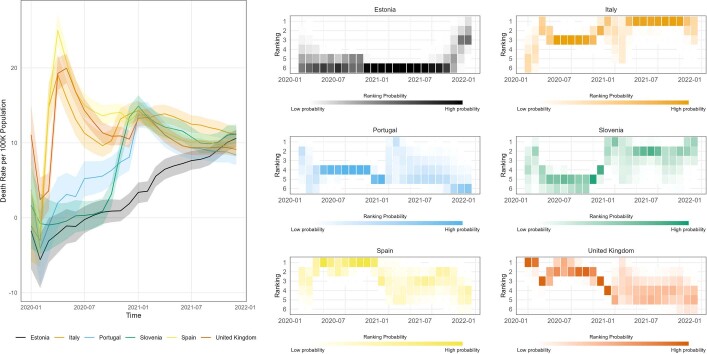
. Reported statistics on COVID-19 mortality are problematic for many countries owing to variations in testing access, differential diagnostic capacity and inconsistent certification of COVID-19 as cause of death. Beyond what is directly attributable to it, the pandemic has caused extensive collateral damage that has led to losses of lives and livelihoods. Here we report a comprehensive and consistent measurement of the impact of the COVID-19 pandemic by estimating excess deaths, by month, for 2020 and 2021. We predict the pandemic period all-cause deaths in locations lacking complete reported data using an overdispersed Poisson count framework that applies Bayesian inference techniques to quantify uncertainty. We estimate 14.83 million excess deaths globally, 2.74 times more deaths than the 5.42 million reported as due to COVID-19 for the period. There are wide variations in the excess death estimates across the six World Health Organization regions. We describe the data and methods used to generate these estimates and highlight the need for better reporting where gaps persist. We discuss various summary measures, and the hazards of ranking countries' epidemic responses.
Overview
CoChat Summary
TL;DR
WHO estimated global excess mortality from COVID-19 for January 2020–December 2021 at 14.83 million deaths, using a Bayesian Poisson framework to fill gaps where all-cause mortality data were incomplete. The estimate is 2.74 times the 5.42 million COVID-19 deaths reported to WHO for the same period.
Key findings
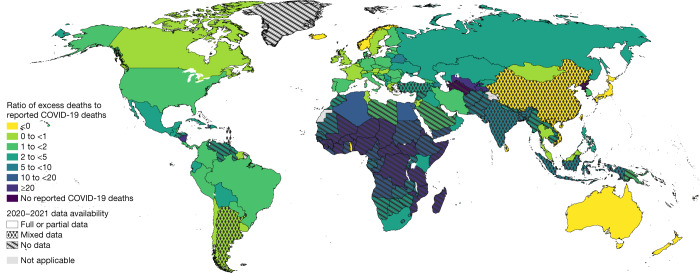
- Globally, the paper estimates 14.83 million excess deaths over 2020–2021 (95% UI 13.23–16.58 million), compared with 5.42 million reported COVID-19 deaths; the excess-to-reported ratio is 2.74 (UI 2.44–3.06).
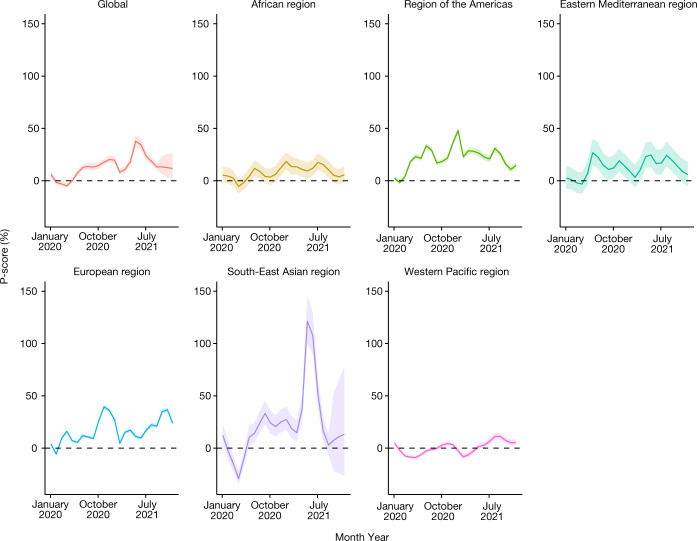
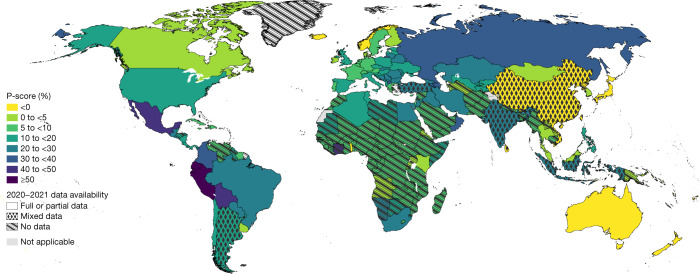
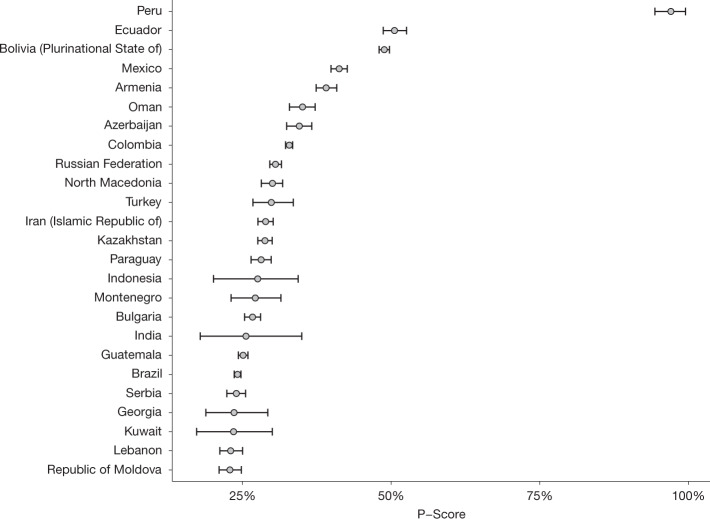
- Excess deaths were estimated at 4.47 million in 2020 and 10.36 million in 2021 globally; the global P-score increased from 7.97% in 2020 to 18.30% in 2021.
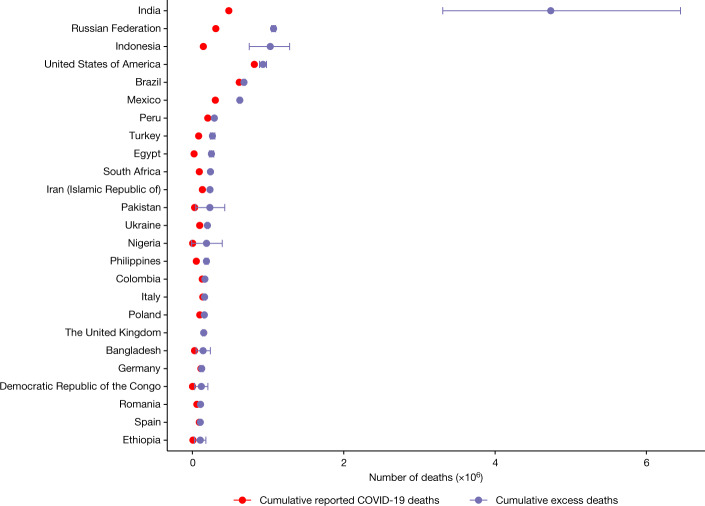
- The paper reports large country-level totals, including India: 4.74 million excess deaths (UI 3.31–6.45 million), Russian Federation: 1.07 million (UI 1.05–1.10 million), Indonesia: 1.03 million (UI 0.75–1.29 million), and the United States: 932,000 (UI 887,000–978,000).
- The 20 countries with the highest excess estimates account for 48.9% of the global population and over 80% of estimated global excess deaths for January 2020–December 2021.
Methods
- The study used a WHO-led, consultative modelling process: a Technical Advisory Group developed methods, WHO member states reviewed preliminary estimates, and feedback was used to update the final estimates.
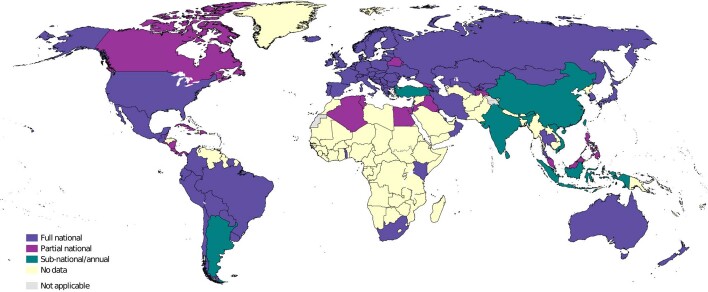
- The analysis used all-cause mortality (ACM) data from multiple sources; monthly national data were available for 100 countries (52%), while other locations had annual, subnational, or no data.
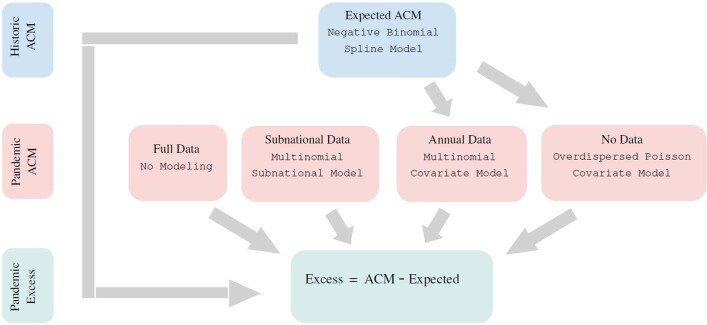
- Excess deaths were estimated with a Bayesian Poisson / negative binomial framework: historical ACM (often 2015–2019) was used to model expected deaths with spline-based seasonal and annual trends; where pandemic data were incomplete, a covariate-based log-linear model and, for some countries, subnational-to-national multinomial/proportionality models were used.
Limitations
- The paper states that the biggest limitation is data paucity: for almost half of WHO member states, ACM data during the pandemic were unavailable, so estimates relied on statistical models; the text says these countries should be interpreted with caution.
- The paper states that the counterfactual trend is sensitive to modelling assumptions, including the choice of spline models and how recent historical years are weighted; it notes splines can produce inappropriate extrapolations.
- The text makes evident that comparisons across countries/regions are difficult because countries differ in age structure, data completeness, and reporting quality; this is stated in the paper and means rankings can be misleading.
- The text makes evident that the paper cannot quantify how much excess mortality is directly COVID-19 versus indirect or non-COVID causes; the discussion explicitly says excess mortality combines these and cannot separate them.
Model-written summary. Check it against the paper before relying on it.
Integrity signals
Registry
Cites
Statistics
Figures
Verification
Claims the paper makes
8 Valid · 2 Not valid · 6 Not checked · 81 Own results and interpretations
Every source the paper cites for this claim was checked and supports it.
In the paper
“Reported statistics on COVID-19 mortality are problematic for many countries owing to variations in testing access, differential diagnostic capacity and inconsistent certification of COVID-19 as cause of death.”
- Also stated in: § Main · plain
“countries have differed in their application of standards for the certification of COVID-19 as the underlying cause-of-death2.”
§ The WHO estimates of excess mortality associated with the COVID-19 pandemic > Abstract
What the sources say
- Supportedcites [2] Riffe T Acosta E Data Resource Profile: COVerAGE-DB: a global demographic database of COVID-19 cases and deaths Int. J. Epidemiol. 2021 50 390 390f 10.1093/ije/dyab027 source
The Strengths and weaknesses section says COVID-19 death counts are likely underestimated for reasons also affecting case counts, including testing capacity and diagnostic-test accuracy. It also describes differences in whether suspected deaths are counted and evidence that COVID-19-related deaths are classified under other causes. Page numbers were not supplied in our copy. (LLM, conf=0.90)
plainstates a cause- Asserted: passes — The authors put it forward as true.
- Checkable: passes — It can be checked against evidence.
- Load-bearing: passes — The paper’s conclusions depend on it.
- Based: passes — The paper gives a reason why it holds.
- Also stated in: § Main · plain
Every source the paper cites for this claim was checked and supports it.
In the paper
“The measure overcomes the variation among countries in reporting and testing and the misclassification of the cause of death on death certificates7”
§ The WHO estimates of excess mortality associated with the COVID-19 pandemic > Main
What the sources say
- Supportedcites [7] Beaney T Excess mortality: the gold standard in measuring the impact of COVID-19 worldwide? J. Royal Soc. Med. 2020 113 329 334 10.1177/0141076820956802 PMC7488823 32910871 source
The Excess mortality section states that, because it encompasses deaths from all causes, excess mortality overcomes cross-country variation in COVID-19 reporting and testing and misclassification of causes on death certificates. This directly matches the attributed claim. (LLM, conf=0.95)
plainstates a cause- Asserted: passes — The authors put it forward as true.
- Checkable: passes — It can be checked against evidence.
- Load-bearing: passes — The paper’s conclusions depend on it.
- Based: passes — The paper gives a reason why it holds.
- Supported
Every source the paper cites for this claim was checked and supports it.
In the paper
“This surpasses the influenza pandemics of 1957, 1968 and 2009 (estimated at 0.04%, 0.03% and 0.005%, respectively)18.”
§ The WHO estimates of excess mortality associated with the COVID-19 pandemic > Discussion
What the sources say
- Supportedcites [18] Simonsen L Viboud C Mortality: a comprehensive look at the COVID-19 pandemic death toll. eLife 2021 10 e71974 10.7554/eLife.71974 34382937 PMC8360646 source
Table 1 (Abstract) gives a global per capita excess mortality rate of >0.08% for COVID-19, exceeding its estimates of 0.04%, 0.03%, and 0.005% for the 1957, 1968, and 2009 influenza pandemics, respectively. The paper describes the COVID-19 estimate using data available in 2020–2021. (LLM, conf=0.94)
plain- Asserted: passes — The authors put it forward as true.
- Checkable: passes — It can be checked against evidence.
- Load-bearing: unclear — It is unclear whether the paper’s conclusions depend on it.
- Based: passes — The paper gives a reason why it holds.
- Supported
Every source the paper cites for this claim was checked and supports it.
In the paper
“As another example, in the Africa region for which ACM data are most lacking, recent studies have highlighted the underestimation in the reported statistics20.”
§ The WHO estimates of excess mortality associated with the COVID-19 pandemic > Discussion
What the sources say
- Supportedcites [20] Cabore J. W. et al. COVID-19 in the 47 countries of the WHO African region: a modelling analysis of past trends and future patterns. Lancet Glob. Health10, e1099–e1114 (2022). PMC9159735 35659911 source
The Introduction states that reported infections and deaths underestimate the actual COVID-19 burden in the WHO African region. It also reports that, in countries with seroprevalence studies, reported infections represented only a small proportion of the estimated burden. Page numbers were not provided. (LLM, conf=0.94)
plainstates an association- Asserted: passes — The authors put it forward as true.
- Checkable: passes — It can be checked against evidence.
- Load-bearing: unclear — It is unclear whether the paper’s conclusions depend on it.
- Based: passes — The paper gives a reason why it holds.
- Supported
Every source the paper cites for this claim was checked and supports it.
In the paper
“The uncertainty in the expected predictions is well modelled by a gamma distribution, and the advantage of this choice is that it can be conveniently combined with a Poisson model to produce a negative binomial model with the log-linear mean given by equation (3).”
§ The WHO estimates of excess mortality associated with the COVID-19 pandemic > Methods > Model for countries without full pandemic data For almost half of the 194 WHO member states we do not have the ACM counts over the pandemic, and so must predict them using country characteristics. We choose a simple form for this prediction model, with mean2where is a relative rate parameter. If , then for country and at month the mortality is greater than expected, whereas if , then for country and at month the mortality is less than expected. We used time-invariant variables, (these are annual values from 2019). These were an indicator of high income and/or low or middle income, the cardiovascular mortality rate in 2019 and the diabetes prevalence rate in 2019. In addition, we used time-varying variables: a containment variable (it is calculated using all ordinal containment and closure policy indicators and health-system policy indicators, for further details see Hale et al.14), the square root of the reported COVID-19 death rate, temperature and the COVID-19 test positivity rate. We then build a log-linear model for the rate parameter:3where and denote relative rate parameters and are independent error contributions that pick up random variation unexplained by the log-linear regression function. The time-varying coefficients allow the associations to evolve during the pandemic. As we desire the evolution to be smooth in time, for these time-varying coefficients we use a random walk of order 2 (RW2) prior that encourages smooth estimates46. In equation (2) above, we have conditioned on known expected numbers. In reality, and as just described, these are modelled to give a distribution over plausible values. The uncertainty in the expected predictions is well modelled by a gamma distribution, and the advantage of this choice is that it can be conveniently combined with a Poisson model to produce a negative binomial model with the log-linear mean given by equation (3). Full details (including evidence of the accuracy of the gamma model) can be found in Knutson et al.15. This model was fitted to all countries with observed monthly ACM data over some portion of 2020–2021, using the integrated nested Laplace approximation method47, to obtain posterior distributions over the unknown parameters. The resultant posterior distribution reflects the uncertainty in the parameters (both in the expected numbers and the log-linear covariate model), and can be used to construct a predictive distribution for the ACM in countries with no data or partial data.
What the sources say
- Supportedcites Knutson et al.15 Knutson V., Aleshin-Guendel S., Karlinsky A., Msemburi W. & Wakefield J. Estimating country-specific excess mortality during the COVID-19 pandemic (2023). Ann. Appl. Stat. (in the press). PMC9812776 36517599 source
Section 3.3 (Modeling Uncertainty in the Expected Numbers) states they fit a gamma distribution by method of moments to the Monte Carlo samples of the expected numbers and 'approximate the distribution of the expected numbers as gamma, since this is conjugate to the Poisson, and so allows efficient inference with INLA ... using a negative binomial,' and the Supplementary Materials (Sec. 5, Gamma Expected Numbers; Fig. 5) report the gamma fits are accurate, with differences 'small in all cases' — supporting 'well modelled'. The model description bullet confirms the negative binomial component with known tau arises from the uncertainty in the expected numbers within the log-linear Poisson/negative-binomial formulation. The 'equation (3)' reference is the citing paper's own display, not attributed content. (LLM, conf=0.90)
boosted- Asserted: passes — The authors put it forward as true.
- Checkable: passes — It can be checked against evidence.
- Load-bearing: passes — The paper’s conclusions depend on it.
- Based: passes — The paper gives a reason why it holds.
- Supported
49 more claims
Create a free account to see all 97 claims and to verify the 2 references still open.
- Probably not a substantial claim. 19
- It may state two separate claims as one. 30
- The quote only partly states this claim. 2
Claims other papers make about this one
Each is checked against this paper’s own text: does it say what the citing paper says it does?
The source backs part of the claim, not all of it — or backs it for a different population, condition or comparison.
In the citing paper
“Our current estimate of global excess mortality during 2020 and 2021 is comparable to the WHO estimate of 14·9 million (95% UI 13·3–16·6) excess deaths,15 with our mean estimate falling within the uncertainty interval of the WHO estimate and vice versa.”
From Global age-sex-specific mortality, life expectancy, and population estimates in 204 countries and territories and 811 subnational locations, 1950–2021, and the impact of the COVID-19 pandemic: a comprehensive demographic analysis for the Global Burden of Disease Study 2021 (2024) · cites this paper as [15]
Experimental — accuracy not yet measuredThe cited source says what the claim attributes to it.
In the citing paper
“this total greatly exceeds global average increases of 8% in 2020 and 18% in 20214.”
From Attributed causes of excess mortality during the COVID-19 pandemic in a south Indian city (2023) · cites this paper as [4]
In the citing paper
“Other settings with >25% increases in mortality during the pandemic have included Russia and LMICs within Latin America, Eastern Europe, and central Asia1,4.”
From Attributed causes of excess mortality during the COVID-19 pandemic in a south Indian city (2023) · cites this paper as [4]
Citations
Cites
Vos, T., Lim, S. S., Abbafati, C., Abbas, K. M., Abbasi, M., Abbasifard, M., Abbasi-Kangevari, M., Abbastabar, H., Abd-Allah, F., Abdelalim, A., et al. (2020) · The Lancet · doi:10.1016/s0140-6736(20)30925-9 · Cited by 19,358
Generalized Additive Models: An Introduction with R
Wood, S. N. (2017) · doi:10.1201/9781315370279 · Cited by 13,852
Rue, H., Martino, S., & Chopin, N. (2009) · Journal of the Royal Statistical Society Series B: Statistical Methodology · doi:10.1111/j.1467-9868.2008.00700.x · Cited by 5,279
Wang, H., Paulson, K. R., Pease, S. A., Watson, S., Comfort, H., Zheng, P., Aravkin, A. Y., Bisignano, C., Barber, R. M., Alam, T., et al. (2022) · The Lancet · doi:10.1016/s0140-6736(21)02796-3 · Cited by 2,069
Rue, H., & Held, L. (2005) · Chapman & Hall/CRC eBooks · doi:10.1201/9780203492024 · Cited by 1,823
Guidelines for accurate and transparent health estimates reporting: the GATHER statement
Stevens, G. A., Alkema, L., Black, R. E., Boerma, J. T., Collins, G. S., Ezzati, M., Grove, J. T., Hogan, D. R., Hogan, M. C., Horton, R., et al. (2016) · The Lancet · doi:10.1016/s0140-6736(16)30388-9 · Cited by 1,798
Karlinsky, A., & Kobak, D. (2021) · eLife · doi:10.7554/elife.69336 · Cited by 772
Self-citationMurray, C. J., Lopez, A. D., Chin, B., Feehan, D., & Hill, K. H. (2006) · The Lancet · doi:10.1016/s0140-6736(06)69895-4 · Cited by 605
Islam, N., Shkolnikov, V. M., Acosta, R. J., Klimkin, I., Kawachi, I., Irizarry, R. A., Alicandro, G., Khunti, K., Yates, T., Jdanov, D. A., et al. (2021) · BMJ · doi:10.1136/bmj.n1137 · Cited by 468
Guidelines for accurate and transparent health estimates reporting: the GATHER statement
Stevens, G. A., Alkema, L., Black, R. E., Boerma, J. T., Collins, G. S., Ezzati, M., Grove, J. T., Hogan, D. R., Hogan, M. C., Horton, R., et al. (2016) · PLOS Medicine · doi:10.1371/journal.pmed.1002056 · Cited by 424
Research works printed but not linked: 2
- National Bureau of Statistics of China. China Statistical Yearbook 2021 (China Statistics Press, 2021).
- Hale, T. et al. Variation in Government Responses to COVID-19 Technical Report (Univ. Oxford, 2020).
Cited by
Items 301–400 of 1,067
Santos, C. A. F., Nardy, A., Gomez, R. J., Silva, B. R., Monteiro, F. R., Rossi, M. N., do Amaral, J. B., Paixão, V., Vaisberg, M. W., Amirato, G. R., et al. (2024) · International Journal of Environmental Research and Public Health · doi:10.3390/ijerph21111425 · Cited by 7
Silva, A. E. F., Costa, P. T., Mello, L. S., et al. (2025) · Journal of the Neurological Sciences · doi:10.1016/j.jns.2024.123380 · Cited by 5
Jiang, J., Lam, K. F., Lau, E. H. Y., Yin, G., Lin, Y., & Cowling, B. J. (2025) · Scientific Reports · doi:10.1038/s41598-025-89043-8 · Cited by 6
Xin, H., Law, A. H. T., Cheung, J. K., Lin, Y., Wu, P., Li, Z., Cowling, B. J., Yang, W., & Wong, J. Y. (2025) · Journal of Global Health · doi:10.7189/jogh.15.04105 · Cited by 4
“Globally, a report from the World Health Organization found that the excess mortality in 2020 and 2021 was 2.74 times higher than the reported COVID-19 mortality [ 3 ].”
InfluentialJoy, Jobs, and Sweat: Older Adults’ Physical Activity During COVID-19 Lockdowns in New Zealand
Chamussy, L., Morgan, T., Morgan, K., Williams, L., Wiles, J. L., & Gott, M. (2023) · Journal of Aging and Physical Activity · doi:10.1123/japa.2022-0377 · Cited by 6
Spatiotemporal Patterns of the Omicron Wave of COVID-19 in the United States
Zhang, S., Liu, L., Meng, Q., Zhang, Y., Yang, H., & Xu, G. (2023) · Tropical Medicine and Infectious Disease · doi:10.3390/tropicalmed8070349 · Cited by 5
“Secondly, certain cities during Omicron wave failed to receive timely testing or lacked well-structured genomic surveillance results due to variations in testing access, differential diagnostic capacity, and inconsistent certification [35,36].”
BackgroundBranea, O. E., Copotoiu, S. M., Becica, D. A., et al. (2023) · Cureus · doi:10.7759/cureus.47195 · Cited by 5
“The COVID-19 pandemic occurred because of the severe acute respiratory syndrome coronavirus 2 (SARS-CoV-2), and, since its introduction in December 2019, it has caused more than six million deaths worldwide [3].”
BackgroundWang, X., Dian, Y., Zhou, Q., et al. (2023) · Frontiers in Immunology · doi:10.3389/fimmu.2023.1320973 · Cited by 5
COVID-19 vaccination and corneal allograft rejection- a review
Allen, N. E., Zhang, J., & McGhee, C. N. J. (2023) · Frontiers in Cellular and Infection Microbiology · doi:10.3389/fcimb.2023.1307655 · Cited by 6
Cisnal, A., Alonso-Linaje, G., Fraile, J. C., Turiel, J. P., Alvarez, P. J., & Martinez, S. (2024) · Journal of Clinical Medicine · doi:10.3390/jcm13061543 · Cited by 5
“Notably, a comprehensive study examining excess deaths in 2020 and 2021 revealed a staggering total of 14.83 million excess deaths worldwide, far exceeding the reported COVID-19 death toll of 5.42 million during the same period [3].”
BackgroundInfluentialSongvut, P., Akanimanee, J., Suriyo, T., Pholphana, N., Rangkadilok, N., Panomvana, D., Puranajoti, P., & Satayavivad, J. (2025) · Pharmaceutical Biology · doi:10.1080/13880209.2024.2444446 · Cited by 6
Colorectal Cancer Screening Amid COVID‐19 in Japan: Analysis From the 2021–2022 JACSIS Study
Saito, H., Abubakar, A. K., Ozaki, A., Hori, D., Murakami, M., Kaneda, Y., Tsubokura, M., & Tabuchi, T. (2025) · Cancer Medicine · doi:10.1002/cam4.70859 · Cited by 6
“Besides the direct increase in infections and deaths due to the virus, the pandemic brought about significant public health challenges through social isolation measures and restricted access to healthcare facilities [9–11].”
Cheng, C., Wu, H.-Y., Kuo, S., Fan, B., Hsu, Y., Chen, Y.-K., Fan, B., Jang, Y.-A., Hung, C.-F., Jiang, W., et al. (2025) · American Journal of Public Health · doi:10.2105/ajph.2025.308136 · Cited by 5
Annexin A1 as a key modulator of lung inflammation during coronavirus infections
Resende, F., Queiroz‐Junior, C. M., Ascenção, F. R., Chaves, I. D. M., Lacerda, L. D. S. B., Rocha, F., Teixeira, D. C., Galvão, I., Costa, V., FONSECA, T., et al. (2025) · Clinical Science · doi:10.1042/cs20255801 · Cited by 7
Global Estimates of COVID‐19 Morbidity and Mortality: A Cohort Study and Mathematical Model Analysis
Ayoub, H. H., Chemaitelly, H. S., & Abu-Raddad, L. J. (2025) · Influenza and Other Respiratory Viruses · doi:10.1111/irv.70154 · Cited by 7
Muharram, F. R., Widyahening Indah, S., & Danaei, G. (2025) · BMJ Open · doi:10.1136/bmjopen-2025-109588 · Cited by 44
The Lancet Commission on a citizen-centred health system for India
Patel, V. H., Kalita, A., Furtado, K. M., Mor, N., Bhadada, S., Albert, S., Ashraf, H., Balsari, S., Bhushan, I., Chandru, V., et al. (2026) · The Lancet · doi:10.1016/s0140-6736(25)02169-5 · Cited by 11
Wang, P., Zheng, X., Chen, Y., & Xu, Y. (2024) · Chaos Solitons & Fractals · doi:10.1016/j.chaos.2024.115709 · Cited by 5
COVID-19 story: Entry and immune response
Ashraf, A. M., Al-Maqtoofi, M. Y., & Burghal, A. A. (2024) · Vacunas (English Edition) · doi:10.1016/j.vacun.2024.10.002 · Cited by 5
Sousa, B. K. P., Mottin, M., Seanego, D., Jurisch, C. D., Rodrigues, B. S. A., da Silva, V. L. S., Andrade, M. A., Morais-Junior, G. S., Boerin, D. F., Froes, T. Q., et al. (2024) · ACS Medicinal Chemistry Letters · doi:10.1021/acsmedchemlett.4c00420 · Cited by 4
Alqahtani, S. M. (2025) · Frontiers in Pharmacology · doi:10.3389/fphar.2025.1459581 · Cited by 4
“Although substantial efforts have been made in the last 2 – 3 years to better understand the biology of SARS-CoV-2, outbreaks of the disease are still being reported in many countries (Msemburi et al., 2023).”
Chakraborty, C., Bhattacharya, M., & Lee, S. (2025) · Osong Public Health and Research Perspectives · doi:10.24171/j.phrp.2024.0186 · Cited by 6
“Msemburi et al. [10] faced similar challenges due to the unavailability of ACM data in many countries.”
Yang, W., & Chang, X. (2025) · Computer Methods and Programs in Biomedicine Update · doi:10.1016/j.cmpbup.2025.100190 · Cited by 7
Chen, M., Qian, Q., Pan, X., & Li, T. (2025) · BMC Medical Research Methodology · doi:10.1186/s12874-025-02572-8 · Cited by 5
“[2] It Is also worth noting that the different variants of SARS-CoV-2, which exhibited distinct epidemiological features and symptoms, have emerged and became dominant at different stages during the pandemic.”
Direct and indirect burden of COVID-19 on mortality in Spain (2020 to 2022)
Llorca, J., Gómez‐Acebo, I., Alonso-Molero, J., Delgado‐Rodríguez, M., & Dierssen‐Sotos, T. (2025) · BMC Public Health · doi:10.1186/s12889-025-23077-5 · Cited by 4
“The World Health Organization (WHO) estimated the global excess deaths in 2020–2021 at 14.83 million deaths, 3.18 million of which were in the European region [5].”
InfluentialYe, C., Yu, J., Zhao, B., Shen, Y., Wang, X., Zhang, L. R., Yu, X., Luo, Y., Xin, L., Xie, Y., et al. (2025) · BMJ Open · doi:10.1136/bmjopen-2024-097732 · Cited by 4
Yang, Z., Zhou, X., Sun, X., Cao, L., Xu, T., Li, K., Liu, H., Ji, Y., Liu, L., Ivanov, K. I., et al. (2025) · Virologica Sinica · doi:10.1016/j.virs.2025.06.006 · Cited by 4
Netsey, E. K., Naandam, S. M., Asante, J., Kuukua, A. E., Yadem, A. C., Owusu, G., Shaffer, J. G., Srivastav, S. K., Doumbia, S., Owusu‐Dabo, E., et al. (2025) · JMIR Bioinformatics and Biotechnology · doi:10.2196/73637 · Cited by 9
Cagna, D. R., Donovan, T. E., McKee, J. R., Eichmiller, F. C., Metz, J. E., Marzola, R., Murphy, K. G., & Troeltzsch, M. (2023) · Journal of Prosthetic Dentistry · doi:10.1016/j.prosdent.2023.06.001 · Cited by 7
India's indefinitely delayed census
Koya, S. F., & Kumar, S. (2023) · The Lancet · doi:10.1016/s0140-6736(23)01477-0 · Cited by 4
Designing Surveillance at a Population Level
Tancredi, S., & Chioléro, A. (2023) · American Journal of Public Health · doi:10.2105/ajph.2023.307425 · Cited by 4
Impact of COVID-19 on mortality and excess mortality of midlife from 40 to 64 age groups
Takefuji, Y. (2023) · Aging and Health Research · doi:10.1016/j.ahr.2023.100167 · Cited by 4
“Excess mortality studies provide important information on the health burden of the COVID-19 pandemic [7,8].”
Zhang, S., Feng-qin, D., Sun, Y., Jing, Z., & Li, N. (2023) · Behavioral Sciences · doi:10.3390/bs13110895 · Cited by 6
Gao, Z., Zhai, X., Yan, G., Tian, Y., Huang, X., Wu, Q., Yuan, L., & Su, L. (2023) · Frontiers in Immunology · doi:10.3389/fimmu.2023.1268912 · Cited by 4
Torres, A. F. C., Acosta, E., Pardo, I., Sacco, N., & Urdinola, B. P. (2023) · Population Space and Place · doi:10.1002/psp.2735 · Cited by 5
Singh, M. S., Pyati, A., Rubi, R. D., Subramanian, R., Muley, V. Y., Ansari, M. A., & Yellaboina, S. (2024) · iScience · doi:10.1016/j.isci.2024.109087 · Cited by 4
Moore, S. M., Cavany, S., Perkins, T. A., & España, G. (2024) · Epidemics · doi:10.1016/j.epidem.2024.100759 · Cited by 4
“Since the SARS-CoV-2 pandemic began in 2019, it has caused major disruptions to the global economy and had a large impact on global health, causing at least 15 million excess deaths (Li et al. 2021; Sachs et al. 2022; Msemburi et al. 2023).”
BackgroundШкольников, В. М., Jdanov, D. A., Majeed, A., & Islam, N. (2024) · BMJ Global Health · doi:10.1136/bmjgh-2024-015737 · Cited by 3
Estimating excess migration associated with tropical storms in the USA 1990–2010
Paglino, E. (2024) · Population and Environment · doi:10.1007/s11111-024-00452-9 · Cited by 6
“…developments in the application of Bayesian statistics to the estimation of small area excess mortality in the context of the COVID-19 epidemic (Davies et al., 2021; Konstantinoudis et al., 2022; Msemburi et al., 2022; Paglino et al., 2023), extending these approaches to the migration domain.”
Accuracy of the defining characteristics of respiratory nursing diagnoses in patients with COVID-19
Maurício, A. B., Cavalcante, Á. M. R. Z., de Sá, E. S., et al. (2024) · International Journal of Nursing Knowledge · doi:10.1111/2047-3095.12481 · Cited by 4
“Its rapid spread is associated with the potential severity of this viral disease that caused millions of deaths in a short period, triggering the world’s largest public health crisis of the 21st century (Msemburi et al., 2023), when it was declared a pandemic in 2020 (Cucinotta & Vanelli, 2020).”
Guzmán, C., Mattar, S., V, Alvis‐Guzmán, N., et al. (2024) · Cadernos de Saúde Pública · doi:10.1590/0102-311xen202323 · Cited by 4
“In Colombia, excess mortality attributable to COVID-19 was found to range from 15%-20% 5 .”
A scoping review on the errors in medical certification of the cause of death in India
Singh, P., Khanna, D., Sharma, P., Vaza, Y., Anand, A., Budukh, A. M., Chaturvedi, P., & Pradhan, S. (2024) · The Indian Journal of Medical Research · doi:10.25259/ijmr_498_23 · Cited by 8
“…the world witnessed the unprecedented impact of the COVID-19 pandemic on healthcare, which led to several discussions at national and international forums regarding the under-reporting as well as excess mortality reporting due to misclassification related to COVID-19 infection globally 65,66 .”
BackgroundUnraveling the impact of the COVID-19 pandemic on the mortality trends in Belgium between 2020–2022
Natalia, Y. A., Verbeeck, J., Faes, C., Neyens, T., & Molenberghs, G. (2024) · BMC Public Health · doi:10.1186/s12889-024-20415-x · Cited by 12
“For example, Msemburi et al. predicted the pandemic all-cause deaths in all countries, both the ones with and without reliable reporting of all-cause mortality, using an overdispersed Poisson count framework that applies Bayesian inference techniques [9].”
MethodForecasting SARS-CoV-2 epidemic dynamic in Poland with the pDyn agent-based model
Niedzielewski, K., Bartczuk, R., Bielczyk, N., Bogucki, D., Dreger, F., Dudziuk, G., Górski, Ł., Gruziel-Słomka, M., Haman, J., Kaczorek, A., et al. (2024) · Epidemics · doi:10.1016/j.epidem.2024.100801 · Cited by 6
Aznar, M. P. M. (2025) · Geriatrics · doi:10.3390/geriatrics10010005 · Cited by 5
Blair, C., Rafferty, D. A. M., Murphy, P. G., Brown, M. J., Bowes, K., Thompson, R., & Reid, J. (2025) · BMC Nursing · doi:10.1186/s12912-025-02881-9 · Cited by 4
“In 2020 and 2021 it is estimated that there were 14.83 million excess deaths globally [2].”
InfluentialDoes mask usage correlate with excess mortality? Findings from 24 European countries
Tausk, D., & Spira, B. (2025) · BMC Public Health · doi:10.1186/s12889-025-22172-x · Cited by 8
Do We Need Titanium Dioxide (TiO2) Nanoparticles in Face Masks?
Everaert, S., Godderis, L., Raquez, J., Schoeters, G. E. R., Spanoghe, P., Moens, J., Hens, L., Michel, O., Adang, D., & Fraeyman, N. (2025) · Toxics · doi:10.3390/toxics13040244 · Cited by 5
“Between 2020 and 2021, the WHO estimated 14.83 million global excess deaths associated with the COVID-19 pandemic [1].”
InfluentialSARS-CoV2 variants differentially impact on the plasma metabolome
Kramarić, T., Thein, O. S., Parekh, D., Scott, A., Vangberg, A., Beckmann, M., Phillips, H. C., THICKETT, D. R., & Mur, L. A. J. (2025) · Metabolomics · doi:10.1007/s11306-025-02238-y · Cited by 4
Bian, H., Chen, L., Zhang, Z., Wen, A., Zheng, Z., Song, L., Yao, M., Liu, Y., Zhang, X., Dong, H., et al. (2025) · Signal Transduction and Targeted Therapy · doi:10.1038/s41392-025-02208-9 · Cited by 5
Allgoewer, K., Stark, C., Fitzek, A., Huter, T., Heinemann, A., & Ondruschka, B. (2025) · Scientific Reports · doi:10.1038/s41598-025-97117-w · Cited by 4
Magawa, J. Y., Jacintho, L. C., Ferreira, M. A., Oliveira, J. R., Machado, R. R. G., Kuramoto, A., de Oliveira, R. M. L., Lima, A. C., Sasahara, G. L., Adami, F. L., et al. (2025) · Scientific Reports · doi:10.1038/s41598-025-04152-8 · Cited by 4
P selectin promotes SARS-CoV-2 interactions with platelets and the endothelium
Moreno, C. L., Castanheira, F. V. S., Stella, A. O., Chung, F., Aggarwal, A., Cole, A. J., Loo, L., Dupuy, A., Kong, Y. X., Hagimola, L., et al. (2025) · Journal of Clinical Investigation · doi:10.1172/jci184514 · Cited by 5
Brechbühl, J., Ferreira, F., Lopes, A. C., Corset, E., Gilliand, N., & Broillet, M.-C. (2023) · Viruses · doi:10.3390/v15020354 · Cited by 4
“SARS-CoV-2-related mortality has rapidly decreased with the collective immunity raised by natural past viral exposures or vaccination efforts [86].”
Optimal spatial evaluation of a pro rata vaccine distribution rule for COVID-19
Castonguay, F. M., Blackwood, J. C., Howerton, E., Shea, K., Sims, C. B., & Sanchirico, J. N. (2023) · Scientific Reports · doi:10.1038/s41598-023-28697-8 · Cited by 7
Effectiveness of COVID-19 vaccines in Ecuador: A test-negative design
Pérez‐Tasigchana, R. F., Valcárcel-Pérez, I., Arias-Quispe, M., Astudillo, L., Bruno, A., Marco Herrera, G., Armas-González, R., de Mora, D., Pinos, J., Olmedo, A., et al. (2023) · Vaccine X · doi:10.1016/j.jvacx.2023.100404 · Cited by 6
“The virus has caused many ambulatory infections, hospitalizations, and deaths, and has also brought about other health concerns, such as sequelae of the disease and mental health problems [1 – 3].”
BackgroundLiu, J., Jaijyan, D. K., Chen, Y., Feng, C., Yang, S., Xu, Z., Zhan, N., Hong, C., Li, S., Cheng, T., et al. (2023) · Microbiology Spectrum · doi:10.1128/spectrum.02463-23 · Cited by 4
Choo, J., Nghiem, L. T. P., Benítez‐López, A., & Carrasco, L. R. (2023) · Scientific Reports · doi:10.1038/s41598-023-47448-3 · Cited by 7
“For example, the SARS-CoV-2 outbreak has resulted in more than 5.4 million deaths 9 and a loss of 2.4 trillion US dollars in global gross domestic product 10 .”
BackgroundInfluentialWhat do Airbnb Users Care About Before, During and After the COVID-19? An Analysis of Online Reviews
Liu, Q., & Mengoni, P. (2023) · IEEE/WIC/ACM International Conference on Web Intelligence and Intelligent Agent Technology (WI-IAT) · doi:10.1109/wi-iat59888.2023.00067 · Cited by 6
“8 million deaths ( [16].”
Impact of the COVID-19 pandemic on excess maternal deaths in Brazil: A two-year assessment
Orellana, J. D. Y., Leventhal, D. G. P., Flores-Quispe, M. D. P., Marrero, L., Jacques, N., Morón-Duarte, L. S., & Boschi-Pinto, C. (2024) · PLoS ONE · doi:10.1371/journal.pone.0298822 · Cited by 11
“Excess mortality due to the COVID-19 pandemic has been widely documented for several causes of death [1–4].”
BackgroundInfluentialImpact of the COVID‐19 Pandemic on Conduct and Results of CLEAR Outcomes Trial
Singh, A., Laffin, L. J., Sarraju, A., Lincoff, A. M., Nicholls, S. J., Bloedon, L. T., Sasiela, W. J., Li, N., Robinson, P. L., Kelly, S., et al. (2024) · Clinical Cardiology · doi:10.1002/clc.24328 · Cited by 5
“During the years 2020 and 2021, the WHO estimated a total of 14.83 million excess deaths associated directly or indirectly with the COVID ‐ 19 pandemic, a number nearly threefold greater than the 5.42 million deaths directly attributed to COVID ‐ 19 infection for the same period [14].”
BackgroundInfluentialOlder people’s Contributions During the COVID-19 Pandemic Response
Gott, M., Wiles, J. L., Morgan, T., Williams, L., Morgan, K., Black, S., Koh, A., Fanueli, E., Xu, J., Goodwin, H., et al. (2024) · Journal of Aging & Social Policy · doi:10.1080/08959420.2024.2384322 · Cited by 5
Kopp, K., Motloch, L. J., Lichtenauer, M., Boxhammer, E., Hoppe, U. C., Berezin, A. Е., Гареева, Д. Ф., Лакман, И. А., Agapitov, A. A., Флоритовна, С. Л., et al. (2024) · Journal of Clinical Medicine · doi:10.3390/jcm13226636 · Cited by 5
What is the optimal country for minimum COVID-19 morbidity and mortality rates?
Arbel, Y., Arbel, Y., Kerner, A., & Kerner, M. (2023) · Environmental Science and Pollution Research · doi:10.1007/s11356-023-26632-y · Cited by 5
Conflicting COVID-19 excess mortality estimates – Authors' reply
Hay, S. I., & Murray, C. J. L. (2023) · The Lancet · doi:10.1016/s0140-6736(23)00227-1 · Cited by 4
Quantifying the Social Value of a Universal COVID-19 Vaccine and Incentivizing Its Development
Glennerster, R., Kelly, T., McMahon, C., & Snyder, C. M. (2024) · National Bureau of Economic Research · doi:10.3386/w32059 · Cited by 4
Changes in life expectancy and life span equality during the COVID-19 epidemic in Japan up to 2022Preprint
Okada, Y., & Nishiura, H. (2024) · medRxiv · doi:10.1101/2024.04.18.24306049 · Cited by 3
Withdrawn: A systematic review of autopsy findings in deaths after COVID-19 vaccination
Hulscher, N., Alexander, P. E., Amerling, R., Gessling, H., Hodkinson, R., Makis, W., Risch, H. A., Trozzi, M., & McCullough, P. A. (2024) · Forensic Science International · doi:10.1016/j.forsciint.2024.112115 · Cited by 10
RetractedKambouris, M. E. (2024) · Advanced sciences and technologies for security applications · doi:10.1007/978-3-031-60019-7_8 · Cited by 4
The determinants of COVID-19 case reporting across Africa
Han, Q. K., Rutayisire, G., Fonkou, M. D. M., Avusuglo, W., Ahmadi, A. R., Asgary, A., Orbinski, J., Wu, J., & Kong, J. D. (2024) · Frontiers in Public Health · doi:10.3389/fpubh.2024.1406363 · Cited by 4
“The negative association with population size (Figure 2A) (53) suggests that larger populations face lower reporting rates due to the challenges of scaling up testing and reporting infrastructure (54, 55) or the greater likelihood of under-detection in densely populated areas.”
BackgroundExcess mortality due to COVID-19 in Thailand between the pandemic and post-pandemic periods
Dul-amnuay, A., Peansukwech, U., Hanapun, C., et al. (2025) · Scientific Reports · doi:10.1038/s41598-025-85324-4 · Cited by 3
Liao, C.-M., Kao, Y., Lin, C., & Lai, P.-Y. (2025) · International Journal of Public Health · doi:10.3389/ijph.2025.1607723 · Cited by 6
“WHO estimated 14.83 million excess deaths in 2020 – 2021, 2.74 times the reported number [2].”
InfluentialVu, T. P., & Khuc, Q. V. (2025) · Public Performance & Management Review · doi:10.1080/15309576.2025.2486066 · Cited by 3
“Excess mortality is widely regarded as a more accurate measure of COVID-19 mortality (Msemburi et al., 2023; Wang et al., 2022).”
Tozoni, S. S., Gadotti, A. C., Dias, E. S., Alegre, J. B. M., Spitzenbergen, B. A. K. V., Deus, M. D. C., de Moraes, T. P., & Moreno-Amaral, A. N. (2025) · International Journal of Molecular Sciences · doi:10.3390/ijms26136086 · Cited by 3
“Although the WHO declared an end to the Public Health Emergency of International Concern in May 2023, COVID-19 persists, with ongoing hospitalizations and deaths, particularly among vulnerable and unvaccinated individuals in low-income countries [20].”
Hesse, C. A., Kpeglo, E. D., Boyetey, D. B., & Nadarajah, S. (2025) · Frontiers in Public Health · doi:10.3389/fpubh.2025.1649498 · Cited by 3
“…excess mortality frameworks, supported by organisations such as the WHO, acknowledge that integrating both direct and indirect pandemic-related deaths with other mortality statistics is essential for capturing the pandemic’s full impact, which cause-specific data may underrepresent (48).”
Kuo, R. N., Chen, W., Shau, W., et al. (2025) · Open Forum Infectious Diseases · doi:10.1093/ofid/ofaf553 · Cited by 3
“…a WHO analysis, global excess mortality during 2020–2021 was estimated at 14.8 million— ∼ 2.7 times higher than reported COVID-19 deaths—indicating substantial under-ascertainment and suggesting that excess mortality has likely persisted, reflecting the ongoing indirect effects of the pandemic [2].”
InfluentialShoket, N., Rahman, J. U., & Zafar, N. (2025) · Soft Computing · doi:10.1007/s00500-025-10916-1 · Cited by 8
Nour, H., Mounadi, N., Rossafi, B., Errougui, A., Bouachrıne, M., & Chtita, S. (2025) · Chemical Product and Process Modeling · doi:10.1515/cppm-2025-0098 · Cited by 5
Heendeniya, S. N., Chen, S., Bhatti, S. H., Zahra, Q. U. A., Rahimizadeh, K., Poudel, B. H., Wilton, S. D., & Veedu, R. N. (2025) · Experimental Biology and Medicine · doi:10.3389/ebm.2025.10784 · Cited by 4
Evaluation of concordance in estimation of excess mortality due to COVID‐19 pandemic
Verma, V., Nath, D. C., & Khan, H. T. A. (2023) · Journal of Evaluation in Clinical Practice · doi:10.1111/jep.13866 · Cited by 3
Kupek, E., & Mariano, T. D. S. O. (2023) · Medical Research Archives · doi:10.18103/mra.v11i7.1.4082 · Cited by 3
Two decades of depopulation in Serbia 2002-2022
Marinković, I. (2023) · Socioloski pregled · doi:10.5937/socpreg57-46007 · Cited by 3
“…since the beginning of the war conflicts in the Middle East (Raineri, Strazzari, 2021) and in Ukraine (Duszczyk, Kaczmarczyk, 2022); morbidity and mortality of population significantly increased during the COVID-19 pandemic (Msemburi et al., 2023), while the birth level has never been lower.”
BackgroundHow impurities responsible for recalls emerge in hand sanitizers
Shahbazi‐Raz, F., Egbuta, M. A., Aremu, B. R., Mashhadi, N., Tucci, P., Binder, J. F., & Trant, J. F. (2024) · RSC Sustainability · doi:10.1039/d3su00286a · Cited by 3
COVID-19 immune signatures in Uganda persist in HIV co-infection and diverge by pandemic phase
Cummings, M. J., Bakamutumaho, B., Lutwama, J. J., Owor, N., Che, X., Astorkia, M., Postler, T. S., Kayiwa, J. T., Kiconco, J., Muwanga, M., et al. (2024) · Nature Communications · doi:10.1038/s41467-024-45204-3 · Cited by 3
Lozano, R., Montoya, A., Razo, C., Schumacher, A. E., Confort, H., Pease, S. A., Jones, D. P., Watson, S., & Naghavi, M. (2024) · Gaceta Médica de México · doi:10.24875/gmm.m24000838 · Cited by 3
Katalifos, A., Elsabbagh, M., Yusuf, A., Yamaguchi, S., Scorah, J., Wright, N., Steiman, M., Shih, A. J., & Shikako‐Thomas, K. (2024) · Frontiers in Rehabilitation Sciences · doi:10.3389/fresc.2024.1308062 · Cited by 3
A high-throughput response to the SARS-CoV-2 pandemic
Rasmussen, L. A., Sanders, S. K., Sosa, M. I., McKellip, S. N., Nebane, N. M., Martinez-Gzegozewska, Y., Reece, A. J., Ruiz, P., Manuvakhova, A., Zhai, L., et al. (2024) · SLAS DISCOVERY · doi:10.1016/j.slasd.2024.100160 · Cited by 3
Dhillon, S., Luginaah, I., Elliott, S. J., Nagawa, J., & Niwagaba, R. A. (2024) · PLOS Global Public Health · doi:10.1371/journal.pgph.0003691 · Cited by 3
“For example, from January 2020 to December 2021, there were an estimated 4.74 million excess deaths in India and 1.02 million excess deaths in Indonesia [9].”
BackgroundInfluentialBauer‐Staeb, C., Holleyman, R. J., Barnard, S., Hughes, A., Dunn, S., Fox, S. S., Fitzpatrick, J., Newton, J. N., Fryers, P., Burton, P. R., et al. (2024) · PLoS ONE · doi:10.1371/journal.pone.0304110 · Cited by 12
Excess mortality during COVID-19 pandemic in Bangladesh – evidence from a rural survey
Hossain, A. T., Akter, E., Siddique, A. B., Rahman, H., Ameen, S., Jabeen, S., Manna, R. M., Hossain, M. A., Rahman, Q. S.-U., Ahmed, A., et al. (2024) · Journal of Global Health · doi:10.7189/jogh.14.05031 · Cited by 5
Caram‐Deelder, C., Vlieg, A. V. H., Groenwold, R. H. H., Chen, Q., Mook-Kanamori, D. O., Dekkers, O. M., Koster, E. A. S., de Wreede, L. C., van Nieuwkoop, C., Toshkov, D., et al. (2024) · IJID Regions · doi:10.1016/j.ijregi.2024.100500 · Cited by 3
“The effect, however, varied between countries, from little change in life expectancy to over 2 years [ 14 , 20 ] and reported excess death rates ranging from 47 to 87 per 100,000 per year [ 16 ].”
Musango, L., Mandrosovololona, V., Randriatsarafara, F. M., Malala, R. V., Kirigia, J. M., & Ratsimbasoa, A. C. (2024) · BMC Public Health · doi:10.1186/s12889-024-20786-1 · Cited by 5
“The excess COVID-19 mortality for Madagas-car was projected using a ratio estimated by Msemburi et al. [45] to be 8.03 for Africa.”
InfluentialCostus igneus: A Versatile Herbal Remedy for Multiple Health Conditions
Yadav, M., Sahu, B., & Sahu, M. (2024) · Chemistry & Biodiversity · doi:10.1002/cbdv.202402220 · Cited by 8
Cui, J., Wang, Q., Sun, B., Liu, J., & Yang, B. (2024) · Science China Information Sciences · doi:10.1007/s11432-023-4216-y · Cited by 7
“As impressive network dynamics, emerging and re-EIDs are significant burdens on global economies and public health [8,58].”
To test or not to test? A new behavioral epidemiology framework for COVID-19
Sarkar, J. (2024) · PLoS ONE · doi:10.1371/journal.pone.0309423 · Cited by 4
Shah, S. A., Jeffrey, K., Robertson, C., & Sheikh, A. (2025) · The Lancet Regional Health - Europe · doi:10.1016/j.lanepe.2024.101188 · Cited by 10
“15 16 – 18 In Scotland, the National Health Service (NHS) provides universal healthcare funded by general taxation, with responsibility for planning and delivering health services devolved to regional health boards.”
Shi, Y., Lv, Q., Zhu, K., Cai, J., Kong, D., Liu, K., Chen, Z., Zhang, Z., & Yin, L. (2025) · Advances in Continuous and Discrete Models · doi:10.1186/s13662-024-03860-1 · Cited by 3
Climatic impacts on mortality in pre-industrial Sweden
Chen, T. T., Edvinsson, R., Modig, K., Linderholm, H. W., & Ljungqvist, F. C. (2025) · Climate of the past · doi:10.5194/cp-21-185-2025 · Cited by 3
Maghsoodlo, Y. B., Safaeesirat, A., & Ghanbarnejad, F. (2025) · Scientific Reports · doi:10.1038/s41598-025-85232-7 · Cited by 5
“For instance, the COVID-19 pandemic, originating from China [87], affected people of all countries [67, 84], mentally [71, 35, 80], financially [15], and beyond.”
Ruhrländer, J., Syntila, S., Schieffer, E., & Schieffer, B. (2025) · Biomedicines · doi:10.3390/biomedicines13030545 · Cited by 3
“According to WHO estimates, the COVID-19 pandemic and its aftermath may have claimed the lives of nearly 15 million people in 2020 and 2021 alone According to WHO estimates, the COVID-19 pandemic and its aftermath may have claimed the lives of nearly 15 million people in 2020 and 2021 alone [5].”
Metadata
- Authors
- Msemburi, W., Karlinsky, A., Knutson, V., Aleshin-Guendel, S., Chatterji, S., & Wakefield, J.
- Affiliations
- World Health Organization (CH)
- Hebrew University of Jerusalem (IL)
- University of Washington (US)
- Corresponding author
- Msemburi, William
- Venue
- Nature
- Published
- 2022-12-14
- Volume
- 613
- Issue
- 7942
- Pages
- 130-137
- ISSN
- 0028-0836 (ISSN-L)
- 1476-4687
- PMC
- PMC9812776
- OpenAlex
- W4311472757
- Cited by
- 1,064
- References
- 17
- Citations by year
- 2026: 176 · 2025: 283 · 2024: 346 · 2023: 252 · 2022: 6
- FWCI
- 131.36
- Type
- journal article
- Language
- en
- Open access
- hybrid
- doi.org
- Licence
- cc-by
- creativecommons.org/licenses/by/4.0 (tdm)
- creativecommons.org/licenses/by/4.0 (vor)
- Locations
- Nature (publishedVersion, cc-by)
- Research Square (acceptedVersion, cc-by)
- PubMed Central (publishedVersion, cc-by)
- PubMed (publishedVersion)
- RePEc: Research Papers in Economics (submittedVersion)
- Funders
- World Health Organization
- Topics
- Physical Sciences › Mathematics › Modeling and Simulation › COVID-19 epidemiological studies
- Health Sciences › Medicine › Epidemiology › Data-Driven Disease Surveillance
- Social Sciences › Demography › Insurance, Mortality, Demography, Risk Management
- Keywords
- COVID-19 pandemic, excess mortality, all-cause mortality, underreporting of deaths, cause of death certification, Bayesian uncertainty quantification, WHO regions
- MeSH terms
- COVID-19, Bayes Theorem, Humans, World Health Organization, Poisson Distribution, Uncertainty, Pandemics
About these checks
Registry, retraction, Cites and statistics results are computed, not judged, with one exception: a printed reference that no index lists is read once by a model before it counts as a citation error. Claims are extracted by a model and kept only when their quote appears verbatim in the text; each cited source is then checked, with a model’s help, for whether it says what the claim relies on. Those verdicts can be wrong — read the claim’s quote and the cited source before relying on one.
The claim verdicts this report counts are experimental: their accuracy is not yet measured.
A language model drew the claims from the paper on 2026-10-10, under version 3 of the claim definition (model deepseek-v4.1-flash, prompt extract-v3).
A second model labelled each claim on 2026-10-10 (model jev-1.13-20260917, definition revision gold-guideline-v0.2).
Cited sources are checked with a language model’s help (gpt-6-sol and qwen3.8-omni-flash).
Statistics and arithmetic are recomputed, not judged.
Confidence bands are shown only for fields calibrated on our annotated test set. None is calibrated yet, so no band is shown.
What counts as a claim ›How we measure confidence ›How we check this ›
Are you an author, or do you see a problem with this page? Request a review
Data sources
Bibliographic data: Semantic Scholar, OpenAlex, Crossref.
Contains information from the Semantic Scholar Academic Graph Datasets, made available under the ODC Attribution License (ODC-BY 1.0).
Semantic Scholar’s data is described in: Kinney, R., et al. (2023). The Semantic Scholar Open Data Platform. arXiv:2301.10140.
