

The WHO estimates of excess mortality associated with the COVID-19 pandemic
Open accessPublished version of a preprint
The DOI matches its Crossref record; 21 of the 21 references it cites were found in a registry or an index; 9 of the 14 sources its claims cite were checked for support.
Abstract
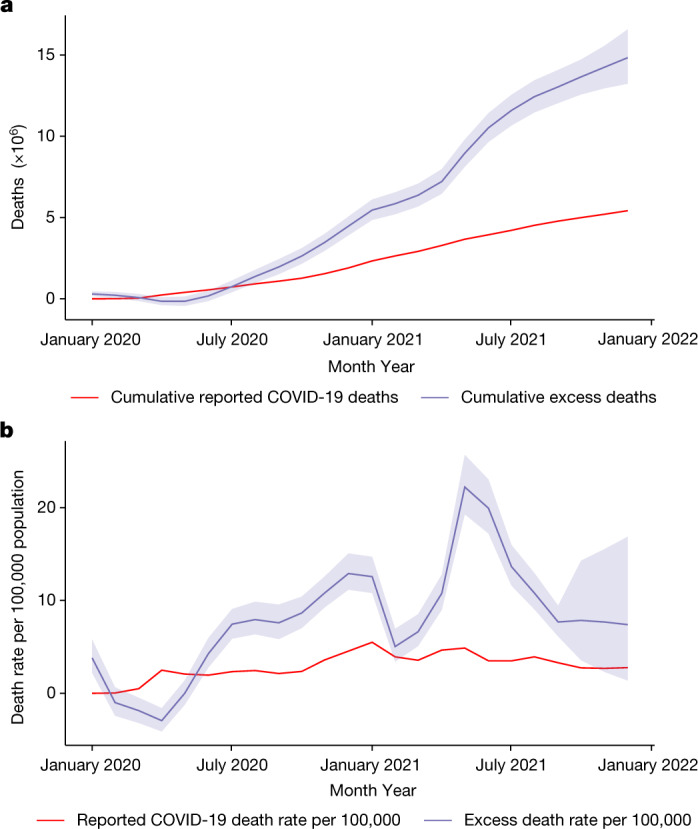
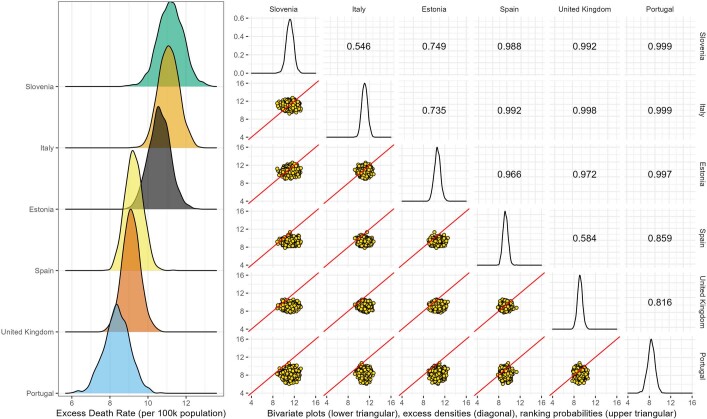
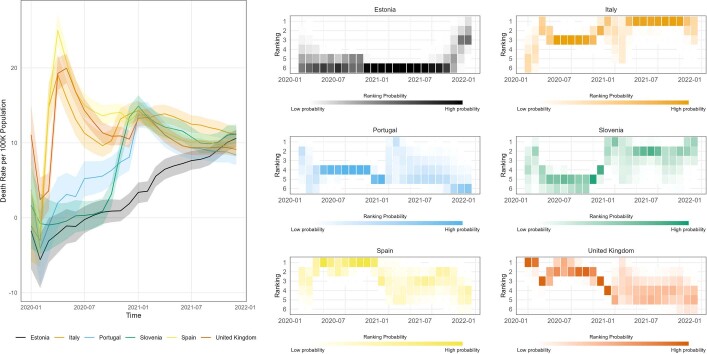
. Reported statistics on COVID-19 mortality are problematic for many countries owing to variations in testing access, differential diagnostic capacity and inconsistent certification of COVID-19 as cause of death. Beyond what is directly attributable to it, the pandemic has caused extensive collateral damage that has led to losses of lives and livelihoods. Here we report a comprehensive and consistent measurement of the impact of the COVID-19 pandemic by estimating excess deaths, by month, for 2020 and 2021. We predict the pandemic period all-cause deaths in locations lacking complete reported data using an overdispersed Poisson count framework that applies Bayesian inference techniques to quantify uncertainty. We estimate 14.83 million excess deaths globally, 2.74 times more deaths than the 5.42 million reported as due to COVID-19 for the period. There are wide variations in the excess death estimates across the six World Health Organization regions. We describe the data and methods used to generate these estimates and highlight the need for better reporting where gaps persist. We discuss various summary measures, and the hazards of ranking countries' epidemic responses.
Overview
CoChat Summary
TL;DR
WHO estimated global excess mortality from COVID-19 for January 2020–December 2021 at 14.83 million deaths, using a Bayesian Poisson framework to fill gaps where all-cause mortality data were incomplete. The estimate is 2.74 times the 5.42 million COVID-19 deaths reported to WHO for the same period.
Key findings
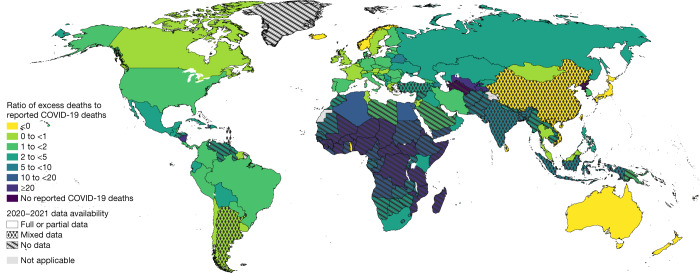
- Globally, the paper estimates 14.83 million excess deaths over 2020–2021 (95% UI 13.23–16.58 million), compared with 5.42 million reported COVID-19 deaths; the excess-to-reported ratio is 2.74 (UI 2.44–3.06).
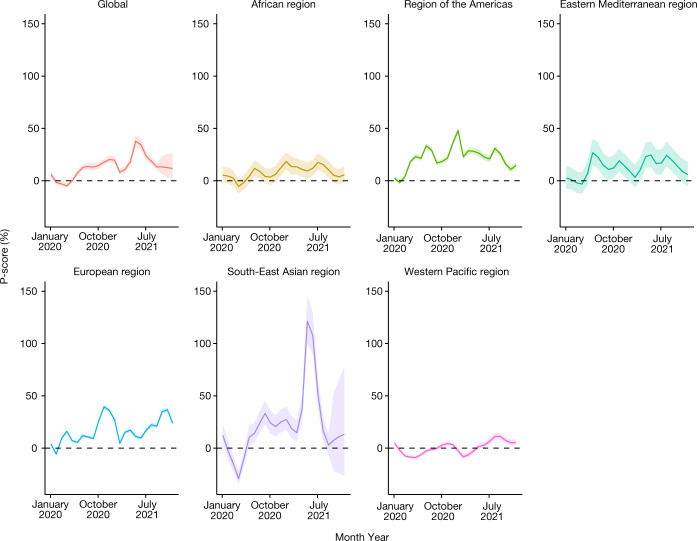
- Excess deaths were estimated at 4.47 million in 2020 and 10.36 million in 2021 globally; the global P-score increased from 7.97% in 2020 to 18.30% in 2021.
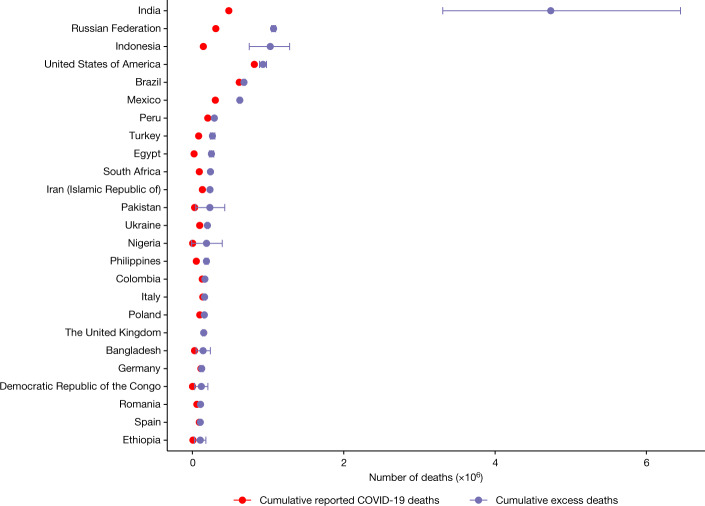
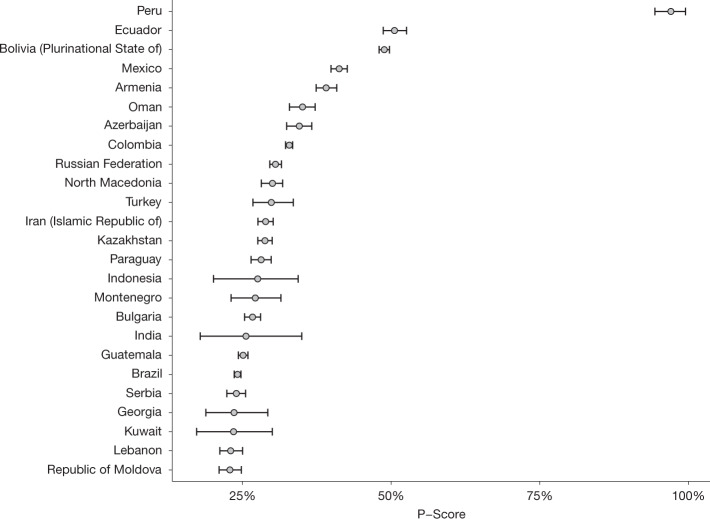
- The paper reports large country-level totals, including India: 4.74 million excess deaths (UI 3.31–6.45 million), Russian Federation: 1.07 million (UI 1.05–1.10 million), Indonesia: 1.03 million (UI 0.75–1.29 million), and the United States: 932,000 (UI 887,000–978,000).
- The 20 countries with the highest excess estimates account for 48.9% of the global population and over 80% of estimated global excess deaths for January 2020–December 2021.
Methods
- The study used a WHO-led, consultative modelling process: a Technical Advisory Group developed methods, WHO member states reviewed preliminary estimates, and feedback was used to update the final estimates.
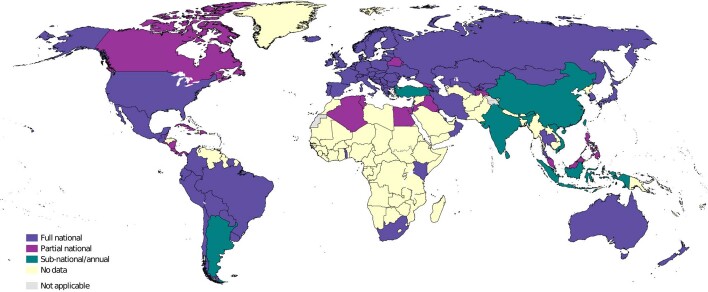
- The analysis used all-cause mortality (ACM) data from multiple sources; monthly national data were available for 100 countries (52%), while other locations had annual, subnational, or no data.
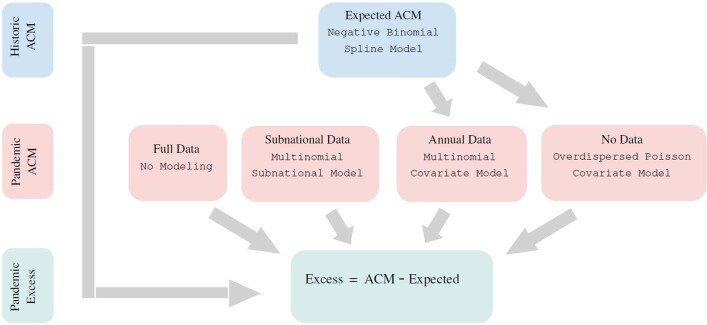
- Excess deaths were estimated with a Bayesian Poisson / negative binomial framework: historical ACM (often 2015–2019) was used to model expected deaths with spline-based seasonal and annual trends; where pandemic data were incomplete, a covariate-based log-linear model and, for some countries, subnational-to-national multinomial/proportionality models were used.
Limitations
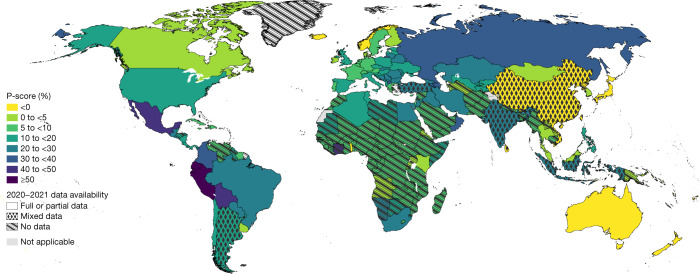
- The paper states that the biggest limitation is data paucity: for almost half of WHO member states, ACM data during the pandemic were unavailable, so estimates relied on statistical models; the text says these countries should be interpreted with caution.
- The paper states that the counterfactual trend is sensitive to modelling assumptions, including the choice of spline models and how recent historical years are weighted; it notes splines can produce inappropriate extrapolations.
- The text makes evident that comparisons across countries/regions are difficult because countries differ in age structure, data completeness, and reporting quality; this is stated in the paper and means rankings can be misleading.
- The text makes evident that the paper cannot quantify how much excess mortality is directly COVID-19 versus indirect or non-COVID causes; the discussion explicitly says excess mortality combines these and cannot separate them.
Model-written summary. Check it against the paper before relying on it.
Integrity signals
Registry
Cites
Statistics
Figures
Verification
Claims the paper makes
8 Valid · 2 Not valid · 6 Not checked · 81 Own results and interpretations
Every source the paper cites for this claim was checked and supports it.
In the paper
“Reported statistics on COVID-19 mortality are problematic for many countries owing to variations in testing access, differential diagnostic capacity and inconsistent certification of COVID-19 as cause of death.”
- Also stated in: § Main · plain
“countries have differed in their application of standards for the certification of COVID-19 as the underlying cause-of-death2.”
§ The WHO estimates of excess mortality associated with the COVID-19 pandemic > Abstract
What the sources say
- Supportedcites [2] Riffe T Acosta E Data Resource Profile: COVerAGE-DB: a global demographic database of COVID-19 cases and deaths Int. J. Epidemiol. 2021 50 390 390f 10.1093/ije/dyab027 source
The Strengths and weaknesses section says COVID-19 death counts are likely underestimated for reasons also affecting case counts, including testing capacity and diagnostic-test accuracy. It also describes differences in whether suspected deaths are counted and evidence that COVID-19-related deaths are classified under other causes. Page numbers were not supplied in our copy. (LLM, conf=0.90)
plainstates a cause- Asserted: passes — The authors put it forward as true.
- Checkable: passes — It can be checked against evidence.
- Load-bearing: passes — The paper’s conclusions depend on it.
- Based: passes — The paper gives a reason why it holds.
- Also stated in: § Main · plain
Every source the paper cites for this claim was checked and supports it.
In the paper
“The measure overcomes the variation among countries in reporting and testing and the misclassification of the cause of death on death certificates7”
§ The WHO estimates of excess mortality associated with the COVID-19 pandemic > Main
What the sources say
- Supportedcites [7] Beaney T Excess mortality: the gold standard in measuring the impact of COVID-19 worldwide? J. Royal Soc. Med. 2020 113 329 334 10.1177/0141076820956802 PMC7488823 32910871 source
The Excess mortality section states that, because it encompasses deaths from all causes, excess mortality overcomes cross-country variation in COVID-19 reporting and testing and misclassification of causes on death certificates. This directly matches the attributed claim. (LLM, conf=0.95)
plainstates a cause- Asserted: passes — The authors put it forward as true.
- Checkable: passes — It can be checked against evidence.
- Load-bearing: passes — The paper’s conclusions depend on it.
- Based: passes — The paper gives a reason why it holds.
- Supported
Every source the paper cites for this claim was checked and supports it.
In the paper
“This surpasses the influenza pandemics of 1957, 1968 and 2009 (estimated at 0.04%, 0.03% and 0.005%, respectively)18.”
§ The WHO estimates of excess mortality associated with the COVID-19 pandemic > Discussion
What the sources say
- Supportedcites [18] Simonsen L Viboud C Mortality: a comprehensive look at the COVID-19 pandemic death toll. eLife 2021 10 e71974 10.7554/eLife.71974 34382937 PMC8360646 source
Table 1 (Abstract) gives a global per capita excess mortality rate of >0.08% for COVID-19, exceeding its estimates of 0.04%, 0.03%, and 0.005% for the 1957, 1968, and 2009 influenza pandemics, respectively. The paper describes the COVID-19 estimate using data available in 2020–2021. (LLM, conf=0.94)
plain- Asserted: passes — The authors put it forward as true.
- Checkable: passes — It can be checked against evidence.
- Load-bearing: unclear — It is unclear whether the paper’s conclusions depend on it.
- Based: passes — The paper gives a reason why it holds.
- Supported
Every source the paper cites for this claim was checked and supports it.
In the paper
“As another example, in the Africa region for which ACM data are most lacking, recent studies have highlighted the underestimation in the reported statistics20.”
§ The WHO estimates of excess mortality associated with the COVID-19 pandemic > Discussion
What the sources say
- Supportedcites [20] Cabore J. W. et al. COVID-19 in the 47 countries of the WHO African region: a modelling analysis of past trends and future patterns. Lancet Glob. Health10, e1099–e1114 (2022). PMC9159735 35659911 source
The Introduction states that reported infections and deaths underestimate the actual COVID-19 burden in the WHO African region. It also reports that, in countries with seroprevalence studies, reported infections represented only a small proportion of the estimated burden. Page numbers were not provided. (LLM, conf=0.94)
plainstates an association- Asserted: passes — The authors put it forward as true.
- Checkable: passes — It can be checked against evidence.
- Load-bearing: unclear — It is unclear whether the paper’s conclusions depend on it.
- Based: passes — The paper gives a reason why it holds.
- Supported
Every source the paper cites for this claim was checked and supports it.
In the paper
“The uncertainty in the expected predictions is well modelled by a gamma distribution, and the advantage of this choice is that it can be conveniently combined with a Poisson model to produce a negative binomial model with the log-linear mean given by equation (3).”
§ The WHO estimates of excess mortality associated with the COVID-19 pandemic > Methods > Model for countries without full pandemic data For almost half of the 194 WHO member states we do not have the ACM counts over the pandemic, and so must predict them using country characteristics. We choose a simple form for this prediction model, with mean2where is a relative rate parameter. If , then for country and at month the mortality is greater than expected, whereas if , then for country and at month the mortality is less than expected. We used time-invariant variables, (these are annual values from 2019). These were an indicator of high income and/or low or middle income, the cardiovascular mortality rate in 2019 and the diabetes prevalence rate in 2019. In addition, we used time-varying variables: a containment variable (it is calculated using all ordinal containment and closure policy indicators and health-system policy indicators, for further details see Hale et al.14), the square root of the reported COVID-19 death rate, temperature and the COVID-19 test positivity rate. We then build a log-linear model for the rate parameter:3where and denote relative rate parameters and are independent error contributions that pick up random variation unexplained by the log-linear regression function. The time-varying coefficients allow the associations to evolve during the pandemic. As we desire the evolution to be smooth in time, for these time-varying coefficients we use a random walk of order 2 (RW2) prior that encourages smooth estimates46. In equation (2) above, we have conditioned on known expected numbers. In reality, and as just described, these are modelled to give a distribution over plausible values. The uncertainty in the expected predictions is well modelled by a gamma distribution, and the advantage of this choice is that it can be conveniently combined with a Poisson model to produce a negative binomial model with the log-linear mean given by equation (3). Full details (including evidence of the accuracy of the gamma model) can be found in Knutson et al.15. This model was fitted to all countries with observed monthly ACM data over some portion of 2020–2021, using the integrated nested Laplace approximation method47, to obtain posterior distributions over the unknown parameters. The resultant posterior distribution reflects the uncertainty in the parameters (both in the expected numbers and the log-linear covariate model), and can be used to construct a predictive distribution for the ACM in countries with no data or partial data.
What the sources say
- Supportedcites Knutson et al.15 Knutson V., Aleshin-Guendel S., Karlinsky A., Msemburi W. & Wakefield J. Estimating country-specific excess mortality during the COVID-19 pandemic (2023). Ann. Appl. Stat. (in the press). PMC9812776 36517599 source
Section 3.3 (Modeling Uncertainty in the Expected Numbers) states they fit a gamma distribution by method of moments to the Monte Carlo samples of the expected numbers and 'approximate the distribution of the expected numbers as gamma, since this is conjugate to the Poisson, and so allows efficient inference with INLA ... using a negative binomial,' and the Supplementary Materials (Sec. 5, Gamma Expected Numbers; Fig. 5) report the gamma fits are accurate, with differences 'small in all cases' — supporting 'well modelled'. The model description bullet confirms the negative binomial component with known tau arises from the uncertainty in the expected numbers within the log-linear Poisson/negative-binomial formulation. The 'equation (3)' reference is the citing paper's own display, not attributed content. (LLM, conf=0.90)
boosted- Asserted: passes — The authors put it forward as true.
- Checkable: passes — It can be checked against evidence.
- Load-bearing: passes — The paper’s conclusions depend on it.
- Based: passes — The paper gives a reason why it holds.
- Supported
49 more claims
Create a free account to see all 97 claims and to verify the 2 references still open.
- Probably not a substantial claim. 19
- It may state two separate claims as one. 30
- The quote only partly states this claim. 2
Claims other papers make about this one
Each is checked against this paper’s own text: does it say what the citing paper says it does?
The source backs part of the claim, not all of it — or backs it for a different population, condition or comparison.
In the citing paper
“Our current estimate of global excess mortality during 2020 and 2021 is comparable to the WHO estimate of 14·9 million (95% UI 13·3–16·6) excess deaths,15 with our mean estimate falling within the uncertainty interval of the WHO estimate and vice versa.”
From Global age-sex-specific mortality, life expectancy, and population estimates in 204 countries and territories and 811 subnational locations, 1950–2021, and the impact of the COVID-19 pandemic: a comprehensive demographic analysis for the Global Burden of Disease Study 2021 (2024) · cites this paper as [15]
Experimental — accuracy not yet measuredThe cited source says what the claim attributes to it.
In the citing paper
“this total greatly exceeds global average increases of 8% in 2020 and 18% in 20214.”
From Attributed causes of excess mortality during the COVID-19 pandemic in a south Indian city (2023) · cites this paper as [4]
In the citing paper
“Other settings with >25% increases in mortality during the pandemic have included Russia and LMICs within Latin America, Eastern Europe, and central Asia1,4.”
From Attributed causes of excess mortality during the COVID-19 pandemic in a south Indian city (2023) · cites this paper as [4]
Citations
Cites
Vos, T., Lim, S. S., Abbafati, C., Abbas, K. M., Abbasi, M., Abbasifard, M., Abbasi-Kangevari, M., Abbastabar, H., Abd-Allah, F., Abdelalim, A., et al. (2020) · The Lancet · doi:10.1016/s0140-6736(20)30925-9 · Cited by 19,358
Generalized Additive Models: An Introduction with R
Wood, S. N. (2017) · doi:10.1201/9781315370279 · Cited by 13,852
Rue, H., Martino, S., & Chopin, N. (2009) · Journal of the Royal Statistical Society Series B: Statistical Methodology · doi:10.1111/j.1467-9868.2008.00700.x · Cited by 5,279
Wang, H., Paulson, K. R., Pease, S. A., Watson, S., Comfort, H., Zheng, P., Aravkin, A. Y., Bisignano, C., Barber, R. M., Alam, T., et al. (2022) · The Lancet · doi:10.1016/s0140-6736(21)02796-3 · Cited by 2,069
Rue, H., & Held, L. (2005) · Chapman & Hall/CRC eBooks · doi:10.1201/9780203492024 · Cited by 1,823
Guidelines for accurate and transparent health estimates reporting: the GATHER statement
Stevens, G. A., Alkema, L., Black, R. E., Boerma, J. T., Collins, G. S., Ezzati, M., Grove, J. T., Hogan, D. R., Hogan, M. C., Horton, R., et al. (2016) · The Lancet · doi:10.1016/s0140-6736(16)30388-9 · Cited by 1,798
Karlinsky, A., & Kobak, D. (2021) · eLife · doi:10.7554/elife.69336 · Cited by 772
Self-citationMurray, C. J., Lopez, A. D., Chin, B., Feehan, D., & Hill, K. H. (2006) · The Lancet · doi:10.1016/s0140-6736(06)69895-4 · Cited by 605
Islam, N., Shkolnikov, V. M., Acosta, R. J., Klimkin, I., Kawachi, I., Irizarry, R. A., Alicandro, G., Khunti, K., Yates, T., Jdanov, D. A., et al. (2021) · BMJ · doi:10.1136/bmj.n1137 · Cited by 468
Guidelines for accurate and transparent health estimates reporting: the GATHER statement
Stevens, G. A., Alkema, L., Black, R. E., Boerma, J. T., Collins, G. S., Ezzati, M., Grove, J. T., Hogan, D. R., Hogan, M. C., Horton, R., et al. (2016) · PLOS Medicine · doi:10.1371/journal.pmed.1002056 · Cited by 424
Research works printed but not linked: 2
- National Bureau of Statistics of China. China Statistical Yearbook 2021 (China Statistics Press, 2021).
- Hale, T. et al. Variation in Government Responses to COVID-19 Technical Report (Univ. Oxford, 2020).
Cited by
Schumacher, A. E., Kyu, H. H., Aali, A., Abbafati, C., Abbas, J., Abbasgholizadeh, R., Abbasi, M. A., Abbasian, M., Abd ElHafeez, S., Abdelmasseh, M., et al. (2024) · The Lancet · doi:10.1016/s0140-6736(24)00476-8 · Cited by 1,045
Health and related indicators 2021
Ndlovu, N., Day, C., Gray, A., Busang, J., & Mureithi, L. (2022) · South African Health Review · doi:10.61473/001c.75480 · Cited by 253
Scoping review: longitudinal effects of the COVID-19 pandemic on child and adolescent mental health
Wolf, K., & Schmitz, J. (2024) · European Child & Adolescent Psychiatry · doi:10.1007/s00787-023-02206-8 · Cited by 242
Delving into LLM-assisted writing in biomedical publications through excess vocabulary
Kobak, D., González-Márquez, R., Horvát, E.-Á., & Lause, J. (2024) · arXiv · doi:10.48550/arxiv.2406.07016 · Cited by 214
COVID-19 and its long-term sequelae: what do we know in 2023?
Lippi, G., Sanchis‑Gomar, F., & Henry, B. M. (2023) · Polish Archives of Internal Medicine · doi:10.20452/pamw.16402 · Cited by 190
Delving into LLM-assisted writing in biomedical publications through excess vocabulary
Kobak, D., González-Márquez, R., Horvát, E.-Á., & Lause, J. (2025) · Science Advances · doi:10.1126/sciadv.adt3813 · Cited by 213
Outlook of pandemic preparedness in a post-COVID-19 world
Williams, B. A., Jones, C. H., Welch, V., & True, J. M. (2023) · npj Vaccines · doi:10.1038/s41541-023-00773-0 · Cited by 186
“As of August 2023, COVID-19 has infected over 770 million people and resulted in over 6.9 million reported deaths globally 1 , although the World Health Organization (WHO) estimates mortality could be much higher based on global excess mortality 2 .”
BackgroundInfluentialLobanov-Rostovsky, S., He, Q., Chen, Y., Liu, Y., Wu, Y., Liu, Y., Venkatraman, T., French, E., Curry, N., Hemmings, N., et al. (2023) · BMC Public Health · doi:10.1186/s12889-023-15583-1 · Cited by 160
“Since December 2019, the pandemic has resulted in some 15 million excess deaths globally [19].”
BackgroundGlobal health 2050: the path to halving premature death by mid-century
Jamison, D. T., Summers, L. H., Chang, A. Y., Karlsson, O., Mao, W., Norheim, O. F., Ogbuoji, O., Schäferhoff, M., Watkins, D., Adeyi, O., et al. (2024) · The Lancet · doi:10.1016/s0140-6736(24)01439-9 · Cited by 125
Ip, J. D., Chu, A. W., Chan, W.-M., Leung, R. C.-Y., Abdullah, S. M., Sun, Y., & To, K. K. (2023) · EBioMedicine · doi:10.1016/j.ebiom.2023.104559 · Cited by 126
Scientific advances and the end of tuberculosis: a report from the Lancet Commission on Tuberculosis
Reid, M., Agbassi, Y. J. P., Arinaminpathy, N., Bercasio, A., Bhargava, A., Bhargava, M., Bloom, A., Cattamanchi, A., Chaisson, R., Chin, D., et al. (2023) · The Lancet · doi:10.1016/s0140-6736(23)01379-x · Cited by 87
Zhu, Z., Liu, L., Free, R. C., Anjum, A., & Panneerselvam, J. (2024) · Information Sciences · doi:10.1016/j.ins.2024.121141 · Cited by 106
(2023) · doi:10.1214/22-aoas1673 · Cited by 72
Self-citationPizzato, M., Gerli, A. G., Vecchia, C. L., & Alicandro, G. (2024) · The Lancet Regional Health - Europe · doi:10.1016/j.lanepe.2024.100996 · Cited by 105
Fractional view analysis of the impact of vaccination on the dynamics of a viral infection
Jan, R., Hınçal, E., HOSSEINI, K., et al. (2024) · Alexandria Engineering Journal · doi:10.1016/j.aej.2024.05.080 · Cited by 63
Collapse and Recovery: How the COVID-19 Pandemic Eroded Human Capital and What to Do about It
Schady, N., Holla, A., Sabarwal, S., Silva, J., & Chang, A. Y. (2023) · World Bank, Washington, DC eBooks · doi:10.1596/978-1-4648-1901-8 · Cited by 62
Jin, W., Huang, K., Ding, Z., Zhang, M., Li, C., Yuan, Z., Ma, K., & Ye, X. (2025) · Biomarker Research · doi:10.1186/s40364-024-00718-2 · Cited by 88
Estimates of COVID‐19 deaths in Mainland China after abandoning zero COVID policy
Ioannidis, J. P. A., Zonta, F., & Levitt, M. (2023) · European Journal of Clinical Investigation · doi:10.1111/eci.13956 · Cited by 63
“E .g. in 2020-2021, WHO estimates 6,288 excess deaths in South Korea (36), Economist estimates 7,558 excess deaths (37), while our calculations (using 2017-2019 as baseline) shows a death deficit (38).”
Garnsey, M. R., Robinson, M. C., Nguyen, L. T., Cardin, R. D., Tillotson, J., Mashalidis, E. H., Yu, A., Aschenbrenner, L. M., Balesano, A., Behzadi, A., et al. (2024) · Science Advances · doi:10.1126/sciadv.ado4288 · Cited by 85
Causes and costs of global COVID-19 vaccine inequity
Ferranna, M. (2023) · Seminars in Immunopathology · doi:10.1007/s00281-023-00998-0 · Cited by 70
A comprehensive analysis of all-cause and cause-specific excess deaths in 30 countries during 2020
Alicandro, G., Vecchia, C. L., Islam, N., & Pizzato, M. (2023) · European Journal of Epidemiology · doi:10.1007/s10654-023-01044-x · Cited by 52
Remdesivir: A Review in COVID-19
Blair, H. A. (2023) · Drugs · doi:10.1007/s40265-023-01926-0 · Cited by 60
“COVID-19 is associated with excess mortality and has become a leading cause of death worldwide [137].”
Mostert, S., Hoogland, M., Huibers, M. H. W., & Kaspers, G. J. L. (2024) · BMJ Public Health · doi:10.1136/bmjph-2023-000282 · Cited by 63
RetractedAutopsy Findings in Cases of Fatal COVID-19 Vaccine-Induced Myocarditis
Hulscher, N., Hodkinson, R., Makis, W., & McCullough, P. A. (2024) · ESC Heart Failure · doi:10.1002/ehf2.14680 · Cited by 68
Naik, P. A., Farman, M. T., Zehra, A., Nisar, K. S., & Hınçal, E. (2024) · Partial Differential Equations in Applied Mathematics · doi:10.1016/j.padiff.2024.100663 · Cited by 46
Aftermath on COVID-19 technological and socioeconomic changes: A meta-analytic review
Yao, X., Xu, Z., Škare, M., & Wang, X. (2024) · Technological Forecasting and Social Change · doi:10.1016/j.techfore.2024.123322 · Cited by 57
Excess All-Cause Mortality in China After Ending the Zero COVID Policy
Xiao, H., Wang, Z., Liu, F., & Unger, J. M. (2023) · JAMA Network Open · doi:10.1001/jamanetworkopen.2023.30877 · Cited by 46
“The median (IQR) of the difference between the date of obituary publications and the date of death was 1 (1-3), 2 (1-4), and 1 (0-3) days in PKU, THU, and HIT, respectively.”
BackgroundLedesma, J. R., Isaac, C. R., Dowell, S. F., Blazes, D. L., Essix, G. V., Budeski, K., Bell, J., & Nuzzo, J. B. (2023) · BMJ Global Health · doi:10.1136/bmjgh-2023-012203 · Cited by 51
“33 In this sensitivity analysis, we included excess mortality data from all three sources representing two time periods including 2020 only and 2020 through 2021.”
Population and food systems: what does the future hold?
Becker, S., & Fanzo, J. (2023) · Population and Environment · doi:10.1007/s11111-023-00431-6 · Cited by 65
Variability in excess deaths across countries with different vulnerability during 2020–2023
Ioannidis, J. P. A., Zonta, F., & Levitt, M. (2023) · Proceedings of the National Academy of Sciences · doi:10.1073/pnas.2309557120 · Cited by 44
“4 INTRODUCTION Estimates of excess deaths are considered to offer an aggregate picture of the impact on overall mortality during the COVID-19 crisis.(1,2) Excess deaths capture the composite of deaths due to SARS-CoV-2, indirect effects of the pandemic, and the effects of the measures taken during the crisis (both pos…”
Epidemiology of cardiometabolic health in Latin America and strategies to address disparities
Brant, L. C. C., Miranda, J. J., Carrillo-Larco, R. M., Flood, D., Irazola, V. E., & Ribeiro, A. L. P. (2024) · Nature Reviews Cardiology · doi:10.1038/s41569-024-01058-2 · Cited by 56
Flaws and uncertainties in pandemic global excess death calculations
Ioannidis, J. P. A., Zonta, F., & Levitt, M. (2023) · European Journal of Clinical Investigation · doi:10.1111/eci.14008 · Cited by 43
Januel, É., Hajage, D., Labauge, P. M., Maillart, É., Seze, J. D., Zéphir, H., Pelletier, J., Guilloton, L., Bensa, C., Heinzlef, O., et al. (2023) · JAMA Network Open · doi:10.1001/jamanetworkopen.2023.19766 · Cited by 40
Li, Y., Zhong, L.-B., Zhang, Q., et al. (2023) · Journal of Membrane Science · doi:10.1016/j.memsci.2023.122354 · Cited by 34
Huang, Z., Zhuang, X., Liu, L., Zhao, J., Ma, S., Si, X., Zhu, Z., Wu, F., Jin, N., Tian, M., et al. (2023) · National Science Review · doi:10.1093/nsr/nwad310 · Cited by 35
Stewart, R., Yan, K., Ellis, S. A., Bishop, C. R., Dumenil, T. D., Tang, B., Nguyen, W., Larcher, T., Parry, R. H., Sng, J. D. J., et al. (2023) · Frontiers in Microbiology · doi:10.3389/fmicb.2023.1320856 · Cited by 36
“…with neurological manifestations of long-COVID (Davis et al., 2023; De Paula et al., 2023; Ferrucci et al., 2023; Rothstein, 2023), and such damage may also contribute to the continuing excess deaths arising from the COVID-19 pandemic (De Hert et al., 2021; Li et al., 2021; Msemburi et al., 2023).”
BackgroundIwashyna, T. J., Seelye, S. M., Berkowitz, T. S. Z., Pura, J. A., Bohnert, A. S. B., Bowling, C. B., Boyko, E. J., Hynes, D. M., Ioannou, G. N., Maciejewski, M. L., et al. (2023) · JAMA Internal Medicine · doi:10.1001/jamainternmed.2023.3587 · Cited by 32
Khorram‐Manesh, A., Burkle, F. M., & Goniewicz, K. (2024) · Osong Public Health and Research Perspectives · doi:10.24171/j.phrp.2023.0372 · Cited by 33
“COVID-19 pandemic [33] 2019–present The coronavirus SARS-CoV-2 Pandemics past, present, and future and close contact, further accelerates the transmission of diseases [ 2,25 –33 ].”
BackgroundInfluentialAn effective and rapidly degradable disinfectant from disinfection byproducts
Han, J., Li, W., & Zhang, X. (2024) · Nature Communications · doi:10.1038/s41467-024-48752-w · Cited by 35
“Since it was fi rst reported in late December 2019, the coronavirus disease (COVID-19) has caused millions of con fi rmed deaths 1 .”
Bonnet, F., Grigoriev, P., Sauerberg, M., Alliger, I., Mühlichen, M., & Camarda, C. G. (2024) · Nature Communications · doi:10.1038/s41467-024-48689-0 · Cited by 42
Feng, X., Xu, X., Yao, X., Zhao, Y., Tang, Y., Zhao, Z., Wei, Y., Mehmood, T., & Luo, X. (2024) · Atmospheric Research · doi:10.1016/j.atmosres.2024.107453 · Cited by 35
Fraisl, D., See, L., Estevez, D., Tomaska, N., & MacFeely, S. (2023) · Frontiers in Public Health · doi:10.3389/fpubh.2023.1202188 · Cited by 37
“42 million reported for this period (24).”
COVID-19 in the Initiation and Progression of Atherosclerosis
Chidambaram, V., Kumar, A., Sadaf, M. I., Lu, E., Alaref, S. J., Tarun, T., Galiatsatos, P., Gulati, M., Blumenthal, R. S., Leucker, T. M., et al. (2024) · JACC Advances · doi:10.1016/j.jacadv.2024.101107 · Cited by 38
Global estimates of excess deaths from COVID-19
Acosta, E. (2022) · Nature · doi:10.1038/d41586-022-04138-w · Cited by 27
Roy, A. V., Chan, M., Banadyga, L., He, S., Zhu, W., Chrétien, M., & Mbikay, M. (2024) · Virology Journal · doi:10.1186/s12985-024-02299-w · Cited by 30
“Severe Acute Respiratory Coronavirus 2 (SARS-CoV-2) is the etiological agent of coronavirus disease 2019 (COVID-19) that broke out in 2019 in China before becoming a pandemic that has killed to date nearly 15 million people worldwide [1].”
BackgroundZhou, M., Zhang, X., Quan, Y., Tian, Y., Chen, J., & Li, L. (2024) · Scientific Reports · doi:10.1038/s41598-024-58660-0 · Cited by 37
Unmasking the COVID-19 pandemic prevention gains: excess mortality reversal in 2022
Walkowiak, M. P., Domaradzki, J., & Walkowiak, D. (2023) · Public Health · doi:10.1016/j.puhe.2023.08.004 · Cited by 28
Zhao, Y., Jiang, Y., Zhang, W., & Zhu, Y. (2023) · Systems · doi:10.3390/systems11040181 · Cited by 32
Pavia, G., Branda, F., Ciccozzi, A., Romano, C., Locci, C., Azzena, I., Pascale, N., Marascio, N., Quirino, A., Gigliotti, S., et al. (2024) · Scandinavian Journal of Infectious Diseases · doi:10.1080/23744235.2024.2437027 · Cited by 33
Inequalities in regional excess mortality and life expectancy during the COVID-19 pandemic in Europe
Hajdu, T., Krekó, J., & Tóth, C. G. (2024) · Scientific Reports · doi:10.1038/s41598-024-54366-5 · Cited by 35
da Silva, M. K., Campos, D. M. D. O., Akash, S., Akter, S., Leow, C. Y., Fulco, U. L., & Oliveira, J. I. N. (2023) · Viruses · doi:10.3390/v15102130 · Cited by 30
“Conventional vaccines rely on the use of either the whole weakened or killed pathogen, or parts thereof (such as proteins or polysaccharides) isolated or recombinant [1,5].”
BackgroundMatveeva, O. V., & Shabalina, S. A. (2023) · Frontiers in Immunology · doi:10.3389/fimmu.2023.1151311 · Cited by 31
“The existence of this discrepancy, and the fact that it occurs primarily in countries with relatively low GDP per capita, is consistent with what has already been found and published (14, 17).”
Chemaitelly, H. S., Ayoub, H. H., Faust, J. S., Coyle, P. V., Tang, P., Hasan, M. R., Yassine, H. M., Al-Khatib, H. A., Thani, A. A. A., Kanaani, Z. A., et al. (2023) · BMJ Public Health · doi:10.1136/bmjph-2023-000479 · Cited by 27
Rossetti, M., Srisomwat, C., Urban, M., Rosati, G., Maroli, G., Akbay, H. G. Y., Chailapakul, O., & Merkoçi, A. (2024) · Biosensors and Bioelectronics · doi:10.1016/j.bios.2024.116079 · Cited by 28
Discovery of Small Molecules Targeting the Frameshifting Element RNA in SARS-CoV-2 Viral Genome
Yang, M., Olatunji, F. P., Rhodes, C. A., Balaratnam, S., Dunne-Dombrink, K., Seshadri, S., Liang, X., Jones, C. P., Grice, S. F. J. L., Ferré-D’Amaré, A. R., et al. (2023) · ACS Medicinal Chemistry Letters · doi:10.1021/acsmedchemlett.3c00051 · Cited by 28
Aging in Southeast Asia and Japan : Challenges and opportunities
Sakamoto, R. (2025) · Geriatrics and gerontology international/Geriatrics & gerontology international · doi:10.1111/ggi.70062 · Cited by 34
“89 Both Indonesia and the Philippines are archipelagic countries.”
The potential of lactoferrin as antiviral and immune-modulating agent in viral infectious diseases
Eker, F., Duman, H., Ertürk, M., & Karav, S. (2024) · Frontiers in Immunology · doi:10.3389/fimmu.2024.1402135 · Cited by 35
Changes in SARS-CoV-2 seroprevalence and population immunity in Finland, 2020–2022
Solastie, A., Nieminen, T., Ekström, N., Nohynek, H., Lehtonen, L., Palmu, A., & Melin, M. (2023) · medRxiv · doi:10.1080/22221751.2023.2222849 · Cited by 20
Laing, R., & Donnelly, C. A. (2024) · PLoS ONE · doi:10.1371/journal.pone.0306395 · Cited by 34
Impact of the 100 days mission for vaccines on COVID-19: a mathematical modelling study
Barnsley, G., Mesa, D. O., Hogan, A. B., Winskill, P., Torkelson, A. A., Walker, D. G., Ghani, A. C., & Watson, O. J. (2024) · The Lancet Global Health · doi:10.1016/s2214-109x(24)00286-9 · Cited by 29
Pallari, C. T., Achilleos, S., Quattrocchi, A., Gabel, J., Critselis, E., Athanasiadou, M., Haghighi, M. R. R., Papatheodorou, S., Liu, T., Artemiou, A., et al. (2024) · BMJ Global Health · doi:10.1136/bmjgh-2023-013018 · Cited by 24
Peo, L.-C., Wiehler, K., Paulick, J., Gerrer, K., Leone, A., Viereck, A., Haegele, M., Stojanov, S., Warlitz, C., Augustin, S., et al. (2023) · European Journal of Pediatrics · doi:10.1007/s00431-023-05351-z · Cited by 31
“Besides immediate risks from severe acute respiratory coronavirus type 2 (SARS-CoV-2) infections [1, 2], post-acute sequelae of COVID-19 (PASC) are adding to the post-pandemic burden, straining healthcare and societies [3–7].”
Attributed causes of excess mortality during the COVID-19 pandemic in a south Indian city
Lewnard, J. A., B, C. M., Kang, G., & Laxminarayan, R. (2023) · Nature Communications · doi:10.1038/s41467-023-39322-7 · Cited by 23
Chen, Y., Zhu, W., Han, X., Chen, M., Li, X., Huang, H., Zhang, M., Wei, R., Zhang, H., Yang, C., et al. (2024) · BMC Infectious Diseases · doi:10.1186/s12879-024-09225-z · Cited by 27
“The WHO study published in Nature [1, 3] also suggested that accurately tracking SARS-CoV-2 and its impact had been challenging.”
ResultReflection with ChatGPT about the excess death after the COVID-19 pandemic
Temsah, M.-H., Jamal, A., & Al-Tawfiq, J. A. (2023) · New Microbes and New Infections · doi:10.1016/j.nmni.2023.101103 · Cited by 23
“83 million excess deaths around the world [3].”
What can we learn from historical pandemics? A systematic review of the literature
Doran, Á., Colvin, C. L., & McLaughlin, E. (2023) · Social Science & Medicine · doi:10.1016/j.socscimed.2023.116534 · Cited by 32
Marchetti, S., Gualtieri, M., Pozzer, A., Lelieveld, J., Saliu, F., Hansell, A., Colombo, A., & Mantecca, P. (2023) · Environment International · doi:10.1016/j.envint.2023.108131 · Cited by 26
pH-dependent endocytosis mechanisms for influenza A and SARS-coronavirus
Aganović, A. (2023) · Frontiers in Microbiology · doi:10.3389/fmicb.2023.1190463 · Cited by 24
“, 2021), increased mortality (Zucs et al., 2005; Iuliano et al., 2018; Hansen et al., 2022; Msemburi et al., 2023), and significant socioeconomic consequences (Fendrick et al.”
BackgroundExcess mortality in Denmark, Finland, Norway and Sweden during the COVID-19 pandemic 2020–2022
Forthun, I., Madsen, C., Emilsson, L., Nilsson, A., Kepp, K. P., Björk, J., Vollset, S. E., Lallukka, T. M., & Knudsen, A. K. (2024) · European Journal of Public Health · doi:10.1093/eurpub/ckae091 · Cited by 31
Ching, P. R., & Pedersen, L. L. (2025) · Medical Clinics of North America · doi:10.1016/j.mcna.2024.12.011 · Cited by 26
Cardwell, K., Clyne, B., Broderick, N., Tyner, B., Masukume, G., Larkin, L., McManus, L., Carrigan, M., Sharp, M. K., Smith, S. M., et al. (2023) · Public Health · doi:10.1016/j.puhe.2023.10.024 · Cited by 26
Ryan, B. J., Kako, M., Garner, S. L., Fink, R., Tayfur, İ., Abrahams, J., Bhatia, S., Campelo, A., Fendt, M. W., Fontenot, A., et al. (2024) · International Journal of Disaster Risk Science · doi:10.1007/s13753-024-00537-x · Cited by 24
Cao, G., Liu, J., Liu, M., & Liang, W. (2023) · Journal of Global Health · doi:10.7189/jogh.13.06042 · Cited by 24
“However, the reported number of deaths is likely underestimated, as it did not include deaths where individuals were not tested or other pandemic-related deaths due to overwhelmed health systems or patients avoiding care [9,10].”
BackgroundInfluentialThe Multifaceted Role of Annexin A1 in Viral Infections
Resende, F., de Araújo, S., Tavares, L. P., Teixeira, M. M., & Costa, V. V. (2023) · Cells · doi:10.3390/cells12081131 · Cited by 23
Environmental Effects of the Disposable Surgical Masks for Preventing COVID-19
Li, Y., Tang, Y., Liu, M., Yuan, X., Zuo, J., Feng, K., Wang, Q., Ma, Q., Mu, R., Wang, W., et al. (2022) · One Earth · doi:10.1016/j.oneear.2023.08.008 · Cited by 21
Lara, P. B., Savedoff, W. D., Agudelo, M. F. G., Bernal, C., Goyeneche, L., Sório, R. E., Pérez‐Cuevas, R., Rocha, M., Shibata, L. G., Vucetich, C. S. R., et al. (2023) · Health Affairs · doi:10.1377/hlthaff.2023.00720 · Cited by 27
Vaccine development against tuberculosis before and after Covid-19
Kaufmann, S. H. E. (2023) · Frontiers in Immunology · doi:10.3389/fimmu.2023.1273938 · Cited by 27
On finite-time stability of some COVID-19 models using fractional discrete calculus
Momani, S., Batiha, I. M., Bendib, I., et al. (2025) · Computer Methods and Programs in Biomedicine Update · doi:10.1016/j.cmpbup.2025.100188 · Cited by 18
Compound mortality impacts from extreme temperatures and the COVID-19 pandemic
Lo, Y. T. E., Mitchell, D., & Gasparrini, A. (2024) · Nature Communications · doi:10.1038/s41467-024-48207-2 · Cited by 24
“In the two years of 2020-2021, almost 15 million excess deaths were estimated to be associated with COVID-19 directly or indirectly globally 16 .”
Grieve, R., Yang, Y., Abbott, S., Babu, G. R., Bhattacharyya, M., Dean, N. E., Evans, S. J. W., Jewell, N. P., Langan, S., Lee, W., et al. (2023) · PLOS Global Public Health · doi:10.1371/journal.pgph.0002601 · Cited by 29
“The WHO assembled technical advisory committees, bringing in experts worldwide to quantify excess deaths due to COVID [55].”
BackgroundLedesma, J. R., Chrysanthopoulou, S. A., Lurie, M. N., Nuzzo, J. B., & Papanicolas, I. (2024) · Health Services Research · doi:10.1111/1475-6773.14382 · Cited by 28
Lovell, J. F., Miura, K., Baik, Y. O., Lee, C., Choi, Y., Her, H., Lee, J., Ylade, M. C., Lee‐Llacer, R., Asis, N. D., et al. (2024) · Journal of Medical Virology · doi:10.1002/jmv.29927 · Cited by 20
Mortality and morbidity in critically ill COVID-19 patients: A systematic review and meta-analysis
Gebremeskel, G. G., Tadesse, D. B., & Haile, T. G. (2024) · Journal of Infection and Public Health · doi:10.1016/j.jiph.2024.102533 · Cited by 18
Surviving bacteria in non-thermally processed foods
Yang, D. J., Shangguan, Y., Rao, L., Zhao, L., & Liao, X. (2025) · Trends in Food Science & Technology · doi:10.1016/j.tifs.2025.105067 · Cited by 18
Wichmann, B., & Wichmann, R. M. (2023) · Scientific Reports · doi:10.1038/s41598-023-40727-z · Cited by 17
Betulonic acid: A review on its sources, biological activities, and molecular mechanisms
Lou, S., Dai, C., Wu, Y., Wang, L., Jin, Y., Shen, N., Lv, W., Wu, M., Xu, X., Han, J., et al. (2025) · European Journal of Pharmacology · doi:10.1016/j.ejphar.2025.177518 · Cited by 24
Hudu, S. A., Alshrari, A. S., Abu-Shoura, E. J. I., Osman, A., & Jimoh, A. O. (2025) · Interdisciplinary Perspectives on Infectious Diseases · doi:10.1155/ipid/6816002 · Cited by 34
Racial and Ethnic Disparities in Age-Specific All-Cause Mortality During the COVID-19 Pandemic
Faust, J. S., Renton, B., Bongiovanni, T., Chen, A. J., Sheares, K. D., Du, C., Essien, U. R., Fuentes‐Afflick, E., Haywood, T. T., Khera, R., et al. (2024) · JAMA Network Open · doi:10.1001/jamanetworkopen.2024.38918 · Cited by 19
Gmanyami, J. M., Quentin, W., Lambert, O., Jarynowski, A. K., Belik, V., & Amuasi, J. (2024) · BMC Public Health · doi:10.1186/s12889-024-19154-w · Cited by 23
“…actual deaths during a crisis and expected deaths without it [15], encompassing COVID-19-related deaths and those indirectly influenced by the pandemic, including socio-economic challenges like compromised food security, disruptions in supply chains, and limited access to healthcare [16–18].”
BackgroundBonnet, F., Grigoriev, P., Sauerberg, M., Alliger, I., Mühlichen, M., & Camarda, C. G. (2024) · Journal of Epidemiology and Global Health · doi:10.1007/s44197-024-00200-0 · Cited by 22
“Nonetheless, it remains essential to account for temporal trends when estimating mortality levels in the absence of a pandemic and, consequently, compute excess mortality more accurately [15, 17, 33].”
Respiratory Virus Prevalence Across Pre-, During-, and Post-SARS-CoV-2 Pandemic Periods
Manno, M., Pavia, G., Gigliotti, S., Pantanella, M., Barreca, G. S., Peronace, C., Gallo, L., Trimboli, F., Colosimo, E., Lamberti, A. G., et al. (2025) · Viruses · doi:10.3390/v17081040 · Cited by 18
“The onset of the COVID-19 pandemic in late 2019 led to unprecedented public health measures that drastically altered the epidemiology of viral respiratory pathogens [10].”
Boon, A. C. M., Bricker, T. L., Fritch, E. J., Leist, S. R., Gully, K. L., Baric, R. S., Graham, R. L., Troan, B. V., Mahoney, M. W., & Janetka, J. W. (2024) · Journal of Virology · doi:10.1128/jvi.01903-23 · Cited by 20
AI-Enabled Microfluidics for Respiratory Pathogen Detection
Zhang, D., Lv, X., Jiang, H., Fan, Y., Liu, K., Wang, H., & Deng, Y. (2025) · Sensors · doi:10.3390/s25185791 · Cited by 24
“Respiratory infectious diseases, including COVID-19, influenza, and tuberculosis, continue to pose a significant threat to global public health due to their high incidence, ability to spread rapidly, and potentially severe clinical consequences [1–4].”
RNA Viruses, Toll-Like Receptors, and Cytokines: The Perfect Storm?
Stegeman, S. K., Kourko, O., Amsden, H., Pellizzari-Delano, I. E., Mamatis, J. E., Roth, M., Colpitts, C. C., & Gee, K. (2025) · Journal of Innate Immunity · doi:10.1159/000543608 · Cited by 19
Mortality of Post-COVID-19 Condition: 2025 Update
Lippi, G., & Sanchis‐Gomar, F. (2025) · COVID · doi:10.3390/covid5010011 · Cited by 24
“However, these figures are widely recognized as underestimates, with the WHO suggesting that the actual number of COVID-19-related deaths could be up to 2.7 times higher (i.e., approximately 20 million) [3].”
InfluentialQin, S. X., Cheng, F. W. T., Kwok, W. C., Fung, L. W., Tian, T., Yiu, H. H. E., Bloom, C. I., McDonald, C. F., Cheung, C., Lai, F. T. T., et al. (2023) · Drug Safety · doi:10.1007/s40264-023-01364-7 · Cited by 20
“This definition aligns with the guidelines and recommendations provided by the World Health Organisation [23].”
Using autopsies to dissect COVID-19 pathogenesis
Heinrich, F., Mertz, K. D., Glatzel, M., Beer, M., & Krasemann, S. (2023) · Nature Microbiology · doi:10.1038/s41564-023-01488-7 · Cited by 18
“The official numbers are probably the tip of the iceberg, with over 760 million people infected and almost 7.0 million people dead globally 5 .”
BackgroundInfluentialThe Operational Risks of AI in Large-Scale Biological Attacks: A Red-Team Approach
Mouton, C., Lucas, C., & Guest, E. (2023) · RAND Corporation eBooks · doi:10.7249/rra2977-1 · Cited by 21
Cryo-electron tomography to study viral infection
Graham, M., & Zhang, P. (2023) · Biochemical Society Transactions · doi:10.1042/bst20230103 · Cited by 17
Kim, J. W., Kim, H. J., Heo, K., Lee, Y., Jang, H. J., Lee, H., Park, J. W., Cho, Y. B., Lee, J. H., Shin, H. G., et al. (2023) · Frontiers in Immunology · doi:10.3389/fimmu.2023.1271508 · Cited by 15
“9 million confirmed fatalities across the globe (4).”
Metadata
- Authors
- Msemburi, W., Karlinsky, A., Knutson, V., Aleshin-Guendel, S., Chatterji, S., & Wakefield, J.
- Affiliations
- World Health Organization (CH)
- Hebrew University of Jerusalem (IL)
- University of Washington (US)
- Corresponding author
- Msemburi, William
- Venue
- Nature
- Published
- 2022-12-14
- Volume
- 613
- Issue
- 7942
- Pages
- 130-137
- ISSN
- 0028-0836 (ISSN-L)
- 1476-4687
- PMC
- PMC9812776
- OpenAlex
- W4311472757
- Cited by
- 1,064
- References
- 17
- Citations by year
- 2026: 176 · 2025: 283 · 2024: 346 · 2023: 252 · 2022: 6
- FWCI
- 131.36
- Type
- journal article
- Language
- en
- Open access
- hybrid
- doi.org
- Licence
- cc-by
- creativecommons.org/licenses/by/4.0 (tdm)
- creativecommons.org/licenses/by/4.0 (vor)
- Locations
- Nature (publishedVersion, cc-by)
- Research Square (acceptedVersion, cc-by)
- PubMed Central (publishedVersion, cc-by)
- PubMed (publishedVersion)
- RePEc: Research Papers in Economics (submittedVersion)
- Funders
- World Health Organization
- Topics
- Physical Sciences › Mathematics › Modeling and Simulation › COVID-19 epidemiological studies
- Health Sciences › Medicine › Epidemiology › Data-Driven Disease Surveillance
- Social Sciences › Demography › Insurance, Mortality, Demography, Risk Management
- Keywords
- COVID-19 pandemic, excess mortality, all-cause mortality, underreporting of deaths, cause of death certification, Bayesian uncertainty quantification, WHO regions
- MeSH terms
- COVID-19, Bayes Theorem, Humans, World Health Organization, Poisson Distribution, Uncertainty, Pandemics
About these checks
Registry, retraction, Cites and statistics results are computed, not judged, with one exception: a printed reference that no index lists is read once by a model before it counts as a citation error. Claims are extracted by a model and kept only when their quote appears verbatim in the text; each cited source is then checked, with a model’s help, for whether it says what the claim relies on. Those verdicts can be wrong — read the claim’s quote and the cited source before relying on one.
The claim verdicts this report counts are experimental: their accuracy is not yet measured.
A language model drew the claims from the paper on 2026-10-10, under version 3 of the claim definition (model deepseek-v4.1-flash, prompt extract-v3).
A second model labelled each claim on 2026-10-10 (model jev-1.13-20260917, definition revision gold-guideline-v0.2).
Cited sources are checked with a language model’s help (gpt-6-sol and qwen3.8-omni-flash).
Statistics and arithmetic are recomputed, not judged.
Confidence bands are shown only for fields calibrated on our annotated test set. None is calibrated yet, so no band is shown.
What counts as a claim ›How we measure confidence ›How we check this ›
Are you an author, or do you see a problem with this page? Request a review
Data sources
Bibliographic data: Semantic Scholar, OpenAlex, Crossref.
Contains information from the Semantic Scholar Academic Graph Datasets, made available under the ODC Attribution License (ODC-BY 1.0).
Semantic Scholar’s data is described in: Kinney, R., et al. (2023). The Semantic Scholar Open Data Platform. arXiv:2301.10140.
