

The WHO estimates of excess mortality associated with the COVID-19 pandemic
Open accessPublished version of a preprint
The DOI matches its Crossref record; 21 of the 21 references it cites were found in a registry or an index; 9 of the 14 sources its claims cite were checked for support.
Abstract
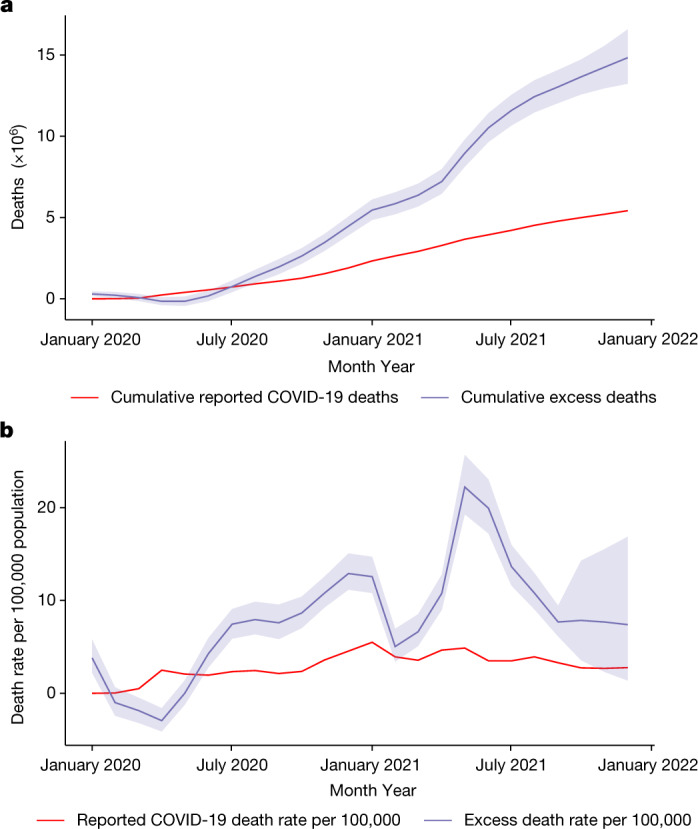
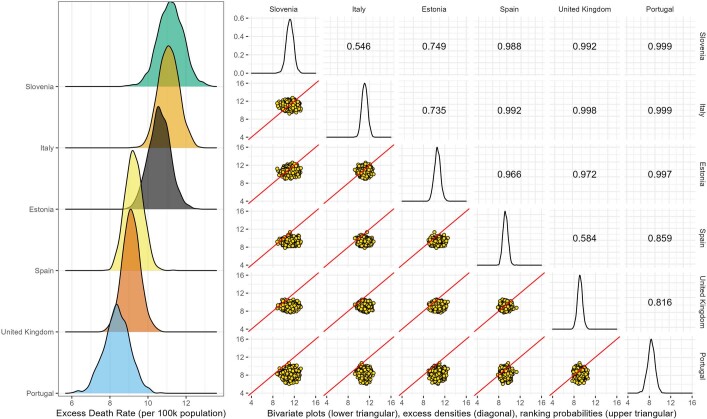
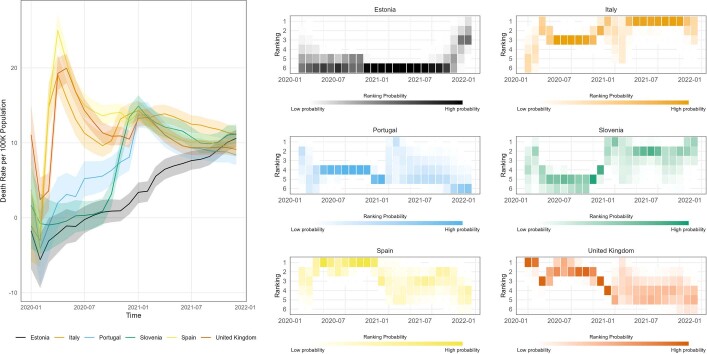
. Reported statistics on COVID-19 mortality are problematic for many countries owing to variations in testing access, differential diagnostic capacity and inconsistent certification of COVID-19 as cause of death. Beyond what is directly attributable to it, the pandemic has caused extensive collateral damage that has led to losses of lives and livelihoods. Here we report a comprehensive and consistent measurement of the impact of the COVID-19 pandemic by estimating excess deaths, by month, for 2020 and 2021. We predict the pandemic period all-cause deaths in locations lacking complete reported data using an overdispersed Poisson count framework that applies Bayesian inference techniques to quantify uncertainty. We estimate 14.83 million excess deaths globally, 2.74 times more deaths than the 5.42 million reported as due to COVID-19 for the period. There are wide variations in the excess death estimates across the six World Health Organization regions. We describe the data and methods used to generate these estimates and highlight the need for better reporting where gaps persist. We discuss various summary measures, and the hazards of ranking countries' epidemic responses.
Overview
CoChat Summary
TL;DR
WHO estimated global excess mortality from COVID-19 for January 2020–December 2021 at 14.83 million deaths, using a Bayesian Poisson framework to fill gaps where all-cause mortality data were incomplete. The estimate is 2.74 times the 5.42 million COVID-19 deaths reported to WHO for the same period.
Key findings
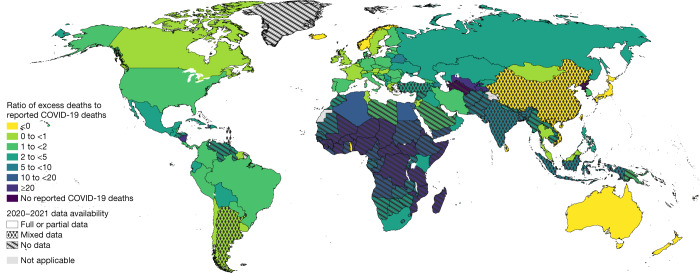
- Globally, the paper estimates 14.83 million excess deaths over 2020–2021 (95% UI 13.23–16.58 million), compared with 5.42 million reported COVID-19 deaths; the excess-to-reported ratio is 2.74 (UI 2.44–3.06).
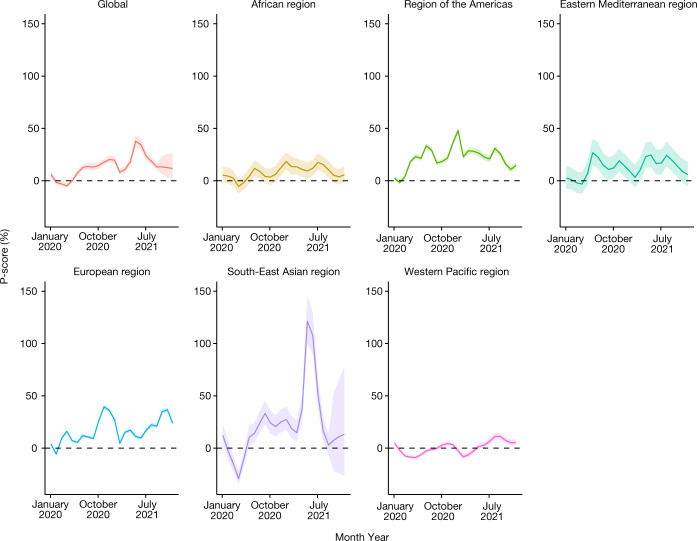
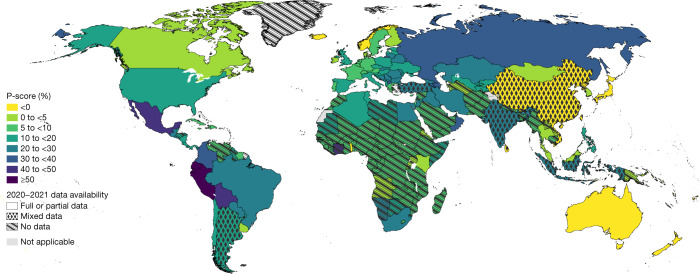
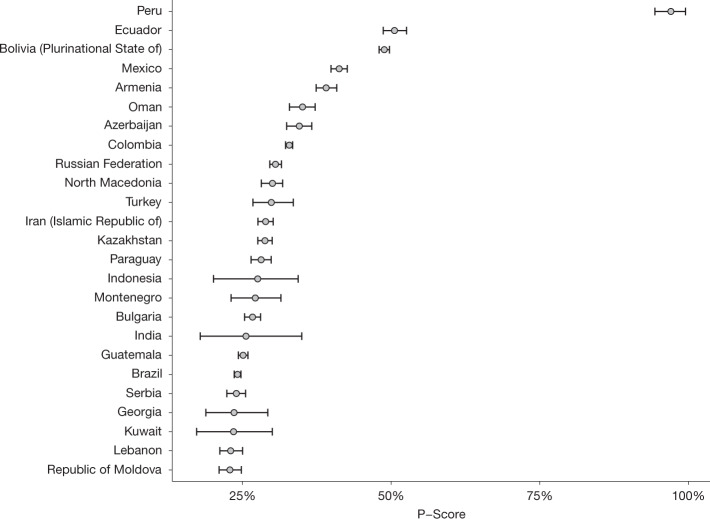
- Excess deaths were estimated at 4.47 million in 2020 and 10.36 million in 2021 globally; the global P-score increased from 7.97% in 2020 to 18.30% in 2021.
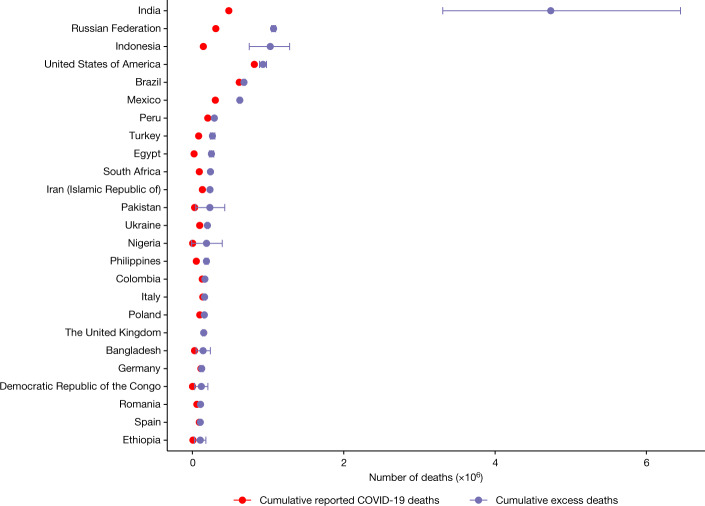
- The paper reports large country-level totals, including India: 4.74 million excess deaths (UI 3.31–6.45 million), Russian Federation: 1.07 million (UI 1.05–1.10 million), Indonesia: 1.03 million (UI 0.75–1.29 million), and the United States: 932,000 (UI 887,000–978,000).
- The 20 countries with the highest excess estimates account for 48.9% of the global population and over 80% of estimated global excess deaths for January 2020–December 2021.
Methods
- The study used a WHO-led, consultative modelling process: a Technical Advisory Group developed methods, WHO member states reviewed preliminary estimates, and feedback was used to update the final estimates.
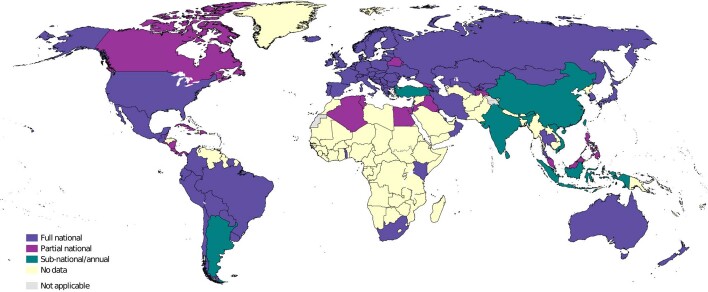
- The analysis used all-cause mortality (ACM) data from multiple sources; monthly national data were available for 100 countries (52%), while other locations had annual, subnational, or no data.
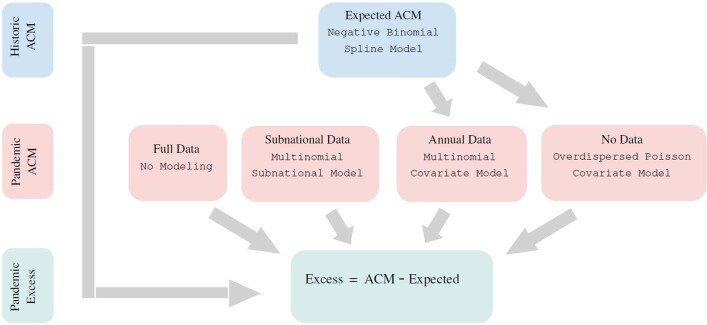
- Excess deaths were estimated with a Bayesian Poisson / negative binomial framework: historical ACM (often 2015–2019) was used to model expected deaths with spline-based seasonal and annual trends; where pandemic data were incomplete, a covariate-based log-linear model and, for some countries, subnational-to-national multinomial/proportionality models were used.
Limitations
- The paper states that the biggest limitation is data paucity: for almost half of WHO member states, ACM data during the pandemic were unavailable, so estimates relied on statistical models; the text says these countries should be interpreted with caution.
- The paper states that the counterfactual trend is sensitive to modelling assumptions, including the choice of spline models and how recent historical years are weighted; it notes splines can produce inappropriate extrapolations.
- The text makes evident that comparisons across countries/regions are difficult because countries differ in age structure, data completeness, and reporting quality; this is stated in the paper and means rankings can be misleading.
- The text makes evident that the paper cannot quantify how much excess mortality is directly COVID-19 versus indirect or non-COVID causes; the discussion explicitly says excess mortality combines these and cannot separate them.
Model-written summary. Check it against the paper before relying on it.
Integrity signals
Registry
Cites
Statistics
Figures
Verification
Claims the paper makes
8 Valid · 2 Not valid · 6 Not checked · 81 Own results and interpretations
Every source the paper cites for this claim was checked and supports it.
In the paper
“Reported statistics on COVID-19 mortality are problematic for many countries owing to variations in testing access, differential diagnostic capacity and inconsistent certification of COVID-19 as cause of death.”
- Also stated in: § Main · plain
“countries have differed in their application of standards for the certification of COVID-19 as the underlying cause-of-death2.”
§ The WHO estimates of excess mortality associated with the COVID-19 pandemic > Abstract
What the sources say
- Supportedcites [2] Riffe T Acosta E Data Resource Profile: COVerAGE-DB: a global demographic database of COVID-19 cases and deaths Int. J. Epidemiol. 2021 50 390 390f 10.1093/ije/dyab027 source
The Strengths and weaknesses section says COVID-19 death counts are likely underestimated for reasons also affecting case counts, including testing capacity and diagnostic-test accuracy. It also describes differences in whether suspected deaths are counted and evidence that COVID-19-related deaths are classified under other causes. Page numbers were not supplied in our copy. (LLM, conf=0.90)
plainstates a cause- Asserted: passes — The authors put it forward as true.
- Checkable: passes — It can be checked against evidence.
- Load-bearing: passes — The paper’s conclusions depend on it.
- Based: passes — The paper gives a reason why it holds.
- Also stated in: § Main · plain
Every source the paper cites for this claim was checked and supports it.
In the paper
“The measure overcomes the variation among countries in reporting and testing and the misclassification of the cause of death on death certificates7”
§ The WHO estimates of excess mortality associated with the COVID-19 pandemic > Main
What the sources say
- Supportedcites [7] Beaney T Excess mortality: the gold standard in measuring the impact of COVID-19 worldwide? J. Royal Soc. Med. 2020 113 329 334 10.1177/0141076820956802 PMC7488823 32910871 source
The Excess mortality section states that, because it encompasses deaths from all causes, excess mortality overcomes cross-country variation in COVID-19 reporting and testing and misclassification of causes on death certificates. This directly matches the attributed claim. (LLM, conf=0.95)
plainstates a cause- Asserted: passes — The authors put it forward as true.
- Checkable: passes — It can be checked against evidence.
- Load-bearing: passes — The paper’s conclusions depend on it.
- Based: passes — The paper gives a reason why it holds.
- Supported
Every source the paper cites for this claim was checked and supports it.
In the paper
“This surpasses the influenza pandemics of 1957, 1968 and 2009 (estimated at 0.04%, 0.03% and 0.005%, respectively)18.”
§ The WHO estimates of excess mortality associated with the COVID-19 pandemic > Discussion
What the sources say
- Supportedcites [18] Simonsen L Viboud C Mortality: a comprehensive look at the COVID-19 pandemic death toll. eLife 2021 10 e71974 10.7554/eLife.71974 34382937 PMC8360646 source
Table 1 (Abstract) gives a global per capita excess mortality rate of >0.08% for COVID-19, exceeding its estimates of 0.04%, 0.03%, and 0.005% for the 1957, 1968, and 2009 influenza pandemics, respectively. The paper describes the COVID-19 estimate using data available in 2020–2021. (LLM, conf=0.94)
plain- Asserted: passes — The authors put it forward as true.
- Checkable: passes — It can be checked against evidence.
- Load-bearing: unclear — It is unclear whether the paper’s conclusions depend on it.
- Based: passes — The paper gives a reason why it holds.
- Supported
Every source the paper cites for this claim was checked and supports it.
In the paper
“As another example, in the Africa region for which ACM data are most lacking, recent studies have highlighted the underestimation in the reported statistics20.”
§ The WHO estimates of excess mortality associated with the COVID-19 pandemic > Discussion
What the sources say
- Supportedcites [20] Cabore J. W. et al. COVID-19 in the 47 countries of the WHO African region: a modelling analysis of past trends and future patterns. Lancet Glob. Health10, e1099–e1114 (2022). PMC9159735 35659911 source
The Introduction states that reported infections and deaths underestimate the actual COVID-19 burden in the WHO African region. It also reports that, in countries with seroprevalence studies, reported infections represented only a small proportion of the estimated burden. Page numbers were not provided. (LLM, conf=0.94)
plainstates an association- Asserted: passes — The authors put it forward as true.
- Checkable: passes — It can be checked against evidence.
- Load-bearing: unclear — It is unclear whether the paper’s conclusions depend on it.
- Based: passes — The paper gives a reason why it holds.
- Supported
Every source the paper cites for this claim was checked and supports it.
In the paper
“The uncertainty in the expected predictions is well modelled by a gamma distribution, and the advantage of this choice is that it can be conveniently combined with a Poisson model to produce a negative binomial model with the log-linear mean given by equation (3).”
§ The WHO estimates of excess mortality associated with the COVID-19 pandemic > Methods > Model for countries without full pandemic data For almost half of the 194 WHO member states we do not have the ACM counts over the pandemic, and so must predict them using country characteristics. We choose a simple form for this prediction model, with mean2where is a relative rate parameter. If , then for country and at month the mortality is greater than expected, whereas if , then for country and at month the mortality is less than expected. We used time-invariant variables, (these are annual values from 2019). These were an indicator of high income and/or low or middle income, the cardiovascular mortality rate in 2019 and the diabetes prevalence rate in 2019. In addition, we used time-varying variables: a containment variable (it is calculated using all ordinal containment and closure policy indicators and health-system policy indicators, for further details see Hale et al.14), the square root of the reported COVID-19 death rate, temperature and the COVID-19 test positivity rate. We then build a log-linear model for the rate parameter:3where and denote relative rate parameters and are independent error contributions that pick up random variation unexplained by the log-linear regression function. The time-varying coefficients allow the associations to evolve during the pandemic. As we desire the evolution to be smooth in time, for these time-varying coefficients we use a random walk of order 2 (RW2) prior that encourages smooth estimates46. In equation (2) above, we have conditioned on known expected numbers. In reality, and as just described, these are modelled to give a distribution over plausible values. The uncertainty in the expected predictions is well modelled by a gamma distribution, and the advantage of this choice is that it can be conveniently combined with a Poisson model to produce a negative binomial model with the log-linear mean given by equation (3). Full details (including evidence of the accuracy of the gamma model) can be found in Knutson et al.15. This model was fitted to all countries with observed monthly ACM data over some portion of 2020–2021, using the integrated nested Laplace approximation method47, to obtain posterior distributions over the unknown parameters. The resultant posterior distribution reflects the uncertainty in the parameters (both in the expected numbers and the log-linear covariate model), and can be used to construct a predictive distribution for the ACM in countries with no data or partial data.
What the sources say
- Supportedcites Knutson et al.15 Knutson V., Aleshin-Guendel S., Karlinsky A., Msemburi W. & Wakefield J. Estimating country-specific excess mortality during the COVID-19 pandemic (2023). Ann. Appl. Stat. (in the press). PMC9812776 36517599 source
Section 3.3 (Modeling Uncertainty in the Expected Numbers) states they fit a gamma distribution by method of moments to the Monte Carlo samples of the expected numbers and 'approximate the distribution of the expected numbers as gamma, since this is conjugate to the Poisson, and so allows efficient inference with INLA ... using a negative binomial,' and the Supplementary Materials (Sec. 5, Gamma Expected Numbers; Fig. 5) report the gamma fits are accurate, with differences 'small in all cases' — supporting 'well modelled'. The model description bullet confirms the negative binomial component with known tau arises from the uncertainty in the expected numbers within the log-linear Poisson/negative-binomial formulation. The 'equation (3)' reference is the citing paper's own display, not attributed content. (LLM, conf=0.90)
boosted- Asserted: passes — The authors put it forward as true.
- Checkable: passes — It can be checked against evidence.
- Load-bearing: passes — The paper’s conclusions depend on it.
- Based: passes — The paper gives a reason why it holds.
- Supported
49 more claims
Create a free account to see all 97 claims and to verify the 2 references still open.
- Probably not a substantial claim. 19
- It may state two separate claims as one. 30
- The quote only partly states this claim. 2
Claims other papers make about this one
Each is checked against this paper’s own text: does it say what the citing paper says it does?
The source backs part of the claim, not all of it — or backs it for a different population, condition or comparison.
In the citing paper
“Our current estimate of global excess mortality during 2020 and 2021 is comparable to the WHO estimate of 14·9 million (95% UI 13·3–16·6) excess deaths,15 with our mean estimate falling within the uncertainty interval of the WHO estimate and vice versa.”
From Global age-sex-specific mortality, life expectancy, and population estimates in 204 countries and territories and 811 subnational locations, 1950–2021, and the impact of the COVID-19 pandemic: a comprehensive demographic analysis for the Global Burden of Disease Study 2021 (2024) · cites this paper as [15]
Experimental — accuracy not yet measuredThe cited source says what the claim attributes to it.
In the citing paper
“this total greatly exceeds global average increases of 8% in 2020 and 18% in 20214.”
From Attributed causes of excess mortality during the COVID-19 pandemic in a south Indian city (2023) · cites this paper as [4]
In the citing paper
“Other settings with >25% increases in mortality during the pandemic have included Russia and LMICs within Latin America, Eastern Europe, and central Asia1,4.”
From Attributed causes of excess mortality during the COVID-19 pandemic in a south Indian city (2023) · cites this paper as [4]
Citations
Cites
Vos, T., Lim, S. S., Abbafati, C., Abbas, K. M., Abbasi, M., Abbasifard, M., Abbasi-Kangevari, M., Abbastabar, H., Abd-Allah, F., Abdelalim, A., et al. (2020) · The Lancet · doi:10.1016/s0140-6736(20)30925-9 · Cited by 19,358
Generalized Additive Models: An Introduction with R
Wood, S. N. (2017) · doi:10.1201/9781315370279 · Cited by 13,852
Rue, H., Martino, S., & Chopin, N. (2009) · Journal of the Royal Statistical Society Series B: Statistical Methodology · doi:10.1111/j.1467-9868.2008.00700.x · Cited by 5,279
Wang, H., Paulson, K. R., Pease, S. A., Watson, S., Comfort, H., Zheng, P., Aravkin, A. Y., Bisignano, C., Barber, R. M., Alam, T., et al. (2022) · The Lancet · doi:10.1016/s0140-6736(21)02796-3 · Cited by 2,069
Rue, H., & Held, L. (2005) · Chapman & Hall/CRC eBooks · doi:10.1201/9780203492024 · Cited by 1,823
Guidelines for accurate and transparent health estimates reporting: the GATHER statement
Stevens, G. A., Alkema, L., Black, R. E., Boerma, J. T., Collins, G. S., Ezzati, M., Grove, J. T., Hogan, D. R., Hogan, M. C., Horton, R., et al. (2016) · The Lancet · doi:10.1016/s0140-6736(16)30388-9 · Cited by 1,798
Karlinsky, A., & Kobak, D. (2021) · eLife · doi:10.7554/elife.69336 · Cited by 772
Self-citationMurray, C. J., Lopez, A. D., Chin, B., Feehan, D., & Hill, K. H. (2006) · The Lancet · doi:10.1016/s0140-6736(06)69895-4 · Cited by 605
Islam, N., Shkolnikov, V. M., Acosta, R. J., Klimkin, I., Kawachi, I., Irizarry, R. A., Alicandro, G., Khunti, K., Yates, T., Jdanov, D. A., et al. (2021) · BMJ · doi:10.1136/bmj.n1137 · Cited by 468
Guidelines for accurate and transparent health estimates reporting: the GATHER statement
Stevens, G. A., Alkema, L., Black, R. E., Boerma, J. T., Collins, G. S., Ezzati, M., Grove, J. T., Hogan, D. R., Hogan, M. C., Horton, R., et al. (2016) · PLOS Medicine · doi:10.1371/journal.pmed.1002056 · Cited by 424
Research works printed but not linked: 2
- National Bureau of Statistics of China. China Statistical Yearbook 2021 (China Statistics Press, 2021).
- Hale, T. et al. Variation in Government Responses to COVID-19 Technical Report (Univ. Oxford, 2020).
Cited by
Items 401–500 of 1,067
Weiss, J. (2025) · International Journal of Environmental Research and Public Health · doi:10.3390/ijerph22030376 · Cited by 3
“Similar to the approach of [42,43], we developed a statistical model to estimate excess mortality for the period 1998–2023.”
Yuen, W. S., Man, N. W. Y., Livingston, M., Chrzanowska, A., Gilmore, W., Tierney, L., Moran, L. L., & Peacock, A. (2025) · Drug and Alcohol Review · doi:10.1111/dar.14097 · Cited by 4
Shocks and health care in Latin America and the Caribbean
Castro, M. C., Ponmattam, J., & FitzGerald, E. A. (2025) · Frontiers in Public Health · doi:10.3389/fpubh.2025.1604424 · Cited by 3
Chakraborty, C., Bhattacharya, M., Chatterjee, S., Lee, S., Bhattacharya, P., Ohimain, E. I., Wen, Z., Das, A., Rai, A., Abdelhameed, A. S., et al. (2025) · Folia Microbiologica · doi:10.1007/s12223-025-01299-9 · Cited by 7
“Msemburi et al. evaluated 14.83 million excess mortality worldwide during 2020 and 2021 (Msemburi et al. 2023).”
InfluentialReimagining Development: Bold Directions Towards a Thriving World
Sutoris, P., & Pradhan, U. (2025) · Oxford University Press eBooks · doi:10.1093/oso/9780197824948.001.0001 · Cited by 5
Liu, D., Zhang, Y., Lei, J., et al. (2025) · Vaccine · doi:10.1016/j.vaccine.2025.127961 · Cited by 3
Brain Volumetric Changes Post-COVID-19: A Systematic Review
Elkoury, E., Yehia, A., Caparelli, E. C., Geda, Y. E., Ortega, D., Yamada, N., Hakhu, S., Beeman, S. C., Ross, T. J., Yang, Y., et al. (2025) · Brain Sciences · doi:10.3390/brainsci15121255 · Cited by 2
“The Coronavirus Disease 2019 (COVID-19) pandemic, caused by Severe Acute Respiratory Syndrome Coronavirus (SARS-CoV-2), has infected hundreds of millions, with an estimated global mortality of over 14 million lives [1].”
Estimation of excess cardiovascular deaths after COVID-19 in 2020
Furuse, Y. (2023) · Journal of Infection · doi:10.1016/j.jinf.2023.04.014 · Cited by 5
“Studies that estimated overall excess deaths during the COVID-19 pandemic have recently been published.(6,7) While many countries experienced a surge in excess deaths, some countries, such as Australia and Japan, observed little or no excess deaths.”
Changes in the national prevalence of asthma and coronavirus disease 2019 fatality
Bedolla‐Barajas, M., Morales‐Romero, J., Robles‐Figueroa, M., et al. (2023) · Annals of Allergy Asthma & Immunology · doi:10.1016/j.anai.2023.04.028 · Cited by 3
“Two years after the pandemic’s start, in December 2021, Mexico occupied one of the first places among countries with the highest excess mortality associated with coronavirus disease 2019 (COVID-19).(2) Official data from the Government of Mexico indicate that up to epidemiologic week 52 of 2022, 650,602 cumulative dea…”
How Did Britain Come to This? A century of systemic failures of governance
Bevan, G. (2023) · LSE Press eBooks · doi:10.31389/lsepress.hdb · Cited by 20
Titanji, B. K., & Pai, M. (2023) · The Lancet Infectious Diseases · doi:10.1016/s1473-3099(23)00354-7 · Cited by 4
A simulation of undiagnosed population and excess mortality during the COVID-19 pandemic
Dasgupta, R., & Majumder, S. K. (2023) · Results in Control and Optimization · doi:10.1016/j.rico.2023.100262 · Cited by 3
“Excess mortality has therefore emerged as a valuable tool for estimating the impact of COVID-19 in various countries [14-17], being extensively utilized in academic literature and presently as well as by World Health Organization (WHO) [18].”
Fox, L., Santaolalla, A., Handford, J., Sullivan, R. J., Torode, J., Vanderpuye, V. D. N. K., Pramesh, C. S., Mula‐Hussain, L., AlWaheidi, S., Makaroff, L., et al. (2023) · JCO Global Oncology · doi:10.1200/go.23.00111 · Cited by 5
“Theemergenceofthiscoronaviruscreateda major public health cataclysm 10 and challenges to complex healthpolicy.”
BackgroundThe COVID-19 pandemic death toll in India: can we know better?
Gupta, M., Rao, C., Yadav, A. K., Jat, M., Dhamija, R. K., & Saikia, N. (2023) · BMJ Global Health · doi:10.1136/bmjgh-2023-012818 · Cited by 3
Hamad, A., Elgaali, M., Ghonimi, T. A., Elshirbeny, M., Ali, M. Y., Ibrahim, R., Othman, M., Abuhelaiqa, E., Ezzat, H., Boubaker, K., et al. (2023) · PLoS ONE · doi:10.1371/journal.pone.0291266 · Cited by 3
“Over the past two years, this infectious disease has affected hundreds of millions of people, resulting in at least 5 million deaths [3].”
BackgroundYamashita, H., Ogura, K., Bando, H., et al. (2023) · Asploro Journal of Biomedical and Clinical Case Reports · doi:10.36502/2023/asjbccr.6319 · Cited by 3
Life-expectancy changes from 2019 to 22: A case study of Japan using provisional death count
Munira, M. S., Okada, Y., & Nishiura, H. (2023) · Journal of Infection and Public Health · doi:10.1016/j.jiph.2023.11.016 · Cited by 3
Belief-driven Dynamics in a Behavioral SEIRD Macroeconomic Model with Sceptics
Proaño, C. R., Kukačka, J., & Makarewicz, T. (2021) · Journal of Economic Behavior & Organization · doi:10.1016/j.jebo.2023.11.011 · Cited by 8
Effect of the COVID-19 Pandemic on Stillbirths in Canada and the United States
Joseph, K. S., Lisonkova, S., Simon, S., John, S., Razaz, N., Muraca, G. M., Boutin, A., Bedaiwy, M. A., Brandt, J. S., & Ananth, C. V. (2023) · Journal of Obstetrics and Gynaecology Canada · doi:10.1016/j.jogc.2023.102338 · Cited by 3
da Costa, G., Junior, T. M. P., Heise, E. F. J., Potgieter-Vermaak, S. S., Godoi, A. F. L., Yamamoto, C. I., dos Santos-Silva, J. C., & Godoi, R. H. M. (2024) · Environmental Geochemistry and Health · doi:10.1007/s10653-023-01809-z · Cited by 3
“World Health Organization (WHO) estimates a total number of 14.9 million excess deaths directly or indirectly associated with the pandemic between January 1, 2020 and December 21, 2021 (Msemburi et al., 2023).”
InfluentialJirapanakorn, S., Witthayapipopsakul, W., Kusreesakul, K., et al. (2024) · BMJ Open · doi:10.1136/bmjopen-2023-081383 · Cited by 3
Wulandari, S., Nuryastuti, T., Oktoviani, F. N., Daniwijaya, E. W., Supriyati, E., Arguni, E., Hartono, H., & Wibawa, T. (2024) · Heliyon · doi:10.1016/j.heliyon.2024.e26619 · Cited by 5
“Excess mortality is defined as the difference between all-cause mortality during the pandemic period and that which was expected under normal conditions [1].”
BackgroundCzerniewska, A., Sharkey, A., Portela, A. G., Drapkin, S., & Mustafa, S. (2024) · BMJ Global Health · doi:10.1136/bmjgh-2023-013711 · Cited by 4
Zakeri, M., Mirahmadizadeh, A., Azarbakhsh, H., Dehghani, S. S., Janfada, M., Moradian, M. J., Moftakhar, L., Sharafi, M., & Heiran, A. (2024) · Journal of Preventive Medicine and Public Health · doi:10.3961/jpmph.23.198 · Cited by 5
“…death was the P-score, which is a simple measure of excess death, calculated based on the assumption that the expected number of deaths within a given time frame is equivalent to the average death count in the same time frame of the preceding years, usually with a 5-year rule of thumb [11,12].”
BackgroundExcess deaths in China during SARS-CoV-2 viral waves in 2022–2023
Jha, P., Brown, P. E., Lam, T., Morawski, E., & Reid, A. E. (2024) · Preventive Medicine Reports · doi:10.1016/j.pmedr.2024.102687 · Cited by 4
Filipe, Â. M. (2024) · Medicine Anthropology Theory · doi:10.17157/mat.11.1.7359 · Cited by 3
Rasanathan, K., & Pillay, Y. G. (2024) · BMJ · doi:10.1136/bmj-2023-075485 · Cited by 4
Exceso de mortalidad durante la pandemia de COVID-19 en Ecuador
Patricio Reyes, P., & Chicaiza, M. P. (2024) · Respirar · doi:10.55720/respirar.16.1.5 · Cited by 4
A Piecewise Design Approach to Engineering a Miniature ACE2 Mimic to Bind SARS-CoV-2
Vishweshwaraiah, Y. L., Hnath, B., Wang, J., Chandler, M. R., Mukherjee, A., Yennawar, N. H., Booker, S. J., Afonin, K. A., & Dokholyan, N. V. (2024) · ACS Applied Bio Materials · doi:10.1021/acsabm.4c00222 · Cited by 4
Conventional and frugal methods of estimating COVID-19-related excess deaths and undercount factors
Dedhe, A. M., Chowkase, A. A., Gogate, N., Kshirsagar, M. M., Naphade, R., Naphade, A., Kulkarni, P., Naik, M., Dharm, A., Raste, S., et al. (2024) · Scientific Reports · doi:10.1038/s41598-024-57634-6 · Cited by 3
“However, this ideal scenario was rarely achieved globally and across major Indian cities, where the estimated undercount factors were around three (Table S1) 10,14,15,22,156 .”
BackgroundАфанасьева, Ю. А., Соколов, Б. О., & Широканова, А. А. (2024) · Monitoring obŝestvennogo mneniâ: èkonomičeskie i socialʹnye peremeny · doi:10.14515/monitoring.2024.2.2523 · Cited by 2
Validated LC/MS method for simultaneous determination of elbasvir and grazoprevir in human plasma
Labidi, A., Sghaier, R. B., Jebali, S., et al. (2024) · Annales Pharmaceutiques Françaises · doi:10.1016/j.pharma.2024.05.006 · Cited by 3
Soon, H. I., Abdullah, A. A., Nishizaki, H., Mashor, . Y., Kamarudin, L. M., Mohamed‐Hussein, Z., Mohamed, Z., & Ang, W. C. (2024) · International Journal of ADVANCED AND APPLIED SCIENCES · doi:10.21833/ijaas.2024.06.023 · Cited by 3
Tsoi, H., Ng, M. K.-W., Cai, J., Poon, R. W., Chan, B. P.-C., Chan, K., Tam, A. R., Chu, W.-M., Hung, I. F., & To, K. K. (2024) · Heliyon · doi:10.1016/j.heliyon.2024.e35334 · Cited by 4
“The World Health Organization estimated that COVID-19 was associated with 14.83 million excess deaths globally from January 2020 to December 2021 [1].”
BackgroundInfluentialCoping, connection appraisal, and well-being during COVID-19 in the U.S., Japan, and Mexico
Benjamin, L. R., & Wang, S. (2024) · Frontiers in Psychology · doi:10.3389/fpsyg.2024.1420327 · Cited by 4
“Not only has there been profound loss of human life (estimated to be 14.83 million excess deaths by the WHO; Msemburi et al., 2023), COVID-19 also precipitated waves of medical and economic crisis (e.g., Anoushiravani et al., 2023); has transformed social, interpersonal, and family processes (e.g., Benjamin and Wang,…”
BackgroundInfluentialMethodology for Estimating the Basic Reproductive Number of Current Variants of the Virus SARS-CoV-2
Gerasimov, A. N., Voronin, E. M., Melnichenko, I. R., Beregovykh, R. M., Хафизов, К. Ф., Briko, N. I., & Акимкин, В. Г. (2024) · Epidemiology and Vaccinal Prevention · doi:10.31631/2073-3046-2024-23-4-12-22 · Cited by 3
Dziadzko, M. A., Belhassen, M., Ganse, E. H. V., Heritier, F., Bérard, M., Micallef, C. M., & Aubrun, F. (2024) · JMIR Public Health and Surveillance · doi:10.2196/56398 · Cited by 3
“The burden of COVID-19 pandemic has been high in all countries [1,2].”
BackgroundSocietal Upheaval and the Contraceptive Transition
Lerch, M. (2024) · Population and Development Review · doi:10.1111/padr.12663 · Cited by 3
Xie, H., Jia, H., Ji, J., Yu, Q., Meng, H., Li, J., & Mu, Y. (2024) · Building and Environment · doi:10.1016/j.buildenv.2024.112341 · Cited by 6
Development and validation of the Post-COVID Symptom Scale for Children/Youth (PCSS-C/Y)
Tso, W. W. Y., Wang, Y., Fong, D., Kwan, M. Y. W., Ip, P., Chan, J. F., Leung, L. K., Chan, J. Y. K., Tsao, S. S. L., Chau, C. S.-K., et al. (2024) · European Journal of Pediatrics · doi:10.1007/s00431-024-05913-9 · Cited by 3
Stevens, H., McFadyen, J. D., Mellett, N. A., Lynn, D. J., Duong, T., Giles, C., James, J., Botten, R., Eden, G. L., Lynn, M. A., et al. (2025) · Research and Practice in Thrombosis and Haemostasis · doi:10.1016/j.rpth.2025.102677 · Cited by 4
“The COVID-19 pandemic has resulted in an estimated 14 million excess deaths and an unprecedented burden on healthcare systems globally [1,2].”
Nanopot plasmonic sensor platform for broad spectrum virus detection
Hwang, Y., Zhao, Z., Shin, S., Sut, T. N., Jackman, J. A., Kim, T., Moon, Y., Ju, B.-K., Jeong, J.-H., Cho, N., et al. (2025) · Chemical Engineering Journal · doi:10.1016/j.cej.2025.159484 · Cited by 3
Sitthikarnkha, P., Niamsanit, S., Techasatian, L., Saengnipanthkul, S., & Uppala, R. (2025) · BMC Public Health · doi:10.1186/s12889-025-21484-2 · Cited by 4
Short-Read and Long-Read Whole Genome Sequencing for SARS-CoV-2 Variants Identification
Peng, M., Davis, M. L., Bentz, M. L., Burgin, A., Burroughs, M., Padilla, J., Nobles, S., Unoarumhi, Y., & Tang, K. (2025) · Viruses · doi:10.3390/v17040584 · Cited by 6
“The coronavirus disease 2019 (COVID-19), declared a global pandemic by the World Health Organization (WHO) in 2020, continues to circulate around the world with substantial incidence despite ongoing vaccination [1].”
COVID-19 Pandemic-Era Changes in Sudden Unexpected Infant Death in the United States
Tanner, D., Ramirez, J., Weeks, W. B., Ferres, J. L., & Mitchell, E. A. (2025) · Pediatrics Open Science · doi:10.1542/pedsos.2024-000364 · Cited by 5
Yan, J., Chen, Z., Cai, J., Xian, W., Wei, X., Qin, Y., & Li, Y. (2025) · Applied Sciences · doi:10.3390/app15137363 · Cited by 5
Richter, E., Liebl, D., Schulte, B., Lehmann, N., Fuhrmann, C., Jöckel, K., Ioannidis, J. P. A., & Streeck, H. (2023) · Scientific Reports · doi:10.1038/s41598-023-32441-7 · Cited by 6
Investigating demographic outcomes in the COVID-19 pandemic: perspectives from Asia
Dommaraju, P., Heng, S. L., & Yeoh, B. S. A. (2023) · Asian Population Studies · doi:10.1080/17441730.2023.2194073 · Cited by 3
“In countries such as Japan, South Korea, and Singapore, with more reliable vital registration systems, there is a greater degree of certainty regarding the number of deaths, and the estimates from different sources and official estimates are relatively similar (Msemburi et al., 2023).”
BackgroundBertuccio, P., Perotti, P., Mosconi, G., Carbonare, S. D., Manzoni, F., Boschetti, L., Marguati, S., Paraluppi, P., Blandi, L., Gentile, L., et al. (2023) · International Journal of Environmental Research and Public Health · doi:10.3390/ijerph20085529 · Cited by 3
“Interest on excess mortality analysis has grown in recent times, together with the application of more complex statistical approaches [9].”
BackgroundInfluentialStewart, R., Yan, K., Ellis, S. A., Bishop, C., Dumenil, T. D., Tang, B., Nguyen, W., Larcher, T., Parry, R. H., Sng, J. D. J., et al. (2022) · bioRxiv (Cold Spring Harbor Laboratory) · doi:10.1101/2022.12.22.521696 · Cited by 3
“…with neurological manifestations of long-COVID (Davis et al., 2023; de Paula et al., 2023; Ferrucci et al., 2023; Rothstein, 2023), and such damage may also contribute to the continuing excess deaths arising from the COVID-19 pandemic (De Hert et al., 2021; Li et al., 2021; Msemburi et al., 2023).”
BackgroundIncreased neurovirulence of omicron BA.5 over BA.1 in human brain organoids and K18-hACE2 micePreprint
Stewart, R., Ellis, S. A., Yan, K., Dumenil, T. D., Bishop, C., Tang, B., Nguyen, W., Larcher, T., Sullivan, R., Lor, M., et al. (2023) · Research Square · doi:10.21203/rs.3.rs-2702556/v1 · Cited by 2
Chronic Poverty Report 5 - Pandemic Poverty
Shepherd, A., & Diwakar, V. (2023) · OpenDocs (Institute of Development Studies) · doi:10.19088/cc.2023.006 · Cited by 6
PLpro Inhibitors as a Potential Treatment for COVID-19
Han, Y., & Xu, F. (2025) · Biomedicines · doi:10.3390/biomedicines13061417 · Cited by 3
What is Hiding in Medicine’s Dark Matter? Learning with Missing Data in Medical Practices
Süzen, N., Mirkes, E. M., Roland, D., Levesley, J., Gorban, A. N., & Coats, T. (2023) · IEEE International Conference on Big Data (BigData) · doi:10.1109/bigdata59044.2023.10386194 · Cited by 6
“In February 2021, Technical Advisory Group (TAG) was formed in collaboration with the WHO and the United Nations Department of Economic and Social Affair for mortality assessment [3, pp. 130–137].”
BackgroundMethodInfluentialSordo, A. A., Do, A. A., Irwin, M. J., & Muscatello, D. J. (2024) · International Journal of Epidemiology · doi:10.1093/ije/dyae145 · Cited by 2
Liliequist, A., Svensson, P., Hofmann, R., Häbel, H., Ståhlberg, M., & Nordberg, P. (2024) · Journal of Clinical Medicine · doi:10.3390/jcm13237265 · Cited by 3
“The novel SARS-CoV-2 virus has caused a global pandemic with almost 15 million excess deaths globally since the outbreak in 2020 [1].”
Empirical prediction intervals applied to short term mortality forecasts and excess deaths
Duerst, R., & Schöley, J. (2024) · Population Health Metrics · doi:10.1186/s12963-024-00355-9 · Cited by 3
Sessou, P., Noudeke, N. D., Denon, Y. E., Tonouhewa, A. B. N., Zohoun, A., Boukary, N., Metodakou, D., Samuelson, B. K., Hamed, D. H., Zhao, J., et al. (2024) · Journal of Biosafety and Biosecurity · doi:10.1016/j.jobb.2024.11.001 · Cited by 2
“The COVID-19 pandemic in BRICS: Milestones, interventions, and molecular epidemiology”
van Wyk, S., Moir, M., Banerjee, A., Bazykin, G. A., Biswas, N. K., Sitharam, N., Das, S., Ma, W., Maitra, A., Mazumder, A., et al. (2024) · PLOS Global Public Health · doi:10.1371/journal.pgph.0003023 · Cited by 4
He, Y., Xiao, H., Liu, F., Dai, X., Wang, H., Yang, H., Liu, Z., & Unger, J. M. (2025) · BMC Public Health · doi:10.1186/s12889-025-22160-1 · Cited by 4
War Fatalities in Russia in 2022–2023 Estimated Via Excess Male Mortality: A Research Note
Kobak, D., Bessudnov, A., Ershov, A., Mikhailova, T. V., & Raksha, A. (2025) · Demography · doi:10.1215/00703370-11862998 · Cited by 4
Autonomous Ultraviolet Sterilization: A WiFi-Enabled Robot with Video Monitoring
Abdelhadi, T., Amer, M. B., AbdulSamad, L., et al. (2024) · doi:10.1109/jibec63210.2024.10932103 · Cited by 2
Law, A. H. T., Presanis, A. M., Cheung, J. K., Wu, P., Schooling, C. M., Cowling, B. J., & Wong, J. Y. (2025) · The Lancet Regional Health - Western Pacific · doi:10.1016/j.lanwpc.2025.101571 · Cited by 7
Burhan, E., Azzumar, F., Sinuraya, F. A. G., Prasetyo, S., Gayatri, D., Ariawan, I., Rakasiwi, M. I. D., Afladhia, H. L., Ilham, A. F., Akbar, I., et al. (2025) · PLoS ONE · doi:10.1371/journal.pone.0320779 · Cited by 2
Cuong, T. D., & Phan, A. D. (2025) · RSC Advances · doi:10.1039/d5ra03931b · Cited by 2
Li, D., & Zhang, Z. (2025) · Computational Statistics & Data Analysis · doi:10.1016/j.csda.2025.108253 · Cited by 4
“For example, Knutson et al. (2023) and Msemburi et al. (2023) have studied how much excess mortality were caused by COVID-19 from 2020 to 2022, with expected mortality determined using the data before 2020.”
DNA Vaccines, an Innovative Vaccine Platform against COVID-19
Yavuz, İ., Döşkaya, M., Karakavuk, M., Döşkaya, A. D., Gürüz, A. Y., & Can, H. (2025) · Current Clinical Microbiology Reports · doi:10.1007/s40588-025-00251-2 · Cited by 2
The Monetary Value of Human Life Losses Associated with COVID-19 in Africa: A Human Capital Approach
Kirigia, J. M., & Mwabu, G. (2025) · Economies · doi:10.3390/economies13080241 · Cited by 3
Chauvel, C., Casalegno, J., Visseaux, B., Vieillefond, V., Haïm‐Boukobza, S., Enouf, V., Chanard, E., Fabre, M., Rameix‐Welti, M., Oblette, A., et al. (2025) · Journal of Medical Virology · doi:10.1002/jmv.70549 · Cited by 2
“Since its emergence in late 2019, SARS ‐ CoV ‐ 2 has caused unprecedented health and societal disruptions, with an estimated 14.9 million excess deaths in 2020 and 2021 alone [4].”
InfluentialShi, Z., Si, X., Wan, R.-M., Zhu, Z.-Y., Song, W., & Chen, X. (2025) · Chinese Journal of Polymer Science · doi:10.1007/s10118-025-3397-4 · Cited by 2
Farrukee, R., Mordant, F. L., Mackenzie-Kludas, C., Mesner, D., Yamomoto, M., Jolly, C. L., Brööks, A. G., Subbarao, K., Londrigan, S. L., & Reading, P. C. (2025) · Journal of Virology · doi:10.1128/jvi.00823-25 · Cited by 4
Izhari, M. A., Alghamdi, F., Alodeani, E. A., Salem, A., Almontasheri, A. H. A., Dardari, D. M. M., Hadadi, M. A. A., Gosady, A. R. A., Alghamdi, W. A., Alzahrani, B. A., et al. (2025) · Biomedicines · doi:10.3390/biomedicines13102450 · Cited by 3
“These viruses have potentially caused significant human mortality and posed serious global public health challenges [4,5].”
Nirmatrelvir/ritonavir treatment for COVID-19: an economic value systematic literature review
Mugwagwa, T., Belisario, J. S. M., Hartley, L., et al. (2025) · Journal of Medical Economics · doi:10.1080/13696998.2025.2579407 · Cited by 2
“Coronavirus disease 2019 (COVID-19) is a significant cause of morbidity and mortality worldwide 1,2 , with over 270 million cases across Europe through 13 January 2023 and over 2 million deaths in Europe since the beginning of the pandemic 3 .”
Shintani, Y., Yamamoto, H., Sato, Y., Inoue, M., Asakura, K., Ito, H., Uramoto, H., Okada, Y., Satō, T., Fukui, M., et al. (2025) · Surgery Today · doi:10.1007/s00595-025-03156-1 · Cited by 2
Kim, H., Park, C. H., Kim, S., Kim, S.-E., Ahn, J. H., Seong, J. K., Lee, W., Cho, S., & Kim, H. N. (2025) · Nano Convergence · doi:10.1186/s40580-025-00529-7 · Cited by 4
“annually worldwide, and the COVID-19 pandemic left an estimated 65 million survivors with chronic respiratory morbidity [2].”
Using an epidemiological lens to evaluate the impacts of COVID-19 in Brazil
Hallal, P. C., & Victora, C. G. (2025) · International Journal of Epidemiology · doi:10.1093/ije/dyaf199 · Cited by 3
Alvarado, R. E., Lokugamage, K. G., Garvanska, D. H., Estes, L. K., Ahearn, Y. P., McLeland, A. M., Moayyed, A., Chen, J. C., Mendez, B. L., Plante, J. A., et al. (2026) · Journal of Virology · doi:10.1128/jvi.02006-25 · Cited by 3
Brauner, P., Offermann, J., & Ziefle, M. (2026) · Frontiers in Digital Health · doi:10.3389/fdgth.2025.1715810 · Cited by 3
Bourke, B. P., Drovetski, S. V., Ergünay, K., Linton, Y., & Voelker, G. (2026) · Archives of Virology · doi:10.1007/s00705-026-06575-8 · Cited by 3
Neutralization of SARS-CoV-2 by IgM-14 via engagement of two distinct spike epitopes
Wang, Y., Hu, Y., Ku, Z., Yeung, J., Zou, J., Woodson, M., Prokhorov, N. S., Knyazhanskaya, E. S., Zhao, H., Sherman, M. B., et al. (2026) · PLoS Pathogens · doi:10.1371/journal.ppat.1014071 · Cited by 2
“The Coronavirus Disease 2019 (COVID-19) pandemic, caused by severe acute respiratory syndrome coronavirus 2 (SARS-CoV-2), has precipitated a global health and economic crisis, leading to millions of deaths and widespread morbidity [1].”
Age-dependent final size equation to anticipate mortality impact of COVID-19 in China
Amemiya, Y., Li, T., & Nishiura, H. (2023) · Mathematical Biosciences & Engineering · doi:10.3934/mbe.2023503 · Cited by 3
Excess mortality in Cyprus during the COVID-19 vaccination campaign
Economidou, E. C., & Soteriades, E. S. (2023) · Vaccine · doi:10.1016/j.vaccine.2023.11.028 · Cited by 3
Kundu, R., Datta, J., Ray, D., Mishra, S., Bhattacharyya, R., Zimmermann, L., & Mukherjee, B. (2023) · PLOS Global Public Health · doi:10.1371/journal.pgph.0002063 · Cited by 2
“…a comparative tool we include a table (S7 Table) presenting the disparities in excess mortality estimates along with 95% Confidence Interval using the three most prominent and comprehensive global COVID-19 mortality estimation studies: IHME, WHO [12], and The Economist [13] for both 2020 and 2021.”
Impact of COVID-19 on people with non-functioning spleens in Australia
Barlow, M. J., Jones, P., Weerasuria, M. P., O’Bryan, J., Spelman, D., & Woolley, I. J. (2024) · Journal of Infection and Public Health · doi:10.1016/j.jiph.2024.02.007 · Cited by 2
Maduro, G. A., Li, W., Huynh, M., Bernard‐Davila, B., Gould, L. H., & Wye, G. V. (2024) · BMJ Open · doi:10.1136/bmjopen-2023-072441 · Cited by 4
“A comprehensive analysis of international data on excess deaths 29–31 demonstrates that the New York City experience was not unique, representing perhaps an early template of mortality patterns to be seen elsewhere.”
BackgroundExcess Mortality in Cyprus during the COVID-19 Epidemic
Economidou, E. C., Μάρκου, Ν., Prokopi, K., Avraam, D., & Soteriades, E. S. (2024) · Journal of Community Medicine & Public Health · doi:10.29011/2577-2228.100407 · Cited by 1
Lei, R., He, Y., Liu, W., et al. (2024) · The Science of The Total Environment · doi:10.1016/j.scitotenv.2024.172495 · Cited by 2
Serum Ferritin as a Prognostic Marker in COVID-19
Nongtdu, B., Ruram, A. A., Tiewsoh, I., Sundaram, S. P., & Boruah, P. (2024) · Journal of Applied Sciences and Clinical Practice · doi:10.4103/jascp.jascp_1_24 · Cited by 3
Messersmith, L. J., Kolhe, C., Ladha, A. Z., Das, P. K., Rao, S. R., Mohammady, M., Conant, E. F., Bose, R., Ramanathan, N., Patel, A., et al. (2024) · PLOS Global Public Health · doi:10.1371/journal.pgph.0000393 · Cited by 2
Mawoyo, T. L., Roberts, K. J. S., Laurenzi, C. A., Skeen, S., Toit, S. D., Hisham, R., Cluver, L. D., Sherr, L., & Tomlinson, M. (2024) · AIDS Care · doi:10.1080/09540121.2024.2333435 · Cited by 1
“To date, the COVID-19 pandemic has resulted in over 6.9 million deaths globally (World Health Organization, 2023), however, excess mortality fi gures suggest that between 14.83 million (Msemburi et al., 2023) and 18.2 million (Wang et al., 2022) lost their lives due to COVID-19.”
InfluentialLong COVID‐19 leading to Good's syndrome diagnosis: A clinical case‐report and literature review
Tabarsi, P., Hemmatian, M., & Moradi, M. (2024) · Clinical Case Reports · doi:10.1002/ccr3.8962 · Cited by 2
Hovornyan, A., & Ілащук, Т. О. (2024) · Zaporozhye Medical Journal · doi:10.14739/2310-1210.2024.3.292858 · Cited by 4
“Крім того, за даними ВООЗ, глобальна кількість смертей від COVID-19 може бути втричі вищою, ніж за офіційними повідомленнями [5].”
Pandemic data quality modelling: a Bayesian approach in the Italian case
Ferrari, L., Manzi, G., Micheletti, A., Nicolussi, F., & Salini, S. (2024) · Quality & Quantity · doi:10.1007/s11135-024-01913-x · Cited by 2
“Worldwide studies on excess mortality are deepened as reported in [28] and [33].”
BackgroundFountain‐Jones, N. M., Charleston, M., Flies, E. J., Carver, S., & Yates, L. A. (2024) · Landscape Ecology · doi:10.1007/s10980-024-01912-1 · Cited by 2
Hussain, J., & Laldinpuii, J. (2024) · Modeling Earth Systems and Environment · doi:10.1007/s40808-024-02110-3 · Cited by 3
Quantifying the social value of a universal COVID-19 vaccine and incentivizing its development
Glennerster, R., Kelly, T., McMahon, C., & Snyder, C. M. (2024) · Review of Economic Design · doi:10.1007/s10058-024-00363-z · Cited by 2
Vaughan, A. S., Quick, H. S., Beck, K., Woodruff, R. C., DeLara, D., & Casper, M. L. (2024) · American Journal of Epidemiology · doi:10.1093/aje/kwae330 · Cited by 3
Laemmle‐Ruff, I., Fryk, J. J., Shenton, P., et al. (2024) · Vaccine · doi:10.1016/j.vaccine.2024.126368 · Cited by 2
Chanda, S. L., Hines, J. Z., Malambo, W., Hamukale, A., Kapata, N., Sinyange, N., Kapina, M., Mucheleng’anga, L. A., & Chilengi, R. (2024) · BMC Public Health · doi:10.1186/s12889-024-20045-3 · Cited by 2
“…on COVID-19 mortality has been a challenge due to variations in access to testing, differential diagnostic capacity, the inconsistent and sub-optimal certification of COVID-19 as the immediate cause of death, and the nonspecific clinical presentation of COVID-19 (including in fatal cases) [11].”
BackgroundNotch4 regulatory T cells and SARS‐CoV‐2 viremia shape COVID19 survival outcome
Benamar, M., Lai, P. S., Huang, C., Chen, Q., Öktelik, F. B., Contini, P., Wang, M., Okin, D. A., Crestani, E., Fong, J. J. H., et al. (2024) · Allergy · doi:10.1111/all.16333 · Cited by 4
Metadata
- Authors
- Msemburi, W., Karlinsky, A., Knutson, V., Aleshin-Guendel, S., Chatterji, S., & Wakefield, J.
- Affiliations
- World Health Organization (CH)
- Hebrew University of Jerusalem (IL)
- University of Washington (US)
- Corresponding author
- Msemburi, William
- Venue
- Nature
- Published
- 2022-12-14
- Volume
- 613
- Issue
- 7942
- Pages
- 130-137
- ISSN
- 0028-0836 (ISSN-L)
- 1476-4687
- PMC
- PMC9812776
- OpenAlex
- W4311472757
- Cited by
- 1,064
- References
- 17
- Citations by year
- 2026: 176 · 2025: 283 · 2024: 346 · 2023: 252 · 2022: 6
- FWCI
- 131.36
- Type
- journal article
- Language
- en
- Open access
- hybrid
- doi.org
- Licence
- cc-by
- creativecommons.org/licenses/by/4.0 (tdm)
- creativecommons.org/licenses/by/4.0 (vor)
- Locations
- Nature (publishedVersion, cc-by)
- Research Square (acceptedVersion, cc-by)
- PubMed Central (publishedVersion, cc-by)
- PubMed (publishedVersion)
- RePEc: Research Papers in Economics (submittedVersion)
- Funders
- World Health Organization
- Topics
- Physical Sciences › Mathematics › Modeling and Simulation › COVID-19 epidemiological studies
- Health Sciences › Medicine › Epidemiology › Data-Driven Disease Surveillance
- Social Sciences › Demography › Insurance, Mortality, Demography, Risk Management
- Keywords
- COVID-19 pandemic, excess mortality, all-cause mortality, underreporting of deaths, cause of death certification, Bayesian uncertainty quantification, WHO regions
- MeSH terms
- COVID-19, Bayes Theorem, Humans, World Health Organization, Poisson Distribution, Uncertainty, Pandemics
About these checks
Registry, retraction, Cites and statistics results are computed, not judged, with one exception: a printed reference that no index lists is read once by a model before it counts as a citation error. Claims are extracted by a model and kept only when their quote appears verbatim in the text; each cited source is then checked, with a model’s help, for whether it says what the claim relies on. Those verdicts can be wrong — read the claim’s quote and the cited source before relying on one.
The claim verdicts this report counts are experimental: their accuracy is not yet measured.
A language model drew the claims from the paper on 2026-10-10, under version 3 of the claim definition (model deepseek-v4.1-flash, prompt extract-v3).
A second model labelled each claim on 2026-10-10 (model jev-1.13-20260917, definition revision gold-guideline-v0.2).
Cited sources are checked with a language model’s help (gpt-6-sol and qwen3.8-omni-flash).
Statistics and arithmetic are recomputed, not judged.
Confidence bands are shown only for fields calibrated on our annotated test set. None is calibrated yet, so no band is shown.
What counts as a claim ›How we measure confidence ›How we check this ›
Are you an author, or do you see a problem with this page? Request a review
Data sources
Bibliographic data: Semantic Scholar, OpenAlex, Crossref.
Contains information from the Semantic Scholar Academic Graph Datasets, made available under the ODC Attribution License (ODC-BY 1.0).
Semantic Scholar’s data is described in: Kinney, R., et al. (2023). The Semantic Scholar Open Data Platform. arXiv:2301.10140.
