

The WHO estimates of excess mortality associated with the COVID-19 pandemic
Open accessPublished version of a preprint
The DOI matches its Crossref record; 21 of the 21 references it cites were found in a registry or an index; 9 of the 14 sources its claims cite were checked for support.
Abstract
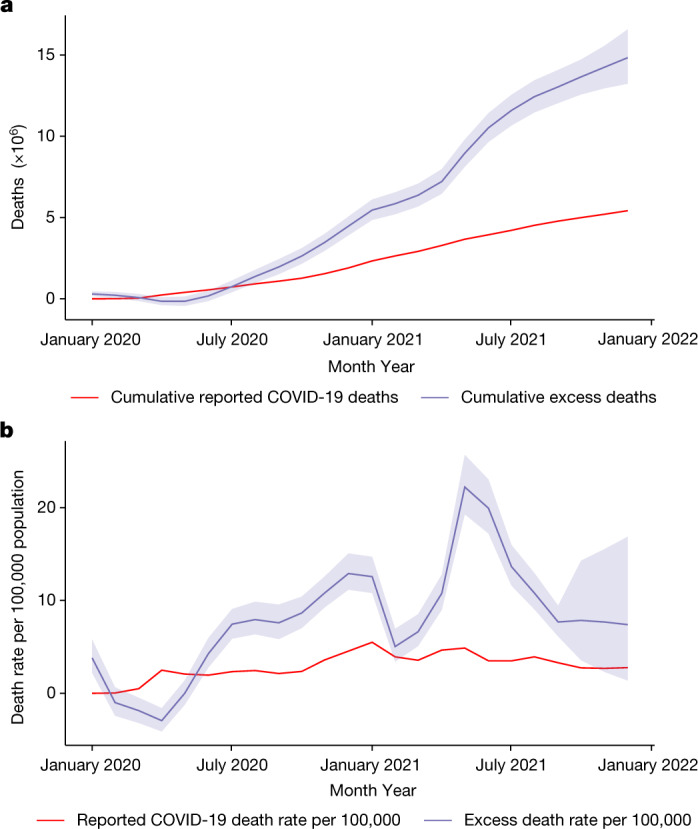
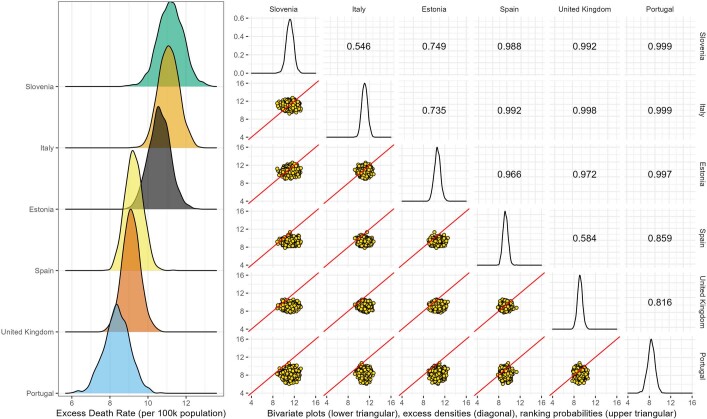
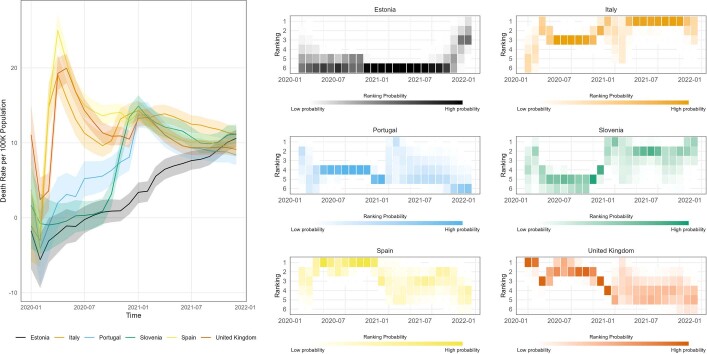
. Reported statistics on COVID-19 mortality are problematic for many countries owing to variations in testing access, differential diagnostic capacity and inconsistent certification of COVID-19 as cause of death. Beyond what is directly attributable to it, the pandemic has caused extensive collateral damage that has led to losses of lives and livelihoods. Here we report a comprehensive and consistent measurement of the impact of the COVID-19 pandemic by estimating excess deaths, by month, for 2020 and 2021. We predict the pandemic period all-cause deaths in locations lacking complete reported data using an overdispersed Poisson count framework that applies Bayesian inference techniques to quantify uncertainty. We estimate 14.83 million excess deaths globally, 2.74 times more deaths than the 5.42 million reported as due to COVID-19 for the period. There are wide variations in the excess death estimates across the six World Health Organization regions. We describe the data and methods used to generate these estimates and highlight the need for better reporting where gaps persist. We discuss various summary measures, and the hazards of ranking countries' epidemic responses.
Overview
CoChat Summary
TL;DR
WHO estimated global excess mortality from COVID-19 for January 2020–December 2021 at 14.83 million deaths, using a Bayesian Poisson framework to fill gaps where all-cause mortality data were incomplete. The estimate is 2.74 times the 5.42 million COVID-19 deaths reported to WHO for the same period.
Key findings
- Globally, the paper estimates 14.83 million excess deaths over 2020–2021 (95% UI 13.23–16.58 million), compared with 5.42 million reported COVID-19 deaths; the excess-to-reported ratio is 2.74 (UI 2.44–3.06).
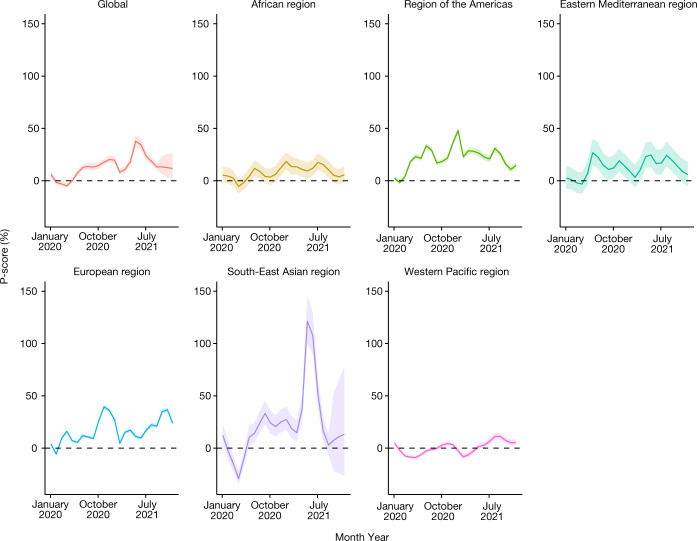
- Excess deaths were estimated at 4.47 million in 2020 and 10.36 million in 2021 globally; the global P-score increased from 7.97% in 2020 to 18.30% in 2021.
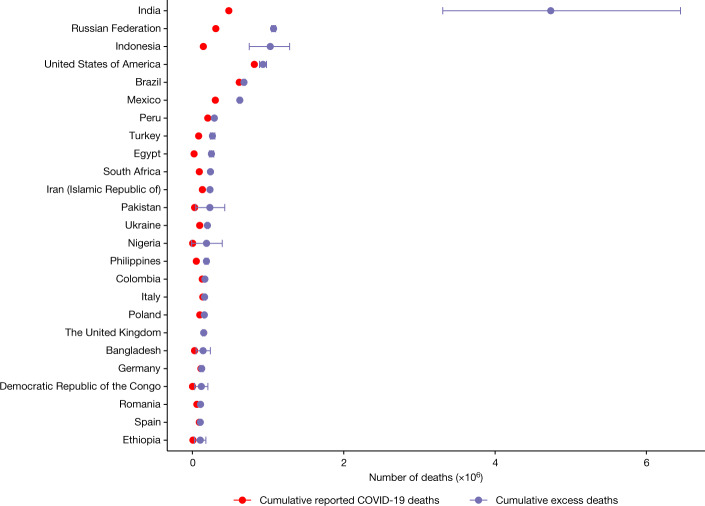
- The paper reports large country-level totals, including India: 4.74 million excess deaths (UI 3.31–6.45 million), Russian Federation: 1.07 million (UI 1.05–1.10 million), Indonesia: 1.03 million (UI 0.75–1.29 million), and the United States: 932,000 (UI 887,000–978,000).
- The 20 countries with the highest excess estimates account for 48.9% of the global population and over 80% of estimated global excess deaths for January 2020–December 2021.
Methods
- The study used a WHO-led, consultative modelling process: a Technical Advisory Group developed methods, WHO member states reviewed preliminary estimates, and feedback was used to update the final estimates.
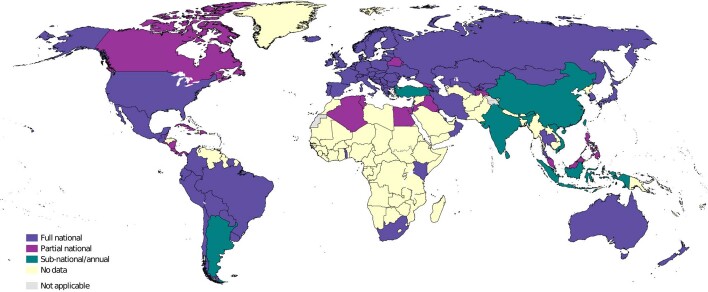
- The analysis used all-cause mortality (ACM) data from multiple sources; monthly national data were available for 100 countries (52%), while other locations had annual, subnational, or no data.
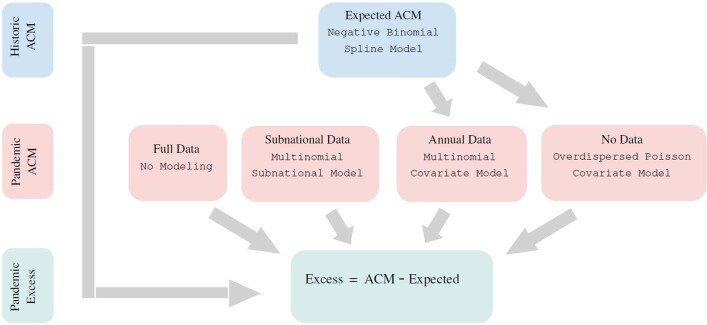
- Excess deaths were estimated with a Bayesian Poisson / negative binomial framework: historical ACM (often 2015–2019) was used to model expected deaths with spline-based seasonal and annual trends; where pandemic data were incomplete, a covariate-based log-linear model and, for some countries, subnational-to-national multinomial/proportionality models were used.
Limitations
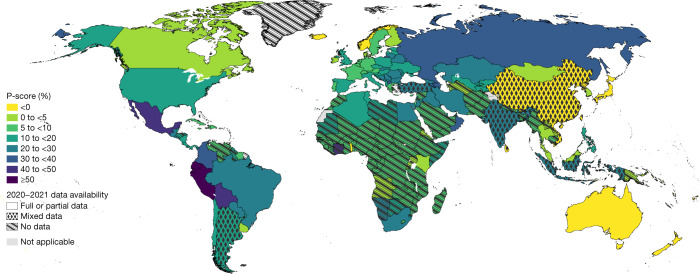
- The paper states that the biggest limitation is data paucity: for almost half of WHO member states, ACM data during the pandemic were unavailable, so estimates relied on statistical models; the text says these countries should be interpreted with caution.
- The paper states that the counterfactual trend is sensitive to modelling assumptions, including the choice of spline models and how recent historical years are weighted; it notes splines can produce inappropriate extrapolations.
- The text makes evident that comparisons across countries/regions are difficult because countries differ in age structure, data completeness, and reporting quality; this is stated in the paper and means rankings can be misleading.
- The text makes evident that the paper cannot quantify how much excess mortality is directly COVID-19 versus indirect or non-COVID causes; the discussion explicitly says excess mortality combines these and cannot separate them.
Model-written summary. Check it against the paper before relying on it.
Integrity signals
Registry
Cites
Statistics
Figures
Verification
Claims the paper makes
8 Valid · 2 Not valid · 6 Not checked · 81 Own results and interpretations
Every source the paper cites for this claim was checked and supports it.
In the paper
“Reported statistics on COVID-19 mortality are problematic for many countries owing to variations in testing access, differential diagnostic capacity and inconsistent certification of COVID-19 as cause of death.”
- Also stated in: § Main · plain
“countries have differed in their application of standards for the certification of COVID-19 as the underlying cause-of-death2.”
§ The WHO estimates of excess mortality associated with the COVID-19 pandemic > Abstract
What the sources say
- Supportedcites [2] Riffe T Acosta E Data Resource Profile: COVerAGE-DB: a global demographic database of COVID-19 cases and deaths Int. J. Epidemiol. 2021 50 390 390f 10.1093/ije/dyab027 source
The Strengths and weaknesses section says COVID-19 death counts are likely underestimated for reasons also affecting case counts, including testing capacity and diagnostic-test accuracy. It also describes differences in whether suspected deaths are counted and evidence that COVID-19-related deaths are classified under other causes. Page numbers were not supplied in our copy. (LLM, conf=0.90)
plainstates a cause- Asserted: passes — The authors put it forward as true.
- Checkable: passes — It can be checked against evidence.
- Load-bearing: passes — The paper’s conclusions depend on it.
- Based: passes — The paper gives a reason why it holds.
- Also stated in: § Main · plain
Every source the paper cites for this claim was checked and supports it.
In the paper
“The measure overcomes the variation among countries in reporting and testing and the misclassification of the cause of death on death certificates7”
§ The WHO estimates of excess mortality associated with the COVID-19 pandemic > Main
What the sources say
- Supportedcites [7] Beaney T Excess mortality: the gold standard in measuring the impact of COVID-19 worldwide? J. Royal Soc. Med. 2020 113 329 334 10.1177/0141076820956802 PMC7488823 32910871 source
The Excess mortality section states that, because it encompasses deaths from all causes, excess mortality overcomes cross-country variation in COVID-19 reporting and testing and misclassification of causes on death certificates. This directly matches the attributed claim. (LLM, conf=0.95)
plainstates a cause- Asserted: passes — The authors put it forward as true.
- Checkable: passes — It can be checked against evidence.
- Load-bearing: passes — The paper’s conclusions depend on it.
- Based: passes — The paper gives a reason why it holds.
- Supported
Every source the paper cites for this claim was checked and supports it.
In the paper
“This surpasses the influenza pandemics of 1957, 1968 and 2009 (estimated at 0.04%, 0.03% and 0.005%, respectively)18.”
§ The WHO estimates of excess mortality associated with the COVID-19 pandemic > Discussion
What the sources say
- Supportedcites [18] Simonsen L Viboud C Mortality: a comprehensive look at the COVID-19 pandemic death toll. eLife 2021 10 e71974 10.7554/eLife.71974 34382937 PMC8360646 source
Table 1 (Abstract) gives a global per capita excess mortality rate of >0.08% for COVID-19, exceeding its estimates of 0.04%, 0.03%, and 0.005% for the 1957, 1968, and 2009 influenza pandemics, respectively. The paper describes the COVID-19 estimate using data available in 2020–2021. (LLM, conf=0.94)
plain- Asserted: passes — The authors put it forward as true.
- Checkable: passes — It can be checked against evidence.
- Load-bearing: unclear — It is unclear whether the paper’s conclusions depend on it.
- Based: passes — The paper gives a reason why it holds.
- Supported
Every source the paper cites for this claim was checked and supports it.
In the paper
“As another example, in the Africa region for which ACM data are most lacking, recent studies have highlighted the underestimation in the reported statistics20.”
§ The WHO estimates of excess mortality associated with the COVID-19 pandemic > Discussion
What the sources say
- Supportedcites [20] Cabore J. W. et al. COVID-19 in the 47 countries of the WHO African region: a modelling analysis of past trends and future patterns. Lancet Glob. Health10, e1099–e1114 (2022). PMC9159735 35659911 source
The Introduction states that reported infections and deaths underestimate the actual COVID-19 burden in the WHO African region. It also reports that, in countries with seroprevalence studies, reported infections represented only a small proportion of the estimated burden. Page numbers were not provided. (LLM, conf=0.94)
plainstates an association- Asserted: passes — The authors put it forward as true.
- Checkable: passes — It can be checked against evidence.
- Load-bearing: unclear — It is unclear whether the paper’s conclusions depend on it.
- Based: passes — The paper gives a reason why it holds.
- Supported
Every source the paper cites for this claim was checked and supports it.
In the paper
“The uncertainty in the expected predictions is well modelled by a gamma distribution, and the advantage of this choice is that it can be conveniently combined with a Poisson model to produce a negative binomial model with the log-linear mean given by equation (3).”
§ The WHO estimates of excess mortality associated with the COVID-19 pandemic > Methods > Model for countries without full pandemic data For almost half of the 194 WHO member states we do not have the ACM counts over the pandemic, and so must predict them using country characteristics. We choose a simple form for this prediction model, with mean2where is a relative rate parameter. If , then for country and at month the mortality is greater than expected, whereas if , then for country and at month the mortality is less than expected. We used time-invariant variables, (these are annual values from 2019). These were an indicator of high income and/or low or middle income, the cardiovascular mortality rate in 2019 and the diabetes prevalence rate in 2019. In addition, we used time-varying variables: a containment variable (it is calculated using all ordinal containment and closure policy indicators and health-system policy indicators, for further details see Hale et al.14), the square root of the reported COVID-19 death rate, temperature and the COVID-19 test positivity rate. We then build a log-linear model for the rate parameter:3where and denote relative rate parameters and are independent error contributions that pick up random variation unexplained by the log-linear regression function. The time-varying coefficients allow the associations to evolve during the pandemic. As we desire the evolution to be smooth in time, for these time-varying coefficients we use a random walk of order 2 (RW2) prior that encourages smooth estimates46. In equation (2) above, we have conditioned on known expected numbers. In reality, and as just described, these are modelled to give a distribution over plausible values. The uncertainty in the expected predictions is well modelled by a gamma distribution, and the advantage of this choice is that it can be conveniently combined with a Poisson model to produce a negative binomial model with the log-linear mean given by equation (3). Full details (including evidence of the accuracy of the gamma model) can be found in Knutson et al.15. This model was fitted to all countries with observed monthly ACM data over some portion of 2020–2021, using the integrated nested Laplace approximation method47, to obtain posterior distributions over the unknown parameters. The resultant posterior distribution reflects the uncertainty in the parameters (both in the expected numbers and the log-linear covariate model), and can be used to construct a predictive distribution for the ACM in countries with no data or partial data.
What the sources say
- Supportedcites Knutson et al.15 Knutson V., Aleshin-Guendel S., Karlinsky A., Msemburi W. & Wakefield J. Estimating country-specific excess mortality during the COVID-19 pandemic (2023). Ann. Appl. Stat. (in the press). PMC9812776 36517599 source
Section 3.3 (Modeling Uncertainty in the Expected Numbers) states they fit a gamma distribution by method of moments to the Monte Carlo samples of the expected numbers and 'approximate the distribution of the expected numbers as gamma, since this is conjugate to the Poisson, and so allows efficient inference with INLA ... using a negative binomial,' and the Supplementary Materials (Sec. 5, Gamma Expected Numbers; Fig. 5) report the gamma fits are accurate, with differences 'small in all cases' — supporting 'well modelled'. The model description bullet confirms the negative binomial component with known tau arises from the uncertainty in the expected numbers within the log-linear Poisson/negative-binomial formulation. The 'equation (3)' reference is the citing paper's own display, not attributed content. (LLM, conf=0.90)
boosted- Asserted: passes — The authors put it forward as true.
- Checkable: passes — It can be checked against evidence.
- Load-bearing: passes — The paper’s conclusions depend on it.
- Based: passes — The paper gives a reason why it holds.
- Supported
49 more claims
Create a free account to see all 97 claims and to verify the 2 references still open.
- Probably not a substantial claim. 19
- It may state two separate claims as one. 30
- The quote only partly states this claim. 2
Claims other papers make about this one
Each is checked against this paper’s own text: does it say what the citing paper says it does?
The source backs part of the claim, not all of it — or backs it for a different population, condition or comparison.
In the citing paper
“Our current estimate of global excess mortality during 2020 and 2021 is comparable to the WHO estimate of 14·9 million (95% UI 13·3–16·6) excess deaths,15 with our mean estimate falling within the uncertainty interval of the WHO estimate and vice versa.”
From Global age-sex-specific mortality, life expectancy, and population estimates in 204 countries and territories and 811 subnational locations, 1950–2021, and the impact of the COVID-19 pandemic: a comprehensive demographic analysis for the Global Burden of Disease Study 2021 (2024) · cites this paper as [15]
Experimental — accuracy not yet measuredThe cited source says what the claim attributes to it.
In the citing paper
“this total greatly exceeds global average increases of 8% in 2020 and 18% in 20214.”
From Attributed causes of excess mortality during the COVID-19 pandemic in a south Indian city (2023) · cites this paper as [4]
In the citing paper
“Other settings with >25% increases in mortality during the pandemic have included Russia and LMICs within Latin America, Eastern Europe, and central Asia1,4.”
From Attributed causes of excess mortality during the COVID-19 pandemic in a south Indian city (2023) · cites this paper as [4]
Citations
Cites
Vos, T., Lim, S. S., Abbafati, C., Abbas, K. M., Abbasi, M., Abbasifard, M., Abbasi-Kangevari, M., Abbastabar, H., Abd-Allah, F., Abdelalim, A., et al. (2020) · The Lancet · doi:10.1016/s0140-6736(20)30925-9 · Cited by 19,358
Generalized Additive Models: An Introduction with R
Wood, S. N. (2017) · doi:10.1201/9781315370279 · Cited by 13,852
Rue, H., Martino, S., & Chopin, N. (2009) · Journal of the Royal Statistical Society Series B: Statistical Methodology · doi:10.1111/j.1467-9868.2008.00700.x · Cited by 5,279
Wang, H., Paulson, K. R., Pease, S. A., Watson, S., Comfort, H., Zheng, P., Aravkin, A. Y., Bisignano, C., Barber, R. M., Alam, T., et al. (2022) · The Lancet · doi:10.1016/s0140-6736(21)02796-3 · Cited by 2,069
Rue, H., & Held, L. (2005) · Chapman & Hall/CRC eBooks · doi:10.1201/9780203492024 · Cited by 1,823
Guidelines for accurate and transparent health estimates reporting: the GATHER statement
Stevens, G. A., Alkema, L., Black, R. E., Boerma, J. T., Collins, G. S., Ezzati, M., Grove, J. T., Hogan, D. R., Hogan, M. C., Horton, R., et al. (2016) · The Lancet · doi:10.1016/s0140-6736(16)30388-9 · Cited by 1,798
Karlinsky, A., & Kobak, D. (2021) · eLife · doi:10.7554/elife.69336 · Cited by 772
Self-citationMurray, C. J., Lopez, A. D., Chin, B., Feehan, D., & Hill, K. H. (2006) · The Lancet · doi:10.1016/s0140-6736(06)69895-4 · Cited by 605
Islam, N., Shkolnikov, V. M., Acosta, R. J., Klimkin, I., Kawachi, I., Irizarry, R. A., Alicandro, G., Khunti, K., Yates, T., Jdanov, D. A., et al. (2021) · BMJ · doi:10.1136/bmj.n1137 · Cited by 468
Guidelines for accurate and transparent health estimates reporting: the GATHER statement
Stevens, G. A., Alkema, L., Black, R. E., Boerma, J. T., Collins, G. S., Ezzati, M., Grove, J. T., Hogan, D. R., Hogan, M. C., Horton, R., et al. (2016) · PLOS Medicine · doi:10.1371/journal.pmed.1002056 · Cited by 424
Research works printed but not linked: 2
- National Bureau of Statistics of China. China Statistical Yearbook 2021 (China Statistics Press, 2021).
- Hale, T. et al. Variation in Government Responses to COVID-19 Technical Report (Univ. Oxford, 2020).
Cited by
Items 701–800 of 1,067
Herrscher, C., Haddada, M. B., Andries, J., et al. (2023) · Nanoarchitectonics · doi:10.37256/nat.4220233692
“Volume 4 Issue 2|2023| 77 Nanoarchitectonics example of pandemic infectious disease leading to a significant impact on public health with an estimated 15 million excess deaths for the period 2020-2021 [2, 3].”
BackgroundJanuary 23: A date for COVID-19 research and reflection
Huang, J., Tian, W., & Döring, O. (2023) · Journal of Global Health · doi:10.7189/jogh.13.03056
Napyo, A. K., Hopp, L. J., Mukunya, D., et al. (2023) · Research Square · doi:10.21203/rs.3.rs-3348260/v1
Gałczyk, M., Zalewska, A., & Sobolewski, M. (2023) · Journal of Personalized Medicine · doi:10.3390/jpm13101474
“A considerable proportion of this population is made up of young people with no prior health history [1–3].”
BackgroundLin, T., Hsu, C.-Y., Yen, A. M., et al. (2023) · Research Square · doi:10.21203/rs.3.rs-3417995/v1
Playing the opening and middle games against Covid-19
Bevan, G. (2023) · LSE Press eBooks · doi:10.31389/lsepress.hdb.i
Excess mortality in low-and lower-middle-income countries: A systematic review and meta-analysis
Gmanyami, J. M., Jarynowski, A. K., Belik, V., Lambert, O., Amuasi, J., & Quentin, W. (2023) · European Journal of Public Health · doi:10.1093/eurpub/ckad160.017
Bariatric Surgery and COVID-19: a Change of Perspective in a New Phase of the Pandemic
Marchesi, F., Dalmonte, G., Riccò, M., Martines, G., Dibra, R., Bernante, P., Balsamo, F., Anzolin, F., GAGLIARDI, S., Conti, L., et al. (2023) · Obesity Surgery · doi:10.1007/s11695-023-06923-6
ALTERAÇÕES NEUROLÓGICAS CONSEQUENTES DA COVID-19
Pereira, S. S., & Almeida, A. N. D. (2023) · Revista Foco · doi:10.54751/revistafoco.v16n10-206
Governing COVID-19: The Complex Relationship Between Government Type and Police EnforcementPreprint
Bohloli, H., Shokri, A., & خواه, ف. ر. (2023) · Research Square · doi:10.21203/rs.3.rs-3589453/v1
Excess Deaths in China During SARS-Cov-2 Viral Waves in 2022-2023Preprint
Jha, P., Brown, P., Tam, T., et al. (2023) · SSRN Electronic Journal · doi:10.2139/ssrn.4633517
From a false sense of safety to resilience under uncertaintyPreprint
Heino, M. T. J., Proverbio, D., Saurio, K. J., et al. (2023) · doi:10.31234/osf.io/a5ysh
Rapid, Non-Contact Screening Tool for COVID-19 Using Mobile Thermal Imaging and Deep Learning
Fletcher, R., Bueno, B. G. B., Byun, S., Gupta, Y. K., & Dhadge, N. (2023) · Wearable and Implantable Body Sensor Networks · doi:10.1109/bsn58485.2023.10331139
Bonnet, F., Grigoriev, P., Sauerberg, M., Alliger, I., Mühlichen, M., & Camarda, C. G. (2023) · medRxiv · doi:10.1101/2023.12.18.23300149
“However, most of them have done so at national level [8, 9, 10, 11, 12, 13, 14, 15, 16, 17].”
BackgroundValenzuela-Zavala, U. M., & Félix-Medina, M. H. (2023) · REVMEDUAS · doi:10.28960/revmeduas.2007-8013.v13.n3.004
The Covid-19 and TB Syndemic: Differences and Similarities
Kaufmann, S. H. E., Sher, A., Sigal, A., & Sawitzki, B. (2023) · Frontiers research topics · doi:10.3389/978-2-8325-4116-6
La dimensión educativa de la Sección 22 (SNTE) durante la pandemia del covid-19
Peebles, M. C. (2023) · Iztapalapa(en línea)/Iztapalapa · doi:10.28928/ri/962024/atc4/cascopeeblesmx
La dimensión educativa de la Sección 22 (SNTE) durante la pandemia del covid-19
Peebles, M. C. (2023) · Iztapalapa(en línea)/Iztapalapa · doi:10.28928/ri/962024/atc4/cascopeeblesm
Chen, T. T., Edvinsson, R., Modig, K., et al. (2023) · Climate of the past · doi:10.5194/cp-2023-92-rc1
Sinan, M., Leng, J., Ahmed, A., Hasin, F., Akbar, J., Abdul, A., & Bao, J. (2023) · SSRN Electronic Journal · doi:10.2139/ssrn.4668686
Uma perda pode ser patológica? Uma revisão sistemática acerca do Luto Patológico (2010-2020)
da Silva, G. B. (2024) · Revista Sul-Americana de Psicologia · doi:10.29344/2318650x.2.3476 · Cited by 1
Gmanyami, J. M., Jarynowski, A. K., Belik, V., Lambert, O., Amuasi, J., & Quentin, W. (2024) · BMJ Open · doi:10.1136/bmjopen-2023-079862 · Cited by 2
Disentangling the relationship between cancer mortality and COVID-19 in the USPreprint
Hansen, C., Viboud, C. G., & Simonsen, L. (2024) · medRxiv · doi:10.1101/2024.01.02.24300715
Banser, T., Abduljaleel, Z., Alzabeedi, K. H., et al. (2024) · Applied Microbiology · doi:10.3390/applmicrobiol4010010
COVID-19 e seus impactos na saúde mental e sintomas depressivos na população LGBTQIA+
de Lima, M. V. S., Rodrigues, M. D., de Souza, S. O., Costa, G. G. A., Alexandre, M. F. D. F., de Melo, S. D., Telles, L. E. D. B., Valença, A. M., & da Silva, A. G. (2023) · Debates em Psiquiatria · doi:10.25118/2763-9037.2023.v13.1039
Ljungqvist, F. C. (2024) · Climate of the past · doi:10.5194/cp-2023-92-ac1
Übersterblichkeit im Kontext der COVID-19-Pandemie in Deutschland
Wollschläger, D., Fückel, S., Blettner, M., & Gianicolo, E. (2024) · Die Kardiologie · doi:10.1007/s12181-024-00666-z
Sintomas de ansiedade na população LGBTQIA+ durante a pandemia de COVID-19
Costa, G. G. A., Rodrigues, M. D., de Lima, M. V. S., de Souza, S. O., Alexandre, M. F. D. F., de Melo, S. D., Telles, L. E. D. B., Valença, A. M., & da Silva, A. G. (2024) · Debates em Psiquiatria · doi:10.25118/2763-9037.2024.v14.1130
Paganuzzi, M. M., Nattino, G., Ghilardi, G. I., Costantino, G., Rossi, C., Cortellaro, F., Cosentini, R., Paglia, S., Migliori, M., Mira, A., et al. (2024) · BMJ Open · doi:10.1136/bmjopen-2023-077476 · Cited by 2
“In contrast, other studies used sophisticated statistical models to estimate the 2020 expected mortality, both on international data 21–23 and in the Italian context, 25 26 accounting for other information such as annual trends and temperature data.”
ResultFlatten the curve. On a new covid-19 (hit) severity
Crombez, J., & Staelen, R. H. D. (2024) · Acta Clinica Belgica · doi:10.1080/17843286.2024.2314240 · Cited by 1
“We also refer to [10] and references therein for a number of comparisons in terms of excess mortality.”
ResultAllahverdiyev, A., Keleş, S., Akgül, B., et al. (2024) · Nanotechnology in the life sciences · doi:10.1007/978-3-031-50093-0_15
Sultan, M., & Laytin, A. D. (2024) · Pan African Journal of Emergency Medicine and Critical Care · doi:10.58904/2024/93
Utilizing P-Scores to Quantify Excess Mortality During the COVID-19 Pandemic
Sergeev, A. V. (2024) · Open Access Biostatistics & Bioinformatics · doi:10.31031/oabb.2024.03.000569
Santos, C. A. F., Nardy, A., Gomez, R. J., Silva, B. R., Monteiro, F. R., Rossi, M. N., do Amaral, J. B., Paixão, V., Vaisberg, M. W., Amirato, G. R., et al. (2024) · Preprints.org · doi:10.20944/preprints202403.0261.v1
Barnett, C. R., Krolikowski, K., Postelnicu, R., Mukherjee, V., Sulaiman, I., Chung, M. C., Angel, L. F., Tsay, J.-C. J., Wu, B. G., Yeung, S. T., et al. (2024) · ERJ Open Research · doi:10.1183/23120541.00789-2023
“The COVID-19 pandemic has had unprecedented effects on human health [1].”
BackgroundSantos, C. A. F., Nardy, A., Gomez, R. J., Silva, B. R., Monteiro, F. R., Rossi, M. N., do Amaral, J. B., Paixão, V., Vaisberg, M. W., Amirato, G. R., et al. (2024) · Preprints.org · doi:10.20944/preprints202403.0261.v2
Chen, T. T., Edvinsson, R., Modig, K., et al. (2024) · Climate of the past · doi:10.5194/cp-2023-92-cc1
Comparison Of 3D Structures Generated by AlphaFold2 to Experimental Structures In Oncogenic Proteins
Rajpal, S., & Plymire, D. A. (2023) · Journal of Student Research · doi:10.47611/jsrhs.v12i4.5532
“The importance of structural biology is shown in a real-world scenario through the coronavirus, or COVID-19, which caused a worldwide pandemic [6], resulting in more than 287 million confirmed cases globally and more than 5 million deaths [7].”
BackgroundDecerf, B., Friedman, J. A., Mendes, A. G., Pennings, S. M., & Yonzan, N. (2024) · Journal of Population Economics · doi:10.1007/s00148-026-01169-9
“Excess mortality estimates are widely viewed as a more complete measure of pandemic mortality impacts than nationally certified COVID-19 deaths due to incomplete national death registers in many countries (Msemburi et al. 2023).”
The Determinants of Under-Estimation of Covid-19 Cases Across AfricaPreprint
Han, Q., Rutayisire, G., Fonkou, M. D. M., et al. (2024) · SSRN Electronic Journal · doi:10.2139/ssrn.4771127
Trust and transfer during the covid-19 pandemic: did digital cash transfer save lives?Preprint
Tampubolon, G. (2024) · medRxiv · doi:10.1101/2024.04.04.24305360
“7,9 In conclusion , the investigation of excess deaths”
BackgroundDid Covid-19 (Permanently) Raise the Demand for "Teleworkable" Jobs?Preprint
Bratti, M., Brunetti, I., Corvasce, A., Maida, A., & Ricci, A. (2024) · SSRN Electronic Journal · doi:10.2139/ssrn.4788220 · Cited by 2
Savinkina, A. A., Weinberger, D. M., Toscano, C. M., & de Oliveira, L. H. (2024) · medRxiv · doi:10.1101/2024.04.12.24305739
Corrao, G., Porcu, G., Tratsevich, A., Cereda, D., Pavesi, G., Bertolaso, G., & Franchi, M. (2024) · Vaccines · doi:10.3390/vaccines12040413
“Therefore, several international organizations, including the World Health Organization (WHO) [27,28], suggest counting “all-cause excess deaths” to reliably capture the total impact of pandemics.”
BackgroundStatistical Mathematical Analysis of COVID-19 at World Level
Marín-Machuca, O., Chinchay-Barragán, C. E., Pisco, J. F. M., et al. (2024) · International Journal of Physics Research and Applications · doi:10.29328/journal.ijpra.1001082
Francke, P., & Josue Benites, G. (2024) · Documento de trabajo · doi:10.18800/2079-8474.0534
Ogungbe, O., Jabakhanji, S. B., Mehta, R., McCaffrey, J., Byrne, D., Hurley, S. M., Rosman, L. M., Bansah, E. C., Ibukun, F. A., Quarshie, I. A., et al. (2024) · medRxiv · doi:10.1101/2024.04.17.24305997
Universal Patterns of Delayed Vaccination Impact on COVID-19 Mortality: USA Versus EuropePreprint
Matveeva, O. V., Kobak, D., Ogurtsov, A. Y., Shabalina, S. A., & Koonin, E. V. (2024) · SSRN Electronic Journal · doi:10.2139/ssrn.4804133
Nalban, N., Wanjari, M., Kolhe, R., Tamboli, M., & Jamadagni, P. S. (2024) · Journal of Proteins and Proteomics · doi:10.1007/s42485-024-00136-w
“This dangerous virus is still spreading affecting millions of people with increased rate of mortality (Msemburi et al. 2023).”
Chen, T. T., Edvinsson, R., Modig, K., et al. (2024) · Climate of the past · doi:10.5194/cp-2023-92-rc2
Hasdeu, S., Beliera, A. A., Alvarez, J., et al. (2024) · PubMed · doi:10.1590/0102-311xes117923
SARS-CoV-2 epidemiology, kinetics, and evolution: a narrative reviewPreprint
Alizon, S., & Sofonea, M. T. (2024) · doi:10.31219/osf.io/etv85
Role of T Helper 1 in COVID-19 Pathogenesis: Foe or Friend
Yolmeh, M., Ahmadi, R., Yolmeh, A., Negahban, A., Sadeghinasab, J., Siyadatpanah, A., Norouzi, R., Fordjour, F. A., Kuutiero, E. K., Taghipour, Z., et al. (2023) · International Journal of Enteric Pathogens · doi:10.34172/ijep.5614
Ljungqvist, F. C. (2024) · Climate of the past · doi:10.5194/cp-2023-92-ac3
Ljungqvist, F. C. (2024) · Climate of the past · doi:10.5194/cp-2023-92-ac2
Krishnan, A., Dubey, M., Kumar, R., Salve, H. R., Upadhyay, A. D., Gupta, V., Malhotra, S., Kaur, R., Nongkynrih, B., & Bairwa, M. L. (2024) · Journal of Global Health · doi:10.7189/jogh.14.05013
“Both the IHME and the WHO used subnational data of 12 states for estimation due to issues with data availability, which they then extrapolated to the whole country using covariates [10,11].”
BackgroundMethodInfluentialHartmann, C. R., Khan, R., Schöning, J., et al. (2024) · medRxiv · doi:10.1101/2024.06.04.24308438
Power and artificial intelligence: transformation of the global public health ecosystem
Monlezun, D. J. (2024) · Elsevier eBooks · doi:10.1016/b978-0-443-21597-1.00001-9 · Cited by 3
Influence of respiratory infections pandemics on the mortality of the population of Ukraine
Korolenko, V. V., & Mokhort, H. A. (2024) · Wiadomości Lekarskie · doi:10.36740/wlek202404133 · Cited by 1
Yoon, J., Kim, J. Y., Lim, S., et al. (2024) · Biotechnology Journal · doi:10.1002/biot.202400074
Assessing Excess Mortality of Baby Boomers from the COVID-19 Pandemic: Taiwan Omicron-naïve Cohort
Lin, T.-Y., Hsu, C.-Y., Yen, A. M., Chen, S. L., & Chen, T. H.-H. (2024) · Journal of Epidemiology and Global Health · doi:10.1007/s44197-024-00262-0
“Therefore, building a background mortality rate model for each country prior to the pandemic is of paramount importance to quan - tify excess all-cause mortality [8, 9].”
BackgroundBellucci, A., & Gucciardi, G. (2024) · Journal of Financial Management Markets and Institutions · doi:10.1142/s2282717x24500026 · Cited by 1
“…the impact of the pandemic since it implicitly overcomes possible misclassi¯cations in the assessment of the cause of death (Beaney et al. 2020) and only takes into account the total number of deaths during the pandemic compared to those expected before the pandemic emerged (Msemburi et al. 2023).”
ResultXin, H., Law, A. H. T., Cheung, J. K., et al. (2024) · SSRN Electronic Journal · doi:10.2139/ssrn.4885935
Song, J., Peng, J., Wu, Y., Zhang, J., & Zhu, J. (2024) · SSRN Electronic Journal · doi:10.2139/ssrn.4888094
Os desafios do enfermeiro pesquisador em tempos de pandemia da Covid-19
Pissaia, L. F., da Costa, A. E. K., & Oliveira, E. C. (2024) · Revista Sustinere · doi:10.12957/sustinere.2024.78398
Hansen, C. L., Viboud, C. G., & Simonsen, L. (2024) · eLife · doi:10.7554/elife.93758.2.sa1
Author response: Disentangling the relationship between cancer mortality and COVID-19 in the US
Hansen, C., Viboud, C. G., & Simonsen, L. (2024) · eLife · doi:10.7554/elife.93758.2.sa0
Napyo, A. K., Hopp, L. J., Mukunya, D., Soita, D. J., & Matovu, J. K. B. (2024) · Discover Health Systems · doi:10.1007/s44250-024-00120-7
“Globally there have been over 750 million confirmed cases and about 7 million deaths as a result of COVID-19 [4].”
Applying evolutionary thinking to public health
Stearns, S. C., & Medzhitov, R. M. (2024) · Oxford University Press eBooks · doi:10.1093/oso/9780192871978.003.0016
Capella, P. D. S. F., do Sacramento, J. C., & dos Santos, I. M. M. (2024) · Asklepion Informação em Saúde · doi:10.21728/asklepion.2024v3n2e-98
Pohl, R., Stallmann, C., Marquardt, P., Bank, U., Färber, J., Scheibler, L., Heuft, H., Kaasch, A. J., & Apfelbacher, C. (2024) · BMC Research Notes · doi:10.1186/s13104-024-06867-9
General Characteristics and Properties of Organic Life
Knoflacher, M. (2024) · Springer eBooks · doi:10.1007/978-3-662-69423-7_5
Liu, R., & Yang, G. (2024) · Developmental & Comparative Immunology · doi:10.1016/j.dci.2024.105236 · Cited by 1
Biolcatti, C. F., Simoes, M. R., do Prado, T. P., Monfort‐Pires, M., & Velloso, L. A. (2024) · Journal of Diabetes Mellitus · doi:10.4236/jdm.2024.143014
Han, K., & Kim, S. J. (2024) · Research Square · doi:10.21203/rs.3.rs-4703027/v1
Can we define global collective action problems away?
Hagen, R. J. (2024) · Journal of International Development · doi:10.1002/jid.3955
Zooming in and out: Exploring RNA Viral Infections with Multiscale Microscopic Methods
Lyu, C.-A., Shen, Y., & Zhang, P. (2024) · Viruses · doi:10.3390/v16091504 · Cited by 1
Pharma Companies’ Generosity and Doctors’ Attendance
Gupta, H. K., & Patwa, A. K. (2024) · Journal of Medical Evidence · doi:10.4103/jme.jme_25_24
Research on Classification of Novel Coronavirus Pneumonia Based on Multi-scale Wavelet Transform
Wei, H., Wang, J., Pan, J., Hu, J., Zhao, J., & Chen, D. (2024) · Asia-Pacific Conference on Image Processing, Electronics and Computers (IPEC) · doi:10.1109/ipec61310.2024.00092
Mortality following recovery from COVID-19 hospitalization: a long-term cohort studyPreprint
Ahmad, W. A., Sagy, Y. W., Battat, E., et al. (2024) · Research Square · doi:10.21203/rs.3.rs-4999598/v1
Tomás, A., Wettermark, B., Nyberg, F., & Hajiebrahimi, M. (2024) · BMJ Open · doi:10.1136/bmjopen-2023-082209 · Cited by 1
Effect of the COVID-19 pandemic on the well-being of middle-aged and older Europeans
Wilk, P., & Cuschieri, S. (2024) · Scientific Reports · doi:10.1038/s41598-024-74429-x
Facing stress and inflammation: From the cell to the planet
Cavaillon, J., & Chaudry, I. H. (2024) · World Journal of Experimental Medicine · doi:10.5493/wjem.v14.i4.96422
Insects and Covid-19:letter to the editor
Paksa, A., & Abadi, Y. S. (2024) · مجله دانشگاه علوم پزشکی جیرفت. · doi:10.61186/jjums.11.1.1449
Lee, Y.-S., Shrestha, J., Sprong, M. E., Huang, X., Tuladhar, S., & Chuang, M. Y. (2024) · Healthcare · doi:10.3390/healthcare12212170
Dishonesty is linked with the spread of infectious diseases
Martini, C. A., Bos, B., Drupp, M. A., et al. (2024) · Economics Letters · doi:10.1016/j.econlet.2024.112046
Espínola, N., Loudet, C., Luxardo, R., et al. (2024) · medRxiv · doi:10.1101/2024.10.31.24316541
“The WHO defines excess mortality due to COVID as the difference between the number of observed deaths from all causes during a given period, and the number of expected deaths from the same period, based on historical data from recent years [5].”
BackgroundMontenegro, F., Souza, C., de Souza, J. T., et al. (2024) · Revista Sociedade Científica · doi:10.61411/rsc202481917
T, M., KRISHNAN, G., BEVI, B., Saranya, S., PRABHU, & Selvarajan, N. (2024) · Asian Journal of Pharmaceutical and Clinical Research · doi:10.22159/ajpcr.2024v17i11.52900
Memon, F. Z., Saxena, D., Shah, K. H., Sinha, A. K., Jobarteh, M. L., Puwar, T. I., Patel, M., Solanki, B., Parmar, C., Mehta, A. V., et al. (2024) · SSRN Electronic Journal · doi:10.2139/ssrn.5048736
Estimating changes in life expectancy in Hong Kong during the COVID-19 pandemicPreprint
Law, A. H. T., Presanis, A. M., Cheung, J. K., Wu, P., Schooling, C. M., Cowling, B. J., & Wong, J. Y. (2024) · medRxiv · doi:10.1101/2024.12.12.24318910
COVID-19 and pneumonia — mortality and coding features (example of the Moscow region)
Samorodskaya, I. V., Kakorina, E. P., Zaitsev, A. A., et al. (2024) · Medical Technologies Assessment and Choice · doi:10.17116/medtech20244604130
Derwich, W., Schöffski, O., Herrmann, E. M., et al. (2024) · Innovative Surgical Sciences · doi:10.1515/iss-2024-0035
Bignardi, G., Ahmed, S. P., Bennett, M., Dunning, D. L., Griffiths, K., Leung, J. T., Sakhardande, A., Pi‐Sunyer, B. P., Kuyken, W., Dalgleish, T., et al. (2024) · Heliyon · doi:10.1016/j.heliyon.2024.e41403 · Cited by 1
A Study of U-Net-Based Architectures for Segmenting COVID-19 Lung Lesions
Ocampo, C. A. S., Reyes, J. P., & Hoyos, M. H. (2024) · Communications in computer and information science · doi:10.1007/978-3-031-75233-9_6
Nehe, S., Taksande, A., Ambad, R., Bankar, N. J., & Obaid, N. (2024) · Journal of Pharmacy and Bioallied Sciences · doi:10.4103/jpbs.jpbs_780_24
Metadata
- Authors
- Msemburi, W., Karlinsky, A., Knutson, V., Aleshin-Guendel, S., Chatterji, S., & Wakefield, J.
- Affiliations
- World Health Organization (CH)
- Hebrew University of Jerusalem (IL)
- University of Washington (US)
- Corresponding author
- Msemburi, William
- Venue
- Nature
- Published
- 2022-12-14
- Volume
- 613
- Issue
- 7942
- Pages
- 130-137
- ISSN
- 0028-0836 (ISSN-L)
- 1476-4687
- PMC
- PMC9812776
- OpenAlex
- W4311472757
- Cited by
- 1,064
- References
- 17
- Citations by year
- 2026: 176 · 2025: 283 · 2024: 346 · 2023: 252 · 2022: 6
- FWCI
- 131.36
- Type
- journal article
- Language
- en
- Open access
- hybrid
- doi.org
- Licence
- cc-by
- creativecommons.org/licenses/by/4.0 (tdm)
- creativecommons.org/licenses/by/4.0 (vor)
- Locations
- Nature (publishedVersion, cc-by)
- Research Square (acceptedVersion, cc-by)
- PubMed Central (publishedVersion, cc-by)
- PubMed (publishedVersion)
- RePEc: Research Papers in Economics (submittedVersion)
- Funders
- World Health Organization
- Topics
- Physical Sciences › Mathematics › Modeling and Simulation › COVID-19 epidemiological studies
- Health Sciences › Medicine › Epidemiology › Data-Driven Disease Surveillance
- Social Sciences › Demography › Insurance, Mortality, Demography, Risk Management
- Keywords
- COVID-19 pandemic, excess mortality, all-cause mortality, underreporting of deaths, cause of death certification, Bayesian uncertainty quantification, WHO regions
- MeSH terms
- COVID-19, Bayes Theorem, Humans, World Health Organization, Poisson Distribution, Uncertainty, Pandemics
About these checks
Registry, retraction, Cites and statistics results are computed, not judged, with one exception: a printed reference that no index lists is read once by a model before it counts as a citation error. Claims are extracted by a model and kept only when their quote appears verbatim in the text; each cited source is then checked, with a model’s help, for whether it says what the claim relies on. Those verdicts can be wrong — read the claim’s quote and the cited source before relying on one.
The claim verdicts this report counts are experimental: their accuracy is not yet measured.
A language model drew the claims from the paper on 2026-10-10, under version 3 of the claim definition (model deepseek-v4.1-flash, prompt extract-v3).
A second model labelled each claim on 2026-10-10 (model jev-1.13-20260917, definition revision gold-guideline-v0.2).
Cited sources are checked with a language model’s help (gpt-6-sol and qwen3.8-omni-flash).
Statistics and arithmetic are recomputed, not judged.
Confidence bands are shown only for fields calibrated on our annotated test set. None is calibrated yet, so no band is shown.
What counts as a claim ›How we measure confidence ›How we check this ›
Are you an author, or do you see a problem with this page? Request a review
Data sources
Bibliographic data: Semantic Scholar, OpenAlex, Crossref.
Contains information from the Semantic Scholar Academic Graph Datasets, made available under the ODC Attribution License (ODC-BY 1.0).
Semantic Scholar’s data is described in: Kinney, R., et al. (2023). The Semantic Scholar Open Data Platform. arXiv:2301.10140.
