

An analog-AI chip for energy-efficient speech recognition and transcription
Open accessThe DOI matches its Crossref record; 47 of the 47 references it cites were found in a registry or an index; 12 of the 36 sources its claims cite were checked for support.
Abstract
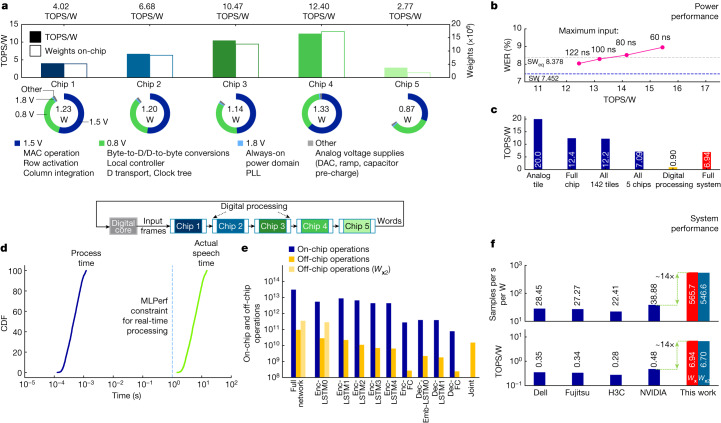
Abstract Models of artificial intelligence (AI) that have billions of parameters can achieve high accuracy across a range of tasks 1,2 , but they exacerbate the poor energy efficiency of conventional general-purpose processors, such as graphics processing units or central processing units. Analog in-memory computing (analog-AI) 3–7 can provide better energy efficiency by performing matrix–vector multiplications in parallel on ‘memory tiles’. However, analog-AI has yet to demonstrate software-equivalent (SW eq ) accuracy on models that require many such tiles and efficient communication of neural-network activations between the tiles. Here we present an analog-AI chip that combines 35 million phase-change memory devices across 34 tiles, massively parallel inter-tile communication and analog, low-power peripheral circuitry that can achieve up to 12.4 tera-operations per second per watt (TOPS/W) chip-sustained performance. We demonstrate fully end-to-end SW eq accuracy for a small keyword-spotting network and near-SW eq accuracy on the much larger MLPerf 8 recurrent neural-network transducer (RNNT), with more than 45 million weights mapped onto more than 140 million phase-change memory devices across five chips.
Overview
CoChat Summary
## TL;DR
The paper demonstrates a 14-nm analog-AI inference chip for speech recognition and transcription, using 34 tiles of phase-change memory and low-power routing to reach up to 12.4 TOPS/W chip-sustained performance. It reports end-to-end software-equivalent accuracy for keyword spotting and near-software-equivalent accuracy for the much larger MLPerf RNNT model with more than 45 million weights mapped across five chips.
## Key findings
- The chip combines 35 million phase-change memory devices across 34 tiles and achieves up to 12.4 TOPS/W chip-sustained performance.
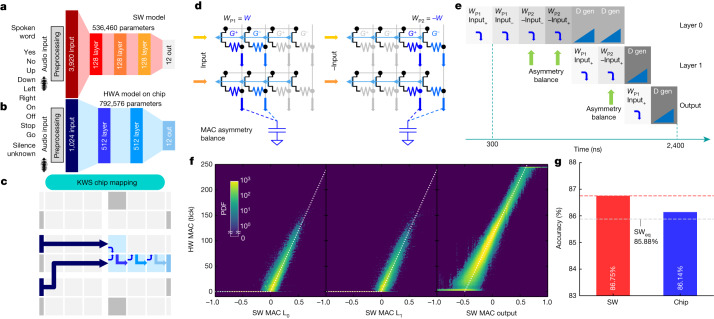
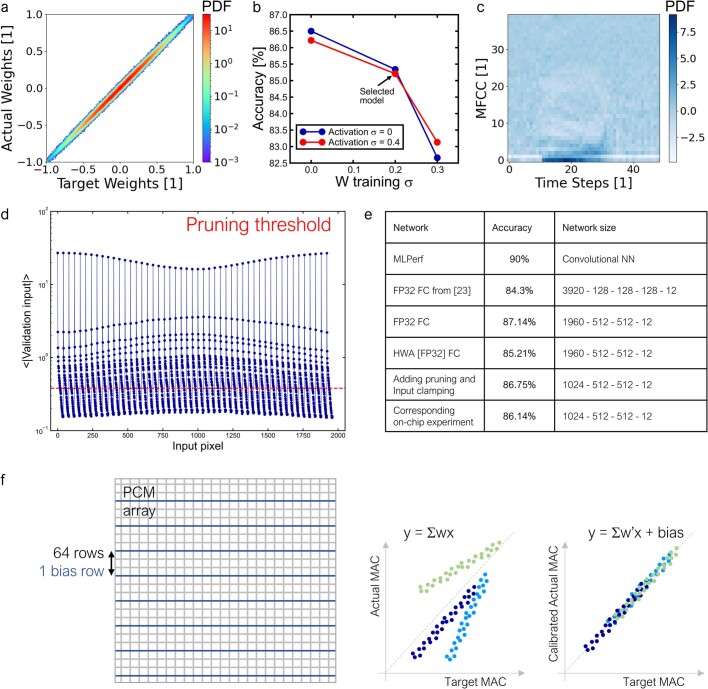
- For keyword spotting, the system achieved 86.14% accuracy, which the paper says is within the MLPerf software-equivalent limit of 85.88% (99% of the original software model’s accuracy); the original software model is reported at 86.75%.
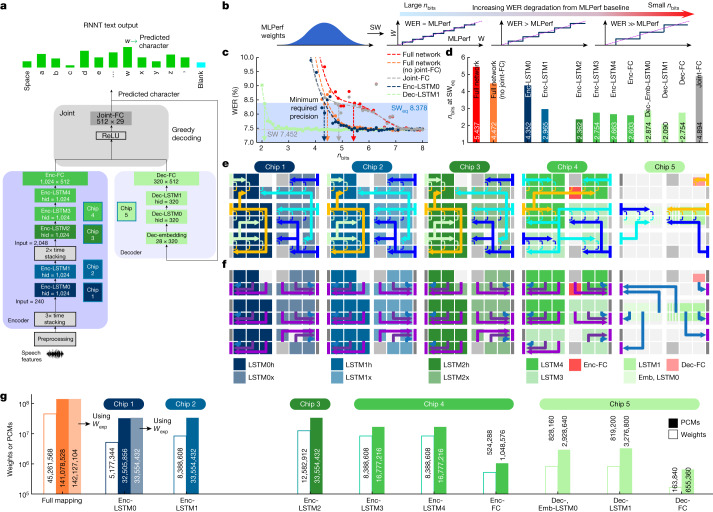
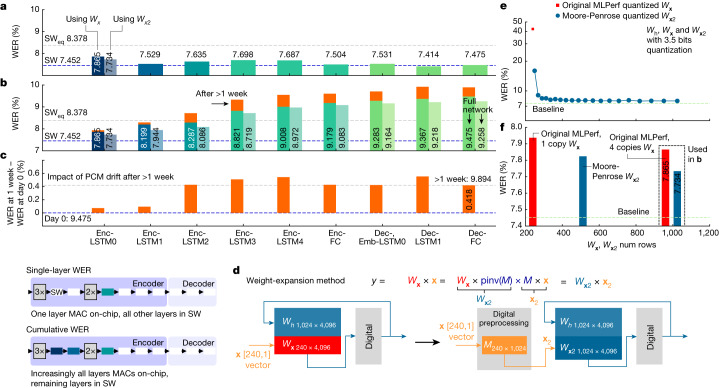
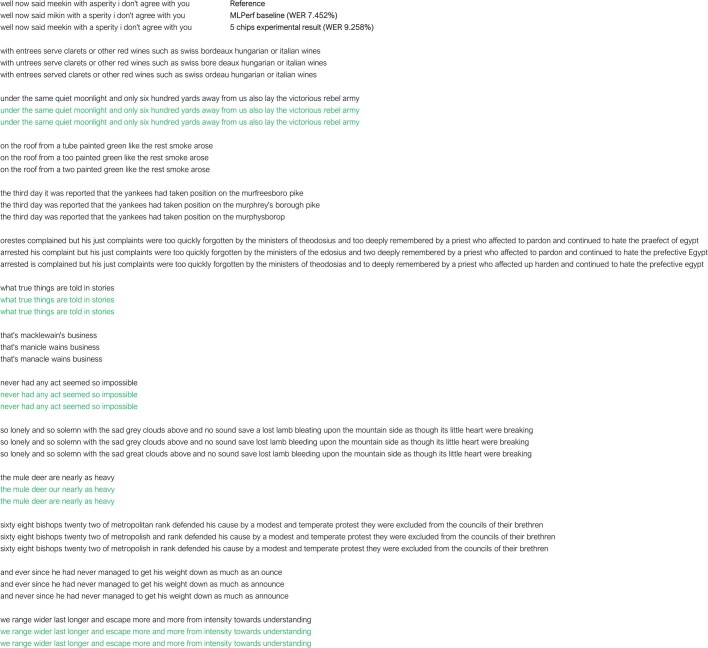
- For RNNT on Librispeech, the full five-chip system reached 9.475% WER in one configuration, versus a 7.452% software baseline, and with weight expansion improved to 9.258% WER.
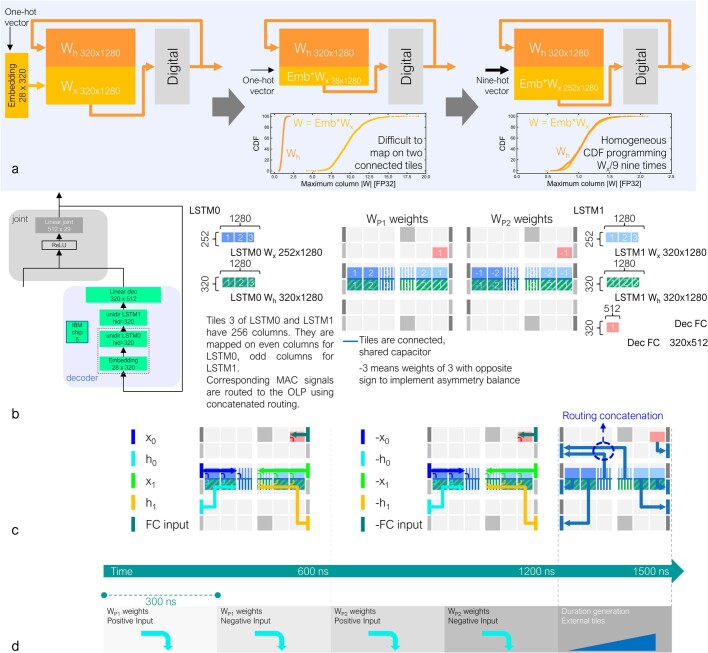
- The RNNT mapping used 45,261,568 of 45,321,309 total network weight and bias parameters in analog memory (99.9%), spread across more than 140 million PCM devices on 5 chips.
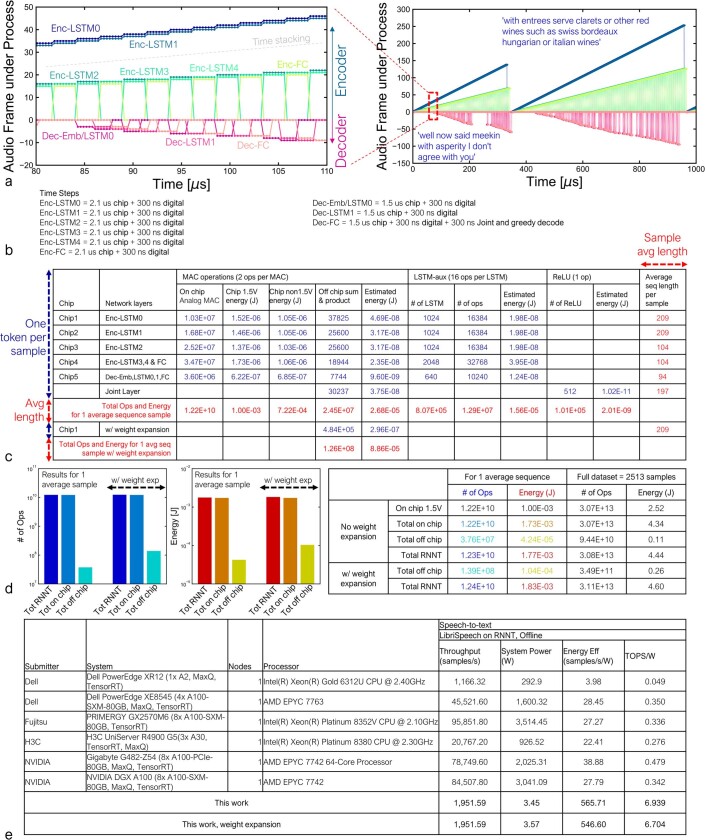
- The paper reports a projected system performance of 6.94 TOPS/W and 546.6 samples/s/W at 3.57 W, and says this is a 14-fold improvement over the best MLPerf result for the task.
## Methods
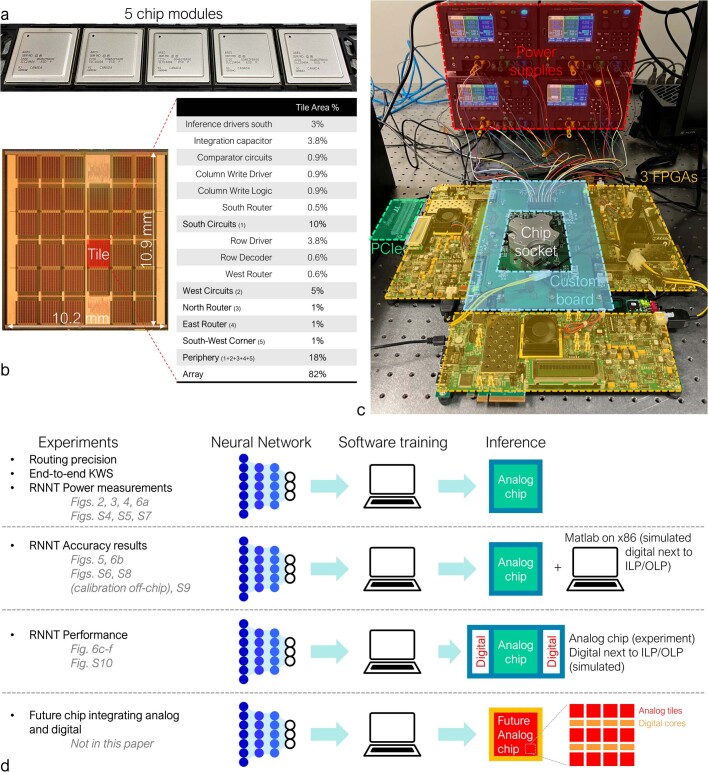
- Experimental work used a 14-nm inference chip built from 300-mm wafers, with PCM devices added in back-end-of-line processing; experiments were run with three Xilinx Virtex-7 VC707 FPGAs and x86/MATLAB control.
- The authors tested two workloads: a keyword-spotting (KWS) model on the Google Speech Commands dataset and the MLPerf RNNT model on Librispeech.
- Main analyses included hardware-aware training, pruning, calibration, analog weight programming, and weight expansion, plus end-to-end inference measurements of accuracy/WER, power, and TOPS/W; RNNT inference was cascaded across five chips.
## Limitations
- The paper states that the 5-chip RNNT implementation is not integrated with digital processing; some digital operations are estimated or performed off-chip, so the reported system performance is partly projected rather than fully monolithic.
- It also states that the chip does not include on-chip digital computing cores or SRAM for auxiliary operations and data staging, which the text makes evident as a limitation for a marketable product.
- The paper notes that the joint-FC layer and some vector-vector, bias, and nonlinear operations were computed in software/off-chip, so not all of RNNT was done in analog hardware.
Model-written summary. Check it against the paper before relying on it.
Integrity signals
Registry
Cites
Statistics
Figures
Verification
Claims the paper makes
4 Valid · 1 Not valid · 8 Not checked · 103 Own results and interpretations
The sources with a verdict support this claim; the rest weren’t checked yet, have no full text we could read, or their verdicts aren’t rated yet.
In the paper
“Analog in-memory computing (analog-AI)3–7 can provide better energy efficiency by performing matrix–vector multiplications in parallel on ‘memory tiles’.”
§ An analog-AI chip for energy-efficient speech recognition and transcription > Abstract
What the sources say
- Not checked — no full text of the sourcecites [3] Ambrogio S Equivalent-accuracy accelerated neural-network training using analogue memory Nature 2018 558 60 67 10.1038/s41586-018-0180-5 29875487 source
- Supportedcites [4] Narayanan, P. et al. Fully on-chip MAC at 14 nm enabled by accurate row-wise programming of PCM-based weights and parallel vector-transport in duration-format. IEEE Trans. Electron. Devices68, 6629–6636 (2021). source
The Introduction (p. 1) describes analog memory arrays performing multiplication and accumulation where the weights are stored. It says these arrays enable massively parallel computation and avoid energy-intensive data transfers in conventional digital systems, supporting the claim's qualified energy-efficiency rationale. The paper also describes a multi-tile chip (Conclusion, p. 7). (LLM, conf=0.88)
- Supportedcites [5] Khaddam-Aljameh R HERMES-core—a 1.59-TOPS/mm2 PCM on 14-nm CMOS in-memory compute core using 300-ps/LSB linearized CCO-based ADCs IEEE J. Solid-State Circuits 2022 57 1027 1038 10.1109/JSSC.2022.3140414 source
The Introduction (p. 1) says in-memory computing avoids energy-costly data movement and describes matrix–vector multiplication using an array of processing elements. Section II (p. 2) states that the PCM core performs fully parallel analog matrix–vector multiplication in its memory-cell array, supporting the claim’s description of parallel computation on memory tiles. (LLM, conf=0.91)
- Not checked — no full text of the sourcecites [6] Yao P Fully hardware-implemented memristor convolutional neural network Nature 2020 577 641 646 10.1038/s41586-020-1942-4 31996818 source
- Supportedcites [7] Wan W A compute-in-memory chip based on resistive random-access memory Nature 2022 608 504 512 10.1038/s41586-022-04992-8 35978128 PMC9385482 source
The Main section says that highly parallel analogue computation in RRAM compute-in-memory architecture brings superior efficiency and describes in-memory matrix–vector multiplication. The Methods section describes parallel MVM across multiple cores. The paper cautions that reported peak energy efficiency excludes intermediate data movement, but that does not negate the citing sentence’s qualified claim that the approach can provide better efficiency. (LLM, conf=0.91)
plainstates a cause- Asserted: passes — The authors put it forward as true.
- Checkable: passes — It can be checked against evidence.
- Load-bearing: passes — The paper’s conclusions depend on it.
- Based: passes — The paper gives a reason why it holds.
The cited sources support only part of this claim — read each source’s verdict below.
In the paper
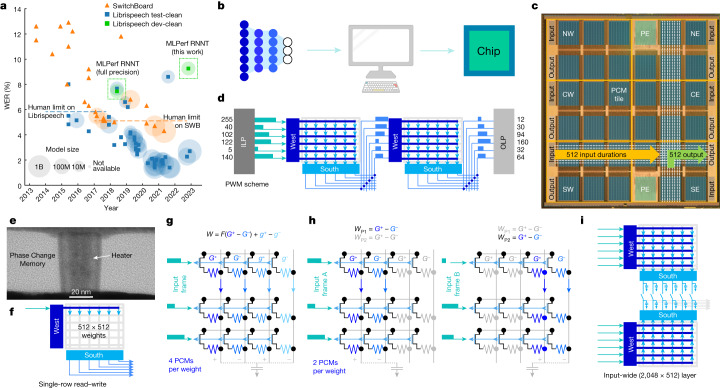
“In particular, transformer1 and recurrent neural-network transducer (RNNT)12,13,16 models containing up to one billion parameters2 have produced a marked decrease in word error rate (WER) (and therefore much better accuracy) for the automated transcription of spoken English-language sentences, as shown in Fig. 1a for two widely used datasets, Librispeech17 and SwitchBoard18.”
§ An analog-AI chip for energy-efficient speech recognition and transcription > Main
What the sources say
- Partly supportedcites [1] Vaswani, A. et al. Attention is all you need. In NIPS17: Proc. 31st Conference on Neural Information Processing Systems (eds. von Luxburg, U. et al.) 6000–6010 (Curran Associates, 2017). sourceExperimental — accuracy not yet measured
Our copy of Vaswani et al. (2017) is indeed the source of the Transformer architecture named in the citing sentence (Abstract, p. 1: 'We propose a new simple network architecture, the Transformer, based solely on attention mechanisms'; §1 Introduction, p. 2), so the identification part of the attribution holds. However, nothing in our copy supports the substantive part of the claim as phrased: the paper reports no automated speech transcription, no word error rate, and no LibriSpeech/SwitchBoard results — its quality gains are BLEU on WMT 2014 English-to-German (28.4) and English-to-French (41.8) machine translation (§6.1, p. 8; Table 2, §5.4, p. 8) plus English constituency parsing F1 (§6.3, pp. 9-10). Searches for 'word error rate / speech recognition / transcription' and for parameter counts returned only translation and parsing passages; the largest model described (Transformer (big), 6 layers, d_model 1024, Table 3, §6.2, p. 8) is nowhere stated as a one-billion-parameter model, so that magnitude and the ASR/WER outcome are not attributable to this source. (LLM, conf=0.72)
- Not checked — no full text of the sourcecites [12] Graves, A. Sequence transduction with recurrent neural networks. Preprint at https://arxiv.org/abs/1211.3711 (2012). source
- Supportedcites [13] Graves, A., Mohamed, A.-R. & Hinton, G. Speech recognition with deep recurrent neural networks. In Proc. 2013 IEEE International Conference on Acoustics, Speech and Signal Processing 6645–6649 (IEEE, 2013). source
The RNN Transducer section (p. 3) describes an RNN transducer for speech recognition, so the source supports the citation identifying that model type. The billion-parameter figure and the dataset-specific word-error-rate claim have separate citations in the citing sentence and are not attributed to this source. (LLM, conf=0.90)
- Partly supportedcites [16] Gulati, A. et al. Conformer: convolution-augmented transformer for speech recognition. Preprint at https://arxiv.org/abs/2005.08100 (2020). sourceExperimental — accuracy not yet measured
Our copy supports the WER half of the claim: Conformer, a convolution-augmented Transformer transducer for English ASR, is reported at state-of-the-art LibriSpeech WER of 2.1%/4.3% without LM and 1.9%/3.9% with an external LM (Abstract p. 1; §3.3 p. 3; Conclusion p. 4), beating the previously published Transformer Transducer. It does not support the 'up to one billion parameters' figure attached to this citation: §3.2 (p. 3) and Table 2 (p. 3) cap the models at 10.3M/30.7M/118.8M parameters, and the paper's thesis (§1 p. 1; Conclusion p. 4) is explicitly parameter efficiency — better accuracy with fewer parameters than prior work. The copy evaluates only LibriSpeech (no SwitchBoard), so any billion-scale or SwitchBoard element comes from other works, not this one. (LLM, conf=0.78)
- Supportedcites [2] Chan, W. et al. SpeechStew: simply mix all available speech recognition data to train one large neural network. Preprint at https://arxiv.org/abs/2104.02133 (2021). source
The citation is attached to the claim that the models contain up to one billion parameters. The Model section (p. 2) identifies SpeechStew as a Conformer RNN-T and says it uses a 1B-parameter configuration; the Experiments section (pp. 2–3) reports word error rates on LibriSpeech and Switchboard and describes its results as state-of-the-art or near state-of-the-art. (LLM, conf=0.90)
plainstates a cause- Asserted: passes — The authors put it forward as true.
- Checkable: passes — It can be checked against evidence.
- Load-bearing: passes — The paper’s conclusions depend on it.
- Based: passes — The paper gives a reason why it holds.
- Partly supported
The sources with a verdict support this claim; the rest weren’t checked yet, have no full text we could read, or their verdicts aren’t rated yet.
In the paper
“Analog-AI HW avoids these inefficiencies by leveraging arrays of non-volatile memory (NVM) to perform the ‘multiply and accumulate computation’ (MAC) operations which dominate these workloads directly in the memory3–7.”
§ An analog-AI chip for energy-efficient speech recognition and transcription > Main
What the sources say
- Not checked — no full text of the sourcecites [3] Ambrogio S Equivalent-accuracy accelerated neural-network training using analogue memory Nature 2018 558 60 67 10.1038/s41586-018-0180-5 29875487 source
- Supportedcites [4] Narayanan, P. et al. Fully on-chip MAC at 14 nm enabled by accurate row-wise programming of PCM-based weights and parallel vector-transport in duration-format. IEEE Trans. Electron. Devices68, 6629–6636 (2021). source
The Introduction (p. 1) explains that resistive NVM arrays accelerate MAC operations by performing multiplication and accumulation where the data is stored, avoiding costly transfers between processing units and off-chip memory. The Conclusion (p. 7) reports a chip implementing in-memory MAC on analog PCM arrays. (LLM, conf=0.94)
- Supportedcites [5] Khaddam-Aljameh R HERMES-core—a 1.59-TOPS/mm2 PCM on 14-nm CMOS in-memory compute core using 300-ps/LSB linearized CCO-based ADCs IEEE J. Solid-State Circuits 2022 57 1027 1038 10.1109/JSSC.2022.3140414 source
The Introduction (p. 1) says in-memory computing performs operations in the memory array, avoiding energy- and latency-costly data movement, and that matrix-vector multiplications dominate deep-neural-network inference. It explains that array rows supply inputs while columns sum partial products; the Introduction (p. 2) identifies nonvolatile PCM and ReRAM devices as suitable for these operations. (LLM, conf=0.93)
- Not checked — no full text of the sourcecites [6] Yao P Fully hardware-implemented memristor convolutional neural network Nature 2020 577 641 646 10.1038/s41586-020-1942-4 31996818 source
- Supportedcites [7] Wan W A compute-in-memory chip based on resistive random-access memory Nature 2022 608 504 512 10.1038/s41586-022-04992-8 35978128 PMC9385482 source
The Abstract (page not supplied) says the chip stores AI-model weights in non-volatile RRAM and performs computation directly within it, avoiding power-hungry movement between separate memory and compute units. The Main section (page not supplied) identifies that in-memory computation as matrix-vector multiplication, which consists of multiply-and-accumulate operations. (LLM, conf=0.90)
plainstates a cause- Asserted: passes — The authors put it forward as true.
- Checkable: passes — It can be checked against evidence.
- Load-bearing: passes — The paper’s conclusions depend on it.
- Based: passes — The paper gives a reason why it holds.
A result the paper states — it cites no source for it, so there is none to check. The quote shows it is in the paper.
In the paper
“We used a 14-nm analog inference chip to demonstrate SWeq end-to-end KWS on the Google Speech dataset using a fully analog set-up and a novel AB technique.”
§ An analog-AI chip for energy-efficient speech recognition and transcription > Conclusions
boosted- Asserted: passes — The authors put it forward as true.
- Checkable: passes — It can be checked against evidence.
- Load-bearing: passes — The paper’s conclusions depend on it.
- Based: passes — The paper gives a reason why it holds.
A result the paper reports from its own data — it cites no other source for it, so there is none to check. The quote shows it is in the paper.
In the paper
“Each audio frame requires 2.4 μs in total, in the form of 8 time steps of 300 ns each (Fig. 3e); this is 7 times faster than the best-case latency currently reported by MLPerf8.”
§ An analog-AI chip for energy-efficient speech recognition and transcription > KWS task
plain- Asserted: passes — The authors put it forward as true.
- Checkable: passes — It can be checked against evidence.
- Load-bearing: passes — The paper’s conclusions depend on it.
- Based: passes — The paper gives a reason why it holds.
48 more claims
Create a free account to see all 116 claims and to verify the 3 references still open.
- It may state two separate claims as one. 43
- Probably not a substantial claim. 24
- The quote only partly states this claim. 1
Claims other papers make about this one
Each is checked against this paper’s own text: does it say what the citing paper says it does?
In the citing paper
“The fact that analog neuromorphic hardware achieves order-of-magnitude energy savings over digital systems supports the plausibility of wave-based computation contributing to the brain's energy efficiency (Ambrogio et al., 2023;Ye et al., 2025).”
From Analog Cognition and Consciousness (2026) · cites this paper as Ambrogio et al., 2023
Citations
Cites
Vaswani, A., Shazeer, N., Parmar, N., Uszkoreit, J., Jones, L., Gomez, A. N., Kaiser, L., & Polosukhin, I. (2017) · arXiv · doi:10.48550/arxiv.1706.03762 · Cited by 120,404
LeCun, Y., Bengio, Y., & Hinton, G. (2015) · Nature · doi:10.1038/nature14539 · Cited by 84,126
Neural Machine Translation by Jointly Learning to Align and Translate
Bahdanau, D., Cho, K., & Bengio, Y. (2014) · arXiv · doi:10.48550/arxiv.1409.0473 · Cited by 16,213
Speech recognition with deep recurrent neural networks
Graves, A., Mohamed, A.-R., & Hinton, G. (2013) · 2013 IEEE International Conference on Acoustics, Speech and Signal Processing · doi:10.1109/icassp.2013.6638947 · Cited by 8,893 · cited 1×
“In particular, transformer 1 and recurrent neural-network transducer (RNNT) 12,13,16 models containing up to one billion parameters 2 have produced a marked decrease in word error rate (WER) (and therefore much better accuracy) for the automated transcription of spoken English-language sentences,…”
Background“Librispeech: an ASR corpus based on public domain audio books,”
Panayotov, V., Chen, G., Povey, D., & Khudanpur, S. (2015) · 2015 IEEE International Conference on Acoustics, Speech and Signal Processing (ICASSP) · doi:10.1109/icassp.2015.7178964 · Cited by 6,072 · cited 5×
“We then implemented the MLPerf version of RNNT, a large data-center network, on Librispeech without any additional HWA retraining.”
MethodInfluentialGraves, A., Fernández, S., Gomez, F., & Schmidhuber, J. (2006) · Proceedings of the 23rd international conference on Machine learning - ICML '06 · doi:10.1145/1143844.1143891 · Cited by 5,370
Conformer: Convolution-augmented Transformer for Speech Recognition
Gulati, A., Qin, J., Chiu, C.-C., Parmar, N., Zhang, Y., Yu, J., Han, W., Wang, S., Zhang, Z., Wu, Y., et al. (2020) · arXiv · doi:10.48550/arxiv.2005.08100 · Cited by 3,150 · cited 2×
“In particular, transformer 1 and recurrent neural-network transducer (RNNT) 12,13,16 models containing up to one billion parameters 2 have produced a marked decrease in word error rate (WER) (and therefore much better accuracy) for the automated transcription of spoken English-language sentences,…”
BackgroundConformer: Convolution-augmented Transformer for Speech Recognition
Gulati, A., Qin, J., Chiu, C.-C., Parmar, N., Zhang, Y., Yu, J., Han, W., Wang, S., Zhang, Z., Wu, Y., et al. (2020) · Interspeech 2020 · doi:10.21437/interspeech.2020-3015 · Cited by 3,150 · cited 2×
“In particular, transformer 1 and recurrent neural-network transducer (RNNT) 12,13,16 models containing up to one billion parameters 2 have produced a marked decrease in word error rate (WER) (and therefore much better accuracy) for the automated transcription of spoken English-language sentences,…”
BackgroundContext-dependent pre-trained deep neural networks for large-vocabulary speech recognition
Dahl, G. E., Yu, D., Deng, L., & Acero, A. (2012) · IEEE Transactions on Audio Speech and Language Processing · doi:10.1109/tasl.2011.2134090 · Cited by 3,011 · cited 1×
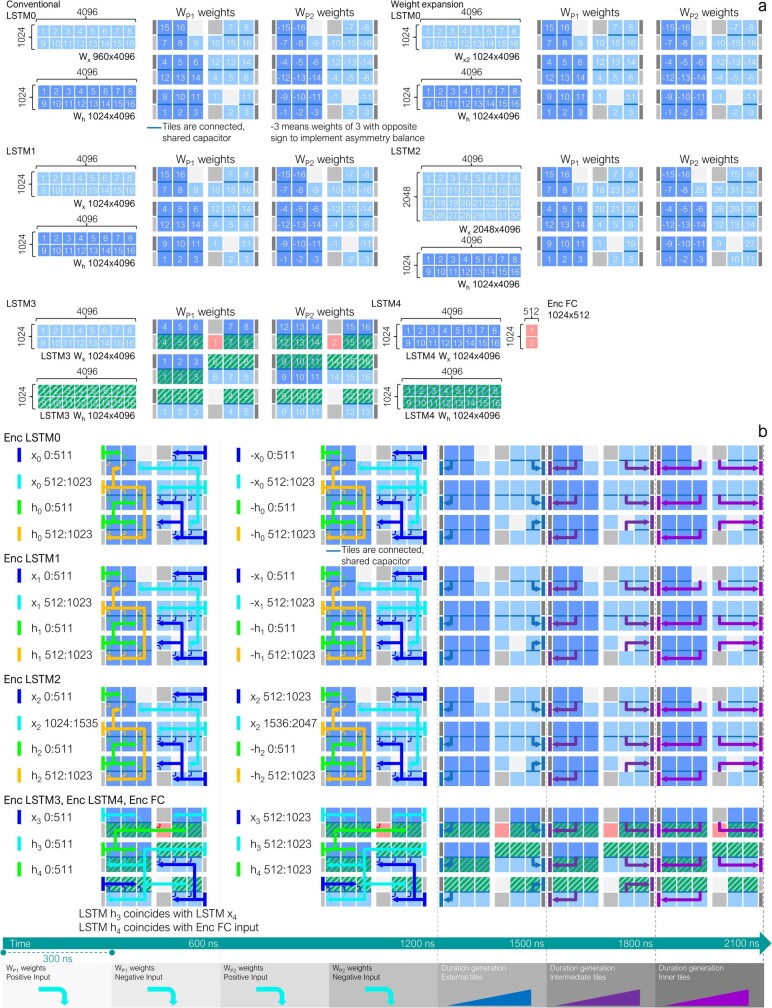
“Furthermore, blocks 1(−1), 9(−9) and 2(−2), 10(−10) of Enc-LSTM0 Wx and Enc-LSTM1 Wx, and blocks 1(9), 17(25) (WP1(WP2)) and 2(10), 18(26) were summed in digital after on-chip analog MAC.”
MethodHuBERT: Self-Supervised Speech Representation Learning by Masked Prediction of Hidden Units
Hsu, W.-N., Bolte, B., Tsai, Y.-H. H., Lakhotia, K., Salakhutdinov, R., & Mohamed, A. (2021) · IEEE/ACM Transactions on Audio, Speech, and Language Processing · doi:10.1109/taslp.2021.3122291 · Cited by 2,983
Cited by
Items 101–200 of 242
Reliability-Enhanced Reverse Forming Operation Scheme for Analog Resistive Random-Access Memory
Jiang, Z., Xi, Y., Lu, Y., Tang, J., Hu, R., Du, Y., Gao, B., Qian, H., & Wu, H. (2024) · IEEE Electron Device Letters · doi:10.1109/led.2024.3521924 · Cited by 5
“However, post-programming conductance instability, known as relaxation, poses a reliability challenge for practical applications, especially for analog CIM that demands multi-bit precision [7], [8], [9], [10], [11].”
13.6 A Via-Programmable DNN-Processor Fabrication Toward 1/40 th Mask Cost
Shin, J., Sumikawa, R., Li, D., Hamada, M., & Kosuge, A. (2025) · Digest of technical papers/Digest of technical papers - IEEE International Solid-State Circuits Conference · doi:10.1109/isscc49661.2025.10904711 · Cited by 5
“For example, four 64×64 tiles can be used to form a single 128-channel conv.”
Resistance Drift of Phase Change Materials Beyond the Power Law
Ballmaier, J., Walfort, S., & Salinga, M. (2025) · Advanced Electronic Materials · doi:10.1002/aelm.202400905 · Cited by 4
Reliable multi-level cell programming in FeFET arrays for in-memory computing
Vardar, A., Günther, M., Müller, F., Laleni, N., Seidel, K., & Kämpfe, T. (2025) · Japanese Journal of Applied Physics · doi:10.35848/1347-4065/adc745 · Cited by 6
“Among emerging memory technologies such as resistive RAM, 4,5) magnetic RAM, 6,7) phase-change memory 8,9) and ferroelectric memories, including FeFETs, 10 – 12 In this work, we focus on FeFETs due to their superior performance compared to other NVM options.”
Ultrahigh-precision analog computing using memory-switching geometric ratio of transistors
Yangdong, X.-J., Wang, C., Zhao, Y., Wang, Z.-C., Yang, Z., Liu, Z., Yu, W., Zeng, Z., Wang, S., Wei, W., et al. (2025) · Science Advances · doi:10.1126/sciadv.ady4798 · Cited by 6
“S7), similar to that of the AIMC hardware reported in ( 33 , 42 , 45 ).”
Beyond zeros and ones – analog computing in the twenty-first century
Ulmann, B. (2023) · International Journal of Parallel Emergent and Distributed Systems · doi:10.1080/17445760.2023.2296672 · Cited by 4
Evidence for Ge2Sb2Te5 phase formation upon crystallization of Ge-doped Sb2Te3 phase change films
Miao, L., & Chen, L. (2024) · Vacuum · doi:10.1016/j.vacuum.2024.113411 · Cited by 4
The logarithmic memristor-based Bayesian machine
Turck, C., Harabi, K.-E., Pontlevy, A., Ballet, T., Hirtzlin, T., Vianello, E., Laurent, R., Droulez, J., Bessìère, P., Bocquet, M., et al. (2025) · Communications Engineering · doi:10.1038/s44172-025-00360-2 · Cited by 9
Kernel approximation using analogue in-memory computing
Büchel, J., Camposampiero, G., Vasilopoulos, A., Lammie, C., Gallo, M. L., Rahimi, A., & Sebastian, A. (2024) · Nature Machine Intelligence · doi:10.1038/s42256-024-00943-2 · Cited by 8
Analog Cognition and Consciousness
Miller, E. K., Brincat, S. L., & Roy, J. E. (2026) · The Journal of Neuroscience · doi:10.1523/jneurosci.0711-26.2026 · Cited by 4
Physics solves a training problem for artificial neural networks
Querlioz, D. (2024) · Nature · doi:10.1038/d41586-024-02392-8 · Cited by 3
Memristors enabling probabilistic AI at the edge
Querlioz, D. (2025) · Nature Computational Science · doi:10.1038/s43588-024-00761-x · Cited by 3
Zhang, J., Wei, Q., Huo, D., et al. (2024) · IEEE Asian Solid-State Circuits Conference (A-SSCC) · doi:10.1109/a-sscc60305.2024.10848953 · Cited by 3
Tsuda, K., Furutani, K., Yakubo, Y., Godo, H., Ando, Y., Kosuge, A., Nakura, T., & Yamazaki, S. (2024) · IEEE Journal of the Electron Devices Society · doi:10.1109/jeds.2024.3439712 · Cited by 3
“While [12] requires the additional steps of sampling and V-T conversion after each layer’s MAC operation, our AiMC does not require sequential sampling between layers (details will be discussed later).”
BackgroundMethodHasler, J., & Basu, A. (2025) · Neuromorphic Computing and Engineering · doi:10.1088/2634-4386/ad9b4a · Cited by 4
“Ramp ADCs can create analog pulse widths [148, 197] which can be transmitted to the later stages to replace the DACs at the input of the next stage; this results in significant savings in energy and area.”
Analog Computing for Nonlinear Shock Tube PDE Models: Test and Measurement of CMOS Chip
Malavipathirana, H., Mandal, S., Udayanga, N., Wang, Y., Hariharan, S. I., & Madanayake, A. (2024) · IEEE Access · doi:10.1109/access.2024.3524500 · Cited by 4
Giacomo, S. D., Ronchi, M., Amadori, M., Borghi, G., Carminati, M., & Fiorini, C. E. (2025) · IEEE Transactions on Radiation and Plasma Medical Sciences · doi:10.1109/trpms.2025.3530774 · Cited by 4
“Investigation on emerging memory technologies and devices for cross-point operations is the focus of many researches that include resistive switching RAM (RRAM, also known as memristors) [4], [5], [6], [7], [8], phase-change memory (PCM) [9], [10], [11], and ferroelectric capacitors [12], [13].”
Борисович, Р. Р., Davydov, Y., Vlasov, D., Serenko, A., Sboev, A. G., & Ilyin, V. (2024) · Big Data and Cognitive Computing · doi:10.3390/bdcc8030022 · Cited by 5
“The most prominent one arises from the hardware implementation of synapses, where every neuron can have only a limited amount of synapses [4–6], thus imposing limitations on the number of weights that a given network may have.”
BackgroundHayakawa, R., Yamamoto, Y., Yoshikawa, K., Yamada, Y., & Wakayama, Y. (2025) · Journal of Materials Chemistry C · doi:10.1039/d5tc01712b · Cited by 5
Lim, J. G., Lee, S. M., Park, S.-B., Kwak, J. Y., Jeong, Y., Kim, J., Lee, S., Park, J., Hwang, G. W., Lee, K.-S., et al. (2025) · Frontiers in Neuroscience · doi:10.3389/fnins.2025.1516971 · Cited by 3
“Extensive validation by numerous researchers has also reported the fabrication and validation of memristor chips that are capable of being applied to real-world tasks, including speech recognition, image classification, and motion control (Zhang et al., 2023; Ambrogio et al., 2023).”
Tsai, H.-Y. S., Benmeziane, H., Boybat, I., Büchel, J., Narayanan, P., Gallo, M. L., Jain, S., Vasilopoulos, A., Simon, W., Hosokawa, K., et al. (2025) · IEEE International Memory Workshop (IMW) · doi:10.1109/imw61990.2025.11026974 · Cited by 3
“Several NVM has been used to demonstrate AIMC, including phase chase memory (PCM) [12], [13], resistive random access memory (ReRAM) [10], magnetoresistive random access memory (MRAM) [14], electrochemical random access memory (ECRAM) [15], optical memory [16], NOR [17] and NAND [18] flash memory.”
Self-citationSuper-Turing synaptic resistor circuits for intelligent morphing wing
Deo, A., Lee, J., Gao, D., Shenoy, R., Haughn, K. P. T., Rong, Z., Hei, Y., Qiao, D., Topac, T., Chang, F., et al. (2025) · Communications Engineering · doi:10.1038/s44172-025-00437-y · Cited by 3
Şanlı, İ., Ferro, E., Vasilopoulos, A., Boesch, T., Sebastian, A., & Boybat, I. (2025) · IEEE International Symposium on Circuits and Systems proceedings · doi:10.1109/iscas56072.2025.11043396 · Cited by 2
“Prior studies demonstrated AIMC hardware macros with relatively large memory crossbars [3]–[5].”
Zhong, M., Zheng, Y., Che, Y., Gan, Y., Qin, Q., Wang, X., Ding, K., Cheng, Y., & Rao, F. (2025) · Small · doi:10.1002/smll.202505264 · Cited by 2
Bayesian electronics for trustworthy artificial intelligence
Querlioz, D., & Vianello, E. (2025) · Nature Reviews Electrical Engineering · doi:10.1038/s44287-025-00226-x · Cited by 8
“These devices — such as memristors 15–17 , phase-change memory 18,19 or spintronic devices 20 — support in-memory computing, in which operations occur where the data are stored, drastically reducing the energy cost of moving data between separate memory and processing units 21 .”
Disaggregated machine learning via in-physics computing at radio frequency
Gao, Z., Vadlamani, S. K., Sulimany, K., Englund, D. R., & Chen, T. (2026) · Science Advances · doi:10.1126/sciadv.adz0817 · Cited by 13
“While these approaches have demonstrated promising energy efficiency gains ( 11 , 20 , 26 , 28 , 29 ), they often require specialized photonic or electronic hardware, limiting their practicality and scalability for large-scale deployments.”
Bioinspired spiking architecture enables energy constrained touch encoding
Ortone, A., Filosa, M., Indiveri, G., Desoli, G., Mazzoni, A., & Oddo, C. M. (2026) · Nature Communications · doi:10.1038/s41467-026-68858-7 · Cited by 10
“This approach supports distributed computationsondigital-analogprocessors,whichrepresentavaluable perspective for future energy-ef fi cient AI solutions 41,42 .”
Kim, Y. W., An, Y.-J., Kim, S.-H., Kim, Y.-B., Kim, D.-M., Gautam, S. K., Ban, S.-H., Lee, J.-H., Yeom, J.-H., Kim, K., et al. (2026) · ACS Applied Electronic Materials · doi:10.1021/acsaelm.5c02491 · Cited by 3
The role of chemical bonds in polarity-dependent threshold switching of chalcogenide glass
Yuan, S., Xu, M., Yan, Y., Tang, S., Xu, Q., Xu, M., & Miao, X. (2026) · Applied Materials Today · doi:10.1016/j.apmt.2026.103342 · Cited by 2
Brain-inspired neuromorphic electronics of 2D materials: synapses to hardware systems
Elahi, E., Khan, M. F., Asim, M., Assiri, M. A., Aziz, J., Jamil, M., & Sofer, Z. (2026) · Coordination Chemistry Reviews · doi:10.1016/j.ccr.2026.218310 · Cited by 2
S‐parameter extraction for electromagnetic modelling of memristor‐based crossbar array circuits
Yu, J., Ma, H., Tao, T., Zhang, L., Li, D., & Li, E. (2024) · Electronics Letters · doi:10.1049/ell2.13089 · Cited by 2
Grand challenges in neuromorphic photonics and photonic computing
Morichetti, F. (2024) · Frontiers in Photonics · doi:10.3389/fphot.2023.1336510 · Cited by 3
Transforming edge hardware with in situ learning features
Yao, P., Gao, B., & Wu, H. (2024) · Nature Reviews Electrical Engineering · doi:10.1038/s44287-024-00031-y · Cited by 3
“To address the notable challenge of efficiently mitigating noise and error effects while maintaining high energy efficiency, innovative technologies such as layer-by-layer fine tuning and hardware-aware ex situ training have been proposed through systematic co-optimization techniques 3–5 .”
Prien, T., & Goldhammer, K. (2024) · Springer eBooks · doi:10.1007/978-3-658-34048-3_89-1 · Cited by 10
Sensor-based IoT data privacy protection
Ji, X., Zhu, W., Xiao, S., & Xu, W. (2024) · Nature Reviews Electrical Engineering · doi:10.1038/s44287-024-00073-2 · Cited by 2
“To tackle this, researchers continue to develop lightweight algorithms and powerful yet energy-efficient hardware 6 .”
Error compensated MOF-based ReRAM array for encrypted logical operations
Bachinin, S. V., Rzhevskiy, S. S., Sergeev, I., Povarov, S. A., Kulakova, A. N., Lubimova, A., Kharitonova, V., & Milichko, V. A. (2024) · Dalton Transactions · doi:10.1039/d4dt02880e · Cited by 2
Pattern memory cannot be completely and truly realized in deep neural networks
Li, T., Lyu, R., & Xie, Z. (2024) · Scientific Reports · doi:10.1038/s41598-024-80647-0 · Cited by 2
Huang, W.-H., Lee, W., Kim, J. S., Koo, W., Suh, D. I., Lee, S., Yi, J., Cha, S. Y., & Yu, S. (2024) · IEEE Transactions on Electron Devices · doi:10.1109/ted.2024.3516731 · Cited by 4
Efficient Large Scale Neural Network Acceleration With 3-D FeNOR-Based Computing-in-Memory Design
Feng, Y., Zhang, D., Sun, C., et al. (2025) · IEEE Transactions on Electron Devices · doi:10.1109/ted.2025.3554164 · Cited by 2
“D FeNOR demonstrates competitive performance relative to other reported works [37], [38], [39], [40], [41], [42], [43], [44].”
Liu, S., Sun, T., & Li, Y. (2025) · Science China Materials · doi:10.1007/s40843-025-3342-5 · Cited by 2
“network (NN)-based classification tasks [6–8].”
Sakemi, Y., Okamoto, Y., Morie, T., Nobukawa, S., Hosomi, T., & Aihara, K. (2025) · Advanced Intelligent Systems · doi:10.1002/aisy.202500351 · Cited by 4
A canonical cortical electronic circuit for neuromorphic intelligencePreprint
Maryada, M., Luca, C. D., Rubino, A., Wen, C., Cartiglia, M., Fodorut, I.-I., Payvand, M., & Indiveri, G. (2025) · bioRxiv (Cold Spring Harbor Laboratory) · doi:10.1101/2025.03.28.646019 · Cited by 6
Which Coupled is Best Coupled? An Exploration of AIMC Tile Interfaces and Load Balancing for CNNs
Klein, J. A. H., Boybat, I., Ansaloni, G., Zapater, M., & Atienza, D. (2024) · IEEE Transactions on Parallel and Distributed Systems · doi:10.1109/tpds.2024.3437657 · Cited by 2
“AIMC acceleration is actively explored for deep neural network (DNN) inference workloads, evident from recent multi-tile AIMC prototypes [12], [13], [20], [21].”
BackgroundCapacitance and Conductance Compensation Methods for Efficient Computing‐In‐Memory Designs
Luo, Y., Qiao, F., & Sun, Z. (2024) · Advanced Electronic Materials · doi:10.1002/aelm.202400452 · Cited by 1
Prien, T., & Goldhammer, K. (2024) · Springer eBooks · doi:10.1007/978-3-658-39909-2_89 · Cited by 3
Mao, X., Zhang, Y., Xi, C., Qian, C., Gao, Y., Xuan, X., Niu, Y., Gong, S., & Qian, M. (2025) · Physical Review Applied · doi:10.1103/physrevapplied.23.054010 · Cited by 1
Shankar, V. (2024) · International Conference on Signal Processing, Communication, Power and Embedded System (SCOPES) · doi:10.1109/scopes64467.2024.10991015 · Cited by 1
“Neuromorphic chips which mimic the brain's neural networks, offer low-power, event-driven processing for tasks such as sensory perception and pattern recognition [4-5].”
Genetic Algorithm-Driven IMC Mapping for CNNs Using Mixed Quantization and MLC FeFETs
Vardar, A., Müller, F., Cuñarro, G., Laleni, N., Yadav, N., & Kämpfe, T. (2025) · Design, Automation, and Test in Europe · doi:10.23919/date64628.2025.10992694 · Cited by 1
“Among the various NVM candidates, technologies such as Resistive RAM (RRAM) [3], Magnetoresistive RAM [4], and Phase-Change Memory (PCM) [5] have been explored for their suitability in edge AI applications.”
Circuit design of in-situ training memristive backpropagation neural network
Yang, L., Cheng, M., & Su, T. (2025) · AEU - International Journal of Electronics and Communications · doi:10.1016/j.aeue.2025.155919 · Cited by 1
Phase‐Change‐Assisted Electrostatic Doping Enabling Nonvolatile Programmability of 2D Materials
Liu, T., Wang, H., Zhang, Z., et al. (2025) · Small · doi:10.1002/smll.202501923 · Cited by 1
The development and evolution of inner speech: Hippocampal contribution
Aboitiz, F., Henríquez-Ch, R., & Álamos, F. (2025) · Medical Hypotheses · doi:10.1016/j.mehy.2025.111739 · Cited by 2
Park, M., Chien, H.-T., Chen, W.-C., Mimi, A. A., Wan, W., Woo, K. S., Yi, S., & Kumar, S. (2025) · npj Unconventional Computing · doi:10.1038/s44335-025-00035-3 · Cited by 4
Wang, Q., Tamukoh, H., & Morie, T. (2025) · Frontiers in Neuroscience · doi:10.3389/fnins.2025.1656892 · Cited by 3
Photonic Compute-in-Wire: Remotely Driven Photonic Deep Neural Network with a Single Nonlinear Loop
Nakajima, M., Kawakami, S., Inoue, K., Nakajima, K., & Hashimoto, T. (2025) · Advanced Devices & Instrumentation · doi:10.34133/adi.0121 · Cited by 1
Memory-Efficient Spiking Neural Networks Using MLC FeFETs and Mixed Quantization
Vardar, A., Müller, F., Cuñarro, G., Laleni, N., Yadav, N., & Kämpfe, T. (2025) · IEEE International Conference on Artificial Intelligence Circuits and Systems (AICAS) · doi:10.1109/aicas64808.2025.11173115 · Cited by 1
“Non-volatile memories (NVMs) such as Resistive RAM (RRAM) [5], Magnetoresistive RAM (MRAM) [6], and Phase-Change Memory (PCM) [7] offer promising solutions, with Ferroelectric Field-Effect Transistors (FeFETs) standing out due to their low power, fast switching, and non-volatility [8] [9] [10].”
Evolution of Neural Network Models and Computing-in-Memory Architectures
Kumar, A., Devi, M., Singh, S. K., Singh, K., & Mishra, D. (2025) · Archives of Computational Methods in Engineering · doi:10.1007/s11831-025-10481-8 · Cited by 3
Zhenhao, J. I. A. O., Chen, X., Tao, H. O. N. G., Li, S., Li, X., Dai, W., Chengcai, T. U., & Song, Z. (2026) · Journal of Systems Architecture · doi:10.1016/j.sysarc.2026.103683 · Cited by 1
Disc-type phase-change memory devices for analog in-memory computing
Syed, G. S., Philicelli, T., Luchtenveld, J., Jonnalagadda, V. P., Gautam, S., Brew, K. W., Kooi, B. J., Narayanan, V., Saulnier, N., & Sebastian, A. (2025) · Technical digest - International Electron Devices Meeting/Technical digest · doi:10.1109/iedm50572.2025.11353669 · Cited by 1
Self-citationHe, C., Jiang, M., Shan, K., Yang, S., Li, Z., Wang, S., Pedretti, G., Ignowski, J., & Li, C. (2026) · Nature Communications · doi:10.1038/s41467-026-69958-0 · Cited by 4
Phase‐Change Memory for Cryogenic In‐Memory Computing
Lombardo, D., Gautam, S., Ferraris, A., Gallo, M. L., Bragaglia, V., Sebastian, A., & Sarwat, S. G. (2026) · Advanced Functional Materials · doi:10.1002/adfm.202525704 · Cited by 5
Ferro, E., Ottaviano, A., Lammie, C., İslamoğlu, G., Garofalo, A., Conti, F., Boesch, T., Benini, L., Sebastian, A., & Boybat, I. (2026) · IEEE Transactions on Circuits and Systems I Regular Papers · doi:10.1109/tcsi.2026.3692104 · Cited by 1
“Non-volatile memory-based ACIM implementations with fully stationary weights are attractive for DL inference due to their high density and area e ffi ciency [11], [14], [15], [16], [17], [18].”
An efficient probabilistic hardware architecture for diffusion-like models
Jelincic, A., Lockwood, O., Garlapati, A., Schillinger, P., Chuang, I., Verdon, G., & McCourt, T. (2025) · npj Unconventional Computing · doi:10.1038/s44335-026-00075-3 · Cited by 22
“Active efforts include mixed-signal compute-in-memory accelerators 15 , photonic neural networks 16 ,andneuromorphicprocessorsthatemulatebiologicalspiking 17,18 .”
Low-Voltage Resistive Switching and Synaptic Plasticity in Cs2AgBiBr6 Memristors
Miao, Z., Kadid, A., Löwen, A., Kolluru, N., Tückmantel, C., Maschwitz, T., Kreusel, C., Aziz, J., Janicke, S., Wu, B., et al. (2026) · ACS Applied Materials & Interfaces · doi:10.1021/acsami.6c03660 · Cited by 3
Application of memristors for efficient neuromorphic computing in tactile sensing
Liu, X., Bao, R., & Pan, C. (2026) · Journal of Semiconductors · doi:10.1088/1674-4926/26050022 · Cited by 1
Double descent without digital computation
Dillavou, S., Rocks, J. W., Wycoff, J. F., Liu, A. J., & Durian, D. J. (2026) · Proceedings of the National Academy of Sciences · doi:10.1073/pnas.2604421123 · Cited by 1
SURFACTANT-FREE SILVER NANOFLUIDS As LIQUID SYSTEMS WITH NEUROMORPHIC POTENTIAL
Nikitin, D., Biliak, K., Lemke, J., et al. (2023) · NANOCOM ... · doi:10.37904/nanocon.2023.4748 · Cited by 1
Dosho, S., Minati, L., Maari, K., et al. (2024) · IEEE Transactions on Very Large Scale Integration (VLSI) Systems · doi:10.1109/tvlsi.2024.3453314 · Cited by 1
“Edge artificial intelligence (AI) [1], [2], [3], [4], [5], precisely tailored for voice recognition, is undergoing accelerated development.”
Software and hardware co-design of AI high-rate chips for parallel training of edge intelligence
Li, H., Ling, Z., & Yang, C. (2024) · Intelligent Decision Technologies · doi:10.3233/idt-240112 · Cited by 1
“…intelligence accelerator or compute card, is an artificial intelligence accelerated computing module that is specifically designed to handle the various algorithms involved in AI applications, while other non-AI accelerated computing tasks remain the responsibility of the central processor [1].”
Fine spatial-temporal density mapping with optimized approaches for many-core system
Wang, S., Gao, Y., Seng, B., Pei, J., Zhang, Y., & Huang, J. (2025) · Frontiers in Neuroscience · doi:10.3389/fnins.2025.1512926 · Cited by 1
Analog-AI Hardware Accelerators for Low-Latency Transformer-Based Language Models (Invited)
Burr, G. W., Tsai, H.-Y. S., Boybat, I., Simon, W., Büchel, J., Vasilopoulos, A., Narayanan, P., Fasoli, A., Hosokawa, K., Gallo, M. L., et al. (2025) · Custom Integrated Circuits Conference · doi:10.1109/cicc63670.2025.10983594 · Cited by 1
“2a ) was demonstrated [28], using 5 chips to encode 45M weights using >140M PCM devices.”
Self-citationComputer Architecture and Chip Design for DIKWP Artificial Consciousness
Wu, K., Duan, Y., Chen, L., Li, Y., & Qi, Q. (2023) · IEEE International Conference on High Performance Computing and Communications; IEEE International Conference on Smart City; IEEE International Conference on Data Science and Systems (HPCC/SmartCity/DSS) · doi:10.1109/hpcc-dss-smartcity-dependsys60770.2023.00155 · Cited by 1
Simulating Hybrid Analog + RISC-V Systems for HPC Applications
Durbin, C., Flores, J. M. G.-C., Weatherly, T., & Feinberg, B. (2025) · International Conference for High Performance Computing, Networking, Storage and Analysis (SC) · doi:10.1145/3731599.3767532
Evidence for Ge2sb2te5 Phase Formation Upon Crystallization of Ge-Doped Sb2te3 Phase Change FilmsPreprint
Miao, L., & Chen, L. (2024) · SSRN Electronic Journal · doi:10.2139/ssrn.4770160
Dual In-Memory Computing of Matrix-Vector MultiplicationPreprint
Wang, S., & Sun, Z. (2024) · SSRN Electronic Journal · doi:10.2139/ssrn.4821734
Han, L., Huang, P. C., Zhou, Z., Chen, Y., Yang, H., Liu, X., & Kang, J. (2024) · Design, Automation, and Test in Europe · doi:10.23919/date58400.2024.10546661
“Extensive research on nvCIM macros[1, 2], architectures [3, 4], and system demonstrations [5, 6] have confirmed the potential of nvCIM chips to achieve 10~1000 × throughput improvement than von Neumann processors.”
BackgroundFrom Device to Application - Integrating RRAM Accelerator Blocks into Large AI Systems
Fritscher, M., Wenger, C., & Krstic, M. D. (2024) · IEEE Computer Society Annual Symposium on VLSI · doi:10.1109/isvlsi61997.2024.00111
Photosensitive Memristors Based on Nanocomposite Parylene- MoOx
Trofimov, A. D., Несмелов, А. А., & Emelyanov, A. V. (2024) · International Conference Neurotechnologies and Neurointerfaces (CNN) · doi:10.1109/cnn63506.2024.10705864
“To increase energy efficiency and computing throughput in solving these tasks, so-called neuromorphic computing systems (NCSs) are being intensively developed[1].”
BackgroundZhang, L. (2024) · Applied and Computational Mathematics · doi:10.11648/j.acm.20241305.17
Research Progress of Neuromorphic Chips
Fan, L. (2025) · Applied and Computational Engineering · doi:10.54254/2755-2721/2025.19928
Kim, S., Byun, J., Kim, H., Son, J., & Kim, S. (2025) · IEEE Transactions on Electron Devices · doi:10.1109/ted.2025.3566348
Miao, S., Zhu, L., Wu, C.-L., Lu, S., Lyu, J., & He, L. (2025) · IEEE International Symposium on Field-Programmable Custom Computing Machines (FCCM) · doi:10.1109/fccm62733.2025.00033
“A RCHITECTURE E VALUATIONS We evaluate C2OPU using a variety of Transformer-based models on GLUE benchmark, and compare C2OPU with an Intel Xeon Gold 6348 CPU, an NVIDIA A100 GPU, and SOTA CIM processors including Science23 [2], Nature23 [3], and VLSI24 [4], summarized in Table I.”
Shi, L., Lu, Y., Zhou, Y. X., et al. (2025) · doi:10.1109/icaid65275.2025.11034511
Weng, J. (2025) · Proceedings of the 2025 International Conference on Artificial Intelligence and Computational Intelligence · doi:10.1145/3730436.3745779
A Hybrid Encryption Framework for Federated Learning Accelerated on RRAM
Li, L., Mou, X., Ren, J., Yang, Q., & Wang, Y. (2025) · International Symposium of Electronics Design Automation (ISEDA) · doi:10.1109/iseda65950.2025.11100980
“RRAM enables large-scale parallel computation, significantly improving the speed of matrix operations and multiply-accumulate calculations essential for cryptographic algorithms [6], [7].”
Yu, R., Zou, C., Li, J., Gao, B., Tang, J., Qian, H., & Wu, H. (2025) · IEEE Transactions on Computer-Aided Design of Integrated Circuits and Systems · doi:10.1109/tcad.2025.3600366
“Now, the reported memristor chips (up to 17.5 M on-chip weights) [16] are already capable of accommodating all the weights of typical CNN networks, such as ResNet-18 (11.69 M) [1] and YOLOv5s-seg (7.6 M) [17], enabling highly efficient inference processes for CNN tasks.”
InfluentialSOLO: Spatial Online Learning at Once for Spiking Neural NetworksPreprint
Lee, S., Moon, H., Yoon, M., et al. (2025) · SSRN Electronic Journal · doi:10.2139/ssrn.5413758
Energy-Optimal Control of Generalized Laguerre Neural Network
Hou, C. (2025) · IEEE Transactions on Automation Science and Engineering · doi:10.1109/tase.2025.3617782
“This dual constraint creates a critical design dilemma [8], [9], [10], [11], [12], [13], [14], [15]: Suboptimal GLP activation not only degrades approximation accuracy but also wastes limited energy.”
InfluentialPioneering real-time genomic analysis by in-memory computing
Zhu, K., & Lanza, M. (2025) · Nature Computational Science · doi:10.1038/s43588-025-00883-w
Oko-Odion, E., Bruce, I., Darko, E. N., Crabb, M., & Chen, D. J. (2025) · Signals · doi:10.3390/signals6040065
“A notable example is the phase-change memory-based AI accelerator published in [9], where on-chip DACs played a pivotal role in determining computational precision and power efficiency.”
Kiener, M., Bozenhard, J., Kutyniok, G., & Nyholm, S. R. (2025) · AI and Ethics · doi:10.1007/s43681-025-00884-5 · Cited by 2
“● Shorter opinion pieces, blogs, and research articles [1] that gesture at analog AI’s energy benefits [ 20]; IBM-Research [21, 22] and thus also motivate further ethical sustainability-related research.”
A Dimensional Order Search Based Mapping Algorithm for Deploying DNNs Onto Many-Core Neuromorphic IC
Wang, S., Lu, R., Xiao, B., Wang, Z., Guo, Y., Sun, X., & Yu, W. (2025) · IEEE Transactions on Computer-Aided Design of Integrated Circuits and Systems · doi:10.1109/tcad.2025.3640508
“D mesh configuration due to its demonstrated advantages in high throughput and scalability, as evidenced by numerous studies [5], [6], [7], [8], [9], [10], [17], [21], [22].”
Neuromorphic Computing With Emerging Memories
Zhao, R., & Yang, J. J. (2025) · Computer · doi:10.1109/mc.2025.3615214
“49 Taiwan Semiconductor Manufacturing Company has explored hybrid architectures that fuze mixed-precision analog memory and digital static random access memory (SRAM) blocks to balance component density and representation accuracy.”
Accelerating hybrid XOR–CNF Boolean satisfiability problems natively with in-memory computing
Im, H., Böhm, F., Pedretti, G., Kushida, N., Noori, M., Valiante, E., Zhang, X., Yang, C., Bhattacharya, T., Sheng, X., et al. (2026) · Nature Communications · doi:10.1038/s41467-026-69465-2 · Cited by 5
“Current IMC hardware capable of dense matrix–vector operations could support the computations in our architecture for SAT problems with up to ∼ 250 variables and ∼ 500 clauses within a single array [46].”
Sakemi, Y., Awano, H., & Morie, T. (2025) · IEICE Transactions on Fundamentals of Electronics Communications and Computer Sciences · doi:10.1587/transfun.2025gci0001 · Cited by 2
Yang, J., Luo, X., Ke, Y., Wang, Z., Shang, H., Dong, S., Fu, Z., Yang, X., Liu, H., & Basu, A. (2025) · IEEE Journal of Solid-State Circuits · doi:10.1109/jssc.2025.3638445 · Cited by 5
“During the data preprocessing phase, the GSCD [45] dataset serves as the foundation for model development.”
A Segmented Voltage-to-Pulse-Width Converter Circuit for RRAM Based Compute-in-Memory Macro
Nie, Y., Liu, H., Yang, W., & Chen, C. (2025) · International Conference on Electronic Engineering and Informatics (EEI) · doi:10.1109/eei67650.2025.11334884
“Another alternative for word-wise input is the Pulse-Width Modulation (PWM) [1], [12], [13] that encodes inputs as pulses with variable duration.”
THE EMERGENCE OF THE MODERN HUMAN MIND: INNER SPEECH AND ITS LINK TO MEMORY MECHANISMSPreprint
Aboitiz, F., Parada-Palma, J., Álamos, F., & Henríquez-Ch, R. (2026) · SSRN Electronic Journal · doi:10.2139/ssrn.6226770
NeoHebbian synapses to accelerate online training of neuromorphic hardware
Pande, S. R., Bezugam, S. S., Bhattacharya, T., Wlaźlak, E., Chakravorty, A., Chakrabarti, B., & Strukov, D. B. (2026) · Scientific Reports · doi:10.1038/s41598-026-35641-z
Accelerating hybrid XOR–CNF Boolean satisfiability problems natively with in-memory computing
Im, H., Böhm, F., Ignowski, J., Heittmann, A., Strachan, J. P., Mohseni, M., Beausoleil, R. G., Vaerenbergh, T. V., Rozada, I., Pedretti, G., et al. (2026) · RWTH Publications (RWTH Aachen)
Metadata
- Authors
- Ambrogio, S., Narayanan, P., Okazaki, A., Fasoli, A., Mackin, C., Hosokawa, K., Nomura, A., Yasuda, T., Chen, A., Friz, A., Ishii, M., Luquin, J., Kohda, Y., Saulnier, N., Brew, K., Choi, S., Ok, I., Philip, T., Chan, V., Silvestre, C., Ahsan, I., Narayanan, V., Tsai, H., & Burr, G. W.
- Affiliations
- IBM Research - Almaden (US)
- IBM Research - Tokyo (JP)
- IBM Research - Albany (US)
- IBM Research - Thomas J. Watson Research Center (US)
- Corresponding author
- Ambrogio, S.
- ORCID
- Venue
- Nature
- Published
- 2023-08-23
- Volume
- 620
- Issue
- 7975
- Pages
- 768-775
- ISSN
- 0028-0836 (ISSN-L)
- 1476-4687
- PMC
- PMC10447234
- OpenAlex
- W4386100686
- Semantic Scholar
- b05e2df517662bffcd25a396deea07f21855fea3
- Cited by
- 269
- References
- 46
- Citations by year
- 2026: 85 · 2025: 105 · 2024: 71 · 2023: 8
- FWCI
- 19.32
- Type
- journal article
- Language
- en
- Open access
- hybrid
- doi.org
- Licence
- cc-by
- creativecommons.org/licenses/by/4.0 (tdm)
- creativecommons.org/licenses/by/4.0 (vor)
- Locations
- Nature (publishedVersion, cc-by)
- PubMed Central (publishedVersion, cc-by)
- PubMed (publishedVersion)
- RePEc: Research Papers in Economics (submittedVersion)
- Topics
- Physical Sciences › Engineering › Electrical and Electronic Engineering › Advanced Memory and Neural Computing
- Physical Sciences › Engineering › Electrical and Electronic Engineering › Low-power high-performance VLSI design
- Physical Sciences › Engineering › Electrical and Electronic Engineering › Analog and Mixed-Signal Circuit Design
- Keywords
- in-memory computing, phase-change memory, energy-efficient computing, speech recognition, speech transcription, RNN-T, keyword spotting, matrix-vector multiplication
About these checks
Registry, retraction, Cites and statistics results are computed, not judged, with one exception: a printed reference that no index lists is read once by a model before it counts as a citation error. Claims are extracted by a model and kept only when their quote appears verbatim in the text; each cited source is then checked, with a model’s help, for whether it says what the claim relies on. Those verdicts can be wrong — read the claim’s quote and the cited source before relying on one.
The claim verdicts this report counts are experimental: their accuracy is not yet measured.
A language model drew the claims from the paper on 2026-10-10, under version 3 of the claim definition (model deepseek-v4.1-flash, prompt extract-v3).
A second model labelled each claim on 2026-10-10 (model jev-1.13-20260917, definition revision gold-guideline-v0.2).
Cited sources are checked with a language model’s help (gpt-6-sol and qwen3.8-omni-flash).
Statistics and arithmetic are recomputed, not judged.
Confidence bands are shown only for fields calibrated on our annotated test set. None is calibrated yet, so no band is shown.
What counts as a claim ›How we measure confidence ›How we check this ›
Are you an author, or do you see a problem with this page? Request a review
Data sources
Bibliographic data: Semantic Scholar, OpenAlex, Crossref.
Contains information from the Semantic Scholar Academic Graph Datasets, made available under the ODC Attribution License (ODC-BY 1.0).
Semantic Scholar’s data is described in: Kinney, R., et al. (2023). The Semantic Scholar Open Data Platform. arXiv:2301.10140.
