

De novo design of protein structure and function with RFdiffusion
Open accessPublished version of a preprint
The DOI matches its Crossref record; 70 of the 70 references it cites were found in a registry or an index; 34 of the 40 sources its claims cite were checked for support.
Abstract
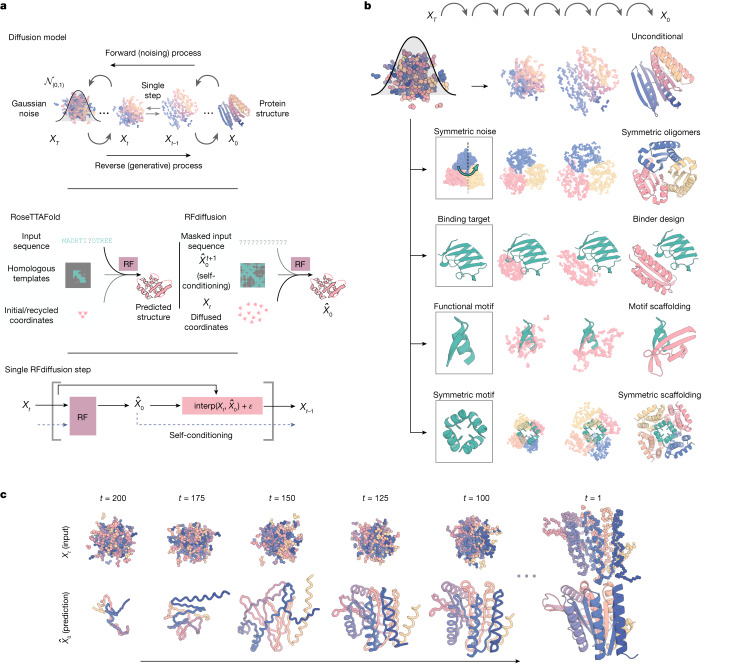
There has been considerable recent progress in designing new proteins using deep-learning methods 1–9 . Despite this progress, a general deep-learning framework for protein design that enables solution of a wide range of design challenges, including de novo binder design and design of higher-order symmetric architectures, has yet to be described. Diffusion models 10,11 have had considerable success in image and language generative modelling but limited success when applied to protein modelling, probably due to the complexity of protein backbone geometry and sequence–structure relationships. Here we show that by fine-tuning the RoseTTAFold structure prediction network on protein structure denoising tasks, we obtain a generative model of protein backbones that achieves outstanding performance on unconditional and topology-constrained protein monomer design, protein binder design, symmetric oligomer design, enzyme active site scaffolding and symmetric motif scaffolding for therapeutic and metal-binding protein design. We demonstrate the power and generality of the method, called RoseTTAFold diffusion (RFdiffusion), by experimentally characterizing the structures and functions of hundreds of designed symmetric assemblies, metal-binding proteins and protein binders. The accuracy of RFdiffusion is confirmed by the cryogenic electron microscopy structure of a designed binder in complex with influenza haemagglutinin that is nearly identical to the design model. In a manner analogous to networks that produce images from user-specified inputs, RFdiffusion enables the design of diverse functional proteins from simple molecular specifications.
Overview
CoChat Summary
TL;DR
RFdiffusion fine-tunes the RoseTTAFold structure-prediction network as a denoising diffusion model to generate protein backbones for unconditional monomers, symmetric oligomers, functional-motif scaffolds, and de novo binders. The method solves 23 of 25 motif-scaffolding benchmark problems and yields experimentally validated binders, metal-binding assemblies, and a cryo-EM structure matching its design model at 0.63 Å.
Key findings
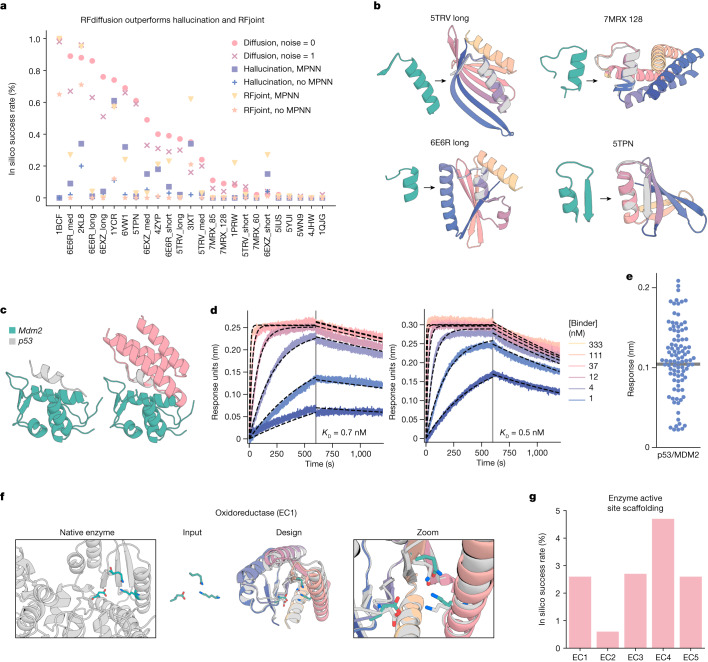
- RFdiffusion solves 23 of 25 motif-scaffolding benchmark problems, compared with 15 for Hallucination and 19 for RFjoint Inpainting; for 19 of 23 solved problems, its success fraction exceeds both baselines.
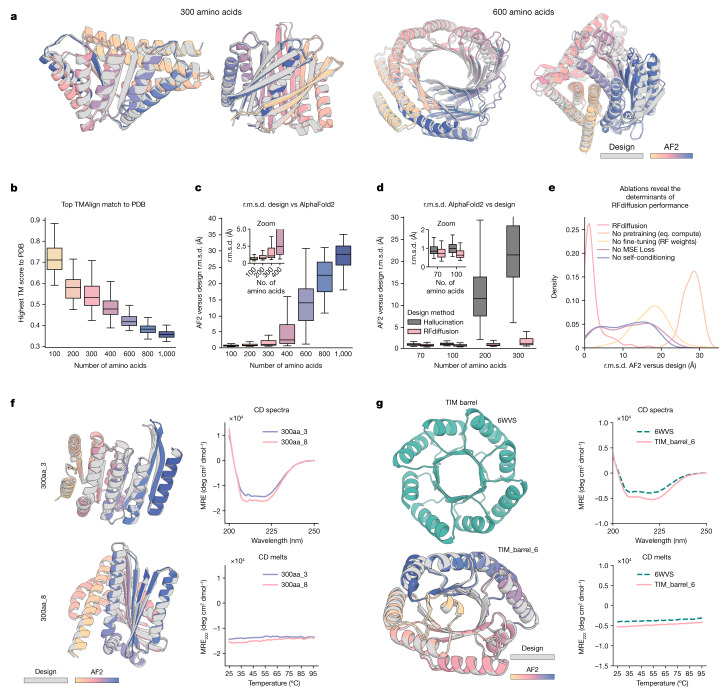
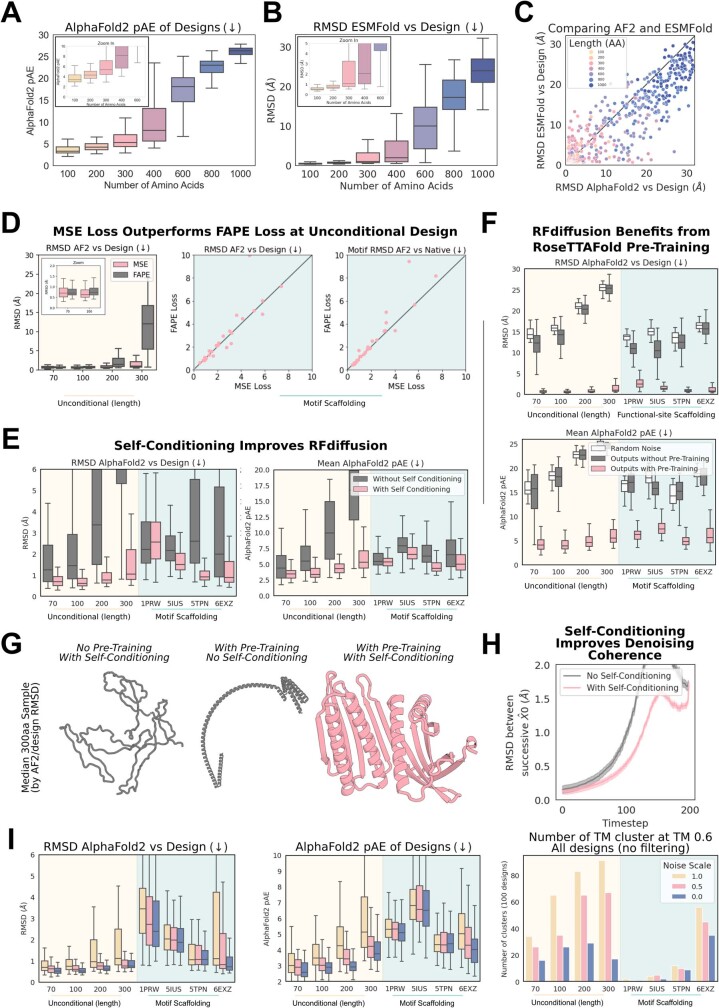
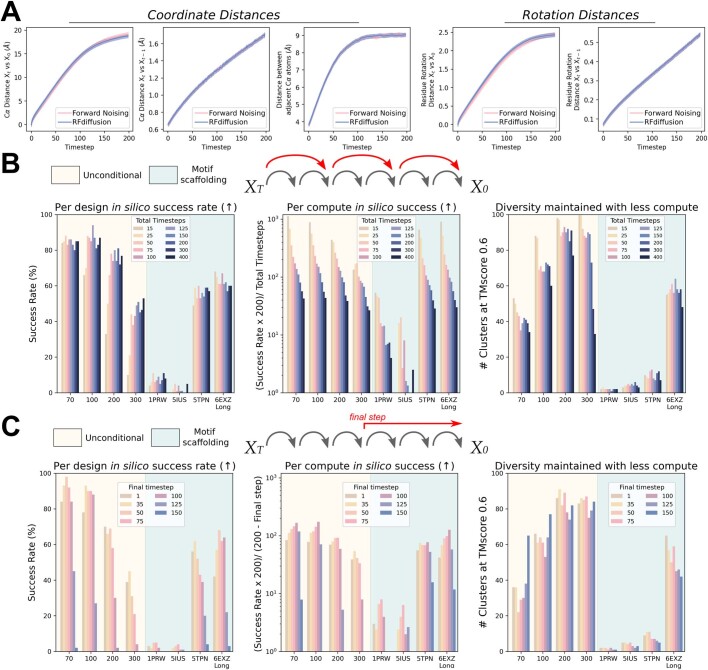
- It generates unconditional monomers up to 600 residues and outperforms RF Hallucination on in silico success (n = 400 designs per condition, z = 9.5, P = 1.6 × 10⁻²¹); a 100-residue protein can be generated in as little as 11 s versus about 8.5 min for RF Hallucination.
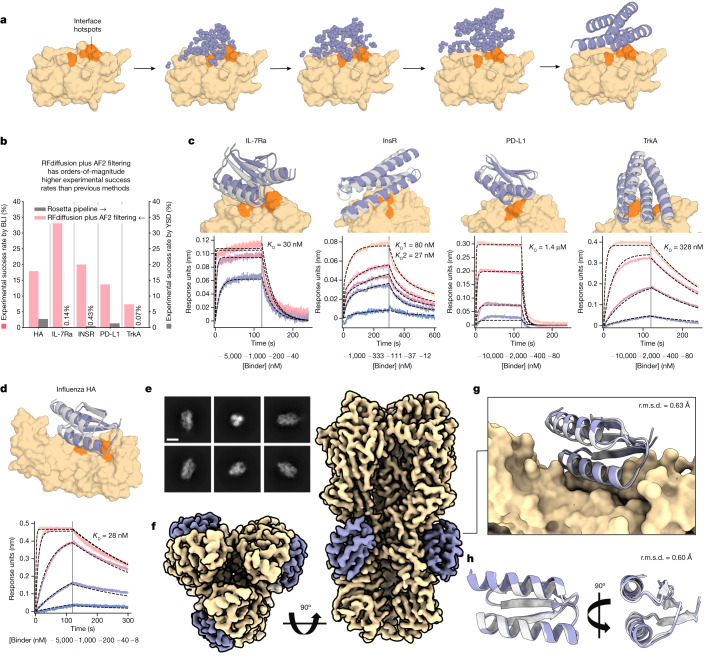
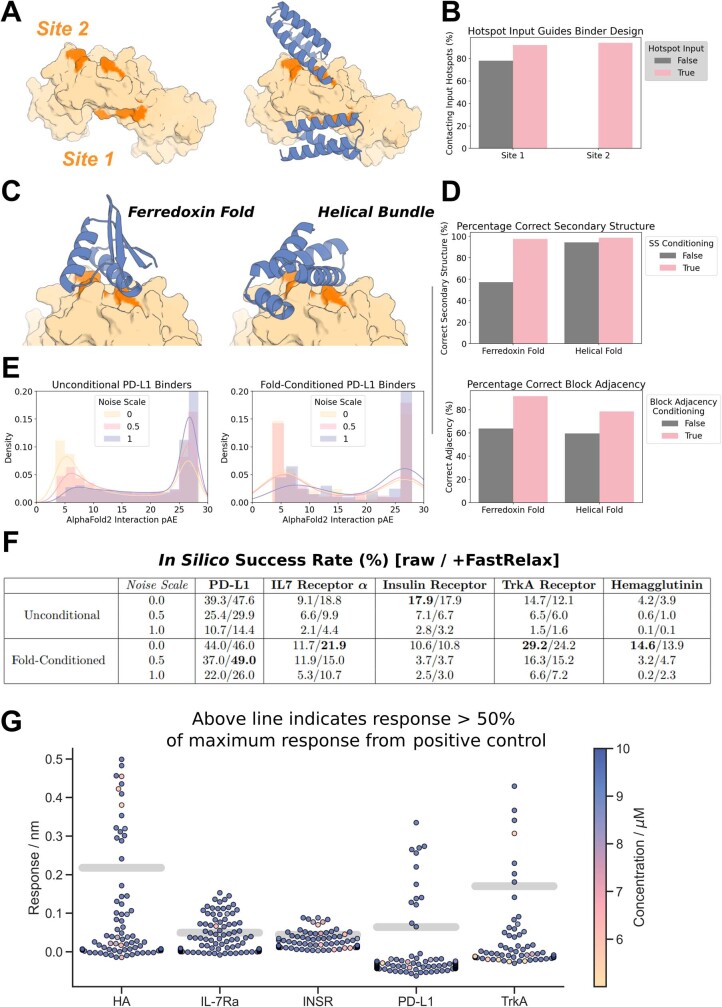
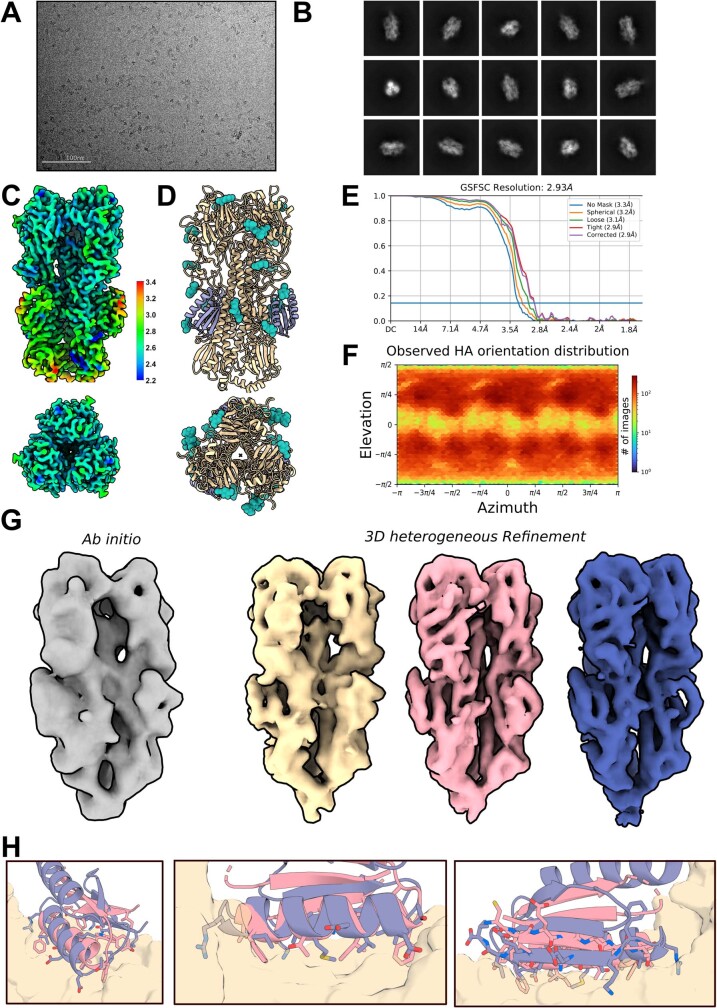
- For binder design against five targets, the overall experimental success rate was 19%, roughly two orders of magnitude above the previous Rosetta-based method; the highest-affinity HA binder, HA_20, bound with KD = 28 nM, and its cryo-EM complex structure matched the design model at 0.63 Å.
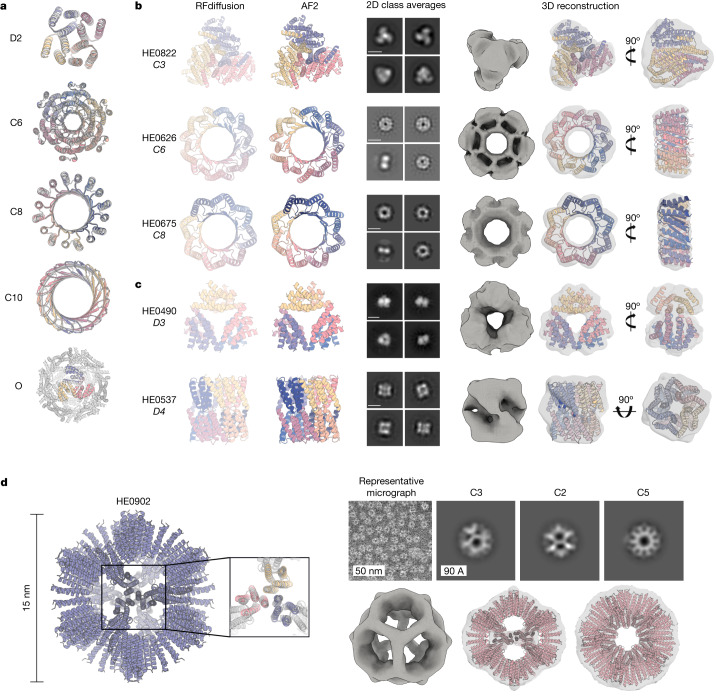
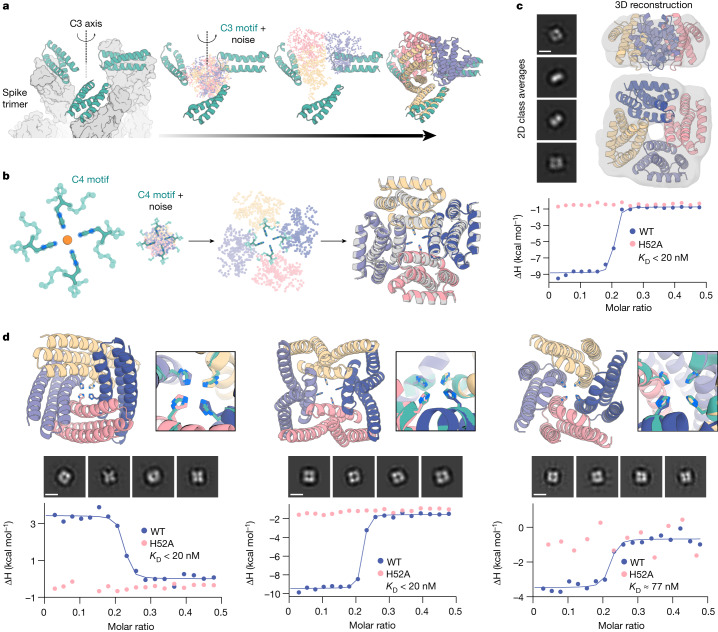
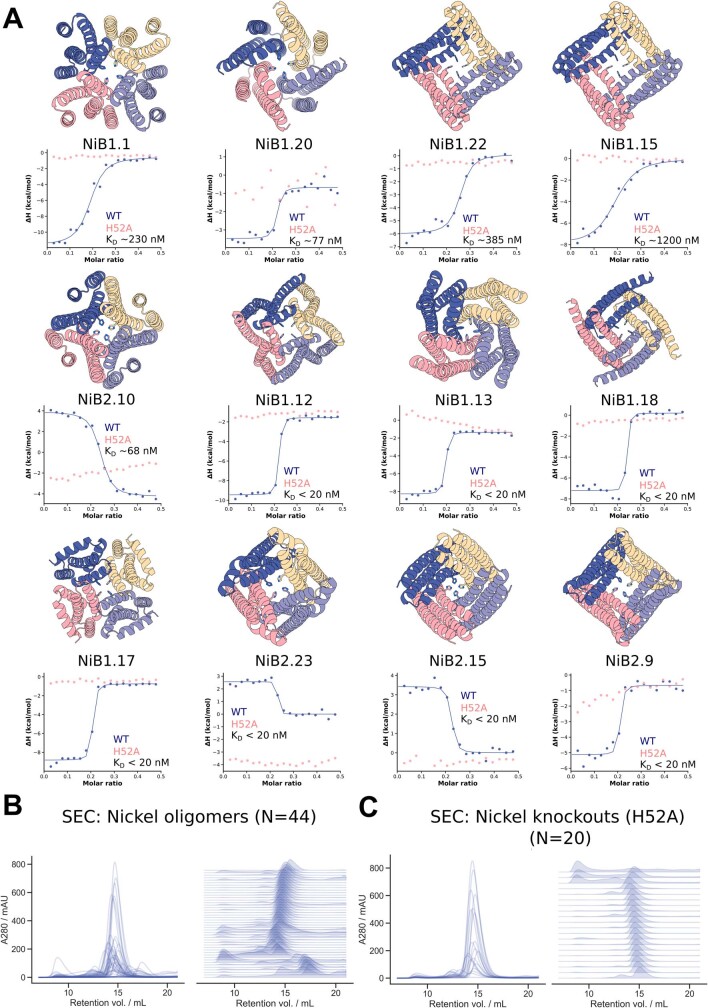
- Symmetric and functional designs were experimentally validated: at least 87 of 608 oligomer designs had SEC oligomerization states closely consistent with design models; 18 of 36 tested Ni²⁺-binding designs bound with dissociation constants from low nanomolar to low micromolar; MDM2 binders reached 0.5 and 0.7 nM versus 600 nM for the native p53 peptide.
Methods
- RFdiffusion uses the RoseTTAFold frame representation (Cα coordinate plus N-Cα-C rigid orientation per residue), trains by noising PDB structures for up to 200 steps, and minimizes mean-squared error between frame predictions and true structures; self-conditioning and fine-tuning from pretrained RF weights improved performance.
- For sequence design, ProteinMPNN was used to design sequences encoding RFdiffusion backbones, typically sampling eight sequences per design; in silico success was validated with AlphaFold2 using mean pAE < 5, global backbone r.m.s.d. < 2 Å, and scaffolded-site backbone r.m.s.d. < 1 Å.
- Experimental characterization included circular dichroism, size-exclusion chromatography, negative-stain EM, cryo-EM, biolayer interferometry, and isothermal titration calorimetry across designed monomers, oligomers, metal-binding proteins, and binders.
Limitations
- The paper states that RFdiffusion cannot explicitly model bound small molecules at present, though it can implicitly model substrates with an external potential; it also states that further studies are required to assess success rates on more polar target sites and sites without native binding partners, and that proteome-wide specificity remains to be fully characterized.
- The paper notes that very large proteins are difficult to validate in silico because they are probably beyond single-sequence prediction capabilities of AF2 and ESMFold, and that some binder designs had insufficient material to permit screening at 10 μM.
- Evident from the text: many conclusions rely on the AF2-based in silico success metric, experimental validation was performed on subsets of designs rather than all generated designs, and the authors did not extensively explore simultaneous structure-and-sequence design within RFdiffusion.
Model-written summary. Check it against the paper before relying on it.
Integrity signals
Registry
Cites
Statistics
Figures
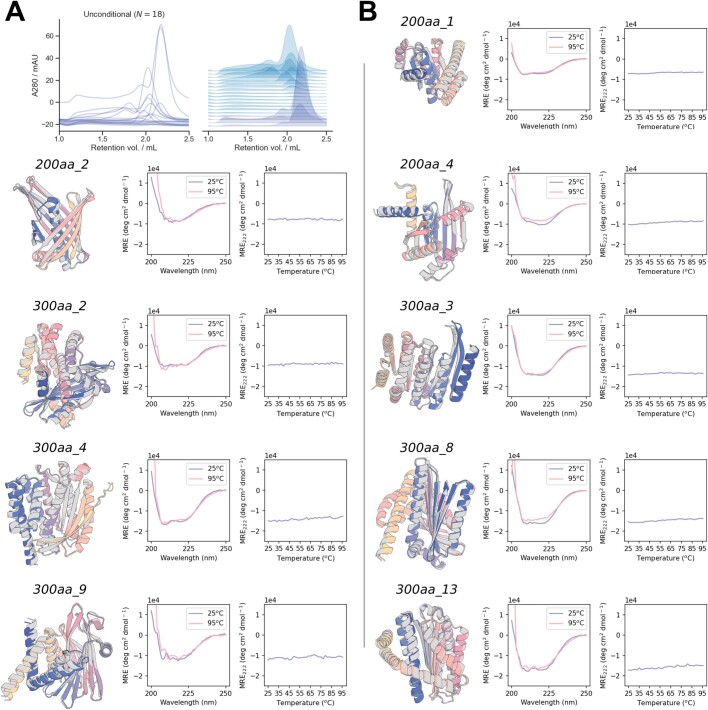
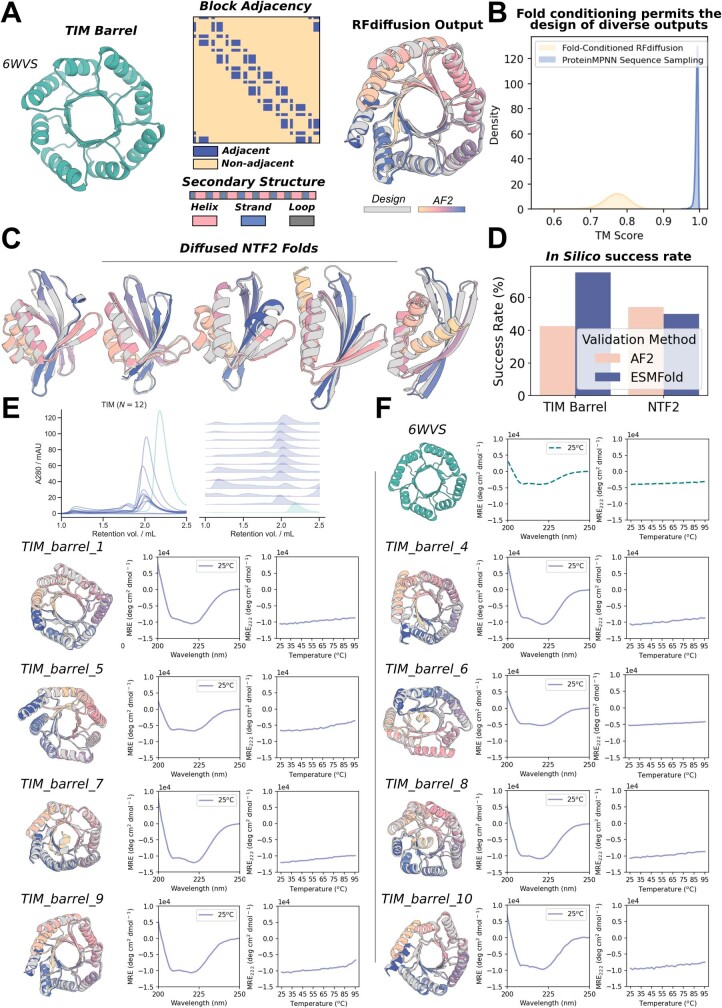
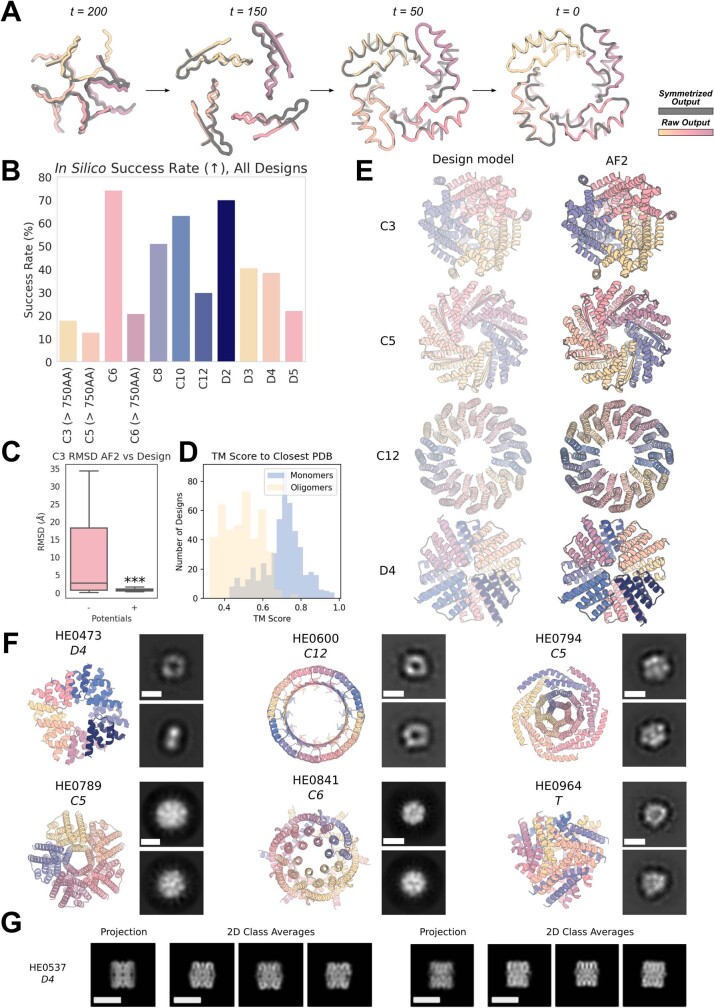
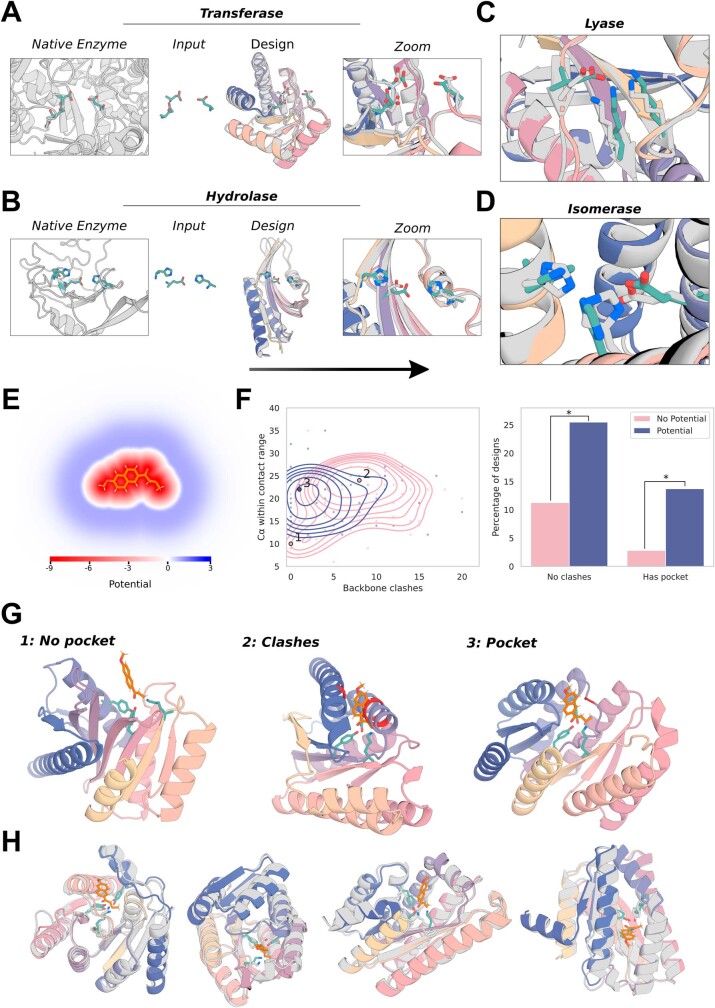
Verification
Claims the paper makes
17 Valid · 4 Not valid · 3 Not checked · 113 Own results and interpretations
Some cited sources support this claim and some don’t — read each source’s verdict below.
In the paper
“Recent work has adapted DDPMs for protein monomer design by conditioning on small protein ‘motifs’5,9 or on secondary structure and block-adjacency (‘fold’) information8.”
§ De novo design of protein structure and function with RFdiffusion > Main
What the sources say
- Supportedcites [5] Trippe, B. L. et al. Diffusion probabilistic modeling of protein backbones in 3D for the motif-scaffolding problem. in The EleventhInternational Conference on Learning Representations (2023). source
The Introduction (p. 1) describes ProtDiff as a diffusion probabilistic model for protein backbones and SMCDiff as its motif-conditioned sampling procedure. The Discussion (p. 9) confirms that the procedure generates scaffolds conditioned on a motif. The secondary-structure and block-adjacency clause is attached to a different citation, so it is not attributed to this source. (LLM, conf=0.93)
- Disputedcites [9] Luo, S. et al. Antigen-specific antibody design and optimization with diffusion-based generative models. in Adv. Neural Information Processing Systems Vol. 35 (eds Koyejo, S. et al) 9754–9767 (Curran Associates, 2022). sourceExperimental — accuracy not yet measured
Section 3.1 (page unavailable) says the paper designs antibody CDRs given an antigen structure and antibody framework, not protein monomers conditioned on small motifs. The Generative Model section likewise describes a diffusion model conditioned on the antigen and antibody framework; it does not describe secondary-structure or block-adjacency conditioning. (LLM, conf=0.87)
Checked by a reasoning model — may be wrong.
- Supportedcites [8] Anand, N. & Achim, T. Protein structure and sequence generation with equivariant denoising diffusion probabilistic models. Preprint at 10.48550/arXiv.2205.15019 (2022). source
Citation 8 is attached to the secondary-structure and block-adjacency (‘fold’) conditioning, not to the motif examples cited separately. Section 2.4 (p. 5) defines those constraints, and Section 3 (p. 6) states that the diffusion model conditions on their encoded output to generate protein structures. (LLM, conf=0.94)
plain- Asserted: passes — The authors put it forward as true.
- Checkable: passes — It can be checked against evidence.
- Load-bearing: unclear — It is unclear whether the paper’s conclusions depend on it.
- Based: passes — The paper gives a reason why it holds.
- Supported
The cited sources support only part of this claim — read each source’s verdict below.
In the paper
“Self-conditioning within RFdiffusion notably improved performance on in silico benchmarks encompassing both conditional and unconditional protein design tasks (Fig. 2e and Extended Data Fig. 1e).”
§ De novo design of protein structure and function with RFdiffusion > Main
What the sources say
- Partly supportedcites [25] Chen, T., Zhang, R. & Hinton, G. Analog bits: generating discrete data using diffusion models with self-conditioning. in The Eleventh International Conference on Learning Representations (2023). sourceExperimental — accuracy not yet measured
The Discrete Image Generation section (pp. 6–7) reports that self-conditioning improved results for image diffusion models. It does not report RFdiffusion results or in silico benchmarks for conditional and unconditional protein design, so the claimed improvement in that setting is not supported by this source. (LLM, conf=0.86)
plainstates a cause- Asserted: passes — The authors put it forward as true.
- Checkable: passes — It can be checked against evidence.
- Load-bearing: passes — The paper’s conclusions depend on it.
- Based: passes — The paper gives a reason why it holds.
- Partly supported
The cited sources support only part of this claim — read each source’s verdict below.
In the paper
“Experimental characterization showed that the method can scaffold a wide range of protein functional motifs with atomic accuracy19”
§ De novo design of protein structure and function with RFdiffusion > Main
What the sources say
- Partly supportedcites [4] Wang J Scaffolding protein functional sites using deep learning Science 2022 377 387 394 10.1126/science.abn2100 35862514 PMC9621694 sourceExperimental — accuracy not yet measured
The 'Generalized functional motif scaffolding' section reports designs spanning a wide range of motifs and says their activities were assessed experimentally. But its sub-angstrom motif accuracy is based on AlphaFold predictions, not experimental structural measurements; the sentence overstates what the experimental characterization established. (LLM, conf=0.88)
- Partly supportedcites [19] Watson, J. L., Bera, A., Juergens, D., Wang, J. & Baker, D. X-ray crystallographic validation of design from this paper. Science377, 387–394 (2022). sourceExperimental — accuracy not yet measured
The section “Generalized functional motif scaffolding by missing information recovery” (page unavailable) reports designs spanning a wide range of motifs, with motif RMSD typically below 1 Å in AlphaFold predictions. It separately reports experimental tests of the designs’ activities; those tests do not establish atomic structural accuracy. The paper also attributes the broad set of designs to both inpainting and constrained hallucination, rather than RFjoint inpainting alone. (LLM, conf=0.87)
plainstates a cause- Asserted: passes — The authors put it forward as true.
- Checkable: passes — It can be checked against evidence.
- Load-bearing: passes — The paper’s conclusions depend on it.
- Based: passes — The paper gives a reason why it holds.
- Partly supported
The cited sources support only part of this claim — read each source’s verdict below.
In the paper
“we established an in silico benchmark test (Supplementary Table 9) comprising 25 motif-scaffolding design problems addressed in six recent publications encompassing several design methodologies4,5,29,38–40”
§ De novo design of protein structure and function with RFdiffusion > Functional-motif scaffolding
What the sources say
- Could not verifycites [4] Wang J Scaffolding protein functional sites using deep learning Science 2022 377 387 394 10.1126/science.abn2100 35862514 PMC9621694 sourceExperimental — accuracy not yet measured
The 'Generalized functional motif scaffolding by missing information recovery' section describes in silico evaluation of the paper’s own designs, but does not describe establishing a benchmark of 25 problems drawn from six publications. Searches for the benchmark, the numbers, and Supplementary Table 9 found no passage in our copy that verifies those details. (LLM, conf=0.74)
- Supportedcites [5] Trippe, B. L. et al. Diffusion probabilistic modeling of protein backbones in 3D for the motif-scaffolding problem. in The EleventhInternational Conference on Learning Representations (2023). source
Section 5.2 (p. 7) reports motif-scaffolding tests using motifs from proteins 6exz and 5trv; Appendix H.1 (p. 24) describes another target, 5tpn. This supports citing the paper as one of the publications that addressed motif-scaffolding design problems. The citing authors describe the 25-problem benchmark as their own, not as something established by this source. (LLM, conf=0.88)
- Supportedcites [29] Lee, J. S. & Kim, P. M. ProteinSGM: Score-based generative modeling for de novo protein design. Preprint at bioRxiv10.1101/2022.07.13.499967 (2022). source
The citation identifies one of the publications whose design methodology informed the citing authors’ benchmark; it does not attribute the establishment of the 25-problem benchmark to ProteinSGM. In “Conditional generation” (page unavailable), ProteinSGM presents scaffold-inpainting design cases, including generation of scaffolds around the barstar functional site. (LLM, conf=0.88)
- Supportedcites [38] Sesterhenn F De novo protein design enables the precise induction of RSV-neutralizing antibodies Science 2020 368 eaay5051 10.1126/science.aay5051 32409444 PMC7391827 source
The citation identifies this paper as one of the motif-scaffolding publications used to assemble the citing authors’ benchmark; the benchmark’s size and establishment are the citing authors’ own statements. The Results section (page unavailable) describes TopoBuilder as a protocol for designing protein topologies around functional motifs, so the paper fits that role. (LLM, conf=0.88)
- Not checked — no full text of the sourcecites [39] Yang C Bottom-up de novo design of functional proteins with complex structural features Nat. Chem. Biol. 2021 17 492 500 10.1038/s41589-020-00699-x 33398169 source
- Partly supportedcites [40] Glasgow A Engineered ACE2 receptor traps potently neutralize SARS-CoV-2 Proc. Natl Acad. Sci. USA 2020 117 28046 28055 10.1073/pnas.2016093117 33093202 PMC7668070 sourceExperimental — accuracy not yet measured
The Results and Materials and Methods describe computational redesign of the ACE2–spike binding interface, so this is a publication addressing a protein-design problem. Our copy does not describe that work as motif scaffolding. The benchmark of 25 problems is the citing authors’ own work, not a finding attributed to this source. (LLM, conf=0.78)
plain- Asserted: passes — The authors put it forward as true.
- Checkable: passes — It can be checked against evidence.
- Load-bearing: passes — The paper’s conclusions depend on it.
- Based: passes — The paper gives a reason why it holds.
- Could not verify
Every source the paper cites for this claim was checked and supports it.
In the paper
“Vázquez Torres et al. demonstrate the ability of RFdiffusion to design picomolar affinity binders to flexible helical peptides54”
§ De novo design of protein structure and function with RFdiffusion > Discussion
What the sources say
- Supportedcites [54] Torres, S. V. et al. De novo design of high-affinity protein binders to bioactive helical peptides. Preprint at bioRxiv10.1101/2022.12.10.519862 (2022). source
The Peptide binder design with RFdiffusion section reports de novo RFdiffusion binders to the helical peptides Bim and PTH, with an estimated affinity of ~100 pM for Bim and an upper bound of 500 pM for PTH. The Main section explains that peptide targets are often partially or entirely unstructured in isolation, supporting the description of them as flexible. (LLM, conf=0.94)
boostedstates a cause- Asserted: passes — The authors put it forward as true.
- Checkable: passes — It can be checked against evidence.
- Load-bearing: unclear — It is unclear whether the paper’s conclusions depend on it.
- Based: passes — The paper gives a reason why it holds.
- Supported
82 more claims · 7 with their cited sources checked
Create a free account to see all 137 claims and every source verdict.
- It may state two separate claims as one. 48
- Probably not a substantial claim. 3
- The quote only partly states this claim. 1
Claims other papers make about this one
Each is checked against this paper’s own text: does it say what the citing paper says it does?
The source backs part of the claim, not all of it — or backs it for a different population, condition or comparison.
In the citing paper
“We also use Evo to generate genome-scale sequences with plausible high-level architecture more than1 megabase (Mb) in length, a scale that is orders of magnitude greater than previous methods (10, 13, 14).”
From Sequence modeling and design from molecular to genome scale with Evo (2024) · cites this paper as [10]
Experimental — accuracy not yet measured
Self-check
Percentages, sums and reported differences re-computed from the paper’s own numbers.
Each contradiction between two passages listed here was confirmed by an independent check.
Rated minor: it would not touch a result — a value no result rests on, a p-value that stays on the same side of the significance level, or a conflict that is clerical, resolved elsewhere in the paper, or outside its own findings.
In the paper
§ De novo design of protein structure and function with RFdiffusion > Functional-motif scaffolding
“e, Out of 95 designs, 55 showed binding to MDM2 (more than 50% of maximum response).”
§ De novo design of protein structure and function with RFdiffusion > Functional-motif scaffolding
“The overall success rate was quite high: out of the 96 designs, 55 showed some detectable binding at 10 μM (Fig. 4e and Supplementary Fig. 10h).”
Citations
Cites
Highly accurate protein structure prediction with AlphaFold
Jumper, J., Evans, R., Pritzel, A., Green, T., Figurnov, M., Ronneberger, O., Tunyasuvunakool, K., Bates, R., Žídek, A., Potapenko, A., et al. (2021) · Nature · doi:10.1038/s41586-021-03819-2 · Cited by 43,764
Berman, H. M. (2000) · Nucleic Acids Research · doi:10.1093/nar/28.1.235 · Cited by 40,196
Denoising Diffusion Probabilistic Models
Ho, J., Jain, A., & Abbeel, P. (2020) · arXiv · doi:10.48550/arxiv.2006.11239 · Cited by 8,712
Evolutionary-scale prediction of atomic level protein structure with a language model
Lin, Z., Akin, H., Rao, R., Hie, B., Zhu, Z., Lu, W., Smetanin, N., Verkuil, R., Kabeli, O., Shmueli, Y., et al. (2022) · doi:10.1101/2022.07.20.500902 · Cited by 5,990
Accurate prediction of protein structures and interactions using a 3-track network
Baek, M., DiMaio, F., Anishchenko, I., Dauparas, J., Ovchinnikov, S., Lee, G. R., Wang, J., Cong, Q., Kinch, L. N., Schaeffer, R. D., et al. (2021) · doi:10.1101/2021.06.14.448402 · Cited by 5,549
Self-citationDeep Unsupervised Learning using Nonequilibrium Thermodynamics
Sohl-Dickstein, J., Weiss, E. A., Maheswaranathan, N., & Ganguli, S. (2015) · arXiv · doi:10.48550/arxiv.1503.03585 · Cited by 2,637
Zero-shot text-to-image generation
Ramesh, A., Pavlov, M., Goh, G., Gray, S., Voss, C., Radford, A., Chen, M., & Sutskever, I. (2021) · arXiv · doi:10.48550/arxiv.2102.12092 · Cited by 2,417
THEORY OF PROTEIN FOLDING: The Energy Landscape Perspective
Onuchic, J. N., Luthey-Schulten, Z., & Wolynes, P. G. (1997) · Annual Review of Physical Chemistry · doi:10.1146/annurev.physchem.48.1.545 · Cited by 2,210
Robust deep learning–based protein sequence design using ProteinMPNN
Dauparas, J., Anishchenko, I., Bennett, N., Bai, H., Ragotte, R. J., Milles, L. F., Wicky, B. I. M., Courbet, A., de Haas, R. J., Bethel, N., et al. (2022) · Science · doi:10.1126/science.add2187 · Cited by 2,210 · cited 6×
“We explored two different strategies for training RFdiffusion: (1) in a manner akin to ‘canonical’ diffusion models, with predictions at each timestep independent of predictions at previous timesteps (as in previous work(5,8,9,16)), and (2) with self-conditioning(25), in which the model can condition on previous predi…”
InfluentialSelf-citationStructure of the MDM2 Oncoprotein Bound to the p53 Tumor Suppressor Transactivation Domain
Kussie, P. H., Gorina, S., Marechal, V., Elenbaas, B., Moreau, J., Levine, A. J., & Pavletich, N. P. (1996) · Science · doi:10.1126/science.274.5289.948 · Cited by 2,206
Research works printed but not linked: 1
- Watson, J. L., Bera, A., Juergens, D., Wang, J. & Baker, D. X-ray crystallographic validation of design from this paper. Science377, 387–394 (2022). · DOI · Paper page
Cited by
Items 2,001–2,100 of 2,479
Backbone Structure-Conditioned Sequence Design Using Machine Learning-Based Approaches
Gushchin, I., Nikolaev, A. S., Kuznetsova, E. A., Bugrova, A. D., Afanasev, A. A., & Remeeva, A. (2026) · Russian Journal of Bioorganic Chemistry · doi:10.1134/s1068162026601497
KI‐gestütztes Proteindesign in der molekularen Pharmakologie/Trendbericht Biochemie 2026 2/4
Schlichthaerle, T. (2026) · Nachrichten aus der Chemie · doi:10.1002/nadc.20264156444
Li, C. G., Shu, B., Zhao, K., Yu, L., Li, Y., & Zhao, H. (2026) · Physics of Fluids · doi:10.1063/5.0326519
Genomics: Foundations, Applications, and Big Data in Health Informatics
Giannopoulou, E. G., Zhang, C., & Lu, S. L. (2026) · Health informatics · doi:10.1007/978-3-032-16657-9_17
Roy, K. (2026) · The EuroBiotech Journal · doi:10.2478/ebtj-2026-0005
“16 ProGen2 demonstrated that autoregressive protein language models can generate functional enzyme sequences across diverse families; designed lysozymes exhibited measurable catalytic activity despite only 31.4% sequence identity to natural homologs.”
InfluentialThe AIxBio convergence: a call to action for infectious diseases clinicians
Armitage, R. C. (2026) · Scandinavian Journal of Infectious Diseases · doi:10.1080/23744235.2026.2664554
“AI-enabled BDTs – including protein structure predictors such as AlphaFold [22] and generative protein design platforms such as RFdiffusion [23] – have transformed the capacity to model and engineer proteins at scale.”
Cao, Z., Wang, W., Cao, S., Zhang, C., Guo, J., & Duan, H. (2026) · Journal of Chemical Information and Modeling · doi:10.1021/acs.jcim.6c00158 · Cited by 1
Integrin-independent Tie2 activation using de novo designed proteinsPreprint
McCurdy, C., Zhao, Y. T., Kumar, S., Coventry, B., Pink, A., Fu, Y., Bohn, P., Zhu, S., Goreshnik, I., Wang, X., et al. (2026) · bioRxiv (Cold Spring Harbor Laboratory) · doi:10.64898/2026.05.01.718274
Self-citationDOMINO: Learning Domain Co-occurrence for Multidomain Protein DesignPreprint
Dai, F., Su, J., Tan, Q., Yang, H., Zhou, X., & Yuan, F. (2026) · bioRxiv (Cold Spring Harbor Laboratory) · doi:10.64898/2026.05.01.721929
“Although deep learning has advanced protein structure prediction and design [21–25], most approaches operate primarily at the level of sequences, structures or local functional motifs, rather than explicitly learning domain-level compatibility across natural multidomain architectures.”
Artificial protein scaffolds for human therapeutics: drug discovery and delivery strategies
Gholap, A. D., Khuspe, P. R., & Omri, A. (2026) · Drug Discovery Today · doi:10.1016/j.drudis.2026.104689
Nanocarrier Technologies for Targeted Delivery
Tamuli, J., Devi, N., Tamuli, J., Patir, K., & Giri, S. (2026) · Advances in computational intelligence and robotics book series · doi:10.4018/979-8-3373-5268-8.ch008
Ghojogh, B., & Ghodsi, A. (2026) · Springer eBooks · doi:10.1007/978-3-032-10738-1_1
Akingbola, A., Adegbesan, A., Adewole, O. A., Adebiyi, K. O., Benson, A. E., Ojo, O., Jessica, O. U., Alabi, O. S., Ojeriakhi, O. J., & Shekoni, M. (2026) · Frontiers in Pharmacology · doi:10.3389/fphar.2026.1773609
“…models (e.g., RFdiffusion and ProteinMPNN) are accelerating the prototyping of candidate scaffolds, binders, and immunogens, reducing iteration cycles for structure-based vaccine concepts while still typically requiring substantial wet-lab validation (Watson et al., 2023; Dauparas, 2022).”
Computational design of membrane fusion proteinsPreprint
Somiya, M., Funk, S., Zambrano, D. E., Yanase, T., Hamaoka, N., Kang, A., Sankaran, B., Bera, A. K., & King, N. P. (2026) · bioRxiv (Cold Spring Harbor Laboratory) · doi:10.64898/2026.05.04.722779
Patentability of antibodies in the artificial intelligence era
Yao, Y., & Yang, F. (2026) · Trends in biotechnology · doi:10.1016/j.tibtech.2026.04.014
Shi, W. O., Ingle, T. M., Perez, M. W., Griffith, W. P., Chen, L. Y., Seshu, J., & Renthal, R. D. (2026) · bioRxiv (Cold Spring Harbor Laboratory) · doi:10.64898/2026.05.04.722819
“Although AI diffusion methods can use receptor flexibility to model ligand-protein complexes 47-49 , we obtained only predictions of surface binding sites from the full AlphaFold3 software run on a local server, and Boltz2 run on a web server.”
Roy, R. S., Oh, J., Abeer, A. N. M. N., Giraldo, M. I., Ikegami, T., Weaver, S. C., Vasilakis, N., Yoon, B.-J., & Qian, X. (2026) · NAR Molecular Medicine · doi:10.1093/narmme/ugag024 · Cited by 1
“Recent progress in computational resources and modeling techniques has facilitated the accurate prediction of protein structures and the design of novel proteins [ 1–6 ].”
Sequence-dominant protein therapeutics: mechanistic foundations for efficient biologics development
Niazi, S. K. (2026) · Frontiers in Drug Discovery · doi:10.3389/fddsv.2026.1781560
Unlocking Enzyme Discovery: Leveraging Multi-Omics, Machine Learning, and De Novo Design
Xia, H., Zhou, C., Fu, B., & Han, H. (2026) · Methods in molecular biology · doi:10.1007/978-1-0716-5264-0_7
Artificial intelligence-driven nanomaterials for tumor-targeted therapy
Liao, Z., Liang, H., & Siman, F. (2026) · Journal of Pharmacy and Allied Medicine · doi:10.58985/jpam.2026.v04i01.43
Computational Rational Design of Larger AAV Icosahedral CapsidsPreprint
Cioffi, M., & Luque, A. (2026) · bioRxiv (Cold Spring Harbor Laboratory) · doi:10.64898/2026.05.09.724008 · Cited by 1
Lo, Y., Chang, K., Chu, I.-H., Chen, L.-Y., & Wu, K. (2026) · Protein Science · doi:10.1002/pro.70617
Kell, D. B., & Roberts, I. (2026) · Chemical Society Reviews · doi:10.1039/d5cs01387a · Cited by 1
Complementarity of Deep Learning and Physics-Based Approaches in the Design of New Antibodies
Eshak, F., & Lamy, A. (2026) · Methods in molecular biology · doi:10.1007/978-1-0716-5041-7_2
Bayesian-Steered Structure Prediction of Mechanical Biomolecules Using Twisted DiffusionPreprint
Klaus, C., & Sotomayor, M. M. (2026) · bioRxiv (Cold Spring Harbor Laboratory) · doi:10.64898/2026.05.11.724187
Zou, D., Ding, X., Bao, P., Ji, A., Mao, Z., Zheng, X., & Wei, X. (2026) · Journal of Biotechnology · doi:10.1016/j.jbiotec.2026.05.006
Zhang, L., Yan, W., Wang, D., & Ma, J. (2026) · Journal of Orthopaedic Translation · doi:10.1016/j.jot.2026.101118 · Cited by 2
“While traditional virtual screening relies on existing chemical libraries, Baker's deep learning architectures, such as RFdiffusion (a generative model based on diffusion processes) and ProteinMPNN, enable the hallucination of entirely new protein binders with atomic-level precision [68,69].”
Pathogenic Gene Prediction Model Based on L3-Enhanced Diffusion Networks
Wu, H., & Wang, C. (2026) · Asia Conference on Algorithms, Computing and Machine Learning (CACML) · doi:10.1109/cacml68972.2026.11506654
Komianos, N., & Prakash, P. (2026) · bioRxiv (Cold Spring Harbor Laboratory) · doi:10.64898/2026.05.12.724473
Protein function-conditioned language models for variant effect prediction and controllable design
Zhu, S., Cao, Y., Yang, Y., & Shen, Y. (2026) · Biophysical Journal · doi:10.1016/j.bpj.2026.05.013 · Cited by 1
Zhang, Y., Zhang, X., Chen, X., Chen, J., 孔令聪, & Ma, H. (2026) · European Journal of Medicinal Chemistry · doi:10.1016/j.ejmech.2026.119279
De novo design of transmembrane accessory subunits for fold stabilization and expansionPreprint
Jojoa-Cruz, S., Kanwal, S., Jacob, N. P., Tang, W., Murakoso, M., Zhang, M., Li, J., Domecillo, M., Polizzi, N. F., Yates, J. R., et al. (2026) · bioRxiv (Cold Spring Harbor Laboratory) · doi:10.64898/2026.05.14.725059
Machine-guided design for bioengineering gene therapy vectors: Where are we and what lies ahead?
Rodrigues, A. F., Ferraz, L., & Pesquita, C. (2026) · Biotechnology Advances · doi:10.1016/j.biotechadv.2026.108925
Genetic code expansion enables programmable covalent protein designPreprint
de Puig, H., Kuru, E., Moret, M., Flores, A., Karunakaran, S., Sayfullina, D., Rout, S., Escobedo‐Lucea, C., Collins, J. J., & Church, G. M. (2026) · bioRxiv (Cold Spring Harbor Laboratory) · doi:10.64898/2026.05.15.725538
“Machine learning-based protein design has transformed our ability to generate miniproteins with tailored specificities and nanomolar affinities against therapeutic targets 1–6 .”
Chou, C.-H., Hong, X., & Xu, J. (2026) · bioRxiv (Cold Spring Harbor Laboratory) · doi:10.64898/2026.05.11.724213
RetractedAdvancing knotted protein design with ESM3: guided generation and topological insights
Marsalkova, E., & Šimeček, P. (2026) · Machine Learning Health · doi:10.1088/3049-477x/aea330
“Structure prediction models such as AlphaFold2 [9] and ESMFold [13] predict three-dimensional structures with near-experimental accuracy, while generative tools including RFdiffusion [26], ProteinMPNN [5], and EvoDiff [1] enable the de novo design of proteins with desired structural properties.”
Dai, W., Hu, W., Schuster, M., Rožić, L., Roschitzki, B., & Zerbe, O. (2026) · Protein Science · doi:10.1002/pro.70626
Aveggio, C., Carter, S. R., Mukundan, H., Cameron, E. E., & Guerra, S. (2026) · Frontiers in Microbiology · doi:10.3389/fmicb.2026.1820739
“Many of these tools are complex and can infer designs for functional proteins (Hayes et al., 2025; Watson et al., 2023) and whole genomes (King et al., 2025) that are not found in their training data.”
Static2Dynamic: Reconstructing videos of unobservable cellular, developmental, and disease processesPreprint
Boyer, T., Nery, E. D., Spassky, N., & Genovesio, A. (2026) · bioRxiv (Cold Spring Harbor Laboratory) · doi:10.64898/2026.05.18.725860
Control of Guanine Exchange Factor Activity Using De Novo Designed Protein InhibitorsPreprint
Vacca, F., Marston, D. J., Harris, C., Kannan, P., Burre, H., Christopher, J., Dumbravanu, I., & Azoitei, M. L. (2026) · bioRxiv (Cold Spring Harbor Laboratory) · doi:10.64898/2026.05.17.725778
Particle Biology: A Perspective on a First-Principles Theory of LifePreprint
Wang, P., Li, W., Cui, Y., Wu, H., Gan, J., Yao, W., Jin, Y., Bi, Y., Ge, Y., & Sun, G. (2026) · bioRxiv (Cold Spring Harbor Laboratory) · doi:10.64898/2026.05.17.725705
Development of Miniprotein Binders to Inhibit VEGF-Induced Corneal Neovascularization
Adams, N. A., Alaniz, M. M., Wuppukondur, S. N., Schill, A., Alabi, Z. O., Şen, M., Coulson‐Thomas, V. J., & Gesteira, T. F. (2026) · Investigative Ophthalmology & Visual Science · doi:10.1167/iovs.67.5.61
“20,21 The VEGF-A 165 homodimer structure (PDB ID: 1BJ1) was obtained from the Protein Data Bank.”
De novo designed cyclic MC4R peptide agonist reduces food intake in micePreprint
Møller, V. E., Johansen, J. M., Mikkelsen, R. B., Tran, P., Kayed, A., Buch‐Månson, N., Jenkins, T. P., Dalbøge, L. S., Nielsen, J. C., & Nygaard, M. M. (2026) · bioRxiv (Cold Spring Harbor Laboratory) · doi:10.64898/2026.05.19.721857
Shenoy, N., Karkare, A., Gangadhar, V., Padubidri, S. R., Rao, S., D'souza, L. A., Joshi, M. B., Damerla, R. R., Gandhi, N. S., & Mallya, S. P. (2026) · Amino Acids · doi:10.1007/s00726-026-03531-3
“…is unexplored, computational platforms such as RFdiffusion and Rosetta generate ncPEP-sized miniproteins (20–100 aa helical bundles) that bind diverse targets (GPCRs, proteases) with nM affinity, providing a blueprint for ncPEP-inspired mim - ics (Muratspahić et al. 2025, Watson et al. 2023).”
Djulbegovic, M. B., Hadzijahic, N., Gonzalez, D. J. T., Antonietti, M., Zafar, S., & Kuriyan, A. E. (2026) · Ophthalmology Science · doi:10.1016/j.xops.2026.101249
“35,36 39 These advances improve our understanding of structure and enable the identification of previously inaccessible druggable sites, particularly in disordered or partially structured regions.”
Selective protein-based separation of critical elements from mine wastes
Webster, L. J., Gillane, R., Daumann, L. J., Gumulya, Y., & Gómez, D. K. V. (2026) · Reviews in Environmental Science and Bio/Technology · doi:10.1007/s11157-026-09783-5
“RoseTTAFold diffusion, a protein structure denoising diffusion model, has recently exemplified this through the characterisation of hundreds of designed synthetic assemblies, metal-binding proteins, and protein binders (Watson et al. 2023).”
Dai, Z., Liang, Y., Yang, T., Xiong, X., Yue, Z., Pan, Z., Wang, Z., & Xu, W. (2026) · International Journal of Biological Macromolecules · doi:10.1016/j.ijbiomac.2026.152719
Makarova, M. O., Stiebritz, M. T., Basturk, D., Lemke, B., Süß, B., & Muller, Y. A. (2026) · Scientific Reports · doi:10.1038/s41598-026-52380-3
Kala, P. P., Sakthidhasan, P., Gandhi, S., Vethamonickam, S. R., & Paital, B. (2026) · Journal of Applied Biology & Biotechnology · doi:10.7324/jabb.2026.303066
“AI recently contributed to the invention of synthetic antivenom in the form of computationally designed mini-proteins, or “binders,” which were fabricated with the RFdiffusion (RoseTTAFold Diffusion) tool [108].”
Pei, T., Chen, Q.-Y., Wang, X., Ma, A. T., Liang, J.-X., Ye, Z.-Y., Liu, Y.-Z., Su, J.-T., Liang, X., An, Y., et al. (2026) · Nature Communications · doi:10.1038/s41467-026-73608-w · Cited by 1
“AI-driven platforms such as RFdiffusion and ProteinMPNN can generate protein binders that engage speci fi c structural motifs for modulating LLPS behaviours 19 – 22 .”
Fourier vs. Attention: A Re-look at Protein Sequence Generation Models
Shah, R. R., Jawagal, R. K., Rajpurohit, S., Venkat, N., Achyuthan, N., & Das, B. (2026) · Communications in computer and information science · doi:10.1007/978-3-032-26028-4_2
Tools For Building Artificial Biological Nanostructures
Bradford, T. S., Hutchings, S., Liston, J. D., Pakosz, Z., Sanderson, A., Shaukat, A., Bentham, A. R., Lin, T., Stępień, P., & Heddle, J. G. (2026) · ACS Nano · doi:10.1021/acsnano.5c14315 · Cited by 1
Chuang, J.-N., Purcell, J., Sangalli, L., Rosenbluh, J., Knott, G. J., Corrie, S. R., & Garnier, G. (2026) · Frontiers in Bioengineering and Biotechnology · doi:10.3389/fbioe.2026.1829373
“Recent advances in artificial intelligence (AI) protein design, such as ProteinMPNN (Dauparas et al., 2022) and RFdiffusion (Watson et al., 2023), have enabled the generation of alternative binders, including anti-EGFR (Cao et al., 2022; Pacesa et al., 2025) variants that do not rely on…”
In silico prediction tools of plant-based precision medicine
Bakshi, A., & Datla, R. (2026) · Elsevier eBooks · doi:10.1016/b978-0-443-34129-8.00004-3
Design and Structure of Protein Cages Based on Helical Fusion and Machine Learning
Segundo‐Acosta, P. S., Coq, J. L., Boskovic, J., Aglietti, R. A., Bowers, P., Yeates, T. O., & Castells‐Graells, R. (2026) · Journal of the American Chemical Society · doi:10.1021/jacs.6c11491
Wang, Z., Zhang, X., Tang, K., wu, L., Huang, Y. N., Zhang, N., Wang, B., Wang, X. X., Ruan, Y., & Lin, Q. (2026) · Biosensors · doi:10.3390/bios16060316 · Cited by 1
“This enhances generalization and performance in complex tasks like protein structure prediction and drug design [195,196].”
Chakraborty, R., Pettit, J. F., Silva, M. S., McLoughlin, K., Lyon, E. Z. A., Kruse, C. P. S., Quackenbush, C. R., Nemashkalo, A., Kunde, Y. A., Solomon, E. A., et al. (2026) · Machine Learning Health · doi:10.1088/3049-477x/ae7573
(2026) · Frontiers research topics · doi:10.3389/978-2-8325-8097-4
From Single Cells to Silicon: Emerging Technologies Transforming Monoclonal Antibody Discovery
Sherwood, V., Harold, D., O’Kennedy, R. J., Loscher, C., & Leonard, P. (2026) · Antibodies · doi:10.3390/antib15030047
“Similarly, RFdiffu-sion and related all-atom diffusion frameworks have demonstrated improved flexibility in modelling dynamic structural features and molecular interactions [69].”
InfluentialThe cost of convenient truths: artificial intelligence in matrix biology
Izzi, V. (2026) · Matrix Biology · doi:10.1016/j.matbio.2026.102028
Physics-guided design of intrinsically disordered proteinsPreprint
Tyagi, N., Boodry, J., Chou, V., Snead, W. T., & Shrinivas, K. (2026) · bioRxiv (Cold Spring Harbor Laboratory) · doi:10.64898/2026.05.29.728696 · Cited by 1
“Combining recent advances in design of structural folds 9,10,70–72 with disordered protein design will enable generative modeling of multi-domain proteins.”
D'silva, S., Acharya, C., & Chakraborti, S. (2026) · Advanced Sustainable Systems · doi:10.1002/adsu.70495
“This process is driven by machine learning guided design and generative model prediction; proteins are designed to fold into precise structures with engineered metal-binding motifs (Figure 1D) [68, 69].”
Deep Learning for Anticancer Drug Discovery Targeting Non-Apoptotic Regulated Cell Death Mechanisms
Jiang, M., Mu, J., Yang, S., & Li, P. (2026) · Pharmaceuticals · doi:10.3390/ph19060851
Modular Input–Output Biosensor Design Using De Novo Protein Switches
Wang, J., Chen, J. Y.-H., Xi, C., Arteage-Organiz, E., & Yeh, A. H.-W. (2026) · ACS Sensors · doi:10.1021/acssensors.6c00882 · Cited by 1
“Looking ahead, we anticipate that de novo/AI-guided computational protein design 51–56 will continue to accelerate the generation of first-pass biosensor prototypes with desirable target specificity and flexible output compatibility.”
Self-citationArtificial Intelligence in the biological sciences
Martínez, L. C., & Plata‐Rueda, A. (2026) · Acta Biológica Colombiana · doi:10.15446/abc.v31n2.127601
Fletcher, S., Biswas, E. E., & Biswas, S. B. (2026) · bioRxiv (Cold Spring Harbor Laboratory) · doi:10.64898/2026.06.01.729313
Scaffolding Protein Mimics Using a DNA NanostructurePreprint
Sleiman, H. F., Zhao, F., Yang, T. P., Saliba, D., Das, T., Asohan, J., & Guarné, A. (2026) · Research Square · doi:10.21203/rs.3.rs-7348237/v1
Generative design of programmable asymmetric β-barrel nanoporesPreprint
Philomin, A., Sonigra, R., Majumder, S., Lin, H.-J., Li, Y., Xue, F., Kibler, R. D., Baldus, C. K., Trapido, E., Medeiros, A., et al. (2026) · bioRxiv (Cold Spring Harbor Laboratory) · doi:10.64898/2026.06.04.729630
“RFDiffusion2 23 (RFD2) is able to scaffold atom-level sites and handle ligands while retaining most features of RFDiffusion 24 .”
Self-citationMiao, Z., Zhu, S., Qin, L., Ma, D., Lai, M., Xu, P., Jin, Y., Cai, H., Zhao, S., & Wang, Y. (2026) · Molecules · doi:10.3390/molecules31111969
“Despite rapid advances in both single-cell transcriptomics and computational protein design, these two fields have rarely been integrated into a unified discovery framework [3–5].”
InfluentialFrom prediction to discovery: AI as an observatory of physical organization in protein space
Zheng, Y., Zhang, Z., Wang, Y., Kang, W., Ren, W., & Tang, Q.-Y. (2026) · AI for Science · doi:10.1088/3050-287x/ae78ea
“Structure-generative models such as RFdiffusion sample backbone geometries, scaffolds, binders, and assemblies under learned geometric and design rules [8].”
pLM-Guided Inverse Folding for Antibody Sequence DesignPreprint
Noske, V., Koulischer, F., Marchal, K., & Demeester, T. (2026) · bioRxiv (Cold Spring Harbor Laboratory) · doi:10.64898/2026.06.04.730089
“Inverse folding, the task of predicting an amino acid sequence conditioned on a three-dimensional backbone, remains a foundational component of modern in silico protein design pipelines (Watson et al., 2023; Frank et al., 2024; Pacesa et al., 2025).”
VelocityFM: Short-Horizon Protein Trajectory Prediction via Flow Matching in Velocity SpacePreprint
Jayathilake, G. D. L. U., Wijesinghe, C. R., & Weerasinghe, A. R. (2026) · bioRxiv (Cold Spring Harbor Laboratory) · doi:10.64898/2026.06.05.730410
“RFdiffusion and Boltz-1 show that equivariant generative models can be effective for structured 3D biomolecular outputs, but they target structure generation or interaction modelling rather than MD-style temporal prediction [8, 9].”
Deep learning assisted modeling of Li-ion transport in SEI: a graph neural network based study
Kulathuvayal, A. S., & Su, Y. (2026) · Frontiers in Batteries and Electrochemistry · doi:10.3389/fbael.2026.1849012
Where are peptide ligands of potassium channels sourced from?
Kuzmenkov, A. I., & Vassilevski, A. A. (2026) · Molecular Pharmacology · doi:10.1016/j.molpha.2026.100135
Graph-Based Diffusion Enables Interface-Aware Sequence-Structure Co-design of Protein Complexes
He, J., Zheng, W., & Fu, B. (2026) · Lecture notes in computer science · doi:10.1007/978-981-92-1465-5_41
Multi-objective antibody design and optimization using machine learning
Kuo, Y., Brown, C. N., Akin, E., Xie, Y., & Tessier, P. M. (2026) · Nature Reviews Bioengineering · doi:10.1038/s44222-026-00444-4 · Cited by 4
“Using a humanized VHH framework for model validation, the RFdiffusion-based workflow was used to generate de novo VHHs against six distinct targets 79 .”
InfluentialVoid-X: A generative void-filling model for predicting atomic packing in proteins
Yang, J., Yuan, J., & Chou, J. J. (2026) · Proceedings of the National Academy of Sciences · doi:10.1073/pnas.2607035123
Ming, K., Hu, Y., Xing, B., Chen, M., Chen, Y., Chen, X., Geng, M., Wu, Z., Liu, Y., Wei, L., et al. (2026) · Materials Today Bio · doi:10.1016/j.mtbio.2026.103336
“Step 3 , linker design between helices using RFdiffusion [11].”
InfluentialAtomic insights into the physiological and functional diversity of NMDA receptors
(134879), K. X., Wu, S., & Zhu, S. (2026) · Trends in Neurosciences · doi:10.1016/j.tins.2026.05.004 · Cited by 1
Reddy, S. T. (2026) · bioRxiv (Cold Spring Harbor Laboratory) · doi:10.64898/2026.06.08.730844 · Cited by 1
“This contrasts with the structure-first protein-binder design family (RFdiffusion 13 , BindCraft 14 , BoltzGen 15 ), where the generator and verifier share a three-dimensional structural representation.”
InfluentialDiscriminator‐Guided Inverse Folding for Multi‐Property Protein Design
Zheng, Y., Liu, C., Liu, Z., Su, M., Tang, C., Zheng, X., Zhang, H., & Li, J. (2026) · Advanced Science · doi:10.1002/advs.75988
Lozano-García, M., Codina, J.-R., Mascini, M., Dikici, E., Deo, S. K., Nichols, J. E., Azar, S. R., & Daunert, S. (2026) · Molecular Therapy · doi:10.1016/j.ymthe.2026.06.020 · Cited by 1
Accurate de novo design of peptides from programming biophysical landscape
Li, M., Liu, Y., Zhong, J., Shi, X., Zheng, J., Wang, K., Cui, Y., Cheng, C., Li, S., Kong, X., et al. (2026) · doi:10.64898/2026.06.08.731011
“From an inter-molecular perspective, PepFlow degrades from high to acceptable quality (DockQ 0.49) in shallow pockets, while RFDiffusion and dyMEAN struggle between acceptable and incorrect quality.”
InfluentialGe, L., Hou, Y., Huang, X., Zhang, J., Yao, L., Chen, S., Mao, L., Wei, N., Liang, H., Shi, N., et al. (2026) · Frontiers in Immunology · doi:10.3389/fimmu.2026.1806289
VFUSE: Virulent Feature Understanding with Sparse autoEncodersPreprint
Yu, M., & Olson, M. L. (2026) · bioRxiv (Cold Spring Harbor Laboratory) · doi:10.64898/2026.06.08.730928
Generative design of antigen-specific T-cell receptor sequences with a conditional diffusion modelPreprint
Zhang, Y., Liang, W., 许舒婷, Witney, M. J., Su, X., Andrews, M. C., Rossjohn, J., Purcell, A. W., Wang, F., & Song, J. (2026) · bioRxiv (Cold Spring Harbor Laboratory) · doi:10.64898/2026.06.10.730756
Physics‐Based Energy Functions for Computational Protein Design
Gaillard, T. (2026) · Proteins Structure Function and Bioinformatics · doi:10.1002/prot.70147
Monoclonal Antibodies Targeting Bacterial Infections: A Broad Review of the Field
Slarve, M. J., Tkaczyk, C., Doyle, M. P., Break, T. J., Smith, A. B., Alter, G., Luna, B. M., Spellberg, B. J., & DiGiandomenico, A. (2026) · BioDrugs · doi:10.1007/s40259-026-00787-9 · Cited by 1
De novo design of microprotein in neurodegenerative diseases
Das, A. K., & Borah, M. (2026) · Discover Molecules · doi:10.1007/s44345-026-00058-8
“In this study, the binders were designed using the RF diffusion model along with Rosetta Software and Protein PMNN [72, 79, 100].”
Ma, Z., Tian, S., Sheng, M., Cheng, H., Zhu, J., Yang, C., Xu, L., Xiao, M., Li, J., Li, Y., et al. (2026) · Journal of Chemical Information and Modeling · doi:10.1021/acs.jcim.6c02664
Wei, M., Bai, S., Chen, W., Wu, J., Pan, Y., Zhao, W., Qian, W., Cao, J., Pan, G., Bai, X., et al. (2026) · Phenomics · doi:10.1007/s43657-025-00295-w
“Moreover, generative AI, which has already achieved significant success in the development of antibody drugs (Watson et al. 2023; Liao et al. 2025), may also enable the de novo design of high-avidity TCRs. Additionally, the direct transferability of TCRevo to other TCRs remains to be further…”
Membrane Protein Design: From Reprogramming Functions to AI-Guided De Novo Design Approaches
Roberts, J., & Barth, P. (2026) · Chemical Reviews · doi:10.1021/acs.chemrev.5c01105
Long-Range Geometric Memory in Protein Backbones Revealed by Information-Theoretic AnalysisPreprint
Arca, V. D. (2026) · SSRN Electronic Journal · doi:10.2139/ssrn.6956763
Structure and molecular function of the BCL7 proteins
Martin, F., & Bergamin, E. (2026) · Biochemical Society Transactions · doi:10.1042/bst20250117
“Molecular glues [53], deep-learning-based frameworks such as the Logo system [54] and RF-diffusion approaches [55] enable the generation of proteins capable of engaging highly flexible protein and peptide targets with high affinity and precision.”
DeepSSInter : Protein–protein contact prediction with a structure‐aware protein language model
Huang, D., Lv, J., Yao, X., Lin, P., & Huang, S. (2026) · Protein Science · doi:10.1002/pro.70667
Large reasoning models as thinking machines for medicine
Zhou, H.-Y., Rodman, A. M., Liu, P., Rajpurkar, P., Hu, Y., Wong, T. Y., & Topol, E. J. (2026) · Nature Biomedical Engineering · doi:10.1038/s41551-026-01701-y · Cited by 1
“In addition, AI-driven models are now widely applied in protein structure prediction 53,54 and de novo protein design 55,56 , expanding the range of potential drug candidates.”
ParaChromo: Scalable and Seam-Coherent Inference for 3D Genome Diffusion
Su, X., Zhu, M., Shang, W., & Ou, Z. (2026) · Electronics · doi:10.3390/electronics15132750
Navigating the Biological Landscape: Barriers to Effective Theranostic Development and Delivery
Sharma, S., Singh, D. P., Agrawal, P., Singh, A., & Jaiswal, R. K. (2026) · Journal of Nanotheranostics · doi:10.3390/jnt7030015
“Researchers may now create de novo proteins that are identical to the structure of a target receptor, increasing binding affinity and specificity, rather than screening libraries of pre-existing peptides [132].”
De novo design of protein binders that target DELE1 to inhibit the mitochondrial stress responsePreprint
Yang, R., Zheng, K., Metts, M., Wang, Y., Danyan, Y. I. N., Li, K. P., Prazmowska, A. A., Kashatus, D. F., Kuhlman, B. A., & Yang, J. (2026) · eLife · doi:10.7554/elife.111905
Metadata
- Authors
- Watson, J. L., Juergens, D., Bennett, N. R., Trippe, B. L., Yim, J., Eisenach, H. E., Ahern, W., Borst, A. J., Ragotte, R. J., Milles, L. F., Wicky, B. I. M., Hanikel, N., Pellock, S. J., Courbet, A., Sheffler, W., Wang, J., Venkatesh, P., Sappington, I., Torres, S. V., Lauko, A., De Bortoli, V., Mathieu, E., Ovchinnikov, S., Barzilay, R., Jaakkola, T. S., DiMaio, F., Baek, M., & Baker, D.
- Affiliations
- University of Washington (US)
- Centre National de la Recherche Scientifique (FR)
- Harvard University (US)
- Massachusetts Institute of Technology (US)
- Seoul National University (KR)
- Howard Hughes Medical Institute (US)
- Corresponding author
- Baker, David
- ORCID
- Watson, Joseph L.
- Juergens, David
- Bennett, Nathaniel R.
- Trippe, Brian L.
- Yim, Jason
- Eisenach, Helen E.
- Ahern, Woody
- Borst, Andrew J.
- Ragotte, Robert J.
- Milles, Lukas F.
- Wicky, Basile I. M.
- Hanikel, Nikita
- Pellock, Samuel J.
- Courbet, Alexis
- Sheffler, William
- Wang, Jue
- Venkatesh, Preetham
- Sappington, Isaac
- Torres, Susana Vázquez
- Lauko, Anna
- Ovchinnikov, Sergey
- Barzilay, Regina
- Jaakkola, Tommi S.
- DiMaio, Frank
- Baek, Minkyung
- Baker, David
- Venue
- Nature
- Published
- 2023-07-11
- Volume
- 620
- Issue
- 7976
- Pages
- 1089-1100
- ISSN
- 0028-0836 (ISSN-L)
- 1476-4687
- PMC
- PMC10468394
- OpenAlex
- W4383957026
- Semantic Scholar
- eb8c0df75993c1c19c51cde9345e45fc260f661c
- Cited by
- 3,506
- References
- 57
- Citations by year
- 2026: 1710 · 2025: 1040 · 2024: 591 · 2023: 160
- FWCI
- 234.58
- Type
- journal article
- Language
- en
- Open access
- hybrid
- doi.org
- Licence
- cc-by
- creativecommons.org/licenses/by/4.0 (tdm)
- creativecommons.org/licenses/by/4.0 (vor)
- Locations
- Nature (publishedVersion, cc-by)
- bioRxiv (Cold Spring Harbor Laboratory) (submittedVersion, cc-by-nd)
- PubMed Central (publishedVersion, cc-by)
- PubMed (publishedVersion)
- RePEc: Research Papers in Economics (submittedVersion)
- Apollo (University of Cambridge) (submittedVersion, cc-by)
- Funders
- National Science Foundation (HDTRA1-19-1-0003, 1918839)
- Howard Hughes Medical Institute
- U.S. Department of Energy (DESC0018940)
- Bill and Melinda Gates Foundation (INV-010680)
- Washington Research Foundation
- Amgen
- Sanofi
- Washington State University
- Open Philanthropy Project
- Defense Advanced Research Projects Agency
- Defense Threat Reduction Agency (HDTRA1-19-1-0003)
- Office of Science (DE-SC0018940 MOD03, DESC0018940)
- Engineering and Physical Sciences Research Council (EP/T005386/1)
- National Institute on Aging (U19AG065156)
- National Institute of General Medical Sciences (T32GM007250, T32GM008268, T32GM152319)
- Topics
- Life Sciences › Biochemistry, Genetics and Molecular Biology › Molecular Biology › Protein Structure and Dynamics
- Life Sciences › Biochemistry, Genetics and Molecular Biology › Molecular Biology › Machine Learning in Bioinformatics
- Life Sciences › Biochemistry, Genetics and Molecular Biology › Structural Biology › Enzyme Structure and Function
- Keywords
- protein design, de novo protein design, diffusion models, RoseTTAFold, protein binder design, metal-binding proteins, protein backbone, influenza haemagglutinin, therapeutic proteins
- MeSH terms
- Deep Learning, Protein Binding, Proteins, Hemagglutinin Glycoproteins, Influenza Virus, Catalytic Domain, Cryoelectron Microscopy
About these checks
Registry, retraction, Cites and statistics results are computed, not judged, with one exception: a printed reference that no index lists is read once by a model before it counts as a citation error. Claims are extracted by a model and kept only when their quote appears verbatim in the text; each cited source is then checked, with a model’s help, for whether it says what the claim relies on. Those verdicts can be wrong — read the claim’s quote and the cited source before relying on one.
The claim verdicts this report counts are experimental: their accuracy is not yet measured.
A language model drew the claims from the paper on 2026-10-05, under version 3 of the claim definition (model deepseek-v4.1-flash, prompt extract-v3).
A second model labelled each claim on 2026-10-05 (model jev-1.13-20260917, definition revision gold-guideline-v0.2).
Cited sources are checked with a language model’s help (gpt-6-sol).
Statistics and arithmetic are recomputed, not judged.
Confidence bands are shown only for fields calibrated on our annotated test set. None is calibrated yet, so no band is shown.
What counts as a claim ›How we measure confidence ›How we check this ›
Are you an author, or do you see a problem with this page? Request a review
Data sources
Bibliographic data: Semantic Scholar, OpenAlex, Crossref.
Contains information from the Semantic Scholar Academic Graph Datasets, made available under the ODC Attribution License (ODC-BY 1.0).
Semantic Scholar’s data is described in: Kinney, R., et al. (2023). The Semantic Scholar Open Data Platform. arXiv:2301.10140.
