

De novo design of protein structure and function with RFdiffusion
Open accessPublished version of a preprint
The DOI matches its Crossref record; 70 of the 70 references it cites were found in a registry or an index; 34 of the 40 sources its claims cite were checked for support.
Abstract
There has been considerable recent progress in designing new proteins using deep-learning methods 1–9 . Despite this progress, a general deep-learning framework for protein design that enables solution of a wide range of design challenges, including de novo binder design and design of higher-order symmetric architectures, has yet to be described. Diffusion models 10,11 have had considerable success in image and language generative modelling but limited success when applied to protein modelling, probably due to the complexity of protein backbone geometry and sequence–structure relationships. Here we show that by fine-tuning the RoseTTAFold structure prediction network on protein structure denoising tasks, we obtain a generative model of protein backbones that achieves outstanding performance on unconditional and topology-constrained protein monomer design, protein binder design, symmetric oligomer design, enzyme active site scaffolding and symmetric motif scaffolding for therapeutic and metal-binding protein design. We demonstrate the power and generality of the method, called RoseTTAFold diffusion (RFdiffusion), by experimentally characterizing the structures and functions of hundreds of designed symmetric assemblies, metal-binding proteins and protein binders. The accuracy of RFdiffusion is confirmed by the cryogenic electron microscopy structure of a designed binder in complex with influenza haemagglutinin that is nearly identical to the design model. In a manner analogous to networks that produce images from user-specified inputs, RFdiffusion enables the design of diverse functional proteins from simple molecular specifications.
Overview
CoChat Summary
TL;DR
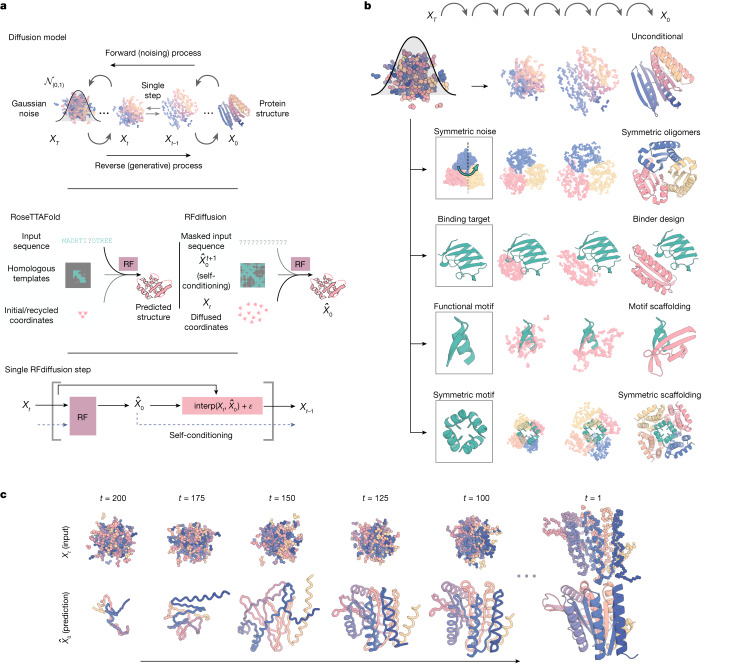
RFdiffusion fine-tunes the RoseTTAFold structure-prediction network as a denoising diffusion model to generate protein backbones for unconditional monomers, symmetric oligomers, functional-motif scaffolds, and de novo binders. The method solves 23 of 25 motif-scaffolding benchmark problems and yields experimentally validated binders, metal-binding assemblies, and a cryo-EM structure matching its design model at 0.63 Å.
Key findings
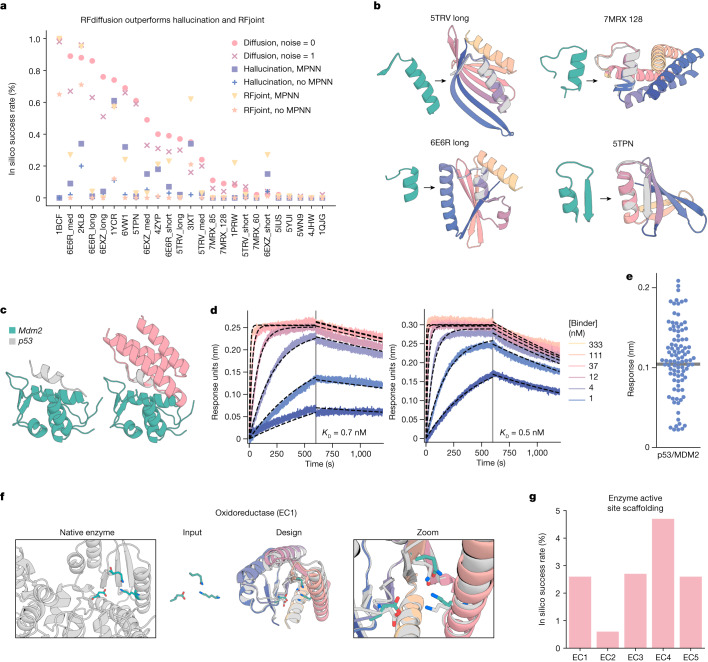
- RFdiffusion solves 23 of 25 motif-scaffolding benchmark problems, compared with 15 for Hallucination and 19 for RFjoint Inpainting; for 19 of 23 solved problems, its success fraction exceeds both baselines.
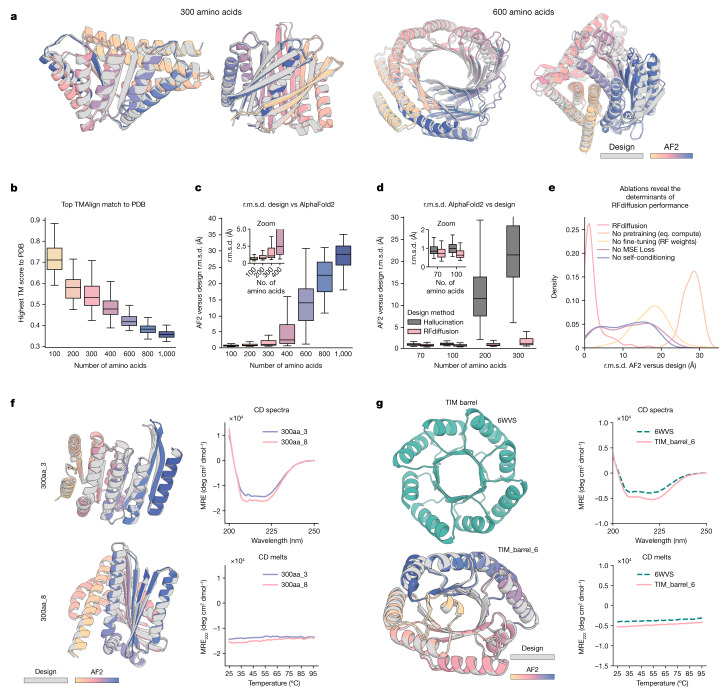
- It generates unconditional monomers up to 600 residues and outperforms RF Hallucination on in silico success (n = 400 designs per condition, z = 9.5, P = 1.6 × 10⁻²¹); a 100-residue protein can be generated in as little as 11 s versus about 8.5 min for RF Hallucination.
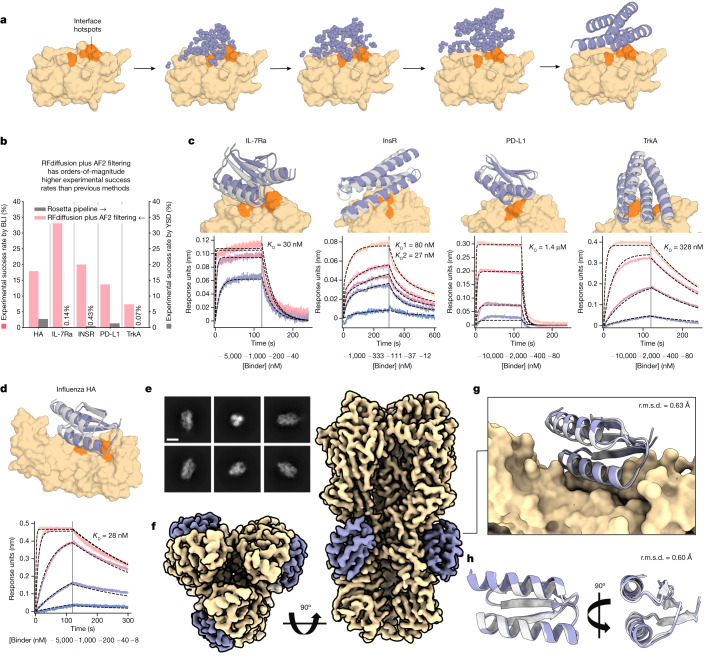
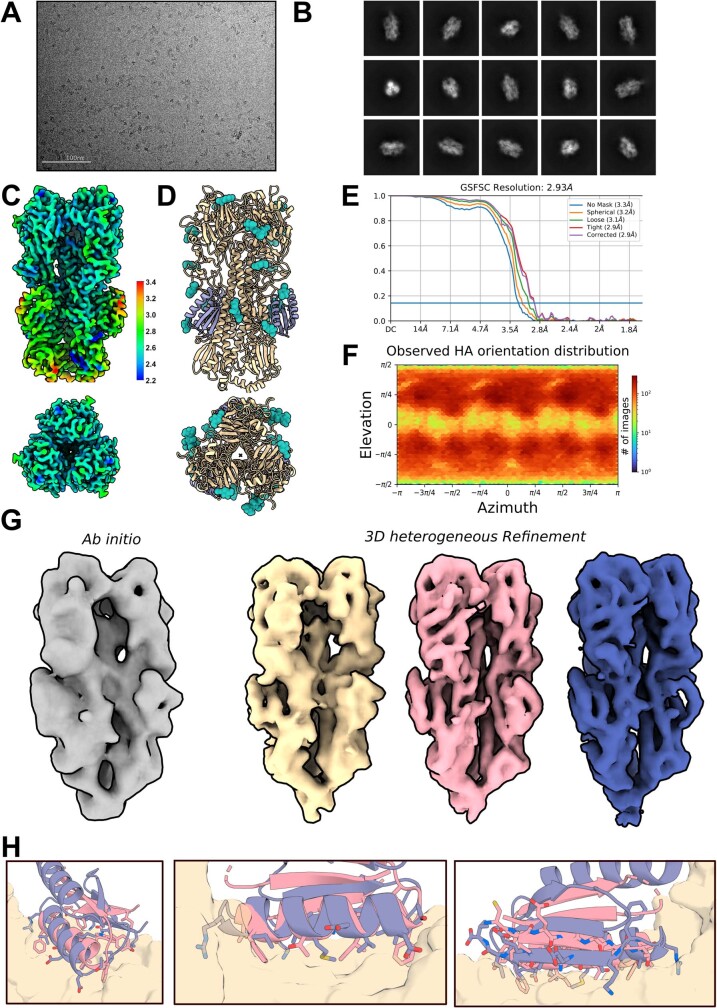
- For binder design against five targets, the overall experimental success rate was 19%, roughly two orders of magnitude above the previous Rosetta-based method; the highest-affinity HA binder, HA_20, bound with KD = 28 nM, and its cryo-EM complex structure matched the design model at 0.63 Å.
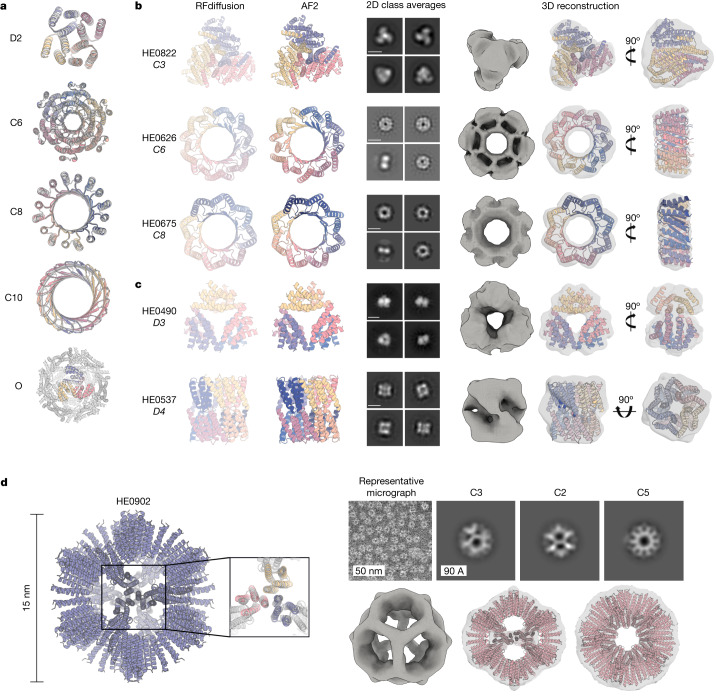
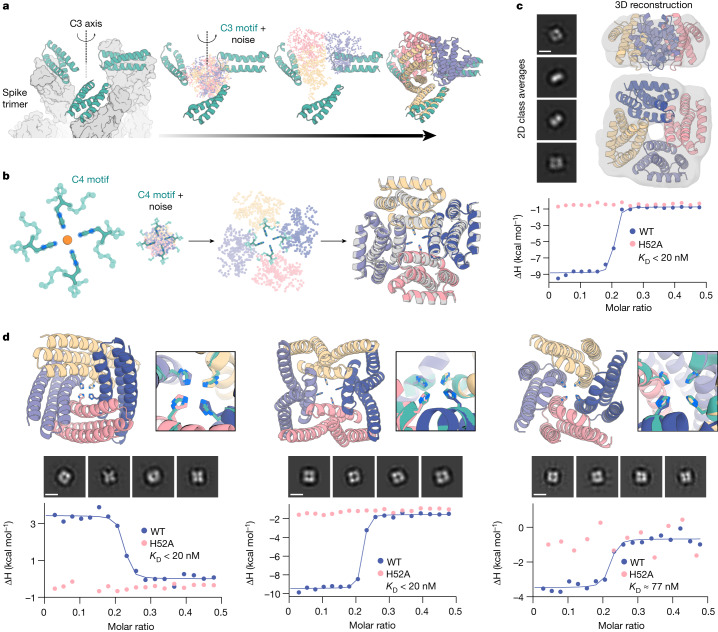
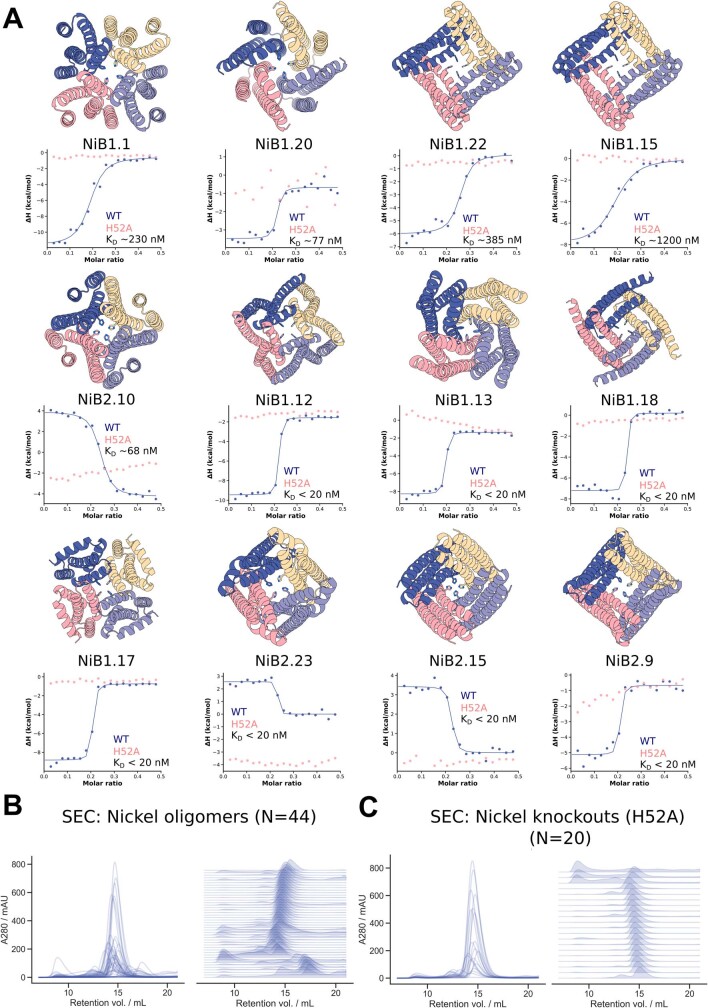
- Symmetric and functional designs were experimentally validated: at least 87 of 608 oligomer designs had SEC oligomerization states closely consistent with design models; 18 of 36 tested Ni²⁺-binding designs bound with dissociation constants from low nanomolar to low micromolar; MDM2 binders reached 0.5 and 0.7 nM versus 600 nM for the native p53 peptide.
Methods
- RFdiffusion uses the RoseTTAFold frame representation (Cα coordinate plus N-Cα-C rigid orientation per residue), trains by noising PDB structures for up to 200 steps, and minimizes mean-squared error between frame predictions and true structures; self-conditioning and fine-tuning from pretrained RF weights improved performance.
- For sequence design, ProteinMPNN was used to design sequences encoding RFdiffusion backbones, typically sampling eight sequences per design; in silico success was validated with AlphaFold2 using mean pAE < 5, global backbone r.m.s.d. < 2 Å, and scaffolded-site backbone r.m.s.d. < 1 Å.
- Experimental characterization included circular dichroism, size-exclusion chromatography, negative-stain EM, cryo-EM, biolayer interferometry, and isothermal titration calorimetry across designed monomers, oligomers, metal-binding proteins, and binders.
Limitations
- The paper states that RFdiffusion cannot explicitly model bound small molecules at present, though it can implicitly model substrates with an external potential; it also states that further studies are required to assess success rates on more polar target sites and sites without native binding partners, and that proteome-wide specificity remains to be fully characterized.
- The paper notes that very large proteins are difficult to validate in silico because they are probably beyond single-sequence prediction capabilities of AF2 and ESMFold, and that some binder designs had insufficient material to permit screening at 10 μM.
- Evident from the text: many conclusions rely on the AF2-based in silico success metric, experimental validation was performed on subsets of designs rather than all generated designs, and the authors did not extensively explore simultaneous structure-and-sequence design within RFdiffusion.
Model-written summary. Check it against the paper before relying on it.
Integrity signals
Registry
Cites
Statistics
Figures
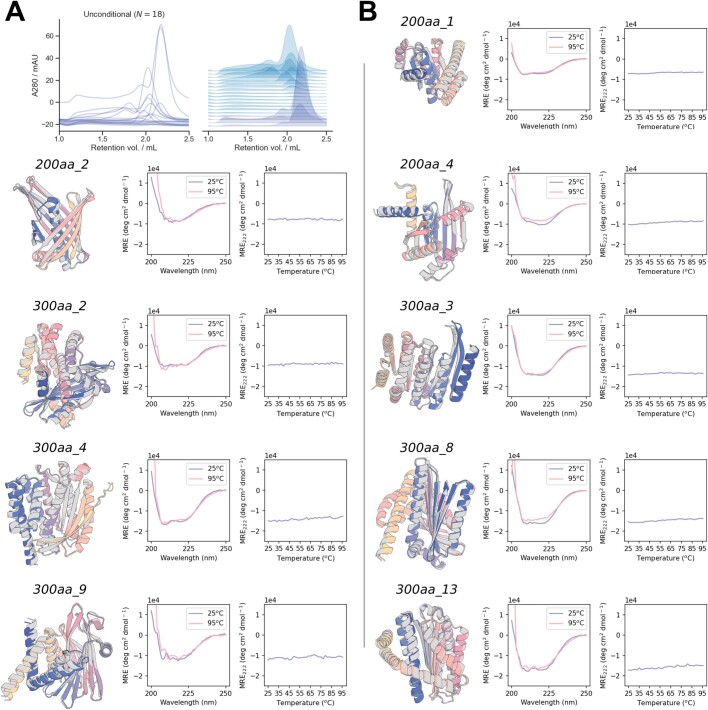
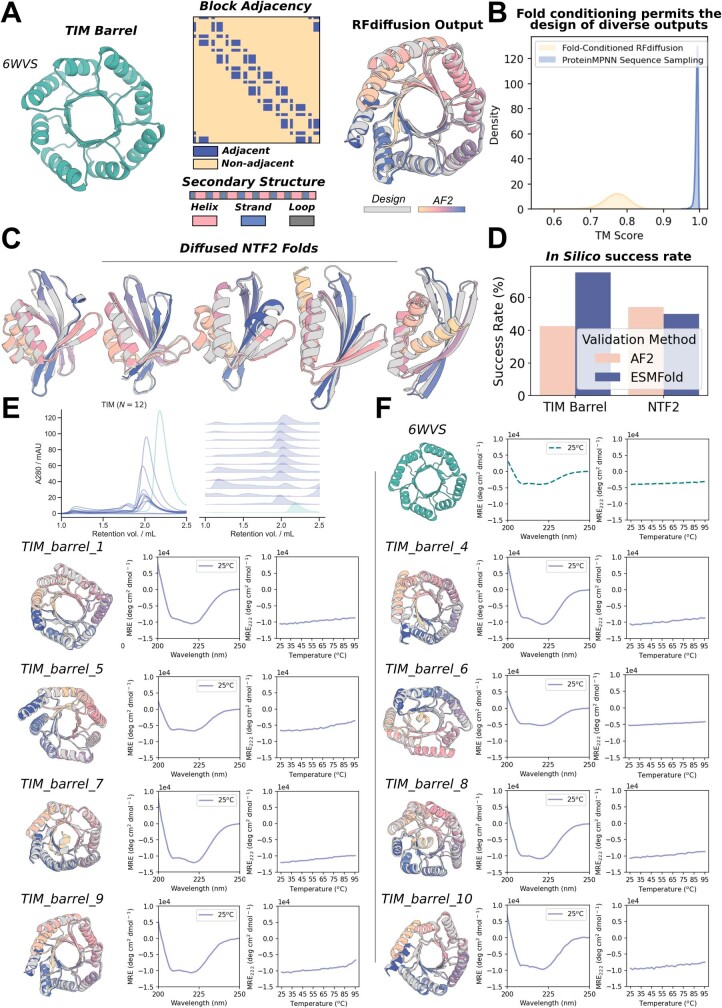
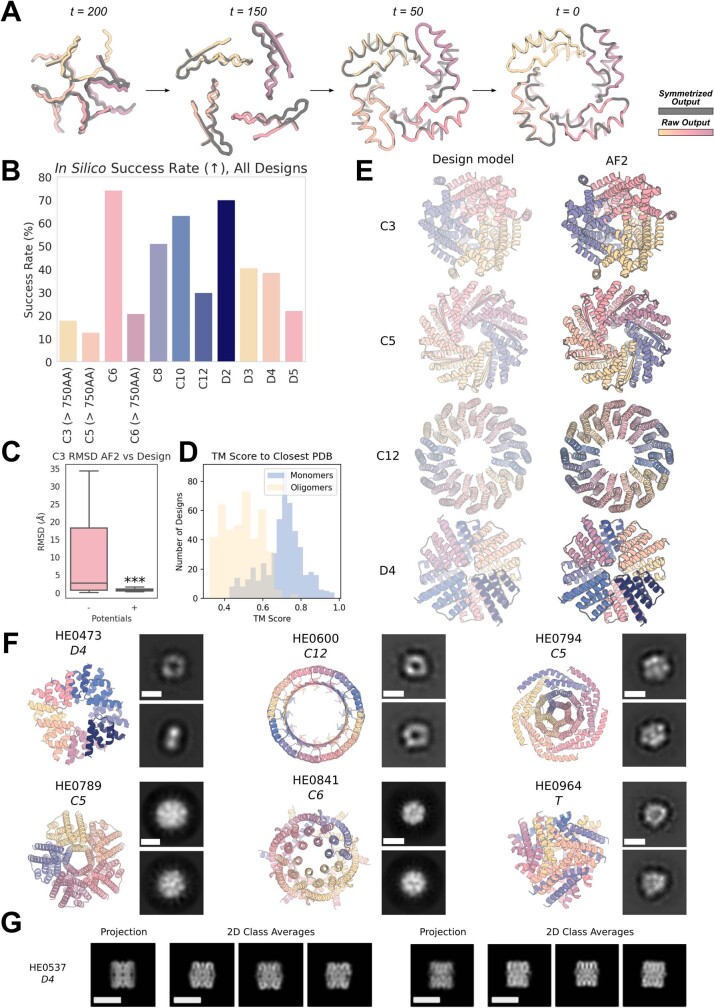
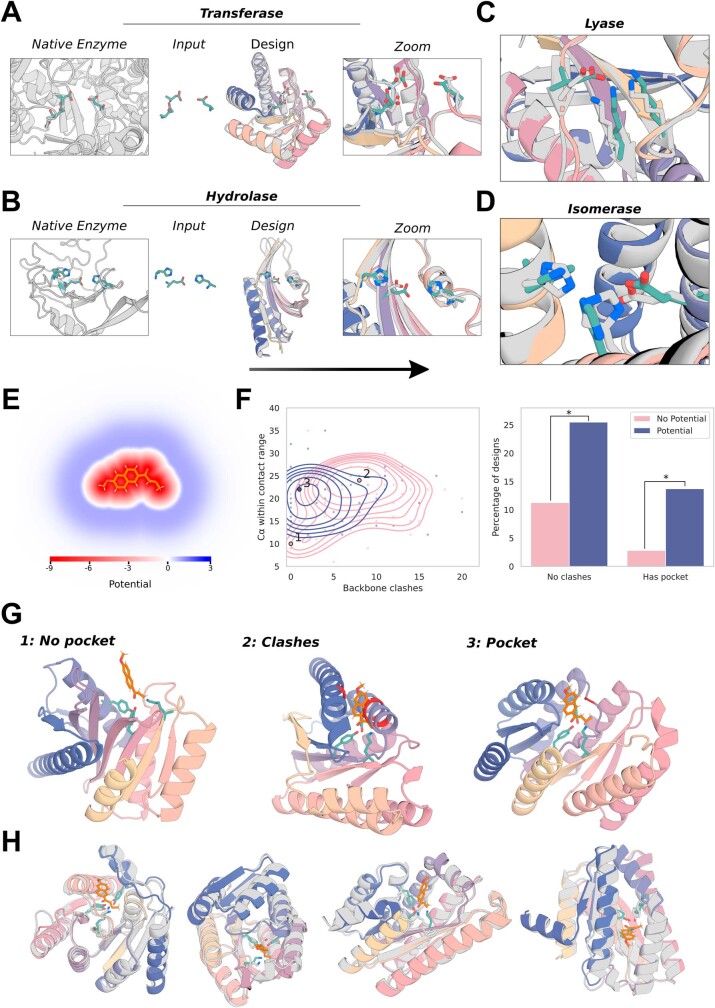
Verification
Claims the paper makes
17 Valid · 4 Not valid · 3 Not checked · 113 Own results and interpretations
Some cited sources support this claim and some don’t — read each source’s verdict below.
In the paper
“Recent work has adapted DDPMs for protein monomer design by conditioning on small protein ‘motifs’5,9 or on secondary structure and block-adjacency (‘fold’) information8.”
§ De novo design of protein structure and function with RFdiffusion > Main
What the sources say
- Supportedcites [5] Trippe, B. L. et al. Diffusion probabilistic modeling of protein backbones in 3D for the motif-scaffolding problem. in The EleventhInternational Conference on Learning Representations (2023). source
The Introduction (p. 1) describes ProtDiff as a diffusion probabilistic model for protein backbones and SMCDiff as its motif-conditioned sampling procedure. The Discussion (p. 9) confirms that the procedure generates scaffolds conditioned on a motif. The secondary-structure and block-adjacency clause is attached to a different citation, so it is not attributed to this source. (LLM, conf=0.93)
- Disputedcites [9] Luo, S. et al. Antigen-specific antibody design and optimization with diffusion-based generative models. in Adv. Neural Information Processing Systems Vol. 35 (eds Koyejo, S. et al) 9754–9767 (Curran Associates, 2022). sourceExperimental — accuracy not yet measured
Section 3.1 (page unavailable) says the paper designs antibody CDRs given an antigen structure and antibody framework, not protein monomers conditioned on small motifs. The Generative Model section likewise describes a diffusion model conditioned on the antigen and antibody framework; it does not describe secondary-structure or block-adjacency conditioning. (LLM, conf=0.87)
Checked by a reasoning model — may be wrong.
- Supportedcites [8] Anand, N. & Achim, T. Protein structure and sequence generation with equivariant denoising diffusion probabilistic models. Preprint at 10.48550/arXiv.2205.15019 (2022). source
Citation 8 is attached to the secondary-structure and block-adjacency (‘fold’) conditioning, not to the motif examples cited separately. Section 2.4 (p. 5) defines those constraints, and Section 3 (p. 6) states that the diffusion model conditions on their encoded output to generate protein structures. (LLM, conf=0.94)
plain- Asserted: passes — The authors put it forward as true.
- Checkable: passes — It can be checked against evidence.
- Load-bearing: unclear — It is unclear whether the paper’s conclusions depend on it.
- Based: passes — The paper gives a reason why it holds.
- Supported
The cited sources support only part of this claim — read each source’s verdict below.
In the paper
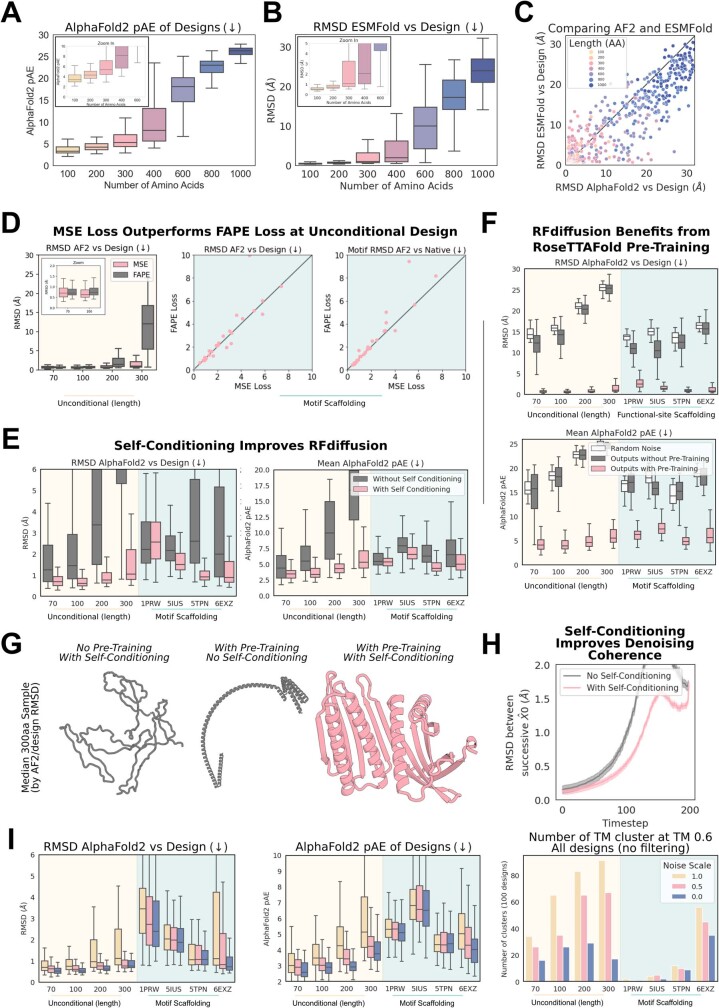
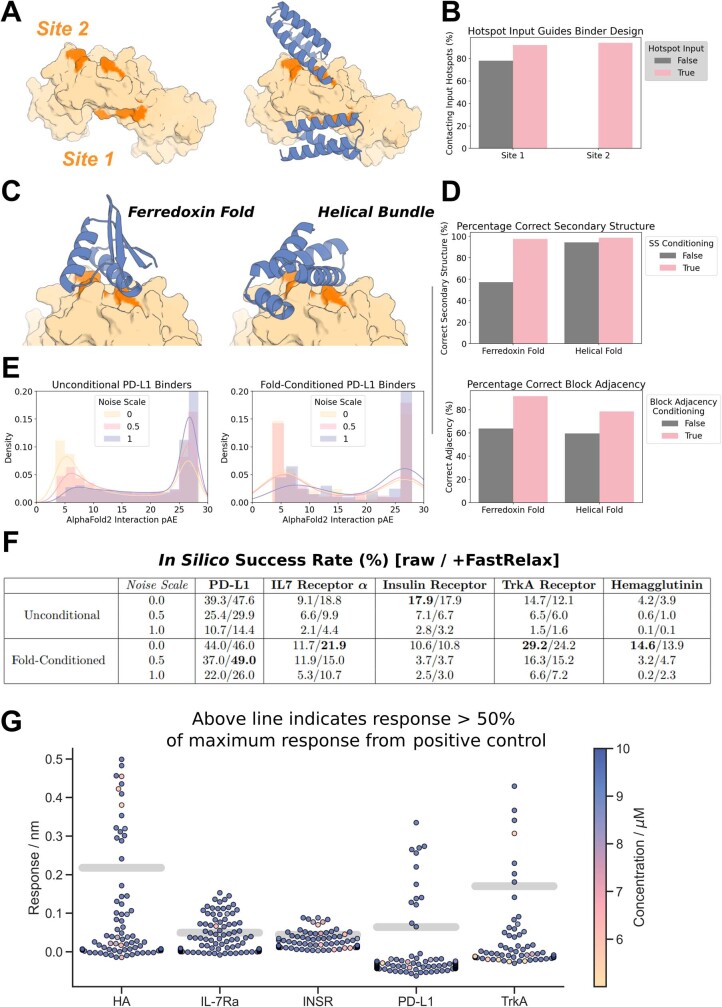
“Self-conditioning within RFdiffusion notably improved performance on in silico benchmarks encompassing both conditional and unconditional protein design tasks (Fig. 2e and Extended Data Fig. 1e).”
§ De novo design of protein structure and function with RFdiffusion > Main
What the sources say
- Partly supportedcites [25] Chen, T., Zhang, R. & Hinton, G. Analog bits: generating discrete data using diffusion models with self-conditioning. in The Eleventh International Conference on Learning Representations (2023). sourceExperimental — accuracy not yet measured
The Discrete Image Generation section (pp. 6–7) reports that self-conditioning improved results for image diffusion models. It does not report RFdiffusion results or in silico benchmarks for conditional and unconditional protein design, so the claimed improvement in that setting is not supported by this source. (LLM, conf=0.86)
plainstates a cause- Asserted: passes — The authors put it forward as true.
- Checkable: passes — It can be checked against evidence.
- Load-bearing: passes — The paper’s conclusions depend on it.
- Based: passes — The paper gives a reason why it holds.
- Partly supported
The cited sources support only part of this claim — read each source’s verdict below.
In the paper
“Experimental characterization showed that the method can scaffold a wide range of protein functional motifs with atomic accuracy19”
§ De novo design of protein structure and function with RFdiffusion > Main
What the sources say
- Partly supportedcites [4] Wang J Scaffolding protein functional sites using deep learning Science 2022 377 387 394 10.1126/science.abn2100 35862514 PMC9621694 sourceExperimental — accuracy not yet measured
The 'Generalized functional motif scaffolding' section reports designs spanning a wide range of motifs and says their activities were assessed experimentally. But its sub-angstrom motif accuracy is based on AlphaFold predictions, not experimental structural measurements; the sentence overstates what the experimental characterization established. (LLM, conf=0.88)
- Partly supportedcites [19] Watson, J. L., Bera, A., Juergens, D., Wang, J. & Baker, D. X-ray crystallographic validation of design from this paper. Science377, 387–394 (2022). sourceExperimental — accuracy not yet measured
The section “Generalized functional motif scaffolding by missing information recovery” (page unavailable) reports designs spanning a wide range of motifs, with motif RMSD typically below 1 Å in AlphaFold predictions. It separately reports experimental tests of the designs’ activities; those tests do not establish atomic structural accuracy. The paper also attributes the broad set of designs to both inpainting and constrained hallucination, rather than RFjoint inpainting alone. (LLM, conf=0.87)
plainstates a cause- Asserted: passes — The authors put it forward as true.
- Checkable: passes — It can be checked against evidence.
- Load-bearing: passes — The paper’s conclusions depend on it.
- Based: passes — The paper gives a reason why it holds.
- Partly supported
The cited sources support only part of this claim — read each source’s verdict below.
In the paper
“we established an in silico benchmark test (Supplementary Table 9) comprising 25 motif-scaffolding design problems addressed in six recent publications encompassing several design methodologies4,5,29,38–40”
§ De novo design of protein structure and function with RFdiffusion > Functional-motif scaffolding
What the sources say
- Could not verifycites [4] Wang J Scaffolding protein functional sites using deep learning Science 2022 377 387 394 10.1126/science.abn2100 35862514 PMC9621694 sourceExperimental — accuracy not yet measured
The 'Generalized functional motif scaffolding by missing information recovery' section describes in silico evaluation of the paper’s own designs, but does not describe establishing a benchmark of 25 problems drawn from six publications. Searches for the benchmark, the numbers, and Supplementary Table 9 found no passage in our copy that verifies those details. (LLM, conf=0.74)
- Supportedcites [5] Trippe, B. L. et al. Diffusion probabilistic modeling of protein backbones in 3D for the motif-scaffolding problem. in The EleventhInternational Conference on Learning Representations (2023). source
Section 5.2 (p. 7) reports motif-scaffolding tests using motifs from proteins 6exz and 5trv; Appendix H.1 (p. 24) describes another target, 5tpn. This supports citing the paper as one of the publications that addressed motif-scaffolding design problems. The citing authors describe the 25-problem benchmark as their own, not as something established by this source. (LLM, conf=0.88)
- Supportedcites [29] Lee, J. S. & Kim, P. M. ProteinSGM: Score-based generative modeling for de novo protein design. Preprint at bioRxiv10.1101/2022.07.13.499967 (2022). source
The citation identifies one of the publications whose design methodology informed the citing authors’ benchmark; it does not attribute the establishment of the 25-problem benchmark to ProteinSGM. In “Conditional generation” (page unavailable), ProteinSGM presents scaffold-inpainting design cases, including generation of scaffolds around the barstar functional site. (LLM, conf=0.88)
- Supportedcites [38] Sesterhenn F De novo protein design enables the precise induction of RSV-neutralizing antibodies Science 2020 368 eaay5051 10.1126/science.aay5051 32409444 PMC7391827 source
The citation identifies this paper as one of the motif-scaffolding publications used to assemble the citing authors’ benchmark; the benchmark’s size and establishment are the citing authors’ own statements. The Results section (page unavailable) describes TopoBuilder as a protocol for designing protein topologies around functional motifs, so the paper fits that role. (LLM, conf=0.88)
- Not checked — no full text of the sourcecites [39] Yang C Bottom-up de novo design of functional proteins with complex structural features Nat. Chem. Biol. 2021 17 492 500 10.1038/s41589-020-00699-x 33398169 source
- Partly supportedcites [40] Glasgow A Engineered ACE2 receptor traps potently neutralize SARS-CoV-2 Proc. Natl Acad. Sci. USA 2020 117 28046 28055 10.1073/pnas.2016093117 33093202 PMC7668070 sourceExperimental — accuracy not yet measured
The Results and Materials and Methods describe computational redesign of the ACE2–spike binding interface, so this is a publication addressing a protein-design problem. Our copy does not describe that work as motif scaffolding. The benchmark of 25 problems is the citing authors’ own work, not a finding attributed to this source. (LLM, conf=0.78)
plain- Asserted: passes — The authors put it forward as true.
- Checkable: passes — It can be checked against evidence.
- Load-bearing: passes — The paper’s conclusions depend on it.
- Based: passes — The paper gives a reason why it holds.
- Could not verify
Every source the paper cites for this claim was checked and supports it.
In the paper
“Vázquez Torres et al. demonstrate the ability of RFdiffusion to design picomolar affinity binders to flexible helical peptides54”
§ De novo design of protein structure and function with RFdiffusion > Discussion
What the sources say
- Supportedcites [54] Torres, S. V. et al. De novo design of high-affinity protein binders to bioactive helical peptides. Preprint at bioRxiv10.1101/2022.12.10.519862 (2022). source
The Peptide binder design with RFdiffusion section reports de novo RFdiffusion binders to the helical peptides Bim and PTH, with an estimated affinity of ~100 pM for Bim and an upper bound of 500 pM for PTH. The Main section explains that peptide targets are often partially or entirely unstructured in isolation, supporting the description of them as flexible. (LLM, conf=0.94)
boostedstates a cause- Asserted: passes — The authors put it forward as true.
- Checkable: passes — It can be checked against evidence.
- Load-bearing: unclear — It is unclear whether the paper’s conclusions depend on it.
- Based: passes — The paper gives a reason why it holds.
- Supported
82 more claims · 7 with their cited sources checked
Create a free account to see all 137 claims and every source verdict.
- It may state two separate claims as one. 48
- Probably not a substantial claim. 3
- The quote only partly states this claim. 1
Claims other papers make about this one
Each is checked against this paper’s own text: does it say what the citing paper says it does?
The source backs part of the claim, not all of it — or backs it for a different population, condition or comparison.
In the citing paper
“We also use Evo to generate genome-scale sequences with plausible high-level architecture more than1 megabase (Mb) in length, a scale that is orders of magnitude greater than previous methods (10, 13, 14).”
From Sequence modeling and design from molecular to genome scale with Evo (2024) · cites this paper as [10]
Experimental — accuracy not yet measured
Self-check
Percentages, sums and reported differences re-computed from the paper’s own numbers.
Each contradiction between two passages listed here was confirmed by an independent check.
Rated minor: it would not touch a result — a value no result rests on, a p-value that stays on the same side of the significance level, or a conflict that is clerical, resolved elsewhere in the paper, or outside its own findings.
In the paper
§ De novo design of protein structure and function with RFdiffusion > Functional-motif scaffolding
“e, Out of 95 designs, 55 showed binding to MDM2 (more than 50% of maximum response).”
§ De novo design of protein structure and function with RFdiffusion > Functional-motif scaffolding
“The overall success rate was quite high: out of the 96 designs, 55 showed some detectable binding at 10 μM (Fig. 4e and Supplementary Fig. 10h).”
Citations
Cites
Highly accurate protein structure prediction with AlphaFold
Jumper, J., Evans, R., Pritzel, A., Green, T., Figurnov, M., Ronneberger, O., Tunyasuvunakool, K., Bates, R., Žídek, A., Potapenko, A., et al. (2021) · Nature · doi:10.1038/s41586-021-03819-2 · Cited by 43,764
Berman, H. M. (2000) · Nucleic Acids Research · doi:10.1093/nar/28.1.235 · Cited by 40,196
Denoising Diffusion Probabilistic Models
Ho, J., Jain, A., & Abbeel, P. (2020) · arXiv · doi:10.48550/arxiv.2006.11239 · Cited by 8,712
Evolutionary-scale prediction of atomic level protein structure with a language model
Lin, Z., Akin, H., Rao, R., Hie, B., Zhu, Z., Lu, W., Smetanin, N., Verkuil, R., Kabeli, O., Shmueli, Y., et al. (2022) · doi:10.1101/2022.07.20.500902 · Cited by 5,990
Accurate prediction of protein structures and interactions using a 3-track network
Baek, M., DiMaio, F., Anishchenko, I., Dauparas, J., Ovchinnikov, S., Lee, G. R., Wang, J., Cong, Q., Kinch, L. N., Schaeffer, R. D., et al. (2021) · doi:10.1101/2021.06.14.448402 · Cited by 5,549
Self-citationDeep Unsupervised Learning using Nonequilibrium Thermodynamics
Sohl-Dickstein, J., Weiss, E. A., Maheswaranathan, N., & Ganguli, S. (2015) · arXiv · doi:10.48550/arxiv.1503.03585 · Cited by 2,637
Zero-shot text-to-image generation
Ramesh, A., Pavlov, M., Goh, G., Gray, S., Voss, C., Radford, A., Chen, M., & Sutskever, I. (2021) · arXiv · doi:10.48550/arxiv.2102.12092 · Cited by 2,417
THEORY OF PROTEIN FOLDING: The Energy Landscape Perspective
Onuchic, J. N., Luthey-Schulten, Z., & Wolynes, P. G. (1997) · Annual Review of Physical Chemistry · doi:10.1146/annurev.physchem.48.1.545 · Cited by 2,210
Robust deep learning–based protein sequence design using ProteinMPNN
Dauparas, J., Anishchenko, I., Bennett, N., Bai, H., Ragotte, R. J., Milles, L. F., Wicky, B. I. M., Courbet, A., de Haas, R. J., Bethel, N., et al. (2022) · Science · doi:10.1126/science.add2187 · Cited by 2,210 · cited 6×
“We explored two different strategies for training RFdiffusion: (1) in a manner akin to ‘canonical’ diffusion models, with predictions at each timestep independent of predictions at previous timesteps (as in previous work(5,8,9,16)), and (2) with self-conditioning(25), in which the model can condition on previous predi…”
InfluentialSelf-citationStructure of the MDM2 Oncoprotein Bound to the p53 Tumor Suppressor Transactivation Domain
Kussie, P. H., Gorina, S., Marechal, V., Elenbaas, B., Moreau, J., Levine, A. J., & Pavletich, N. P. (1996) · Science · doi:10.1126/science.274.5289.948 · Cited by 2,206
Research works printed but not linked: 1
- Watson, J. L., Bera, A., Juergens, D., Wang, J. & Baker, D. X-ray crystallographic validation of design from this paper. Science377, 387–394 (2022). · DOI · Paper page
Cited by
Items 201–300 of 2,479
DrugHIVE: Target-specific spatial drug design and optimization with a hierarchical generative model
(2023) · doi:10.1101/2023.12.22.573155 · Cited by 47
In silico evolution of autoinhibitory domains for a PD-L1 antagonist using deep learning models
Goudy, O. J., Nallathambi, A., Kinjo, T., Randolph, N. Z., & Kuhlman, B. A. (2023) · Proceedings of the National Academy of Sciences · doi:10.1073/pnas.2307371120 · Cited by 55
DiffModeler: large macromolecular structure modeling for cryo-EM maps using a diffusion model
Wang, X., Zhu, H., Terashi, G., Taluja, M., & Kihara, D. (2024) · Nature Methods · doi:10.1038/s41592-024-02479-0 · Cited by 39
“Notably, the diffusion model has demonstrated considerable success in various areas of image processing, such as image generation 23–26 , segmentation 27,28 and translation 29,30 , as well as in bioinformatics, including protein docking 31 and protein design 32,33 .”
The Nobel Prize in Chemistry: past, present, and future of AI in biology
Abriata, L. A. (2024) · Communications Biology · doi:10.1038/s42003-024-07113-5 · Cited by 62
Efficient Diffusion Models: A Comprehensive Survey From Principles to Practices
Ma, Z., Zhang, Y., Jia, G., Zhao, L., Ma, Y., Ma, M., Liu, G., Zhang, K., Ding, N., Li, J., et al. (2025) · IEEE Transactions on Pattern Analysis and Machine Intelligence · doi:10.1109/tpami.2025.3569700 · Cited by 107
Modeling protein–ligand interactions for drug discovery in the era of deep learning
Wang, Y., Li, Y., Chen, J., & Lai, L. (2025) · Chemical Society Reviews · doi:10.1039/d5cs00415b · Cited by 53
Electrostatics as a Guiding Principle in Understanding and Designing Enzymes
Ruiz‐Pernía, J. J., Świderek, K., Bertrán, J., Moliner, V., & Tuñón, I. (2024) · Journal of Chemical Theory and Computation · doi:10.1021/acs.jctc.3c01395 · Cited by 49
Nuñez, L. F. S., Barrera-Ocampo, A. A., Caicedo, P. A., Cortés, N., Osorio, E. H., Villegas-Torres, M. F., & Barrios, A. F. G. (2024) · Metabolites · doi:10.3390/metabo14030154 · Cited by 50
Electron flow matching for generative reaction mechanism prediction
Joung, J. F., Fong, M. H., Casetti, N., Liles, J. P., Dassanayake, N. S., & Coley, C. W. (2025) · Nature · doi:10.1038/s41586-025-09426-9 · Cited by 75
Delaying pyroptosis with an AI-screened gasdermin D pore blocker mitigates inflammatory response
Sun, J., Yang, J. M., Tao, J., Yang, Y., Wang, R., Zhang, H., Liu, W., Zhao, S., Shao, R., He, Y., et al. (2025) · Nature Immunology · doi:10.1038/s41590-025-02280-x · Cited by 49
“Artificial intelligence (AI) has revolutionized protein design, leading to the development of numerous methods, such as RFDiffusion 23 , MaSIF 24 , RifDock 25 and SCUBA 26 , which enable the creation of high-affinity proteins.”
Data‐Driven Protein Engineering for Improving Catalytic Activity and Selectivity
Ao, Y., Dörr, M., Menke, M. J., Born, S., Heuson, E., & Bornscheuer, U. T. (2023) · ChemBioChem · doi:10.1002/cbic.202300754 · Cited by 44
Ni, B., Kaplan, D. L., & Buehler, M. J. (2024) · Science Advances · doi:10.1126/sciadv.adl4000 · Cited by 39
Learning the language of antibody hypervariability
Singh, R., Im, C., Qiu, Y., Mackness, B. C., Gupta, A., Joren, T., Sledzieski, S., Erlach, L., Wendt, M., Fomekong‐Nanfack, Y., et al. (2024) · Proceedings of the National Academy of Sciences · doi:10.1073/pnas.2418918121 · Cited by 55
De novo design of transmembrane fluorescence-activating proteins
Zhu, J., Liang, M., Sun, K., Yu, W., Guo, R., Zhang, L., Shi, J., Ma, D., Hu, Q., Huang, G., et al. (2025) · Nature · doi:10.1038/s41586-025-08598-8 · Cited by 56
“RFDiffusion was obtained and run according to https://github.com/RosettaCommons/RFdiffusion.”
Circular RNA discovery with emerging sequencing and deep learning technologies
Zhang, J., & Zhao, F. (2025) · Nature Genetics · doi:10.1038/s41588-025-02157-7 · Cited by 54
“Additionally, generative diffusion models have successfully designed novel proteins de novo 150 .”
Efficient and selective energy transfer photoenzymes powered by visible light
Crawshaw, R., Smithson, R., Hofer, J., Hardy, F. J., Roberts, G. W., Trimble, J. S., Kohn, A. R., Levy, C., Drost, D. A., Merten, C., et al. (2025) · Nature Chemistry · doi:10.1038/s41557-025-01820-0 · Cited by 59
AI-driven de novo enzyme design: Strategies, applications, and future prospects
Cui, X.-C., Zheng, Y., Liu, Y., Yuchi, Z., & Yuan, Y. (2025) · Biotechnology Advances · doi:10.1016/j.biotechadv.2025.108603 · Cited by 47
Applications of artificial intelligence to lipid nanoparticle delivery
Yuan, Y., Wu, Y., Cheng, J., Yang, K., Xia, Y., Wu, H., & Pan, X. (2023) · Particuology · doi:10.1016/j.partic.2023.11.014 · Cited by 49
Protein-based nanoparticles for therapeutic nucleic acid delivery
Eweje, F., Walsh, M. L., Ahmad, K., Ibrahim, V., Alrefai, A., Chen, J., & Chaikof, E. L. (2024) · Biomaterials · doi:10.1016/j.biomaterials.2023.122464 · Cited by 47
Generative artificial intelligence for enzyme design: Recent advances in models and applications
Wen, S., Zheng, W., Bornscheuer, U. T., & Wu, S. (2025) · Current Opinion in Green and Sustainable Chemistry · doi:10.1016/j.cogsc.2025.101010 · Cited by 61
Nanobodies: From Discovery to AI-Driven Design
Zhu, H., & Ding, Y. (2025) · Biology · doi:10.3390/biology14050547 · Cited by 53
De novo design and structure of a peptide–centric TCR mimic binding module
Householder, K. D., Xiang, X., Jude, K. M., Deng, A., Obenaus, M., Zhao, Y., Wilson, S. C., Chen, X. T., Wang, N., & García, K. C. (2025) · Science · doi:10.1126/science.adv3813 · Cited by 54
“We produced 100 distinct four-helix bundle folds docked over NY-ESO-1 HLA-A*02, each sampled for six amino acid sequences with ProteinMPNN, yielding 600 designs (data S1).”
InfluentialAntigen spacing on protein nanoparticles influences antibody responses to vaccination
Ellis, D., Dosey, A. M., Boyoglu-Barnum, S., Park, Y., Gillespie, R. A., Syeda, H., Hutchinson, G. B., Tsybovsky, Y., Murphy, M., Pettie, D., et al. (2023) · Cell Reports · doi:10.1016/j.celrep.2023.113552 · Cited by 43
Son, A., Park, J., Kim, W., Yoon, Y., Lee, S., Park, Y., & Kim, H. (2024) · Molecules · doi:10.3390/molecules29194626 · Cited by 49
A data-efficient strategy for building high-performing medical foundation models
Sun, Y., Tan, W., Gu, Z., He, R., Chen, S., Pang, M., & Yan, B. (2025) · Nature Biomedical Engineering · doi:10.1038/s41551-025-01365-0 · Cited by 68
“…autoencoders (VAEs) 13 , generative adversarial networks (GANs) 14 and diffusion models 15–17 , have been widely applied to medical fields for the discovery and design of new data, such as protein sequence generation 18–20 , drug discovery 21–23 , molecular design 24–27 and medical imaging 28–30 .”
Design of linear and cyclic peptide binders from protein sequence information
Li, Q., Vlachos, E. N., & Bryant, P. (2025) · Communications Chemistry · doi:10.1038/s42004-025-01601-3 · Cited by 59
Medium-sized protein language models perform well at transfer learning on realistic datasets
Vieira, L. C., Handojo, M. L., & Wilke, C. O. (2025) · Scientific Reports · doi:10.1038/s41598-025-05674-x · Cited by 41
Buller, R., Damborský, J., Hilvert, D., & Bornscheuer, U. T. (2024) · Angewandte Chemie International Edition · doi:10.1002/anie.202421686 · Cited by 46
Zhao, Y., Zhao, Y., Wang, J., & Wang, Z. (2025) · Industrial & Engineering Chemistry Research · doi:10.1021/acs.iecr.4c04636 · Cited by 50
Self-citationJin, S., Zeng, Z., Xiong, X., Huang, B., Tang, L., Wang, H., Ma, X., Tang, X., Shao, G., Huang, X., et al. (2025) · Communications Biology · doi:10.1038/s42003-025-08282-7 · Cited by 50
Lu, Y., Huang, W., Li, Y., Xu, Y., Wei, Q., Sha, C., & Guo, P. (2025) · npj Precision Oncology · doi:10.1038/s41698-025-01159-2 · Cited by 56
Medium-sized protein language models perform well at transfer learning on realistic datasets
(2024) · doi:10.1101/2024.11.22.624936 · Cited by 41
Seven technologies to watch in 2024
Eisenstein, M. S. (2024) · Nature · doi:10.1038/d41586-024-00173-x · Cited by 47
Malhotra, Y., John, J., Yadav, D., Sharma, D., Vanshika, Rawal, K., Mishra, V., & Chaturvedi, N. (2025) · Computers in Biology and Medicine · doi:10.1016/j.compbiomed.2025.109842 · Cited by 44
Recent advances on protein engineering for improved stability
Shi, J., Yuan, B., Yang, H., & Sun, Z. (2025) · BioDesign Research · doi:10.1016/j.bidere.2025.100005 · Cited by 45
Design of high-affinity binders to immune modulating receptors for cancer immunotherapy
Yang, W., Hicks, D. R., Ghosh, A., Schwartze, T. A., Conventry, B., Goreshnik, I., Allen, A., Halabiya, S. F., Kim, C. J., Hinck, C. S., et al. (2025) · Nature Communications · doi:10.1038/s41467-025-57192-z · Cited by 40
“While we used Rosetta interface design methods primarily in this paper, the 5HCS scaffolds should provide excellent starting points for re fi nement with partial RFdiffusion 8 and other machine learning-based methods 31 which can further mold the backbone geometry to the target of interest.”
Self-citationAI for organic and polymer synthesis
Hong, X., Yang, Q., Liao, K., Pei, J., Chen, M., Mo, F., Lu, H., Zhang, W.-B., Zhou, H., Chen, J., et al. (2024) · Science China Chemistry · doi:10.1007/s11426-024-2072-4 · Cited by 45
Learning Joint 2-D and 3-D Graph Diffusion Models for Complete Molecule Generation
Huang, H. K., Sun, L., Du, B., & Lyu, W. (2024) · IEEE Transactions on Neural Networks and Learning Systems · doi:10.1109/tnnls.2024.3416328 · Cited by 98
Mantena, S., Pillai, P. P., Petros, B. A., Welch, N. L., Myhrvold, C., Sabeti, P. C., & Metsky, H. C. (2024) · Nature Biotechnology · doi:10.1038/s41587-024-02422-w · Cited by 45
“Generative methods are transforming the field of biological sequence design, with recent work focusing on generating long protein and DNA sequences 10,12,45 .”
Recent Advances in NMR Protein Structure Prediction with ROSETTA
Leman, J. K., & Künze, G. (2023) · International Journal of Molecular Sciences · doi:10.3390/ijms24097835 · Cited by 42
Quantum circuit synthesis with diffusion models
Fürrutter, F., Muñoz-Gil, G., & Briegel, H. J. (2024) · Nature Machine Intelligence · doi:10.1038/s42256-024-00831-9 · Cited by 94
“Led by the emergence of latent diffusion 20 , and the ability to guide/condition their generation at will 24 , DMs have become the go-to method for generative applications in fields such as image generation 25 , audio synthesis 26 , video generation 27 and protein-structure prediction 28 .”
Cytochrome P450 Enzyme Design by Constraining the Catalytic Pocket in a Diffusion Model
Wang, Q., Liu, X., Zhang, H., Chu, H., Shi, C., Zhang, L. J., Liu, P., Liu, P., Zhu, X., Liu, Y., et al. (2024) · Research · doi:10.34133/research.0413 · Cited by 43
Grigorakis, K., Ferousi, C., & Topakas, E. (2025) · Catalysts · doi:10.3390/catal15020147 · Cited by 45
Peptide-functionalized nanoparticles for brain-targeted therapeutics
Tang, S. N., Han, E. L., & Mitchell, M. J. (2025) · Drug Delivery and Translational Research · doi:10.1007/s13346-025-01840-w · Cited by 53
Efficient generation of epitope-targeted antibodies with Germinal
Mille, L. S., Driscoll, C. L., Wang, J. N., Dai, H., Widatalla, T., Zhang, J. L., Zhang, X., Rao, B., Feng, L., Hie, B., et al. (2026) · Nature Biotechnology · doi:10.1038/s41587-026-03187-0 · Cited by 53
Self-citationAligning protein-generative models to experimental fitness with ProteinDPO
Widatalla, T., Borah, A. A., King, S. B., Driscoll, C. L., Rafailov, R., & Hie, B. (2026) · Nature Methods · doi:10.1038/s41592-026-03137-3 · Cited by 52
Malbranke, C., Bikard, D., Cocco, S., Monasson, R., & Tubiana, J. (2023) · Current Opinion in Structural Biology · doi:10.1016/j.sbi.2023.102571 · Cited by 35
Challenges in bridging the gap between protein structure prediction and functional interpretation
Varadi, M., Tsenkov, M., & Velankar, S. (2025) · Proteins: Structure, Function, and Bioinformatics · doi:10.1002/prot.26614 · Cited by 36
Confronting the data deluge: How artificial intelligence can be used in the study of plant stress
Koh, E., Sunil, R. S., Lam, H. Y. I., & Mutwil, M. (2024) · Computational and Structural Biotechnology Journal · doi:10.1016/j.csbj.2024.09.010 · Cited by 41
Generative AI: driving productivity and scientific breakthroughs in pharmaceutical R&D
Doron, G., Genway, S., Roberts, M., & Jasti, S. (2024) · Drug Discovery Today · doi:10.1016/j.drudis.2024.104272 · Cited by 49
AlphaDesign: a de novo protein design framework based on AlphaFold
(2025) · doi:10.1038/s44320-025-00119-z · Cited by 36
Applications of Artificial Intelligence in Biotech Drug Discovery and Product Development
Liu, Y., Zhang, L., Jiang, Z., Tian, X., Li, P., Wu, P., Du, W., Yuan, B., Xie, C., Bu, G., et al. (2025) · MedComm · doi:10.1002/mco2.70317 · Cited by 51
AI models for protein design are driving antibody engineering
Chungyoun, M. F., & Gray, J. J. (2023) · Current Opinion in Biomedical Engineering · doi:10.1016/j.cobme.2023.100473 · Cited by 39
Wang, J., Watson, J. L., & Lisanza, S. L. (2024) · Cold Spring Harbor Perspectives in Biology · doi:10.1101/cshperspect.a041472 · Cited by 48
Self-citationSemantic design of functional de novo genes from a genomic language model
(2025) · doi:10.1038/s41586-025-09749-7 · Cited by 35
“These results blur the line between de novo protein design 50–52 and diversification based on evolutionary models 14,15,53 , providing an ‘existence proof’ that sequence models can meaningfully generalize beyond natural sequences.”
Electro-osmotic Flow Generation via a Sticky Ion Action
Mehrafrooz, B., Yu, L., Pandey, L., Siwy, Z. S., Wanunu, M., & Aksimentiev, A. (2024) · ACS Nano · doi:10.1021/acsnano.4c00829 · Cited by 40
Zhou, B., Zheng, L., Wu, B., Yi, K., Zhong, B., Tan, Y., Liu, Q., Lió, P., & Hong, L. (2024) · Cell Discovery · doi:10.1038/s41421-024-00728-2 · Cited by 46
“This requirement can be satis fi ed by the design philosophy of DDPMs, which assembles trainable neural network layers to progressively denoise arti fi cial perturbations of de fi ned noise distribution and reveal the original data distribution 9,15 – 19 .”
Review of External Field Effects on Electrocatalysis: Machine Learning Guided Design
Wang, L., Zhou, X., Luo, Z., Liu, S., Yue, S., Chen, Y., & Liu, Y. (2024) · Advanced Functional Materials · doi:10.1002/adfm.202408870 · Cited by 47
Lin, V., Cheung, M., Gowthaman, R., Eisenberg, M., Baker, B. M., & Pierce, B. G. (2024) · Nucleic Acids Research · doi:10.1093/nar/gkae840 · Cited by 50
Vaccine development using artificial intelligence and machine learning: A review
Asediya, V., Anjaria, P. A., Mathakiya, R. A., KORINGA, P. G., Nayak, J. B., Bisht, D., Fulmali, D., Patel, V. A., & Desai, D. N. (2024) · International Journal of Biological Macromolecules · doi:10.1016/j.ijbiomac.2024.136643 · Cited by 41
Machine learning for synthetic gene circuit engineering
Palacios, S., Collins, J. J., & Vecchio, D. D. (2025) · Current Opinion in Biotechnology · doi:10.1016/j.copbio.2025.103263 · Cited by 42
Molecular insights fast-tracked: AI in biosynthetic pathway research
Liao, L., Xie, M., Zheng, X., Zhou, Z., Deng, Z., & Gao, J. (2025) · Natural Product Reports · doi:10.1039/d4np00003j · Cited by 42
De novo design of miniproteins targeting GPCRs
Muratspahić, E., Feldman, D., Kim, D. E., Qu, X., Bratovianu, A.-M., Rivera-Sánchez, P., Voss, J. H., Hertz, E. P. T., Jeppesen, M. G., Dimitri, F., et al. (2026) · Nature · doi:10.1038/s41586-026-10656-8 · Cited by 41
“The RFdiffusion agonists span 11 helical topologies (Fig 2l and Supplementary Fig.”
InfluentialSelf-citationSemantic mining of functional de novo genes from a genomic language model
Merchant, A. T., King, S. H., Nguyen, E., & Hie, B. L. (2024) · doi:10.1101/2024.12.17.628962 · Cited by 35
Lipid vesicle-based molecular robots
Peng, Z., Iwabuchi, S., Izumi, K., Takiguchi, S., Yamaji, M., Fujita, S., Suzuki, H., Kambara, F., Fukasawa, G., Cooney, A., et al. (2024) · Lab on a Chip · doi:10.1039/d3lc00860f · Cited by 39
Kim, D. N., McNaughton, A. D., & Kumar, N. (2024) · Bioengineering · doi:10.3390/bioengineering11020185 · Cited by 40
Mullin, M. J., McClory, J., Haynes, W. A., Grace, J., Robertson, N. J., & Heeke, G. V. (2024) · mAbs · doi:10.1080/19420862.2024.2341443 · Cited by 41
AI approaches for the discovery and validation of drug targets
Wenteler, A., Cabrera, C., Wei, W., Neduva, V., & Barnes, M. R. (2024) · Cambridge Prisms Precision Medicine · doi:10.1017/pcm.2024.4 · Cited by 56
Possible opportunities and challenges for traditional Chinese medicine research in 2035
Huang, N., Huang, W., Wu, J., Long, S., Luo, Y., & Huang, J. (2024) · Frontiers in Pharmacology · doi:10.3389/fphar.2024.1426300 · Cited by 55
The Application of Machine Learning on Antibody Discovery and Optimization
Zheng, J., Wang, Y., Liang, Q., Cui, L., & Wang, L. (2024) · Molecules · doi:10.3390/molecules29245923 · Cited by 41
Zhou, B., Li, X., Pan, Y., He, B., & Gao, B. (2025) · Colloids and Surfaces B Biointerfaces · doi:10.1016/j.colsurfb.2025.114970 · Cited by 43
Molecular representation learning: cross-domain foundations and future Frontiers
Sheshanarayana, R., & You, F. (2025) · Digital Discovery · doi:10.1039/d5dd00170f · Cited by 55
The role and pathway of VQ family in plant growth, immunity, and stress response
Tian, J., Zhang, J., & Francis, F. (2023) · Planta · doi:10.1007/s00425-023-04292-z · Cited by 36
Structural modeling of ion channels using AlphaFold2, RoseTTAFold2, and ESMFold
Nguyen, P. T., Harris, B., Mateos, D. L., González, A. H., Murray, A., & Yarov-Yarovoy, V. M. (2024) · Channels · doi:10.1080/19336950.2024.2325032 · Cited by 40
Engineering the next-generation synthetic cell factory driven by protein engineering
Guan, A., He, Z., Wang, X., Jia, Z., & Qin, J. (2024) · Biotechnology Advances · doi:10.1016/j.biotechadv.2024.108366 · Cited by 33
Generative AI for computational chemistry: A roadmap to predicting emergent phenomena
Tiwary, P., Herron, L., John, R., Lee, S., Sanwal, D., & Wang, R. (2025) · Proceedings of the National Academy of Sciences · doi:10.1073/pnas.2415655121 · Cited by 43
Programmable enzyme catalysis based on multiscale confinements
Cao, Y., Qiao, W., Zhang, C., Zhu, M., Wu, Q., Lou, W.-Y., Willner, I., Zare, R. N., & Ge, J. (2025) · Nature Synthesis · doi:10.1038/s44160-025-00898-1 · Cited by 35
Improved protein binder design using β-pairing targeted RFdiffusion
Sappington, I., Toul, M., Lee, D. S., Robinson, S. A., Goreshnik, I., McCurdy, C., Chan, T. C., Buchholz, N., Huang, B., Vafeados, D. K., et al. (2026) · Nature Communications · doi:10.1038/s41467-025-67866-3 · Cited by 41
“2 .”
Self-citationOverath, M. D., Rygaard, A. M., Jacobsen, C. P., Brasas, V., Morell, O., Sormanni, P., & Jenkins, T. P. (2025) · bioRxiv (Cold Spring Harbor Laboratory) · doi:10.1101/2025.08.14.670059 · Cited by 55
DaSilva, L. F., Senan, S., Patel, Z. M., Reddy, A. J., Gabbita, S., Nussbaum, Z., Córdova, C. M. V., Wenteler, A., Weber, N., Tunjic, T. M., et al. (2024) · doi:10.1101/2024.02.01.578352 · Cited by 32
“Diffusion models have emerged as a powerful class of generative models that have achieved strong performance in generating synthetic images, audio, and text 6–9 and more recently also adapted in the biological context to generate protein structures 10 ( Fig.”
Ramelot, T. A., Palmer, J. M., Montelione, G. T., & Bhardwaj, G. (2023) · Current Opinion in Structural Biology · doi:10.1016/j.sbi.2023.102603 · Cited by 39
Accelerating drug discovery, development, and clinical trials by artificial intelligence
Zhang, Y., Mastouri, M., & Zhang, Y. (2024) · Med · doi:10.1016/j.medj.2024.07.026 · Cited by 39
Efficient generation of protein pockets with PocketGen
Zhang, Z., Shen, W. X., Liu, Q., & Zitnik, M. (2024) · Nature Machine Intelligence · doi:10.1038/s42256-024-00920-9 · Cited by 32
“To address this limitation, RFdiffusion All-Atom (RFAA) 16 extends the approach by enabling the direct generation of binding proteins around small molecules through iterative denoising.”
InfluentialDe novo design of protein minibinder agonists of TLR3
Adams, C. S., Kim, H., Burtner, A. E., Lee, D. S., Dobbins, C., Criswell, C., Coventry, B., Tran-Pearson, A., Kim, H. M., & King, N. P. (2025) · Nature Communications · doi:10.1038/s41467-025-56369-w · Cited by 37
“Combining our approach to TLR minibinder design with recently developed generative methods for designing multimeric scaffolds 57 could become a powerful and general approach to designing protein-based TLR agonists.”
Harnessing artificial intelligence to advance CRISPR-based genome editing technologies
Thomson, T., Li, G. L., Strilchuk, A. W., Cui, H., Wang, B., & Li, B. (2025) · Nature Reviews Genetics · doi:10.1038/s41576-025-00907-1 · Cited by 45
Feeding from the sun—Successes and prospects in bioengineering photosynthesis for food security
Long, S. P., Wang, Y., Carmo‐Silva, E., Cavanagh, A. P., Jonikas, M. C., Kromdijk, J., Long, B. M., Marshall‐Colón, A., Shukla, D., Wilson, R. H., et al. (2025) · Cell · doi:10.1016/j.cell.2025.10.033 · Cited by 42
Advancing structural biology through breakthroughs in AI
Aithani, L., Alcaide, E., Bartunov, S., Cooper, C. D. O., Dore, A. S., Lane, T. J., Maclean, F., Rucktooa, P., Shaw, R. A., & Skerratt, S. E. (2023) · Current Opinion in Structural Biology · doi:10.1016/j.sbi.2023.102601 · Cited by 36
Akpinaroglu, D., Seki, K., Guo, A., Zhu, E., Kelly, M. J. S., & Kortemme, T. (2023) · bioRxiv (Cold Spring Harbor Laboratory) · doi:10.1101/2023.12.15.571823 · Cited by 33
Efficient Generation of Protein Pockets with PocketGen
Zhang, Z., Shen, W. X., Liu, Q., & Zitnik, M. (2024) · doi:10.1101/2024.02.25.581968 · Cited by 32
Engineering Hydrogels for Affinity-Based Release of Therapeutic Proteins
Teal, C. J., Lu, S. P., & Shoichet, M. S. (2024) · Chemistry of Materials · doi:10.1021/acs.chemmater.3c02242 · Cited by 33
RiboDiffusion: tertiary structure-based RNA inverse folding with generative diffusion models
Huang, H., Lin, Z., He, D., Hong, L., & Li, Y. (2024) · Bioinformatics · doi:10.1093/bioinformatics/btae259 · Cited by 36
A comprehensive review of emerging approaches in machine learning for de novo PROTAC design
Gharbi, Y., & Mercado, R. (2024) · Digital Discovery · doi:10.1039/d4dd00177j · Cited by 40
Learning the rules of peptide self-assembly through data mining with large language models
Yang, Z., Yorke, S. K., Knowles, T. P. J., & Buehler, M. J. (2025) · Science Advances · doi:10.1126/sciadv.adv1971 · Cited by 40
Design and sustainability of polypeptide material systems
Yorke, S. K., Yang, Z., Wiita, E. G., Kamada, A., Knowles, T. P. J., & Buehler, M. J. (2025) · Nature Reviews Materials · doi:10.1038/s41578-025-00793-3 · Cited by 44
Computational design of conformation-biasing mutations to alter protein functions
Cavanagh, P. E., Xue, A. G., Dai, S. A., Qiang, A., Matsui, T., & Ting, A. Y. (2026) · Science · doi:10.1126/science.adv7953 · Cited by 42
Artificial Intelligence-Driven Enzyme Engineering from Structural Prediction to De Novo Design
Shi, H., Bai, X., Tian, F., Li, Y., Li, D., Yao, L., Xue, C., & Tang, C. (2026) · Journal of Agricultural and Food Chemistry · doi:10.1021/acs.jafc.6c01781 · Cited by 32
Beyond sequence: Structure-based machine learning
Durairaj, J., de Ridder, D., & van Dijk, A. D. J. (2023) · Computational and Structural Biotechnology Journal · doi:10.1016/j.csbj.2022.12.039 · Cited by 33
Are fibrinaloid microclots a cause of autoimmunity in Long Covid and other post-infection diseases?
Kell, D. B., & Pretorius, E. (2023) · Biochemical Journal · doi:10.1042/bcj20230241 · Cited by 34
Generative models for protein structures and sequences
Hsu, C., Fannjiang, C., & Listgarten, J. (2024) · Nature Biotechnology · doi:10.1038/s41587-023-02115-w · Cited by 38
Zhu, J., Li, Z., Zhang, B., Zheng, Z., Zhong, B., Bai, J., Hong, X., Wang, T., Wei, T., Yang, J., et al. (2024) · doi:10.1101/2024.05.05.592611 · Cited by 26
Metadata
- Authors
- Watson, J. L., Juergens, D., Bennett, N. R., Trippe, B. L., Yim, J., Eisenach, H. E., Ahern, W., Borst, A. J., Ragotte, R. J., Milles, L. F., Wicky, B. I. M., Hanikel, N., Pellock, S. J., Courbet, A., Sheffler, W., Wang, J., Venkatesh, P., Sappington, I., Torres, S. V., Lauko, A., De Bortoli, V., Mathieu, E., Ovchinnikov, S., Barzilay, R., Jaakkola, T. S., DiMaio, F., Baek, M., & Baker, D.
- Affiliations
- University of Washington (US)
- Centre National de la Recherche Scientifique (FR)
- Harvard University (US)
- Massachusetts Institute of Technology (US)
- Seoul National University (KR)
- Howard Hughes Medical Institute (US)
- Corresponding author
- Baker, David
- ORCID
- Watson, Joseph L.
- Juergens, David
- Bennett, Nathaniel R.
- Trippe, Brian L.
- Yim, Jason
- Eisenach, Helen E.
- Ahern, Woody
- Borst, Andrew J.
- Ragotte, Robert J.
- Milles, Lukas F.
- Wicky, Basile I. M.
- Hanikel, Nikita
- Pellock, Samuel J.
- Courbet, Alexis
- Sheffler, William
- Wang, Jue
- Venkatesh, Preetham
- Sappington, Isaac
- Torres, Susana Vázquez
- Lauko, Anna
- Ovchinnikov, Sergey
- Barzilay, Regina
- Jaakkola, Tommi S.
- DiMaio, Frank
- Baek, Minkyung
- Baker, David
- Venue
- Nature
- Published
- 2023-07-11
- Volume
- 620
- Issue
- 7976
- Pages
- 1089-1100
- ISSN
- 0028-0836 (ISSN-L)
- 1476-4687
- PMC
- PMC10468394
- OpenAlex
- W4383957026
- Semantic Scholar
- eb8c0df75993c1c19c51cde9345e45fc260f661c
- Cited by
- 3,506
- References
- 57
- Citations by year
- 2026: 1710 · 2025: 1040 · 2024: 591 · 2023: 160
- FWCI
- 234.58
- Type
- journal article
- Language
- en
- Open access
- hybrid
- doi.org
- Licence
- cc-by
- creativecommons.org/licenses/by/4.0 (tdm)
- creativecommons.org/licenses/by/4.0 (vor)
- Locations
- Nature (publishedVersion, cc-by)
- bioRxiv (Cold Spring Harbor Laboratory) (submittedVersion, cc-by-nd)
- PubMed Central (publishedVersion, cc-by)
- PubMed (publishedVersion)
- RePEc: Research Papers in Economics (submittedVersion)
- Apollo (University of Cambridge) (submittedVersion, cc-by)
- Funders
- National Science Foundation (HDTRA1-19-1-0003, 1918839)
- Howard Hughes Medical Institute
- U.S. Department of Energy (DESC0018940)
- Bill and Melinda Gates Foundation (INV-010680)
- Washington Research Foundation
- Amgen
- Sanofi
- Washington State University
- Open Philanthropy Project
- Defense Advanced Research Projects Agency
- Defense Threat Reduction Agency (HDTRA1-19-1-0003)
- Office of Science (DE-SC0018940 MOD03, DESC0018940)
- Engineering and Physical Sciences Research Council (EP/T005386/1)
- National Institute on Aging (U19AG065156)
- National Institute of General Medical Sciences (T32GM007250, T32GM008268, T32GM152319)
- Topics
- Life Sciences › Biochemistry, Genetics and Molecular Biology › Molecular Biology › Protein Structure and Dynamics
- Life Sciences › Biochemistry, Genetics and Molecular Biology › Molecular Biology › Machine Learning in Bioinformatics
- Life Sciences › Biochemistry, Genetics and Molecular Biology › Structural Biology › Enzyme Structure and Function
- Keywords
- protein design, de novo protein design, diffusion models, RoseTTAFold, protein binder design, metal-binding proteins, protein backbone, influenza haemagglutinin, therapeutic proteins
- MeSH terms
- Deep Learning, Protein Binding, Proteins, Hemagglutinin Glycoproteins, Influenza Virus, Catalytic Domain, Cryoelectron Microscopy
About these checks
Registry, retraction, Cites and statistics results are computed, not judged, with one exception: a printed reference that no index lists is read once by a model before it counts as a citation error. Claims are extracted by a model and kept only when their quote appears verbatim in the text; each cited source is then checked, with a model’s help, for whether it says what the claim relies on. Those verdicts can be wrong — read the claim’s quote and the cited source before relying on one.
The claim verdicts this report counts are experimental: their accuracy is not yet measured.
A language model drew the claims from the paper on 2026-10-05, under version 3 of the claim definition (model deepseek-v4.1-flash, prompt extract-v3).
A second model labelled each claim on 2026-10-05 (model jev-1.13-20260917, definition revision gold-guideline-v0.2).
Cited sources are checked with a language model’s help (gpt-6-sol).
Statistics and arithmetic are recomputed, not judged.
Confidence bands are shown only for fields calibrated on our annotated test set. None is calibrated yet, so no band is shown.
What counts as a claim ›How we measure confidence ›How we check this ›
Are you an author, or do you see a problem with this page? Request a review
Data sources
Bibliographic data: Semantic Scholar, OpenAlex, Crossref.
Contains information from the Semantic Scholar Academic Graph Datasets, made available under the ODC Attribution License (ODC-BY 1.0).
Semantic Scholar’s data is described in: Kinney, R., et al. (2023). The Semantic Scholar Open Data Platform. arXiv:2301.10140.
