

Plasma proteomic associations with genetics and health in the UK Biobank
Open accessPublished version of a preprint
The DOI matches its Crossref record; 125 of the 125 references it cites were found in a registry or an index; 25 of the 34 sources its claims cite were checked for support.
Abstract
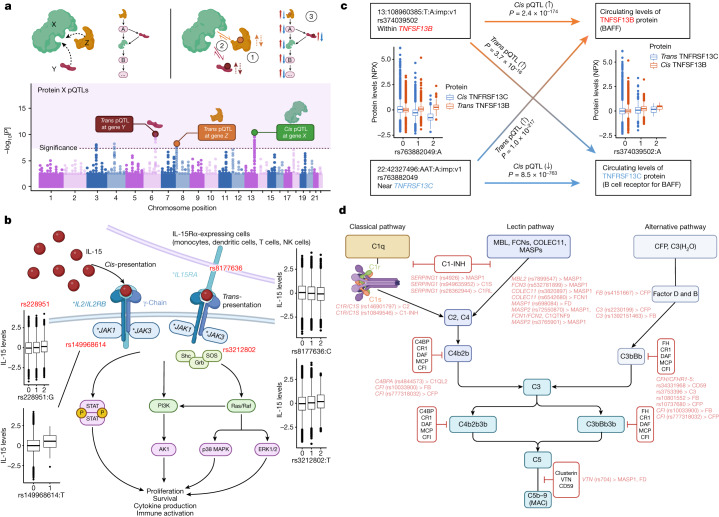
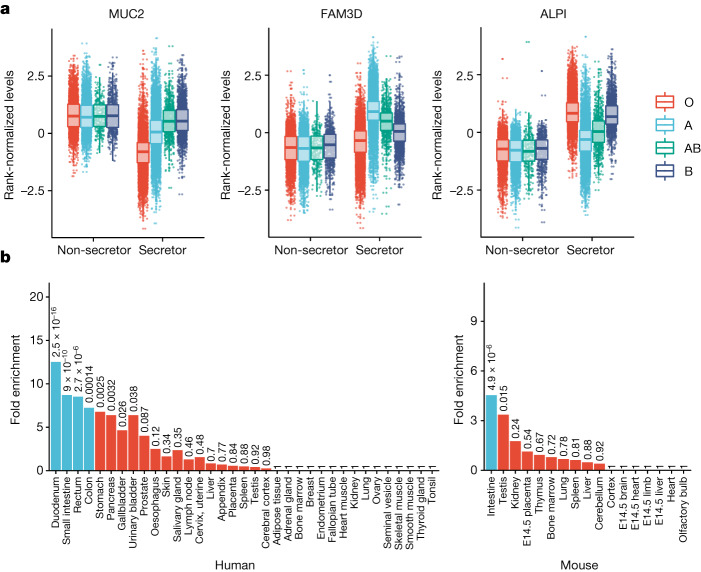
The Pharma Proteomics Project is a precompetitive biopharmaceutical consortium characterizing the plasma proteomic profiles of 54,219 UK Biobank participants. Here we provide a detailed summary of this initiative, including technical and biological validations, insights into proteomic disease signatures, and prediction modelling for various demographic and health indicators. We present comprehensive protein quantitative trait locus (pQTL) mapping of 2,923 proteins that identifies 14,287 primary genetic associations, of which 81% are previously undescribed, alongside ancestry-specific pQTL mapping in non-European individuals. The study provides an updated characterization of the genetic architecture of the plasma proteome, contextualized with projected pQTL discovery rates as sample sizes and proteomic assay coverages increase over time. We offer extensive insights into trans pQTLs across multiple biological domains, highlight genetic influences on ligand–receptor interactions and pathway perturbations across a diverse collection of cytokines and complement networks, and illustrate long-range epistatic effects of ABO blood group and FUT2 secretor status on proteins with gastrointestinal tissue-enriched expression. We demonstrate the utility of these data for drug discovery by extending the genetic proxied effects of protein targets, such as PCSK9, on additional endpoints, and disentangle specific genes and proteins perturbed at loci associated with COVID-19 susceptibility. This public–private partnership provides the scientific community with an open-access proteomics resource of considerable breadth and depth to help to elucidate the biological mechanisms underlying proteo-genomic discoveries and accelerate the development of biomarkers, predictive models and therapeutics 1 .
Overview
CoChat Summary
TL;DR
The UK Biobank Pharma Proteomics Project profiled plasma proteins in 54,219 UK Biobank participants using the Olink Explore 3072 proximity extension assay, measuring 2,923 unique proteins. It reports large-scale pQTL mapping, including 14,287 primary genetic associations in a European discovery cohort, of which 81% were previously undescribed.
Key findings
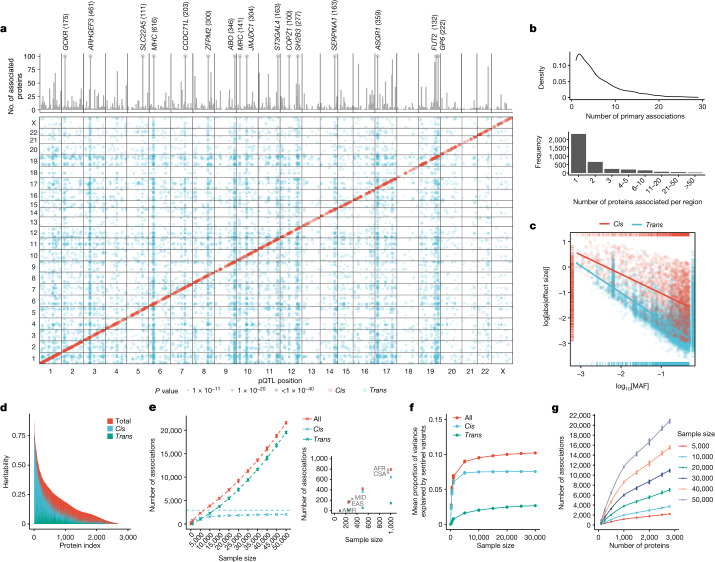
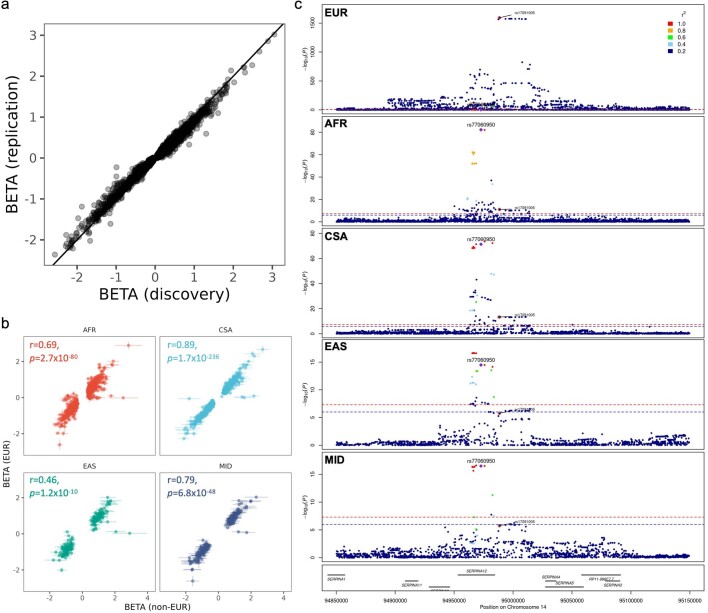
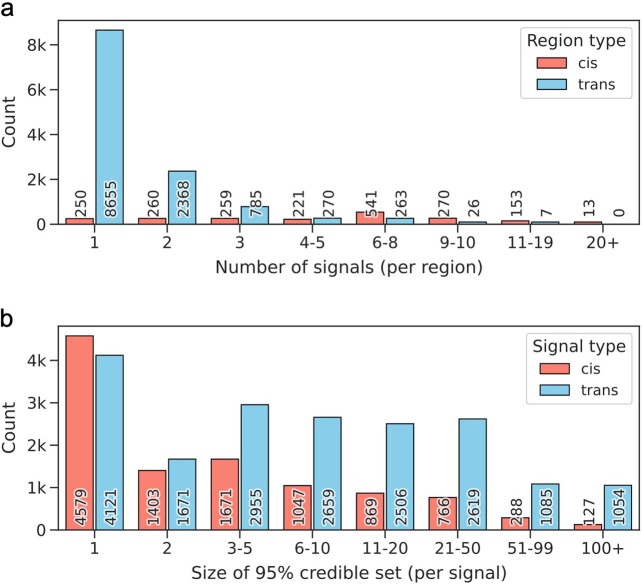
- In the European discovery cohort (n = 34,557), the study identified 14,287 primary pQTL associations across 3,760 independent genetic regions at P < 1.7 × 10⁻¹¹; 1,955 were cis and 12,332 were trans. Replication in n = 17,806 showed 95.6% of cis and 64.1% of trans associations remained significant and directionally concordant.
- 82.6% of tested proteins (2,414/2,922) had at least one pQTL, and 66.9% (1,954/2,922) had a cis association. 81% of primary associations (11,521/14,287) were previously undescribed; 89% of trans pQTLs were previously undescribed versus 27% of cis pQTLs.
- Non-European ancestry-specific analyses found 785 (AFR, n = 931), 732 (CSA, n = 920), 227 (MID, n = 308), 179 (EAS, n = 262) and 9 (AMR, n = 97) primary associations; the paper highlights ancestry-specific allelic enrichments such as SERPINA12 rs77060950.
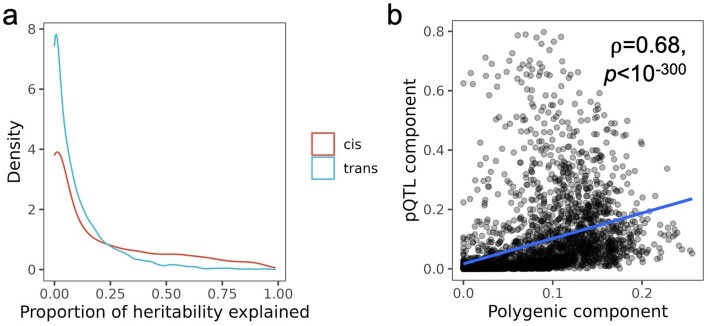
- Additional analyses identified 29,420 independent pQTL signals, mean total SNP-based heritability of 0.16, and colocalization of 65% (1,220/1,889) of genes with a significant eQTL in at least one tissue.
Methods
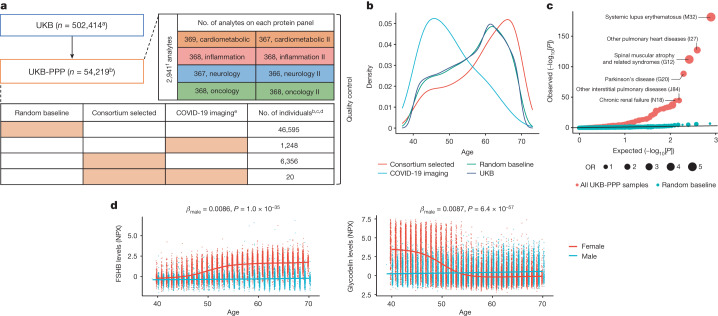
- Plasma proteomic profiling used the antibody-based Olink Explore 3072 PEA, measuring 2,941 protein analytes and 2,923 unique proteins across 54,219 UKB participants, including 46,595 randomly selected baseline, 6,376 consortium-selected and 1,268 COVID-19 repeat-imaging participants.
- Discovery pQTL analyses were performed in European-ancestry randomly selected baseline participants (n = 34,557) with replication in the remaining samples (n = 17,806), using REGENIE GWAS for up to 16.1 million imputed variants and a significance threshold of P < 1.7 × 10⁻¹¹; full-cohort mapping used n = 52,363 and up to 23.8 million variants.
- Downstream analyses included SuSiE fine-mapping, SNP-based heritability estimation, colocalization with GTEx eQTLs, ancestry-specific pQTL mapping in five pan-UKBB groups, sensitivity analyses for blood cell counts, BMI, season and fasting time, and Mendelian randomization exemplars such as PCSK9.
Limitations
- Stated: the predominantly white European ancestral composition of UKB does not capture full human genetic and phenotypic diversity, and the non-European ancestry groups were small and underpowered; the authors call for prioritizing under-represented and genetically diverse populations, resampling/longitudinal analyses, and orthogonal comparisons across proteomic assays.
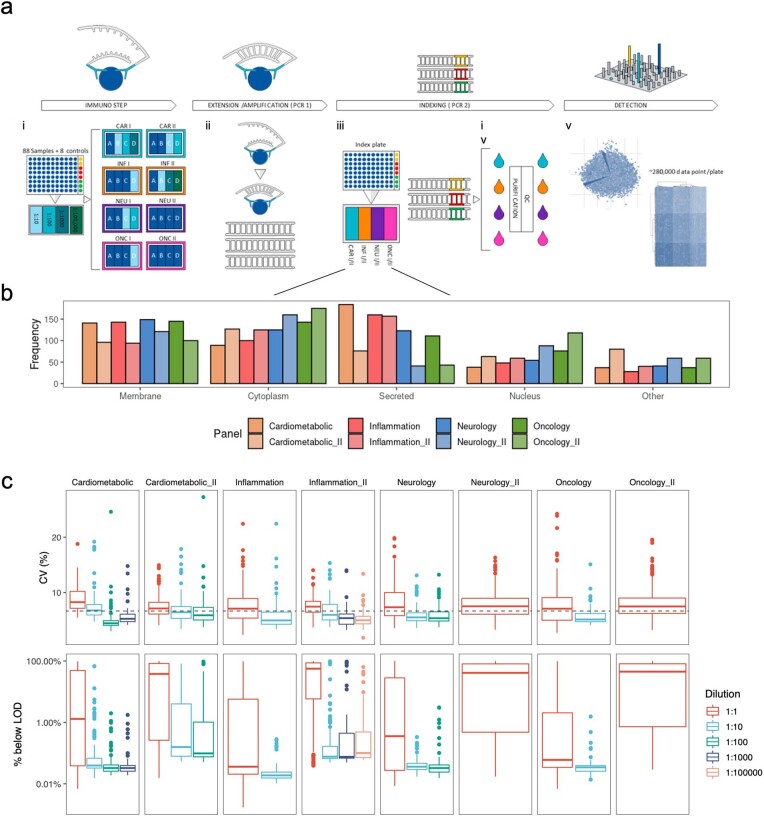
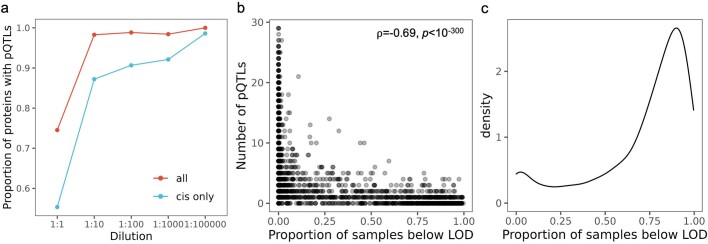
- Stated: pQTL discovery is affected by protein abundance and assay detection; proteins with lower expected concentrations had higher coefficients of variation, and 81.4% of proteins without a pQTL had more than 50% of samples below the limit of detection.
- Evident from the text: the main design is cross-sectional and observational, with causal inference limited to exemplar Mendelian randomization analyses; platform-specific antibody-based measurements may limit overlap with aptamer-based pQTL findings, as only 38% of previous aptamer-based associations replicated among common proteins.
Model-written summary. Check it against the paper before relying on it.
Integrity signals
Registry
Cites
Statistics
Figures
Verification
Claims the paper makes
15 Valid · 1 Not valid · 5 Not checked · 123 Own results and interpretations
The cited sources that could be checked couldn’t confirm or dispute this claim.
In the paper
“Liver expression of SERPINA12 was also higher in rs77060950-T carriers (P = 2.6 × 10 -8 ) 31”
§ Plasma proteomic associations with genetics and health in the UK Biobank > Non-European pQTL mapping
What the sources say
- Could not verifycites [31] The GTEx Consortium. The GTEx Consortium atlas of genetic regulatory effects across human tissues. Science 369, 1318-1330 (2020). sourceExperimental — accuracy not yet measured
The QTL discovery section describes associations between genetic variants and gene expression across tissues, but does not report this specific association. Searches for SERPINA12, rs77060950, and the stated P value found no passage establishing higher liver expression in T carriers; page numbers were not supplied in our copy. (LLM, conf=0.72)
plainstates an association- Asserted: passes — The authors put it forward as true.
- Checkable: passes — It can be checked against evidence.
- Load-bearing: unclear — It is unclear whether the paper’s conclusions depend on it.
- Based: passes — The paper gives a reason why it holds.
- Could not verify
The cited sources support only part of this claim — read each source’s verdict below.
In the paper
“These included well-established, previously identified [17][18][19][20] pleiotropic loci such as MHC, ABO, ZFPM2, ARHGEF3, GCKR, SERPINA1, SH2B3 and ASGR1”
§ Plasma proteomic associations with genetics and health in the UK Biobank > Discovery of pQTLs
What the sources say
- Partly supportedcites [17] Emilsson, V. et al. Co-regulatory networks of human serum proteins link genetics to disease. Science 361, 769-773 (2018). sourceExperimental — accuracy not yet measured
The section “Genetic variants influence serum protein levels” explicitly describes pleiotropy at ABO as well established. Our copy does not identify MHC, ZFPM2, ARHGEF3, GCKR, SERPINA1, SH2B3, or ASGR1 as previously identified pleiotropic loci, so it supports only part of the list. (LLM, conf=0.86)
- Partly supportedcites [18] Sun, B. B. et al. Genomic atlas of the human plasma proteome. Nature 558, 73-79 (2018). sourceExperimental — accuracy not yet measured
In “trans pQTLs identify pathways to disease” (page unavailable), the paper identifies ABO as a well-known pleiotropic locus, describes ZFPM2 as associated with many correlated proteins, and reports associations between a SERPINA1 variant and multiple proteins. It mentions MHC elsewhere but does not identify it there as a pleiotropic locus; the passages found do not establish ARHGEF3, GCKR, SH2B3 or ASGR1 as examples. (LLM, conf=0.88)
- Not checked — no full text of the sourcecites [19] Ferkingstad, E. et al. Large-scale integration of the plasma proteome with genetics and disease. Nat. Genet. 53, 1712-1721 (2021). source
- Partly supportedcites [20] Pietzner, M. et al. Mapping the proteo-genomic convergence of human diseases. Science 374, eabj1541 (2021). sourceExperimental — accuracy not yet measured
The Results section (‘Genetic associations for protein targets’; page unavailable) identifies ARF4-ARHGEF3, ABO and GCKR as substantially pleiotropic regions. The ‘A map of proteo-genomic connections across the phenome’ section also calls GCKR a known pleiotropic locus. Our copy does not establish the remaining named loci as previously identified pleiotropic loci, so it does not support the full list. (LLM, conf=0.87)
boostedstates an association- Asserted: passes — The authors put it forward as true.
- Checkable: passes — It can be checked against evidence.
- Load-bearing: unclear — It is unclear whether the paper’s conclusions depend on it.
- Based: passes — The paper gives a reason why it holds.
- Partly supported
The cited sources support only part of this claim — read each source’s verdict below.
In the paper
“The missense variant rs72938840 (Arg59Gln, MAF AFR = 7.9%) in the gene encoding rhomboid protease, RHBDL2, is mostly absent in EUR and other ancestries 28 and is associated in trans with concentrations of one of its cleavage substrates 29 , SPINT1 (P = 5.8 × 10 -12 )”
§ Plasma proteomic associations with genetics and health in the UK Biobank > Non-European pQTL mapping
What the sources say
- Could not verifycites [28] Karczewski, K. J. et al. The mutational constraint spectrum quantified from variation in 141,456 humans. Nature 581, 434-443 (2020). sourceExperimental — accuracy not yet measured
The cited paper’s population-comparison discussion (p. 439) concerns gene-level constraint, not rs72938840 or its frequency across ancestries. Searches for rs72938840, RHBDL2, Arg59Gln and SPINT1 found no passage reporting the variant’s 7.9% African-ancestry frequency or its association with SPINT1 concentrations. In the citing sentence, this source’s citation is attached to the ancestry-frequency statement, while a different citation follows the SPINT1 statement. (LLM, conf=0.72)
- Supportedcites [29] Johnson, N. et al. Quantitative proteomics screen identifies a substrate repertoire of rhomboid protease RHBDL2 in human cells and implicates it in epithelial homeostasis. Sci. Rep. 7, 7283 (2017). source
The citation to this paper identifies SPINT1 as a cleavage substrate of RHBDL2. In the Results section (page not available), the authors report RHBDL2-dependent cleavage of Spint-1 and identify its cleavage site. The variant association, allele frequency, and P value are not attributed to this source by the citation placement. (LLM, conf=0.93)
plainstates an association- Asserted: passes — The authors put it forward as true.
- Checkable: passes — It can be checked against evidence.
- Load-bearing: unclear — It is unclear whether the paper’s conclusions depend on it.
- Based: passes — The paper gives a reason why it holds.
- Could not verify
A result the paper reports from its own data — it cites no other source for it, so there is none to check. The quote shows it is in the paper.
In the paper
“we found a significant negative relationship between the number of pQTLs and the proportion of samples that were below the LOD (Spearman's ρ = -0.69,P < 10 -300”
§ Plasma proteomic associations with genetics and health in the UK Biobank > Discovery of pQTLs
plainstates an association- Asserted: passes — The authors put it forward as true.
- Checkable: passes — It can be checked against evidence.
- Load-bearing: unclear — It is unclear whether the paper’s conclusions depend on it.
- Based: passes — The paper gives a reason why it holds.
A result the paper reports from its own data — it cites no other source for it, so there is none to check. The quote shows it is in the paper.
In the paper
“with 66.9% of proteins tested (1,954 of 2,922 proteins) having a cis association (within 1 Mb from the gene encoding the protein)”
§ Plasma proteomic associations with genetics and health in the UK Biobank > Discovery of pQTLs
plainstates an association- Asserted: passes — The authors put it forward as true.
- Checkable: passes — It can be checked against evidence.
- Load-bearing: passes — The paper’s conclusions depend on it.
- Based: passes — The paper gives a reason why it holds.
52 more claims
Create a free account to see all 144 claims and to verify the 1 reference still open.
- It may state two separate claims as one. 58
- Probably not a substantial claim. 44
Claims other papers make about this one
Each is checked against this paper’s own text: does it say what the citing paper says it does?
The source backs part of the claim, not all of it — or backs it for a different population, condition or comparison.
In the citing paper
“In a separate array-based GWAS on the UKB-PPP cohort, we tested for the association between common variants (MAF > 0.1%) and 2,922 protein assays, resulting in 14,287 primary genetic associations5.”
From Rare variant associations with plasma protein levels in the UK Biobank (2023) · cites this paper as [5]
Experimental — accuracy not yet measuredThe source backs part of the claim, not all of it — or backs it for a different population, condition or comparison.
In the citing paper
“This pQTL was also CSF specific using Olink (table S5), independent of a subthreshold EGFR pQTL in plasma (rs56380922; R2 = 0.017), and not significant in plasma studies with 10 times our CSF sample size (9–11), implying a highly specific association in neurological contexts.”
From Low overlap of plasma and CSF protein quantitative trait loci affects protein discovery for neurological disease (2026) · cites this paper as [11]
Experimental — accuracy not yet measuredThe cited source says what the claim attributes to it.
In the citing paper
“Key plasma protein databases, such as the UK Biobank Pharma Proteomics Project (UKB-PPP) and deCODE [12,13], offer valuable resources for identifying therapeutic targets and risk factors across various diseases, including cancer [14,15].”
From Identifying novel drug targets for calcific aortic valve disease through Mendelian randomization (2025) · cites this paper as [12]
The cited source says what the claim attributes to it.
In the citing paper
“To date, most pQTLs have been discovered via genome-wide association studies (GWASs), which predominantly focus on common variants3,5–8.”
From Rare variant associations with plasma protein levels in the UK Biobank (2023) · cites this paper as [5]
The cited source says what the claim attributes to it.
In the citing paper
“The effect sizes (β) of nominally significant ExWAS pQTLs (P < 1 × 10⁻⁴) strongly correlated with the GWAS-derived pQTLs5 (r2 = 0.96; Supplementary Fig. 2).”
From Rare variant associations with plasma protein levels in the UK Biobank (2023) · cites this paper as [5]
10 more claims about this paper
Create a free account to see every claim other papers make about this one.
Self-check
Percentages, sums and reported differences re-computed from the paper’s own numbers.
Each contradiction between two passages listed here was confirmed by an independent check.
Rated minor: it would not touch a result — a value no result rests on, a p-value that stays on the same side of the significance level, or a conflict that is clerical, resolved elsewhere in the paper, or outside its own findings.
In the paper
§ Plasma proteomic associations with genetics and health in the UK Biobank > Additional information
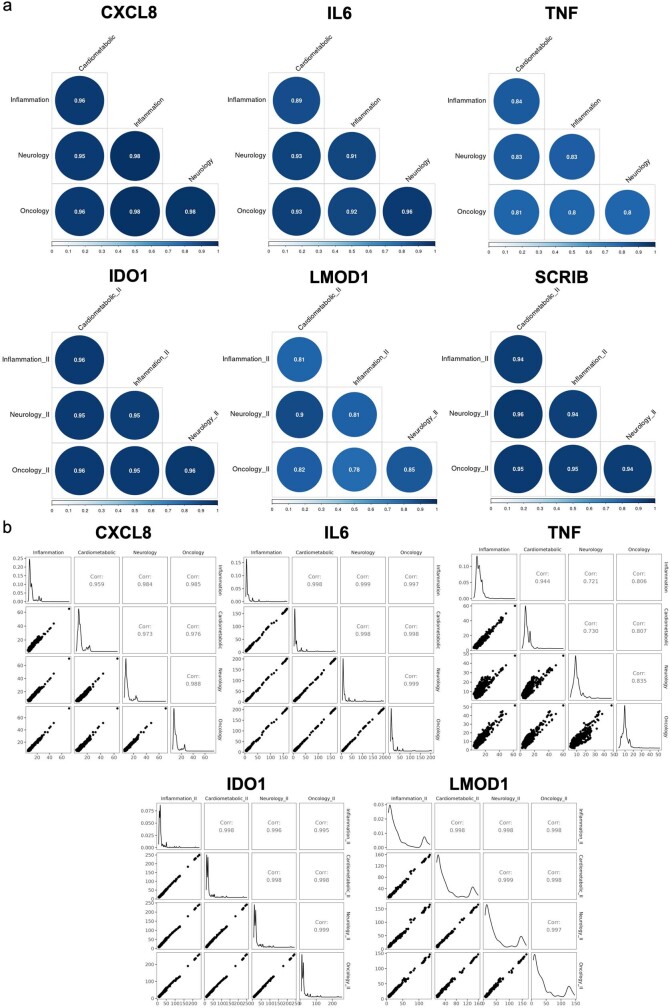
“on three proteins measured across multiple protein panels”
§ Plasma proteomic associations with genetics and health in the UK Biobank > Additional information
“(CXCL8, IL-6, TNF, IDO1, LMOD1, SCRIB).”
Rated minor: it would not touch a result — a value no result rests on, a p-value that stays on the same side of the significance level, or a conflict that is clerical, resolved elsewhere in the paper, or outside its own findings.
In the paper
§ Plasma proteomic associations with genetics and health in the UK Biobank > Discovery of pQTLs
“A total of 1,955 of the 14,287 primary associations were in cis”
§ Plasma proteomic associations with genetics and health in the UK Biobank > Comparisons with previous pQTL studies
“compared with cis pQTLs (27%; 518 out of 1,954).”
Citations
Cites
Regularization Paths for Generalized Linear Models via Coordinate Descent
Friedman, J., Hastie, T., & Tibshirani, R. (2010) · Journal of Statistical Software · doi:10.18637/jss.v033.i01 · Cited by 19,927 · cited 1×
“…eGFR and ABO blood groups (genetic ascertainment of blood groups is described in the ‘ABO blood group and FUT2 secretor status analysis’ section) separately using glmnet (R package v.4.1-4) 57 to tune the lambda.1se parameter with tenfold cross validation for 100 lambdas between 10 −5 and 1,000.”
MethodInfluentialTissue-based map of the human proteome
Uhlén, M., Fagerberg, L., Hallström, B. M., Lindskog, C., Oksvold, P., Mardinoglu, A., Sivertsson, Å., Kampf, C., Sjöstedt, E., Asplund, A., et al. (2015) · Science · doi:10.1126/science.1260419 · Cited by 15,286
Second-generation PLINK: rising to the challenge of larger and richer datasets
Chang, C. C., Chow, C. C., Tellier, L. C., Vattikuti, S., Purcell, S. M., & Lee, J. J. (2015) · Gigascience · doi:10.1186/s13742-015-0047-8 · Cited by 12,709
The mutational constraint spectrum quantified from variation in 141,456 humans
Karczewski, K. J., Francioli, L. C., Tiao, G., Cummings, B. B., Alföldi, J., Wang, Q., Collins, R. L., Laricchia, K. M., Ganna, A., Birnbaum, D. P., et al. (2020) · Nature · doi:10.1038/s41586-020-2308-7 · Cited by 9,434 · cited 3×
“%) and is nearly absent in EUR and other ances-tries 28 .”
BackgroundInfluentialSelf-citationThe UK Biobank resource with deep phenotyping and genomic data
Bycroft, C., Freeman, C., Petkova, D., Band, G., Elliott, L. T., Sharp, K., Motyer, A., Vukcevic, D., Delaneau, O., O’Connell, J., et al. (2018) · Nature · doi:10.1038/s41586-018-0579-z · Cited by 8,876 · cited 2×
“The open-access framework 24 , deep phenotypic characterization 7 and long-term development 9,10 of population studies like the UKB offer a unique opportunity to expand proteogenomics to a massive scale, broaden research use of high-throughput proteomic data, build more extensive pQTL databases,…”
BackgroundMethodSelf-citationThe MR-Base platform supports systematic causal inference across the human phenome
Hemani, G., Zheng, J., Elsworth, B., Wade, K. H., Haberland, V., Baird, D., Laurin, C., Burgess, S., Bowden, J., Langdon, R., et al. (2018) · eLife · doi:10.7554/elife.34408 · Cited by 7,959 · cited 1×
“Data for these outcomes were extracted from the OpenGWAS project 72,73 .”
MethodSelf-citationLD Score regression distinguishes confounding from polygenicity in genome-wide association studies
Schizophrenia Working Group of the Psychiatric Genomics Consortium, Bulik-Sullivan, B. K., Loh, P.-R., Finucane, H. K., Ripke, S., Yang, J., Patterson, N., Daly, M. J., Price, A. L., & Neale, B. M. (2015) · Nature Genetics · doi:10.1038/ng.3211 · Cited by 5,559 · cited 1×
“The polygenic component, which mostly likely satisfies the polygenic model of small genetic contributions across the genome, was estimated using LD-score regression 62 .”
MethodThe GTEx Consortium atlas of genetic regulatory effects across human tissues
The GTEx Consortium, Aguet, F., Anand, S., Ardlie, K. G., Gabriel, S., Getz, G. A., Graubert, A., Hadley, K., Handsaker, R. E., Huang, K. H., et al. (2020) · Science · doi:10.1126/science.aaz1776 · Cited by 5,547
Self-citationAnderson, N. L., & Anderson, N. G. (2002) · Molecular & Cellular Proteomics · doi:10.1074/mcp.r200007-mcp200 · Cited by 4,414
Estimating glomerular filtration rate from serum creatinine and cystatin C
Inker, L. A., Schmid, C. H., Tighiouart, H., Eckfeldt, J. H., Feldman, H. I., Greene, T., Kusek, J. W., Manzi, J., Van Lente, F., Zhang, Y. L., et al. (2012) · New England Journal of Medicine · doi:10.1056/nejmoa1114248 · Cited by 4,102
Cited by
Large-scale plasma proteomics comparisons through genetics and disease associations
Eldjarn, G. H., Ferkingstad, E., Lund, S. H., Helgason, H., Magnusson, O. T., Gunnarsdottir, K., Olafsdottir, T. A., Halldorsson, B. V., Olason, P. I., Zink, F., et al. (2023) · Nature · doi:10.1038/s41586-023-06563-x · Cited by 583
“4, Supplementary Tables 19 and 20 and Supplementary Note 4).”
InfluentialThe present and future of the Cancer Dependency Map
Arafeh, R., Shibue, T., Dempster, J. M., Hahn, W. C., & Vazquez, F. (2025) · Nature Reviews Cancer · doi:10.1038/s41568-024-00763-x · Cited by 454
AlphaGenome: advancing regulatory variant effect prediction with a unified DNA sequence model
Avsec, Ž., Latysheva, N., Cheng, J., Novati, G., Taylor, K. R., Ward, T., Bycroft, C., Nicolaisen, L., Arvaniti, E., Pan, J., et al. (2025) · doi:10.1101/2025.06.25.661532 · Cited by 395
Advancing regulatory variant effect prediction with AlphaGenome
Avsec, Ž., Latysheva, N., Cheng, J., Novati, G., Taylor, K. R., Ward, T., Bycroft, C., Nicolaisen, L., Arvaniti, E., Pan, J., et al. (2026) · Nature · doi:10.1038/s41586-025-10014-0 · Cited by 698
“Additionally, the variant is a plasma pQTL for CELSR2, as well as a GTEx eQTL for CELSR2 and PSRC1 17,65 .”
Argentieri, M. A., Xiao, S., Bennett, D., Winchester, L., Nevado-Holgado, A. J., Ghose, U., Albukhari, A., Yao, P., Mazidi, M., Lv, J., et al. (2024) · Nature Medicine · doi:10.1038/s41591-024-03164-7 · Cited by 347
“Randomized participants selected for proteomic profiling in the UKB have been shown previously to be highly representative of the wider UKB population 43 .”
BackgroundAtlas of the plasma proteome in health and disease in 53,026 adults
Deng, Y.-T., You, J., He, Y., Zhang, Y., Li, H.-Y., Wu, X.-R., Cheng, J.-Y., Guo, Y., Long, Z.-W., Chen, Y.-L., et al. (2025) · Cell · doi:10.1016/j.cell.2024.10.045 · Cited by 294
Plasma proteomic profiles predict future dementia in healthy adults
Guo, Y., You, J., Zhang, Y., Liu, W.-S., Huang, Y.-Y., Zhang, Y.-R., Zhang, W., Dong, Q., Feng, J.-F., Cheng, W., et al. (2024) · Nature Aging · doi:10.1038/s43587-023-00565-0 · Cited by 293
“As previously described 65,66 , the majority of blood samples were randomly collected during the baseline visit from UKB participants, and the remaining were gathered from members of the UKB Pharma Plasma Proteome consortium and individuals participating in the COVID-19 repeat-imaging study at…”
Proteomic signatures improve risk prediction for common and rare diseases
Carrasco-Zanini, J., Pietzner, M., Davitte, J., Surendran, P., Croteau-Chonka, D. C., Robins, C., Torralbo, A., Tomlinson, C., Grünschläger, F., Fitzpatrick, N., et al. (2024) · Nature Medicine · doi:10.1038/s41591-024-03142-z · Cited by 235
Self-citationNievergelt, C. M., Maihofer, A. X., Atkinson, E. G., Chen, C.-Y., Choi, K. W., Coleman, J. R. I., Daskalakis, N. P., Duncan, L. E., Polimanti, R., Aaronson, C., et al. (2024) · Nature Genetics · doi:10.1038/s41588-024-01707-9 · Cited by 199
“Given previously reported associations between blood-based protein levels and PTSD 38,39 , we performed protein quantitative trait loci (pQTL) SMR 36 analysis for PTSD using data from the UK Biobank (UKB) Pharma Proteomics Project 40 ( n = 54,306 samples and n = 1,209 proteins).”
Self-citationRare variant associations with plasma protein levels in the UK Biobank
Dhindsa, R. S., Burren, O. S., Sun, B. B., Prins, B. P., Matelska, D., Wheeler, E., Mitchell, J., Oerton, E., Hristova, V. A., Smith, K. R., et al. (2023) · Nature · doi:10.1038/s41586-023-06547-x · Cited by 193
“In the revised article, we introduce a series of new analyses, including those suggested by our reviewers, to demonstrate that the observed missense cis-CDS pQTLs are not preferentially enriched for artifactual signals.”
BackgroundSelf-citationSun, J., Zhao, J., Jiang, F., Wang, L., Xiao, Q., Han, F., Chen, J., Yuan, S., Wei, J., Larsson, S. C., et al. (2023) · Genome Medicine · doi:10.1186/s13073-023-01229-9 · Cited by 181
Ding, Y., Zuo, Y., Zhang, B., Fan, Y., Xu, G., Cheng, Z., Ma, S., Fang, S., Tian, A., Gao, D., et al. (2025) · Cell · doi:10.1016/j.cell.2025.06.047 · Cited by 217
Plasma proteomic profiles predict individual future health risk
You, J., Guo, Y., Zhang, Y., Kang, J., Wang, L., Feng, J., Cheng, W., & Yu, J. (2023) · Nature Communications · doi:10.1038/s41467-023-43575-7 · Cited by 181
“Details on sample selection, in addition to processing and quality control information for the Olink assay, are provided in previous publications 66,67 .”
MethodBlood protein assessment of leading incident diseases and mortality in the UK Biobank
Gadd, D. A., Hillary, R. F., Kuncheva, Z., Mangelis, T., Cheng, Y., Dissanayake, M., Admanit, R., Gagnon, J., Lin, T., Ferber, K. L., et al. (2024) · Nature Aging · doi:10.1038/s43587-024-00655-7 · Cited by 142
Self-citationYuan, S., Xu, F., Li, X., Chen, J., Zheng, J., Mantzoros, C. S., & Larsson, S. C. (2023) · Cell Reports Medicine · doi:10.1016/j.xcrm.2023.101174 · Cited by 174
Whole-genome sequencing of 490,640 UK Biobank participants
Manuscript Writing Group, Carss, K., Halldórsson, B. V., Hou, L., Liu, J. Z., Wheeler, E., Lo, Y., Kundu, K., Huang, Z., Lacey, B., et al. (2025) · Nature · doi:10.1038/s41586-025-09272-9 · Cited by 315
“Numerous subsequent data collection and generation efforts, including multimodal brain imaging 4 , proteomics 5 , metabolomics 6 and others, have markedly increased the depth of the dataset.”
Self-citationPichet Binette, A., Gaiteri, C., Wennström, M., Kumar, A., Hristovska, I., Spotorno, N., Salvadó, G., Strandberg, O., Mathys, H., Tsai, L.-H., et al. (2024) · Nature Neuroscience · doi:10.1038/s41593-024-01737-w · Cited by 122
“From these proteins, a few datapoints had an assay warning label (about 0.2% of the data, 46–64 measurements on 37 proteins) and were excluded from analyses, but all datapoints below the LOD were kept in analysis, as per the Olink recommendations and in line with recent analyses 6,46 .”
InfluentialFerrell, M., Wang, Z., Anderson, J. T., Li, X. S., Witkowski, M., DiDonato, J. A., Hilser, J. R., Hartiala, J., Haghikia, A., Čajka, T., et al. (2024) · Nature Medicine · doi:10.1038/s41591-023-02793-8 · Cited by 142
Aggregation-Induced Emission Luminogen: Role in Biopsy for Precision Medicine
Duo, Y., Han, L., Yang, Y., Wang, Z., Wang, L., Chen, J., Xiang, Z., Yoon, J., Luo, G., & Tang, B. Z. (2024) · Chemical Reviews · doi:10.1021/acs.chemrev.4c00244 · Cited by 126
Garg, M., Karpiński, M., Matelska, D., Middleton, L., Burren, O. S., Hu, F., Wheeler, E., Smith, K. R., Fabre, M. A., Mitchell, J., et al. (2024) · Nature Genetics · doi:10.1038/s41588-024-01898-1 · Cited by 146
Self-citationPlasma proteomics links brain and immune system aging with healthspan and longevity
Oh, H. S., Guen, Y. L., Rappoport, N., Urey, D. Y., Farinas, A., Rutledge, J., Channappa, D., Wagner, A. D., Mormino, E. C., Brunet, A., et al. (2025) · Nature Medicine · doi:10.1038/s41591-025-03798-1 · Cited by 193
“These data were previously generated by the UKB Pharma Proteomics Project (UKB-PPP) and have been characterized in detail 10 .”
Cruchaga, C., Western, D., Timsina, J., Wang, L., Wang, C., Yang, C., Ali, M., Beric, A., Gorijala, P., Kohlfeld, P., et al. (2023) · doi:10.21203/rs.3.rs-2814616/v1 · Cited by 112
Western, D., Timsina, J., Wang, L., Wang, C., Yang, C., Phillips, B., Wang, Y., Liu, M., Ali, M., Beric, A., et al. (2024) · Nature Genetics · doi:10.1038/s41588-024-01972-8 · Cited by 111
“3 and Supplementary Tables 1 and 2), using stringent significance thresholds ( cis , P < 5 × 10 −8 ; trans , P < 3.45 × 10 −11 ; Methods) to define protein–variant associations (pQTLs).”
InfluentialKirsher, D. Y., Chand, S., Phong, A., Nguyen, B., Szoke, B. G., & Ahadi, S. (2025) · Communications Chemistry · doi:10.1038/s42004-025-01665-1 · Cited by 111
“The UKB-PPP dataset contains plasma proteomic pro fi les of 54,219 participants using the Olink Explore 3072 platform 46 .”
Si, S., Liu, H., Lu, X., & Zhan, S. (2024) · Genome Medicine · doi:10.1186/s13073-024-01356-x · Cited by 127
“…platforms, including SomaScan and Olink, for more than ~ 1000 to 7000 proteins, large-scale GWAS datasets for the plasma proteome involving large-scale samples, such as studies on 35,559 Icelanders, 10,708 Fenland, and 54,306 UK Biobank participants, have been released [8, 16–18].”
BackgroundInfluentialSun, X., Chen, B., Qi, Y., Wei, M., Chen, W., Wu, X., Wang, Q., Li, J., Lei, X., & Luo, G. (2024) · The Journal of Headache and Pain · doi:10.1186/s10194-024-01828-w · Cited by 113
Zhu, K., Li, R., Yao, P., Yu, H., Pan, A., Manson, J. E., Rimm, E. B., Willett, W. C., & Liu, G. (2024) · Nature Food · doi:10.1038/s43016-024-01059-x · Cited by 118
“For proteins with less than 20% missing data, the mean value was used for imputation 47 .”
Molecular quantitative trait loci
Aguet, F., Alasoo, K., Li, Y. I., Battle, A., Im, H. K., Montgomery, S. B., & Lappalainen, T. (2023) · Nature Reviews Methods Primers · doi:10.1038/s43586-022-00188-6 · Cited by 98
Papier, K., Atkins, J. R., Tong, T. Y. N., Gaitskell, K., Desai, T., Ogamba, C. F., Parsaeian, M., Reeves, G. K., Mills, I. G., Key, T. J., et al. (2024) · Nature Communications · doi:10.1038/s41467-024-48017-6 · Cited by 97
“This is of particular interest given proteins are the target of 98% of all drugs and that 38 of our candidate aetiological proteins are the target of existing drugs, of whichninehadfurtherdirectionallyconcordantevidencefromgenetic analyses supporting their role in cancer development 40 .”
Systems biology dissection of PTSD and MDD across brain regions, cell types, and blood
Daskalakis, N. P., Iatrou, A., Chatzinakos, C., Jajoo, A., Snijders, C., Wylie, D., DiPietro, C. P., Tsatsani, I., Chen, C.-Y., Pernia, C. D., et al. (2024) · Science · doi:10.1126/science.adh3707 · Cited by 116
“S13F; MDD, 32, fig.”
InfluentialSelf-citationNielsen, R. L., Monfeuga, T., Kitchen, R. R., Egerod, L., Leal, L. G., Schreyer, A. T. H., Gade, F. S., Sun, C., Helenius, M., Simonsen, L., et al. (2024) · Nature Communications · doi:10.1038/s41467-024-46663-4 · Cited by 91
“A subset of UK Biobank participants (as previously described 77 ) had biomarkers measured from plasma blood samples by Olink Proximity Extension assays across 58,634 samples for 54,308 individuals.”
Oculomics: Current concepts and evidence
Zhu, Z., Wang, Y., Qi, Z., Hu, W., Zhang, X., Wagner, S. K., Wang, Y., Ran, A. R., Ong, J., Waisberg, E., et al. (2025) · Progress in Retinal and Eye Research · doi:10.1016/j.preteyeres.2025.101350 · Cited by 120
Plasma protein biomarkers for early prediction of lung cancer
Davies, M. P. A., Sato, T., Ashoor, H., Hou, L., Liloglou, T., Robert Che-An, Y. A. N. G., & Field, J. K. (2023) · EBioMedicine · doi:10.1016/j.ebiom.2023.104686 · Cited by 115
Self-citationAlemu, R. G., Sharew, N. T., Arsano, Y. Y., Ahmed, M. B., Ayele, F. T., Baye, T. M., & Amare, A. T. (2025) · Human Genomics · doi:10.1186/s40246-025-00718-9 · Cited by 111
From genetic associations to genes: methods, applications, and challenges
Qi, T., Song, L., Guo, Y., Chen, C., & Yang, J. (2024) · Trends in Genetics · doi:10.1016/j.tig.2024.04.008 · Cited by 105
Self-citationProteomic aging clock ( PAC ) predicts age‐related outcomes in middle‐aged and older adults
Kuo, C., Chen, Z., Liu, P., Pilling, L. C., Atkins, J. L., Fortinsky, R. H., Kuchel, G. A., & Diniz, B. S. (2024) · Aging Cell · doi:10.1111/acel.14195 · Cited by 84
“Participants who supplied blood samples at baseline were selected for inclusion in the UK Biobank Pharma Proteomics Project (UKB-PPP) (Sun et al., 2023 ).”
BackgroundMethodSequential immunotherapy: towards cures for autoimmunity
Ramírez‐Valle, F., Maranville, J., Roy, S., & Plenge, R. M. (2024) · Nature Reviews Drug Discovery · doi:10.1038/s41573-024-00959-8 · Cited by 87
Shen, C., Zhang, R., Yu, J., Sahakian, B. J., Cheng, W., & Feng, J. (2025) · Nature Human Behaviour · doi:10.1038/s41562-024-02078-1 · Cited by 94
“Consortium-selected and COVID-19 imaging participants showed widespread differences such as demographics and biochemistry markers, reflecting their non-random sampling, whereas the randomly selected baseline participants remained highly representative of the overall UK Biobank 79 .”
Khera, R., Asnani, A. H., Krive, J., Addison, D., Zhu, H., Vasbinder, A. L., Fleming, M. R., Arnaout, R., Razavi, P., & Okwuosa, T. M. (2025) · Circulation Genomic and Precision Medicine · doi:10.1161/hcg.0000000000000097 · Cited by 91
Ghouse, J., Sveinbjörnsson, G., Vujković, M., Seidelin, A.-S., Gellert‐Kristensen, H., Ahlberg, G., Tragante, V., Rand, S. A., Brancale, J., Vilarinho, S., et al. (2024) · Nature Genetics · doi:10.1038/s41588-024-01720-y · Cited by 93
Technical Evaluation of Plasma Proteomics Technologies
Beimers, W. F., Overmyer, K. A., Sinitcyn, P., Lancaster, N. M., Quarmby, S. T., & Coon, J. J. (2025) · Journal of Proteome Research · doi:10.1021/acs.jproteome.5c00221 · Cited by 72
Whole-genome sequencing of half-a-million UK Biobank participantsPreprint
Li, S., Carss, K., Halldórsson, B. V., & Cortés, A. (2023) · medRxiv · doi:10.1101/2023.12.06.23299426 · Cited by 72
“Numerous subsequent data collection and generation efforts, including multimodal brain imaging 4 , proteomics 5 , metabolomics 6 and others, have dramatically increased the depth of the dataset.”
BackgroundResultSchuermans, A., Pournamdari, A. B., Lee, J., Bhukar, R., Ganesh, S., Darosa, N., Small, A. M., Yu, Z., Hornsby, W., Koyama, S., et al. (2024) · Nature Cardiovascular Research · doi:10.1038/s44161-024-00567-0 · Cited by 71
“We obtained pQTL data from 35,571 UKB-PPP participants who had their circulating proteomes profiled using the Olink Explore 1536 platform 14 .”
InfluentialA scalable variational inference approach for increased mixed-model association power
Loya, H., Kalantzis, G., Cooper, F., & Palamara, P. F. (2025) · Nature Genetics · doi:10.1038/s41588-024-02044-7 · Cited by 88
“For these traits, which are less polygenic 52 , Quickdraws identified 5.54% more loci than REGENIE ( P = 6.6 × 10 −3 ; Extended Data Fig.”
InfluentialPredicting expression-altering promoter mutations with deep learning
Jaganathan, K., Ferraro, N. M., Novakovsky, G., Wang, Y., James, T., Schwartzentruber, J., Fiziev, P. P., Kassam, I., Cao, F., Hawe, J. S., et al. (2025) · Science · doi:10.1126/science.ads7373 · Cited by 98
Plasma proteome variation and its genetic determinants in children and adolescents
Niu, L., Stinson, S. E., Holm, L. A., Lund, M. A. V., Fonvig, C. E., Cobuccio, L., Meisner, J., Juel, H. B., Fadista, J., Thiele, M., et al. (2025) · Nature Genetics · doi:10.1038/s41588-025-02089-2 · Cited by 65
“Prior studies have demonstrated the importance of large sample sizes in pQTL studies 15 .”
Human proteome distribution atlas for tissue-specific plasma proteome dynamics
Malmström, E., Malmström, L., Hauri, S., Mohanty, T., Scott, A. M., Karlsson, C. A. Q., Gueto-Tettay, C. A., Åhrman, E., Nozohoor, S., Tingstedt, B., et al. (2025) · Cell · doi:10.1016/j.cell.2025.03.013 · Cited by 83
Wang, B., Pozarickij, A., Mazidi, M., Wright, N., Yao, P., Said, S., Iona, A., Kartsonaki, C., Fry, H., Lin, K., et al. (2025) · Nature Communications · doi:10.1038/s41467-025-56935-2 · Cited by 64
“Moreover, neither of them was found in previous studies in European populations, in which the cis -pQTLs for PCSK9 were replicated between Olink and SomaScan 9,12,15 – 17 .”
Bjornsdottir, G., Chalmer, M. A., Stefansdottir, L., Skuladottir, A. T., Einarsson, G., Andresdottir, M., Beyter, D., Ferkingstad, E., Gretarsdottir, S., Halldorsson, B. V., et al. (2023) · Nature Genetics · doi:10.1038/s41588-023-01538-0 · Cited by 61
“We conducted GWAS meta-analyses of clinically defined migraine, MA and MO, using datasets from Iceland (deCODE Genetics), Denmark (Copenhagen Hospital Biobank (CHB) 15 and Danish Blood Donor Study (DBDS) 16 ), the United Kingdom (UK; UK Biobank 17 ), the United States (US; Intermountain Health 18 ), Norway (the Hordal…”
MethodInfluentialA human pan-disease blood atlas of the circulating proteome
Álvez, M. B., Bergström, S., Kenrick, J., Johansson, E., Åberg, M., Akyıldız, M., Altay, Ö., Sköld, H., Antonopoulos, K., Apostolakis, E., et al. (2025) · Science · doi:10.1126/science.adx2678 · Cited by 94
Suhre, K. (2024) · Cell Genomics · doi:10.1016/j.xgen.2024.100506 · Cited by 74
Self-citationUnderstanding the genetic complexity of puberty timing across the allele frequency spectrum
Kentistou, K. A., Kaisinger, L. R., Stankovic, S., Vaudel, M., de Oliveira, E. M., Messina, A., Walters, R. G., Liu, X., Busch, A. S., Helgason, H., et al. (2024) · Nature Genetics · doi:10.1038/s41588-024-01798-4 · Cited by 85
“In addition, pQTL summary statistics from the UKB Pharma Proteomics Project 90 were used, which includes 2,923 protein targets captured via the Olink Explore 3072 proximity extension assay in up to 34,090 individuals of European ancestry.”
MethodGenetic architecture of telomere length in 462,666 UK Biobank whole-genome sequences
Burren, O. S., Dhindsa, R. S., Deevi, S. V. V., Wen, S., Nag, A., Mitchell, J., Hu, F., Loesch, D. P., Smith, K. R., Razdan, N., et al. (2024) · Nature Genetics · doi:10.1038/s41588-024-01884-7 · Cited by 67
“We integrated protein quantitative trait locus (pQTL) data from the UKB Pharma Proteomics Project that examined genetic associations across approximately 3,000 plasma proteins 44 with our telomere length PC1 genetic associations.”
BackgroundMethodSelf-citationGan, Y., Ma, L., Zhang, Y., You, J., Guo, Y. X., He, Y., Wang, L., He, X.-Y., Li, Y., Dong, Q., et al. (2025) · Nature Aging · doi:10.1038/s43587-025-00818-0 · Cited by 81
“The reliability of the Olink proteomics approach has been proven earlier 21,61,62 .”
InfluentialThe 2022 Report on the Human Proteome from the HUPO Human Proteome Project
Omenn, G. S., Lane, L., Overall, C. M., Pineau, C., Packer, N. H., Cristea, I. M., Lindskog, C., Weintraub, S. T., Orchard, S. E., Roehrl, M. H. A., et al. (2022) · Journal of Proteome Research · doi:10.1021/acs.jproteome.2c00498 · Cited by 66
Zhao, Y., Chukanova, M., Kentistou, K. A., Fairhurst-Hunter, Z., Siegert, A. M., Jia, R., Dowsett, G. K. C., Gardner, E. J., Lawler, K., Day, F. R., et al. (2024) · Nature Genetics · doi:10.1038/s41588-024-01694-x · Cited by 65
“…common variant (rs9843653) at the BSN locus carriers with expression levels for 1,463 proteins, we added age 2 , age × sex, age 2 × sex, Olink batch, UK Biobank center, UK Biobank genetic array, number of proteins measured and the first 20 genetic PCs as covariates, as suggested by Sun et al. 23 .”
MethodInfluentialSelf-citationZhao, Z., Zhang, J., Wu, Y., Xie, M., Tao, S., Lv, Q., & Wang, Q. (2024) · Brain, Behavior, and Immunity · doi:10.1016/j.bbi.2024.06.014 · Cited by 62
“The pre-processing and quality checking processes were presented in detailed previously (Sun et al., 2023).”
Kang, J., Yang, L., Jia, T., Zhang, W., Wang, L., Zhao, Y., You, J., Deng, Y., Ge, Y., Liu, W., et al. (2024) · Science Bulletin · doi:10.1016/j.scib.2024.09.041 · Cited by 73
Suhre, K., Venkataraman, G. R., Guturu, H., Halama, A., Stephan, N., Thareja, G., Sarwath, H., Motamedchaboki, K., Donovan, M. K. R., Siddiqui, A., et al. (2024) · Nature Communications · doi:10.1038/s41467-024-45233-y · Cited by 57
“…UK Biobank Pharma Proteomics Project (UKB-PPP) quanti fi ed over 2900 proteins in blood plasma from 54,000 UKB participants using the Olink platform 8 ,andthedeCODEstudyanalyzed4900proteinsinmorethan 35,000 individuals using the SomaScan technology 9 , identifying tens of thousands of pQTLs. Af fi…”
MethodSelf-citationPromises and Challenges of populational Proteomics in Health and Disease
Sun, B. B., Suhre, K., & Gibson, B. W. (2024) · Molecular & Cellular Proteomics · doi:10.1016/j.mcpro.2024.100786 · Cited by 66
“Both assays have been shown in multiple studies to have good reproducibility in terms of relatively low coef fi cients of variation and biological associations of the same assay approach across studies (4, 18, 35, 36).”
BackgroundMethodInfluentialSelf-citationProteogenomic links to human metabolic diseases
Koprulu, M., Carrasco-Zanini, J., Wheeler, E., Lockhart, S., Kerrison, N. D., Wareham, N. J., Pietzner, M., & Langenberg, C. (2023) · Nature Metabolism · doi:10.1038/s42255-023-00753-7 · Cited by 57
The genetic regulation of protein expression in cerebrospinal fluid
Hansson, O., Kumar, A., Janelidze, S., Stomrud, E., Insel, P. S., Blennow, K., Zetterberg, H., Fauman, E., Hedman, Å. K., Nagle, M. W., et al. (2023) · EMBO Molecular Medicine · doi:10.15252/emmm.202216359 · Cited by 56
Self-citationThe Circulating Proteome─Technological Developments, Current Challenges, and Future Trends
Geyer, P. E., Hornburg, D., Pernemalm, M., Hauck, S. M., Palaniappan, K. K., Albrecht, V., Dagley, L. F., Moritz, R. L., Yu, X., Edfors, F., et al. (2024) · Journal of Proteome Research · doi:10.1021/acs.jproteome.4c00586 · Cited by 63
“Thus, there will likely be many studies, like the UK Biobank, 22,67,68 where the community can obtain affinity proteomics data.”
Jurgens, S. J., Rämö, J. T., Kramarenko, D. R., Wijdeveld, L. F. J. M., Haas, J., Chaffin, M. D., Garnier, S., Gaziano, L., Weng, L.-C. C., Lipov, A., et al. (2024) · Nature Genetics · doi:10.1038/s41588-024-01975-5 · Cited by 67
A plasma proteomics-based candidate biomarker panel predictive of amyotrophic lateral sclerosis
Chia, R., Moaddel, R., Kwan, J. Y., Rasheed, M., Ruffo, P., Landeck, N., Reho, P., Vasta, R., Calvo, A., Moglia, C., et al. (2025) · Nature Medicine · doi:10.1038/s41591-025-03890-6 · Cited by 68
“Next, we implemented two-sample Mendelian randomization using merged summary-level ALS GWAS data 17 alongside cis -protein quantitative trait loci (pQTL) data for the 33 plasma proteins with differential abundance in ALS 18 .”
A machine learning approach to leveraging electronic health records for enhanced omics analysis
Mataraso, S. J., Espinosa, C. A., Seong, D., Reincke, S. M., Berson, E., Reiss, J. D., Kim, Y., Ghanem, M., Shu, C.-H., James, T. K., et al. (2025) · Nature Machine Intelligence · doi:10.1038/s42256-024-00974-9 · Cited by 68
“Mortality factor 4-like protein 2 has been associated with tumour dynamics and treatment response, which may explain its high correlation to drug orders 30 .”
Evaluation of circulating plasma proteins in breast cancer using Mendelian randomisation
Mälarstig, A., Graßmann, F., Dahl, L., Dimitriou, M., McLeod, D., Gabrielson, M., Smith‐Byrne, K., Thomas, C. E., Huang, T.-H., Forsberg, S. K. G., et al. (2023) · Nature Communications · doi:10.1038/s41467-023-43485-8 · Cited by 63
“Third, recent studies have shown that a majority ofcirculating proteins are associated with cis-acting protein quantitative trait loci (pQTL) i.e., located within 1 Mbp from the protein-encoding gene 12,13 .”
BackgroundSelf-citationLind, L., Mazidi, M., Clarke, R., Bennett, D., & Zheng, R. (2024) · Nature Cardiovascular Research · doi:10.1038/s44161-024-00545-6 · Cited by 60
“Consistent with analyses in UKB, Cox proportional hazards models were used to regress each of those 126 proteins separately with each of the three CVD outcomes.”
InfluentialDarci-Maher, N., Alvarez, M., Arasu, U. T., Selvarajan, I., Lee, S. H., Pan, D. Z., Miao, Z., Das, S. S., Kamińska, D., Örd, T., et al. (2023) · EBioMedicine · doi:10.1016/j.ebiom.2023.104620 · Cited by 60
Genetics of chronic respiratory disease
Sayers, I., John, C., Chen, J., & Hall, I. P. (2024) · Nature Reviews Genetics · doi:10.1038/s41576-024-00695-0 · Cited by 55
“92) can help differentiate between variants that affect gene expression or post-translational regulation.”
Common pitfalls in drug target Mendelian randomization and how to avoid them
Gill, D., Dib, M., Cronjé, H. T., Karhunen, V., Woolf, B. A. R., Gagnon, É., Daghlas, I., Nyberg, M., Drakeman, D. L., & Burgess, S. (2024) · BMC Medicine · doi:10.1186/s12916-024-03700-9 · Cited by 62
“The advantages of using these traits to select instruments are that such data are widely available [37–41], and this approach requires little biological insight to be blindly applied at scale [42–44].”
BackgroundQuantitative protein biomarker panels: a path to improved clinical practice through proteomics
Hartl, J., Kurth, F., Kappert, K., Horst, D. A., Mülleder, M., Hartmann, G., & Ralser, M. (2023) · EMBO Molecular Medicine · doi:10.15252/emmm.202216061 · Cited by 58
Royer, P., Björnson, E., Adiels, M., Josefson, R., Hagberg, E., Gummesson, A., & Bergström, G. M. L. (2024) · European Journal of Preventive Cardiology · doi:10.1093/eurjpc/zwae124 · Cited by 61
Plasma proteomic evidence for increased β-amyloid pathology after SARS-CoV-2 infection
Duff, E. P., Zetterberg, H., Heslegrave, A., Dehghan, A., Elliott, P., Allen, N., Runz, H., Laban, R., Veleva, E., Whelan, C. D., et al. (2025) · Nature Medicine · doi:10.1038/s41591-024-03426-4 · Cited by 57
“We used Olink Explore proteomic data from the Pharma Proteomics Project, which assayed samples from 54,219 UK Biobank participants across the different assessment sessions 26 .”
Self-citationPlasma Proteomics to Identify Drug Targets for Ischemic Heart Disease
Mazidi, M., Wright, N., Yao, P., Kartsonaki, C., Millwood, I. Y., Fry, H., Said, S., Pozarickij, A., Pei, P., Chen, Y., et al. (2023) · Journal of the American College of Cardiology · doi:10.1016/j.jacc.2023.09.804 · Cited by 58
Self-citationAli, M., Erabadda, B., Chen, Y., Xu, Y., Gong, K., Liu, M., Binette, A. P., Timsina, J., Western, D., Yang, C., et al. (2025) · Nature Medicine · doi:10.1038/s41591-025-03833-1 · Cited by 77
“Although no external study currently matches the sample size of GNPC for a comprehensive orthogonal validation, we assessed the consistency of our findings using independent proteomic datasets from the UK Biobank (Olink platform) 23 , the Knight ADRC (Alamar platform) 24 and the Stanford ADRC (SomaScan platform) 11 co…”
InfluentialHaglund, A., Zuber, V., Abouzeid, M., Yang, Y., Ko, J. H., Wiemann, L., Otero‐Jimenez, M., Muhammed, L., Feleke, R., Nott, A., et al. (2025) · Nature Genetics · doi:10.1038/s41588-024-02050-9 · Cited by 57
“In contrast to the limited power of current single-cell brain data-sets, the UKB-PPP is a well-powered proteomic dataset for pQTL mapping in human plasma.”
InfluentialSun, Z., Yun, Z., Lin, J., Sun, X., Wang, Q., Duan, J., Li, C., Zhang, X., Xu, S., Wang, Z., et al. (2024) · Journal of Translational Medicine · doi:10.1186/s12967-024-05178-8 · Cited by 53
“For proteins for which complete data were not available, complete protein data derived from the Ferkingstad [14] and Sun_3 et al. [24] studies were utilized as a proxy for the colocalization analysis.”
MethodMapping biological influences on the human plasma proteome beyond the genome
Carrasco-Zanini, J., Wheeler, E., Uluvar, B., Kerrison, N. D., Koprulu, M., Wareham, N. J., Pietzner, M., & Langenberg, C. (2024) · Nature Metabolism · doi:10.1038/s42255-024-01133-5 · Cited by 53
“Large-scale efforts have focused on characterizing the genetic determinants of plasma protein levels, to facilitate identification of candidate disease mediators and potential drug targets 3–5 .”
BackgroundMulti-layered genetic approaches to identify approved drug targets
Sadler, M. C., Auwerx, C., Deelen, P., & Kutalik, Z. (2023) · Cell Genomics · doi:10.1016/j.xgen.2023.100341 · Cited by 55
Wang, Q. S., Hasegawa, T., Namkoong, H., Saiki, R., Edahiro, R., Sonehara, K., Tanaka, H., Azekawa, S., Chubachi, S., Takahashi, Y., et al. (2024) · Nature Genetics · doi:10.1038/s41588-024-01896-3 · Cited by 43
“Although colocalization between eQTLs and pQTLs has been investigated previously 6,7,9,12,19,30,31 , when eQTL and pQTL data are from different cohorts, the correlation between two association statistics can be low because of LD structure differences even when the underlying causal variants are the…”
InfluentialYao, P., Iona, A., Pozarickij, A., Said, S., Wright, N., Lin, K., Millwood, I. Y., Fry, H., Kartsonaki, C., Mazidi, M., et al. (2024) · Diabetes Care · doi:10.2337/dc23-2145 · Cited by 42
Perry, A., Farber‐Eger, E. H., Gonzales, T. I., Tanaka, T., Robbins, J., Murthy, V. L., Stolze, L. K., Zhao, S., Huang, S., Colangelo, L. A., et al. (2024) · Nature Medicine · doi:10.1038/s41591-024-03039-x · Cited by 47
Self-citationSun, J., Liu, Y., Zhao, J., Lu, B. F., Zhou, S., Wei, L., Wei, J., Hu, Y., Kong, X., Gao, J., et al. (2024) · Nature Communications · doi:10.1038/s41467-024-52894-2 · Cited by 54
Yoshiji, S., Lu, T., Butler‐Laporte, G., Carrasco-Zanini, J., Su, C., Chen, Y., Liang, K., Willett, J., Wang, S., Adra, D., et al. (2023) · Nature Genetics · doi:10.1016/j.cjca.2023.06.321 · Cited by 65
Schuermans, A., Truong, B. M. T., Ardissino, M., Bhukar, R., Slob, E. A. W., Nakao, T., Dron, J. S., Small, A., Cho, S. M. J., Yu, Z., et al. (2024) · JAMA Cardiology · doi:10.1001/jamacardio.2023.4994 · Cited by 47
Zhang, L., Xiong, Y., Zhang, J., Feng, Y., & Xu, A. (2024) · Journal of Translational Medicine · doi:10.1186/s12967-024-04919-z · Cited by 47
“We replicated our analysis using plasma pQTL data from the study by Sun et al. [25] and GWAS data from the FinnGen cohort [26] for external validation.”
MethodClinical trials in-a-dish for cardiovascular medicine
Wu, X., Swanson, K., Yıldırım, Z., Liu, W., Liao, R., & Wu, J. C. (2024) · European Heart Journal · doi:10.1093/eurheartj/ehae519 · Cited by 47
Large-Scale Proteomics Improve Prediction of Chronic Kidney Disease in People With Diabetes
Ye, Z., Zhang, Y., Zhang, Y., Yang, S., He, P., Liu, M., Zhou, C., Gan, X., Huang, Y., Xiang, H., et al. (2024) · Diabetes Care · doi:10.2337/dc24-0290 · Cited by 49
Yarbro, J. M., Shrestha, H. K., Wang, Z., Zhang, X., Zaman, M., Chu, M., Wang, X., Yu, G., & Peng, J. (2025) · Molecular Neurodegeneration · doi:10.1186/s13024-025-00874-5 · Cited by 47
“For example, protein quantitative trait locus (pQTL) analysis combines proteomics and genomics, offering critical insights into the genetic regulation of protein expression [181–185].”
Wen, J. (2025) · Nature Aging · doi:10.1038/s43587-025-00928-9 · Cited by 47
Organ-specific proteomic aging clocks predict disease and longevity across diverse populations
Wang, Y., Xiao, S., Liu, B., Jiang, R., Liu, Y., Hang, Y., Chen, L., Chen, R., Vitiello, M. V., Bennett, D., et al. (2025) · Nature Aging · doi:10.1038/s43587-025-01016-8 · Cited by 73
“Among 54,219 UKB participants with available Olink data, we included 46,673 individuals who were randomly selected and shown to be highly representative of the broader UKB population 72 , excluding those manually selected for disease enrichment.”
InfluentialProteomics: Progress and Promise of High-Throughput Proteomics in Chronic Kidney Disease
Schlosser, P., Grams, M. E., & Rhee, E. P. (2023) · Molecular & Cellular Proteomics · doi:10.1016/j.mcpro.2023.100550 · Cited by 39
Reference Materials for Improving Reliability of Multiomics Profiling
Ren, L., Shi, L. M., & Zheng, Y. (2024) · Phenomics · doi:10.1007/s43657-023-00153-7 · Cited by 40
Large language model-based biological age prediction in large-scale populations
Li, Y., Huang, Q. Z., Jiang, J., Du, X., Xiang, W., Zhang, S., Pan, Z., Zhao, L., Cui, Y., Ke, L., et al. (2025) · Nature Medicine · doi:10.1038/s41591-025-03856-8 · Cited by 53
“The concentration of plasma proteins is represented using normalized protein expression values, which are calculated through a two-step approach involving within-batch and across-batch intensity normalization 77,78 .”
Altered IL-6 signalling and risk of tuberculosis: a multi-ancestry mendelian randomisation study
Hamilton, F., Schurz, H., Yates, T., Gilchrist, J. J., Möller, M., Naranbhai, V., Ghazal, P., Timpson, N. J., Akhtar, S., Anwar, M., et al. (2024) · The Lancet Microbe · doi:10.1016/s2666-5247(24)00162-9 · Cited by 59
Climente-González, H., Oh, M., Chajewska, U., Hosseini, R., Mukherjee, S., Gan, W., Traylor, M., Hu, S., Fatemifar, G., Ghouse, J., et al. (2025) · Communications Medicine · doi:10.1038/s43856-025-00872-0 · Cited by 46
“Moreover, as shown in Supplementary Tables 8 and 9, a model utilizing only the 10 most predictive plasma proteins performs well, although signi fi cantly worse than the EBM Proteomics model (AUROC increase = 4.1%; Δ AUROC = 0.030) and slightly worse than PREVENT (AUROC increase = 4.3%; Δ AUROC = 0.031).”
InfluentialSelf-citationMulti-organ metabolome biological age implicates cardiometabolic conditions and mortality risk
Zalesky, A., Tian, Y., Ferrucci, L., Walker, K. A., Bai, W., Rafii, M. S., Aisen, P. S. S., Anagnostakis, F., Ko, S., Saadatinia, M., et al. (2025) · Nature Communications · doi:10.1038/s41467-025-59964-z · Cited by 43
“The protocol of plasma proteomics is detailed in the original paper 47 .”
Chami, N., Wang, Z., Svenstrup, V., Díez‐Obrero, V., Hemerich, D., Huang, Y., Dashti, H., Manitta, E., Preuss, M. H., North, K. E., et al. (2025) · Nature Medicine · doi:10.1038/s41591-025-03931-0 · Cited by 40
Stolicyn, A., Lyall, L. M., Lyall, D. M., Høier, N. K., Adams, M. J., Shen, X., Cole, J. H., McIntosh, A. M., Whalley, H. C., & Smıth, D. J. (2023) · SLEEP · doi:10.1093/sleep/zsad274 · Cited by 40
“Future studies should seek to better characterize the mechanisms of these differences and define whether longer-than-recommended sleep duration represents a marker of clinical utility for population brain health.”
Metadata
- Authors
- Sun, B. B., Chiou, J., Traylor, M., Benner, C., Hsu, Y.-H., Richardson, T. G., Surendran, P., Mahajan, A., Robins, C., Vasquez-Grinnell, S. G., Hou, L., Kvikstad, E. M., Burren, O. S., Davitte, J., Ferber, K. L., Gillies, C. E., Hedman, Å. K., Hu, S., Lin, T., Mikkilineni, R., Pendergrass, R. K., Pickering, C., Prins, B., Baird, D., Chen, C.-Y., Ward, L. D., Deaton, A. M., Welsh, S., Willis, C. M., Lehner, N., Arnold, M., Wörheide, M. A., Suhre, K., Kastenmüller, G., Sethi, A., Cule, M., Raj, A., Genetics, A. H., Initiative, A. G., Biogen Biobank Team, Squibb, B. M., Genetics, G. H., Sciences, G. G., Biology, P. I., Sciences, P. A. O. J. D., Regeneron Genetics Center, Kang, H. M., Burkitt-Gray, L., Melamud, E., Black, M. H., Fauman, E. B., Howson, J. M. M., Kang, H. M., McCarthy, M. I., Nioi, P., Petrovski, S., Scott, R. A., Smith, E. N., Szalma, S., Waterworth, D. M., Mitnaul, L. J., Szustakowski, J. D., Gibson, B. W., Miller, M. R., & Whelan, C. D.
- Affiliations
- Biogen (United States) (US)
- Pfizer (United States) (US)
- Genentech (US)
- Amgen (United States) (US)
- GlaxoSmithKline (United Kingdom) (GB)
- GlaxoSmithKline (United States) (US)
- Janssen Research & Development (United States) (US)
- Bristol-Myers Squibb (United States) (US)
- AstraZeneca (United Kingdom) (GB)
- Regeneron (United States) (US)
- Pfizer (Sweden) (SE)
- Takeda (United States) (US)
- UK Biobank (GB)
- Alnylam Pharmaceuticals (United States) (US)
- Helmholtz Munich (DE)
- Duke University (US)
- Weill Cornell Medical College in Qatar (QA)
- Calico Life Sciences (US)
- Corresponding author
- Sun, Benjamin B.
- Whelan, Christopher D.
- ORCID
- Sun, Benjamin B.
- Chiou, Joshua
- Traylor, Matthew
- Benner, Christian
- Hsu, Yi-Hsiang
- Richardson, Tom G.
- Surendran, Praveen
- Mahajan, Anubha
- Robins, Chloe
- Hou, Liping
- Kvikstad, Erika M.
- Burren, Oliver S.
- Davitte, Jonathan
- Ferber, Kyle L.
- Gillies, Christopher E.
- Hedman, Åsa K.
- Hu, Sile
- Lin, Tinchi
- Mikkilineni, Rajesh
- Prins, Bram
- Baird, Denis
- Chen, Chia-Yen
- Ward, Lucas D.
- Deaton, Aimee M.
- Welsh, Samantha
- Willis, Carissa M.
- Arnold, Matthias
- Wörheide, Maria A.
- Suhre, Karsten
- Kastenmüller, Gabi
- Sethi, Anurag
- Cule, Madeleine
- Raj, Anil
- Burkitt-Gray, Lucy
- Melamud, Eugene
- Black, Mary Helen
- Fauman, Eric B.
- Howson, Joanna M. M.
- Kang, Hyun Min
- McCarthy, Mark I.
- Nioi, Paul
- Petrovski, Slavé
- Scott, Robert A.
- Smith, Erin N.
- Szalma, Sándor
- Waterworth, Dawn M.
- Szustakowski, Joseph D.
- Gibson, Bradford W.
- Miller, Melissa R.
- Whelan, Christopher D.
- Venue
- Nature
- Published
- 2023-10-04
- Volume
- 622
- Issue
- 7982
- Pages
- 329-338
- ISSN
- 0028-0836 (ISSN-L)
- 1476-4687
- PMC
- PMC10567551
- OpenAlex
- W4387344289
- Semantic Scholar
- 9a677c53b58ffd1d81817d8c3334723edca321fd
- Cited by
- 1,880
- References
- 107
- Citations by year
- 2026: 805 · 2025: 703 · 2024: 313 · 2023: 54
- FWCI
- 233.27
- Type
- journal article
- Language
- en
- Open access
- hybrid
- doi.org
- Licence
- cc-by
- creativecommons.org/licenses/by/4.0 (tdm)
- creativecommons.org/licenses/by/4.0 (vor)
- Locations
- Nature (publishedVersion, cc-by)
- bioRxiv (Cold Spring Harbor Laboratory) (submittedVersion, cc-by-nc-nd)
- PubMed Central (publishedVersion, cc-by)
- PubMed (publishedVersion)
- RePEc: Research Papers in Economics (submittedVersion)
- PuSH - Publication Server of Helmholtz Zentrum München (submittedVersion, cc-by)
- Funders
- Amgen
- Bristol-Myers Squibb
- Pfizer
- AstraZeneca
- GlaxoSmithKline
- Biogen
- Alnylam Pharmaceuticals
- Regeneron Pharmaceuticals
- Novo Nordisk
- Genentech
- Medical Research Council (MC_PC_17228)
- Topics
- Life Sciences › Biochemistry, Genetics and Molecular Biology › Genetics › Genetic Associations and Epidemiology
- Life Sciences › Biochemistry, Genetics and Molecular Biology › Molecular Biology › Bioinformatics and Genomic Networks
- Life Sciences › Biochemistry, Genetics and Molecular Biology › Genetics › Genetic and phenotypic traits in livestock
- Keywords
- plasma proteome, protein quantitative trait loci, ligand-receptor interactions, cytokines, complement system, ABO blood group system, PCSK9, COVID-19 susceptibility, disease signatures, predictive modeling, UK Biobank
- MeSH terms
- ABO Blood-Group System, Proprotein Convertase 9, COVID-19, Galactoside 2-alpha-L-fucosyltransferase, Blood Proteins, Epistasis, Genetic, Fucosyltransferases, United Kingdom, Health, Humans, Plasma, Databases, Factual, Biological Specimen Banks, Genetic Predisposition to Disease, Proteome, Genomics, Quantitative Trait Loci, Proteomics, Drug Discovery, Public-Private Sector Partnerships
About these checks
Registry, retraction, Cites and statistics results are computed, not judged, with one exception: a printed reference that no index lists is read once by a model before it counts as a citation error. Claims are extracted by a model and kept only when their quote appears verbatim in the text; each cited source is then checked, with a model’s help, for whether it says what the claim relies on. Those verdicts can be wrong — read the claim’s quote and the cited source before relying on one.
The claim verdicts this report counts are experimental: their accuracy is not yet measured.
A language model drew the claims from the paper on 2026-10-31, under version 3 of the claim definition (model deepseek-v4.1-flash, prompt extract-v3).
A second model labelled each claim on 2026-10-31 (model jev-1.13-20260917, definition revision gold-guideline-v0.2).
Cited sources are checked with a language model’s help (gpt-6-sol).
Statistics and arithmetic are recomputed, not judged.
Confidence bands are shown only for fields calibrated on our annotated test set. None is calibrated yet, so no band is shown.
What counts as a claim ›How we measure confidence ›How we check this ›
Are you an author, or do you see a problem with this page? Request a review
Data sources
Bibliographic data: Semantic Scholar, OpenAlex, Crossref.
Contains information from the Semantic Scholar Academic Graph Datasets, made available under the ODC Attribution License (ODC-BY 1.0).
Semantic Scholar’s data is described in: Kinney, R., et al. (2023). The Semantic Scholar Open Data Platform. arXiv:2301.10140.
