

Plasma proteomic associations with genetics and health in the UK Biobank
Open accessPublished version of a preprint
The DOI matches its Crossref record; 125 of the 125 references it cites were found in a registry or an index; 25 of the 34 sources its claims cite were checked for support.
Abstract
The Pharma Proteomics Project is a precompetitive biopharmaceutical consortium characterizing the plasma proteomic profiles of 54,219 UK Biobank participants. Here we provide a detailed summary of this initiative, including technical and biological validations, insights into proteomic disease signatures, and prediction modelling for various demographic and health indicators. We present comprehensive protein quantitative trait locus (pQTL) mapping of 2,923 proteins that identifies 14,287 primary genetic associations, of which 81% are previously undescribed, alongside ancestry-specific pQTL mapping in non-European individuals. The study provides an updated characterization of the genetic architecture of the plasma proteome, contextualized with projected pQTL discovery rates as sample sizes and proteomic assay coverages increase over time. We offer extensive insights into trans pQTLs across multiple biological domains, highlight genetic influences on ligand–receptor interactions and pathway perturbations across a diverse collection of cytokines and complement networks, and illustrate long-range epistatic effects of ABO blood group and FUT2 secretor status on proteins with gastrointestinal tissue-enriched expression. We demonstrate the utility of these data for drug discovery by extending the genetic proxied effects of protein targets, such as PCSK9, on additional endpoints, and disentangle specific genes and proteins perturbed at loci associated with COVID-19 susceptibility. This public–private partnership provides the scientific community with an open-access proteomics resource of considerable breadth and depth to help to elucidate the biological mechanisms underlying proteo-genomic discoveries and accelerate the development of biomarkers, predictive models and therapeutics 1 .
Overview
CoChat Summary
TL;DR
The UK Biobank Pharma Proteomics Project profiled plasma proteins in 54,219 UK Biobank participants using the Olink Explore 3072 proximity extension assay, measuring 2,923 unique proteins. It reports large-scale pQTL mapping, including 14,287 primary genetic associations in a European discovery cohort, of which 81% were previously undescribed.
Key findings
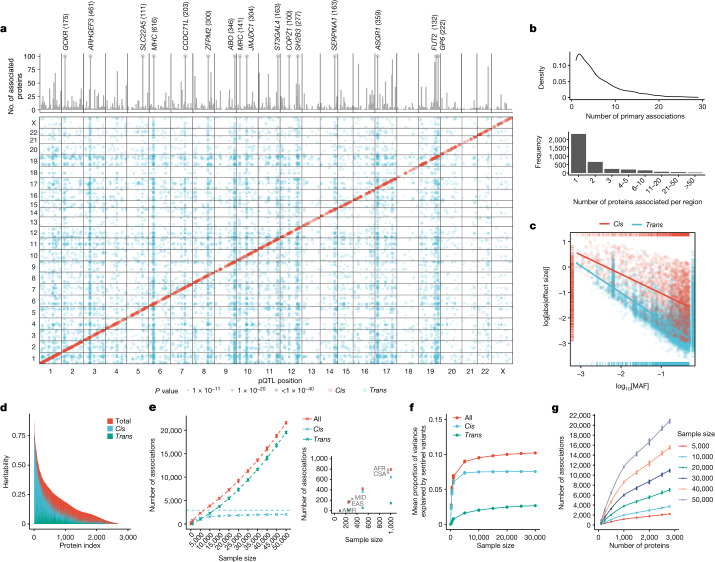
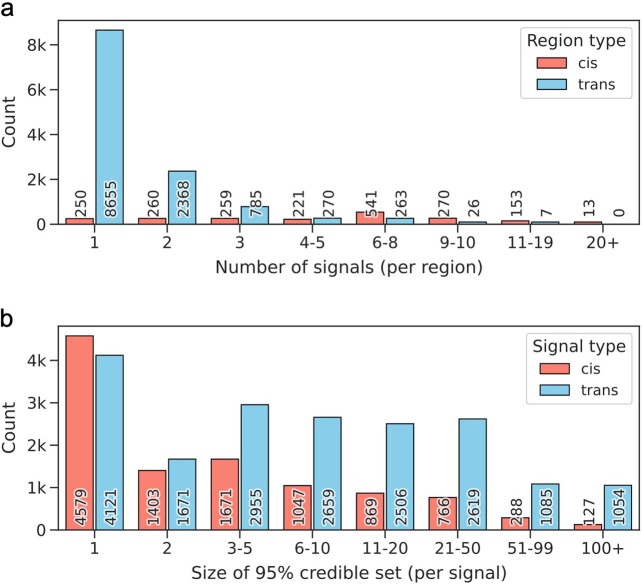
- In the European discovery cohort (n = 34,557), the study identified 14,287 primary pQTL associations across 3,760 independent genetic regions at P < 1.7 × 10⁻¹¹; 1,955 were cis and 12,332 were trans. Replication in n = 17,806 showed 95.6% of cis and 64.1% of trans associations remained significant and directionally concordant.
- 82.6% of tested proteins (2,414/2,922) had at least one pQTL, and 66.9% (1,954/2,922) had a cis association. 81% of primary associations (11,521/14,287) were previously undescribed; 89% of trans pQTLs were previously undescribed versus 27% of cis pQTLs.
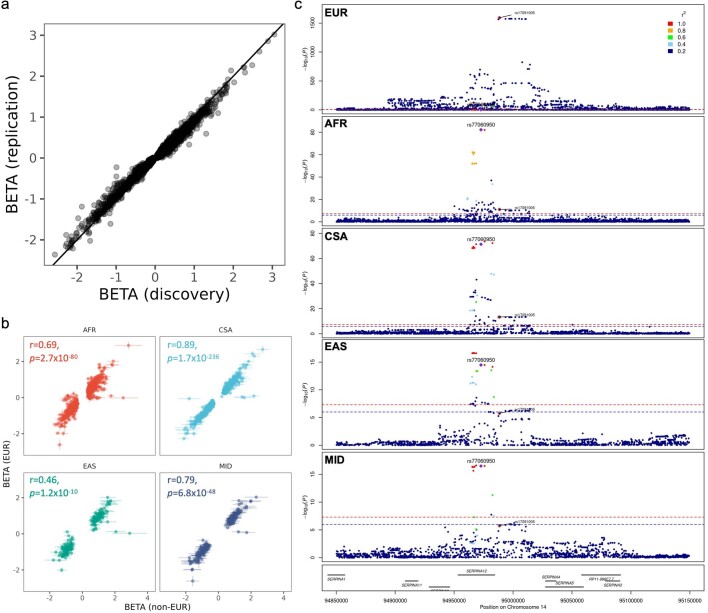
- Non-European ancestry-specific analyses found 785 (AFR, n = 931), 732 (CSA, n = 920), 227 (MID, n = 308), 179 (EAS, n = 262) and 9 (AMR, n = 97) primary associations; the paper highlights ancestry-specific allelic enrichments such as SERPINA12 rs77060950.
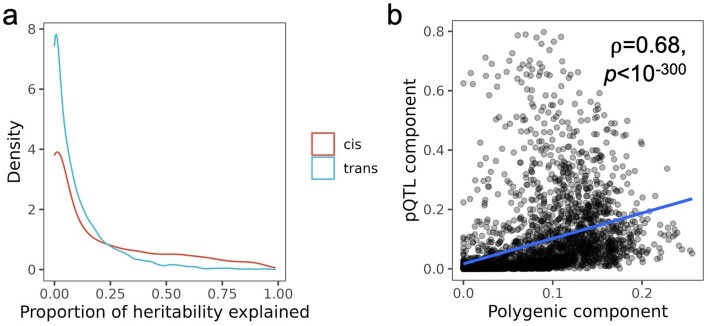
- Additional analyses identified 29,420 independent pQTL signals, mean total SNP-based heritability of 0.16, and colocalization of 65% (1,220/1,889) of genes with a significant eQTL in at least one tissue.
Methods
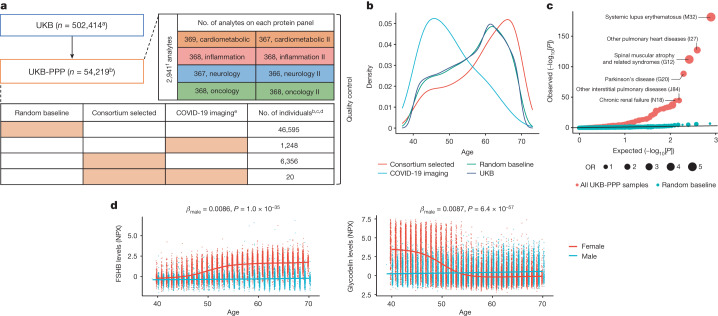
- Plasma proteomic profiling used the antibody-based Olink Explore 3072 PEA, measuring 2,941 protein analytes and 2,923 unique proteins across 54,219 UKB participants, including 46,595 randomly selected baseline, 6,376 consortium-selected and 1,268 COVID-19 repeat-imaging participants.
- Discovery pQTL analyses were performed in European-ancestry randomly selected baseline participants (n = 34,557) with replication in the remaining samples (n = 17,806), using REGENIE GWAS for up to 16.1 million imputed variants and a significance threshold of P < 1.7 × 10⁻¹¹; full-cohort mapping used n = 52,363 and up to 23.8 million variants.
- Downstream analyses included SuSiE fine-mapping, SNP-based heritability estimation, colocalization with GTEx eQTLs, ancestry-specific pQTL mapping in five pan-UKBB groups, sensitivity analyses for blood cell counts, BMI, season and fasting time, and Mendelian randomization exemplars such as PCSK9.
Limitations
- Stated: the predominantly white European ancestral composition of UKB does not capture full human genetic and phenotypic diversity, and the non-European ancestry groups were small and underpowered; the authors call for prioritizing under-represented and genetically diverse populations, resampling/longitudinal analyses, and orthogonal comparisons across proteomic assays.
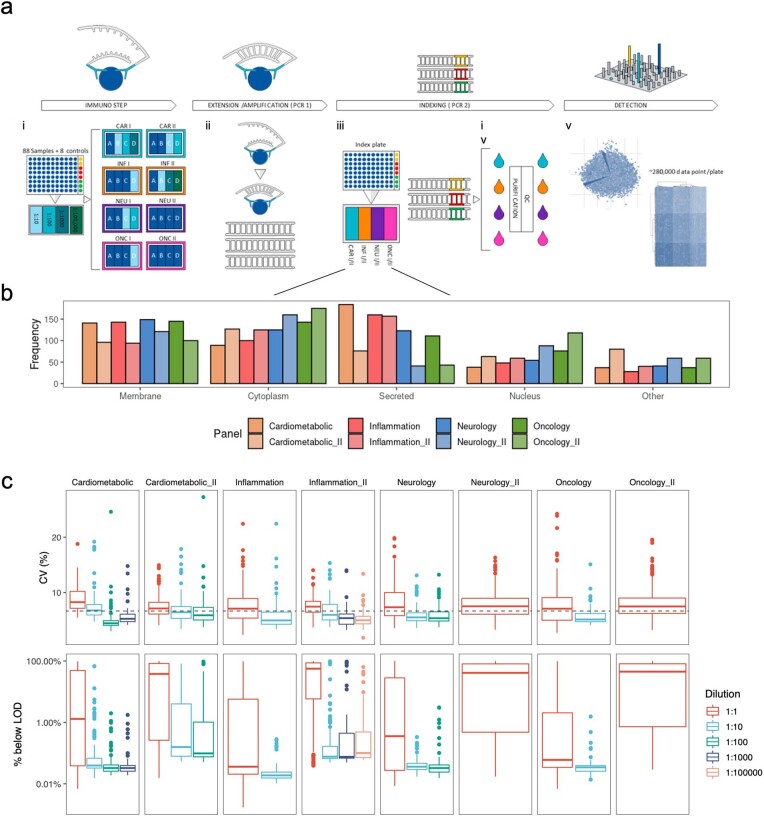
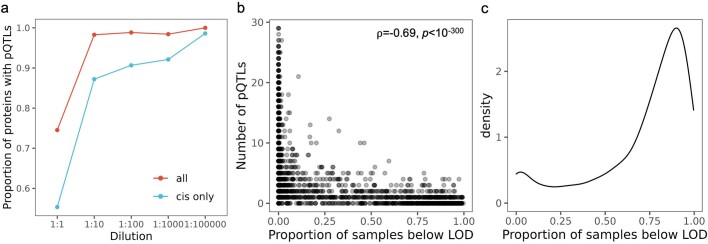
- Stated: pQTL discovery is affected by protein abundance and assay detection; proteins with lower expected concentrations had higher coefficients of variation, and 81.4% of proteins without a pQTL had more than 50% of samples below the limit of detection.
- Evident from the text: the main design is cross-sectional and observational, with causal inference limited to exemplar Mendelian randomization analyses; platform-specific antibody-based measurements may limit overlap with aptamer-based pQTL findings, as only 38% of previous aptamer-based associations replicated among common proteins.
Model-written summary. Check it against the paper before relying on it.
Integrity signals
Registry
Cites
Statistics
Figures
Verification
Claims the paper makes
15 Valid · 1 Not valid · 5 Not checked · 123 Own results and interpretations
The cited sources that could be checked couldn’t confirm or dispute this claim.
In the paper
“Liver expression of SERPINA12 was also higher in rs77060950-T carriers (P = 2.6 × 10 -8 ) 31”
§ Plasma proteomic associations with genetics and health in the UK Biobank > Non-European pQTL mapping
What the sources say
- Could not verifycites [31] The GTEx Consortium. The GTEx Consortium atlas of genetic regulatory effects across human tissues. Science 369, 1318-1330 (2020). sourceExperimental — accuracy not yet measured
The QTL discovery section describes associations between genetic variants and gene expression across tissues, but does not report this specific association. Searches for SERPINA12, rs77060950, and the stated P value found no passage establishing higher liver expression in T carriers; page numbers were not supplied in our copy. (LLM, conf=0.72)
plainstates an association- Asserted: passes — The authors put it forward as true.
- Checkable: passes — It can be checked against evidence.
- Load-bearing: unclear — It is unclear whether the paper’s conclusions depend on it.
- Based: passes — The paper gives a reason why it holds.
- Could not verify
The cited sources support only part of this claim — read each source’s verdict below.
In the paper
“These included well-established, previously identified [17][18][19][20] pleiotropic loci such as MHC, ABO, ZFPM2, ARHGEF3, GCKR, SERPINA1, SH2B3 and ASGR1”
§ Plasma proteomic associations with genetics and health in the UK Biobank > Discovery of pQTLs
What the sources say
- Partly supportedcites [17] Emilsson, V. et al. Co-regulatory networks of human serum proteins link genetics to disease. Science 361, 769-773 (2018). sourceExperimental — accuracy not yet measured
The section “Genetic variants influence serum protein levels” explicitly describes pleiotropy at ABO as well established. Our copy does not identify MHC, ZFPM2, ARHGEF3, GCKR, SERPINA1, SH2B3, or ASGR1 as previously identified pleiotropic loci, so it supports only part of the list. (LLM, conf=0.86)
- Partly supportedcites [18] Sun, B. B. et al. Genomic atlas of the human plasma proteome. Nature 558, 73-79 (2018). sourceExperimental — accuracy not yet measured
In “trans pQTLs identify pathways to disease” (page unavailable), the paper identifies ABO as a well-known pleiotropic locus, describes ZFPM2 as associated with many correlated proteins, and reports associations between a SERPINA1 variant and multiple proteins. It mentions MHC elsewhere but does not identify it there as a pleiotropic locus; the passages found do not establish ARHGEF3, GCKR, SH2B3 or ASGR1 as examples. (LLM, conf=0.88)
- Not checked — no full text of the sourcecites [19] Ferkingstad, E. et al. Large-scale integration of the plasma proteome with genetics and disease. Nat. Genet. 53, 1712-1721 (2021). source
- Partly supportedcites [20] Pietzner, M. et al. Mapping the proteo-genomic convergence of human diseases. Science 374, eabj1541 (2021). sourceExperimental — accuracy not yet measured
The Results section (‘Genetic associations for protein targets’; page unavailable) identifies ARF4-ARHGEF3, ABO and GCKR as substantially pleiotropic regions. The ‘A map of proteo-genomic connections across the phenome’ section also calls GCKR a known pleiotropic locus. Our copy does not establish the remaining named loci as previously identified pleiotropic loci, so it does not support the full list. (LLM, conf=0.87)
boostedstates an association- Asserted: passes — The authors put it forward as true.
- Checkable: passes — It can be checked against evidence.
- Load-bearing: unclear — It is unclear whether the paper’s conclusions depend on it.
- Based: passes — The paper gives a reason why it holds.
- Partly supported
The cited sources support only part of this claim — read each source’s verdict below.
In the paper
“The missense variant rs72938840 (Arg59Gln, MAF AFR = 7.9%) in the gene encoding rhomboid protease, RHBDL2, is mostly absent in EUR and other ancestries 28 and is associated in trans with concentrations of one of its cleavage substrates 29 , SPINT1 (P = 5.8 × 10 -12 )”
§ Plasma proteomic associations with genetics and health in the UK Biobank > Non-European pQTL mapping
What the sources say
- Could not verifycites [28] Karczewski, K. J. et al. The mutational constraint spectrum quantified from variation in 141,456 humans. Nature 581, 434-443 (2020). sourceExperimental — accuracy not yet measured
The cited paper’s population-comparison discussion (p. 439) concerns gene-level constraint, not rs72938840 or its frequency across ancestries. Searches for rs72938840, RHBDL2, Arg59Gln and SPINT1 found no passage reporting the variant’s 7.9% African-ancestry frequency or its association with SPINT1 concentrations. In the citing sentence, this source’s citation is attached to the ancestry-frequency statement, while a different citation follows the SPINT1 statement. (LLM, conf=0.72)
- Supportedcites [29] Johnson, N. et al. Quantitative proteomics screen identifies a substrate repertoire of rhomboid protease RHBDL2 in human cells and implicates it in epithelial homeostasis. Sci. Rep. 7, 7283 (2017). source
The citation to this paper identifies SPINT1 as a cleavage substrate of RHBDL2. In the Results section (page not available), the authors report RHBDL2-dependent cleavage of Spint-1 and identify its cleavage site. The variant association, allele frequency, and P value are not attributed to this source by the citation placement. (LLM, conf=0.93)
plainstates an association- Asserted: passes — The authors put it forward as true.
- Checkable: passes — It can be checked against evidence.
- Load-bearing: unclear — It is unclear whether the paper’s conclusions depend on it.
- Based: passes — The paper gives a reason why it holds.
- Could not verify
A result the paper reports from its own data — it cites no other source for it, so there is none to check. The quote shows it is in the paper.
In the paper
“we found a significant negative relationship between the number of pQTLs and the proportion of samples that were below the LOD (Spearman's ρ = -0.69,P < 10 -300”
§ Plasma proteomic associations with genetics and health in the UK Biobank > Discovery of pQTLs
plainstates an association- Asserted: passes — The authors put it forward as true.
- Checkable: passes — It can be checked against evidence.
- Load-bearing: unclear — It is unclear whether the paper’s conclusions depend on it.
- Based: passes — The paper gives a reason why it holds.
A result the paper reports from its own data — it cites no other source for it, so there is none to check. The quote shows it is in the paper.
In the paper
“with 66.9% of proteins tested (1,954 of 2,922 proteins) having a cis association (within 1 Mb from the gene encoding the protein)”
§ Plasma proteomic associations with genetics and health in the UK Biobank > Discovery of pQTLs
plainstates an association- Asserted: passes — The authors put it forward as true.
- Checkable: passes — It can be checked against evidence.
- Load-bearing: passes — The paper’s conclusions depend on it.
- Based: passes — The paper gives a reason why it holds.
52 more claims
Create a free account to see all 144 claims and to verify the 1 reference still open.
- It may state two separate claims as one. 58
- Probably not a substantial claim. 44
Claims other papers make about this one
Each is checked against this paper’s own text: does it say what the citing paper says it does?
The source backs part of the claim, not all of it — or backs it for a different population, condition or comparison.
In the citing paper
“In a separate array-based GWAS on the UKB-PPP cohort, we tested for the association between common variants (MAF > 0.1%) and 2,922 protein assays, resulting in 14,287 primary genetic associations5.”
From Rare variant associations with plasma protein levels in the UK Biobank (2023) · cites this paper as [5]
Experimental — accuracy not yet measuredThe source backs part of the claim, not all of it — or backs it for a different population, condition or comparison.
In the citing paper
“This pQTL was also CSF specific using Olink (table S5), independent of a subthreshold EGFR pQTL in plasma (rs56380922; R2 = 0.017), and not significant in plasma studies with 10 times our CSF sample size (9–11), implying a highly specific association in neurological contexts.”
From Low overlap of plasma and CSF protein quantitative trait loci affects protein discovery for neurological disease (2026) · cites this paper as [11]
Experimental — accuracy not yet measuredThe cited source says what the claim attributes to it.
In the citing paper
“Key plasma protein databases, such as the UK Biobank Pharma Proteomics Project (UKB-PPP) and deCODE [12,13], offer valuable resources for identifying therapeutic targets and risk factors across various diseases, including cancer [14,15].”
From Identifying novel drug targets for calcific aortic valve disease through Mendelian randomization (2025) · cites this paper as [12]
The cited source says what the claim attributes to it.
In the citing paper
“To date, most pQTLs have been discovered via genome-wide association studies (GWASs), which predominantly focus on common variants3,5–8.”
From Rare variant associations with plasma protein levels in the UK Biobank (2023) · cites this paper as [5]
The cited source says what the claim attributes to it.
In the citing paper
“The effect sizes (β) of nominally significant ExWAS pQTLs (P < 1 × 10⁻⁴) strongly correlated with the GWAS-derived pQTLs5 (r2 = 0.96; Supplementary Fig. 2).”
From Rare variant associations with plasma protein levels in the UK Biobank (2023) · cites this paper as [5]
10 more claims about this paper
Create a free account to see every claim other papers make about this one.
Self-check
Percentages, sums and reported differences re-computed from the paper’s own numbers.
Each contradiction between two passages listed here was confirmed by an independent check.
Rated minor: it would not touch a result — a value no result rests on, a p-value that stays on the same side of the significance level, or a conflict that is clerical, resolved elsewhere in the paper, or outside its own findings.
In the paper
§ Plasma proteomic associations with genetics and health in the UK Biobank > Additional information
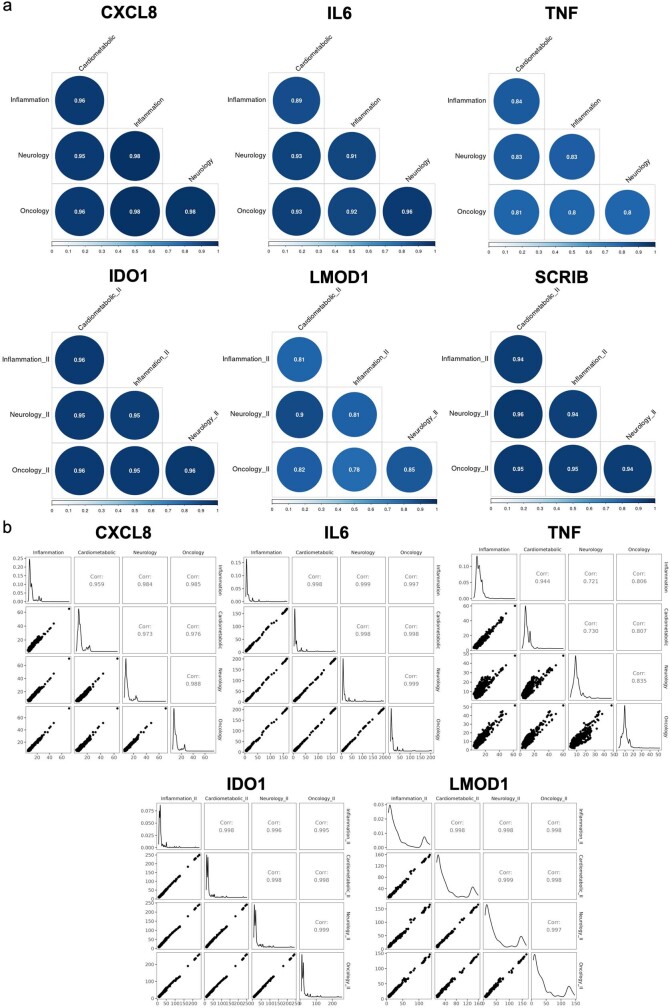
“on three proteins measured across multiple protein panels”
§ Plasma proteomic associations with genetics and health in the UK Biobank > Additional information
“(CXCL8, IL-6, TNF, IDO1, LMOD1, SCRIB).”
Rated minor: it would not touch a result — a value no result rests on, a p-value that stays on the same side of the significance level, or a conflict that is clerical, resolved elsewhere in the paper, or outside its own findings.
In the paper
§ Plasma proteomic associations with genetics and health in the UK Biobank > Discovery of pQTLs
“A total of 1,955 of the 14,287 primary associations were in cis”
§ Plasma proteomic associations with genetics and health in the UK Biobank > Comparisons with previous pQTL studies
“compared with cis pQTLs (27%; 518 out of 1,954).”
Citations
Cites
Regularization Paths for Generalized Linear Models via Coordinate Descent
Friedman, J., Hastie, T., & Tibshirani, R. (2010) · Journal of Statistical Software · doi:10.18637/jss.v033.i01 · Cited by 19,927 · cited 1×
“…eGFR and ABO blood groups (genetic ascertainment of blood groups is described in the ‘ABO blood group and FUT2 secretor status analysis’ section) separately using glmnet (R package v.4.1-4) 57 to tune the lambda.1se parameter with tenfold cross validation for 100 lambdas between 10 −5 and 1,000.”
MethodInfluentialTissue-based map of the human proteome
Uhlén, M., Fagerberg, L., Hallström, B. M., Lindskog, C., Oksvold, P., Mardinoglu, A., Sivertsson, Å., Kampf, C., Sjöstedt, E., Asplund, A., et al. (2015) · Science · doi:10.1126/science.1260419 · Cited by 15,286
Second-generation PLINK: rising to the challenge of larger and richer datasets
Chang, C. C., Chow, C. C., Tellier, L. C., Vattikuti, S., Purcell, S. M., & Lee, J. J. (2015) · Gigascience · doi:10.1186/s13742-015-0047-8 · Cited by 12,709
The mutational constraint spectrum quantified from variation in 141,456 humans
Karczewski, K. J., Francioli, L. C., Tiao, G., Cummings, B. B., Alföldi, J., Wang, Q., Collins, R. L., Laricchia, K. M., Ganna, A., Birnbaum, D. P., et al. (2020) · Nature · doi:10.1038/s41586-020-2308-7 · Cited by 9,434 · cited 3×
“%) and is nearly absent in EUR and other ances-tries 28 .”
BackgroundInfluentialSelf-citationThe UK Biobank resource with deep phenotyping and genomic data
Bycroft, C., Freeman, C., Petkova, D., Band, G., Elliott, L. T., Sharp, K., Motyer, A., Vukcevic, D., Delaneau, O., O’Connell, J., et al. (2018) · Nature · doi:10.1038/s41586-018-0579-z · Cited by 8,876 · cited 2×
“The open-access framework 24 , deep phenotypic characterization 7 and long-term development 9,10 of population studies like the UKB offer a unique opportunity to expand proteogenomics to a massive scale, broaden research use of high-throughput proteomic data, build more extensive pQTL databases,…”
BackgroundMethodSelf-citationThe MR-Base platform supports systematic causal inference across the human phenome
Hemani, G., Zheng, J., Elsworth, B., Wade, K. H., Haberland, V., Baird, D., Laurin, C., Burgess, S., Bowden, J., Langdon, R., et al. (2018) · eLife · doi:10.7554/elife.34408 · Cited by 7,959 · cited 1×
“Data for these outcomes were extracted from the OpenGWAS project 72,73 .”
MethodSelf-citationLD Score regression distinguishes confounding from polygenicity in genome-wide association studies
Schizophrenia Working Group of the Psychiatric Genomics Consortium, Bulik-Sullivan, B. K., Loh, P.-R., Finucane, H. K., Ripke, S., Yang, J., Patterson, N., Daly, M. J., Price, A. L., & Neale, B. M. (2015) · Nature Genetics · doi:10.1038/ng.3211 · Cited by 5,559 · cited 1×
“The polygenic component, which mostly likely satisfies the polygenic model of small genetic contributions across the genome, was estimated using LD-score regression 62 .”
MethodThe GTEx Consortium atlas of genetic regulatory effects across human tissues
The GTEx Consortium, Aguet, F., Anand, S., Ardlie, K. G., Gabriel, S., Getz, G. A., Graubert, A., Hadley, K., Handsaker, R. E., Huang, K. H., et al. (2020) · Science · doi:10.1126/science.aaz1776 · Cited by 5,547
Self-citationAnderson, N. L., & Anderson, N. G. (2002) · Molecular & Cellular Proteomics · doi:10.1074/mcp.r200007-mcp200 · Cited by 4,414
Estimating glomerular filtration rate from serum creatinine and cystatin C
Inker, L. A., Schmid, C. H., Tighiouart, H., Eckfeldt, J. H., Feldman, H. I., Greene, T., Kusek, J. W., Manzi, J., Van Lente, F., Zhang, Y. L., et al. (2012) · New England Journal of Medicine · doi:10.1056/nejmoa1114248 · Cited by 4,102
Cited by
Items 501–600 of 1,846
Karim, M. A., Ariano, B., Schwartzentruber, J., Roldán‐Romero, J. M., Mountjoy, E., Hayhurst, J. D., Buniello, A., Mohammed, E. S. E., Carmona, M., Holmes, M. V., et al. (2023) · Research Square · doi:10.1101/2023.06.01.23290252 · Cited by 6
Self-citationYarmolinsky, J., Tzoulaki, I., Gunter, M. J., Travis, R. C., Smith, G. D., & Smith-Byrne, K. (2024) · JNCI Journal of the National Cancer Institute · doi:10.1093/jnci/djae064 · Cited by 6
Warwick, A., Hingorani, A. D., Khawaja, A. P., Gordillo‐Marañón, M., Olvera‐Barrios, A., Stuart, K. V., Egan, C. A., Tufail, A., Sofat, R., Kuan, V., et al. (2024) · medRxiv · doi:10.1101/2024.07.11.24310200 · Cited by 4
Gadde, N., Dodamani, S., Altaf, R., & Kumar, S. (2024) · bioRxiv (Cold Spring Harbor Laboratory) · doi:10.1101/2024.11.18.624211 · Cited by 7
Zhao, M., Wei, L., Zhang, L., Hang, J., Zhang, F., Su, L., Wang, H., Zhang, R., Chen, F., Christiani, D. C., et al. (2024) · Journal of Exposure Science & Environmental Epidemiology · doi:10.1038/s41370-024-00721-7 · Cited by 5
Geng, J., Ruan, X., Wu, X., Chen, X., Fu, T., Gill, D., Burgess, S., Chen, J., Ludvigsson, J. F., Larsson, S. C., et al. (2024) · Diabetes Obesity and Metabolism · doi:10.1111/dom.16087 · Cited by 6
Tang, L., Liu, M., Tao, Y., Ranson, J. M., Napolioni, V., Wang, H., & Huang, J. (2024) · Journal of Affective Disorders · doi:10.1016/j.jad.2024.12.023 · Cited by 5
Zhang, Y., Huang, Y., Hu, S., Liu, G., Zeng, T., Pan, A., & Liao, Y. (2024) · Atherosclerosis · doi:10.1016/j.atherosclerosis.2024.119090 · Cited by 8
Self-citationBeydoun, M. A., Beydoun, H. A., Hooten, N. N., Li, Z., Hu, Y., Georgescu, M. F., Hossain, S. A., Tanaka, T., Bouhrara, M., Vieytes, C. A. M., et al. (2025) · Alzheimer s & Dementia · doi:10.1002/alz.14507 · Cited by 5
Large‐Scale Plasma Proteomics to Profile Pathways and Prognosis of Chronic Pain
Li, Z., Ma, Q., Zhang, J., Yin, R., You, J., Hao, Q., Wu, X., Kang, J., Wang, L., Deng, Y., et al. (2025) · Advanced Science · doi:10.1002/advs.202410160 · Cited by 11
Godina, C., Rosendahl, A. H., de Oliveira, K. G., Khazaei, S., Björner, S., Jirström, K., Isaksson, K., Pollak, M., & Jernström, H. (2025) · Carcinogenesis · doi:10.1093/carcin/bgaf020 · Cited by 6
“It should be noted that the sample size of this study is small for identifying variants impacting protein levels, which likely explains why previously reported cis-acting pQTL were not confirmed [18–21 , 41].”
Wang, H., Wang, C., Qin, R., He, J., Zhang, X., Ma, C., Shi, L., Fan, L., Wang, L., & Cao, L. (2025) · Biomedicines · doi:10.3390/biomedicines13061380 · Cited by 7
“The summary data for the GWAS of plasma proteins from the UK Biobank can be found at https://metabolomips.org/ukbbpgwas/ [18].”
Kong, Y., Tang, W., Kang, H., Guan, Y., Li, S., Cao, X., Shao, Z., Jiang, Y., Wang, C., & Hao, X. (2025) · Nature Communications · doi:10.1038/s41467-025-61874-z · Cited by 8
“Validation and selection of predicted protein in UKB-PPP UKB-PPP is a proteomics pro fi ling data in UKB, which collected blood plasma samples from 54,219 UKB participants using the antibody-based Olink Explore 3072 proximity extension assay, measuring 2,941 proteins (Field ID 30900) 22 .”
InfluentialSelf-citationYuan, S., Khodursky, S., Geng, J., Sharma, P., Spin, J. M., Tsao, P. S., Levin, M. G., & Damrauer, S. M. (2025) · Arteriosclerosis Thrombosis and Vascular Biology · doi:10.1161/atvbaha.125.323057 · Cited by 7
The influence of metformin treatment on the circulating proteome
Connolly, B. J., MCCREIGHT, L. J., Slieker, R. C., Bedair, K., Donnelly, L. A., de Klerk, J. A., Beulens, J. W. J., Elders, P. J. M., Bergström, G. M. L., Hong, M., et al. (2025) · EBioMedicine · doi:10.1016/j.ebiom.2025.105859 · Cited by 5
Mak, J. K. L., Qin, C., Krüger, M., Kuukka, A., FinnGen, Palotie, A. V., Daly, M. J., Riley-Gillis, B., Jacob, H. J., Paul, D. S., et al. (2025) · Nature Aging · doi:10.1038/s43587-025-00925-y · Cited by 9
“Details of the UK Biobank Olink proteomics assay, quality-control and data processing procedures have been described elsewhere 43 .”
Self-citationTian, Y., Sun, M., Luo, L., Lou, F., Zhou, P., Chen, J., Lv, H., Zhang, F., Zhang, M., & Wang, B. (2025) · Scientific Reports · doi:10.1038/s41598-025-13322-7 · Cited by 7
Rodriguez‐Martinez, A., Kothalawala, D. M., Carrillo-Larco, R. M., & Poulakakis-Daktylidis, A. (2025) · Emerging Topics in Life Sciences · doi:10.1042/etls20240011 · Cited by 9
Liu, Z., Yang, J., Fang, F., Hao, Y., Cai, X., Miao, M.-Y., Lyu, J., Gu, J., Qian, Y.-W., Wan, Z., et al. (2025) · Clinical Nutrition · doi:10.1016/j.clnu.2025.08.024 · Cited by 6
Genomic data-driven framework for drug target discovery in atrial fibrillation
Tao, Y., Liu, Q., Wang, Y., Jiang, R., & Zhang, K. (2025) · Journal of Translational Medicine · doi:10.1186/s12967-025-07217-4 · Cited by 5
“…of AF GWASs from FinnGen [14] and Nielsen [15] and applied Mendelian randomization with the postselection inference method (MR-SPI) and genetic colocalization analysis using the meta-analyzed AF GWASs and human blood proteins from the UK Biobank Pharma Proteomics Project (UKB-PPP) [16].”
Genome-wide association study and polygenic risk prediction of hypothyroidism
Rand, S. A., Ahlberg, G., Tragante, V., Monfort, L. M., Zheng, C., Feldt‐Rasmussen, U., Klose, M., Teder‐Laving, M., Metspalu, A., Poulsen, H. E., et al. (2025) · Nature Genetics · doi:10.1038/s41588-025-02410-z · Cited by 10
“Next, we tested the association between lead variants and blood cell traits using linear regression adjusted for age, sex and four PCs. Additionally, we used proteomics data from the UKB Pharma Proteomics Project 50 .”
Zhang, Y., Huang, Y., Gan, X., Yang, S., Zhang, Y., Wu, Y., Ye, Z., Cai, X., Chen, D. W., Liang, X., et al. (2026) · Food & Function · doi:10.1039/d5fo03952e · Cited by 6
Xu, J., Chen, S., Sun, M., Chen, X., Gu, Z., Zhang, Y., Xie, L., & Hao, X. (2025) · Journal of Translational Medicine · doi:10.1186/s12967-025-07353-x · Cited by 5
“Protein expression genetic variant data was obtained from the UK Biobank Pharma Proteomics Project (UKB-PPP) [8], which conducted proteomic analysis on plasma samples from 54,219 participants and mapped pQTLs for 2,923 unique proteins.”
The IGVF catalog—from genetic variation to function
Li, D., Liu, S., Assis, P., Li, M., Dong, S., Whaling, I., Jolanki, O., Kagda, M. S., Zhang, W., Macias-Velasco, J. F., et al. (2025) · Nucleic Acids Research · doi:10.1093/nar/gkaf1341 · Cited by 10
Ma, Q., Cai, Y., He, C., Li, Y., Ning, C., Zhang, M., Lu, Z., Chen, C., Zong, Y., Wu, F., et al. (2025) · Nature Communications · doi:10.1038/s41467-025-67238-x · Cited by 7
Self-citationComplex genetic effects linked to plasma protein abundance in the UK Biobank
Sigurdsson, A. I., Gräf, J. F., Yang, Z., Ravn, K., Meisner, J., Thielemann, R., Webel, H. E., Smit, R. A. J., Niu, L., Mann, M., et al. (2025) · Nature Communications · doi:10.1038/s41467-025-67235-0 · Cited by 11
“…on the test data, and proteins that had discordant performance between the DL and linear models were investigated for non-linear covariate, non-additive (e.g., dominance), and interaction (e.g., epistasis) effects. b Correlation of GWAS P values between the current study and Sun et al. 6 .”
InfluentialZhang, Y., Huang, Y., Gan, X., Ye, Z., Zhang, Y., Yang, S., Xiang, H., Zhang, Y., Wu, Y., & Qin, X. (2025) · Atherosclerosis · doi:10.1016/j.atherosclerosis.2025.120624 · Cited by 5
Plasma protein profiling predicts cancer in patients with non-specific symptoms
Wannberg, F., Álvez, M. B., Qvick, A., Pongrácz, T., Aguilera, K., Adolfsson, E., Essehorn, L., Gordon, M., Uhlén, M., Helenius, G., et al. (2025) · Nature Communications · doi:10.1038/s41467-025-67688-3 · Cited by 8
“Plasma proteomics is a rapidly expanding fi eld, and recent technological advancements enable quanti fi cation of thousands of proteins using minute amounts of plasma in large cohorts 26 .”
Hui, J., Cui, X., & Han, Q. (2026) · Asia-Pacific Journal of Ophthalmology · doi:10.1016/j.apjo.2026.100277 · Cited by 14
Multi-omics signatures of chronic inflammation across immune-related disease states
Li, H., Xie, X., Tang, L., Chen, C., & Li, J. (2026) · Frontiers in Immunology · doi:10.3389/fimmu.2026.1753156 · Cited by 6
Self-citationDorweiler, T. F., & Hla, T. (2026) · Journal of Biological Chemistry · doi:10.1016/j.jbc.2026.111335 · Cited by 5
Weng, B., Wei, J., Chen, H., Zhao, Y., Wang, N., Feng, H., Ai, S., & Tan, X. (2026) · Metabolism · doi:10.1016/j.metabol.2026.156600 · Cited by 6
A deep joint-learning proteomics model for diagnosis of six conditions associated with dementia
An, L., Binette, A. P., Hristovska, I., Vilkaite, G., Xiao, Y., Zendehdel, R., Dong, Z., Smets, B., Saloner, R., Tasaki, S., et al. (2026) · Nature Medicine · doi:10.1038/s41591-026-04303-y · Cited by 12
Self-citationTumour promotion through the lens of evolution
López-Bigas, N., Kandyba, E. E., González-Pérez, A., Brennan, P., & Balmain, A. (2026) · Nature · doi:10.1038/s41586-026-10386-x · Cited by 9
Genetic analysis of circulating metabolic traits in 619,372 individuals
Tambets, R., Jesse, M., Kronberg, J., van der Graaf, A., Abner, E., Võsa, U., Rahu, I., Taba, N., Kolde, A., Yarish, D., et al. (2026) · Nature · doi:10.1038/s41586-026-10532-5 · Cited by 37
“MVP - Million Veterans Program; UKB-PPP - UK Biobank Pharma Proteomics Project.”
InfluentialPietzner, M., Williamson, A., Hunt, K. A., Koprulu, M., Kohleick, L., Demircan, K., van Heel, D. A., Finer, S., Carrasco-Zanini, J., van Heel, D. A., et al. (2026) · Nature Genetics · doi:10.1038/s41588-026-02697-6 · Cited by 9
Longitudinal plasma proteomics predict phenoconversion to clinically manifest ALS
Ran, X., Wuu, J., Qin, Z. S., McDermott, M. P., Cooper‐Knock, J., Li, Y., Granit, V., Grignon, A., Lin, E., Fernandez, M. C., et al. (2026) · Nature Medicine · doi:10.1038/s41591-026-04528-x · Cited by 10
Zhao, J. V., Yao, M., & Liu, Z. (2024) · Aging · doi:10.18632/aging.205711 · Cited by 7
Chen, Z., Meng, H., Guo, Y., Sun, H., Zhang, W., Yu, C., & Hou, S. (2024) · Journal of Stroke and Cerebrovascular Diseases · doi:10.1016/j.jstrokecerebrovasdis.2024.108136 · Cited by 7
Zhao, X., Wang, J., Sun, D., Xu, D., & Lu, Y. (2024) · European Journal of Preventive Cardiology · doi:10.1093/eurjpc/zwae375 · Cited by 16
Plasma Protein Biomarkers of Spirometry Measures of Impaired Lung Function
Aggarwal, M., Hwang, S., Lee, D. H., Huan, T., McNeill, J. N., Courchesne, P. L., Joehanes, R., Ho, J. E., Dupuis, J., Hedman, Å. K., et al. (2024) · CHEST Journal · doi:10.1016/j.chest.2024.11.012 · Cited by 8
Self-citationBu, Y., Liu, Y., Hu, C. W., Yuan, D., Luo, L., Li, M., Hu, J., Dong, H., & Xu, Z. (2024) · International Immunopharmacology · doi:10.1016/j.intimp.2024.113811 · Cited by 5
Hu, G., Peng, X., Liu, H., Lai, Y., Liu, N., Li, X., Sang, C., Dong, J., & Ma, C. (2025) · ESC Heart Failure · doi:10.1002/ehf2.15196 · Cited by 5
“12 In brief, the Olink ™ Ex-plore platform was used to process all blood samples using the proximity extension assay (PEA) technique.”
Uncovering drug targets for cluster headache through proteome-wide Mendelian randomization analysis
Xiong, Z., Guo, Z. K., Zhao, L., Qiu, D., Mei, Y., Li, X., Zhang, P., Zhang, M., Liu, G., Gao, T., et al. (2025) · The Journal of Headache and Pain · doi:10.1186/s10194-025-01999-0 · Cited by 5
“Plasma protein were sourced from the comprehensive dataset conducted by the UK Biobank Pharma Proteomics Project (UKB-PPP) [14].”
Yang, W. Q., Liu, C., Li, Z., & Cui, M. (2025) · Scientific Reports · doi:10.1038/s41598-025-94053-7 · Cited by 7
“11, 12, 13, 14, 15, 16, 17, 18, 19, 20, 21, 22 present scatter plots illustrating the co-localization results for the significant positive genes.”
Revisiting the role of GDF15 in atherosclerosis in mouse and human
Liu, M., Liu, Z., Leng, R., Strijdom, H., Weng, J., & Xu, S. (2025) · Acta Pharmacologica Sinica · doi:10.1038/s41401-025-01561-3 · Cited by 7
“Genetic instruments for circulating plasma GDF15 protein levels were derived from conditionally independent cis-protein quantitative trait loci (pQTL) ( r 2 0.001) using data from the UK Biobank ( n = 51,637) [53] and deCODE cohort ( n = 35,559) [54], respectively.”
InfluentialYuan, L., Su, Y., Zhao, J., Cho, M., Wang, D., Yuan, L. P., Li, M., Zheng, D., Piao, H., Wang, Y., et al. (2025) · Frontiers in Endocrinology · doi:10.3389/fendo.2025.1578944 · Cited by 6
Proteomic associations with fluctuation and long‐term changes in BMI : A 40‐year follow‐up study
Obeso, A., Drouard, G., Palviainen, T., Wang, X., Ollikainen, M., Silventoinen, K., & Kaprio, J. A. (2025) · Diabetes Obesity and Metabolism · doi:10.1111/dom.16448 · Cited by 5
Toward whole-genome inference of polygenic scores with fast and memory-efficient algorithms
Zabad, S., Haryan, C. A., Gravel, S., Misra, S., & Li, Y. (2025) · The American Journal of Human Genetics · doi:10.1016/j.ajhg.2025.05.002 · Cited by 8
“To translate the scoring files for the CARTaGENE dataset, we used mapping files published by the UKB-PPP consortium 49 (see data and code availability).”
International collaboration in cohort studies in China: opportunities and challenges
Chan, K. H., Lacey, B., Lv, J., Zhan, S., Li, L., & Chen, Z. (2025) · BMJ · doi:10.1136/bmj-2024-083354 · Cited by 5
“Similarly, as a global open access resource, the UK Biobank has attracted substantial funding from industry for large scale assays (eg, whole genome sequencing, proteomics, metabolomics), 27 28 which would not be feasible with traditional national government or charitable funding.”
Larsson, S. C., Höijer, J., Sun, J., Li, X., Burgess, S., & Michaëlsson, K. (2023) · Cancer Epidemiology Biomarkers & Prevention · doi:10.1158/1055-9965.epi-23-0757 · Cited by 7
Zou, M., & Yang, J. (2024) · Pharmaceuticals · doi:10.3390/ph17060766 · Cited by 6
“We conducted colocalization analysis using the R package “coloc” (V.5.2.3) to confirm that the 9 identified crucial proteins and T1D-associated outcomes might share the same causal variant [44].”
BackgroundMethodInfluentialAndreoli, M. F., Gentreau, M., Rukh, G., Perelló, M., & Schiöth, H. B. (2024) · Diabetes Obesity and Metabolism · doi:10.1111/dom.15695 · Cited by 5
“42 Given that the independent genetic variants of LEAP2 identified here are situated outside the coding region, they do not affect peptide sequence or length.”
Yamamoto, Y., Shirai, Y., Edahiro, R., Kumanogoh, A., & Okada, Y. (2024) · Immunological Medicine · doi:10.1080/25785826.2024.2394258 · Cited by 6
“…protein QTL (pQTLs) data bases, which depend on the two main technologies (affinitybased proteomics and mass spectrometry based proteomics) [68,69]. pQTL analysis couples genomic and proteomic data to detect genetic vari ants associated with protein abundance, thereby pro viding…”
Proteomic Mendelian randomization to identify protein biomarkers of telomere length
Zhao, J., Yang, K., Lu, Y., Zhou, L., Fu, H., Feng, J., & Wu, J. (2024) · Scientific Reports · doi:10.1038/s41598-024-72281-7 · Cited by 8
“Exposure data sources We selected cis-protein quantitative loci (pQTL) from two GWAS datasets, the deCODE Health Study 20 and the UK Biobank Pharma Proteomics Project (UKB-PPP) 19 , as genetic instrumental variables for plasma proteins.”
MethodMao, R., Zhang, T., Yang, Z., & Li, J. (2024) · Psoriasis Targets and Therapy · doi:10.2147/ptt.s492205 · Cited by 11
Yoshikawa, M., Nakayama, T., & Asaba, K. (2024) · Communications Biology · doi:10.1038/s42003-024-07403-y · Cited by 5
“Instead,weobtainedthereplicationpQTLdatasetfromthe UKBB(PharmaProteomicsProject)thatusedtheantibody-basedOlink methodin54,219participants 45 (Supplementary Table 1), and conducted only R3_Analysis using FinnGen GWAS to avoid potential bias due to sample overlap between exposure and outcome 46 .”
Protein associations and protein–metabolite interactions with depressive symptoms and the p-factor
Whipp, A. M., Drouard, G., Rose, R. J., Pulkkinen, L., & Kaprio, J. A. (2025) · Translational Psychiatry · doi:10.1038/s41398-025-03362-y · Cited by 7
“Furthermore, while there have been a few large-scale studies that have investigated mental health with proteomics data, using for example UK Biobank data [13], these studies were performed on older adults only.”
InfluentialThe health impacts and genetic architecture of food liking in cardio-metabolic diseases
Jiang, W., Wang, H., Geng, Y., Guo, M., Zuo, Y., Han, S., Liu, Z., Chen, S., Shuzhen, F., Li, S., et al. (2025) · Nature Communications · doi:10.1038/s41467-025-59945-2 · Cited by 7
“Forthis, weusedreferencepQTLdatafromtheUKBPPPproject 92 .”
Yarmolinsky, J. W., Lee, M. A., Lau, E., Moratalla-Navarro, F., Vincent, E. E., Li‐Gao, R., Rensen, P. C. N., van Dijk, K. W., Tsilidis, K. K., Sangphukieo, A., et al. (2025) · JNCI Journal of the National Cancer Institute · doi:10.1093/jnci/djaf137 · Cited by 5
“41,42 For SNPs that replicated ( P .05) and were directionally consistent, SNP weights were obtained from UK Biobank analyses.”
Circulating causal protein networks linked to future risk of myocardial infarction
Bankier, S., Guðmundsdóttir, V., Jónmundsson, Þ., Bjarnadottir, H., Loureiro, J., Wang, L., Frick, E. A., Finkel, N., Orth, A. P., Aspelund, T., et al. (2025) · Nature Communications · doi:10.1038/s41467-025-67135-3 · Cited by 6
“To address this challenge, we drew on existing resources such as the UKBB 58,59 , althoughitsproteincoverageisconsiderablysmallerthaninourstudy, and inter-platform correlations are modest (mean r =0.39) with additional differences arising from the epitope targeting inherent to af fi nity-based…”
InfluentialPapier, K., Atkins, J. R., Tong, T. Y. N., Gaitskell, K. L., Desai, T. A., Ogamba, C. F., Parsaeian, M., REEVES, G. K., Mills, I. G., Key, T. J., et al. (2023) · medRxiv · doi:10.1101/2023.07.28.23293330 · Cited by 5
PrimateAI-3D outperforms AlphaMissense in real-world cohortsPreprint
Parry, D., Bosc, T., Hamp, T., Fiziev, P., Sharma, A., Kassam, I., McRae, J., & Farh, K.-H. (2024) · medRxiv · doi:10.1101/2024.01.12.24301193 · Cited by 8
“…to updating these previous benchmarks with the latest data, we introduce the largest benchmark to date, measuring the effects of genetic variants on 701 plasma proteins in participants from the UK Biobank Pharma Proteomics Project 4 , for a total of 29.3 million individual protein measurements.”
BackgroundInfluentialKoprulu, M., Wheeler, E., Kerrison, N. D., Denaxas, S., Carrasco-Zanini, J., Orkin, C. M., Hemingway, H., Wareham, N. J., Pietzner, M., & Langenberg, C. (2024) · medRxiv · doi:10.1101/2024.02.16.24302936 · Cited by 5
Lu, Z., Wang, X., Carr, M., Kim, A., Gazal, S., Mohammadi, P., Wu, L., Gusev, A., Pirruccello, J. P., Kachuri, L., et al. (2024) · medRxiv · doi:10.1101/2024.04.15.24305836 · Cited by 5
“S13; Table S5 ), echoing the previous finding that most genes are regulated by 1-3 cis -molQTLs 3,4,26,57 .”
BackgroundDebette, S., Caro, I., Western, D., Namba, S., Sun, N., Kawaguchi, S., He, Y., Fujita, M., Roshchupkin, G., D'Aoust, T., et al. (2024) · doi:10.21203/rs.3.rs-4535534/v1 · Cited by 5
Noyvert, B., Erzurumluoglu, A. M., Drichel, D., Omland, S., Andlauer, T. F. M., Mueller, S., Sennels, L., Becker, C., Kantorovich, A., Bartholdy, B., et al. (2025) · eLife · doi:10.7554/elife.106115.1 · Cited by 8
GDF15 and its receptors as pathways mediating smoking related weight change
Tinworth, A. C., Iona, A., Yao, P., Millwood, I. Y., Fry, H., Clarke, J., Wang, B., Mazidi, M., Kartsonaki, C., Walters, R. G., et al. (2025) · EBioMedicine · doi:10.1016/j.ebiom.2025.105806 · Cited by 4
An Introduction to Causal Inference Methods with Multi‐omics Data
Yao, M., & Liu, Z. (2025) · Current Protocols · doi:10.1002/cpz1.70168 · Cited by 8
“Plasma proteomics data from the UK Biobank Pharma Proteomics Project (UKB-PPP) (Sun et al., 2023) can be downloaded at http://ukb-ppp.gwas.eu/ .”
Shen, J., Valentim, W. L., Friligkou, E., Overstreet, C. M., Choi, K. W., Koller, D., O’Donnell, C. J., Stein, M. B., Gelernter, J. E., Nievergelt, C. M., et al. (2025) · Nature Communications · doi:10.1038/s41467-025-60487-w · Cited by 13
“UKB-PPP used Olink proteomics assay for proteome assessment and reported expression weights for protein quantitative trait loci (pQTLs) for 2923 unique proteins 103 .”
Self-citationZheng, J. J., Suo, C., Wu, Y., Cao, B., Yuan, Z., Jiang, Y., Liu, Z., Ye, W., Fang, F., & Chen, X. (2025) · npj Precision Oncology · doi:10.1038/s41698-025-01019-z · Cited by 4
“Comprehensive details regarding the proteomic pro fi les of the UKB-PPP have been reported 44 .”
Diagnostics of Autoimmune Hepatitis Enabled by Non‐Invasive Clinical Proteomics
Jensen, A. H., Ytting, H., Nielsen, A. B., Werge, M. P., Rashu, E. B., Hetland, L. E., Thing, M., Nabilou, P., Burisch, J. M., Junker, A. E., et al. (2025) · Alimentary Pharmacology & Therapeutics · doi:10.1111/apt.70273 · Cited by 5
“Results were validated in the United Kingdom Biobank (UKB) which is a large research resource containing targeted plasma proteomics of approximately 54,000 individuals [21, 22].”
Early syndecan-4 upregulation predicts cognitive and pathological trajectories in Alzheimer disease
Tarawneh, R. M., Moulder, K. L., Topouza, D. G., Kar, A., Qian, H., Pankratz, V. S., Timsina, J., Franklin, E. E., Schindler, S. E., Perrin, R. J., et al. (2026) · Alzheimer s Research & Therapy · doi:10.1186/s13195-026-02043-2 · Cited by 5
“Olink Proteomics is a highly sensitive and specific validated platform which utilizes antibody-based Proximity Extension Assay technology [32], and has demonstrated higher sensitivity, specificity and reproducibility compared to traditional antibody-based or mass-spectrometry approaches [33].”
Parajuli, A., Bendes, A., Byvald, F., Stone, V. M., Ringqvist, E. E., Butrym, M., Angelis, E., Kipper, S., Bauer, S., Roxhed, N., et al. (2025) · Diabetologia · doi:10.1007/s00125-025-06502-7 · Cited by 8
“Despite new advances in detecting proteomic disease signatures [14], blood sampling often still necessitates visits to healthcare centres.”
Leveraging machine learning to predict Parkinson's disease using pre-symptomatic proteomics data
Nieves‐Rodriguez, S., Hou, L., Whelan, C. D., Li, S., & Torshizi, A. D. (2025) · Brain · doi:10.1093/brain/awaf303 · Cited by 6
Self-citationClinical Utility of Plasma GFAP and NEFL as Biomarkers for Dementia in the Community
Li, H., Deng, Y., Guo, Y., Zhang, Y., Feng, J., Cheng, W., & Yu, J. (2025) · Journal of Neurochemistry · doi:10.1111/jnc.70210 · Cited by 4
“Previous publications offer additional information on sample selection, processing, and quality control procedures (Wik et al. 2021; Sun et al. 2023).”
Plasma Proteomics for Predicting Cardiovascular Disease: How Many Proteins are Enough?
Royer, P., Björnson, E., Adiels, M., Gummesson, A., & Bergström, G. M. L. (2025) · Journal of Cardiovascular Translational Research · doi:10.1007/s12265-025-10713-z · Cited by 4
“The study population consisted of participants from the UK Biobank, who were randomly selected for plasma proteomic analysis using Olink Explore 3072 during their baseline visit [2].”
Genetic screens of imaging-derived kidney volumes identify genes linked to kidney function
Monteiro-Martins, S., Li, Y., Borisov, O., Khan, A., Reichardt, W., Haug, S., Kellner, E., Buechert, M., Ott, E. B., Russe, M. F., et al. (2025) · Kidney International · doi:10.1016/j.kint.2025.08.038 · Cited by 6
“…colocalization analyses were also performed to assess the evidence for a shared genetic basis with intermediate molecular traits, namely, gene expression in multiple human tissues, 5,27,28 and circulating protein levels, 29,30 as such connections may implicate underlying molecular links (Methods).”
Seo, D., Do, A. N., Heo, G., Kwon, J., Song, S., Apio, C., Lee, C. M., Timsina, J., Gong, K., Chen, Y., et al. (2025) · Nature Aging · doi:10.1038/s43587-025-00971-6 · Cited by 11
“The CSF study by Wesenhagen et al. 23 considered multiple platforms but mostly in mass spectrometry-based proteomic data, while the plasma study by Sun et al. 81 considered Olink-based proteomic data from the UK Biobank Pharma Proteomics Project.”
Chen, Q. S., Björck, H. M., Bergman, O., Baldassarre, D., Engström, G., Gallo, A., Gummesson, A., Hedin, U., Kurl, S., Lind, L., et al. (2025) · Cardiovascular Research · doi:10.1093/cvr/cvaf177 · Cited by 6
UK Biobank: Transforming drug discovery and precision medicine
Bešević, J., Said, S., Nagy, R., Jamshidi, Y., Whelan, C. D., Carson, L., Rutter, M. K., Lewandowski, A. J., Effingham, M., Collins, R., et al. (2025) · British Journal of Pharmacology · doi:10.1111/bph.70254 · Cited by 4
“For example, a consortium of 13 biopharmaceutical companies funded the generation of proteomic data using the Olink Explore 3072 platform, which measures the relative concentrations of about 3000 circulating proteins across 54,000 participants (Dhindsa et al., 2023; Sun et al., 2023).”
Self-citationRevealing the genetic architectures underlying organ-specific aging based on proteomic data
Zhu, R., Guo, Y., Wang, J., Yu, K., Shi, W., Pan, W., Yu, X.-L., Chen, W., Dong, S., & Yang, T. (2025) · Nature Communications · doi:10.1038/s41467-025-67223-4 · Cited by 7
“We trained aging prediction models using proteomic data measured during 2006 and 2010 from the UK Biobank Pharma Proteomics Project (UKB-PPP) 21 for 13 organs, including adipose, artery, brain, heart, immune system, intestine, kidney, liver, lung, muscle, pancreas, skin and stomach, because of…”
InfluentialIntegrating Multi-Omics Summary Data Identifies Candidate Molecular Mechanisms for Major Depression
Nisbet, L., Wu, Y., Adams, M. J., Lynall, M.-E., Hjerling‐Leffler, J., Wray, N. R., McIntosh, A. M., & Shen, X. (2025) · Biological Psychiatry · doi:10.1016/j.biopsych.2025.11.024 · Cited by 7
Sex-aware causal inference assessment of the immune system in complex neurodegenerative diseases
Lona‐Durazo, F., Ross, B., Pilon, M., Greicius, M. D., Dubé, M., Belloy, M. E., McLaughlin, R. L., & Taliun, S. A. G. (2025) · Brain · doi:10.1093/brain/awaf474 · Cited by 5
“36 Cis-pQTLs were identified across autosomes and chromosome X within a ± 500 kb window of the transcription start site of the target protein-coding gene.”
Prapiadou, S., Tan, B. Y., Kimball, T. N., Mora, S. A., Tack, R. W. P., Choksi, D., Duperron, M., Senff, J. R., Reinders, E. M., Kourkoulis, C. E., et al. (2025) · Neurology · doi:10.1212/wnl.0000000000214481 · Cited by 5
OMG! A proteomic determinant of neurodegenerative resiliency
Duggan, M. R., Oh, H. S., Frank, P., Gómez, G., Zweibaum, D. A., Cui, Y., Chen, J., Surapaneni, A., Blew, C., Dark, H. E., et al. (2026) · Molecular Neurodegeneration · doi:10.1186/s13024-025-00921-1 · Cited by 5
“Both of these variants have been linked to lower cortical OMG RNA levels in the Genotype-Tissue Expression project (GTEx; n = 268) and higher odds of demyelinating diseases in the UKB ( n = 395,464; sTable 42; sFigure 10) [37].”
Yi, E., Cui, J., Wang, H., Wu, F., Hong, Q., Li, Q., Xie, C., Xu, H., Liu, Y., Ran, X., et al. (2026) · Signal Transduction and Targeted Therapy · doi:10.1038/s41392-025-02547-7 · Cited by 5
Zhang, Y., Zhang, L., Zhang, Z., Lin, Y., Jiang, Z., & Yu, F. (2026) · npj Digital Medicine · doi:10.1038/s41746-025-02291-w · Cited by 5
“…Sun et al., Nature 2018 (~3000 proteins; extensive cis-pQTL map) 64 ; (b) the UK Biobank Pharma Proteomics Project (UKB-PPP) pilot measuring ~3000 proteins in 54,219 participants with extensive pQTL and phenome links 65,66 ; and (c) complementary large pQTL resources (Framingham/FINRISK) 67,68 .”
Delobel, V., Grenier, C., Boulestreau, R., Rubin, S., Vaurs, J., Jaspard‐Vinassa, B., Casas, E., Busson, M., Combrouze, C., Proust, C., et al. (2026) · Communications Biology · doi:10.1038/s42003-026-09628-5 · Cited by 15
“Protein measurements were conducted on the Olink Explore 3072 panel using Proximity ExtensionAssay(PEA)technology,followingthemanufacturer ’ sprotocol 80 , at McGill Genome Center (Montreal, Canada) capturing 2923 unique proteins across 8 protein panels 81 .”
He, X., & Guiying, Y. (2026) · Frontiers in Cardiovascular Medicine · doi:10.3389/fcvm.2026.1616059 · Cited by 5
“Commercial proteomics solutions such as SomaScan and Olink TM have significantly contributed to the field of biomarker discovery (74, 75).”
Leveraging the genetics of psychiatric disorders to prioritize potential drug targets and compounds
Parker, N., Koch, E. M., Shadrin, A. A., Fuhrer, J., Hindley, G., Stinson, S. E., Jaholkowski, P., Tesfaye, M., Dale, A. M., Wingo, T. S., et al. (2026) · Neuropsychopharmacology · doi:10.1038/s41386-026-02380-8 · Cited by 9
“From blood tissue, we used eQTL data for 19,250 genes from eQTLGen sample ( n = 31,684) [41] and pQTL data for 2938 proteins from the UKB sample ( n = 34,090) [42].”
Li, C., Richards, S. M., Quinn, G. Z., Abedini, A., Zhu, M., Verma, T., Mohandes, S., Pitts, R., Barros, V., Qiu, X., et al. (2026) · Nature Medicine · doi:10.1038/s41591-026-04337-2 · Cited by 8
Taylor‐Bateman, V., Bothongo, P. L., Walker, V. M., Kehoe, P. G., Nordestgaard, L. T., Ben‐Shlomo, Y., Davies, N. M., Williams, D. M., & Anderson, E. L. (2026) · Nature Aging · doi:10.1038/s43587-026-01106-1 · Cited by 6
“…biomarkers as the exposure (this analysis was conducted in two independent pQTL datasets and via meta-analysis of those two pQTL datasets 48,49 to increase statistical power); (2) pQTL based trans -acting MR analyses to maximize the number of instruments; (3) MRlap 50 , a method that is…”
Lipoprotein(a), interleukin-6 and cardiovascular risk in a primary prevention setting
Bundgaard, J. S., Rand, S. A., Stender, S., Svendsen, J. H., Lundegaard, P. R., Erikstrup, C., Ahlberg, G., Frikke-Schmidt, R. F. S., Dyrskjøt, L., Larsen, O. H., et al. (2026) · Atherosclerosis · doi:10.1016/j.atherosclerosis.2026.120754 · Cited by 4
Wadström, B. N., Wulff, A. B., Pedersen, K. M., & Nordestgaard, B. G. (2026) · Atherosclerosis · doi:10.1016/j.atherosclerosis.2026.120772 · Cited by 5
Proteomic aging clocks in epidemiological studies: advances, applications and prospects
Xiao, H., Lau, C. E., Dehghan, A., & Robinson, O. (2026) · Nature Aging · doi:10.1038/s43587-026-01118-x · Cited by 6
“…factors may introduce non-aging-related noise into clocks 98 , (ii) proteins are highly interconnected 99 , (iii) genetic instruments (pQTLs) are not available for all measured proteins 68 and (iv) causal proteins may act in a tissue-specific manner that cannot be captured in plasma proteomics.”
Mapping the path to clinical implementation of multi-omics
Ismail, S. I., Saad, C., Elrayess, M. A., Khleifat, A. A., Hendi, N. N., Al-Sarraj, Y. A., Badji, R. M., & Al‐Muftah, W. (2026) · Nature Genetics · doi:10.1038/s41588-026-02663-2 · Cited by 8
“In addition, affinity proteomics uses antibodies or aptamers as probes to simultaneously detect thousands of proteins from body fluids 18,19 .”
Zhavoronkov, A. A., Galkin, F., Chen, S., Ren, F., Aliper, A., Durymanov, M. O., Sidorenko, D., Cui, H., Han, J. J., Xu, H., et al. (2026) · Nature Biotechnology · doi:10.1038/s41587-026-03286-y · Cited by 6
Yuan, W., Li, J., Gao, S., Sun, W., & Zhao, F. (2024) · Frontiers in Pharmacology · doi:10.3389/fphar.2024.1428472 · Cited by 6
Xing, X., Xu, S., Wang, Y., Shen, Z., Wen, S., Zhang, Y., Ruan, G., & Cai, G. (2024) · Diabetes · doi:10.2337/db24-0262 · Cited by 5
Metadata
- Authors
- Sun, B. B., Chiou, J., Traylor, M., Benner, C., Hsu, Y.-H., Richardson, T. G., Surendran, P., Mahajan, A., Robins, C., Vasquez-Grinnell, S. G., Hou, L., Kvikstad, E. M., Burren, O. S., Davitte, J., Ferber, K. L., Gillies, C. E., Hedman, Å. K., Hu, S., Lin, T., Mikkilineni, R., Pendergrass, R. K., Pickering, C., Prins, B., Baird, D., Chen, C.-Y., Ward, L. D., Deaton, A. M., Welsh, S., Willis, C. M., Lehner, N., Arnold, M., Wörheide, M. A., Suhre, K., Kastenmüller, G., Sethi, A., Cule, M., Raj, A., Genetics, A. H., Initiative, A. G., Biogen Biobank Team, Squibb, B. M., Genetics, G. H., Sciences, G. G., Biology, P. I., Sciences, P. A. O. J. D., Regeneron Genetics Center, Kang, H. M., Burkitt-Gray, L., Melamud, E., Black, M. H., Fauman, E. B., Howson, J. M. M., Kang, H. M., McCarthy, M. I., Nioi, P., Petrovski, S., Scott, R. A., Smith, E. N., Szalma, S., Waterworth, D. M., Mitnaul, L. J., Szustakowski, J. D., Gibson, B. W., Miller, M. R., & Whelan, C. D.
- Affiliations
- Biogen (United States) (US)
- Pfizer (United States) (US)
- Genentech (US)
- Amgen (United States) (US)
- GlaxoSmithKline (United Kingdom) (GB)
- GlaxoSmithKline (United States) (US)
- Janssen Research & Development (United States) (US)
- Bristol-Myers Squibb (United States) (US)
- AstraZeneca (United Kingdom) (GB)
- Regeneron (United States) (US)
- Pfizer (Sweden) (SE)
- Takeda (United States) (US)
- UK Biobank (GB)
- Alnylam Pharmaceuticals (United States) (US)
- Helmholtz Munich (DE)
- Duke University (US)
- Weill Cornell Medical College in Qatar (QA)
- Calico Life Sciences (US)
- Corresponding author
- Sun, Benjamin B.
- Whelan, Christopher D.
- ORCID
- Sun, Benjamin B.
- Chiou, Joshua
- Traylor, Matthew
- Benner, Christian
- Hsu, Yi-Hsiang
- Richardson, Tom G.
- Surendran, Praveen
- Mahajan, Anubha
- Robins, Chloe
- Hou, Liping
- Kvikstad, Erika M.
- Burren, Oliver S.
- Davitte, Jonathan
- Ferber, Kyle L.
- Gillies, Christopher E.
- Hedman, Åsa K.
- Hu, Sile
- Lin, Tinchi
- Mikkilineni, Rajesh
- Prins, Bram
- Baird, Denis
- Chen, Chia-Yen
- Ward, Lucas D.
- Deaton, Aimee M.
- Welsh, Samantha
- Willis, Carissa M.
- Arnold, Matthias
- Wörheide, Maria A.
- Suhre, Karsten
- Kastenmüller, Gabi
- Sethi, Anurag
- Cule, Madeleine
- Raj, Anil
- Burkitt-Gray, Lucy
- Melamud, Eugene
- Black, Mary Helen
- Fauman, Eric B.
- Howson, Joanna M. M.
- Kang, Hyun Min
- McCarthy, Mark I.
- Nioi, Paul
- Petrovski, Slavé
- Scott, Robert A.
- Smith, Erin N.
- Szalma, Sándor
- Waterworth, Dawn M.
- Szustakowski, Joseph D.
- Gibson, Bradford W.
- Miller, Melissa R.
- Whelan, Christopher D.
- Venue
- Nature
- Published
- 2023-10-04
- Volume
- 622
- Issue
- 7982
- Pages
- 329-338
- ISSN
- 0028-0836 (ISSN-L)
- 1476-4687
- PMC
- PMC10567551
- OpenAlex
- W4387344289
- Semantic Scholar
- 9a677c53b58ffd1d81817d8c3334723edca321fd
- Cited by
- 1,880
- References
- 107
- Citations by year
- 2026: 805 · 2025: 703 · 2024: 313 · 2023: 54
- FWCI
- 233.27
- Type
- journal article
- Language
- en
- Open access
- hybrid
- doi.org
- Licence
- cc-by
- creativecommons.org/licenses/by/4.0 (tdm)
- creativecommons.org/licenses/by/4.0 (vor)
- Locations
- Nature (publishedVersion, cc-by)
- bioRxiv (Cold Spring Harbor Laboratory) (submittedVersion, cc-by-nc-nd)
- PubMed Central (publishedVersion, cc-by)
- PubMed (publishedVersion)
- RePEc: Research Papers in Economics (submittedVersion)
- PuSH - Publication Server of Helmholtz Zentrum München (submittedVersion, cc-by)
- Funders
- Amgen
- Bristol-Myers Squibb
- Pfizer
- AstraZeneca
- GlaxoSmithKline
- Biogen
- Alnylam Pharmaceuticals
- Regeneron Pharmaceuticals
- Novo Nordisk
- Genentech
- Medical Research Council (MC_PC_17228)
- Topics
- Life Sciences › Biochemistry, Genetics and Molecular Biology › Genetics › Genetic Associations and Epidemiology
- Life Sciences › Biochemistry, Genetics and Molecular Biology › Molecular Biology › Bioinformatics and Genomic Networks
- Life Sciences › Biochemistry, Genetics and Molecular Biology › Genetics › Genetic and phenotypic traits in livestock
- Keywords
- plasma proteome, protein quantitative trait loci, ligand-receptor interactions, cytokines, complement system, ABO blood group system, PCSK9, COVID-19 susceptibility, disease signatures, predictive modeling, UK Biobank
- MeSH terms
- ABO Blood-Group System, Proprotein Convertase 9, COVID-19, Galactoside 2-alpha-L-fucosyltransferase, Blood Proteins, Epistasis, Genetic, Fucosyltransferases, United Kingdom, Health, Humans, Plasma, Databases, Factual, Biological Specimen Banks, Genetic Predisposition to Disease, Proteome, Genomics, Quantitative Trait Loci, Proteomics, Drug Discovery, Public-Private Sector Partnerships
About these checks
Registry, retraction, Cites and statistics results are computed, not judged, with one exception: a printed reference that no index lists is read once by a model before it counts as a citation error. Claims are extracted by a model and kept only when their quote appears verbatim in the text; each cited source is then checked, with a model’s help, for whether it says what the claim relies on. Those verdicts can be wrong — read the claim’s quote and the cited source before relying on one.
The claim verdicts this report counts are experimental: their accuracy is not yet measured.
A language model drew the claims from the paper on 2026-10-31, under version 3 of the claim definition (model deepseek-v4.1-flash, prompt extract-v3).
A second model labelled each claim on 2026-10-31 (model jev-1.13-20260917, definition revision gold-guideline-v0.2).
Cited sources are checked with a language model’s help (gpt-6-sol).
Statistics and arithmetic are recomputed, not judged.
Confidence bands are shown only for fields calibrated on our annotated test set. None is calibrated yet, so no band is shown.
What counts as a claim ›How we measure confidence ›How we check this ›
Are you an author, or do you see a problem with this page? Request a review
Data sources
Bibliographic data: Semantic Scholar, OpenAlex, Crossref.
Contains information from the Semantic Scholar Academic Graph Datasets, made available under the ODC Attribution License (ODC-BY 1.0).
Semantic Scholar’s data is described in: Kinney, R., et al. (2023). The Semantic Scholar Open Data Platform. arXiv:2301.10140.
