

Plasma proteomic associations with genetics and health in the UK Biobank
Open accessPublished version of a preprint
The DOI matches its Crossref record; 125 of the 125 references it cites were found in a registry or an index; 25 of the 34 sources its claims cite were checked for support.
Abstract
The Pharma Proteomics Project is a precompetitive biopharmaceutical consortium characterizing the plasma proteomic profiles of 54,219 UK Biobank participants. Here we provide a detailed summary of this initiative, including technical and biological validations, insights into proteomic disease signatures, and prediction modelling for various demographic and health indicators. We present comprehensive protein quantitative trait locus (pQTL) mapping of 2,923 proteins that identifies 14,287 primary genetic associations, of which 81% are previously undescribed, alongside ancestry-specific pQTL mapping in non-European individuals. The study provides an updated characterization of the genetic architecture of the plasma proteome, contextualized with projected pQTL discovery rates as sample sizes and proteomic assay coverages increase over time. We offer extensive insights into trans pQTLs across multiple biological domains, highlight genetic influences on ligand–receptor interactions and pathway perturbations across a diverse collection of cytokines and complement networks, and illustrate long-range epistatic effects of ABO blood group and FUT2 secretor status on proteins with gastrointestinal tissue-enriched expression. We demonstrate the utility of these data for drug discovery by extending the genetic proxied effects of protein targets, such as PCSK9, on additional endpoints, and disentangle specific genes and proteins perturbed at loci associated with COVID-19 susceptibility. This public–private partnership provides the scientific community with an open-access proteomics resource of considerable breadth and depth to help to elucidate the biological mechanisms underlying proteo-genomic discoveries and accelerate the development of biomarkers, predictive models and therapeutics 1 .
Overview
CoChat Summary
TL;DR
The UK Biobank Pharma Proteomics Project profiled plasma proteins in 54,219 UK Biobank participants using the Olink Explore 3072 proximity extension assay, measuring 2,923 unique proteins. It reports large-scale pQTL mapping, including 14,287 primary genetic associations in a European discovery cohort, of which 81% were previously undescribed.
Key findings
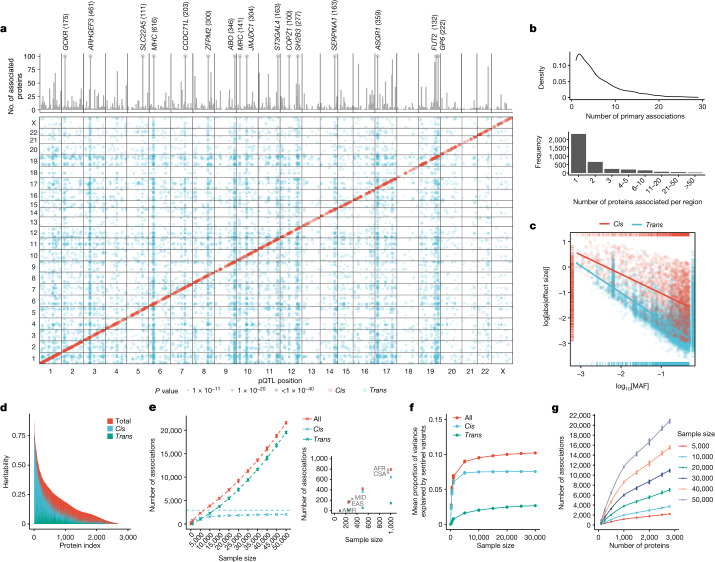
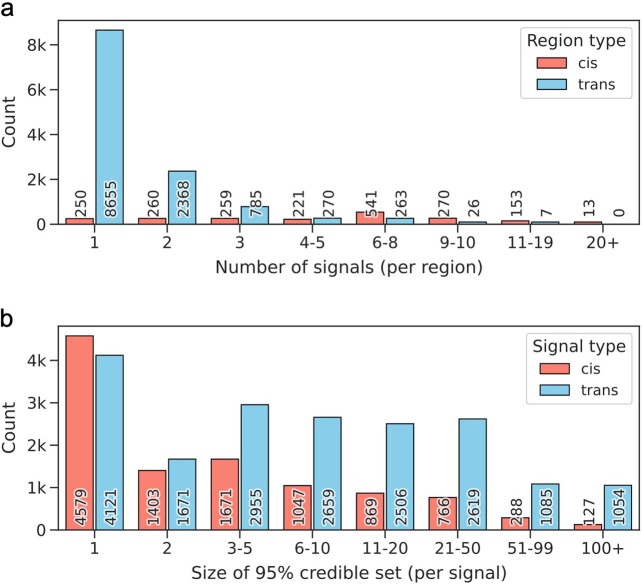
- In the European discovery cohort (n = 34,557), the study identified 14,287 primary pQTL associations across 3,760 independent genetic regions at P < 1.7 × 10⁻¹¹; 1,955 were cis and 12,332 were trans. Replication in n = 17,806 showed 95.6% of cis and 64.1% of trans associations remained significant and directionally concordant.
- 82.6% of tested proteins (2,414/2,922) had at least one pQTL, and 66.9% (1,954/2,922) had a cis association. 81% of primary associations (11,521/14,287) were previously undescribed; 89% of trans pQTLs were previously undescribed versus 27% of cis pQTLs.
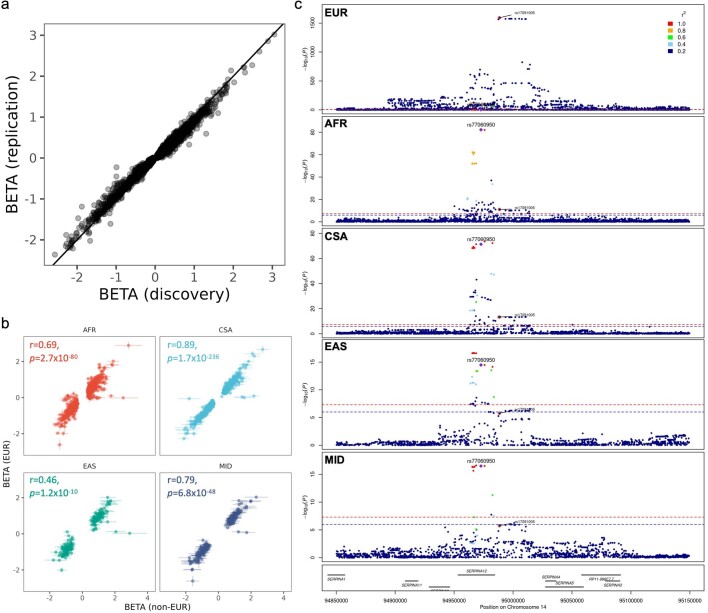
- Non-European ancestry-specific analyses found 785 (AFR, n = 931), 732 (CSA, n = 920), 227 (MID, n = 308), 179 (EAS, n = 262) and 9 (AMR, n = 97) primary associations; the paper highlights ancestry-specific allelic enrichments such as SERPINA12 rs77060950.
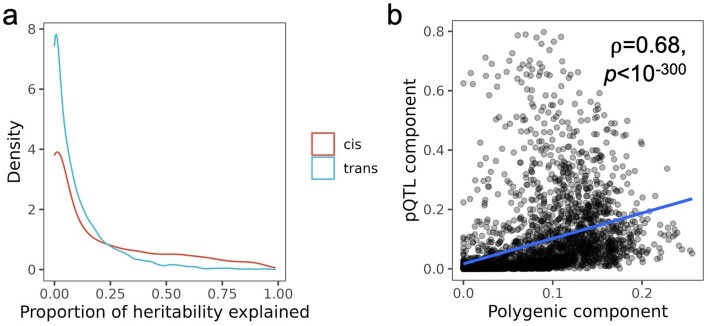
- Additional analyses identified 29,420 independent pQTL signals, mean total SNP-based heritability of 0.16, and colocalization of 65% (1,220/1,889) of genes with a significant eQTL in at least one tissue.
Methods
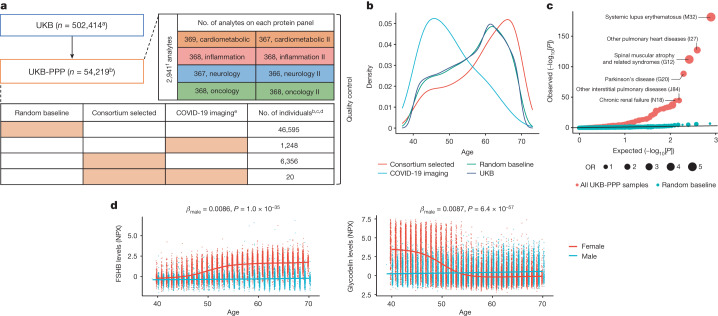
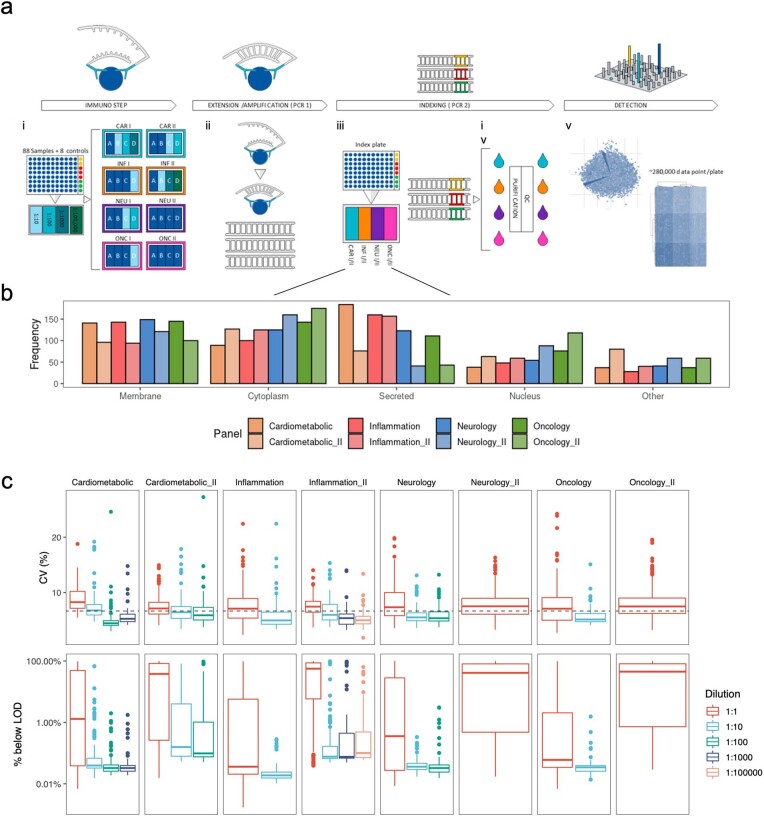
- Plasma proteomic profiling used the antibody-based Olink Explore 3072 PEA, measuring 2,941 protein analytes and 2,923 unique proteins across 54,219 UKB participants, including 46,595 randomly selected baseline, 6,376 consortium-selected and 1,268 COVID-19 repeat-imaging participants.
- Discovery pQTL analyses were performed in European-ancestry randomly selected baseline participants (n = 34,557) with replication in the remaining samples (n = 17,806), using REGENIE GWAS for up to 16.1 million imputed variants and a significance threshold of P < 1.7 × 10⁻¹¹; full-cohort mapping used n = 52,363 and up to 23.8 million variants.
- Downstream analyses included SuSiE fine-mapping, SNP-based heritability estimation, colocalization with GTEx eQTLs, ancestry-specific pQTL mapping in five pan-UKBB groups, sensitivity analyses for blood cell counts, BMI, season and fasting time, and Mendelian randomization exemplars such as PCSK9.
Limitations
- Stated: the predominantly white European ancestral composition of UKB does not capture full human genetic and phenotypic diversity, and the non-European ancestry groups were small and underpowered; the authors call for prioritizing under-represented and genetically diverse populations, resampling/longitudinal analyses, and orthogonal comparisons across proteomic assays.
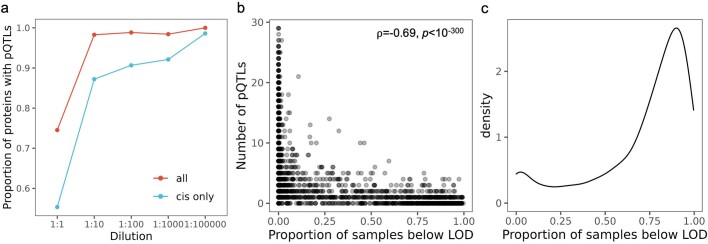
- Stated: pQTL discovery is affected by protein abundance and assay detection; proteins with lower expected concentrations had higher coefficients of variation, and 81.4% of proteins without a pQTL had more than 50% of samples below the limit of detection.
- Evident from the text: the main design is cross-sectional and observational, with causal inference limited to exemplar Mendelian randomization analyses; platform-specific antibody-based measurements may limit overlap with aptamer-based pQTL findings, as only 38% of previous aptamer-based associations replicated among common proteins.
Model-written summary. Check it against the paper before relying on it.
Integrity signals
Registry
Cites
Statistics
Figures
Verification
Claims the paper makes
15 Valid · 1 Not valid · 5 Not checked · 123 Own results and interpretations
The cited sources that could be checked couldn’t confirm or dispute this claim.
In the paper
“Liver expression of SERPINA12 was also higher in rs77060950-T carriers (P = 2.6 × 10 -8 ) 31”
§ Plasma proteomic associations with genetics and health in the UK Biobank > Non-European pQTL mapping
What the sources say
- Could not verifycites [31] The GTEx Consortium. The GTEx Consortium atlas of genetic regulatory effects across human tissues. Science 369, 1318-1330 (2020). sourceExperimental — accuracy not yet measured
The QTL discovery section describes associations between genetic variants and gene expression across tissues, but does not report this specific association. Searches for SERPINA12, rs77060950, and the stated P value found no passage establishing higher liver expression in T carriers; page numbers were not supplied in our copy. (LLM, conf=0.72)
plainstates an association- Asserted: passes — The authors put it forward as true.
- Checkable: passes — It can be checked against evidence.
- Load-bearing: unclear — It is unclear whether the paper’s conclusions depend on it.
- Based: passes — The paper gives a reason why it holds.
- Could not verify
The cited sources support only part of this claim — read each source’s verdict below.
In the paper
“These included well-established, previously identified [17][18][19][20] pleiotropic loci such as MHC, ABO, ZFPM2, ARHGEF3, GCKR, SERPINA1, SH2B3 and ASGR1”
§ Plasma proteomic associations with genetics and health in the UK Biobank > Discovery of pQTLs
What the sources say
- Partly supportedcites [17] Emilsson, V. et al. Co-regulatory networks of human serum proteins link genetics to disease. Science 361, 769-773 (2018). sourceExperimental — accuracy not yet measured
The section “Genetic variants influence serum protein levels” explicitly describes pleiotropy at ABO as well established. Our copy does not identify MHC, ZFPM2, ARHGEF3, GCKR, SERPINA1, SH2B3, or ASGR1 as previously identified pleiotropic loci, so it supports only part of the list. (LLM, conf=0.86)
- Partly supportedcites [18] Sun, B. B. et al. Genomic atlas of the human plasma proteome. Nature 558, 73-79 (2018). sourceExperimental — accuracy not yet measured
In “trans pQTLs identify pathways to disease” (page unavailable), the paper identifies ABO as a well-known pleiotropic locus, describes ZFPM2 as associated with many correlated proteins, and reports associations between a SERPINA1 variant and multiple proteins. It mentions MHC elsewhere but does not identify it there as a pleiotropic locus; the passages found do not establish ARHGEF3, GCKR, SH2B3 or ASGR1 as examples. (LLM, conf=0.88)
- Not checked — no full text of the sourcecites [19] Ferkingstad, E. et al. Large-scale integration of the plasma proteome with genetics and disease. Nat. Genet. 53, 1712-1721 (2021). source
- Partly supportedcites [20] Pietzner, M. et al. Mapping the proteo-genomic convergence of human diseases. Science 374, eabj1541 (2021). sourceExperimental — accuracy not yet measured
The Results section (‘Genetic associations for protein targets’; page unavailable) identifies ARF4-ARHGEF3, ABO and GCKR as substantially pleiotropic regions. The ‘A map of proteo-genomic connections across the phenome’ section also calls GCKR a known pleiotropic locus. Our copy does not establish the remaining named loci as previously identified pleiotropic loci, so it does not support the full list. (LLM, conf=0.87)
boostedstates an association- Asserted: passes — The authors put it forward as true.
- Checkable: passes — It can be checked against evidence.
- Load-bearing: unclear — It is unclear whether the paper’s conclusions depend on it.
- Based: passes — The paper gives a reason why it holds.
- Partly supported
The cited sources support only part of this claim — read each source’s verdict below.
In the paper
“The missense variant rs72938840 (Arg59Gln, MAF AFR = 7.9%) in the gene encoding rhomboid protease, RHBDL2, is mostly absent in EUR and other ancestries 28 and is associated in trans with concentrations of one of its cleavage substrates 29 , SPINT1 (P = 5.8 × 10 -12 )”
§ Plasma proteomic associations with genetics and health in the UK Biobank > Non-European pQTL mapping
What the sources say
- Could not verifycites [28] Karczewski, K. J. et al. The mutational constraint spectrum quantified from variation in 141,456 humans. Nature 581, 434-443 (2020). sourceExperimental — accuracy not yet measured
The cited paper’s population-comparison discussion (p. 439) concerns gene-level constraint, not rs72938840 or its frequency across ancestries. Searches for rs72938840, RHBDL2, Arg59Gln and SPINT1 found no passage reporting the variant’s 7.9% African-ancestry frequency or its association with SPINT1 concentrations. In the citing sentence, this source’s citation is attached to the ancestry-frequency statement, while a different citation follows the SPINT1 statement. (LLM, conf=0.72)
- Supportedcites [29] Johnson, N. et al. Quantitative proteomics screen identifies a substrate repertoire of rhomboid protease RHBDL2 in human cells and implicates it in epithelial homeostasis. Sci. Rep. 7, 7283 (2017). source
The citation to this paper identifies SPINT1 as a cleavage substrate of RHBDL2. In the Results section (page not available), the authors report RHBDL2-dependent cleavage of Spint-1 and identify its cleavage site. The variant association, allele frequency, and P value are not attributed to this source by the citation placement. (LLM, conf=0.93)
plainstates an association- Asserted: passes — The authors put it forward as true.
- Checkable: passes — It can be checked against evidence.
- Load-bearing: unclear — It is unclear whether the paper’s conclusions depend on it.
- Based: passes — The paper gives a reason why it holds.
- Could not verify
A result the paper reports from its own data — it cites no other source for it, so there is none to check. The quote shows it is in the paper.
In the paper
“we found a significant negative relationship between the number of pQTLs and the proportion of samples that were below the LOD (Spearman's ρ = -0.69,P < 10 -300”
§ Plasma proteomic associations with genetics and health in the UK Biobank > Discovery of pQTLs
plainstates an association- Asserted: passes — The authors put it forward as true.
- Checkable: passes — It can be checked against evidence.
- Load-bearing: unclear — It is unclear whether the paper’s conclusions depend on it.
- Based: passes — The paper gives a reason why it holds.
A result the paper reports from its own data — it cites no other source for it, so there is none to check. The quote shows it is in the paper.
In the paper
“with 66.9% of proteins tested (1,954 of 2,922 proteins) having a cis association (within 1 Mb from the gene encoding the protein)”
§ Plasma proteomic associations with genetics and health in the UK Biobank > Discovery of pQTLs
plainstates an association- Asserted: passes — The authors put it forward as true.
- Checkable: passes — It can be checked against evidence.
- Load-bearing: passes — The paper’s conclusions depend on it.
- Based: passes — The paper gives a reason why it holds.
52 more claims
Create a free account to see all 144 claims and to verify the 1 reference still open.
- It may state two separate claims as one. 58
- Probably not a substantial claim. 44
Claims other papers make about this one
Each is checked against this paper’s own text: does it say what the citing paper says it does?
The source backs part of the claim, not all of it — or backs it for a different population, condition or comparison.
In the citing paper
“In a separate array-based GWAS on the UKB-PPP cohort, we tested for the association between common variants (MAF > 0.1%) and 2,922 protein assays, resulting in 14,287 primary genetic associations5.”
From Rare variant associations with plasma protein levels in the UK Biobank (2023) · cites this paper as [5]
Experimental — accuracy not yet measuredThe source backs part of the claim, not all of it — or backs it for a different population, condition or comparison.
In the citing paper
“This pQTL was also CSF specific using Olink (table S5), independent of a subthreshold EGFR pQTL in plasma (rs56380922; R2 = 0.017), and not significant in plasma studies with 10 times our CSF sample size (9–11), implying a highly specific association in neurological contexts.”
From Low overlap of plasma and CSF protein quantitative trait loci affects protein discovery for neurological disease (2026) · cites this paper as [11]
Experimental — accuracy not yet measuredThe cited source says what the claim attributes to it.
In the citing paper
“Key plasma protein databases, such as the UK Biobank Pharma Proteomics Project (UKB-PPP) and deCODE [12,13], offer valuable resources for identifying therapeutic targets and risk factors across various diseases, including cancer [14,15].”
From Identifying novel drug targets for calcific aortic valve disease through Mendelian randomization (2025) · cites this paper as [12]
The cited source says what the claim attributes to it.
In the citing paper
“To date, most pQTLs have been discovered via genome-wide association studies (GWASs), which predominantly focus on common variants3,5–8.”
From Rare variant associations with plasma protein levels in the UK Biobank (2023) · cites this paper as [5]
The cited source says what the claim attributes to it.
In the citing paper
“The effect sizes (β) of nominally significant ExWAS pQTLs (P < 1 × 10⁻⁴) strongly correlated with the GWAS-derived pQTLs5 (r2 = 0.96; Supplementary Fig. 2).”
From Rare variant associations with plasma protein levels in the UK Biobank (2023) · cites this paper as [5]
9 more claims about this paper
Create a free account to see every claim other papers make about this one.
Self-check
Percentages, sums and reported differences re-computed from the paper’s own numbers.
Each contradiction between two passages listed here was confirmed by an independent check.
Rated minor: it would not touch a result — a value no result rests on, a p-value that stays on the same side of the significance level, or a conflict that is clerical, resolved elsewhere in the paper, or outside its own findings.
In the paper
§ Plasma proteomic associations with genetics and health in the UK Biobank > Additional information
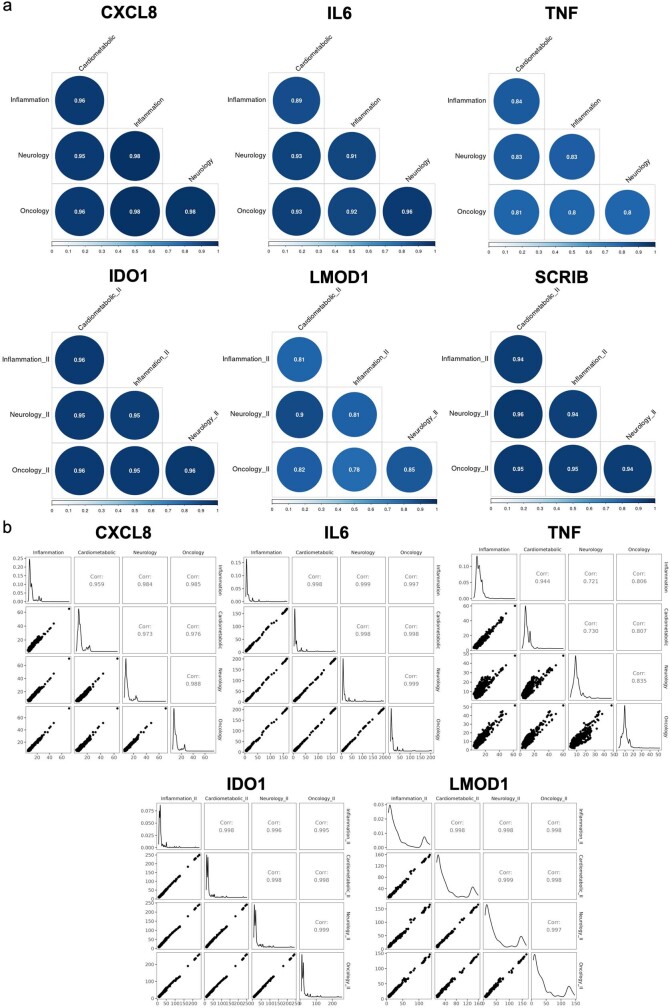
“on three proteins measured across multiple protein panels”
§ Plasma proteomic associations with genetics and health in the UK Biobank > Additional information
“(CXCL8, IL-6, TNF, IDO1, LMOD1, SCRIB).”
Rated minor: it would not touch a result — a value no result rests on, a p-value that stays on the same side of the significance level, or a conflict that is clerical, resolved elsewhere in the paper, or outside its own findings.
In the paper
§ Plasma proteomic associations with genetics and health in the UK Biobank > Discovery of pQTLs
“A total of 1,955 of the 14,287 primary associations were in cis”
§ Plasma proteomic associations with genetics and health in the UK Biobank > Comparisons with previous pQTL studies
“compared with cis pQTLs (27%; 518 out of 1,954).”
Citations
Cites
Regularization Paths for Generalized Linear Models via Coordinate Descent
Friedman, J., Hastie, T., & Tibshirani, R. (2010) · Journal of Statistical Software · doi:10.18637/jss.v033.i01 · Cited by 19,927 · cited 1×
“…eGFR and ABO blood groups (genetic ascertainment of blood groups is described in the ‘ABO blood group and FUT2 secretor status analysis’ section) separately using glmnet (R package v.4.1-4) 57 to tune the lambda.1se parameter with tenfold cross validation for 100 lambdas between 10 −5 and 1,000.”
MethodInfluentialTissue-based map of the human proteome
Uhlén, M., Fagerberg, L., Hallström, B. M., Lindskog, C., Oksvold, P., Mardinoglu, A., Sivertsson, Å., Kampf, C., Sjöstedt, E., Asplund, A., et al. (2015) · Science · doi:10.1126/science.1260419 · Cited by 15,286
Second-generation PLINK: rising to the challenge of larger and richer datasets
Chang, C. C., Chow, C. C., Tellier, L. C., Vattikuti, S., Purcell, S. M., & Lee, J. J. (2015) · Gigascience · doi:10.1186/s13742-015-0047-8 · Cited by 12,709
The mutational constraint spectrum quantified from variation in 141,456 humans
Karczewski, K. J., Francioli, L. C., Tiao, G., Cummings, B. B., Alföldi, J., Wang, Q., Collins, R. L., Laricchia, K. M., Ganna, A., Birnbaum, D. P., et al. (2020) · Nature · doi:10.1038/s41586-020-2308-7 · Cited by 9,434 · cited 3×
“%) and is nearly absent in EUR and other ances-tries 28 .”
BackgroundInfluentialSelf-citationThe UK Biobank resource with deep phenotyping and genomic data
Bycroft, C., Freeman, C., Petkova, D., Band, G., Elliott, L. T., Sharp, K., Motyer, A., Vukcevic, D., Delaneau, O., O’Connell, J., et al. (2018) · Nature · doi:10.1038/s41586-018-0579-z · Cited by 8,876 · cited 2×
“The open-access framework 24 , deep phenotypic characterization 7 and long-term development 9,10 of population studies like the UKB offer a unique opportunity to expand proteogenomics to a massive scale, broaden research use of high-throughput proteomic data, build more extensive pQTL databases,…”
BackgroundMethodSelf-citationThe MR-Base platform supports systematic causal inference across the human phenome
Hemani, G., Zheng, J., Elsworth, B., Wade, K. H., Haberland, V., Baird, D., Laurin, C., Burgess, S., Bowden, J., Langdon, R., et al. (2018) · eLife · doi:10.7554/elife.34408 · Cited by 7,959 · cited 1×
“Data for these outcomes were extracted from the OpenGWAS project 72,73 .”
MethodSelf-citationLD Score regression distinguishes confounding from polygenicity in genome-wide association studies
Schizophrenia Working Group of the Psychiatric Genomics Consortium, Bulik-Sullivan, B. K., Loh, P.-R., Finucane, H. K., Ripke, S., Yang, J., Patterson, N., Daly, M. J., Price, A. L., & Neale, B. M. (2015) · Nature Genetics · doi:10.1038/ng.3211 · Cited by 5,559 · cited 1×
“The polygenic component, which mostly likely satisfies the polygenic model of small genetic contributions across the genome, was estimated using LD-score regression 62 .”
MethodThe GTEx Consortium atlas of genetic regulatory effects across human tissues
The GTEx Consortium, Aguet, F., Anand, S., Ardlie, K. G., Gabriel, S., Getz, G. A., Graubert, A., Hadley, K., Handsaker, R. E., Huang, K. H., et al. (2020) · Science · doi:10.1126/science.aaz1776 · Cited by 5,547
Self-citationAnderson, N. L., & Anderson, N. G. (2002) · Molecular & Cellular Proteomics · doi:10.1074/mcp.r200007-mcp200 · Cited by 4,414
Estimating glomerular filtration rate from serum creatinine and cystatin C
Inker, L. A., Schmid, C. H., Tighiouart, H., Eckfeldt, J. H., Feldman, H. I., Greene, T., Kusek, J. W., Manzi, J., Van Lente, F., Zhang, Y. L., et al. (2012) · New England Journal of Medicine · doi:10.1056/nejmoa1114248 · Cited by 4,102
Fry, A., Littlejohns, T. J., Sudlow, C., Doherty, N., Adamska, L., Sprosen, T., Collins, R., & Allen, N. E. (2017) · American Journal of Epidemiology · doi:10.1093/aje/kwx246 · Cited by 3,979 · cited 2×
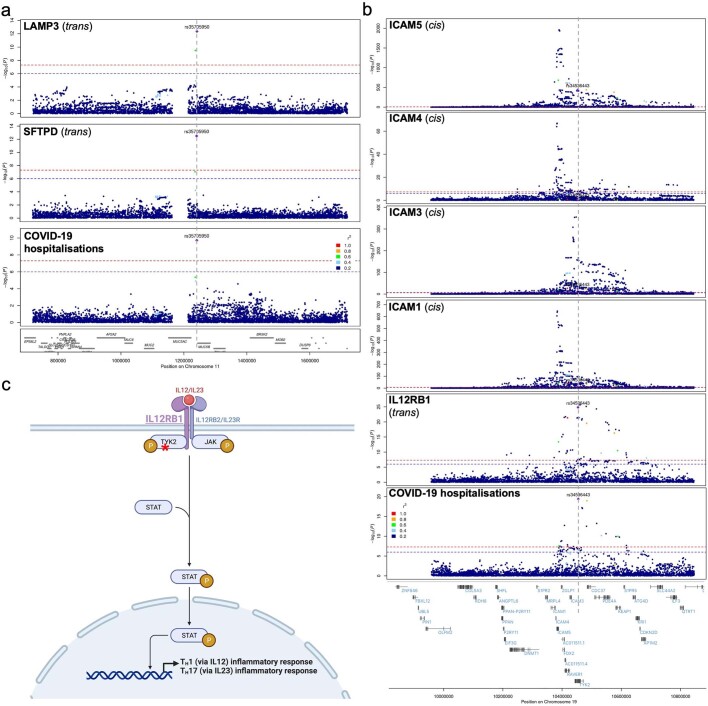
“4 and Supplementary Table 27); (2) multi-trait colocalization can be applied to COVID-19-associated loci to disentangle shared and distinct protein pathways (Extended Data Fig.”
BackgroundInflammasomes: mechanism of assembly, regulation and signalling
Broz, P., & Dixit, V. M. (2016) · Nature Reviews Immunology · doi:10.1038/nri.2016.58 · Cited by 3,500
Võsa, U., Claringbould, A., Westra, H.-J., Bonder, M. J., Deelen, P., Zeng, B., Kirsten, H., Saha, A., Kreuzhuber, R., Yazar, S., et al. (2021) · Nature Genetics · doi:10.1038/s41588-021-00913-z · Cited by 2,607
Mechanisms and Functions of Inflammasomes
Lamkanfi, M., & Dixit, V. M. (2014) · Cell · doi:10.1016/j.cell.2014.04.007 · Cited by 2,503
Efficacy and Safety of Alirocumab in Reducing Lipids and Cardiovascular Events
Robinson, J. G., Farnier, M., Krempf, M., Bergeron, J., Luc, G., Averna, M., Stroes, E. S., Langslet, G., Raal, F. J., El Shahawy, M., et al. (2015) · New England Journal of Medicine · doi:10.1056/nejmoa1501031 · Cited by 2,296
Genomic atlas of the human plasma proteome
Sun, B. B., Maranville, J. C., Peters, J. E., Stacey, D., Staley, J. R., Blackshaw, J., Burgess, S., Jiang, T., Paige, E., Surendran, P., et al. (2018) · Nature · doi:10.1038/s41586-018-0175-2 · Cited by 2,268 · cited 1×
“6b, Supplementary Information and Supplementary Tables 17 and 18).”
BackgroundSelf-citationGenetic Investigation of ANthropometric Traits (GIANT) Consortium, Yang, J., DIAbetes Genetics Replication And Meta-analysis (DIAGRAM) Consortium, Ferreira, T., Morris, A. P., Medland, S. E., Madden, P. A. F., Heath, A. C., Martin, N. G., Montgomery, G. W., et al. (2012) · Nature Genetics · doi:10.1038/ng.2213 · Cited by 1,712
Self-citationLarge-scale integration of the plasma proteome with genetics and disease
Ferkingstad, E., Sulem, P., Atlason, B. A., Sveinbjornsson, G., Magnusson, M. I., Styrmisdottir, E. L., Gunnarsdottir, K., Helgason, A., Oddsson, A., Halldorsson, B. V., et al. (2021) · Nature Genetics · doi:10.1038/s41588-021-00978-w · Cited by 1,697 · cited 1×
“…contributions from significant independent pQTLs identified by SuSiE (pQTL component) and the remaining SNPs across the genome (excluding the pQTL region), which assumes a polygenic model (polygenic component) using an approach that was described previously 32 (Methods and Supplementary Table 19).”
MethodThe support of human genetic evidence for approved drug indications
Nelson, M. R., Tipney, H., Painter, J. L., Shen, J., Nicoletti, P., Shen, Y., Floratos, A., Sham, P. C., Li, M. J., Wang, J., et al. (2015) · Nature Genetics · doi:10.1038/ng.3314 · Cited by 1,666 · cited 7×
“12 and Supplementary Table 30).”
BackgroundInfluentialThe mutational constraint spectrum quantified from variation in 141,456 humans
Karczewski, K. J., Francioli, L. C., Tiao, G., Cummings, B. B., Alföldi, J., Wang, Q., Collins, R. L., Laricchia, K. M., Ganna, A., Birnbaum, D. P., et al. (2019) · doi:10.1101/531210 · Cited by 1,662
SARS-CoV-2 is associated with changes in brain structure in UK Biobank
Douaud, G., Lee, S., Alfaro-Almagro, F., Arthofer, C., Wang, C., McCarthy, P., Lange, F., Andersson, J. L. R., Griffanti, L., Duff, E., et al. (2022) · Nature · doi:10.1038/s41586-022-04569-5 · Cited by 1,646
The Missing Diversity in Human Genetic Studies
Sirugo, G., Williams, S. M., & Tishkoff, S. A. (2019) · Cell · doi:10.1016/j.cell.2019.02.048 · Cited by 1,516
Efficacy and Safety of Evolocumab in Reducing Lipids and Cardiovascular Events
Sabatine, M. S., Giugliano, R. P., Wiviott, S. D., Raal, F. J., Blom, D. J., Robinson, J., Ballantyne, C. M., Somaratne, R., Legg, J., Wasserman, S. M., et al. (2015) · New England Journal of Medicine · doi:10.1056/nejmoa1500858 · Cited by 1,509
Self-citationComputationally efficient whole-genome regression for quantitative and binary traits
Mbatchou, J., Barnard, L., Backman, J., Marcketta, A., Kosmicki, J. A., Ziyatdinov, A., Benner, C., O’Dushlaine, C., Barber, M., Boutkov, B., et al. (2021) · Nature Genetics · doi:10.1038/s41588-021-00870-7 · Cited by 1,502 · cited 1×
“GWAS analyses were performed using REGENIE v.2.2.1 through a two-step procedure to account for population structure detailed previously 59 .”
MethodInfluentialSelf-citationde Lange, K. M., Moutsianas, L., Lee, J. C., Lamb, C. A., Luo, Y., Kennedy, N. A., Jostins, L., Rice, D. L., Gutierrez-Achury, J., Ji, S.-G., et al. (2017) · Nature Genetics · doi:10.1038/ng.3760 · Cited by 1,445
A map of the cis-regulatory sequences in the mouse genome
Shen, Y., Yue, F., McCleary, D. F., Ye, Z., Edsall, L., Kuan, S., Wagner, U., Dixon, J., Lee, L., Lobanenkov, V. V., et al. (2012) · Nature · doi:10.1038/nature11243 · Cited by 1,361
mRNAs, proteins and the emerging principles of gene expression control
Buccitelli, C., & Selbach, M. (2020) · Nature Reviews Genetics · doi:10.1038/s41576-020-0258-4 · Cited by 1,243
The Allelic Landscape of Human Blood Cell Trait Variation and Links to Common Complex Disease
Astle, W. J., Elding, H., Jiang, T., Allen, D., Ruklisa, D., Mann, A. L., Mead, D., Bouman, H., Riveros-Mckay, F., Kostadima, M. A., et al. (2016) · Cell · doi:10.1016/j.cell.2016.10.042 · Cited by 1,224 · cited 1×
“This locus on chromosome 13 is well-known for its association with blood cell traits and autoimmune diseases 40–42 .”
BackgroundA simple new approach to variable selection in regression, with application to genetic fine mapping
Wang, G., Sarkar, A., Carbonetto, P., & Stephens, M. (2020) · Journal of the Royal Statistical Society Series B (Statistical Methodology) · doi:10.1111/rssb.12388 · Cited by 1,121 · cited 2×
“We investigated evidence of shared genetic associations between variants directly affecting circulating protein expression levels and tissue-level gene expression using the coloc with SuSiE framework 61 .”
MethodInfluentialThe druggable genome and support for target identification and validation in drug development
Finan, C., Gaulton, A., Kruger, F. A., Lumbers, R. T., Shah, T., Engmann, J., Galver, L., Kelley, R., Karlsson, A., Santos, R., et al. (2017) · Science Translational Medicine · doi:10.1126/scitranslmed.aag1166 · Cited by 1,026 · cited 1×
“…research and development, as genome-wide association studies (GWAS) frequently implicate genetic variants without clear causal genes mediating their impact(s) 14 or map to genes implicating putative drug targets with poorly understood biology or unclear mechanisms of modulation 2 .”
BackgroundThe MRC IEU OpenGWAS data infrastructure
Elsworth, B., Lyon, M., Alexander, T., Liu, Y., Matthews, P., Hallett, J., Bates, P., Palmer, T., Haberland, V., Smith, G. D., et al. (2020) · bioRxiv (Cold Spring Harbor Laboratory) · doi:10.1101/2020.08.10.244293 · Cited by 916
The UCSC genome browser and associated tools
Kuhn, R. M., Haussler, D., & Kent, W. J. (2013) · Briefings in Bioinformatics · doi:10.1093/bib/bbs038 · Cited by 883
FINEMAP: efficient variable selection using summary data from genome-wide association studies
Benner, C., Spencer, C. C. A., Havulinna, A. S., Salomaa, V., Ripatti, S., & Pirinen, M. (2016) · Bioinformatics · doi:10.1093/bioinformatics/btw018 · Cited by 815
Self-citationLittlejohns, T. J., Holliday, J., Gibson, L. M., Garratt, S., Oesingmann, N., Alfaro-Almagro, F., Bell, J. D., Boultwood, C., Collins, R., Conroy, M. C., et al. (2020) · Nature Communications · doi:10.1038/s41467-020-15948-9 · Cited by 812
Genomic and drug target evaluation of 90 cardiovascular proteins in 30,931 individuals
Folkersen, L., Gustafsson, S., Wang, Q., Hansen, D. H., Hedman, Å. K., Schork, A., Page, K., Zhernakova, D. V., Wu, Y., Peters, J., et al. (2020) · Nature Metabolism · doi:10.1038/s42255-020-00287-2 · Cited by 705 · cited 2×
“…regions (≥5), gene set enrichment analysis revealed enriched biological functions and pathways for 254 proteins, implicating pathways involved in cellular activation, survival and signalling relevant to immune cells (summarized in Supplementary Table 22 and the Supplementary Information).”
BackgroundSelf-citationCo-regulatory networks of human serum proteins link genetics to disease
Emilsson, V., Ilkov, M., Lamb, J. R., Finkel, N., Gudmundsson, E. F., Pitts, R., Hoover, H., Gudmundsdottir, V., Horman, S. R., Aspelund, T., et al. (2018) · Science · doi:10.1126/science.aaq1327 · Cited by 680 · cited 6×
“13 and 14 and Supplementary Tables 24, 25 and 33).”
BackgroundInfluentialThe Polygenic and Monogenic Basis of Blood Traits and Diseases
Vuckovic, D., Bao, E. L., Akbari, P., Lareau, C. A., Mousas, A., Jiang, T., Chen, M.-H., Raffield, L. M., Tardaguila, M., Huffman, J. E., et al. (2020) · Cell · doi:10.1016/j.cell.2020.08.008 · Cited by 671
Self-citationChen, M.-H., Raffield, L. M., Mousas, A., Sakaue, S., Huffman, J. E., Moscati, A., Trivedi, B., Jiang, T., Akbari, P., Vuckovic, D., et al. (2020) · Cell · doi:10.1016/j.cell.2020.06.045 · Cited by 661
Self-citationMapping the proteo-genomic convergence of human diseases
Pietzner, M., Wheeler, E., Carrasco-Zanini, J., Cortes, A., Koprulu, M., Wörheide, M. A., Oerton, E., Cook, J., Stewart, I. D., Kerrison, N. D., et al. (2021) · Science · doi:10.1126/science.abj1541 · Cited by 657 · cited 2×
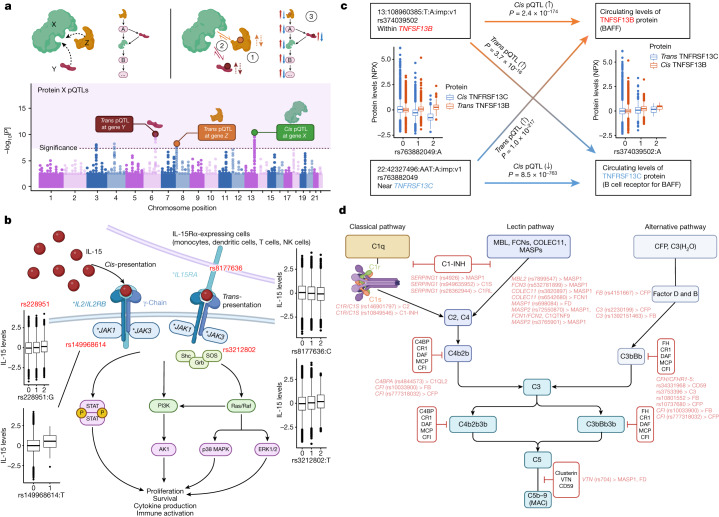
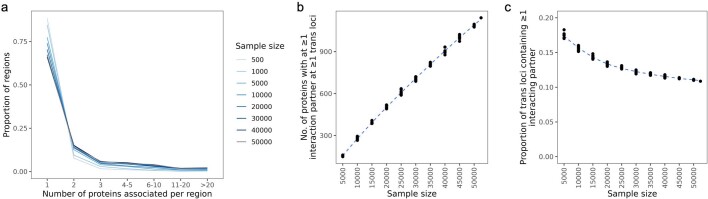
“For 1,055 trans associations, we found a single, specific interacting protein candidate (Supplementary Table 20).”
BackgroundInfluentialSelf-citationAn atlas of genetic associations in UK Biobank
Canela-Xandri, O., Rawlik, K., & Tenesa, A. (2018) · Nature Genetics · doi:10.1038/s41588-018-0248-z · Cited by 655
King, E. A., Davis, J. W., & Degner, J. F. (2019) · PLOS Genetics · doi:10.1371/journal.pgen.1008489 · Cited by 649
King, E., Davis, J. W., & Degner, J. (2019) · bioRxiv · doi:10.1101/513945 · Cited by 578 · cited 2×
“to be approved 12,13 .”
BackgroundKelly, R. J., Rouquier, S., Giorgi, D., Lennon, G. G., & Lowe, J. B. (1995) · Journal of Biological Chemistry · doi:10.1074/jbc.270.9.4640 · Cited by 568
Genetic drug target validation using Mendelian randomisation
Schmidt, A. F., Finan, C., Gordillo-Marañón, M., Asselbergs, F. W., Freitag, D. F., Patel, R. S., Tyl, B., Chopade, S., Faraway, R., Zwierzyna, M., et al. (2020) · Nature Communications · doi:10.1038/s41467-020-16969-0 · Cited by 567 · cited 2×
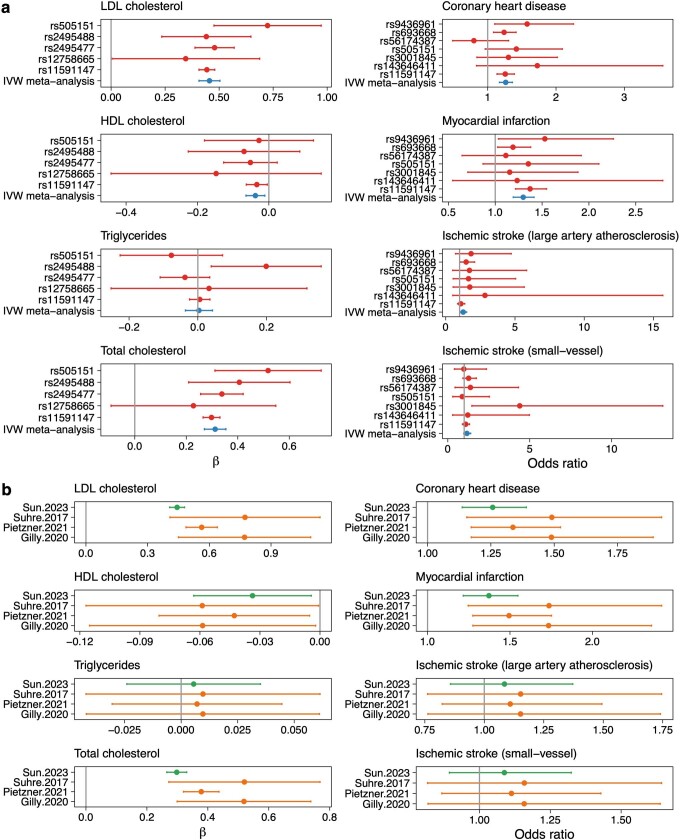
“11 and Supplementary Table 28); (3) common genetic variation has a subtle, but significant, role in inflammasome-mediated innate immune responses (Supplementary Table 29); and (4) large-scale proteogenomics studies can increase the power and availability of genetic instruments for Mendelian randomization, mimicking dr…”
BackgroundFoley, C. N., Staley, J. R., Breen, P. G., Sun, B. B., Kirk, P. D. W., Burgess, S., & Howson, J. M. M. (2021) · Nature Communications · doi:10.1038/s41467-020-20885-8 · Cited by 557
Self-citationHIPPIE v2.0: enhancing meaningfulness and reliability of protein–protein interaction networks
Alanis-Lobato, G., Andrade-Navarro, M. A., & Schaefer, M. H. (2017) · Nucleic Acids Research · doi:10.1093/nar/gkw985 · Cited by 531 · cited 4×
“To test if trans pQTL loci contained at least one gene (within 1 Mb of the trans pQTL) that encoded proteins interacting with the tested protein, we used the curated protein interaction database: Human Integrated Protein-Protein Interaction Reference (HIPPIE) 33 release v.2.3 (http://cbdm-01.zdv.uni-mainz.de/~mschaefe…”
BackgroundMethodInfluentialA genome-wide association study identifies protein quantitative trait loci (pQTLs)
Melzer, D., Perry, J. R. B., Hernandez, D., Corsi, A.-M., Stevens, K., Rafferty, I., Lauretani, F., Murray, A., Gibbs, J. R., Paolisso, G., et al. (2008) · PLoS Genetics · doi:10.1371/journal.pgen.1000072 · Cited by 480 · cited 1×
“…and FUT2 secretor status analysis ABO blood group was imputed through the genetic data using three SNPs in the ABO gene (rs505922, rs8176719 and rs8176746) according to the blood-type imputation method in the UKB (https://biobank.ndph. ox.ac.uk/ukb/field.cgi?id=23165), developed previously 65–68 .”
MethodSelf-citationGenetics meets proteomics: perspectives for large population-based studies
Suhre, K., McCarthy, M. I., & Schwenk, J. M. (2021) · Nature Reviews Genetics · doi:10.1038/s41576-020-0268-2 · Cited by 478
Self-citationInterpreting type 1 diabetes risk with genetics and single-cell epigenomics
Chiou, J., Geusz, R. J., Okino, M.-L., Han, J. Y., Miller, M., Melton, R., Beebe, E., Benaglio, P., Huang, S., Korgaonkar, K., et al. (2021) · Nature · doi:10.1038/s41586-021-03552-w · Cited by 458
Self-citationWik, L., Nordberg, N., Broberg, J., Björkesten, J., Assarsson, E., Henriksson, S., Grundberg, I., Pettersson, E., Westerberg, C., Liljeroth, E., et al. (2021) · Molecular & Cellular Proteomics · doi:10.1016/j.mcpro.2021.100168 · Cited by 445 · cited 3×
“We conducted proteomic profiling on blood plasma samples collected from 54,219 UKB participants using the antibody-based Olink Explore 3072 PEA, measuring 2,941 protein analytes and capturing 2,923 unique proteins (Fig.”
BackgroundMethodYao, C., Chen, G., Song, C., Keefe, J., Mendelson, M., Huan, T., Sun, B. B., Laser, A., Maranville, J. C., Wu, H., et al. (2018) · Nature Communications · doi:10.1038/s41467-018-05512-x · Cited by 431
Self-citationAdvancing human genetics research and drug discovery through exome sequencing of the UK Biobank
Szustakowski, J. D., Balasubramanian, S., Kvikstad, E., Khalid, S., Bronson, P. G., Sasson, A., Wong, E., Liu, D., Wade Davis, J., Haefliger, C., et al. (2021) · Nature Genetics · doi:10.1038/s41588-021-00885-0 · Cited by 401 · cited 1×
“The open-access framework 24 , deep phenotypic characterization 7 and long-term development 9,10 of population studies like the UKB offer a unique opportunity to expand proteogenomics to a massive scale, broaden research use of high-throughput proteomic data, build more extensive pQTL databases,…”
BackgroundSelf-citationCao, Z., Jia, Y., & Zhu, B. (2019) · International Journal of Molecular Sciences · doi:10.3390/ijms20081820 · Cited by 398 · cited 3×
“3, validate several established proteomic associations, such as elevated N-terminal pro-brain natriuretic peptide (NT-proBNP) in ischaemic heart disease 26 .”
BackgroundInfluentialOverexpression of the Cytokine BAFF and Autoimmunity Risk
Steri, M., Orrù, V., Idda, M. L., Pitzalis, M., Pala, M., Zara, I., Sidore, C., Faà, V., Floris, M., Deiana, M., et al. (2017) · New England Journal of Medicine · doi:10.1056/nejmoa1610528 · Cited by 382
Zhang, J., Dutta, D., Köttgen, A., Tin, A., Schlosser, P., Grams, M. E., Harvey, B., CKDGen Consortium, Yu, B., Boerwinkle, E., et al. (2022) · Nature Genetics · doi:10.1038/s41588-022-01051-w · Cited by 373 · cited 1×
“These findings further underline the value of prioritizing under-represented and genetically diverse populations for future pQTL mapping studies 54,55 .”
BackgroundVillard, E., Perret, C., Gary, F., Proust, C., Dilanian, G., Hengstenberg, C., Ruppert, V., Arbustini, E., Wichter, T., Germain, M., et al. (2011) · European Heart Journal · doi:10.1093/eurheartj/ehr105 · Cited by 347
Common genetic associations between age-related diseases
Dönertaş, H. M., Fabian, D. K., Fuentealba, M., Partridge, L., & Thornton, J. M. (2021) · Nature Aging · doi:10.1038/s43587-021-00051-5 · Cited by 346
Mapping of 79 loci for 83 plasma protein biomarkers in cardiovascular disease
Folkersen, L., Fauman, E., Sabater-Lleal, M., Strawbridge, R. J., Frånberg, M., Sennblad, B., Baldassarre, D., Veglia, F., Humphries, S. E., Rauramaa, R., et al. (2017) · PLOS Genetics · doi:10.1371/journal.pgen.1006706 · Cited by 343
Self-citationParé, G., Chasman, D. I., Kellogg, M., Zee, R. Y. L., Rifai, N., Badola, S., Miletich, J. P., & Ridker, P. M. (2008) · PLoS Genetics · doi:10.1371/journal.pgen.1000118 · Cited by 341
The mutational constraint spectrum quantified from variation in 141,456 humans
Karczewski, K. J., Francioli, L. C., & MacArthur, D. G. (2020) · Yearbook of Paediatric Endocrinology · doi:10.1530/ey.17.14.3 · Cited by 317
The Missing Diversity in Human Genetic Studies
Sirugo, G., Williams, S. M., & Tishkoff, S. A. (2019) · Cell · doi:10.1016/j.cell.2019.04.032 · Cited by 314 · cited 1×
“These findings further underline the value of prioritizing under-represented and genetically diverse populations for future pQTL mapping studies 54,55 .”
BackgroundTissueEnrich: Tissue-specific gene enrichment analysis
Jain, A., & Tuteja, G. (2019) · Bioinformatics · doi:10.1093/bioinformatics/bty890 · Cited by 292
A genome-wide association study of serum proteins reveals shared loci with common diseases
Gudjonsson, A., Gudmundsdottir, V., Axelsson, G. T., Gudmundsson, E. F., Jonsson, B. G., Launer, L. J., Lamb, J. R., Jennings, L. L., Aspelund, T., Emilsson, V., et al. (2022) · Nature Communications · doi:10.1038/s41467-021-27850-z · Cited by 284 · cited 1×
“We also found 27 cases of reciprocal interactions, where the protein tested interacted with a protein in one of its trans loci and vice versa, indicating strong coupled interactions (Supplementary Table 21).”
BackgroundThe Human Plasma Proteome: History, Character, and Diagnostic Prospects
Anderson, N. L., & Anderson, N. G. (2003) · Molecular & Cellular Proteomics · doi:10.1074/mcp.a300001-mcp200 · Cited by 284 · cited 2×
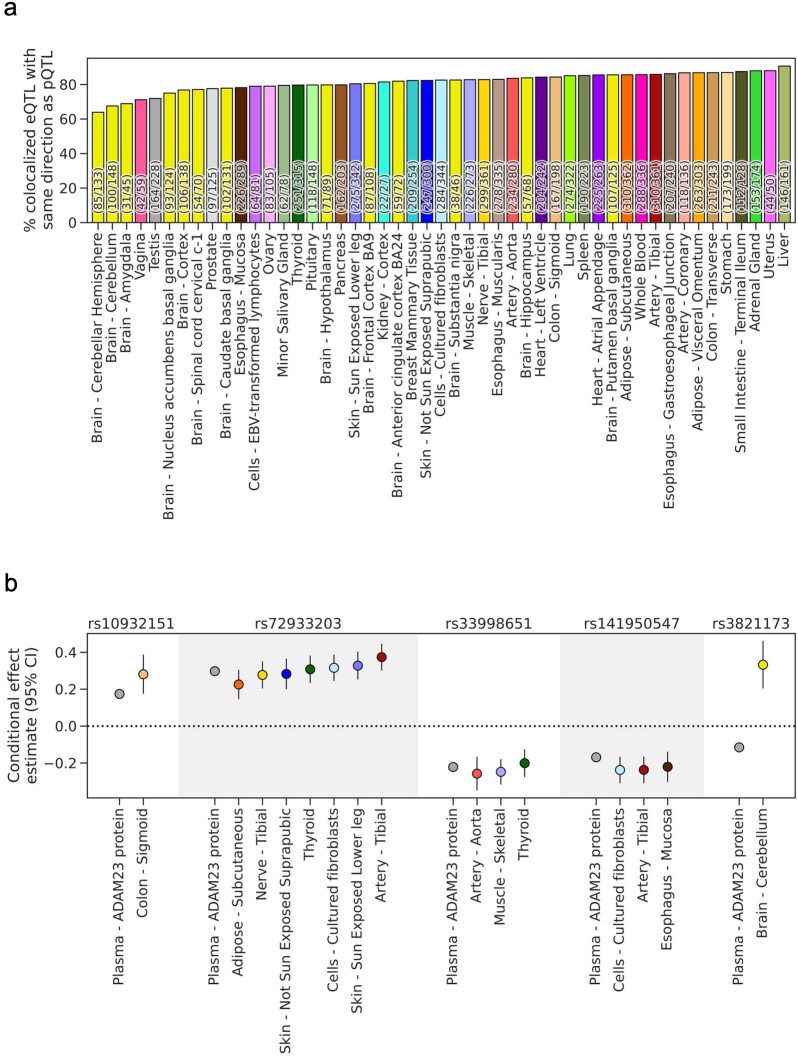
“We cross-referenced pQTLs identified in this study with previously published pQTL results (Methods and Supplementary Table 32), finding that 81% of primary associations from the discovery cohort (11,521 out of 14,287) had not been identified by previous pQTL studies (Supplementary Table 15).”
BackgroundResultAdvancing the use of genome-wide association studies for drug repurposing
Reay, W. R., & Cairns, M. J. (2021) · Nature Reviews Genetics · doi:10.1038/s41576-021-00387-z · Cited by 283
Tadros, R., Francis, C., Xu, X., Vermeer, A. M. C., Harper, A. R., Huurman, R., Kelu Bisabu, K., Walsh, R., Hoorntje, E. T., te Rijdt, W. P., et al. (2021) · Nature Genetics · doi:10.1038/s41588-020-00762-2 · Cited by 282 · cited 1×
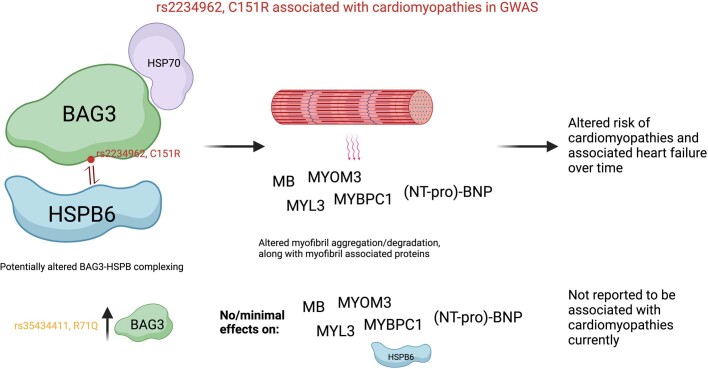
“BAG3 functions through BAG3–HSP70–HSPB complexes, which have an important role in heart failure and cardiomyopathies 34 , including the same BAG3 signal (rs2234962) identified in previous GWAS of cardiomyopathies 35,36 .”
BackgroundSequencing of 640,000 exomes identifies GPR75 variants associated with protection from obesity
Akbari, P., Gilani, A., Sosina, O., Kosmicki, J. A., Khrimian, L., Fang, Y.-Y., Persaud, T., Garcia, V., Sun, D., Li, A., et al. (2021) · Science · doi:10.1126/science.abf8683 · Cited by 276
Self-citationInherited Deficiency of Mannan-Binding Lectin–Associated Serine Protease 2
Stengaard-Pedersen, K., Thiel, S., Gadjeva, M., Møller-Kristensen, M., Sørensen, R., Jensen, L. T., Sjöholm, A. G., Fugger, L., & Jensenius, J. C. (2003) · New England Journal of Medicine · doi:10.1056/nejmoa022836 · Cited by 253 · cited 1×
“Similarly, we found a low-frequency missense variant in MASP2 (rs72550870, Asp120Gly, MAF = 3.0%), previously linked to MASP2 deficiency 47–49 , associated in trans with higher MASP1 levels ( β = 0.17, P = 2.5 × 10 −15 ; independent to the primary association), reduced FCN2 levels ( β = −0.22, P =…”
BackgroundInfluentialWolpin, B. M., Kraft, P., Gross, M., Helzlsouer, K., Bueno-de-Mesquita, H. B., Steplowski, E., Stolzenberg-Solomon, R. Z., Arslan, A. A., Jacobs, E. J., LaCroix, A., et al. (2010) · Cancer Research · doi:10.1158/0008-5472.can-09-2993 · Cited by 252
Gaziano, L., Giambartolomei, C., Pereira, A. C., Gaulton, A., Posner, D. C., Swanson, S. A., Ho, Y.-L., Iyengar, S. K., Kosik, N. M., Vujkovic, M., et al. (2021) · Nature Medicine · doi:10.1038/s41591-021-01310-z · Cited by 235
Self-citationSynergistic insights into human health from aptamer- and antibody-based proteomic profiling
Pietzner, M., Wheeler, E., Carrasco-Zanini, J., Kerrison, N. D., Oerton, E., Koprulu, M., Luan, J., Hingorani, A. D., Williams, S. A., Wareham, N. J., et al. (2021) · Nature Communications · doi:10.1038/s41467-021-27164-0 · Cited by 234 · cited 3×
“As population-scale proteogenomic investigations expand, orthogonal comparisons of different proteomics assays applied across the same samples will help to decipher complementarities and differences between antibody, aptamer and emerging, high-throughput mass-spectrometry-based techniques 50,51 .”
BackgroundAdvancing Human Genetics Research and Drug Discovery through Exome Sequencing of the UK BiobankPreprint
Szustakowski, J. D., Balasubramanian, S., Sasson, A., Khalid, S., Bronson, P., Kvikstad, E., Wong, E., Liu, D., Davis, J., Haefliger, C., et al. (2020) · medRxiv · doi:10.1101/2020.11.02.20222232 · Cited by 222
Self-citationKaratasakis, A., Danek, B. A., Karacsonyi, J., Rangan, B. V., Roesle, M. K., Knickelbine, T., Miedema, M. D., Khalili, H., Ahmad, Z., Abdullah, S., et al. (2017) · Journal of the American Heart Association · doi:10.1161/jaha.117.006910 · Cited by 215
Plasma proteomic biomarker signature of age predicts health and life span
Tanaka, T., Basisty, N., Fantoni, G., Candia, J., Moore, A. Z., Biancotto, A., Schilling, B., Bandinelli, S., & Ferrucci, L. (2020) · eLife · doi:10.7554/elife.61073 · Cited by 213
Ngo, D., Sinha, S., Shen, D., Kuhn, E. W., Keyes, M. J., Shi, X., Benson, M. D., O’Sullivan, J. F., Keshishian, H., Farrell, L. A., et al. (2016) · Circulation · doi:10.1161/circulationaha.116.021803 · Cited by 213
Julkunen, H., Cichońska, A., Slagboom, P. E., Würtz, P., & Initiative, N. H. U. B. (2021) · eLife · doi:10.7554/elife.63033 · Cited by 207 · cited 2×
“At P 1.7 × 10 −11 , we found 785 (AFR), 732 (CSA), 227 (MID) and 179 (EAS) primary associations (Supplementary Table 11).”
BackgroundInfluentialKatz, D. H., Robbins, J. M., Deng, S., Tahir, U. A., Bick, A. G., Pampana, A., Yu, Z., Ngo, D., Benson, M. D., Chen, Z.-Z., et al. (2022) · Science Advances · doi:10.1126/sciadv.abm5164 · Cited by 206 · cited 2×
“Certain comparative evaluations have suggested that aptamer-based assays offer broader biological coverage and higher precision, whereas antibody-based assays offer greater protein target specificity and stronger correlations with certain diseases and immunoassays 50 .”
BackgroundIdentification of the key structural motifs involved in HspB8/HspB6–Bag3 interaction
Fuchs, M., Poirier, D. J., Seguin, S. J., Lambert, H., Carra, S., Charette, S. J., & Landry, J. (2010) · Biochemical Journal · doi:10.1042/bj20090907 · Cited by 190 · cited 1×
“The rs2234962 missense variant sits in between two conserved IPV motifs, which are essential for HSPB6/8 binding 37 and may modulate interactions with HSP/ HSBPs in vitro 38 .”
BackgroundComparison of Proteomic Assessment Methods in Multiple Cohort Studies
Raffield, L. M., Dang, H., Pratte, K. A., Jacobson, S., Gillenwater, L. A., Ampleford, E., Barjaktarevic, I., Basta, P., Clish, C. B., Comellas, A. P., et al. (2020) · PROTEOMICS · doi:10.1002/pmic.201900278 · Cited by 184 · cited 1×
“This modest overlap is unsurprising, given that correlations between proteins measured by both platforms are highly variable 52,53 , and shared genetic signals can be masked by extreme, assay-specific binding affinities 51 .”
BackgroundSelf-citationGiugliano, R. P., Pedersen, T. R., Saver, J. L., Sever, P. S., Keech, A. C., Bohula, E. A., Murphy, S. A., Wasserman, S. M., Honarpour, N., Wang, H., et al. (2020) · Stroke · doi:10.1161/strokeaha.119.027759 · Cited by 184
Enroth, S., Johansson, Å., Enroth, S. B., & Gyllensten, U. (2014) · Nature Communications · doi:10.1038/ncomms5684 · Cited by 182 · cited 4×
“We identified 29,420 independent pQTL signals with SuSiE regression of individual-level protein levels on genotype dosages and confirmed statistical independence using multivariable linear regression models (Supplementary Table 16).”
InfluentialImmunodeficiency Associated with FCN3 Mutation and Ficolin-3 Deficiency
Munthe-Fog, L., Hummelshøj, T., Honoré, C., Madsen, H. O., Permin, H., & Garred, P. (2009) · New England Journal of Medicine · doi:10.1056/nejmoa0900381 · Cited by 172
Computationally efficient whole genome regression for quantitative and binary traitsPreprint
Mbatchou, J. S., Barnard, L., Backman, J., et al. (2020) · bioRxiv (Cold Spring Harbor Laboratory) · doi:10.1101/2020.06.19.162354 · Cited by 171
Genetically Determined ABO Blood Group and its Associations With Health and Disease
Groot, H. E., Villegas Sierra, L. E., Said, M. A., Lipsic, E., Karper, J. C., & van der Harst, P. (2020) · Arteriosclerosis, Thrombosis, and Vascular Biology · doi:10.1161/atvbaha.119.313658 · Cited by 160 · cited 1×
“…and FUT2 secretor status analysis ABO blood group was imputed through the genetic data using three SNPs in the ABO gene (rs505922, rs8176719 and rs8176746) according to the blood-type imputation method in the UKB (https://biobank.ndph. ox.ac.uk/ukb/field.cgi?id=23165), developed previously 65–68 .”
MethodHaslam, D. E., Li, J., Dillon, S. T., Gu, X., Cao, Y., Zeleznik, O. A., Sasamoto, N., Zhang, X., Eliassen, A. H., Liang, L., et al. (2022) · PROTEOMICS · doi:10.1002/pmic.202100170 · Cited by 157 · cited 1×
“This modest overlap is unsurprising, given that correlations between proteins measured by both platforms are highly variable 52,53 , and shared genetic signals can be masked by extreme, assay-specific binding affinities 51 .”
BackgroundCirculating Proteomic Signatures of Chronological Age
Menni, C., Kiddle, S. J., Mangino, M., Viñuela, A., Psatha, M., Steves, C., Sattlecker, M., Buil, A., Newhouse, S., Nelson, S., et al. (2015) · The Journals of Gerontology: Series A · doi:10.1093/gerona/glu121 · Cited by 144
Next generation plasma proteome profiling to monitor health and disease
Zhong, W., Edfors, F., Gummesson, A., Bergström, G., Fagerberg, L., & Uhlén, M. (2021) · Nature Communications · doi:10.1038/s41467-021-22767-z · Cited by 140
The advantages of UK Biobank's open‐access strategy for health research
Conroy, M., Sellors, J., Effingham, M., Littlejohns, T. J., Boultwood, C., Gillions, L., Sudlow, C. L. M., Collins, R., & Allen, N. E. (2019) · Journal of Internal Medicine · doi:10.1111/joim.12955 · Cited by 133 · cited 6×
“13 and 14 and Supplementary Tables 24, 25 and 33).”
BackgroundInfluentialComplement Activation in Inflammatory Skin Diseases
Giang, J., Seelen, M. A., van Doorn, M. B. A., Rißmann, R., Prens, E. P., & Damman, J. J. (2018) · Frontiers in Immunology · doi:10.3389/fimmu.2018.00639 · Cited by 129
Welzel, T., & Kuemmerle-Deschner, J. B. (2021) · Journal of Clinical Medicine · doi:10.3390/jcm10010128 · Cited by 117
Revealing the role of the human blood plasma proteome in obesity using genetic drivers
Zaghlool, S. B., Sharma, S., Molnar, M., Matías-García, P. R., Elhadad, M. A., Waldenberger, M., Peters, A., Rathmann, W., Graumann, J., Gieger, C., et al. (2021) · Nature Communications · doi:10.1038/s41467-021-21542-4 · Cited by 102
Self-citationPhenotypes associated with genes encoding drug targets are predictive of clinical trial side effects
Nguyen, P. A., Born, D. A., Deaton, A. M., Nioi, P., & Ward, L. D. (2019) · Nature Communications · doi:10.1038/s41467-019-09407-3 · Cited by 101 · cited 1×
“11 and Supplementary Table 28); (3) common genetic variation has a subtle, but significant, role in inflammasome-mediated innate immune responses (Supplementary Table 29); and (4) large-scale proteogenomics studies can increase the power and availability of genetic instruments for Mendelian randomization, mimicking dr…”
BackgroundSelf-citationWang, Y., & Colonna, M. (2014) · European Journal of Immunology · doi:10.1002/eji.201344365 · Cited by 97 · cited 1×
“Although IL-34 and CD207 do not directly interact, this result is highly consistent with the crucial role of IL-34 in the development and survival of Langerhans cells 39 .”
ResultFauman, E. B., & Hyde, C. (2022) · BMC Bioinformatics · doi:10.1186/s12859-022-04706-x · Cited by 87 · cited 3×
“…research and development, as genome-wide association studies (GWAS) frequently implicate genetic variants without clear causal genes mediating their impact(s) 14 or map to genes implicating putative drug targets with poorly understood biology or unclear mechanisms of modulation 2 .”
BackgroundSelf-citationBelimumab: First targeted biological treatment for systemic lupus erythematosus
Dubey, A. K., Handu, S. S., Dubey, S., Sharma, P., & Sharma, K. (2011) · Journal of Pharmacology and Pharmacotherapeutics · doi:10.4103/0976-500x.85930 · Cited by 84 · cited 1×
“BAFF has a well-established role in B cell survival and function and is the drug target for belimumab, a monoclonal antibody approved for the treatment of systemic lupus erythematosus 43 .”
BackgroundTherapeutic targeting of BAG3: considering its complexity in cancer and heart disease
Kirk, J. A., Cheung, J. Y., & Feldman, A. M. (2021) · Journal of Clinical Investigation · doi:10.1172/jci149415 · Cited by 82 · cited 1×
“BAG3 functions through BAG3–HSP70–HSPB complexes, which have an important role in heart failure and cardiomyopathies 34 , including the same BAG3 signal (rs2234962) identified in previous GWAS of cardiomyopathies 35,36 .”
BackgroundLD Score Regression Distinguishes Confounding from Polygenicity in Genome-Wide Association StudiesPreprint
Bulik-Sullivan, B. K., Loh, P., Finucane, H. K., et al. (2014) · bioRxiv (Cold Spring Harbor Laboratory) · doi:10.1101/002931 · Cited by 80
Malcová, H., Strizova, Z. O., Milota, T., Stříž, I., Šedivá, A., Cebecauerová, D., & Horváth, R. (2021) · Frontiers in Immunology · doi:10.3389/fimmu.2020.619257 · Cited by 77
Teshigawara, S., Wada, J., Hida, K., Nakatsuka, A., Eguchi, J., Murakami, K., Kanzaki, M., Inoue, K., Terami, T., Katayama, A., et al. (2012) · The Journal of Clinical Endocrinology & Metabolism · doi:10.1210/jc.2011-3297 · Cited by 65
Surfactant protein D is a causal risk factor for COPD: results of Mendelian randomisation
Obeidat, M., Li, X., Burgess, S., Zhou, G., Fishbane, N., Hansel, N. N., Bossé, Y., Joubert, P., Hao, K., Nickle, D. C., et al. (2017) · European Respiratory Journal · doi:10.1183/13993003.00657-2017 · Cited by 59
Chen, M.-H., Raffield, L. M., Mousas, A., Sakaue, S., Huffman, J. E., Jiang, T., Akbari, P., Vuckovic, D., Bao, E. L., Moscati, A., et al. (2020) · bioRxiv (Cold Spring Harbor Laboratory) · doi:10.1101/2020.01.17.910497 · Cited by 59 · cited 1×
“This locus on chromosome 13 is well-known for its association with blood cell traits and autoimmune diseases 40–42 .”
BackgroundSelf-citationCongenital H-ficolin deficiency in premature infants with severe necrotising enterocolitis
Schlapbach, L. J., Thiel, S., Kessler, U., Ammann, R. A., Aebi, C., & Jensenius, J. C. (2011) · Gut · doi:10.1136/gut.2010.226027 · Cited by 57 · cited 1×
“%) leading to FCN3 deficiency 44–46 and, here, to reduced MASP1 levels ( β = −1.16, P = 3.8 × 10 −312 ).”
InfluentialProteogenomic links to human metabolic diseases
Koprulu, M., Carrasco-Zanini, J., Wheeler, E., Lockhart, S., Kerrison, N. D., Wareham, N. J., Pietzner, M., & Langenberg, C. (2023) · Nature Metabolism · doi:10.1038/s42255-023-00753-7 · Cited by 57 · cited 2×
“To date, large-scale proteogenomic studies have identified upwards of 12,000 independent associations between genetic variants and plasma protein concentrations (pQTLs) using samples typically sourced from studies lacking participant-level access or linkage to deep pheno-typing 17–23 .”
BackgroundJohnson, N., Březinová, J., Stephens, E., Burbridge, E., Freeman, M., Adrain, C., & Strisovsky, K. (2017) · Scientific Reports · doi:10.1038/s41598-017-07556-3 · Cited by 54 · cited 2×
“%) in the gene encoding rhomboid protease, RHBDL2 , is mostly absent in EUR and other ancestries 28 and is associated in trans with concentrations of one of its cleavage substrates 29 , SPINT1 ( P = 5.8 × 10 −12 ).”
BackgroundInfluentialUchida, H., Maruyama, T., Nishikawa-Uchida, S., Miyazaki, K., Masuda, H., & Yoshimura, Y. (2013) · Reproductive Medicine and Biology · doi:10.1007/s12522-013-0144-2 · Cited by 48
H-ficolin (ficolin-3) concentrations and FCN3 gene polymorphism in neonates
Michalski, M., Szala, A., St. Swierzko, A., Lukasiewicz, J., Maciejewska, A., Kilpatrick, D. C., Matsushita, M., Domzalska-Popadiuk, I., Borkowska-Klos, M., Sokolowska, A., et al. (2012) · Immunobiology · doi:10.1016/j.imbio.2011.12.004 · Cited by 41
Primary Ficolin-3 deficiency – Is it associated with increased susceptibility to infections?
Michalski, M., Świerzko, A. S., Pągowska-Klimek, I., Niemir, Z. I., Mazerant, K., Domżalska-Popadiuk, I., Moll, M., & Cedzyński, M. (2015) · Immunobiology · doi:10.1016/j.imbio.2015.01.003 · Cited by 38 · cited 1×
“%) leading to FCN3 deficiency 44–46 and, here, to reduced MASP1 levels ( β = −1.16, P = 3.8 × 10 −312 ).”
InfluentialPalmos, A., Millischer, V., Menon, D. K., Nicholson, T. R., Taams, L. S., Michael, B. D., Sunderland, G. J., Griffiths, M. J., Hübel, C., & Breen, G. D. (2022) · PLoS Genetics · doi:10.1371/journal.pgen.1010042 · Cited by 37
Swierzko, A. S., Cedzynski, M., Domzalska-Popadiuk, I., MacDonald, S. L., Borkowska-Klos, M., Atkinson, A. P. M., Szala, A., Jopek, A., Jensenius, J. C., Kawakami, M., et al. (2009) · Molecular Immunology · doi:10.1016/j.molimm.2009.02.022 · Cited by 35
An atlas of genetic associations in UK BiobankPreprint
Canela‐Xandri, O., Rawlik, K., & Tenesa, A. (2017) · bioRxiv (Cold Spring Harbor Laboratory) · doi:10.1101/176834 · Cited by 35
Sokolowska, A., Szala, A., St Swierzko, A., Kozinska, M., Niemiec, T., Blachnio, M., Augustynowicz-Kopec, E., Dziadek, J., & Cedzynski, M. (2015) · Cellular & Molecular Immunology · doi:10.1038/cmi.2014.19 · Cited by 27 · cited 1×
“Similarly, we found a low-frequency missense variant in MASP2 (rs72550870, Asp120Gly, MAF = 3.0%), previously linked to MASP2 deficiency 47–49 , associated in trans with higher MASP1 levels ( β = 0.17, P = 2.5 × 10 −15 ; independent to the primary association), reduced FCN2 levels ( β = −0.22, P =…”
BackgroundInfluentialAsimit, J. L., Rainbow, D. B., Fortune, M. D., Grinberg, N. F., Wicker, L. S., & Wallace, C. (2019) · Nature Communications · doi:10.1038/s41467-019-11271-0 · Cited by 26
Meta-GWAS of PCSK9 levels detects two novel loci atAPOBandTM6SF2
Pott, J., Gådin, J. R., Theusch, E., Kleber, M. E., Delgado, G. E., Kirsten, H., Hauck, S. M., Burkhardt, R., Scharnagl, H., Krauss, R. M., et al. (2021) · Human Molecular Genetics · doi:10.1093/hmg/ddab279 · Cited by 20
Christiansen, M. K., Winther, S., Nissen, L., Vilhjálmsson, B. J., Frost, L., Johansen, J. K., Møller, P. L., Schmidt, S. E., Westra, J. S., Holm, N. R., et al. (2021) · Circulation Genomic and Precision Medicine · doi:10.1161/circgen.120.003298 · Cited by 14
Masuda, M., Okuda, K., Ikeda, D. D., Hishigaki, H., & Fujiwara, T. (2015) · Human Genome Variation · doi:10.1038/hgv.2015.19 · Cited by 13
Functional analysis of a common BAG3 allele associated with protection from heart failure
Perez-Bermejo, J. A., Judge, L. M., Jensen, C. L., Wu, K., Watry, H. L., Truong, A., Ho, J. J., Carter, M., Runyon, W. V., Kaake, R. M., et al. (2023) · Nature Cardiovascular Research · doi:10.1038/s44161-023-00288-w · Cited by 12 · cited 1×
“The rs2234962 missense variant sits in between two conserved IPV motifs, which are essential for HSPB6/8 binding 37 and may modulate interactions with HSP/ HSBPs in vitro 38 .”
BackgroundGenetic drug target validation using Mendelian randomizationPreprint
Schmidt, A. F., Finan, C., Gordillo‐Marañón, M., Asselbergs, F. W., Freitag, D. F., Patel, R. S., Tyl, B., Chopade, S., Faraway, R., Zwierzyna, M., et al. (2019) · bioRxiv (Cold Spring Harbor Laboratory) · doi:10.1101/781039 · Cited by 10
Macdonald-Dunlop, E., Klarić, L., Folkersen, L., Timmers, P. R. H. J., Gustafsson, S., Zhao, J. H., Eriksson, N., Richmond, A., Enroth, S., Mattsson-Carlgren, N., et al. (2021) · doi:10.1101/2021.08.03.21261494 · Cited by 9
Self-citationNguyen, P. A., Born, D. A., Deaton, A. M., Nioi, P., & Ward, L. D. (2019) · Nature Communications · doi:10.1038/s41467-019-10237-6 · Cited by 3
Self-citationFauman, E. B., & Hyde, C. (2022) · doi:10.1101/2022.03.07.483314
Self-citationA genome-wide association study of serum proteins reveals shared loci with common diseases
Gudjonsson, A., Gudmundsdottir, V., Axelsson, G. T., Gudmundsson, E. F., Jonsson, B. G., Launer, L. J., Lamb, J. R., Jennings, L. L., Aspelund, T., Emilsson, V., et al. (2021) · doi:10.1101/2021.07.02.450858
Zhang, J., Dutta, D., Köttgen, A., Tin, A., Schlosser, P., Grams, M. E., Harvey, B., Yu, B., Boerwinkle, E., Coresh, J., et al. (2021) · doi:10.1101/2021.03.15.435533
Response: Re: ABO Blood Group and the Risk of Pancreatic Cancer
Wolpin, B. M., Kraft, P., & Fuchs, C. S. (2010) · JNCI Journal of the National Cancer Institute · doi:10.1093/jnci/djp449
Tadros, R., Francis, C., Xu, X., Vermeer, A. M., Harper, A. R., Huurman, R., Bisabu, K. K., Walsh, R., Meder, B., Charron, P., et al. (2020) · Circulation · doi:10.1161/circ.142.suppl_3.16685
Identification of the key structural motifs involved in HspB8/HspB6–Bag3 interaction
Fuchs, M., Poirier, D. J., Seguin, S. J., Lambert, H., Carra, S., Charette, S. J., & Landry, J. (2010) · Biochemical Journal · doi:10.1042/bj4300559u
Cited by
Large-scale plasma proteomics comparisons through genetics and disease associations
Eldjarn, G. H., Ferkingstad, E., Lund, S. H., Helgason, H., Magnusson, O. T., Gunnarsdottir, K., Olafsdottir, T. A., Halldorsson, B. V., Olason, P. I., Zink, F., et al. (2023) · Nature · doi:10.1038/s41586-023-06563-x · Cited by 583
“4, Supplementary Tables 19 and 20 and Supplementary Note 4).”
InfluentialThe present and future of the Cancer Dependency Map
Arafeh, R., Shibue, T., Dempster, J. M., Hahn, W. C., & Vazquez, F. (2025) · Nature Reviews Cancer · doi:10.1038/s41568-024-00763-x · Cited by 454
AlphaGenome: advancing regulatory variant effect prediction with a unified DNA sequence model
Avsec, Ž., Latysheva, N., Cheng, J., Novati, G., Taylor, K. R., Ward, T., Bycroft, C., Nicolaisen, L., Arvaniti, E., Pan, J., et al. (2025) · doi:10.1101/2025.06.25.661532 · Cited by 395
Advancing regulatory variant effect prediction with AlphaGenome
Avsec, Ž., Latysheva, N., Cheng, J., Novati, G., Taylor, K. R., Ward, T., Bycroft, C., Nicolaisen, L., Arvaniti, E., Pan, J., et al. (2026) · Nature · doi:10.1038/s41586-025-10014-0 · Cited by 373
“Additionally, the variant is a plasma pQTL for CELSR2, as well as a GTEx eQTL for CELSR2 and PSRC1 17,65 .”
Argentieri, M. A., Xiao, S., Bennett, D., Winchester, L., Nevado-Holgado, A. J., Ghose, U., Albukhari, A., Yao, P., Mazidi, M., Lv, J., et al. (2024) · Nature Medicine · doi:10.1038/s41591-024-03164-7 · Cited by 347
“Randomized participants selected for proteomic profiling in the UKB have been shown previously to be highly representative of the wider UKB population 43 .”
Background
Metadata
- Authors
- Sun, B. B., Chiou, J., Traylor, M., Benner, C., Hsu, Y.-H., Richardson, T. G., Surendran, P., Mahajan, A., Robins, C., Vasquez-Grinnell, S. G., Hou, L., Kvikstad, E. M., Burren, O. S., Davitte, J., Ferber, K. L., Gillies, C. E., Hedman, Å. K., Hu, S., Lin, T., Mikkilineni, R., Pendergrass, R. K., Pickering, C., Prins, B., Baird, D., Chen, C.-Y., Ward, L. D., Deaton, A. M., Welsh, S., Willis, C. M., Lehner, N., Arnold, M., Wörheide, M. A., Suhre, K., Kastenmüller, G., Sethi, A., Cule, M., Raj, A., Genetics, A. H., Initiative, A. G., Biogen Biobank Team, Squibb, B. M., Genetics, G. H., Sciences, G. G., Biology, P. I., Sciences, P. A. O. J. D., Regeneron Genetics Center, Kang, H. M., Burkitt-Gray, L., Melamud, E., Black, M. H., Fauman, E. B., Howson, J. M. M., Kang, H. M., McCarthy, M. I., Nioi, P., Petrovski, S., Scott, R. A., Smith, E. N., Szalma, S., Waterworth, D. M., Mitnaul, L. J., Szustakowski, J. D., Gibson, B. W., Miller, M. R., & Whelan, C. D.
- Affiliations
- Biogen (United States) (US)
- Pfizer (United States) (US)
- Genentech (US)
- Amgen (United States) (US)
- GlaxoSmithKline (United Kingdom) (GB)
- GlaxoSmithKline (United States) (US)
- Janssen Research & Development (United States) (US)
- Bristol-Myers Squibb (United States) (US)
- AstraZeneca (United Kingdom) (GB)
- Regeneron (United States) (US)
- Pfizer (Sweden) (SE)
- Takeda (United States) (US)
- UK Biobank (GB)
- Alnylam Pharmaceuticals (United States) (US)
- Helmholtz Munich (DE)
- Duke University (US)
- Weill Cornell Medical College in Qatar (QA)
- Calico Life Sciences (US)
- Corresponding author
- Sun, Benjamin B.
- Whelan, Christopher D.
- ORCID
- Sun, Benjamin B.
- Chiou, Joshua
- Traylor, Matthew
- Benner, Christian
- Hsu, Yi-Hsiang
- Richardson, Tom G.
- Surendran, Praveen
- Mahajan, Anubha
- Robins, Chloe
- Hou, Liping
- Kvikstad, Erika M.
- Burren, Oliver S.
- Davitte, Jonathan
- Ferber, Kyle L.
- Gillies, Christopher E.
- Hedman, Åsa K.
- Hu, Sile
- Lin, Tinchi
- Mikkilineni, Rajesh
- Prins, Bram
- Baird, Denis
- Chen, Chia-Yen
- Ward, Lucas D.
- Deaton, Aimee M.
- Welsh, Samantha
- Willis, Carissa M.
- Arnold, Matthias
- Wörheide, Maria A.
- Suhre, Karsten
- Kastenmüller, Gabi
- Sethi, Anurag
- Cule, Madeleine
- Raj, Anil
- Burkitt-Gray, Lucy
- Melamud, Eugene
- Black, Mary Helen
- Fauman, Eric B.
- Howson, Joanna M. M.
- Kang, Hyun Min
- McCarthy, Mark I.
- Nioi, Paul
- Petrovski, Slavé
- Scott, Robert A.
- Smith, Erin N.
- Szalma, Sándor
- Waterworth, Dawn M.
- Szustakowski, Joseph D.
- Gibson, Bradford W.
- Miller, Melissa R.
- Whelan, Christopher D.
- Venue
- Nature
- Published
- 2023-10-04
- Volume
- 622
- Issue
- 7982
- Pages
- 329-338
- ISSN
- 0028-0836 (ISSN-L)
- 1476-4687
- PMC
- PMC10567551
- OpenAlex
- W4387344289
- Cited by
- 1,880
- References
- 107
- Citations by year
- 2026: 805 · 2025: 703 · 2024: 313 · 2023: 54
- FWCI
- 233.27
- Type
- journal article
- Language
- en
- Open access
- hybrid
- doi.org
- Licence
- cc-by
- creativecommons.org/licenses/by/4.0 (tdm)
- creativecommons.org/licenses/by/4.0 (vor)
- Locations
- Nature (publishedVersion, cc-by)
- bioRxiv (Cold Spring Harbor Laboratory) (submittedVersion, cc-by-nc-nd)
- PubMed Central (publishedVersion, cc-by)
- PubMed (publishedVersion)
- RePEc: Research Papers in Economics (submittedVersion)
- PuSH - Publication Server of Helmholtz Zentrum München (submittedVersion, cc-by)
- Funders
- Amgen
- Bristol-Myers Squibb
- Pfizer
- AstraZeneca
- GlaxoSmithKline
- Biogen
- Alnylam Pharmaceuticals
- Regeneron Pharmaceuticals
- Novo Nordisk
- Genentech
- Medical Research Council (MC_PC_17228)
- Topics
- Life Sciences › Biochemistry, Genetics and Molecular Biology › Genetics › Genetic Associations and Epidemiology
- Life Sciences › Biochemistry, Genetics and Molecular Biology › Molecular Biology › Bioinformatics and Genomic Networks
- Life Sciences › Biochemistry, Genetics and Molecular Biology › Genetics › Genetic and phenotypic traits in livestock
- Keywords
- plasma proteome, protein quantitative trait loci, ligand-receptor interactions, cytokines, complement system, ABO blood group system, PCSK9, COVID-19 susceptibility, disease signatures, predictive modeling, UK Biobank
- MeSH terms
- ABO Blood-Group System, Proprotein Convertase 9, COVID-19, Galactoside 2-alpha-L-fucosyltransferase, Blood Proteins, Epistasis, Genetic, Fucosyltransferases, United Kingdom, Health, Humans, Plasma, Databases, Factual, Biological Specimen Banks, Genetic Predisposition to Disease, Proteome, Genomics, Quantitative Trait Loci, Proteomics, Drug Discovery, Public-Private Sector Partnerships
About these checks
Registry, retraction, Cites and statistics results are computed, not judged, with one exception: a printed reference that no index lists is read once by a model before it counts as a citation error. Claims are extracted by a model and kept only when their quote appears verbatim in the text; each cited source is then checked, with a model’s help, for whether it says what the claim relies on. Those verdicts can be wrong — read the claim’s quote and the cited source before relying on one.
The claim verdicts this report counts are experimental: their accuracy is not yet measured.
A language model drew the claims from the paper on 2026-10-31, under version 3 of the claim definition (model deepseek-v4.1-flash, prompt extract-v3).
A second model labelled each claim on 2026-10-31 (model jev-1.13-20260917, definition revision gold-guideline-v0.2).
Cited sources are checked with a language model’s help (gpt-6-sol).
Statistics and arithmetic are recomputed, not judged.
Confidence bands are shown only for fields calibrated on our annotated test set. None is calibrated yet, so no band is shown.
What counts as a claim ›How we measure confidence ›How we check this ›
Are you an author, or do you see a problem with this page? Request a review
Data sources
Bibliographic data: Semantic Scholar, OpenAlex, Crossref.
Contains information from the Semantic Scholar Academic Graph Datasets, made available under the ODC Attribution License (ODC-BY 1.0).
Semantic Scholar’s data is described in: Kinney, R., et al. (2023). The Semantic Scholar Open Data Platform. arXiv:2301.10140.
