

Predicting transcriptional outcomes of novel multigene perturbations with GEARS
Open accessThe DOI matches its Crossref record; 51 of the 51 references it cites were found in a registry or an index.
Abstract
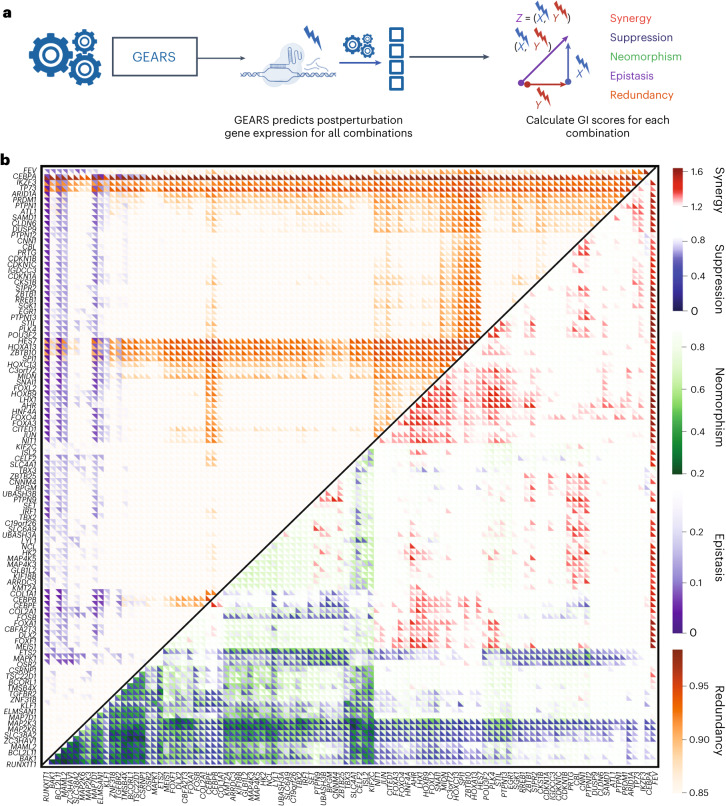
Understanding cellular responses to genetic perturbation is central to numerous biomedical applications, from identifying genetic interactions involved in cancer to developing methods for regenerative medicine. However, the combinatorial explosion in the number of possible multigene perturbations severely limits experimental interrogation. Here, we present graph-enhanced gene activation and repression simulator (GEARS), a method that integrates deep learning with a knowledge graph of gene–gene relationships to predict transcriptional responses to both single and multigene perturbations using single-cell RNA-sequencing data from perturbational screens. GEARS is able to predict outcomes of perturbing combinations consisting of genes that were never experimentally perturbed. GEARS exhibited 40% higher precision than existing approaches in predicting four distinct genetic interaction subtypes in a combinatorial perturbation screen and identified the strongest interactions twice as well as prior approaches. Overall, GEARS can predict phenotypically distinct effects of multigene perturbations and thus guide the design of perturbational experiments.
Overview
The claims and statistics of this paper haven’t been checked yet.
Free: it reads the open-access text and checks the first 5 claims that cite a source we can check. Create a free account to check every claim.
Integrity signals
Registry
Cites
Statistics
Figures
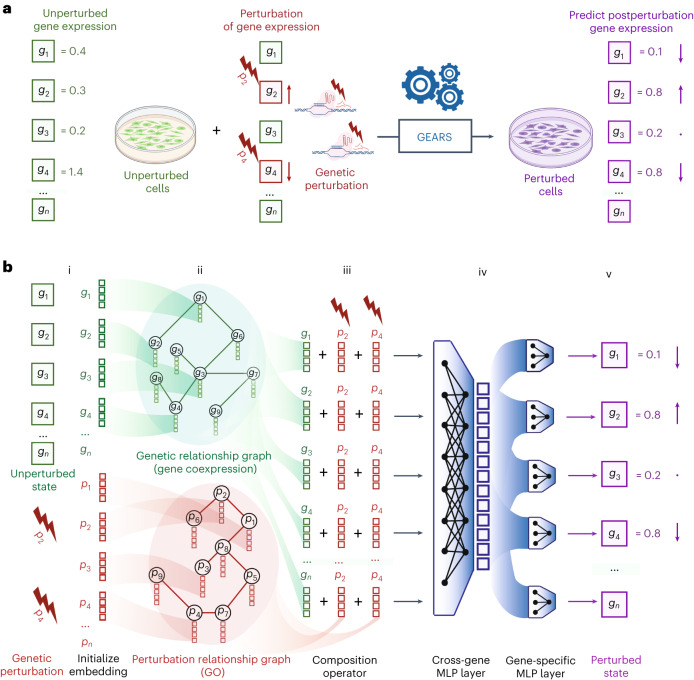
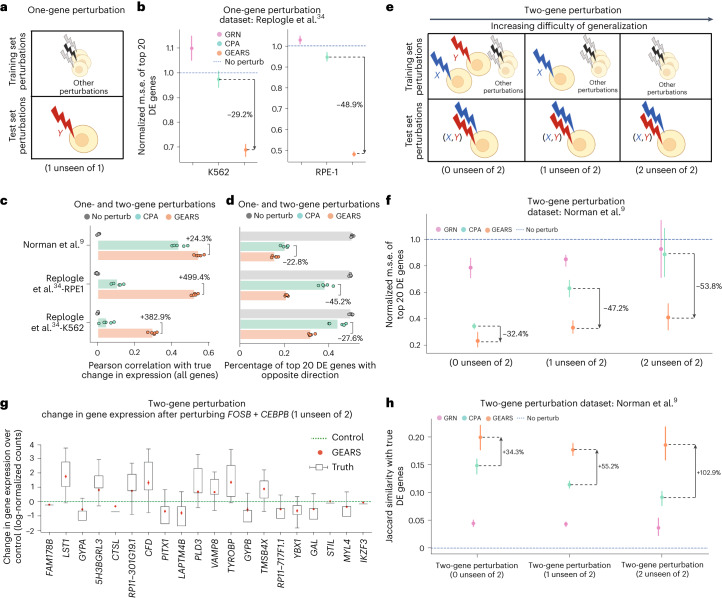
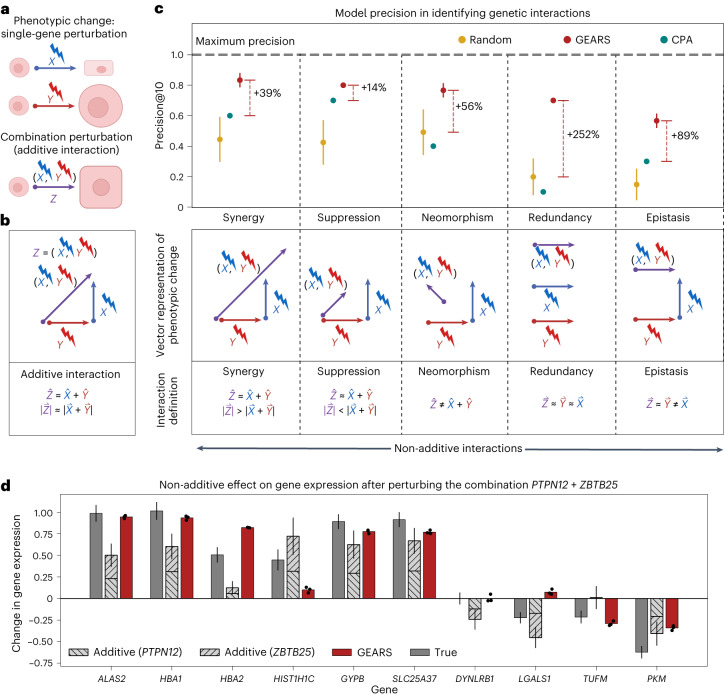
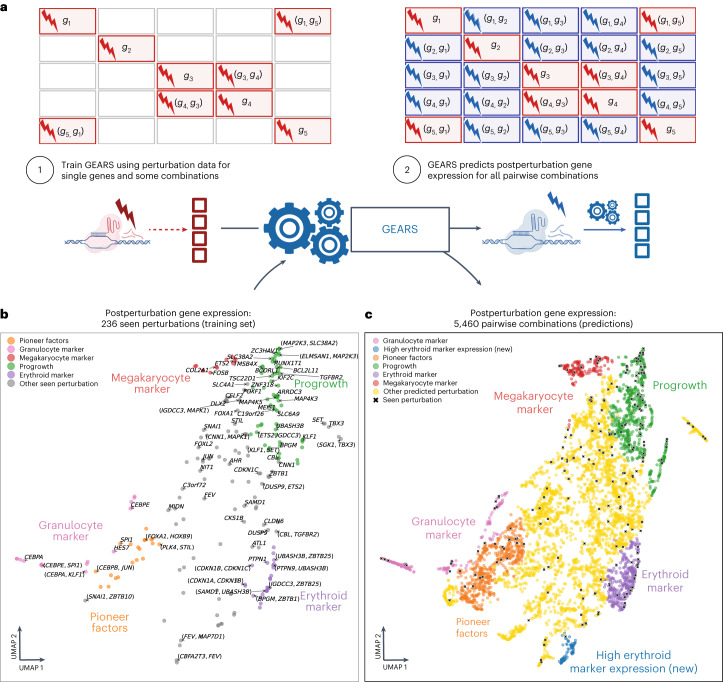
Verification
Claims the paper makes
The claims and statistics of this paper haven’t been checked yet.
Free: it reads the open-access text and checks the first 5 claims that cite a source we can check. Create a free account to check every claim.
Claims other papers make about this one
Each is checked against this paper’s own text: does it say what the citing paper says it does?
The source backs part of the claim, not all of it — or backs it for a different population, condition or comparison.
In the citing paper
“All benchmark datasets were split into train, validation and test sets according to the GEARS publication - corresponding to Perturbation Exclusive split, where new, unseen perturbations (or perturbation combinations) were present in the test set (Supplementary Table 1).”
From Benchmarking foundation cell models for post-perturbation RNA-seq prediction (2025) · cites this paper as [5]
Experimental — accuracy not yet measuredThe source backs part of the claim, not all of it — or backs it for a different population, condition or comparison.
In the citing paper
“Recent advances have incorporated graph-based methods and foundational models that take advantage of prior knowledge of gene expression relationships, resulting in improved generalizability (14–17).”
From A systematic comparison of single-cell perturbation response prediction models (2026) · cites this paper as [14]
Experimental — accuracy not yet measuredThe cited source says what the claim attributes to it.
In the citing paper
“Single-cell foundation models and perturbation predictors support cellular-response forecasting [48-51].”
From RSI-Anything: Unlocking Recursive Self-Improvement with World Models (2026) · cites this paper as [50]
The check wasn’t confident either way, so it gives no verdict — never disputed.
In the citing paper
“This filtering criterion is more permissive than that employed in prior work, retaining more perturbations with smaller effect sizes.11”
From Predicting cellular responses to perturbation across diverse contexts with State (2026) · cites this paper as [11]
Experimental — accuracy not yet measured
Self-check
Percentages, sums and reported differences re-computed from the paper’s own numbers.
The self-check needs the paper’s full text.
Citations
Cites
Szklarczyk, D., Gable, A. L., Lyon, D., Junge, A., Wyder, S., Huerta-Cepas, J., Simonovic, M., Doncheva, N. T., Morris, J. H., Bork, P., et al. (2019) · Nucleic Acids Research · doi:10.1093/nar/gky1131 · Cited by 17,749 · cited 1×
“GEARS functionalizes this graph-based inductive bias using a graph neural network (GNN) architecture 33 .”
KEGG for linking genomes to life and the environment
Kanehisa, M., Araki, M., Goto, S., Hattori, M., Hirakawa, M., Itoh, M., Katayama, T., Kawashima, S., Okuda, S., Tokimatsu, T., et al. (2007) · Nucleic Acids Research · doi:10.1093/nar/gkm882 · Cited by 6,782
Hallmarks of aging: An expanding universe
López-Otín, C., Blasco, M. A., Partridge, L., Serrano, M., & Kroemer, G. (2023) · Cell · doi:10.1016/j.cell.2022.11.001 · Cited by 6,549
Scenic: single-cell regulatory network inference and clustering.
Aibar, S., González-Blas, C. B., Moerman, T., Huynh-Thu, V. A., Imrichova, H., Hulselmans, G., Rambow, F., Marine, J.-C., Geurts, P., Aerts, J., et al. (2017) · Nature Methods · doi:10.1038/nmeth.4463 · Cited by 6,520 · cited 2×
“GEARS functionalizes this graph-based inductive bias using a graph neural network (GNN) architecture 33 .”
InfluentialTisagenlecleucel in children and young adults with B-cell lymphoblastic leukemia
Maude, S. L., Laetsch, T. W., Buechner, J., Rives, S., Boyer, M., Bittencourt, H., Bader, P., Verneris, M. R., Stefanski, H. E., Myers, G. D., et al. (2018) · New England Journal of Medicine · doi:10.1056/nejmoa1709866 · Cited by 5,735 · cited 2×
“Moreover, the precision–recall curves for all observed https://doi.org/10.1038/s41587-023-01905-6 genetic interaction subtypes exhibited a higher area under the curve than other methods (Supplementary Fig.”
InfluentialThe Reactome pathway Knowledgebase
Fabregat, A., Sidiropoulos, K., Garapati, P., Gillespie, M., Hausmann, K., Haw, R., Jassal, B., Jupe, S., Korninger, F., McKay, S., et al. (2016) · Nucleic Acids Research · doi:10.1093/nar/gkv1351 · Cited by 5,605
The Gene Ontology (GO) database and informatics resource
Gene Ontology Consortium (2004) · Nucleic Acids Research · doi:10.1093/nar/gkh036 · Cited by 4,579
Systems biology: a brief overview
Kitano, H. (2002) · Science · doi:10.1126/science.1069492 · Cited by 4,265
Using Bayesian Networks to Analyze Expression Data
Friedman, N., Linial, M., Nachman, I., & Pe'er, D. (2000) · Journal of Computational Biology · doi:10.1089/106652700750050961 · Cited by 3,266 · cited 1×
“GEARS functionalizes this graph-based inductive bias using a graph neural network (GNN) architecture 33 .”
The Reactome Pathway Knowledgebase
Fabregat, A., Jupe, S., Matthews, L., Sidiropoulos, K., Gillespie, M., Garapati, P., Haw, R., Jassal, B., Korninger, F., May, B., et al. (2018) · Nucleic Acids Research · doi:10.1093/nar/gkx1132 · Cited by 2,855 · cited 1×
“GEARS functionalizes this graph-based inductive bias using a graph neural network (GNN) architecture 33 .”
Research works printed but not linked: 3
- Wang, Y., Solus, L., Yang, K. & Uhler, C. Permutation-based causal inference algorithms with interventions. In Proc. 31st International Conference on Neural Information Processing Systems (Ed. von Luxburg, U. & Guyon, I.) 5824–5833 (Association for Computing Machinery, 2017).
- Hamilton, W., Ying, Z. & Leskovec, J. Inductive representation learning on large graphs. In Proc. 31st International Conference on Neural Information Processing Systems (Ed. von Luxburg, U. & Guyon, I.) 1025–1035 (Association for Computing Machinery, 2017).
- Kendall, A. & Gal, Y. What uncertainties do we need in Bayesian deep learning for computer vision? In Proc. 31st International Conference on Neural Information Processing Systems (Ed. von Luxburg, U. & Guyon, I.) 5580–5590 (Association for Computing Machinery, 2017).
Cited by
Items 101–200 of 368
Small data methods in omics: the power of one
Johnston, K. G., Grieco, S. F., Nie, Q. H., Theis, F. J., & Xu, X. (2024) · Nature Methods · doi:10.1038/s41592-024-02390-8 · Cited by 9
“Critically, the authors demonstrate that this model can be optimized to facilitate downstream applications such as cell-type annotation, integration, perturbation response prediction and GRN inference, notably outperforming competitors such as scBERT 31 , Harmony 32 and GEARS 33 at these critical tasks.”
CosGeneGate selects multi-functional and credible biomarkers for single-cell analysis
Liu, T., Long, W., Cao, Z., Wang, Y., He, C. H., Zhang, L., Strittmatter, S. M., & Zhao, H. (2024) · Briefings in Bioinformatics · doi:10.1093/bib/bbae626 · Cited by 8
A Perturbation Cell Atlas of Human Induced Pluripotent Stem CellsPreprint
Nourreddine, S., Doctor, Y., Dailamy, A., Forget, A., Lee, Y.-H., Chinn, B., Khaliq, H., Polacco, B. J., Muralidharan, M., Pan, E., et al. (2024) · bioRxiv (Cold Spring Harbor Laboratory) · doi:10.1101/2024.11.03.621734 · Cited by 9
Ding, J., Lin, J., Jiang, S., Wang, Y., Miao, Z., Fang, Z., Tang, J., Li, M., & Qiu, X. (2025) · bioRxiv (Cold Spring Harbor Laboratory) · doi:10.1101/2025.01.06.631427 · Cited by 13
Foundation Models Improve Perturbation Response PredictionPreprint
Cole, E., Huizing, G.-J., Addagudi, S., Ho, N., Hasanaj, E., Kuijs, M., Johnstone, T., Carilli, M., Davi, A., Ellington, C. N., et al. (2026) · bioRxiv (Cold Spring Harbor Laboratory) · doi:10.64898/2026.02.18.706454 · Cited by 19
“[27] is a graph neural network where the edges are constructed roughly based on cell-ontology.”
RegFormer: a single-cell foundation model powered by gene regulatory hierarchies
Hu, L., Qin, H., Zhang, Y. S., Lu, Y., Qiu, P., Guo, Z., Cao, L., Jiang, W., Chen, Q., Chen, Q., et al. (2026) · Nature Communications · doi:10.1038/s41467-026-72198-x · Cited by 21
Explainable modeling of single-cell perturbation data using attention and sparse dictionary learning
Xu, Y., Fleming, S., Tegtmeyer, M., McCarroll, S. A., & Babadi, M. (2025) · Cell Systems · doi:10.1016/j.cels.2025.101245 · Cited by 16
Wang, X., Fan, Y., Guo, Y., Fu, C., Lee, K., Dallakyan, K., Li, Y. G., Yin, Q., Li, Y., & Song, L. (2025) · Nature Communications · doi:10.1038/s41467-025-63478-z · Cited by 24
“Therefore,integrating MorphDiff with methods that can predict changes in gene expression under unseen perturbations, such as GEARS 47 , is a possible extension.”
Wang, T., Pan, Y., Ju, F., Zheng, S., Liu, C., Min, Y., Jiang, Q., Liu, X., Xia, H., Liu, G., et al. (2025) · Nature Cell Biology · doi:10.1038/s41556-025-01755-1 · Cited by 12
“Both SCENIC and GEARS exhibited markedly lower performance compared to CellNavi (Fig.”
InfluentialAI-powered programmable virtual humans toward human physiologically-based drug discovery
Wu, Y., Bourne, P. E., & Xie, L. (2025) · Drug Discovery Today · doi:10.1016/j.drudis.2025.104497 · Cited by 12
Jiang, J., Chen, S., Tsou, T., McGinnis, C. S., Khazaei, T., Zhu, Q., Park, J. H., Strazhnik, I.-M., Vielmetter, J., Gong, Y., et al. (2026) · Cell · doi:10.1016/j.cell.2026.04.028 · Cited by 37
Learning meaningful representation of single-neuron morphology via large-scale pre-training
Fan, Y., Li, Y., Zhong, Y., Hong, L., Li, L., & Li, Y. (2024) · Bioinformatics · doi:10.1093/bioinformatics/btae395 · Cited by 10
“While several existing studies (Bardy et al. 2016, Roohani et al. 2023) have used deep learning methods to model shifts in gene expression profiles and cell morphology under different conditions, including drug and genetic perturbations, there are limited investigations on the response of neurons…”
BackgroundA General Single-Cell Analysis Framework via Conditional Diffusion Generative ModelsPreprint
Tang, W., Liu, R., Wen, H., Dai, X., Ding, J., Li, H., Fan, W., Xie, Y., & Tang, J. (2023) · bioRxiv (Cold Spring Harbor Laboratory) · doi:10.1101/2023.10.13.562243 · Cited by 13
“Here, we follow GEARS (Roohani et al., 2023) and leverage scDiff to predict the effects of novel gene perturbations.”
BackgroundMethodInfluentialgeneRNIB: a living benchmark for gene regulatory network inferencePreprint
Nourisa, J., Passemiers, A., Kalfon, J., Stock, M., Zeller‐Plumhoff, B., Cannoodt, R., Arnold, C., Tong, A., Hartford, J., Netea, M. G., et al. (2025) · bioRxiv (Cold Spring Harbor Laboratory) · doi:10.1101/2025.02.25.640181 · Cited by 13
“The feature-based evaluation approaches employed in this study come with challenges often encountered in perturbation modeling, where factors such as cross-validation schemes and the nature of the datasets significantly influence the success of machine learning approaches [27, 28].”
GPerturb: Gaussian process modelling of single-cell perturbation data
Xing, H., & Yau, C. (2025) · Nature Communications · doi:10.1038/s41467-025-61165-7 · Cited by 19
“15 The resulting dataset X 2 R N × P consists of N =89, 357 cells and P = 5045 genes.”
Evaluating the Utilities of Large Language Models in Single-cell Data AnalysisPreprint
Zhao, H., Liu, T., Li, K., Wang, Y., & Li, H. (2023) · Research Square · doi:10.21203/rs.3.rs-3376641/v1 · Cited by 16
Benchmarking a foundational cell model for post-perturbation RNAseq predictionPreprint
Csendes, G., Szalay, K. Z., & Szalai, B. (2024) · bioRxiv (Cold Spring Harbor Laboratory) · doi:10.1101/2024.09.30.615843 · Cited by 7
Littman, R., Levine, J., Maleki, S., Lee, Y., Ermakov, V. Y., Qiu, L., Wu, A. P., Huang, K., Lopez, R., Scalia, G., et al. (2025) · bioRxiv (Cold Spring Harbor Laboratory) · doi:10.1101/2025.06.03.657653 · Cited by 19
Self-citationMedea: An AI agent for therapeutic reasoning across biological contextsPreprint
Sui, P., Li, M. M., Munson, B. P., Gao, S., Shen, W., Giunchiglia, V., Shen, A. N., Huang, Y., Kong, Z., Licon, K., et al. (2026) · bioRxiv (Cold Spring Harbor Laboratory) · doi:10.64898/2026.01.16.696667 · Cited by 16
Towards building a World Model to simulate perturbation-induced cellular dynamics by AlphaCellPreprint
Chuai, G., Chen, X., Yang, X., Zhang, C., Qu, K., Wang, Y., Li, W., Yang, J., Si, D., Xing, F., et al. (2026) · bioRxiv (Cold Spring Harbor Laboratory) · doi:10.64898/2026.03.02.709176 · Cited by 11
“We benchmarked AlphaCell against a comprehensive suite of baselines, including linear models, specialized predictors (CPA, GEARS, CASCADE), and recent foundation models (scGPT, STATE), across three diverse datasets spanning genetic and chemical modalities: OTF, Sciplex, and Tahoe-100M.”
CRISPR-GEM: A Novel Machine Learning Model for CRISPR Genetic Target Discovery and Evaluation
Graham, J. P., Zhang, Y., He, L., & Gonzalez‐Fernandez, T. (2024) · ACS Synthetic Biology · doi:10.1021/acssynbio.4c00473 · Cited by 13
“36,37 However, both models rely on databases to construct the necessary graphs, are limited to single cell types, and assume that genes with correlated expression respond similarly to perturbations.”
Computational modeling of single-cell dynamics data
Guo, W., Chen, Z., & Gu, J. (2025) · Briefings in Bioinformatics · doi:10.1093/bib/bbaf305 · Cited by 10
Liu, H., Duan, W., & Luo, J. (2025) · IEEE Journal of Biomedical and Health Informatics · doi:10.1109/jbhi.2025.3553126 · Cited by 11
“Other models, such as DeepCE [21] and GEARS [22], have been developed to predict drug-induced transcriptional profiles.”
Cell-GraphCompass: modeling single cells with graph structure foundation model
Fang, C., Cui, W., Hu, Z., Liu, W., Chen, S., Chang, S., Long, Q., Li, C., Liu, Y., Jiang, H., et al. (2025) · National Science Review · doi:10.1093/nsr/nwaf255 · Cited by 10
“CGCompass’s graph-based modeling approach emphasizes the integration of multiple biological features, while some other single-cell GNN models [40 ,42 ] offer distinct graph construction methodologies and alternative problem-solving strategies.”
HyperdCas12a-based multiplexed genetic regulation in Candida albicans
Gervais, N. C., Rogers, R. K. J., Robin, M., & Shapiro, R. S. (2025) · Nucleic Acids Research · doi:10.1093/nar/gkaf1402 · Cited by 8
“Recent technological advances in model systems have enabled the identification of a myriad of genetic interactions and non-additive phenotypic outcomes caused by changes in two or more genes [ 17–21 ].”
How Do Large Language Models Understand Genes and Cells
Fang, C., Wang, Y., Song, Y., Long, Q., Wang, L., Chen, L.-H., Wang, P., Feng, G., Zhou, Y., & Li, X. (2025) · ACM Transactions on Intelligent Systems and Technology · doi:10.1145/3702234 · Cited by 10
“This, in turn, facilitates the application of deep learning methods in scenarios related to genes and cells [5, 11, 43, 46, 57].”
Miller, H. E., Mejia, G., Leblanc, F., Wang, B., Swain, B., & Camillo, L. P. D. L. (2025) · bioRxiv (Cold Spring Harbor Laboratory) · doi:10.1101/2025.10.20.683304 · Cited by 6
SpatialProp: tissue perturbation modeling with spatially resolved single-cell transcriptomicsPreprint
Sun, E., Buendia, A., Brunet, A., & Zou, J. (2025) · bioRxiv (Cold Spring Harbor Laboratory) · doi:10.64898/2025.11.30.691355 · Cited by 9
Zheng, Y., Schupp, J., Adams, T., Clair, G., Justet, A., Ahangari, F., Yan, X., Hansen, P., Carlon, M., Cortesi, E., et al. (2023) · doi:10.21203/rs.3.rs-3676579/v1 · Cited by 34
Synthetic multimodal data modelling for data imputation
Carrillo‐Pérez, F., Pizurica, M., Marchal, K., & Gevaert, O. (2024) · Nature Biomedical Engineering · doi:10.1038/s41551-024-01324-1 · Cited by 8
Machine learning approaches enable the discovery of therapeutics across domains
Chhibbar, P., & Das, J. (2025) · Molecular Therapy · doi:10.1016/j.ymthe.2025.04.001 · Cited by 7
“32 GEARS generates the aggregated numerical representation for the genes by using graph neural networks (GNNs).”
Cell Decoder: decoding cell identity with multi-scale explainable deep learning
Zhu, J., Zhang, Z., Xiang, Y., Xie, B., Dong, X., Xie, L., Zhou, P., Yao, R., Yang, L., Li, Y., et al. (2025) · Genome biology · doi:10.1186/s13059-025-03832-y · Cited by 10
“Due to the incorporation of gene/protein interaction information, Cell Decoder opens up the possibility of predicting cell responses to genetic perturbations [42].”
Linking transcriptome and morphology in bone cells at cellular resolution with generative AI
Lu, L., Ono, N., & Welch, J. D. (2024) · Journal of Bone and Mineral Research · doi:10.1093/jbmr/zjae151 · Cited by 6
He, F., Fei, R., Krull, J. E., Yu, Y., Zhang, X., Wang, X., Cheng, H., Gao, M., Su, L., Chen, Y., et al. (2025) · Nature Machine Intelligence · doi:10.1038/s42256-025-01170-z · Cited by 5
Nouri, N., Gaglia, G., Mattoo, H., de Rinaldis, E., & Savova, V. (2024) · Cell Reports Methods · doi:10.1016/j.crmeth.2024.100794 · Cited by 8
Computational pipeline predicting cell death suppressors as targets for cancer therapy
Vinik, Y., Maimon, A., Raj, H., Dubey, V., Geist, F., Wienke, D., & Lev, S. (2024) · iScience · doi:10.1016/j.isci.2024.110859 · Cited by 5
“10 Thesemethodscanpredicttheoutcomeofgenetargeting, 11,12 employingseveralpubliclyavailabletranscriptomicresourcessuch as the connectivity map (CMAP), which includes thousands of perturbational datasets.”
scEMB: Learning context representation of genes based on large-scale single-cell transcriptomicsPreprint
Hsieh, K., Chu, Y., Li, X., Pilie, P. G., & Dai, Y. (2024) · bioRxiv (Cold Spring Harbor Laboratory) · doi:10.1101/2024.09.24.614685 · Cited by 8
“Then, we followed our previously perturbation strategy 10,17 to integrate pretrained GO Gene GNN node embeddings, allowing us to propagate the impact of perturbations from drug treatment or iPSC-derived CRISPRi data 30 .”
BackgroundMethodInfluentialMultimodal foundation model predicts zero-shot functional perturbations and cell fate dynamicsPreprint
Yang, Z., Fan, X., Lan, M., Tang, X., Zheng, Z., Liu, B., You, Y., Tian, L., Church, G. M., Liu, X., et al. (2024) · bioRxiv (Cold Spring Harbor Laboratory) · doi:10.1101/2024.12.19.629561 · Cited by 5
EpiAgent: Foundation model for single-cell epigenomic dataPreprint
Chen, X., Li, K., Cui, X., Wang, Z., Jiang, Q., Lin, J., Li, Z., Gao, Z., & Jiang, R. (2024) · bioRxiv (Cold Spring Harbor Laboratory) · doi:10.1101/2024.12.19.629312 · Cited by 5
Hasanaj, E., Cole, E., Mohammadi, S., Addagudi, S., Zhang, X., Song, L., & Xing, E. P. (2025) · bioRxiv (Cold Spring Harbor Laboratory) · doi:10.1101/2025.06.26.661186 · Cited by 7
Mapping transcriptional responses to cellular perturbation dictionaries with RNA fingerprintingPreprint
Grabski, I. N., Lee, J., Blair, J. D., Dalgarno, C., Mascio, I., Bradu, A., Knowles, D. A., & Satija, R. (2025) · bioRxiv (Cold Spring Harbor Laboratory) · doi:10.1101/2025.09.19.676866 · Cited by 5
Conditional Monge Gap enables generalizable single-cell perturbation modelling
Driessen, A., Rajwade, D. A., Harsanyi, B., Rapsomaniki, M., & Born, J. (2026) · Nature Machine Intelligence · doi:10.1038/s42256-026-01242-8 · Cited by 17
“Second, with few exceptions (for example, chemCPA 11 , PerturbNet 12 and GEARS 13 ), most methods are not directly applicable to clinically impactful scenarios that involve predicting the response of a novel drug or to CRISPR perturbations.”
Advances in modeling cellular state dynamics: integrating omics data and predictive techniques
Jung, S. (2025) · Animal Cells and Systems · doi:10.1080/19768354.2024.2449518 · Cited by 7
Multi-view gene panel characterization for spatially resolved omics
Kim, D. J., Ding, W., Shaw, A. N., Torkel, M., Turtle, C. J., Yang, P., & Yang, J. Y. H. (2025) · Briefings in Bioinformatics · doi:10.1093/bib/bbaf478 · Cited by 5
“Our second example uses the lymph node dataset described above to demonstrate the spatial metrics of panelScope We excluded the expert-curated panel from this experiment as it requires extensi ve manual effort and time.”
Overcoming barriers to the wide adoption of single-cell large language models in biomedical research
Xie, F., Zhao, B., Xu, S., Wang, Z., Moon, J. J., & Garmire, L. X. (2025) · Nature Biotechnology · doi:10.1038/s41587-025-02846-y · Cited by 8
Shang, E., Wei, Y., & Roeder, K. (2025) · Proceedings of the National Academy of Sciences · doi:10.1073/pnas.2525268122 · Cited by 18
Sharing approaches in predictive genomics across animals, plants and humans
Arirangan, S., de Oliveira, L. F., Hasan, M. N., Sherman, A. B., Tuinstra, M. R., Brito, L. F., Wedow, R., & Tegtmeyer, M. (2026) · Nature Genetics · doi:10.1038/s41588-025-02491-w · Cited by 5
Illuminating cell states by a comprehensive and interpretable single cell foundation model
Wang, J., Tan, C., Gao, Z., Shao, S., Liu, S., & Li, S. Z. (2026) · Nature Communications · doi:10.1038/s41467-026-70071-5 · Cited by 9
Li, Y., Min De, Z. E. N. G., Zhu, J., Liu, L., Wang, F., Huang, L. L., Yang, F., Li, M., & Yao, J. (2026) · Cell · doi:10.1016/j.cell.2026.06.005 · Cited by 14
Hierarchical Graph Transformer With Contrastive Learning for Gene Regulatory Network Inference
Cui, W., Long, Q., Liu, W., Chen, F., Wang, X., Wang, P., & Zhou, Y. (2024) · IEEE Journal of Biomedical and Health Informatics · doi:10.1109/jbhi.2024.3476490 · Cited by 8
“For each gene x , we then identify the top three genes y that exhibit the highest J ( x, y ) values to form connections [30].”
Multiplexed multimodal single-cell technologies: From observation to perturbation analysis
Lee, S.-H., Park, J., & Hwang, B. (2024) · Molecules and Cells · doi:10.1016/j.mocell.2024.100147 · Cited by 5
Nephrobase Cell+: Multimodal Single-Cell Foundation Model for Decoding Kidney BiologyPreprint
Li, C., Ziyadeh, E. M., Sharma, Y., Dumoulin, B., Levinsohn, J. L., Ha, E., Pan, S., Rao, V., Subramaniyam, M., Szegedy, M., et al. (2025) · bioRxiv (Cold Spring Harbor Laboratory) · doi:10.1101/2025.09.30.679471 · Cited by 8
Generative modeling of spatially resolved perturbation responses with CONCERTPreprint
Lin, X., Kong, Z., Fu, B., Ghosh, S., Kellis, M., & Žitnik, M. (2025) · bioRxiv (Cold Spring Harbor Laboratory) · doi:10.1101/2025.11.08.686890 · Cited by 6
“Perturbation models such as scGEN [19], CPA [20], CellOT [21], GEARS [22], BioLORD [23], and PDGrapher [24] predict responses but treat each cell in isolation, despite evidence that niches shape gene expression [1].”
Zhang, D., Liu, Z., & Gao, R. (2025) · Briefings in Bioinformatics · doi:10.1093/bib/bbaf621 · Cited by 3
Learning genetic perturbation effects with variational causal inference
Liu, E., Zhang, J., & Uhler, C. (2026) · PLoS Computational Biology · doi:10.1371/journal.pcbi.1013194 · Cited by 5
A genome-scale CRISPRi perturbation atlas of human induced pluripotent stem cells
Nourreddine, S., Doctor, Y., Dailamy, A., Forget, A., Lee, Y.-H., Chinn, R., Khaliq, H., Polacco, B. J., Muralidharan, M., Pan, E., et al. (2026) · Nature Biotechnology · doi:10.1038/s41587-026-03199-w · Cited by 16
“Furthermore, we envision this dataset to be particularly useful for training models for both perturbation prediction 88 and hiPS cell state engineering 89 , as a comprehensive Perturb-Seq dataset in a pluripotent stem cell line, providing data on the effect of perturbing every expressed gene.”
Predicting transcriptional changes induced by molecules with MiTCP
Yang, K., Cheng, J., Cao, S., Pan, X., Shen, H., & Yuan, Y. (2024) · Briefings in Bioinformatics · doi:10.1093/bib/bbaf006 · Cited by 5
Decoding cell fate: integrated experimental and computational analysis at the single-cell level
Zhou, Y., Hou, S., Miao, X., Zhang, G., Li, Z., Zhang, D., Lin, Y., & Lin, Y. (2025) · Bioinformatics · doi:10.1093/bioinformatics/btaf603 · Cited by 4
“In this setup, GEARS treats these embeddings as nodes in a gene-relational graph and integrates them with perturbation information to predict post-perturbation gene expression.”
InfluentialDango: Predicting higher-order genetic interactions
Zhang, R., Bafna, M., Ma, J., & Ma, J. (2026) · Cell Systems · doi:10.1016/j.cels.2026.101593 · Cited by 5
SCIG: Machine learning uncovers cell identity genes in single cells by genetic sequence codes
Kulandaisamy, A., Xia, B., Yu, Y., Chen, H., Pu, W. T., Zhang, L., & Chen, K. (2025) · Nucleic Acids Research · doi:10.1093/nar/gkaf431 · Cited by 5
“The utilization of cis-regulatory codes in genetic sequence has proven valuable in predicting transcriptional regulation [ 27 , 171 ], 3D genome organization [ 172 ], RNA structure [ 24 ], and more.”
Decoding cell identity with multi-scale explainable deep learningPreprint
Zhu, J., Zhang, Z., Xiang, Y., Xie, B., Dong, X., Xie, L., Zhou, P., Yao, R., Wang, X., Li, Y., et al. (2024) · bioRxiv (Cold Spring Harbor Laboratory) · doi:10.1101/2024.02.05.578922 · Cited by 3
“Due to the incorporation of gene/protein interaction information, Cell Decoder opens up the possibility of predicting cell responses to genetic perturbations 57 .”
MethodSC-MAMBA2: Leveraging State-Space Models for Efficient Single-Cell Ultra-Long Transcriptome ModelingPreprint
Zhao, Y., Zhao, B., Zhang, F., He, C., Wu, W., & Lai, L. (2024) · bioRxiv (Cold Spring Harbor Laboratory) · doi:10.1101/2024.09.30.615775 · Cited by 7
“Figure 4: Evaluation of models accuracy for perturbation and reverse perturbation prediction . a, SC-MAMBA2 scGPT and GEARS[45] performance on perturbation task.”
BackgroundMorphoDiff: Cellular Morphology Painting with Diffusion ModelsPreprint
Navidi, Z., Ma, J., Miglietta, E. A., Liu, L., Carpenter, A. E., Cimini, B. A., Haibe‐Kains, B., & Wang, B. (2024) · bioRxiv (Cold Spring Harbor Laboratory) · doi:10.1101/2024.12.19.629451 · Cited by 16
“While there have been significant efforts to model cellular dynamics using AI algorithms, much of the prior work has concentrated on transcriptomic-level changes [6–10].”
Evaluating Foundation Models for In-Silico PerturbationPreprint
Liu, X., Boylan, J., Bouiller, T., Solovyeva, E. M., Ataman, B., Hoersch, S., Jenkins, J. L., & Devarakonda, M. V. (2025) · bioRxiv (Cold Spring Harbor Laboratory) · doi:10.1101/2025.05.11.653338 · Cited by 9
“We also include GEARS 18 , a train-and-test deep learning non-foundation model for ISP that predicts the gene expression changes in perturbed cells.”
PerTurboAgent: A Self-Planning Agent for Boosting Sequential Perturb-seq ExperimentsPreprint
Hao, M., Lee, Y., Wang, H., Scalia, G., & Regev, A. (2025) · bioRxiv (Cold Spring Harbor Laboratory) · doi:10.1101/2025.05.25.656020 · Cited by 3
“Future work on PerTurboAgent could include integrating advanced perturbation prediction models, such as GEARS, or fine-tuning the pre-trained foundation models (e.g., scGPT, scFoundation) to improve phenotype effect estimation (Roohani et al., 2024a; Hao et al., 2024; Cui et al., 2024).”
Baugh, L. M., Vigneau, S., Sridhar, S., Boswell, S. A., Pilitsis, G., Bradley, J., Allen, O., Rand, L. M., Riccardi, A., Roach, K., et al. (2025) · bioRxiv (Cold Spring Harbor Laboratory) · doi:10.1101/2025.06.03.657593 · Cited by 3
Liu, D., Song, B., Li, Z., Zhang, S., Fabiha, T., Zhao, J., Inoki, A., Piccand, J., Soh, C.-L., Dixon, G., et al. (2025) · bioRxiv (Cold Spring Harbor Laboratory) · doi:10.64898/2025.12.23.696311 · Cited by 4
TwinCell: Large Causal Cell Model for Reliable and Interpretable Therapeutic Target PrioritisationPreprint
Morlot, J.-B., Dias, T. L., Légaré, S., Romualdi, A., Hatem, E., & Abraham, Y. (2026) · bioRxiv (Cold Spring Harbor Laboratory) · doi:10.64898/2026.01.29.702072 · Cited by 5
“Graph-based meth-ods like GEARS (8) leverage knowledge graphs to capture the biological relationships between genes, improving generalisation to unseen perturbations by explicitly modelling gene-gene dependencies.”
Swinderman, J. T., Tung, P., Winters, A. F., Goudy, L., Wilson, C. M., Bounds, L. R., Teyssier, N., Agrawal, A., Dobin, A., Hua, T., et al. (2026) · bioRxiv (Cold Spring Harbor Laboratory) · doi:10.64898/2026.02.04.703058 · Cited by 9
“However, none of these predicted GIs were experimentally tested 20 leaving it unclear if perturb-seq data quality is robust enough to train deep learning models that accurately predict GIs which can be subsequently validated.”
InfluentialSelf-citationEvaluating Single-Cell Perturbation Response Models Is Far from StraightforwardPreprint
Heidari, M., Karimpour, M., Srivatsa, S., & Montazeri, H. (2026) · bioRxiv (Cold Spring Harbor Laboratory) · doi:10.64898/2026.02.14.705879 · Cited by 7
“These include variational autoencoder-based generative models 4 , graph-based methods leveraging gene-gene interaction networks 5 , optimal transport-based frameworks for modeling cell-state transitions 6,7 , and more recent foundation models that adopt large-scale pretraining and large language…”
InfluentialYi, Z., Ma, N., & Ao, Y. (2025) · Biology · doi:10.1101/2025.06.11.658833 · Cited by 3
Exploring the omnigenic architecture of selected complex traits
Ratajczak, F., Heinig, M., & Falter‐Braun, P. (2025) · The American Journal of Human Genetics · doi:10.1016/j.ajhg.2025.07.006 · Cited by 3
“48 GEARS is a graph-based machine-learning framework designed to predict the effects of genetic perturbations on gene expression.”
InfluentialArtificial intelligence for drug target identification
Li, Y., Huang, J., Sheng, Y., Wei, C., Liu, M., Wang, X., Chen, Y., Li, X., & Zheng, M. (2025) · Annual reports in medicinal chemistry · doi:10.1016/bs.armc.2025.08.002 · Cited by 3
Dissecting cellular ecosystem with single-cell CRISPR screens
Liu, Z., Lan, Z., Kang, X., Yao, Y., & Rao, S. (2025) · Blood Science · doi:10.1097/bs9.0000000000000266 · Cited by 2
“60,61”
Integrating synthetic biology to understand and engineer the heart, lung, blood, and sleep systems
Chaikof, E. L., Chen, J., Gillette, M. U., Boyer, L. A., Deans, T. L., Li, P., Hilton, I. B., Daniels, K. G., Goyal, Y., Mei, Y., et al. (2025) · Cell Systems · doi:10.1016/j.cels.2025.101446 · Cited by 2
Zhao, M., Tang, X., Li, J., Liang, C., Tang, J., & Guo, F. (2026) · PLoS Computational Biology · doi:10.1371/journal.pcbi.1014054 · Cited by 3
“Diverging from VAE-based approaches, GEARS [16] incorporates prior knowledge through graph neural networks to capture higher-order gene interactions, excelling in complex perturbation scenarios.”
Pioneer: Dynamical Systems Biology for Spatiotemporal Omics Data
Chen, L. (2026) · Journal of Molecular Biology · doi:10.1016/j.jmb.2026.169864 · Cited by 3
CFM-GP: unified conditional flow matching to learn gene perturbation across cell types
Abir, A. R., Dip, S. A., & Choi, J. M. (2026) · NAR Genomics and Bioinformatics · doi:10.1093/nargab/lqag087 · Cited by 6
“GEARS [ 41 ] leverages graph-based architectures to model gene–gene interactions, while AttentionPert [ 42 ] introduces attention mechanisms to capture perturbation-specific regulatory effects.”
Yang, Y., Seninge, L., Wang, Z., Oro, A. E., Stuart, J. M., & Ding, H. (2024) · Scientific Reports · doi:10.1038/s41598-024-62620-z · Cited by 2
Nuclear remodeling during cell fate transitions
Liu, X., Ling, X., Tian, Q., Huang, Z., & Ding, J. (2024) · Current Opinion in Genetics & Development · doi:10.1016/j.gde.2024.102287 · Cited by 2
Wei, S., Lu, Y., Wang, P., Li, Q., Shuai, J., Zhao, Q., Lin, H., & Peng, Y. (2025) · Journal of Translational Medicine · doi:10.1186/s12967-025-06263-2 · Cited by 2
Hsieh, K., Zhang, K., Chu, Y., Yu, L., Li, X., Hu, N., Kawosa, I., Pilie, P. G., Bhattacharya, P. K., Zhi, D., et al. (2025) · Briefings in Bioinformatics · doi:10.1093/bib/bbaf296 · Cited by 3
scELMo: Embeddings from Language Models are Good Learners for Single-cell Data AnalysisPreprint
Zhao, H., Liu, T., Chen, T., Zheng, W., & Luo, X. (2024) · Research Square · doi:10.21203/rs.3.rs-4014784/v1 · Cited by 2
Inference of heterogeneous effects in single-cell genetic perturbation screensPreprint
Fu, Z., & Hou, L. (2024) · bioRxiv (Cold Spring Harbor Laboratory) · doi:10.1101/2024.05.28.596224 · Cited by 2
Kulandaisamy, A., Xia, B., Chen, H., Zhang, L., & Chen, K. (2024) · bioRxiv (Cold Spring Harbor Laboratory) · doi:10.1101/2024.08.27.609808 · Cited by 2
“The utilization of cis-regulatory codes in genetic sequence has proven valuable in predicting transcriptional regulation(27, 152), 3D genome organization(153), RNA structure(24), and more.”
BackgroundCo-fluctuations of genes in single cells predict transcriptome-wide outcomes to perturbationsPreprint
Kuznets-Speck, B., Kumari, N., Senthilkumar, I., Jung, J., Rios, H. M. L., Schwartz, L., Sun, H., Anisetti, V. R., Wang, C., Wang, Q., et al. (2025) · bioRxiv (Cold Spring Harbor Laboratory) · doi:10.1101/2025.06.27.661814 · Cited by 4
“Predictive models such as scGen 20 , GEARS 21 , and scGPT 22 , on the other hand, employ deep learning frameworks to model perturbation responses in latent spaces and can predict outcomes of unseen perturbations.”
He, C.-J., Zhang, J.-Q., Dahleh, M., & Uhler, C. (2025) · bioRxiv · doi:10.1101/2025.06.27.661992 · Cited by 15
“Current methods for this task [21, 22] perform well in approximating the state of perturbed cells on average but struggle to capture the full distribution of cellular responses, and often rely on randomly pairing control and perturbed cells to address the inherent unpaired nature of high-throughput…”
InfluentialLi, C., Wei, L., & Zhang, X. (2025) · bioRxiv (Cold Spring Harbor Laboratory) · doi:10.1101/2025.11.13.688367 · Cited by 6
“Most existing perturbation models have so far focused primarily on transcriptomic profiles 22-27 , reflecting the widespread adoption of single-cell RNA sequencing (scRNA-seq) as the most mature and accessible technology for large-scale single-cell profiling.”
InfluentialInferring virtual cell environments using multi-agent reinforcement learningPreprint
Kalafut, N. C., He, C., Sheng, J., Chandrashekar, P. B., Choi, J. J., & Wang, D. (2025) · bioRxiv (Cold Spring Harbor Laboratory) · doi:10.1101/2025.11.21.689815 · Cited by 5
Generating Joint Transcriptomic and Morphological Responses to Drug Perturbations via Rectified FlowPreprint
Verma, S., Wang, M., Wang, L., Kadadi, S., Sola, M., Kazemian, M., Grama, A. Y., & Lanman, N. A. (2026) · bioRxiv (Cold Spring Harbor Laboratory) · doi:10.64898/2026.02.02.703189 · Cited by 3
“GEARS (4) applies geometric deep learning on gene interaction graphs for genetic perturbations, while PRnet (5) and TranSiGen (6) employ generative models for novel compounds, though the latter is limited to de-noising and reconstruction.”
Spurious correlation inflates performance in single-cell perturbation predictionPreprint
Nicol, P. B., Shivakumar, S., & Irizarry, R. A. (2026) · bioRxiv (Cold Spring Harbor Laboratory) · doi:10.64898/2026.05.07.723486 · Cited by 11
“The proposed approaches differ substantially in methodology, ranging from deep learning models, such as scGPT (Cui et al., 2024), GEARS (Roohani et al., 2024), and STATE (Adduri et al., 2025), among others (Wei et al., 2026), to much simpler statistical strategies (Ahlmann-Eltze et al., 2025).”
Kudo, T., Lopez, R., Meireles, A. M., Rios, A., Coelho, P. P., Chandrasekar, V., Lam, D. C., Huetter, J.-C., Ota, M., Rozenblatt–Rosen, O., et al. (2026) · bioRxiv (Cold Spring Harbor Laboratory) · doi:10.64898/2026.05.27.728345 · Cited by 4
Choi, H., Byeon, G., Park, H., Park, J., Lim, S., & An, J. (2026) · bioRxiv (Cold Spring Harbor Laboratory) · doi:10.64898/2026.09.01.748703 · Cited by 2
A systematic comparison of single-cell perturbation response prediction models
Li, L., You, Y., Fu, Y., Liao, W., Fan, X., Lu, S., Cao, Y., Li, B., Ren, W., Kong, J., et al. (2026) · Science Advances · doi:10.1126/sciadv.aed3414 · Cited by 1
Evaluating the learnability of single-cell large language models on multiple tasks
Yan, Y., Wang, X., & Song, D. (2026) · doi:10.21203/rs.3.rs-8919408/v1 · Cited by 1
Evaluating the learnability of single-cell large language models on multiple tasks
Yan, Y., Wang, X., & Song, D. (2026) · BMC Genomics · doi:10.1186/s12864-026-12975-6 · Cited by 1
“The perturbation prediction task was evaluated using the Norman [42] and Adamson [43] Perturb-seq datasets from the GEARS study [44], which measure single-cell transcriptional responses to genetic perturbations.”
He, S., Gubin, M. M., Rafei, H., Başar, R., Dede, M., Jiang, X., Liang, Q., Tan, Y., Kim, K. H., Gillison, M. L., et al. (2024) · iScience · doi:10.1016/j.isci.2024.110096 · Cited by 1
A cross-species foundation model for single cells
Traeuble, K., & Heinig, M. (2024) · Cell Research · doi:10.1038/s41422-024-01045-9 · Cited by 1
OneSC: a computational platform for recapitulating cell state transitions
Peng, D., & Cahan, P. (2024) · Bioinformatics · doi:10.1093/bioinformatics/btae703 · Cited by 2
On the use of variational autoencoders for biomedical data integration
Avelli, M. P., Medina, R. H., Webel, H. E., & Rasmussen, S. (2026) · BMC Artificial Intelligence · doi:10.1186/s44398-026-00034-9 · Cited by 2
“However, their “black box” nature and potential performance benefits are often debated [11, 15, 17, 27, 28].”
Influential
Metadata
- Authors
- Roohani, Y., Huang, K., & Leskovec, J.
- Affiliations
- Stanford University (US)
- Corresponding author
- Leskovec, Jure
- Venue
- Nature Biotechnology
- Published
- 2023-08-17
- Volume
- 42
- Issue
- 6
- Pages
- 927-935
- ISSN
- 0733-222X (ISSN-L)
- 1087-0156
- 1546-1696
- PMC
- PMC11180609
- OpenAlex
- W4385955324
- Semantic Scholar
- 85906593661911c9a076cbb96391b9bb61a996bc
- Cited by
- 355
- References
- 51
- Citations by year
- 2026: 153 · 2025: 118 · 2024: 77 · 2023: 7
- FWCI
- 31.63
- Type
- journal article
- Language
- en
- Open access
- hybrid
- doi.org
- Licence
- cc-by
- creativecommons.org/licenses/by/4.0 (tdm)
- creativecommons.org/licenses/by/4.0 (vor)
- Locations
- Nature Biotechnology (publishedVersion, cc-by)
- PubMed Central (publishedVersion, cc-by)
- PubMed (publishedVersion)
- Funders
- U.S. Department of Health & Human Services | NIH | Center for Information Technology (3U54HG010426-04S1)
- GlaxoSmithKline
- Topics
- Life Sciences › Biochemistry, Genetics and Molecular Biology › Molecular Biology › Gene Regulatory Network Analysis
- Life Sciences › Biochemistry, Genetics and Molecular Biology › Molecular Biology › Single-cell and spatial transcriptomics
- Life Sciences › Biochemistry, Genetics and Molecular Biology › Molecular Biology › Bioinformatics and Genomic Networks
- Keywords
- gene-gene interaction, genetic interactions, knowledge graphs, deep learning, single-cell RNA sequencing, gene activation and repression, gears
- MeSH terms
- Deep Learning, Computer Simulation, Humans, Transcription, Genetic, Sequence Analysis, RNA, Computational Biology, Gene Regulatory Networks, Single-Cell Analysis
About these checks
Registry, retraction, Cites and statistics results are computed, not judged, with one exception: a printed reference that no index lists is read once by a model before it counts as a citation error. Claims are extracted by a model and kept only when their quote appears verbatim in the text; each cited source is then checked, with a model’s help, for whether it says what the claim relies on. Those verdicts can be wrong — read the claim’s quote and the cited source before relying on one.
Statistics and arithmetic are recomputed, not judged.
Confidence bands are shown only for fields calibrated on our annotated test set. None is calibrated yet, so no band is shown.
What counts as a claim ›How we measure confidence ›How we check this ›
Are you an author, or do you see a problem with this page? Request a review
Data sources
Bibliographic data: Semantic Scholar, OpenAlex, Crossref.
Contains information from the Semantic Scholar Academic Graph Datasets, made available under the ODC Attribution License (ODC-BY 1.0).
Semantic Scholar’s data is described in: Kinney, R., et al. (2023). The Semantic Scholar Open Data Platform. arXiv:2301.10140.
