

Predicting transcriptional outcomes of novel multigene perturbations with GEARS
Open accessThe DOI matches its Crossref record; 51 of the 51 references it cites were found in a registry or an index.
Abstract
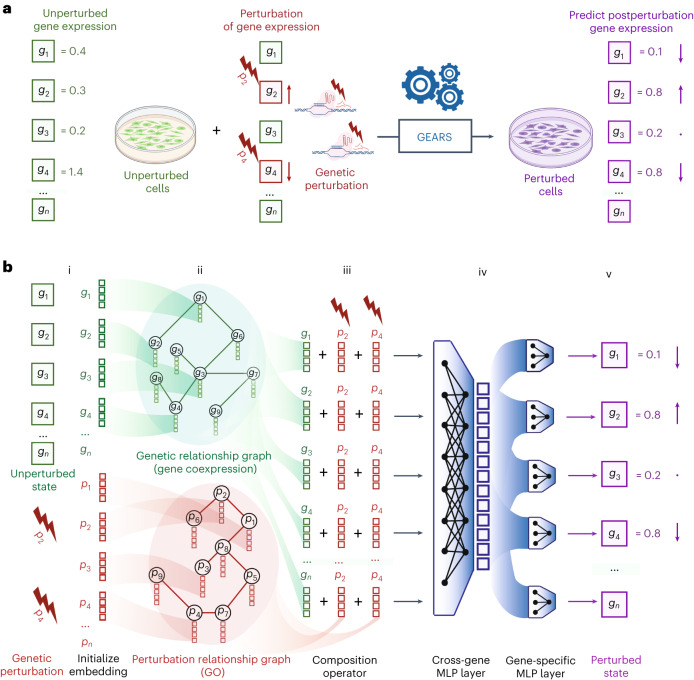
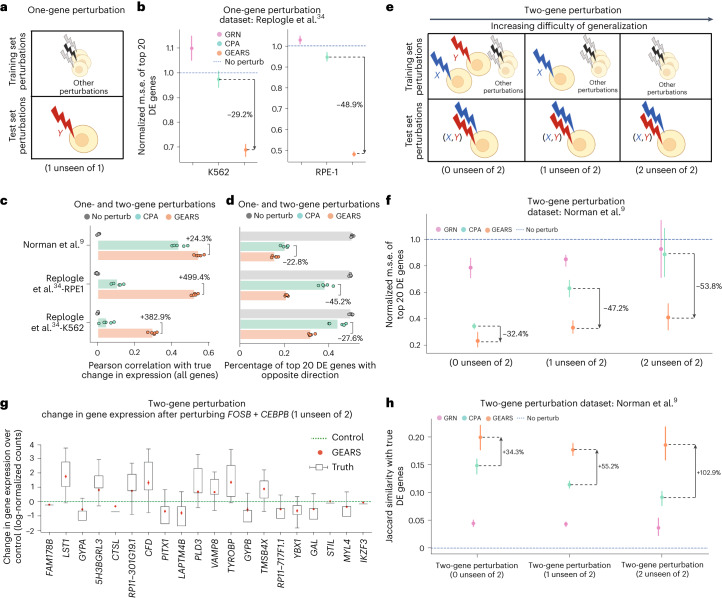
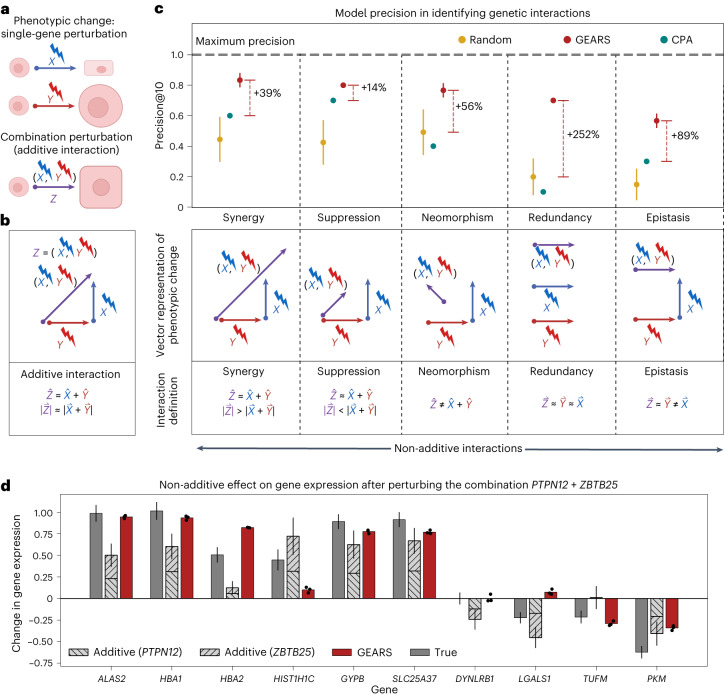
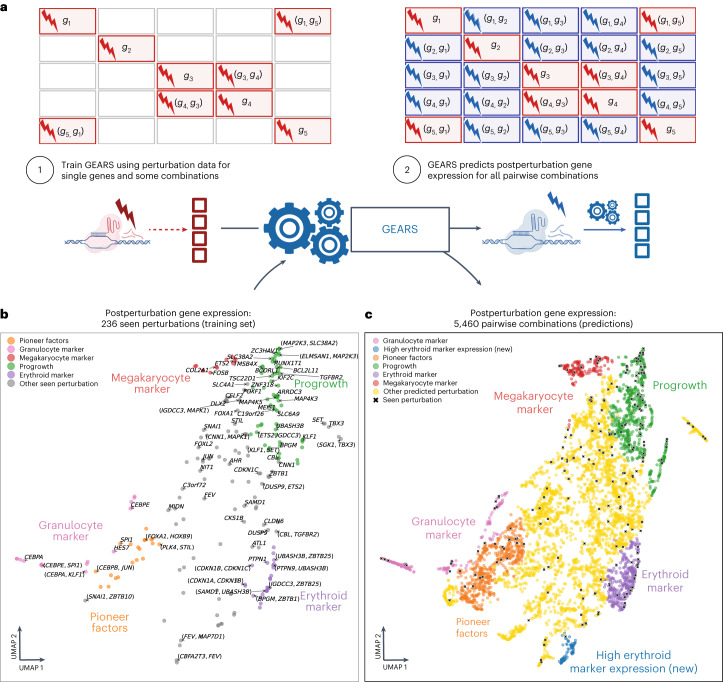
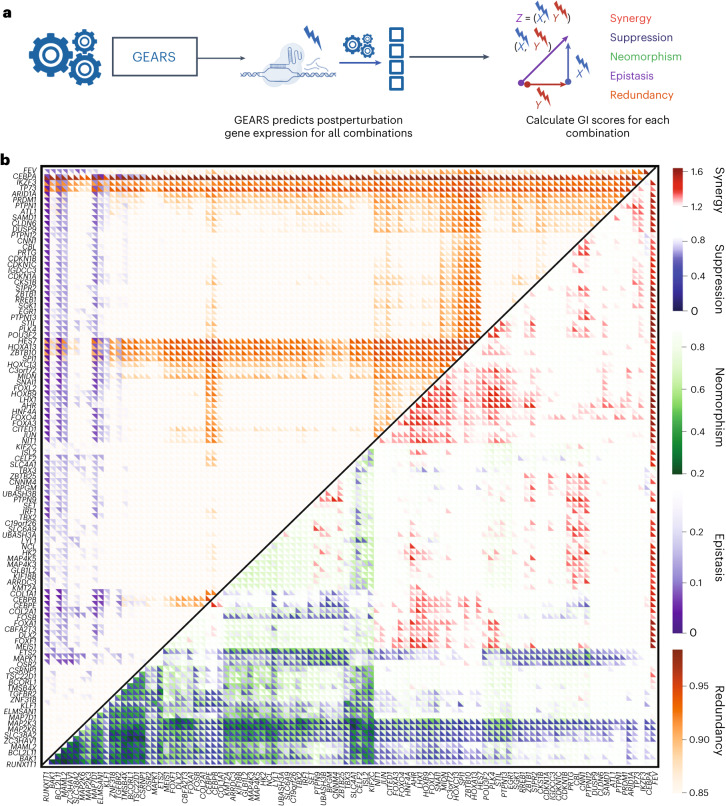
Understanding cellular responses to genetic perturbation is central to numerous biomedical applications, from identifying genetic interactions involved in cancer to developing methods for regenerative medicine. However, the combinatorial explosion in the number of possible multigene perturbations severely limits experimental interrogation. Here, we present graph-enhanced gene activation and repression simulator (GEARS), a method that integrates deep learning with a knowledge graph of gene–gene relationships to predict transcriptional responses to both single and multigene perturbations using single-cell RNA-sequencing data from perturbational screens. GEARS is able to predict outcomes of perturbing combinations consisting of genes that were never experimentally perturbed. GEARS exhibited 40% higher precision than existing approaches in predicting four distinct genetic interaction subtypes in a combinatorial perturbation screen and identified the strongest interactions twice as well as prior approaches. Overall, GEARS can predict phenotypically distinct effects of multigene perturbations and thus guide the design of perturbational experiments.
Overview
The claims and statistics of this paper haven’t been checked yet.
Free: it reads the open-access text and checks the first 5 claims that cite a source we can check. Create a free account to check every claim.
Integrity signals
Registry
Cites
Statistics
Figures
Verification
Claims the paper makes
The claims and statistics of this paper haven’t been checked yet.
Free: it reads the open-access text and checks the first 5 claims that cite a source we can check. Create a free account to check every claim.
Claims other papers make about this one
Each is checked against this paper’s own text: does it say what the citing paper says it does?
The source backs part of the claim, not all of it — or backs it for a different population, condition or comparison.
In the citing paper
“All benchmark datasets were split into train, validation and test sets according to the GEARS publication - corresponding to Perturbation Exclusive split, where new, unseen perturbations (or perturbation combinations) were present in the test set (Supplementary Table 1).”
From Benchmarking foundation cell models for post-perturbation RNA-seq prediction (2025) · cites this paper as [5]
Experimental — accuracy not yet measuredThe source backs part of the claim, not all of it — or backs it for a different population, condition or comparison.
In the citing paper
“Recent advances have incorporated graph-based methods and foundational models that take advantage of prior knowledge of gene expression relationships, resulting in improved generalizability (14–17).”
From A systematic comparison of single-cell perturbation response prediction models (2026) · cites this paper as [14]
Experimental — accuracy not yet measuredThe cited source says what the claim attributes to it.
In the citing paper
“Single-cell foundation models and perturbation predictors support cellular-response forecasting [48-51].”
From RSI-Anything: Unlocking Recursive Self-Improvement with World Models (2026) · cites this paper as [50]
The check wasn’t confident either way, so it gives no verdict — never disputed.
In the citing paper
“This filtering criterion is more permissive than that employed in prior work, retaining more perturbations with smaller effect sizes.11”
From Predicting cellular responses to perturbation across diverse contexts with State (2026) · cites this paper as [11]
Experimental — accuracy not yet measured
Self-check
Percentages, sums and reported differences re-computed from the paper’s own numbers.
The self-check needs the paper’s full text.
Citations
Cites
Szklarczyk, D., Gable, A. L., Lyon, D., Junge, A., Wyder, S., Huerta-Cepas, J., Simonovic, M., Doncheva, N. T., Morris, J. H., Bork, P., et al. (2019) · Nucleic Acids Research · doi:10.1093/nar/gky1131 · Cited by 17,749 · cited 1×
“GEARS functionalizes this graph-based inductive bias using a graph neural network (GNN) architecture 33 .”
KEGG for linking genomes to life and the environment
Kanehisa, M., Araki, M., Goto, S., Hattori, M., Hirakawa, M., Itoh, M., Katayama, T., Kawashima, S., Okuda, S., Tokimatsu, T., et al. (2007) · Nucleic Acids Research · doi:10.1093/nar/gkm882 · Cited by 6,782
Hallmarks of aging: An expanding universe
López-Otín, C., Blasco, M. A., Partridge, L., Serrano, M., & Kroemer, G. (2023) · Cell · doi:10.1016/j.cell.2022.11.001 · Cited by 6,549
Scenic: single-cell regulatory network inference and clustering.
Aibar, S., González-Blas, C. B., Moerman, T., Huynh-Thu, V. A., Imrichova, H., Hulselmans, G., Rambow, F., Marine, J.-C., Geurts, P., Aerts, J., et al. (2017) · Nature Methods · doi:10.1038/nmeth.4463 · Cited by 6,520 · cited 2×
“GEARS functionalizes this graph-based inductive bias using a graph neural network (GNN) architecture 33 .”
InfluentialTisagenlecleucel in children and young adults with B-cell lymphoblastic leukemia
Maude, S. L., Laetsch, T. W., Buechner, J., Rives, S., Boyer, M., Bittencourt, H., Bader, P., Verneris, M. R., Stefanski, H. E., Myers, G. D., et al. (2018) · New England Journal of Medicine · doi:10.1056/nejmoa1709866 · Cited by 5,735 · cited 2×
“Moreover, the precision–recall curves for all observed https://doi.org/10.1038/s41587-023-01905-6 genetic interaction subtypes exhibited a higher area under the curve than other methods (Supplementary Fig.”
InfluentialThe Reactome pathway Knowledgebase
Fabregat, A., Sidiropoulos, K., Garapati, P., Gillespie, M., Hausmann, K., Haw, R., Jassal, B., Jupe, S., Korninger, F., McKay, S., et al. (2016) · Nucleic Acids Research · doi:10.1093/nar/gkv1351 · Cited by 5,605
The Gene Ontology (GO) database and informatics resource
Gene Ontology Consortium (2004) · Nucleic Acids Research · doi:10.1093/nar/gkh036 · Cited by 4,579
Systems biology: a brief overview
Kitano, H. (2002) · Science · doi:10.1126/science.1069492 · Cited by 4,265
Using Bayesian Networks to Analyze Expression Data
Friedman, N., Linial, M., Nachman, I., & Pe'er, D. (2000) · Journal of Computational Biology · doi:10.1089/106652700750050961 · Cited by 3,266 · cited 1×
“GEARS functionalizes this graph-based inductive bias using a graph neural network (GNN) architecture 33 .”
The Reactome Pathway Knowledgebase
Fabregat, A., Jupe, S., Matthews, L., Sidiropoulos, K., Gillespie, M., Garapati, P., Haw, R., Jassal, B., Korninger, F., May, B., et al. (2018) · Nucleic Acids Research · doi:10.1093/nar/gkx1132 · Cited by 2,855 · cited 1×
“GEARS functionalizes this graph-based inductive bias using a graph neural network (GNN) architecture 33 .”
Research works printed but not linked: 3
- Wang, Y., Solus, L., Yang, K. & Uhler, C. Permutation-based causal inference algorithms with interventions. In Proc. 31st International Conference on Neural Information Processing Systems (Ed. von Luxburg, U. & Guyon, I.) 5824–5833 (Association for Computing Machinery, 2017).
- Hamilton, W., Ying, Z. & Leskovec, J. Inductive representation learning on large graphs. In Proc. 31st International Conference on Neural Information Processing Systems (Ed. von Luxburg, U. & Guyon, I.) 1025–1035 (Association for Computing Machinery, 2017).
- Kendall, A. & Gal, Y. What uncertainties do we need in Bayesian deep learning for computer vision? In Proc. 31st International Conference on Neural Information Processing Systems (Ed. von Luxburg, U. & Guyon, I.) 5580–5590 (Association for Computing Machinery, 2017).
Cited by
Items 301–368 of 368
Chen, W., Ye, M., Xu, T., Huang, D., Zhang, H., Li, H., Li, W., Chen, Y., Province, M. A., Payne, P., et al. (2026) · bioRxiv (Cold Spring Harbor Laboratory) · doi:10.64898/2026.06.16.732397
“Perturbation predictors such as CPA [Lotfollahi et al., 2023] and GEARS [Roohani et al., 2024] use one graph or one modality at a time and require task-specific heads.”
Statistics in the next quarter-century: Playing also in the frontyard?
Bühlmann, P. (2026) · Statistical Learning and Data Science · doi:10.1016/j.slads.2026.100006 · Cited by 1
Lu, Y., Xun, D., Xu, C., Zhu, X., Zhang, Z. D., Chen, P., Yang, X., Yan, Z., Rao, J., Huili, H., et al. (2026) · bioRxiv (Cold Spring Harbor Laboratory) · doi:10.64898/2026.06.23.734130
“The dominant paradigm operates in molecular feature space, where models such as scGen [14], CPA [15], GEARS [16], and CellOT [17] learn to map perturbation contexts directly to post-perturbation gene expression profiles.”
Learning Perturbation Effects Through Contrastive Alignment of Multimodal Biological EmbeddingsPreprint
Long, W., Liu, T., Szałata, A., Theis, F. J., Xue, L., & Zhao, H. (2026) · bioRxiv (Cold Spring Harbor Laboratory) · doi:10.64898/2026.06.23.734145 · Cited by 1
Causal intervention validation of gene regulatory signals in scGPT
Kendiukhov, I. (2026) · Journal of Biomedical Informatics · doi:10.1016/j.jbi.2026.105080 · Cited by 2
Felizardo, G. S. S., Costa, V. A. F., Santos, E. S. D. A., da Cunha, L. C., & Neves, B. J. (2026) · Expert Opinion on Drug Discovery · doi:10.1080/17460441.2026.2699304
“These limitations currently position virtual cells as powerful hypothesis-generating and experimental-prioritization platforms, rather than validated tools for candidate selection or translational decision-making [109,110].”
Context-Aware Dual-Graph Neural Network for Cellular State Inference Under Genetic Perturbations
Cai, L., Yu, J., Liu, L., Lin, Q., Li, X., & Wong, K. (2026) · IEEE Transactions on Big Data · doi:10.1109/tbdata.2026.3712210 · Cited by 1
“This aligns with transcriptional responses characterised by active expression in only a subset of genes [43].”
Virtual cell construction for artificial intelligence‐driven drug discovery
Jia, Y., Xing, X., Han, H., Zhao, Y., Zhou, S., & Chen, J. (2026) · British Journal of Pharmacology · doi:10.1111/bph.70585 · Cited by 1
Ren, L., Debnath, I., & Duren, Z. (2026) · bioRxiv (Cold Spring Harbor Laboratory) · doi:10.2139/ssrn.7088360 · Cited by 1
Wang, Z., Yang, C., Tang, X., Yin, E., Yao, Y., Luo, Y., He, J., & Sun, N. (2026) · Genome Medicine · doi:10.1186/s13073-026-01713-y
“Unlike perturbation frameworks that require control expression vectors or a prespecified gene order at inference (e.g., scGPT [35]; GEARS [64]; Geneformer [65]), this CLS-only formulation turns perturbation prediction into a histology-context-conditioned counterfactual interface, enabling…”
Wang, X., Liu, M., Jia, M., Wang, Q., Li, X., Zou, Q., Huang, X., Zhang, L., Lv, X., Wang, J., et al. (2026) · The Innovation Oncology · doi:10.59717/j.xinn-oncol.2026.100027 · Cited by 1
Sun, B., Zheng, H., Chen, J., & Jin, J. (2026) · Genes · doi:10.3390/genes17070816
“We exclude GEARS [14], which predicts unseen genetic perturbations from a gene–gene knowledge graph—a different task that does not fit our same-stimulus, unseen-group transfer.”
Learning from Dynamic Protein Interaction Networks with State-Memory Temporal Graph Neural Networks
Dileo, M., & Sottoriva, A. (2026) · Machine Learning · doi:10.1007/s10994-026-07122-x
Zhao, M., Ma, X., Shi, W., & Sun, Y. (2026) · Life Sciences · doi:10.1016/j.lfs.2026.124600 · Cited by 1
Deep learning as a bridge between sequencing-derived biological data and functional interpretation
Hong, H., Liu, L., Liao, W., Zhao, J., Liu, Y., He, X., Li, J., He, R., Jin, Y., Sha, L., et al. (2026) · Discover Artificial Intelligence · doi:10.1007/s44163-026-01739-6
“To tackle the combinatorial complexity of genetic regulation, GNNs such as GEARS [49] integrate deep learning with prior knowledge graphs to predict transcriptional phenotypes resulting from novel multi-gene perturbations that were not seen during training. scGPT and related foundation models may…”
Dip, S. A., & Zhang, L. (2026) · ACM International Conference on Bioinformatics, Computational Biology, and Health Informatics (ACM-BCB) · doi:10.1145/3807503.3820871 · Cited by 1
“…of this problem. scGen and CPA learn latent representations of cell states and interventions [17, 18]; GEARS propagates information through a gene interaction graph [23]; CFM-GP predicts perturbation for unseen cell types[1] and recent generative approaches model richer response distributions [34].”
VCAgent: A Mutation-Guided Self-Reflective Agent Framework for Virtual Cell Modeling
Li, Z., Han, R. D., Wang, X., Zhang, G., Gao, W., Su, Y., Tian, Z., Liu, X., & Wang, G. (2026) · ACM SIGKDD Conference on Knowledge Discovery and Data Mining (KDD) · doi:10.1145/3770855.3818989
COMPASS: Component-Wise Inference of Shared and Gene-Specific Perturbation ResponsePreprint
Liang, H., & Singh, R. (2026) · bioRxiv (Cold Spring Harbor Laboratory) · doi:10.64898/2026.08.03.742643 · Cited by 2
Xiang, Y., Li, Y., Tian, C., Gu, R., He, F., Wen, H., Xie, L., & Zhou, P. (2026) · bioRxiv (Cold Spring Harbor Laboratory) · doi:10.64898/2026.08.05.742921
A confound-diagnostic toolkit for in silico perturbation with single-cell foundation modelsPreprint
Qiu, R., & Zhao, M. M. (2026) · bioRxiv (Cold Spring Harbor Laboratory) · doi:10.64898/2026.08.04.732812
SLIM: A small linear model with STRING embeddings for single-cell genetic perturbation predictionPreprint
Hu, D., Avelli, M. P., Jensen, L. J., & Rasmussen, S. (2026) · bioRxiv (Cold Spring Harbor Laboratory) · doi:10.64898/2026.08.07.743481
“All datasets were loaded and partitioned using the GEARS framework [5] via the simulation split, in which all test perturbations are withheld entirely from training.”
InfluentialLin¹, D., Chen², Y., Liu², Y., & Zhang¹, Y. (2026) · Research Square · doi:10.21203/rs.3.rs-10446347/v1
Zhang, M., Takahashi, D., Benali, Y., & Liu, X. (2025) · Pharmacophore · doi:10.51847/efvx6kqqna
Kadiatou, D., Camara, F., KEITA, M., & Leclercq, S. (2025) · Pharmacophore · doi:10.51847/a1xh4xuw5o
Reliable single-cell perturbations explain and improve model performancePreprint
Wang, X., Kuipers, J., Hugi, F., Platt, R. J., & Beerenwinkel, N. (2026) · bioRxiv (Cold Spring Harbor Laboratory) · doi:10.64898/2026.08.11.744177 · Cited by 5
“To test whether the same ordering holds for higher-capacity models, we repeated the all, reliable, and specific retraining for GEARS 12 and scGPT 15 and report the training-arm × test-pool grid in Supplementary Figure S7.”
PerturbLDM: conditional latent diffusion for modelling single-cell perturbation responsesPreprint
Yu, L., Hsieh, K., Chu, Y., Lan, Q., Zhao, X., Hsu, Y.-C., Wood, C. S., Rasmy, L., Pilie, P. G., Zhi, D., et al. (2026) · bioRxiv (Cold Spring Harbor Laboratory) · doi:10.64898/2026.08.07.743610
“Unpaired cell populations can be modelled with optimal transport, whereas graph-based methods use gene relationships to predict combinatorial genetic perturbations 11,17 .”
Artificial intelligence in oncology: linking biological discovery to clinical utility
Kuchana, S. K., Alahari, N. V., Kode, R., Jalapu, K. R., & Alahari, S. K. (2026) · Molecular Cancer · doi:10.1186/s12943-026-02771-x
“…and scBERT extended foundation pretraining to annotation, integration, gene-network inference, and perturbation tasks [7, 112, 114, 158]. scGen, compositional perturbation autoencoders, and GEARS directly model transcriptional responses to unseen or combinatorial perturbations [96, 110, 115].”
RADF: Reference-Anchored Dynamic Flow for Spatial Perturbation Profile CompletionPreprint
Cai, H., Wanghou, Chen, J., Xue, Z., Zhang, T. Q., & Sheng, X. (2026) · bioRxiv (Cold Spring Harbor Laboratory) · doi:10.64898/2026.08.20.745474
“…and compositional approaches such as scGen and CPA, graph-based predictors such as GEARS, and distributional mappings such as CellOT and recent flow-based meth-ods (Lotfollahi, Wolf, and Theis 2019; Lotfollahi et al. 2023; Roohani, Huang, and Leskovec 2024; Bunne et al. 2023; Chi et al. 2026).”
Chen, T., Unjitwattana, T., Guo, X., Thakur, P., Zhou, S., Zheng, J., Yang, Y., Du, Y., Zou, W., & Garmire, L. X. (2026) · Nature Biomedical Engineering · doi:10.1038/s41551-026-01754-z
Tang, H., Li, H., Zhao, Q., Zhou, X., Peng, L., Cai, Y., Lin, R., Li, Y., Yuan, Y., Feng, W., et al. (2026) · BMC Genomics · doi:10.1186/s12864-026-13270-0
“Unlike methods such as GEARS [37] and scGPT [31], which infer upregulation or downregulation from the difference between predicted post-perturbation and reference expression profiles, scGPA directly simulates perturbation-signal propagation within a cell-group-specific wild-type regulatory network.”
BaghGolshani, M., Beheshti, A., Newton, M. A. H., & Alinejad-Rokny, H. (2026) · IEEE International Conference on Digital Health (ICDH) · doi:10.1109/icdh72779.2026.00041
“Prediction metrics are computed on per-condition mean expression profiles as in GEARS [5], while GRN plausibility is assessed with intervention-based criteria motivated by CausalBench [13].”
InfluentialCao, J., & Wang, X. (2026) · Genes · doi:10.3390/genes17091014
“Studies such as GEARS, GenePert, and LangPert have explored the use of related information from measured records to predict perturbation responses beyond directly measured conditions [16–18].”
Chen, R., Huang, L., Qiao, Y., Mandal, S., Mo, L., Li, L., Leshchiner, D., Zhang, X., Pu, J., Xie, Y., et al. (2026) · bioRxiv (Cold Spring Harbor Laboratory) · doi:10.64898/2026.08.25.746866
Using Biological Networks to Guide Biomedical Prediction
Zhao, X., Kong, J., Pu, K., Churas, C., Parker, J. A., & Ideker, T. (2026) · Methods in molecular biology · doi:10.1007/978-1-0716-5408-8_3
Min, C., Choe, K., Chen, X., Karagiannidis, I., Sivakumar, N., Xu, C., Melnick, A., Phillip, J. M., & Béguelin, W. (2026) · bioRxiv (Cold Spring Harbor Laboratory) · doi:10.64898/2026.09.02.748910
Li, W., Aziz, A. U. R., Xu, B., Xu, J., Yu, X., Wang, D., & Ha, C. (2026) · Frontiers in Cell and Developmental Biology · doi:10.3389/fcell.2026.1900624 · Cited by 1
“…et al., 2023); CPA modeled compositional responses to combinations of perturbations and covariates (Lotfollahi et al., 2023); GEARS explicitly targeted multigene perturbations (Roohani et al., 2024); and biolord emphasized disentanglement of biological and nuisance covariates (Piran et al., 2024).”
InfluentialAI virtual cells for drug discovery and pharmacology
Wang, S., Zhang, Y., Wang, D., Liu, H., & Yao, X. (2026) · Trends in Pharmacological Sciences · doi:10.1016/j.tips.2026.08.006
Zhao, X., Chang, H., Zhao, Z., & Xiang, X. (2026) · Research Square · doi:10.21203/rs.3.rs-10564610/v1
Hagen, T., Liu, I., Nagainis, A. A., Khosrojerdi, N., Yousefi, H., Gunnels, T., Moarefi, A. H., Green, K., Azimi, N., Momen-Roknabadi, A., et al. (2026) · bioRxiv (Cold Spring Harbor Laboratory) · doi:10.64898/2026.09.13.751267
“7 , 8 ).”
A transcription factor regulatory atlas for activity inference and perturbation prediction
Sugimoto, H., Tsuyuzaki, K., Zou, Z., Oki, S., Ohta, T., & Kawakami, E. (2026) · Nucleic Acids Research · doi:10.1093/nar/gkag897
“Although various methods such as scGPT [ 25 ], scBERT [ 85 ], Geneformer [ 86 ], and GEARS [ 87 ] have been reported, previous benchmarks indicated that the accuracy of these models was consistently lower than that of scFoundation with this linear model [ 9 ].”
Noori, A., Fishman, N., Fang, A., Fesser, L., & Žitnik, M. (2026) · Cell · doi:10.1016/j.cell.2026.08.032 · Cited by 6
Stańczak, M., & Niazi, S. K. (2026) · Cells · doi:10.3390/cells15181711
“Knowledge graphs, coexpression graphs, and gene ontology similarity graphs are of this type, and they underpin several of the strongest current perturbation predictors [28,29].”
Hou, J., Song, J., & Yang, Y. (2026) · IEEE International Conference on Cyber Technology in Automation, Control, and Intelligent Systems · doi:10.1109/cyber71431.2026.11695529
“GEARS uses a gene-relation network derived from Gene Ontology (GO), where nodes represent genes and edges are weighted by the number of shared GO terms[7].”
Belić, M., & Furman, D. (2026) · bioRxiv (Cold Spring Harbor Laboratory) · doi:10.64898/2026.09.22.753641
Extracting interpretable single-cell metabolic states with graph-guided representation learningPreprint
Lewinsohn, D. P., Dias, N., Chau, A., Koike, Y., Smith, Z. D., Ioannidis, N. M., & Wagner, A. (2026) · bioRxiv (Cold Spring Harbor Laboratory) · doi:10.64898/2026.09.17.751504
SHERLOCK: Structured representation learning and causal inference of downstream perturbation effectsPreprint
Zhang, M., Myers, J. D., Shi, L., Giglio, R. M., Chatterjee, S., McFaline‐Figueroa, J. L., & Azizi, E. (2026) · bioRxiv (Cold Spring Harbor Laboratory) · doi:10.64898/2026.09.25.754573
Kaufmann, L., Breton, L. L., Carraz-Billat, E., Fournier, Q., & Lemieux, S. (2026) · bioRxiv (Cold Spring Harbor Laboratory) · doi:10.64898/2026.09.28.755146 · Cited by 3
“Genetic perturbations often identify their direct molecular targets, thereby enabling models to use gene annotations, regulatory networks, or co-expression graphs as priors [6, 7].”
Zhu, H., Wan, C., Yang, M., Fang, Y., An, Z., Swaminathan, P., Dang, P., Li, Z., Wang, J., Wang, Y., et al. (2026) · bioRxiv (Cold Spring Harbor Laboratory) · doi:10.64898/2026.09.27.754711
“[19] However, many such predictions are characterized primarily by gene expression or latentembedding spaces.”
Condition-Controlled optimal transport for cellular perturbation response prediction
Liu, J., Tan, Q., & Yang, P. (2026) · Applied Intelligence · doi:10.1007/s10489-026-07521-6
Mapping transcriptional responses to cellular perturbations with RNA fingerprinting
Grabski, I. N., Lee, J., Blair, J. D., Dalgarno, C., Mascio, I., Bradu, A., Knowles, D. A., & Satija, R. (2026) · Cell · doi:10.1016/j.cell.2026.09.017 · Cited by 9
Ni, J., Zhang, X., Li, M., Cai, Y., Xie, Z., & Liu, Y. (2026) · Computational Biology and Chemistry · doi:10.1016/j.compbiolchem.2026.109480
Wang, Y., & Wu, J. (2026) · British Journal of Pharmacology · doi:10.1111/bph.70712
BioMod: Biological Module Tokenization for Single-Cell Foundation ModelingPreprint
Meng, L., Zhu, J., Han, B., Zang, Y., Li, W., Zong, K., Zhong, J., Yang, Y., Liu, J., Jia, J., et al. (2026) · bioRxiv (Cold Spring Harbor Laboratory) · doi:10.64898/2026.10.12.758490
“Compar-242 isons included Geneformer [4], scGPT [3], scFoundation [5], UCE [6], scLong [7], and the task-specific GEARS model [30] (Fig.”
InfluentialOn the emergence of in silico biology for intervention in living systemsPreprint
Colter, J., Rosin, N. L., Biernaskie, J. A., & Forkert, N. D. (2026) · Research Square · doi:10.21203/rs.3.rs-11321044/v1
Emerging frontiers for AI in single-cell genomics
Mitra, S., Li, J., & Leslie, C. S. (2026) · Molecular Cell · doi:10.1016/j.molcel.2026.09.014 · Cited by 1
Liu, X., Zhang, B., Zou, K., Wan, R., & Zhu, Q. (2026) · Biosensors · doi:10.3390/bios16100581
“GEARS uses a graph neural network operating on a gene co-expression graph to learn gene-state representations and a second graph derived from Gene Ontology relationships to propagate functional information from perturbed genes [55].”
From Mechanistic Models to AI Synergy: A Roadmap for Predictive and Personalized Biology
Huang, L., Sun, H., Huang, Y., Gu, Q., Zhang, H., He, D., Zhang, W., Chen, S., Xu, D., & Zhao, J. (2026) · Biology · doi:10.3390/biology15201859
“GNNs predict untested gene combinations in signaling networks more accurately than unstructured baselines [41], and in cell–cell communication inference they reach single-cell precision and expose microenvironmental differences that conventional methods smooth over [42].”
Distributed AI agents enable comprehensive discovery of biological insights at scalePreprint
Sun, A., Park, J. J., DeTomaso, D., Kim, S., Liu, A., Shringarpure, S., Kim, K., Thompson, P. C., Shi, T., Wang, Y., et al. (2026) · bioRxiv (Cold Spring Harbor Laboratory) · doi:10.64898/2026.10.15.759436
“Models such as GEARS and State predict transcriptional responses to perturbations (37, 38) for the virtual cell effort (39); Previous language-based approaches predict gene-level perturbation responses (40, 41) or prioritize interventions for iterative screens (42, 43).”
Virtual cells: progress and challenges from mechanistic modeling to data-driven integration
Ma, N., Wang, Z., Yang, X., Yang, G., Yang, R., Wang, Z., Jiang, Q., & Chu, Y. (2026) · Briefings in Bioinformatics · doi:10.1093/bib/bbag562
“Model-reference mapping: Virtual Cell [ 2]; Geneformer [ 16]; scGPT [ 15]; scFoundation [ 17]; GEARS [ 42]; SpatialProp [ 49]; Tahoe-x1 [ 23]; SCALE [ 20]; UCE [ 18]; CellOS [ 56].”
Tumor digital twins uncover therapeutic strategies in triple-negative breast cancer
Victori, P., Hua, K., Twigger, A., Anand, A., Bose, Z. M., Clarke, M. A., Bell, S., Xian, K. J. Q., Zakarneh, L., Pinilla, K., et al. (2026) · Cell Reports Medicine · doi:10.1016/j.xcrm.2026.103119
How Much Can AI Virtual Cells Gain from Unified Perturbational Modeling?Preprint
魏宗婷, Ye, Y., Cui, S. R., Ma, W., & You, Y. (2026) · bioRxiv (Cold Spring Harbor Laboratory) · doi:10.64898/2026.10.25.761625
“GEARS [27] and X-Cell [14] are evaluated on VCC and HepG2.”
InfluentialDeep Lineage: Single-cell lineage tracing and fate inference using deep learning
Sadria, M., Zhang, A. A., Lai, H. G., & Bader, G. D. (2026) · Cell Systems · doi:10.1101/2024.04.25.591126 · Cited by 5
Advances in early human embryonic development and organogenesis from spatiotemporal multi-omics
Zhu, H., Yang, X., Wang, X., & Xiao, Z. (2026) · Journal of Translational Genetics and Genomics · doi:10.20517/jtgg.2026.26
Single-cell and spatial multi-omics for studying cell competition in the tumor microenvironment
Balu, P., Sureshkumar, A., Sundaramurthy, G. D., Subramaniam, G., & Wong, L. S. (2026) · Frontiers in Oncology · doi:10.3389/fonc.2026.1971798
Yu, Q., Yang, R., Shao, C., Lv, Z., Bai, C., & Wang, Z. (2026) · Computational Biology and Chemistry · doi:10.1016/j.compbiolchem.2026.109514
RSI-Anything: Unlocking Recursive Self-Improvement with World Models
Cui, T., Zeng, P., Xu, W., Xiao, H., Xue, S., Gao, Q., Ouyang, W., Heng, P. A., Yin, Z., Wu, Y., et al. (2026) · arXiv · doi:10.48550/arxiv.2610.13912 · Cited by 2
scELMo: Embeddings from Language Models are Good Learners for Single-cell Data Analysis
Liu, T., Chen, T., Zheng, W., Luo, X., Chen, Y., & Zhao, H. (2023) · doi:10.1101/2023.12.07.569910 · Cited by 30
Metadata
- Authors
- Roohani, Y., Huang, K., & Leskovec, J.
- Affiliations
- Stanford University (US)
- Corresponding author
- Leskovec, Jure
- Venue
- Nature Biotechnology
- Published
- 2023-08-17
- Volume
- 42
- Issue
- 6
- Pages
- 927-935
- ISSN
- 0733-222X (ISSN-L)
- 1087-0156
- 1546-1696
- PMC
- PMC11180609
- OpenAlex
- W4385955324
- Semantic Scholar
- 85906593661911c9a076cbb96391b9bb61a996bc
- Cited by
- 355
- References
- 51
- Citations by year
- 2026: 153 · 2025: 118 · 2024: 77 · 2023: 7
- FWCI
- 31.63
- Type
- journal article
- Language
- en
- Open access
- hybrid
- doi.org
- Licence
- cc-by
- creativecommons.org/licenses/by/4.0 (tdm)
- creativecommons.org/licenses/by/4.0 (vor)
- Locations
- Nature Biotechnology (publishedVersion, cc-by)
- PubMed Central (publishedVersion, cc-by)
- PubMed (publishedVersion)
- Funders
- U.S. Department of Health & Human Services | NIH | Center for Information Technology (3U54HG010426-04S1)
- GlaxoSmithKline
- Topics
- Life Sciences › Biochemistry, Genetics and Molecular Biology › Molecular Biology › Gene Regulatory Network Analysis
- Life Sciences › Biochemistry, Genetics and Molecular Biology › Molecular Biology › Single-cell and spatial transcriptomics
- Life Sciences › Biochemistry, Genetics and Molecular Biology › Molecular Biology › Bioinformatics and Genomic Networks
- Keywords
- gene-gene interaction, genetic interactions, knowledge graphs, deep learning, single-cell RNA sequencing, gene activation and repression, gears
- MeSH terms
- Deep Learning, Computer Simulation, Humans, Transcription, Genetic, Sequence Analysis, RNA, Computational Biology, Gene Regulatory Networks, Single-Cell Analysis
About these checks
Registry, retraction, Cites and statistics results are computed, not judged, with one exception: a printed reference that no index lists is read once by a model before it counts as a citation error. Claims are extracted by a model and kept only when their quote appears verbatim in the text; each cited source is then checked, with a model’s help, for whether it says what the claim relies on. Those verdicts can be wrong — read the claim’s quote and the cited source before relying on one.
Statistics and arithmetic are recomputed, not judged.
Confidence bands are shown only for fields calibrated on our annotated test set. None is calibrated yet, so no band is shown.
What counts as a claim ›How we measure confidence ›How we check this ›
Are you an author, or do you see a problem with this page? Request a review
Data sources
Bibliographic data: Semantic Scholar, OpenAlex, Crossref.
Contains information from the Semantic Scholar Academic Graph Datasets, made available under the ODC Attribution License (ODC-BY 1.0).
Semantic Scholar’s data is described in: Kinney, R., et al. (2023). The Semantic Scholar Open Data Platform. arXiv:2301.10140.
