

Predicting transcriptional outcomes of novel multigene perturbations with GEARS
Open accessThe DOI matches its Crossref record; 51 of the 51 references it cites were found in a registry or an index.
Abstract
Understanding cellular responses to genetic perturbation is central to numerous biomedical applications, from identifying genetic interactions involved in cancer to developing methods for regenerative medicine. However, the combinatorial explosion in the number of possible multigene perturbations severely limits experimental interrogation. Here, we present graph-enhanced gene activation and repression simulator (GEARS), a method that integrates deep learning with a knowledge graph of gene–gene relationships to predict transcriptional responses to both single and multigene perturbations using single-cell RNA-sequencing data from perturbational screens. GEARS is able to predict outcomes of perturbing combinations consisting of genes that were never experimentally perturbed. GEARS exhibited 40% higher precision than existing approaches in predicting four distinct genetic interaction subtypes in a combinatorial perturbation screen and identified the strongest interactions twice as well as prior approaches. Overall, GEARS can predict phenotypically distinct effects of multigene perturbations and thus guide the design of perturbational experiments.
Overview
The claims and statistics of this paper haven’t been checked yet.
Free: it reads the open-access text and checks the first 5 claims that cite a source we can check. Create a free account to check every claim.
Integrity signals
Registry
Cites
Statistics
Figures
Verification
Claims the paper makes
The claims and statistics of this paper haven’t been checked yet.
Free: it reads the open-access text and checks the first 5 claims that cite a source we can check. Create a free account to check every claim.
Claims other papers make about this one
Each is checked against this paper’s own text: does it say what the citing paper says it does?
The source backs part of the claim, not all of it — or backs it for a different population, condition or comparison.
In the citing paper
“All benchmark datasets were split into train, validation and test sets according to the GEARS publication - corresponding to Perturbation Exclusive split, where new, unseen perturbations (or perturbation combinations) were present in the test set (Supplementary Table 1).”
From Benchmarking foundation cell models for post-perturbation RNA-seq prediction (2025) · cites this paper as [5]
Experimental — accuracy not yet measuredThe source backs part of the claim, not all of it — or backs it for a different population, condition or comparison.
In the citing paper
“Recent advances have incorporated graph-based methods and foundational models that take advantage of prior knowledge of gene expression relationships, resulting in improved generalizability (14–17).”
From A systematic comparison of single-cell perturbation response prediction models (2026) · cites this paper as [14]
Experimental — accuracy not yet measuredThe cited source says what the claim attributes to it.
In the citing paper
“Single-cell foundation models and perturbation predictors support cellular-response forecasting [48-51].”
From RSI-Anything: Unlocking Recursive Self-Improvement with World Models (2026) · cites this paper as [50]
The check wasn’t confident either way, so it gives no verdict — never disputed.
In the citing paper
“This filtering criterion is more permissive than that employed in prior work, retaining more perturbations with smaller effect sizes.11”
From Predicting cellular responses to perturbation across diverse contexts with State (2026) · cites this paper as [11]
Experimental — accuracy not yet measured
Self-check
Percentages, sums and reported differences re-computed from the paper’s own numbers.
The self-check needs the paper’s full text.
Citations
Cites
Szklarczyk, D., Gable, A. L., Lyon, D., Junge, A., Wyder, S., Huerta-Cepas, J., Simonovic, M., Doncheva, N. T., Morris, J. H., Bork, P., et al. (2019) · Nucleic Acids Research · doi:10.1093/nar/gky1131 · Cited by 17,749 · cited 1×
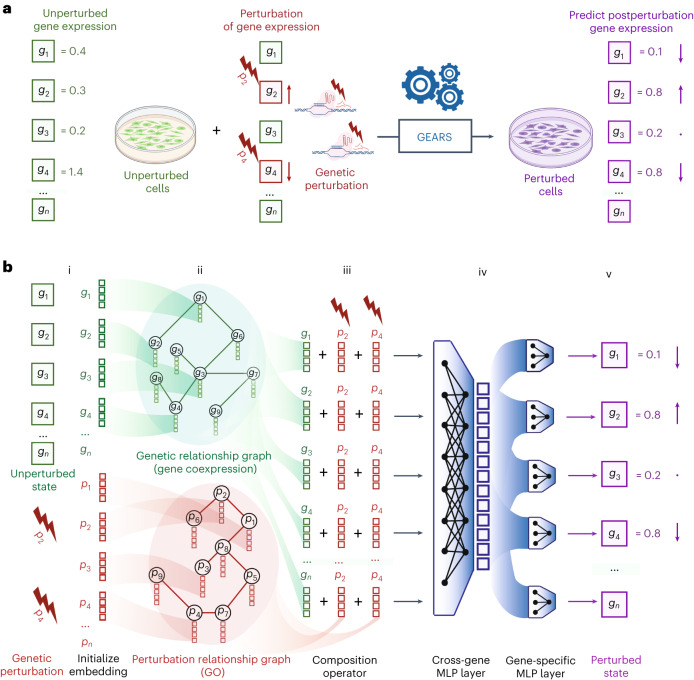
“GEARS functionalizes this graph-based inductive bias using a graph neural network (GNN) architecture 33 .”
KEGG for linking genomes to life and the environment
Kanehisa, M., Araki, M., Goto, S., Hattori, M., Hirakawa, M., Itoh, M., Katayama, T., Kawashima, S., Okuda, S., Tokimatsu, T., et al. (2007) · Nucleic Acids Research · doi:10.1093/nar/gkm882 · Cited by 6,782
Hallmarks of aging: An expanding universe
López-Otín, C., Blasco, M. A., Partridge, L., Serrano, M., & Kroemer, G. (2023) · Cell · doi:10.1016/j.cell.2022.11.001 · Cited by 6,549
Scenic: single-cell regulatory network inference and clustering.
Aibar, S., González-Blas, C. B., Moerman, T., Huynh-Thu, V. A., Imrichova, H., Hulselmans, G., Rambow, F., Marine, J.-C., Geurts, P., Aerts, J., et al. (2017) · Nature Methods · doi:10.1038/nmeth.4463 · Cited by 6,520 · cited 2×
“GEARS functionalizes this graph-based inductive bias using a graph neural network (GNN) architecture 33 .”
InfluentialTisagenlecleucel in children and young adults with B-cell lymphoblastic leukemia
Maude, S. L., Laetsch, T. W., Buechner, J., Rives, S., Boyer, M., Bittencourt, H., Bader, P., Verneris, M. R., Stefanski, H. E., Myers, G. D., et al. (2018) · New England Journal of Medicine · doi:10.1056/nejmoa1709866 · Cited by 5,735 · cited 2×
“Moreover, the precision–recall curves for all observed https://doi.org/10.1038/s41587-023-01905-6 genetic interaction subtypes exhibited a higher area under the curve than other methods (Supplementary Fig.”
InfluentialThe Reactome pathway Knowledgebase
Fabregat, A., Sidiropoulos, K., Garapati, P., Gillespie, M., Hausmann, K., Haw, R., Jassal, B., Jupe, S., Korninger, F., McKay, S., et al. (2016) · Nucleic Acids Research · doi:10.1093/nar/gkv1351 · Cited by 5,605
The Gene Ontology (GO) database and informatics resource
Gene Ontology Consortium (2004) · Nucleic Acids Research · doi:10.1093/nar/gkh036 · Cited by 4,579
Systems biology: a brief overview
Kitano, H. (2002) · Science · doi:10.1126/science.1069492 · Cited by 4,265
Using Bayesian Networks to Analyze Expression Data
Friedman, N., Linial, M., Nachman, I., & Pe'er, D. (2000) · Journal of Computational Biology · doi:10.1089/106652700750050961 · Cited by 3,266 · cited 1×
“GEARS functionalizes this graph-based inductive bias using a graph neural network (GNN) architecture 33 .”
The Reactome Pathway Knowledgebase
Fabregat, A., Jupe, S., Matthews, L., Sidiropoulos, K., Gillespie, M., Garapati, P., Haw, R., Jassal, B., Korninger, F., May, B., et al. (2018) · Nucleic Acids Research · doi:10.1093/nar/gkx1132 · Cited by 2,855 · cited 1×
“GEARS functionalizes this graph-based inductive bias using a graph neural network (GNN) architecture 33 .”
Deep generative modeling for single-cell transcriptomics
Lopez, R., Regier, J., Cole, M. B., Jordan, M. I., & Yosef, N. (2018) · Nature Methods · doi:10.1038/s41592-018-0229-2 · Cited by 2,530 · cited 1×
“GEARS functionalizes this graph-based inductive bias using a graph neural network (GNN) architecture 33 .”
Dixit, A., Parnas, O., Li, B., Chen, J., Fulco, C. P., Jerby-Arnon, L., Marjanovic, N. D., Dionne, D., Burks, T., Raychowdhury, R., et al. (2016) · Cell · doi:10.1016/j.cell.2016.11.038 · Cited by 1,863 · cited 4×
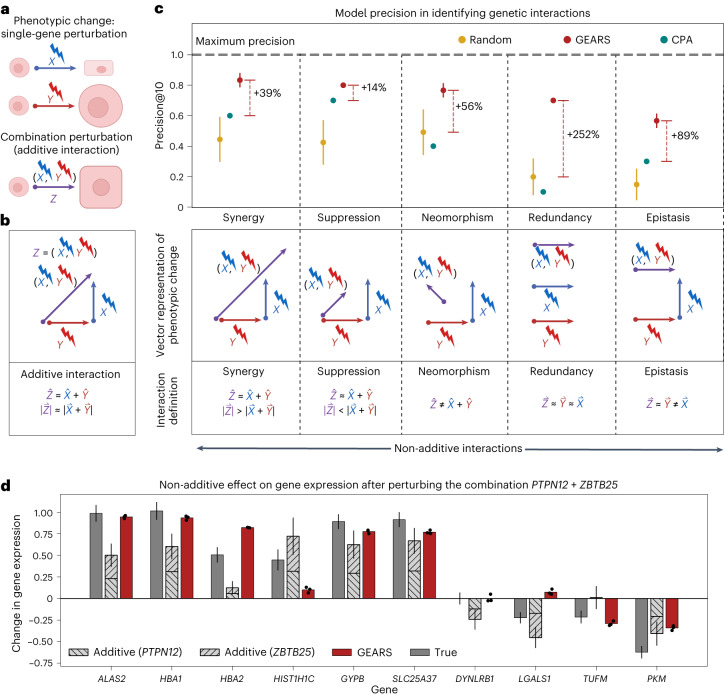
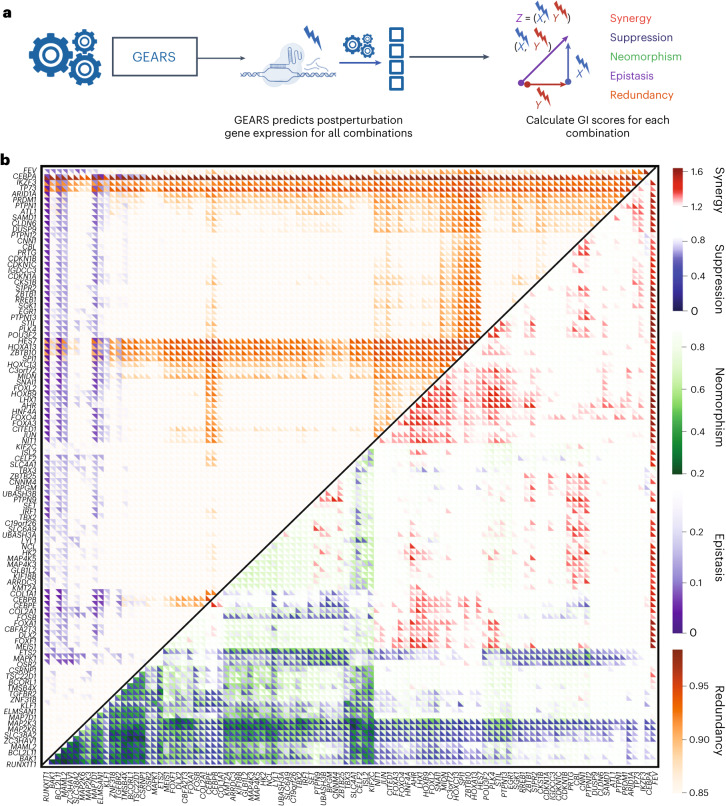
“We defined five types of genetic interactions (Supplementary Note 15): synergy, suppression, neomorphism, redundancy and epistasis (Supplementary Note 16).”
InfluentialCRISPR-Cas9 In Vivo Gene Editing for Transthyretin Amyloidosis
Gillmore, J. D., Gane, E., Taubel, J., Kao, J., Fontana, M., Maitland, M. L., Seitzer, J., O’Connell, D., Walsh, K. R., Wood, K., et al. (2021) · New England Journal of Medicine · doi:10.1056/nejmoa2107454 · Cited by 1,801 · cited 3×
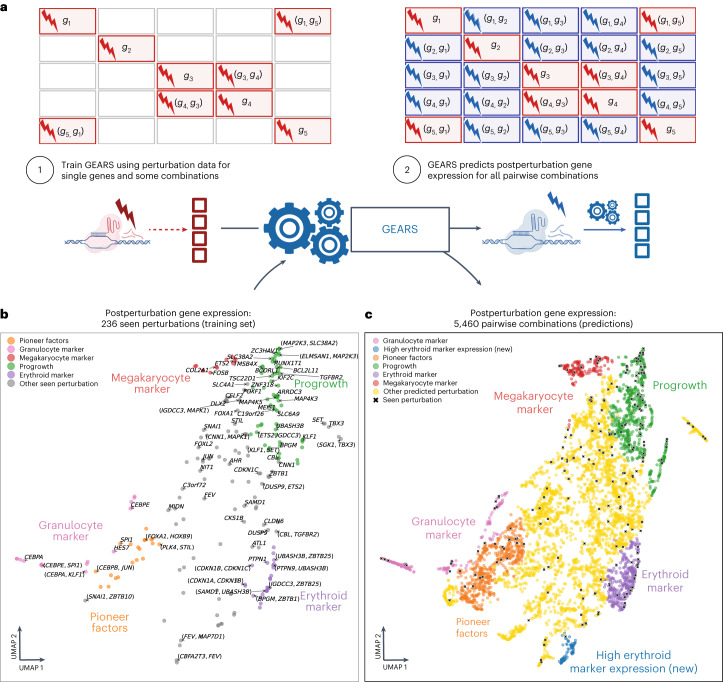
“…the predicted postperturbation gene expression for each of the 5,151 pairwise combinatorial perturbations, we constructed a genetic interaction map that could simultaneously represent five distinct types of genetic interactions: synergy, suppression, neomorphism, redundancy and epistasis.”
Causal Protein-Signaling Networks Derived from Multiparameter Single-Cell Data
Sachs, K., Perez, O., Pe'er, D., Lauffenburger, D. A., & Nolan, G. P. (2005) · Science · doi:10.1126/science.1105809 · Cited by 1,708
The support of human genetic evidence for approved drug indications
Nelson, M. R., Tipney, H., Painter, J. L., Shen, J., Nicoletti, P., Shen, Y., Floratos, A., Sham, P. C., Li, M. J., Wang, J., et al. (2015) · Nature Genetics · doi:10.1038/ng.3314 · Cited by 1,666 · cited 2×
“GEARS functionalizes this graph-based inductive bias using a graph neural network (GNN) architecture 33 .”
Deep learning: new computational modelling techniques for genomics
Eraslan, G., Avsec, Ž., Gagneur, J., & Theis, F. J. (2019) · Nature Reviews Genetics · doi:10.1038/s41576-019-0122-6 · Cited by 1,203 · cited 1×
“GEARS functionalizes this graph-based inductive bias using a graph neural network (GNN) architecture 33 .”
Adamson, B., Norman, T. M., Jost, M., Cho, M. Y., Nuñez, J. K., Chen, Y., Villalta, J. E., Gilbert, L. A., Horlbeck, M. A., Hein, M. Y., et al. (2016) · Cell · doi:10.1016/j.cell.2016.11.048 · Cited by 1,193 · cited 2×
“16 and 17 and Supplementary Note 20).”
InfluentialOrgans-on-chips: into the next decade
Low, L. A., Mummery, C., Berridge, B. R., Austin, C. P., & Tagle, D. A. (2021) · Nature Reviews Drug Discovery · doi:10.1038/s41573-020-0079-3 · Cited by 1,029 · cited 1×
“When both genes in a two-gene combination had been individually perturbed, the genetic interaction scores predicted by GEARS showed a stronger correlation with the ground truth scores calculated using true expression than existing methods.”
Mapping information-rich genotype-phenotype landscapes with genome-scale Perturb-seq
Replogle, J. M., Saunders, R. A., Pogson, A. N., Hussmann, J. A., Lenail, A., Guna, A., Mascibroda, L., Wagner, E. J., Adelman, K., Lithwick-Yanai, G., et al. (2022) · Cell · doi:10.1016/j.cell.2022.05.013 · Cited by 795 · cited 3×
“Moreover, the precision–recall curves for all observed https://doi.org/10.1038/s41587-023-01905-6 genetic interaction subtypes exhibited a higher area under the curve than other methods (Supplementary Fig.”
InfluentialBenchmarking algorithms for gene regulatory network inference from single-cell transcriptomic data
Pratapa, A., Jalihal, A. P., Law, J. N., Bharadwaj, A., & Murali, T. M. (2020) · Nature Methods · doi:10.1038/s41592-019-0690-6 · Cited by 792 · cited 1×
“GEARS functionalizes this graph-based inductive bias using a graph neural network (GNN) architecture 33 .”
Dissecting Immune Circuits by Linking CRISPR-Pooled Screens with Single-Cell RNA-Seq
Jaitin, D. A., Weiner, A., Yofe, I., Lara-Astiaso, D., Keren-Shaul, H., David, E., Salame, T. M., Tanay, A., van Oudenaarden, A., & Amit, I. (2016) · Cell · doi:10.1016/j.cell.2016.11.039 · Cited by 777 · cited 2×
“For example, two genes that independently cause a minor loss in cell growth could synergistically interact with one another following combinatorial perturbation to cause cell death.”
Dissecting cell identity via network inference and in silico gene perturbation
Kamimoto, K., Stringa, B., Hoffmann, C. M., Jindal, K., Solnica-Krezel, L., & Morris, S. A. (2023) · Nature · doi:10.1038/s41586-022-05688-9 · Cited by 677 · cited 2×
“GEARS functionalizes this graph-based inductive bias using a graph neural network (GNN) architecture 33 .”
InfluentialscGen predicts single-cell perturbation responses
Lotfollahi, M., Wolf, F. A., & Theis, F. J. (2019) · Nature Methods · doi:10.1038/s41592-019-0494-8 · Cited by 661 · cited 1×
“GEARS functionalizes this graph-based inductive bias using a graph neural network (GNN) architecture 33 .”
Synthetic lethality and cancer
O'Neil, N. J., Bailey, M. L., & Hieter, P. (2017) · Nature Reviews Genetics · doi:10.1038/nrg.2017.47 · Cited by 658
Bock, C., Datlinger, P., Chardon, F., Coelho, M. A., Dong, M. B., Lawson, K. A., Lu, T., Maroc, L., Norman, T. M., Song, B., et al. (2022) · Nature Reviews Methods Primers · doi:10.1038/s43586-021-00093-4 · Cited by 571 · cited 1×
“We add an additional gene-specific layer to predict the log variance term for each gene u and learn it through a modified Bayesian neural network loss 52 By encouraging log variance to be large when the error is large, the log variance is learned to be a proxy of model uncertainty.”
CRISPR Interference-Based Platform for Multimodal Genetic Screens in Human iPSC-Derived Neurons
Tian, R., Gachechiladze, M. A., Ludwig, C. H., Laurie, M. T., Hong, J. Y., Nathaniel, D., Prabhu, A. V., Fernandopulle, M. S., Patel, R., Abshari, M., et al. (2019) · Neuron · doi:10.1016/j.neuron.2019.07.014 · Cited by 543
Combinatorial single-cell CRISPR screens by direct guide RNA capture and targeted sequencing
Replogle, J. M., Norman, T. M., Xu, A., Hussmann, J. A., Chen, J., Cogan, J. Z., Meer, E. J., Terry, J. M., Riordan, D. P., Srinivas, N., et al. (2020) · Nature Biotechnology · doi:10.1038/s41587-020-0470-y · Cited by 465 · cited 2×
“16 and 17 and Supplementary Note 20).”
CRISPR technologies for precise epigenome editing
Nakamura, M., Gao, Y., Dominguez, A. A., & Qi, L. S. (2021) · Nature Cell Biology · doi:10.1038/s41556-020-00620-7 · Cited by 444
Direct cell reprogramming: approaches, mechanisms and progress
Wang, H., Yang, Y., Liu, J., & Qian, L. (2021) · Nature Reviews Molecular Cell Biology · doi:10.1038/s41580-021-00335-z · Cited by 444 · cited 1×
“11).”
CRISPR in cancer biology and therapy
Katti, A., Diaz, B. J., Caragine, C. M., Sanjana, N. E., & Dow, L. E. (2022) · Nature Reviews Cancer · doi:10.1038/s41568-022-00441-w · Cited by 424 · cited 5×
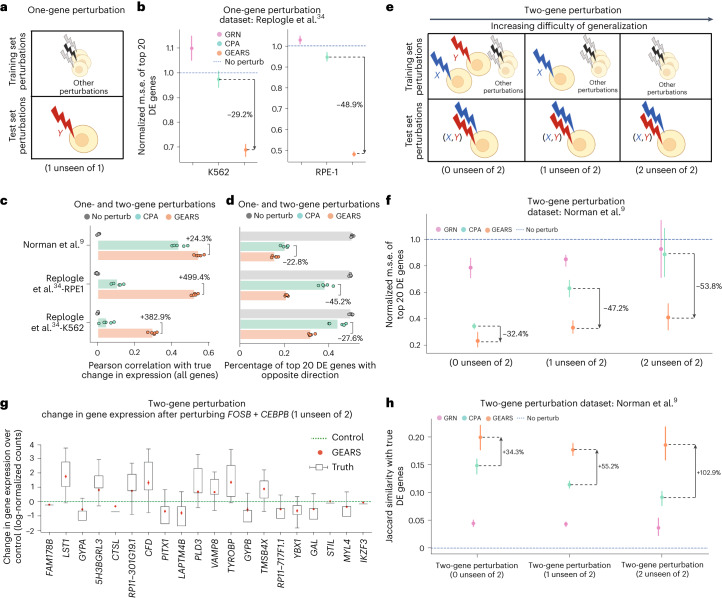
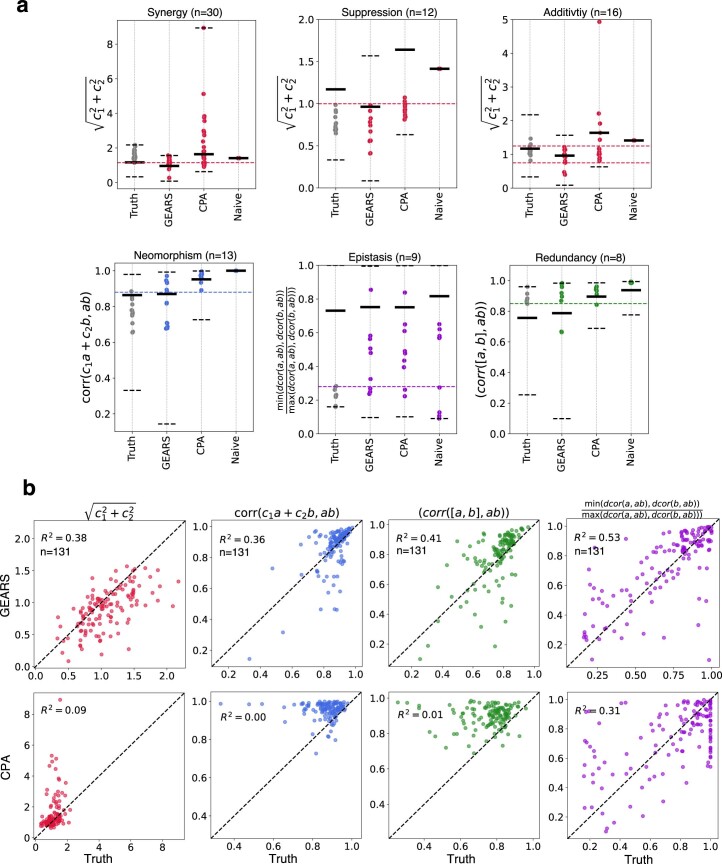
“The top row shows predictions made by GEARS and the bottom row shows predictions made by CPA.”
InfluentialExploring genetic interaction manifolds constructed from rich single-cell phenotypes
Norman, T. M., Horlbeck, M. A., Replogle, J. M., Ge, A. Y., Xu, A., Jost, M., Gilbert, L. A., & Weissman, J. S. (2019) · Science · doi:10.1126/science.aax4438 · Cited by 392
Aytes, A., Mitrofanova, A., Lefebvre, C., Alvarez, M. J., Castillo-Martin, M., Zheng, T., Eastham, J. A., Gopalan, A., Pienta, K. J., Shen, M. M., et al. (2014) · Cancer Cell · doi:10.1016/j.ccr.2014.03.017 · Cited by 324 · cited 1×
“2g) even though one of the perturbed genes ( CEBPB ) had not been seen experimentally perturbed during training.”
Mapping the Genetic Landscape of Human Cells
Horlbeck, M. A., Xu, A., Wang, M., Bennett, N. K., Park, C. Y., Bogdanoff, D., Adamson, B., Chow, E. D., Kampmann, M., Peterson, T. R., et al. (2018) · Cell · doi:10.1016/j.cell.2018.06.010 · Cited by 319 · cited 2×
“GEARS functionalizes this graph-based inductive bias using a graph neural network (GNN) architecture 33 .”
Inferring and perturbing cell fate regulomes in human brain organoids
Fleck, J. S., Jansen, S. M. J., Wollny, D., Zenk, F., Seimiya, M., Jain, A., Okamoto, R., Santel, M., He, Z., Camp, J. G., et al. (2023) · Nature · doi:10.1038/s41586-022-05279-8 · Cited by 315
CRISPR activation and interference screens decode stimulation responses in primary human T cells
Schmidt, R., Steinhart, Z., Layeghi, M., Freimer, J. W., Bueno, R., Nguyen, V. Q., Blaeschke, F., Ye, C. J., & Marson, A. (2022) · Science · doi:10.1126/science.abj4008 · Cited by 315 · cited 1×
“We add an additional gene-specific layer to predict the log variance term for each gene u and learn it through a modified Bayesian neural network loss 52 By encouraging log variance to be large when the error is large, the log variance is learned to be a proxy of model uncertainty.”
Predicting cellular responses to complex perturbations in high‐throughput screens
Lotfollahi, M., Klimovskaia Susmelj, A., De Donno, C., Hetzel, L., Ji, Y., Ibarra, I. L., Srivatsan, S. R., Naghipourfar, M., Daza, R. M., Martin, B., et al. (2023) · Molecular Systems Biology · doi:10.15252/msb.202211517 · Cited by 307 · cited 1×
“GEARS functionalizes this graph-based inductive bias using a graph neural network (GNN) architecture 33 .”
A new era in functional genomics screens
Przybyla, L., & Gilbert, L. A. (2022) · Nature Reviews Genetics · doi:10.1038/s41576-021-00409-w · Cited by 281 · cited 2×
“GEARS functionalizes this graph-based inductive bias using a graph neural network (GNN) architecture 33 .”
Frangieh, C. J., Melms, J. C., Thakore, P. I., Geiger-Schuller, K. R., Ho, P., Luoma, A. M., Cleary, B., Jerby-Arnon, L., Malu, S., Cuoco, M. S., et al. (2021) · Nature Genetics · doi:10.1038/s41588-021-00779-1 · Cited by 276 · cited 1×
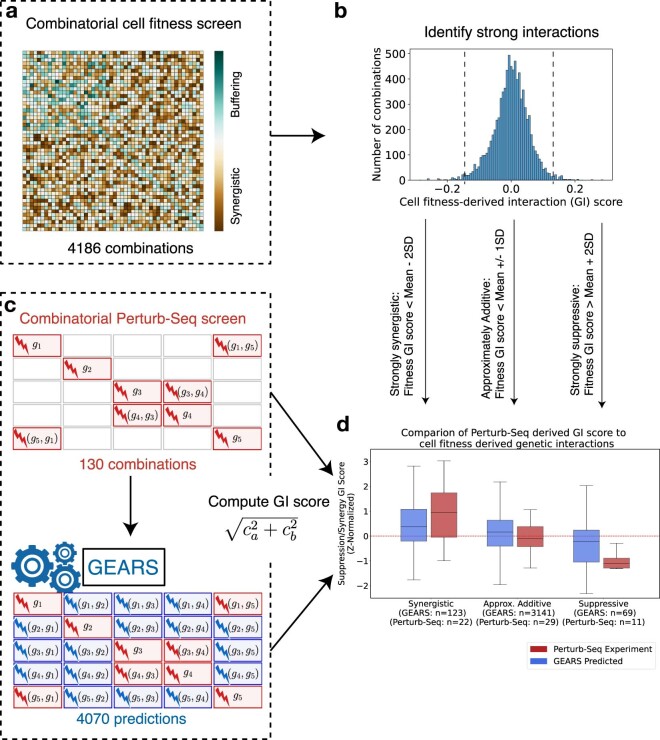
“The distribution of GEARS-predicted genetic interaction scores was significantly higher for perturbations showing synergistic cell fitness effects ( P < 0.0013, n = 123; data were analyzed by one-sided t -test comparing the means) and lower for those showing buffering effects ( P < 4 × 10 −5 , n =…”
InfluentialBrowder, K. C., Reddy, P., Yamamoto, M., Haghani, A., Guillen, I. G., Sahu, S., Wang, C., Luque, Y., Prieto, J., Shi, L., et al. (2022) · Nature Aging · doi:10.1038/s43587-022-00183-2 · Cited by 253
(2022) · Nature Reviews Methods Primers · doi:10.1038/s43586-022-00098-7 · Cited by 250
Global Genetic Networks and the Genotype-to-Phenotype Relationship
Costanzo, M., Kuzmin, E., van Leeuwen, J., Mair, B., Moffat, J., Boone, C., & Andrews, B. (2019) · Cell · doi:10.1016/j.cell.2019.01.033 · Cited by 241
A comprehensive library of human transcription factors for cell fate engineering
Ng, A. H. M., Khoshakhlagh, P., Rojo Arias, J. E., Pasquini, G., Wang, K., Swiersy, A., Shipman, S. L., Appleton, E., Kiaee, K., Kohman, R. E., et al. (2021) · Nature Biotechnology · doi:10.1038/s41587-020-0742-6 · Cited by 240
A transcription factor atlas of directed differentiation
Joung, J., Ma, S., Tay, T., Geiger-Schuller, K. R., Kirchgatterer, P. C., Verdine, V. K., Guo, B., Arias-Garcia, M. A., Allen, W. E., Singh, A., et al. (2023) · Cell · doi:10.1016/j.cell.2022.11.026 · Cited by 219
Design and analysis of CRISPR–Cas experiments
Hanna, R. E., & Doench, J. G. (2020) · Nature Biotechnology · doi:10.1038/s41587-020-0490-7 · Cited by 208
CRISPR-Cas Tools and Their Application in Genetic Engineering of Human Stem Cells and Organoids
Hendriks, D., Clevers, H., & Artegiani, B. (2020) · Cell Stem Cell · doi:10.1016/j.stem.2020.10.014 · Cited by 192 · cited 1×
“We add an additional gene-specific layer to predict the log variance term for each gene u and learn it through a modified Bayesian neural network loss 52 By encouraging log variance to be large when the error is large, the log variance is learned to be a proxy of model uncertainty.”
Titrating gene expression using libraries of systematically attenuated CRISPR guide RNAs
Jost, M., Santos, D. A., Saunders, R. A., Horlbeck, M. A., Hawkins, J. S., Scaria, S. M., Norman, T. M., Hussmann, J. A., Liem, C. R., Gross, C. A., et al. (2020) · Nature Biotechnology · doi:10.1038/s41587-019-0387-5 · Cited by 164
Turning back time with emerging rejuvenation strategies
Mahmoudi, S., Xu, L., & Brunet, A. (2019) · Nature Cell Biology · doi:10.1038/s41556-018-0206-0 · Cited by 161 · cited 1×
“We add an additional gene-specific layer to predict the log variance term for each gene u and learn it through a modified Bayesian neural network loss 52 By encouraging log variance to be large when the error is large, the log variance is learned to be a proxy of model uncertainty.”
Synthetic lethality-mediated precision oncology via the tumor transcriptome
Lee, J. S., Nair, N. U., Dinstag, G., Chapman, L., Chung, Y., Wang, K., Sinha, S., Cha, H., Kim, D., Schperberg, A. V., et al. (2021) · Cell · doi:10.1016/j.cell.2021.03.030 · Cited by 158 · cited 1×
“GEARS functionalizes this graph-based inductive bias using a graph neural network (GNN) architecture 33 .”
CRISPR technologies for stem cell engineering and regenerative medicine
Hsu, M.-N., Chang, Y.-H., Truong, V. A., Lai, P.-L., Nguyen, T. K. N., & Hu, Y.-C. (2019) · Biotechnology Advances · doi:10.1016/j.biotechadv.2019.107447 · Cited by 104
Lim, W. A. (2022) · Science · doi:10.1126/science.add9665 · Cited by 101 · cited 4×
“16 and 17 and Supplementary Note 20).”
InfluentialFunctional Genomics for Cancer Drug Target Discovery
Haley, B., & Roudnicky, F. (2020) · Cancer Cell · doi:10.1016/j.ccell.2020.04.006 · Cited by 79 · cited 2×
“GEARS functionalizes this graph-based inductive bias using a graph neural network (GNN) architecture 33 .”
Research works printed but not linked: 3
- Wang, Y., Solus, L., Yang, K. & Uhler, C. Permutation-based causal inference algorithms with interventions. In Proc. 31st International Conference on Neural Information Processing Systems (Ed. von Luxburg, U. & Guyon, I.) 5824–5833 (Association for Computing Machinery, 2017).
- Hamilton, W., Ying, Z. & Leskovec, J. Inductive representation learning on large graphs. In Proc. 31st International Conference on Neural Information Processing Systems (Ed. von Luxburg, U. & Guyon, I.) 1025–1035 (Association for Computing Machinery, 2017).
- Kendall, A. & Gal, Y. What uncertainties do we need in Bayesian deep learning for computer vision? In Proc. 31st International Conference on Neural Information Processing Systems (Ed. von Luxburg, U. & Guyon, I.) 5580–5590 (Association for Computing Machinery, 2017).
Cited by
scGPT: Towards Building a Foundation Model for Single-Cell Multi-omics Using Generative AI
Cui, H., Wang, C., Maan, H., Pang, K., Luo, F., & Wang, B. (2023) · doi:10.1101/2023.04.30.538439 · Cited by 1,694
Large-scale foundation model on single-cell transcriptomics
Hao, M., Gong, J., Zeng, X., Liu, C., Guo, Y., Cheng, X., Wang, T., Ma, J., Zhang, X., & Song, L. (2024) · Nature Methods · doi:10.1038/s41592-024-02305-7 · Cited by 988
“Then, we trained the GEARS baseline model by setting epoch to 15 and batch size to 30.”
InfluentialHow to build the virtual cell with artificial intelligence: Priorities and opportunities
Bunne, C., Roohani, Y., Rosen, Y., Gupta, A., Zhang, X., Roed, M., Alexandrov, T., AlQuraishi, M., Brennan, P., Burkhardt, D. B., et al. (2024) · Cell · doi:10.1016/j.cell.2024.11.015 · Cited by 393
“40–44 AIVCs will usher in a new pradigm of how computational systems are probed during the design of new biological experiments.”
Self-citationProfiling cell identity and tissue architecture with single-cell and spatial transcriptomics
Gulati, G. S., D’Silva, J. P., Liu, Y., Wang, L., & Newman, A. M. (2025) · Nature Reviews Molecular Cell Biology · doi:10.1038/s41580-024-00768-2 · Cited by 293
“We also foresee the development of spatially resolved perturbation models as an extension of existing single-cell perturbation models 269 .”
Ahlmann-Eltze, C., Huber, W., & Anders, S. (2024) · doi:10.1101/2024.09.16.613342 · Cited by 268
Metadata
- Authors
- Roohani, Y., Huang, K., & Leskovec, J.
- Affiliations
- Stanford University (US)
- Corresponding author
- Leskovec, Jure
- Venue
- Nature Biotechnology
- Published
- 2023-08-17
- Volume
- 42
- Issue
- 6
- Pages
- 927-935
- ISSN
- 0733-222X (ISSN-L)
- 1087-0156
- 1546-1696
- PMC
- PMC11180609
- OpenAlex
- W4385955324
- Semantic Scholar
- 85906593661911c9a076cbb96391b9bb61a996bc
- Cited by
- 355
- References
- 51
- Citations by year
- 2026: 153 · 2025: 118 · 2024: 77 · 2023: 7
- FWCI
- 31.63
- Type
- journal article
- Language
- en
- Open access
- hybrid
- doi.org
- Licence
- cc-by
- creativecommons.org/licenses/by/4.0 (tdm)
- creativecommons.org/licenses/by/4.0 (vor)
- Locations
- Nature Biotechnology (publishedVersion, cc-by)
- PubMed Central (publishedVersion, cc-by)
- PubMed (publishedVersion)
- Funders
- U.S. Department of Health & Human Services | NIH | Center for Information Technology (3U54HG010426-04S1)
- GlaxoSmithKline
- Topics
- Life Sciences › Biochemistry, Genetics and Molecular Biology › Molecular Biology › Gene Regulatory Network Analysis
- Life Sciences › Biochemistry, Genetics and Molecular Biology › Molecular Biology › Single-cell and spatial transcriptomics
- Life Sciences › Biochemistry, Genetics and Molecular Biology › Molecular Biology › Bioinformatics and Genomic Networks
- Keywords
- gene-gene interaction, genetic interactions, knowledge graphs, deep learning, single-cell RNA sequencing, gene activation and repression, gears
- MeSH terms
- Deep Learning, Computer Simulation, Humans, Transcription, Genetic, Sequence Analysis, RNA, Computational Biology, Gene Regulatory Networks, Single-Cell Analysis
About these checks
Registry, retraction, Cites and statistics results are computed, not judged, with one exception: a printed reference that no index lists is read once by a model before it counts as a citation error. Claims are extracted by a model and kept only when their quote appears verbatim in the text; each cited source is then checked, with a model’s help, for whether it says what the claim relies on. Those verdicts can be wrong — read the claim’s quote and the cited source before relying on one.
Statistics and arithmetic are recomputed, not judged.
Confidence bands are shown only for fields calibrated on our annotated test set. None is calibrated yet, so no band is shown.
What counts as a claim ›How we measure confidence ›How we check this ›
Are you an author, or do you see a problem with this page? Request a review
Data sources
Bibliographic data: Semantic Scholar, OpenAlex, Crossref.
Contains information from the Semantic Scholar Academic Graph Datasets, made available under the ODC Attribution License (ODC-BY 1.0).
Semantic Scholar’s data is described in: Kinney, R., et al. (2023). The Semantic Scholar Open Data Platform. arXiv:2301.10140.
