

Predicting transcriptional outcomes of novel multigene perturbations with GEARS
Open accessThe DOI matches its Crossref record; 51 of the 51 references it cites were found in a registry or an index.
Abstract
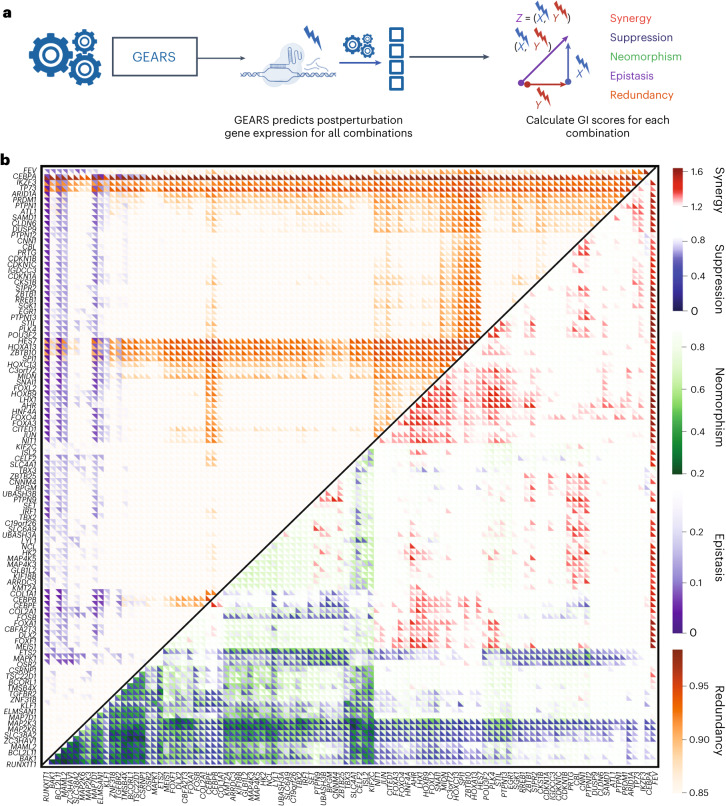
Understanding cellular responses to genetic perturbation is central to numerous biomedical applications, from identifying genetic interactions involved in cancer to developing methods for regenerative medicine. However, the combinatorial explosion in the number of possible multigene perturbations severely limits experimental interrogation. Here, we present graph-enhanced gene activation and repression simulator (GEARS), a method that integrates deep learning with a knowledge graph of gene–gene relationships to predict transcriptional responses to both single and multigene perturbations using single-cell RNA-sequencing data from perturbational screens. GEARS is able to predict outcomes of perturbing combinations consisting of genes that were never experimentally perturbed. GEARS exhibited 40% higher precision than existing approaches in predicting four distinct genetic interaction subtypes in a combinatorial perturbation screen and identified the strongest interactions twice as well as prior approaches. Overall, GEARS can predict phenotypically distinct effects of multigene perturbations and thus guide the design of perturbational experiments.
Overview
The claims and statistics of this paper haven’t been checked yet.
Free: it reads the open-access text and checks the first 5 claims that cite a source we can check. Create a free account to check every claim.
Integrity signals
Registry
Cites
Statistics
Figures
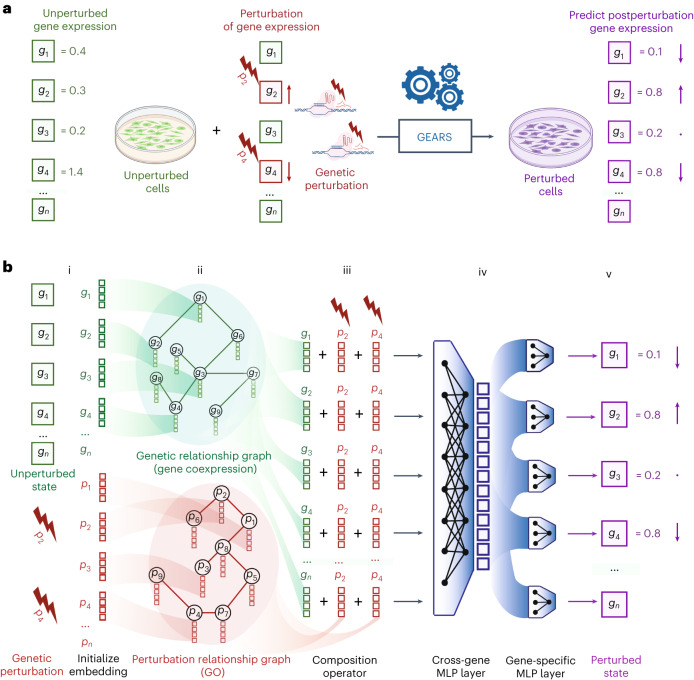
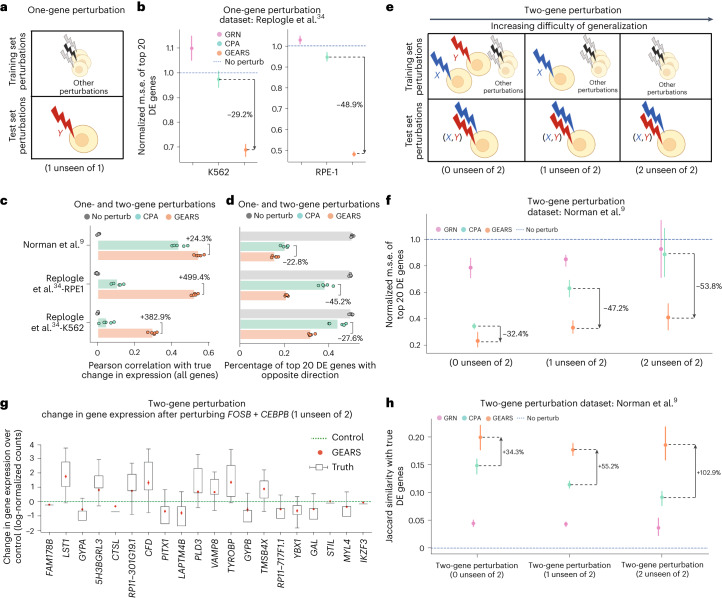
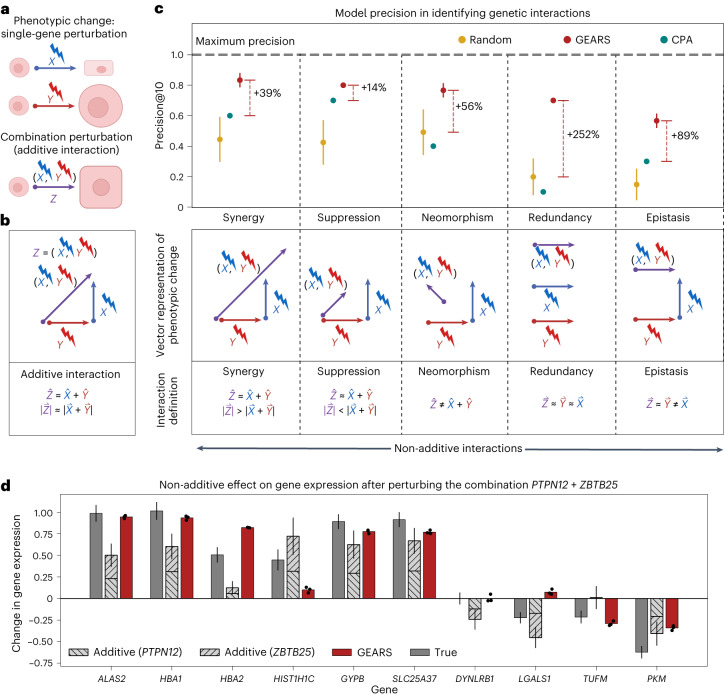
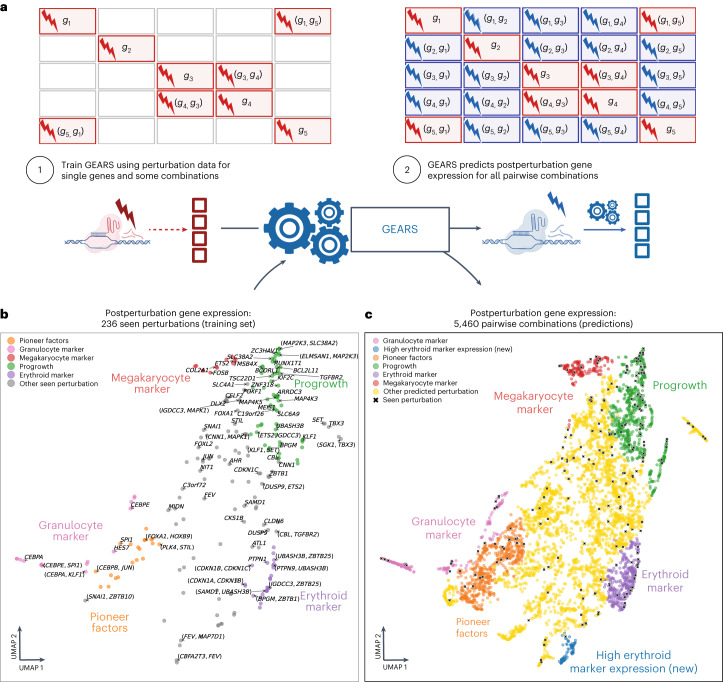
Verification
Claims the paper makes
The claims and statistics of this paper haven’t been checked yet.
Free: it reads the open-access text and checks the first 5 claims that cite a source we can check. Create a free account to check every claim.
Claims other papers make about this one
Each is checked against this paper’s own text: does it say what the citing paper says it does?
The source backs part of the claim, not all of it — or backs it for a different population, condition or comparison.
In the citing paper
“All benchmark datasets were split into train, validation and test sets according to the GEARS publication - corresponding to Perturbation Exclusive split, where new, unseen perturbations (or perturbation combinations) were present in the test set (Supplementary Table 1).”
From Benchmarking foundation cell models for post-perturbation RNA-seq prediction (2025) · cites this paper as [5]
Experimental — accuracy not yet measuredThe source backs part of the claim, not all of it — or backs it for a different population, condition or comparison.
In the citing paper
“Recent advances have incorporated graph-based methods and foundational models that take advantage of prior knowledge of gene expression relationships, resulting in improved generalizability (14–17).”
From A systematic comparison of single-cell perturbation response prediction models (2026) · cites this paper as [14]
Experimental — accuracy not yet measuredThe cited source says what the claim attributes to it.
In the citing paper
“Single-cell foundation models and perturbation predictors support cellular-response forecasting [48-51].”
From RSI-Anything: Unlocking Recursive Self-Improvement with World Models (2026) · cites this paper as [50]
The check wasn’t confident either way, so it gives no verdict — never disputed.
In the citing paper
“This filtering criterion is more permissive than that employed in prior work, retaining more perturbations with smaller effect sizes.11”
From Predicting cellular responses to perturbation across diverse contexts with State (2026) · cites this paper as [11]
Experimental — accuracy not yet measured
Self-check
Percentages, sums and reported differences re-computed from the paper’s own numbers.
The self-check needs the paper’s full text.
Citations
Cites
Szklarczyk, D., Gable, A. L., Lyon, D., Junge, A., Wyder, S., Huerta-Cepas, J., Simonovic, M., Doncheva, N. T., Morris, J. H., Bork, P., et al. (2019) · Nucleic Acids Research · doi:10.1093/nar/gky1131 · Cited by 17,749 · cited 1×
“GEARS functionalizes this graph-based inductive bias using a graph neural network (GNN) architecture 33 .”
KEGG for linking genomes to life and the environment
Kanehisa, M., Araki, M., Goto, S., Hattori, M., Hirakawa, M., Itoh, M., Katayama, T., Kawashima, S., Okuda, S., Tokimatsu, T., et al. (2007) · Nucleic Acids Research · doi:10.1093/nar/gkm882 · Cited by 6,782
Hallmarks of aging: An expanding universe
López-Otín, C., Blasco, M. A., Partridge, L., Serrano, M., & Kroemer, G. (2023) · Cell · doi:10.1016/j.cell.2022.11.001 · Cited by 6,549
Scenic: single-cell regulatory network inference and clustering.
Aibar, S., González-Blas, C. B., Moerman, T., Huynh-Thu, V. A., Imrichova, H., Hulselmans, G., Rambow, F., Marine, J.-C., Geurts, P., Aerts, J., et al. (2017) · Nature Methods · doi:10.1038/nmeth.4463 · Cited by 6,520 · cited 2×
“GEARS functionalizes this graph-based inductive bias using a graph neural network (GNN) architecture 33 .”
InfluentialTisagenlecleucel in children and young adults with B-cell lymphoblastic leukemia
Maude, S. L., Laetsch, T. W., Buechner, J., Rives, S., Boyer, M., Bittencourt, H., Bader, P., Verneris, M. R., Stefanski, H. E., Myers, G. D., et al. (2018) · New England Journal of Medicine · doi:10.1056/nejmoa1709866 · Cited by 5,735 · cited 2×
“Moreover, the precision–recall curves for all observed https://doi.org/10.1038/s41587-023-01905-6 genetic interaction subtypes exhibited a higher area under the curve than other methods (Supplementary Fig.”
InfluentialThe Reactome pathway Knowledgebase
Fabregat, A., Sidiropoulos, K., Garapati, P., Gillespie, M., Hausmann, K., Haw, R., Jassal, B., Jupe, S., Korninger, F., McKay, S., et al. (2016) · Nucleic Acids Research · doi:10.1093/nar/gkv1351 · Cited by 5,605
The Gene Ontology (GO) database and informatics resource
Gene Ontology Consortium (2004) · Nucleic Acids Research · doi:10.1093/nar/gkh036 · Cited by 4,579
Systems biology: a brief overview
Kitano, H. (2002) · Science · doi:10.1126/science.1069492 · Cited by 4,265
Using Bayesian Networks to Analyze Expression Data
Friedman, N., Linial, M., Nachman, I., & Pe'er, D. (2000) · Journal of Computational Biology · doi:10.1089/106652700750050961 · Cited by 3,266 · cited 1×
“GEARS functionalizes this graph-based inductive bias using a graph neural network (GNN) architecture 33 .”
The Reactome Pathway Knowledgebase
Fabregat, A., Jupe, S., Matthews, L., Sidiropoulos, K., Gillespie, M., Garapati, P., Haw, R., Jassal, B., Korninger, F., May, B., et al. (2018) · Nucleic Acids Research · doi:10.1093/nar/gkx1132 · Cited by 2,855 · cited 1×
“GEARS functionalizes this graph-based inductive bias using a graph neural network (GNN) architecture 33 .”
Research works printed but not linked: 3
- Wang, Y., Solus, L., Yang, K. & Uhler, C. Permutation-based causal inference algorithms with interventions. In Proc. 31st International Conference on Neural Information Processing Systems (Ed. von Luxburg, U. & Guyon, I.) 5824–5833 (Association for Computing Machinery, 2017).
- Hamilton, W., Ying, Z. & Leskovec, J. Inductive representation learning on large graphs. In Proc. 31st International Conference on Neural Information Processing Systems (Ed. von Luxburg, U. & Guyon, I.) 1025–1035 (Association for Computing Machinery, 2017).
- Kendall, A. & Gal, Y. What uncertainties do we need in Bayesian deep learning for computer vision? In Proc. 31st International Conference on Neural Information Processing Systems (Ed. von Luxburg, U. & Guyon, I.) 5580–5590 (Association for Computing Machinery, 2017).
Cited by
Items 201–300 of 368
Knowledge graph-aided Bayesian active learning for top-K genetic interaction discovery
Soper, B., Lisicki, M., Silva, M. S., Pico, J. E. C., Zhu, H., Sundaram, S., Ray, P., & Drocco, J. (2025) · Scientific Reports · doi:10.1038/s41598-025-13972-7 · Cited by 3
scYeast: a biological-knowledge-guided foundation model on yeast single-cell transcriptomics
Fan, X., Liao, W., Xiao, L., Yan, X., & Lu, H. (2026) · Synthetic and Systems Biotechnology · doi:10.1016/j.synbio.2026.05.014 · Cited by 1
“Since scYeast has already integrated prior knowledge such as gene co-expression and transcriptional regulatory relationships during its pre-training, we adapted the GEARS [32] framework by using scYeast as the base model for predicting gene perturbation responses (Methods) (Fig.”
Luo, Y., Liu, L., Fu, Y., Deng, Y. X., & Tang, L. (2025) · Journal of Biomedical Informatics · doi:10.1016/j.jbi.2025.104915 · Cited by 1
Identifying an optimal perturbation to induce a desired cell state by generative deep learning
Han, Y.-H., Kim, H., Lee, C., & Cho, K. (2025) · Cell Systems · doi:10.1016/j.cels.2025.101405 · Cited by 2
Integrated approaches for discovery and functional annotation of proteins of unknown function
Moitra, T., & Larrouy-Maumus, G. J. (2025) · Trends in Biochemical Sciences · doi:10.1016/j.tibs.2025.11.001 · Cited by 4
Knowledge-enhanced AI models for domain-specific application: a survey
Li, X.-Y., Wang, Y., Liang, J., Wang, X., Zhou, P., Zhao, Q., Zhang, Y., & Song, Q. (2026) · Science China Information Sciences · doi:10.1007/s11432-025-4635-0 · Cited by 1
“In light of the combinatorial explosion of potential multi-gene combinations, GEARS [269] introduced a graph-enhanced gene activation and repression simulator, which integrated deep learning with a knowledge graph of gene-gene relationships to model the effects of genetic perturbations.”
Dubuc, A., Renne, T., Huguet, G., Jacquemont, S., & Nowakowski, T. J. (2026) · Cell Genomics · doi:10.1016/j.xgen.2026.101192 · Cited by 1
“For example, graph-enhanced gene activation and repression simulator (GEARS) 85 has demonstrated relatively good performance in predicting transcriptome-wide effects of gene-pair-disrupting mutations (the Pearson correlation between the gene expression predicted by the model and observed experimentally was r = 0.55).”
InfluentialVirtual cell: Current perspectives and future prospects
Li, J., Zhang, H., Zhang, W., Li, N., Zhao, F., & Shen, G. (2026) · Journal of International Medical Research · doi:10.1177/03000605261425080 · Cited by 2
“40 Detailed comparisons of these strategies are summarized in Table 1.”
Mesoscale maladaptation in disease organoids
Okamoto, M., & Takebe, T. (2026) · Disease Models & Mechanisms · doi:10.1242/dmm.052951 · Cited by 2
“Predictive tools for combinatorial perturbations may be useful, but they should be treated as hypothesis generating unless validated by direct perturbation experiments (Bai et al., 2024; Maramraju et al., 2024; Roohani et al., 2024).”
Ding, W., Luo, Z., & Xiong, Y. (2026) · Biology · doi:10.3390/biology15141097 · Cited by 1
Faisal, S., Sammad, A., Ejaz, M. R., & Wang, Z. (2026) · Journal of Genetic Engineering and Biotechnology · doi:10.1016/j.jgeb.2026.100777 · Cited by 1
Yong, Q., Chen, C., Zhang, X., Sun, K., He, Y., Pan, R., Meng, Y., Wang, Q., Chai, D., Shao, D., et al. (2026) · International Journal of Pharmaceutics · doi:10.1016/j.ijpharm.2026.127339 · Cited by 2
Multi‐omics–driven precision medicine
Li, H., Zhao, Z., Zhang, Y., Ma, Y., Hu, G., Zeng, M., Yang, Z., Zhao, Z., Zhou, X., Hu, W., et al. (2026) · iMeta · doi:10.1002/imt2.70165 · Cited by 2
Nouri, N., Gaglia, G., Mattoo, H., de Rinaldis, E., & Savova, V. (2023) · bioRxiv (Cold Spring Harbor Laboratory) · doi:10.1101/2023.09.11.556872 · Cited by 1
“Deep learning architectures have been developed for predicting transcriptional responses to single-gene perturbations (Lotfollahi, 2019; Roohani, 2023).”
Integrating knowledge, omics and AI to develop patient-specific virtual avatarsPreprint
Bekkar, A., Santuari, L., Xénarios, I., & Arpat, A. B. (2024) · bioRxiv (Cold Spring Harbor Laboratory) · doi:10.1101/2024.11.07.622508 · Cited by 1
Scouter: Predicting Transcriptional Responses to Genetic Perturbations with LLM embeddingsPreprint
Zhu, O., & Li, J. (2024) · bioRxiv (Cold Spring Harbor Laboratory) · doi:10.1101/2024.12.06.627290 · Cited by 1
Cao, Z., Guo, T., Cheng, L., Zhang, F., Lü, P., Gu, C., Guo, F., & Gao, G. (2025) · bioRxiv (Cold Spring Harbor Laboratory) · doi:10.1101/2025.11.20.689377 · Cited by 2
Li, B., Liu, Z., Wang, Z., Xu, Z., Li, Y., Sha, C., & Li, X. (2026) · bioRxiv (Cold Spring Harbor Laboratory) · doi:10.64898/2026.02.17.704943 · Cited by 2
“This task is conducted in an RNA-only fine-tuning setting, where CLM-X learns transferable perturbation responses by regressing the post-perturbation expression profile conditioned on the perturbation; we compare against GEARS [39] and scGPT [22] under their recommended settings.”
InfluentialpertTF: context-aware AI modeling for genome-scale and cross-system perturbation predictionPreprint
Su, Y., Liu, D., Menon, V. K., Song, B., Boccara, S., Zhang, N., Zhao, H., Zhao, J. H., Wang, L., Hu, N., et al. (2026) · bioRxiv (Cold Spring Harbor Laboratory) · doi:10.64898/2026.03.12.711379 · Cited by 3
“A variety of computational strategies have been explored to predict single-cell transcriptomic responses to perturbation, each with distinct strengths and limitations 8–16 .”
Predicting Unseen Gene Perturbation Response Using Graph Neural Networks with Biological PriorsPreprint
Dip, S. A., & Zhang, L. (2026) · bioRxiv (Cold Spring Harbor Laboratory) · doi:10.64898/2026.03.23.713780 · Cited by 1
“Other methods incorporate biological networks, including GEARS [17], while diffusion-based frameworks such as PerturbDiff model probabilistic perturbational dynamics [18].”
MVCBench: A Multimodal Benchmark for Drug-induced Virtual Cell PhenotypesPreprint
Li, B., Wang, Q., Wang, S., Zhang, B., Peng, Y., Zeng, P., Liu, C., Li, M., Tang, Z., Yao, X., et al. (2026) · bioRxiv (Cold Spring Harbor Laboratory) · doi:10.64898/2026.04.22.720110 · Cited by 4
PerturbPlan: An analytical framework for designing Perturb-seq experimentsPreprint
Niu, Z., He, Y., Galante, J., Gschwind, A. R., Ray, J., Steinmetz, L. M., Engreitz, J., & Katsevich, E. (2026) · bioRxiv (Cold Spring Harbor Laboratory) · doi:10.64898/2026.05.22.727199 · Cited by 1
“Such efforts have been undertaken in the context of both enhancer-targeting 13,14 and gene-targeting perturbations, 15–18 and are central to the recent push to use AI to build the virtual cell.”
CellOS: Learning a World Model of Cellular State through Joint Embedding PredictionPreprint
Zhou, Q., Le, Y., Qi, X., Lu, H., Chang, S., Wu, Y., Wang, H. Z., Ran, R., & Li, X. F. (2026) · bioRxiv (Cold Spring Harbor Laboratory) · doi:10.64898/2026.06.18.733163 · Cited by 2
“GEARS combines gene-gene knowledge graphs with expression to predict transcriptional outcomes of unseen perturbations [35]. contrastiveVI separates salient variation from background variation in single-cell data [36].”
Unbalanced Perturbation Dynamics For Cell Fate DesignPreprint
Peng, Q., Wang, Y., Li, J., Wang, X., Xiao, Y., & Zhou, P. (2026) · bioRxiv (Cold Spring Harbor Laboratory) · doi:10.64898/2026.06.30.735555 · Cited by 1
“…included representative perturbation-prediction baselines from different modeling families: the flow-matching model CellFlow [23], the single-cell foundation model scGPT [26], the graph-232 based perturbation predictor GEARS [18], as well as perturbation-mean and zero-change empirical baselines.”
CauTrigger: deciphering biological system state transitions by hierarchical causal decomposition
Zhang, C., Cai, D., Aihara, K., & Chen, L. (2026) · Nature Methods · doi:10.1038/s41592-026-03274-9
Tiwari, K., Mahajan, G., Bellad, R., Dhruw, N. K., & Jha, A. (2026) · doi:10.64898/2026.10.16.759604
“We have included two reference models: GEARS [12], a graph neural network approach combining a gene-gene co-expression graph with a prior knowledge graph (KP only); and scLAMBDA [19], a variational autoencoder framework that leverages LLM-derived gene embeddings to disentangle basal cell states…”
An immune world model for multiscale forecasting and therapeutic hypothesis generation
Cui, T., Wang, X., Li, Z., Ding, J., You, L., Xu, Y., Xu, W., Wu, F., Ying, K., Ouyang, W., et al. (2026) · arXiv · doi:10.48550/arxiv.2609.14709
Predicting the effects of multigene perturbations
Ertl, H. (2023) · Nature Reviews Genetics · doi:10.1038/s41576-023-00659-w
Modeling interpretable correspondence between cell state and perturbation response with CellCapPreprint
Xu, Y., Fleming, S., Tegtmeyer, M., McCarroll, S. A., & Babadi, M. (2024) · bioRxiv (Cold Spring Harbor Laboratory) · doi:10.1101/2024.03.14.585078
“Both Norman et al. and Roohani et al. classified this group as granulocytes [11, 21].”
BackgroundMethodResultInfluentialThe decomposition of perturbation modeling
Peidli, S. (2024) · Nature Computational Science · doi:10.1038/s43588-024-00706-4
Targeting Osteosarcoma heterogeneity to improve therapeutic responsePreprint
Melano, B., Dinh, T., Zirak, B., Woo, B. J., Choi, M. H., Karimzadeh, M., Goodarzi, H., & Sweet-Cordero, A. (2025) · bioRxiv (Cold Spring Harbor Laboratory) · doi:10.1101/2025.01.02.631118
“49,50 By integrating these tools into our research pipeline, we can systematically explore the combinatorial landscape, effectively narrowing down the options to those most likely to induce a reprogrammed, sensitive state in osteosarcoma cells.”
Causal models and prediction in cell line perturbation experiments
Long, J. P., Yang, Y., Shimizu, S., Pham, T., & Do, K.-A. (2025) · BMC Bioinformatics · doi:10.1186/s12859-024-06027-7 · Cited by 1
Improving Genetic Perturbation Response Prediction with an Enhanced Biological Knowledge Graph
Li, Y., Chen, R., Tan, Y., Zhong, X. Y., Li, B., & Yin, Z. (2024) · IEEE International Conference on Bioinformatics and Biomedicine (BIBM) · doi:10.1109/bibm62325.2024.10822049
“In contrast, some other methods [3], [18] explicitly model the perturbation effects of the perturbed gene on other genes while directly minimizing the MSE.”
InfluentialLi, Y., Zeng, M., Zhu, J., Liu, L., Wang, F., Huang, L.-K., Yang, F., Li, M., & Yao, J. (2025) · bioRxiv (Cold Spring Harbor Laboratory) · doi:10.1101/2025.02.02.635055
A review on single-cell perturbation data analysis
Fu, Z., Yang, M., & Hou, L. (2025) · Scientia Sinica Mathematica · doi:10.1360/ssm-2024-0315
Primer on machine learning applications in brain immunology
Binder, N., Khavaran, A., & Sankowski, R. (2025) · Frontiers in Bioinformatics · doi:10.3389/fbinf.2025.1554010 · Cited by 1
“For example, machine learning tools can be used to enhance dimensionality reduction and integration of large datasets, but also for more sophisticated tasks, such as predictive modeling of gene perturbations (Xu et al., 2021; Lotfollahi et al., 2022; Roohani et al., 2024).”
Zhao, W., Solaguren-Beascoa, A., Neilson, G., Reynolds, R. H., Muhammed, L., Laaniste, L., & Cakiroglu, S. A. (2025) · bioRxiv (Cold Spring Harbor Laboratory) · doi:10.1101/2025.04.17.649395
“Simultaneously, advanced deep-learning techniques have been applied in the prediction of perturbed single-cell transcriptome data (Roohani et al., 2023; Hao et al., 2024).”
EVA: a Foundation Model Advancing Translational Drug Development in Immuno-InflammationPreprint
Fouché, A., Bruley, A., Corney, M., Marschall, P., Bouget, V., & Duquesne, J. (2025) · bioRxiv (Cold Spring Harbor Laboratory) · doi:10.1101/2025.05.02.651839
“In recent years, several approaches have explored the in silico prediction of drug-induced transcriptomic changes 13,27 ; however, these models often struggle to outperform basic baselines, such as naive predictors that simply estimate the mean expression change across samples 20 .”
MAGELLAN: Automated Generation of Interpretable Computational Models for Biological ReasoningPreprint
Clarke, M. A., Barker, C. G., Sun, Y., Roumeliotis, T. I., Choudhary, J. S., & Fisher, J. (2025) · bioRxiv (Cold Spring Harbor Laboratory) · doi:10.1101/2025.05.16.653408
“This contrasts our approach starkly with more data-hungry machine learning models, that often require multi-omics and single cell resolution 49–53 for good predictive accuracy, and which do not provide a mechanistic explanation for their predictions.”
Sodgo: Sub-Ontology Driven Disentangled Gene Ontology Embedding ModelPreprint
Fu, Y., Liu, L., Tang, M., Luo, Y., & Deng, Y. X. (2025) · SSRN Electronic Journal · doi:10.2139/ssrn.5272610
Predicting Multigene Transcriptional Outcomes Based on Dual-Stream Mamba Neural Network
Li, Z., & Liu, L. (2025) · Frontiers in Computing and Intelligent Systems · doi:10.54097/bzn8kc09
Liu, Y., Zou, Q., Su, R., & Wei, L. (2026) · Nature Communications · doi:10.1101/2025.08.04.668374 · Cited by 1
Differences between in vivo and ex vivo models drive divergent perturbation outcomesPreprint
Geetha, A. R. S. J., del Valle, C., Esser‐Skala, W., Lara‐Astiaso, D., & Fortelny, N. (2025) · bioRxiv (Cold Spring Harbor Laboratory) · doi:10.1101/2025.09.02.673692
Generative genomics accurately predicts future experimental resultsPreprint
Koytiger, G., Walsh, A. M., Marar, V., Johnson, K. A., Highsmith, M. R., Abbas, A., Stirn, A., Brumbaugh, A. R., David, A., Hui, D., et al. (2025) · bioRxiv (Cold Spring Harbor Laboratory) · doi:10.1101/2025.09.08.674753 · Cited by 1
“Despite being a valuable resource for AI model development 20,34,35 , Perturb-seq data presents unique challenges, including technical artifacts and non-specific responses 20,36–39 , which require focused resolution for this data type that goes beyond the scope of our initial study.”
Romero-Tapiador, S., Rodríguez-Mier, P., Garrido‐Rodríguez, M., Tolosana, R., Morales, A., & Sáez-Rodríguez, J. (2025) · bioRxiv (Cold Spring Harbor Laboratory) · doi:10.1101/2025.09.08.674873
Gu, Y., Hart, T., Novelo, L. G. L., & Shen, J. P. (2026) · PLoS Computational Biology · doi:10.1371/journal.pcbi.1013510 · Cited by 1
Advances in single-cell perturbation modeling
Qi, X., Zhao, L., Chen, R., & Zhao, Y. C. (2025) · Chinese Science Bulletin (Chinese Version) · doi:10.1360/csb-2025-0682
DynPerturb:Dynamic Perturbation Modeling for Spatiotemporal Single-Cell SystemsPreprint
Qin, H., Zhang, Y., Guo, Z., Hu, L., Li, Q., Cao, L., Xia, T., Deng, Z., Zhang, Y., Li, Y. P., et al. (2025) · bioRxiv (Cold Spring Harbor Laboratory) · doi:10.1101/2025.09.15.676236
Liu, Y., Hao, Z., Xu, M., Wang, D., Hu, W., Zhang, L., Yang, Y., Pian, C., & Chen, Y. (2025) · bioRxiv (Cold Spring Harbor Laboratory) · doi:10.1101/2025.09.30.679477
“GEARS [10] : A deep learning model enhanced by prior biological knowledge.”
InfluentialGradient-aware modeling advances AI-driven prediction of genetic perturbation effectsPreprint
Zhu, D., & Jerby‐Arnon, L. (2025) · bioRxiv (Cold Spring Harbor Laboratory) · doi:10.1101/2025.10.03.680360 · Cited by 2
“More recently, methods such as GEARS (gene activation and repression simulator) 11 , scGPT (single-cell generative pre-trained transformer) 12 , and GenePert (gene perturbation model) 13 have been developed, with a greater emphasis on unseen genetic perturbations.”
InfluentialSugimoto, H., Tsuyuzaki, K., Zou, Z., Oki, S., Ohta, T., & Kawakami, E. (2025) · bioRxiv (Cold Spring Harbor Laboratory) · doi:10.1101/2025.10.05.680506
“Of note, in benchmarks on the same human-cell datasets (6), the linear model using scFoundation-derived embeddings have been reported to outperform the mean baseline and machine learning models including scGPT (46), scBERT (47), Geneformer (48), and GEARS (49).”
Interpolating perturbations across contexts
Chen, H., & Theodoris, C. V. (2025) · Nature Computational Science · doi:10.1038/s43588-025-00830-9
Finetuning Foundation Models for Temporal Clinical Transcriptomics Data
Mathur, S., Kagan, A., Passban, P., Mattoo, H., Hasanaj, E., & Bar‐Joseph, Z. (2026) · Bioinformatics · doi:10.1093/bioinformatics/btag640
“…have been recently applied to study a number of issues related to the analysis of gene expression data, including batch correction (Yu et al. 2023), differential expression (Feng et al. 2024), prediction of regulatory networks (Shu et al. 2021), and perturbation prediction (Roohani et al. 2024).”
Chen, J., Schmidt, F., & Henao, R. (2026) · PLoS Computational Biology · doi:10.1371/journal.pcbi.1013701 · Cited by 1
“In parallel, the Bidirectional Encoder Representations from Trans-formers (BERT) architecture [17] has been adapted to single-cell transcriptomics.”
Genetic Perturbation Modeling for Human Cell Therapy With BRNET
Cai, L., Yu, J., Lin, Q., Liu, L., Li, X., & Wong, K. (2025) · IEEE Journal of Biomedical and Health Informatics · doi:10.1109/jbhi.2025.3629554 · Cited by 1
“High-throughput methods [20], [21], [22] remain critical for predicting transcriptional outcomes and facilitating targeted experimentation.”
Genetic Convergence Analysis of CRISPR Perturbations Deciphers Gene Functional SimilarityPreprint
Zhang, T., Shang, E., & Roeder, K. (2025) · bioRxiv (Cold Spring Harbor Laboratory) · doi:10.1101/2025.11.13.688060 · Cited by 3
“Generative models have been developed to predict the outcome of perturbation experiments that have not been performed [52, 53, 54].”
CRISPR screen-based mammalian cell engineering for complex biotherapeutics
Shin, S. W., Lee, G. M., & Lee, J. S. (2025) · Trends in biotechnology · doi:10.1016/j.tibtech.2025.11.010
Xue, B., Jiang, R., Xue, Y., Zhang, H., Liu, S., & Gao, Y. Q. (2025) · bioRxiv (Cold Spring Harbor Laboratory) · doi:10.64898/2025.12.03.692218
Drug Response Prediction Provides a Biologically Relevant Benchmark for Perturbation Response ModelsPreprint
Brouwer, N., Damyanov, M., Argelo, J., Vis, D. J., Reinders, M. J. T., & Wessels, L. F. A. (2025) · bioRxiv (Cold Spring Harbor Laboratory) · doi:10.64898/2025.12.09.693213 · Cited by 1
“Recently proposed perturbation response models (PRMs), such as CPA (Lotfollahi et al. [2023]), GEARS (Roohani et al. [2023]), and scFoundation (Hao et al. [2024]), can predict post-treatment profiles from pre-treatment data, enabling modeling of cellular responses without additional experiments.”
Harnessing LLMs to decode genetic perturbations
Gao, Z., & Jiang, R. (2025) · Nature Computational Science · doi:10.1038/s43588-025-00910-w
Benchmarking Chemical, Genetic, and Cell Line Encodings for Cancer Perturbation Response PredictionPreprint
Zinchenko, V., Schlicker, A., Kurilov, R., Pouplin, A., Villalba, S., & Horlacher, M. (2025) · bioRxiv (Cold Spring Harbor Laboratory) · doi:10.64898/2025.12.15.694331 · Cited by 1
“Despite their successful use in previous work (18, 20), ESM and GO-term encoders produced a notably lower performance than most alternative encoding methods, with an mPC of 0 .”
InfluentialStrope, B., Varghese, D., Bowie, W., Wang, S., & Zhu, Q. (2025) · bioRxiv (Cold Spring Harbor Laboratory) · doi:10.64898/2025.12.22.696102
“Although there are non-foundation model-based perturbation tools, they are either focused on single-cell RNAseq (scGen 33 , GEARS 34 ), limited to spatial proteomics (Morpheus 35 ), or in spatial transcriptomics but not multi-scale, niche-aware, and has unclear relevance to patient-level perturbation responses (Celcom…”
Generalizable and Robust Phenotypic Drug Discovery
Hong, X., Zheng, J., Xie, X., Jia, Y., Ni, Y., & Lan, Y. (2026) · Lecture notes in computer science · doi:10.1007/978-981-95-5637-3_5
Predicting single-cell responses to novel genetic perturbations with optimal transportPreprint
Do, C., & Lähdesmäki, H. (2026) · bioRxiv (Cold Spring Harbor Laboratory) · doi:10.64898/2026.01.08.698172
“We benchmark the performance of our model against three existing methods for perturbation response prediction: GEARS [1], scLAMBDA [8], and scGPT [14].”
InfluentialContext-Aware Protein Representations Using Protein Language Models and Optimal TransportPreprint
Patel, S. S., & Naderializadeh, N. (2026) · bioRxiv (Cold Spring Harbor Laboratory) · doi:10.64898/2026.01.24.701517
“Table 2 compares the performance of COPTER across five different random seeds to that of genetic perturbation baseline models, including GEARS [49], a deep-learning based model called CPA [32], and a baseline which assumes gene expression remains unchanged after perturbation (no-perturb).”
Li, X., Zhan, B., Zhang, J., & Yan, S. (2025) · IEEE International Conference on Bioinformatics and Biomedicine (BIBM) · doi:10.1109/bibm66473.2025.11356521
“This principle underlies several state-of-the-art models, including GEARS [17] and scGPT [18].”
Forecasting cell state futures from static snapshotsPreprint
Luo, E., Gao, H., Bian, H., Peng, S., Li, C., Li, C., Hao, M., Chen, M., She, Y., Wei, L., et al. (2026) · bioRxiv (Cold Spring Harbor Laboratory) · doi:10.64898/2026.02.08.704720
Prior-Guided Functional Prompt Learning for Robust Gene Regulatory Network InferencePreprint
Cui, W., Fu, Z., Hou, R., Zhang, J., Cai, J., Miao, X., Zhang, J., Chen, Y., Tao, T., & Lu, P. (2026) · SSRN Electronic Journal · doi:10.2139/ssrn.6219267
Deep learning for psychiatric genomics: from tools to applications
Liu, J., Xu, S., Sun, D., Wang, C., & Zhang, J. (2026) · Current Opinion in Genetics & Development · doi:10.1016/j.gde.2026.102442 · Cited by 1
VitaMol: Lightweight molecular modality expansion in discrete space for multi-task transfer learning
Liu, Y., Gao, Z., Wu, L., Zhou, J., Xu, T., Tan, C., Huang, Y., Chi, C., Yu, C., & Li, S. Z. (2026) · Pattern Recognition · doi:10.1016/j.patcog.2026.113319
Predicting how perturbations reshape cellular trajectories with PerturbGenPreprint
Ly, K. C. H., Feriz, A. M., Isobe, T., Vahidi, A., Vaghari, D., Rostron, A., Londoño, M. Q., Mende, N., Vijayabaskar, M. S., Moullet, M., et al. (2026) · bioRxiv (Cold Spring Harbor Laboratory) · doi:10.64898/2026.03.04.709254 · Cited by 3
Monocytes are biological sensors of aging and frailty in humansPreprint
Min, C., Ezenwanne, C., Dance, Y. W., Macaluso, N. C., Thompson, L., Nidadavolu, L. S., Katuri, A., Szczesny, C., Langdon, J. M., Pearce, E. J., et al. (2026) · bioRxiv (Cold Spring Harbor Laboratory) · doi:10.64898/2026.03.10.710601 · Cited by 3
A graph-based learning approach to predict the effects of gene perturbations on molecular phenotypesPreprint
Jin, Y., Sverchkov, Y., Sushkova, A., Ohtake, M., Emfinger, C. H., & Craven, M. (2026) · bioRxiv (Cold Spring Harbor Laboratory) · doi:10.64898/2026.03.20.712202
“GEARS (Roohani et al., 2024) incorporates a Gene Ontology (GO) graph and a gene coexpression graph with deep neural networks to predict the effects of perturbations.”
Fu, X., Yang, C., Cui, C., Geng, A., Sun, Y., Zha, C., Cui, F., Wei, L., Zou, Q., Gao, X.-J., et al. (2026) · Genome Research · doi:10.1101/gr.281523.125
A Deep Learning Framework for Modeling Transcriptional Responses to TF Perturbations
Yu, T., Li, Y., Li, Y., & Li, C. (2025) · International Conference on Big Data and Data Mining (BDDM) · doi:10.1109/bddm68348.2025.11442158
Qoku, A., Stickel, T., AmeriFar, S., Oellerich, T., Wolf, S., & Buettner, F. (2026) · bioRxiv (Cold Spring Harbor Laboratory) · doi:10.64898/2026.03.20.713295
“…is complementary to neural-network-based perturbation models that prioritise prediction of responses to unseen conditions [Lotfollahi et al., 2023a, Roohani et al., 2024, Zhu and Li, 2025]; PACMON instead provides an interpretable generative decomposition of observed perturbation effects with…”
Deconformer: efficient cell-type composition profiling of cfRNA across diverse cell types
Wang, C., Tian, X., Yan, S., Sun, J., 朱素君, Li, J., Shi, C., Yang, T., Qin, Y., Liu, Z., et al. (2026) · Briefings in Bioinformatics · doi:10.1093/bib/bbag544
“Inspired by single-cell perturbation models that leverage biological knowledge under limited-sample challenges [ 17], we developed Deconformer, a DNN framework that embeds gene expression into pathway-level representations and adaptively weights them for panoramic cell-type composition analysis of…”
IMAS resolves perturbation-sensitive regulatory architectures from matched tumour multiomicsPreprint
Deyang, W., Yamashiro, T., & Inubushi, T. (2026) · bioRxiv (Cold Spring Harbor Laboratory) · doi:10.64898/2026.04.09.717444
Modeling Dynamics, Cell Type Specificity, and Perturbations in Gene Regulatory Networks
Shin, J., Halberg, S., Liu, Y., Hazra, S., Lee, E. D.-I., & Roy, S. (2026) · Annual Review of Genomics and Human Genetics · doi:10.1146/annurev-genom-120922-103729
李光鹏, You, Y., Fu, Y., Zhou, W., Tang, F., Kong, J., & Tian, L. (2026) · bioRxiv (Cold Spring Harbor Laboratory) · doi:10.64898/2026.04.20.719773
Are Current AI Virtual Cell Models Useful for Scientific Discovery?Preprint
Bereket, M. D., & Leskovec, J. (2026) · bioRxiv (Cold Spring Harbor Laboratory) · doi:10.64898/2026.04.23.719015 · Cited by 2
Self-citationDhaka, B., Gao, J., & Ideker, T. (2026) · bioRxiv (Cold Spring Harbor Laboratory) · doi:10.64898/2026.04.23.720505 · Cited by 2
“This aim has thus far been addressed by models that incorporate prior information from gene-gene functional interaction graphs 9 , gene-function text embeddings 10 , drug molecular structures 11 , or other biologically informed features 12 .”
DoFormer: Causal Transformer for Gene PerturbationPreprint
Karbalayghareh, A., Paull, E., & Califano, A. (2026) · bioRxiv (Cold Spring Harbor Laboratory) · doi:10.64898/2026.05.02.722054
TxConformal: Controlling False Discoveries in AI-Driven Therapeutic DiscoveryPreprint
Jin, Y., Huang, K., Diamant, N., Buchholz, K. R., Rutherford, S. T., Skelton, N. J., Biancalani, T., Scalia, G., Leskovec, J., & Candès, E. J. (2026) · bioRxiv (Cold Spring Harbor Laboratory) · doi:10.64898/2026.04.27.721076 · Cited by 3
“These models take the list of perturbed genes as input and predict the post-perturbed cellular response, enabling researchers to prioritize combinations for experimental validation 41,42 .”
Self-citationA Multi-modal LLM-Knowledge Fusion Framework for Predicting Single-cell Genetic Perturbation EffectsPreprint
Lu, M., You, N., Zhang, H., Zheng, L., Li, B., Jiang, W., Zhang, Y., Sun, H., & Zhou, Y. (2026) · bioRxiv (Cold Spring Harbor Laboratory) · doi:10.64898/2026.04.24.720560 · Cited by 1
“However, single-cell perturbation experiments are expensive and yield sparse data that cannot cover all gene combinations or drug treatment conditions 12-14 , making the development of high-precision perturbation effect prediction algorithms crucial for overcoming these limitations 15 .”
InfluentialExploring CRISPR/Cas9 Technology for The Modernization of Traditional Chinese Medicine
Shu-Xian, W. A. N. G., Guo, F., & Guang-Qiang, M. A. (2026) · PROGRESS IN BIOCHEMISTRY AND BIOPHYSICS · doi:10.3724/j.pibb.2025.0505
Emerging Paradigms for Innovative Drug Discovery:Targetome and Original Combination Drugs
Yang, H., Zeng, H., Yang, Z., Jiang, J., Li, J., Wang, G., Wang, H., Li, P., & Hao, H. (2026) · 中国科学基金 · doi:10.3724/bnsfc-2026-0002
Kaneko, S., & Urushitani, M. (2026) · bioRxiv (Cold Spring Harbor Laboratory) · doi:10.64898/2026.05.16.716261
“Perturbation-prediction methods (GEARS, Roohani et al. 2024) answer "what happens if gene X is perturbed?" rather than "which gene is structurally upstream?"”
Zhang, J., Schwartz, M. A., Mutaher, M., Olajide, O., Pritykin, Y., Ashenberg, O., Hacohen, N., & Uhler, C. (2026) · bioRxiv (Cold Spring Harbor Laboratory) · doi:10.64898/2026.05.21.726863 · Cited by 1
The development and application of deep learning for stem cell research
Li, Z., Zhang, W., Wu, Y., Ye, Y., Chen, Y., Wu, J., & Chen, D. (2026) · Journal of genetics and genomics/Journal of Genetics and Genomics · doi:10.1016/j.jgg.2026.05.008
Computational blueprints for cell fate programming
Yang, P. (2026) · Stem Cell Reports · doi:10.1016/j.stemcr.2026.102929
“…state from treatment to extrapolate across dose, time, and drug combinations with uncertainty estimates (Lotfollahi et al., 2023); and GEARS integrates prior gene relationships to forecast outcomes of single-and multi-gene edits while identifying nonadditive interactions (Roohani et al., 2024).”
Gigabase-scale deletion scanning of the human genomePreprint
Koeppel, J., Keith, A., Sgrizzi, S. R., Chen, P., Daza, R. M., Quaisar, F., Anastasia, E., Song, Z., Shendure, J., & Pinglay, S. (2026) · bioRxiv (Cold Spring Harbor Laboratory) · doi:10.64898/2026.05.29.728882 · Cited by 2
Discovering what is possible: How synthetic biology illuminates development
Hutchins, N. T., Cao, A., & Li, P. (2026) · Cell Systems · doi:10.1016/j.cels.2026.101619
Immune BioGraphy: A tale of graphical approaches in systems and virtual immunology
Keshari, S., Chakraborty, T., & Das, J. (2026) · Cell Systems · doi:10.1016/j.cels.2026.101618
Re-evaluating the benefit of training scale in cell foundation modelsPreprint
Shakeel, M. H., Shen, M., & Mangiola, S. (2026) · bioRxiv (Cold Spring Harbor Laboratory) · doi:10.64898/2026.06.04.730272
蒋丹凝, An, Z., Zhao, Y., & Lai, L. (2026) · bioRxiv (Cold Spring Harbor Laboratory) · doi:10.64898/2026.06.08.731000 · Cited by 1
“Concurrently, GEARS [17] incorporated biological priors, such as gene-gene co-expression networks and Gene Ontology, to improve generalization to unseen multi-gene perturbations.”
Bhak, Y., Jeon, S., & Bhak, J. (2026) · bioRxiv (Cold Spring Harbor Laboratory) · doi:10.64898/2026.06.08.731002
“…correlation of transcriptomic shifts ( R shift ) verifies that the model captures the true directionality of aging rather than static identity;[44] (iii) the mean of gene variances (ˆ σ 2 ) detects propagation of zero-inflation-associated technical artifacts, interpreted as reduced carryover…”
Charting the computational landscape of single-cell genetic perturbation
Zhang, Y., Huang, J., Li, Y., Liu, T., Ren, L., Huang, J. H., Lin, H., Feng, J., & Zhang, Y. (2026) · Journal of Advanced Research · doi:10.1016/j.jare.2026.06.012 · Cited by 1
Hu, C., Xiao, B., & Chen, C. Y. (2026) · bioRxiv (Cold Spring Harbor Laboratory) · doi:10.64898/2026.06.16.732528
Metadata
- Authors
- Roohani, Y., Huang, K., & Leskovec, J.
- Affiliations
- Stanford University (US)
- Corresponding author
- Leskovec, Jure
- Venue
- Nature Biotechnology
- Published
- 2023-08-17
- Volume
- 42
- Issue
- 6
- Pages
- 927-935
- ISSN
- 0733-222X (ISSN-L)
- 1087-0156
- 1546-1696
- PMC
- PMC11180609
- OpenAlex
- W4385955324
- Semantic Scholar
- 85906593661911c9a076cbb96391b9bb61a996bc
- Cited by
- 355
- References
- 51
- Citations by year
- 2026: 153 · 2025: 118 · 2024: 77 · 2023: 7
- FWCI
- 31.63
- Type
- journal article
- Language
- en
- Open access
- hybrid
- doi.org
- Licence
- cc-by
- creativecommons.org/licenses/by/4.0 (tdm)
- creativecommons.org/licenses/by/4.0 (vor)
- Locations
- Nature Biotechnology (publishedVersion, cc-by)
- PubMed Central (publishedVersion, cc-by)
- PubMed (publishedVersion)
- Funders
- U.S. Department of Health & Human Services | NIH | Center for Information Technology (3U54HG010426-04S1)
- GlaxoSmithKline
- Topics
- Life Sciences › Biochemistry, Genetics and Molecular Biology › Molecular Biology › Gene Regulatory Network Analysis
- Life Sciences › Biochemistry, Genetics and Molecular Biology › Molecular Biology › Single-cell and spatial transcriptomics
- Life Sciences › Biochemistry, Genetics and Molecular Biology › Molecular Biology › Bioinformatics and Genomic Networks
- Keywords
- gene-gene interaction, genetic interactions, knowledge graphs, deep learning, single-cell RNA sequencing, gene activation and repression, gears
- MeSH terms
- Deep Learning, Computer Simulation, Humans, Transcription, Genetic, Sequence Analysis, RNA, Computational Biology, Gene Regulatory Networks, Single-Cell Analysis
About these checks
Registry, retraction, Cites and statistics results are computed, not judged, with one exception: a printed reference that no index lists is read once by a model before it counts as a citation error. Claims are extracted by a model and kept only when their quote appears verbatim in the text; each cited source is then checked, with a model’s help, for whether it says what the claim relies on. Those verdicts can be wrong — read the claim’s quote and the cited source before relying on one.
Statistics and arithmetic are recomputed, not judged.
Confidence bands are shown only for fields calibrated on our annotated test set. None is calibrated yet, so no band is shown.
What counts as a claim ›How we measure confidence ›How we check this ›
Are you an author, or do you see a problem with this page? Request a review
Data sources
Bibliographic data: Semantic Scholar, OpenAlex, Crossref.
Contains information from the Semantic Scholar Academic Graph Datasets, made available under the ODC Attribution License (ODC-BY 1.0).
Semantic Scholar’s data is described in: Kinney, R., et al. (2023). The Semantic Scholar Open Data Platform. arXiv:2301.10140.
