

Precise modulation of transcription factor levels identifies features underlying dosage sensitivity
Open accessPublished version of a preprint
The DOI matches its Crossref record; 80 of the 80 references it cites were found in a registry or an index.
Abstract
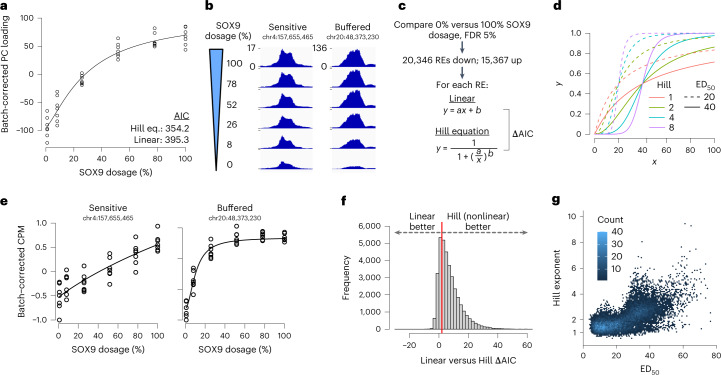
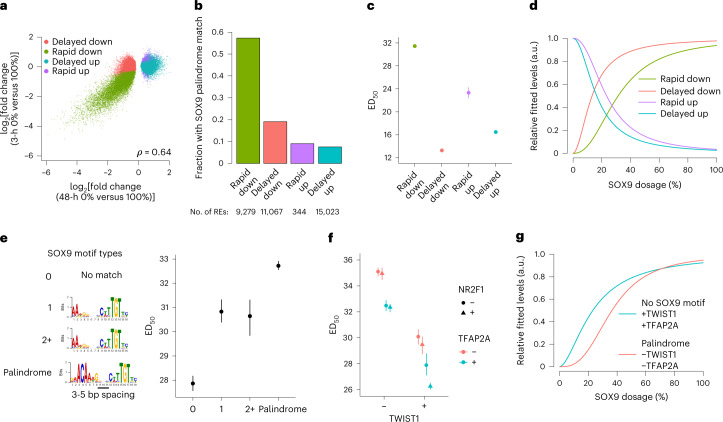
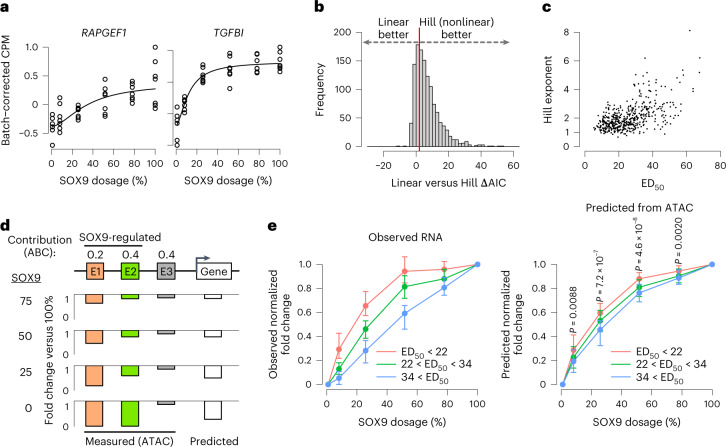
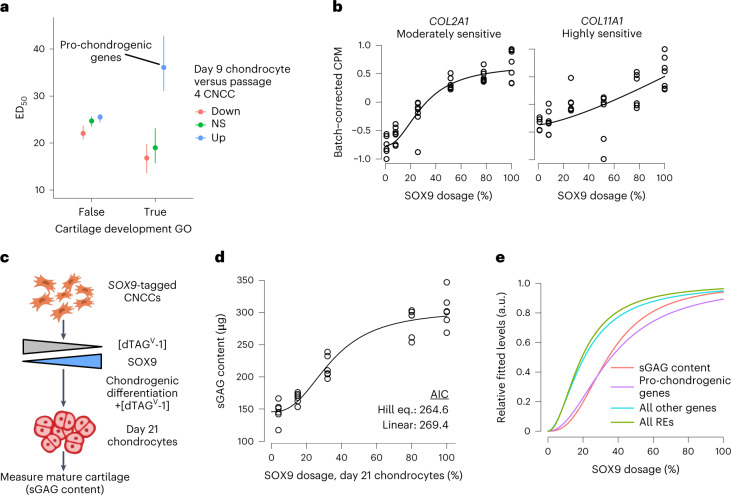
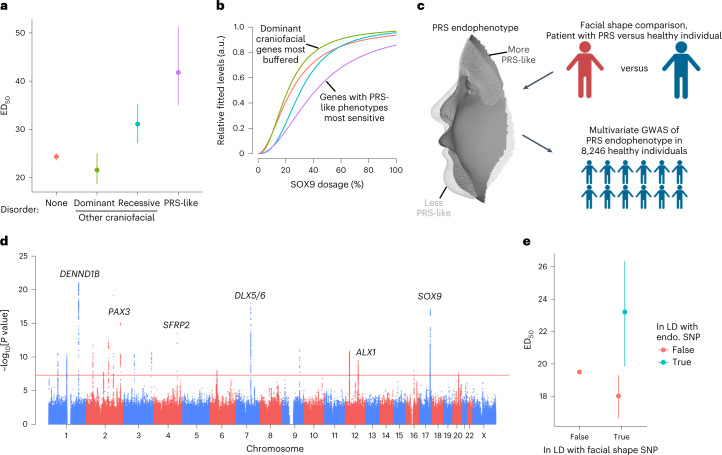
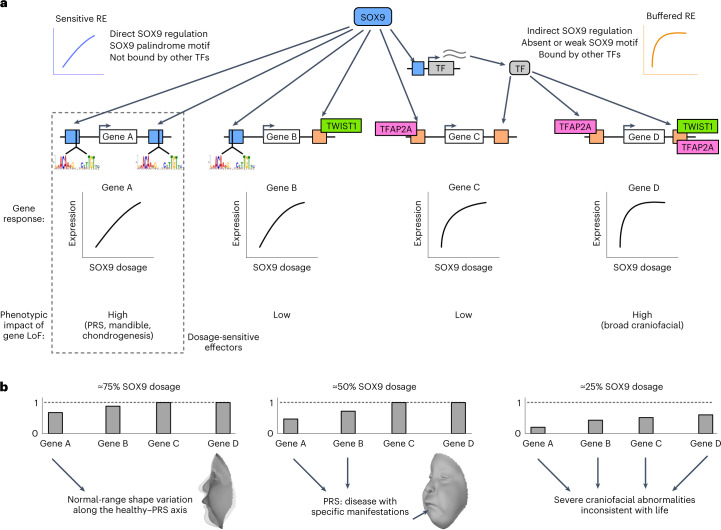
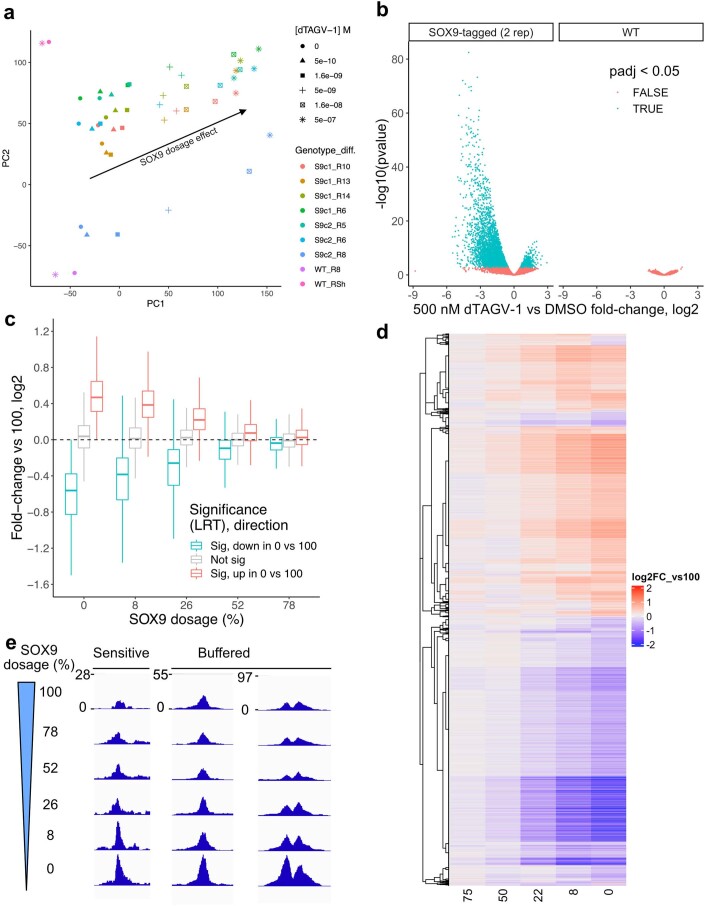
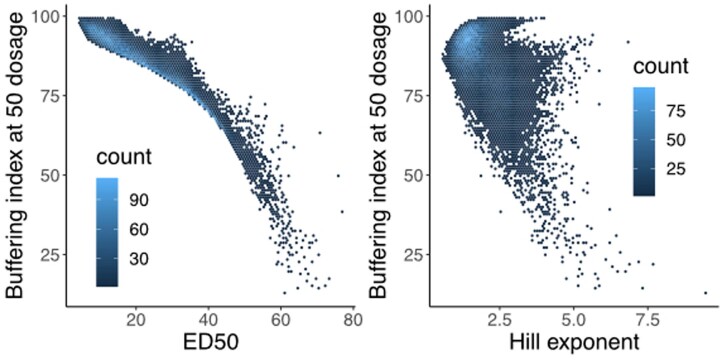
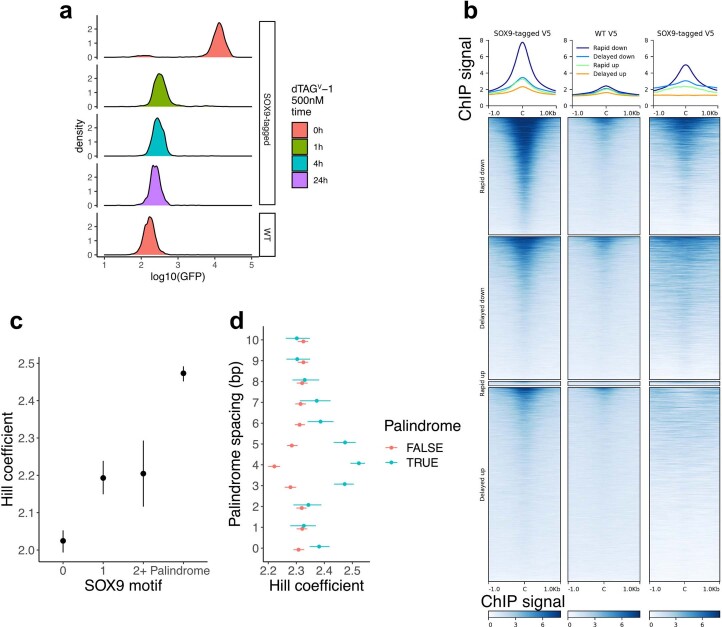
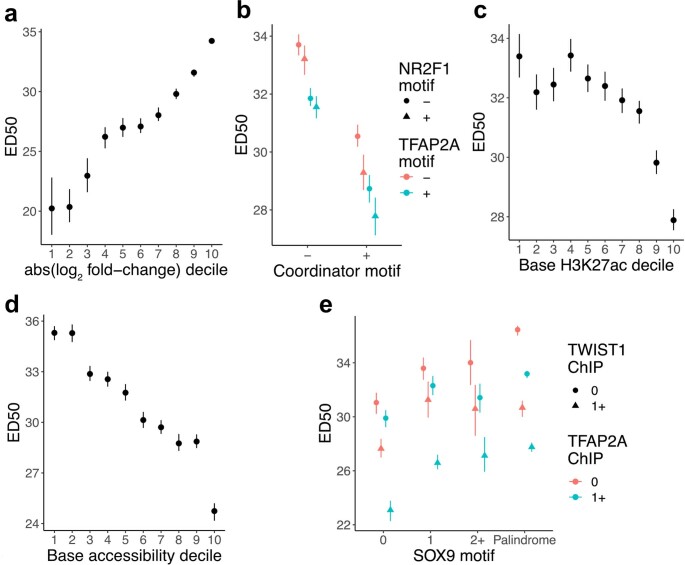
Transcriptional regulation exhibits extensive robustness, but human genetics indicates sensitivity to transcription factor (TF) dosage. Reconciling such observations requires quantitative studies of TF dosage effects at trait-relevant ranges, largely lacking so far. TFs play central roles in both normal-range and disease-associated variation in craniofacial morphology; we therefore developed an approach to precisely modulate TF levels in human facial progenitor cells and applied it to SOX9, a TF associated with craniofacial variation and disease (Pierre Robin sequence (PRS)). Most SOX9-dependent regulatory elements (REs) are buffered against small decreases in SOX9 dosage, but REs directly and primarily regulated by SOX9 show heightened sensitivity to SOX9 dosage; these RE responses partially predict gene expression responses. Sensitive REs and genes preferentially affect functional chondrogenesis and PRS-like craniofacial shape variation. We propose that such REs and genes underlie the sensitivity of specific phenotypes to TF dosage, while buffering of other genes leads to robust, nonlinear dosage-to-phenotype relationships.
Overview
The claims and statistics of this paper haven’t been checked yet.
Free: it reads the open-access text and checks the first 5 claims that cite a source we can check. Create a free account to check every claim.
Integrity signals
Registry
Cites
Statistics
Figures
Verification
Claims the paper makes
The claims and statistics of this paper haven’t been checked yet.
Free: it reads the open-access text and checks the first 5 claims that cite a source we can check. Create a free account to check every claim.
Claims other papers make about this one
Each is checked against this paper’s own text: does it say what the citing paper says it does?
The cited source says what the claim attributes to it.
In the citing paper
“Even modest changes in transcription factor levels can modulate other transcriptional programs”
From Targeting Microglial Transcriptional Reprogramming as a Therapy Strategy for Alzheimer's Disease (2026) · cites this paper as [84]
The check wasn’t confident either way, so it gives no verdict — never disputed.
In the citing paper
“supraoptimal dosing may produce adverse outcomes”
From Targeting Microglial Transcriptional Reprogramming as a Therapy Strategy for Alzheimer's Disease (2026) · cites this paper as [84]
Experimental — accuracy not yet measuredIn the citing paper
“Indeed, Naqvi et al26 found that a subset of Sox9 targets are sensitive at partial dosage depletions, whereas a much larger set of targets are affected only at full dosage depletions.”
From Transcriptome-wide analysis of differential expression in perturbation atlases (2025) · cites this paper as [26]
Self-check
Percentages, sums and reported differences re-computed from the paper’s own numbers.
The self-check needs the paper’s full text.
Citations
Cites
The GTEx Consortium atlas of genetic regulatory effects across human tissues
The GTEx Consortium, Aguet, F., Anand, S., Ardlie, K. G., Gabriel, S., Getz, G. A., Graubert, A., Hadley, K., Handsaker, R. E., Huang, K. H., et al. (2020) · Science · doi:10.1126/science.aaz1776 · Cited by 5,547
METAL: fast and efficient meta-analysis of genomewide association scans
Willer, C. J., Li, Y., & Abecasis, G. R. (2010) · Bioinformatics · doi:10.1093/bioinformatics/btq340 · Cited by 5,205
Systematic Localization of Common Disease-Associated Variation in Regulatory DNA
Maurano, M. T., Humbert, R., Rynes, E., Thurman, R. E., Haugen, E., Wang, H., Reynolds, A. P., Sandstrom, R., Qu, H., Brody, J., et al. (2012) · Science · doi:10.1126/science.1222794 · Cited by 3,716
Online Mendelian Inheritance in Man (OMIM), a knowledgebase of human genes and genetic disorders
Hamosh, A. (2004) · Nucleic Acids Research · doi:10.1093/nar/gki033 · Cited by 3,420
An Expanded View of Complex Traits: From Polygenic to Omnigenic
Boyle, E. A., Li, Y. I., & Pritchard, J. K. (2017) · Cell · doi:10.1016/j.cell.2017.05.038 · Cited by 2,851
Self-citationAn improved ATAC-seq protocol reduces background and enables interrogation of frozen tissues
Corces, M. R., Trevino, A. E., Hamilton, E. G., Greenside, P. G., Sinnott-Armstrong, N. A., Vesuna, S., Satpathy, A. T., Rubin, A. J., Montine, K. S., Wu, B., et al. (2017) · Nature Methods · doi:10.1038/nmeth.4396 · Cited by 2,496
Transcription factors: from enhancer binding to developmental control
Spitz, F., & Furlong, E. E. M. (2012) · Nature Reviews Genetics · doi:10.1038/nrg3207 · Cited by 2,227
TRRUST v2: an expanded reference database of human and mouse transcriptional regulatory interactions
Han, H., Cho, J.-W., Lee, S., Yun, A., Kim, H., Bae, D., Yang, S., Kim, C. Y., Lee, M., Kim, E., et al. (2018) · Nucleic Acids Research · doi:10.1093/nar/gkx1013 · Cited by 1,973
Campomelic dysplasia and autosomal sex reversal caused by mutations in an SRY-related gene
Foster, J. W., Dominguez-Steglich, M. A., Guioli, S., Kwok, C., Weller, P. A., Stevanović, M., Weissenbach, J., Mansour, S., Young, I. D., Goodfellow, P. N., et al. (1994) · Nature · doi:10.1038/372525a0 · Cited by 1,612
The American Soldier: Adjustment During Army Life.
Riley, J. W., Stouffer, S. A., Suchman, E. A., Devinney, L. C., Star, S. A., & Williams, R. M. (1949) · American Sociological Review · doi:10.2307/2087216 · Cited by 1,239
Cited by
Deciphering the multi-scale, quantitative cis-regulatory code
Kim, S., & Wysocka, J. (2023) · Molecular Cell · doi:10.1016/j.molcel.2022.12.032 · Cited by 293
Self-citationNew insights into genome folding by loop extrusion from inducible degron technologies
de Wit, E., & Nora, E. P. (2022) · Nature Reviews Genetics · doi:10.1038/s41576-022-00530-4 · Cited by 96
DNA-guided transcription factor cooperativity shapes face and limb mesenchyme
Kim, S., Morgunova, E. Y., Naqvi, S., Goovaerts, S., Bader, M., Koska, M., Popov, A. N., Luong, C., Pogson, A. N., Swigut, T., et al. (2024) · Cell · doi:10.1016/j.cell.2023.12.032 · Cited by 93
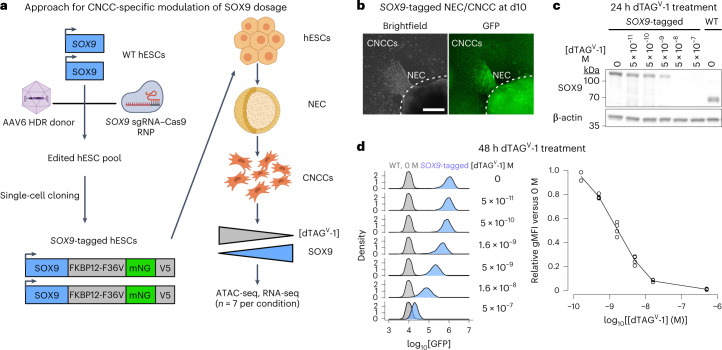
“…facial region CNCCs. 24 Accordingly, we created hESC lines with each TF endogenously and homozygously tagged with the dTAG-inducible FKBP12 F36V degron, 43,44 a V5 epitope tag, and, in one case, also the fluorophore mNeonGreen, 45 which we could then differentiate to hCNCCs in vitro 46 (Figure 3A).”
MethodSelf-citationTranscriptome-wide analysis of differential expression in perturbation atlases
Nadig, A., Replogle, J. M., Pogson, A. N., Murthy, M., McCarroll, S. A., Weissman, J. S., Robinson, E. B., & O’Connor, L. J. (2025) · Nature Genetics · doi:10.1038/s41588-025-02169-3 · Cited by 70
“Perturb-seq data from Replogle et al. 6 can be accessed at https://gwps.wi.mit.edu/ (raw data available at SRA under BioProject PRJNA831566). dTAG data from Naqvi et al. 26 are available at Gene Expression Omnibus (GEO) under accession number GSE205904. dTAG data from Weber et al. 27 are available at GEO under accessi…”
InfluentialThe evolution of developmental biology through conceptual and technological revolutions
Liberali, P., & Schier, A. F. (2024) · Cell · doi:10.1016/j.cell.2024.05.053 · Cited by 74
“202 Sophisticated approaches that tune expression levels will be needed to address this question.”
BackgroundCausal modelling of gene effects from regulators to programs to traits
Ota, M., Spence, J. P., Zeng, T., Dann, E., Milind, N., Marson, A., & Pritchard, J. K. (2025) · Nature · doi:10.1038/s41586-025-09866-3 · Cited by 60
Self-citationDecoding heterogeneous single-cell perturbation responses
Song, B., Liu, D., Dai, W., McMyn, N. F., Wang, Q., Yang, D., Krejčí, A., Vasilyev, A., Untermoser, N., Loregger, A., et al. (2025) · Nature Cell Biology · doi:10.1038/s41556-025-01626-9 · Cited by 58
“In some cases, what are LV/DUO cell types from CCDC6 clones. i , The percentage of cells with PDX1 + (a PP marker) or HNF4A + (a LV marker) by flow cytometry sorting.”
InfluentialZhu, R., Dann, E., Yan, J., Retana, J. R., Goto, R., Guitche, R. C., Brixi, L., Ota, M., Hartman, A., Roth, T. L., et al. (2026) · Cell · doi:10.1016/j.cell.2026.08.002 · Cited by 58
Self-citationGudmundsson, S., Singer‐Berk, M., Stenton, S. L., Goodrich, J. K., Wilson, M. W., Einson, J. E., Watts, N. A., Abreu, M. T., Abubakar, A. A., Adolfsson, R., et al. (2025) · Nature Communications · doi:10.1038/s41467-025-61698-x · Cited by 41
CasTuner is a degron and CRISPR/Cas-based toolkit for analog tuning of endogenous gene expression
Noviello, G., Gjaltema, R. A. F., & Schulz, E. G. (2023) · Nature Communications · doi:10.1038/s41467-023-38909-4 · Cited by 32
Large-scale analysis of the integration of enhancer-enhancer signals by promotersPreprint
Martinez-Ara, M., Comoglio, F., & van Steensel, B. (2024) · eLife · doi:10.7554/elife.91994 · Cited by 35
Liu, W., Saelens, W., Rainer, P. Y., Biočanin, M., Gardeux, V., Gralak, A. J., van Mierlo, G., Gebhart, A., Russeil, J., Liu, T., et al. (2025) · Nature Genetics · doi:10.1038/s41588-025-02343-7 · Cited by 29
“7), possibly indicating diverse roles of implicated TFs in mediating various aspects of gene regulation, such as controlling chromatin accessibility, regulatory element interactions and gene activation 15,81 .”
InfluentialPulice, J. L., & Meyerson, M. M. (2023) · Molecular Cell · doi:10.1016/j.molcel.2025.03.001 · Cited by 26
Compensation of gene dosage on the mammalian X
Cecalev, D., Viçoso, B., & Galupa, R. (2024) · Development · doi:10.1242/dev.202891 · Cited by 26
“…be achieved with the continuous improvement of technologies that allow us to quantify gene expression beyond transcription levels, such as quantitative proteomics (Schubert et al., 2017), or to quantitatively modulate gene expression (Ma et al., 2024; Naqvi et al., 2023; Noviello et al., 2023).”
BackgroundThe G protein-coupled receptor ADGRG6 maintains mouse growth plate homeostasis through IHH signaling
Bian, F., Hansen, V. L., Feng, H. C., He, J., Chen, Y., Feng, K., Ebrahimi, B., Gray, R. S., Chai, Y., Wu, C., et al. (2024) · Journal of Bone and Mineral Research · doi:10.1093/jbmr/zjae144 · Cited by 24
Buffering of gene dosage response curves for human complex traits
Milind, N., Smith, C. J., Zhu, H., Gjorgjieva, T., Spence, J. P., & Pritchard, J. K. (2026) · Cell Genomics · doi:10.1016/j.xgen.2026.101221 · Cited by 22
“40,41 As the dosage effect percolates through a pathway toward the focal trait, these curves compose with one another to form the relationship between gene dosage and trait.”
Self-citationNaqvi, S., Kim, S., Tabatabaee, S., Pampari, A., Kundaje, A., Pritchard, J. K., & Wysocka, J. (2025) · Cell Genomics · doi:10.1016/j.xgen.2025.100780 · Cited by 18
Self-citationNonlinear transcriptional responses to gradual modulation of transcription factor dosage
Domingo, J., Minaeva, M., Morris, J. A., Ghatan, S., Ziosi, M., Sanjana, N. E., & Lappalainen, T. (2024) · doi:10.1101/2024.03.01.582837 · Cited by 18
“They are key regulators of cellular functions, enriched for disease associations 26 and often classified as haploinsufficient 27 .”
Grant, Z. L., Kuang, S., Zhang, S., Horrillo, A., Chen, Z., Rao, K. S., Celen, C., Kameswaran, V., Joubran, C., Lau, P. K., et al. (2026) · Science · doi:10.1126/science.adv5434 · Cited by 18
Population-scale immune multiome atlas reveals regulatory disease mechanisms
Kanai, M., Delorey, T. M., Jarno, H., Rodosthenous, R. S., Juvila, J., Murphy, S., Teixeira-Soldano, I., Hwang, H. S., Karjalainen, J. M., Halonen, J., et al. (2026) · Nature · doi:10.1038/s41586-026-11078-2 · Cited by 22
Badia-i-Mompel, P., Casals-Franch, R., Wessels, L., Müller‐Dott, S., Trimbour, R., Yang, Y., Flores, R. O. R., & Sáez-Rodríguez, J. (2024) · bioRxiv (Cold Spring Harbor Laboratory) · doi:10.1101/2024.12.20.629764 · Cited by 15
Transcriptional Regulation as a Dose‐dependent Process: Insights From Transcription Factor Tuning
Noviello, G. (2025) · Open Biology · doi:10.1098/rsob.240328 · Cited by 13
Vanneste, M., Hoskens, H., Goovaerts, S., Matthews, H. S., Devine, J., Aponte, J. D., Cole, J. B., Shriver, M. D., Marazita, M. L., Weinberg, S. M., et al. (2024) · Nature Communications · doi:10.1038/s41467-024-54839-1 · Cited by 14
Self-citationTrans-eQTL hotspots shape complex traits by modulating cellular states
Renganaath, K., & Albert, F. W. (2025) · Cell Genomics · doi:10.1016/j.xgen.2025.100873 · Cited by 13
“69,70 Here, we applied this logic to independent, mostly trans-acting eQTLs across the genome and to dozens of traits.”
Post-translational modification of transcription factors: perspectives in vascular medicine
Astanina, E., Setten, E., Boccalatte, F. E., Bussolino, F., & Comunanza, V. (2025) · Cell Death and Disease · doi:10.1038/s41419-025-07832-5 · Cited by 13
Motif-based models accurately predict cell type-specific distal regulatory elements
Cornejo‐Páramo, P., Zhang, X., Louis, L., Yang, Y., Li, Z., Humphreys, D., & Wong, E. S. W. (2025) · Nature Communications · doi:10.1038/s41467-025-65362-2 · Cited by 12
“In regions of the genome less accessible to TFs, TF concentration may vary, which may lead to lower af fi nity of binding, which could particularly impact regulatory elements that are more dosage-sensitive 80 .”
Density transitions in the regulation of transcription
Navalkar, A., Eppert, M., Sabari, B. R., & Mittag, T. (2026) · Molecular Cell · doi:10.1016/j.molcel.2026.01.009 · Cited by 13
Baderna, V., Barzaghi, G., Kleinendorst, R., Chatsirisupachai, K., Moniot-Perron, L., Doyle, C., Schopp, M., Hochepied, T., Libert, C., Odom, D. T., et al. (2026) · Nature Genetics · doi:10.1038/s41588-026-02703-x · Cited by 12
“Yet, we find that p300 activity enhances CA, consistent with reports that H3K27ac reduces the TF concentration required for SOX9 to function 51 .”
Silencing of BCL11A by disrupting enhancer-dependent epigenetic insulation
Wang, K., Wang, J., Feng, R., Dudnyk, K., Kim, Y. J., Lim, J. Y. S., Lee, M., Zhang, Y., Gao, X., Cheng, Y., et al. (2025) · Blood · doi:10.1182/blood.2025030211 · Cited by 14
Chen, Y., Liao, Y., Wu, Z., Wan, A., Cai, H., Wong, S. S. C., Feng, X., Fan, C., Zhan, D., Hui, C.-C., et al. (2025) · Nature Communications · doi:10.1038/s41467-025-65092-5 · Cited by 12
Integrative approaches to study enhancer–promoter communication
Mach, P., & Giorgetti, L. (2023) · Current Opinion in Genetics & Development · doi:10.1016/j.gde.2023.102052 · Cited by 10
Mutant CEBPA promotes tolerance to inflammatory stress through deficient AP-1 activation
Cadefau-Fabregat, M., Martínez-Cebrián, G., Lorenzi, L., Weiss, F. D., Frank, A.-K., Castelló-García, J. M., Julià-Vilella, E., Gámez-García, A., Yera, L., de Castro, C. P. M., et al. (2025) · Nature Communications · doi:10.1038/s41467-025-58712-7 · Cited by 11
“Despite the robustness conferred by TF regulatory networks 18,19 , perturbations in speci fi c TFs can alter gene expression programs and lead to developmental defects 19 , autoimmune disorders 20 , and cancer 21 .”
Bastille, I., Lee, L., Moncada-Reid, C., Yu, W.-M., Sitko, A. A., Yung, A. R., Zamani, M., Christophersen, N., Maroofian, R., Galehdari, H., et al. (2025) · Cell Reports · doi:10.1016/j.celrep.2025.115796 · Cited by 11
Transcript accumulation rates in the early Caenorhabditis elegans embryo
Sivaramakrishnan, P., Watkins, C., & Murray, J. I. (2023) · Science Advances · doi:10.1126/sciadv.adi1270 · Cited by 9
“TF dosage is similarly crucial for embryonic patterning in Drosophila ( 15 ) and in mammalian development and is slowly being recognized as underlying causes of human disease ( 63 ).”
CUX1 regulates human hematopoietic stem cell chromatin accessibility via the BAF complex
Liu, W., Kurkewich, J. L., Stoddart, A., Khan, S. S., Anandan, D., Gaubil, A. N., Wolfgeher, D. J., Jueng, L., Kron, S. J., & McNerney, M. E. (2024) · Cell Reports · doi:10.1016/j.celrep.2024.114227 · Cited by 10
Regulatory properties of transcription factors with diverse mechanistic function
Ali, M. Z., Guharajan, S., Parisutham, V., & Brewster, R. C. (2024) · PLoS Computational Biology · doi:10.1371/journal.pcbi.1012194 · Cited by 9
Minaeva, M., Domingo, J., Rentzsch, P., & Lappalainen, T. (2025) · NAR Genomics and Bioinformatics · doi:10.1093/nargab/lqae178 · Cited by 10
Precise modulation of BRG1 levels reveals features of mSWI/SNF dosage sensitivity
Hagihara, Y., Zhang, C., & Zhang, Y. (2025) · Nature Genetics · doi:10.1038/s41588-025-02305-z · Cited by 8
“Given that TFs exhibit nonlinear binding profiles and preferentially occupy high-affinity targets at low concentrations 40,51–53 , we hypothesized that the binding profile of BRG1 would follow that of TFs, assuming that its recruitment was determined by physical interactions with TFs.”
Judd, J., Spence, J. P., Milind, N., Kachuri, L., Witte, J. S., & Pritchard, J. K. (2026) · Genetics · doi:10.1093/genetics/iyag150 · Cited by 9
“Here, only the homozygous LoF crosses a clinical threshold for disease, but both genotypes are subject to selection (selection is proportional to the squared magnitude of the vector). b) Hypothetical relationship between gene expression dosage and model trait effects (Naqvi et al. 2023).”
Self-citationMapping genes for human face shape: Exploration of univariate phenotyping strategies
Yuan, M., Goovaerts, S., Vanneste, M., Matthews, H. S., Hoskens, H., Richmond, S., Klein, O. D., Spritz, R. A., Hallgrímsson, B., Walsh, S., et al. (2024) · PLoS Computational Biology · doi:10.1371/journal.pcbi.1012617 · Cited by 8
Self-citationDuval, A. J., Seker-Polat, F., Rogozinska, M., Kinali, M., Walts, A. E., Neyisci, O., Zhang, Y., Li, Z., Tanner, E. J., Grubbs, A. E., et al. (2025) · Journal of Clinical Investigation · doi:10.1172/jci186467 · Cited by 9
“When characterizing TFs, overexpression can have nonphysio-logical impacts on downstream regulatory elements, particularly in the case of SOX9 (56).”
Enhancer cooperativity in the folded genome
Friman, E. T., & Bickmore, W. A. (2025) · Current Opinion in Genetics & Development · doi:10.1016/j.gde.2025.102416 · Cited by 7
Basis for lineage-determining pioneer factors targeting distinct repressed chromatin states
Katznelson, A., Zhang, J., Donahue, G., & Zaret, K. S. (2026) · Science Advances · doi:10.1126/sciadv.adz7409 · Cited by 8
“Transcription factors function across a finely tuned window of protein expression, and differences in concentration may influence the chromatin targeting properties of the factor ( 56 , 57 ).”
Lynch, A. T., Phillips, N., Douglas, M., Dorgnach, M., Lin, I., Adamson, A. D., Darieva, Z. A., Whittle, J., Hanley, N. A., Bobola, N., et al. (2025) · The EMBO Journal · doi:10.1038/s44318-025-00409-0 · Cited by 8
“A dosage dependency at some regulatory elements but independence at others, is consistent with the behaviour of other TFs functioning in development (Naqvi et al, 2023; Kathiriya et al, 2021; Hannon et al, 2017).”
A C/ebpα isoform specific differentiation program in immortalized myelocytes
García-Cuéllar, M.-P., Akan, S., & Slany, R. K. (2023) · Leukemia · doi:10.1038/s41375-023-01989-8 · Cited by 9
Liu, H., Zhao, C., Liang, J., Fan, Y., Sun, Y., & Zhang, X. (2025) · Acta Biomaterialia · doi:10.1016/j.actbio.2025.10.001 · Cited by 6
Dack, K., Ludwig, K. U., Stergiakouli, E., Sandy, J. R., Aryee, S. N. D., Smith, G. D., Davies, A., Wren, Y. E., Sharp, G. C., Humphries, K., et al. (2025) · Human Molecular Genetics · doi:10.1093/hmg/ddaf131 · Cited by 6
Starke, S., Velleman, L., Dobbert, B., Seibert, L., Witte, J., Jung, S., & Meyer, V. (2025) · Frontiers in Microbiology · doi:10.3389/fmicb.2024.1490293 · Cited by 6
Dmrt2 regulates sex-biased neuronal development in the cingulate cortex
Bermejo-Santos, A., Rubio-García, M., la Cal, R. T.-D., Casado-Navarro, R., & Serrano‐Saiz, E. (2025) · Cellular and Molecular Life Sciences · doi:10.1007/s00018-025-05851-1 · Cited by 6
Non-linear transcriptional responses to gradual modulation of transcription factor dosage
Domingo, J., Minaeva, M., Morris, J. A., Ghatan, S., Ziosi, M., Sanjana, N. E., & Lappalainen, T. (2024) · doi:10.7554/elife.100555.1 · Cited by 6
Reporter CRISPR screens decipher cis-regulatory and trans-regulatory principles at the Xist locus
Schwämmle, T., Noviello, G., Kanata, E., Froehlich, J. J., Bothe, M., Martitz, A., Altay, A., Scouarnec, J., Feng, V.-Y., Mallie, H., et al. (2025) · Nature Structural & Molecular Biology · doi:10.1038/s41594-025-01686-3 · Cited by 7
van der Maarel, L. E., Mungroo, M. R., Mulleners, O. J., Rivaud, M. R., Verkerk, A. O., van Duijvenboden, K., Tiel-Groenesteege, F. H. T., Steimle, J. D., Fokkert, L., Vries, C. D. G.-D., et al. (2025) · Nature Communications · doi:10.1038/s41467-025-66959-3 · Cited by 5
“4b and Supplementary Data 5).”
InfluentialMany roads lead to a plant cistrome: mapping and interpreting transcription factor binding in plants
Ammari, M., Choudhary, A., & Zander, M. (2026) · Genome biology · doi:10.1186/s13059-026-03979-2 · Cited by 5
“Recent studies on the human TF SOX9 (SRY-BOX TRANSCRIPTION FACTOR 9) indicate that the highest-affinity sites are particularly dosage-sensitive, rendering the relationship between TF dosage and binding site usage nonlinear [84, 85].”
Ren, X., Zheng, L., Liu, Y., Maliskova, L., Tam, T. W., Sun, Y., Liu, H., Cui, X., Lee, J., Takagi, M. A., et al. (2026) · Nature Communications · doi:10.1038/s41467-026-70933-y · Cited by 5
“The genes from our prediction are TFs, which drive precise transcription patterns 38 , and are known to be enriched for haploinsuf fi cient genes 39 with genetic studies highlighting the signi fi cance of their dosage for normal development 40,41 .”
Matoba, N., McAfee, J. C., Krupa, O., Beltran, A. A., Bell, J., Le, B. D., Valone, J. M., Min, H.-G., Crawford, G. E., Raab, J. R., et al. (2026) · Nature Neuroscience · doi:10.1038/s41593-026-02454-2 · Cited by 7
Haploinsufficient Transcription Factors in Myeloid Neoplasms
Martinez, T. C., & McNerney, M. E. (2023) · Annual Review of Pathology Mechanisms of Disease · doi:10.1146/annurev-pathmechdis-051222-013421 · Cited by 5
“Enhancers that exhibit analog activity are more likely to have a SOX9 palindrome motif and are associated with different pathways than digital enhancers, which are more likely to have a weak SOX9 motif and be bound by other TFs (71).”
BackgroundZouein, A., Lende-Dorn, B. A., Galloway, K. E., Ellis, T., & Ceroni, F. (2025) · Trends in biotechnology · doi:10.1016/j.tibtech.2025.05.006 · Cited by 5
Functional impact of genetic background on variable expressivity in neurodevelopmental disorders
Sun, J., Noss, S., Smolen, C., Bhavana, V. H., Banerjee, D., Das, M., Giardine, B. M., Prabhu, A., Amor, D. J., Pope, K., et al. (2026) · Nature Communications · doi:10.1038/s41467-026-72598-z · Cited by 5
“Ascentralregulatorsofcellularfunction,TFsaresensitive nodes within molecular networks, and their dysregulation has been linked to developmental disorders 83,84 .”
Large-scale analysis of the integration of enhancer-enhancer signals by promoters
Martinez-Ara, M., Comoglio, F., & van Steensel, B. (2024) · eLife · doi:10.7554/elife.91994.3 · Cited by 6
A variegated model of transcription factor function in the immune system
Chowdhary, K., & Benoist, C. O. (2023) · Trends in Immunology · doi:10.1016/j.it.2023.05.001 · Cited by 5
Regulatory network hubs guide dynamic human lineage specificationPreprint
Takeuchi, C., Sivakumar, S., Sundarrajan, A., Wang, Y., Goetsch, S. C., Zhao, H., Wang, L., Nzima, M., Deng, M., Kulkarni, K. N., et al. (2025) · bioRxiv (Cold Spring Harbor Laboratory) · doi:10.64898/2025.12.15.694070 · Cited by 5
Variants in the SOX9 transactivation middle domain induce axial skeleton dysplasia and scoliosis
(2025) · doi:10.1073/pnas.2313978121 · Cited by 4
“Because many SOX9 enhancers show heightened sensitivity to SOX9 dosage ( 65 ) via suboptimal binding of multiple low affinity binding sites ( 54 ), we suggest that the Asp272del TAM domain mutant protein may be sufficient to permit transcriptional activity at many canonical SOX9 targets, allowing…”
The maize B chromosome shapes the transcriptome throughout the entire plant life cycle
Hloušková, L., Tulpová, Z., Svačina, R., Holušová, K., Cápal, P., Navrátilová, P., Karafiátová, M., & Bartoš, J. (2025) · Journal of Experimental Botany · doi:10.1093/jxb/eraf337 · Cited by 7
Uttley, K., Juellig, H. J., Angelis, C. D., Auer, J. M. T., Ozga, E., Bengani, H., & Long, H. K. (2025) · Development · doi:10.1242/dev.204779 · Cited by 4
“Interestingly, pro-chondrogenic SOX9-target genes have been shown to be particularly sensitive to SOX9 dosage (Naqvi et al., 2023), so even very subtle changes to SOX9 expression could impact the process of chondrogenesis.”
Woo, M. S., Khalil, A. A. K., Gonzalez, F. J., & Kim, J.-H. (2024) · Molecules and Cells · doi:10.1016/j.mocell.2024.100148 · Cited by 4
Choi, S., Lee, S., Choi, J., Yeo, H., Kim, H., Yun, H., Lee, S., & An, H. (2025) · Biomedicine & Pharmacotherapy · doi:10.1016/j.biopha.2025.118828 · Cited by 3
Aboujaoude, E. N., Light, J., Brown, J. E. H., Boscardin, W. J., Hallgrímsson, B., & Klein, O. D. (2023) · American Journal of Medical Genetics Part C Seminars in Medical Genetics · doi:10.1002/ajmg.c.32035 · Cited by 4
Self-citationDual role of ZIC2 during neural induction: from priming transcription factor to enhancer activator
Mariner-Faulí, M., Sánchez-Gaya, V., Robert, S. M., Respuela, P., Cruz-Molina, S., Lobato-Moreno, S., Trovato, M., Prummel, K. D., Noh, K., Zaugg, J. B., et al. (2026) · Nucleic Acids Research · doi:10.1093/nar/gkag374 · Cited by 4
Co, M., O’Brien, G., Wright, K. M., & O’Roak, B. J. (2024) · Autism Research · doi:10.1002/aur.3271 · Cited by 3
“Previous quantitative studies have explored potential mechanisms of dosage sensitivity for other TFs, including TBX5 (Kathiriya et al., 2021), SOX2 (Blassberg et al., 2022), SOX9 (Naqvi et al., 2023), and bicoid (Hannon et al., 2017).”
Crosstalk between chromatin, chromosomes, and epigenetics
Ialongo, A., Yeh, S.-Y., & Rhee, H. S. (2023) · Biochemistry and Cell Biology · doi:10.1139/bcb-2023-0165 · Cited by 3
Large-scale analysis of the integration of enhancer-enhancer signals by promotersPreprint
Martinez-Ara, M., Comoglio, F., & van Steensel, B. (2023) · eLife · doi:10.7554/elife.91994.1 · Cited by 3
A mathematical model clarifies the ABC Score formula used in enhancer-gene predictionPreprint
Nasser, J., Nam, K.-M., & Gunawardena, J. (2025) · eLife · doi:10.7554/elife.105740.1 · Cited by 3
Fusion transcription factor dosage controls cell state in rhabdomyosarcomaPreprint
Hoffman, R. A., Wang, M., Sunkel, B. D., Nguyen, T. H., Lopez-Nava, J., Chatterjee, B., Sun, W., Barr, F. G., & Stanton, B. Z. (2025) · bioRxiv (Cold Spring Harbor Laboratory) · doi:10.1101/2025.05.16.654522 · Cited by 4
“54,55 It will be intriguing to resolve these relationships in future studies.”
Rentzsch, P., Kollotzek, A., Ganapathy, K. R., Mohammadi, P., & Lappalainen, T. (2025) · Genome Research · doi:10.1101/gr.280360.124 · Cited by 3
Goovaerts, S., Devine, J., Claessens, N., Gabbita, S., Deprest, J., Pauwels, K., Herrick, N., Mohammed, J., Mounier, A., Sofer, T., et al. (2025) · bioRxiv (Cold Spring Harbor Laboratory) · doi:10.64898/2025.12.29.696848 · Cited by 3
Self-citationPositive autoregulation of Sox17 is necessary for gallbladder and extrahepatic bile duct formation
Trinh, L. T., Finnel, R. R., Osipovich, A. B., Musselman, J. R. B., Sampson, L. L., Wright, C. V. E., & Magnuson, M. A. (2025) · Development · doi:10.1242/dev.203033 · Cited by 2
Derepression of a single microRNA target causes female infertility in mice
Stefano, J., Elcavage, L. E., Hong, S., Bartel, D. P., & Kleaveland, B. (2026) · Nucleic Acids Research · doi:10.1093/nar/gkaf1357 · Cited by 2
Li, Y., Liu, L., Li, M., Xu, J., Yang, J., He, X., Yang, W., Li, W., Zhang, R., Mao, L., et al. (2026) · Journal of Agricultural and Food Chemistry · doi:10.1021/acs.jafc.5c17368 · Cited by 2
Aceves, V., Xu, Z., Zhang, C., Kim, J., Ito, J., Mathers, K., Lassar, A. B., Liu, Z., & Gray, R. S. (2026) · Communications Biology · doi:10.1038/s42003-026-11231-7 · Cited by 2
Elevated MyoD1 levels expand genome-wide binding and the repertoire of regulated genes
Whitney, O. N., Dailey, G. M., McKenna, J. K., Darzacq, X., & Tjian, R. (2026) · Proceedings of the National Academy of Sciences · doi:10.1073/pnas.2605749123 · Cited by 2
Multifaceted effects on even-skipped transcriptional dynamics upon Krüppel dosage changes
Lin, S., & Lim, B. (2024) · Development · doi:10.1242/dev.202132 · Cited by 3
Fine-Tuning the Epigenetic Landscape: Chemical Modulation of Epigenome Editors
Noviello, G., & Gjaltema, R. A. F. (2024) · Methods in molecular biology · doi:10.1007/978-1-0716-4051-7_3 · Cited by 2
McGehee, J. M., & Stathopoulos, A. (2024) · Development · doi:10.1242/dev.202775 · Cited by 2
Exploring the association between SNPs and facial morphology in a Spanish population
Navarro-López, B., Wilke, F., Suárez-Ulloa, V., Baeta, M., Martos, R., Moreno-López, O., Olalde, Í., Martínez‐Jarreta, B., Jiménez, S., Walsh, S., et al. (2025) · Scientific Reports · doi:10.1038/s41598-025-98748-9 · Cited by 3
Robustness and variability in Caenorhabditis elegans dauer gene expressionPreprint
Corchado, J. C., Godthi, A., Selvarasu, K., & Prahlad, V. (2024) · bioRxiv (Cold Spring Harbor Laboratory) · doi:10.1101/2024.08.15.608164 · Cited by 2
“…in expression of all expressed genes (mean expression>10), using the coefficient of variation (CV) as an estimate of variance 30-32 , and (ii) computed the Spearman's rank-order correlation, rho , between pairs of dauer larvae as an indicator of robustness in their patterns of gene expression 33 .”
BackgroundMethodLiu, B. B., Shimasawa, M., Vermeulen, S. Y., Kim, S. H., Iremadze, N., Lipson, D., Shipony, Z., & Greenleaf, W. J. (2025) · bioRxiv (Cold Spring Harbor Laboratory) · doi:10.1101/2025.07.24.666684 · Cited by 2
Self-citationExercise modulation of the alternative splicing landscape in human tissuesPreprint
Zhang, Z., Nudelman, G., Pinças, H., Iyer, G. R., Smith, G. R., Keshishian, H., Jin, C. A., Trappe, S. W., Katz, D. H., Burant, C., et al. (2026) · bioRxiv (Cold Spring Harbor Laboratory) · doi:10.64898/2026.03.03.704460 · Cited by 2
Induction of host genes by nested genes during C. elegans development
Soulavie, F., Couillault, C., Melki, M., Buyannemekh, K., Barrière, A., Villoutreix, P., & Bertrand, V. (2025) · iScience · doi:10.1016/j.isci.2025.113021 · Cited by 1
Walther, N., Anantakrishnan, S., Dailey, G. M., Maurer, A. C., & Cattoglio, C. (2026) · Stem Cell Reports · doi:10.1016/j.stemcr.2025.102787 · Cited by 1
Genetic Regulation of Wnt/PCP Components Through Fgf10/Fgfr2/Sox9 Module in Tear Duct Development
Guo, D., Zhang, X., Zhao, X., Ru, J., Guo, M., Xie, L., Wu, M., Shi, L., Su, Y., Xu, S., et al. (2026) · Investigative Ophthalmology & Visual Science · doi:10.1167/iovs.67.3.30 · Cited by 1
“45,46 Single-Cell RNA-Sequencing Joint Cut&Tag Analysis to Identify Potential Sox9 Targets in PTD/NLD PTD/NLD originates from the orbital NLG, the posterior part of nasolacrimal groove.”
Kim, H., Nandu, T. S., Kim, Y., Camacho, C. V., & Kraus, W. L. (2026) · Science Advances · doi:10.1126/sciadv.aec2424 · Cited by 1
“For example, a recent study has shown that some regulatory elements are sensitive to the dosage of the TFs that control them ( 69 ).”
Single-cell analysis of gene regulatory networks in the mammary glands of P4HA1-knockout mice
Gupta, A., Huang, L., Liu, J., Chen, K., Xu, R., & Wu, W. (2025) · PLoS Genetics · doi:10.1371/journal.pgen.1011505 · Cited by 1
King, J., Gisselbrecht, S. S., Dias, J., Jeong, R., Rothman, E., & Bulyk, M. L. (2025) · Cell Reports · doi:10.1016/j.celrep.2025.116427 · Cited by 1
“63 Alteration of TF DNA-binding specificity can also cause human disease.”
Large-scale analysis of the integration of enhancer-enhancer signals by promotersPreprint
Martinez-Ara, M., Comoglio, F., & van Steensel, B. (2024) · eLife · doi:10.7554/elife.91994.2 · Cited by 6
A mathematical model clarifies the ABC Score formula used in enhancer-gene predictionPreprint
Nasser, J., Nam, K.-M., & Gunawardena, J. (2025) · eLife · doi:10.7554/elife.105740 · Cited by 1
Endogenous variability in transcription factor concentrations shapes their genome-wide occupancyPreprint
Mizeret, R., Tollenaere, A., Deluz, C., & Suter, D. M. (2025) · bioRxiv (Cold Spring Harbor Laboratory) · doi:10.1101/2025.09.24.678270 · Cited by 1
Nonlinear transcriptional responses to gradual modulation of transcription factor dosagePreprint
Domingo, J., Minaeva, M., Morris, J. A., Ghatan, S., Ziosi, M., Sanjana, N. E., & Lappalainen, T. (2025) · eLife · doi:10.7554/elife.100555.2 · Cited by 1
Epigenetic Coalitions Couple Tissue Growth to Generate Periodic Colour Patterns in BirdsPreprint
Zhou, Y., Zhao, W., Chen, C.-K., Jea, W.-C., Liang, Y.-C., Harn, H. I., Brady, N. K., Law, T. Y., Law, T. Y., Inaba, M., et al. (2025) · bioRxiv (Cold Spring Harbor Laboratory) · doi:10.64898/2025.12.23.696276 · Cited by 1
“This shift suggested that the regulatory identity of a CRE cannot be inferred from peak accessibility alone and may reflect the combined effects of multiple embedded regulatory components ( 26 , 68 ).”
Ozga, E., Milto, K. M., Demurtas, M., Bates, L. E., Grimes, G. R., Azami, T., Su, J., Angelis, C. D., Trizzino, M., Nichols, J., et al. (2026) · bioRxiv (Cold Spring Harbor Laboratory) · doi:10.64898/2026.01.18.696654 · Cited by 1
Comparative modes of chromatin engagement by PAX::FOXO1 fusions in rhabdomyosarcomaPreprint
Tallan, A. M., Kucinski, J. P., Vontell, A. M., Karunanayake, C., Hoffman, R. A., Sunkel, B. D., Taslim, C., Kendall, G. C., & Stanton, B. Z. (2026) · bioRxiv (Cold Spring Harbor Laboratory) · doi:10.64898/2026.02.18.706582 · Cited by 1
Metadata
- Authors
- Naqvi, S., Kim, S., Hoskens, H., Matthews, H. S., Spritz, R. A., Klein, O. D., Hallgrímsson, B., Swigut, T., Claes, P., Pritchard, J. K., & Wysocka, J.
- Affiliations
- Stanford Medicine (US)
- Howard Hughes Medical Institute (US)
- University of Calgary (CA)
- Universitair Ziekenhuis Leuven (BE)
- University of Colorado Anschutz (US)
- Cedars-Sinai Medical Center (US)
- Stanford University (US)
- Corresponding author
- Pritchard, Jonathan K.
- Wysocka, Joanna
- ORCID
- Venue
- Nature Genetics
- Published
- 2023-04-06
- Volume
- 55
- Issue
- 5
- Pages
- 841-851
- ISSN
- 1061-4036 (ISSN-L)
- 1546-1718
- PMC
- PMC10181932
- OpenAlex
- W4362663646
- Cited by
- 132
- References
- 80
- Citations by year
- 2026: 35 · 2025: 52 · 2024: 27 · 2023: 17
- FWCI
- 11.67
- Type
- journal article
- Language
- en
- Open access
- hybrid
- doi.org
- Licence
- cc-by
- creativecommons.org/licenses/by/4.0 (tdm)
- creativecommons.org/licenses/by/4.0 (vor)
- Locations
- Nature Genetics (publishedVersion, cc-by)
- bioRxiv (Cold Spring Harbor Laboratory) (acceptedVersion, cc-by)
- PubMed Central (publishedVersion, cc-by)
- PubMed (publishedVersion)
- eScholarship (California Digital Library) (submittedVersion, cc-by)
- Lirias (KU Leuven) (submittedVersion, cc-by)
- Funders
- Howard Hughes Medical Institute
- JW was supported by a Lorry Lokey endowed professorship and a Stinehart Reed award
- Helen Hay Whitney Foundation
- Damon Runyon Cancer Research Foundation
- U.S. Department of Health & Human Services | National Institutes of Health (U01DE024440, 1-R01-DE027023, 2-R01-DE027023, R01HG008140, R01HG011432)
- KU Leuven (BOF-C1, C14/15/081 & C14/20/081)
- The Research Program of the Research Foundation - Flanders (Belgium)
- Topics
- Life Sciences › Biochemistry, Genetics and Molecular Biology › Molecular Biology › Genomics and Chromatin Dynamics
- Life Sciences › Biochemistry, Genetics and Molecular Biology › Molecular Biology › Gene Regulatory Network Analysis
- Life Sciences › Biochemistry, Genetics and Molecular Biology › Molecular Biology › Developmental Biology and Gene Regulation
- Keywords
- transcription factor dosage, dosage sensitivity, SOX9, craniofacial morphology, regulatory elements, Pierre Robin sequence, chondrogenesis, gene expression regulation
- MeSH terms
- Gene Expression Regulation, Humans, Phenotype, Pierre Robin Syndrome, Regulatory Sequences, Nucleic Acid, SOX9 Transcription Factor
About these checks
Registry, retraction, Cites and statistics results are computed, not judged, with one exception: a printed reference that no index lists is read once by a model before it counts as a citation error. Claims are extracted by a model and kept only when their quote appears verbatim in the text; each cited source is then checked, with a model’s help, for whether it says what the claim relies on. Those verdicts can be wrong — read the claim’s quote and the cited source before relying on one.
Statistics and arithmetic are recomputed, not judged.
Confidence bands are shown only for fields calibrated on our annotated test set. None is calibrated yet, so no band is shown.
What counts as a claim ›How we measure confidence ›How we check this ›
Are you an author, or do you see a problem with this page? Request a review
Data sources
Bibliographic data: Semantic Scholar, OpenAlex, Crossref.
Contains information from the Semantic Scholar Academic Graph Datasets, made available under the ODC Attribution License (ODC-BY 1.0).
Semantic Scholar’s data is described in: Kinney, R., et al. (2023). The Semantic Scholar Open Data Platform. arXiv:2301.10140.
