

Precise modulation of transcription factor levels identifies features underlying dosage sensitivity
Open accessPublished version of a preprint
The DOI matches its Crossref record; 80 of the 80 references it cites were found in a registry or an index.
Abstract
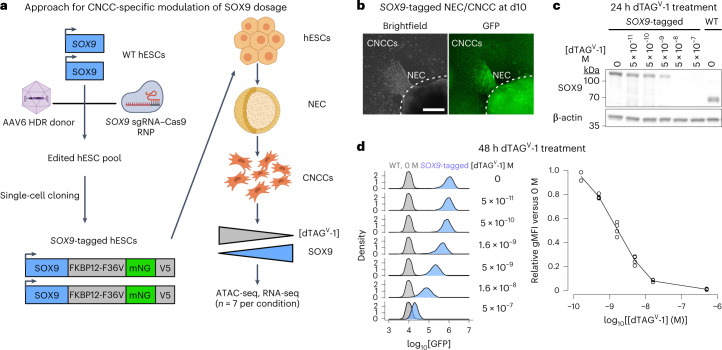
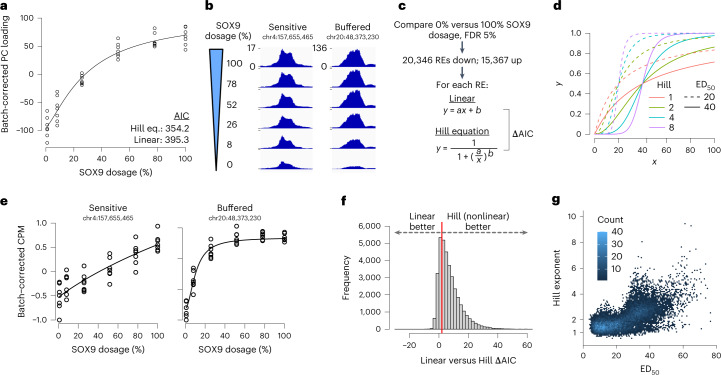
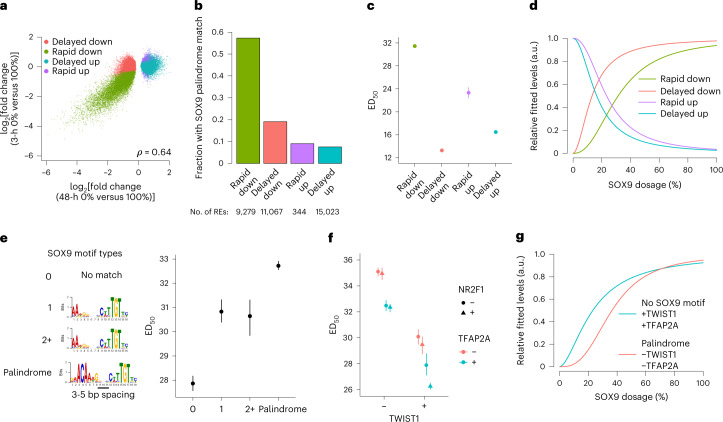
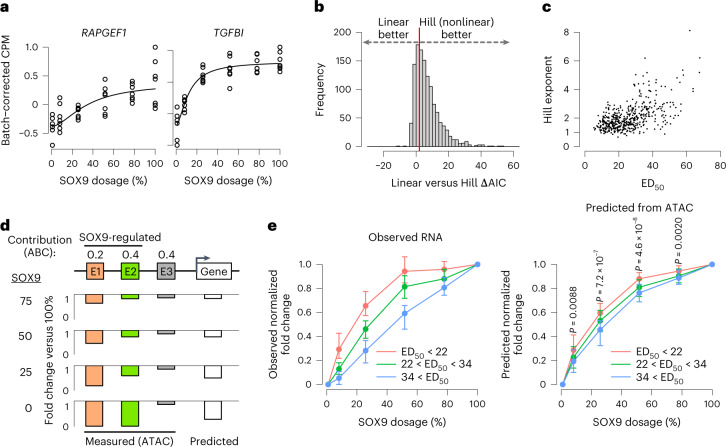
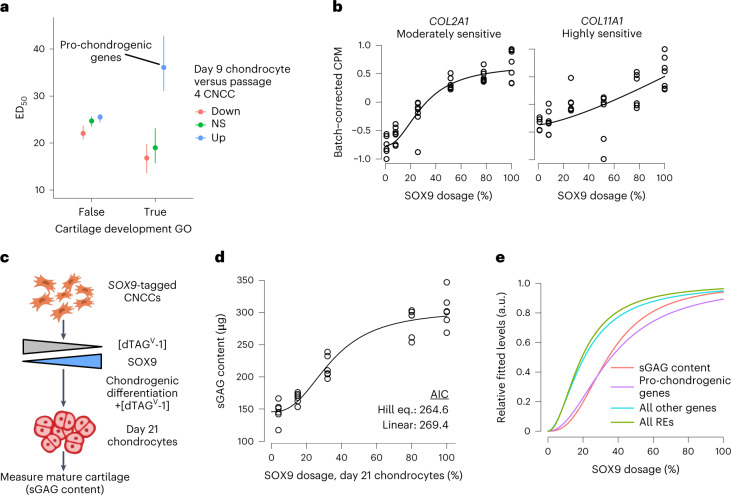
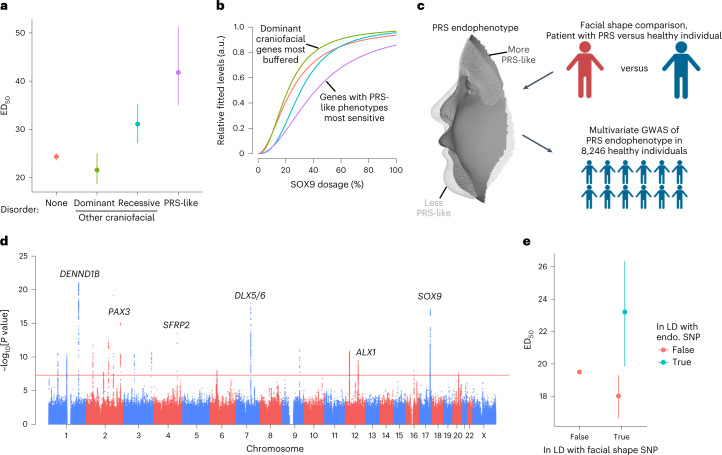
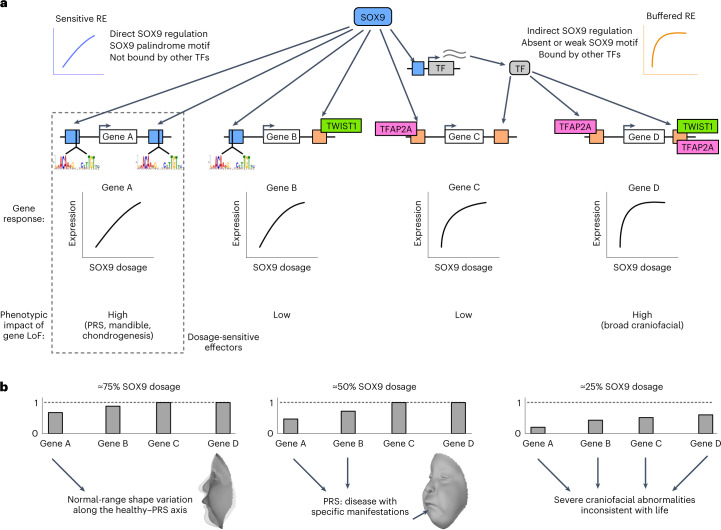
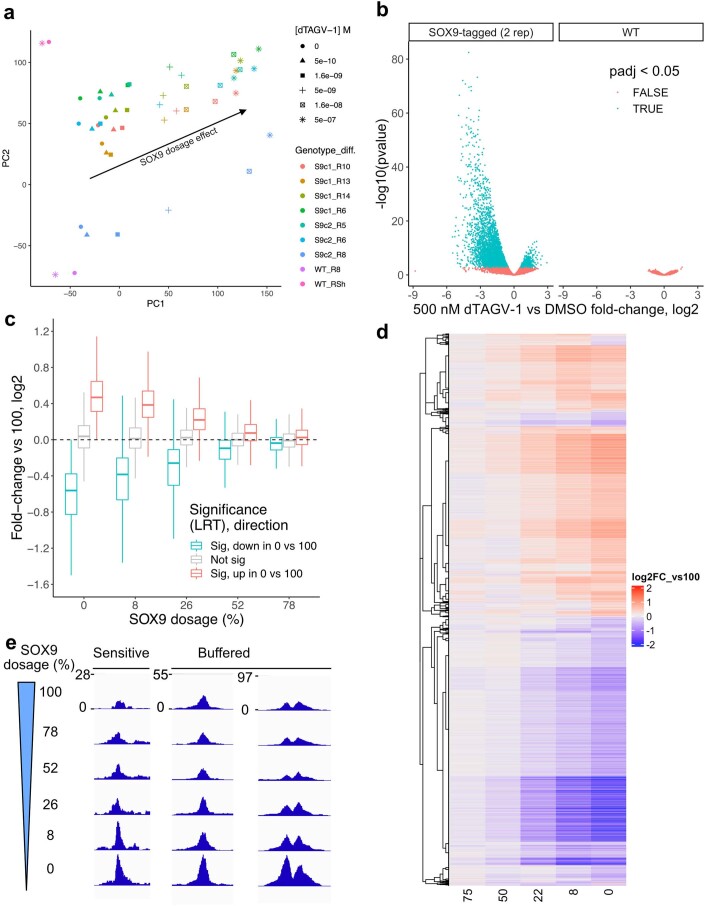
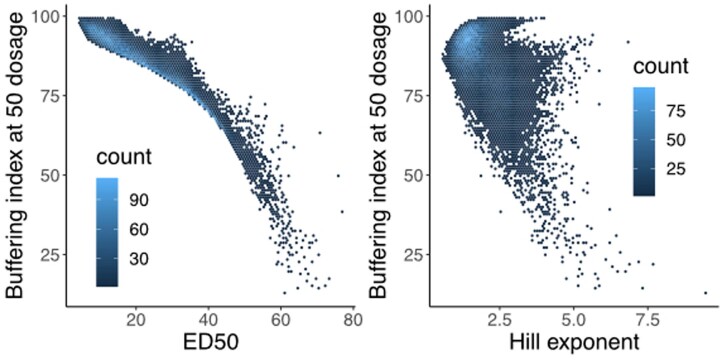
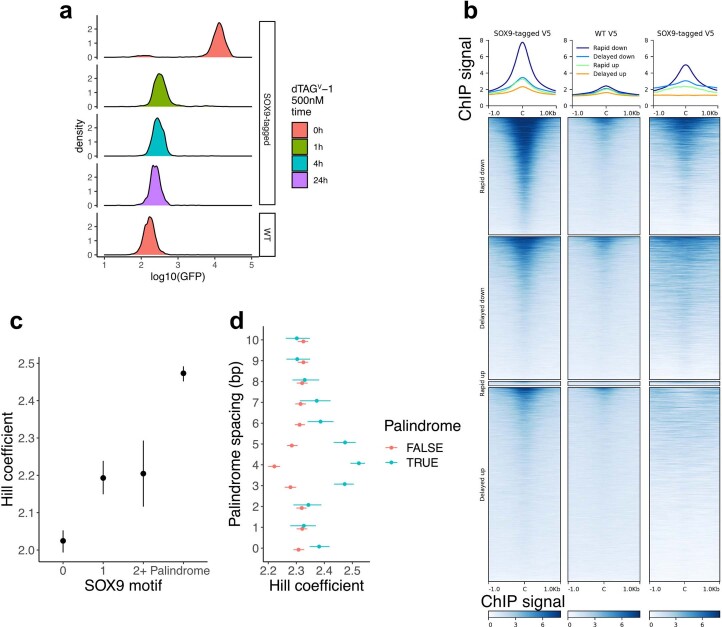
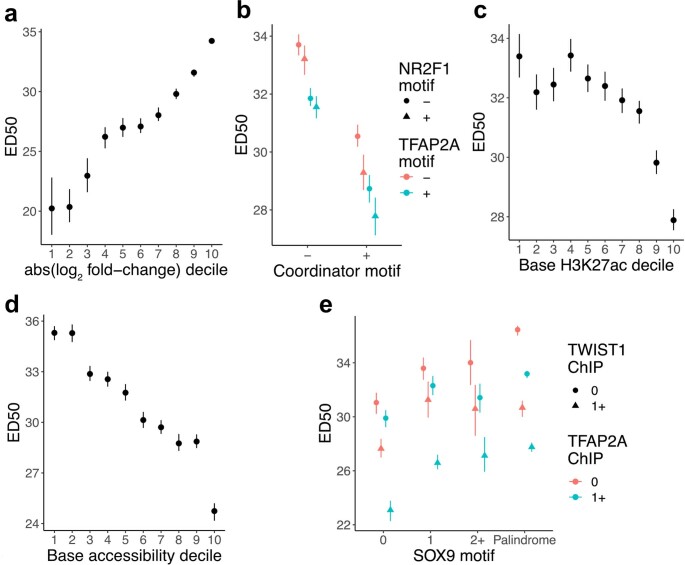
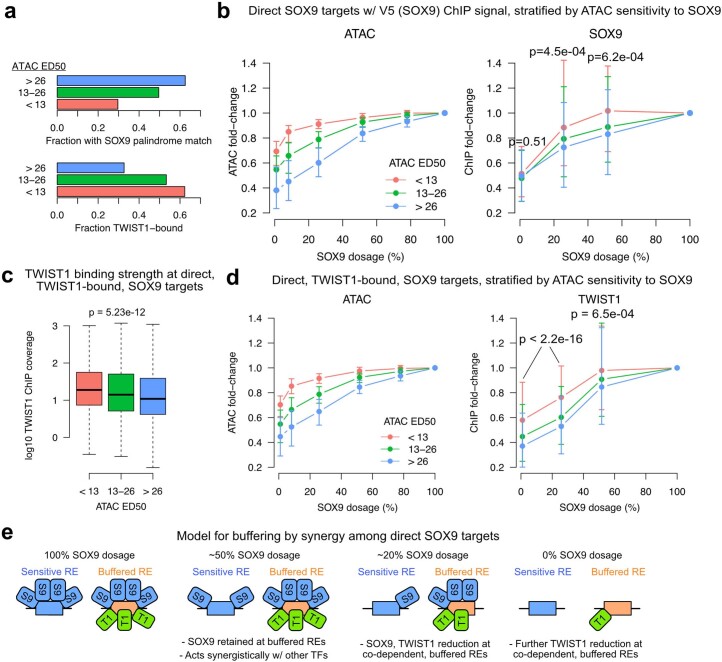
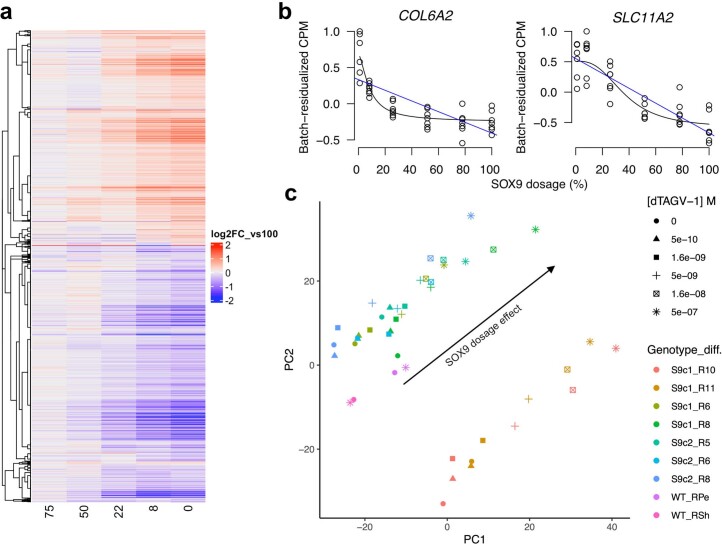
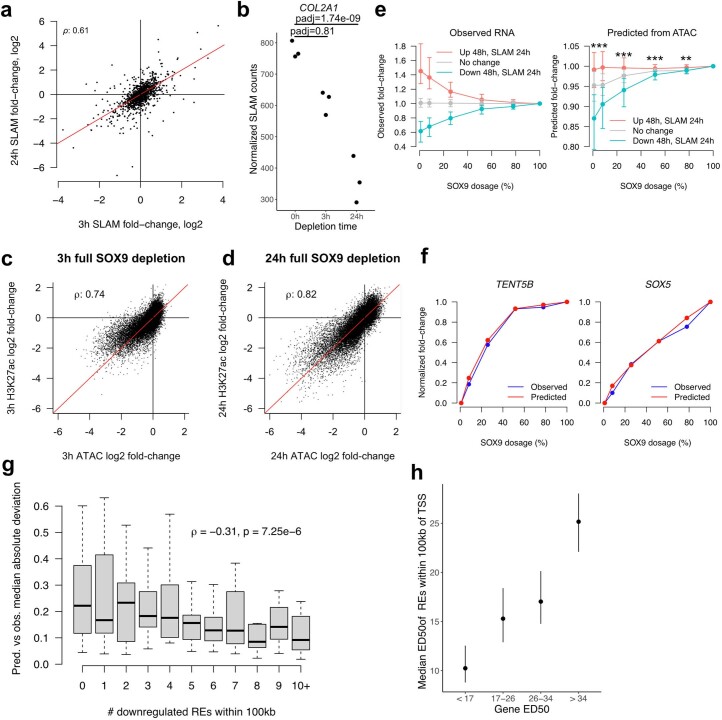
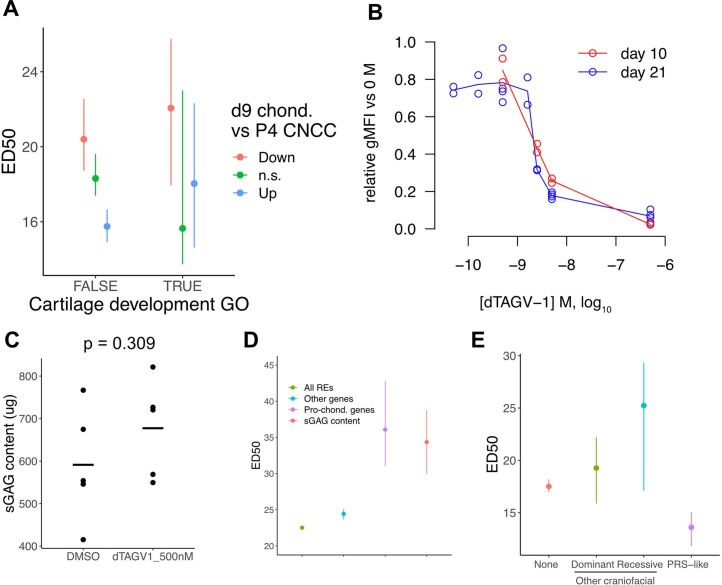
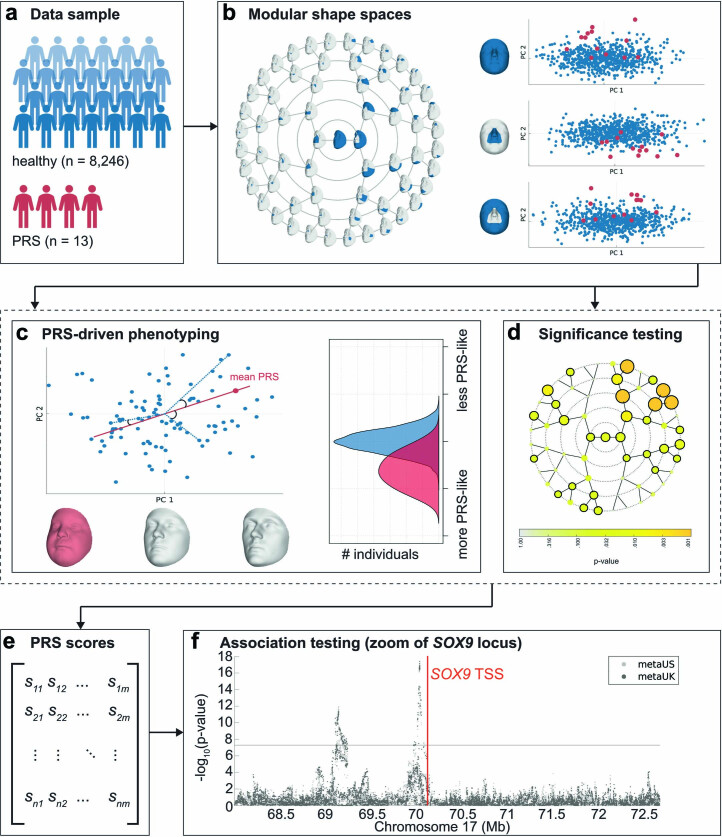
Transcriptional regulation exhibits extensive robustness, but human genetics indicates sensitivity to transcription factor (TF) dosage. Reconciling such observations requires quantitative studies of TF dosage effects at trait-relevant ranges, largely lacking so far. TFs play central roles in both normal-range and disease-associated variation in craniofacial morphology; we therefore developed an approach to precisely modulate TF levels in human facial progenitor cells and applied it to SOX9, a TF associated with craniofacial variation and disease (Pierre Robin sequence (PRS)). Most SOX9-dependent regulatory elements (REs) are buffered against small decreases in SOX9 dosage, but REs directly and primarily regulated by SOX9 show heightened sensitivity to SOX9 dosage; these RE responses partially predict gene expression responses. Sensitive REs and genes preferentially affect functional chondrogenesis and PRS-like craniofacial shape variation. We propose that such REs and genes underlie the sensitivity of specific phenotypes to TF dosage, while buffering of other genes leads to robust, nonlinear dosage-to-phenotype relationships.
Overview
The claims and statistics of this paper haven’t been checked yet.
Free: it reads the open-access text and checks the first 5 claims that cite a source we can check. Create a free account to check every claim.
Integrity signals
Registry
Cites
Statistics
Figures
Verification
Claims the paper makes
The claims and statistics of this paper haven’t been checked yet.
Free: it reads the open-access text and checks the first 5 claims that cite a source we can check. Create a free account to check every claim.
Claims other papers make about this one
Each is checked against this paper’s own text: does it say what the citing paper says it does?
The cited source says what the claim attributes to it.
In the citing paper
“Even modest changes in transcription factor levels can modulate other transcriptional programs”
From Targeting Microglial Transcriptional Reprogramming as a Therapy Strategy for Alzheimer's Disease (2026) · cites this paper as [84]
The check wasn’t confident either way, so it gives no verdict — never disputed.
In the citing paper
“supraoptimal dosing may produce adverse outcomes”
From Targeting Microglial Transcriptional Reprogramming as a Therapy Strategy for Alzheimer's Disease (2026) · cites this paper as [84]
Experimental — accuracy not yet measuredIn the citing paper
“Indeed, Naqvi et al26 found that a subset of Sox9 targets are sensitive at partial dosage depletions, whereas a much larger set of targets are affected only at full dosage depletions.”
From Transcriptome-wide analysis of differential expression in perturbation atlases (2025) · cites this paper as [26]
Self-check
Percentages, sums and reported differences re-computed from the paper’s own numbers.
The self-check needs the paper’s full text.
Citations
Cites
The GTEx Consortium atlas of genetic regulatory effects across human tissues
The GTEx Consortium, Aguet, F., Anand, S., Ardlie, K. G., Gabriel, S., Getz, G. A., Graubert, A., Hadley, K., Handsaker, R. E., Huang, K. H., et al. (2020) · Science · doi:10.1126/science.aaz1776 · Cited by 5,547
METAL: fast and efficient meta-analysis of genomewide association scans
Willer, C. J., Li, Y., & Abecasis, G. R. (2010) · Bioinformatics · doi:10.1093/bioinformatics/btq340 · Cited by 5,205
Systematic Localization of Common Disease-Associated Variation in Regulatory DNA
Maurano, M. T., Humbert, R., Rynes, E., Thurman, R. E., Haugen, E., Wang, H., Reynolds, A. P., Sandstrom, R., Qu, H., Brody, J., et al. (2012) · Science · doi:10.1126/science.1222794 · Cited by 3,716
Online Mendelian Inheritance in Man (OMIM), a knowledgebase of human genes and genetic disorders
Hamosh, A. (2004) · Nucleic Acids Research · doi:10.1093/nar/gki033 · Cited by 3,420
An Expanded View of Complex Traits: From Polygenic to Omnigenic
Boyle, E. A., Li, Y. I., & Pritchard, J. K. (2017) · Cell · doi:10.1016/j.cell.2017.05.038 · Cited by 2,851
Self-citationAn improved ATAC-seq protocol reduces background and enables interrogation of frozen tissues
Corces, M. R., Trevino, A. E., Hamilton, E. G., Greenside, P. G., Sinnott-Armstrong, N. A., Vesuna, S., Satpathy, A. T., Rubin, A. J., Montine, K. S., Wu, B., et al. (2017) · Nature Methods · doi:10.1038/nmeth.4396 · Cited by 2,496
Transcription factors: from enhancer binding to developmental control
Spitz, F., & Furlong, E. E. M. (2012) · Nature Reviews Genetics · doi:10.1038/nrg3207 · Cited by 2,227
TRRUST v2: an expanded reference database of human and mouse transcriptional regulatory interactions
Han, H., Cho, J.-W., Lee, S., Yun, A., Kim, H., Bae, D., Yang, S., Kim, C. Y., Lee, M., Kim, E., et al. (2018) · Nucleic Acids Research · doi:10.1093/nar/gkx1013 · Cited by 1,973
Campomelic dysplasia and autosomal sex reversal caused by mutations in an SRY-related gene
Foster, J. W., Dominguez-Steglich, M. A., Guioli, S., Kwok, C., Weller, P. A., Stevanović, M., Weissenbach, J., Mansour, S., Young, I. D., Goodfellow, P. N., et al. (1994) · Nature · doi:10.1038/372525a0 · Cited by 1,612
The American Soldier: Adjustment During Army Life.
Riley, J. W., Stouffer, S. A., Suchman, E. A., Devinney, L. C., Star, S. A., & Williams, R. M. (1949) · American Sociological Review · doi:10.2307/2087216 · Cited by 1,239
The dTAG system for immediate and target-specific protein degradation
Nabet, B., Roberts, J. M., Buckley, D. L., Paulk, J., Dastjerdi, S., Yang, A., Leggett, A. L., Erb, M. A., Lawlor, M. A., Souza, A., et al. (2018) · Nature Chemical Biology · doi:10.1038/s41589-018-0021-8 · Cited by 1,118
Activity-by-contact model of enhancer–promoter regulation from thousands of CRISPR perturbations
Fulco, C. P., Nasser, J., Jones, T. R., Munson, G., Bergman, D. T., Subramanian, V., Grossman, S. R., Anyoha, R., Doughty, B. R., Patwardhan, T. A., et al. (2019) · Nature Genetics · doi:10.1038/s41588-019-0538-0 · Cited by 1,111
Shape analysis of symmetric structures: quantifying variation among individuals and asymmetry
Klingenberg, C. P., Barluenga, M., & Meyer, A. (2002) · Evolution · doi:10.1111/j.0014-3820.2002.tb00117.x · Cited by 1,109
Canalization of Development and Genetic Assimilation of Acquired Characters
WADDINGTON, C. H. (1959) · Nature · doi:10.1038/1831654a0 · Cited by 1,094
SOX9 directly regulates the type-ll collagen gene
Bell, D. M., Leung, K. K. H., Wheatley, S. C., Ng, L. J., Zhou, S., Wing Ling, K., Har Sham, M., Koopman, P., Tam, P. P. L., & Cheah, K. S. E. (1997) · Nature Genetics · doi:10.1038/ng0697-174 · Cited by 933
Syndromes of the Head and Neck
Gorlin, R. J., Cohen, M. M., & Hennekam, R. C. M. (2001) · doi:10.1093/oso/9780195118612.001.0001 · Cited by 839
Enhancer redundancy provides phenotypic robustness in mammalian development
Osterwalder, M., Barozzi, I., Tissières, V., Fukuda-Yuzawa, Y., Mannion, B. J., Afzal, S. Y., Lee, E. A., Zhu, Y., Plajzer-Frick, I., Pickle, C. S., et al. (2018) · Nature · doi:10.1038/nature25461 · Cited by 642
CHD7 cooperates with PBAF to control multipotent neural crest formation
Bajpai, R., Chen, D. A., Rada-Iglesias, A., Zhang, J., Xiong, Y., Helms, J., Chang, C.-P., Zhao, Y., Swigut, T., & Wysocka, J. (2010) · Nature · doi:10.1038/nature08733 · Cited by 616
Self-citationVariation in Transcription Factor Binding Among Humans
Kasowski, M., Grubert, F., Heffelfinger, C., Hariharan, M., Asabere, A., Waszak, S. M., Habegger, L., Rozowsky, J., Shi, M., Urban, A. E., et al. (2010) · Science · doi:10.1126/science.1183621 · Cited by 561
Trans effects on gene expression can drive omnigenic inheritance
Liu, X., Li, Y. I., & Pritchard, J. K. (2019) · Cell · doi:10.1016/j.cell.2019.04.014 · Cited by 523
Self-citationPhenotypic robustness conferred by apparently redundant transcriptional enhancers
Frankel, N., Davis, G. K., Vargas, D., Wang, S., Payre, F., & Stern, D. L. (2010) · Nature · doi:10.1038/nature09158 · Cited by 510
Parkinson-associated risk variant in distal enhancer of α-synuclein modulates target gene expression
Soldner, F., Stelzer, Y., Shivalila, C. S., Abraham, B. J., Latourelle, J. C., Barrasa, M. I., Goldmann, J., Myers, R. H., Young, R. A., & Jaenisch, R. (2016) · Nature · doi:10.1038/nature17939 · Cited by 500
Neural crest development is regulated by the transcription factor Sox9
Cheung, M., & Briscoe, J. (2003) · Development · doi:10.1242/dev.00808 · Cited by 482
Highly conserved non-coding elements on either side of SOX9 associated with Pierre Robin sequence
Benko, S., Fantes, J. A., Amiel, J., Kleinjan, D.-J., Thomas, S., Ramsay, J., Jamshidi, N., Essafi, A., Heaney, S., Gordon, C. T., et al. (2009) · Nature Genetics · doi:10.1038/ng.329 · Cited by 430
Sox9 is required for determination of the chondrogenic cell lineage in the cranial neural crest
Mori-Akiyama, Y., Akiyama, H., Rowitch, D. H., & de Crombrugghe, B. (2003) · Proceedings of the National Academy of Sciences · doi:10.1073/pnas.1631288100 · Cited by 429
Stouffer, S. A., Suchman, E. A., Devinney, L. C., Star, S. A., & Williams, R. M. (1949) · Cited by 420
FISHER, R. A. (1931) · Biological Reviews · doi:10.1111/j.1469-185x.1931.tb01030.x · Cited by 403
SLAM-seq defines direct gene-regulatory functions of the BRD4-MYC axis
Muhar, M., Ebert, A., Neumann, T., Umkehrer, C., Jude, J., Wieshofer, C., Rescheneder, P., Lipp, J. J., Herzog, V. A., Reichholf, B., et al. (2018) · Science · doi:10.1126/science.aao2793 · Cited by 372
Garber, M., Yosef, N., Goren, A., Raychowdhury, R., Thielke, A., Guttman, M., Robinson, J., Minie, B., Chevrier, N., Itzhaki, Z., et al. (2012) · Molecular Cell · doi:10.1016/j.molcel.2012.07.030 · Cited by 369
The versatile functions of Sox9 in development, stem cells, and human diseases
Jo, A., Denduluri, S., Zhang, B., Wang, Z., Yin, L., Yan, Z., Kang, R., Shi, L. L., Mok, J., Lee, M. J., et al. (2014) · Genes & Diseases · doi:10.1016/j.gendis.2014.09.004 · Cited by 366
Enhancer Divergence and cis-Regulatory Evolution in the Human and Chimp Neural Crest
Prescott, S. L., Srinivasan, R., Marchetto, M. C., Grishina, I., Narvaiza, I., Selleri, L., Gage, F. H., Swigut, T., & Wysocka, J. (2015) · Cell · doi:10.1016/j.cell.2015.08.036 · Cited by 363
Self-citationSOX9 and the many facets of its regulation in the chondrocyte lineage
Lefebvre, V., & Dvir-Ginzberg, M. (2017) · Connective Tissue Research · doi:10.1080/03008207.2016.1183667 · Cited by 347
Human knockouts and phenotypic analysis in a cohort with a high rate of consanguinity
Saleheen, D., Natarajan, P., Armean, I. M., Zhao, W., Rasheed, A., Khetarpal, S. A., Won, H.-H., Karczewski, K. J., O’Donnell-Luria, A. H., Samocha, K. E., et al. (2017) · Nature · doi:10.1038/nature22034 · Cited by 340
Coordinated Effects of Sequence Variation on DNA Binding, Chromatin Structure, and Transcription
Kilpinen, H., Waszak, S. M., Gschwind, A. R., Raghav, S. K., Witwicki, R. M., Orioli, A., Migliavacca, E., Wiederkehr, M., Gutierrez-Arcelus, M., Panousis, N. I., et al. (2013) · Science · doi:10.1126/science.1242463 · Cited by 337
Ahmad, N. N., Ala-Kokko, L., Knowlton, R. G., Jimenez, S. A., Weaver, E. J., Maguire, J. I., Tasman, W., & Prockop, D. J. (1991) · Proceedings of the National Academy of Sciences · doi:10.1073/pnas.88.15.6624 · Cited by 316
Rapid and direct control of target protein levels with VHL-recruiting dTAG molecules
Nabet, B., Ferguson, F. M., Seong, B. K. A., Kuljanin, M., Leggett, A. L., Mohardt, M. L., Robichaud, A., Conway, A. S., Buckley, D. L., Mancias, J. D., et al. (2020) · doi:10.1101/2020.03.13.980946 · Cited by 312
Sequentially acting Sox transcription factors in neural lineage development
Bergsland, M., Ramsköld, D., Zaouter, C., Klum, S., Sandberg, R., & Muhr, J. (2011) · Genes & Development · doi:10.1101/gad.176008.111 · Cited by 311
SNiPA: an interactive, genetic variant-centered annotation browser
Arnold, M., Raffler, J., Pfeufer, A., Suhre, K., & Kastenmüller, G. (2015) · Bioinformatics · doi:10.1093/bioinformatics/btu779 · Cited by 308
Cranial neural crest cells on the move: Their roles in craniofacial development
Cordero, D. R., Brugmann, S., Chu, Y., Bajpai, R., Jame, M., & Helms, J. A. (2011) · American Journal of Medical Genetics Part A · doi:10.1002/ajmg.a.33702 · Cited by 305
The transcription factor Sox9 is required for cranial neural crest development in Xenopus
Spokony, R. F., Aoki, Y., Saint-Germain, N., Magner-Fink, E., & Saint-Jeannet, J.-P. (2002) · Development · doi:10.1242/dev.129.2.421 · Cited by 295
Genome-wide mapping of global-to-local genetic effects on human facial shape
Claes, P., Roosenboom, J., White, J. D., Swigut, T., Sero, D., Li, J., Lee, M. K., Zaidi, A., Mattern, B. C., Liebowitz, C., et al. (2018) · Nature Genetics · doi:10.1038/s41588-018-0057-4 · Cited by 235
Self-citationMartin, R. M., Ikeda, K., Cromer, M. K., Uchida, N., Nishimura, T., Romano, R., Tong, A. J., Lemgart, V. T., Camarena, J., Pavel-Dinu, M., et al. (2019) · Cell Stem Cell · doi:10.1016/j.stem.2019.04.001 · Cited by 206
Discovery and implications of polygenicity of common diseases
Visscher, P. M., Yengo, L., Cox, N. J., & Wray, N. R. (2021) · Science · doi:10.1126/science.abi8206 · Cited by 187
Giorgetti, L., Siggers, T., Tiana, G., Caprara, G., Notarbartolo, S., Corona, T., Pasparakis, M., Milani, P., Bulyk, M. L., & Natoli, G. (2010) · Molecular Cell · doi:10.1016/j.molcel.2010.01.016 · Cited by 175
Loss of Extreme Long-Range Enhancers in Human Neural Crest Drives a Craniofacial Disorder
Long, H. K., Osterwalder, M., Welsh, I. C., Hansen, K., Davies, J. O. J., Liu, Y. E., Koska, M., Adams, A. T., Aho, R., Arora, N., et al. (2020) · Cell Stem Cell · doi:10.1016/j.stem.2020.09.001 · Cited by 170
Self-citationTranscription factor haploinsufficiency: when half a loaf is not enough
Seidman, J. G., & Seidman, C. (2002) · Journal of Clinical Investigation · doi:10.1172/jci0215043 · Cited by 167
Insights into the genetic architecture of the human face
White, J. D., Indencleef, K., Naqvi, S., Eller, R. J., Hoskens, H., Roosenboom, J., Lee, M. K., Li, J., Mohammed, J., Richmond, S., et al. (2021) · Nature Genetics · doi:10.1038/s41588-020-00741-7 · Cited by 166
Self-citationMeshMonk: Open-source large-scale intensive 3D phenotyping
White, J. D., Ortega-Castrillón, A., Matthews, H., Zaidi, A. A., Ekrami, O., Snyders, J., Fan, Y., Penington, T., Van Dongen, S., Shriver, M. D., et al. (2019) · Scientific Reports · doi:10.1038/s41598-019-42533-y · Cited by 161
Self-citationNeumann, T., Herzog, V. A., Muhar, M., von Haeseler, A., Zuber, J., Ameres, S. L., & Rescheneder, P. (2019) · BMC Bioinformatics · doi:10.1186/s12859-019-2849-7 · Cited by 156
Marshall Syndrome Associated with a Splicing Defect at the COL11A1 Locus
Griffith, A. J., Sprunger, L. K., Sirko-Osadsa, D. A., Tiller, G. E., Meisler, M. H., & Warman, M. L. (1998) · The American Journal of Human Genetics · doi:10.1086/301789 · Cited by 145
Hivert, V., Sidorenko, J., Rohart, F., Goddard, M. E., Yang, J., Wray, N. R., Yengo, L., & Visscher, P. M. (2021) · The American Journal of Human Genetics · doi:10.1016/j.ajhg.2021.02.014 · Cited by 136
Paletta, C. E., Dehghan, K., Hutchinson, R. L., & Klaw, B. A. (1994) · Plastic & Reconstructive Surgery · doi:10.1097/00006534-199405000-00032 · Cited by 126
Modeling Human TBX5 Haploinsufficiency Predicts Regulatory Networks for Congenital Heart Disease
Kathiriya, I. S., Rao, K. S., Iacono, G., Devine, W. P., Blair, A. P., Hota, S. K., Lai, M. H., Garay, B. I., Thomas, R., Gong, H. Z., et al. (2021) · Developmental Cell · doi:10.1016/j.devcel.2020.11.020 · Cited by 116
Mono- and biallelic variant effects on disease at biobank scale
Heyne, H., Karjalainen, J. M., Karczewski, K. J., Lemmelä, S. M., Zhou, W., FinnGen, Havulinna, A. S., Kurki, M., Rehm, H. L., Palotie, A. V., et al. (2023) · Nature · doi:10.1038/s41586-022-05420-7 · Cited by 111
Developmental nonlinearity drives phenotypic robustness
Green, R. M., Fish, J. L., Young, N. M., Smith, F. J., Roberts, B., Dolan, K., Choi, I., Leach, C. L., Gordon, P., Cheverud, J. M., et al. (2017) · Nature Communications · doi:10.1038/s41467-017-02037-7 · Cited by 106
Self-citationCytokine-Induced Signaling Networks Prioritize Dynamic Range over Signal Strength
Janes, K. A., Reinhardt, H. C., & Yaffe, M. B. (2008) · Cell · doi:10.1016/j.cell.2008.08.034 · Cited by 99
Blassberg, R. A., Patel, H., Watson, T., Gouti, M., Metzis, V., Delàs, M. J., & Briscoe, J. (2022) · Nature Cell Biology · doi:10.1038/s41556-022-00910-2 · Cited by 97
Freimer, J. W., Shaked, O., Naqvi, S., Sinnott-Armstrong, N., Kathiria, A., Garrido, C. M., Chen, A. F., Cortez, J. T., Greenleaf, W. J., Pritchard, J. K., et al. (2022) · Nature Genetics · doi:10.1038/s41588-022-01106-y · Cited by 95
Self-citationHuang, Y.-H., Jankowski, A., Cheah, K. S. E., Prabhakar, S., & Jauch, R. (2015) · Scientific Reports · doi:10.1038/srep10398 · Cited by 86
Limited overlap of eQTLs and GWAS hits due to systematic differences in discovery
Mostafavi, H., Spence, J. P., Naqvi, S., & Pritchard, J. K. (2022) · bioRxiv (Cold Spring Harbor Laboratory) · doi:10.1101/2022.05.07.491045 · Cited by 85
Self-citationmSWI/SNF promotes Polycomb repression both directly and through genome-wide redistribution
Weber, C. M., Hafner, A., Kirkland, J. G., Braun, S. M. G., Stanton, B. Z., Boettiger, A. N., & Crabtree, G. R. (2021) · Nature Structural & Molecular Biology · doi:10.1038/s41594-021-00604-7 · Cited by 84
Concentration dependent chromatin states induced by the bicoid morphogen gradient
Hannon, C. E., Blythe, S. A., & Wieschaus, E. F. (2017) · eLife · doi:10.7554/elife.28275 · Cited by 83
Causes and effects of haploinsufficiency
Johnson, A. F., Nguyen, H. T., & Veitia, R. A. (2019) · Biological Reviews · doi:10.1111/brv.12527 · Cited by 82
Facial recognition from DNA using face-to-DNA classifiers
Sero, D., Zaidi, A., Li, J., White, J. D., Zarzar, T. B. G., Marazita, M. L., Weinberg, S. M., Suetens, P., Vandermeulen, D., Wagner, J. K., et al. (2019) · Nature Communications · doi:10.1038/s41467-019-10617-y · Cited by 71
Self-citationEvidence for Weak Selective Constraint on Human Gene Expression
Glassberg, E. C., Gao, Z., Harpak, A., Lan, X., & Pritchard, J. K. (2019) · Genetics · doi:10.1534/genetics.118.301833 · Cited by 63
Self-citationGenetic variants underlying differences in facial morphology in East Asian and European populations
Zhang, M., Wu, S., Du, S., Qian, W., Chen, J., Qiao, L., Yang, Y., Tan, J., Yuan, Z., Peng, Q., et al. (2022) · Nature Genetics · doi:10.1038/s41588-022-01038-7 · Cited by 63
Self-citationNaqvi, S., Hoskens, H., Wilke, F., Weinberg, S. M., Shaffer, J. R., Walsh, S., Shriver, M. D., Wysocka, J., & Claes, P. D. (2022) · Annual Review of Genomics and Human Genetics · doi:10.1146/annurev-genom-120121-102607 · Cited by 61
Self-citationDeregulated Regulators: Disease-Causing cis Variants in Transcription Factor Genes
van der Lee, R., Correard, S., & Wasserman, W. W. (2020) · Trends in Genetics · doi:10.1016/j.tig.2020.04.006 · Cited by 51
Pazokitoroudi, A., Chiu, A. M., Burch, K. S., Pasaniuc, B., & Sankararaman, S. (2021) · The American Journal of Human Genetics · doi:10.1016/j.ajhg.2021.03.018 · Cited by 42
Zug, R. (2022) · Biology Open · doi:10.1242/bio.058896 · Cited by 39
Transcription factor haploinsufficiency: when half a loaf is not enough
Seidman, J. G., & Seidman, C. (2002) · Journal of Clinical Investigation · doi:10.1172/jci200215043 · Cited by 39
Meckel's Cartilage: Discovery, Embryology and Evolution
Amano, O., Doi, T., Yamada, T., Sasaki, A., Sakiyama, K., Kanegae, H., & Kindaichi, K. (2010) · Journal of Oral Biosciences · doi:10.1016/s1349-0079(10)80041-6 · Cited by 36
Freimer, J. W., Shaked, O., Naqvi, S., et al. (2021) · bioRxiv (Cold Spring Harbor Laboratory) · doi:10.1101/2021.04.18.440363 · Cited by 29
Self-citationPhenotypes, Developmental Basis, and Genetics of Pierre Robin Complex
Perrine, S. M. M., Wu, M., Holmes, G., Bjork, B. C., Jabs, E. W., & Richtsmeier, J. T. (2020) · Journal of Developmental Biology · doi:10.3390/jdb8040030 · Cited by 23
Human genetic analyses of organelles highlight the nucleus in age-related trait heritability
Gupta, R., Karczewski, K. J., Howrigan, D. P., Neale, B. M., & Mootha, V. K. (2021) · eLife · doi:10.7554/elife.68610 · Cited by 23
Martin, R. M., Ikeda, K., Uchida, N., Cromer, K., Nishimura, T., Dever, D. P., Camarena, J., Bak, R. O., Laustsen, A., Jakobsen, M. R., et al. (2018) · bioRxiv (Cold Spring Harbor Laboratory) · doi:10.1101/252163 · Cited by 8
Claes, P., & Sero, D. (2019) · Figshare · doi:10.6084/m9.figshare.7649024 · Cited by 4
Self-citationPrecise modulation of transcription factor levels identifies features underlying dosage sensitivity
Sahin (2022) · Zenodo (CERN European Organization for Nuclear Research) · doi:10.5281/zenodo.7689948 · Cited by 1
Precise modulation of transcription factor levels identifies features underlying dosage sensitivity
Sahin (2022) · Zenodo (CERN European Organization for Nuclear Research) · doi:10.5281/zenodo.6596464 · Cited by 1
juliedwhite/MeshMonkValidation: First release
Juliedwhite (2019) · Zenodo (CERN European Organization for Nuclear Research) · doi:10.5281/zenodo.2577627 · Cited by 1
Cited by
Deciphering the multi-scale, quantitative cis-regulatory code
Kim, S., & Wysocka, J. (2023) · Molecular Cell · doi:10.1016/j.molcel.2022.12.032 · Cited by 293
Self-citationNew insights into genome folding by loop extrusion from inducible degron technologies
de Wit, E., & Nora, E. P. (2022) · Nature Reviews Genetics · doi:10.1038/s41576-022-00530-4 · Cited by 96
DNA-guided transcription factor cooperativity shapes face and limb mesenchyme
Kim, S., Morgunova, E. Y., Naqvi, S., Goovaerts, S., Bader, M., Koska, M., Popov, A. N., Luong, C., Pogson, A. N., Swigut, T., et al. (2024) · Cell · doi:10.1016/j.cell.2023.12.032 · Cited by 92
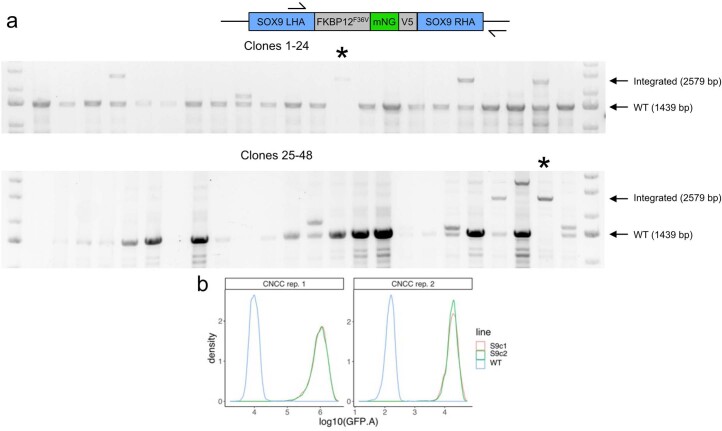
“…facial region CNCCs. 24 Accordingly, we created hESC lines with each TF endogenously and homozygously tagged with the dTAG-inducible FKBP12 F36V degron, 43,44 a V5 epitope tag, and, in one case, also the fluorophore mNeonGreen, 45 which we could then differentiate to hCNCCs in vitro 46 (Figure 3A).”
MethodSelf-citationTranscriptome-wide analysis of differential expression in perturbation atlases
Nadig, A., Replogle, J. M., Pogson, A. N., Murthy, M., McCarroll, S. A., Weissman, J. S., Robinson, E. B., & O’Connor, L. J. (2025) · Nature Genetics · doi:10.1038/s41588-025-02169-3 · Cited by 70
“Perturb-seq data from Replogle et al. 6 can be accessed at https://gwps.wi.mit.edu/ (raw data available at SRA under BioProject PRJNA831566). dTAG data from Naqvi et al. 26 are available at Gene Expression Omnibus (GEO) under accession number GSE205904. dTAG data from Weber et al. 27 are available at GEO under accessi…”
InfluentialThe evolution of developmental biology through conceptual and technological revolutions
Liberali, P., & Schier, A. F. (2024) · Cell · doi:10.1016/j.cell.2024.05.053 · Cited by 74
“202 Sophisticated approaches that tune expression levels will be needed to address this question.”
Background
Metadata
- Authors
- Naqvi, S., Kim, S., Hoskens, H., Matthews, H. S., Spritz, R. A., Klein, O. D., Hallgrímsson, B., Swigut, T., Claes, P., Pritchard, J. K., & Wysocka, J.
- Affiliations
- Stanford Medicine (US)
- Howard Hughes Medical Institute (US)
- University of Calgary (CA)
- Universitair Ziekenhuis Leuven (BE)
- University of Colorado Anschutz (US)
- Cedars-Sinai Medical Center (US)
- Stanford University (US)
- Corresponding author
- Pritchard, Jonathan K.
- Wysocka, Joanna
- ORCID
- Venue
- Nature Genetics
- Published
- 2023-04-06
- Volume
- 55
- Issue
- 5
- Pages
- 841-851
- ISSN
- 1061-4036 (ISSN-L)
- 1546-1718
- PMC
- PMC10181932
- OpenAlex
- W4362663646
- Cited by
- 132
- References
- 80
- Citations by year
- 2026: 35 · 2025: 52 · 2024: 27 · 2023: 17
- FWCI
- 11.67
- Type
- journal article
- Language
- en
- Open access
- hybrid
- doi.org
- Licence
- cc-by
- creativecommons.org/licenses/by/4.0 (tdm)
- creativecommons.org/licenses/by/4.0 (vor)
- Locations
- Nature Genetics (publishedVersion, cc-by)
- bioRxiv (Cold Spring Harbor Laboratory) (acceptedVersion, cc-by)
- PubMed Central (publishedVersion, cc-by)
- PubMed (publishedVersion)
- eScholarship (California Digital Library) (submittedVersion, cc-by)
- Lirias (KU Leuven) (submittedVersion, cc-by)
- Funders
- Howard Hughes Medical Institute
- JW was supported by a Lorry Lokey endowed professorship and a Stinehart Reed award
- Helen Hay Whitney Foundation
- Damon Runyon Cancer Research Foundation
- U.S. Department of Health & Human Services | National Institutes of Health (U01DE024440, 1-R01-DE027023, 2-R01-DE027023, R01HG008140, R01HG011432)
- KU Leuven (BOF-C1, C14/15/081 & C14/20/081)
- The Research Program of the Research Foundation - Flanders (Belgium)
- Topics
- Life Sciences › Biochemistry, Genetics and Molecular Biology › Molecular Biology › Genomics and Chromatin Dynamics
- Life Sciences › Biochemistry, Genetics and Molecular Biology › Molecular Biology › Gene Regulatory Network Analysis
- Life Sciences › Biochemistry, Genetics and Molecular Biology › Molecular Biology › Developmental Biology and Gene Regulation
- Keywords
- transcription factor dosage, dosage sensitivity, SOX9, craniofacial morphology, regulatory elements, Pierre Robin sequence, chondrogenesis, gene expression regulation
- MeSH terms
- Gene Expression Regulation, Humans, Phenotype, Pierre Robin Syndrome, Regulatory Sequences, Nucleic Acid, SOX9 Transcription Factor
About these checks
Registry, retraction, Cites and statistics results are computed, not judged, with one exception: a printed reference that no index lists is read once by a model before it counts as a citation error. Claims are extracted by a model and kept only when their quote appears verbatim in the text; each cited source is then checked, with a model’s help, for whether it says what the claim relies on. Those verdicts can be wrong — read the claim’s quote and the cited source before relying on one.
Statistics and arithmetic are recomputed, not judged.
Confidence bands are shown only for fields calibrated on our annotated test set. None is calibrated yet, so no band is shown.
What counts as a claim ›How we measure confidence ›How we check this ›
Are you an author, or do you see a problem with this page? Request a review
Data sources
Bibliographic data: Semantic Scholar, OpenAlex, Crossref.
Contains information from the Semantic Scholar Academic Graph Datasets, made available under the ODC Attribution License (ODC-BY 1.0).
Semantic Scholar’s data is described in: Kinney, R., et al. (2023). The Semantic Scholar Open Data Platform. arXiv:2301.10140.
