

Precise modulation of transcription factor levels identifies features underlying dosage sensitivity
Open accessPublished version of a preprint
The DOI matches its Crossref record; 80 of the 80 references it cites were found in a registry or an index.
Abstract
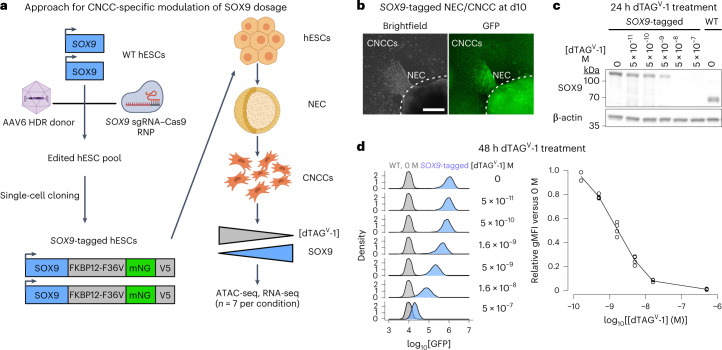
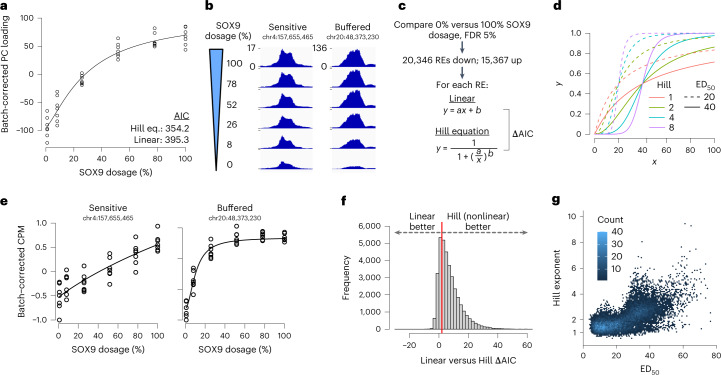
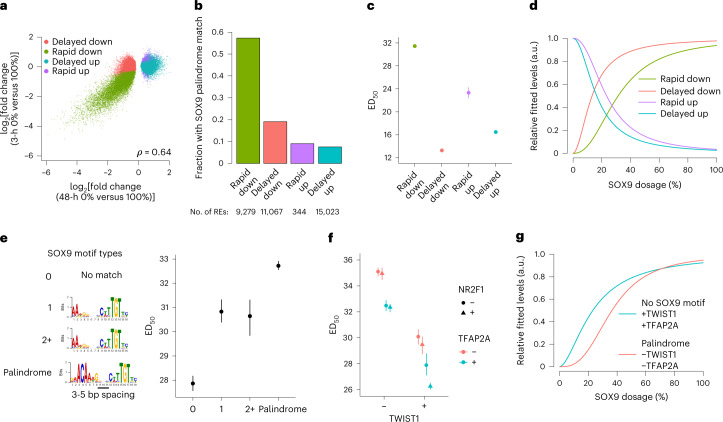
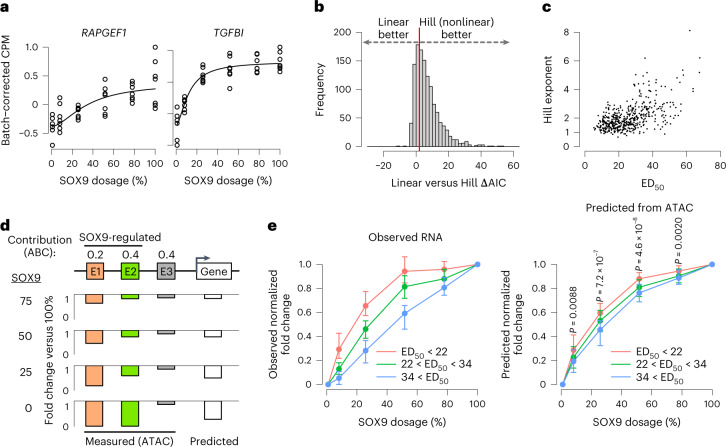
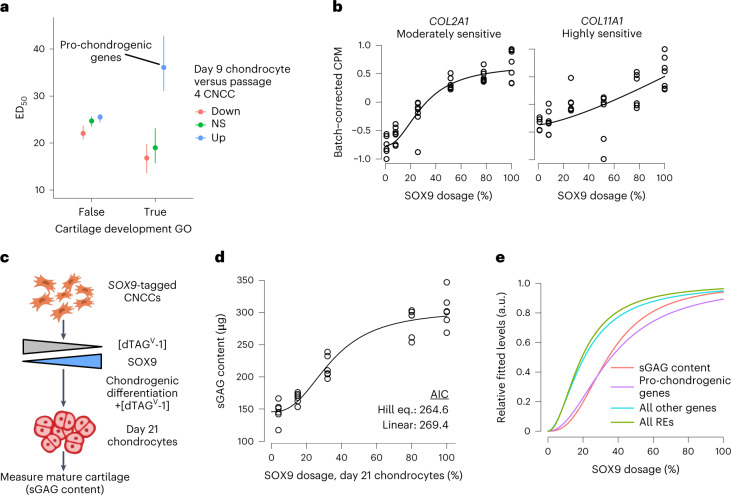
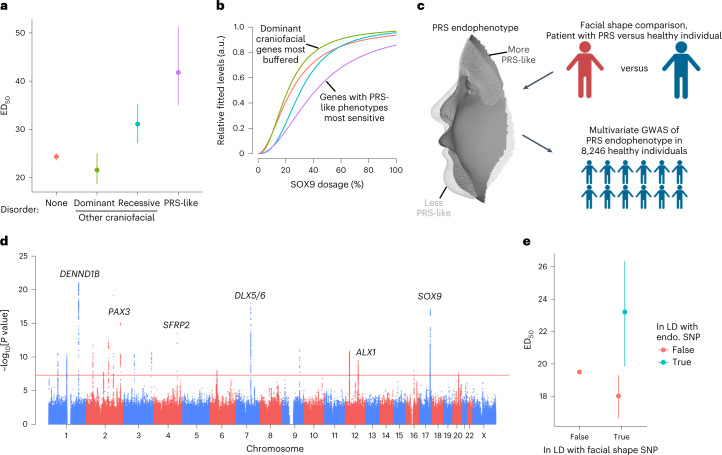
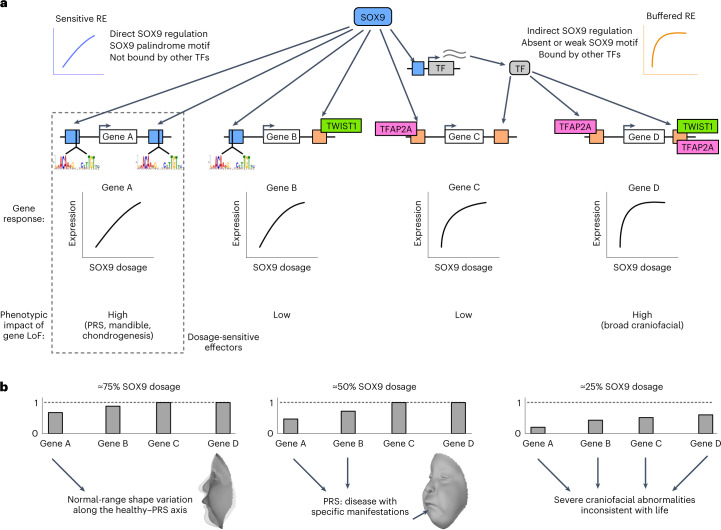
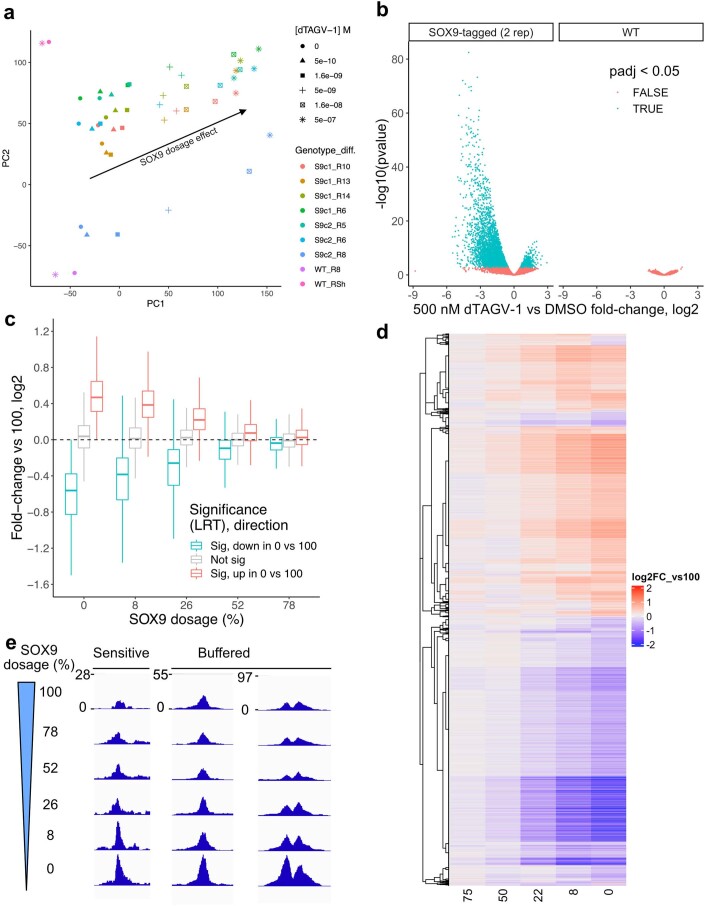
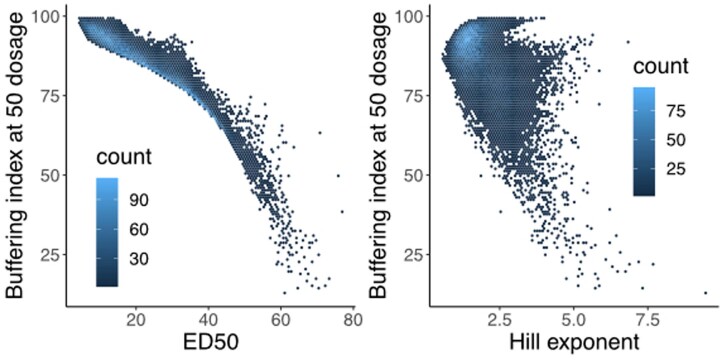
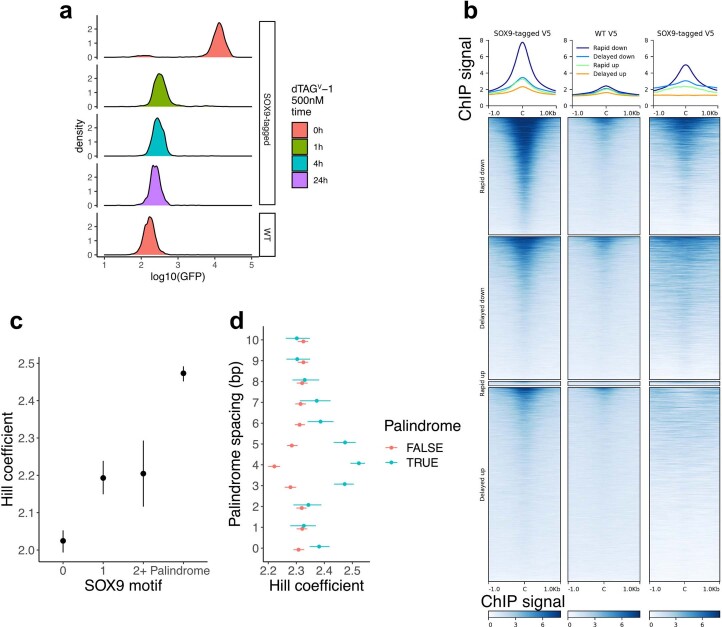
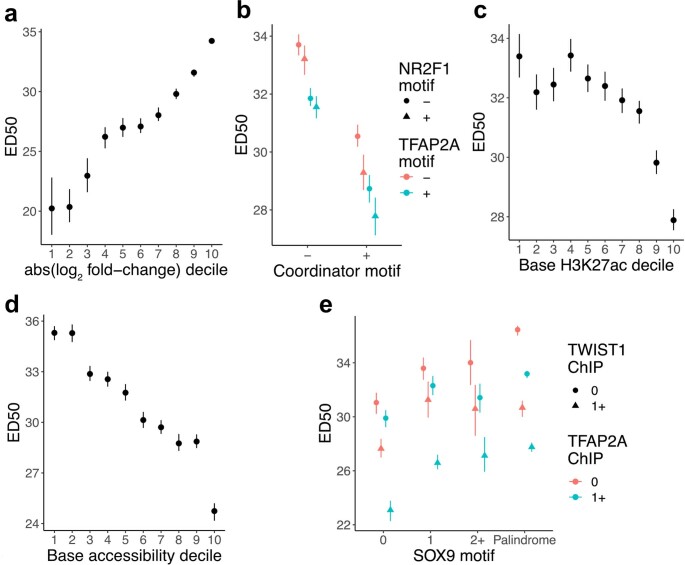
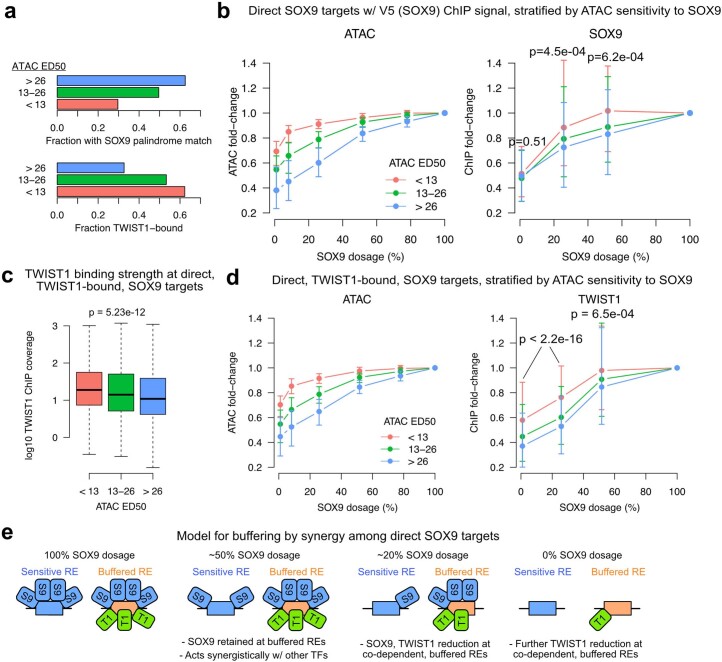
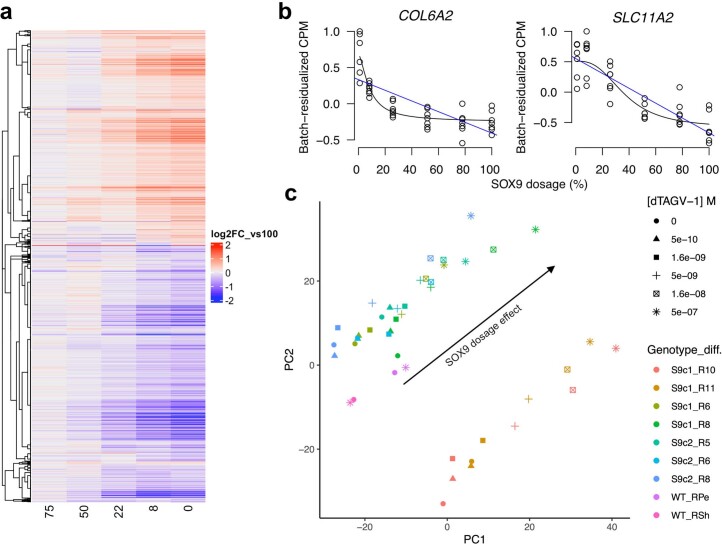
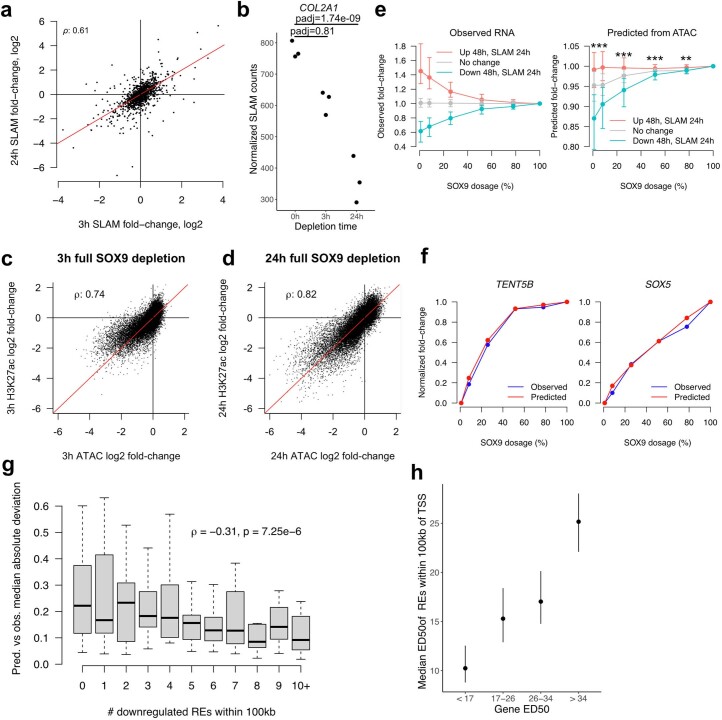
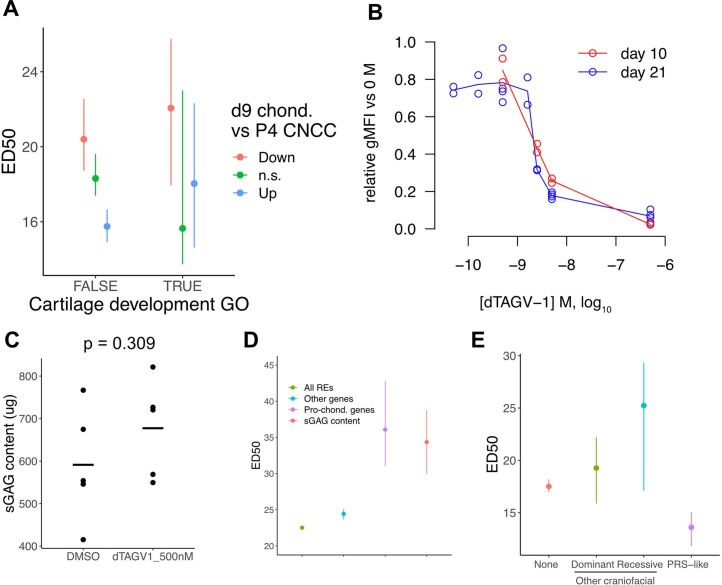
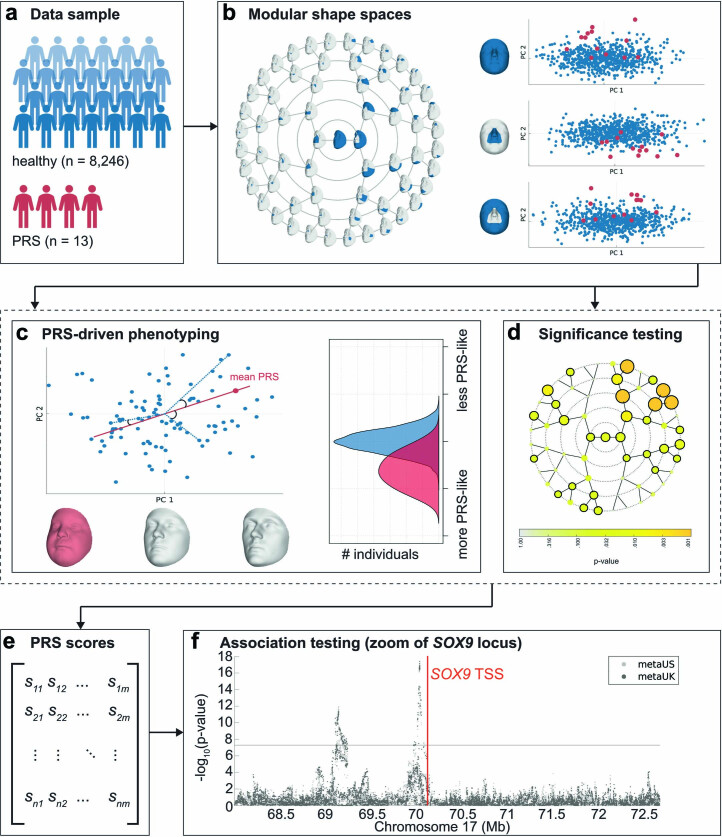
Transcriptional regulation exhibits extensive robustness, but human genetics indicates sensitivity to transcription factor (TF) dosage. Reconciling such observations requires quantitative studies of TF dosage effects at trait-relevant ranges, largely lacking so far. TFs play central roles in both normal-range and disease-associated variation in craniofacial morphology; we therefore developed an approach to precisely modulate TF levels in human facial progenitor cells and applied it to SOX9, a TF associated with craniofacial variation and disease (Pierre Robin sequence (PRS)). Most SOX9-dependent regulatory elements (REs) are buffered against small decreases in SOX9 dosage, but REs directly and primarily regulated by SOX9 show heightened sensitivity to SOX9 dosage; these RE responses partially predict gene expression responses. Sensitive REs and genes preferentially affect functional chondrogenesis and PRS-like craniofacial shape variation. We propose that such REs and genes underlie the sensitivity of specific phenotypes to TF dosage, while buffering of other genes leads to robust, nonlinear dosage-to-phenotype relationships.
Overview
The claims and statistics of this paper haven’t been checked yet.
Free: it reads the open-access text and checks the first 5 claims that cite a source we can check. Create a free account to check every claim.
Integrity signals
Registry
Cites
Statistics
Figures
Verification
Claims the paper makes
The claims and statistics of this paper haven’t been checked yet.
Free: it reads the open-access text and checks the first 5 claims that cite a source we can check. Create a free account to check every claim.
Claims other papers make about this one
Each is checked against this paper’s own text: does it say what the citing paper says it does?
The cited source says what the claim attributes to it.
In the citing paper
“Even modest changes in transcription factor levels can modulate other transcriptional programs”
From Targeting Microglial Transcriptional Reprogramming as a Therapy Strategy for Alzheimer's Disease (2026) · cites this paper as [84]
The check wasn’t confident either way, so it gives no verdict — never disputed.
In the citing paper
“supraoptimal dosing may produce adverse outcomes”
From Targeting Microglial Transcriptional Reprogramming as a Therapy Strategy for Alzheimer's Disease (2026) · cites this paper as [84]
Experimental — accuracy not yet measuredIn the citing paper
“Indeed, Naqvi et al26 found that a subset of Sox9 targets are sensitive at partial dosage depletions, whereas a much larger set of targets are affected only at full dosage depletions.”
From Transcriptome-wide analysis of differential expression in perturbation atlases (2025) · cites this paper as [26]
Self-check
Percentages, sums and reported differences re-computed from the paper’s own numbers.
The self-check needs the paper’s full text.
Citations
Cites
The GTEx Consortium atlas of genetic regulatory effects across human tissues
The GTEx Consortium, Aguet, F., Anand, S., Ardlie, K. G., Gabriel, S., Getz, G. A., Graubert, A., Hadley, K., Handsaker, R. E., Huang, K. H., et al. (2020) · Science · doi:10.1126/science.aaz1776 · Cited by 5,547
METAL: fast and efficient meta-analysis of genomewide association scans
Willer, C. J., Li, Y., & Abecasis, G. R. (2010) · Bioinformatics · doi:10.1093/bioinformatics/btq340 · Cited by 5,205
Systematic Localization of Common Disease-Associated Variation in Regulatory DNA
Maurano, M. T., Humbert, R., Rynes, E., Thurman, R. E., Haugen, E., Wang, H., Reynolds, A. P., Sandstrom, R., Qu, H., Brody, J., et al. (2012) · Science · doi:10.1126/science.1222794 · Cited by 3,716
Online Mendelian Inheritance in Man (OMIM), a knowledgebase of human genes and genetic disorders
Hamosh, A. (2004) · Nucleic Acids Research · doi:10.1093/nar/gki033 · Cited by 3,420
An Expanded View of Complex Traits: From Polygenic to Omnigenic
Boyle, E. A., Li, Y. I., & Pritchard, J. K. (2017) · Cell · doi:10.1016/j.cell.2017.05.038 · Cited by 2,851
Self-citationAn improved ATAC-seq protocol reduces background and enables interrogation of frozen tissues
Corces, M. R., Trevino, A. E., Hamilton, E. G., Greenside, P. G., Sinnott-Armstrong, N. A., Vesuna, S., Satpathy, A. T., Rubin, A. J., Montine, K. S., Wu, B., et al. (2017) · Nature Methods · doi:10.1038/nmeth.4396 · Cited by 2,496
Transcription factors: from enhancer binding to developmental control
Spitz, F., & Furlong, E. E. M. (2012) · Nature Reviews Genetics · doi:10.1038/nrg3207 · Cited by 2,227
TRRUST v2: an expanded reference database of human and mouse transcriptional regulatory interactions
Han, H., Cho, J.-W., Lee, S., Yun, A., Kim, H., Bae, D., Yang, S., Kim, C. Y., Lee, M., Kim, E., et al. (2018) · Nucleic Acids Research · doi:10.1093/nar/gkx1013 · Cited by 1,973
Campomelic dysplasia and autosomal sex reversal caused by mutations in an SRY-related gene
Foster, J. W., Dominguez-Steglich, M. A., Guioli, S., Kwok, C., Weller, P. A., Stevanović, M., Weissenbach, J., Mansour, S., Young, I. D., Goodfellow, P. N., et al. (1994) · Nature · doi:10.1038/372525a0 · Cited by 1,612
The American Soldier: Adjustment During Army Life.
Riley, J. W., Stouffer, S. A., Suchman, E. A., Devinney, L. C., Star, S. A., & Williams, R. M. (1949) · American Sociological Review · doi:10.2307/2087216 · Cited by 1,239
Cited by
Items 101–141 of 141
Multi-enhancer regulatory hubs control Th17 cell identityPreprint
Siklenka, K., Zhang, C., Li, L., Parker, M. E., Mehta, N. U., Barrera, A., Venukuttan, R., Crawford, G. E., Gersbach, C. A., Ciofani, M., et al. (2026) · bioRxiv (Cold Spring Harbor Laboratory) · doi:10.64898/2026.04.02.715458 · Cited by 1
Destain, H., Koh, A., Shin, H., Brown, A. E., & Kratsios, P. (2026) · bioRxiv (Cold Spring Harbor Laboratory) · doi:10.64898/2026.05.14.725191 · Cited by 1
Mechanisms coordinating exit from the stem cell state in mammals
Park, E. J., Levin-Ferreyra, F., & Stefano, B. D. (2026) · Genes & Development · doi:10.1101/gad.353584.125 · Cited by 1
Targeting Microglial Transcriptional Reprogramming as a Therapy Strategy for Alzheimer's Disease
Kim, B., Wang, S. S., Kim, J. R., & Kim, J. (2026) · BioEssays · doi:10.1002/bies.70186
Drouin‐Ouellet, J., Li, D., Lu, Y. R., & Echegaray, C. V. (2022) · Cellular Reprogramming · doi:10.1089/cell.2022.0105
The different faces of transcription factor sensitivity
Attwaters, M. (2023) · Nature Reviews Genetics · doi:10.1038/s41576-023-00612-x
Backup transcription factor binding sites protect human genes from mutations in the promoter
Brown, J. C. (2023) · PLoS ONE · doi:10.1371/journal.pone.0281569
Author response: Large-scale analysis of the integration of enhancer-enhancer signals by promoters
Martinez-Ara, M., Comoglio, F., & van Steensel, B. (2024) · eLife · doi:10.7554/elife.91994.3.sa3
A DNA base-specific sequence interposed between CRX and NRL contributes to RHODOPSIN expression
Maritato, R., Medugno, A., D’Andretta, E., Riso, G. D., Lupo, M., Botta, S., Marrocco, E., Renda, M., Sofia, M., Mussolino, C., et al. (2024) · Scientific Reports · doi:10.1038/s41598-024-76664-8
“TFBSs are short degenerate DNA sequences (also known as motifs) that occur as monomeric 11,12 , dimeric, and overlapping sequences embedded in cis -regulatory elements, so that the DNA context surrounding them can also influence how they are bound by TFs 13–18 .”
BackgroundA mathematical model clarifies the ABC Score formula used in enhancer-gene predictionPreprint
Nasser, J., Nam, K.-M., & Gunawardena, J. (2024) · bioRxiv (Cold Spring Harbor Laboratory) · doi:10.1101/2024.11.29.626072
“…the ABC Score and its modest input data requirements have resulted in its widespread use to interpret non-coding genetic variation [14, 16, 17], identify enhancers in disease related contexts [18, 19] and investigate the dosage effect of transcription factor concentration on gene expression [20].”
Navarro-López, B., Suárez-Ulloa, V., Baeta, M., Martos, R., Moreno-López, O., Raffone, C., Ibáñez, O. C., Egurain, H., Martínez‐Jarreta, B., García, C., et al. (2025) · SSRN Electronic Journal · doi:10.2139/ssrn.5334592
Yan, J., Cho, H., Luo, R., Zhao, J. H., Beer, M. A., Li, W., & Huangfu, D. (2026) · Cell Reports · doi:10.1101/2025.08.07.669196
Gallagher, M. D., Khalil, A. S., Liu, Q., Lungjangwa, T., Drews, A., Hanan, B. F., List, M., Hardart, H., Mooney, D. J., & Jaenisch, R. (2025) · bioRxiv (Cold Spring Harbor Laboratory) · doi:10.1101/2025.10.17.683097
“While often overlooked in traditional overexpression approaches, concentration-dependent functions have been widely reported[6, 16-18].”
Yang, F., Fan, G., Cao, J., Zhao, Q., Guo, K., Liu, M., Yin, X., Zong, H., Li, F., Wang, F., et al. (2025) · Acta Biochimica et Biophysica Sinica · doi:10.3724/abbs.2025234 · Cited by 1
“Accumulating evidence indicates that precise modulation of transcription factor levels results in dosage - dependent sensitivity [44,45], and the sustained expression of pluripotency factors promotes differentia - tion resistance by blocking lineage commitment [46–48].”
Reprogramming Osteosarcoma transcriptomic states to improve sensitivity to anti-cancer therapy
Melano, B. (2025) · eScholarship (California Digital Library)
Exploring the potential role of endothelial ZEB1 in developmental and pathological angiogenesis
Green, K. (2025) · Nottingham ePrints (University of Nottingham)
Senapati, S., Sharma, A. K., & Kumar, H. (2026) · Biophysical Journal · doi:10.1016/j.bpj.2026.02.015
López‐Malo, M., & Maerkl, S. J. (2026) · bioRxiv (Cold Spring Harbor Laboratory) · doi:10.64898/2026.03.10.710832
“Trans-properties on the other hand are less well understood [6, 7] despite growing evidence of their importance in central biological processes such as complex regulatory functions, development, and disease [8, 9, 10, 11, 12].”
Baderna, V. (2026) · heiDOK (Heidelberg University) · doi:10.11588/heidok.00038322
Laurendeau, J.-F., Mockly, S., Duran-Bishop, G., Ehresmann, S., Goretti, E., Calderon, V., Malleshaiah, M. K., & Sauvageau, M. (2026) · bioRxiv (Cold Spring Harbor Laboratory) · doi:10.64898/2026.04.10.716765
Giovou, A. E., Mulleners, O. J., Caliandro, R., Warnaar, V. A. J., Boender, A., Klerk, M., Rivaud, M. R., Kuster, D. W. D., Giacca, M., Jensen, B. K., et al. (2026) · bioRxiv (Cold Spring Harbor Laboratory) · doi:10.64898/2026.04.13.718086
KGN-functionalized PLGA-nHA scaffold modulate TGF-β and Hippo pathways for osteochondral repair
Liu, E., Peng, Y., Zuo, J., Chang, F., & Zhang, Y. (2026) · Materials & Design · doi:10.1016/j.matdes.2026.116038
High cRel-expressing germinal center B cells favor precursor plasma cell generationPreprint
Roy, S., Tabib, T., Mazumder, B., Kumar, A., Walle, E. V. D., Kumar, S., Das, J., & Roy, K. (2026) · bioRxiv (Cold Spring Harbor Laboratory) · doi:10.64898/2026.04.26.720943
“Studies on transcription factors, SOX9 and GFI1B, have shown differential functions under physiologic expression and genetic perturbation (24, 25).”
Elena, D. M., Giuliana, N., Roscigno, G., Valeria, L., Geppino, F., Viola, C., Maria, V., Angrisano, T., Dario, A., & Pollice, A. (2026) · Scientific Reports · doi:10.1038/s41598-026-53355-0
Zhong, Y., Wang, L., Yang, G., Yu, L., Qi, X., & Jiang, H. (2026) · bioRxiv (Cold Spring Harbor Laboratory) · doi:10.64898/2026.06.16.732192
Programmable CRISPRtune dissects the transcriptional repressive activity of MeCP2Preprint
Brim, J. I., Ornelas, I. J., Colias, P. J., Divekar, N. S., Xu, D., Lubin, J. P., Ferrel, S. I., Palma, L. G., Zamora, M. G. H., Pattali, R. K., et al. (2026) · bioRxiv (Cold Spring Harbor Laboratory) · doi:10.64898/2026.07.08.737375
Ponnambalam, A. R., & Pottore, K. V. (2026) · bioRxiv (Cold Spring Harbor Laboratory) · doi:10.64898/2026.07.08.737203
Liu, Y., Niu, L., Zhang, C., Bao, L., Wang, M., Liu, Q., Liu, H., Hu, Z., Shi, L., Pang, Y., et al. (2026) · Journal of Environmental Sciences · doi:10.1016/j.jes.2026.105703
Nonlinearities and Switch‐Like Behavior in Gene Expression: From Genetics to Biochemistry and Back
Veitia, R. A., & Birchler, J. A. (2026) · The FASEB Journal · doi:10.1096/fj.202603153r
“In the context of HI and as shown by Naqvi et al. [16], most targets of the TF SOX9 are poorly sensitive to dosage variation.”
InfluentialGuharajan, S., Song, X., Sengupta, S., Wu, Q., Wei, W., Xiong, Y., Jin, J., & Naqvi, S. (2026) · bioRxiv (Cold Spring Harbor Laboratory) · doi:10.64898/2026.09.11.751045
Self-citationFinnel, R. R., Musselman, J. R. B., McFadden, M. E., Silvestri, I. M., Skelton, J., Sampson, L. L., Osipovich, A. B., Wright, C. V. E., & Magnuson, M. A. (2026) · Development · doi:10.1242/dev.205751
Seluzicki, A., Lee, T. A., Hartwick, N. T., Michael, T. P., Ecker, J. R., & Chory, J. (2026) · Plant and Cell Physiology · doi:10.1093/pcp/pcag126
Oriquat, G., Ahmed, H. M., Rizaev, J., Kucharova, M., Polatova, D. S., Mhysn, M. A., & Tailor, N. K. (2026) · Frontiers in Oncology · doi:10.3389/fonc.2026.1979150
Tumor suppressor-like mutations mark a dosage-constrained dependency in leukemiaPreprint
Lee, J. D., Uyemura, M. M., Lamini, F., Posey, R. R., Shin, E. H., Harris, A. C., Ottone, T., Cheloni, G., Chou, D. B., Trinh, B. Q., et al. (2026) · bioRxiv (Cold Spring Harbor Laboratory) · doi:10.64898/2026.09.29.755484
“Dosage corridor genes share features with developmental "Goldilocks" factors but arise from a distinct mechanism 80,81 .”
A systems perspective on monoallelic inborn errors of immunity
Werner, M., Spaan, A. N., & Mogensen, T. H. (2026) · Nature Genetics · doi:10.1038/s41588-026-02784-8
AND Gates as Sources of Biological Nonlinearity: Relevance to Genetic Dominance
Toussirt, A., & Veitia, R. A. (2026) · Advanced Biology · doi:10.1002/adbi.70168
“As an example in the context of HI, experimental variation of the TF SOX9, which is haploinsufficient, shows that even modest reductions in protein levels can produce more-than-proportional reductions in transcriptional output for a subset of target genes [ 4 ].”
High-throughput single-transcription factor-mediated direct cell-fate engineering
Jang, Y., Lee, M., & Kim, J. (2026) · Experimental & Molecular Medicine · doi:10.1038/s12276-026-01884-z
Chen, D., Thompson, S., & Johnson, M. (2026) · Journal Of Biochemical Technology · doi:10.51847/jgb3to66tm
Metadata
- Authors
- Naqvi, S., Kim, S., Hoskens, H., Matthews, H. S., Spritz, R. A., Klein, O. D., Hallgrímsson, B., Swigut, T., Claes, P., Pritchard, J. K., & Wysocka, J.
- Affiliations
- Stanford Medicine (US)
- Howard Hughes Medical Institute (US)
- University of Calgary (CA)
- Universitair Ziekenhuis Leuven (BE)
- University of Colorado Anschutz (US)
- Cedars-Sinai Medical Center (US)
- Stanford University (US)
- Corresponding author
- Pritchard, Jonathan K.
- Wysocka, Joanna
- ORCID
- Venue
- Nature Genetics
- Published
- 2023-04-06
- Volume
- 55
- Issue
- 5
- Pages
- 841-851
- ISSN
- 1061-4036 (ISSN-L)
- 1546-1718
- PMC
- PMC10181932
- OpenAlex
- W4362663646
- Cited by
- 132
- References
- 80
- Citations by year
- 2026: 35 · 2025: 52 · 2024: 27 · 2023: 17
- FWCI
- 11.67
- Type
- journal article
- Language
- en
- Open access
- hybrid
- doi.org
- Licence
- cc-by
- creativecommons.org/licenses/by/4.0 (tdm)
- creativecommons.org/licenses/by/4.0 (vor)
- Locations
- Nature Genetics (publishedVersion, cc-by)
- bioRxiv (Cold Spring Harbor Laboratory) (acceptedVersion, cc-by)
- PubMed Central (publishedVersion, cc-by)
- PubMed (publishedVersion)
- eScholarship (California Digital Library) (submittedVersion, cc-by)
- Lirias (KU Leuven) (submittedVersion, cc-by)
- Funders
- Howard Hughes Medical Institute
- JW was supported by a Lorry Lokey endowed professorship and a Stinehart Reed award
- Helen Hay Whitney Foundation
- Damon Runyon Cancer Research Foundation
- U.S. Department of Health & Human Services | National Institutes of Health (U01DE024440, 1-R01-DE027023, 2-R01-DE027023, R01HG008140, R01HG011432)
- KU Leuven (BOF-C1, C14/15/081 & C14/20/081)
- The Research Program of the Research Foundation - Flanders (Belgium)
- Topics
- Life Sciences › Biochemistry, Genetics and Molecular Biology › Molecular Biology › Genomics and Chromatin Dynamics
- Life Sciences › Biochemistry, Genetics and Molecular Biology › Molecular Biology › Gene Regulatory Network Analysis
- Life Sciences › Biochemistry, Genetics and Molecular Biology › Molecular Biology › Developmental Biology and Gene Regulation
- Keywords
- transcription factor dosage, dosage sensitivity, SOX9, craniofacial morphology, regulatory elements, Pierre Robin sequence, chondrogenesis, gene expression regulation
- MeSH terms
- Gene Expression Regulation, Humans, Phenotype, Pierre Robin Syndrome, Regulatory Sequences, Nucleic Acid, SOX9 Transcription Factor
About these checks
Registry, retraction, Cites and statistics results are computed, not judged, with one exception: a printed reference that no index lists is read once by a model before it counts as a citation error. Claims are extracted by a model and kept only when their quote appears verbatim in the text; each cited source is then checked, with a model’s help, for whether it says what the claim relies on. Those verdicts can be wrong — read the claim’s quote and the cited source before relying on one.
Statistics and arithmetic are recomputed, not judged.
Confidence bands are shown only for fields calibrated on our annotated test set. None is calibrated yet, so no band is shown.
What counts as a claim ›How we measure confidence ›How we check this ›
Are you an author, or do you see a problem with this page? Request a review
Data sources
Bibliographic data: Semantic Scholar, OpenAlex, Crossref.
Contains information from the Semantic Scholar Academic Graph Datasets, made available under the ODC Attribution License (ODC-BY 1.0).
Semantic Scholar’s data is described in: Kinney, R., et al. (2023). The Semantic Scholar Open Data Platform. arXiv:2301.10140.
