

Genomic and transcriptomic analyses of aortic stenosis enhance therapeutic target discovery and disease prediction
Open accessThe DOI matches its Crossref record; 71 of the 71 references it cites were found in a registry or an index; 22 of the 28 sources its claims cite were checked for support.
Abstract
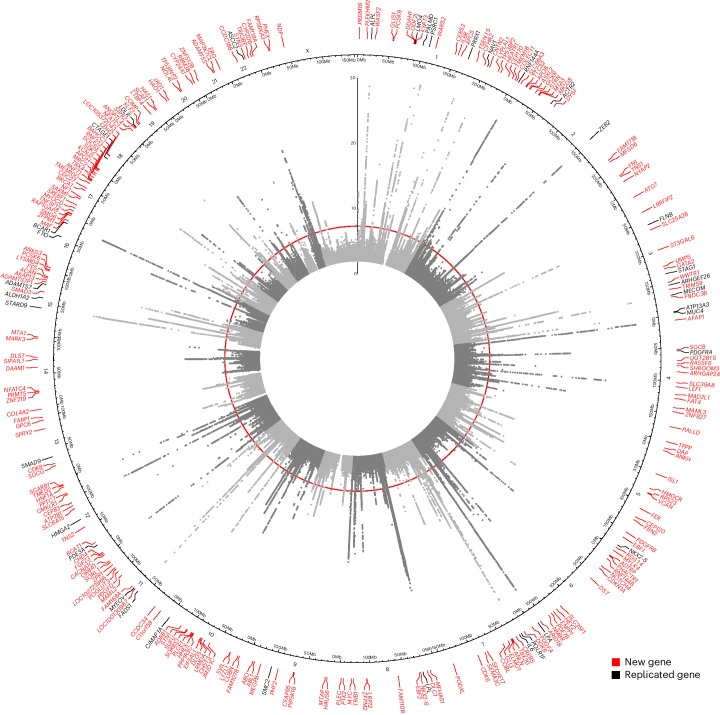
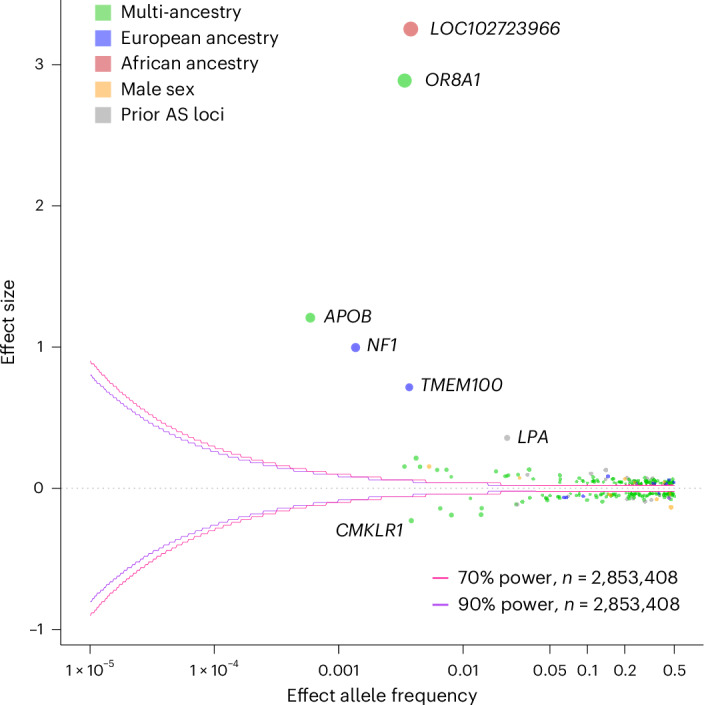
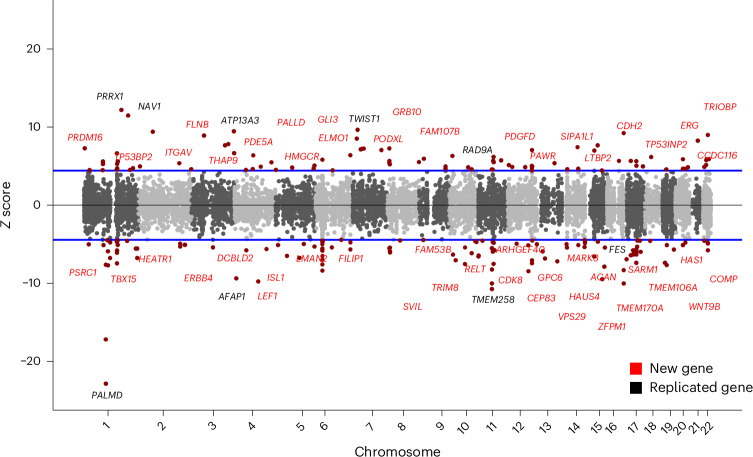
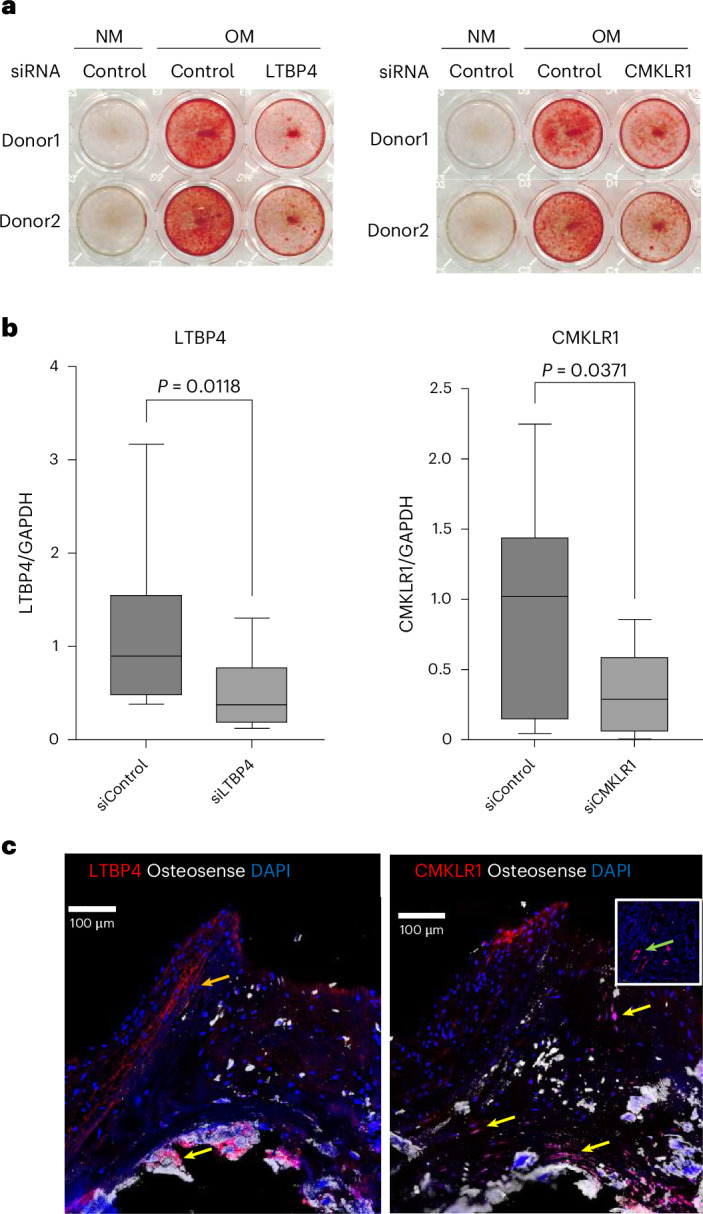
Aortic stenosis (AS) is a common valvular heart disease and has no pharmacological therapies. We performed a multi-ancestry genome-wide association meta-analysis of 86,864 AS cases among 2,853,408 individuals, discovering 241 autosomal independent risk loci and 3 X chromosome risk loci. We additionally performed sex-stratified and ancestry-stratified genome-wide association studies (GWASs), identifying an additional 5 sex-specific risk loci, 11 risk loci in European ancestry individuals and 1 risk locus in African ancestry individuals. We also performed a transcriptome-wide association study using expression quantitative trait loci from human aortic valves, discovering 54 new genes for which genetically predicted expression influences the risk of AS. We then generated a new polygenic risk score for AS. Finally, we performed gene silencing experiments targeting biologically relevant genes identified by our GWAS. Silencing of CMKLR1 and LTBP4 in human valvular interstitial cells substantially decreased mineralization, implicating a role for polyunsaturated fatty acids and transforming growth factor β signaling in AS.
Overview
CoChat Summary
TL;DR
This multi-ancestry GWAS and transcriptomic study of aortic stenosis identified 261 independent risk loci and 54 new TWAS genes, and generated an AS polygenic risk score that outperformed a prior score. Functional silencing implicated CMKLR1 and LTBP4 in valvular calcification.
Key findings
- In 86,864 AS cases among 2,853,408 individuals, the multi-ancestry GWAS found 241 autosomal and 3 X chromosome independent risk loci; combined analyses yielded 261 independent lead variants, with 223 reported as new in the Results (the Discussion states 225 new).
- TWAS using human aortic valve eQTLs identified 192 Bonferroni-significant genes, 66 with significant colocalization, and 54 of 66 were new compared with prior AS TWAS; 8 genes had an expression specificity score >0.1.
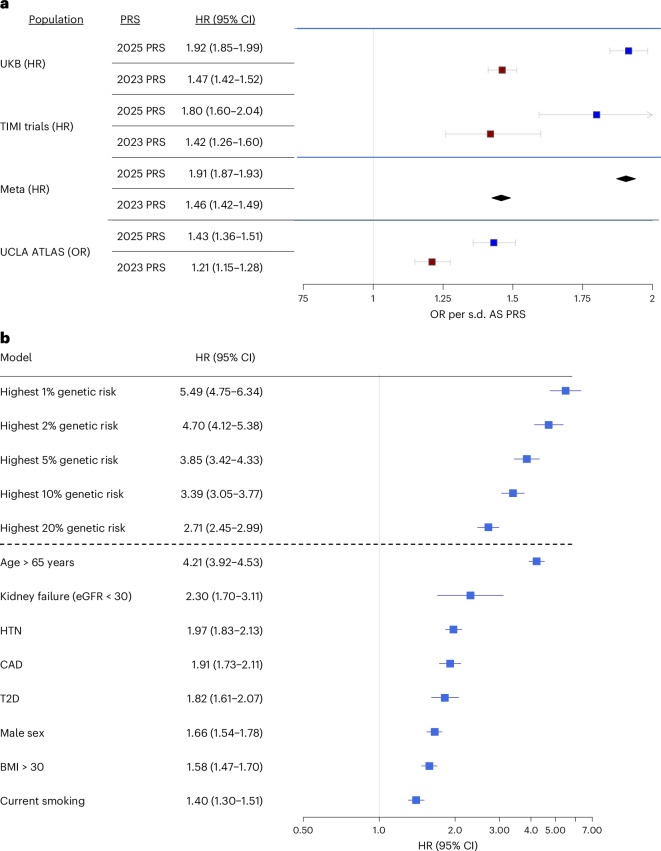
- The best AS PRS used LDpred2 with proportion of causal SNPs 0.056, heritability 1.4, and sparsity enabled; it had Nagelkerke r² = 0.007 in MGBB and validated with adjusted HR = 1.92 (1.85–1.99) per 1 s.d. in UKB and HR = 1.80 (1.60–2.04) in TIMI trials.
- Silencing CMKLR1 and LTBP4 in human valvular interstitial cells significantly reduced calcification (CMKLR1 mean difference = −0.19, P = 0.028; LTBP4 mean difference = −0.31, P = 0.049), whereas silencing CLCA2, CERS2, or CEP120 did not substantially suppress calcification.
Methods
- Multi-ancestry GWAS meta-analysis of 30 studies in the International Aortic Valve Genetics Consortium, including autosomes and X chromosome, with ancestry-stratified and sex-stratified analyses; fixed-effects inverse-variance weighted meta-analysis was used, with genome-wide significance at P < 5 × 10⁻⁸.
- TWAS used human aortic valve transcriptomes and eQTLs from 484 individuals in QUEBEC-CAVS, analyzed with S-PrediXcan/MetaXcan and COLOC; Bonferroni threshold was P < 4.73 × 10⁻⁶ and colocalization was defined as PP4 > 0.75.
- PRS development used LDpred2 and PRS-CS, with validation in MGBB, UKB, UCLA ATLAS, and six TIMI trials; functional work used siRNA silencing of five prioritized genes in human VICs, Alizarin red calcification assays, and immunofluorescence in human aortic valves.
Limitations
- The paper states that AS was defined using a claims-based definition validated in MVP with positive predictive value 0.78 and negative predictive value 0.99; ICD-9 code 424.1 captures both AS and aortic regurgitation, so mixed valve disease may be included.
- The paper states the population is predominantly of European genetic ancestry, limiting generalizability; the largest contributor was MVP, a >95% male population, skewing cases to majority male and giving better power for discovery in men than women, with possible inclusion of a small number of bicuspid AV cases.
- Evident from the text: non-European ancestry analyses were underpowered, with no genome-wide significant variants in Hispanic, East Asian, or South Asian ancestries and only one African ancestry locus; PRS performance in MGBB was modest (Nagelkerke r² = 0.007), and non-European ORs were lower (1.23–1.38) than European HRs.
Model-written summary. Check it against the paper before relying on it.
Integrity signals
Registry
Cites
Statistics
Figures
Verification
Claims the paper makes
14 Valid · 1 Not valid · 2 Not checked · 97 Own results and interpretations
The cited sources support only part of this claim — read each source’s verdict below.
In the paper
“We also performed a transcriptome-wide association study using expression quantitative trait loci from human aortic valves, discovering 54 new genes for which genetically predicted expression influences the risk of AS.”
- Also stated in: § Transcriptome-wide association analysis · plain
“The majority of gene associations (82%, 54/66) were newly compared to prior published AS TWAS9–11”
§ Genomic and transcriptomic analyses of aortic stenosis enhance therapeutic target discovery and disease prediction > Abstract
What the sources say
- Partly supportedcites [9] Theriault, S. et al. Integrative genomic analyses identify candidate causal genes for calcific aortic valve stenosis involving tissue-specific regulation. Nat. Commun. 15, 2407 (2024). 38494474 PMC10944835 sourceExperimental — accuracy not yet measured
The Methods describe a TWAS combining genetic effects on expression in human aortic valves with GWAS results. The Results report 35 genes with significant associations, including genes identified previously—not 54 new genes. The paper reserves its stronger causal interpretation for a smaller subset assessed through colocalization and Mendelian randomization. (LLM, conf=0.90)
- Partly supportedcites [10] Theriault, S. et al. A transcriptome-wide association study identifies PALMD as a susceptibility gene for calcific aortic valve stenosis. Nat. Commun. 9, 988 (2018). 29511167 PMC5840407 sourceExperimental — accuracy not yet measured
The Methods section ('Transcriptome-wide association study'; page unavailable) confirms that the authors used human aortic-valve eQTLs to predict gene expression and test its association with calcific aortic valve stenosis. The Introduction identifies PALMD as the TWAS finding; our copy does not support the claim that the study discovered 54 new risk genes. (LLM, conf=0.89)
- Not checked — no full text of the sourcecites [11] Theriault, S. et al. Genetic association analyses highlight IL6, ALPL, and NAV1 as 3 new susceptibility genes underlying calcific aortic valve stenosis. Circ. Genom. Precis. Med. 12, e002617 (2019). 32141789 source
plainstates an associationn = 86,864- Asserted: passes — The authors put it forward as true.
- Checkable: passes — It can be checked against evidence.
- Load-bearing: passes — The paper’s conclusions depend on it.
- Based: passes — The paper gives a reason why it holds.
- Rests on an assumption not shown here.
- Also stated in: § Transcriptome-wide association analysis · plain
The cited sources support only part of this claim — read each source’s verdict below.
In the paper
“This result is concordant with robust translational data suggesting that apolipoprotein B-containing lipoproteins, including Lp(a), are causal for AS7,37,38.”
§ Genomic and transcriptomic analyses of aortic stenosis enhance therapeutic target discovery and disease prediction > Discussion
What the sources say
- Supportedcites [7] Small, A. M. et al. Multiancestry genome-wide association study of aortic stenosis identifies multiple novel loci in the Million Veteran Program. Circulation 147, 942–955 (2023). 36802703 PMC10806851 source
The Introduction says Mendelian randomization studies support Lp(a) as a causal risk factor for calcific aortic stenosis. The Results report associations of apoB, LDL-C, and Lp(a) with stenosis, while the Discussion describes prior genetic and translational research implicating LDL-C alongside Lp(a) in its pathogenesis. This supports the citing sentence’s qualified wording, “suggesting.” (LLM, conf=0.91)
- Supportedcites [37] Nazarzadeh, M. et al. Plasma lipids and risk of aortic valve stenosis: a Mendelian randomization study. Eur. Heart J. 41, 3913–3920 (2020). 32076698 PMC7654932 source
The Discussion reports a causal association between LDL-cholesterol and aortic stenosis and describes the causal link for elevated Lp(a) as established. The Sensitivity analysis also reports that the LDL-cholesterol association persisted after adjustment for Lp(a). The paper therefore supports the cited sentence’s qualified claim, although it did not directly test all apolipoprotein B-containing lipoproteins as a class. (LLM, conf=0.88)
- Partly supportedcites [38] Thanassoulis, G. et al. Associations of long-term and early adult atherosclerosis risk factors with aortic and mitral valve calcium. J. Am. Coll. Cardiol. 55, 2491–2498 (2010). 20510217 PMC3042249 sourceExperimental — accuracy not yet measured
The AORTIC VALVE CALCIUM discussion reports an association between long-term cholesterol levels and aortic valve calcium, and the MITRAL VALVE CALCIUM discussion describes experimental evidence that lipids contribute to early valvular calcification (page numbers unavailable). The paper does not establish that apolipoprotein B-containing lipoproteins, specifically Lp(a), cause clinical aortic stenosis; it also notes that lipid-lowering trials have generally been disappointing. (LLM, conf=0.84)
boostedstates a cause- Asserted: passes — The authors put it forward as true.
- Checkable: passes — It can be checked against evidence.
- Load-bearing: passes — The paper’s conclusions depend on it.
- Based: passes — The paper gives a reason why it holds.
- Supported
Every source the paper cites for this claim was checked and supports it.
In the paper
“we described the importance of polyunsaturated fatty acid (PUFA) biosynthesis in the pathogenesis of AS by identifying genome-wide significant variation at the FADS1/FADS2 locus, which we replicate in the current study.”
§ Genomic and transcriptomic analyses of aortic stenosis enhance therapeutic target discovery and disease prediction > Discussion
What the sources say
- Supportedcites [29] Chen, H. Y. et al. Association of FADS1/2 locus variants and polyunsaturated fatty acids with aortic stenosis. JAMA Cardiol. 5, 694–702 (2020). 32186652 PMC7081150 source
The Results (Association of the FADS1/2 Locus With AS and AVC; page not provided) report a significant association between the FADS1/2 variant rs174547 and AS in the replication cohorts alone. The combined discovery and replication analysis reached genome-wide significance. (LLM, conf=0.93)
plainstates an association- Asserted: passes — The authors put it forward as true.
- Checkable: passes — It can be checked against evidence.
- Load-bearing: passes — The paper’s conclusions depend on it.
- Based: passes — The paper gives a reason why it holds.
- Supported
Every source the paper cites for this claim was checked and supports it.
In the paper
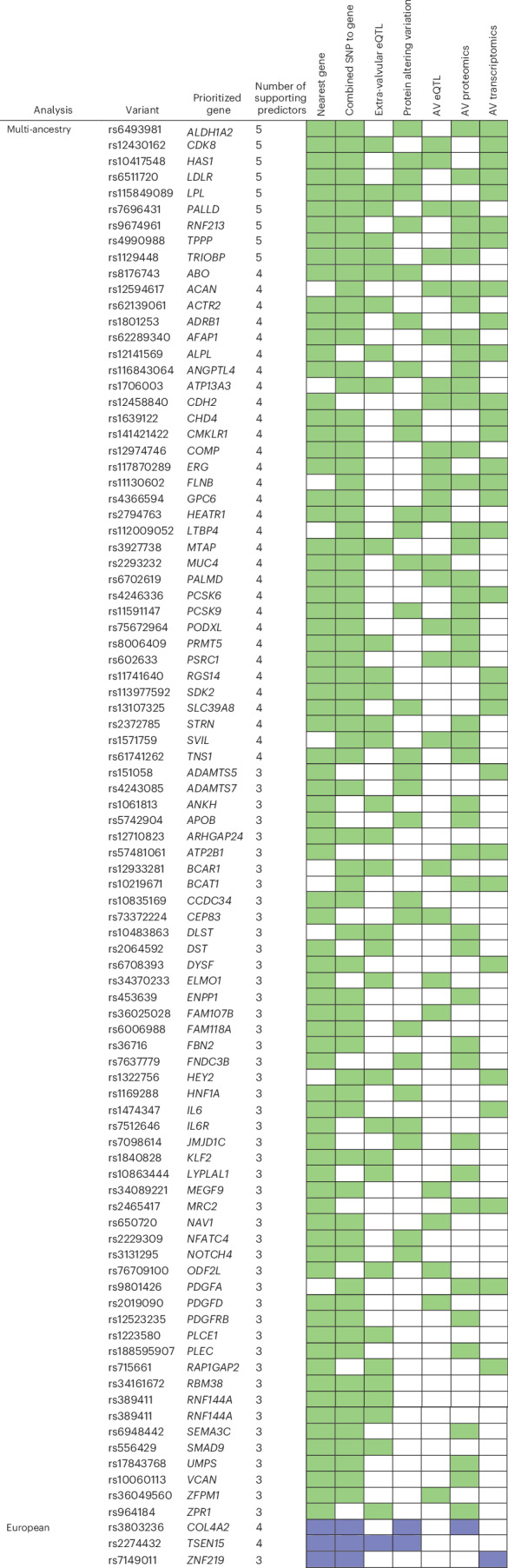
“Of the 261 prioritized genes, 127 (47%) were expressed in the AV as evidenced by having either a transcript or a protein product observed in proteomics or transcriptomic data of the human AV18,19 or with genetically predicted expression substantially modifying risk of AS in TWAS using AV tissue transcriptomes.”
§ Genomic and transcriptomic analyses of aortic stenosis enhance therapeutic target discovery and disease prediction > Results > Prioritization of candidate causal genes
What the sources say
- Supportedcites [18] Blaser, M. C. et al. Multiomics of tissue extracellular vesicles identifies unique modulators of atherosclerosis and calcific aortic valve stenosis. Circulation 148, 661–678 (2023). 37427430 PMC10527599 source
Split into 2 atoms — 2 confirmed, 0 partially supported, 0 disputed, 0 misattributed, 0 unverifiable. Expand the claim to see per-atom verdicts.
- Supportedcites [19] Schlotter, F. et al. Spatiotemporal multi-omics mapping generates a molecular atlas of the aortic valve and reveals networks driving disease. Circulation 138, 377–393 (2018). 29588317 PMC6160370 source
Split into 2 atoms — 2 confirmed, 0 partially supported, 0 disputed, 0 misattributed, 0 unverifiable. Expand the claim to see per-atom verdicts.
plainstates an association- Asserted: passes — The authors put it forward as true.
- Checkable: passes — It can be checked against evidence.
- Load-bearing: passes — The paper’s conclusions depend on it.
- Based: passes — The paper gives a reason why it holds.
- Rests on an assumption not shown here.
- Supported
The cited sources that could be checked couldn’t confirm or dispute this claim.
In the paper
“A total of 220 (84%) lead variants had at least one pleiotropic association (Supplementary Table 13), among which 208 were multi-ancestry lead variants, 8 were European genetic ancestry lead variants and 3 were male sex-stratified lead variants.”
§ Genomic and transcriptomic analyses of aortic stenosis enhance therapeutic target discovery and disease prediction > Results > Pleiotropic associations in AS
What the sources say
- Could not verifycites [20] Verma, A. et al. Diversity and scale: genetic architecture of 2068 traits in the VA Million Veteran Program. Science 385, eadj1182 (2024). 39024449 PMC12857194 sourceExperimental — accuracy not yet measured
The Results section, “Cross-trait genetic architecture identifies pleiotropic genes” (page unavailable), reports pleiotropy for genes, not the claimed proportion of lead variants. Searches for 220, 261, 84%, and the ancestry breakdown found no passage in our copy establishing that 220 of 261 lead variants had a pleiotropic association. (LLM, conf=0.76)
plainstates an association- Asserted: passes — The authors put it forward as true.
- Checkable: passes — It can be checked against evidence.
- Load-bearing: passes — The paper’s conclusions depend on it.
- Based: passes — The paper gives a reason why it holds.
- Could not verify
60 more claims · 3 with their cited sources checked
Create a free account to see all 114 claims and to verify the 1 reference still open.
- It may state two separate claims as one. 38
- Probably not a substantial claim. 15
Self-check
Percentages, sums and reported differences re-computed from the paper’s own numbers.
Each contradiction between two passages listed here was confirmed by an independent check.
Rated minor: it would not touch a result — a value no result rests on, a p-value that stays on the same side of the significance level, or a conflict that is clerical, resolved elsewhere in the paper, or outside its own findings.
In the paper
“Of the 261 prioritized genes, 127 (47%) were expressed in the AV”
§ Genomic and transcriptomic analyses of aortic stenosis enhance therapeutic target discovery and disease prediction > Results > Prioritization of candidate causal genes
Reported 47 · recomputed 48.659004
Rated minor: it would not touch a result — a value no result rests on, a p-value that stays on the same side of the significance level, or a conflict that is clerical, resolved elsewhere in the paper, or outside its own findings.
In the paper
§ Genomic and transcriptomic analyses of aortic stenosis enhance therapeutic target discovery and disease prediction > Discussion
“In summary, we conducted a large GWAS of AS, identifying 261 independent risk loci, 225 of which were new.”
§ Genomic and transcriptomic analyses of aortic stenosis enhance therapeutic target discovery and disease prediction > Discussion
“We discovered 261 independent risk loci, replicating 38 prior AS risk loci, and contributing 223 (85%) new risk loci for AS.”
Citations
Cites
Enrichr: interactive and collaborative HTML5 gene list enrichment analysis tool
Chen, E. Y., Tan, C. M., Kou, Y., Duan, Q., Wang, Z., Meirelles, G. V., Clark, N. R., & Ma’ayan, A. (2013) · BMC Bioinformatics · doi:10.1186/1471-2105-14-128 · Cited by 7,814 · cited 1×
“We additionally annotated causal gene sets using Enrichr, a web-based software that prioritizes gene-set ontologies from a provider-designated list of genes 61 .”
Dapagliflozin and Cardiovascular Outcomes in Type 2 Diabetes
Wiviott, S. D., Raz, I., Bonaca, M. P., Mosenzon, O., Kato, E. T., Cahn, A., Silverman, M. G., Zelniker, T. A., Kuder, J. F., Murphy, S. A., et al. (2019) · New England Journal of Medicine · doi:10.1056/nejmoa1812389 · Cited by 6,382
Self-citationEvolocumab and Clinical Outcomes in Patients with Cardiovascular Disease
Sabatine, M. S., Giugliano, R. P., Keech, A. C., Honarpour, N., Wiviott, S. D., Murphy, S. A., Kuder, J. F., Wang, H., Liu, T., Wasserman, S. M., et al. (2017) · New England Journal of Medicine · doi:10.1056/nejmoa1615664 · Cited by 6,138
Self-citationLD Score regression distinguishes confounding from polygenicity in genome-wide association studies
Schizophrenia Working Group of the Psychiatric Genomics Consortium, Bulik-Sullivan, B. K., Loh, P.-R., Finucane, H. K., Ripke, S., Yang, J., Patterson, N., Daly, M. J., Price, A. L., & Neale, B. M. (2015) · Nature Genetics · doi:10.1038/ng.3211 · Cited by 5,559 · cited 1×
“LD score regression intercepts were calculated for each GWAS using LD score (v.1.0.1) 45 and corrected standard errors (SEldsc) were calculated by multiplying the standard error by the square root of the LD score regression intercept in cases where the LD score regression intercept was more than 1.”
InfluentialThe GTEx Consortium atlas of genetic regulatory effects across human tissues
The GTEx Consortium, Aguet, F., Anand, S., Ardlie, K. G., Gabriel, S., Getz, G. A., Graubert, A., Hadley, K., Handsaker, R. E., Huang, K. H., et al. (2020) · Science · doi:10.1126/science.aaz1776 · Cited by 5,547 · cited 4×
“We also compared relative gene expression between the AV and 43 GTEx 55 tissues using previously calculated ESS 9 .”
InfluentialEdoxaban versus warfarin in patients with atrial fibrillation
Giugliano, R. P., Ruff, C. T., Braunwald, E., Murphy, S. A., Wiviott, S. D., Halperin, J. L., Waldo, A. L., Ezekowitz, M. D., Weitz, J. I., Špinar, J., et al. (2013) · New England Journal of Medicine · doi:10.1056/nejmoa1310907 · Cited by 5,164
Self-citationCommon polygenic variation contributes to risk of schizophrenia and bipolar disorder
The International Schizophrenia Consortium (2009) · Nature · doi:10.1038/nature08185 · Cited by 4,821
Giambartolomei, C., Vukcevic, D., Schadt, E. E., Franke, L., Hingorani, A. D., Wallace, C., & Plagnol, V. (2014) · PLoS Genetics · doi:10.1371/journal.pgen.1004383 · Cited by 4,261 · cited 13×
“To more comprehensively investigate the genetic architecture of AS, we leveraged data from 30 studies to (1) perform a large, ethnically diverse GWAS and transcriptome-wide association study (TWAS) to date of AS, (2) perform the first X chromosome analysis of AS, (3) characterize sex-specific and ancestry-specific gen…”
InfluentialPredicting Functional Effect of Human Missense Mutations Using PolyPhen‐2
Adzhubei, I., Jordan, D. M., & Sunyaev, S. R. (2013) · Current Protocols in Human Genetics · doi:10.1002/0471142905.hg0720s76 · Cited by 3,705 · cited 1×
“57) to be probably damaging or by SIFT 58 to be deleterious or were protein truncating.”
Saxagliptin and cardiovascular outcomes in patients with type 2 diabetes mellitus
Scirica, B. M., Bhatt, D. L., Braunwald, E., Steg, P. G., Davidson, J., Hirshberg, B., Ohman, P., Frederich, R., Wiviott, S. D., Hoffman, E. B., et al. (2013) · New England Journal of Medicine · doi:10.1056/nejmoa1307684 · Cited by 3,470
SIFT web server: predicting effects of amino acid substitutions on proteins
Sim, N.-L., Kumar, P., Hu, J., Henikoff, S., Schneider, G., & Ng, P. C. (2012) · Nucleic Acids Research · doi:10.1093/nar/gks539 · Cited by 2,411 · cited 1×
“57) to be probably damaging or by SIFT 58 to be deleterious or were protein truncating.”
Sequencing of 53,831 diverse genomes from the NHLBI TOPMed Program
Taliun, D., Harris, D. N., Kessler, M. D., Carlson, J., Szpiech, Z. A., Torres, R., Taliun, S. A. G., Corvelo, A., Gogarten, S. M., Kang, H. M., et al. (2021) · Nature · doi:10.1038/s41586-021-03205-y · Cited by 2,213 · cited 1×
“Most studies performed genome-wide imputation with the NHLBI Trans-Omics for Precision Medicine (TOPMed) imputation panel 42 .”
Self-citationLong-term use of ticagrelor in patients with prior myocardial infarction
Bonaca, M. P., Bhatt, D. L., Cohen, M., Steg, P. G., Storey, R. F., Jensen, E. C., Magnani, G., Bansilal, S., Fish, M. P., Im, K., et al. (2015) · New England Journal of Medicine · doi:10.1056/nejmoa1500857 · Cited by 1,999
Self-citationPolygenic prediction via Bayesian regression and continuous shrinkage priors
Ge, T., Chen, C.-Y., Ni, Y., Feng, Y.-C. A., & Smoller, J. W. (2019) · Nature Communications · doi:10.1038/s41467-019-09718-5 · Cited by 1,922 · cited 5×
“LD reference panels for both LDpred2 and PRS-CS were built using 1000G data of matched populations for each population-specific AS meta-GWAS (European, African, Hispanic, East Asian and South Asian).”
InfluentialA gene-based association method for mapping traits using reference transcriptome data
Gamazon, E. R., Wheeler, H. E., Shah, K. P., Mozaffari, S. V., Aquino-Michaels, K., Carroll, R. J., Eyler, A. E., Denny, J. C., GTEx Consortium, Nicolae, D. L., et al. (2015) · Nature Genetics · doi:10.1038/ng.3367 · Cited by 1,829 · cited 1×
“We used our human AV transcriptomic data to generate a gene-expression model estimating the regulatory effects of SNPs on protein-coding gene expression using the software PredictDB (v7) 49 .”
Intensive Lipid Lowering with Simvastatin and Ezetimibe in Aortic Stenosis
Rossebø, A. B., Pedersen, T. R., Boman, K., Brudi, P., Chambers, J. B., Egstrup, K., Gerdts, E., Gohlke-Bärwolf, C., Holme, I., Kesäniemi, Y. A., et al. (2008) · New England Journal of Medicine · doi:10.1056/nejmoa0804602 · Cited by 1,644
Zhou, W., Nielsen, J. B., Fritsche, L. G., Dey, R., Gabrielsen, M. E., Wolford, B. N., LeFaive, J., VandeHaar, P., Gagliano, S. A., Gifford, A., et al. (2018) · Nature Genetics · doi:10.1038/s41588-018-0184-y · Cited by 1,544 · cited 1×
“After quality control and imputation, participating studies performed a GWAS using either SAIGE 43 or REGENIE 44 for both autosomes stratified by genetic ancestry, as well as autosomes and the X chromosome, stratified by sex.”
Computationally efficient whole-genome regression for quantitative and binary traits
Mbatchou, J., Barnard, L., Backman, J., Marcketta, A., Kosmicki, J. A., Ziyatdinov, A., Benner, C., O’Dushlaine, C., Barber, M., Boutkov, B., et al. (2021) · Nature Genetics · doi:10.1038/s41588-021-00870-7 · Cited by 1,502 · cited 1×
“After quality control and imputation, participating studies performed a GWAS using either SAIGE 43 or REGENIE 44 for both autosomes stratified by genetic ancestry, as well as autosomes and the X chromosome, stratified by sex.”
Kronenberg, F., Mora, S., Stroes, E. S. G., Ference, B. A., Arsenault, B. J., Berglund, L., Dweck, M. R., Koschinsky, M., Lambert, G., Mach, F., et al. (2022) · European Heart Journal · doi:10.1093/eurheartj/ehac361 · Cited by 1,449 · cited 1×
“Motivated by the genetic associations, clinical trials are underway to test whether Lp(a) lowering slows the progression of AS 17 (NCT05646381).”
A Randomized Trial of Intensive Lipid-Lowering Therapy in Calcific Aortic Stenosis
Cowell, S. J., Newby, D. E., Prescott, R. J., Bloomfield, P., Reid, J., Northridge, D. B., & Boon, N. A. (2005) · New England Journal of Medicine · doi:10.1056/nejmoa043876 · Cited by 1,146
Genetic Associations with Valvular Calcification and Aortic Stenosis
Thanassoulis, G., Campbell, C. Y., Owens, D. S., Smith, J. G., Smith, A. V., Peloso, G. M., Kerr, K. F., Pechlivanis, S., Budoff, M. J., Harris, T. B., et al. (2013) · New England Journal of Medicine · doi:10.1056/nejmoa1109034 · Cited by 1,008
Self-citationChan, K. L., Teo, K., Dumesnil, J. G., Ni, A., & Tam, J. (2010) · Circulation · doi:10.1161/circulationaha.109.900027 · Cited by 815 · cited 2×
“Read counts were generated using GENCODE Release 41 on build GRCh38.”
Biological interpretation of genome-wide association studies using predicted gene functions
Pers, T. H., Karjalainen, J. M., Chan, Y., Westra, H.-J., Wood, A. R., Yang, J., Lui, J. C., Vedantam, S., Gustafsson, S., Esko, T., et al. (2015) · Nature Communications · doi:10.1038/ncomms6890 · Cited by 787 · cited 1×
“We used DEPICT (v1) to prioritize causal gene sets from our multi-ancestry AS GWAS summary statistics 59 .”
Self-citationGlobal epidemiology of valvular heart disease
Coffey, S., Roberts-Thomson, R., Brown, A., Carapetis, J., Chen, M., Enriquez-Sarano, M., Zühlke, L., & Prendergast, B. D. (2021) · Nature Reviews Cardiology · doi:10.1038/s41569-021-00570-z · Cited by 770 · cited 1×
“Aortic stenosis (AS) is a common valvular heart abnormality with an estimated global prevalence of more than nine million individuals 1 .”
LDpred2: better, faster, stronger
Privé, F., Arbel, J., & Vilhjálmsson, B. J. (2021) · Bioinformatics · doi:10.1093/bioinformatics/btaa1029 · Cited by 726 · cited 1×
“62) and PRS-CS 63 , both of which use Bayesian approaches using GWAS summary-level data.”
GWAMA: software for genome-wide association meta-analysis
Mägi, R., & Morris, A. P. (2010) · BMC Bioinformatics · doi:10.1186/1471-2105-11-288 · Cited by 603 · cited 1×
“2.2) 46 with SEldsc to correct for inflation.”
InfluentialStegle, O., Parts, L., Durbin, R., & Winn, J. (2010) · PLoS Computational Biology · doi:10.1371/journal.pcbi.1000770 · Cited by 497 · cited 1×
“Elastic-net models were trained using nested cross-validation from genotype and normalized gene expression data adjusted for age, sex, smoking status (current or not), the first 60 probabilistic estimation of expression residuals 50 factors, and the first five ancestry-based principal components.”
TGF-β signaling in vascular fibrosis
RUIZORTEGA, M., RODRIGUEZVITA, J., SANCHEZLOPEZ, E., CARVAJAL, G., & EGIDO, J. (2007) · Cardiovascular Research · doi:10.1016/j.cardiores.2007.02.008 · Cited by 492 · cited 1×
“TGFβ has diverse and tissue-specific biologic roles; however, it is frequently implicated as a modulator of vascular calcification 35 .”
Diversity and scale: Genetic architecture of 2068 traits in the VA Million Veteran Program
Verma, A., Huffman, J. E., Rodriguez, A., Conery, M., Liu, M., Ho, Y.-L., Kim, Y., Heise, D. A., Guare, L., Panickan, V. A., et al. (2024) · Science · doi:10.1126/science.adj1182 · Cited by 463 · cited 9×
“We evaluated all 261 independent lead variants for pleiotropic associations across 2,068 traits, including 1,854 binary and 214 quantitative traits, using summary phenome-wide association study (PheWAS) data from the Million Veteran Program (MVP) 20 .”
InfluentialSelf-citationO’Donoghue, M. L., Braunwald, E., White, H. D., Steen, D. P., Lukas, M. A., Tarka, E., Steg, P. G., Hochman, J. S., Bode, C., Maggioni, A. P., et al. (2014) · JAMA · doi:10.1001/jama.2014.11061 · Cited by 456
Abundant associations with gene expression complicate GWAS follow-up
Liu, B., Gloudemans, M. J., Rao, A. S., Ingelsson, E., & Montgomery, S. B. (2019) · Nature Genetics · doi:10.1038/s41588-019-0404-0 · Cited by 368 · cited 1×
“0.0) was used to validate colocalization 54 .”
InfluentialA complete tool set for molecular QTL discovery and analysis
Delaneau, O., Ongen, H., Brown, A. A., Fort, A., Panousis, N. I., & Dermitzakis, E. T. (2017) · Nature Communications · doi:10.1038/ncomms15452 · Cited by 360 · cited 1×
“1) 53 .”
Calcific aortic valve disease: mechanisms, prevention and treatment
Moncla, L.-H. M., Briend, M., Bossé, Y., & Mathieu, P. (2023) · Nature Reviews Cardiology · doi:10.1038/s41569-023-00845-7 · Cited by 306 · cited 1×
“Implicated mechanisms include lipid metabolism, inflammation, adiposity, calcification and cellular senescence 16 .”
Self-citationSimard, L., Côté, N., Dagenais, F., Mathieu, P., Couture, C., Trahan, S., Bossé, Y., Mohammadi, S., Pagé, S., Joubert, P., et al. (2017) · Circulation Research · doi:10.1161/circresaha.116.309306 · Cited by 294 · cited 1×
“There are several important sex-specific differences in the presentation of CAVD, most notable of which is the higher ratio of fibrosis to calcification in diseased AVs of females compared to males 36 , without clear biologic explanation.”
Self-citationSchlotter, F., Halu, A., Goto, S., Blaser, M. C., Body, S. C., Lee, L. H., Higashi, H., DeLaughter, D. M., Hutcheson, J. D., Vyas, P., et al. (2018) · Circulation · doi:10.1161/circulationaha.117.032291 · Cited by 256 · cited 3×
“%) were expressed in the AV as evidenced by having either a transcript or a protein product observed in proteomics or transcriptomic data of the human AV 18,19 or with genetically predicted expression substantially modifying risk of AS in TWAS using AV tissue transcriptomes.”
Self-citationDeep learning enables genetic analysis of the human thoracic aorta
Pirruccello, J. P., Chaffin, M. D., Chou, E. L., Fleming, S. J., Lin, H., Nekoui, M., Khurshid, S., Friedman, S. F., Bick, A. G., Arduini, A., et al. (2022) · Nature Genetics · doi:10.1038/s41588-021-00962-4 · Cited by 210 · cited 1×
“SVIL encodes supervillin, an actin-binding protein with prior genetic evidence for associations with hypertrophic cardiomyopathy and descending aorta diameter 24,25 .”
The Mortality Burden of Untreated Aortic Stenosis
Généreux, P., Sharma, R. P., Cubeddu, R. J., Aaron, L., Abdelfattah, O. M., Koulogiannis, K. P., Marcoff, L., Naguib, M., Kapadia, S. R., Makkar, R. R., et al. (2023) · Journal of the American College of Cardiology · doi:10.1016/j.jacc.2023.09.796 · Cited by 205 · cited 1×
“However, there are no effective pharmacological therapies for AS, with four-year all-cause mortality rates of up to 34% for moderate and 45% for severe untreated disease 2 .”
Combining SNP-to-gene linking strategies to identify disease genes and assess disease omnigenicity
Gazal, S., Weissbrod, O., Hormozdiari, F., Dey, K. K., Nasser, J., Jagadeesh, K. A., Weiner, D. J., Shi, H., Fulco, C. P., O’Connor, L. J., et al. (2022) · Nature Genetics · doi:10.1038/s41588-022-01087-y · Cited by 181 · cited 7×
“Combined SNP to gene (cS2G) leverages seven different SNP-to-gene prioritization strategies to generate an optimal SNP–gene pair per significant independent SNP 56 .”
InfluentialPlasma lipids and risk of aortic valve stenosis: a Mendelian randomization study
Nazarzadeh, M., Pinho-Gomes, A.-C., Bidel, Z., Dehghan, A., Canoy, D., Hassaine, A., Ayala Solares, J. R., Salimi-Khorshidi, G., Smith, G. D., Otto, C. M., et al. (2020) · European Heart Journal · doi:10.1093/eurheartj/ehaa070 · Cited by 163 · cited 1×
“This result is concord-ant with robust translational data suggesting that apolipoprotein B-containing lipoproteins, including Lp(a), are causal for AS 7,37,38 .”
Thériault, S., Gaudreault, N., Lamontagne, M., Rosa, M., Boulanger, M.-C., Messika-Zeitoun, D., Clavel, M.-A., Capoulade, R., Dagenais, F., Pibarot, P., et al. (2018) · Nature Communications · doi:10.1038/s41467-018-03260-6 · Cited by 135 · cited 17×
“Demographic characteristics by study are presented in Supplementary Table 1.”
InfluentialSelf-citationGenome-wide analysis yields new loci associating with aortic valve stenosis
Helgadottir, A., Thorleifsson, G., Gretarsdottir, S., Stefansson, O. A., Tragante, V., Thorolfsdottir, R. B., Jonsdottir, I., Bjornsson, T., Steinthorsdottir, V., Verweij, N., et al. (2018) · Nature Communications · doi:10.1038/s41467-018-03252-6 · Cited by 125
Self-citationDyslipidemia, inflammation, calcification, and adiposity in aortic stenosis: a genome-wide study
Yu Chen, H., Dina, C., Small, A. M., Shaffer, C. M., Levinson, R. T., Helgadóttir, A., Capoulade, R., Munter, H. M., Martinsson, A., Cairns, B. J., et al. (2023) · European Heart Journal · doi:10.1093/eurheartj/ehad142 · Cited by 116 · cited 1×
“Multiple prior genome-wide association studies (GWASs) confirm that calcific AS is a polygenic trait 7,8 .”
Self-citationThanassoulis, G., Massaro, J. M., Cury, R., Manders, E., Benjamin, E. J., Vasan, R. S., Cupple, L. A., Hoffmann, U., O'Donnell, C. J., & Kathiresan, S. (2010) · Journal of the American College of Cardiology · doi:10.1016/j.jacc.2010.03.019 · Cited by 114 · cited 1×
“This result is concord-ant with robust translational data suggesting that apolipoprotein B-containing lipoproteins, including Lp(a), are causal for AS 7,37,38 .”
Self-citationBlaser, M. C., Buffolo, F., Halu, A., Turner, M. E., Schlotter, F., Higashi, H., Pantano, L., Clift, C. L., Saddic, L. A., Atkins, S. K., et al. (2023) · Circulation · doi:10.1161/circulationaha.122.063402 · Cited by 114 · cited 18×
“We observed that silencing of LTBP4 in human VICs suppressed calcification in vitro.”
InfluentialSelf-citationGaroffolo, G., & Pesce, M. (2019) · Cells · doi:10.3390/cells8121607 · Cited by 113 · cited 1×
“For example, activated human VICs may be differentiated into a pro-calcific phenotype through cytoskeletal-dependent mechanotransduction of AV flow perturbations 28 .”
Xu, S., Xu, Y., Liu, P., Zhang, S., Liu, H., Slavin, S. A., Kumar, S., Koroleva, M., Luo, J., Wu, X., et al. (2019) · European Heart Journal · doi:10.1093/eurheartj/ehz303 · Cited by 113 · cited 1×
“TRIOBP is hypothesized to be involved in stress fiber formation and may have a pro-atherogenic phenotype 27 was associated with increased risk of AS.”
Roychowdhury, T., Klarin, D., Levin, M. G., Spin, J. M., Rhee, Y. H., Deng, A., Headley, C. A., Tsao, N. L., Gellatly, C., Zuber, V., et al. (2023) · Nature Genetics · doi:10.1038/s41588-023-01510-y · Cited by 105 · cited 1×
“60.”
Self-citationTadros, R., Zheng, S. L., Grace, C., Jordà, P., Francis, C., West, D. M., Jurgens, S. J., Thomson, K. L., Harper, A. R., Ormondroyd, E., et al. (2025) · Nature Genetics · doi:10.1038/s41588-025-02087-4 · Cited by 98 · cited 1×
“SVIL encodes supervillin, an actin-binding protein with prior genetic evidence for associations with hypertrophic cardiomyopathy and descending aorta diameter 24,25 .”
Familial Aggregation of Calcific Aortic Valve Stenosis in the Western Part of France
Probst, V., Le Scouarnec, S., Legendre, A., Jousseaume, V., Jaafar, P., Nguyen, J.-M., Chaventré, A., Le Marec, H., & Schott, J.-J. (2006) · Circulation · doi:10.1161/circulationaha.105.569467 · Cited by 97 · cited 1×
“Family-based studies of calcific AS estimate heritability as high as 49% 4 and several community-based studies demonstrate familial aggregation of calcific AS 5,6 .”
Self-citationThériault, S., Dina, C., Messika-Zeitoun, D., Le Scouarnec, S., Capoulade, R., Gaudreault, N., Rigade, S., Li, Z., Simonet, F., Lamontagne, M., et al. (2019) · Circulation: Genomic and Precision Medicine · doi:10.1161/circgen.119.002617 · Cited by 90 · cited 1×
“The majority of gene associations (82%, 54/66) were newly compared to prior published AS TWAS 9–11 , among which 48 were at a genome-wide significant locus in our multi-ancestry or European GWAS.”
Self-citationArtiach, G., Carracedo, M., Plunde, O., Wheelock, C. E., Thul, S., Sjövall, P., Franco-Cereceda, A., Laguna-Fernandez, A., Arnardottir, H., & Bäck, M. (2020) · Circulation · doi:10.1161/circulationaha.119.041868 · Cited by 78 · cited 8×
“Finally, the AS PRS associated with AS in non-European populations in the UCLA ATLAS, with OR of 1.23”
InfluentialKanoni, S., Graham, S. E., Wang, Y., Surakka, I. L., Ramdas, S., Zhu, X., Clarke, S. L., Bhatti, K. F., Vedantam, S., Winkler, T. W., et al. (2022) · Genome biology · doi:10.1186/s13059-022-02837-1 · Cited by 78
Self-citationSmall, A. M., Peloso, G. M., Linefsky, J., Aragam, J., Galloway, A., Tanukonda, V., Wang, L.-C., Yu, Z., Sunitha Selvaraj, M., Farber-Eger, E. H., et al. (2023) · Circulation · doi:10.1161/circulationaha.122.061451 · Cited by 76 · cited 4×
“Collectively, prior GWAS identified 49 unique risk loci in primarily European genetic ancestry populations 7–15 .”
InfluentialSelf-citationCalcium Signaling Pathway Genes RUNX2 and CACNA1C Are Associated With Calcific Aortic Valve Disease
Guauque-Olarte, S., Messika-Zeitoun, D., Droit, A., Lamontagne, M., Tremblay-Marchand, J., Lavoie-Charland, E., Gaudreault, N., Arsenault, B. J., Dubé, M.-P., Tardif, J.-C., et al. (2015) · Circulation: Cardiovascular Genetics · doi:10.1161/circgenetics.115.001145 · Cited by 72
Self-citationBarbeira, A. N., Dickinson, S. P., Bonazzola, R., Zheng, J., Wheeler, H. E., Torres, J. M., Torstenson, E. S., Shah, K. P., Garcia, T., Edwards, T. L., et al. (2018) · Nature Communications · doi:10.1038/s41467-018-03621-1 · Cited by 69 · cited 1×
“A TWAS was then performed using the S-PrediXcan extension 51 in MetaXcan (v0.”
Self-citationSmall, A. M., Yutzey, K. E., Binstadt, B. A., Voigts Key, K., Bouatia-Naji, N., Milan, D., Aikawa, E., Otto, C. M., St. Hilaire, C., & on behalf of the American Heart Association Council on Genomic and Precision Medicine; Council on Cardiopulmonary, C. C. (2024) · Circulation · doi:10.1161/cir.0000000000001254 · Cited by 66 · cited 1×
“The majority of AS diagnoses are due to calcific aortic valve disease (CAVD), a fibrocalcific pathology of the AV resulting in calcific AS 3 .”
Self-citationAssociation of FADS1/2 Locus Variants and Polyunsaturated Fatty Acids With Aortic Stenosis
Chen, H. Y., Cairns, B. J., Small, A. M., Burr, H. A., Ambikkumar, A., Martinsson, A., Thériault, S., Munter, H. M., Steffen, B., Zhang, R., et al. (2020) · JAMA Cardiology · doi:10.1001/jamacardio.2020.0246 · Cited by 65 · cited 1×
“In a previous GWAS 29 , we described the importance of polyun-saturated fatty acid (PUFA) biosynthesis in the pathogenesis of AS by identifying genome-wide significant variation at the FADS1 / FADS2 locus, which we replicate in the current study.”
Self-citationJohnson, R., Ding, Y., Venkateswaran, V., Bhattacharya, A., Boulier, K. M., Chiu, A. M., Knyazev, S., Schwarz, T., Freund, M. K., Zhan, L., et al. (2022) · Genome Medicine · doi:10.1186/s13073-022-01106-x · Cited by 55
Self-citationEvidence for a Heritable Component in Death Resulting From Aortic and Mitral Valve Diseases
Horne, B. D., Camp, N. J., Muhlestein, J. B., & Cannon-Albright, L. A. (2004) · Circulation · doi:10.1161/01.cir.0000147189.85636.c3 · Cited by 54 · cited 1×
“Family-based studies of calcific AS estimate heritability as high as 49% 4 and several community-based studies demonstrate familial aggregation of calcific AS 5,6 .”
Zhang, J., Yin, Z., Xu, Y. Q., Wei, C., Peng, S., Zhao, M., Liu, J., Xu, S., Pan, W. D., Zheng, Z., et al. (2023) · Hypertension · doi:10.1161/hypertensionaha.123.21348 · Cited by 51 · cited 1×
“ChemR23 is a G-protein coupled receptor for specialized pro-resolving lipid mediators (SPMs), which are downstream metabolites of PUFAs and function to resolve inflammation 30 which is thought to be protective in both hypertension (HTN) and AV disease in mouse models 31,32 .”
Thériault, S., Li, Z., Abner, E., Luan, J., Manikpurage, H. D., Houessou, U., Zamani, P., Briend, M., Estonian Biobank Research Team, Boudreau, D. K., et al. (2024) · Nature Communications · doi:10.1038/s41467-024-46639-4 · Cited by 49
Self-citationSu, C.-T., Huang, J.-W., Chiang, C.-K., Lawrence, E. C., Levine, K. L., Dabovic, B., Jung, C., Davis, E. C., Madan-Khetarpal, S., & Urban, Z. (2015) · Human Molecular Genetics · doi:10.1093/hmg/ddv139 · Cited by 38
Bäck, M. (2023) · Pharmacology & Therapeutics · doi:10.1016/j.pharmthera.2023.108439 · Cited by 36 · cited 1×
“ChemR23 is a G-protein coupled receptor for specialized pro-resolving lipid mediators (SPMs), which are downstream metabolites of PUFAs and function to resolve inflammation 30 which is thought to be protective in both hypertension (HTN) and AV disease in mouse models 31,32 .”
Zaharija, B., Samardžija, B., & Bradshaw, N. J. (2020) · Molecules · doi:10.3390/molecules25214967 · Cited by 34 · cited 1×
“Finally, TRIOBP encodes the TRIO and F-actin-binding protein that modulates the assembly of the actin cytoskeleton 26 .”
Demonbreun, A. R., Fallon, K. S., Oosterbaan, C. C., Vaught, L. A., Reiser, N. L., Bogdanovic, E., Velez, M. P., Salamone, I. M., Page, P. G. T., Hadhazy, M., et al. (2021) · Science Translational Medicine · doi:10.1126/scitranslmed.abf0376 · Cited by 32 · cited 4×
“LTBP4 encodes latent TGFβ binding protein 4, which functions both to bind and sequester free TGFβ 33 , as well as to stabilize TGFβ receptors 34 .”
InfluentialSmall, A. M., Melloni, G. E. M., Kamanu, F. K., Bergmark, B. A., Bonaca, M. P., O’Donoghue, M. L., Giugliano, R. P., Scirica, B. M., Bhatt, D., Antman, E. M., et al. (2024) · JAMA Cardiology · doi:10.1001/jamacardio.2024.0011 · Cited by 23 · cited 4×
“All analyses were compared to the performance of our previously published AS PRS generated using MVP data 21 .”
InfluentialSelf-citationEffects of the coronary artery disease associated LPA and 9p21 loci on risk of aortic valve stenosis
Trenkwalder, T., Nelson, C. P., Musameh, M. D., Mordi, I. R., Kessler, T., Pellegrini, C., Debiec, R., Rheude, T., Lazovic, V., Zeng, L., et al. (2019) · International Journal of Cardiology · doi:10.1016/j.ijcard.2018.11.094 · Cited by 18 · cited 1×
“Collectively, prior GWAS identified 49 unique risk loci in primarily European genetic ancestry populations 7–15 .”
Self-citationPALLD Regulates Phagocytosis by Enabling Timely Actin Polymerization and Depolymerization
Sun, H., Chen, X.-L., Chen, X., Liu, J., Ma, L., Wu, H., Huang, Q., Xi, X., Yin, T., Zhu, J., et al. (2017) · The Journal of Immunology · doi:10.4049/jimmunol.1602018 · Cited by 18 · cited 1×
“…, encoding the actin scaffolding protein Palladin, was associated with increased risk of AS. Palladin is thought to have important roles in myeloid differentiation and phagocytosis 22 and PALLD expression is increased in cardiac fibroblasts among individuals with restrictive cardiomyopathy 23 .”
Matsumoto, M., Tsuru, H., Suginobe, H., Narita, J., Ishii, R., Hirose, M., Hashimoto, K., Wang, R., Yoshihara, C., Ueyama, A., et al. (2022) · PLoS ONE · doi:10.1371/journal.pone.0275296 · Cited by 9 · cited 1×
“…, encoding the actin scaffolding protein Palladin, was associated with increased risk of AS. Palladin is thought to have important roles in myeloid differentiation and phagocytosis 22 and PALLD expression is increased in cardiac fibroblasts among individuals with restrictive cardiomyopathy 23 .”
Heritability of aortic valve stenosis and bicuspid enrichment in families with aortic valve stenosis
Boureau, A.-S., Karakachoff, M., Le Scouarnec, S., Capoulade, R., Cueff, C., de Decker, L., Senage, T., Verhoye, J.-P., Baufreton, C., Roussel, J.-C., et al. (2022) · International Journal of Cardiology · doi:10.1016/j.ijcard.2022.04.022 · Cited by 7 · cited 2×
“LTBP4 encodes latent TGFβ binding protein 4, which functions both to bind and sequester free TGFβ 33 , as well as to stabilize TGFβ receptors 34 .”
Self-citationJohnson, R., Ding, Y., Venkateswaran, V., Bhattacharya, A., Boulier, K., Chiu, A., Knyazev, S., Schwarz, T., Freund, M., Zhan, L., et al. (2022) · Genome Medicine · doi:10.1186/s13073-022-01128-5
Self-citation
Cited by
Genetic factors contributing to atherosclerosis
Raddatz, M. A., Allayee, H., & Lusis, A. J. (2026) · Current Opinion in Cardiology · doi:10.1097/hco.0000000000001286 · Cited by 4
Lipoprotein(a), Inflammation, and Risk of Coronary Artery Disease and Aortic Valve Stenosis
Mohammadnia, N., Li, L., Ezzat, D., Yu, Z., Raghu, V. K., Halford, J. L., Riksen, N. P., Natarajan, P., Cornel, J. H., Honigberg, M. C., et al. (2026) · JAMA Cardiology · doi:10.1001/jamacardio.2026.1852 · Cited by 5
Self-citationHouessou, U., Zamani, P., Manikpurage, H. D., Li, Z., Gaudreault, N., Dahmene, M., Dagenais, F., Couture, C., Clavel, M.-A., Pibarot, P., et al. (2026) · Atherosclerosis · doi:10.1016/j.atherosclerosis.2026.120791 · Cited by 1
Self-citationVogt, B. J., Chavez, M., Vélez, N. E. F., Gorashi, R. M., Reeves, R. R., & Aguado, B. A. (2026) · bioRxiv (Cold Spring Harbor Laboratory) · doi:10.64898/2026.01.16.700010 · Cited by 1
Genetic studies of aortic stenosis provide a broader view of narrowed valves
Sanghvi, M. M., & Munroe, P. B. (2026) · Nature Cardiovascular Research · doi:10.1038/s44161-026-00787-6
Metadata
- Authors
- Small, A. M., Yang, T.-Y., Itoh, S., Thériault, S., Dufresne, L., Kurosawa, R., Komuro, I., Matsuda, K., Vy, H. M. T., Farber-Eger, E. H., Shaffer, L. L., Boulier, K. M., Corey, K. M., Ramaker, M. E., Laporte, F., Schott, J.-J., Le Scouarnec, S., Singh, S. A., Sonawane, A. R., Smith, H. A., Rafaels, N., Colorado Center for Personalized Medicine, Ghouse, J., Raja, A. A., Ostrowski, S. R., Sørensen, E., Mikkelsen, C., Pedersen, O. B., Erikstrup, C., Ullum, H., DBDS Genomic Consortium, Sveinbjornsson, G., Gudbjartsson, D. F., Abner, E., Estonian Biobank Research Team, Lee, J., Ganna, A., Nowak-Göttl, U., Finer, S., Genes & Health Research Team, van Heel, D. A., Schumacher, J., Maj, C., Al-Kassou, B., Nickenig, G., Trenkwalder, T., Dreβen, M., Krane, M., Nöthen, M. M., Moksnes, M. R., Brumpton, B. M., Knight, S., Knowlton, K. U., Nadauld, L., Debiec, R., Musameh, M. D., Braund, P. S., Nelson, C. P., Czuba, T., Melander, O., Selvaraj, M. S., Koyama, S., Bhukar, R., Ruan, Y., Ljungberg, J., Damrauer, S. M., Levin, M. G., Franke, A., Berger, K., Ruff, C. T., Melloni, G. E. M., Kamanu, F. K., Ito, K., Do, R., Loos, R. J. F., Schunkert, H., Wells, Q. S., Shah, S. H., Le Tourneau, T., Messika-Zeitoun, D., Gignoux, C., Bundgaard, H., Larsson, S. C., Michaëlsson, K., Holm, H., Helgadottir, A., Esko, T., van Heel, D. A., Mathieu, P., Samani, N. J., Smith, J. G., Söderberg, S., Rader, D. J., Marston, N. A., Sabatine, M. S., Pasaniuc, B., Cho, K., Wilson, P. W. F., O’Donnell, C. J., Stefansson, K., Bossé, Y., Aikawa, E., Engert, J. C., Peloso, G. M., Natarajan, P., & Thanassoulis, G.
- Affiliations
- Broad Institute (US)
- Kyoto University (JP)
- Brigham and Women's Hospital (US)
- Institut universitaire de cardiologie et de pneumologie de Québec (CA)
- McGill University Health Centre (CA)
- RIKEN Center for Integrative Medical Sciences (JP)
- The University of Tokyo (JP)
- Institute of Medical Science, The University of Tokyo (JP)
- Icahn School of Medicine at Mount Sinai (US)
- Vanderbilt University Medical Center (US)
- Ronald Reagan UCLA Medical Center (US)
- Duke University (US)
- Centre National de la Recherche Scientifique (FR)
- University of Colorado Anschutz (US)
- Copenhagen University Hospital (DK)
- University of Copenhagen (DK)
- Aarhus University Hospital (DK)
- Statens Serum Institut (DK)
- deCODE Genetics (Iceland) (IS)
- University of Tartu (EE)
- University of Helsinki (FI)
- Queen Mary University of London (GB)
- University of Bonn (DE)
- Philipps University of Marburg (DE)
- German Centre for Cardiovascular Research (DE)
- Yale University (US)
- Norwegian University of Science and Technology (NO)
- Intermountain Healthcare (US)
- University of Leicester (GB)
- Sahlgrenska University Hospital (SE)
- Lund University (SE)
- Massachusetts General Hospital (US)
- Umeå University (SE)
- Philadelphia VA Medical Center (US)
- University of Pennsylvania (US)
- University of Münster (DE)
- Chiba University (JP)
- Uppsala University (SE)
- Atlanta VA Medical Center (US)
- Boston University (US)
- Corresponding author
- Natarajan, Pradeep
- Thanassoulis, George
- ORCID
- Small, Aeron M.
- Yang, Ta-Yu
- Itoh, Shinsuke
- Thériault, Sébastien
- Dufresne, Line
- Kurosawa, Ryo
- Komuro, Issei
- Matsuda, Koichi
- Vy, Ha My T.
- Farber-Eger, Eric H.
- Boulier, Kristin M.
- Corey, Kristin M.
- Ramaker, Megan E.
- Laporte, Fabien
- Schott, Jean-Jacques
- Le Scouarnec, Solena
- Singh, Sasha A.
- Sonawane, Abhijeet R.
- Smith, Harry A.
- Rafaels, Nicholas
- Ghouse, Jonas
- Raja, Anna A.
- Ostrowski, Sisse R.
- Sørensen, Erik
- Mikkelsen, Christina
- Pedersen, Ole B.
- Erikstrup, Christian
- Ullum, Henrik
- Gudbjartsson, Daniel F.
- Abner, Erik
- Lee, Jiwoo
- Ganna, Andrea
- Finer, Sarah
- Schumacher, Johannes
- Maj, Carlo
- Nickenig, Georg
- Trenkwalder, Teresa
- Dreβen, Martina
- Krane, Markus
- Nöthen, Markus M.
- Moksnes, Marta R.
- Brumpton, Ben M.
- Knight, Stacey
- Knowlton, Kirk U.
- Nadauld, Lincoln
- Braund, Peter S.
- Nelson, Christopher P.
- Czuba, Tomasz
- Melander, Olle
- Selvaraj, Margaret Sunitha
- Koyama, Satoshi
- Ruan, Yunfeng
- Ljungberg, Johan
- Damrauer, Scott M.
- Levin, Michael G.
- Franke, Andre
- Ruff, Christian T.
- Melloni, Giorgio E. M.
- Kamanu, Frederick K.
- Ito, Kaoru
- Do, Ron
- Loos, Ruth J. F.
- Schunkert, Heribert
- Wells, Quinn S.
- Shah, Svati H.
- Le Tourneau, Thierry
- Gignoux, Christopher
- Bundgaard, Henning
- Larsson, Susanna C.
- Michaëlsson, Karl
- Mathieu, Patrick
- Samani, Nilesh J.
- Smith, J. Gustav
- Söderberg, Stefan
- Rader, Daniel J.
- Marston, Nicholas A.
- Sabatine, Marc S.
- Cho, Kelly
- Wilson, Peter W. F.
- O’Donnell, Christopher J.
- Stefansson, Kari
- Bossé, Yohan
- Engert, James C.
- Peloso, Gina M.
- Natarajan, Pradeep
- Thanassoulis, George
- Venue
- Nature Genetics
- Published
- 2025-12-19
- Volume
- 58
- Issue
- 1
- Pages
- 57-66
- ISSN
- 1061-4036 (ISSN-L)
- 1546-1718
- PMC
- PMC12807872
- OpenAlex
- W4417492474
- Cited by
- 18
- References
- 70
- Citations by year
- 2026: 18
- FWCI
- 2.87
- Type
- journal article
- Language
- en
- Open access
- hybrid
- doi.org
- Licence
- cc-by
- creativecommons.org/licenses/by/4.0 (tdm)
- creativecommons.org/licenses/by/4.0 (vor)
- Locations
- Nature Genetics (publishedVersion, cc-by)
- PubMed (publishedVersion)
- PubMed Central (publishedVersion, cc-by)
- Research at the University of Copenhagen (University of Copenhagen) (publishedVersion, cc-by)
- Diva portal (Dalarna University Library) (submittedVersion, other-oa)
- HAL (submittedVersion, cc-by)
- Työväentutkimus Vuosikirja (submittedVersion)
- mediaTUM – the media and publications repository of the Technical University Munich (Technical University Munich) (submittedVersion)
- Funders
- Gouvernement du Canada | Canadian Institutes of Health Research
- Fonds de Recherche du Québec - Santé
- Heart and Stroke Foundation of Canada
- Topics
- Health Sciences › Medicine › Cardiology and Cardiovascular Medicine › Cardiac Valve Diseases and Treatments
- Life Sciences › Biochemistry, Genetics and Molecular Biology › Genetics › Genetic Associations and Epidemiology
- Life Sciences › Biochemistry, Genetics and Molecular Biology › Genetics › Genetic Mapping and Diversity in Plants and Animals
- Keywords
- aortic stenosis, valvular heart disease, genetic susceptibility loci, transcriptome-wide association study, expression quantitative trait loci, polygenic risk score, CMKLR1, LTBP4, valvular interstitial cells, calcification, polyunsaturated fatty acids, TGF-beta signaling, therapeutic target discovery, disease prediction
- MeSH terms
- Aortic Valve Stenosis, Female, Humans, Male, Genetic Predisposition to Disease, Multifactorial Inheritance, Polymorphism, Single Nucleotide, Gene Expression Profiling, Genomics, Quantitative Trait Loci, White People, Genome-Wide Association Study, Transcriptome
About these checks
Registry, retraction, Cites and statistics results are computed, not judged, with one exception: a printed reference that no index lists is read once by a model before it counts as a citation error. Claims are extracted by a model and kept only when their quote appears verbatim in the text; each cited source is then checked, with a model’s help, for whether it says what the claim relies on. Those verdicts can be wrong — read the claim’s quote and the cited source before relying on one.
The claim verdicts this report counts are experimental: their accuracy is not yet measured.
A language model drew the claims from the paper on 2026-10-10, under version 3 of the claim definition (model deepseek-v4.1-flash, prompt extract-v3).
A second model labelled each claim on 2026-10-10 (model jev-1.13-20260917, definition revision gold-guideline-v0.2).
Cited sources are checked with a language model’s help (gpt-6-sol).
Statistics and arithmetic are recomputed, not judged.
Confidence bands are shown only for fields calibrated on our annotated test set. None is calibrated yet, so no band is shown.
What counts as a claim ›How we measure confidence ›How we check this ›
Are you an author, or do you see a problem with this page? Request a review
Data sources
Bibliographic data: Semantic Scholar, OpenAlex, Crossref.
Contains information from the Semantic Scholar Academic Graph Datasets, made available under the ODC Attribution License (ODC-BY 1.0).
Semantic Scholar’s data is described in: Kinney, R., et al. (2023). The Semantic Scholar Open Data Platform. arXiv:2301.10140.
