

Modeling COVID-19 scenarios for the United States
Open accessPublished version of a preprint
The DOI matches its Crossref record; 59 of the 59 references it cites were found in a registry or an index.
Abstract
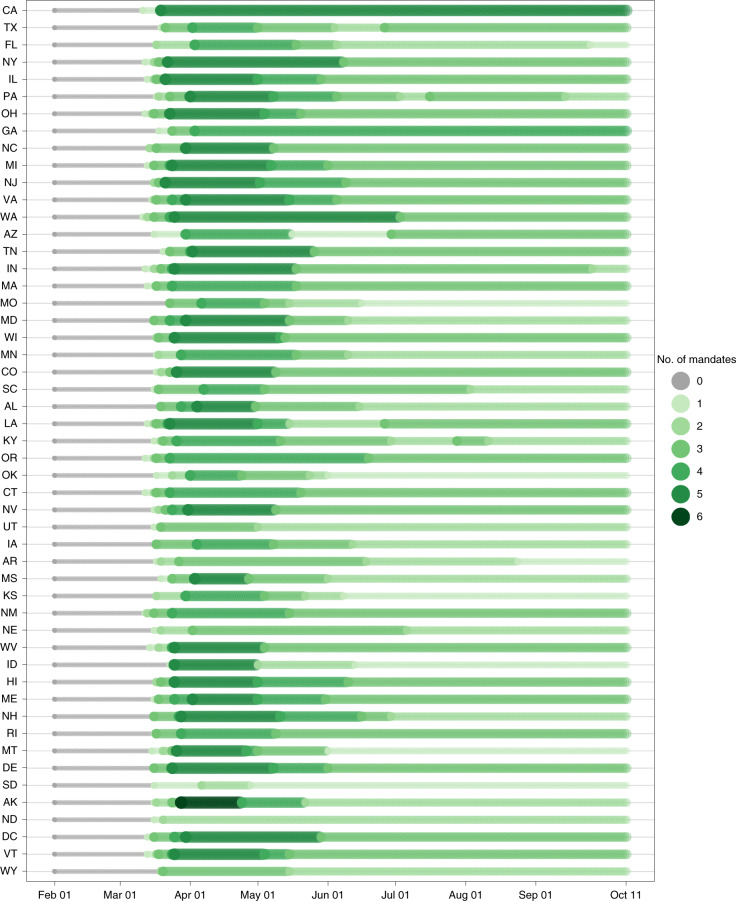
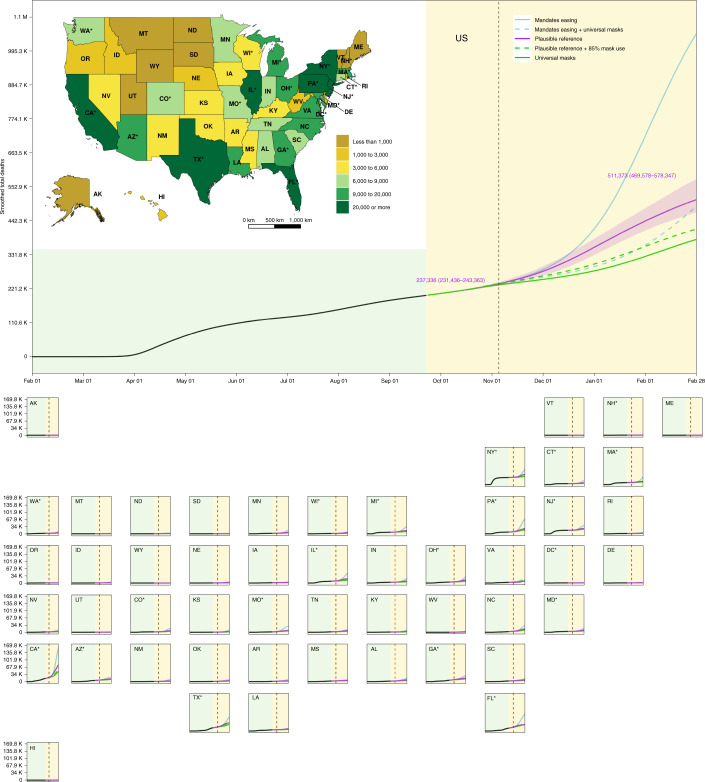
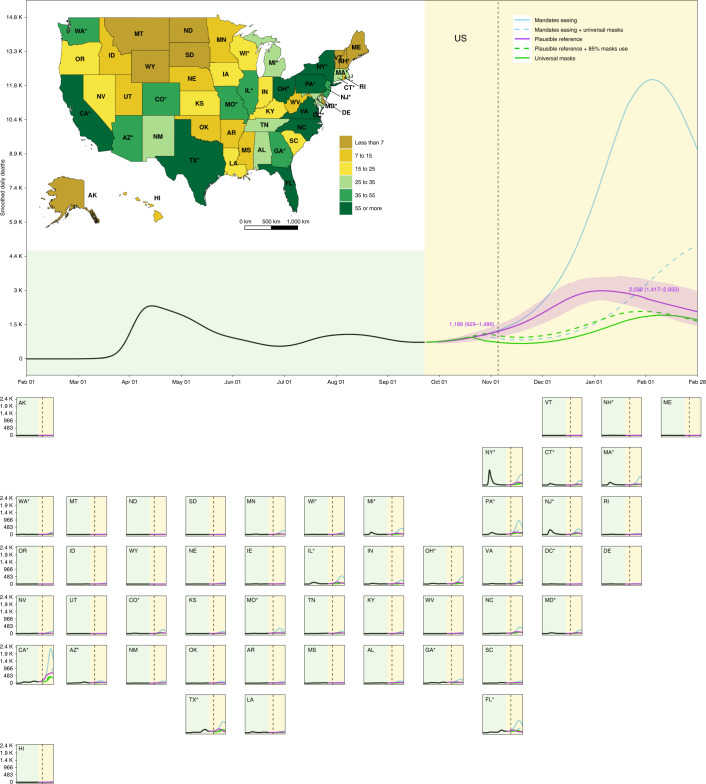
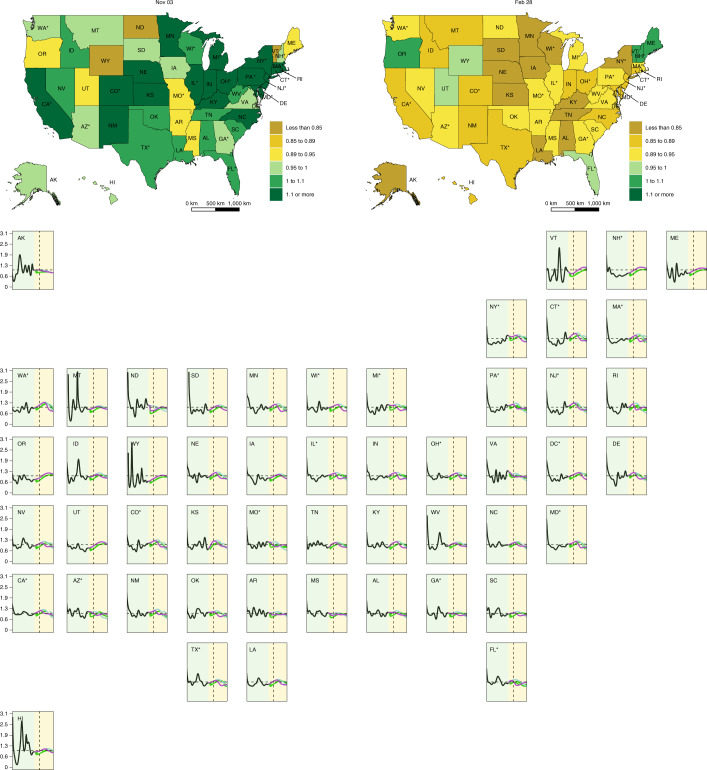
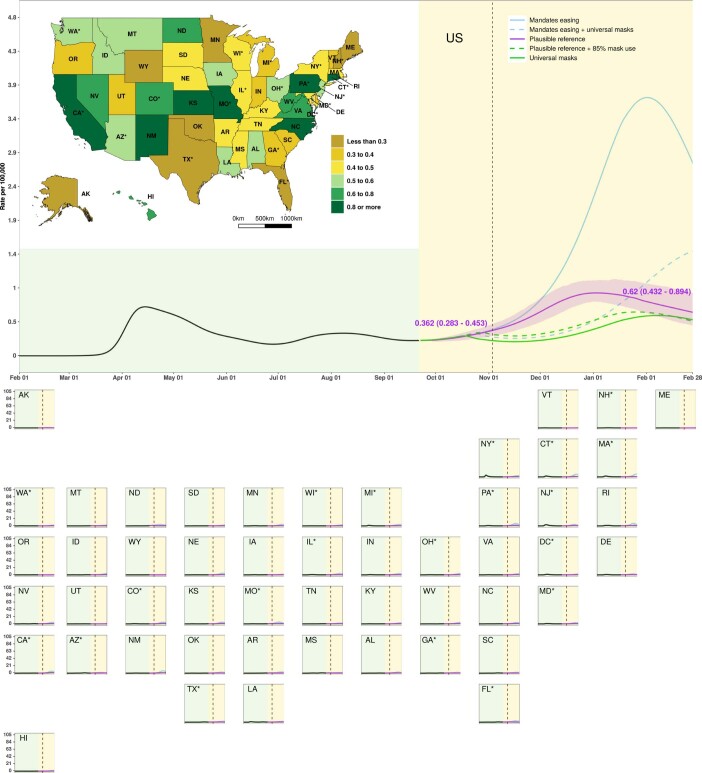
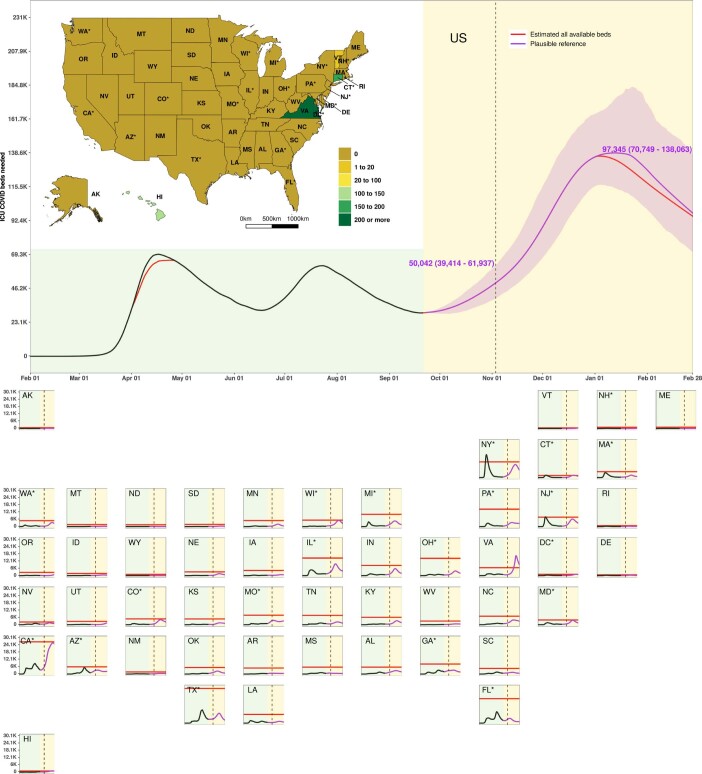
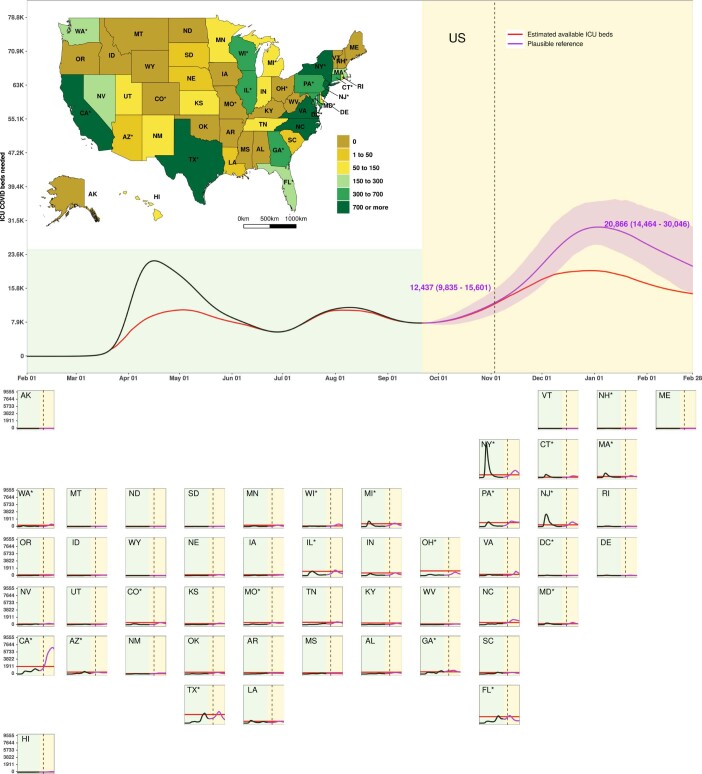
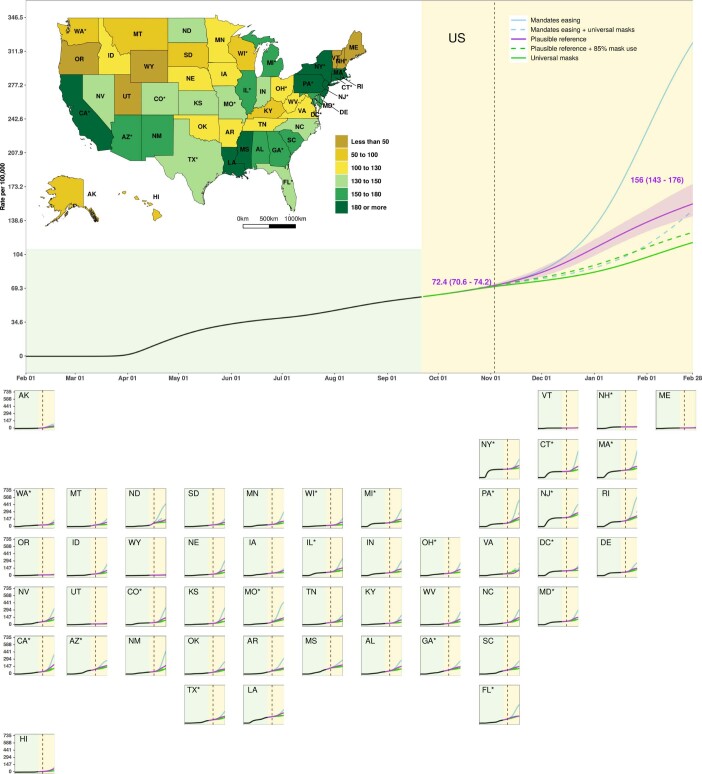
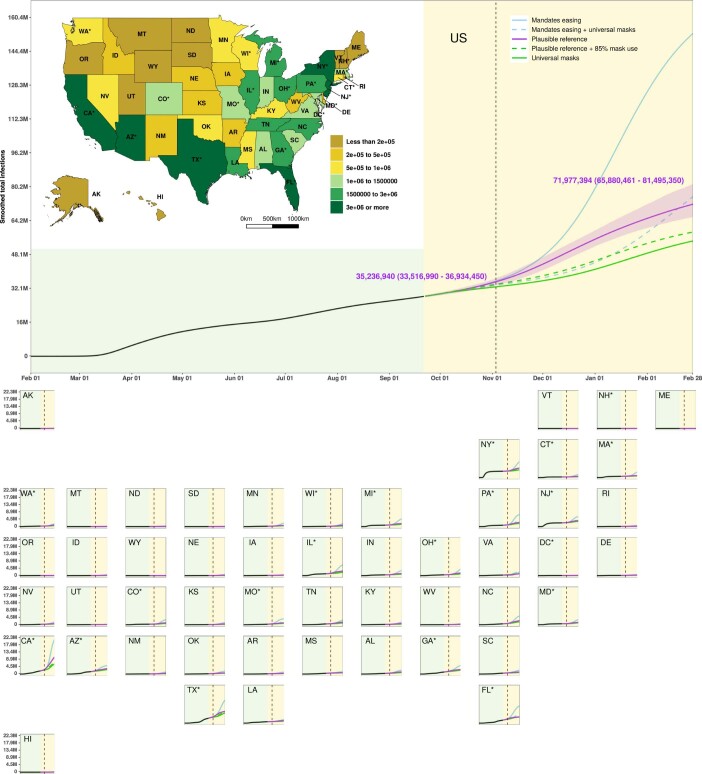
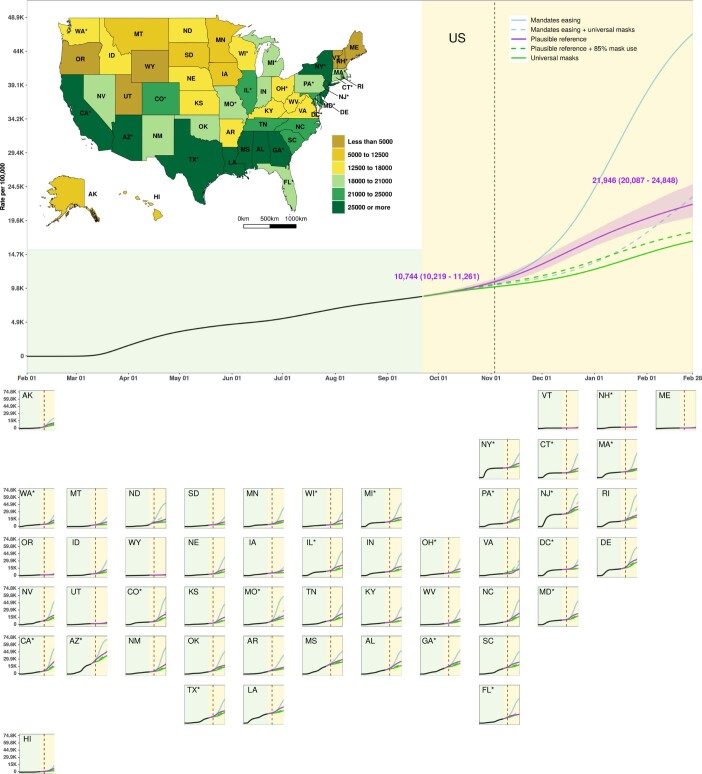
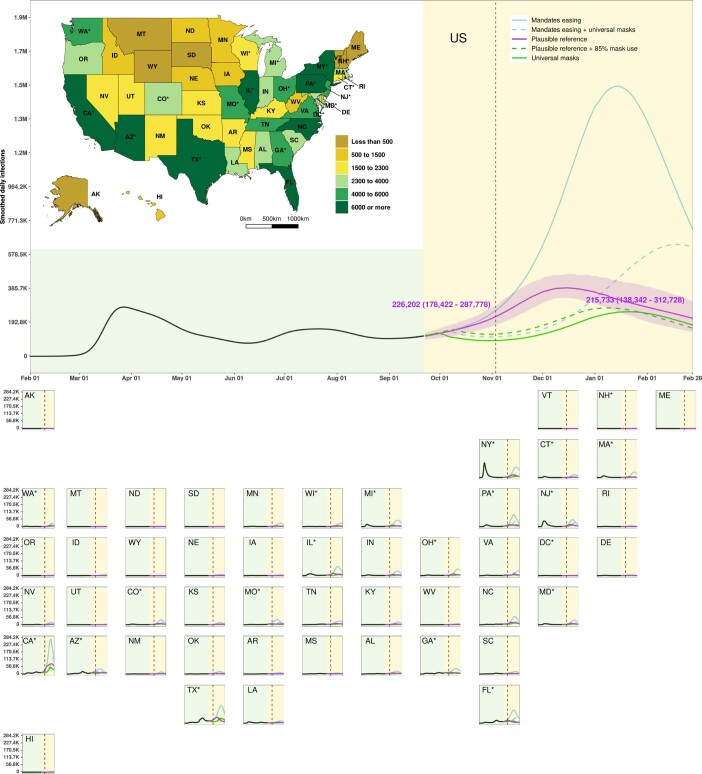
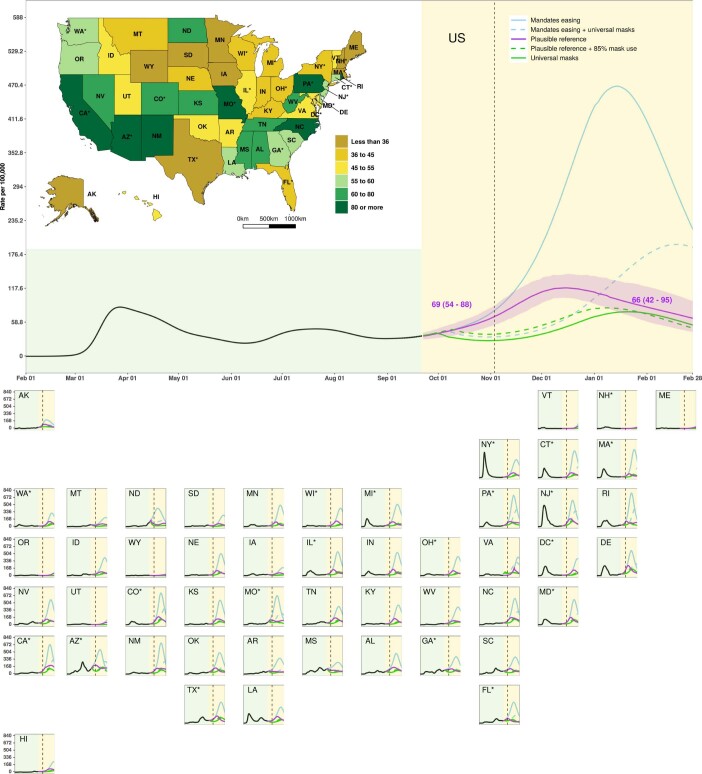
We use COVID-19 case and mortality data from 1 February 2020 to 21 September 2020 and a deterministic SEIR (susceptible, exposed, infectious and recovered) compartmental framework to model possible trajectories of severe acute respiratory syndrome coronavirus 2 (SARS-CoV-2) infections and the effects of non-pharmaceutical interventions in the United States at the state level from 22 September 2020 through 28 February 2021. Using this SEIR model, and projections of critical driving covariates (pneumonia seasonality, mobility, testing rates and mask use per capita), we assessed scenarios of social distancing mandates and levels of mask use. Projections of current non-pharmaceutical intervention strategies by state—with social distancing mandates reinstated when a threshold of 8 deaths per million population is exceeded (reference scenario)—suggest that, cumulatively, 511,373 (469,578–578,347) lives could be lost to COVID-19 across the United States by 28 February 2021. We find that achieving universal mask use (95% mask use in public) could be sufficient to ameliorate the worst effects of epidemic resurgences in many states. Universal mask use could save an additional 129,574 (85,284–170,867) lives from September 22, 2020 through the end of February 2021, or an additional 95,814 (60,731–133,077) lives assuming a lesser adoption of mask wearing (85%), when compared to the reference scenario.
Overview
The claims and statistics of this paper haven’t been checked yet.
Free: it reads the open-access text and checks the first 5 claims that cite a source we can check. Create a free account to check every claim.
Integrity signals
Registry
Cites
Statistics
Figures
Verification
Claims the paper makes
The claims and statistics of this paper haven’t been checked yet.
Free: it reads the open-access text and checks the first 5 claims that cite a source we can check. Create a free account to check every claim.
Claims other papers make about this one
Each is checked against this paper’s own text: does it say what the citing paper says it does?
The source backs part of the claim, not all of it — or backs it for a different population, condition or comparison.
In the citing paper
“Ultimately, we considered three novel indicators of the COVID-19 pandemic: decreasing human mobility,13 estimated total (as opposed to reported) daily SARS-CoV-2 infection rate, and estimated daily excess mortality rate during the pandemic (including excess deaths occurring during the pandemic where COVID-19 was not reported as the underlying cause of death).5, 13”
From Global prevalence and burden of depressive and anxiety disorders in 204 countries and territories in 2020 due to the COVID-19 pandemic (2021) · cites this paper as [13]
Experimental — accuracy not yet measuredThe source backs part of the claim, not all of it — or backs it for a different population, condition or comparison.
In the citing paper
“The estimation of human mobility, daily SARS-CoV-2 infection rate, and daily excess mortality rate was done by the Institute for Health Metrics and Evaluation (IHME) COVID-19 Forecasting Team and is described in detail elsewhere.13”
From Global prevalence and burden of depressive and anxiety disorders in 204 countries and territories in 2020 due to the COVID-19 pandemic (2021) · cites this paper as [13]
Experimental — accuracy not yet measuredThe cited source says what the claim attributes to it.
In the citing paper
“This variation can be explained by a combination of factors including policies enacted by governments to encourage mask use and reduce social interaction,48, 49, 50 presence of escape variants, testing and contact tracing capacity,51, 52 previous exposure to other coronaviruses,53 baseline patterns of social interaction, and more.”
From Estimating global, regional, and national daily and cumulative infections with SARS-CoV-2 through Nov 14, 2021: a statistical analysis (2022) · cites this paper as [50]
Self-check
Percentages, sums and reported differences re-computed from the paper’s own numbers.
The self-check needs the paper’s full text.
Citations
Cites
Vos, T., Lim, S. S., Abbafati, C., Abbas, K. M., Abbasi, M., Abbasifard, M., Abbasi-Kangevari, M., Abbastabar, H., Abd-Allah, F., Abdelalim, A., et al. (2020) · The Lancet · doi:10.1016/s0140-6736(20)30925-9 · Cited by 19,358
Self-citationMurray, C. J. L., Aravkin, A. Y., Zheng, P., Abbafati, C., Abbas, K. M., Abbasi-Kangevari, M., Abd-Allah, F., Abdelalim, A., Abdollahi, M., Abdollahpour, I., et al. (2020) · The Lancet · doi:10.1016/s0140-6736(20)30752-2 · Cited by 9,854
Self-citationRemdesivir for the Treatment of Covid-19 — Final Report
Beigel, J. H., Tomashek, K. M., Dodd, L. E., Mehta, A. K., Zingman, B. S., Kalil, A. C., Hohmann, E., Chu, H. Y., Luetkemeyer, A., Kline, S., et al. (2020) · New England Journal of Medicine · doi:10.1056/nejmoa2007764 · Cited by 7,267
First case of 2019 novel coronavirus in the United States
Holshue, M. L., DeBolt, C., Lindquist, S., Lofy, K. H., Wiesman, J., Bruce, H., Spitters, C., Ericson, K., Wilkerson, S., Tural, A., et al. (2020) · New England Journal of Medicine · doi:10.1056/nejmoa2001191 · Cited by 6,030
Lauer, S. A., Grantz, K. H., Bi, Q., Jones, F. K., Zheng, Q., Meredith, H. R., Azman, A. S., Reich, N. G., & Lessler, J. (2020) · Annals of Internal Medicine · doi:10.7326/m20-0504 · Cited by 5,970
The proximal origin of SARS-CoV-2
Andersen, K. G., Rambaut, A., Lipkin, W. I., Holmes, E. C., & Garry, R. F. (2020) · Nature Medicine · doi:10.1038/s41591-020-0820-9 · Cited by 5,081
Chu, D. K., Akl, E. A., Duda, S., Solo, K., Yaacoub, S., Schünemann, H. J., Chu, D. K., Akl, E. A., El-harakeh, A., Bognanni, A., et al. (2020) · The Lancet · doi:10.1016/s0140-6736(20)31142-9 · Cited by 3,843
How will country-based mitigation measures influence the course of the COVID-19 epidemic?
Anderson, R. M., Heesterbeek, H., Klinkenberg, D., & Hollingsworth, T. D. (2020) · The Lancet · doi:10.1016/s0140-6736(20)30567-5 · Cited by 3,648
Wang, Y., Zhang, D., Du, G., Du, R., Zhao, J., Jin, Y., Fu, S., Gao, L., Cheng, Z., Lu, Q., et al. (2020) · The Lancet · doi:10.1016/s0140-6736(20)31022-9 · Cited by 3,440
Estimating the effects of non-pharmaceutical interventions on COVID-19 in Europe
Flaxman, S., Mishra, S., Gandy, A., Unwin, H. J. T., Mellan, T. A., Coupland, H., Whittaker, C., Zhu, H., Berah, T., Eaton, J. W., et al. (2020) · Nature · doi:10.1038/s41586-020-2405-7 · Cited by 3,350
Research works printed but not linked: 4
- 4. Horton, R. The COVID-19 Catastrophe: What's Gone Wrong and How to Stop it Happening Again. (John Wiley & Sons, 2020).
- 39. Henry M Jackson School of International Studies, university of Washington, Seattle, WA, uSA. 13 Policy and Epidemiology Group, Queensland Centre for Mental Health research, Brisbane, Queensland, Australia. 14 These authors contributed equally: robert C reiner Jr., ryan M Barber. ✉ e-mail: sihay@uw.edu coronavirusdisease2019/what-you-should-know/current-situation-in-hawaii/; Illinois cases and deaths from https://dph.illinois.gov/covid19/covid19-statistics; Indiana cases and deaths from https://www.coronavirus.in.gov/2393.htm; Kentucky cases and deaths from https://govstatus.egov.com/kycovid19; Maryland cases and deaths from https://coronavirus.maryland.gov/; Nebraska cases and deaths from http://dhhs.ne.gov/Pages/Coronavirus.aspx; New York cases and deaths from https://github.com/nychealth/coronavirus-data and https:// covid19tracker.health.ny.gov/views/NYS-COVID19-Tracker/NYSDOHCOVID-19 Tracker-Map?%3Aembed=yes&%3Atoolbar=no&%3Atabs=n; North Carolina cases and deaths from https://covid19.ncdhhs.gov/dashboard; and Washington cases, hospitalizations and deaths from https://www.doh.wa.gov/Emergencies/ COVID19/DataDashboard. The timing of mandate implementation for each state was derived from a preprint study 43 and supplemented with ad hoc additional resources available at http://ghdx.healthdata.org/record/ihme-data/ united-states-covid-19-scenarios-2020-2021. The mobility covariate was constructed using data from Google Community Mobility Reports (https://www. google.com/covid19/mobility/); Facebook Data for Good Disease Prevention Maps (https://dataforgood.fb.com/tools/disease-prevention-maps/; with access coordinated via diseaseprevmaps@fb.com); SafeGraph Shelter in Place Index (https://www.safegraph.com/dashboard/covid19-shelter-in-place?s=US& d=09-13-2020&t=counties&m=index; with access coordinated through the SafeGraph COVID-19 Data Consortium via https://www.safegraph.com/covid-19- data-consortium/); and Descartes Labs (https://github.com/descarteslabs/ DL-COVID-19). The testing covariate was constructed using data from the COVID Tracking Project (https://covidtracking.com/data/api/). State-level datasets for the testing covariate were replaced in Washington, using https:// www.doh.wa.gov/Emergencies/COVID19/DataDashboard. Mask-use data were obtained from Premise COVID-19 Global Impact Survey (https://www.premise. com/the-dos-and-donts-of-conducting-surveys-during-covid-19/; with access coordinated through info@premise.com); the Facebook (COVID) Symptom Survey (with access coordinated through University of Maryland Joint Program in Survey Methodology via admin-C19survey-fb@umd.edu); and the YouGov COVID-19 Behavioural Tracker Survey (https://github.com/YouGov-Data/ covid-19-tracker). Pneumonia seasonality estimates, particulate matter air pollution estimates, lower respiratory infection country-specific mortality rate estimates and smoking estimates were generated by the Global Burden of Disease study (http://ghdx.healthdata.org/record/ihme-data/united-states-covid- 19-scenarios-2020-2021/). Altitude was sourced from the National Oceanic and Atmospheric Administration National Centers for Environmental Information Global Land One-km Base Elevation Project (https://www.ngdc.noaa.gov/mgg/ topo/globe.html) and population data were obtained from WorldPop Population Counts (https://www.worldpop.org/project/list/). These sources are further detailed in the Supplementary Information 44-51 . Source data are provided with this paper. references
- 43. GBD 2019 Population and Fertility Collaborators. Global, regional and national age-sex-specific fertility, mortality and population estimates, 1950-2019: a comprehensive demographic analysis for the global burden of disease study 2019. The Lancet (in press).
- 52. GBD 2019 Diseases and injuries Collaborators. Global burden of 369 diseases and injuries, 1990-2019: a systematic analysis for the Global Burden of Disease Study 2019. The Lancet (in press).
Cited by
Items 201–300 of 554
Zhang, H., Yin, L., Mao, L., Mei, S., Chen, T., Liu, K., & Feng, S. (2022) · Frontiers in Public Health · doi:10.3389/fpubh.2022.883624 · Cited by 10
Predicting and preventing COVID-19 outbreaks in indoor environments: an agent-based modeling study
Reveil, M., & Chen, Y.-H. (2022) · Scientific Reports · doi:10.1038/s41598-022-18284-8 · Cited by 16
Forecasting and modeling of the COVID-19 pandemic in the USA with a timed intervention model
Hachtel, G. D., Stack, J. D., & Hachtel, J. A. (2022) · Scientific Reports · doi:10.1038/s41598-022-07487-8 · Cited by 10
A real-world data validation of the value of early-stage SIR modelling to public health
Liu, T., Huang, J. V., He, Z., Zhang, Y., Yan, N., Zhang, C. J. P., & Ming, W. (2023) · Scientific Reports · doi:10.1038/s41598-023-36386-9 · Cited by 11
“In Wuhan, various non-pharmaceutical interventions (NPIs) to significantly reduce the transmission of SARS-CoV-2 and human-to-human contacts were implemented after the outbreak, including the lockdown in Wuhan on 23rd January 2020, mandatory face masks wearing, social distancing policies 19 , etc.”
Berke, A., Calacci, D., Mahari, R., Yabe, T., Larson, K., & Pentland, A. (2024) · Scientific Data · doi:10.1038/s41597-024-03329-6 · Cited by 25
“Others used mobile phone data to study relationships between mobility and infection rates 28–30 , the economic impacts of mobility restrictions 31,32 , and to improve epidemic models 33–35 .”
An Epidemic Model with Infection Age and Vaccination Age Structure
Webb, G. F., & Zhao, X. E. (2024) · Infectious Disease Reports · doi:10.3390/idr16010004 · Cited by 11
Wastewater-based epidemiology for COVID-19 using dynamic artificial neural networks
Zamarreño, J. M., Torres-Franco, A. F., Gonçalves, J., Muñoz, R., Rodríguez, E., Bouza, J. M. E., & García-Encina, P. A. (2024) · The Science of The Total Environment · doi:10.1016/j.scitotenv.2024.170367 · Cited by 10
A Bayesian Mixture Model for Predicting the COVID-19 Related Mortality in the United States
Kaciroti, N., Lumeng, C. N.-K., Parekh, V. I., & Boulton, M. L. (2021) · American Journal of Tropical Medicine and Hygiene · doi:10.4269/ajtmh.20-1147 · Cited by 11
A model of the innate immune response to SARS-CoV-2 in the alveolar epithelium
Leander, R. N., Wu, Y., Ding, W., Nelson, D. E., & Sinkala, Z. (2021) · Royal Society Open Science · doi:10.1098/rsos.210090 · Cited by 10
Carella, G., Trufero, J. P., Alvarez-Garcia, M., & Mateu, J. (2021) · The American Statistician · doi:10.1080/00031305.2021.1965657 · Cited by 9
“In terms of policy responses, this approach is complementary to deterministic SEIR compartmental frameworks, which instead are typically used to model possible trajectories of the epidemic (Reiner et al. 2021).”
BackgroundScenarios for the Development of Polish Passenger Transport Services in Pandemic Conditions
Cieśla, M., Kuśnierz, S., Modrzik, O., Niedośpiał, S., & Sosna, P. (2021) · Sustainability · doi:10.3390/su131810278 · Cited by 11
Qiu, T., Xiao, H., & Brusić, V. (2022) · Frontiers in Public Health · doi:10.3389/fpubh.2021.728525 · Cited by 12
“This created a significant requirement for new beds designated for COVID-19, given the initially available number of 6,596 (21).”
BackgroundMethodResultInfluentialWeekly Nowcasting of New COVID-19 Cases Using Past Viral Load Measurements
Khalil, A., Handawi, K. B. A., Chamseddine, I., Mohsen, Z., Nour, A. A., Feghali, R., & Kokkolaras, M. (2022) · Viruses · doi:10.3390/v14071414 · Cited by 10
Decentralized IoB for Influencing IoT-based Systems Behavior
Elayan, H., Aloqaily, M., Karray, F. O., & Guizani, M. (2022) · International Conference on Communications · doi:10.1109/icc45855.2022.9839241 · Cited by 12
“Moreover, during the global COVID19 pandemic, several studies conducted in the US have shown that wearing masks could lower deaths, saving ≈ 130 , 000 lives [5][6].”
BackgroundAnalyzing the transmission of SVCV among zebrafish populations by compartment mathematical modeling
Pan, J., Qin, W., Chen, Z., Xiao, J., Chang, H., He, K., & Feng, H. (2022) · Aquaculture · doi:10.1016/j.aquaculture.2022.739076 · Cited by 9
Vallée, A., Faranda, D., & Arutkin, M. (2023) · Scientific Reports · doi:10.1038/s41598-023-30014-2 · Cited by 14
Cho, J.-H., Kim, D., & Kim, E.-J. (2022) · Physica A Statistical Mechanics and its Applications · doi:10.1016/j.physa.2022.127488 · Cited by 9
Modeling of the Long-Term Epidemic Dynamics of COVID-19 in the United States
Huang, D., Tao, H., Wu, Q., Huang, S., & Xiao, Y. (2021) · International Journal of Environmental Research and Public Health · doi:10.3390/ijerph18147594 · Cited by 10
Geng, E., Schwab, J., Foraker, R. E., Fox, B., Hoehner, C. M., Schootman, M., Mody, A., Powderly, W. G., Yount, B. W., Woeltje, K. F., et al. (2021) · JAMA Network Open · doi:10.1001/jamanetworkopen.2021.23374 · Cited by 8
Delayed epidemic peak caused by infection and recovery rate fluctuations
Arutkin, M., Faranda, D., Alberti, T., & Vallée, A. (2021) · Chaos An Interdisciplinary Journal of Nonlinear Science · doi:10.1063/5.0067625 · Cited by 8
Xu, H., Berres, A., Thakur, G. M., Sanyal, J., & Chinthavali, S. (2021) · Journal of Biomedical Informatics · doi:10.1016/j.jbi.2021.103941 · Cited by 10
What do masks mask? A study on transdermal CO 2 monitoring
Iitani, K., Tyson, J., Rao, S., Ramamurthy, S. S., Ge, X., & Rao, G. (2021) · Medical Engineering & Physics · doi:10.1016/j.medengphy.2021.10.013 · Cited by 9
“Recent studies have claimed that community use of facemasks and implementation of mandates [2] resulted in more than 200, 000 COVID-19 cases being averted by May 22, 2020, and modelling studies [3] on universal masking forecast to save an additional 129,574 lives from September 22, 2020 through the end of February 202…”
Risk of sustained SARS-CoV-2 transmission in Queensland, Australia
Sanz‐Leon, P., Stevenson, N. J., Stuart, R. M., Abeysuriya, R., Pang, J. C. S., Lambert, S. B., Kerr, C. C., & Roberts, J. A. (2022) · Scientific Reports · doi:10.1038/s41598-022-10349-y · Cited by 10
Reingruber, J., Papale, A., Ruckly, S., Timsit, J., & Holcman, D. (2023) · PLoS ONE · doi:10.1371/journal.pone.0278882 · Cited by 8
COVID-19: Health and Economic Impacts of Societal Intervention Policies in the U.S.
Boloori, A., & Saghafian, S. (2020) · Service Science · doi:10.1287/serv.2023.0321 · Cited by 13
Methods, Challenges, and Practical Issues of COVID-19 Projection: A Data Science Perspective
Kim, M., Gu, Z., Yu, S., Wang, G., & Wang, L. (2021) · Journal of Data Science · doi:10.6339/21-jds1013 · Cited by 8
Huntley, K. S., Wahood, W., Mintz, J. A., Raine, S. R., Hardigan, P. C., & Haffizulla, F. S. (2021) · American Journal of Epidemiology · doi:10.1093/aje/kwab267 · Cited by 9
Global projections of lives saved from COVID-19 with universal mask usePreprint
Gakidou, E. E., Pigott, D. M., Troeger, C., Hulland, E. N., Reiner, R. C., Adolph, C., Aravkin, A. Y., Bachmeier, S. D., Bang-Jensen, B., Barber, R. M., et al. (2020) · medRxiv · doi:10.1101/2020.10.08.20209510 · Cited by 11
Self-citationSynthetic Data Generation for Improved covid-19 Epidemic ForecastingPreprint
Bannur, N., Shah, V., Raval, A., & White, J. (2020) · medRxiv · doi:10.1101/2020.12.04.20243956 · Cited by 8
Graphical Models of PandemicPreprint
Chertkov, M., Abrams, R., Sikaroudi, A. M. E., Krechetov, M., Slagle, C., Efrat, A., Fulek, R., & Oren, E. (2021) · medRxiv · doi:10.1101/2021.02.24.21252390 · Cited by 6
Under-Reporting of SARS-CoV-2 Infections in 27 Countries, 2020–2022Preprint
Mustapha, M. M., Togo, K., Volkman, H. R., Yang, J., Yehoshua, A., Fusco, M. D., McLaughlin, J. M., & Nguyen, J. (2024) · SSRN Electronic Journal · doi:10.2139/ssrn.5014145 · Cited by 9
Bicker, J., Schmieding, R., Meyer‐Hermann, M., & Kühn, M. J. (2025) · Infectious Disease Modelling · doi:10.1016/j.idm.2024.12.015 · Cited by 7
Yang, X., Wang, S., Xing, Y., Li, L., Xu, R. Y. D., Friston, K. J., & Guo, Y. (2022) · PLoS Computational Biology · doi:10.1371/journal.pcbi.1009807 · Cited by 7
Fractal dimension based geographical clustering of COVID-19 time series data
Natalia, Y. A., Faes, C., Neyens, T., Chys, P., Hammami, N., & Molenberghs, G. (2023) · Scientific Reports · doi:10.1038/s41598-023-30948-7 · Cited by 10
Bulut, T., & Top, M. (2023) · Public Health · doi:10.1016/j.puhe.2023.05.013 · Cited by 9
Spatio-Temporal Graph Analytics on Secondary Affect Data for Improving Trustworthy Emotional AI
Uddin, M. T., Yin, L., & Canavan, S. J. (2023) · IEEE Transactions on Affective Computing · doi:10.1109/taffc.2023.3296695 · Cited by 9
“Recently, network science-based modeling has been used to study different aspects of the COVID-19 pandemic [74], [75] including, but not limited to, perception of public risk and emotion during COVID-19 [76], [77], spread of COVID-19 in different countries [78], the effectiveness of lockdown on…”
MethodA data-driven semi-parametric model of SARS-CoV-2 transmission in the United States
Drake, J. M., Handel, A., Marty, É., O’Dea, E. B., O’Sullivan, T., Righi, G., & Tredennick, A. T. (2023) · PLoS Computational Biology · doi:10.1371/journal.pcbi.1011610 · Cited by 8
“Yet, models are critical for guiding policy decisions, updating situational awareness, and retrospectively evaluating the key drivers of transmission and the effectiveness of interventions [3, 4].”
BackgroundLennon, R. P., Zgierska, A. E., Miller, E. L., Snyder, B., Keshaviah, A., Hu, X. C., Zhou, H., & Scoy, L. J. V. (2021) · Southern Medical Journal · doi:10.14423/smj.0000000000001332 · Cited by 8
“Although their modeling is arguably the best published to date with a mean absolute percent error (MAPE) nearly 40% lower than the average COVID-19 model, it still has a MAPE of >20%.(4) Also, their predetermined mask usage rates are 95% and 85%,(4) which are markedly higher than the observed rate of 59% in US residen…”
BackgroundInfluentialThe influence of a transport process on the epidemic threshold
Kuehn, C., & Mölter, J. (2022) · Journal of Mathematical Biology · doi:10.1007/s00285-022-01810-7 · Cited by 9
Liu, Z., Li, Y., Law, A., Tan, J. Y. K., Chua, W. H., Zhu, Y., Feng, C., & Luo, W. P. (2024) · Annals of GIS · doi:10.1080/19475683.2024.2325577 · Cited by 7
“Secondly, although many studies have utilized the Facebook mobility dataset (Reiner et al. 2021; Rowe et al. 2023; Shepherd et al. 2021), more thorough data collation and examination is needed for better data quality.”
Kosciejew, M. R. H. (2021) · Journal of Documentation · doi:10.1108/jd-10-2020-0166 · Cited by 10
On the role of statisticians and modelers in responding to AIDS and COVID‐19
Jewell, B. L., & Jewell, N. P. (2021) · Statistics in Medicine · doi:10.1002/sim.8943 · Cited by 7
Five approaches to the suppression of SARS-CoV-2 without intensive social distancing
Drake, J. M., Dahlin, K. J. ‐., Rohani, P., & Handel, A. (2021) · Proceedings of the Royal Society B Biological Sciences · doi:10.1098/rspb.2020.3074 · Cited by 7
“Past modelling studies have also considered the effects of various generalized interventions including: physical distancing [11], school closures, physical distancing, shielding of elderly, self-isolation and lockdown [12], and physical distancing and mask use [13].”
Colomer, M. À., Margalida, A., Alòs, F., Oliva‐Vidal, P., Vilella, A., & Fraile, L. J. (2021) · The Science of The Total Environment · doi:10.1016/j.scitotenv.2021.147816 · Cited by 7
Mask-Ematics: Modeling the Effects of Masks in COVID-19 Transmission in High-Risk Environments
Morciglio, A., Zhang, B., Chowell, G., Hyman, J. M., & Jiang, Y. (2021) · Epidemiologia · doi:10.3390/epidemiologia2020016 · Cited by 9
Ćmiel, A. M., & Ćmiel, B. (2021) · Scientific Reports · doi:10.1038/s41598-021-97285-5 · Cited by 7
Understanding the role of mask-wearing during COVID-19 on the island of Ireland
Fitz-Simon, N., Ferguson, J. P., Alvarez‐Iglesias, A., Sofonea, M. T., & Kamiya, T. (2023) · Royal Society Open Science · doi:10.1098/rsos.221540 · Cited by 7
The Trade-off Between Prioritization and Vaccination Speed Depends on Mitigation Measures
Agarwal, N., Komo, A., Patel, C., Pathak, P. A., & Ünver, M. U. (2021) · National Bureau of Economic Research · doi:10.3386/w28519 · Cited by 8
Yaesoubi, R., You, S., Xi, Q., Menzies, N. A., Tuite, A. R., Grad, Y. H., & Salomon, J. A. (2021) · medRxiv · doi:10.1101/2021.12.13.21267657 · Cited by 7
Luo, X., Deng, H., Yang, J., Shen, Y., Guo, H., Sun, Z., Liu, M., Wei, J., & Zhao, S. (2025) · Expert Systems with Applications · doi:10.1016/j.eswa.2025.128432 · Cited by 7
Generating simple classification rules to predict local surges in COVID-19 hospitalizations
Yaesoubi, R., You, S., Xi, Q., Menzies, N. A., Tuite, A. R., Grad, Y. H., & Salomon, J. A. (2023) · Health Care Management Science · doi:10.1007/s10729-023-09629-4 · Cited by 9
Methods for modellind and forecasting dynamics of infectious diseases
Kosova, A. A., Чалапа, В. И., & Kovtun, O. P. (2023) · Ural Medical Journal · doi:10.52420/2071-5943-2023-22-4-102-112 · Cited by 7
African American Faith Communities and Public Health: Working at the Intersections of COVID-19
Goldblum, P. B., Thompkins, F., Lai, T., & Brown, L. M. (2021) · Human Arenas · doi:10.1007/s42087-021-00197-z · Cited by 7
Almeida, J. F. D. F., Conceição, S. V., Pinto, L. R., Horta, C. J. G., Magalhães, V. S., & de Campos, F. C. C. (2021) · Sao Paulo Medical Journal · doi:10.1590/1516-3180.2020.0517.r1.0212020 · Cited by 7
The spreading of Covid-19 in Mexico: A diffusional approach
Aguilar-Madera, C. G., Espinosa-Paredes, G., Herrera-Hernández, E. C., Carrillo, J. A. B., Flores-Cano, J. V., & Matías-Pérez, V. (2021) · Results in Physics · doi:10.1016/j.rinp.2021.104555 · Cited by 6
“[24] used the SEIR model for scenario analysis in the United States.”
MethodMajeed, B., Li, A., Peng, J., & Lin, Y. (2022) · Frontiers in Public Health · doi:10.3389/fpubh.2021.809877 · Cited by 7
Inference on the dynamics of COVID-19 in the United States
Bhattacharjee, S., Liao, S., Paul, D., & Chaudhuri, S. (2022) · Scientific Reports · doi:10.1038/s41598-021-04494-z · Cited by 8
Causal inference for the effect of mobility on COVID-19 deaths
Bonvini, M., Kennedy, E. H., Ventura, V., & Wasserman, L. (2022) · The Annals of Applied Statistics · doi:10.1214/22-aoas1599 · Cited by 12
Well Posedness and Qualitative Analysis of a SEIR Model with Spatial Diffusion for COVID-19 Spread
dos Santos, J. P. C., Monteiro, E., Ferreira, J. C., Lemes, N. H. T., & Rodrigues, D. S. (2022) · BIOMATH · doi:10.55630/j.biomath.2023.07.207 · Cited by 9
Fast Key Points Detection and Matching for Tree-Structured Images
Wang, H., Chen, X., Razi, A., & Amin, R. (2022) · International Conference on Computational Science and Computational Intelligence (CSCI) · doi:10.1109/csci58124.2022.00248 · Cited by 9
de Araújo, S. R., Almeida, J. F. D. F., Rodrigues, L. F., & Machado, E. L. (2023) · Revista Brasileira de Epidemiologia · doi:10.1590/1980-549720230054 · Cited by 10
Branch-and-Price for Prescriptive Contagion Analytics
Jacquillat, A., Li, M. L., Ramé, M., & Wang, K. (2024) · Operations Research · doi:10.1287/opre.2023.0308 · Cited by 11
Porebski, P. J., Venkatramanan, S., Adiga, A., Klahn, B., Hurt, B., Wilson, M., Chen, J., Vullikanti, A. K. S., MARATHE, M. V., & Lewis, B. L. (2024) · Epidemics · doi:10.1016/j.epidem.2024.100761 · Cited by 8
Bartesaghi, P., & Estrada, E. (2021) · Mathematical Models and Methods in Applied Sciences · doi:10.1142/s0218202521500561 · Cited by 7
COVID 19 factor de cambio en la conducta del consumidor
Rodríguez-Peña, V., & Gamboa-Salinas, J. M. (2021) · 593 Digital Publisher CEIT · doi:10.33386/593dp.2021.3.561 · Cited by 8
Contextualized Knowledge Reduces Misconceived COVID-19 Health Decisions
Murray, G., Willer, C. J., Arner, T., Roche, J. M., & Morris, B. J. (2021) · Journal of Applied Research in Memory and Cognition · doi:10.1016/j.jarmac.2021.07.007 · Cited by 7
Chen, M., Chen, Y., Wilson, J. P., Tan, H., & Chu, T. (2022) · ISPRS International Journal of Geo-Information · doi:10.3390/ijgi11010067 · Cited by 8
COVIDHunter: COVID-19 Pandemic Wave Prediction and Mitigation via Seasonality Aware Modeling
Alser, M., Kim, J. S., Alserr, N. A., Tell, S. W., & Mutlu, O. (2022) · Frontiers in Public Health · doi:10.3389/fpubh.2022.877621 · Cited by 8
Adams, C., Horton, M. K., Solomon, O., Wong, M. P., Wu, S. L., Fuller, S., Shao, X., Fedrigo, I., Quach, H., Quach, D. L., et al. (2022) · PLOS Global Public Health · doi:10.1371/journal.pgph.0000647 · Cited by 8
Monod, M., Blenkinsop, A., Brizzi, A., Chen, Y., Perello, C. C. C., Jogarah, V., Wang, Y., Flaxman, S. R., Bhatt, S., & Ratmann, O. (2022) · Bayesian Analysis · doi:10.1214/22-ba1334 · Cited by 9
Exploration of the COVID-19 pandemic at the neighborhood level in an intra-urban setting
Schmitz, T., Lakes, T., Manafa, G., Lambio, C., Butler, J., Roth, A., & Savaskan, N. E. (2023) · Frontiers in Public Health · doi:10.3389/fpubh.2023.1128452 · Cited by 6
“Strict measures for contact reduction mainly prevent exponential growth but have only little effect on networks with low connectivity (75, 76).”
BackgroundSelvakumar, K., & Lokesh, S. (2021) · Soft Computing · doi:10.1007/s00500-021-05643-2 · Cited by 6
RetractedKlüsener, S., Schneider, R., Rosenbaum‐Feldbrügge, M., Dudel, C., Loichinger, E., Sander, N., Backhaus, A., Fava, E. D., Esins, J., Fischer, M., et al. (2020) · medRxiv · doi:10.1101/2020.12.23.20248761 · Cited by 9
Lennon, R. P., Zgierska, A. E., Miller, E. L., Snyder, B. L., Keshaviah, A. P., Hu, C., Zhou, H., & Scoy, L. J. V. (n.d.) · RePEc: Research Papers in Economics · Cited by 6
MacIntyre, C. R., Chughtai, A. A., Kunasekaran, M. P., Tawfiq, E., & Greenhalgh, T. (2025) · BMJ · doi:10.1136/bmj-2023-078573 · Cited by 20
Zhou, X., & Liao, W. (2023) · Chaos Solitons & Fractals · doi:10.1016/j.chaos.2023.114259 · Cited by 5
Counting the uncounted: estimating the unaccounted COVID-19 infections in India
Saikia, D., Bora, K., & Bora, M. P. (2024) · Nonlinear Dynamics · doi:10.1007/s11071-024-09563-2 · Cited by 6
“Many COVID-19-specific mathematical models have been developed over the course of the pandemic which can help us understand the way the COVID-19 disease has spread [42,28, 8,12,35,16].”
BackgroundMa, Z., & Rennert, L. (2024) · Scientific Reports · doi:10.1038/s41598-024-57488-y · Cited by 7
“Sensitivity of predictions to model input parameters have been extensively studied for Covid-19 12,13,37,38 .”
BackgroundDecision Intelligence for Nationwide Ventilator Allocation During the COVID-19 Pandemic
Xu, J., & Sen, S. (2021) · SN Computer Science · doi:10.1007/s42979-021-00810-6 · Cited by 5
“And, with predictions of a more severe outbreak in the upcoming Spring [25,9,19,21,5], it is wise to start planning to mitigate the impact of a worsening pandemic.”
BackgroundMethodInfluentialA model for the spread of infectious diseases compatible with case data
Huang, N. E., Qiao, F., Wang, Q., Qian, H., & Tung, K. K. (2021) · Proceedings of the Royal Society A Mathematical Physical and Engineering Sciences · doi:10.1098/rspa.2021.0551 · Cited by 7
“Later IHME updated to their second generation of model, a traditional SEIR model [23].”
MethodWybranowski, T., Pyskir, J., Bosek, M., Napiórkowska-Mastalerz, M., Cyrankiewicz, M., Ziomkowska, B., Pilaczyńska-Cemel, M., Pyskir, M., Rogańska, M., Kruszewski, S. P., et al. (2022) · Journal of Clinical Medicine · doi:10.3390/jcm11175081 · Cited by 5
“Estimates of mortality rates in patients admitted to hospital with COVID-19 are particularly important for tracking the quality and effectiveness of hospital care [50].”
BackgroundEFFECTS OF VACCINATION ON THE TRANSMISSION DYNAMICS OF COVID-19 IN DOUGHERTY COUNTY OF GEORGIA, USA
Pantha, B., Mohammed-Awel, J., & Vaidya, N. K. (2022) · Journal of Biological Systems · doi:10.1142/s021833902250019x · Cited by 5
Using core values and social influence to increase mask-wearing in non-compliant college students
Hunt, M. G., Chiarodit, D., Tieu, T., & Baum, J. (2022) · Social Science & Medicine · doi:10.1016/j.socscimed.2022.115446 · Cited by 6
The mitigating effect of masks on the spread of Covid-19
Cooper, D. H., Garga, V., Luengo-Prado, M., & Tang, J. (2022) · Economics & Human Biology · doi:10.1016/j.ehb.2022.101195 · Cited by 5
Key Epidemic Parameters of the SIRV Model Determined from Past COVID-19 Mutant Waves
Schlickeiser, R., & Kröger, M. (2023) · COVID · doi:10.3390/covid3040042 · Cited by 5
Design of effective outpatient sentinel surveillance for COVID-19 decision-making: a modeling study
Toh, K. B., Runge, M., Richardson, R. A. K., Hladish, T. J., & Gerardin, J. (2023) · BMC Infectious Diseases · doi:10.1186/s12879-023-08261-5 · Cited by 5
Distributed Reproduction Numbers of Networked Epidemics
She, B., Paré, P. E., & Hale, M. (2023) · Proceedings of the ... American Control Conference/Proceedings of the American Control Conference · doi:10.23919/acc55779.2023.10156093 · Cited by 5
“For instance, the spreading behavior of COVID-19 in different regions was different across the United States, in terms of infection growth, peak infection date, etc. [13].”
Shen, N., Zhang, H., Li, Z., & Tang, G. (2024) · International Journal of Digital Earth · doi:10.1080/17538947.2024.2347459 · Cited by 6
Tang, B., Ma, K., Liu, Y., Xia, W., Tang, S., Xiao, Y., & Cheke, R. A. (2024) · PLoS Computational Biology · doi:10.1371/journal.pcbi.1012497 · Cited by 6
A study on the effects of containment policies and vaccination on the spread of SARS-CoV-2
Bokharaie, V. S. (2021) · PLoS ONE · doi:10.1371/journal.pone.0247439 · Cited by 5
Computational Simulation Is a Vital Resource for Navigating the COVID-19 Pandemic
Page, A., Diallo, S. Y., Wildman, W. J., Hodulik, G., Weisel, E. W., Gondal, N., & Voas, D. (2021) · Simulation in Healthcare The Journal of the Society for Simulation in Healthcare · doi:10.1097/sih.0000000000000572 · Cited by 5
Changing readiness to mitigate SARS-CoV-2 steered long-term epidemic and social trajectories
Wirtz, K. (2021) · Scientific Reports · doi:10.1038/s41598-021-93248-y · Cited by 7
Forecasting Multi-Wave Epidemics Through Bayesian Inference
Blonigan, P., Ray, J., & Safta, C. (2021) · Archives of Computational Methods in Engineering · doi:10.1007/s11831-021-09603-9 · Cited by 5
covid19.Explorer : a web application and R package to explore United States COVID-19 data
Revell, L. J. (2021) · PeerJ · doi:10.7717/peerj.11489 · Cited by 6
Yi, G. Y., Hu, P., & He, W. (2022) · Canadian Journal of Statistics · doi:10.1002/cjs.11698 · Cited by 5
Lifting Statewide Mask Mandates and COVID-19 Cases: A Synthetic Control Study
Petersen, F., Errore, A., & Karaca‐Mandic, P. (2022) · Medical Care · doi:10.1097/mlr.0000000000001725 · Cited by 7
Neuvonen, L., Wildemeersch, M., & Vilkkumaa, E. (2022) · European Journal of Operational Research · doi:10.1016/j.ejor.2022.09.036 · Cited by 5
Costello, F., Watts, P., & Howe, R. (2023) · Scientific Reports · doi:10.1038/s41598-023-28752-4 · Cited by 5
Schlickeiser, R., & Kröger, M. (2023) · Physics · doi:10.3390/physics5010016 · Cited by 5
COVID-19: Epidemiological Models
Atkeson, A. G. (2023) · Annual Review of Financial Economics · doi:10.1146/annurev-financial-110821-020639 · Cited by 6
Metadata
- Authors
- IHME COVID-19 Forecasting Team, Reiner, R. C., Barber, R. M., Collins, J. K., Zheng, P., Adolph, C., Albright, J., Antony, C. M., Aravkin, A. Y., Bachmeier, S. D., Bang-Jensen, B., Bannick, M. S., Bloom, S., Carter, A., Castro, E., Causey, K., Chakrabarti, S., Charlson, F. J., Cogen, R. M., Combs, E., Dai, X., Dangel, W. J., Earl, L., Ewald, S. B., Ezalarab, M., Ferrari, A. J., Flaxman, A., Frostad, J. J., Fullman, N., Gakidou, E., Gallagher, J., Glenn, S. D., Goosmann, E. A., He, J., Henry, N. J., Hulland, E. N., Hurst, B., Johanns, C., Kendrick, P. J., Khemani, A., Larson, S. L., Lazzar-Atwood, A., LeGrand, K. E., Lescinsky, H., Lindstrom, A., Linebarger, E., Lozano, R., Ma, R., Månsson, J., Magistro, B., Herrera, A. M. M., Marczak, L. B., Miller-Petrie, M. K., Mokdad, A. H., Morgan, J. D., Naik, P., Odell, C. M., O’Halloran, J. K., Osgood-Zimmerman, A. E., Ostroff, S. M., Pasovic, M., Penberthy, L., Phipps, G., Pigott, D. M., Pollock, I., Ramshaw, R. E., Redford, S. B., Reinke, G., Rolfe, S., Santomauro, D. F., Shackleton, J. R., Shaw, D. H., Sheena, B. S., Sholokhov, A., Sorensen, R. J. D., Sparks, G., Spurlock, E. E., Subart, M. L., Syailendrawati, R., Torre, A. E., Troeger, C. E., Vos, T., Watson, A., Watson, S., Wiens, K. E., Woyczynski, L., Xu, L., Zhang, J., Hay, S. I., Lim, S. S., & Murray, C. J. L.
- Affiliations
- University of Washington (US)
- The University of Queensland (AU)
- ORCID
- Reiner, Robert C.
- Barber, Ryan M.
- Collins, James K.
- Adolph, Christopher
- Albright, James
- Aravkin, Aleksandr Y.
- Bang-Jensen, Bree
- Bannick, Marlena S.
- Carter, Austin
- Causey, Kate
- Chakrabarti, Suman
- Charlson, Fiona J.
- Dai, Xiaochen
- Ewald, Samuel B.
- Ferrari, Alize J.
- Flaxman, Abraham
- Fullman, Nancy
- Gakidou, Emmanuela
- Glenn, Scott D.
- Goosmann, Erik A.
- He, Jiawei
- Henry, Nathaniel J.
- Hulland, Erin N.
- Kendrick, Parkes J.
- LeGrand, Kate E.
- Lindstrom, Akiaja
- Lozano, Rafael
- Ma, Rui
- Magistro, Beatrice
- Herrera, Ana M. Mantilla
- Marczak, Laurie B.
- Miller-Petrie, Molly K.
- Mokdad, Ali H.
- Naik, Paulami
- Osgood-Zimmerman, Aaron E.
- Pasovic, Maja
- Pigott, David M.
- Ramshaw, Rebecca E.
- Reinke, Grace
- Santomauro, Damian Francesco
- Sheena, Brittney S.
- Sholokhov, Aleksei
- Sorensen, Reed J. D.
- Spurlock, Emma Elizabeth
- Vos, Theo
- Wiens, Kirsten E.
- Hay, Simon I.
- Lim, Stephen S.
- Murray, Christopher J. L.
- Venue
- Nature Medicine
- Published
- 2020-10-23
- Volume
- 27
- Issue
- 1
- Pages
- 94-105
- ISSN
- 1078-8956 (ISSN-L)
- 1546-170X
- PMC
- PMC7806509
- OpenAlex
- W3093610264
- Cited by
- 556
- References
- 56
- Citations by year
- 2026: 17 · 2025: 25 · 2024: 61 · 2023: 84 · 2022: 134 · 2021: 210 · 2020: 25
- FWCI
- 18.01
- Type
- journal article
- Language
- en
- Update notices
- correction (2020-11-27)
- Open access
- hybrid
- doi.org
- Licence
- cc-by
- creativecommons.org/licenses/by/4.0 (tdm)
- creativecommons.org/licenses/by/4.0 (vor)
- Locations
- Nature Medicine (publishedVersion, cc-by)
- medRxiv (acceptedVersion, cc-by)
- Europe PMC (PubMed Central) (publishedVersion, other-oa)
- PubMed Central (publishedVersion, cc-by)
- PubMed (publishedVersion)
- LSHTM Research Online (London School of Hygiene and Tropical Medicine) (acceptedVersion)
- Funders
- National Science Foundation (2031096)
- Bill and Melinda Gates Foundation
- Institute for Health Metrics and Evaluation
- Topics
- Physical Sciences › Mathematics › Modeling and Simulation › COVID-19 epidemiological studies
- Physical Sciences › Mathematics › Applied Mathematics › Mathematical and Theoretical Epidemiology and Ecology Models
- Social Sciences › Sociology and Political Science › COVID-19 Prevention and Impact
- Keywords
- COVID-19 pandemic, SARS-CoV-2, SEIR model, epidemic projection, non-pharmaceutical interventions, masking, mortality, mobility, testing rates, epidemic resurgence, United States
- MeSH terms
- Physical Distancing, COVID-19, SARS-CoV-2, Health Policy, Humans, Models, Biological, Travel, United States, Epidemics
About these checks
Registry, retraction, Cites and statistics results are computed, not judged, with one exception: a printed reference that no index lists is read once by a model before it counts as a citation error. Claims are extracted by a model and kept only when their quote appears verbatim in the text; each cited source is then checked, with a model’s help, for whether it says what the claim relies on. Those verdicts can be wrong — read the claim’s quote and the cited source before relying on one.
Statistics and arithmetic are recomputed, not judged.
Confidence bands are shown only for fields calibrated on our annotated test set. None is calibrated yet, so no band is shown.
What counts as a claim ›How we measure confidence ›How we check this ›
Are you an author, or do you see a problem with this page? Request a review
Data sources
Bibliographic data: Semantic Scholar, OpenAlex, Crossref.
Contains information from the Semantic Scholar Academic Graph Datasets, made available under the ODC Attribution License (ODC-BY 1.0).
Semantic Scholar’s data is described in: Kinney, R., et al. (2023). The Semantic Scholar Open Data Platform. arXiv:2301.10140.
