

Modeling COVID-19 scenarios for the United States
Open accessPublished version of a preprint
The DOI matches its Crossref record; 59 of the 59 references it cites were found in a registry or an index.
Abstract
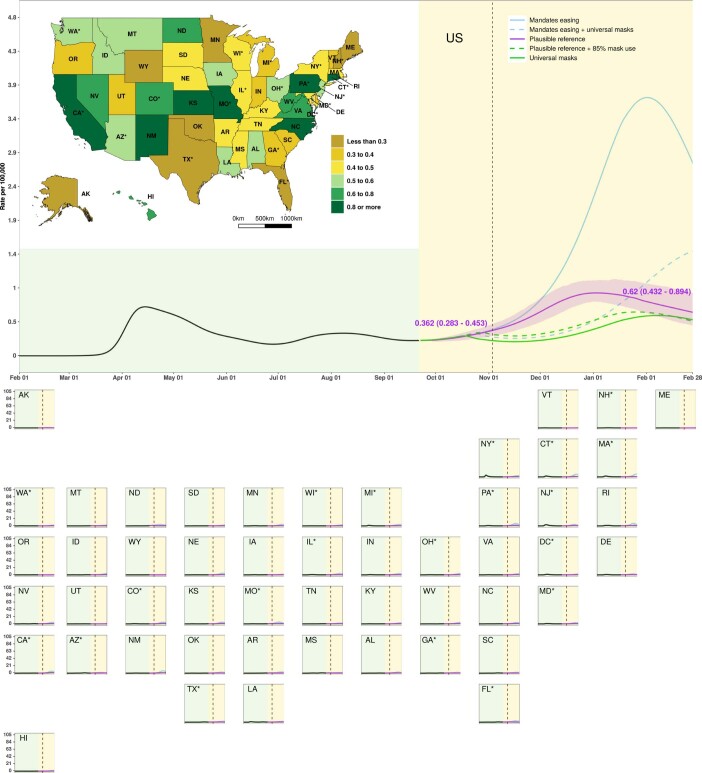
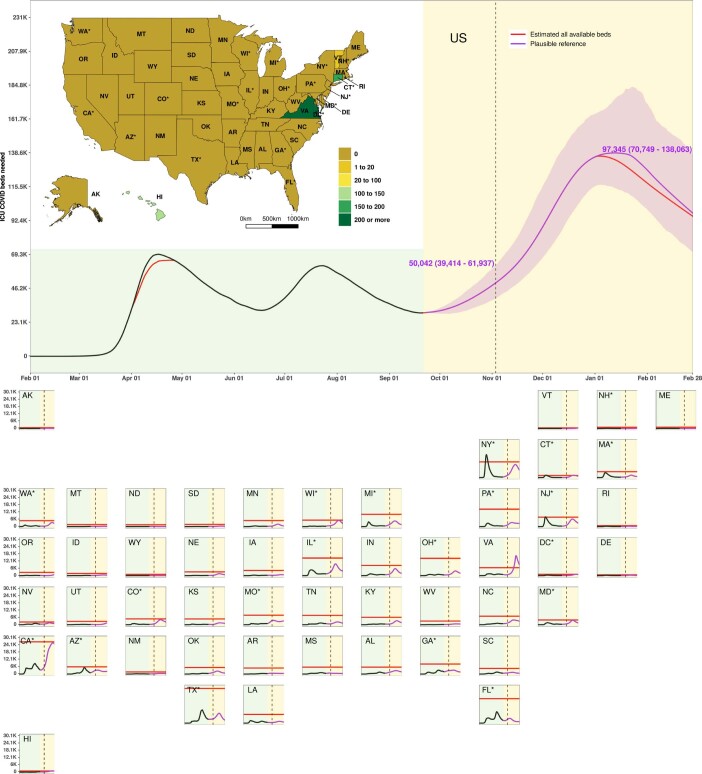
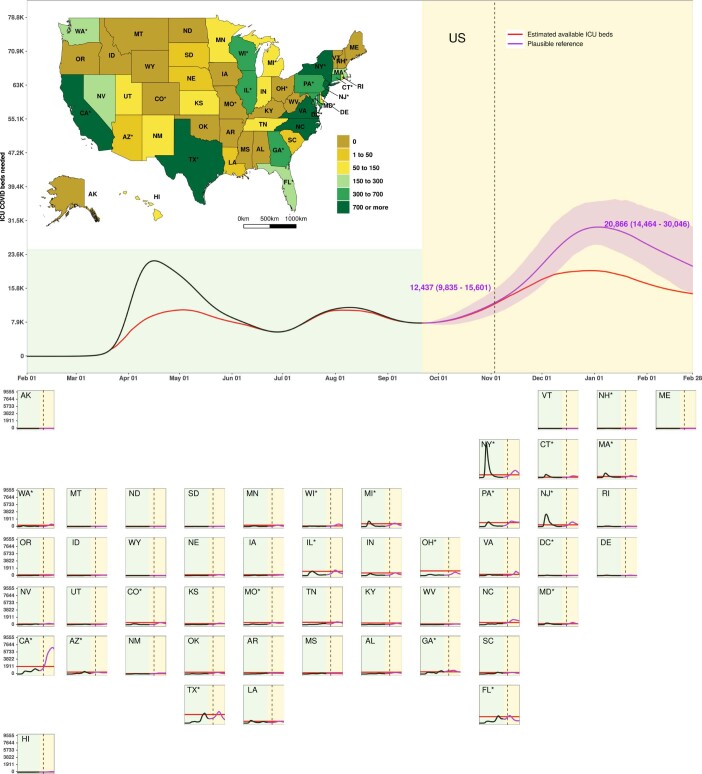
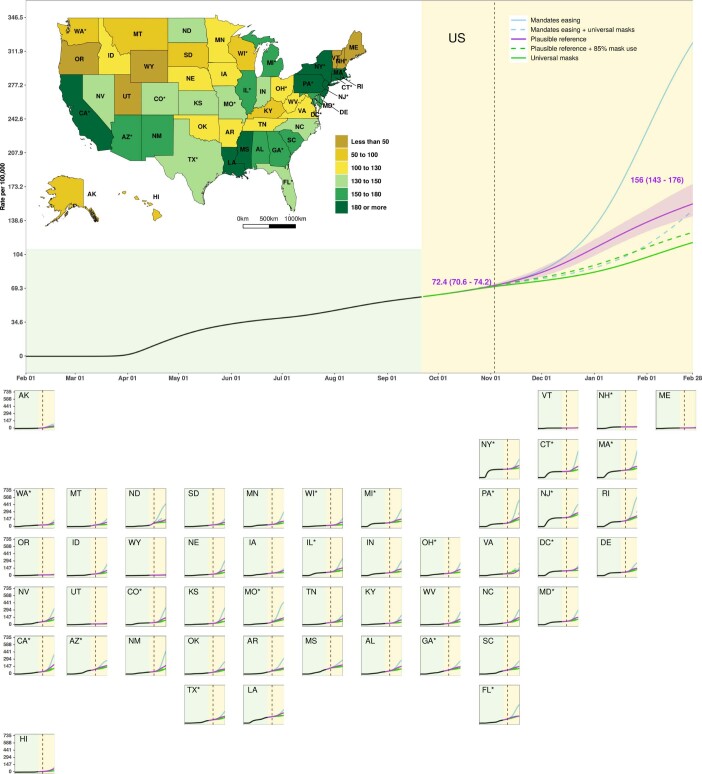
We use COVID-19 case and mortality data from 1 February 2020 to 21 September 2020 and a deterministic SEIR (susceptible, exposed, infectious and recovered) compartmental framework to model possible trajectories of severe acute respiratory syndrome coronavirus 2 (SARS-CoV-2) infections and the effects of non-pharmaceutical interventions in the United States at the state level from 22 September 2020 through 28 February 2021. Using this SEIR model, and projections of critical driving covariates (pneumonia seasonality, mobility, testing rates and mask use per capita), we assessed scenarios of social distancing mandates and levels of mask use. Projections of current non-pharmaceutical intervention strategies by state—with social distancing mandates reinstated when a threshold of 8 deaths per million population is exceeded (reference scenario)—suggest that, cumulatively, 511,373 (469,578–578,347) lives could be lost to COVID-19 across the United States by 28 February 2021. We find that achieving universal mask use (95% mask use in public) could be sufficient to ameliorate the worst effects of epidemic resurgences in many states. Universal mask use could save an additional 129,574 (85,284–170,867) lives from September 22, 2020 through the end of February 2021, or an additional 95,814 (60,731–133,077) lives assuming a lesser adoption of mask wearing (85%), when compared to the reference scenario.
Overview
The claims and statistics of this paper haven’t been checked yet.
Free: it reads the open-access text and checks the first 5 claims that cite a source we can check. Create a free account to check every claim.
Integrity signals
Registry
Cites
Statistics
Figures
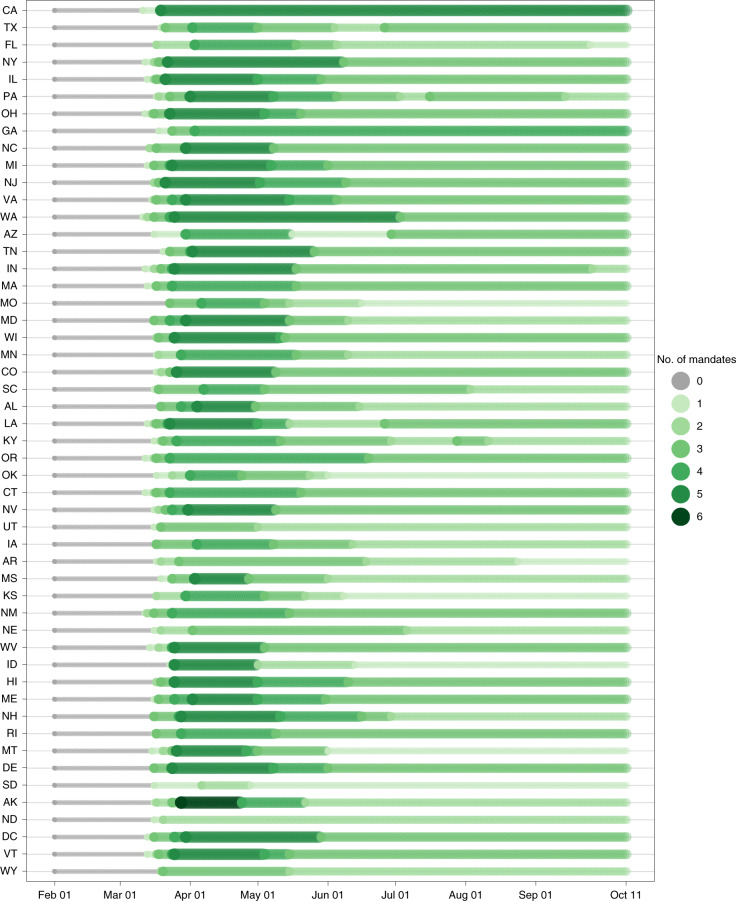
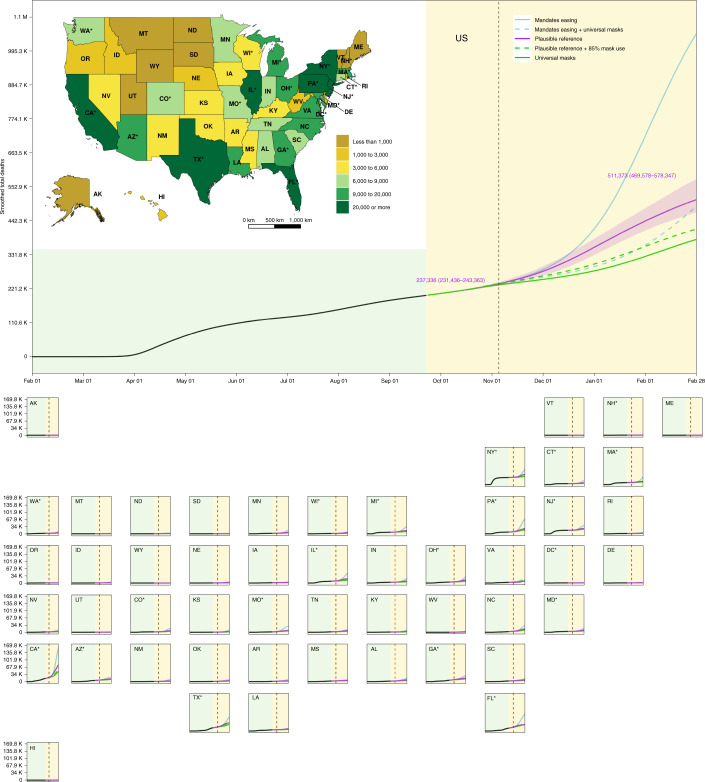
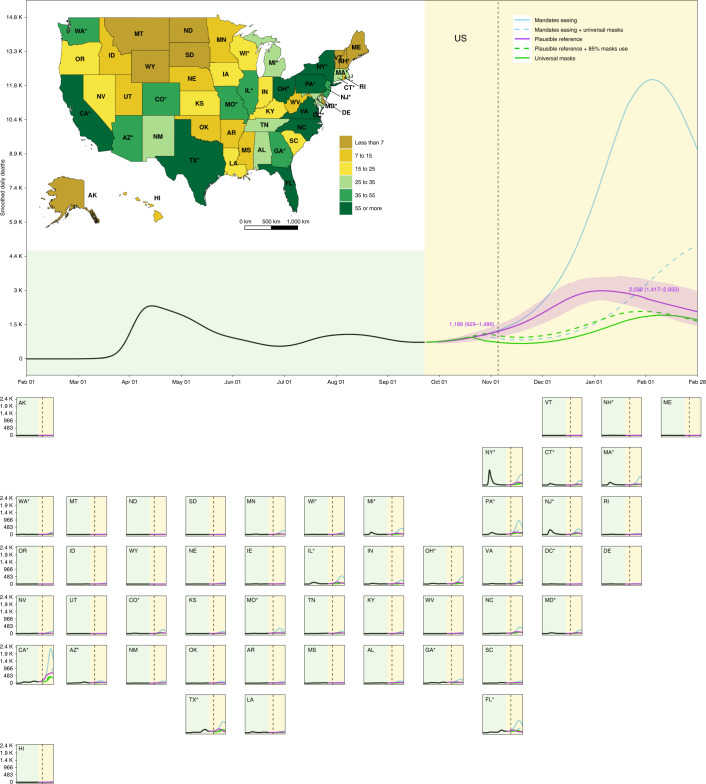
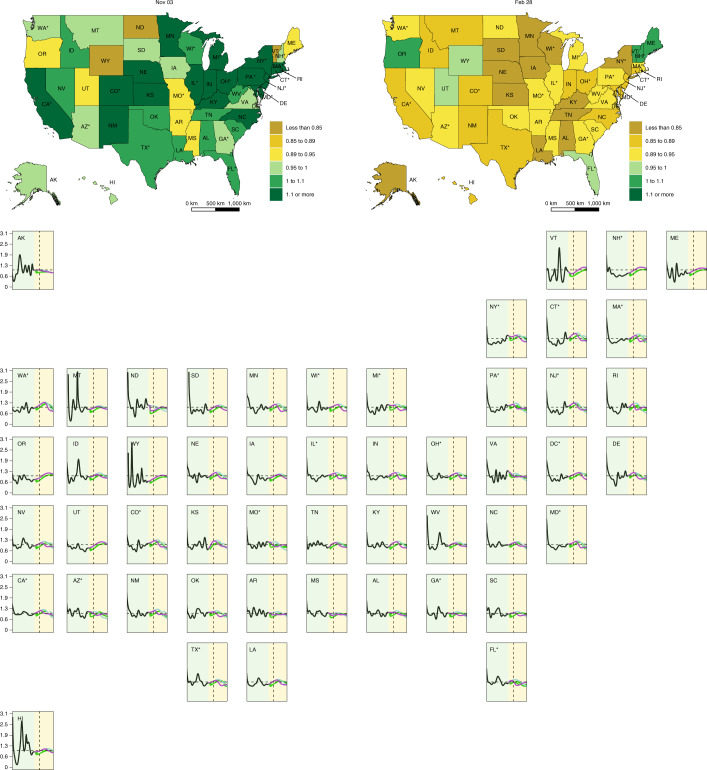
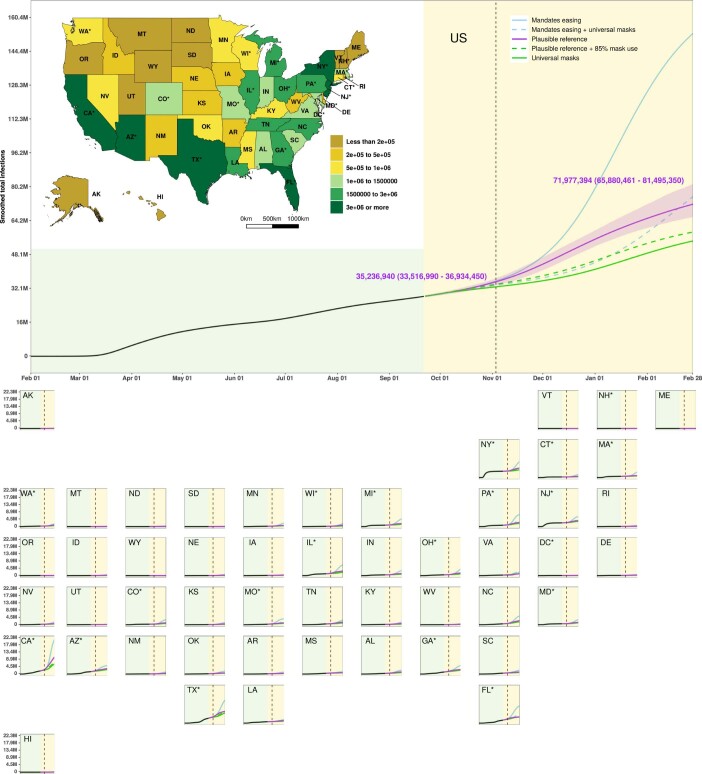
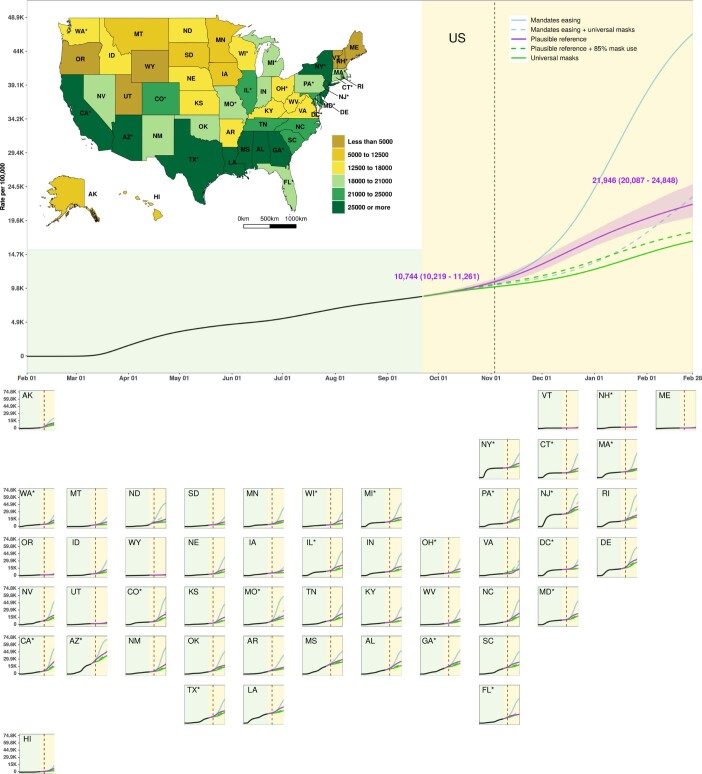
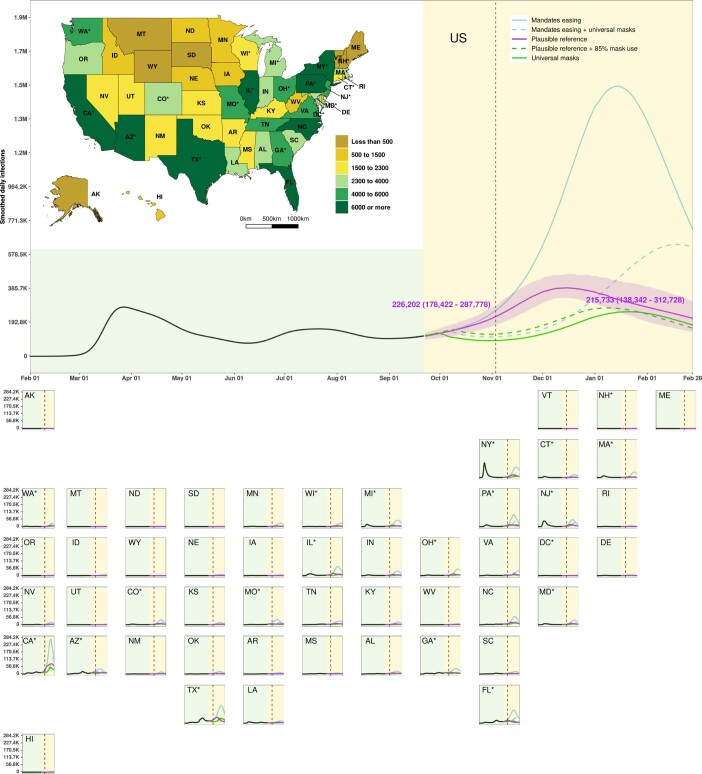
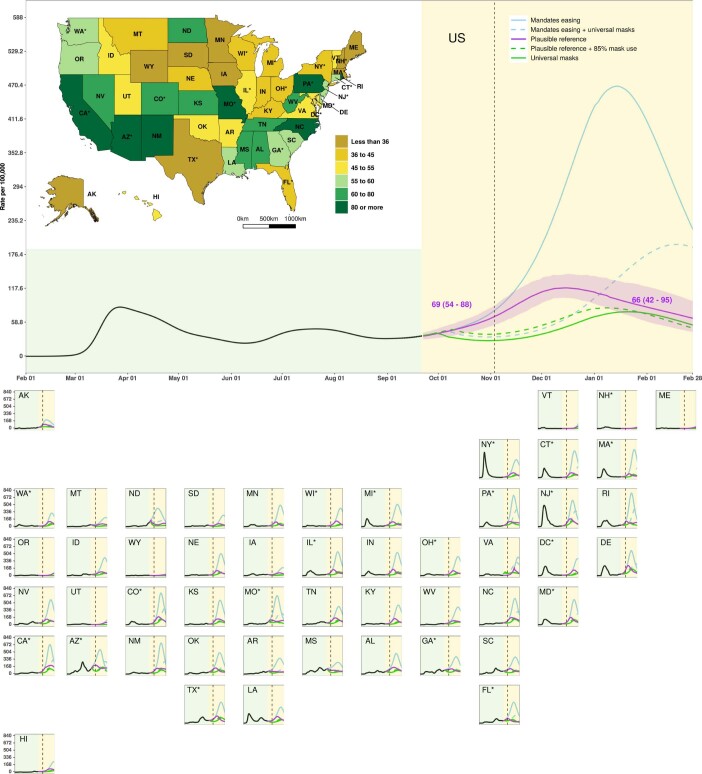
Verification
Claims the paper makes
The claims and statistics of this paper haven’t been checked yet.
Free: it reads the open-access text and checks the first 5 claims that cite a source we can check. Create a free account to check every claim.
Claims other papers make about this one
Each is checked against this paper’s own text: does it say what the citing paper says it does?
The source backs part of the claim, not all of it — or backs it for a different population, condition or comparison.
In the citing paper
“Ultimately, we considered three novel indicators of the COVID-19 pandemic: decreasing human mobility,13 estimated total (as opposed to reported) daily SARS-CoV-2 infection rate, and estimated daily excess mortality rate during the pandemic (including excess deaths occurring during the pandemic where COVID-19 was not reported as the underlying cause of death).5, 13”
From Global prevalence and burden of depressive and anxiety disorders in 204 countries and territories in 2020 due to the COVID-19 pandemic (2021) · cites this paper as [13]
Experimental — accuracy not yet measuredThe source backs part of the claim, not all of it — or backs it for a different population, condition or comparison.
In the citing paper
“The estimation of human mobility, daily SARS-CoV-2 infection rate, and daily excess mortality rate was done by the Institute for Health Metrics and Evaluation (IHME) COVID-19 Forecasting Team and is described in detail elsewhere.13”
From Global prevalence and burden of depressive and anxiety disorders in 204 countries and territories in 2020 due to the COVID-19 pandemic (2021) · cites this paper as [13]
Experimental — accuracy not yet measuredThe cited source says what the claim attributes to it.
In the citing paper
“This variation can be explained by a combination of factors including policies enacted by governments to encourage mask use and reduce social interaction,48, 49, 50 presence of escape variants, testing and contact tracing capacity,51, 52 previous exposure to other coronaviruses,53 baseline patterns of social interaction, and more.”
From Estimating global, regional, and national daily and cumulative infections with SARS-CoV-2 through Nov 14, 2021: a statistical analysis (2022) · cites this paper as [50]
Self-check
Percentages, sums and reported differences re-computed from the paper’s own numbers.
The self-check needs the paper’s full text.
Citations
Cites
Vos, T., Lim, S. S., Abbafati, C., Abbas, K. M., Abbasi, M., Abbasifard, M., Abbasi-Kangevari, M., Abbastabar, H., Abd-Allah, F., Abdelalim, A., et al. (2020) · The Lancet · doi:10.1016/s0140-6736(20)30925-9 · Cited by 19,358
Self-citationMurray, C. J. L., Aravkin, A. Y., Zheng, P., Abbafati, C., Abbas, K. M., Abbasi-Kangevari, M., Abd-Allah, F., Abdelalim, A., Abdollahi, M., Abdollahpour, I., et al. (2020) · The Lancet · doi:10.1016/s0140-6736(20)30752-2 · Cited by 9,854
Self-citationRemdesivir for the Treatment of Covid-19 — Final Report
Beigel, J. H., Tomashek, K. M., Dodd, L. E., Mehta, A. K., Zingman, B. S., Kalil, A. C., Hohmann, E., Chu, H. Y., Luetkemeyer, A., Kline, S., et al. (2020) · New England Journal of Medicine · doi:10.1056/nejmoa2007764 · Cited by 7,267
First case of 2019 novel coronavirus in the United States
Holshue, M. L., DeBolt, C., Lindquist, S., Lofy, K. H., Wiesman, J., Bruce, H., Spitters, C., Ericson, K., Wilkerson, S., Tural, A., et al. (2020) · New England Journal of Medicine · doi:10.1056/nejmoa2001191 · Cited by 6,030
Lauer, S. A., Grantz, K. H., Bi, Q., Jones, F. K., Zheng, Q., Meredith, H. R., Azman, A. S., Reich, N. G., & Lessler, J. (2020) · Annals of Internal Medicine · doi:10.7326/m20-0504 · Cited by 5,970
The proximal origin of SARS-CoV-2
Andersen, K. G., Rambaut, A., Lipkin, W. I., Holmes, E. C., & Garry, R. F. (2020) · Nature Medicine · doi:10.1038/s41591-020-0820-9 · Cited by 5,081
Chu, D. K., Akl, E. A., Duda, S., Solo, K., Yaacoub, S., Schünemann, H. J., Chu, D. K., Akl, E. A., El-harakeh, A., Bognanni, A., et al. (2020) · The Lancet · doi:10.1016/s0140-6736(20)31142-9 · Cited by 3,843
How will country-based mitigation measures influence the course of the COVID-19 epidemic?
Anderson, R. M., Heesterbeek, H., Klinkenberg, D., & Hollingsworth, T. D. (2020) · The Lancet · doi:10.1016/s0140-6736(20)30567-5 · Cited by 3,648
Wang, Y., Zhang, D., Du, G., Du, R., Zhao, J., Jin, Y., Fu, S., Gao, L., Cheng, Z., Lu, Q., et al. (2020) · The Lancet · doi:10.1016/s0140-6736(20)31022-9 · Cited by 3,440
Estimating the effects of non-pharmaceutical interventions on COVID-19 in Europe
Flaxman, S., Mishra, S., Gandy, A., Unwin, H. J. T., Mellan, T. A., Coupland, H., Whittaker, C., Zhu, H., Berah, T., Eaton, J. W., et al. (2020) · Nature · doi:10.1038/s41586-020-2405-7 · Cited by 3,350
Research works printed but not linked: 4
- 4. Horton, R. The COVID-19 Catastrophe: What's Gone Wrong and How to Stop it Happening Again. (John Wiley & Sons, 2020).
- 39. Henry M Jackson School of International Studies, university of Washington, Seattle, WA, uSA. 13 Policy and Epidemiology Group, Queensland Centre for Mental Health research, Brisbane, Queensland, Australia. 14 These authors contributed equally: robert C reiner Jr., ryan M Barber. ✉ e-mail: sihay@uw.edu coronavirusdisease2019/what-you-should-know/current-situation-in-hawaii/; Illinois cases and deaths from https://dph.illinois.gov/covid19/covid19-statistics; Indiana cases and deaths from https://www.coronavirus.in.gov/2393.htm; Kentucky cases and deaths from https://govstatus.egov.com/kycovid19; Maryland cases and deaths from https://coronavirus.maryland.gov/; Nebraska cases and deaths from http://dhhs.ne.gov/Pages/Coronavirus.aspx; New York cases and deaths from https://github.com/nychealth/coronavirus-data and https:// covid19tracker.health.ny.gov/views/NYS-COVID19-Tracker/NYSDOHCOVID-19 Tracker-Map?%3Aembed=yes&%3Atoolbar=no&%3Atabs=n; North Carolina cases and deaths from https://covid19.ncdhhs.gov/dashboard; and Washington cases, hospitalizations and deaths from https://www.doh.wa.gov/Emergencies/ COVID19/DataDashboard. The timing of mandate implementation for each state was derived from a preprint study 43 and supplemented with ad hoc additional resources available at http://ghdx.healthdata.org/record/ihme-data/ united-states-covid-19-scenarios-2020-2021. The mobility covariate was constructed using data from Google Community Mobility Reports (https://www. google.com/covid19/mobility/); Facebook Data for Good Disease Prevention Maps (https://dataforgood.fb.com/tools/disease-prevention-maps/; with access coordinated via diseaseprevmaps@fb.com); SafeGraph Shelter in Place Index (https://www.safegraph.com/dashboard/covid19-shelter-in-place?s=US& d=09-13-2020&t=counties&m=index; with access coordinated through the SafeGraph COVID-19 Data Consortium via https://www.safegraph.com/covid-19- data-consortium/); and Descartes Labs (https://github.com/descarteslabs/ DL-COVID-19). The testing covariate was constructed using data from the COVID Tracking Project (https://covidtracking.com/data/api/). State-level datasets for the testing covariate were replaced in Washington, using https:// www.doh.wa.gov/Emergencies/COVID19/DataDashboard. Mask-use data were obtained from Premise COVID-19 Global Impact Survey (https://www.premise. com/the-dos-and-donts-of-conducting-surveys-during-covid-19/; with access coordinated through info@premise.com); the Facebook (COVID) Symptom Survey (with access coordinated through University of Maryland Joint Program in Survey Methodology via admin-C19survey-fb@umd.edu); and the YouGov COVID-19 Behavioural Tracker Survey (https://github.com/YouGov-Data/ covid-19-tracker). Pneumonia seasonality estimates, particulate matter air pollution estimates, lower respiratory infection country-specific mortality rate estimates and smoking estimates were generated by the Global Burden of Disease study (http://ghdx.healthdata.org/record/ihme-data/united-states-covid- 19-scenarios-2020-2021/). Altitude was sourced from the National Oceanic and Atmospheric Administration National Centers for Environmental Information Global Land One-km Base Elevation Project (https://www.ngdc.noaa.gov/mgg/ topo/globe.html) and population data were obtained from WorldPop Population Counts (https://www.worldpop.org/project/list/). These sources are further detailed in the Supplementary Information 44-51 . Source data are provided with this paper. references
- 43. GBD 2019 Population and Fertility Collaborators. Global, regional and national age-sex-specific fertility, mortality and population estimates, 1950-2019: a comprehensive demographic analysis for the global burden of disease study 2019. The Lancet (in press).
- 52. GBD 2019 Diseases and injuries Collaborators. Global burden of 369 diseases and injuries, 1990-2019: a systematic analysis for the Global Burden of Disease Study 2019. The Lancet (in press).
Cited by
Items 101–200 of 554
Pan, Y., Xia, T., Guo, K., An, Y., & Chen, C. (2022) · Building and Environment · doi:10.1016/j.buildenv.2022.109792 · Cited by 26
Masks and face coverings for the lay public: A narrative updatePreprint
Czypionka, T., Greenhalgh, T., Schmid, M., & Bassler, D. (2020) · SocArXiv (OSF Preprints) · doi:10.31235/osf.io/wuk6a · Cited by 25
Lee, S., Zabinsky, Z. B., Wasserheit, J. N., Kofsky, S. M., & Liu, S. (2021) · Medical Decision Making · doi:10.1177/0272989x211003081 · Cited by 28
Lam, C., Siefkas, A. C., Zelin, N. S., Barnes, G., Dellinger, R. P., Vincent, J., Braden, G. L., Burdick, H., Hoffman, J. L., Calvert, J. S., et al. (2021) · Clinical Therapeutics · doi:10.1016/j.clinthera.2021.03.016 · Cited by 30
“Data from patients admitted between March 2, 2020, and October 18, 2020 (826 of 1471 patients [56%]), were set aside into a holdout test set.”
BackgroundHigh-Resolution Spatio-Temporal Model for County-Level COVID-19 Activity in the U.S.
Zhu, S., Bukharin, A., Xie, L., Santillana, M., Yang, S., & Xie, Y. (2021) · ACM Transactions on Management Information Systems · doi:10.1145/3468876 · Cited by 26
Wang, P., Zheng, X., & Liu, H. (2022) · Frontiers in Public Health · doi:10.3389/fpubh.2022.1033432 · Cited by 35
Hassan, J., Saeed, S. M., Deka, L., Uddin, M. J., & Das, D. B. (2024) · Pharmaceutics · doi:10.3390/pharmaceutics16020260 · Cited by 35
Estimation of COVID-19 outbreak size in Harbin, China
Song, H., Jia, Z., Jin, Z., & Liu, S. (2021) · Nonlinear Dynamics · doi:10.1007/s11071-021-06406-2 · Cited by 25
The cognitive science of COVID-19: Acceptance, denial, and belief change
Thagard, P. R. (2021) · Methods · doi:10.1016/j.ymeth.2021.03.009 · Cited by 30
Otunuga, O. M. (2021) · Chaos Solitons & Fractals · doi:10.1016/j.chaos.2021.110983 · Cited by 24
Wang, W., Yim, S., Wong, C., & Kan, C. W. (2021) · Polymers · doi:10.3390/polym13132122 · Cited by 24
“Considering the susceptibility of COVID-19 to standard disinfection methods [9], it is believed that PHMB-treated spandex fabrics could play a role in containing the transmission of COVID-19, particularly in high-risk places.”
BackgroundMethodInfluentialWang, G., Wu, T., Wei, W., Jiang, J., An, S., Liang, B., Ye, L., & Liang, H. (2021) · Epidemiology and Infection · doi:10.1017/s0950268821002375 · Cited by 24
Giardina, J., Bilinski, A., Fitzpatrick, M. C., Kendall, E. A., Linas, B. P., Salomon, J. A., & Ciaranello, A. L. (2022) · JAMA Network Open · doi:10.1001/jamanetworkopen.2021.47827 · Cited by 24
Landy, J. F., Shigeto, A., Laxman, D. J., & Scheier, L. M. (2022) · BMC Public Health · doi:10.1186/s12889-022-13161-5 · Cited by 24
Non-stationary spatio-temporal point process modeling for high-resolution COVID-19 data
Dong, Z., Zhu, S., Xie, Y., Mateu, J., & Rodríguez‐Cortés, F. J. (2023) · Journal of the Royal Statistical Society Series C (Applied Statistics) · doi:10.1093/jrsssc/qlad013 · Cited by 32
Kummer, A. G., Zhang, J., Jiang, C., Litvinova, M., Ventura, P. C., García, M. A., Vespignani, A., Wu, H., Yu, H., & Ajelli, M. (2024) · Influenza and Other Respiratory Viruses · doi:10.1111/irv.13301 · Cited by 21
Self-citationRevisiting classical SIR modelling in light of the COVID-19 pandemic
Kalachev, L. V., Landguth, E. L., & Graham, J. (2022) · Infectious Disease Modelling · doi:10.1016/j.idm.2022.12.002 · Cited by 35
Stone, N. E., Jaramillo, S. A., Jones, A., Vazquez, A. J., Martz, M., Versluis, L. M., Raniere, M. O., Nunnally, H. E., Zarn, K. E., Nottingham, R. D., et al. (2021) · mBio · doi:10.1128/mbio.03495-20 · Cited by 26
A COVID-19 Epidemic Model Predicting the Effectiveness of Vaccination in the US
Webb, G. F. (2021) · Infectious Disease Reports · doi:10.3390/idr13030062 · Cited by 25
A COVID-19 Community Vulnerability Index to drive precision policy in the USPreprint
Smittenaar, P., Stewart, N., Sutermaster, S., Coome, L., Dibner-Dunlap, A., Jain, M., Caplan, Y., Campigotto, C., & Sgaier, S. K. (2021) · medRxiv · doi:10.1101/2021.05.19.21257455 · Cited by 22
What Lessons can Be Learned From the Management of the COVID-19 Pandemic?
Quinn, G. A., Connolly, R., ÓhAiseadha, C. O., Hynds, P. D., Bagus, P., Brown, R. B., Cáceres, C. F., Craig, C. E. H., Connolly, M., Domingo, J. L., et al. (2025) · International Journal of Public Health · doi:10.3389/ijph.2025.1607727 · Cited by 27
“Moreover, although multiple model-based studies concluded that the NPIs were temporarily controlling the pandemic [7, 10, 12, 55 – 57], many studies found that the pandemic progression continued largely independently of the NPIs [64, 81, 96, 103, 105, 137 – 145].”
InfluentialVillela, E. F. D. M., da Cunha, I. R., Fodjo, J. N. S., Obimpeh, M., Colebunders, R., & Hees, S. V. (2021) · International Journal of Environmental Research and Public Health · doi:10.3390/ijerph18126511 · Cited by 25
Calderwood, A. H., Calderwood, M. S., Williams, J. L., & Dominitz, J. A. (2021) · Techniques and Innovations in Gastrointestinal Endoscopy · doi:10.1016/j.tige.2021.07.003 · Cited by 21
Temporal variation of excess deaths from diabetes during the COVID-19 pandemic in the United States
Yao, X. I., Han, L., Sun, Y., He, D., Zhao, S., & Ran, J. (2023) · Journal of Infection and Public Health · doi:10.1016/j.jiph.2023.01.018 · Cited by 20
Identifying Synergistic Interventions to Address COVID-19 Using a Large Scale Agent-Based Model
Li, J., & Giabbanelli, P. J. (2021) · Lecture notes in computer science · doi:10.1007/978-3-030-77967-2_54 · Cited by 18
Sottile, P. D., Albers, D. J., DeWitt, P. E., Russell, S., Stroh, J. N., Kao, D. P., Adrian, B., Levine, M. E., Mooney, R., Larchick, L., et al. (2021) · Journal of the American Medical Informatics Association · doi:10.1093/jamia/ocab100 · Cited by 25
Transmission dynamics and forecasts of the COVID-19 pandemic in Mexico, March-December 2020
Tariq, A., Banda, J. M., Skums, P., Dahal, S., Castillo-Garsow, C. W., Espinoza, B., Brizuela, N. G., Saenz, R. A., Kirpich, A., Luo, R., et al. (2021) · PLoS ONE · doi:10.1371/journal.pone.0254826 · Cited by 22
Shastry, V., Reeves, D. C., Willems, N., & Rai, V. (2022) · PLoS ONE · doi:10.1371/journal.pone.0262172 · Cited by 21
“These models have been recently used in the United States to track the anticipated impacts of COVID-19 policy configurations [50,51].”
MethodViral transmissibility of SARS-CoV-2 accelerates in the winter, similarly to influenza epidemics
Inaida, S., Paul, R. E. L., & Matsuno, S. (2022) · American Journal of Infection Control · doi:10.1016/j.ajic.2022.05.009 · Cited by 20
Chen, M., Chen, Y., Xu, Y., An, Q., & Min, W. (2022) · Sustainable Cities and Society · doi:10.1016/j.scs.2022.104256 · Cited by 20
“time-series prediction, which could effectively estimate the outbreak point and turning point of the COVID-19 pandemic (Chadsuthi & Modchang, 2021; Desai, 2021; Fanelli & Piazza, 2020; Guleryuz, 2021; Khedher et al., 2021; Liu et al., 2020; Reiner et al., 2021; Z. Yang et al., 2020).”
Simulation of COVID-19 Propagation Scenarios in the Madrid Metropolitan Area
Singh, D. E., Marinescu, M.-C., Guzmán-Merino, M., Durán, C., Delgado‐Sanz, C., Gómez‐Barroso, D., & Carretero, J. (2021) · Frontiers in Public Health · doi:10.3389/fpubh.2021.636023 · Cited by 21
Unmasking the Ethics of Public Health Messaging in a Pandemic
Ho, A., & Huang, V. (2021) · Journal of Bioethical Inquiry · doi:10.1007/s11673-021-10126-y · Cited by 23
“Lessons from inconsistent mask messaging in the United States illustrate how careful communication and implementation are necessary to facilitate significant cultural and behavioural shift needed to curb further viral spread.”
BackgroundInfluentialRaman, G., & Peng, J. C. (2021) · Proceedings of the National Academy of Sciences · doi:10.1073/pnas.2026596118 · Cited by 20
“Analyzing the correlations during the two phases, we find statistically significant correlations for the former, but not the latter ( SI Appendix , Note 1).”
InfluentialZero-Inflated Time Series Modelling of COVID-19 Deaths in Ghana
Tawiah, K., Abdul, I. W., & Asosega, K. A. (2021) · Journal of Environmental and Public Health · doi:10.1155/2021/5543977 · Cited by 19
“Sperrin and McMillan [4] developed the QCOVID model to predict the risk of COVID-19-related mortality, while the Institute for Health Metrics Evaluation (IHME) proposed and applied deterministic susceptible, exposed, infectious, and recovered (SEIR) compartment frame work model for cases in the United States of Americ…”
BackgroundA Hypothesis-Free Bridging of Disease Dynamics and Non-pharmaceutical Policies
Wang, X., Hao Wang, A., Ramazi, P., Nah, K., & Lewis, M. A. (2022) · Bulletin of Mathematical Biology · doi:10.1007/s11538-022-01012-8 · Cited by 19
Outbreak Size Distribution in Stochastic Epidemic Models
Hindes, J., Assaf, M., & Schwartz, I. B. (2022) · Physical Review Letters · doi:10.1103/physrevlett.128.078301 · Cited by 23
National and subnational short-term forecasting of COVID-19 in Germany and Poland during early 2021
Bracher, J., Wolffram, D., Deuschel, J., Görgen, K., Ketterer, J., Ullrich, A., Abbott, S., Barbarossa, M. V., Bertsimas, D., Bhatia, S., et al. (2022) · Communications Medicine · doi:10.1038/s43856-022-00191-8 · Cited by 23
Data-driven mathematical modeling approaches for COVID-19: A survey
Demongeot, J., & Magal, P. (2024) · Physics of Life Reviews · doi:10.1016/j.plrev.2024.08.004 · Cited by 24
COVID-19 epidemiology in Canada from January to December 2020: the pre-vaccine era
Waldner, D., Harrison, R., Johnstone, J., Saxinger, L. M., Webster, D., & Sligl, W. (2021) · FACETS · doi:10.1139/facets-2021-0029 · Cited by 25
Trend estimation and short-term forecasting of COVID-19 cases and deaths worldwide
Krymova, E., Béjar, B., Thanou, D., Sun, T., Manetti, E., Lee, G., Namigai, K., Choirat, C., Flahault, A., & Obozinski, G. (2022) · Proceedings of the National Academy of Sciences · doi:10.1073/pnas.2112656119 · Cited by 27
Scaling SARS-CoV-2 wastewater concentrations to population estimates of infection
Kaplan, E. H., Zulli, A., Sanchez, M., & Peccia, J. (2022) · Scientific Reports · doi:10.1038/s41598-022-07523-7 · Cited by 18
Yim, S., Cheung, J. W.-Y., Cheng, I. Y.-C., Ho, L. W.-H., Szeto, S.-Y. S., Chan, P., Lam, Y.-L., & Kan, C. W. (2023) · Polymers · doi:10.3390/polym15051203 · Cited by 18
Evaluation of virucidal activity of residual quaternary ammonium-treated surfaces on SARS-CoV-2
Caschera, A., McAuley, J., Kim, Y., Purcell, D. F. J., Rymenants, J., & Foucher, D. A. (2021) · American Journal of Infection Control · doi:10.1016/j.ajic.2021.10.021 · Cited by 18
“[11] Reiner RC, Barber RM, Collin JK, Zheng P, Adolph C, Albright J, et al.”
Formulating human risk response in epidemic models: Exogenous vs endogenous approaches
LeJeune, L., Ghaffarzadegan, N., Childs, L. M., & Saucedo, O. (2025) · European Journal of Operational Research · doi:10.1016/j.ejor.2025.01.004 · Cited by 19
COVID-19 Joint Pandemic Modeling and Analysis Platform
Thakur, G. M., Sparks, K. A., Berres, A., Tansakul, V., Chinthavali, S., Whitehead, M., Schmidt, E. H., Xu, H., Fan, J., Spears, D., et al. (2020) · doi:10.1145/3423459.3430760 · Cited by 20
Páez, F. D. A., Vega, B., Orellana, D., Charry, R., Gómez, A., Obimpeh, M., Verhoeven, V., & Colebunders, R. (2021) · International Journal of Environmental Research and Public Health · doi:10.3390/ijerph18094657 · Cited by 19
Facial mask personalization encourages facial mask wearing in times of COVID-19
Palcu, J., Schreier, M., & Janiszewski, C. A. (2022) · Scientific Reports · doi:10.1038/s41598-021-04681-y · Cited by 20
Berke, A., Doorley, R., Alonso, L., Arroyo, V., Pons, M., & Larson, K. (2022) · PLoS ONE · doi:10.1371/journal.pone.0264860 · Cited by 16
Data-Driven Modeling and Analysis for COVID-19 Pandemic Hospital Beds Planning
Zhang, T., Lu, Y., Guan, Y., Zhong, X., & Hogan, T. (2022) · IEEE Transactions on Automation Science and Engineering · doi:10.1109/tase.2022.3224171 · Cited by 24
“The additional states may include asymptomatic infected individuals [14], [15], [16], individuals under quarantine [15], [16], [17], and hospitalized individuals [15], [16].”
BackgroundCOVID-19 Detection Model with Acoustic Features from Cough Sound and Its Application
Kim, S., Baek, J., & Lee, S.-P. (2023) · Applied Sciences · doi:10.3390/app13042378 · Cited by 22
Atek, S., Bianchini, F., Vito, C. D., Cardinale, V., Novelli, S., Pesaresi, C., Eugeni, M., Mecella, M., Rescio, A., Petronzio, L., et al. (2023) · Digital Health · doi:10.1177/20552076231185475 · Cited by 22
Epidemic outcomes following government responses to COVID-19: Insights from nearly 100,000 models
Bendavid, E., & Patel, C. J. (2024) · Science Advances · doi:10.1126/sciadv.adn0671 · Cited by 20
Wang, Z., Whittington, J. D., Yuan, H., Miao, H., Tian, H., & Stenseth, N. C. (2021) · Biosafety and Health · doi:10.1016/j.bsheal.2021.09.002 · Cited by 16
Ahlers, M. J., Aralis, H. J., Tang, W. L., Sussman, J. B., Fonarow, G. C., & Ziaeian, B. (2022) · BMJ Medicine · doi:10.1136/bmjmed-2021-000030 · Cited by 25
Modeling the Effect of Population-Wide Vaccination on the Evolution of COVID-19 Epidemic in CanadaPreprint
Berkane, S., Harizi, I., & Tayebi, A. (2021) · medRxiv · doi:10.1101/2021.02.05.21250572 · Cited by 19
Pan, Y., Guo, K., Lin, C., Wei, D., Ho, K., & Chen, C. (2023) · Building and Environment · doi:10.1016/j.buildenv.2023.110765 · Cited by 16
Analysis of Delayed Vaccination Regimens: A Mathematical Modeling Approach
González‐Parra, G. (2021) · Epidemiologia · doi:10.3390/epidemiologia2030021 · Cited by 16
Prediction of Suitable Candidates for COVID-19 Vaccination
Sujatha, R., Krishna, B. V. S., Chatterjee, J. M., Naidu, P. R., Jhanjhi, N. Z., Charita, C., Mariya, E. N., & Baz, M. (2021) · Intelligent Automation & Soft Computing · doi:10.32604/iasc.2022.021216 · Cited by 16
“Reference [4] models’ scenarios for COVID-19 in the USA.”
BackgroundTariq, A., Chakhaia, T., Dahal, S., Ewing, A., Hua, X., Ofori, S. K., Prince, O., Salindri, A. D., Adeniyi, A. E., Banda, J. M., et al. (2022) · PLoS neglected tropical diseases · doi:10.1371/journal.pntd.0010228 · Cited by 17
“As this pandemic gears to continue in the third year, it has already resulted in devastating global socioeconomic and political consequences [2].”
Rakšnys, A. V., Gudelis, D., & Guogis, A. (2021) · Socialinė teorija empirija politika ir praktika · doi:10.15388/stepp.2021.31 · Cited by 21
Increases in drug overdose deaths in Norway and the United States during the COVID-19 pandemic
Friedman, J. R., & Gjersing, L. (2022) · Scandinavian Journal of Public Health · doi:10.1177/14034948221075025 · Cited by 15
“We compared each time series of overdose mortality to a measure of human mobility, calculated from aggregated anonymised cellphone data provide by Google, and processed by the Institute for health metrics and evaluation [9].”
BackgroundMethodSkeens, M. A., Hill, K. N., Olsavsky, A. L., Ralph, J. E., Udaipuria, S., Akard, T. F., & Gerhardt, C. A. (2023) · Frontiers in Psychology · doi:10.3389/fpsyg.2022.1079848 · Cited by 16
“The United States has been one of the most affected countries, with over 96 million infections and almost 1 million deaths as of September 2022 (Team, 2021; Centers for Disease Control and TYPE Original Research PUBLISHED 13 January 2023 DOI 10.3389/fpsyg.2022.1079848”
BackgroundInfluentialBahmani, M., Chegini, R., Ghanbari, E., Sheykhsaran, E., Aghbash, P. S., Leylabadlo, H. E., Moradian, E., Houjaghan, A. K., & Baghi, H. B. (2022) · World Journal of Virology · doi:10.5501/wjv.v11.i3.113 · Cited by 17
New compartment model for COVID-19
Odagaki, T. (2023) · Scientific Reports · doi:10.1038/s41598-023-32159-6 · Cited by 14
Epidemic Dynamics via Wavelet Theory and Machine Learning with Applications to Covid-19
Td, T., Protin, F., Hang, N. T. T., Jules, M., Thang, N. D., Piffault, C., Rodríguez, W., Susely, F., Lê, H. V., Tuschmann, W., et al. (2020) · Repository KITopen (Karlsruhe Institute of Technology) · doi:10.5445/ir/1000129660 · Cited by 14
Assessing population-sampling strategies for reducing the COVID-19 incidence
Guzmán-Merino, M., Durán, C., Marinescu, M.-C., Delgado‐Sanz, C., Gómez‐Barroso, D., Carretero, J., & Singh, D. E. (2021) · Computers in Biology and Medicine · doi:10.1016/j.compbiomed.2021.104938 · Cited by 14
“In [30], the authors use a deterministic SEIR framework to model the propagation of the virus and the effect of non-pharmaceutical interventions (social distancing mandates and mask use) until the Spring of 2021.”
Learning models for forecasting hospital resource utilization for COVID-19 patients in Canada
Zhang, J., Pathak, H. S., Snowdon, A. W., & Greiner, R. (2022) · Scientific Reports · doi:10.1038/s41598-022-12491-z · Cited by 14
Self-citationEpidemic Dynamics via Wavelet Theory and Machine Learning with Applications to Covid-19
Dat, T. T., Frédéric, P., Hang, N. T. T., Jules, M., Thang, N. D., Piffault, C., Rodríguez, W., Susely, F., Lê, H. V., Tuschmann, W., et al. (2020) · Biology · doi:10.3390/biology9120477 · Cited by 14
Bsat, R., Chemaitelly, H. S., Coyle, P. V., Tang, P., Hasan, M. R., Kanaani, Z. A., Al‐Kuwari, E., Butt, A. A., Jeremijenko, A. M., Kaleeckal, A. H., et al. (2022) · Journal of Global Health · doi:10.7189/jogh.12.05004 · Cited by 16
Aron, J., & Muellbauer, J. N. J. (2022) · Review of Income and Wealth · doi:10.1111/roiw.12570 · Cited by 18
AIDS and COVID: A tale of two pandemics and the role of statisticians
Ellenberg, S. S., & Morris, J. S. (2021) · Statistics in Medicine · doi:10.1002/sim.8936 · Cited by 14
González‐Parra, G., Díaz‐Rodríguez, M., & Arenas, A. J. (2022) · Spatial and Spatio-temporal Epidemiology · doi:10.1016/j.sste.2022.100532 · Cited by 13
Jaya, I. G. N. M., Folmer, H., & Lundberg, J. (2022) · The Annals of Regional Science · doi:10.1007/s00168-022-01191-1 · Cited by 18
Bayesian space-time SIR modeling of Covid-19 in two US states during the 2020–2021 pandemic
Lawson, A. B., & Kim, J. (2022) · PLoS ONE · doi:10.1371/journal.pone.0278515 · Cited by 17
Development of Antiviral CVC (Chief Value Cotton) Fabric
Wang, W., Yim, S., Wong, C., & Kan, C. W. (2021) · Polymers · doi:10.3390/polym13162601 · Cited by 13
Barros, V., Manes, I., Akinwande, V., Cintas, C., Bar-Shira, O., Ozery-Flato, M., Shimoni, Y., & Rosen‐Zvi, M. (2022) · PLoS ONE · doi:10.1371/journal.pone.0265289 · Cited by 17
Rowan, N. J. (2023) · The Science of The Total Environment · doi:10.1016/j.scitotenv.2023.161455 · Cited by 16
“…of interesting activities and innovations include the modeling of COVID-19 infection data and positive case occurrences (Zeroual et al., 2020; IHME COVID-19 Forecasting team, 2021; Rowan andMoral, 2021), and the use ofmachine learning and blockchain to review data from a supply chain perspective.”
The application of simulation methods during the COVID-19 pandemic: A scoping review
Sun, Z., Bai, R., & Bai, Z. (2023) · Journal of Biomedical Informatics · doi:10.1016/j.jbi.2023.104543 · Cited by 14
He, P., He, C., Wu, F., Ou, Y., Luo, S., Zhang, Y., Chang, Y., Guo, Z., Tang, X., Zhao, Y., et al. (2025) · Journal of Controlled Release · doi:10.1016/j.jconrel.2025.01.069 · Cited by 13
Association mining based approach to analyze COVID-19 response and case growth in the United States
Katragadda, S., Gottumukkala, R. N., Bhupatiraju, R. T., Kamal, A. M., Raghavan, V. V., Chu, H., Kolluru, R., & Ashkar, Z. M. (2021) · Scientific Reports · doi:10.1038/s41598-021-96912-5 · Cited by 13
“A recent study found that a universal mask mandate would help alleviate the worst effects of epidemic resurgence in many states across the United States 13 .”
BackgroundInfluentialModeling the Transmission of the SARS-CoV-2 Delta Variant in a Partially Vaccinated Population
de León, U. A.-P., Avila-Vales, E. J., & Huang, K. (2022) · Viruses · doi:10.3390/v14010158 · Cited by 13
Human Close Contact Behavior-Based Interventions for COVID-19 Transmission
Miao, D., & Zhang, N. (2022) · Buildings · doi:10.3390/buildings12030365 · Cited by 13
Shumway, S. G., Hopper, J. D., Tolman, E., Ferguson, D. G., Hubble, G., Patterson, D., & Jensen, J. L. (2021) · PLoS ONE · doi:10.1371/journal.pone.0252185 · Cited by 13
“Experts have suggested that increased compliance with non-pharmaceutical interventions could have reduced the consequences of the pandemic [6, 7], and increased compliance in the future could save tens of thousands of lives in America alone [3, 8, 9].”
BackgroundCOVID-19’s U.S. Temperature Response Profile
Carson, R. T., Carson, S. L., Dye, T. K., Mayfield, S. A., Moyer, D., & Yu, C. A. (2021) · Environmental and Resource Economics · doi:10.1007/s10640-021-00603-8 · Cited by 12
Dynamics of SCIR Modeling for COVID‐19 with Immigration
Li, H., & Wu, Y. (2022) · Complexity · doi:10.1155/2022/9182830 · Cited by 12
The benefits and costs of U.S. employer COVID‐19 vaccine mandates
Ferranna, M., Robinson, L. A., Cadarette, D., Eber, M. R., & Bloom, D. E. (2023) · Risk Analysis · doi:10.1111/risa.14090 · Cited by 11
“To estimate the potential health impacts of the mandates, we use a susceptible, exposed, infectious, recovered epidemiological model—an approach often used to predict the evolution of the pandemic (e.g., IHME, 2021).”
MethodDavarci, O. O., Yang, E. Y., Viguerie, A., Yankeelov, T. E., & Lorenzo, G. (2023) · Engineering With Computers · doi:10.1007/s00366-023-01816-9 · Cited by 15
“Model calibrations relied on D and CIO data during the 152 days following the DNE along with a single endpoint estimate of Sp at day 152.”
InfluentialSoto‐Ferrari, M., Carrasco‐Pena, A., & Prieto, D. (2024) · Stochastic Environmental Research and Risk Assessment · doi:10.1007/s00477-024-02889-8 · Cited by 11
Impact of human intervention and predator–prey dynamics on ecosystem virus transmission
Zhai, S., Zhang, J., Tang, Y., & Ma, J. (2025) · Chaos An Interdisciplinary Journal of Nonlinear Science · doi:10.1063/5.0247884 · Cited by 12
Self-citationTHE STATISTICAL CHALLENGES OF MODELLING COVID-19
Dolton, P. (2021) · National Institute Economic Review · doi:10.1017/nie.2021.22 · Cited by 9
Johnson, K., Biddell, C. B., Lich, K. H., Swann, J., Delamater, P. L., Mayorga, M. E., Ivy, J. S., Smith, R., & Patel, M. D. (2022) · MDM Policy & Practice · doi:10.1177/23814683221116362 · Cited by 9
Stipic, D., Bradac, M., Lipić, T., & Podobnik, B. (2021) · Chaos Solitons & Fractals · doi:10.1016/j.chaos.2021.111200 · Cited by 14
Nonlinear Dynamics of the Introduction of a New SARS-CoV-2 Variant with Different Infectiousness
González‐Parra, G., & Arenas, A. J. (2021) · Mathematics · doi:10.3390/math9131564 · Cited by 11
Modeling the COVID-19 Epidemic With Multi-Population and Control Strategies in the United States
Sun, D., Long, X., & Liu, J. (2022) · Frontiers in Public Health · doi:10.3389/fpubh.2021.751940 · Cited by 14
“(13) used a deterministic susceptible-exposed-infectious-recovered (SEIR) compartmental framework to model the COVID-19 infections in the United States at the state level and assessed scenarios of social distancing mandates and levels of mask use.”
Evaluation of vaccination strategies for the metropolitan area of Madrid via agent-based simulation
Singh, D. E., Lucerón, C. O., Sánchez, A. L., Guzmán-Merino, M., Gonzalez, C. D., Delgado‐Sanz, C., Gómez‐Barroso, D., Carretero, J., & Marinescu, M.-C. (2022) · BMJ Open · doi:10.1136/bmjopen-2022-065937 · Cited by 12
Luo, W. P., Zhou, Y., Liu, Z., Kang, W., He, S., Zhu, R., Li, R., & Huang, B. (2023) · Health & Place · doi:10.1016/j.healthplace.2023.103000 · Cited by 17
Zhang, W., & Li, X. (2024) · BMC Health Services Research · doi:10.1186/s12913-024-10955-8 · Cited by 10
“…model to study the impact of non-pharmaceutical interventions implemented by the government (e.g., restricting population movement, enhancing disease testing, and increasing mask use) on disease transmission and evaluated the effectiveness of social distancing and the closure of public spaces [19].”
BackgroundAli, S., Li, Z., Moqueet, N., Moghadas, S. M., Galvani, A. P., Cooper, L. A., Stranges, S., Haworth-Brockman, M. J., Pinto, A. D., Asaria, M., et al. (2024) · Medical Decision Making · doi:10.1177/0272989x241280611 · Cited by 15
Responding to COVID-19 Through Interhospital Resource Coordination: A Mixed-Methods Evaluation
Usher, M. G., Tignanelli, C. J., Hilliard, B., Kaltenborn, Z. P., Lupei, M. I., Simon, G., Shah, S., Kirsch, J., Melton, G. B., Ingraham, N. E., et al. (2021) · Journal of Patient Safety · doi:10.1097/pts.0000000000000916 · Cited by 12
COVIDNearTerm: A simple method to forecast COVID-19 hospitalizations
Olshen, A. B., García, A., Kapphahn, K., Weng, Y., Vargo, J., Pugliese, J., Crow, D., Wesson, P., Rutherford, G. W., Gönen, M., et al. (2022) · Journal of Clinical and Translational Science · doi:10.1017/cts.2022.389 · Cited by 10
Metadata
- Authors
- IHME COVID-19 Forecasting Team, Reiner, R. C., Barber, R. M., Collins, J. K., Zheng, P., Adolph, C., Albright, J., Antony, C. M., Aravkin, A. Y., Bachmeier, S. D., Bang-Jensen, B., Bannick, M. S., Bloom, S., Carter, A., Castro, E., Causey, K., Chakrabarti, S., Charlson, F. J., Cogen, R. M., Combs, E., Dai, X., Dangel, W. J., Earl, L., Ewald, S. B., Ezalarab, M., Ferrari, A. J., Flaxman, A., Frostad, J. J., Fullman, N., Gakidou, E., Gallagher, J., Glenn, S. D., Goosmann, E. A., He, J., Henry, N. J., Hulland, E. N., Hurst, B., Johanns, C., Kendrick, P. J., Khemani, A., Larson, S. L., Lazzar-Atwood, A., LeGrand, K. E., Lescinsky, H., Lindstrom, A., Linebarger, E., Lozano, R., Ma, R., Månsson, J., Magistro, B., Herrera, A. M. M., Marczak, L. B., Miller-Petrie, M. K., Mokdad, A. H., Morgan, J. D., Naik, P., Odell, C. M., O’Halloran, J. K., Osgood-Zimmerman, A. E., Ostroff, S. M., Pasovic, M., Penberthy, L., Phipps, G., Pigott, D. M., Pollock, I., Ramshaw, R. E., Redford, S. B., Reinke, G., Rolfe, S., Santomauro, D. F., Shackleton, J. R., Shaw, D. H., Sheena, B. S., Sholokhov, A., Sorensen, R. J. D., Sparks, G., Spurlock, E. E., Subart, M. L., Syailendrawati, R., Torre, A. E., Troeger, C. E., Vos, T., Watson, A., Watson, S., Wiens, K. E., Woyczynski, L., Xu, L., Zhang, J., Hay, S. I., Lim, S. S., & Murray, C. J. L.
- Affiliations
- University of Washington (US)
- The University of Queensland (AU)
- ORCID
- Reiner, Robert C.
- Barber, Ryan M.
- Collins, James K.
- Adolph, Christopher
- Albright, James
- Aravkin, Aleksandr Y.
- Bang-Jensen, Bree
- Bannick, Marlena S.
- Carter, Austin
- Causey, Kate
- Chakrabarti, Suman
- Charlson, Fiona J.
- Dai, Xiaochen
- Ewald, Samuel B.
- Ferrari, Alize J.
- Flaxman, Abraham
- Fullman, Nancy
- Gakidou, Emmanuela
- Glenn, Scott D.
- Goosmann, Erik A.
- He, Jiawei
- Henry, Nathaniel J.
- Hulland, Erin N.
- Kendrick, Parkes J.
- LeGrand, Kate E.
- Lindstrom, Akiaja
- Lozano, Rafael
- Ma, Rui
- Magistro, Beatrice
- Herrera, Ana M. Mantilla
- Marczak, Laurie B.
- Miller-Petrie, Molly K.
- Mokdad, Ali H.
- Naik, Paulami
- Osgood-Zimmerman, Aaron E.
- Pasovic, Maja
- Pigott, David M.
- Ramshaw, Rebecca E.
- Reinke, Grace
- Santomauro, Damian Francesco
- Sheena, Brittney S.
- Sholokhov, Aleksei
- Sorensen, Reed J. D.
- Spurlock, Emma Elizabeth
- Vos, Theo
- Wiens, Kirsten E.
- Hay, Simon I.
- Lim, Stephen S.
- Murray, Christopher J. L.
- Venue
- Nature Medicine
- Published
- 2020-10-23
- Volume
- 27
- Issue
- 1
- Pages
- 94-105
- ISSN
- 1078-8956 (ISSN-L)
- 1546-170X
- PMC
- PMC7806509
- OpenAlex
- W3093610264
- Cited by
- 556
- References
- 56
- Citations by year
- 2026: 17 · 2025: 25 · 2024: 61 · 2023: 84 · 2022: 134 · 2021: 210 · 2020: 25
- FWCI
- 18.01
- Type
- journal article
- Language
- en
- Update notices
- correction (2020-11-27)
- Open access
- hybrid
- doi.org
- Licence
- cc-by
- creativecommons.org/licenses/by/4.0 (tdm)
- creativecommons.org/licenses/by/4.0 (vor)
- Locations
- Nature Medicine (publishedVersion, cc-by)
- medRxiv (acceptedVersion, cc-by)
- Europe PMC (PubMed Central) (publishedVersion, other-oa)
- PubMed Central (publishedVersion, cc-by)
- PubMed (publishedVersion)
- LSHTM Research Online (London School of Hygiene and Tropical Medicine) (acceptedVersion)
- Funders
- National Science Foundation (2031096)
- Bill and Melinda Gates Foundation
- Institute for Health Metrics and Evaluation
- Topics
- Physical Sciences › Mathematics › Modeling and Simulation › COVID-19 epidemiological studies
- Physical Sciences › Mathematics › Applied Mathematics › Mathematical and Theoretical Epidemiology and Ecology Models
- Social Sciences › Sociology and Political Science › COVID-19 Prevention and Impact
- Keywords
- COVID-19 pandemic, SARS-CoV-2, SEIR model, epidemic projection, non-pharmaceutical interventions, masking, mortality, mobility, testing rates, epidemic resurgence, United States
- MeSH terms
- Physical Distancing, COVID-19, SARS-CoV-2, Health Policy, Humans, Models, Biological, Travel, United States, Epidemics
About these checks
Registry, retraction, Cites and statistics results are computed, not judged, with one exception: a printed reference that no index lists is read once by a model before it counts as a citation error. Claims are extracted by a model and kept only when their quote appears verbatim in the text; each cited source is then checked, with a model’s help, for whether it says what the claim relies on. Those verdicts can be wrong — read the claim’s quote and the cited source before relying on one.
Statistics and arithmetic are recomputed, not judged.
Confidence bands are shown only for fields calibrated on our annotated test set. None is calibrated yet, so no band is shown.
What counts as a claim ›How we measure confidence ›How we check this ›
Are you an author, or do you see a problem with this page? Request a review
Data sources
Bibliographic data: Semantic Scholar, OpenAlex, Crossref.
Contains information from the Semantic Scholar Academic Graph Datasets, made available under the ODC Attribution License (ODC-BY 1.0).
Semantic Scholar’s data is described in: Kinney, R., et al. (2023). The Semantic Scholar Open Data Platform. arXiv:2301.10140.
