

Underdiagnosis bias of artificial intelligence algorithms applied to chest radiographs in under-served patient populations
Open accessPublished version of a preprint
The DOI matches its Crossref record; 49 of the 49 references it cites were found in a registry or an index; 7 of the 34 sources its claims cite were checked for support.
Abstract
Artificial intelligence (AI) systems have increasingly achieved expert-level performance in medical imaging applications. However, there is growing concern that such AI systems may reflect and amplify human bias, and reduce the quality of their performance in historically under-served populations such as female patients, Black patients, or patients of low socioeconomic status. Such biases are especially troubling in the context of underdiagnosis, whereby the AI algorithm would inaccurately label an individual with a disease as healthy, potentially delaying access to care. Here, we examine algorithmic underdiagnosis in chest X-ray pathology classification across three large chest X-ray datasets, as well as one multi-source dataset. We find that classifiers produced using state-of-the-art computer vision techniques consistently and selectively underdiagnosed under-served patient populations and that the underdiagnosis rate was higher for intersectional under-served subpopulations, for example, Hispanic female patients. Deployment of AI systems using medical imaging for disease diagnosis with such biases risks exacerbation of existing care biases and can potentially lead to unequal access to medical treatment, thereby raising ethical concerns for the use of these models in the clinic.
Overview
CoChat Summary
TL;DR
This study evaluates algorithmic underdiagnosis bias in chest X-ray classifiers across three large public datasets and a combined multi-source dataset. It finds that models consistently and selectively underdiagnose under-served subpopulations, especially intersectional groups, raising concerns for clinical deployment and triage.
Key findings
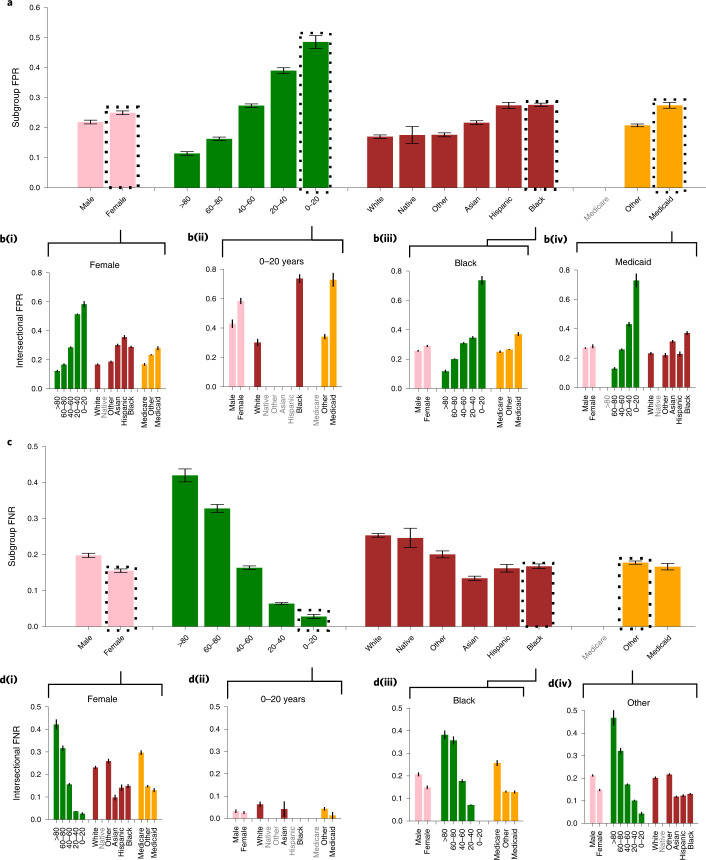
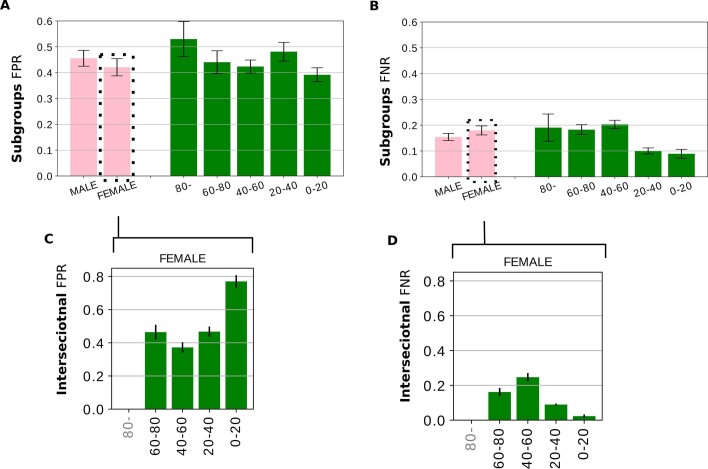
- Underdiagnosis rate, defined as the false-positive rate (FPR) for the “no finding” label, differed across all considered subpopulations. Female patients, patients under 20 years old, Black patients, Hispanic patients, and patients with Medicaid insurance had higher algorithmic underdiagnosis rates in the MIMIC-CXR dataset.
- Intersectional subgroups often had compounded bias. For example, Hispanic female patients had a higher underdiagnosis rate than white female patients, and patients aged 0–20 years who were female, Black, or had Medicaid insurance had the largest underdiagnosis rates.
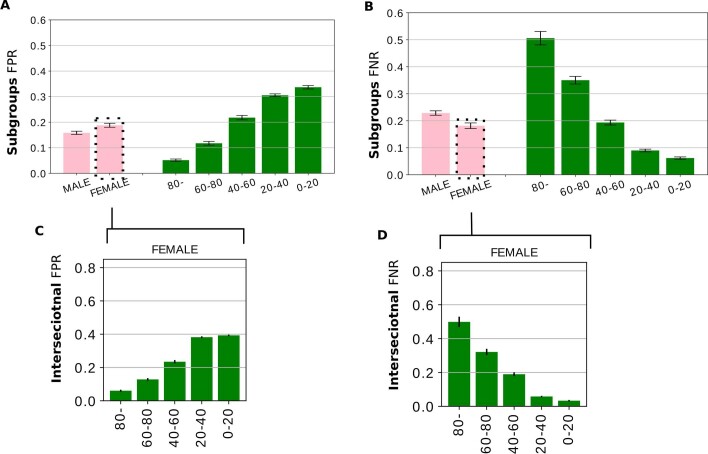
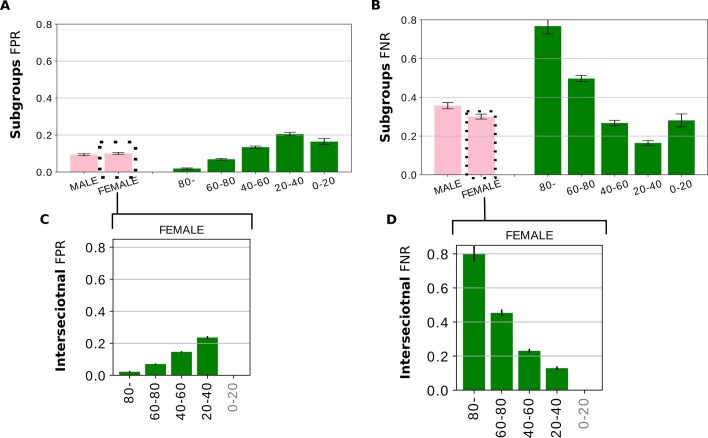
- FPR and false-negative rate (FNR) for “no finding” showed an inverse relationship across under-served subgroups, consistent with selective algorithmic underdiagnosis rather than undirected noise. This pattern held across datasets except for age >80 years and 0–20 years in the NIH dataset, possibly due to small sample sizes or dataset selection bias.
- Dataset sizes and model AUCs: MIMIC-CXR (371,858 images from 65,079 patients; AUC 0.834 ± 0.001), CheXpert (223,648 images from 64,740 patients; AUC 0.805 ± 0.001), ChestX-ray14/NIH (112,120 images from 30,805 patients; AUC 0.835 ± 0.002), and ALL (707,626 images from 129,819 patients; AUC 0.859 ± 0.001).
Methods
- Retrospective analysis of three public chest X-ray datasets—MIMIC-CXR, CheXpert, and ChestX-ray14 (NIH)—plus a multi-source ALL dataset combining them on shared labels. Subgroups included race/ethnicity, socioeconomic status via insurance type, sex, and age, with intersectional identities also examined.
- A 121-layer DenseNet initialized with ImageNet weights was trained on 256 × 256 images to predict diagnostic labels, including the “no finding” label. Train-validation-test splits were fixed, no patient was shared across splits, and results were averaged over five models with different random seeds.
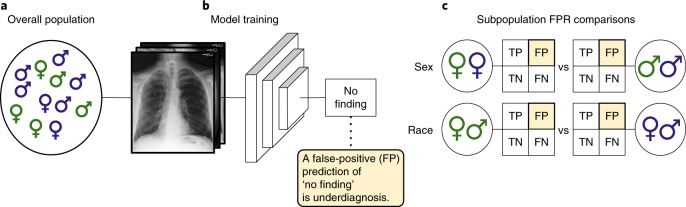
- Fairness metrics were binarized: underdiagnosis rate as FPR for “no finding,” overdiagnosis as FNR for “no finding,” and false discovery rate (FDR) for “no finding.” A single threshold maximizing F1 score was selected for all groups; protected attributes were not used in model training or testing.
Limitations
- The paper states that prediction labels are extracted from clinical records and are therefore not unbiased ground truth; the labels may already contain the same bias the model then amplifies, a form of bias amplification. It also notes that automatic NLP-based labelers have not been audited across subpopulations and could be a large source of bias.
- The paper states that race and ethnicity are partially social constructs with unclear boundaries, and self-reported race/ethnicity may vary by age, socioeconomic level, or acculturation. Insurance type is described as an imperfect proxy for socioeconomic status.
- The paper states that post-hoc threshold adjustments for equal FNR and FPR have flaws: small intersectional groups make accurate thresholds difficult, the number of thresholds grows exponentially with protected attributes, and equalizing metrics may require randomization or worsening performance for some subgroups. The text also makes evident that the NIH dataset may have less diverse samples and small subgroup sizes, and that MIMIC-CXR lacks race/ethnicity and insurance data for around ~100,000 X-rays.
Model-written summary. Check it against the paper before relying on it.
Integrity signals
Registry
Cites
Statistics
Figures
Verification
Claims the paper makes
4 Valid · 1 Not valid · 16 Not checked · 53 Own results and interpretations
The cited sources support only part of this claim — read each source’s verdict below.
In the paper
“We note that some of our observed differences in underdiagnosis have been established in other areas in clinical care, such as underdiagnosis of female patients 9,10 , Black patients 5,8,9 and patients with a low socioeconomic status 36 .”
What the sources say
- Not checked yetcites [9] Mamary, A. J. et al. Race and gender disparities are evident in COPD underdiagnoses across all severities of measured airflow obstruction. Chronic Obstr. Pulm. Dis. 5, 177-184 (2018).
- Not checked yetcites [10] Sun, T. Y., Bear Don't Walk, O. J. IV, Chen, J. L., Reyes Nieva, H. & Elhadad, N. Exploring gender disparities in time to diagnosis. In Machine Learning for Health (ML4H) at NeurIPS 2020 (eds Alsentzer, E. et al.) abstr. https://arxiv. org/abs/2011.06100 (2020).
- Partly supportedcites [5] Obermeyer, Z., Powers, B., Vogeli, C. & Mullainathan, S. Dissecting racial bias in an algorithm used to manage the health of populations. Science 366, 447-453 (2019). sourceExperimental — accuracy not yet measured
Our copy supports only the racial element, and at a different level of specificity: it documents that at a given algorithm risk score Black patients carry significantly more illness burden (26.3% more chronic illnesses at the 97th percentile; more-severe hypertension, diabetes, renal failure and anemia; Health disparities conditional on risk score, pp. 3-4) and that less is spent on them conditional on need (Mechanism of bias, p. 5) — i.e. under-recognition of illness in an algorithmic/cost sense, not clinical underdiagnosis. Nothing in our copy addresses underdiagnosis of female patients (sex/gender appears only in the introduction's examples of ad delivery, facial recognition and hiring algorithms, p. 2, and as the descriptive statistic that the sample was 63% female, p. 2), and socioeconomic status appears only as barriers to accessing care that lower spending (Mechanism of bias, p. 5), not as established underdiagnosis. The female-patient and low-SES parts of the claim are therefore unsupported by this source. (LLM, conf=0.70)
- Partly supportedcites [8] Vyas, D. A., Eisenstein, L. G. & Jones, D. S. Hidden in plain sight: reconsidering the use of race correction in clinical algorithms. N. Engl. J. Med. 383, 874-882 (2020). sourceExperimental — accuracy not yet measured
Vyas et al. (2020) support only the Black-patient strand, and even there at a different level of specificity: the introduction states that 'many of these race-adjusted algorithms guide decisions in ways that may direct more attention or resources to white patients than to members of racial and ethnic minorities,' and the Cardiology section notes the AHA Get with the Guidelines score 'could direct care away from black patients' — i.e., a hedged equity concern about algorithms diverting care/resources, not an established rate of underdiagnosis. Our copy contains nothing on underdiagnosis of female patients (women appear only in Table 1 references on breast-density and bone-density tools) and nothing on underdiagnosis of low-socioeconomic-status patients; the only SES material is the quoted Society of Thoracic Surgeons concern that 'inclusion of SES factors in risk models may adjust away disparities in quality of care' (Assessment). The female-patient and low-SES parts of the attributed claim are therefore unsupported by this source. (LLM, conf=0.78)
- Partly supportedcites [36] Gianfrancesco, M. A., Tamang, S., Yazdany, J. & Schmajuk, G. Potential biases in machine learning algorithms using electronic health record data. JAMA Intern. Med. 178, 1544-1547 (2018). sourceExperimental — accuracy not yet measured
Our copy of Gianfrancesco et al. supports parts of the claim but not all of it: the Misclassification and Measurement Error section states that 'women may be less likely to receive lipid-lowering medications and in-hospital procedures, as well as optimal care at discharge, compared with men' and that patients 'may be differentially incorrectly diagnosed based on sociodemographic factors,' and the Missing Data section states that 'patients with low socioeconomic status may receive fewer diagnostic tests and medications for chronic diseases and have limited access to health care' and 'may only be identified if their disease becomes more severe' — hedged disparities in care/detection for women and low-SES patients, not established underdiagnosis. The part the source does not support is underdiagnosis of Black patients: the only Black/African-ancestry diagnostic-error passage (Sample Size and Underestimation) reports that 'patients with African and unspecified ancestry have been diagnosed with pathogenic genetic variants that were actually benign but misclassified,' i.e. genetic over-diagnosis credited to another study (Manrai et al., N Engl J Med 2016), not underdiagnosis. (LLM, conf=0.75)
boostedstates an association- Asserted: passes — The authors put it forward as true.
- Checkable: passes — It can be checked against evidence.
- Load-bearing: passes — The paper’s conclusions depend on it.
- Based: passes — The paper gives a reason why it holds.
- Rests on an assumption not shown here.
The cited sources support only part of this claim — read each source’s verdict below.
In the paper
“The choice of these subgroups is motivated by the clear history, in both traditional medicine and AI algorithms, of bias for subgroups on these axes 6,8,10,11 .”
What the sources say
- Partly supportedcites [6] Larrazabal, A. J. et al. Gender imbalance in medical imaging datasets produces biased classifiers for computer-aided diagnosis. Proc. Natl Acad. Sci. USA 117, 12592-12594 (2020). sourceExperimental — accuracy not yet measured
The Abstract says AI systems can inherit or amplify gender and racial bias, and Results and Discussion reports lower classifier performance for underrepresented genders. The paper does not establish a history of bias across socioeconomic status or age, or across all four axes in traditional medicine. The supplied passages have no page numbers. (LLM, conf=0.86)
- Partly supportedcites [8] Vyas, D. A., Eisenstein, L. G. & Jones, D. S. Hidden in plain sight: reconsidering the use of race correction in clinical algorithms. N. Engl. J. Med. 383, 874-882 (2020). sourceExperimental — accuracy not yet measured
The opening section describes race-based clinical algorithms that may direct more resources to white patients, and the Assessment section gives an example of racial bias in medical AI. The paper discusses socioeconomic status as relevant to these inequities, but the cited passages do not establish a history of bias across all four named axes: race, socioeconomic status, sex, and age. No page numbers are available in our copy. (LLM, conf=0.86)
- Not checked yetcites [10] Sun, T. Y., Bear Don't Walk, O. J. IV, Chen, J. L., Reyes Nieva, H. & Elhadad, N. Exploring gender disparities in time to diagnosis. In Machine Learning for Health (ML4H) at NeurIPS 2020 (eds Alsentzer, E. et al.) abstr. https://arxiv. org/abs/2011.06100 (2020).
- Not checked yetcites [11] Spencer, C. S., Gaskin, D. J. & Roberts, E. T. The quality of care delivered to patients within the same hospital varies by insurance type. Health Aff. (Milwood) 32, 1731-1739 (2013). source
boostedstates an association- Asserted: passes — The authors put it forward as true.
- Checkable: passes — It can be checked against evidence.
- Load-bearing: passes — The paper’s conclusions depend on it.
- Based: passes — The paper gives a reason why it holds.
- Partly supported
A result the paper reports from its own data — it cites no other source for it, so there is none to check. The quote shows it is in the paper.
In the paper
“The false-negative rate (FNR) for no finding (Fig. 2c) and FPR (Fig. 2a) show an inverse relationship across different under-served subgroups in the CXR dataset.”
plainstates an association- Asserted: passes — The authors put it forward as true.
- Checkable: passes — It can be checked against evidence.
- Load-bearing: passes — The paper’s conclusions depend on it.
- Based: passes — The paper gives a reason why it holds.
- Rests on an assumption not shown here.
A result the paper reports from its own data — it cites no other source for it, so there is none to check. The quote shows it is in the paper.
In the paper
“We observe that patients who belong to two under-served subgroups have a larger underdiagnosis rate.”
plainstates an association- Asserted: passes — The authors put it forward as true.
- Checkable: passes — It can be checked against evidence.
- Load-bearing: passes — The paper’s conclusions depend on it.
- Based: passes — The paper gives a reason why it holds.
- Rests on an assumption not shown here.
A result the paper reports from its own data — it cites no other source for it, so there is none to check. The quote shows it is in the paper.
In the paper
“We observe, across three large-scale datasets and a combined multi-source dataset, which under-served subpopulations are consistently at significant risk of algorithmic underdiagnosis.”
plainstates an association- Asserted: passes — The authors put it forward as true.
- Checkable: passes — It can be checked against evidence.
- Load-bearing: passes — The paper’s conclusions depend on it.
- Based: passes — The paper gives a reason why it holds.
- Rests on an assumption not shown here.
24 more claims
Create a free account to see all 74 claims and to verify the 27 references still open.
- Probably not a substantial claim. 29
- It may state two separate claims as one. 32
Claims other papers make about this one
Each is checked against this paper’s own text: does it say what the citing paper says it does?
The source backs part of the claim, not all of it — or backs it for a different population, condition or comparison.
In the citing paper
“Model trained on less and/or missing data leads to underestimation and underdiagnosis [49,127].”
From Artificial intelligence bias in medical system designs: a systematic review (2023) · cites this paper as [127]
Experimental — accuracy not yet measuredThe source backs part of the claim, not all of it — or backs it for a different population, condition or comparison.
In the citing paper
“The imbalanced data will result in specialized privileges to a specific group in the medical diagnosis [127].”
From Artificial intelligence bias in medical system designs: a systematic review (2023) · cites this paper as [127]
Experimental — accuracy not yet measuredThe source backs part of the claim, not all of it — or backs it for a different population, condition or comparison.
In the citing paper
“The majority of the studies have neglected kinship (more than 95%) and insurance (90%) attributes which are essential to identify socioeconomic status of the patient to prevent the underdiagnosis [127].”
From Artificial intelligence bias in medical system designs: a systematic review (2023) · cites this paper as [127]
Experimental — accuracy not yet measuredThe source backs part of the claim, not all of it — or backs it for a different population, condition or comparison.
In the citing paper
“In imaging, Seyyed-Kalantari et al 59 found that contemporary deep-learning classifiers applied to chest radiographs systematically failed to identify abnormalities in patients from historically marginalized groups including female patients, Black patients, and those of lower socioeconomic status with the most pronounced disparities at the intersections of these categories.”
From Artificial Intelligence in Oncology: Practical Applications Across Clinical Care, Scholarship, and Translation. (2026) · cites this paper as [59]
Experimental — accuracy not yet measuredThe source backs part of the claim, not all of it — or backs it for a different population, condition or comparison.
In the citing paper
“On the other hand, AI systems can also suffer from bias, compounding existing inequities in socioeconomic status, race, ethnicity, religion, gender, disability, or sexual orientation.”
From Bias in AI-based models for medical applications: challenges and mitigation strategies (2023) · cites this paper as [6]
Experimental — accuracy not yet measured
6 more claims about this paper
Create a free account to see every claim other papers make about this one.
Self-check
Percentages, sums and reported differences re-computed from the paper’s own numbers.
Each contradiction between two passages listed here was confirmed by an independent check.
Rated minor: it would not touch a result — a value no result rests on, a p-value that stays on the same side of the significance level, or a conflict that is clerical, resolved elsewhere in the paper, or outside its own findings.
In the paper
§ Dataset collection and inclusion criteria.
“FDR (or, equivalently, positive predictive value (PPV)) is a common metric used to evaluate the performance of classifiers.”
§ Dataset collection and inclusion criteria.
“FDRs i,j = P [ Y = 0|si,j, Ŷ = 1 ](3”
Rated minor: it would not touch a result — a value no result rests on, a p-value that stays on the same side of the significance level, or a conflict that is clerical, resolved elsewhere in the paper, or outside its own findings.
In the paper
“MIMIC-CXR (CXR, 371,858 images from 65,079 patients) 26 , CheXpert (CXP, 223,648 images from 64,740 patients) 27 , ChestX-ray14 (NIH, 112,120 images from 30,805 patients) 28 , and a multi-source combination of all three (ALL, 707,626 images from 129,819 patients) on shared labels.”
Reported 129819 · recomputed 160624
Citations
Cites
ImageNet Large Scale Visual Recognition Challenge
Russakovsky, O., Deng, J., Su, H., Krause, J., Satheesh, S., Ma, S., Huang, Z., Karpathy, A., Khosla, A., Bernstein, M., et al. (2015) · International Journal of Computer Vision · doi:10.1007/s11263-015-0816-y · Cited by 39,380
Goldberger, A. L., Amaral, L. A. N., Glass, L., Hausdorff, J. M., Ivanov, P. C., Mark, R. G., Mietus, J. E., Moody, G. B., Peng, C.-K., & Stanley, H. E. (2000) · Circulation · doi:10.1161/01.cir.101.23.e215 · Cited by 14,809
Dissecting racial bias in an algorithm used to manage the health of populations
Obermeyer, Z., Powers, B., Vogeli, C., & Mullainathan, S. (2019) · Science · doi:10.1126/science.aax2342 · Cited by 7,137 · cited 1×
“We note that some of our observed differences in underdiagnosis have been established in other areas in clinical care, such as under-diagnosis of female patients 9,10 , Black patients 5,8,9 and patients with a low socioeconomic status 36 .”
BackgroundWang, X., Peng, Y., Lu, L., Lu, Z., Bagheri, M., & Summers, R. M. (2017) · 2017 IEEE Conference on Computer Vision and Pattern Recognition (CVPR) · doi:10.1109/cvpr.2017.369 · Cited by 4,616 · cited 5×
“Fourth, despite the fact that we do not have the same disease prevalence between subgroups based on real data 26–28 , and our choice of fairness metrics does not directly involve prevalence between subgroups, we stress that equal underdiagnosis rates between sub-groups of age, sex and…”
BackgroundMethodInfluential(2018) · Cited by 3,510
Dwork, C., Hardt, M., Pitassi, T., Reingold, O., & Zemel, R. (2012) · Proceedings of the 3rd Innovations in Theoretical Computer Science Conference · doi:10.1145/2090236.2090255 · Cited by 3,501
Implementing Machine Learning in Health Care — Addressing Ethical Challenges
Char, D. S., Shah, N. H., & Magnus, D. (2018) · New England Journal of Medicine · doi:10.1056/nejmp1714229 · Cited by 1,857
MIMIC-CXR, a de-identified publicly available database of chest radiographs with free-text reports
Johnson, A. E. W., Pollard, T. J., Berkowitz, S. J., Greenbaum, N. R., Lungren, M. P., Deng, C.-Y., Mark, R. G., & Horng, S. (2019) · Scientific Data · doi:10.1038/s41597-019-0322-0 · Cited by 1,816 · cited 5×
“Fourth, despite the fact that we do not have the same disease prevalence between subgroups based on real data 26–28 , and our choice of fairness metrics does not directly involve prevalence between subgroups, we stress that equal underdiagnosis rates between sub-groups of age, sex and…”
BackgroundMethodInfluentialHidden in Plain Sight — Reconsidering the Use of Race Correction in Clinical Algorithms
Vyas, D. A., Eisenstein, L. G., & Jones, D. S. (2020) · New England Journal of Medicine · doi:10.1056/nejmms2004740 · Cited by 1,731 · cited 2×
“We note that some of our observed differences in underdiagnosis have been established in other areas in clinical care, such as under-diagnosis of female patients 9,10 , Black patients 5,8,9 and patients with a low socioeconomic status 36 .”
BackgroundA New, Evidence-based Estimate of Patient Harms Associated with Hospital Care
James, J. T. (2013) · Journal of Patient Safety · doi:10.1097/pts.0b013e3182948a69 · Cited by 1,399 · cited 1×
“Moreover, developers, practitioners and the clinical staff need to take into account biases such as the underdiagnosis of under-served populations in the AI-based medical decision-making algorithms and its harmful effect 17,18 on patients.”
Background
Research works printed but not linked: 3
- Cohen, J. P., Hashir, M., Brooks, R. & Bertrand, H. On the limits of cross-domain generalization in automated X-ray prediction. Proc. Mach. Learn. Res. 121, 136-155 (2020).
- Hardt, M., Price, E. & Srebro, N. Equality of opportunity in supervised learning. In Advances in Neural Information Processing Systems 29 (NIPS 2016) (eds Lee, D. et al.) 3315-3323.
- Johnson, A. et al. MIMIC-IV (version 0.4). PhysioNet https://doi.org/ 10.13026/a3wn-hq05 (2020). · DOI
Cited by
Items 301–400 of 989
Nolin-Lapalme, A., Corbin, D., Tastet, O., Avram, R., & Hussin, J. (2024) · Canadian Journal of Cardiology · doi:10.1016/j.cjca.2024.04.026 · Cited by 21
Big Data Streaming and Data Analytics Infrastructure for Efficient AI-Based Processing
Zahra, F. T., Bostanci, Y. S., Tokgozlu, O., Turkoglu, M., & Soytürk, M. (2024) · Springer eBooks · doi:10.1007/978-3-031-59361-1_9 · Cited by 22
Largent, E. A., Karlawish, J. H., & Wexler, A. (2024) · BMC Digital Health · doi:10.1186/s44247-024-00098-5 · Cited by 13
“For instance, academic researchers looking at AI-based chest X-ray prediction models found that patients belonging to two under-served subgroups (e.g., both Hispanic and female) were more likely to be misdiagnosed than those belonging to one or no under-served groups [15].”
BackgroundAlmeida, S. D., Norajitra, T., Lüth, C. T., Wald, T., Weru, V., Nolden, M., Jäger, P. F., von Stackelberg, O., Heußel, C. P., Weinheimer, O., et al. (2024) · Insights into Imaging · doi:10.1186/s13244-024-01781-x · Cited by 13
“However, studies from Glocker et al [25] and Seyyed-Kalantari et al [36] have evaluated bias in AI algorithms for various pathologies in chest X-rays.”
BackgroundThe Transition From Homogeneous to Heterogeneous Machine Learning in Neuropsychiatric Research
Zhao, Q., Nooner, K. B., Tapert, S. F., Adeli, E., Pohl, K. M., Kuceyeski, A. F., & Sabuncu, M. R. (2024) · Biological Psychiatry Global Open Science · doi:10.1016/j.bpsgos.2024.100397 · Cited by 13
Santomartino, S. M., Zech, J. R., Hall, K., Jeudy, J. J., Parekh, V. S., & Yi, P. H. (2024) · Radiology · doi:10.1148/radiol.232746 · Cited by 17
Step-by-step causal analysis of EHRs to ground decision-making
Doutreligne, M., Struja, T., Abécassis, J., Morgand, C., Celi, L. A., & Varoquaux, G. P. (2025) · PLOS Digital Health · doi:10.1371/journal.pdig.0000721 · Cited by 18
“…bias allow to test the robustness of the results to missing confounders [63], proximal inference can be used to leverage proxy of unobserved confounders [64], and the presence of a natural experiment or RCT might identify the desired causal effect without unconfoundedness [65,Chapter 5, 9].”
D'Amiano, A. J., Cheunkarndee, T., Azoba, C. C., Chen, K. Y., Mak, R. H., & Perni, S. (2025) · Cancer Medicine · doi:10.1002/cam4.70728 · Cited by 13
“…underdiagnosis in chest X-ray pathology classification using three large, public datasets found consistent underdiagnosis of diseases in under-served patient populations, such as female patients, Black patients, Hispanic patients, younger patients, and patients of lower socioeconomic status [8].”
Stonko, D. P., Morrison, J. J., & Hicks, C. W. (2023) · JVS-Vascular Insights · doi:10.1016/j.jvsvi.2023.100016 · Cited by 11
The Role of Subgroup Separability in Group-Fair Medical Image Classification
Jones, C., Roschewitz, M., & Glocker, B. (2023) · Lecture notes in computer science · doi:10.1007/978-3-031-43898-1_18 · Cited by 19
Oloruntoba, A. I., Ingvar, Å., Sashindranath, M., Anthony, O., Abbott, L. M., Guitera, P., Caccetta, T. P., Janda, M., Soyer, H. P., & Mar, V. (2024) · Australasian Journal of Dermatology · doi:10.1111/ajd.14269 · Cited by 11
“44,46 It has been acknowledged that currently, manufacturers do not provide enough information when labelling their AI devices and that guidelines must be established to ensure transparency.”
Diagnosing and remediating harmful data shifts for the responsible deployment of clinical AI modelsPreprint
Subasri, V., Krishnan, A., Dhalla, A., Pandya, D., Malkin, D. M., Razak, F. A., Verma, A. A., Goldenberg, A., & Dolatabadi, E. (2023) · medRxiv · doi:10.1101/2023.03.26.23286718 · Cited by 17
“Model deterioration has previously been associated with transitions in EHRs systems over time 13 and across patient demographics in chest X-rays 24 , skin lesions 25 and sepsis prediction 26 .”
BackgroundSirago, G., Vinci, A., Visci, P., Solarino, B., Dell'Erba, A. S., & Ferorelli, D. (2026) · Journal of Medical Systems · doi:10.1007/s10916-026-02382-5 · Cited by 14
Wirries, A., Geiger, F., Oberkircher, L., & Jabari, S. (2022) · Diagnostics · doi:10.3390/diagnostics12040836 · Cited by 10
“For example, it was recently shown that an AI algorithm for detecting pathologies in chest radiographs developed a neglect for those pathologies in certain populations that were characterized by poor medical care during data collection [72].”
BackgroundAchieving Reliable and Fair Skin Lesion Diagnosis via Unsupervised Domain Adaptation
Wang, J., Zhang, Y., Ding, Z., & Hamm, J. (2024) · IEEE/CVF Conference on Computer Vision and Pattern Recognition Workshops (CVPRW) · doi:10.1109/cvprw63382.2024.00523 · Cited by 18
“Recent studies have revealed bias in AI-based diagnosis systems against underrepresented sub-populations [18, 27].”
ResultBhimani, M., Baker, R. H., Ausin, M. S., Meixiong, G., Lasko, R., Raglow-Defranco, M., Miller, A., Mukherjee, S., Godil, S., Cook, A., et al. (2025) · Journal of Medical Internet Research · doi:10.2196/71211 · Cited by 13
“In medical imaging, Seyyed-Kalantari et al [25] documented that chest x-ray classifiers consistently underdiagnosed conditions in underserved patient populations [25].”
Potential for near-term AI risks to evolve into existential threats in healthcare
Subasri, V., Baghbanzadeh, N., Celi, L. A., & Seyyed-Kalantari, L. (2025) · BMJ Health & Care Informatics · doi:10.1136/bmjhci-2024-101130 · Cited by 13
Self-citationTrabilsy, M., Prabha, S., Gomez-Cabello, C. A., Haider, S. A., Genovese, A., Borna, S., Wood, N. G., Gopala, N., Tao, C., & Forte, A. J. (2025) · Bioengineering · doi:10.3390/bioengineering12070706 · Cited by 16
Huang, X., Sun, M., Chengxing, S., Haoxuan, L., & Zhu, J. (2025) · The Visual Computer · doi:10.1007/s00371-025-04109-y · Cited by 15
“Estab-lishing clear guidelines and accountability frameworks will be paramount in addressing the ethical and legal implications of AI in healthcare, ensuring that both patients and providers understand the impact of AI-driven decisions on clinical outcomes [105, 106].”
Artificial Intelligence and precision medicine for optimizing patient care: A comprehensive review
Khare, P. S., Shaikh, S. A., & Havelikar, U. A. (2025) · Intelligent Hospital · doi:10.1016/j.inhs.2025.100042 · Cited by 14
Unveiling the Algorithm: The Role of Explainable Artificial Intelligence in Modern Surgery
Lopes, S., Mascarenhas, M., Fonseca, J., Fernandes, G., & Leite-Moreira, A. F. (2025) · Healthcare · doi:10.3390/healthcare13243208 · Cited by 15
Ihaddouchen, I., Buijsman, S., Pozzi, G., van de Sande, D., Reis, A. A., Townsend, R., van den Hoven, J., Gommers, D., & van Genderen, M. E. (2025) · BMJ Digital Health & AI · doi:10.1136/bmjdhai-2025-000086 · Cited by 15
“The complete search strategies used for each database can be found in online supplemental etable 1.”
Wang, R., Chen, L.-C., Moukheiber, L., Seastedt, K. P., Moukheiber, M., Moukheiber, D., Zaiman, Z., Moukheiber, S., Litchman, T., Trivedi, H., et al. (2023) · International Journal of Medical Informatics · doi:10.1016/j.ijmedinf.2023.105211 · Cited by 11
Towards Unraveling Calibration Biases in Medical Image Analysis
Lara, M. A. R., Mosquera, C., Ferrante, E., & Echeveste, R. (2023) · Lecture notes in computer science · doi:10.1007/978-3-031-45249-9_13 · Cited by 25
Stueckle, C. A., & Haage, P. (2024) · RöFo - Fortschritte auf dem Gebiet der Röntgenstrahlen und der bildgebenden Verfahren · doi:10.1055/a-2271-0799 · Cited by 11
“The authors of the study [18] were able to show that classifiers created with the latest computer vision techniques consistently and selectively underdiagnosed un-derserved patient groups and that the rate of underdiagnosis in these groups, e.g., Hispanic patients, was also significantly higher…”
BackgroundSociodemographic biases in a commercial AI model for intracranial hemorrhage detection
Trang, A., Putman, K., Savani, D., Chatterjee, D., Zhao, J., Kamel, P. I., Jeudy, J. J., Parekh, V. S., & Yi, P. H. (2024) · Emergency Radiology · doi:10.1007/s10140-024-02270-w · Cited by 12
“In research settings, however, deep learning algorithms in medical imaging have demonstrated sociodemographic biases disadvantaging historically under-represented populations [ 19 ].”
InfluentialMaking the invisible visible: what can we do about biased AI in medical devices?
Whitehead, M. M., Carrol, E. D., Kee, F., & Holmes, C. C. (2023) · BMJ · doi:10.1136/bmj.p1893 · Cited by 10
Large language models in simplifying radiological reports: systematic reviewPreprint
Artsi, Y., Sorin, V., Konen, E., Glicksberg, B. S., Nadkarni, G. N., & Klang, E. (2024) · medRxiv · doi:10.1101/2024.01.05.24300884 · Cited by 15
Liu, Z., Xu, J., Yin, C., Han, G., Che, Y., Fan, G., Li, X. H., Xie, L., Bao, L., Peng, Z., et al. (2024) · Research · doi:10.34133/research.0426 · Cited by 14
“There have been documented concerns in the literature regarding potential biases and diminished performance quality of AI models in populations with limited medical resources, particularly among female patients [67].”
Han, T., Žigutytė, L., Huck, L. C., Huppertz, M., Siepmann, R. M., Gandelsman, Y., Blüthgen, C., Khader, F., Kuhl, C. K., Nebelung, S., et al. (2024) · Cell Reports Medicine · doi:10.1016/j.xcrm.2024.101713 · Cited by 11
“Moreover, the issue of confounding variables poses a significant challenge in the development of AI models for medical applications, leading to potential model biases [27].”
Dumkrieger, G. M., Chiang, C., Zhang, P., Minen, M. T., Cohen, F., & Hranilovich, J. A. (2024) · Headache The Journal of Head and Face Pain · doi:10.1111/head.14880 · Cited by 11
“47”
The urgency of centering safety-net organizations in AI governance
Nong, P., Maurer, E. W., & Dwivedi, R. (2025) · npj Digital Medicine · doi:10.1038/s41746-025-01479-4 · Cited by 12
Dang, V. N., Campello, V. M., Hernández-González, J., & Lekadir, K. (2025) · Journal of Healthcare Informatics Research · doi:10.1007/s41666-025-00196-7 · Cited by 12
Dontchos, B. N., Dodelzon, K., Bhole, S., Edmonds, C. E., Mullen, L. A., Parikh, J. R., Daly, C., Epling, J. A., Christensen, S., & Grimm, L. J. (2025) · Journal of the American College of Radiology · doi:10.1016/j.jacr.2025.05.001 · Cited by 9
Fields, C. T., Black, C. G., Thind, J. K., Jegede, O. O., Aksen, D. E., Rosenblatt, M., Assari, S., Bellamy, C. D., Anderson, E., Holmes, A. J., et al. (2025) · Frontiers in Digital Health · doi:10.3389/fdgth.2025.1492736 · Cited by 12
Transforming the self: Individual-level changes arising from collaboration with generative AI
Nandagopal, S. (2025) · Computers in Human Behavior Artificial Humans · doi:10.1016/j.chbah.2025.100232 · Cited by 11
Distinct visual biases affect humans and artificial intelligence in medical imaging diagnoses
McLeod, G. A., Stanley, E. A. M., Rosenal, T., & Forkert, N. D. (2025) · npj Digital Medicine · doi:10.1038/s41746-025-02226-5 · Cited by 15
Building Trustworthy AI in Healthcare
Amadi, C., & Ojo, A. (2025) · IEEE Access · doi:10.1109/access.2025.3648410 · Cited by 16
“Chest radiograph classifiers have been shown to exhibit biased performance, underdiagnosing conditions in populations such as black women, which risk delayed treatment and exacerbated health inequalities [69].”
Doctors in Medical Data Sciences: A New Curriculum
Cussat‐Blanc, S., Castets-Renard, C., & Monsarrat, P. (2022) · International Journal of Environmental Research and Public Health · doi:10.3390/ijerph20010675 · Cited by 10
Amaya-Santos, S., Jiménez-Pernett, J., & Bermúdez‐Tamayo, C. (2024) · Anales del Sistema Sanitario de Navarra · doi:10.23938/assn.1077 · Cited by 13
Digital health innovation and artificial intelligence in cardiovascular care: a case-based review
Grant, J. K., Javaid, A., Carrick, R. T., Koester, M., Kassamali, A. A., Kim, C. H., Isakadze, N., Wu, K. C., Blaha, M. J., Whelton, S. P., et al. (2024) · npj Cardiovascular Health · doi:10.1038/s44325-024-00020-y · Cited by 14
Sociodemographic Variables Reporting in Human Radiology Artificial Intelligence Research
Driessen, R., Bhatia, N. K., Gichoya, J. W., Safdar, N. M., & Balthazar, P. (2023) · Journal of the American College of Radiology · doi:10.1016/j.jacr.2023.03.014 · Cited by 12
Understanding Race-Based Medicine and Its Impact on Radiology
Medrano, D., Matsumoto, M. M., Flores, E. J., & Dako, F. (2023) · Journal of the American College of Radiology · doi:10.1016/j.jacr.2023.03.017 · Cited by 10
Natural language processing in critical care: opportunities, challenges, and future directions
McNicholas, B., Madden, M., & Laffey, J. (2025) · Intensive Care Medicine · doi:10.1007/s00134-024-07776-y · Cited by 11
“There are already examples where ML models results in biased results when used in different healthcare settings [22].”
Disparities in the Demographic Composition of The Cancer Imaging Archive
Dulaney, A., & Virostko, J. M. (2024) · Radiology Imaging Cancer · doi:10.1148/rycan.230100 · Cited by 12
“Models performing diagnosis from chest radiographs have been shown to underdiagnose underserved populations (17).”
Background(Predictable) performance bias in unsupervised anomaly detection
Meissen, F., Breuer, S., Knolle, M. A., Buyx, A., Müller, R., Kaissis, G. A., Wiestler, B., & Rueckert, D. (2024) · EBioMedicine · doi:10.1016/j.ebiom.2024.105002 · Cited by 13
“We emphasize that sAUROC is also relevant for supervised classification models where disparities between subgroups also manifest in TPR/FPR shifts.(7,17) Considering the severe implications that over-diagnosis can have on both society and individual patients, we believe the quantification of existing bias mechanisms i…”
BackgroundLimiting bias in AI models for improved and equitable cancer care
Ghassemi, M., & Gusev, A. (2024) · Nature reviews. Cancer · doi:10.1038/s41568-024-00739-x · Cited by 9
“Prior work in machine learning and health has demonstrated that state-of-the-art methods in health settings can mask underperformance in specific subgroups when using metrics averaged across a large population 2 .”
Self-citationKromrey, M., Steiner, L., Schön, F., Gamain, J., Roller, C., & Malsch, C. (2024) · Healthcare · doi:10.3390/healthcare12222225 · Cited by 9
FAIR: A Design Theory for Artificial Intelligence Fairness
Rai, A., Tian, J., & Xue, L. (2026) · MIS Quarterly · doi:10.25300/misq/2026/17971 · Cited by 18
Artificial Intelligence in Radiology: Overview of Application Types, Design, and Challenges
Moassefi, M., Faghani, S., Khosravi, B., Rouzrokh, P., & Erickson, B. J. (2023) · Seminars in Roentgenology · doi:10.1053/j.ro.2023.01.005 · Cited by 8
Multi-Modality Regional Alignment Network for Covid X-Ray Survival Prediction and Report Generation
Zhong, Z., Li, J., Sollee, J., Collins, S., Bai, H. X., Zhang, P. J., Healey, T. T., Atalay, M. K., Gao, X., & Jiao, Z. (2024) · IEEE Journal of Biomedical and Health Informatics · doi:10.1109/jbhi.2024.3417849 · Cited by 11
“Despite the Transformer’s effectiveness in processing long sequences and contextual information from extensive data, its performance is suboptimal in the context of automatically generating CXR reports due to data imbalances within the medical domain [8], [26].”
Quality over quantity? The role of data quality and uncertainty for AI in surgery
Jogan, M., Kurada, S., Vasisht, S., Singh, V., & Hashimoto, D. A. (2024) · Global Surgical Education - Journal of the Association for Surgical Education · doi:10.1007/s44186-024-00276-z · Cited by 13
“The authors of this study identified natural language processing-based automatic imaging labeling as a potential source of bias [28].”
Health inequities, bias, and artificial intelligence
Li, H., Moon, J. T., Shankar, V., Newsome, J. M., Gichoya, J. W., & Bercu, Z. L. (2024) · Techniques in vascular and interventional radiology · doi:10.1016/j.tvir.2024.100990 · Cited by 9
Olesen, V., Weng, N., Feragen, A., & Petersen, E. (2024) · Lecture notes in computer science · doi:10.1007/978-3-031-72787-0_1 · Cited by 22
“In this context, the fairness of chest x-ray-based disease classification models has received particularly broad attention [1,8,14,24,28,30].”
Lin, M., Xiao, Y., Hou, B., Wanyan, T., Sharma, M. M., Wang, Z., Wang, F., Tassel, S. H. V., & Peng, Y. (2023) · PubMed Central · Cited by 15
Artificial Intelligence in Clinical Oncology: From Productivity Enhancement to Creative Discovery
Kuno, M., Osumi, H., Udagawa, S., Yoshikawa, K., Ooki, A., Shinozaki, E., Ishikawa, T., Oba, J., Yamaguchi, K., & Sakurada, K. (2025) · Current Oncology · doi:10.3390/curroncol32110588 · Cited by 7
Li, S., Wu, Q., Zhou, D., Li, X., Miao, D., Hong, C., Gu, W., Shang, Y., Okada, Y., Chen, M. H., et al. (2025) · npj Health Systems · doi:10.1038/s44401-025-00035-2 · Cited by 17
“Local biases may persist or even be ampli fi ed due to the lack of centralization, as each institution contributes heterogeneous data that re fl ect varying socio-demographic characteristics and clinical practices, introducing diverse biases.”
Mobile medical systems for equitable healthcare
Chan, J., Goel, M., Gollakota, S., & Nandakumar, R. (2025) · Nature Reviews Bioengineering · doi:10.1038/s44222-025-00330-5 · Cited by 11
“For example, systemic biases can be propagated in systems that are trained with chest X-ray images 142 , diabetic retinopathy fundus images 143 , clinical interviews and records 144 and other medical records 145 .”
Yao, M. S., Chae, A., Saraiya, P. V., Kahn, C. E., Witschey, W. R. T., Gee, J. C., Sagreiya, H., & Bastani, O. (2025) · Communications Medicine · doi:10.1038/s43856-025-01061-9 · Cited by 10
Silveira, P. S. P., Trigo-Rocha, F. E., Vieira, J. E., & Siqueira, J. D. O. (2025) · Clinics · doi:10.1016/j.clinsp.2025.100804 · Cited by 7
Stanley, E. A. M., Tsang, R. Y., Gillett, H., Souza, R., Vigneshwaran, V., Kang, C., McCradden, M. D., Wilms, M., & Forkert, N. D. (2025) · Nature Communications · doi:10.1038/s41467-025-67470-5 · Cited by 9
“Numerous prior studies to date have reported performance disparities between sociodemographic subgroups in a variety of use cases of AI systems developed for clinical decision support and medical image analysis 1 – 6 .”
Access to care affects electronic health record reliability and AI-driven disease prediction
Zink, A., Luan, H., & Chen, I. Y. (2026) · Nature Health · doi:10.1038/s44360-026-00054-9 · Cited by 13
Self-citationUsing routinely collected data for research purposes: challenges and mitigation strategies
Hoffmann, S., Morris, T. P., Herrmann, M., Heinze, G., Wynants, L., CALSTER, B. V., Bischl, B., Schmid, M., Shaw, P. A., Mathes, T., et al. (2026) · BMJ · doi:10.1136/bmj-2025-087812 · Cited by 12
“Contrarily, finding no effect for a falsification endpoint does not provide any proof that an estimated effect on routinely collected data is unbiased.”
Kurbatskaya, A., Jaramillo-Jiménez, A., Ochoa-Gómez, J. F., Brønnick, K., & Fernández-Quilez, Á. (2023) · European Signal Processing Conference (EUSIPCO) · doi:10.23919/eusipco58844.2023.10289837 · Cited by 12
Presentation matters for AI-generated clinical advice
Ghassemi, M. (2023) · Nature Human Behaviour · doi:10.1038/s41562-023-01721-7 · Cited by 11
Self-citationAI and the next medical revolution: deep learning’s uncharted healthcare promise
Krithika, L. B., Vishnu, S., Kotei, E., Gadde, A., Kothamasu, G. A., Nallabantu, S. C., & Jayabalasamy, G. (2024) · Engineering Research Express · doi:10.1088/2631-8695/ad56fc · Cited by 9
An Empirical Study on the Fairness of Foundation Models for Multi-Organ Image Segmentation
Li, Q., Zhang, Y., Li, Y., Lyu, J., Liu, M., Sun, L., Sun, M., Li, Q., Mao, W., Wu, X., et al. (2024) · Lecture notes in computer science · doi:10.1007/978-3-031-72390-2_41 · Cited by 12
Analysis of public perceptions on the use of artificial intelligence in genomic medicine
Harrison, J. E., Lynch, F., Stark, Z., & Vears, D. F. (2024) · Human Genomics · doi:10.1186/s40246-024-00686-6 · Cited by 8
Ueda, D., Walston, S. L., Takita, H., Mitsuyama, Y., & Miki, Y. (2024) · Japanese Journal of Radiology · doi:10.1007/s11604-024-01716-y · Cited by 9
“Seyyed-Kalantari et al. demonstrated that AI algorithms trained on chest radiographs showed lower performance for underrepresented patient populations [14].”
Celsa, C., Quartararo, A., Maida, M. F., Giusino, G., Gaudioso, V., Sparacino, A., Cusimano, G., Rao, S., Grova, A., Ciccia, R., et al. (2025) · Hepatoma Research · doi:10.20517/2394-5079.2024.126 · Cited by 12
McDonnell, K. J. (2023) · Journal of Clinical Medicine · doi:10.3390/jcm12144830 · Cited by 12
Robustness Stress Testing in Medical Image Classification
Islam, M., Li, Z., & Glocker, B. (2023) · Lecture notes in computer science · doi:10.1007/978-3-031-44336-7_17 · Cited by 14
Koo, C., Yang, A., Welch, C., Jadav, V., Posch, L., Thoreson, N., Morris, D., Chouhdry, F. I., Szabo, J. R., Mendelson, D., et al. (2023) · Journal of medical imaging · doi:10.1117/1.jmi.10.6.061108 · Cited by 7
“13 In this particular study, compared to white and male patients, patients who are Black and female were more often incorrectly identified as healthy (false negative).”
Editorial: Machine Learning in Action: Stroke Diagnosis and Outcome Prediction
Abedi, V., Kawamura, Y. I., Li, J., Phan, T. G., & Zand, R. (2022) · Frontiers in Neurology · doi:10.3389/fneur.2022.984467 · Cited by 8
“For example, machine learning models were found to consistently underdiagnose patients in disadvantaged populations across three large chest X-ray datasets, especially where a patient was a member of more than one underserved group (24).”
BackgroundThe Potential for Using ChatGPT to Improve Imaging Appropriateness
Varney, E. T., & Lee, C. I. (2023) · Journal of the American College of Radiology · doi:10.1016/j.jacr.2023.06.005 · Cited by 7
Jhaveri, A., Abolhassani, F., & Fine, B. (2025) · Canadian Association of Radiologists Journal · doi:10.1177/08465371251320938 · Cited by 6
“20 These variations in performance have important implications for the deployment of the model.”
Artificial intelligence in hepatocellular carcinoma screening: applications and challenges
Rao, J.-X., Li, Y., & Leng, K. (2026) · Frontiers in Medicine · doi:10.3389/fmed.2025.1713887 · Cited by 9
Parizad, R., Hatwal, J., Brar, A. S., Desai, R., Batta, A., & Mohan, B. (2026) · Vascular Health and Risk Management · doi:10.2147/vhrm.s590502 · Cited by 15
“27 Heterogeneity and Sensitivity Considerations Substantial clinical and methodological heterogeneity across studies precluded quantitative meta-analysis and necessitates cautious interpretation of performance estimates.”
Rosenblatt, M., Foster, M. L., Adkinson, B. D., Tejavibulya, L., Khaitova, M., Ye, J., Sun, H., Rodriguez, R. X., Camp, C., Chinta, A., et al. (2026) · Nature Methods · doi:10.1038/s41592-026-03115-9 · Cited by 11
Data AUDIT: Identifying Attribute Utility- and Detectability-Induced Bias in Task Models
Pavlak, M., Drenkow, N. G., Petrick, N., Farhangi, M. M., & Unberath, M. (2023) · Lecture notes in computer science · doi:10.1007/978-3-031-43898-1_43 · Cited by 10
Schweikhard, F. P., Kosanke, A., Lange, S., Kromrey, M., Mankertz, F., Gamain, J., Kirsch, M., Rosenberg, B., & Hosten, N. (2024) · Healthcare · doi:10.3390/healthcare12070706 · Cited by 6
“The presented results of bias in classification based on sex, however, do coincide with the majority of studies on bias in medical AI applications, thereby indicating discrimination against marginalized and underrepresented subgroups such as female patients and people of color [41,42].”
ResultCao, R., Liu, Y., Wen, X., Liao, C., Wang, X., Gao, Y., & Tan, T. (2024) · iScience · doi:10.1016/j.isci.2024.109712 · Cited by 9
Agarwal, R., & Gao, G. G. (2024) · North Carolina Medical Journal · doi:10.18043/001c.120565 · Cited by 9
“These include underdiagnosis of minority populations in the analysis of chest radiography images [15], the presence of gender imbalance in image data-sets used for automated diagnosis of thoracic diseases [16], limitations of publicly available datasets used for the diagnosis of skin cancer where…”
Musa, A., Adamu, M. I., Kakudi, H. A., Hernandez, M., & Lawal, Y. (2024) · Lecture notes in computer science · doi:10.1007/978-3-031-72384-1_55 · Cited by 12
Artificial Intelligence-Driven Advances in Coronary Calcium Scoring: Expanding Preventive Cardiology
Vivekanandan, D. D., Singh, N., Robaczewski, M. L., Wyer, A., Canaan, L. N., Whitson, D., Grabill, N., & Louis, M. (2024) · Cureus · doi:10.7759/cureus.74681 · Cited by 10
Chen, H., Alfred, M. C., Brown, A. D., Atinga, A., & Cohen, E. (2024) · JMIR Formative Research · doi:10.2196/59045 · Cited by 8
Alumnado subrepresentado e inteligencia artificial
Casas, R. M. R., González, R. F., & Santos-Garrido, M. (2024) · European Public & Social Innovation Review · doi:10.31637/epsir-2025-843 · Cited by 8
The Data Artifacts Glossary: a community-based repository for bias on health datasets
Gameiro, R. R., Woite, N. L., Sauer, C. M., Hao, S., Fernandes, C. O., Premo, A. E., Teixeira, A. R., Resli, I., Wong, A.-K. I., & Celi, L. A. (2025) · Journal of Biomedical Science · doi:10.1186/s12929-024-01106-6 · Cited by 7
“Training AI on clinical data derived from a world rife with such biases risks not merely replicating, but also amplifying and perpetuating them [10, 11].”
Khosravi, B., Dapamede, T., Li, F., Chisango, Z. M., Bikmal, A., Garg, S., Owosela, B., Khosravi, A., Chavoshi, M., Trivedi, H., et al. (2025) · Journal of Imaging Informatics in Medicine · doi:10.1007/s10278-025-01505-7 · Cited by 8
“The CheXpert labeler, a rule-based NLP method regarded as the reference standard in many previous studies, was used for comparison [8, 29, 30].”
Stanley, E. A. M., Wilms, M., & Forkert, N. D. (2023) · Lecture notes in computer science · doi:10.1007/978-3-031-43895-0_46 · Cited by 10
Workman, D., & Dancy, C. L. (2023) · ACM Conference on Computer Supported Cooperative Work (CSCW) · doi:10.1145/3584931.3606981 · Cited by 7
“…of these realized harms was identified when it was proven that an AI-based diagnostic tool was underdiagnosing under-served patients—that is, this technology was more likely to report that Black people, women, and people from lower socioeconomic statuses were healthy when they in fact were ill [4].”
BackgroundSeth, P., & Pai, A. K. (2024) · IEEE/CVF Winter Conference on Applications of Computer Vision Workshops (WACVW) · doi:10.1109/wacvw60836.2024.00067 · Cited by 11
“Previous studies [21,24,25] have shown inherent racial disparities in machine learning algorithms across various domains, including healthcare applications like cardiac MR imaging, chest X-rays, and skin disease imaging.”
BackgroundClinical Artificial Intelligence
McDermott, M. B. A., Nestor, B., & Szolovits, P. (2022) · Clinics in Laboratory Medicine · doi:10.1016/j.cll.2022.09.004 · Cited by 7
Self-citationAhmed, H. S. (2025) · Indian Journal of Medical Ethics · doi:10.20529/ijme.2024.089 · Cited by 5
“Studies indicate that some regions and demographics may have been left behind, hindering widespread realisation of the potential benefits of AI technologies [12, 13].”
Shah, C., Ghodasara, S., Chen, D., & Chen, P. (2025) · Journal of the American College of Radiology · doi:10.1016/j.jacr.2025.09.032 · Cited by 14
Ma, D., Pang, J., Velan, S. S., Gotway, M. B., & Liang, J. (2025) · Medical Image Analysis · doi:10.1016/j.media.2025.103828 · Cited by 9
Artificial superintelligence alignment in healthcare
Ueda, D., Walston, S. L., Kurokawa, R., Saida, T., Honda, M., Iima, M., Watabe, T., Yanagawa, M., Nishioka, K., Sofue, K., et al. (2025) · Japanese Journal of Radiology · doi:10.1007/s11604-025-01907-1 · Cited by 10
“This foundational bias in the data leads to alarming outcomes, such as the algorithmic underdiagnosis documented by Seyyed-Kalantari et al. [ 37 ].”
LungConVT-Net: A visual transformer network with blended features for Pneumonia detection
Lasker, A., Ghosh, M., Sk, M. O., Goncalves, T., Chakraborty, C., & Roy, K. (2025) · Pattern Recognition · doi:10.1016/j.patcog.2025.112150 · Cited by 6
Artificial Intelligence (AI)-Assisted Treatment of Breast Cancer
Mubasshira, Rahman, M. M., Mondal, J., Parvez, M. M. H., Uddin, M. N., & Akter, L. (2026) · Springer eBooks · doi:10.1007/978-981-95-3682-5_18 · Cited by 7
Ulizio, C., Dua, D., Mukul, N. M., Areti, S., Kostick, K. M., & Rahimzadeh, V. N. (2026) · JMIR AI · doi:10.2196/85163 · Cited by 5
“Discussion focused on how AI models trained and validated in well-resourced settings, as most are today [49], may underperform in areas with fewer resources, exacerbating health disparities [50].”
Metadata
- Authors
- Seyyed-Kalantari, L., Zhang, H., McDermott, M. B. A., Chen, I. Y., & Ghassemi, M.
- Affiliations
- University of Toronto (CA)
- Massachusetts Institute of Technology (US)
- Vector Institute (CA)
- Corresponding author
- Seyyed-Kalantari, Laleh
- Venue
- Nature Medicine
- Published
- 2021-12
- Volume
- 27
- Issue
- 12
- Pages
- 2176-2182
- ISSN
- 1078-8956 (ISSN-L)
- 1546-170X
- PMC
- PMC8674135
- OpenAlex
- W4200191097
- Cited by
- 928
- References
- 47
- Citations by year
- 2026: 298 · 2025: 239 · 2024: 199 · 2023: 146 · 2022: 42 · 2021: 4
- FWCI
- 27.63
- Type
- journal article
- Language
- en
- Open access
- hybrid
- doi.org
- Licence
- cc-by
- creativecommons.org/licenses/by/4.0 (tdm)
- creativecommons.org/licenses/by/4.0 (vor, 9 d)
- Locations
- Nature Medicine (publishedVersion, cc-by)
- Research Square (acceptedVersion, cc-by)
- PubMed Central (publishedVersion, cc-by)
- PubMed (publishedVersion)
- Funders
- Microsoft Research
- Canadian Institute for Advanced Research
- Natural Sciences and Engineering Research Council of Canada (PDF-516984)
- Topics
- Health Sciences › Medicine › Health Informatics › Artificial Intelligence in Healthcare and Education
- Physical Sciences › Computer Science › Artificial Intelligence › Ethics and Social Impacts of AI
- Health Sciences › Medicine › Radiology, Nuclear Medicine and Imaging › COVID-19 diagnosis using AI
- Keywords
- algorithmic bias, underdiagnosis, chest X-ray classification, artificial intelligence in medical imaging, underserved populations, health disparities, algorithmic fairness, health care access, Black patients, Hispanic patients, female patients, low socioeconomic status
- MeSH terms
- Adolescent, Algorithms, Artificial Intelligence, Child, Child, Preschool, Female, Humans, Infant, Infant, Newborn, Male, Radiography, Thoracic, Vulnerable Populations, Young Adult, Datasets as Topic
About these checks
Registry, retraction, Cites and statistics results are computed, not judged, with one exception: a printed reference that no index lists is read once by a model before it counts as a citation error. Claims are extracted by a model and kept only when their quote appears verbatim in the text; each cited source is then checked, with a model’s help, for whether it says what the claim relies on. Those verdicts can be wrong — read the claim’s quote and the cited source before relying on one.
The claim verdicts this report counts are experimental: their accuracy is not yet measured.
A language model drew the claims from the paper on 2026-10-04, under version 3 of the claim definition (model deepseek-v4.1-flash, prompt extract-v3).
A second model labelled each claim on 2026-10-04 (model jev-1.13-20260917, definition revision gold-guideline-v0.2).
Cited sources are checked with a language model’s help (qwen3.8-omni-flash and gpt-6-sol).
Statistics and arithmetic are recomputed, not judged.
Confidence bands are shown only for fields calibrated on our annotated test set. None is calibrated yet, so no band is shown.
What counts as a claim ›How we measure confidence ›How we check this ›
Are you an author, or do you see a problem with this page? Request a review
Data sources
Bibliographic data: Semantic Scholar, OpenAlex, Crossref.
Contains information from the Semantic Scholar Academic Graph Datasets, made available under the ODC Attribution License (ODC-BY 1.0).
Semantic Scholar’s data is described in: Kinney, R., et al. (2023). The Semantic Scholar Open Data Platform. arXiv:2301.10140.
