

Underdiagnosis bias of artificial intelligence algorithms applied to chest radiographs in under-served patient populations
Open accessPublished version of a preprint
The DOI matches its Crossref record; 49 of the 49 references it cites were found in a registry or an index; 7 of the 34 sources its claims cite were checked for support.
Abstract
Artificial intelligence (AI) systems have increasingly achieved expert-level performance in medical imaging applications. However, there is growing concern that such AI systems may reflect and amplify human bias, and reduce the quality of their performance in historically under-served populations such as female patients, Black patients, or patients of low socioeconomic status. Such biases are especially troubling in the context of underdiagnosis, whereby the AI algorithm would inaccurately label an individual with a disease as healthy, potentially delaying access to care. Here, we examine algorithmic underdiagnosis in chest X-ray pathology classification across three large chest X-ray datasets, as well as one multi-source dataset. We find that classifiers produced using state-of-the-art computer vision techniques consistently and selectively underdiagnosed under-served patient populations and that the underdiagnosis rate was higher for intersectional under-served subpopulations, for example, Hispanic female patients. Deployment of AI systems using medical imaging for disease diagnosis with such biases risks exacerbation of existing care biases and can potentially lead to unequal access to medical treatment, thereby raising ethical concerns for the use of these models in the clinic.
Overview
CoChat Summary
TL;DR
This study evaluates algorithmic underdiagnosis bias in chest X-ray classifiers across three large public datasets and a combined multi-source dataset. It finds that models consistently and selectively underdiagnose under-served subpopulations, especially intersectional groups, raising concerns for clinical deployment and triage.
Key findings
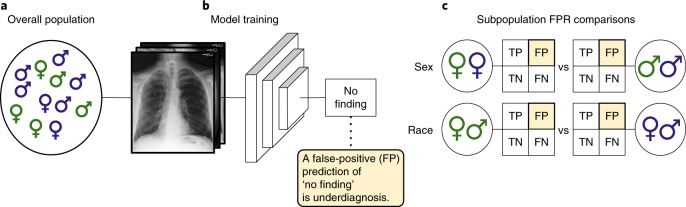
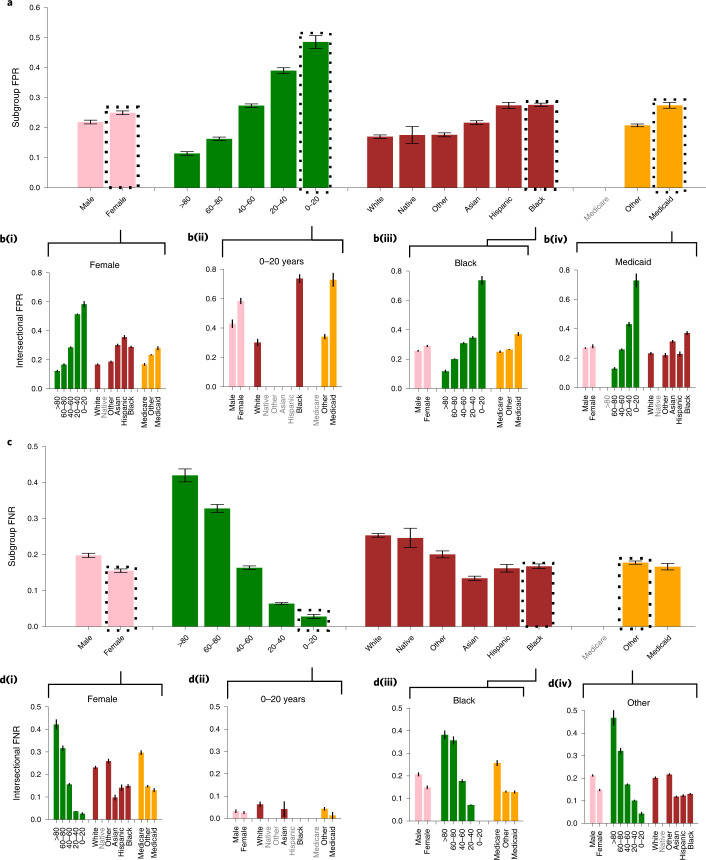
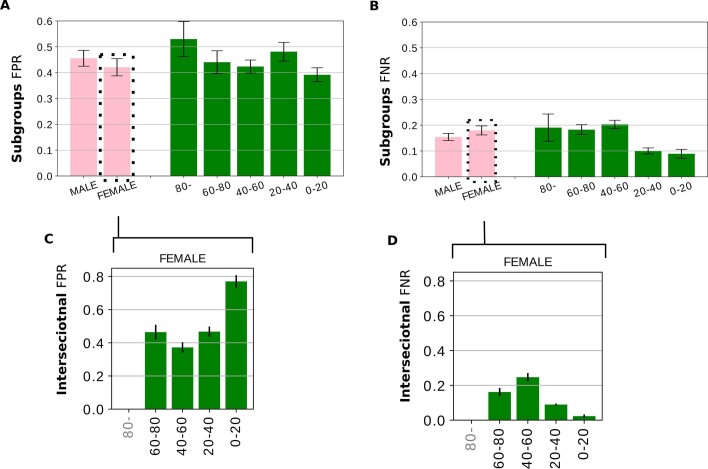
- Underdiagnosis rate, defined as the false-positive rate (FPR) for the “no finding” label, differed across all considered subpopulations. Female patients, patients under 20 years old, Black patients, Hispanic patients, and patients with Medicaid insurance had higher algorithmic underdiagnosis rates in the MIMIC-CXR dataset.
- Intersectional subgroups often had compounded bias. For example, Hispanic female patients had a higher underdiagnosis rate than white female patients, and patients aged 0–20 years who were female, Black, or had Medicaid insurance had the largest underdiagnosis rates.
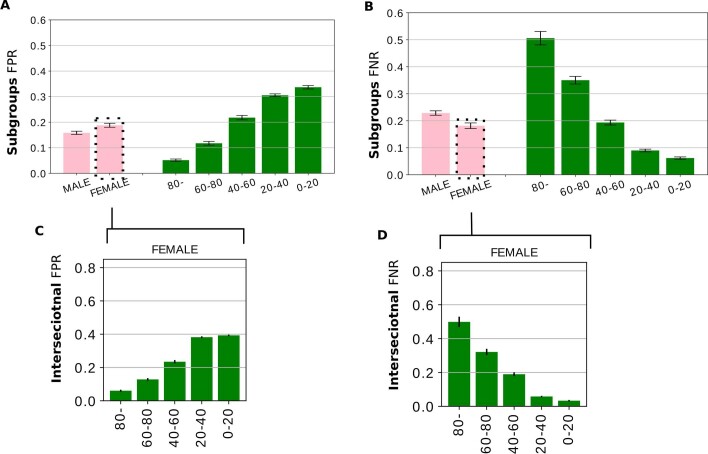
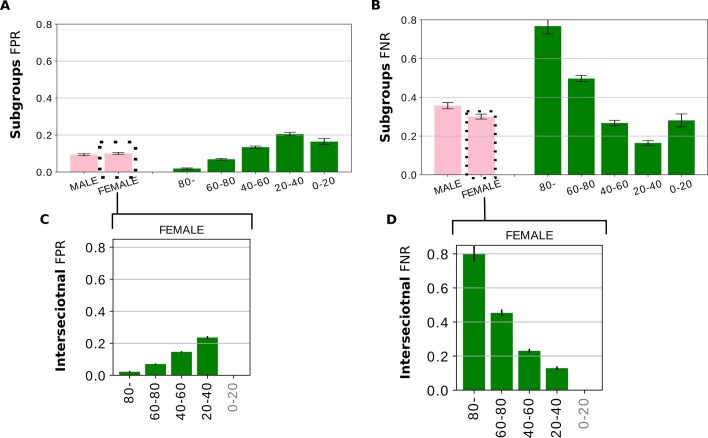
- FPR and false-negative rate (FNR) for “no finding” showed an inverse relationship across under-served subgroups, consistent with selective algorithmic underdiagnosis rather than undirected noise. This pattern held across datasets except for age >80 years and 0–20 years in the NIH dataset, possibly due to small sample sizes or dataset selection bias.
- Dataset sizes and model AUCs: MIMIC-CXR (371,858 images from 65,079 patients; AUC 0.834 ± 0.001), CheXpert (223,648 images from 64,740 patients; AUC 0.805 ± 0.001), ChestX-ray14/NIH (112,120 images from 30,805 patients; AUC 0.835 ± 0.002), and ALL (707,626 images from 129,819 patients; AUC 0.859 ± 0.001).
Methods
- Retrospective analysis of three public chest X-ray datasets—MIMIC-CXR, CheXpert, and ChestX-ray14 (NIH)—plus a multi-source ALL dataset combining them on shared labels. Subgroups included race/ethnicity, socioeconomic status via insurance type, sex, and age, with intersectional identities also examined.
- A 121-layer DenseNet initialized with ImageNet weights was trained on 256 × 256 images to predict diagnostic labels, including the “no finding” label. Train-validation-test splits were fixed, no patient was shared across splits, and results were averaged over five models with different random seeds.
- Fairness metrics were binarized: underdiagnosis rate as FPR for “no finding,” overdiagnosis as FNR for “no finding,” and false discovery rate (FDR) for “no finding.” A single threshold maximizing F1 score was selected for all groups; protected attributes were not used in model training or testing.
Limitations
- The paper states that prediction labels are extracted from clinical records and are therefore not unbiased ground truth; the labels may already contain the same bias the model then amplifies, a form of bias amplification. It also notes that automatic NLP-based labelers have not been audited across subpopulations and could be a large source of bias.
- The paper states that race and ethnicity are partially social constructs with unclear boundaries, and self-reported race/ethnicity may vary by age, socioeconomic level, or acculturation. Insurance type is described as an imperfect proxy for socioeconomic status.
- The paper states that post-hoc threshold adjustments for equal FNR and FPR have flaws: small intersectional groups make accurate thresholds difficult, the number of thresholds grows exponentially with protected attributes, and equalizing metrics may require randomization or worsening performance for some subgroups. The text also makes evident that the NIH dataset may have less diverse samples and small subgroup sizes, and that MIMIC-CXR lacks race/ethnicity and insurance data for around ~100,000 X-rays.
Model-written summary. Check it against the paper before relying on it.
Integrity signals
Registry
Cites
Statistics
Figures
Verification
Claims the paper makes
4 Valid · 1 Not valid · 16 Not checked · 53 Own results and interpretations
The cited sources support only part of this claim — read each source’s verdict below.
In the paper
“We note that some of our observed differences in underdiagnosis have been established in other areas in clinical care, such as underdiagnosis of female patients 9,10 , Black patients 5,8,9 and patients with a low socioeconomic status 36 .”
What the sources say
- Not checked yetcites [9] Mamary, A. J. et al. Race and gender disparities are evident in COPD underdiagnoses across all severities of measured airflow obstruction. Chronic Obstr. Pulm. Dis. 5, 177-184 (2018).
- Not checked yetcites [10] Sun, T. Y., Bear Don't Walk, O. J. IV, Chen, J. L., Reyes Nieva, H. & Elhadad, N. Exploring gender disparities in time to diagnosis. In Machine Learning for Health (ML4H) at NeurIPS 2020 (eds Alsentzer, E. et al.) abstr. https://arxiv. org/abs/2011.06100 (2020).
- Partly supportedcites [5] Obermeyer, Z., Powers, B., Vogeli, C. & Mullainathan, S. Dissecting racial bias in an algorithm used to manage the health of populations. Science 366, 447-453 (2019). sourceExperimental — accuracy not yet measured
Our copy supports only the racial element, and at a different level of specificity: it documents that at a given algorithm risk score Black patients carry significantly more illness burden (26.3% more chronic illnesses at the 97th percentile; more-severe hypertension, diabetes, renal failure and anemia; Health disparities conditional on risk score, pp. 3-4) and that less is spent on them conditional on need (Mechanism of bias, p. 5) — i.e. under-recognition of illness in an algorithmic/cost sense, not clinical underdiagnosis. Nothing in our copy addresses underdiagnosis of female patients (sex/gender appears only in the introduction's examples of ad delivery, facial recognition and hiring algorithms, p. 2, and as the descriptive statistic that the sample was 63% female, p. 2), and socioeconomic status appears only as barriers to accessing care that lower spending (Mechanism of bias, p. 5), not as established underdiagnosis. The female-patient and low-SES parts of the claim are therefore unsupported by this source. (LLM, conf=0.70)
- Partly supportedcites [8] Vyas, D. A., Eisenstein, L. G. & Jones, D. S. Hidden in plain sight: reconsidering the use of race correction in clinical algorithms. N. Engl. J. Med. 383, 874-882 (2020). sourceExperimental — accuracy not yet measured
Vyas et al. (2020) support only the Black-patient strand, and even there at a different level of specificity: the introduction states that 'many of these race-adjusted algorithms guide decisions in ways that may direct more attention or resources to white patients than to members of racial and ethnic minorities,' and the Cardiology section notes the AHA Get with the Guidelines score 'could direct care away from black patients' — i.e., a hedged equity concern about algorithms diverting care/resources, not an established rate of underdiagnosis. Our copy contains nothing on underdiagnosis of female patients (women appear only in Table 1 references on breast-density and bone-density tools) and nothing on underdiagnosis of low-socioeconomic-status patients; the only SES material is the quoted Society of Thoracic Surgeons concern that 'inclusion of SES factors in risk models may adjust away disparities in quality of care' (Assessment). The female-patient and low-SES parts of the attributed claim are therefore unsupported by this source. (LLM, conf=0.78)
- Partly supportedcites [36] Gianfrancesco, M. A., Tamang, S., Yazdany, J. & Schmajuk, G. Potential biases in machine learning algorithms using electronic health record data. JAMA Intern. Med. 178, 1544-1547 (2018). sourceExperimental — accuracy not yet measured
Our copy of Gianfrancesco et al. supports parts of the claim but not all of it: the Misclassification and Measurement Error section states that 'women may be less likely to receive lipid-lowering medications and in-hospital procedures, as well as optimal care at discharge, compared with men' and that patients 'may be differentially incorrectly diagnosed based on sociodemographic factors,' and the Missing Data section states that 'patients with low socioeconomic status may receive fewer diagnostic tests and medications for chronic diseases and have limited access to health care' and 'may only be identified if their disease becomes more severe' — hedged disparities in care/detection for women and low-SES patients, not established underdiagnosis. The part the source does not support is underdiagnosis of Black patients: the only Black/African-ancestry diagnostic-error passage (Sample Size and Underestimation) reports that 'patients with African and unspecified ancestry have been diagnosed with pathogenic genetic variants that were actually benign but misclassified,' i.e. genetic over-diagnosis credited to another study (Manrai et al., N Engl J Med 2016), not underdiagnosis. (LLM, conf=0.75)
boostedstates an association- Asserted: passes — The authors put it forward as true.
- Checkable: passes — It can be checked against evidence.
- Load-bearing: passes — The paper’s conclusions depend on it.
- Based: passes — The paper gives a reason why it holds.
- Rests on an assumption not shown here.
The cited sources support only part of this claim — read each source’s verdict below.
In the paper
“The choice of these subgroups is motivated by the clear history, in both traditional medicine and AI algorithms, of bias for subgroups on these axes 6,8,10,11 .”
What the sources say
- Partly supportedcites [6] Larrazabal, A. J. et al. Gender imbalance in medical imaging datasets produces biased classifiers for computer-aided diagnosis. Proc. Natl Acad. Sci. USA 117, 12592-12594 (2020). sourceExperimental — accuracy not yet measured
The Abstract says AI systems can inherit or amplify gender and racial bias, and Results and Discussion reports lower classifier performance for underrepresented genders. The paper does not establish a history of bias across socioeconomic status or age, or across all four axes in traditional medicine. The supplied passages have no page numbers. (LLM, conf=0.86)
- Partly supportedcites [8] Vyas, D. A., Eisenstein, L. G. & Jones, D. S. Hidden in plain sight: reconsidering the use of race correction in clinical algorithms. N. Engl. J. Med. 383, 874-882 (2020). sourceExperimental — accuracy not yet measured
The opening section describes race-based clinical algorithms that may direct more resources to white patients, and the Assessment section gives an example of racial bias in medical AI. The paper discusses socioeconomic status as relevant to these inequities, but the cited passages do not establish a history of bias across all four named axes: race, socioeconomic status, sex, and age. No page numbers are available in our copy. (LLM, conf=0.86)
- Not checked yetcites [10] Sun, T. Y., Bear Don't Walk, O. J. IV, Chen, J. L., Reyes Nieva, H. & Elhadad, N. Exploring gender disparities in time to diagnosis. In Machine Learning for Health (ML4H) at NeurIPS 2020 (eds Alsentzer, E. et al.) abstr. https://arxiv. org/abs/2011.06100 (2020).
- Not checked yetcites [11] Spencer, C. S., Gaskin, D. J. & Roberts, E. T. The quality of care delivered to patients within the same hospital varies by insurance type. Health Aff. (Milwood) 32, 1731-1739 (2013). source
boostedstates an association- Asserted: passes — The authors put it forward as true.
- Checkable: passes — It can be checked against evidence.
- Load-bearing: passes — The paper’s conclusions depend on it.
- Based: passes — The paper gives a reason why it holds.
- Partly supported
A result the paper reports from its own data — it cites no other source for it, so there is none to check. The quote shows it is in the paper.
In the paper
“The false-negative rate (FNR) for no finding (Fig. 2c) and FPR (Fig. 2a) show an inverse relationship across different under-served subgroups in the CXR dataset.”
plainstates an association- Asserted: passes — The authors put it forward as true.
- Checkable: passes — It can be checked against evidence.
- Load-bearing: passes — The paper’s conclusions depend on it.
- Based: passes — The paper gives a reason why it holds.
- Rests on an assumption not shown here.
A result the paper reports from its own data — it cites no other source for it, so there is none to check. The quote shows it is in the paper.
In the paper
“We observe that patients who belong to two under-served subgroups have a larger underdiagnosis rate.”
plainstates an association- Asserted: passes — The authors put it forward as true.
- Checkable: passes — It can be checked against evidence.
- Load-bearing: passes — The paper’s conclusions depend on it.
- Based: passes — The paper gives a reason why it holds.
- Rests on an assumption not shown here.
A result the paper reports from its own data — it cites no other source for it, so there is none to check. The quote shows it is in the paper.
In the paper
“We observe, across three large-scale datasets and a combined multi-source dataset, which under-served subpopulations are consistently at significant risk of algorithmic underdiagnosis.”
plainstates an association- Asserted: passes — The authors put it forward as true.
- Checkable: passes — It can be checked against evidence.
- Load-bearing: passes — The paper’s conclusions depend on it.
- Based: passes — The paper gives a reason why it holds.
- Rests on an assumption not shown here.
24 more claims
Create a free account to see all 74 claims and to verify the 27 references still open.
- Probably not a substantial claim. 29
- It may state two separate claims as one. 32
Claims other papers make about this one
Each is checked against this paper’s own text: does it say what the citing paper says it does?
The source backs part of the claim, not all of it — or backs it for a different population, condition or comparison.
In the citing paper
“Model trained on less and/or missing data leads to underestimation and underdiagnosis [49,127].”
From Artificial intelligence bias in medical system designs: a systematic review (2023) · cites this paper as [127]
Experimental — accuracy not yet measuredThe source backs part of the claim, not all of it — or backs it for a different population, condition or comparison.
In the citing paper
“The imbalanced data will result in specialized privileges to a specific group in the medical diagnosis [127].”
From Artificial intelligence bias in medical system designs: a systematic review (2023) · cites this paper as [127]
Experimental — accuracy not yet measuredThe source backs part of the claim, not all of it — or backs it for a different population, condition or comparison.
In the citing paper
“The majority of the studies have neglected kinship (more than 95%) and insurance (90%) attributes which are essential to identify socioeconomic status of the patient to prevent the underdiagnosis [127].”
From Artificial intelligence bias in medical system designs: a systematic review (2023) · cites this paper as [127]
Experimental — accuracy not yet measuredThe source backs part of the claim, not all of it — or backs it for a different population, condition or comparison.
In the citing paper
“In imaging, Seyyed-Kalantari et al 59 found that contemporary deep-learning classifiers applied to chest radiographs systematically failed to identify abnormalities in patients from historically marginalized groups including female patients, Black patients, and those of lower socioeconomic status with the most pronounced disparities at the intersections of these categories.”
From Artificial Intelligence in Oncology: Practical Applications Across Clinical Care, Scholarship, and Translation. (2026) · cites this paper as [59]
Experimental — accuracy not yet measuredThe source backs part of the claim, not all of it — or backs it for a different population, condition or comparison.
In the citing paper
“On the other hand, AI systems can also suffer from bias, compounding existing inequities in socioeconomic status, race, ethnicity, religion, gender, disability, or sexual orientation.”
From Bias in AI-based models for medical applications: challenges and mitigation strategies (2023) · cites this paper as [6]
Experimental — accuracy not yet measured
6 more claims about this paper
Create a free account to see every claim other papers make about this one.
Self-check
Percentages, sums and reported differences re-computed from the paper’s own numbers.
Each contradiction between two passages listed here was confirmed by an independent check.
Rated minor: it would not touch a result — a value no result rests on, a p-value that stays on the same side of the significance level, or a conflict that is clerical, resolved elsewhere in the paper, or outside its own findings.
In the paper
§ Dataset collection and inclusion criteria.
“FDR (or, equivalently, positive predictive value (PPV)) is a common metric used to evaluate the performance of classifiers.”
§ Dataset collection and inclusion criteria.
“FDRs i,j = P [ Y = 0|si,j, Ŷ = 1 ](3”
Rated minor: it would not touch a result — a value no result rests on, a p-value that stays on the same side of the significance level, or a conflict that is clerical, resolved elsewhere in the paper, or outside its own findings.
In the paper
“MIMIC-CXR (CXR, 371,858 images from 65,079 patients) 26 , CheXpert (CXP, 223,648 images from 64,740 patients) 27 , ChestX-ray14 (NIH, 112,120 images from 30,805 patients) 28 , and a multi-source combination of all three (ALL, 707,626 images from 129,819 patients) on shared labels.”
Reported 129819 · recomputed 160624
Citations
Cites
ImageNet Large Scale Visual Recognition Challenge
Russakovsky, O., Deng, J., Su, H., Krause, J., Satheesh, S., Ma, S., Huang, Z., Karpathy, A., Khosla, A., Bernstein, M., et al. (2015) · International Journal of Computer Vision · doi:10.1007/s11263-015-0816-y · Cited by 39,380
Goldberger, A. L., Amaral, L. A. N., Glass, L., Hausdorff, J. M., Ivanov, P. C., Mark, R. G., Mietus, J. E., Moody, G. B., Peng, C.-K., & Stanley, H. E. (2000) · Circulation · doi:10.1161/01.cir.101.23.e215 · Cited by 14,809
Dissecting racial bias in an algorithm used to manage the health of populations
Obermeyer, Z., Powers, B., Vogeli, C., & Mullainathan, S. (2019) · Science · doi:10.1126/science.aax2342 · Cited by 7,137 · cited 1×
“We note that some of our observed differences in underdiagnosis have been established in other areas in clinical care, such as under-diagnosis of female patients 9,10 , Black patients 5,8,9 and patients with a low socioeconomic status 36 .”
BackgroundWang, X., Peng, Y., Lu, L., Lu, Z., Bagheri, M., & Summers, R. M. (2017) · 2017 IEEE Conference on Computer Vision and Pattern Recognition (CVPR) · doi:10.1109/cvpr.2017.369 · Cited by 4,616 · cited 5×
“Fourth, despite the fact that we do not have the same disease prevalence between subgroups based on real data 26–28 , and our choice of fairness metrics does not directly involve prevalence between subgroups, we stress that equal underdiagnosis rates between sub-groups of age, sex and…”
BackgroundMethodInfluential(2018) · Cited by 3,510
Dwork, C., Hardt, M., Pitassi, T., Reingold, O., & Zemel, R. (2012) · Proceedings of the 3rd Innovations in Theoretical Computer Science Conference · doi:10.1145/2090236.2090255 · Cited by 3,501
Implementing Machine Learning in Health Care — Addressing Ethical Challenges
Char, D. S., Shah, N. H., & Magnus, D. (2018) · New England Journal of Medicine · doi:10.1056/nejmp1714229 · Cited by 1,857
MIMIC-CXR, a de-identified publicly available database of chest radiographs with free-text reports
Johnson, A. E. W., Pollard, T. J., Berkowitz, S. J., Greenbaum, N. R., Lungren, M. P., Deng, C.-Y., Mark, R. G., & Horng, S. (2019) · Scientific Data · doi:10.1038/s41597-019-0322-0 · Cited by 1,816 · cited 5×
“Fourth, despite the fact that we do not have the same disease prevalence between subgroups based on real data 26–28 , and our choice of fairness metrics does not directly involve prevalence between subgroups, we stress that equal underdiagnosis rates between sub-groups of age, sex and…”
BackgroundMethodInfluentialHidden in Plain Sight — Reconsidering the Use of Race Correction in Clinical Algorithms
Vyas, D. A., Eisenstein, L. G., & Jones, D. S. (2020) · New England Journal of Medicine · doi:10.1056/nejmms2004740 · Cited by 1,731 · cited 2×
“We note that some of our observed differences in underdiagnosis have been established in other areas in clinical care, such as under-diagnosis of female patients 9,10 , Black patients 5,8,9 and patients with a low socioeconomic status 36 .”
BackgroundA New, Evidence-based Estimate of Patient Harms Associated with Hospital Care
James, J. T. (2013) · Journal of Patient Safety · doi:10.1097/pts.0b013e3182948a69 · Cited by 1,399 · cited 1×
“Moreover, developers, practitioners and the clinical staff need to take into account biases such as the underdiagnosis of under-served populations in the AI-based medical decision-making algorithms and its harmful effect 17,18 on patients.”
Background
Research works printed but not linked: 3
- Cohen, J. P., Hashir, M., Brooks, R. & Bertrand, H. On the limits of cross-domain generalization in automated X-ray prediction. Proc. Mach. Learn. Res. 121, 136-155 (2020).
- Hardt, M., Price, E. & Srebro, N. Equality of opportunity in supervised learning. In Advances in Neural Information Processing Systems 29 (NIPS 2016) (eds Lee, D. et al.) 3315-3323.
- Johnson, A. et al. MIMIC-IV (version 0.4). PhysioNet https://doi.org/ 10.13026/a3wn-hq05 (2020). · DOI
Cited by
Items 401–500 of 989
Disparate privacy risks from medical AI
Knolle, M. A., Menten, M. J., Jungmann, F., Meissen, F., Glocker, B., Rueckert, D., & Kaissis, G. A. (2026) · Nature · doi:10.1038/s41586-026-10688-0 · Cited by 17
Fairness Meets Cross-Domain Learning: A Benchmark of Models and Metrics
Iurada, L., Bucci, S., Hospedales, T. M., & Tommasi, T. (2024) · IEEE Access · doi:10.1109/access.2024.3383841 · Cited by 11
“Despite their efficacy, it has become apparent that they can learn to encode subtle biases that disproportionately disadvantage particular sub-populations ( e . g . based on age, gender, ethnicity, etc.) [1], [2], [3], [4].”
BackgroundThrough a Teacher’s Lens: Combating Bias in AI-Powered Education for a Just Future
Poornesh, M. (2024) · The Clearing House A Journal of Educational Strategies Issues and Ideas · doi:10.1080/00098655.2024.2393153 · Cited by 8
Howe, S., Gregoor, A. M. S., Groot, C. A. U., Wakkee, M., Nijsten, T. E. C., & Wehrens, R. (2024) · Digital Health · doi:10.1177/20552076241292390 · Cited by 11
Leveraging Synthetic Data as a Tool to Combat Bias in Artificial Intelligence (AI) Model Training
Fabuyi, J. A. (2024) · Journal of Engineering Research and Reports · doi:10.9734/jerr/2024/v26i121337 · Cited by 8
Kraft, S. A., Chopra, S., Duran, M. C., Rojina, J., Beretta, A., López, K. I., Javan, R., Wilfond, B. S., Rosenfeld, M., Fogarty, J. A., et al. (2025) · Journal of Medical Internet Research · doi:10.2196/59817 · Cited by 6
Artificial Intelligence: Legal and Ethical Perspectives in the Health Care Sector
Farooqui, M. O., Qureshi, T., Kisswani, N., & Mishra, D. K. (2024) · Science of law. · doi:10.55284/sol.v2024i4.152 · Cited by 6
Lee, R. S., Kumar, R., Weaver, A. C., Kim, J. H., Raza, A., Ong, J., Waisberg, E., & Pandit, R. T. (2025) · Diagnostics · doi:10.3390/diagnostics15050643 · Cited by 7
“AI-powered diagnostic systems significantly enhance access to specialized ophthalmic care in underserved and remote regions [108].”
Real-Time AI Systems for ICU Risk Monitoring
Khan, Z. (2025) · International Journal For Multidisciplinary Research · doi:10.36948/ijfmr.2025.v07i02.41428 · Cited by 5
“Additionally, this manual approach often results in information overload, with healthcare providers sifting through large amounts of data without the support of intelligent systems to highlight the most relevant or urgent issues [20].”
Santana, G. O., Couto, R. D. M., Loureiro, R. M., Silva, B. C. R., de Paula, L. G. N., Rother, E. T., de Paiva, J. P. Q., & Correia, L. R. (2025) · Interactive Journal of Medical Research · doi:10.2196/56240 · Cited by 7
How I read an article that uses machine learning methods
Nazha, A., Elemento, O., McWeeney, S. K., Miles, M. E., & Haferlach, T. (2023) · Blood Advances · doi:10.1182/bloodadvances.2023010140 · Cited by 6
Applications of artificial intelligence in benign prostatic hyperplasia
Bansal, S., Chuluunbaatar, Y., Brodie, A., & Vasdev, N. (2023) · Artificial Intelligence Surgery · doi:10.20517/ais.2023.07 · Cited by 5
Melo, G. B., Nakayama, L. F., Cardoso, V. S., dos Santos, L. A., & Malerbi, F. K. (2024) · Ophthalmology Retina · doi:10.1016/j.oret.2024.05.009 · Cited by 5
Open challenges on fairness of artificial intelligence in medical imaging applications
Ferrante, E., & Echeveste, R. (2025) · Elsevier eBooks · doi:10.1016/b978-0-44-323761-4.00023-7 · Cited by 7
Interpretability of AI race detection model in medical imaging with saliency methods
Konate, S., Lebrat, L., Cruz, R. S., Gichoya, J. W., Price, B., Seyyed-Kalantari, L., Fookes, C., Bradley, A. P., & Salvado, O. (2025) · Computational and Structural Biotechnology Journal · doi:10.1016/j.csbj.2025.01.007 · Cited by 9
Self-citationPredictive Modeling and Analysis of Monkeypox Outbreaks Using Machine Learning Techniques
Maher, R. M., Rashid, S. R. A., Habeeb, M. A., Khaleel, Y. L., & Ameen, F. N. (2025) · Applied Data Science and Analysis · doi:10.58496/adsa/2025/006 · Cited by 7
“This leads to algorithmic bias where the AI performs well with the majority population, but not well with patients that are represented less well [69], [70] (e.g., racial minorities, and patients with special conditions), perpetuating inequities in healthcare.”
Looi, M.-K. (2025) · BMJ · doi:10.1136/bmj.r822 · Cited by 5
Chen, Z., Li, W., & Lin, Z. (2026) · PLOS Digital Health · doi:10.1371/journal.pdig.0001283 · Cited by 7
“A primary goal of deploying medical AI is to improve diagnostic accuracy and healthcare quality, particularly in settings where underdiagnosis or misdiagnosis has severe consequences [25–27].”
Seyyed-Kalantari, L., Zhang, H., McDermott, M. B. A., Chen, I. Y., & Ghassemi, M. (2022) · Nature Medicine · doi:10.1038/s41591-022-01854-8 · Cited by 8
“We agree that this is challenging, but again note that our study uses common, state-of-the-art ML approaches for both training and evaluation in this setting and so, regardless of the source of bias, observation of disparities across subpopulations is still very problematic 1 .”
BackgroundResultSelf-citationArtificial Intelligence in Cancer Clinical Research: I. Introduction
Lyman, G. H., & Kuderer, N. M. (2024) · Cancer Investigation · doi:10.1080/07357907.2024.2347784 · Cited by 5
“As Ghassemi and colleagues have shown, AI algorithms applied to chest x-rays display underdiagnosis bias in underserved patient populations different than the populations used in the training of the algorithm thus exacer-bating already existing care biases (12).”
Lyman, G. H., & Kuderer, N. M. (2024) · Cancer Investigation · doi:10.1080/07357907.2024.2354991 · Cited by 5
Singh, S. S. (2025) · Preprints.org · doi:10.20944/preprints202501.0620.v1 · Cited by 8
The effect of medical explanations from large language models on diagnostic decisions in radiologyPreprint
Spitzer, P., Hendriks, D., Rudolph, J., Schlaeger, S., Ricke, J., Kühl, N., Hoppe, B. F., & Feuerriegel, S. (2025) · medRxiv · doi:10.1101/2025.03.04.25323357 · Cited by 10
Amaya-Santos, S., Vargas, C., & Bermúdez-Tamayo, C. (2026) · Public Health in Practice · doi:10.1016/j.puhip.2025.100713 · Cited by 4
“Intersectionality : is an analytical framework for understanding how overlapping social identities — such as race, gender, socioeconomic status, age, ethnicity, disability, and citizenship — create unique experiences of discrimination and privilege [28,29].”
InfluentialThe Impact of Artificial Intelligence on Diagnostic Medicine
Wheatley, M. (2024) · Premier Journal of Artificial Intelligence · doi:10.70389/pjai.100007 · Cited by 6
Jerjes, W., & Harding, D. (2025) · Frontiers in Medicine · doi:10.3389/fmed.2024.1438402 · Cited by 9
Unbiased Artificial Intelligence: Addressing Bias in Computational Pathology
Montezuma, D., Porz, R. C., Ameisen, D., L’Imperio, V., Şerbănescu, M.-S., Temprana‐Salvador, J., Zerbe, N., Khalili, N., & Zlobec, I. (2025) · Mayo Clinic Proceedings Digital Health · doi:10.1016/j.mcpdig.2025.100302 · Cited by 5
“11 The FMs promise to overcome these limitations by enabling generalizable feature learning and few-shot adaptation.”
The Inverse Data Law: Market Imperatives, Data, and Quality in AI Supported Care
Ameen, S., Wong, M. C., Yee, K. C., Nøhr, C. G., & Turner, P. A. (2023) · Studies in health technology and informatics · doi:10.3233/shti230166 · Cited by 5
“It is for this reason that researchers that audit large datasets and/or their AI implementations, tend to consistently return the same disappointing results – underdiagnosis or misdiagnosis along the lines of race/ethnicity, sex, age, and insurance type, as was observed in a recent audit of the largest publicly availa…”
ResultBias and fairness in AI-driven healthcare: Addressing disparities in machine learning models
Zartashea, F. (2023) · International Journal of Science and Research Archive · doi:10.30574/ijsra.2023.9.1.0359 · Cited by 5
Lindroth, H. L., SAHAJWANI, J., Hudson, M., Heier, L., Gonzalez, A. A., Bhattacharyya, A., Zheng, Z., Boustani, M. A., Herasevich, V., McGowan, M. L., et al. (2025) · Critical Care Nursing Clinics of North America · doi:10.1016/j.cnc.2025.02.004 · Cited by 6
Putica, A., Yurtbasi, M., & Khanna, R. (2025) · AI & Society · doi:10.1007/s00146-025-02336-4 · Cited by 5
“Without structured fairness evaluations, machine learning models may yield misleading predictions when applied to historically underrepresented populations (Seyyed-Kalantari et al. 2021).”
Why Would University Students Use ChatGPT for Health Discourses? A Moderated Mediation Analysis
Vu, C. B., & Park, D. Y. (2025) · Journal of Consumer Health on the Internet · doi:10.1080/15398285.2025.2491042 · Cited by 4
Tran, H. H.-V., Thu, A., Fuertes, A., Twayana, A. R., Mahadevaiah, A., Mehta, K. A., James, M., Basta, M., Weissman, S. I., Frishman, W. H., et al. (2025) · Cardiology in Review · doi:10.1097/crd.0000000000000975 · Cited by 6
Cherezov, D., Fu, P., & Madabhushi, A. (2025) · Computers in Biology and Medicine · doi:10.1016/j.compbiomed.2025.111147 · Cited by 7
Mind the XAI Gap: A Human-Centered LLM Framework for Democratizing Explainable AI
Paraschou, E., Arapakis, I., Yfantidou, S., Macaluso, S., & Vakali, A. I. (2025) · Communications in computer and information science · doi:10.1007/978-3-032-08333-3_6 · Cited by 13
Giri, L., Regmi, P. R., Gurung, G., Gurung, G., Aryal, S., Mandal, S., Giri, S., Chaulagain, S., Acharya, S., & Umair, M. (2025) · Diagnostics · doi:10.3390/diagnostics16010066 · Cited by 5
“…rarer conditions such as ILD, enlargement, and other lesions exhibited low sensitivity, reflecting limited training examples and the inherent difficulty of recognizing subtle or heterogeneous imaging patterns, consistent with prior reports (Majkowska 2020; Seyyed-Kalantari et al., 2021) [25,26].”
Fantus, S., Li, J., Wang, T., & Tang, L. (2026) · Journal of Medical Internet Research · doi:10.2196/79613 · Cited by 5
Tan, C. C. T., Gunasekeran, D. V., Low, C. O., Sim, G. S. Y., Foo, D. Y., Morris, R. J. T., & Wong, T. Y. (2026) · npj Digital Medicine · doi:10.1038/s41746-026-02420-z · Cited by 5
“While the outputs were conformed in ways, they were not necessarily safe 7 and so required extensive testing and assurances such as post-processing limits or guardrails.”
Fairness analysis of machine learning predictions of aggression in acute psychiatric care
Wang, Y., Sikstrom, L., Xiao, R., Findlay, Z., Zaheer, J., Hill, S., & Maslej, M. M. (2026) · npj Mental Health Research · doi:10.1038/s44184-026-00194-6 · Cited by 8
“…and widely used algorithms for criminal recidivism prediction and health-care resource allocation have been shown to be unfair towards racially marginalized groups, such as Black or lower-income individuals 8 – 10 , as well as the intersections of underserved groups, like Hispanic females 11 .”
Fard, A. R., Williams, S. C., Smith, K. J., Dhaliwal, J., Ferreira, T., Das, A., Starup-Hansen, J., Hanrahan, J., Koh, C. H., Khan, D., et al. (2026) · npj Digit. Medicine · doi:10.1038/s41746-026-02401-2 · Cited by 3
Sule, D. S., Kyei, K. A., Antwi, W. K., Acquah, G., Dzefi‐Tettey, K., Daniels, J., & Nyantakyi, A. Y. (2026) · PLoS ONE · doi:10.1371/journal.pone.0342988 · Cited by 5
Wang, H., Chen, W., Luo, X., Xing, Z., Liu, L., Qin, J., Wu, S., & Zhu, L. (2025) · IEEE/CVF International Conference on Computer Vision (ICCV) · doi:10.1109/iccv51701.2025.02234 · Cited by 17
“This issue is particularly critical in cross-domain scenarios, where models deployed across institutions encounter heterogeneous data distributions that amplify performance disparities [36, 40, 41].”
Flanders, A. E., Peng, Y., Prevedello, L. M. S., Ball, R. L., Colak, E., Menon, P. G., Shih, G., Lin, H., & Lakhani, P. C. (2026) · npj Health Systems · doi:10.1038/s44401-026-00100-4 · Cited by 5
“The rationale was to use this ensemble to automatically monitor the performance of a commercial ICH detection AI model analogous to a multi-observer consensus process.”
Saraboji, K., Gopalakrishnan, K., Sood, D., Kaur, A., Shivaram, S., Helgeson, S. A., Arunachalam, S. P., & Mitra, D. (2026) · AI in Medicine · doi:10.3390/aimed1020016 · Cited by 4
Algorithmic Status Inequality: An Integrative Perspective on AI‐Driven Social Stratification
Wu, J. (2026) · Journal of Management Studies · doi:10.1111/joms.70134 · Cited by 6
Learning Dynamic Prototypes for Visual Pattern Debiasing
Liang, K., Yin, Z., Min, M., Liu, Y., Ma, Z., & Guo, J. (2023) · International Journal of Computer Vision · doi:10.1007/s11263-023-01956-x · Cited by 7
“Seyyed-Kalantari et al. (2021a) state that classifiers are found to consistently and selectively amplify the existing biases towards patients under-represented in the training set.”
InfluentialArtificial Intelligence in Otolaryngology
Tai, K., Zhao, R., & Rameau, A. (2024) · Otolaryngologic Clinics of North America · doi:10.1016/j.otc.2024.04.008 · Cited by 6
Patient‐Centered Equitable and Safe Artificial Intelligence in Otolaryngology–Head and Neck Surgery
Tai, K., Zhao, R., & Rameau, A. (2024) · Otolaryngology · doi:10.1002/ohn.881 · Cited by 4
Zhang, W.-Y., Chang, Y.-J., & Shi, R.-H. (2024) · World Journal of Gastroenterology · doi:10.3748/wjg.v30.i39.4267 · Cited by 6
“Biases related to specific patient groups, sex, and ethnicity can influence the training and deployment of AI models[104].”
Application of Generative AI in Patient Engagement
ZareiNejad, M., & Tavana, P. (2025) · Springer eBooks · doi:10.1007/978-3-031-82963-5_5 · Cited by 4
Oladimeji, O. O., Imran, A.-A.-Z., Wang, X., & Unnikrishnan, S. (2025) · Image and Vision Computing · doi:10.1016/j.imavis.2025.105601 · Cited by 8
Pang, J., Ma, D., Zhou, Z., Gotway, M. B., & Liang, J. (2025) · Medical Image Analysis · doi:10.1016/j.media.2025.103720 · Cited by 5
Fairness Evolution in Continual Learning for Medical Imaging
Ceccon, M., Pezze, D. D., Fabris, A., & Susto, G. A. (2025) · IFAC-PapersOnLine · doi:10.1016/j.ifacol.2025.12.025 · Cited by 8
Auditing Unfair Biases in CNN-Based Diagnosis of Alzheimer’s Disease
Dang, V. N., Casamitjana, A., Starmans, M. P. A., Martín-Isla, C., Hernández-González, J., Lekadir, K., & Initiative, A. D. N. (2023) · Lecture notes in computer science · doi:10.1007/978-3-031-45249-9_17 · Cited by 5
A pipeline to further enhance quality, integrity and reusability of the NCCID clinical data
Breger, A., Selby, I., Roberts, M., Babar, J. L., Gkrania‐Klotsas, E., Preller, J., Sánchez, L. E., Dittmer, S., Thorpe, M., Gilbey, J., et al. (2023) · Scientific Data · doi:10.1038/s41597-023-02340-7 · Cited by 4
“Amongst others, diagnostic COVID-19 models have been shown to under-diagnose the female and younger patients 8 when they are under-represented in the training data 9 .”
MethodLee, J. T., Liu, V. T. N., Ali, S., Chen, P., Lee, C., Huang, C.-W., Li, V. C.-S., Chen, H.-H., Duh, W.-J., Marthias, T., et al. (2025) · medRxiv · doi:10.1101/2025.10.05.25337345 · Cited by 7
Beyond algorithms: Ethical implications of AI in healthcare
Pathni, R. K. (2024) · Medical Journal Armed Forces India · doi:10.1016/j.mjafi.2024.10.014 · Cited by 5
Lin, R., & Zhang, J. (2025) · Biomedical Signal Processing and Control · doi:10.1016/j.bspc.2025.107939 · Cited by 7
Johnson, D. K. N. (2025) · The Review of Black Political Economy · doi:10.1177/00346446251331615 · Cited by 3
“Since independent testing is impossible without data access, we cannot even reliably estimate potential harm (Seyyed-Kalantari et al., 2021).”
Comulada, W. S., McQueen, C., & Lang, C. M. (2025) · Frontiers in Public Health · doi:10.3389/fpubh.2025.1577076 · Cited by 4
Sallam, M., Beaini, C., Mijwil, M. M., & Sallam, M. (2025) · Journal of Studies in Medical Sciences · doi:10.20849/jsms.v1i1.1515 · Cited by 4
“…is not mere theory since early and recent studies have shown that AI algorithms used in radiology underperformed in detecting pathologies among women, racial and ethnic minorities, younger individuals, and patients of lower socioeconomic status (Mamary et al., 2018; Seyyed-Kalantari et al., 2021).”
Kale, M. R., Mutlag, A. H., Sankarganesh, P., Al-Muraad, N. H., Mahdi, H. S., & Muthuperumal, S. (2025) · International Conference on Intelligent Computing and Knowledge Extraction (ICICKE) · doi:10.1109/icicke65317.2025.11136681 · Cited by 3
“On top of this, bias in the training data itself remains a pressing issue: while the AI models trained with imbalanced training data may misdiagnose the patients to some extent who belong to the underrepresented populations[12] [13].”
Rethinking fairness in AI to improve current practice in oncology
Konate, S., Gallifant, J., Senteio, C. R., Celi, L. A., & Seyyed-Kalantari, L. (2025) · Trends in cancer · doi:10.1016/j.trecan.2025.11.005 · Cited by 3
Self-citationAn investigation of race bias in deep learning-based segmentation of prostate MRI images
Alqarni, M., Jones, E., Ribeiro, L., Verma, H., Cooper, S., Mullassery, V. M., Morris, S., Urbano, T. G., & King, A. P. (2025) · Scientific Reports · doi:10.1038/s41598-025-26189-5 · Cited by 4
Subgroup Performance Analysis in Hidden Stratifications
Bissoto, A. E., Hoang, T.-D., Flühmann, T., Sun, S., Baumgartner, C. F., & Koch, L. M. (2025) · Lecture notes in computer science · doi:10.1007/978-3-032-05185-1_57 · Cited by 11
“Machine learning (ML) models often perform systematically differently across patient subgroups [18,6,13,15].”
Naidu, S. U., Li, H., Moon, J. T., Kim, R., Patel, E., Bercu, Z. L., Newsome, J. M., Gichoya, J. W., & Trivedi, H. (2026) · Academic Radiology · doi:10.1016/j.acra.2025.12.008 · Cited by 5
Generative Counterfactual Augmentation for Bias Mitigation
Uwaeze, J., Kulkarni, P., Braverman, V., Jacobs, M. A., & Parekh, V. S. (2025) · IEEE International Conference on Computer Vision Workshops · doi:10.1109/iccvw69036.2025.00125 · Cited by 3
Illuminating the Invisible: Translational Molecular Imaging in Cardiovascular Medicine
Ma, Y., Sun, N., Fang, Y., Wang, Y., & Cao, F. (2026) · Circulation Research · doi:10.1161/circresaha.125.327199 · Cited by 4
Wang, X., Xiong, D., Cui, S., Duan, B., Hung, Y., Jing, H. E., Ding, G., Tang, Y., & Wang, Q. (2026) · Discover Oncology · doi:10.1007/s12672-026-04864-x · Cited by 6
“If an AI system underperforms for certain subgroups—for example, by underestimating risk in a demographic group or misclassifying tumors in underrepresented populations—its deployment could deepen existing disparities [123, 124].”
Lin, Y. J., & Komperda, I. (2026) · SN Comprehensive Clinical Medicine · doi:10.1007/s42399-026-02330-x · Cited by 4
Gabbay, J. M., Bajaj, B. V. M., Levano, S. R., Wu, A. C., Rastogi, D., Fazzari, M. J., & Fiori, K. P. (2026) · Pediatric Pulmonology · doi:10.1002/ppul.71624 · Cited by 3
“[ 36, 37] SHAP analyses revealed that historical healthcare utilization and markers of disease severity were the most influential predictors, under-scoring XGB's reliance on longitudinal data that captures complex nonlinear risk patterns.”
Liu, N., Han, G., Gu, Q., Zhang, Y., & Chen, M. M. (2026) · Cell Death and Disease · doi:10.1038/s41419-026-08769-z · Cited by 5
Dataset effects outweigh algorithmic effects in determining fairness of healthcare machine learning
Elgendi, M., Elkhalifa, A., Khandoker, A. H., Maruotti, A., Zhou, H., Menon, C., & Ward, R. (2026) · npj Digital Medicine · doi:10.1038/s41746-026-02723-1 · Cited by 6
Large language medicine: defining a new paradigm in human health
Guni, A., Hu, W., Morley, J., Cohen, I. G., Barnaghi, P. M., & Ashrafian, H. (2026) · Frontiers in Science · doi:10.3389/fsci.2026.1810095 · Cited by 3
“…across different geographic regions, representing a range of patient demo-graphics (including age, sex, and ethnicity), imaging equipment types, and disease prevalence rates, so that the resulting model can perform reliably across the clinical settings in which it is intended to be deployed (121).”
Applications of Artificial Intelligence and Machine Learning in Antimicrobial Resistance Study
Praveen, A., Bartelo, N., & Soni, V. (2024) · Springer eBooks · doi:10.1007/978-3-031-65986-7_11 · Cited by 3
Bias Amplification to Facilitate the Systematic Evaluation of Bias Mitigation Methods
Burgon, A., Zhang, Y., Petrick, N., Sahiner, B., Kenny, H., & Samala, R. K. (2024) · IEEE Journal of Biomedical and Health Informatics · doi:10.1109/jbhi.2024.3491946 · Cited by 6
Stanley, E. A. M., Forkert, N. D., & Wilms, M. (2025) · SPIE Medical Imaging: Imaging Informatics for Healthcare, Research, and Applications · doi:10.1117/12.3046811 · Cited by 6
“5 Those challenges have motivated considerable research into bias mitigation techniques in medical image analysis 6 that aim at alleviating unfairness and shortcut learning behaviour of discriminative models.”
Accuracy of preferred language data in a multi-hospital electronic health record in Toronto, Canada
Ford, C., Bodley, T. F., Betts, M., Fowler, R. A., Gordon, A., James, M., Rawal, S., Reppas‐Rindlisbacher, C. E., Tam, P., TOMLINSON, G. A., et al. (2025) · PLOS Digital Health · doi:10.1371/journal.pdig.0000999 · Cited by 5
“Misclassification could also impede efforts to correct algorithms and avoid algorithmic bias [24].”
Grant, R. C., He, J. C., Khan, F., Liu, N., Podolsky, S., Kaliwal, Y., Powis, M., Notta, F., Chan, K., Ghassemi, M., et al. (2023) · Journal of the National Comprehensive Cancer Network · doi:10.6004/jnccn.2023.7046 · Cited by 4
Self-citationUnpacking the artificial intelligence toolbox for embryo ploidy prediction
Serdarogullari, M., Liperis, G., Sharma, K., Ammar, O. F., Uraji, J., Cimadomo, D., Alteri, A., Popovic, M., & Fraire-Zamora, J. J. (2023) · Human Reproduction · doi:10.1093/humrep/dead223 · Cited by 4
Achieving Fairness Through Channel Pruning for Dermatological Disease Diagnosis
Kong, Q., Chiu, C.-H., Zeng, D., Chen, Y.-J., Ho, T.-Y., Hu, J., & Shi, Y. (2024) · Lecture notes in computer science · doi:10.1007/978-3-031-72117-5_3 · Cited by 13
On Biases in a UK Biobank-Based Retinal Image Classification Model
Alloula, A., Mustafa, R., McGowan, D. R., & Papież, B. W. (2024) · Lecture notes in computer science · doi:10.1007/978-3-031-72787-0_14 · Cited by 6
Föllmer, B., Williams, M. C., Dey, D., Arbab‐Zadeh, A., Maurovich‐Horvat, P., Volleberg, R. H. J. A., Rueckert, D., Schnabel, J. A., Newby, D. E., Dweck, M. R., et al. (2024) · Springer eBooks · doi:10.1007/978-3-031-61846-8_27 · Cited by 3
Causal debiasing for unknown bias in histopathology—A colon cancer use case
Correa, R., Pai, R. K., Ebare, K., Buchanan, D. D., Jenkins, M. A., Phipps, A. I., Newcomb, P. A., Gallinger, S., Grant, R. C., Marchand, L. L., et al. (2024) · PLoS ONE · doi:10.1371/journal.pone.0303415 · Cited by 3
Chhor, C. M., Raichandani, S., du Preez, L., Brandser, N. R., Fotos, J. S., Jiwani, R. A., Li, D. K. B., Rajiah, P. S., Sin, J. M., & Nguyen, X. V. (2025) · Current Problems in Diagnostic Radiology · doi:10.1067/j.cpradiol.2025.06.009 · Cited by 4
On the Interplay of Human-AI Alignment, Fairness, and Performance Trade-Offs in Medical Imaging
Luo, H., Zhou, Z., Shu, S. Z., de Mortanges, A. P., Berke, R., & Reyes, M. (2025) · Lecture notes in computer science · doi:10.1007/978-3-032-05185-1_41 · Cited by 8
Peters, J., Lebrat, L., Cruz, R. S., Nicolson, A., Belous, G., Konate, S., Raniga, P., Doré, V., Bourgeat, P., Fripp, J., et al. (2023) · IEEE Winter Conference on Applications of Computer Vision · doi:10.1109/wacv56688.2023.00200 · Cited by 4
“In addition, it could help the end-user identify potential biases or support designing trustworthy and fair algorithms [39, 53].”
BackgroundBias in Unsupervised Anomaly Detection in Brain MRI
Bercea, C. I., Anton, E. P., Wiestler, B., Rueckert, D., Schnabel, J. A., & King, A. P. (2023) · Lecture notes in computer science · doi:10.1007/978-3-031-45249-9_12 · Cited by 10
Sorace, L., Raju, N., O'Shaughnessy, J., Kachel, S., Jansz, K., Yang, N., & Lim, R. (2023) · Radiography · doi:10.1016/j.radi.2023.10.014 · Cited by 3
Locating disparities in machine learning
von Zahn, M., Hinz, O. F., & Feuerriegel, S. (2023) · IEEE International Conference on Big Data (BigData) · doi:10.1109/bigdata59044.2023.10386485 · Cited by 10
Mitigating medical dataset bias by learning adaptive agreement from a biased council
Luo, L., Huang, X., Wang, M., Wan, Z., Ma, W., & Chen, H. (2025) · Medical Image Analysis · doi:10.1016/j.media.2025.103629 · Cited by 9
Vallon, J., Panjwani, N., Ling, X., Vij, S., Srinivas, S., Leppert, J. T., Bayati, M., & Buyyounouski, M. K. (2022) · medRxiv · doi:10.1101/2022.03.22.22272635 · Cited by 3
Causal thinking for decision making on Electronic Health Records: why and howPreprint
Doutreligne, M., Struja, T., Abécassis, J., Morgand, C., Celi, L. A., & Varoquaux, G. P. (2023) · arXiv (Cornell University) · doi:10.48550/arxiv.2308.01605 · Cited by 4
Toker, I., Jansen, S., Knoche, J., & Lorenz, D. (2025) · Digital Health · doi:10.1177/20552076251386788 · Cited by 3
Fairness in artificial intelligence‐driven multi‐organ image segmentation
Li, Q., Zhang, Y., Sun, L., Sun, M., Liu, M., Wang, Z., Wang, Q., Wang, S., & Wang, C. (2024) · iRadiology · doi:10.1002/ird3.101 · Cited by 2
Improving Fairness in Chest X-Ray Interpretation Models Using Attention-Driven Masked Image Modeling
Chen, C.-J., Wang, S., & Kuo, P. (2024) · Annual International Conference of the IEEE Engineering in Medicine and Biology Society (EMBC) · doi:10.1109/embc53108.2024.10782563 · Cited by 2
“Drawing on the findings of Seyyed-Kalantari et al. [4], Ricci Lara et al. [5], and Duffy et al. [6], this research seeks to understand the propensity of AI to infer racial attributes and to disrupt this pattern by leveraging the Masked Image Modeling (MIM) and attention-driven masking.”
Levelling up as a fair solution in AI enabled cancer screening
Abdulrahman, S., & Trengove, M. (2025) · Frontiers in Digital Health · doi:10.3389/fdgth.2025.1540982 · Cited by 2
Future of medical leadership in the age of artificial intelligence
Sier, V. Q. (2025) · BMJ Leader · doi:10.1136/leader-2024-001155 · Cited by 3
Rajagopalan, S., Kavitha, S., Pandi, V. S., Lakshmi Priya, J., Shanmuganatha, M., & Natteshan, N. V. S. (2024) · International Conference on Smart Technologies for Sustainable Development Goals (ICSTSDG) · doi:10.1109/icstsdg61998.2024.11026224 · Cited by 2
Chen, J. (2025) · BMC Oral Health · doi:10.1186/s12903-025-06408-1 · Cited by 4
“Seyyed-Kalantari et al. reported significant differences in the accuracy of automated chest X-ray diagnosis across racial and other demographic groups [15].”
Metadata
- Authors
- Seyyed-Kalantari, L., Zhang, H., McDermott, M. B. A., Chen, I. Y., & Ghassemi, M.
- Affiliations
- University of Toronto (CA)
- Massachusetts Institute of Technology (US)
- Vector Institute (CA)
- Corresponding author
- Seyyed-Kalantari, Laleh
- Venue
- Nature Medicine
- Published
- 2021-12
- Volume
- 27
- Issue
- 12
- Pages
- 2176-2182
- ISSN
- 1078-8956 (ISSN-L)
- 1546-170X
- PMC
- PMC8674135
- OpenAlex
- W4200191097
- Cited by
- 928
- References
- 47
- Citations by year
- 2026: 298 · 2025: 239 · 2024: 199 · 2023: 146 · 2022: 42 · 2021: 4
- FWCI
- 27.63
- Type
- journal article
- Language
- en
- Open access
- hybrid
- doi.org
- Licence
- cc-by
- creativecommons.org/licenses/by/4.0 (tdm)
- creativecommons.org/licenses/by/4.0 (vor, 9 d)
- Locations
- Nature Medicine (publishedVersion, cc-by)
- Research Square (acceptedVersion, cc-by)
- PubMed Central (publishedVersion, cc-by)
- PubMed (publishedVersion)
- Funders
- Microsoft Research
- Canadian Institute for Advanced Research
- Natural Sciences and Engineering Research Council of Canada (PDF-516984)
- Topics
- Health Sciences › Medicine › Health Informatics › Artificial Intelligence in Healthcare and Education
- Physical Sciences › Computer Science › Artificial Intelligence › Ethics and Social Impacts of AI
- Health Sciences › Medicine › Radiology, Nuclear Medicine and Imaging › COVID-19 diagnosis using AI
- Keywords
- algorithmic bias, underdiagnosis, chest X-ray classification, artificial intelligence in medical imaging, underserved populations, health disparities, algorithmic fairness, health care access, Black patients, Hispanic patients, female patients, low socioeconomic status
- MeSH terms
- Adolescent, Algorithms, Artificial Intelligence, Child, Child, Preschool, Female, Humans, Infant, Infant, Newborn, Male, Radiography, Thoracic, Vulnerable Populations, Young Adult, Datasets as Topic
About these checks
Registry, retraction, Cites and statistics results are computed, not judged, with one exception: a printed reference that no index lists is read once by a model before it counts as a citation error. Claims are extracted by a model and kept only when their quote appears verbatim in the text; each cited source is then checked, with a model’s help, for whether it says what the claim relies on. Those verdicts can be wrong — read the claim’s quote and the cited source before relying on one.
The claim verdicts this report counts are experimental: their accuracy is not yet measured.
A language model drew the claims from the paper on 2026-10-04, under version 3 of the claim definition (model deepseek-v4.1-flash, prompt extract-v3).
A second model labelled each claim on 2026-10-04 (model jev-1.13-20260917, definition revision gold-guideline-v0.2).
Cited sources are checked with a language model’s help (qwen3.8-omni-flash and gpt-6-sol).
Statistics and arithmetic are recomputed, not judged.
Confidence bands are shown only for fields calibrated on our annotated test set. None is calibrated yet, so no band is shown.
What counts as a claim ›How we measure confidence ›How we check this ›
Are you an author, or do you see a problem with this page? Request a review
Data sources
Bibliographic data: Semantic Scholar, OpenAlex, Crossref.
Contains information from the Semantic Scholar Academic Graph Datasets, made available under the ODC Attribution License (ODC-BY 1.0).
Semantic Scholar’s data is described in: Kinney, R., et al. (2023). The Semantic Scholar Open Data Platform. arXiv:2301.10140.
