

Underdiagnosis bias of artificial intelligence algorithms applied to chest radiographs in under-served patient populations
Open accessPublished version of a preprint
The DOI matches its Crossref record; 49 of the 49 references it cites were found in a registry or an index; 7 of the 34 sources its claims cite were checked for support.
Abstract
Artificial intelligence (AI) systems have increasingly achieved expert-level performance in medical imaging applications. However, there is growing concern that such AI systems may reflect and amplify human bias, and reduce the quality of their performance in historically under-served populations such as female patients, Black patients, or patients of low socioeconomic status. Such biases are especially troubling in the context of underdiagnosis, whereby the AI algorithm would inaccurately label an individual with a disease as healthy, potentially delaying access to care. Here, we examine algorithmic underdiagnosis in chest X-ray pathology classification across three large chest X-ray datasets, as well as one multi-source dataset. We find that classifiers produced using state-of-the-art computer vision techniques consistently and selectively underdiagnosed under-served patient populations and that the underdiagnosis rate was higher for intersectional under-served subpopulations, for example, Hispanic female patients. Deployment of AI systems using medical imaging for disease diagnosis with such biases risks exacerbation of existing care biases and can potentially lead to unequal access to medical treatment, thereby raising ethical concerns for the use of these models in the clinic.
Overview
CoChat Summary
TL;DR
This study evaluates algorithmic underdiagnosis bias in chest X-ray classifiers across three large public datasets and a combined multi-source dataset. It finds that models consistently and selectively underdiagnose under-served subpopulations, especially intersectional groups, raising concerns for clinical deployment and triage.
Key findings
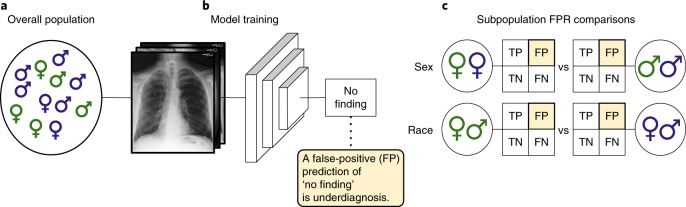
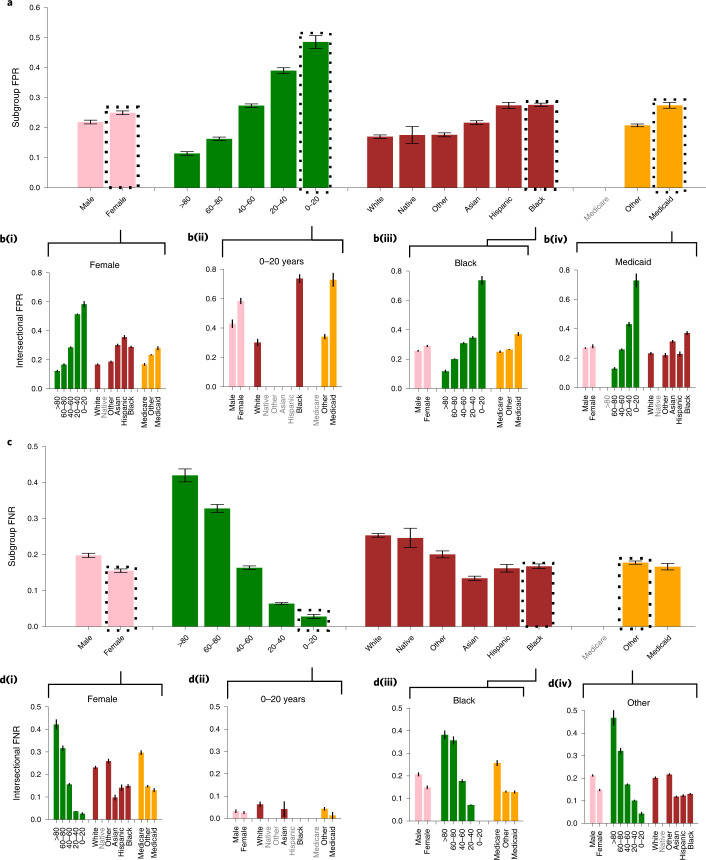
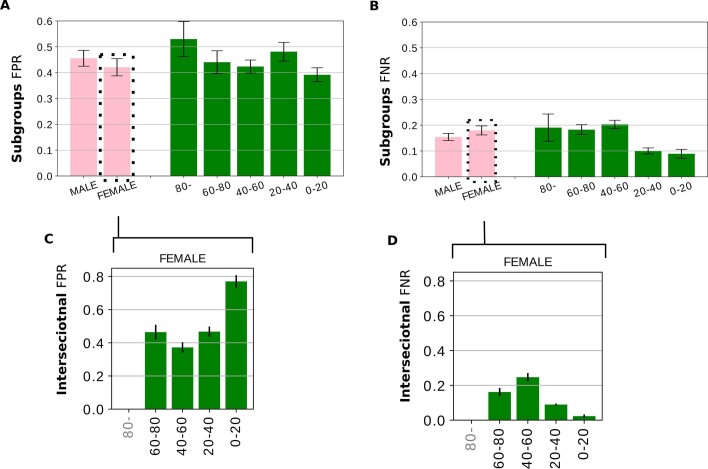
- Underdiagnosis rate, defined as the false-positive rate (FPR) for the “no finding” label, differed across all considered subpopulations. Female patients, patients under 20 years old, Black patients, Hispanic patients, and patients with Medicaid insurance had higher algorithmic underdiagnosis rates in the MIMIC-CXR dataset.
- Intersectional subgroups often had compounded bias. For example, Hispanic female patients had a higher underdiagnosis rate than white female patients, and patients aged 0–20 years who were female, Black, or had Medicaid insurance had the largest underdiagnosis rates.
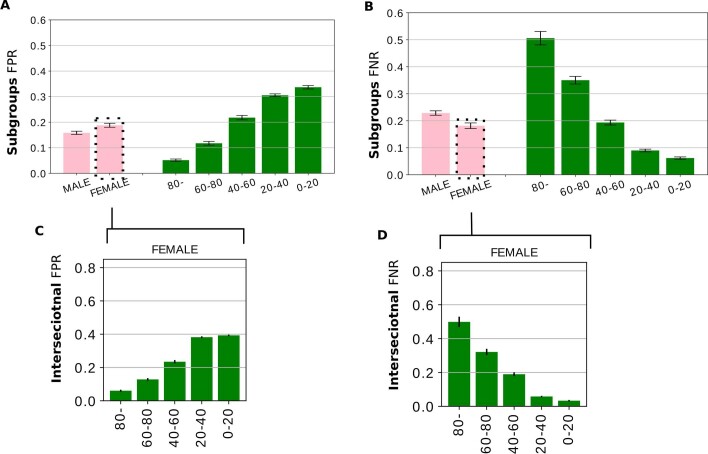
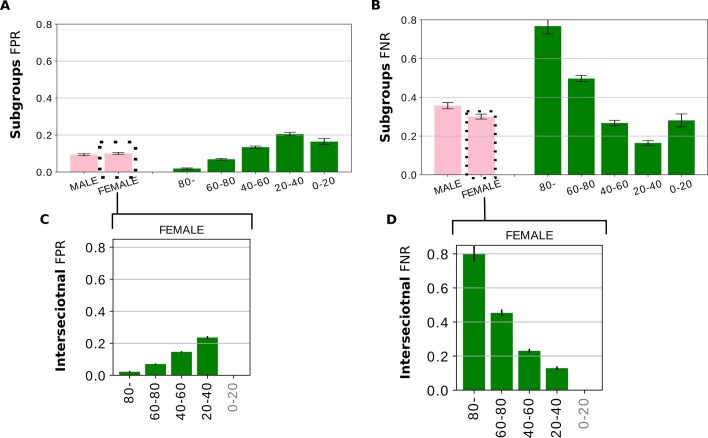
- FPR and false-negative rate (FNR) for “no finding” showed an inverse relationship across under-served subgroups, consistent with selective algorithmic underdiagnosis rather than undirected noise. This pattern held across datasets except for age >80 years and 0–20 years in the NIH dataset, possibly due to small sample sizes or dataset selection bias.
- Dataset sizes and model AUCs: MIMIC-CXR (371,858 images from 65,079 patients; AUC 0.834 ± 0.001), CheXpert (223,648 images from 64,740 patients; AUC 0.805 ± 0.001), ChestX-ray14/NIH (112,120 images from 30,805 patients; AUC 0.835 ± 0.002), and ALL (707,626 images from 129,819 patients; AUC 0.859 ± 0.001).
Methods
- Retrospective analysis of three public chest X-ray datasets—MIMIC-CXR, CheXpert, and ChestX-ray14 (NIH)—plus a multi-source ALL dataset combining them on shared labels. Subgroups included race/ethnicity, socioeconomic status via insurance type, sex, and age, with intersectional identities also examined.
- A 121-layer DenseNet initialized with ImageNet weights was trained on 256 × 256 images to predict diagnostic labels, including the “no finding” label. Train-validation-test splits were fixed, no patient was shared across splits, and results were averaged over five models with different random seeds.
- Fairness metrics were binarized: underdiagnosis rate as FPR for “no finding,” overdiagnosis as FNR for “no finding,” and false discovery rate (FDR) for “no finding.” A single threshold maximizing F1 score was selected for all groups; protected attributes were not used in model training or testing.
Limitations
- The paper states that prediction labels are extracted from clinical records and are therefore not unbiased ground truth; the labels may already contain the same bias the model then amplifies, a form of bias amplification. It also notes that automatic NLP-based labelers have not been audited across subpopulations and could be a large source of bias.
- The paper states that race and ethnicity are partially social constructs with unclear boundaries, and self-reported race/ethnicity may vary by age, socioeconomic level, or acculturation. Insurance type is described as an imperfect proxy for socioeconomic status.
- The paper states that post-hoc threshold adjustments for equal FNR and FPR have flaws: small intersectional groups make accurate thresholds difficult, the number of thresholds grows exponentially with protected attributes, and equalizing metrics may require randomization or worsening performance for some subgroups. The text also makes evident that the NIH dataset may have less diverse samples and small subgroup sizes, and that MIMIC-CXR lacks race/ethnicity and insurance data for around ~100,000 X-rays.
Model-written summary. Check it against the paper before relying on it.
Integrity signals
Registry
Cites
Statistics
Figures
Verification
Claims the paper makes
4 Valid · 1 Not valid · 16 Not checked · 53 Own results and interpretations
The cited sources support only part of this claim — read each source’s verdict below.
In the paper
“We note that some of our observed differences in underdiagnosis have been established in other areas in clinical care, such as underdiagnosis of female patients 9,10 , Black patients 5,8,9 and patients with a low socioeconomic status 36 .”
What the sources say
- Not checked yetcites [9] Mamary, A. J. et al. Race and gender disparities are evident in COPD underdiagnoses across all severities of measured airflow obstruction. Chronic Obstr. Pulm. Dis. 5, 177-184 (2018).
- Not checked yetcites [10] Sun, T. Y., Bear Don't Walk, O. J. IV, Chen, J. L., Reyes Nieva, H. & Elhadad, N. Exploring gender disparities in time to diagnosis. In Machine Learning for Health (ML4H) at NeurIPS 2020 (eds Alsentzer, E. et al.) abstr. https://arxiv. org/abs/2011.06100 (2020).
- Partly supportedcites [5] Obermeyer, Z., Powers, B., Vogeli, C. & Mullainathan, S. Dissecting racial bias in an algorithm used to manage the health of populations. Science 366, 447-453 (2019). sourceExperimental — accuracy not yet measured
Our copy supports only the racial element, and at a different level of specificity: it documents that at a given algorithm risk score Black patients carry significantly more illness burden (26.3% more chronic illnesses at the 97th percentile; more-severe hypertension, diabetes, renal failure and anemia; Health disparities conditional on risk score, pp. 3-4) and that less is spent on them conditional on need (Mechanism of bias, p. 5) — i.e. under-recognition of illness in an algorithmic/cost sense, not clinical underdiagnosis. Nothing in our copy addresses underdiagnosis of female patients (sex/gender appears only in the introduction's examples of ad delivery, facial recognition and hiring algorithms, p. 2, and as the descriptive statistic that the sample was 63% female, p. 2), and socioeconomic status appears only as barriers to accessing care that lower spending (Mechanism of bias, p. 5), not as established underdiagnosis. The female-patient and low-SES parts of the claim are therefore unsupported by this source. (LLM, conf=0.70)
- Partly supportedcites [8] Vyas, D. A., Eisenstein, L. G. & Jones, D. S. Hidden in plain sight: reconsidering the use of race correction in clinical algorithms. N. Engl. J. Med. 383, 874-882 (2020). sourceExperimental — accuracy not yet measured
Vyas et al. (2020) support only the Black-patient strand, and even there at a different level of specificity: the introduction states that 'many of these race-adjusted algorithms guide decisions in ways that may direct more attention or resources to white patients than to members of racial and ethnic minorities,' and the Cardiology section notes the AHA Get with the Guidelines score 'could direct care away from black patients' — i.e., a hedged equity concern about algorithms diverting care/resources, not an established rate of underdiagnosis. Our copy contains nothing on underdiagnosis of female patients (women appear only in Table 1 references on breast-density and bone-density tools) and nothing on underdiagnosis of low-socioeconomic-status patients; the only SES material is the quoted Society of Thoracic Surgeons concern that 'inclusion of SES factors in risk models may adjust away disparities in quality of care' (Assessment). The female-patient and low-SES parts of the attributed claim are therefore unsupported by this source. (LLM, conf=0.78)
- Partly supportedcites [36] Gianfrancesco, M. A., Tamang, S., Yazdany, J. & Schmajuk, G. Potential biases in machine learning algorithms using electronic health record data. JAMA Intern. Med. 178, 1544-1547 (2018). sourceExperimental — accuracy not yet measured
Our copy of Gianfrancesco et al. supports parts of the claim but not all of it: the Misclassification and Measurement Error section states that 'women may be less likely to receive lipid-lowering medications and in-hospital procedures, as well as optimal care at discharge, compared with men' and that patients 'may be differentially incorrectly diagnosed based on sociodemographic factors,' and the Missing Data section states that 'patients with low socioeconomic status may receive fewer diagnostic tests and medications for chronic diseases and have limited access to health care' and 'may only be identified if their disease becomes more severe' — hedged disparities in care/detection for women and low-SES patients, not established underdiagnosis. The part the source does not support is underdiagnosis of Black patients: the only Black/African-ancestry diagnostic-error passage (Sample Size and Underestimation) reports that 'patients with African and unspecified ancestry have been diagnosed with pathogenic genetic variants that were actually benign but misclassified,' i.e. genetic over-diagnosis credited to another study (Manrai et al., N Engl J Med 2016), not underdiagnosis. (LLM, conf=0.75)
boostedstates an association- Asserted: passes — The authors put it forward as true.
- Checkable: passes — It can be checked against evidence.
- Load-bearing: passes — The paper’s conclusions depend on it.
- Based: passes — The paper gives a reason why it holds.
- Rests on an assumption not shown here.
The cited sources support only part of this claim — read each source’s verdict below.
In the paper
“The choice of these subgroups is motivated by the clear history, in both traditional medicine and AI algorithms, of bias for subgroups on these axes 6,8,10,11 .”
What the sources say
- Partly supportedcites [6] Larrazabal, A. J. et al. Gender imbalance in medical imaging datasets produces biased classifiers for computer-aided diagnosis. Proc. Natl Acad. Sci. USA 117, 12592-12594 (2020). sourceExperimental — accuracy not yet measured
The Abstract says AI systems can inherit or amplify gender and racial bias, and Results and Discussion reports lower classifier performance for underrepresented genders. The paper does not establish a history of bias across socioeconomic status or age, or across all four axes in traditional medicine. The supplied passages have no page numbers. (LLM, conf=0.86)
- Partly supportedcites [8] Vyas, D. A., Eisenstein, L. G. & Jones, D. S. Hidden in plain sight: reconsidering the use of race correction in clinical algorithms. N. Engl. J. Med. 383, 874-882 (2020). sourceExperimental — accuracy not yet measured
The opening section describes race-based clinical algorithms that may direct more resources to white patients, and the Assessment section gives an example of racial bias in medical AI. The paper discusses socioeconomic status as relevant to these inequities, but the cited passages do not establish a history of bias across all four named axes: race, socioeconomic status, sex, and age. No page numbers are available in our copy. (LLM, conf=0.86)
- Not checked yetcites [10] Sun, T. Y., Bear Don't Walk, O. J. IV, Chen, J. L., Reyes Nieva, H. & Elhadad, N. Exploring gender disparities in time to diagnosis. In Machine Learning for Health (ML4H) at NeurIPS 2020 (eds Alsentzer, E. et al.) abstr. https://arxiv. org/abs/2011.06100 (2020).
- Not checked yetcites [11] Spencer, C. S., Gaskin, D. J. & Roberts, E. T. The quality of care delivered to patients within the same hospital varies by insurance type. Health Aff. (Milwood) 32, 1731-1739 (2013). source
boostedstates an association- Asserted: passes — The authors put it forward as true.
- Checkable: passes — It can be checked against evidence.
- Load-bearing: passes — The paper’s conclusions depend on it.
- Based: passes — The paper gives a reason why it holds.
- Partly supported
A result the paper reports from its own data — it cites no other source for it, so there is none to check. The quote shows it is in the paper.
In the paper
“The false-negative rate (FNR) for no finding (Fig. 2c) and FPR (Fig. 2a) show an inverse relationship across different under-served subgroups in the CXR dataset.”
plainstates an association- Asserted: passes — The authors put it forward as true.
- Checkable: passes — It can be checked against evidence.
- Load-bearing: passes — The paper’s conclusions depend on it.
- Based: passes — The paper gives a reason why it holds.
- Rests on an assumption not shown here.
A result the paper reports from its own data — it cites no other source for it, so there is none to check. The quote shows it is in the paper.
In the paper
“We observe that patients who belong to two under-served subgroups have a larger underdiagnosis rate.”
plainstates an association- Asserted: passes — The authors put it forward as true.
- Checkable: passes — It can be checked against evidence.
- Load-bearing: passes — The paper’s conclusions depend on it.
- Based: passes — The paper gives a reason why it holds.
- Rests on an assumption not shown here.
A result the paper reports from its own data — it cites no other source for it, so there is none to check. The quote shows it is in the paper.
In the paper
“We observe, across three large-scale datasets and a combined multi-source dataset, which under-served subpopulations are consistently at significant risk of algorithmic underdiagnosis.”
plainstates an association- Asserted: passes — The authors put it forward as true.
- Checkable: passes — It can be checked against evidence.
- Load-bearing: passes — The paper’s conclusions depend on it.
- Based: passes — The paper gives a reason why it holds.
- Rests on an assumption not shown here.
24 more claims
Create a free account to see all 74 claims and to verify the 27 references still open.
- Probably not a substantial claim. 29
- It may state two separate claims as one. 32
Claims other papers make about this one
Each is checked against this paper’s own text: does it say what the citing paper says it does?
The source backs part of the claim, not all of it — or backs it for a different population, condition or comparison.
In the citing paper
“Model trained on less and/or missing data leads to underestimation and underdiagnosis [49,127].”
From Artificial intelligence bias in medical system designs: a systematic review (2023) · cites this paper as [127]
Experimental — accuracy not yet measuredThe source backs part of the claim, not all of it — or backs it for a different population, condition or comparison.
In the citing paper
“The imbalanced data will result in specialized privileges to a specific group in the medical diagnosis [127].”
From Artificial intelligence bias in medical system designs: a systematic review (2023) · cites this paper as [127]
Experimental — accuracy not yet measuredThe source backs part of the claim, not all of it — or backs it for a different population, condition or comparison.
In the citing paper
“The majority of the studies have neglected kinship (more than 95%) and insurance (90%) attributes which are essential to identify socioeconomic status of the patient to prevent the underdiagnosis [127].”
From Artificial intelligence bias in medical system designs: a systematic review (2023) · cites this paper as [127]
Experimental — accuracy not yet measuredThe source backs part of the claim, not all of it — or backs it for a different population, condition or comparison.
In the citing paper
“In imaging, Seyyed-Kalantari et al 59 found that contemporary deep-learning classifiers applied to chest radiographs systematically failed to identify abnormalities in patients from historically marginalized groups including female patients, Black patients, and those of lower socioeconomic status with the most pronounced disparities at the intersections of these categories.”
From Artificial Intelligence in Oncology: Practical Applications Across Clinical Care, Scholarship, and Translation. (2026) · cites this paper as [59]
Experimental — accuracy not yet measuredThe source backs part of the claim, not all of it — or backs it for a different population, condition or comparison.
In the citing paper
“On the other hand, AI systems can also suffer from bias, compounding existing inequities in socioeconomic status, race, ethnicity, religion, gender, disability, or sexual orientation.”
From Bias in AI-based models for medical applications: challenges and mitigation strategies (2023) · cites this paper as [6]
Experimental — accuracy not yet measured
6 more claims about this paper
Create a free account to see every claim other papers make about this one.
Self-check
Percentages, sums and reported differences re-computed from the paper’s own numbers.
Each contradiction between two passages listed here was confirmed by an independent check.
Rated minor: it would not touch a result — a value no result rests on, a p-value that stays on the same side of the significance level, or a conflict that is clerical, resolved elsewhere in the paper, or outside its own findings.
In the paper
§ Dataset collection and inclusion criteria.
“FDR (or, equivalently, positive predictive value (PPV)) is a common metric used to evaluate the performance of classifiers.”
§ Dataset collection and inclusion criteria.
“FDRs i,j = P [ Y = 0|si,j, Ŷ = 1 ](3”
Rated minor: it would not touch a result — a value no result rests on, a p-value that stays on the same side of the significance level, or a conflict that is clerical, resolved elsewhere in the paper, or outside its own findings.
In the paper
“MIMIC-CXR (CXR, 371,858 images from 65,079 patients) 26 , CheXpert (CXP, 223,648 images from 64,740 patients) 27 , ChestX-ray14 (NIH, 112,120 images from 30,805 patients) 28 , and a multi-source combination of all three (ALL, 707,626 images from 129,819 patients) on shared labels.”
Reported 129819 · recomputed 160624
Citations
Cites
ImageNet Large Scale Visual Recognition Challenge
Russakovsky, O., Deng, J., Su, H., Krause, J., Satheesh, S., Ma, S., Huang, Z., Karpathy, A., Khosla, A., Bernstein, M., et al. (2015) · International Journal of Computer Vision · doi:10.1007/s11263-015-0816-y · Cited by 39,380
Goldberger, A. L., Amaral, L. A. N., Glass, L., Hausdorff, J. M., Ivanov, P. C., Mark, R. G., Mietus, J. E., Moody, G. B., Peng, C.-K., & Stanley, H. E. (2000) · Circulation · doi:10.1161/01.cir.101.23.e215 · Cited by 14,809
Dissecting racial bias in an algorithm used to manage the health of populations
Obermeyer, Z., Powers, B., Vogeli, C., & Mullainathan, S. (2019) · Science · doi:10.1126/science.aax2342 · Cited by 7,137 · cited 1×
“We note that some of our observed differences in underdiagnosis have been established in other areas in clinical care, such as under-diagnosis of female patients 9,10 , Black patients 5,8,9 and patients with a low socioeconomic status 36 .”
BackgroundWang, X., Peng, Y., Lu, L., Lu, Z., Bagheri, M., & Summers, R. M. (2017) · 2017 IEEE Conference on Computer Vision and Pattern Recognition (CVPR) · doi:10.1109/cvpr.2017.369 · Cited by 4,616 · cited 5×
“Fourth, despite the fact that we do not have the same disease prevalence between subgroups based on real data 26–28 , and our choice of fairness metrics does not directly involve prevalence between subgroups, we stress that equal underdiagnosis rates between sub-groups of age, sex and…”
BackgroundMethodInfluential(2018) · Cited by 3,510
Dwork, C., Hardt, M., Pitassi, T., Reingold, O., & Zemel, R. (2012) · Proceedings of the 3rd Innovations in Theoretical Computer Science Conference · doi:10.1145/2090236.2090255 · Cited by 3,501
Implementing Machine Learning in Health Care — Addressing Ethical Challenges
Char, D. S., Shah, N. H., & Magnus, D. (2018) · New England Journal of Medicine · doi:10.1056/nejmp1714229 · Cited by 1,857
MIMIC-CXR, a de-identified publicly available database of chest radiographs with free-text reports
Johnson, A. E. W., Pollard, T. J., Berkowitz, S. J., Greenbaum, N. R., Lungren, M. P., Deng, C.-Y., Mark, R. G., & Horng, S. (2019) · Scientific Data · doi:10.1038/s41597-019-0322-0 · Cited by 1,816 · cited 5×
“Fourth, despite the fact that we do not have the same disease prevalence between subgroups based on real data 26–28 , and our choice of fairness metrics does not directly involve prevalence between subgroups, we stress that equal underdiagnosis rates between sub-groups of age, sex and…”
BackgroundMethodInfluentialHidden in Plain Sight — Reconsidering the Use of Race Correction in Clinical Algorithms
Vyas, D. A., Eisenstein, L. G., & Jones, D. S. (2020) · New England Journal of Medicine · doi:10.1056/nejmms2004740 · Cited by 1,731 · cited 2×
“We note that some of our observed differences in underdiagnosis have been established in other areas in clinical care, such as under-diagnosis of female patients 9,10 , Black patients 5,8,9 and patients with a low socioeconomic status 36 .”
BackgroundA New, Evidence-based Estimate of Patient Harms Associated with Hospital Care
James, J. T. (2013) · Journal of Patient Safety · doi:10.1097/pts.0b013e3182948a69 · Cited by 1,399 · cited 1×
“Moreover, developers, practitioners and the clinical staff need to take into account biases such as the underdiagnosis of under-served populations in the AI-based medical decision-making algorithms and its harmful effect 17,18 on patients.”
Background
Research works printed but not linked: 3
- Cohen, J. P., Hashir, M., Brooks, R. & Bertrand, H. On the limits of cross-domain generalization in automated X-ray prediction. Proc. Mach. Learn. Res. 121, 136-155 (2020).
- Hardt, M., Price, E. & Srebro, N. Equality of opportunity in supervised learning. In Advances in Neural Information Processing Systems 29 (NIPS 2016) (eds Lee, D. et al.) 3315-3323.
- Johnson, A. et al. MIMIC-IV (version 0.4). PhysioNet https://doi.org/ 10.13026/a3wn-hq05 (2020). · DOI
Cited by
Items 501–600 of 989
Artificial Intelligence in Stroke Imaging: A Review of Current Applications and Limitations
Kamel, P. I., & Wintermark, M. (2025) · Seminars in Neurology · doi:10.1055/a-2683-6482 · Cited by 2
AI and Healthcare Disparities: Lessons from a Cautionary Tale in Knee Radiology
Hull, G. (2025) · The Journal of Medicine and Philosophy A Forum for Bioethics and Philosophy of Medicine · doi:10.1093/jmp/jhaf020 · Cited by 3
FAIR-CARE: A comparative evaluation of unfairness mitigation approaches
Criscuolo, C., Salnitri, M., & Martinenghi, D. (2025) · Information and Software Technology · doi:10.1016/j.infsof.2025.107898 · Cited by 2
ARTIFICIAL INTELLIGENCE (AI) MISUSE AND THE LAW: ADDRESSING SOCIETAL RISKS IN THE DIGITAL AGE
Cofino, C. L. (2025) · International Journal of Research Publication and Reviews · doi:10.55248/gengpi.6.1025.3657 · Cited by 3
Mendez, M., Jafarpisheh, N., DeMello, S., Lee, C., Dang, M., & Tyrrell, P. N. (2025) · PLoS ONE · doi:10.1371/journal.pone.0332716 · Cited by 4
Understanding AI service failures: insights from attribution theory
Zhang, W., Wu, L. L., & Liu, S. Q. (2026) · Journal of service management · doi:10.1108/josm-08-2024-0354 · Cited by 3
Webster, C. S. (2026) · Anesthesia & Analgesia · doi:10.1213/ane.0000000000008016 · Cited by 2
Ansar, F., Waheed, M. A., Zafar, U., Kolapo, A., SARFARAZ, W., & Rashid, K. (2026) · Health Science Reports · doi:10.1002/hsr2.71855 · Cited by 4
Hsiao, Y.-C., Hung, K.-H., Yeh, C., Chen, Y., Ko, T., Lai, C.-F., Lin, L. Y., Chang, W., Tsao, Y., Lin, M. M.-W., et al. (2026) · Heart · doi:10.1136/heartjnl-2025-327462 · Cited by 2
“34 35 Previous models typically suffer from limited reproducibility across centres because sharing clinical training data is difficult, which hinders a comprehensive assessment of model bias.”
Farquhar, H. (2026) · Tropical Medicine & International Health · doi:10.1111/tmi.70170 · Cited by 2
“%) report a direct comparison with human-expert interpretation as the reference standard; these include Holmström et al. [64] for HIV/microscopy, von Bahr et al. [20] for helminth detection by digital microscopy, Meulah et al. [15] for schistosomiasis and Brenes et al. [26] for HPV/cervical…”
Navigating AI and machine learning in cancer research: an end-to-end translational framework
Saha, S., Ali, M. S., Tengli, A. K., Prasad, S. R., Mallikarjunaswamy, P., Pillappan, R., & Javarappa, K. K. (2026) · Journal of Translational Medicine · doi:10.1186/s12967-026-08503-5 · Cited by 3
“This distributional imbalance propagates into clinically consequential performance disparities across ethnic, socioeconomic, and geographic subgroups, reducing external validity and compromising equitable care delivery [57, 58].”
Haupt, M., Jolkver, E., & Schwerk, A. M. K. (2026) · Scientific Reports · doi:10.1038/s41598-026-62761-3 · Cited by 4
“Prior work has shown that demographic imbalance and subgroup-dependent errors are common in medical imaging AI and can remain hidden under aggregate evaluation 15,16 .”
Deep Learning for Digital Pathology in Limited Data Scenarios
Stacke, K. (2022) · Linköping studies in science and technology. Dissertations · doi:10.3384/9789179294748 · Cited by 2
Bibliometric and Content Analysis of Articles on Artificial Intelligence in Healthcare
TÜRKMEN, İ., Söyler, A., Aliyev, S., & Semiz, T. (2024) · Journal of International Health Sciences and Management · doi:10.48121/jihsam.1533583 · Cited by 3
Sidana, S., Thakur, S. N., Kumar, S. S., Gomathi, R. D., Sinha, A., Saini, A. S., Raj, P., Dixit, K., Kumar, V., & Alkhayyat, A. H. (2024) · International Conference on Computing, Communication and Networking Technologies (ICCCNT) · doi:10.1109/icccnt61001.2024.10723863 · Cited by 3
“For example, in the field of medicine, researchers have investigated algorithmic and data-centric bias in medical X-ray diagnosis models, revealing instances of discrimination against under-served populations [12], [13].”
BackgroundArtificial Intelligence and Large Language Models for the Management of Tobacco Dependence
Chow, R., Jama, S., Cowan, A., & Pakhale, S. S. (2024) · Annals of the American Thoracic Society · doi:10.1513/annalsats.202405-552rl · Cited by 2
Artificial Intelligence in Older Adults’ Health
Masoudi, N., & Sarbazi, E. (2024) · International Journal of Aging · doi:10.34172/ija.2024.e23 · Cited by 3
Chen, H., Cohen, E., & Alfred, M. C. (2025) · Ergonomics · doi:10.1080/00140139.2025.2487558 · Cited by 2
“For instance, a prior study has found an ML classifier for detecting thoracic diseases was less effective in accurately diagnosing Hispanic female patients (Seyyed-Kalantari et al. 2021).”
Ethical Ramifications and Remedial Approaches on Bias in Artificial Intelligence
Ali, S. I., Albadoo, S. F., & Mubarak, M. A. (2025) · Studies in systems, decision and control · doi:10.1007/978-3-031-86708-8_8 · Cited by 2
Towards Ethical Spatial Decision-Making in Geospatial Artificial Intelligence
Xie, Y., Liu, J., Hu, N., Li, D., Song, Z., & Zhang, Z. (2025) · Springer geography · doi:10.1007/978-3-031-87421-5_22 · Cited by 2
Repeatable enhancement of healthcare data with social determinants of health
Greer, M., Zayas, C. E., & Bhattacharyya, S. (2022) · Frontiers in Big Data · doi:10.3389/fdata.2022.894598 · Cited by 4
“However, when predictions are based on biased information we can proliferate existing biases (Seyyed-Kalantari et al., 2021).”
BackgroundBurns, J. L., Zaiman, Z., VanSchaik, J. T., Luo, G., Peng, L., Price, B., Mathias, G., Mittal, V. A., Sagane, A., Tignanelli, C. J., et al. (2023) · Journal of medical imaging · doi:10.1117/1.jmi.10.6.061106 · Cited by 9
Review on fairness in image recognition
Wang, M., Deng, W., & Su, S. (2024) · Journal of Image and Graphics · doi:10.11834/jig.230226 · Cited by 4
Ethics and Safety in Medical Imaging and Artificial Intelligence
Wang, P., Gao, Q., Wu, X., You, T., Du, H., Wang, X., Zeng, S., Lv, Q., Ding, X., Wang, L., et al. (2024) · Springer eBooks · doi:10.1007/978-981-99-8441-1_29 · Cited by 2
Quantum-Enhanced Algorithmic Fairness and the Advancement of AI Integrity and Responsibility
Chintalapati, A., Enkhbat, K., Annamalai, R., Amali, G. B., Özaydin, F., & Noel, M. M. (2025) · Quantum Reports · doi:10.3390/quantum7030036 · Cited by 4
Estimating and Controlling for Equalized Odds via Sensitive Attribute Predictors
Bharti, B., Yi, P. H., & Sulam, J. (2022) · PubMed · doi:10.48550/arxiv.2207.12497 · Cited by 4
“Some of these unforeseen negative consequences can even be fatal when considering underdiagnosis biases of deep learning models in chest x-ray diagnosis of diseases, like cancer [22].”
BackgroundLiu, Z., Li, H., Li, W., Zhuang, D., Zhang, F., Ouyang, W., Wang, S., Bertolaccini, L., Alskaf, E., & Pan, X. (2023) · Quantitative Imaging in Medicine and Surgery · doi:10.21037/qims-23-970 · Cited by 2
“In particular, it has been demonstrated that AI models may reflect and amplify human bias (30) and degrade their performance on data from populations that make up a relatively small portion of the training data (e.g., women, ethnic minorities, or patients with low socioeconomic status).”
Trustworthy Computing for Biomedical Challenges
Wang, H. (2023) · IEEE International Conference on Healthcare Informatics (ICHI) · doi:10.1109/ichi57859.2023.00096 · Cited by 2
Racial Bias Exacerbated through AI: An Example Using Chest Radiograph Models
Nikolic, B. (2023) · Radiology · doi:10.1148/radiol.232666 · Cited by 2
A Change Is Gonna Come: Transforming Computing (Education) From the Margins
Washington, A. N. (2025) · Oxford University Press eBooks · doi:10.1093/9780198945246.003.0060 · Cited by 2
COPD: Pneumonia and Pneumothorax Detection in Chest X-rays: Vision Transfer based on Deep LearningPreprint
Aldabayan, Y. S. (2025) · Research Square · doi:10.21203/rs.3.rs-6196034/v1 · Cited by 2
Xia, R., Littlefield, N. G., Bao, R., & Gu, Q. (2026) · Journal of Histotechnology · doi:10.1080/01478885.2026.2630525 · Cited by 3
“As demonstrated in analogous medical imaging fields like radiology, AI algorithms can inadvertently learn demographic shortcuts that lead to underdiagnosis in under-served populations [16], a risk that must be proactively mitigated in digital pathology to guarantee equitable patient care.”
Evolution of AI-based software as a medical device: from static tools to adaptive clinical partners
Mofrad, F. B. (2026) · Expert Review of Medical Devices · doi:10.1080/17434440.2026.2638365 · Cited by 2
AI-assisted scoping review of code sharing in clinical prediction model research
Sounack, T., Giancotti, R., Gao, C. A., Barreñada, L., Lee, H., Lee, H.-C., Celi, L. A., Moons, K. G. M., Collins, G. S., Lindvall, C., et al. (2026) · Nature Medicine · doi:10.1038/s41591-026-04691-1 · Cited by 2
Hundal, J., Veettil, A. A. V., Chung, C., & Hosseini, M. (2026) · American Society of Clinical Oncology Educational Book · doi:10.1200/edbk-26-517280 · Cited by 1
Unraveled: Prescriptions to Repair a Broken Health System
Weeks, W. B., Rizk, R. C., Rowe, S. P., Fishman, E. K., & Chu, L. C. H. (2024) · Journal of the American College of Radiology · doi:10.1016/j.jacr.2024.01.021 · Cited by 1
Fair and Private CT Contrast Agent Detection
Kaess, P., Ziller, A., Mantz, L., Rueckert, D., Fintelmann, F. J., & Kaissis, G. A. (2024) · Lecture notes in computer science · doi:10.1007/978-3-031-72787-0_4 · Cited by 1
What Epidemiologists Can Do in the Era of Machine Learning and Artificial Intelligence
Nishi, A., & Inoue, K. (2025) · Journal of Epidemiology · doi:10.2188/jea.je20240412 · Cited by 1
Zhang, Q., Ma, J., Zhang, X., & Liu, Y. (2024) · International Conference on Data Analytics, Computing and Artificial Intelligence (ICDACAI) · doi:10.1109/icdacai65086.2024.00119 · Cited by 3
Ethical Considerations in AI-Enabled Healthcare
Mishra, V., Lurie, Y., & Mark, S. (2025) · Studies in computational intelligence · doi:10.1007/978-3-031-80813-5_18 · Cited by 1
Shih, Y.-C., Ko, C., Wang, S.-Y., Chang, C.-Y., Lin, S.-S., Huang, C.-W., Cheng, M., Chen, C., & Wu, Y. (2025) · European Journal of Nuclear Medicine and Molecular Imaging · doi:10.1007/s00259-025-07243-w · Cited by 2
“DL models have also been shown to exhibit bias in predictions [27].”
Severino, J. V. B., Berger, M. N., de Paula, P. A. B., Loures, F. S., Todeschini, S. A., Roeder, E. A., Veiga, M. R., Knopfholz, J., & Marques, G. L. (2025) · International Journal of Cardiovascular Sciences · doi:10.36660/ijcs.20240231 · Cited by 3
Data-driven decision-making: Turning insights into action
Ribeiro, L., & O’Brien, T. (2025) · Journal of Clinical Urology · doi:10.1177/20514158251348043 · Cited by 1
Artificial Intelligence in Benign Prostatic Hyperplasia
Murad, L., Bouhadana, D., Hamouda, A., Arezki, A., Layne, E., Ganjavi, C., Cacciamani, G. E., Glaser, A. P., Helfand, B. T., & Zorn, K. C. (2025) · Urologic Clinics of North America · doi:10.1016/j.ucl.2025.07.005 · Cited by 1
Gao, Y., & Ding, D. (2025) · IEEE Transactions on Circuits and Systems for Video Technology · doi:10.1109/tcsvt.2025.3603409 · Cited by 2
“This phenomenon has also been observed in other medical image analysis for health-care [13], [15], [16].”
Díaz, E., Lakshminarayanan, V., & Calderón-Benavides, L. (2026) · Machine Learning Health · doi:10.1088/3049-477x/ae209d · Cited by 2
“Bias can arise from imbalanced datasets, flawed annotation practices, or contextual blind spots during training, often leading to unequal model performance across demographic groups (Kinyanjui et al 2020, Groh et al 2021, Seyyed-Kalantari et al 2021, Jackson et al 2025).”
Factors Impacting the Performance of Deep Learning Detection of Pulmonary Emboli
Sorin, V., Korfiatis, P. D., Langer, S. G., Hahn, L. D., Bratt, A. K., Cook, C. J., Sobek, J. D., Butler, C. S., Wald, C., Erickson, B. J., et al. (2025) · Journal of the American College of Radiology · doi:10.1016/j.jacr.2025.12.028 · Cited by 1
AI and Machine Learning-Driven Software Development Frameworks for Healthcare Applications
Kanchanapally, S. K. (2025) · International Conference on Sustainable Communication Networks and Application (ICSCNA) · doi:10.1109/icscn67106.2025.11308160 · Cited by 1
“The application of AI/ML algorithms has the potential to transform healthcare system, where the large and complex data can be processed in order to predict, diagnose, and treat numerous health conditions [1].”
Wang, E. T., Song, S., Peng, K. C., & Liu, T. Y. A. (2026) · Asia-Pacific Journal of Ophthalmology · doi:10.1016/j.apjo.2026.100276 · Cited by 3
The patient/industry trade-off in medical artificial intelligence
Khan, R., Sauve, A., Bayoumi, I., Simpson, A. L., & Stinson, C. (2026) · AI and Ethics · doi:10.1007/s43681-025-00936-w · Cited by 1
“This is especially important in the development of healthcare AI where harmful biases can have significant impact on marginalized groups [36–38].”
Pneumonia and pneumothorax detection: A multi-factor evaluation of chest X-rays
Aldabayan, Y. S. (2026) · PLoS ONE · doi:10.1371/journal.pone.0341060 · Cited by 2
“This is because they have not been incorporated into the real-world clinical workflows due to the non-transparency in the decision-making process of the AI systems, which radiologists need to be able to be aware of the significant radiographic features leading to a particular diagnosis [20].”
InfluentialLeszczyńska, K. M., Krzysztofik, A., Kańska, K. T., Hak, K. J., Jasiński, J. L., Mitan, A. M., Krawczyk, K., Wieczorek, M. T., Napierała, W., & Tomaszewska, A. M. (2026) · International Journal of Innovative Technologies in Social Science · doi:10.31435/ijitss.1(49).2026.5187 · Cited by 1
Think Twice: Test-Time Reasoning for Robust CLIP Zero-Shot Classification
Lu, S., Pan, Z., & Wang, X. (2025) · IEEE/CVF International Conference on Computer Vision (ICCV) · doi:10.1109/iccv51701.2025.00280 · Cited by 3
“For instance, Seyyed-Kalantari et al. [43] found that pneumonia diagnosis systems using chest X-rays may mistakenly base their predictions on patient demographics rather than the actual medical conditions, highlighting the potential risks of these correlations.”
Artificial Intelligence Across the Radiology Workflow: A Nine-Stage Narrative Review
Rai, M. C. E., Far, A. B., Darweesh, M., Dhou, S., Aburaed, N., El, S., Elkhazendar, M., & Ellahham, S. (2026) · Diagnostics · doi:10.3390/diagnostics16101485 · Cited by 1
“Key limitations include bias and limited external validation [14], data standardization challenges [103], interpretability gaps [105], protocol sensitivity [109], domain shift [119,120,125], demographic bias [126], and dataset limitations [122,127].”
The algorithmic other: Dehumanization, infrastructure, and racial capitalism in the age of AI
Love, J. W. (2026) · Big Data & Society · doi:10.1177/20539517261458315 · Cited by 3
“In medical AI, models trained on majority populations underdiagnose illnesses among Black patients (Seyyed-Kalantari et al., 2021).”
Yeo, J., So, E. S., & Youm, S. (2026) · International Journal of Medical Informatics · doi:10.1016/j.ijmedinf.2026.106597 · Cited by 1
Language-Guided Segmentation of Medical Images: A Review of Foundation Models
Qamar, S. (2026) · Bioengineering · doi:10.3390/bioengineering13070803 · Cited by 3
“Cross-cutting concerns include privacy, fairness, regulatory approval, and interpretability [164,174,175,177,180].”
Artificial intelligence in oncology: empowering clinicians for responsible integration
Colliver, E., Parisini, E., Arefaine, B., Banerji, C. R. S., Verghese, G. E., & Grigoriadis, A. E. (2026) · ESMO Real World Data and Digital Oncology · doi:10.1016/j.esmorw.2026.100737 · Cited by 1
“44,45 Similarly, genomics models tuned too narrowly to one cohort can fail catastrophically when applied to others.”
Towards the practical use of AI: a tool for scalable colorectal cancer screening
Wong, E. Y. T., Plumb, A., & Shiu, K. (2026) · Annals of Oncology · doi:10.1016/j.annonc.2026.06.017 · Cited by 1
Litsou, E. V., Tzotzis, I., Malisovas, T., ASIMAKOPOULOS, A. D., & Psychogios, G. V. (2026) · European Archives of Oto-Rhino-Laryngology · doi:10.1007/s00405-026-10560-x · Cited by 2
da Costa, G. C., Rodriguez, J. G. V., da Costa, G. F. D. O., & do Nascimento, E. A. (2026) · Journal of Electrocardiology · doi:10.1016/j.jelectrocard.2026.154458 · Cited by 1
Pivoting Human Resource Policy Around Emerging Invasive and Non-invasive Neurotechnology
Guidetti, O., & Speelman, C. P. (2023) · Advanced sciences and technologies for security applications · doi:10.1007/978-3-031-24946-4_3 · Cited by 1
Errors and fallibility in radiology: X-ray readings and expert radiologists, 1947–1960
Lysen, F. (2023) · BJHS Themes · doi:10.1017/bjt.2023.5 · Cited by 1
Belhadj, S. A., Park, S., Seth, A., Dar, H., & Kooi, T. (2024) · Lecture notes in computer science · doi:10.1007/978-3-031-72787-0_6 · Cited by 3
NEW ERA IN HEALTH WITH ARTIFICIAL INTELLIGENCE AND DIGITAL REVOLUTION IN MEDICINE
DÜZ, O., Yalçınkaya, S., Özpınar, S., Öztaş, D., Sevil, Ü., & AYTAÇ, A. (2025) · Uluslararası hakemli akademik spor sağlık ve tıp bilimleri dergisi · doi:10.17363/sstb.2025/abcd89/.55.3 · Cited by 1
AdFair-CLIP: Adversarial Fair Contrastive Language-Image Pre-training for Chest X-Rays
Yi, C., Xiong, Z., Qi, Q., Wei, X., Bathla, G., Lin, C., Mortazavi, B. J., & Yang, T. (2025) · Lecture notes in computer science · doi:10.1007/978-3-032-04978-0_2 · Cited by 3
Fairness and Robustness of CLIP-Based Models for Chest X-Rays
Sourget, T., Restrepo, D. S., Hudelot, C., Ferrante, E., Christodoulidis, S., & Vakalopoulou, M. (2025) · Lecture notes in computer science · doi:10.1007/978-3-032-05870-6_2 · Cited by 2
Artificial intelligence-based algorithms for the diagnosis of retinopathy of prematurity
Chong, P., Young, B. K., McNamara, S., Ng, S. M., Liu, S., Li, T., Campbell, J. P., Kalpathy–Cramer, J., & Singh, P. (2025) · Cochrane Database of Systematic Reviews · doi:10.1002/14651858.cd016047 · Cited by 3
Dataset documentation for responsible AI: analysis of suitability and usage for health datasets
Heinke, A., Huang, L., Simpkins, K. U., Kalaw, F. G. P., Karsolia, A., Singh, K. K., Soundarajan, S., Panny, B., Nebeker, C., Baxter, S. L., et al. (2026) · npj Digital Medicine · doi:10.1038/s41746-026-02714-2 · Cited by 4
The Safe Use of Artificial Intelligence in Perioperative Nursing Care
Vortman, R. K. (2025) · Clinics in Perioperative Nursing Care · doi:10.1016/j.pernc.2025.09.013 · Cited by 1
Ethical considerations in artificial intelligence-powered patient counseling
Patne, A. Y., & Suryawanshic, M. (2025) · Elsevier eBooks · doi:10.1016/b978-0-443-43823-3.00011-x · Cited by 2
Sa’adah, M., Zaeni, I. A. E., Elmunsyah, H., Sendari, S., & Rahman, A. Y. (2025) · International journal of research and scientific innovation · doi:10.51244/ijrsi.2025.12110191 · Cited by 1
From Diagnostics to Data Analytics: A Strategic Approach to Closing Care Gaps in Pregnancy
Biggs, M. A., Dodd, M., Budelier, M. M., & Culbreath, K. (2025) · Clinical Chemistry · doi:10.1093/clinchem/hvaf146 · Cited by 1
Ayeyemi, B., Shobowale, K. O., Aliu, T. B., Abdulkabir, A., & Lawal, M. A. (2024) · doi:10.53858/bren01010115 · Cited by 1
Auditing Significance, Metric Choice, and Demographic Fairness in Medical AI Challenges
Lubonja, A., Bassi, P. R. A. S., Li, W., Qiao, H., Burns, R. C., Yuille, A., & Zhou, Z. Z. (2026) · Lecture notes in computer science · doi:10.1007/978-3-032-09513-8_13 · Cited by 4
Ahmed, H., & Sadka, A. H. (2026) · IEEE Access · doi:10.1109/access.2026.3656396 · Cited by 3
“It also aligns with thresholds adopted in prior algorithmic fairness audits in medical AI, ensuring comparability with existing literatures [50], [51], and [52].”
Gretscher, P., Keck, A., Wolff, J., Konig, A. S., & Graf‐Vlachy, L. (2026) · Springer eBooks · doi:10.1007/978-3-658-36874-6_26-1 · Cited by 1
Quantum artificial intelligence: A comprehensive survey
Jiang, H., Pan, Y., Chen, J., Liu, Z., Sun, L., Li, Q., Zhang, L., Zhu, D., Wang, X., Liu, W., et al. (2026) · Meta-Radiology · doi:10.1016/j.metrad.2026.100205 · Cited by 3
Review of generative AI for lesion localization and automatic report generation
Sun, K.-C., Wang, Y.-L., Huang, S.-J., Liu, Y., Chen, H., Lian, Z.-F., Tan, M.-H., Lin, X., Zhou, W.-L., Qiu, Z.-Y., et al. (2026) · Med-X · doi:10.1007/s44258-026-00076-8 · Cited by 2
“Besides, algorithmic fairness is equally critical, as biased datasets can exacerbate healthcare disparities across race, gender, or age [276].”
Chihana, S., Mbale, J., & Chaamwe, N. (2026) · IEEE Access · doi:10.1109/access.2026.3670712 · Cited by 1
Task-Based Sampling of Patient Data for Rigorous Machine Learning/AI Performance Assessment
Baughan, N. M., Whitney, H. M., Drukker, K., Sahiner, B., Hu, T., KIM, G. H., McNitt-Gray, M. F., Myers, K. J., & Giger, M. L. (2026) · Journal of Imaging Informatics in Medicine · doi:10.1007/s10278-026-01894-3 · Cited by 1
Virtual medicine: medical AI in human health and diseases
Zhang, C., Wang, F.-X., Tang, X., Li, J.-L., Ding, N., Hong, Y., Song, P., Bai, L., & Su, J. (2026) · Military Medical Research · doi:10.1016/j.mmr.2026.100012 · Cited by 4
“For instance, in medical imaging and psychiatric AI applications, the rate of missed diagnoses is higher for women and minority groups, and recommendations are often less accurate, directly impacting the fairness and effectiveness of healthcare [166].”
Ghazalbash, S., Zargoush, M., Guilcher, S. J. T., & Kuluski, K. (2026) · JMIR Medical Informatics · doi:10.2196/83244 · Cited by 1
“These disparities can introduce or amplify biases in ML predictions and decisions, potentially compromising the quality of care delivered to these equity-seeking groups [44].”
Whose Knowledge Counts? Co-Designing Community-Centered AI Auditing Tools with Educators in Hawai'i
Zhao, D., Cha, H., Ryan, M. J., Wang, A., Baker-Ramos, R., Helekahi-Kaiwi, E.-B., Diego, R., Hester, J. D., & Yang, D. (2026) · CHI Conference on Human Factors in Computing Systems · doi:10.1145/3772318.3790958 · Cited by 2
“In recent years, such audit-based methods have proven effective in identifyingharmfulbehaviors whenusingAIsystemsinhigh-stakes domains including housing [6, 72, 175], healthcare [101, 113, 134], employment [27, 159, 161], and policing [14, 174].”
The Role of AI in Biomedicine: Computer Vision and Digital Pathology in Cancer Diagnosis
Ramírez-Barrantes, R., Gouveia, S. S., & Córdova, C. (2026) · Springer eBooks · doi:10.1007/978-3-032-15112-4_30 · Cited by 1
Garcia, C. A., Reed, K. A., Lantz, E., Day, P. L., Stadler, B. C., Zarella, M. D., Hart, S. N., Han, W., Tavolara, T. E., Wahsh, E. A., et al. (2026) · American Journal of Clinical Pathology · doi:10.1093/ajcp/aqag029 · Cited by 1
Explainable and Bias-Aware AI Models for Clinical Decision Support in U.S.Healthcare Systems
Sharma, S., Giami, K. L., & Chukwuemeka, U. (2026) · International Journal of Public Health and Nursing · doi:10.54536/ijphn.v2i1.6988 · Cited by 1
Leone, D., Gargiulo, A., Kulkov, I., & Pietronudo, M. C. (2026) · Business Process Management Journal · doi:10.1108/bpmj-12-2025-1948 · Cited by 2
Strategies for mitigating artificial intelligence bias in healthcare: a systematic review
Gadhoumi, K., Senior, R., Wei, S., Ledbetter, L., Green, M. D., Bonner, B. D., Mosley, Y., Seidler, K., Green, K., Lee, D. M., et al. (2026) · JAMIA Open · doi:10.1093/jamiaopen/ooag081 · Cited by 3
Safeguarding AI-driven digital health – An adaptation of the Swiss cheese model for safety
Denecke, K. (2026) · Digital Health · doi:10.1177/20552076261459551 · Cited by 3
“…models are particularly susceptible to calibration drift and dataset shift 54 ; computer vision systems often face challenges related to data representativeness and subgroup performance 55 ; and generative systems introduce risks such as hallucinations, unsafe outputs, and failures in escalation.”
Ridings, L. E., Held, P., Kuhn, E. R., & Stirman, S. W. (2026) · Journal of Traumatic Stress · doi:10.1002/jts.70092 · Cited by 2
“AI systems trained on clinical data can perpetuate and amplify existing health care inequities, disproportionately affecting marginalized populations (Ferryman et al., 2023; Mittermaier et al., 2023; Seyyed-Kalantari et al., 2021).”
Uzoaru, F., Oleribe, O. O., Nwaozuru, U., & Sabado, P. (2026) · Pediatric Investigation · doi:10.1002/ped4.70073 · Cited by 1
Human--AI Interaction in Low-Tech, Low-Resource Healthcare Systems
Wasi, A. T., & Sukanya, M. R. (2026) · ACM Interactive Health Conference · doi:10.1145/3786579.3804944 · Cited by 1
“As a result, models such as ChatGPT, trained primarily on Western data, may overlook region-specific diseases, treatment norms, or social determinants of health [2, 8, 31].”
Kessler, D. A., Bobowicz, M., Kosno, M., Joshi, S., Marias, K., Díaz, O., & Lekadir, K. (2026) · European Journal of Radiology · doi:10.1016/j.ejrad.2026.113101 · Cited by 1
Aliaga, C. A. T., Fuentes, V. G. H., Karim, H. B. A., AlDahoul, N., & Tan, M. J. (2026) · Frontiers in Artificial Intelligence · doi:10.3389/frai.2026.1894116 · Cited by 2
The case for near-term artificial intelligence risks to be considered a public health problem
Armitage, R. C. (2026) · Global Public Health · doi:10.1080/17441692.2026.2716984 · Cited by 1
Context-aware monitoring: rethinking comprehensive screening in the era of AI
Shaywitz, D. A., Price, N. D., & Sodickson, D. K. (2026) · npj Digital Medicine · doi:10.1038/s41746-026-03106-2 · Cited by 1
Tupu, A. E., Tudor, S. S., Dumitru, C. N., Ștefan, C. S., & Ferţu, D. I. (2026) · Journal of Clinical Medicine · doi:10.3390/jcm15166398 · Cited by 2
SMART: structured, meaningful, auditable, responsible, and transparent documentation for clinical AI
Lohachab, A., Frédéric, J. U. N. G., Rommes, S., Ertaylan, G., Ankolekar, A., & Urovi, V. (2026) · Journal of the American Medical Informatics Association · doi:10.1093/jamia/ocag117 · Cited by 1
Ethics of Autonomous AI Clinical Trials: Delphi Study
Nichol, A. A., Youssef, A., Larson, D. B., Abràmoff, M. D., Wolf, R. M., Char, D. S., & Martinez‐Martin, N. (2026) · Journal of Medical Internet Research · doi:10.2196/91472 · Cited by 1
“…specific subpopulations (eg, Black, Hispanic, and Medicaid subpopulations) demonstrated that there can be trade-offs between how an algorithm may acceptably account for certain demographic characteristics (eg, sex, race, ethnicity, and insurance status) versus safety for patients in general [17].”
Metadata
- Authors
- Seyyed-Kalantari, L., Zhang, H., McDermott, M. B. A., Chen, I. Y., & Ghassemi, M.
- Affiliations
- University of Toronto (CA)
- Massachusetts Institute of Technology (US)
- Vector Institute (CA)
- Corresponding author
- Seyyed-Kalantari, Laleh
- Venue
- Nature Medicine
- Published
- 2021-12
- Volume
- 27
- Issue
- 12
- Pages
- 2176-2182
- ISSN
- 1078-8956 (ISSN-L)
- 1546-170X
- PMC
- PMC8674135
- OpenAlex
- W4200191097
- Cited by
- 928
- References
- 47
- Citations by year
- 2026: 298 · 2025: 239 · 2024: 199 · 2023: 146 · 2022: 42 · 2021: 4
- FWCI
- 27.63
- Type
- journal article
- Language
- en
- Open access
- hybrid
- doi.org
- Licence
- cc-by
- creativecommons.org/licenses/by/4.0 (tdm)
- creativecommons.org/licenses/by/4.0 (vor, 9 d)
- Locations
- Nature Medicine (publishedVersion, cc-by)
- Research Square (acceptedVersion, cc-by)
- PubMed Central (publishedVersion, cc-by)
- PubMed (publishedVersion)
- Funders
- Microsoft Research
- Canadian Institute for Advanced Research
- Natural Sciences and Engineering Research Council of Canada (PDF-516984)
- Topics
- Health Sciences › Medicine › Health Informatics › Artificial Intelligence in Healthcare and Education
- Physical Sciences › Computer Science › Artificial Intelligence › Ethics and Social Impacts of AI
- Health Sciences › Medicine › Radiology, Nuclear Medicine and Imaging › COVID-19 diagnosis using AI
- Keywords
- algorithmic bias, underdiagnosis, chest X-ray classification, artificial intelligence in medical imaging, underserved populations, health disparities, algorithmic fairness, health care access, Black patients, Hispanic patients, female patients, low socioeconomic status
- MeSH terms
- Adolescent, Algorithms, Artificial Intelligence, Child, Child, Preschool, Female, Humans, Infant, Infant, Newborn, Male, Radiography, Thoracic, Vulnerable Populations, Young Adult, Datasets as Topic
About these checks
Registry, retraction, Cites and statistics results are computed, not judged, with one exception: a printed reference that no index lists is read once by a model before it counts as a citation error. Claims are extracted by a model and kept only when their quote appears verbatim in the text; each cited source is then checked, with a model’s help, for whether it says what the claim relies on. Those verdicts can be wrong — read the claim’s quote and the cited source before relying on one.
The claim verdicts this report counts are experimental: their accuracy is not yet measured.
A language model drew the claims from the paper on 2026-10-04, under version 3 of the claim definition (model deepseek-v4.1-flash, prompt extract-v3).
A second model labelled each claim on 2026-10-04 (model jev-1.13-20260917, definition revision gold-guideline-v0.2).
Cited sources are checked with a language model’s help (qwen3.8-omni-flash and gpt-6-sol).
Statistics and arithmetic are recomputed, not judged.
Confidence bands are shown only for fields calibrated on our annotated test set. None is calibrated yet, so no band is shown.
What counts as a claim ›How we measure confidence ›How we check this ›
Are you an author, or do you see a problem with this page? Request a review
Data sources
Bibliographic data: Semantic Scholar, OpenAlex, Crossref.
Contains information from the Semantic Scholar Academic Graph Datasets, made available under the ODC Attribution License (ODC-BY 1.0).
Semantic Scholar’s data is described in: Kinney, R., et al. (2023). The Semantic Scholar Open Data Platform. arXiv:2301.10140.
