

Cross-cohort gut microbiome associations with immune checkpoint inhibitor response in advanced melanoma
Open accessThe DOI matches its Crossref record; 67 of the 70 references it cites were found in a registry or an index; 11 of the 16 sources its claims cite were checked for support.
Abstract
The composition of the gut microbiome has been associated with clinical responses to immune checkpoint inhibitor (ICI) treatment, but there is limited consensus on the specific microbiome characteristics linked to the clinical benefits of ICIs. We performed shotgun metagenomic sequencing of stool samples collected before ICI initiation from five observational cohorts recruiting ICI-naive patients with advanced cutaneous melanoma (n = 165). Integrating the dataset with 147 metagenomic samples from previously published studies, we found that the gut microbiome has a relevant, but cohort-dependent, association with the response to ICIs. A machine learning analysis confirmed the link between the microbiome and overall response rates (ORRs) and progression-free survival (PFS) with ICIs but also revealed limited reproducibility of microbiome-based signatures across cohorts. Accordingly, a panel of species, including Bifidobacterium pseudocatenulatum, Roseburia spp. and Akkermansia muciniphila, associated with responders was identified, but no single species could be regarded as a fully consistent biomarker across studies. Overall, the role of the human gut microbiome in ICI response appears more complex than previously thought, extending beyond differing microbial species simply present or absent in responders and nonresponders. Future studies should adopt larger sample sizes and take into account the complex interplay of clinical factors with the gut microbiome over the treatment course.
Overview
CoChat Summary
TL;DR
In five new observational cohorts of ICI-naive patients with advanced cutaneous melanoma (n = 165 baseline stool metagenomes), integrated with 147 published metagenomes, the gut microbiome was associated with ICI response but in a cohort-dependent manner. Machine learning confirmed some within-cohort predictive signal, yet no single taxonomic or functional biomarker was fully reproducible across cohorts.
Key findings
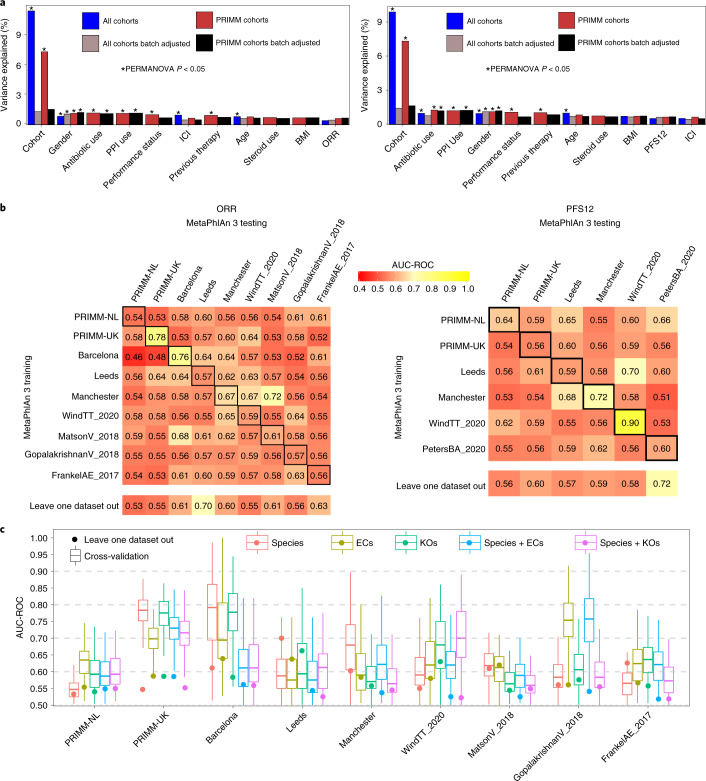
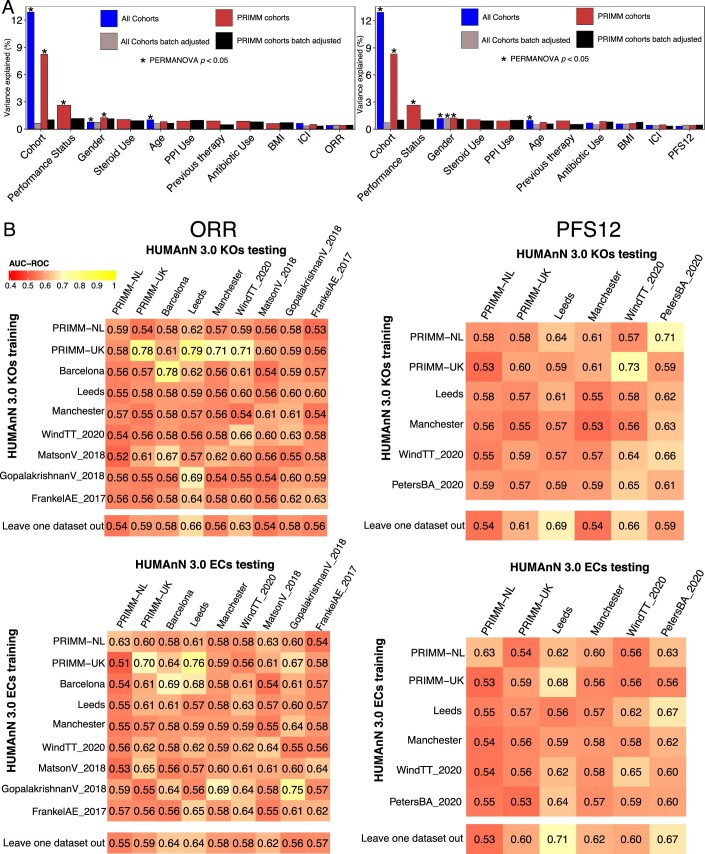
- The gut microbiome showed a relevant but cohort-dependent association with ICI response: cohort explained nearly ten times more variance than any other variable, and ORR/PFS12 explained only a limited fraction of total microbiome variation after batch correction.
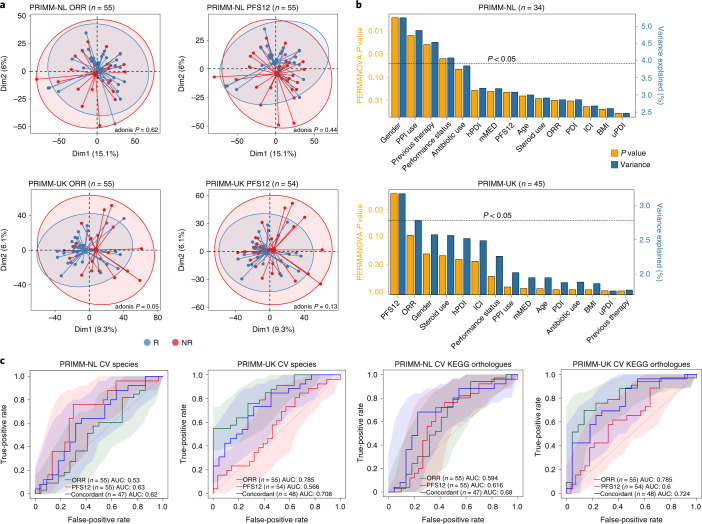
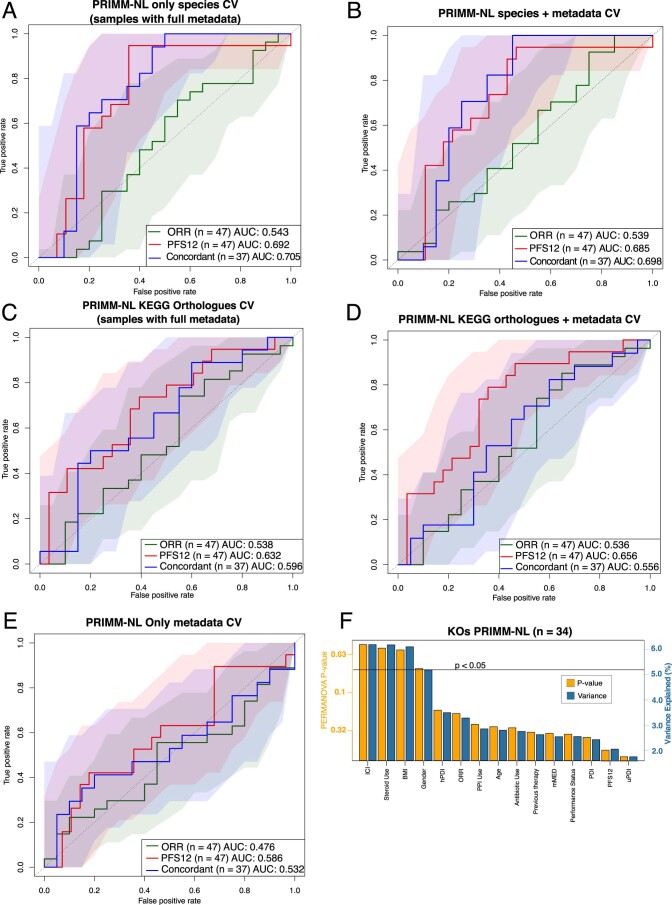
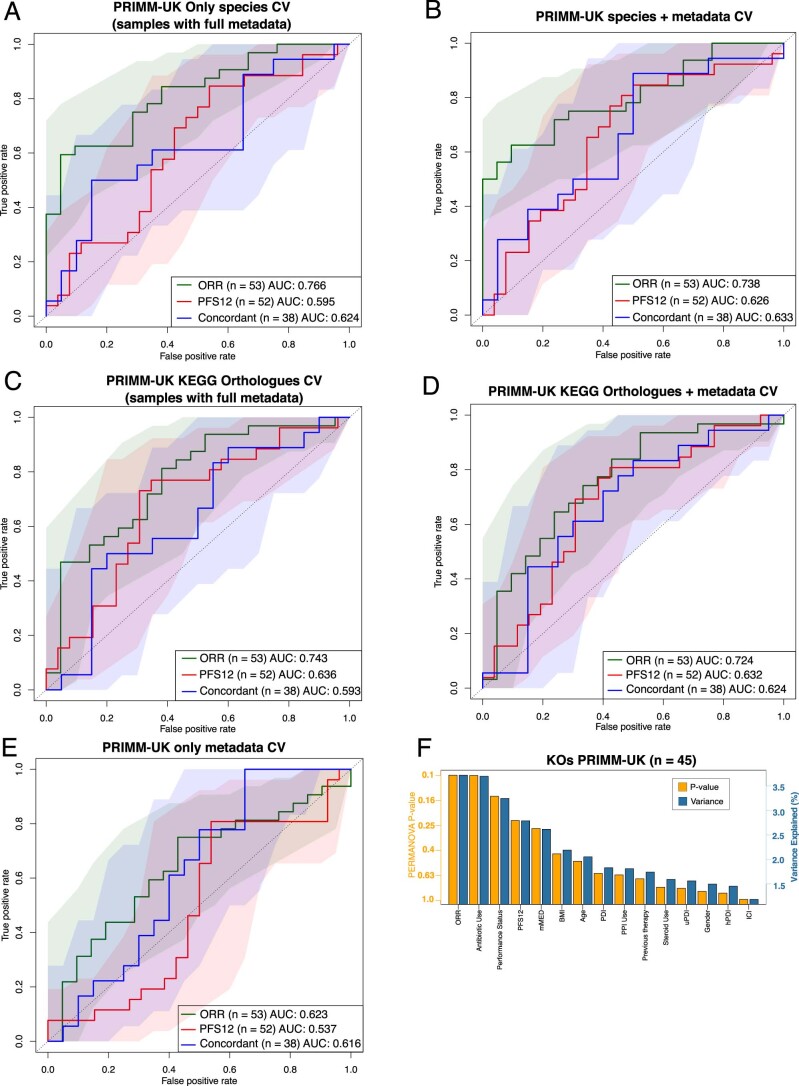
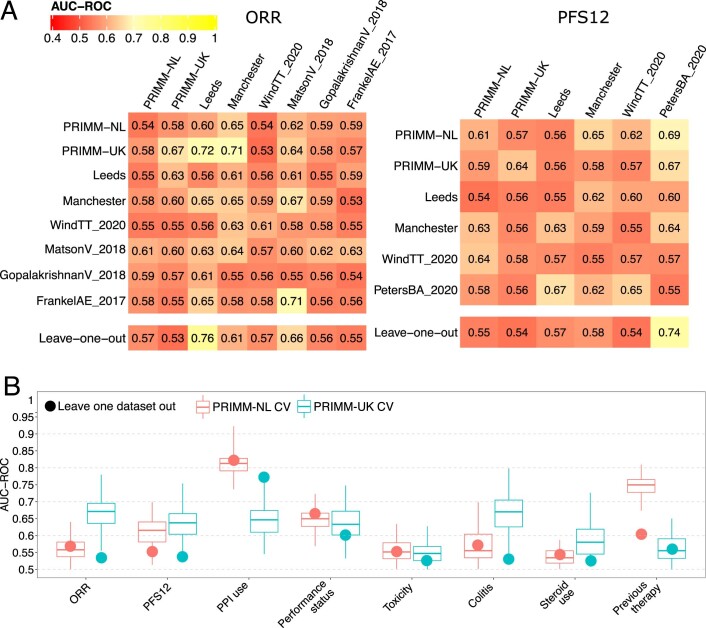
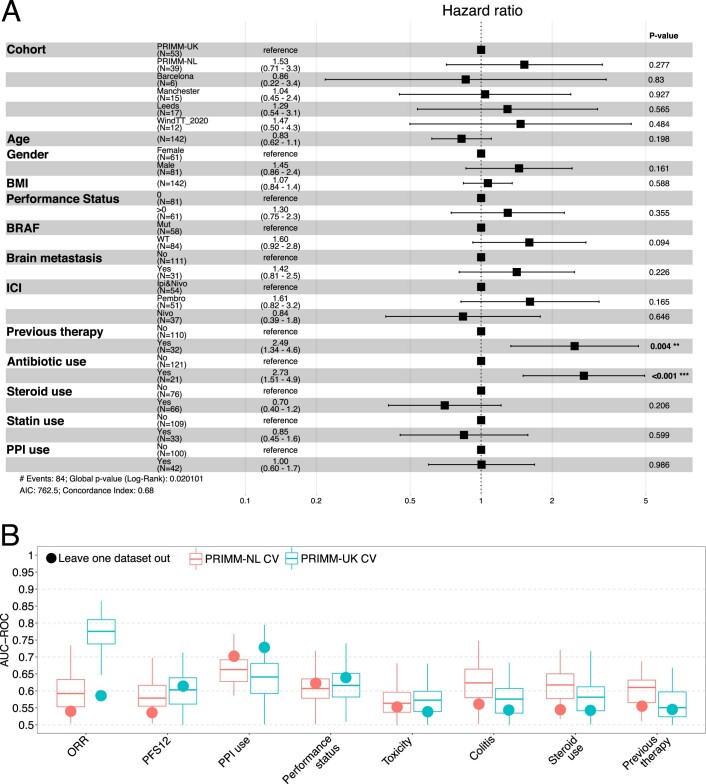
- Within-cohort machine learning prediction varied by cohort and endpoint: PRIMM-UK ORR AUC-ROC 0.78 and PRIMM-NL PFS12 AUC-ROC 0.64, whereas PRIMM-NL ORR and PRIMM-UK PFS12 were much lower (0.53 and 0.57, respectively); functional KEGG ortholog profiles exceeded AUC-ROC 0.59 for both datasets and endpoints.
- Cross-cohort prediction was limited: AUC-ROC reached 0.7 in only two cases and exceeded 0.6 in about one-third of cases (31.4%); leave-one-dataset-out models averaged 0.59 for ORR and 0.60 for PFS12.
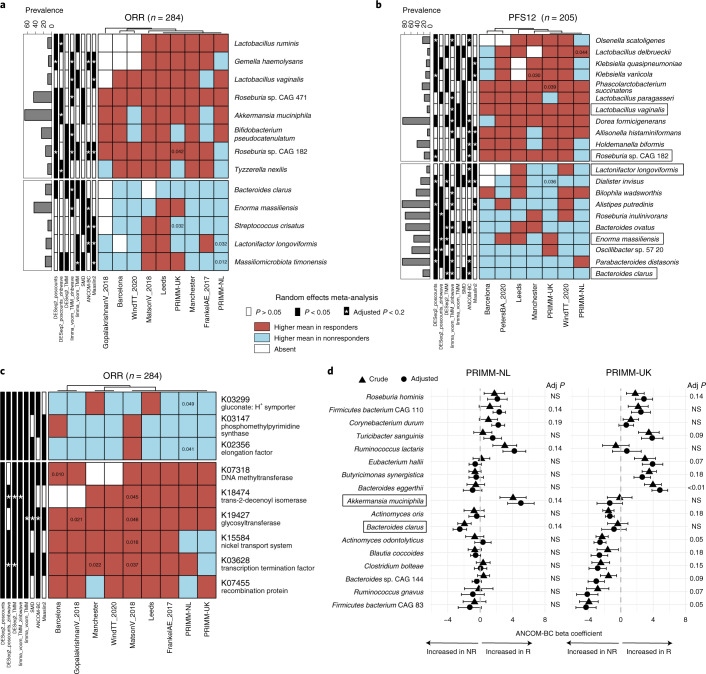
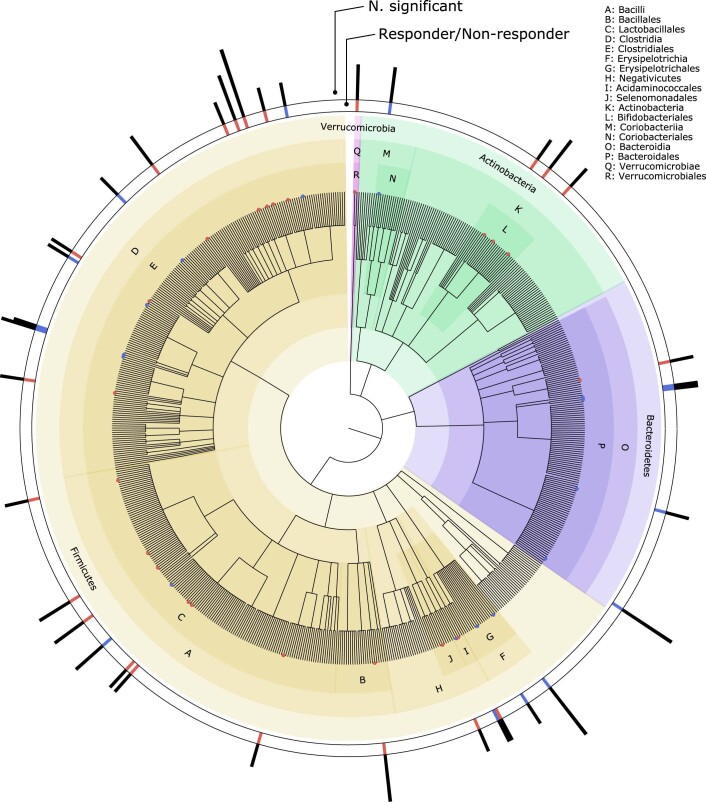
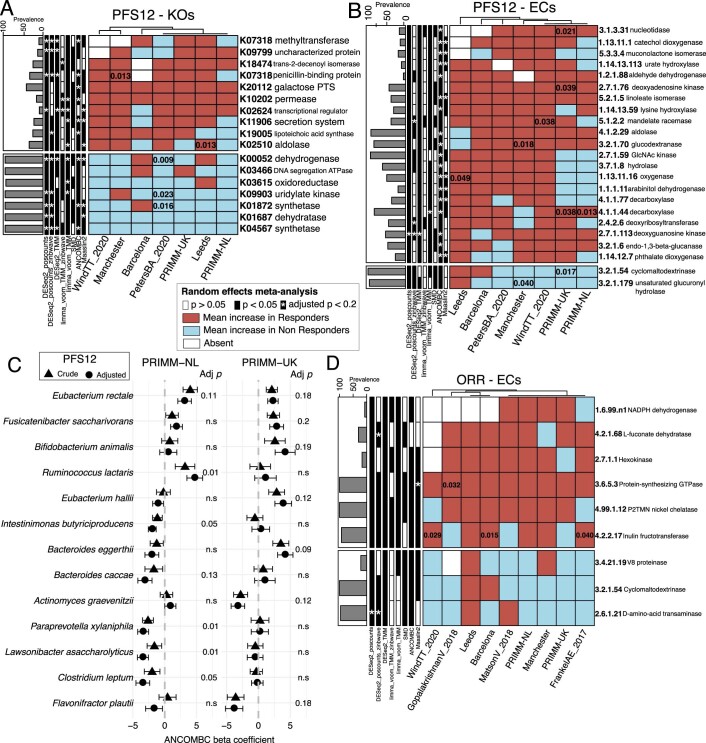
- Response-associated taxa included Roseburia sp. CAG:182 and Roseburia sp. CAG:471 for ORR, Phascolarctobacterium succinatutens and Lactobacillus vaginalis for PFS12, and Akkermansia muciniphila and Dorea formicigenerans for ORR/PFS12; Bacteroides clarus was higher in nonresponders, but no single species was a fully consistent biomarker across all datasets.
Methods
- Prospective PRIMM-UK and PRIMM-NL cohorts plus Barcelona, Leeds and Manchester cohorts recruited ICI-naive patients with unresectable stage III/IV cutaneous melanoma; baseline stool samples were collected before ICI treatment, with 175 patients recruited and 165 samples passing strict QC, analyzed alongside 147 publicly available metagenomes.
- Shotgun metagenomic sequencing averaged 7.74 Gb per sample; taxonomic and functional profiling used bioBakery 3 (MetaPhlAn 3.0, HUMAnN 3.0), identifying 608 species, 510 pathways, 6,131 KOs and 2,558 enzyme categories in the 165 samples.
- Response was classified by RECIST v1.1 as ORR (CR/PR/SD vs PD) and PFS12; analyses included PERMANOVA, an ensemble of eight differential abundance methods with random-effects meta-analysis, and SIAMCAT Lasso logistic regression with nested cross-validation, cross-study validation and leave-one-dataset-out testing.
Limitations
- Stated: individual cohort sample sizes remain small; collecting very large, properly annotated samples is inherently difficult in this clinical setting; response definition differences (ORR vs PFS12) and many confounding factors are hard to adjust for; cohort microbiome effects are strong; current methods lack characterization of the immunological interface.
- Stated: the authors call for larger sample sizes, strain-level and mucosal analyses, and extension beyond cutaneous melanoma to uveal/mucosal subtypes and other cancers.
- Evident from the reported results: cross-cohort reproducibility was limited, with modest AUC-ROC values and no single species consistently associated with response across all datasets.
Model-written summary. Check it against the paper before relying on it.
Integrity signals
Registry
Cites
Statistics
Figures
Verification
Claims the paper makes
6 Valid · 2 Not valid · 1 Not checked · 70 Own results and interpretations
The sources with a verdict support this claim; the rest weren’t checked yet, have no full text we could read, or their verdicts aren’t rated yet.
In the paper
“The gut microbiome has an important role to play in ICI response7,8, as we also confirmed here”
§ Cross-cohort gut microbiome associations with immune checkpoint inhibitor response in advanced melanoma > Discussion
What the sources say
- Not checked — no full text of the sourcecites [7] Baruch EN Fecal microbiota transplant promotes response in immunotherapy-refractory melanoma patients Science 2020 37 602 609 33303685 source
- Supportedcites [8] McQuade JL Gut microbiome modulation via fecal microbiota transplant to augment immunotherapy in patients with melanoma or other cancers. Curr. Oncol. Rep. 2020 22 74 10.1007/s11912-020-00913-y 32577835 PMC7685568 source
The Introduction says there is strong evidence that the gut microbiome shapes immunotherapy response. The ‘Background and rationale for FMT in immunotherapy’ section reports strong associations between the gut microbiome and checkpoint-blockade response in human cancer cohorts, including melanoma studies listed in the References. ‘As we also confirmed here’ refers to the citing authors’ own study, not a finding attributed to this review. (LLM, conf=0.92)
boostedstates an association- Asserted: passes — The authors put it forward as true.
- Checkable: passes — It can be checked against evidence.
- Load-bearing: passes — The paper’s conclusions depend on it.
- Based: passes — The paper gives a reason why it holds.
The sources with a verdict support this claim; the rest weren’t checked yet, have no full text we could read, or their verdicts aren’t rated yet.
In the paper
“Although we confirmed that the microbiome holds the potential to support the clinical practice for the treatment of patients with melanoma, as shown via fecal microbiota transplantation pilots7,8”
§ Cross-cohort gut microbiome associations with immune checkpoint inhibitor response in advanced melanoma > Discussion
What the sources say
- Not checked — no full text of the sourcecites [7] Baruch EN Fecal microbiota transplant promotes response in immunotherapy-refractory melanoma patients Science 2020 37 602 609 33303685 source
- Supportedcites [8] McQuade JL Gut microbiome modulation via fecal microbiota transplant to augment immunotherapy in patients with melanoma or other cancers. Curr. Oncol. Rep. 2020 22 74 10.1007/s11912-020-00913-y 32577835 PMC7685568 source
The Introduction describes microbiome modulation as a potential strategy to enhance immunotherapy response. In “Current efforts of FMT in immunotherapy” (page unavailable), the review reports preliminary responses in small melanoma FMT trials. It characterizes the field as nascent, consistent with the claim of potential rather than established clinical benefit. (LLM, conf=0.91)
hedgedstates a possible cause- Asserted: passes — The authors put it forward as true.
- Checkable: unclear — It is unclear whether it could be checked against evidence.
- Load-bearing: passes — The paper’s conclusions depend on it.
- Based: passes — The paper gives a reason why it holds.
A result the paper reports from its own data — it cites no other source for it, so there is none to check. The quote shows it is in the paper.
In the paper
“a panel of species, including Bifidobacterium pseudocatenulatum, Roseburia spp. and Akkermansia muciniphila, associated with responders was identified”
§ Cross-cohort gut microbiome associations with immune checkpoint inhibitor response in advanced melanoma > Abstract
plainstates an association- Asserted: passes — The authors put it forward as true.
- Checkable: passes — It can be checked against evidence.
- Load-bearing: passes — The paper’s conclusions depend on it.
- Based: passes — The paper gives a reason why it holds.
A result the paper reports from its own data — it cites no other source for it, so there is none to check. The quote shows it is in the paper.
In the paper
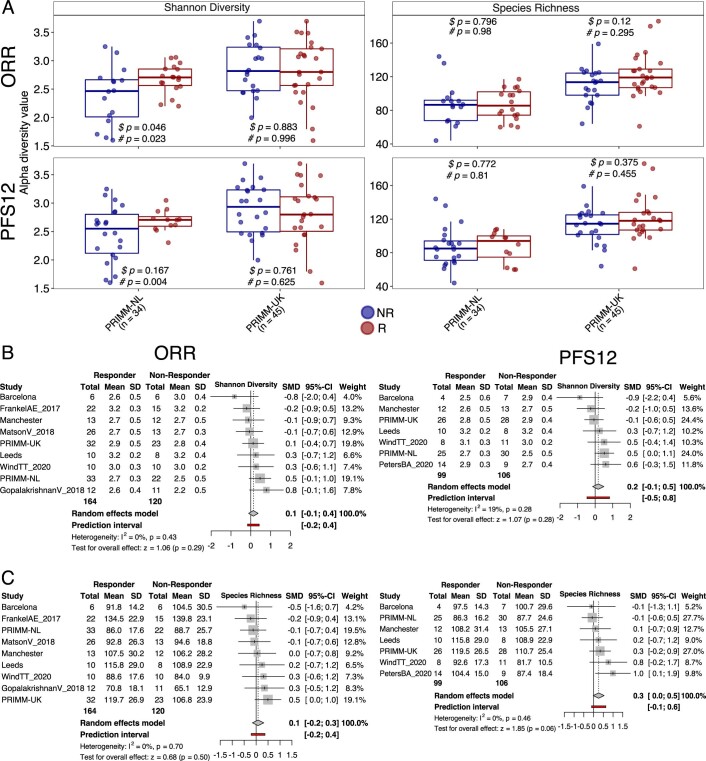
“we found a borderline statistically significant difference in the microbiome composition of responders compared to nonresponders in the PRIMM-UK cohort (permutational multivariate analysis of variance (PERMANOVA) P = 0.05, Fig. 1a)”
§ Cross-cohort gut microbiome associations with immune checkpoint inhibitor response in advanced melanoma > Results > Linking the gut microbiome with response in the PRIMM cohorts
plainstates an association- Asserted: passes — The authors put it forward as true.
- Checkable: passes — It can be checked against evidence.
- Load-bearing: passes — The paper’s conclusions depend on it.
- Based: passes — The paper gives a reason why it holds.
A result the paper reports from its own data — it cites no other source for it, so there is none to check. The quote shows it is in the paper.
In the paper
“we found that the gut microbiome has a relevant, but cohort-dependent, association with the response to ICIs.”
- Also stated in: § Linking the gut microbiome with response in the PRIMM cohorts · hedged
“These findings show that the gut microbiome does have a relevant association with response to ICIs but appears to be cohort dependent and is likely due to features of the microbial community that are not responsible for large shifts in the global microbiome composition.”
§ Cross-cohort gut microbiome associations with immune checkpoint inhibitor response in advanced melanoma > Abstract
plainstates an associationn = 165- Asserted: passes — The authors put it forward as true.
- Checkable: passes — It can be checked against evidence.
- Load-bearing: passes — The paper’s conclusions depend on it.
- Based: passes — The paper gives a reason why it holds.
- Also stated in: § Linking the gut microbiome with response in the PRIMM cohorts · hedged
23 more claims
Create a free account to see all 79 claims and every source verdict.
- Probably not a substantial claim. 24
- It may state two separate claims as one. 34
Claims other papers make about this one
Each is checked against this paper’s own text: does it say what the citing paper says it does?
The source backs part of the claim, not all of it — or backs it for a different population, condition or comparison.
In the citing paper
“In multiple cancer types, gut microbiota composition has been associated with response and adverse effects of immune checkpoint inhibitors (ICIs) [2, 3, 4].”
From Gut microbiota diversity is prognostic and associated with benefit from chemo-immunotherapy in metastatic triple-negative breast cancer (2025) · cites this paper as [2]
Experimental — accuracy not yet measuredThe source backs part of the claim, not all of it — or backs it for a different population, condition or comparison.
In the citing paper
“Associations between alpha diversity and cancer patient outcomes have been found in the setting of patients receiving hematopoietic cell transplant 29 or cervical cancer chemoradiation 30 but not in anti-PD-1 recipients with metastatic melanoma 16,18 ; thus, such associations may be treatment regimen specific.”
From A gut microbial signature for combination immune checkpoint blockade across cancer types (2024) · cites this paper as [18]
Experimental — accuracy not yet measuredThe source backs part of the claim, not all of it — or backs it for a different population, condition or comparison.
In the citing paper
“Our meta-analysis of microbial sequencing data from nine independent αPD-1-treated melanoma cohorts82–88 revealed a higher abundance of pfl, a key enzyme in bacterial formate production, linked to ICI efficacy.”
From Exercise-induced microbiota metabolite enhances CD8 T cell antitumor immunity promoting immunotherapy efficacy (2025) · cites this paper as [82]
Experimental — accuracy not yet measuredThe source backs part of the claim, not all of it — or backs it for a different population, condition or comparison.
In the citing paper
“First, correlations have been drawn across cancer indications and geographical sites between the taxonomic composition of the gut (and to some degree tumor) microbiota, and ICI responses in patients with melanoma and other cancers.”
From Melanoma and microbiota: Current understanding and future directions (2024) · cites this paper as [19]
Experimental — accuracy not yet measuredThe source backs part of the claim, not all of it — or backs it for a different population, condition or comparison.
In the citing paper
“For instance, broad-spectrum antibiotic treatment reduced the intestinal abundances of microbes in our patients such as Roseburia, Bifidobacterium or Ruminococcus spp., which were previously associated with beneficial outcomes of ICB cancer immunotherapies1,36.”
From A non-antibiotic-disrupted gut microbiome is associated with clinical responses to CD19-CAR-T cell cancer immunotherapy (2023) · cites this paper as [36]
Experimental — accuracy not yet measured
22 more claims about this paper
Create a free account to see every claim other papers make about this one.
Citations
Cites
Moderated estimation of fold change and dispersion for RNA-seq data with DESeq2
Love, M. I., Huber, W., & Anders, S. (2014) · Genome Biology · doi:10.1186/s13059-014-0550-8 · Cited by 95,106
Fast gapped-read alignment with Bowtie 2
Langmead, B., & Salzberg, S. L. (2012) · Nature Methods · doi:10.1038/nmeth.1923 · Cited by 56,400
Robinson, M. D., McCarthy, D. J., & Smyth, G. K. (2010) · Bioinformatics · doi:10.1093/bioinformatics/btp616 · Cited by 41,364
limma powers differential expression analyses for RNA-sequencing and microarray studies
Ritchie, M. E., Phipson, B., Wu, D., Hu, Y., Law, C. W., Shi, W., & Smyth, G. K. (2015) · Nucleic Acids Research · doi:10.1093/nar/gkv007 · Cited by 40,458
Adverse Renal Effects of Immune Checkpoint Inhibitors: A Narrative Review
Wanchoo, R., Karam, S., Uppal, N. N., Barta, V. S., Deray, G., Devoe, C., Launay-Vacher, V., Jhaveri, K. D., & on behalf of Cancer and Kidney International Network Workgroup on Immune Checkpoint Inhibitors (2017) · American Journal of Nephrology · doi:10.1159/000455014 · Cited by 15,256
Adjusting batch effects in microarray expression data using empirical Bayes methods
Johnson, W. E., Li, C., & Rabinovic, A. (2007) · Biostatistics · doi:10.1093/biostatistics/kxj037 · Cited by 8,658
Combined Nivolumab and Ipilimumab or Monotherapy in Untreated Melanoma
Larkin, J., Chiarion-Sileni, V., Gonzalez, R., Grob, J. J., Cowey, C. L., Lao, C. D., Schadendorf, D., Dummer, R., Smylie, M., Rutkowski, P., et al. (2015) · New England Journal of Medicine · doi:10.1056/nejmoa1504030 · Cited by 8,157
KEGG as a reference resource for gene and protein annotation
Kanehisa, M., Sato, Y., Kawashima, M., Furumichi, M., & Tanabe, M. (2016) · Nucleic Acids Research · doi:10.1093/nar/gkv1070 · Cited by 7,387
Gut microbiome influences efficacy of PD-1-based immunotherapy against epithelial tumors
Routy, B., Le Chatelier, E., Derosa, L., Duong, C. P. M., Alou, M. T., Daillère, R., Fluckiger, A., Messaoudene, M., Rauber, C., Roberti, M. P., et al. (2018) · Science · doi:10.1126/science.aan3706 · Cited by 5,671
Self-citationOverall Survival with Combined Nivolumab and Ipilimumab in Advanced Melanoma
Wolchok, J. D., Chiarion-Sileni, V., Gonzalez, R., Rutkowski, P., Grob, J.-J., Cowey, C. L., Lao, C. D., Wagstaff, J., Schadendorf, D., Ferrucci, P. F., et al. (2017) · New England Journal of Medicine · doi:10.1056/nejmoa1709684 · Cited by 5,357
Cited by
Hallmarks of aging: An expanding universe
López-Otín, C., Blasco, M. A., Partridge, L., Serrano, M., & Kroemer, G. (2023) · Cell · doi:10.1016/j.cell.2022.11.001 · Cited by 6,549
Immune checkpoint therapy—current perspectives and future directions
Sharma, P., Goswami, S., Raychaudhuri, D., Siddiqui, B. A., Singh, P., Nagarajan, A., Liu, J., Subudhi, S. K., Poon, C., Gant, K. L., et al. (2023) · Cell · doi:10.1016/j.cell.2023.03.006 · Cited by 1,206
Gut microbiota in colorectal cancer development and therapy
Wong, C. C., & Yu, J. (2023) · Nature Reviews Clinical Oncology · doi:10.1038/s41571-023-00766-x · Cited by 721
Bender, M. J., McPherson, A. C., Phelps, C. M., Pandey, S. P., Laughlin, C. R., Shapira, J. H., Medina Sanchez, L., Rana, M., Richie, T. G., Mims, T. S., et al. (2023) · Cell · doi:10.1016/j.cell.2023.03.011 · Cited by 732
“Given Lactobacillus and Ec are overabundant in ICI responder melanoma patient feces, 13,14,17,56–58 future studies are needed to assess whether we have unraveled a unifying anti-tumor mechanism across several ICI-response-associated taxa.”
Immune checkpoint therapy for solid tumours: clinical dilemmas and future trends
Sun, Q., Hong, Z., Zhang, C., Wang, L., Han, Z., & Ma, D. (2023) · Signal Transduction and Targeted Therapy · doi:10.1038/s41392-023-01522-4 · Cited by 598
“The precise mechanisms between gut microbiome with immune response and the complex metabolism regulation still need to be elucidated.(298)”
BackgroundFecal microbiota transplantation plus anti-PD-1 immunotherapy in advanced melanoma: a phase I trial
Routy, B., Lenehan, J. G., Miller, W. H., Jamal, R., Messaoudene, M., Daisley, B. A., Hes, C., Al, K. F., Martinez-Gili, L., Punčochář, M., et al. (2023) · Nature Medicine · doi:10.1038/s41591-023-02453-x · Cited by 526
Self-citationTargeting the gut and tumor microbiota in cancer
Park, E. M., Chelvanambi, M., Bhutiani, N., Kroemer, G., Zitvogel, L., & Wargo, J. A. (2022) · Nature Medicine · doi:10.1038/s41591-022-01779-2 · Cited by 496
Self-citationMachine learning and deep learning applications in microbiome research
Hernández Medina, R., Kutuzova, S., Nielsen, K. N., Johansen, J., Hansen, L. H., Nielsen, M., & Rasmussen, S. (2022) · ISME Communications · doi:10.1038/s43705-022-00182-9 · Cited by 341
“…the collection of large and properly-annotated sample sizes is dif fi cult to overcome in the microbiome setting, researchers can (after ensuring samples are collected and processed under the same regime) aggregate data from multiple studies, allowing the study of cohort-dependent effects [40, 81].”
BackgroundKey determinants of success in fecal microbiota transplantation: From microbiome to clinic
Porcari, S., Benech, N., Valles-Colomer, M., Segata, N., Gasbarrini, A., Cammarota, G., Sokol, H., & Ianiro, G. (2023) · Cell Host & Microbe · doi:10.1016/j.chom.2023.03.020 · Cited by 331
Self-citationDefining clinically useful biomarkers of immune checkpoint inhibitors in solid tumours
Holder, A. M., Dedeilia, A., Sierra-Davidson, K., Cohen, S., Liu, D., Parikh, A., & Boland, G. M. (2024) · Nature Reviews Cancer · doi:10.1038/s41568-024-00705-7 · Cited by 298
Targeting the gut microbiota for cancer therapy
Fernandes, M. R., Aggarwal, P., Costa, R. G. F., Cole, A. M., & Trinchieri, G. (2022) · Nature Reviews Cancer · doi:10.1038/s41568-022-00513-x · Cited by 290
Ning, L., Zhou, Y.-L., Sun, H., Zhang, Y., Shen, C., Wang, Z., Xuan, B., Zhao, Y., Ma, Y., Yan, Y., et al. (2023) · Nature Communications · doi:10.1038/s41467-023-42788-0 · Cited by 276
“The remarkable performance of CCIA in some prior studies highlights its potential as a valuable tool in various research fi elds 14 – 16 .”
Drug-microbiota interactions: an emerging priority for precision medicine
Zhao, Q., Chen, Y., Huang, W., Zhou, H., & Zhang, W. (2023) · Signal Transduction and Targeted Therapy · doi:10.1038/s41392-023-01619-w · Cited by 268
Cancer immune evasion, immunoediting and intratumour heterogeneity
Roerden, M., & Spranger, S. (2025) · Nature Reviews Immunology · doi:10.1038/s41577-024-01111-8 · Cited by 265
“Its role in modulating T cell function has recently gained attention as data show an association between microbiome quality and responsiveness to ICB 168,169 and chimeric antigen receptor (CAR)-”
Machine learning for microbiologists
Asnicar, F., Thomas, A. M., Passerini, A., Waldron, L., & Segata, N. (2024) · Nature Reviews Microbiology · doi:10.1038/s41579-023-00984-1 · Cited by 256
“As the microbiome has been shown to stratify, to some extent, patients with melanoma who respond to immuno-therapy from non-responders 34–37 , rapid metagenomic testing supported by a machine learning-based decision system could indicate the most promising treatment option in a precision medicine…”
InfluentialSelf-citationSimpson, R. C., Shanahan, E. R., Batten, M., Reijers, I. L. M., Read, M., Silva, I. P., Versluis, J. M., Ribeiro, R., Angelatos, A. S., Tan, J., et al. (2022) · Nature Medicine · doi:10.1038/s41591-022-01965-2 · Cited by 256
Stein-Thoeringer, C. K., Saini, N. Y., Zamir, E., Blumenberg, V., Schubert, M.-L., Mor, U., Fante, M. A., Schmidt, S., Hayase, E., Hayase, T., et al. (2023) · Nature Medicine · doi:10.1038/s41591-023-02234-6 · Cited by 255
Microbiome-based interventions to modulate gut ecology and the immune system
Hitch, T. C. A., Hall, L. J., Walsh, S. K., Leventhal, G. E., Slack, E., de Wouters, T., Walter, J., & Clavel, T. (2022) · Mucosal Immunology · doi:10.1038/s41385-022-00564-1 · Cited by 243
A core microbiome signature as an indicator of health
Wu, G., Xu, T., Zhao, N., Lam, Y. Y., Ding, X., Wei, D., Fan, J., Shi, Y., Li, X., Li, M., et al. (2024) · Cell · doi:10.1016/j.cell.2024.09.019 · Cited by 250
The coming decade in precision oncology: six riddles
Wahida, A., Buschhorn, L., Fröhling, S., Jost, P. J., Schneeweiss, A., Lichter, P., & Kurzrock, R. (2023) · Nature Reviews Cancer · doi:10.1038/s41568-022-00529-3 · Cited by 205
“The intestinal microbiota might also affect the outcome of checkpoint blockade and chimeric antigen receptor T cell immunotherapy 94,95 , and there is now ample evidence that the abundance of specific bacterial taxa such as Akkermansia are associated with favourable immunotherapy outcomes 96 .”
Derosa, L., Iebba, V., Silva, C. A. C., Piccinno, G., Wu, G., Lordello, L., Routy, B., Zhao, N., Thelemaque, C., Birebent, R., et al. (2024) · Cell · doi:10.1016/j.cell.2024.05.029 · Cited by 198
Self-citationWestern diets and chronic diseases
Adolph, T. E., & Tilg, H. (2024) · Nature Medicine · doi:10.1038/s41591-024-03165-6 · Cited by 191
A comprehensive review of immune checkpoint inhibitors for cancer treatment
Arafat Hossain, M. (2024) · International Immunopharmacology · doi:10.1016/j.intimp.2024.113365 · Cited by 178
Critical role of the gut microbiota in immune responses and cancer immunotherapy
Li, Z., Xiong, W., Liang, Z., Wang, J., Zeng, Z., Kołat, D., Li, X., Zhou, D., Xu, X., & Zhao, L. (2024) · Journal of Hematology & Oncology · doi:10.1186/s13045-024-01541-w · Cited by 176
“Other studies have shown that specific bacterial species are associated with R and nonresponders(NRs) [193, 194] and that carriers of specific bacterial taxa exhibit a better cancer prognosis [195, 196].”
BackgroundA gut microbial signature for combination immune checkpoint blockade across cancer types
Gunjur, A., Shao, Y., Rozday, T., Klein, O., Mu, A., Haak, B. W., Markman, B., Kee, D., Carlino, M. S., Underhill, C., et al. (2024) · Nature Medicine · doi:10.1038/s41591-024-02823-z · Cited by 165
“…between alpha diversity and cancer patient outcomes have been found in the setting of patients receiving hematopoietic cell transplant 29 or cervical cancer chemoradiation 30 but not in anti-PD-1 recipients with metastatic melanoma 16,18 ; thus, such associations may be treatment regimen specific.”
Towards modulating the gut microbiota to enhance the efficacy of immune-checkpoint inhibitors
Simpson, R. C., Shanahan, E. R., Scolyer, R. A., & Long, G. V. (2023) · Nature Reviews Clinical Oncology · doi:10.1038/s41571-023-00803-9 · Cited by 153
The molecular and functional landscape of resistance to immune checkpoint blockade in melanoma
Lim, S. Y., Shklovskaya, E., Lee, J., Pedersen, B., Stewart, A., Ming, Z., Irvine, M., Shivalingam, B., Saw, R. P. M., Menzies, A. M., et al. (2023) · Nature Communications · doi:10.1038/s41467-023-36979-y · Cited by 173
Longitudinal gut microbiome changes in immune checkpoint blockade-treated advanced melanoma
Björk, J. R., Bolte, L. A., Maltez Thomas, A., Lee, K. A., Rossi, N., Wind, T. T., Smit, L. M., Armanini, F., Asnicar, F., Blanco-Miguez, A., et al. (2024) · Nature Medicine · doi:10.1038/s41591-024-02803-3 · Cited by 156
“Cross-sectional studies have assessed the gut microbiome before ICB initiation 4–12 , but the field is hampered by a lack of consensus as different studies often report different microbial biomarkers of response 4 —a heterogeneity that is probably the result of many methodological, biological and/…”
InfluentialSelf-citationGut microbiota shapes cancer immunotherapy responses
Lei, W., Zhou, K., Lei, Y., Li, Q., & Zhu, H. (2025) · npj Biofilms and Microbiomes · doi:10.1038/s41522-025-00786-8 · Cited by 196
“Despite concerted efforts by researchers to combine diverse cohorts and expand sample sizes for studying microbiota associated with immunotherapy 63 , identifying consistent bene fi cial microbial markers remains challenging.”
Advances and prospects of biomarkers for immune checkpoint inhibitors
Yamaguchi, H., Hsu, J.-M., Sun, L., Wang, S., & Hung, M. (2024) · Cell Reports Medicine · doi:10.1016/j.xcrm.2024.101621 · Cited by 168
“107 In addition to using gut microbiome as a biomarker, strategies to target the microbiome are being studied to increase the effi-cacy or reduce the side effects of ICIs.”
BackgroundMethodWu, H., Leng, X., Liu, Q., Mao, T., Jiang, T., Liu, Y., Li, F., Cao, C., Fan, J., Chen, L., et al. (2023) · Cancer Research · doi:10.1158/0008-5472.can-22-2593 · Cited by 144
Gut OncoMicrobiome Signatures (GOMS) as next-generation biomarkers for cancer immunotherapy
Thomas, A. M., Fidelle, M., Routy, B., Kroemer, G., Wargo, J. A., Segata, N., & Zitvogel, L. (2023) · Nature Reviews Clinical Oncology · doi:10.1038/s41571-023-00785-8 · Cited by 141
Self-citationRole of the microbiota in response to and recovery from cancer therapy
Blake, S. J., Wolf, Y., Boursi, B., & Lynn, D. J. (2023) · Nature reviews. Immunology · doi:10.1038/s41577-023-00951-0 · Cited by 158
Unlocking the power of postbiotics: A revolutionary approach to nutrition for humans and animals
Zhao, X., Liu, S., Li, S., Jiang, W., Wang, J., Xiao, J., Chen, T., Ma, J., Khan, M. Z., Wang, W., et al. (2024) · Cell Metabolism · doi:10.1016/j.cmet.2024.03.004 · Cited by 161
Lang, T., Zhu, R., Zhu, X., Yan, W., Li, Y., Zhai, Y., Wu, T., Huang, X., Yin, Q., & Li, Y. (2023) · Nature Communications · doi:10.1038/s41467-023-40439-y · Cited by 133
“Bi fi dobacterium , Akkermansia , and Roseburia have been associated with improved tumor immunotherapy in clinic 34 – 37 .”
Intestinal bacteria and colorectal cancer: etiology and treatment
Dougherty, M. W., & Jobin, C. (2023) · Gut Microbes · doi:10.1080/19490976.2023.2185028 · Cited by 160
The gut–airway microbiome axis in health and respiratory diseases
Özçam, M., & Lynch, S. V. (2024) · Nature Reviews Microbiology · doi:10.1038/s41579-024-01048-8 · Cited by 172
“Patients who are non-responsive to ICIs exhibit a distinct gut microbiome composition to that of patients responsive to treatment 143 .”
Immune-checkpoint inhibitor resistance in cancer treatment: Current progress and future directions
Zhang, C., Zhang, C., & Wang, H. (2023) · Cancer Letters · doi:10.1016/j.canlet.2023.216182 · Cited by 128
Xu, H., Cao, C., Ren, Y., Weng, S., Liu, L., Guo, C., Wang, L., Han, X., Ren, J., & Liu, Z. (2022) · Frontiers in Immunology · doi:10.3389/fimmu.2022.949490 · Cited by 127
“The gut microbiota has been associated with ICI response, however cohort dependent (131).”
BackgroundBolte, L. A., Lee, K. A., Björk, J. R., Leeming, E. R., Campmans-Kuijpers, M. J. E., de Haan, J. J., Vila, A. V., Maltez-Thomas, A., Segata, N., Board, R., et al. (2023) · JAMA Oncology · doi:10.1001/jamaoncol.2022.7753 · Cited by 106
“To overcome these limitations, we have (1) accounted for differences in the statistical models used and (2) chosen to complement the analysis of foods and nutrients by diet scores that are comparable across countries.”
MethodSelf-citationSpreafico, A., Heirali, A. A., Araujo, D. V., Tan, T. J., Oliva, M., Schneeberger, P. H. H., Chen, B., Wong, M. K., Stayner, L.-A., Hansen, A. R., et al. (2023) · Annals of Oncology · doi:10.1016/j.annonc.2023.02.011 · Cited by 96
International consensus statement on microbiome testing in clinical practice
Porcari, S., Mullish, B. H., Asnicar, F., Ng, S. C., Zhao, L., Hansen, R., O’Toole, P. W., Raes, J., Hold, G. L., Putignani, L., et al. (2024) · The Lancet. Gastroenterology & hepatology · doi:10.1016/s2468-1253(24)00311-x · Cited by 147
Self-citationThe gut microbiome and cancer: from tumorigenesis to therapy
Nobels, A., van Marcke, C., Jordan, B. F., Hul, M. V., & Cani, P. D. (2025) · Nature Metabolism · doi:10.1038/s42255-025-01287-w · Cited by 137
“…priming and modulation, activation and maturation of DCs. Notably, A. muciniphila , Bifidobacterium species and Bacteroides fragilis have all been found to stimulate DCs to produce IL-12, leading to T H 1 responses, which are crucial for antitumour immunity 234,236,237,247,254,259,260,264,265 (Fig.”
Aghamajidi, A., & Vareki, S. M. (2022) · Cancers · doi:10.3390/cancers14153563 · Cited by 110
Microbiome epidemiology and association studies in human health
VanEvery, H., Franzosa, E. A., Nguyen, L. H., & Huttenhower, C. (2022) · Nature Reviews Genetics · doi:10.1038/s41576-022-00529-x · Cited by 94
Huang, X., Hu, M., Sun, T., Li, J., Zhou, Y., Yan, Y., Xuan, B., Wang, J., Xiong, H., Ji, L., et al. (2023) · Cell Host & Microbe · doi:10.1016/j.chom.2023.10.005 · Cited by 104
Phelps, C. M., Willis, N. B., Duan, T., Lee, A. H., Zhang, Y., Rodriguez J, D. M., Pandey, S. P., Laughlin, C. R., Rosen, A. B. I., McPherson, A. C., et al. (2025) · Cell · doi:10.1016/j.cell.2025.06.018 · Cited by 91
Melanoma and microbiota: Current understanding and future directions
Routy, B., Jackson, T., Mählmann, L., Baumgartner, C. K., Blaser, M., Byrd, A., Corvaia, N., Couts, K., Davar, D., Derosa, L., et al. (2024) · Cancer Cell · doi:10.1016/j.ccell.2023.12.003 · Cited by 89
Self-citationGlitza, I. C., Seo, Y. D., Spencer, C. N., Wortman, J. R., Burton, E. M., Alayli, F. A., Loo, C. P., Gautam, S., Damania, A., Densmore, J., et al. (2024) · Cancer Discovery · doi:10.1158/2159-8290.cd-24-0066 · Cited by 87
“A component of the trial design was to ensure that the placebo and SER-401 arms were similar in their baseline makeup in terms of the relative abundance of Ruminococcaceae, a family of spore-forming bacteria shown to favorably modulate response to immunotherapy (8, 12, 20).”
Clinical translation of microbiome research
Gilbert, J. A., Azad, M. B., Bäckhed, F., Blaser, M. J., Byndloss, M. X., Chiu, C. Y., Chu, H., Dugas, L. R., Elinav, E., Gibbons, S. M., et al. (2025) · Nature Medicine · doi:10.1038/s41591-025-03615-9 · Cited by 124
“Low gut microbial diversity has been shown to be a reliable predictor of immunotherapy failure in stage 4 melanoma 65,66 .”
Self-citationManghi, P., Bhosle, A., Wang, K., Marconi, R., Selma‐Royo, M., Ricci, L., Asnicar, F., Golzato, D., Ma, W., Hang, D., et al. (2024) · Nature Microbiology · doi:10.1038/s41564-024-01858-9 · Cited by 91
Self-citationElkrief, A., Pidgeon, R., Vareki, S. M., Messaoudene, M., Castagner, B., & Routy, B. (2025) · Nature Reviews Drug Discovery · doi:10.1038/s41573-025-01211-7 · Cited by 109
“Lastly, artificial intelligence (AI)-based models 238,239 that integrate age, sex, body mass index and geography are promising but require further clinical validation.”
Advances in Fecal Microbiota Transplantation for Gut Dysbiosis‐Related Diseases
Hou, S., Yu, J., Li, Y., Zhao, D., & Zhang, Z. (2025) · Advanced Science · doi:10.1002/advs.202413197 · Cited by 117
Robust airway microbiome signatures in acute respiratory failure and hospital-acquired pneumonia
Montassier, E., Kitsios, G. D., Radder, J. E., Bastard, Q. L., Kelly, B. J., Panzer, A. R., Lynch, S. V., Calfee, C. S., Dickson, R. P., & Roquilly, A. (2023) · Nature Medicine · doi:10.1038/s41591-023-02617-9 · Cited by 97
“This limit has also been reported in meta-analyses that assessed the association of gut microbial signatures with colorectal cancer 41 or immune checkpoint inhibitor response in advanced melanoma 42 .”
ResultBallerini, M., Galié, S., Tyagi, P., Catozzi, C., Raji, H., Nabinejad, A., Macandog, A. D. G., Cordiale, A., Slivinschi, B. I., Kugiejko, K. K., et al. (2025) · Nature Biomedical Engineering · doi:10.1038/s41551-024-01318-z · Cited by 103
“However, lack of consensus on microbes linking the immune modulation with ICI outcome still precludes unambiguous classification of commensal species as ‘good’ or ‘bad’ 48 .”
Self-citationAndreu-Sánchez, S., Blanco-Míguez, A., Wang, D., Golzato, D., Manghi, P., Heidrich, V., Fackelmann, G., Zhernakova, D. V., Kurilshikov, A., Valles-Colomer, M., et al. (2025) · Cell · doi:10.1016/j.cell.2025.04.014 · Cited by 81
Self-citationLin, A., Xiong, M., Jiang, A., Huang, L., Wong, H. Z. H., Feng, S., Zhang, C., Yu, H., Chen, L., Chi, H., et al. (2025) · iMeta · doi:10.1002/imt2.70070 · Cited by 108
Microbiota-driven antitumour immunity mediated by dendritic cell migration
Lin, Y.-T., Fukuoka, S., Koyama, S., Motooka, D., Tourlousse, D. M., Shigeno, Y., Matsumoto, Y., Yamano, H., Murotomi, K., Tamaki, H., et al. (2025) · Nature · doi:10.1038/s41586-025-09249-8 · Cited by 91
Fecal microbiota transplantation: no longer cinderella in tumour immunotherapy
Yang, Y., An, Y., Dong, Y., Chu, Q., Wei, J., Wang, B., & Cao, H. (2024) · EBioMedicine · doi:10.1016/j.ebiom.2024.104967 · Cited by 90
“…and RCC. Confounding factors may contribute to this lack of consensus, such as collection and DNA extraction protocols, inadequate sample size, 34 short duration of study, biases of genetics and geography, dietary and medication-use differences, thus microbial signatures of responders and…”
BackgroundThe heightened importance of the microbiome in cancer immunotherapy
Villemin, C., Six, A., Neville, B. A., Lawley, T. D., Robinson, M. J., & Bakdash, G. (2023) · Trends in Immunology · doi:10.1016/j.it.2022.11.002 · Cited by 73
Faecalibacterium prausnitzii strain EXL01 boosts efficacy of immune checkpoint inhibitors
Bredon, M., Danne, C., Pham, H. P., Ruffié, P., Bessede, A., Rolhion, N., Creusot, L., Brot, L., Alonso, I., Langella, P., et al. (2024) · OncoImmunology · doi:10.1080/2162402x.2024.2374954 · Cited by 74
“Patient microbiomes from Lee et al. 27 were stratified into community types using Dirichlet multinomial mixture.”
Self-citationZhu, X., Hu, M., Huang, X., Li, L., Lin, X., Shao, X., Li, J., Du, X., Zhang, X., Sun, R., et al. (2025) · Cell Metabolism · doi:10.1016/j.cmet.2024.12.013 · Cited by 95
Wurster, S., Watowich, S. S., & Kontoyiannis, D. P. (2022) · Frontiers in Immunology · doi:10.3389/fimmu.2022.1018202 · Cited by 81
“additional significance in view of the increasingly recognized modulation of treatment responses to oncological ICI therapy by variations in the host microbiome (74, 75).”
BackgroundThe gut microbiome and cancer response to immune checkpoint inhibitors
Gazzaniga, F. S., & Kasper, D. L. (2025) · Journal of Clinical Investigation · doi:10.1172/jci184321 · Cited by 92
“Certain members of the gut micro-biome are associated with response to ICIs in melanoma (15–22), NSCLC (6, 23–28), RCC (6, 23, 29), hepatocellular carcinoma (30–34), thoracic carcinoma (35), and urothelial (6), gastrointestinal (36), and hepatobiliary cancers (37), which has been recently reported…”
Huyghe, N. D., Benidovskaya, E., Stevens, P., & den Eynde, M. V. (2022) · Cancers · doi:10.3390/cancers14092241 · Cited by 69
Molecular mimicry and cancer vaccine development
Tagliamonte, M., Cavalluzzo, B., Mauriello, A., Ragone, C., Buonaguro, L., Tornesello, M. L., & Buonaguro, L. (2023) · Molecular Cancer · doi:10.1186/s12943-023-01776-0 · Cited by 73
The Microbiome and Cancer: A Translational Science Review
Fernandez, E., Wargo, J. A., & Helmink, B. A. (2025) · JAMA · doi:10.1001/jama.2025.2191 · Cited by 95
Segers, A., & de Vos, W. M. (2023) · Microbiome Research Reports · doi:10.20517/mrr.2023.05 · Cited by 71
Broadening oncological boundaries: the intratumoral microbiota
Lu, Y.-Q., Qiao, H., Tan, X.-R., & Liu, N. (2024) · Trends in Microbiology · doi:10.1016/j.tim.2024.01.007 · Cited by 66
Neoadjuvant vidutolimod and nivolumab in high-risk resectable melanoma: A prospective phase II trial
Davar, D., Morrison, R. M., Dzutsev, A., Karunamurthy, A. D., Chauvin, J.-M., Amatore, F., Deutsch, J. S., das Neves, R. X., Rodrigues, R. R., McCulloch, J. A., et al. (2024) · Cancer Cell · doi:10.1016/j.ccell.2024.10.007 · Cited by 80
Lin, Y., Xie, M., Lau, H. C.-H., Zeng, R., Zhang, R., Wang, L., Li, Q., Wang, Y., Chen, D., Jiang, L., et al. (2024) · Med · doi:10.1016/j.medj.2024.10.007 · Cited by 83
Ferrari, V., Lo Cascio, A., Melacarne, A., Tanasković, N., Mozzarelli, A. M., Tiraboschi, L., Lizier, M., Salvi, M., Braga, D., Algieri, F., et al. (2023) · Cancer Cell · doi:10.1016/j.ccell.2023.08.014 · Cited by 60
Novel strategies for modulating the gut microbiome for cancer therapy
Cho, Y. S., Han, K., Xu, J., & Moon, J. J. (2024) · Advanced Drug Delivery Reviews · doi:10.1016/j.addr.2024.115332 · Cited by 65
“For example, manipulating the gut microbiome has been shown to improve the outcomes of immune checkpoint inhibitors (ICIs) [5 – 7].”
The human microbiome in clinical translation: from bench to bedside
Bautista, J., Echeverría, C. E., Maldonado-Noboa, I., Ojeda-Mosquera, S., Hidalgo-Tinoco, C., & López-Cortés, A. (2025) · Frontiers in Microbiology · doi:10.3389/fmicb.2025.1632435 · Cited by 55
“Notably, L. iners , while common, is often associated with transitional or dysbiotic states and lacks the robust protective functions attributed to L. crispatus (Pramanick et al., 2019; Kwon and Lee, 2022).”
InfluentialInteractions between diet and gut microbiota in cancer
Nakatsu, G., Andreeva, N., MacDonald, M. H., & Garrett, W. S. (2024) · Nature Microbiology · doi:10.1038/s41564-024-01736-4 · Cited by 67
“However, the observation that faecal Perspective https://doi.org/10.1038/s41564-024-01736-4 microbial taxonomic signatures associated with ICB responsiveness are not shared across studies and cancer types has complicated the broad translation of such studies 95 .”
InfluentialInnovative Applications of Bacteria and Their Derivatives in Targeted Tumor Therapy
Zhu, D., Pan, W., Li, H., Hua, J., Zhang, C., & Zhao, K. (2025) · ACS Nano · doi:10.1021/acsnano.4c15237 · Cited by 61
Ma, Y., Wang, T., Zhang, X., Wang, P., & Long, F. (2024) · Cell Death and Disease · doi:10.1038/s41419-024-06698-3 · Cited by 59
“Gut microbes have been identi fi ed as potential determinants or biomarkers of immunotherapy response in various cancers [98, 99].”
BackgroundGut microbiota in regulatory T cell generation and function: mechanisms and health implications
Sharma, A., Sharma, G., & Im, S. (2025) · Gut Microbes · doi:10.1080/19490976.2025.2516702 · Cited by 71
“Further, gut bacteria have been shown to modify response to immune check-point inhibitor therapy in multiple tumor types, 318–320 including CRC. 321–323 Fecal metagenomic and metabolomic data from individuals at various stages of colorectal tumorigenesis revealed dynamic changes in gut microbes and…”
Integrating the gut microbiome and pharmacology
Verdegaal, A. A., & Goodman, A. L. (2024) · Science Translational Medicine · doi:10.1126/scitranslmed.adg8357 · Cited by 72
“In a second set of promising examples, responsiveness to immune check-point blockade inhibitors is associated with gut microbiome composition in mice and humans ( 158 – 162 ).”
BackgroundDeterminants of resistance and response to melanoma therapy
Robertson, B. M., Fane, M. E., Weeraratna, A. T., & Rebecca, V. W. (2024) · Nature Cancer · doi:10.1038/s43018-024-00794-1 · Cited by 89
“The commensal microbiome also appears to serve as a marker for response to immunotherapy; however, there is also disagreement on which bacteria are the most important biomarkers as changes in the gut microbiome in response to immune checkpoint may be cohort-dependent and not disease-specific 147 .”
Hexa-acylated lipopolysaccharides from the gut microbiota enhance cancer immunotherapy responses
(2024) · doi:10.1101/2024.06.24.600291 · Cited by 49
Progresses in biomarkers for cancer immunotherapy
Lin, X., Zong, C., Zhang, Z., Fang, W., & Xu, P. (2023) · MedComm · doi:10.1002/mco2.387 · Cited by 53
A new era in healthcare: The integration of artificial intelligence and microbial
Huo, D.-L., & Wang, X. (2024) · Medicine in Novel Technology and Devices · doi:10.1016/j.medntd.2024.100319 · Cited by 65
Bodywide ecological interventions on cancer
Kroemer, G., McQuade, J. L., Mérad, M., André, F., & Zitvogel, L. (2023) · Nature Medicine · doi:10.1038/s41591-022-02193-4 · Cited by 57
Self-citationGut microbiota-derived hexa-acylated lipopolysaccharides enhance cancer immunotherapy responses
Sardar, P., Beresford-Jones, B. S., Xia, W., Shabana, O., Suyama, S., Ramos, R. J. F., Soderholm, A. T., Tourlomousis, P., Kuo, P., Evans, A. C., et al. (2025) · Nature Microbiology · doi:10.1038/s41564-025-01930-y · Cited by 49
“…studies instead conclude that the relationship between the gut microbiome and ICI clinical response extends beyond the level of species composition 3 , pointing to associations between unfavourable immunotherapy outcomes and lipopolysaccharide (LPS)-producing bacteria in the gut microbiota 4 .”
Microbiota-derived metabolites: Key modulators of cancer immunotherapies
Perl, M., Fante, M. A., Herfeld, K., Scherer, J. N., Poeck, H., & Orberg, E. T. (2025) · Med · doi:10.1016/j.medj.2025.100773 · Cited by 66
“135,136 While methodological and geographic variations between studies may partially explain this inconsistency, species-level taxonomic profiling may lack the resolution to capture the specific microbial functions influencing ICI outcomes.”
Gut microbiota and host genetics modulate the effect of diverse diet patterns on metabolic health
Huda, M. N., Salvador, A. C., Barrington, W. T., Gacasan, C. A., D’Souza, E. M., Ramirez, L. D., Threadgill, D. W., & Bennett, B. J. (2022) · Frontiers in Nutrition · doi:10.3389/fnut.2022.896348 · Cited by 56
Xia, L., Zhu, X., Wang, Y., & Lü, S. (2024) · Cancer Letters · doi:10.1016/j.canlet.2024.217123 · Cited by 56
Liu, X., Lu, B., Tang, H. T., Jia, X., Zhou, Q., Zeng, Y., Gao, X., Chen, M., Xu, Y., Wang, M., et al. (2024) · EBioMedicine · doi:10.1016/j.ebiom.2024.105427 · Cited by 58
Akkermansia muciniphila - friend or foe in colorectal cancer?
Gubernatorova, E. O., Gorshkova, E. A., Bondareva, M. A., Podosokorskaya, O. A., Sheynova, A. D., Yakovleva, A. S., Bonch-Osmolovskaya, E. A., Nedospasov, S. A., Kruglov, A., & Drutskaya, M. S. (2023) · Frontiers in Immunology · doi:10.3389/fimmu.2023.1303795 · Cited by 57
Porcari, S., CICCARESE, C., Heidrich, V., Rondinella, D., Quaranta, G., Severino, A., Arduini, D., Buti, S., Fornarini, G., Primi, F., et al. (2026) · Nature Medicine · doi:10.1038/s41591-025-04189-2 · Cited by 71
“Previous studies found an association between the abundance of A. muciniphila and response to ICIs 24–26 , but deeper analyses support this association only for A. muciniphila sensu stricto rather than for A. massiliensis (SGB9228) 27 .”
Self-citationHakozaki, T., Nolin-Lapalme, A., Kogawa, M., Okuma, Y., Nakamura, S., Moreau-Amaru, D., Tamura, T., Hosomi, Y., Takeyama, H., Richard, C., et al. (2022) · Cancers · doi:10.3390/cancers14215405 · Cited by 53
The Role of Fecal Microbiota Transplantation in IBD
Fanizzi, F., D’Amico, F., Bombassaro, I., Zilli, A., Furfaro, F., Parigi, T. L., Cicerone, C., Fiorino, G., Peyrin‐Biroulet, L., Danese, S., et al. (2024) · Microorganisms · doi:10.3390/microorganisms12091755 · Cited by 52
Gut microbial structural variation associates with immune checkpoint inhibitor response
Liu, R., Zou, Y., Wang, W.-Q., Chen, J.-H., Zhang, L., Feng, J., Yin, J.-Y., Mao, X.-Y., Li, Q., Luo, Z.-Y., et al. (2023) · Nature Communications · doi:10.1038/s41467-023-42997-7 · Cited by 45
“Bi fi dobacterium pseudocatenulatum , Roseburia spp ., and A. muciniphila , were discovered to be a panel of speciesthatwerecorrelatedwiththetherapeuticsensitivityofICIs 23 .”
BackgroundTegegne, H. A., & Savidge, T. (2025) · Gut Microbes · doi:10.1080/19490976.2025.2569739 · Cited by 67
“Lee et al. 62 illustrated this need in a large-scale, cross-cohort study of melanoma patients undergoing immune checkpoint inhibitor therapy.”
Gut microbiota as a biomarker and modulator of anti-tumor immunotherapy outcomes
Yan, J., Yang, L., Ren, Q., Zhu, C., Du, H., Wang, Z., Qi, Y., Xian, X., & Chen, D. (2024) · Frontiers in Immunology · doi:10.3389/fimmu.2024.1471273 · Cited by 56
Bacteria in cancer therapy: A new generation of weapons
Fan, J., Huang, Y., Li, Y., Muluh, T. A., Fu, S., & Wu, J. (2022) · Cancer Medicine · doi:10.1002/cam4.4799 · Cited by 46
Wirbel, J., Essex, M., Forslund, S. K., & Zeller, G. (2024) · Genome biology · doi:10.1186/s13059-024-03390-9 · Cited by 73
Kaviarasan, V., Das, A., Deka, D., Saha, B., Banerjee, A., Sharma, N. R., Duttaroy, A. K., & Pathak, S. (2024) · International Journal of Colorectal Disease · doi:10.1007/s00384-024-04790-w · Cited by 55
Facts and Hopes for Gut Microbiota Interventions in Cancer Immunotherapy
Davar, D., & Zarour, H. M. (2022) · Clinical Cancer Research · doi:10.1158/1078-0432.ccr-21-1129 · Cited by 40
“This fact is particularly apt when cohorts are small and/or between-cohort differences are significant (49).”
BackgroundMethod
Metadata
- Authors
- Lee, K. A., Thomas, A. M., Bolte, L. A., Björk, J. R., de Ruijter, L. K., Armanini, F., Asnicar, F., Blanco-Miguez, A., Board, R., Calbet-Llopart, N., Derosa, L., Dhomen, N., Brooks, K., Harland, M., Harries, M., Leeming, E. R., Lorigan, P., Manghi, P., Marais, R., Newton-Bishop, J., Nezi, L., Pinto, F., Potrony, M., Puig, S., Serra-Bellver, P., Shaw, H. M., Tamburini, S., Valpione, S., Vijay, A., Waldron, L., Zitvogel, L., Zolfo, M., de Vries, E. G. E., Nathan, P., Fehrmann, R. S. N., Bataille, V., Hospers, G. A. P., Spector, T. D., Weersma, R. K., & Segata, N.
- Affiliations
- King's College London (GB)
- University of Trento (IT)
- University Medical Center Groningen (NL)
- Lancashire Teaching Hospitals NHS Foundation Trust (GB)
- Inserm (FR)
- University of Manchester (GB)
- University of Leeds (GB)
- Guy's Hospital (GB)
- European Institute of Oncology (IT)
- Instituto de Salud Carlos III (ES)
- The Christie NHS Foundation Trust (GB)
- Mount Vernon Cancer Centre (GB)
- University of Nottingham (GB)
- City University of New York (US)
- Hospital Clínic de Barcelona (ES)
- Corresponding author
- Spector, Tim D.
- Weersma, Rinse K.
- Segata, Nicola
- ORCID
- Lee, Karla A.
- Thomas, Andrew Maltez
- Bolte, Laura A.
- Björk, Johannes R.
- de Ruijter, Laura Kist
- Armanini, Federica
- Asnicar, Francesco
- Blanco-Miguez, Aitor
- Calbet-Llopart, Neus
- Derosa, Lisa
- Dhomen, Nathalie
- Brooks, Kelly
- Harland, Mark
- Harries, Mark
- Leeming, Emily R.
- Lorigan, Paul
- Manghi, Paolo
- Marais, Richard
- Nezi, Luigi
- Pinto, Federica
- Potrony, Miriam
- Puig, Susana
- Serra-Bellver, Patricio
- Shaw, Heather M.
- Tamburini, Sabrina
- Valpione, Sara
- Vijay, Amrita
- Waldron, Levi
- Zitvogel, Laurence
- Zolfo, Moreno
- de Vries, Elisabeth G. E.
- Nathan, Paul
- Fehrmann, Rudolf S. N.
- Hospers, Geke A. P.
- Spector, Tim D.
- Weersma, Rinse K.
- Segata, Nicola
- Venue
- Nature Medicine
- Published
- 2022-02-28
- Volume
- 28
- Issue
- 3
- Pages
- 535-544
- ISSN
- 1078-8956 (ISSN-L)
- 1546-170X
- PMC
- PMC8938272
- OpenAlex
- W4214673864
- Semantic Scholar
- d4c18d58cffce0cab6831c84535e02c608d4db49
- Cited by
- 464
- References
- 70
- Citations by year
- 2026: 102 · 2025: 113 · 2024: 104 · 2023: 99 · 2022: 46
- FWCI
- 38.06
- Type
- journal article
- Language
- en
- Open access
- hybrid
- doi.org
- Licence
- cc-by
- creativecommons.org/licenses/by/4.0 (tdm)
- creativecommons.org/licenses/by/4.0 (vor)
- Locations
- Nature Medicine (publishedVersion, cc-by)
- PubMed Central (publishedVersion, cc-by)
- PubMed (publishedVersion)
- Research Explorer (The University of Manchester) (publishedVersion, other-oa)
- Repository@Nottingham (University of Nottingham) (submittedVersion, cc-by)
- Iris (University of Trento) (submittedVersion, cc-by)
- Research Portal (King's College London) (submittedVersion, cc-by)
- HAL (submittedVersion, cc-by)
- ARCA (Università Ca' Foscari Venezia) (submittedVersion, other-oa)
- University of Groningen research database (University of Groningen / Centre for Information Technology) (submittedVersion, cc-by)
- Funders
- Wellcome Trust (100282, 100282/Z/12/Z)
- Seerave Foundation (825410)
- Cancer Research UK (A27412 and A22902, A22902, A27412, 10589, 19167, 11963, 22902)
- Ministero dell’Istruzione, dell’Università e della Ricerca (H2020, RBFR13EWWI_001)
- Università degli Studi di Trento
- KWF Kankerbestrijding (10034 POINTING, 10034)
- Institut Gustave-Roussy
- National Institutes of Health (1u01ca230551-01a1, H2020, 1U01CA230551)
- Horizon 2020 Framework Programme (MASTER-818368, OncoBiome 825410, 818368, ONCOBIOME-825410 project, MASTER-818368 project, 825410)
- Medical Research Council (MR/MO19012/1, MR/M019012/1)
- Instituto de Salud Carlos III (PI15/00716, PI15/00956, H2020)
- European Regional Development Fund (H2020)
- National Cancer Institute (1U01CA230551, U01 CA230551, R01CA230551)
- Topics
- Health Sciences › Medicine › Oncology › Cancer Immunotherapy and Biomarkers
- Life Sciences › Biochemistry, Genetics and Molecular Biology › Molecular Biology › Gut microbiota and health
- Health Sciences › Medicine › Oncology › Cutaneous Melanoma Detection and Management
- Keywords
- gut microbiota, immune checkpoint inhibitors, advanced melanoma, treatment response prediction, Bifidobacterium pseudocatenulatum, Roseburia, Akkermansia muciniphila, microbiome biomarkers, overall response rate, progression-free survival, immunotherapy response
- MeSH terms
- Gastrointestinal Microbiome, Immune Checkpoint Inhibitors, Humans, Melanoma, Skin Neoplasms, Reproducibility of Results
About these checks
Registry, retraction, Cites and statistics results are computed, not judged, with one exception: a printed reference that no index lists is read once by a model before it counts as a citation error. Claims are extracted by a model and kept only when their quote appears verbatim in the text; each cited source is then checked, with a model’s help, for whether it says what the claim relies on. Those verdicts can be wrong — read the claim’s quote and the cited source before relying on one.
The claim verdicts this report counts are experimental: their accuracy is not yet measured.
A language model drew the claims from the paper on 2026-10-10, under version 3 of the claim definition (model deepseek-v4.1-flash, prompt extract-v3).
A second model labelled each claim on 2026-10-10 (model jev-1.13-20260917, definition revision gold-guideline-v0.2).
Cited sources are checked with a language model’s help (gpt-6-sol).
Statistics and arithmetic are recomputed, not judged.
Confidence bands are shown only for fields calibrated on our annotated test set. None is calibrated yet, so no band is shown.
What counts as a claim ›How we measure confidence ›How we check this ›
Are you an author, or do you see a problem with this page? Request a review
Data sources
Bibliographic data: Semantic Scholar, OpenAlex, Crossref.
Contains information from the Semantic Scholar Academic Graph Datasets, made available under the ODC Attribution License (ODC-BY 1.0).
Semantic Scholar’s data is described in: Kinney, R., et al. (2023). The Semantic Scholar Open Data Platform. arXiv:2301.10140.
