

Cross-cohort gut microbiome associations with immune checkpoint inhibitor response in advanced melanoma
Open accessThe DOI matches its Crossref record; 68 of the 70 references it cites were found in a registry or an index; 11 of the 16 sources its claims cite were checked for support.
Abstract
The composition of the gut microbiome has been associated with clinical responses to immune checkpoint inhibitor (ICI) treatment, but there is limited consensus on the specific microbiome characteristics linked to the clinical benefits of ICIs. We performed shotgun metagenomic sequencing of stool samples collected before ICI initiation from five observational cohorts recruiting ICI-naive patients with advanced cutaneous melanoma (n = 165). Integrating the dataset with 147 metagenomic samples from previously published studies, we found that the gut microbiome has a relevant, but cohort-dependent, association with the response to ICIs. A machine learning analysis confirmed the link between the microbiome and overall response rates (ORRs) and progression-free survival (PFS) with ICIs but also revealed limited reproducibility of microbiome-based signatures across cohorts. Accordingly, a panel of species, including Bifidobacterium pseudocatenulatum, Roseburia spp. and Akkermansia muciniphila, associated with responders was identified, but no single species could be regarded as a fully consistent biomarker across studies. Overall, the role of the human gut microbiome in ICI response appears more complex than previously thought, extending beyond differing microbial species simply present or absent in responders and nonresponders. Future studies should adopt larger sample sizes and take into account the complex interplay of clinical factors with the gut microbiome over the treatment course.
Overview
CoChat Summary
TL;DR
In five new observational cohorts of ICI-naive patients with advanced cutaneous melanoma (n = 165 baseline stool metagenomes), integrated with 147 published metagenomes, the gut microbiome was associated with ICI response but in a cohort-dependent manner. Machine learning confirmed some within-cohort predictive signal, yet no single taxonomic or functional biomarker was fully reproducible across cohorts.
Key findings
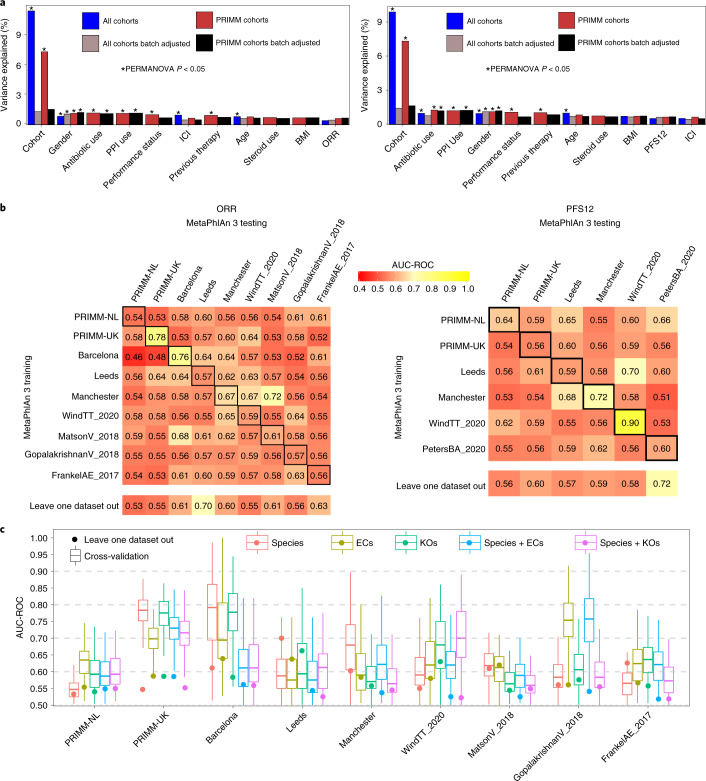
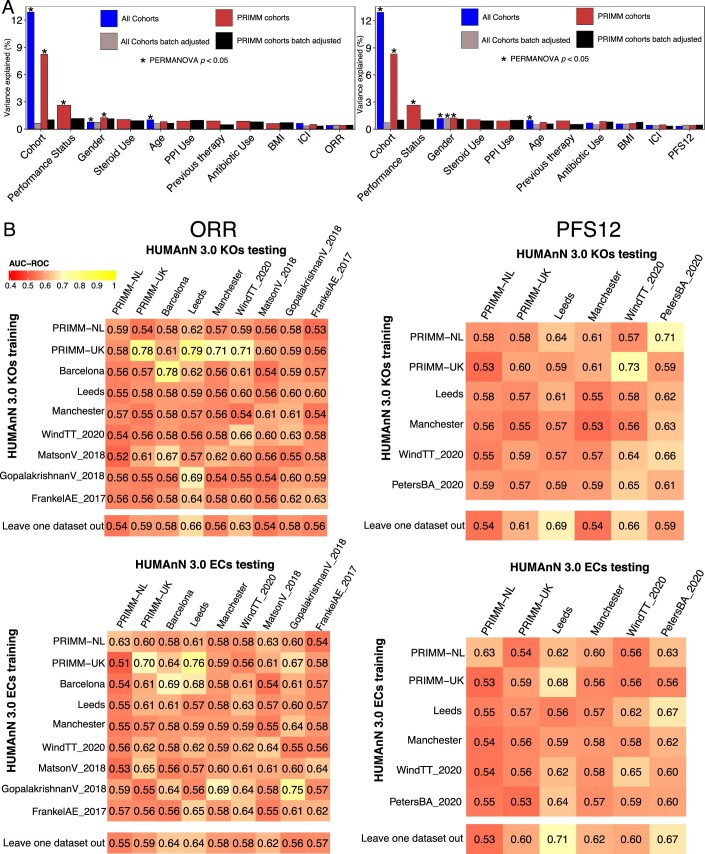
- The gut microbiome showed a relevant but cohort-dependent association with ICI response: cohort explained nearly ten times more variance than any other variable, and ORR/PFS12 explained only a limited fraction of total microbiome variation after batch correction.
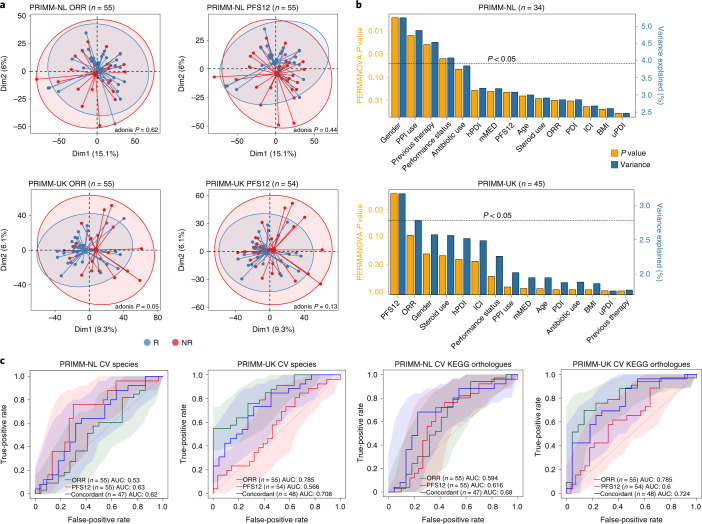
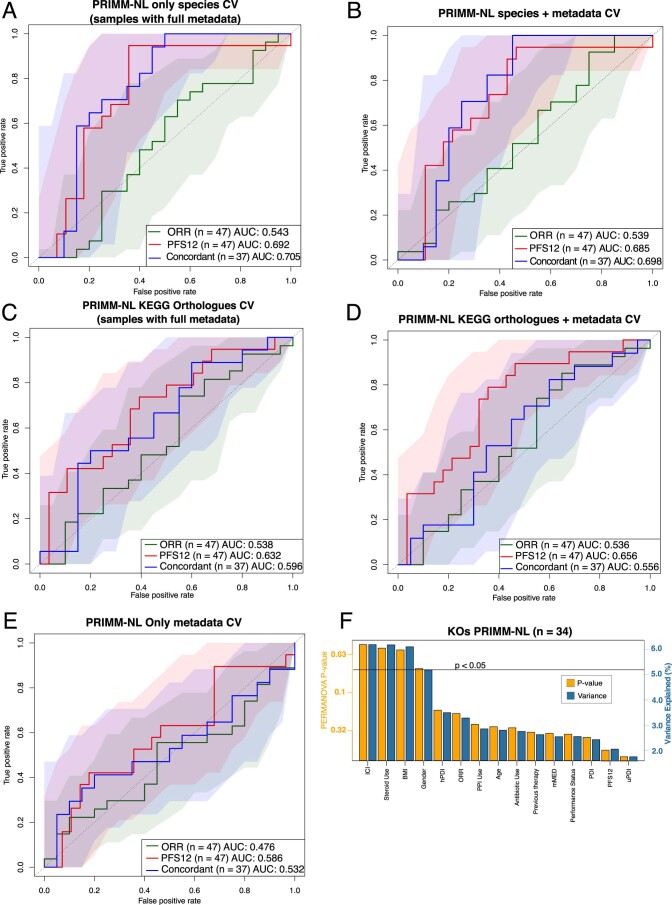
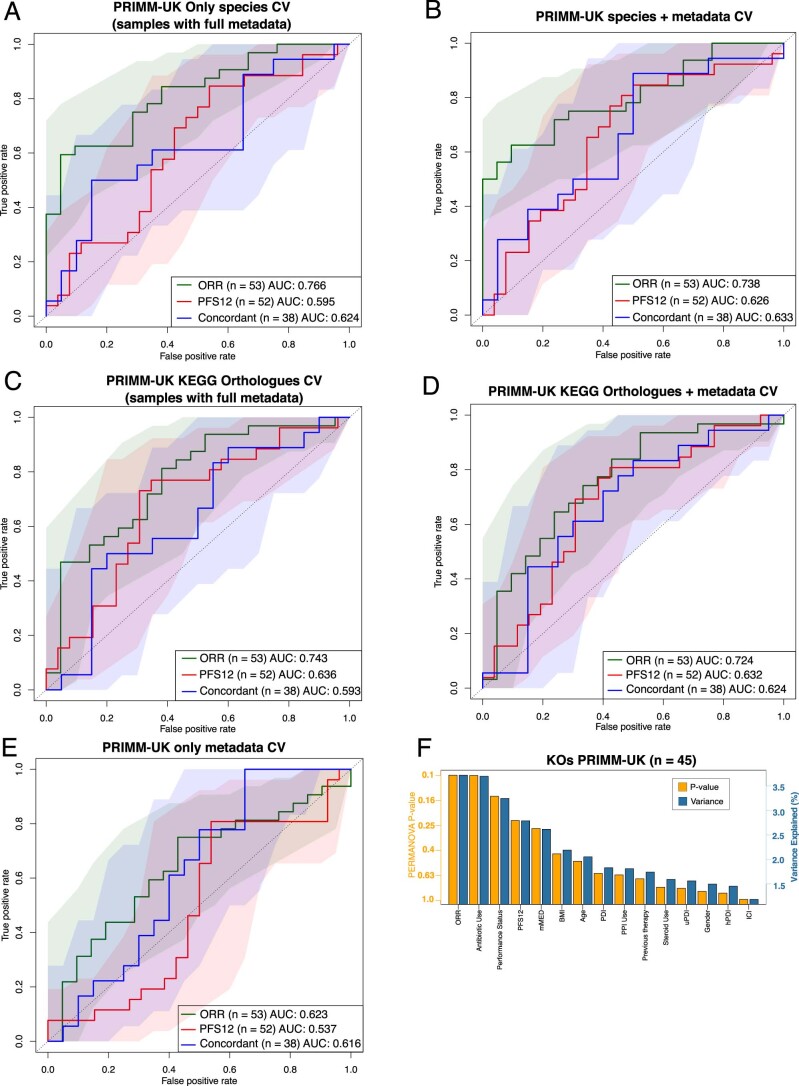
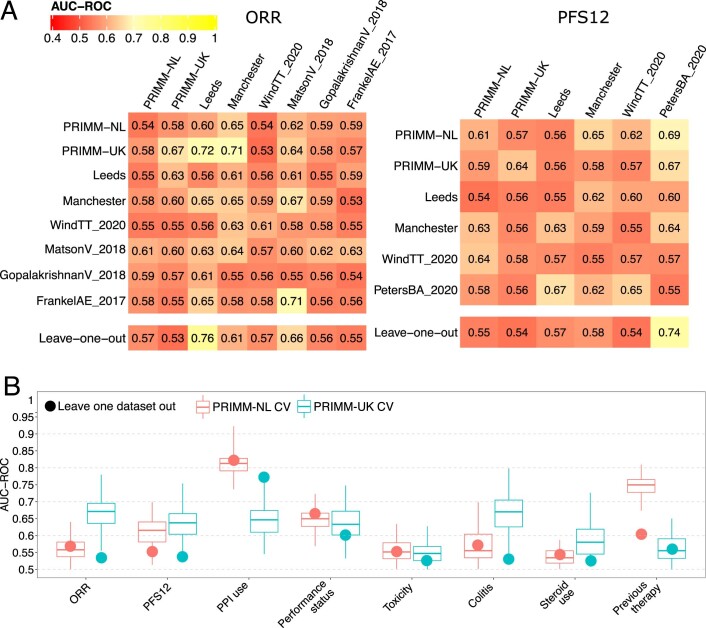
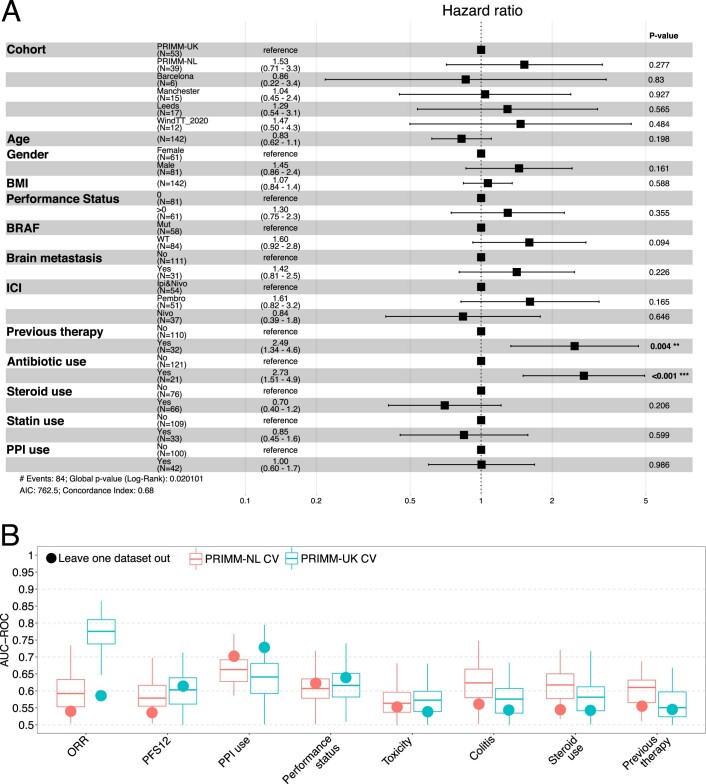
- Within-cohort machine learning prediction varied by cohort and endpoint: PRIMM-UK ORR AUC-ROC 0.78 and PRIMM-NL PFS12 AUC-ROC 0.64, whereas PRIMM-NL ORR and PRIMM-UK PFS12 were much lower (0.53 and 0.57, respectively); functional KEGG ortholog profiles exceeded AUC-ROC 0.59 for both datasets and endpoints.
- Cross-cohort prediction was limited: AUC-ROC reached 0.7 in only two cases and exceeded 0.6 in about one-third of cases (31.4%); leave-one-dataset-out models averaged 0.59 for ORR and 0.60 for PFS12.
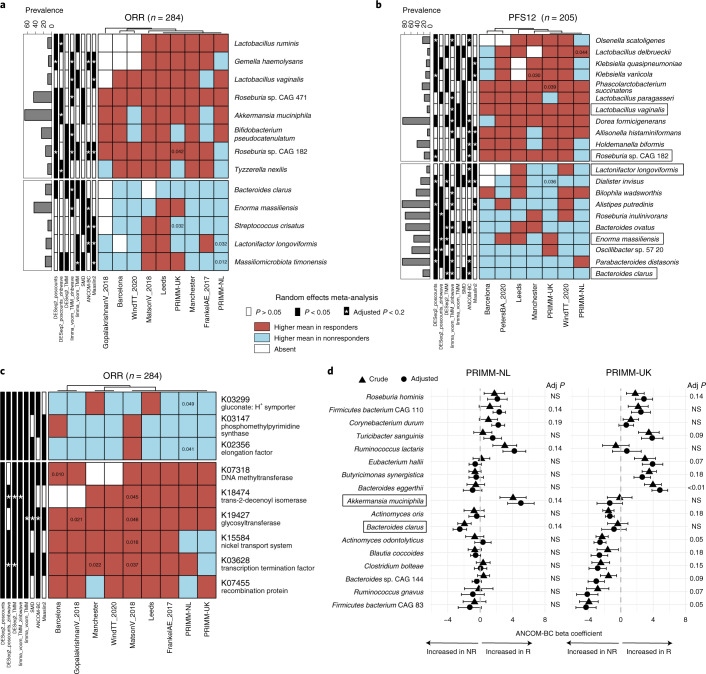
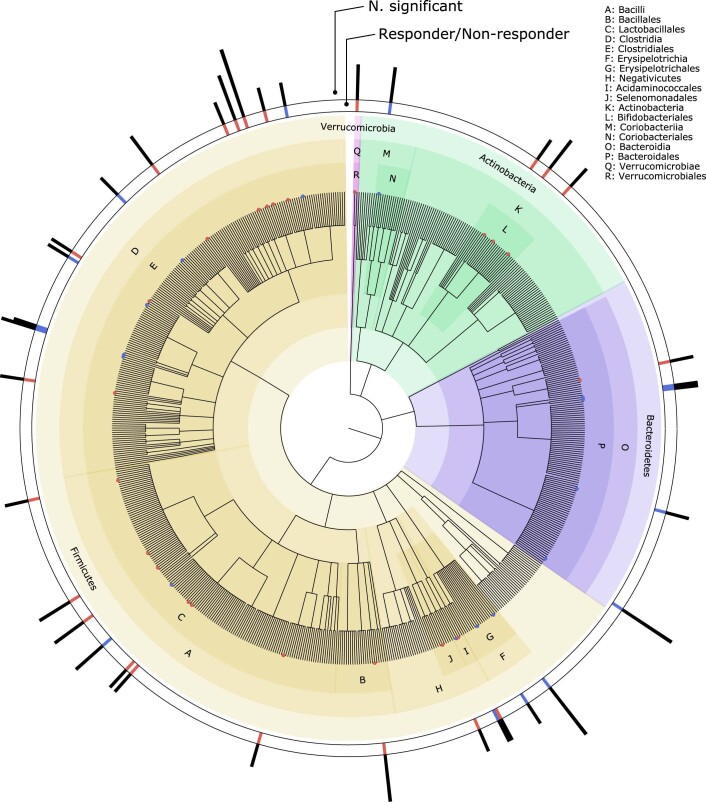
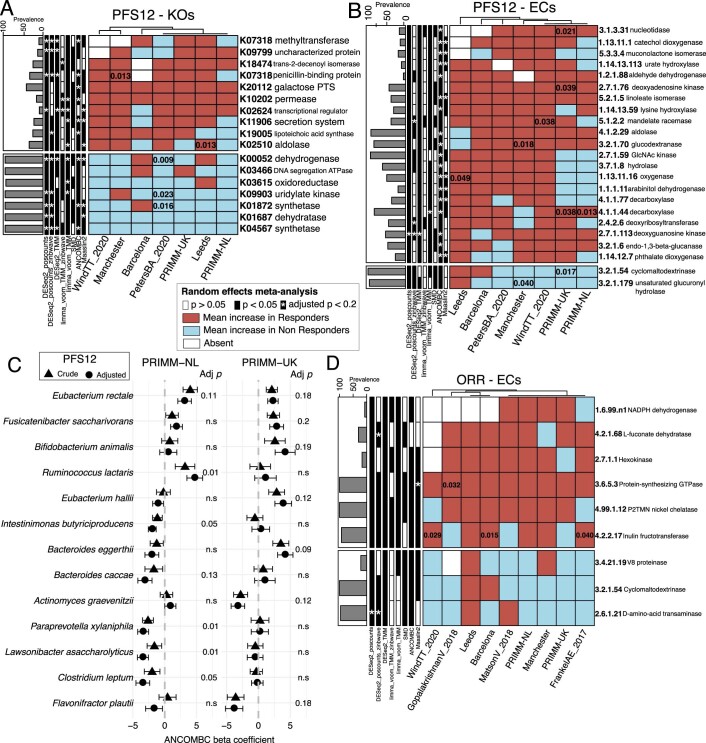
- Response-associated taxa included Roseburia sp. CAG:182 and Roseburia sp. CAG:471 for ORR, Phascolarctobacterium succinatutens and Lactobacillus vaginalis for PFS12, and Akkermansia muciniphila and Dorea formicigenerans for ORR/PFS12; Bacteroides clarus was higher in nonresponders, but no single species was a fully consistent biomarker across all datasets.
Methods
- Prospective PRIMM-UK and PRIMM-NL cohorts plus Barcelona, Leeds and Manchester cohorts recruited ICI-naive patients with unresectable stage III/IV cutaneous melanoma; baseline stool samples were collected before ICI treatment, with 175 patients recruited and 165 samples passing strict QC, analyzed alongside 147 publicly available metagenomes.
- Shotgun metagenomic sequencing averaged 7.74 Gb per sample; taxonomic and functional profiling used bioBakery 3 (MetaPhlAn 3.0, HUMAnN 3.0), identifying 608 species, 510 pathways, 6,131 KOs and 2,558 enzyme categories in the 165 samples.
- Response was classified by RECIST v1.1 as ORR (CR/PR/SD vs PD) and PFS12; analyses included PERMANOVA, an ensemble of eight differential abundance methods with random-effects meta-analysis, and SIAMCAT Lasso logistic regression with nested cross-validation, cross-study validation and leave-one-dataset-out testing.
Limitations
- Stated: individual cohort sample sizes remain small; collecting very large, properly annotated samples is inherently difficult in this clinical setting; response definition differences (ORR vs PFS12) and many confounding factors are hard to adjust for; cohort microbiome effects are strong; current methods lack characterization of the immunological interface.
- Stated: the authors call for larger sample sizes, strain-level and mucosal analyses, and extension beyond cutaneous melanoma to uveal/mucosal subtypes and other cancers.
- Evident from the reported results: cross-cohort reproducibility was limited, with modest AUC-ROC values and no single species consistently associated with response across all datasets.
Model-written summary. Check it against the paper before relying on it.
Integrity signals
Registry
Cites
Statistics
Figures
Verification
Claims the paper makes
6 Valid · 2 Not valid · 1 Not checked · 70 Own results and interpretations
The sources with a verdict support this claim; the rest weren’t checked yet, have no full text we could read, or their verdicts aren’t rated yet.
In the paper
“The gut microbiome has an important role to play in ICI response7,8, as we also confirmed here”
§ Cross-cohort gut microbiome associations with immune checkpoint inhibitor response in advanced melanoma > Discussion
What the sources say
- Not checked — no full text of the sourcecites [7] Baruch EN Fecal microbiota transplant promotes response in immunotherapy-refractory melanoma patients Science 2020 37 602 609 33303685 source
- Supportedcites [8] McQuade JL Gut microbiome modulation via fecal microbiota transplant to augment immunotherapy in patients with melanoma or other cancers. Curr. Oncol. Rep. 2020 22 74 10.1007/s11912-020-00913-y 32577835 PMC7685568 source
The Introduction says there is strong evidence that the gut microbiome shapes immunotherapy response. The ‘Background and rationale for FMT in immunotherapy’ section reports strong associations between the gut microbiome and checkpoint-blockade response in human cancer cohorts, including melanoma studies listed in the References. ‘As we also confirmed here’ refers to the citing authors’ own study, not a finding attributed to this review. (LLM, conf=0.92)
boostedstates an association- Asserted: passes — The authors put it forward as true.
- Checkable: passes — It can be checked against evidence.
- Load-bearing: passes — The paper’s conclusions depend on it.
- Based: passes — The paper gives a reason why it holds.
The sources with a verdict support this claim; the rest weren’t checked yet, have no full text we could read, or their verdicts aren’t rated yet.
In the paper
“Although we confirmed that the microbiome holds the potential to support the clinical practice for the treatment of patients with melanoma, as shown via fecal microbiota transplantation pilots7,8”
§ Cross-cohort gut microbiome associations with immune checkpoint inhibitor response in advanced melanoma > Discussion
What the sources say
- Not checked — no full text of the sourcecites [7] Baruch EN Fecal microbiota transplant promotes response in immunotherapy-refractory melanoma patients Science 2020 37 602 609 33303685 source
- Supportedcites [8] McQuade JL Gut microbiome modulation via fecal microbiota transplant to augment immunotherapy in patients with melanoma or other cancers. Curr. Oncol. Rep. 2020 22 74 10.1007/s11912-020-00913-y 32577835 PMC7685568 source
The Introduction describes microbiome modulation as a potential strategy to enhance immunotherapy response. In “Current efforts of FMT in immunotherapy” (page unavailable), the review reports preliminary responses in small melanoma FMT trials. It characterizes the field as nascent, consistent with the claim of potential rather than established clinical benefit. (LLM, conf=0.91)
hedgedstates a possible cause- Asserted: passes — The authors put it forward as true.
- Checkable: unclear — It is unclear whether it could be checked against evidence.
- Load-bearing: passes — The paper’s conclusions depend on it.
- Based: passes — The paper gives a reason why it holds.
A result the paper reports from its own data — it cites no other source for it, so there is none to check. The quote shows it is in the paper.
In the paper
“a panel of species, including Bifidobacterium pseudocatenulatum, Roseburia spp. and Akkermansia muciniphila, associated with responders was identified”
§ Cross-cohort gut microbiome associations with immune checkpoint inhibitor response in advanced melanoma > Abstract
plainstates an association- Asserted: passes — The authors put it forward as true.
- Checkable: passes — It can be checked against evidence.
- Load-bearing: passes — The paper’s conclusions depend on it.
- Based: passes — The paper gives a reason why it holds.
A result the paper reports from its own data — it cites no other source for it, so there is none to check. The quote shows it is in the paper.
In the paper
“we found a borderline statistically significant difference in the microbiome composition of responders compared to nonresponders in the PRIMM-UK cohort (permutational multivariate analysis of variance (PERMANOVA) P = 0.05, Fig. 1a)”
§ Cross-cohort gut microbiome associations with immune checkpoint inhibitor response in advanced melanoma > Results > Linking the gut microbiome with response in the PRIMM cohorts
plainstates an association- Asserted: passes — The authors put it forward as true.
- Checkable: passes — It can be checked against evidence.
- Load-bearing: passes — The paper’s conclusions depend on it.
- Based: passes — The paper gives a reason why it holds.
A result the paper reports from its own data — it cites no other source for it, so there is none to check. The quote shows it is in the paper.
In the paper
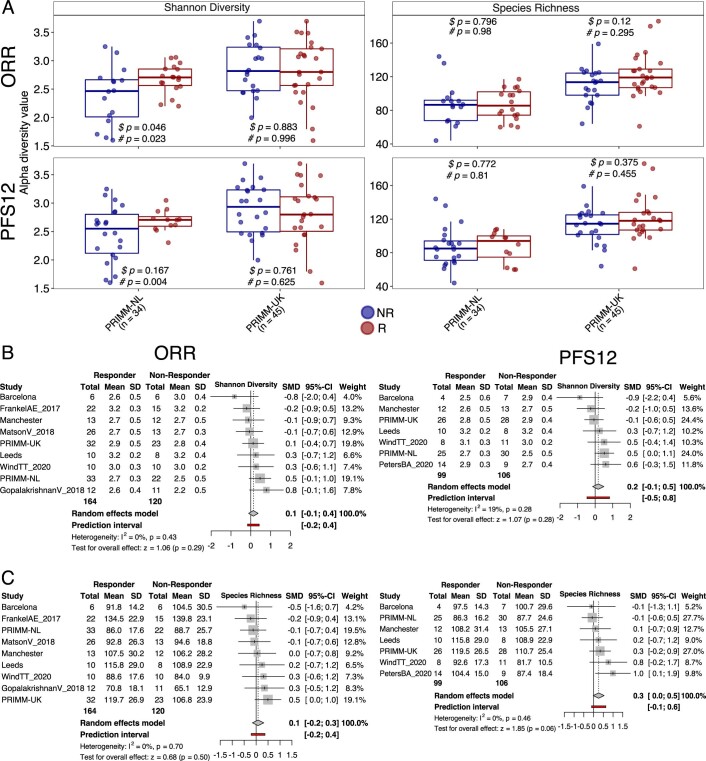
“we found that the gut microbiome has a relevant, but cohort-dependent, association with the response to ICIs.”
- Also stated in: § Linking the gut microbiome with response in the PRIMM cohorts · hedged
“These findings show that the gut microbiome does have a relevant association with response to ICIs but appears to be cohort dependent and is likely due to features of the microbial community that are not responsible for large shifts in the global microbiome composition.”
§ Cross-cohort gut microbiome associations with immune checkpoint inhibitor response in advanced melanoma > Abstract
plainstates an associationn = 165- Asserted: passes — The authors put it forward as true.
- Checkable: passes — It can be checked against evidence.
- Load-bearing: passes — The paper’s conclusions depend on it.
- Based: passes — The paper gives a reason why it holds.
- Also stated in: § Linking the gut microbiome with response in the PRIMM cohorts · hedged
23 more claims
Create a free account to see all 79 claims and every source verdict.
- Probably not a substantial claim. 24
- It may state two separate claims as one. 34
Claims other papers make about this one
Each is checked against this paper’s own text: does it say what the citing paper says it does?
The source backs part of the claim, not all of it — or backs it for a different population, condition or comparison.
In the citing paper
“In multiple cancer types, gut microbiota composition has been associated with response and adverse effects of immune checkpoint inhibitors (ICIs) [2, 3, 4].”
From Gut microbiota diversity is prognostic and associated with benefit from chemo-immunotherapy in metastatic triple-negative breast cancer (2025) · cites this paper as [2]
Experimental — accuracy not yet measuredThe source backs part of the claim, not all of it — or backs it for a different population, condition or comparison.
In the citing paper
“Associations between alpha diversity and cancer patient outcomes have been found in the setting of patients receiving hematopoietic cell transplant 29 or cervical cancer chemoradiation 30 but not in anti-PD-1 recipients with metastatic melanoma 16,18 ; thus, such associations may be treatment regimen specific.”
From A gut microbial signature for combination immune checkpoint blockade across cancer types (2024) · cites this paper as [18]
Experimental — accuracy not yet measuredThe source backs part of the claim, not all of it — or backs it for a different population, condition or comparison.
In the citing paper
“Our meta-analysis of microbial sequencing data from nine independent αPD-1-treated melanoma cohorts82–88 revealed a higher abundance of pfl, a key enzyme in bacterial formate production, linked to ICI efficacy.”
From Exercise-induced microbiota metabolite enhances CD8 T cell antitumor immunity promoting immunotherapy efficacy (2025) · cites this paper as [82]
Experimental — accuracy not yet measuredThe source backs part of the claim, not all of it — or backs it for a different population, condition or comparison.
In the citing paper
“First, correlations have been drawn across cancer indications and geographical sites between the taxonomic composition of the gut (and to some degree tumor) microbiota, and ICI responses in patients with melanoma and other cancers.”
From Melanoma and microbiota: Current understanding and future directions (2024) · cites this paper as [19]
Experimental — accuracy not yet measuredThe source backs part of the claim, not all of it — or backs it for a different population, condition or comparison.
In the citing paper
“For instance, broad-spectrum antibiotic treatment reduced the intestinal abundances of microbes in our patients such as Roseburia, Bifidobacterium or Ruminococcus spp., which were previously associated with beneficial outcomes of ICB cancer immunotherapies1,36.”
From A non-antibiotic-disrupted gut microbiome is associated with clinical responses to CD19-CAR-T cell cancer immunotherapy (2023) · cites this paper as [36]
Experimental — accuracy not yet measured
22 more claims about this paper
Create a free account to see every claim other papers make about this one.
Citations
Cites
Moderated estimation of fold change and dispersion for RNA-seq data with DESeq2
Love, M. I., Huber, W., & Anders, S. (2014) · Genome Biology · doi:10.1186/s13059-014-0550-8 · Cited by 95,106
Fast gapped-read alignment with Bowtie 2
Langmead, B., & Salzberg, S. L. (2012) · Nature Methods · doi:10.1038/nmeth.1923 · Cited by 56,400
Robinson, M. D., McCarthy, D. J., & Smyth, G. K. (2010) · Bioinformatics · doi:10.1093/bioinformatics/btp616 · Cited by 41,364
limma powers differential expression analyses for RNA-sequencing and microarray studies
Ritchie, M. E., Phipson, B., Wu, D., Hu, Y., Law, C. W., Shi, W., & Smyth, G. K. (2015) · Nucleic Acids Research · doi:10.1093/nar/gkv007 · Cited by 40,458
Adverse Renal Effects of Immune Checkpoint Inhibitors: A Narrative Review
Wanchoo, R., Karam, S., Uppal, N. N., Barta, V. S., Deray, G., Devoe, C., Launay-Vacher, V., Jhaveri, K. D., & on behalf of Cancer and Kidney International Network Workgroup on Immune Checkpoint Inhibitors (2017) · American Journal of Nephrology · doi:10.1159/000455014 · Cited by 15,256
Adjusting batch effects in microarray expression data using empirical Bayes methods
Johnson, W. E., Li, C., & Rabinovic, A. (2007) · Biostatistics · doi:10.1093/biostatistics/kxj037 · Cited by 8,658
Combined Nivolumab and Ipilimumab or Monotherapy in Untreated Melanoma
Larkin, J., Chiarion-Sileni, V., Gonzalez, R., Grob, J. J., Cowey, C. L., Lao, C. D., Schadendorf, D., Dummer, R., Smylie, M., Rutkowski, P., et al. (2015) · New England Journal of Medicine · doi:10.1056/nejmoa1504030 · Cited by 8,157
KEGG as a reference resource for gene and protein annotation
Kanehisa, M., Sato, Y., Kawashima, M., Furumichi, M., & Tanabe, M. (2016) · Nucleic Acids Research · doi:10.1093/nar/gkv1070 · Cited by 7,387
Gut microbiome influences efficacy of PD-1-based immunotherapy against epithelial tumors
Routy, B., Le Chatelier, E., Derosa, L., Duong, C. P. M., Alou, M. T., Daillère, R., Fluckiger, A., Messaoudene, M., Rauber, C., Roberti, M. P., et al. (2018) · Science · doi:10.1126/science.aan3706 · Cited by 5,671
Self-citationOverall Survival with Combined Nivolumab and Ipilimumab in Advanced Melanoma
Wolchok, J. D., Chiarion-Sileni, V., Gonzalez, R., Rutkowski, P., Grob, J.-J., Cowey, C. L., Lao, C. D., Wagstaff, J., Schadendorf, D., Ferrucci, P. F., et al. (2017) · New England Journal of Medicine · doi:10.1056/nejmoa1709684 · Cited by 5,357
Gut microbiome modulates response to anti-PD-1 immunotherapy in melanoma patients
Gopalakrishnan, V., Spencer, C. N., Nezi, L., Reuben, A., Andrews, M. C., Karpinets, T. V., Prieto, P. A., Vicente, D., Hoffman, K., Wei, S. C., et al. (2018) · Science · doi:10.1126/science.aan4236 · Cited by 4,812
Self-citationAdherence to a Mediterranean diet and survival in a Greek population
Trichopoulou, A., Costacou, T., Bamia, C., & Trichopoulos, D. (2003) · New England Journal of Medicine · doi:10.1056/nejmoa025039 · Cited by 4,397
Five-Year Survival with Combined Nivolumab and Ipilimumab in Advanced Melanoma
Larkin, J., Chiarion-Sileni, V., Gonzalez, R., Grob, J.-J., Rutkowski, P., Lao, C. D., Cowey, C. L., Schadendorf, D., Wagstaff, J., Dummer, R., et al. (2019) · New England Journal of Medicine · doi:10.1056/nejmoa1910836 · Cited by 3,723
Anticancer immunotherapy by CTLA-4 blockade relies on the gut microbiota
Vétizou, M., Pitt, J. M., Daillère, R., Lepage, P., Waldschmitt, N., Flament, C., Rusakiewicz, S., Routy, B., Roberti, M. P., Duong, C. P. M., et al. (2015) · Science · doi:10.1126/science.aad1329 · Cited by 3,488
Self-citationThe commensal microbiome is associated with anti-PD-1 efficacy in metastatic melanoma patients
Matson, V., Fessler, J., Bao, R., Chongsuwat, T., Zha, Y., Alegre, M.-L., Luke, J. J., & Gajewski, T. F. (2018) · Science · doi:10.1126/science.aao3290 · Cited by 3,107
Multivariable association discovery in population-scale meta-omics studies
Mallick, H., Rahnavard, A., McIver, L. J., Ma, S., Zhang, Y., Nguyen, L. H., Tickle, T. L., Weingart, G., Ren, B., Schwager, E. H., et al. (2021) · PLOS Computational Biology · doi:10.1371/journal.pcbi.1009442 · Cited by 2,596
Self-citationMultivariable Association Discovery in Population-scale Meta-omics Studies
(2021) · doi:10.1101/2021.01.20.427420 · Cited by 2,594
Self-citation(2020) · doi:10.1101/2020.11.19.388223 · Cited by 2,303
Self-citationBeghini, F., McIver, L. J., Blanco-Míguez, A., Dubois, L., Asnicar, F., Maharjan, S., Mailyan, A., Manghi, P., Scholz, M., Thomas, A. M., et al. (2021) · eLife · doi:10.7554/elife.65088 · Cited by 2,303
Self-citationExPASy: SIB bioinformatics resource portal
Artimo, P., Jonnalagedda, M., Arnold, K., Baratin, D., Csardi, G., de Castro, E., Duvaud, S., Flegel, V., Fortier, A., Gasteiger, E., et al. (2012) · Nucleic Acids Research · doi:10.1093/nar/gks400 · Cited by 2,266
Shotgun metagenomics, from sampling to analysis
Quince, C., Walker, A. W., Simpson, J. T., Loman, N. J., & Segata, N. (2017) · Nature Biotechnology · doi:10.1038/nbt.3935 · Cited by 2,202
Self-citationMetaPhlAn2 for enhanced metagenomic taxonomic profiling
Truong, D. T., Franzosa, E. A., Tickle, T. L., Scholz, M., Weingart, G., Pasolli, E., Tett, A., Huttenhower, C., & Segata, N. (2015) · Nature Methods · doi:10.1038/nmeth.3589 · Cited by 2,185
Self-citationAnalysis of compositions of microbiomes with bias correction
Lin, H., & Peddada, S. D. (2020) · Nature Communications · doi:10.1038/s41467-020-17041-7 · Cited by 2,104
The neuroactive potential of the human gut microbiota in quality of life and depression
Valles-Colomer, M., Falony, G., Darzi, Y., Tigchelaar, E. F., Wang, J., Tito, R. Y., Schiweck, C., Kurilshikov, A., Joossens, M., Wijmenga, C., et al. (2019) · Nature Microbiology · doi:10.1038/s41564-018-0337-x · Cited by 1,963
Fecal microbiota transplant promotes response in immunotherapy-refractory melanoma patients
Baruch, E. N., Youngster, I., Ben-Betzalel, G., Ortenberg, R., Lahat, A., Katz, L., Adler, K., Dick-Necula, D., Raskin, S., Bloch, N., et al. (2021) · Science · doi:10.1126/science.abb5920 · Cited by 1,757
Species-level functional profiling of metagenomes and metatranscriptomes
Franzosa, E. A., McIver, L. J., Rahnavard, G., Thompson, L. R., Schirmer, M., Weingart, G., Lipson, K. S., Knight, R., Caporaso, J. G., Segata, N., et al. (2018) · Nature Methods · doi:10.1038/s41592-018-0176-y · Cited by 1,693
Self-citationPasolli, E., Asnicar, F., Manara, S., Zolfo, M., Karcher, N., Armanini, F., Beghini, F., Manghi, P., Tett, A., Ghensi, P., et al. (2019) · Cell · doi:10.1016/j.cell.2019.01.001 · Cited by 1,591
Self-citationWirbel, J., Pyl, P. T., Kartal, E., Zych, K., Kashani, A., Milanese, A., Fleck, J. S., Voigt, A. Y., Palleja, A., Ponnudurai, R., et al. (2019) · Nature Medicine · doi:10.1038/s41591-019-0406-6 · Cited by 1,373
Self-citationProton pump inhibitors affect the gut microbiome
Imhann, F., Bonder, M. J., Vich Vila, A., Fu, J., Mujagic, Z., Vork, L., Tigchelaar, E. F., Jankipersadsing, S. A., Cenit, M. C., Harmsen, H. J. M., et al. (2016) · Gut · doi:10.1136/gutjnl-2015-310376 · Cited by 1,371
Self-citationThomas, A. M., Manghi, P., Asnicar, F., Pasolli, E., Armanini, F., Zolfo, M., Beghini, F., Manara, S., Karcher, N., Pozzi, C., et al. (2019) · Nature Medicine · doi:10.1038/s41591-019-0405-7 · Cited by 1,030
Self-citationAsnicar, F., Berry, S. E., Valdes, A. M., Nguyen, L. H., Piccinno, G., Drew, D. A., Leeming, E., Gibson, R., Le Roy, C., Khatib, H. A., et al. (2021) · Nature Medicine · doi:10.1038/s41591-020-01183-8 · Cited by 995
Self-citationHealthful and Unhealthful Plant-Based Diets and the Risk of Coronary Heart Disease in U.S. Adults
Satija, A., Bhupathiraju, S. N., Spiegelman, D., Chiuve, S. E., Manson, J. E., Willett, W., Rexrode, K. M., Rimm, E. B., & Hu, F. B. (2017) · Journal of the American College of Cardiology · doi:10.1016/j.jacc.2017.05.047 · Cited by 991
Dubin, K., Callahan, M. K., Ren, B., Khanin, R., Viale, A., Ling, L., No, D., Gobourne, A., Littmann, E., Huttenhower, C., et al. (2016) · Nature Communications · doi:10.1038/ncomms10391 · Cited by 987
Microbial strain-level population structure and genetic diversity from metagenomes
Truong, D. T., Tett, A., Pasolli, E., Huttenhower, C., & Segata, N. (2017) · Genome Research · doi:10.1101/gr.216242.116 · Cited by 839
Self-citationNeoadjuvant immune checkpoint blockade in high-risk resectable melanoma
Amaria, R. N., Reddy, S. M., Tawbi, H. A., Davies, M. A., Ross, M. I., Glitza, I. C., Cormier, J. N., Lewis, C., Hwu, W.-J., Hanna, E., et al. (2018) · Nature Medicine · doi:10.1038/s41591-018-0197-1 · Cited by 835
A novel Ruminococcus gnavus clade enriched in inflammatory bowel disease patients
Hall, A. B., Yassour, M., Sauk, J., Garner, A., Jiang, X., Arthur, T., Lagoudas, G. K., Vatanen, T., Fornelos, N., Wilson, R., et al. (2017) · Genome Medicine · doi:10.1186/s13073-017-0490-5 · Cited by 777
A general and flexible method for signal extraction from single-cell RNA-seq data
Risso, D., Perraudeau, F., Gribkova, S., Dudoit, S., & Vert, J.-P. (2018) · Nature Communications · doi:10.1038/s41467-017-02554-5 · Cited by 718
Frankel, A. E., Coughlin, L. A., Kim, J., Froehlich, T. W., Xie, Y., Frenkel, E. P., & Koh, A. Y. (2017) · Neoplasia · doi:10.1016/j.neo.2017.08.004 · Cited by 709
Machine Learning Meta-analysis of Large Metagenomic Datasets: Tools and Biological Insights
Pasolli, E., Truong, D. T., Malik, F., Waldron, L., & Segata, N. (2016) · PLOS Computational Biology · doi:10.1371/journal.pcbi.1004977 · Cited by 659
Self-citationBrister, J. R., Ako-adjei, D., Bao, Y., & Blinkova, O. (2015) · Nucleic Acids Research · doi:10.1093/nar/gku1207 · Cited by 649
Bingham, S. (1997) · International Journal of Epidemiology · doi:10.1093/ije/26.suppl_1.s137 · Cited by 634
Establishing microbial composition measurement standards with reference frames
Morton, J. T., Marotz, C., Washburne, A., Silverman, J., Zaramela, L. S., Edlund, A., Zengler, K., & Knight, R. (2019) · Nature Communications · doi:10.1038/s41467-019-10656-5 · Cited by 613
An Essential Role for DNA Adenine Methylation in Bacterial Virulence
Heithoff, D. M., Sinsheimer, R. L., Low, D. A., & Mahan, M. J. (1999) · Science · doi:10.1126/science.284.5416.967 · Cited by 458
Gut microbiota signatures are associated with toxicity to combined CTLA-4 and PD-1 blockade
Andrews, M. C., Duong, C. P. M., Gopalakrishnan, V., Iebba, V., Chen, W.-S., Derosa, L., Khan, M. A. W., Cogdill, A. P., White, M. G., Wong, M. C., et al. (2021) · Nature Medicine · doi:10.1038/s41591-021-01406-6 · Cited by 437
Self-citationNutritional methods in the European Prospective Investigation of Cancer in Norfolk
Bingham, S. A., Welch, A. A., McTaggart, A., Mulligan, A. A., Runswick, S. A., Luben, R., Oakes, S., Khaw, K. T., Wareham, N., & Day, N. E. (2001) · Public Health Nutrition · doi:10.1079/phn2000102 · Cited by 419
bioBakery: a meta’omic analysis environment
McIver, L. J., Abu-Ali, G., Franzosa, E. A., Schwager, R., Morgan, X. C., Waldron, L., Segata, N., & Huttenhower, C. (2018) · Bioinformatics · doi:10.1093/bioinformatics/btx754 · Cited by 361
Self-citationAscierto, P. A., Long, G. V., Robert, C., Brady, B., Dutriaux, C., Di Giacomo, A. M., Mortier, L., Hassel, J. C., Rutkowski, P., McNeil, C., et al. (2019) · JAMA Oncology · doi:10.1001/jamaoncol.2018.4514 · Cited by 352
Xie, H., Guo, R., Zhong, H., Feng, Q., Lan, Z., Qin, B., Ward, K. J., Jackson, M. A., Xia, Y., Chen, X., et al. (2016) · Cell Systems · doi:10.1016/j.cels.2016.10.004 · Cited by 341
Self-citationWirbel, J., Zych, K., Essex, M., Karcher, N., Kartal, E., Salazar, G., Bork, P., Sunagawa, S., & Zeller, G. (2021) · Genome Biology · doi:10.1186/s13059-021-02306-1 · Cited by 269
Relating the gut metagenome and metatranscriptome to immunotherapy responses in melanoma patients
Peters, B. A., Wilson, M., Moran, U., Pavlick, A., Izsak, A., Wechter, T., Weber, J. S., Osman, I., & Ahn, J. (2019) · Genome Medicine · doi:10.1186/s13073-019-0672-4 · Cited by 263
Llorente, C., Jepsen, P., Inamine, T., Wang, L., Bluemel, S., Wang, H. J., Loomba, R., Bajaj, J. S., Schubert, M. L., Sikaroodi, M., et al. (2017) · Nature Communications · doi:10.1038/s41467-017-00796-x · Cited by 257
Large-scale comparative metagenomics of Blastocystis, a common member of the human gut microbiome
Beghini, F., Pasolli, E., Truong, T. D., Putignani, L., Cacciò, S. M., & Segata, N. (2017) · The ISME Journal · doi:10.1038/ismej.2017.139 · Cited by 201
Self-citationLogistic-normal distributions:Some properties and uses
ATCHISON, J., & SHEN, S. M. (1980) · Biometrika · doi:10.1093/biomet/67.2.261 · Cited by 188
Limeta, A., Ji, B., Levin, M., Gatto, F., & Nielsen, J. (2020) · JCI Insight · doi:10.1172/jci.insight.140940 · Cited by 185
Roux, D., Cywes‐Bentley, C., Zhang, Y.-F., Pons, S., Konkol, M. A., Kearns, D. B., Little, D. J., Howell, P. L., Skurnik, D., & Pier, G. B. (2015) · Journal of Biological Chemistry · doi:10.1074/jbc.m115.648709 · Cited by 141
Calgaro, M., Romualdi, C., Waldron, L., Risso, D., & Vitulo, N. (2020) · Genome Biology · doi:10.1186/s13059-020-02104-1 · Cited by 126
Self-citationMacke, L., Schulz, C., Koletzko, L., & Malfertheiner, P. (2020) · Alimentary Pharmacology & Therapeutics · doi:10.1111/apt.15604 · Cited by 118
Karcher, N., Pasolli, E., Asnicar, F., Huang, K. D., Tett, A., Manara, S., Armanini, F., Bain, D., Duncan, S. H., Louis, P., et al. (2020) · Genome Biology · doi:10.1186/s13059-020-02042-y · Cited by 116
Self-citationEvaluation of a screener to assess diet quality in the Netherlands
van Lee, L., Feskens, E. J. M., Meijboom, S., van Huysduynen, E. J. C. H., Veer, P. V., de Vries, J. H. M., & Geelen, A. (2015) · British Journal Of Nutrition · doi:10.1017/s0007114515004705 · Cited by 109
Detecting contamination in viromes using ViromeQC
Zolfo, M., Pinto, F., Asnicar, F., Manghi, P., Tett, A., Bushman, F. D., & Segata, N. (2019) · Nature Biotechnology · doi:10.1038/s41587-019-0334-5 · Cited by 103
Self-citationTroge, A., Scheppach, W. M., Schroeder, B. O., Rund, S. A., Heuner, K., Wehkamp, J., Stange, E. F., & Oelschlaeger, T. A. (2012) · International Journal of Medical Microbiology · doi:10.1016/j.ijmm.2012.09.004 · Cited by 97
Wind, T. T., Gacesa, R., Vich Vila, A., de Haan, J. J., Jalving, M., Weersma, R. K., & Hospers, G. A. P. (2020) · Melanoma Research · doi:10.1097/cmr.0000000000000656 · Cited by 73
Self-citationMcQuade, J. L., Ologun, G. O., Arora, R., & Wargo, J. A. (2020) · Current Oncology Reports · doi:10.1007/s11912-020-00913-y · Cited by 63
Kettunen, J., Ritchie, S. C., Anufrieva, O., Lyytikäinen, L.-P., Hernesniemi, J., Karhunen, P. J., Kuukasjärvi, P., Laurikka, J., Kähönen, M., Lehtimäki, T., et al. (2018) · Circulation: Genomic and Precision Medicine · doi:10.1161/circgen.118.002234 · Cited by 59
Ascierto, P. A., Long, G. V., Robert, C., Brady, B., Dutriaux, C., Di Giacomo, A. M., Mortier, L., Hassel, J. C., Rutkowski, P., McNeil, C., et al. (2019) · Kölner Universitäts PublikationsServer (Universität zu Köln) · Cited by 59
Bayesian Multinomial Logistic Normal Models through Marginally Latent Matrix-T Processes
Silverman, J. D., Roche, K. E., Holmes, Z. C., David, L. A., & Mukherjee, S. (2019) · PubMed · doi:10.48550/arxiv.1903.11695 · Cited by 54
Wirbel, J., Zych, K., Essex, M., Karcher, N., Kartal, E., Salazar, G., Peer Bork, B., Sunagawa, S., & Zeller, G. (2020) · bioRxiv (Cold Spring Harbor Laboratory) · doi:10.1101/2020.02.06.931808 · Cited by 33
Ni, Y. H., Chua, H.-H., Chou, H.-C. C., Chiang, B.-L., & Liu, H.-H. (2017) · Gastroenterology · doi:10.1016/s0016-5085(17)31017-x · Cited by 3
Cited by
Hallmarks of aging: An expanding universe
López-Otín, C., Blasco, M. A., Partridge, L., Serrano, M., & Kroemer, G. (2023) · Cell · doi:10.1016/j.cell.2022.11.001 · Cited by 6,549
Immune checkpoint therapy—current perspectives and future directions
Sharma, P., Goswami, S., Raychaudhuri, D., Siddiqui, B. A., Singh, P., Nagarajan, A., Liu, J., Subudhi, S. K., Poon, C., Gant, K. L., et al. (2023) · Cell · doi:10.1016/j.cell.2023.03.006 · Cited by 1,206
Gut microbiota in colorectal cancer development and therapy
Wong, C. C., & Yu, J. (2023) · Nature Reviews Clinical Oncology · doi:10.1038/s41571-023-00766-x · Cited by 721
Bender, M. J., McPherson, A. C., Phelps, C. M., Pandey, S. P., Laughlin, C. R., Shapira, J. H., Medina Sanchez, L., Rana, M., Richie, T. G., Mims, T. S., et al. (2023) · Cell · doi:10.1016/j.cell.2023.03.011 · Cited by 732
“Given Lactobacillus and Ec are overabundant in ICI responder melanoma patient feces, 13,14,17,56–58 future studies are needed to assess whether we have unraveled a unifying anti-tumor mechanism across several ICI-response-associated taxa.”
Immune checkpoint therapy for solid tumours: clinical dilemmas and future trends
Sun, Q., Hong, Z., Zhang, C., Wang, L., Han, Z., & Ma, D. (2023) · Signal Transduction and Targeted Therapy · doi:10.1038/s41392-023-01522-4 · Cited by 598
“The precise mechanisms between gut microbiome with immune response and the complex metabolism regulation still need to be elucidated.(298)”
Background
Metadata
- Authors
- Lee, K. A., Thomas, A. M., Bolte, L. A., Björk, J. R., de Ruijter, L. K., Armanini, F., Asnicar, F., Blanco-Miguez, A., Board, R., Calbet-Llopart, N., Derosa, L., Dhomen, N., Brooks, K., Harland, M., Harries, M., Leeming, E. R., Lorigan, P., Manghi, P., Marais, R., Newton-Bishop, J., Nezi, L., Pinto, F., Potrony, M., Puig, S., Serra-Bellver, P., Shaw, H. M., Tamburini, S., Valpione, S., Vijay, A., Waldron, L., Zitvogel, L., Zolfo, M., de Vries, E. G. E., Nathan, P., Fehrmann, R. S. N., Bataille, V., Hospers, G. A. P., Spector, T. D., Weersma, R. K., & Segata, N.
- Affiliations
- King's College London (GB)
- University of Trento (IT)
- University Medical Center Groningen (NL)
- Lancashire Teaching Hospitals NHS Foundation Trust (GB)
- Inserm (FR)
- University of Manchester (GB)
- University of Leeds (GB)
- Guy's Hospital (GB)
- European Institute of Oncology (IT)
- Instituto de Salud Carlos III (ES)
- The Christie NHS Foundation Trust (GB)
- Mount Vernon Cancer Centre (GB)
- University of Nottingham (GB)
- City University of New York (US)
- Hospital Clínic de Barcelona (ES)
- Corresponding author
- Spector, Tim D.
- Weersma, Rinse K.
- Segata, Nicola
- ORCID
- Lee, Karla A.
- Thomas, Andrew Maltez
- Bolte, Laura A.
- Björk, Johannes R.
- de Ruijter, Laura Kist
- Armanini, Federica
- Asnicar, Francesco
- Blanco-Miguez, Aitor
- Calbet-Llopart, Neus
- Derosa, Lisa
- Dhomen, Nathalie
- Brooks, Kelly
- Harland, Mark
- Harries, Mark
- Leeming, Emily R.
- Lorigan, Paul
- Manghi, Paolo
- Marais, Richard
- Nezi, Luigi
- Pinto, Federica
- Potrony, Miriam
- Puig, Susana
- Serra-Bellver, Patricio
- Shaw, Heather M.
- Tamburini, Sabrina
- Valpione, Sara
- Vijay, Amrita
- Waldron, Levi
- Zitvogel, Laurence
- Zolfo, Moreno
- de Vries, Elisabeth G. E.
- Nathan, Paul
- Fehrmann, Rudolf S. N.
- Hospers, Geke A. P.
- Spector, Tim D.
- Weersma, Rinse K.
- Segata, Nicola
- Venue
- Nature Medicine
- Published
- 2022-02-28
- Volume
- 28
- Issue
- 3
- Pages
- 535-544
- ISSN
- 1078-8956 (ISSN-L)
- 1546-170X
- PMC
- PMC8938272
- OpenAlex
- W4214673864
- Cited by
- 464
- References
- 70
- Citations by year
- 2026: 102 · 2025: 113 · 2024: 104 · 2023: 99 · 2022: 46
- FWCI
- 38.06
- Type
- journal article
- Language
- en
- Open access
- hybrid
- doi.org
- Licence
- cc-by
- creativecommons.org/licenses/by/4.0 (tdm)
- creativecommons.org/licenses/by/4.0 (vor)
- Locations
- Nature Medicine (publishedVersion, cc-by)
- PubMed Central (publishedVersion, cc-by)
- PubMed (publishedVersion)
- Research Explorer (The University of Manchester) (publishedVersion, other-oa)
- Repository@Nottingham (University of Nottingham) (submittedVersion, cc-by)
- Iris (University of Trento) (submittedVersion, cc-by)
- Research Portal (King's College London) (submittedVersion, cc-by)
- HAL (submittedVersion, cc-by)
- ARCA (Università Ca' Foscari Venezia) (submittedVersion, other-oa)
- University of Groningen research database (University of Groningen / Centre for Information Technology) (submittedVersion, cc-by)
- Funders
- Wellcome Trust (100282, 100282/Z/12/Z)
- Seerave Foundation (825410)
- Cancer Research UK (A27412 and A22902, A22902, A27412, 10589, 19167, 11963, 22902)
- Ministero dell’Istruzione, dell’Università e della Ricerca (H2020, RBFR13EWWI_001)
- Università degli Studi di Trento
- KWF Kankerbestrijding (10034 POINTING, 10034)
- Institut Gustave-Roussy
- National Institutes of Health (1u01ca230551-01a1, H2020, 1U01CA230551)
- Horizon 2020 Framework Programme (MASTER-818368, OncoBiome 825410, 818368, ONCOBIOME-825410 project, MASTER-818368 project, 825410)
- Medical Research Council (MR/MO19012/1, MR/M019012/1)
- Instituto de Salud Carlos III (PI15/00716, PI15/00956, H2020)
- European Regional Development Fund (H2020)
- National Cancer Institute (1U01CA230551, U01 CA230551, R01CA230551)
- Topics
- Health Sciences › Medicine › Oncology › Cancer Immunotherapy and Biomarkers
- Life Sciences › Biochemistry, Genetics and Molecular Biology › Molecular Biology › Gut microbiota and health
- Health Sciences › Medicine › Oncology › Cutaneous Melanoma Detection and Management
- Keywords
- gut microbiota, immune checkpoint inhibitors, advanced melanoma, treatment response prediction, Bifidobacterium pseudocatenulatum, Roseburia, Akkermansia muciniphila, microbiome biomarkers, overall response rate, progression-free survival, immunotherapy response
- MeSH terms
- Gastrointestinal Microbiome, Immune Checkpoint Inhibitors, Humans, Melanoma, Skin Neoplasms, Reproducibility of Results
About these checks
Registry, retraction, Cites and statistics results are computed, not judged, with one exception: a printed reference that no index lists is read once by a model before it counts as a citation error. Claims are extracted by a model and kept only when their quote appears verbatim in the text; each cited source is then checked, with a model’s help, for whether it says what the claim relies on. Those verdicts can be wrong — read the claim’s quote and the cited source before relying on one.
The claim verdicts this report counts are experimental: their accuracy is not yet measured.
A language model drew the claims from the paper on 2026-10-10, under version 3 of the claim definition (model deepseek-v4.1-flash, prompt extract-v3).
A second model labelled each claim on 2026-10-10 (model jev-1.13-20260917, definition revision gold-guideline-v0.2).
Cited sources are checked with a language model’s help (gpt-6-sol).
Statistics and arithmetic are recomputed, not judged.
Confidence bands are shown only for fields calibrated on our annotated test set. None is calibrated yet, so no band is shown.
What counts as a claim ›How we measure confidence ›How we check this ›
Are you an author, or do you see a problem with this page? Request a review
Data sources
Bibliographic data: Semantic Scholar, OpenAlex, Crossref.
Contains information from the Semantic Scholar Academic Graph Datasets, made available under the ODC Attribution License (ODC-BY 1.0).
Semantic Scholar’s data is described in: Kinney, R., et al. (2023). The Semantic Scholar Open Data Platform. arXiv:2301.10140.
