

Deep-learning-based gene perturbation effect prediction does not yet outperform simple linear baselines
Open accessPublished version of a preprint
The DOI matches its Crossref record; 43 of the 44 references it cites were found in a registry or an index; 14 of the 22 sources its claims cite were checked for support.
Abstract
Recent research in deep-learning-based foundation models promises to learn representations of single-cell data that enable prediction of the effects of genetic perturbations. Here we compared five foundation models and two other deep learning models against deliberately simple baselines for predicting transcriptome changes after single or double perturbations. None outperformed the baselines, which highlights the importance of critical benchmarking in directing and evaluating method development.
Overview
CoChat Summary
TL;DR
This benchmark compared five single-cell foundation models and two other deep learning models against deliberately simple baselines for predicting transcriptome changes after single or double gene perturbations. None of the deep learning models consistently outperformed the simple baselines, and a linear model with perturbation embeddings pretrained on Replogle data was the best performer.
Key findings
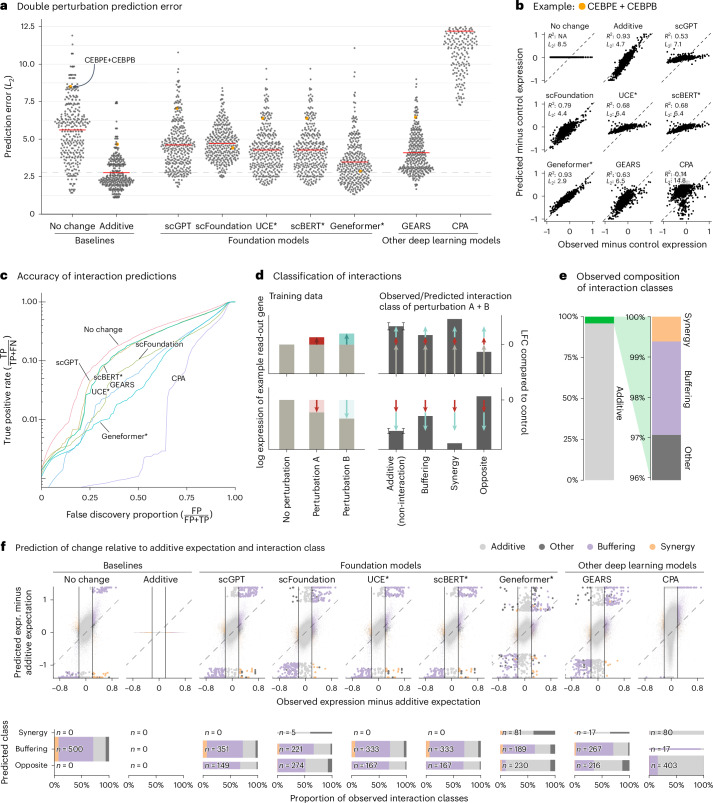
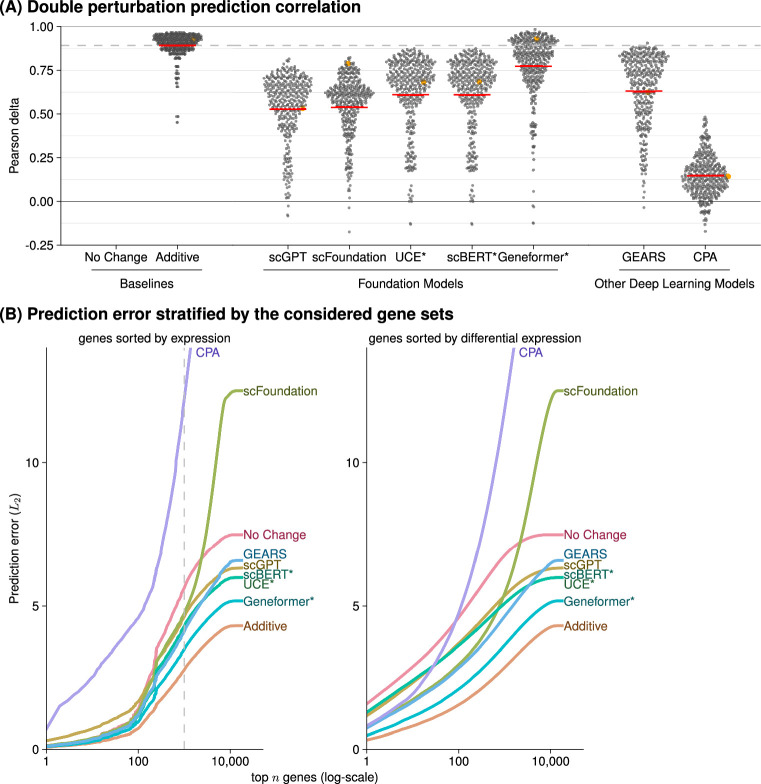
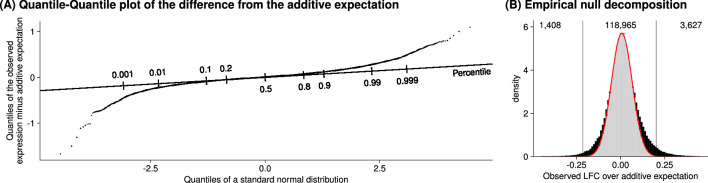
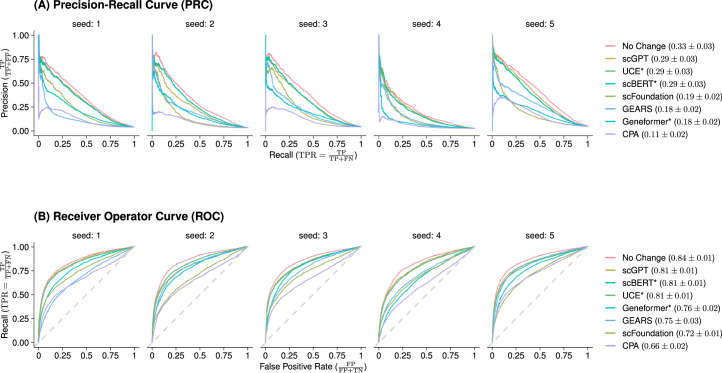
- In the double perturbation benchmark on Norman et al. data (100 single genes, 124 gene pairs, 19,264 genes), all models had prediction error substantially higher than the additive baseline, and none was better than the “no change” baseline for genetic interaction prediction. Using the full dataset, the authors identified 5,035 genetic interactions out of potentially 124,000 at a 5% false discovery rate.
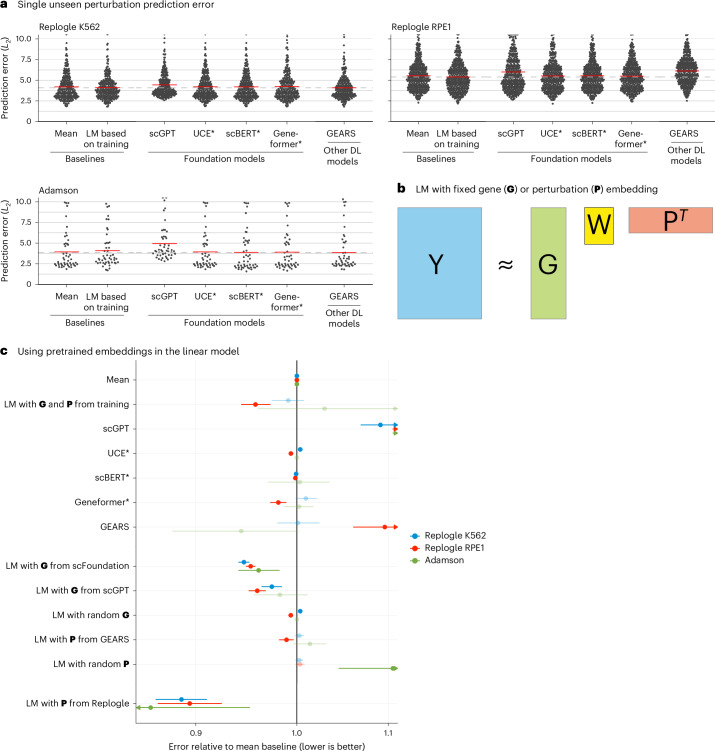
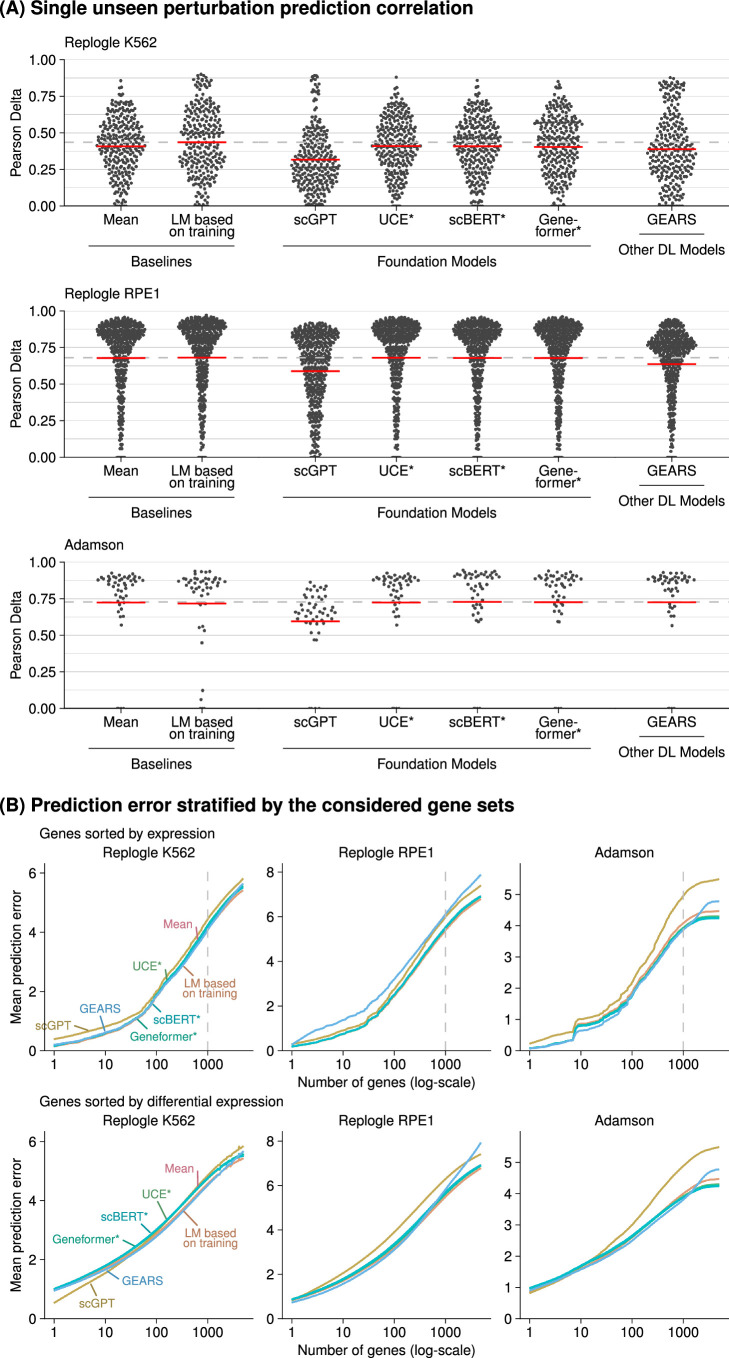
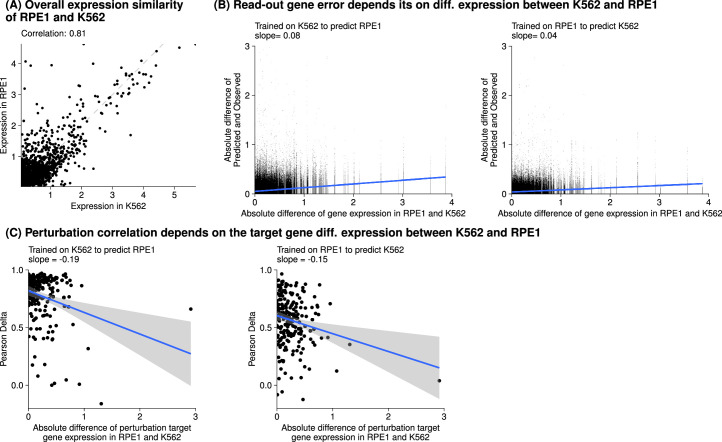
- In the unseen single perturbation benchmark, none of the deep learning models consistently outperformed the mean prediction or the linear model. A linear model with perturbation embeddings pretrained on Replogle data consistently outperformed all other models; gene embeddings from scFoundation and scGPT outperformed the mean baseline but did not consistently outperform the linear model using G and P from the training data.
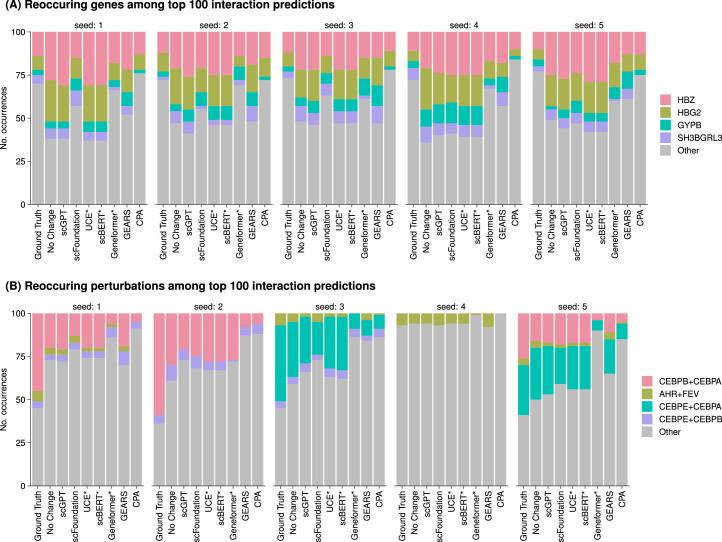
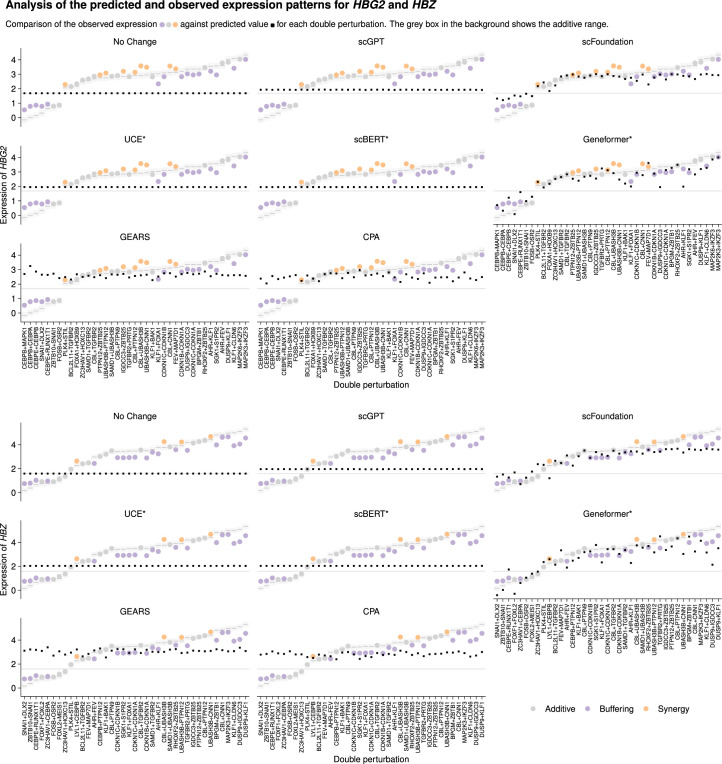
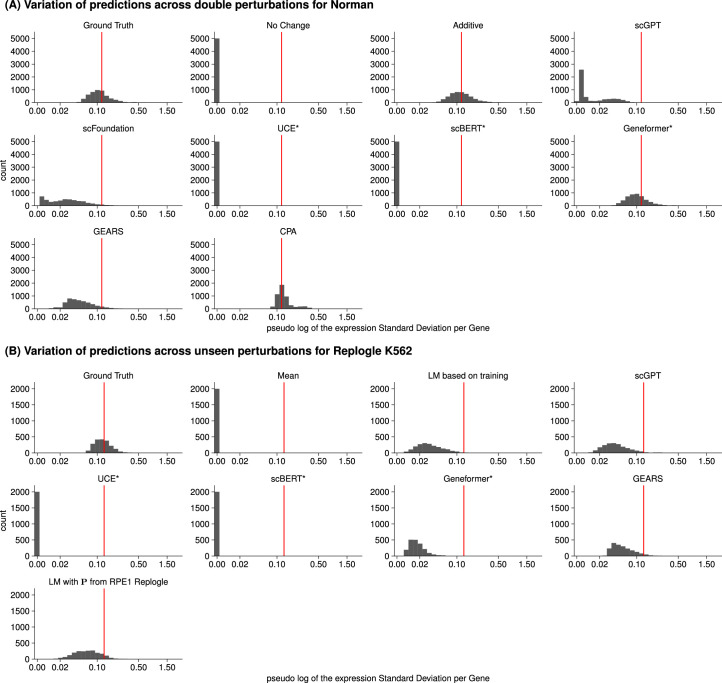
- All models mostly predicted buffering interactions, rarely predicted synergistic interactions, and even more rarely predicted them correctly. For most genes, scGPT, UCE and scBERT predictions did not vary across perturbations, and GEARS and scFoundation predictions varied considerably less than the ground truth.
Methods
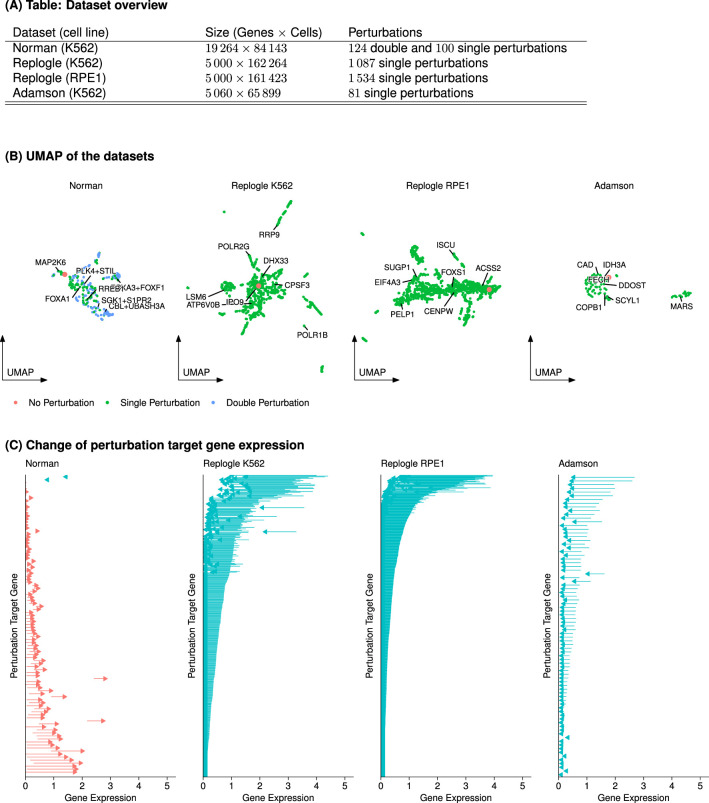
- Benchmarked GEARS v0.1.2, scGPT v0.2.1, scFoundation, CPA v0.8.8, Geneformer v0.1.0, scBERT and UCE against simple baselines. Double perturbation analysis used Norman et al. data, training on all 100 single perturbations and 62 double perturbations and testing on the remaining 62 double perturbations across five random splits. Single perturbation analysis used Adamson et al. and Replogle et al. K562/RPE1 datasets with GEARS’ simulation test–training splitting repeated twice.
- Prediction error was the L2 distance between predicted and observed expression for the 1,000 most highly expressed genes; Pearson delta and other gene subsets were also examined. Genetic interactions were defined as deviations from additive expectation using Efron’s empirical null approach with the locfdr package at a 5% false discovery rate, and true-positive rate versus false discovery proportion curves were computed.
- The linear model represented read-out genes with matrix G and perturbations with matrix P, found W via normal equations with ridge penalty λ = 0.1, and used K = 10. Baselines included “no change,” “additive” and “mean.” For Geneformer, UCE and scBERT, a ridge regression linear decoder mapped perturbed embeddings to gene expression.
Limitations
- The paper states that only four datasets were used, chosen because they were used in the publications presenting GEARS, scGPT and scFoundation; all datasets are from cancer cell lines; and the authors did not attempt to improve original quality control, for example by excluding perturbations that did not affect their own target gene.
- The paper acknowledges that for UCE and scBERT, the post-perturbation embedding was calculated by overwriting rows for perturbed genes with values from the ground truth expression matrix, so test data leakage could theoretically give those models an advantage. It also notes that CPA authors submitted a code fix, but because the new code had worse performance, the original code results are reported.
Model-written summary. Check it against the paper before relying on it.
Integrity signals
Registry
Cites
Statistics
Figures
Verification
Claims the paper makes
6 Valid · 0 Not valid · 5 Not checked · 32 Own results and interpretations
Every source the paper cites for this claim was checked and supports it.
In the paper
“The approach that did consistently outperform all other models was a linear model with P pretrained on the Replogle data (using the K562 cell line data as pretraining for the Adamson and RPE1 data and the RPE1 cell line for the K562 data).”
§ Deep-learning-based gene perturbation effect prediction does not yet outperform simple linear baselines > Main
What the sources say
- Supportedcites Replogle et al.13 Replogle, J. M. et al. Mapping information-rich genotype-phenotype landscapes with genome-scale Perturb-seq. Cell 185, 2559–2575 (2022). 35688146 PMC9380471 source
The Methods describe Perturb-seq datasets generated in K562 and RPE1 cells, confirming that this paper is the source of the identified Replogle data. The statement that a pretrained linear model outperformed other models is the citing authors’ comparison, not a result attributed to Replogle et al. (LLM, conf=0.88)
plain- Asserted: passes — The authors put it forward as true.
- Checkable: passes — It can be checked against evidence.
- Load-bearing: passes — The paper’s conclusions depend on it.
- Based: passes — The paper gives a reason why it holds.
- Supported
The cited sources support only part of this claim — read each source’s verdict below.
In the paper
“Since the release of our paper as a preprint, several other benchmarks15,16,22–27 were released that also show that deep learning models struggle to outperform simple baselines.”
§ Deep-learning-based gene perturbation effect prediction does not yet outperform simple linear baselines > Main
What the sources say
- Supportedcites [15] Kernfeld, E., Yang, Y., Weinstock, J. S., Battle, A. & Cahan, P. A systematic comparison of computational methods for expression forecasting. Preprint at bioRxiv10.1101/2023.07.28.551039 (2024). sourceExperimental — accuracy not yet measured
The Discussion reports that very simple baselines typically performed at least as well as the methods benchmarked. This paper is one of the benchmarks cited in the sentence; it need not itself establish the findings of the other cited benchmarks. (LLM, conf=0.90)
- Supportedcites [16] Csendes, G., Sanz, G., Szalay, K. Z. & Szalai, B. Benchmarking foundation cell models for post-perturbation RNA-seq prediction. BMC Genomics 26, 393 (2025). 40269681 PMC12016270 sourceExperimental — accuracy not yet measured
The Discussion reports that this benchmark compared foundation models with baselines and found that the simple Train Mean model outperformed scGPT and scFoundation in most cases. The source therefore supports its use as one example among the cited benchmarks; it does not, by itself, establish what the other benchmarks found. (LLM, conf=0.91)
- Not checked — no full text of the sourcecites [22] Wenteler, A. et al. PertEval-scFM: benchmarking single-cell foundation models for perturbation effect prediction. In Proc. 42nd International Conference on Machine Learning (ICML, 2025). source
- Supportedcites [23] Bendidi, I. et al. Benchmarking transcriptomics foundation models for perturbation analysis: one PCA still rules them all. Preprint at https://arxiv.org/abs/2410.13956 (2024). source
This source is a benchmark comparing transcriptomics foundation models with simpler baselines. Its Conclusion (section 6) reports that scVI and PCA outperform the foundation models on most perturbation-related tasks, supporting its use as an example of the benchmarks cited. The timing relative to the citing authors’ preprint is their framing, not a finding attributed to this source. (LLM, conf=0.91)
- Supportedcites [24] Wu, Y. et al. PerturBench: benchmarking machine learning models for cellular perturbation analysis. Preprint at https://arxiv.org/abs/2408.10609 (2024). source
The Introduction reports that simple architectures can outperform more sophisticated models on larger datasets. Section 6 (Discussion) likewise says the Latent Additive and Decoder-Only baselines outperform more complex methods on larger datasets, while acknowledging that the complex methods perform best on some smaller datasets. This supports the claim that deep learning models can struggle to outperform simple baselines; the timing of the benchmark's release is the citing authors' framing. (LLM, conf=0.91)
- Partly supportedcites [25] Li, L. et al. A systematic comparison of single-cell perturbation response prediction models. Preprint at bioRxiv10.1101/2024.12.23.630036 (2024). PMC13557097 42715312 sourceExperimental — accuracy not yet measured
The Abstract identifies this paper as a benchmark comparing methods and baselines and reports limits to model performance. It does not say that deep-learning models struggled to outperform simple baselines, so the specific finding attributed to this benchmark is not supported by our copy. (LLM, conf=0.78)
- Not checked — no full text of the sourcecites [26] Li, C. et al. Benchmarking AI models for in silico gene perturbation of cells. Preprint at bioRxiv10.1101/2024.12.20.629581 (2025). source
- Supportedcites [27] Wong, D. R., Hill, A. S. & Moccia, R. Simple controls exceed best deep learning algorithms and reveal foundation model effectiveness for predicting genetic perturbations. Bioinformatics41, btaf317 (2025). PMC12202205 40407144 sourceExperimental — accuracy not yet measured
The Abstract (Results) says this paper's simple baseline outperforms state-of-the-art deep-learning methods. Section 3.1 reports that the CRISPR-informed mean model performed better on average than all deep-learning models tested, while acknowledging conditions in which deep-learning models did better. It therefore supports the citing sentence as one of the benchmarks showing that deep-learning models struggle to outperform simple baselines. (LLM, conf=0.91)
plain- Asserted: passes — The authors put it forward as true.
- Checkable: passes — It can be checked against evidence.
- Load-bearing: unclear — It is unclear whether the paper’s conclusions depend on it.
- Based: passes — The paper gives a reason why it holds.
- Supported
Every source the paper cites for this claim was checked and supports it.
In the paper
“Using the full dataset, we identified 5,035 genetic interactions (out of potentially 124,000) at a false discovery rate of 5%.”
§ Deep-learning-based gene perturbation effect prediction does not yet outperform simple linear baselines > Main
What the sources say
- Supportedcites Norman et al.11 Norman, T. M. et al. Exploring genetic interaction manifolds constructed from rich single-cell phenotypes. Science 365, 786–793 (2019). 31395745 PMC6746554 source
The ‘An overexpression strategy identifies strong genetic interactions’ section (page unavailable) describes Norman et al.’s genetic-interaction dataset, supporting its identification as the dataset used. The 5,035 interactions, 124,000 potential interactions, and 5% false-discovery rate are presented as the citing authors’ own analysis (‘we identified’), not as findings attributed to Norman et al.; the cited paper does not report those figures. (LLM, conf=0.84)
plain- Asserted: passes — The authors put it forward as true.
- Checkable: passes — It can be checked against evidence.
- Load-bearing: unclear — It is unclear whether the paper’s conclusions depend on it.
- Based: passes — The paper gives a reason why it holds.
- Supported
Every source the paper cites for this claim was checked and supports it.
In the paper
“Another limitation is that all datasets are from cancer cell lines, which, for example, Theodoris et al.5 excluded from their training data because of concerns about their high mutational burden.”
§ Deep-learning-based gene perturbation effect prediction does not yet outperform simple linear baselines > Main
What the sources say
- Supportedcites Theodoris et al.5 Theodoris, C. V. et al. Transfer learning enables predictions in network biology. Nature 618, 616–624 (2023). 37258680 PMC10949956 source
The Geneformer architecture and pretraining section states that Theodoris et al. excluded cells with high mutational burdens, including immortalized cell lines, from their pretraining corpus because mutations could substantially rewire networks. The cited paper does not establish that all datasets in the citing authors’ benchmark came from cancer cell lines; that is the citing authors’ own description, not the point attributed to this source. (LLM, conf=0.94)
plain- Asserted: passes — The authors put it forward as true.
- Checkable: passes — It can be checked against evidence.
- Load-bearing: unclear — It is unclear whether the paper’s conclusions depend on it.
- Based: passes — The paper gives a reason why it holds.
- Supported
A result the paper reports from its own data — it cites no other source for it, so there is none to check. The quote shows it is in the paper.
In the paper
“all models except Geneformer and scFoundation predicted LFC ≈ 0—like the ‘no change’ baseline—for the double perturbation of these two genes, despite their strong individual effects (Extended Data Fig. 6).”
§ Deep-learning-based gene perturbation effect prediction does not yet outperform simple linear baselines > Main
plain- Asserted: passes — The authors put it forward as true.
- Checkable: passes — It can be checked against evidence.
- Load-bearing: unclear — It is unclear whether the paper’s conclusions depend on it.
- Based: passes — The paper gives a reason why it holds.
22 more claims
Create a free account to see all 43 claims and to verify the 2 references still open.
- Probably not a substantial claim. 15
- It may state two separate claims as one. 3
Claims other papers make about this one
Each is checked against this paper’s own text: does it say what the citing paper says it does?
The cited source says what the claim attributes to it.
In the citing paper
“Besides, simple baselines proved highly competitive with complex deep learning models, which is consistent with a previous study (25).”
From A systematic comparison of single-cell perturbation response prediction models (2026) · cites this paper as [25]
The cited source says what the claim attributes to it.
In the citing paper
“This finding extends recent observations that simple additive or linear baselines remain difficult to outperform in double-perturbation prediction (25, 31).”
From A systematic comparison of single-cell perturbation response prediction models (2026) · cites this paper as [25]
The cited source says what the claim attributes to it.
In the citing paper
“Recent studies have provided initial benchmarks comparing foundation models, other deep learning architectures, and simple baselines for perturbation effect prediction and reported that complex models do not consistently outperform the simpler alternatives (22–26).”
From A systematic comparison of single-cell perturbation response prediction models (2026) · cites this paper as [25]
The cited source says what the claim attributes to it.
In the citing paper
“While this work provides valuable insights, its evaluation was limited in dataset diversity and task coverage, leaving the question of whether such conclusions generalize across broader biological contexts.”
From A systematic comparison of single-cell perturbation response prediction models (2026) · cites this paper as [25]
Citations
Cites
A Survey on Evaluation of Large Language Models
Chang, Y., Wang, X., Wang, J., Wu, Y., Yang, L., Zhu, K., Chen, H., Yi, X., Wang, C., Wang, Y., et al. (2024) · ACM Transactions on Intelligent Systems and Technology · doi:10.1145/3641289 · Cited by 4,254
A Survey on Evaluation of Large Language Models
Chang, Y., Wang, X., Wang, J., Wu, Y., Yang, L., Zhu, K., Chen, H., Yi, X., Wang, C., Wang, Y., et al. (2023) · arXiv · doi:10.48550/arxiv.2307.03109 · Cited by 3,159
The Gene Ontology knowledgebase in 2023
The Gene Ontology Consortium, Aleksander, S. A., Balhoff, J., Carbon, S., Cherry, J. M., Drabkin, H. J., Ebert, D., Feuermann, M., Gaudet, P., Harris, N. L., et al. (2023) · GENETICS · doi:10.1093/genetics/iyad031 · Cited by 2,664
Regev, A., Teichmann, S. A., Lander, E. S., Amit, I., Benoist, C., Birney, E., Bodenmiller, B., Campbell, P., Carninci, P., Clatworthy, M., et al. (2017) · eLife · doi:10.7554/elife.27041 · Cited by 2,232
scGPT: Towards Building a Foundation Model for Single-Cell Multi-omics Using Generative AI
Cui, H., Wang, C., Maan, H., Pang, K., Luo, F., & Wang, B. (2023) · doi:10.1101/2023.04.30.538439 · Cited by 1,694
Benchmarking atlas-level data integration in single-cell genomics
Luecken, M. D., Büttner, M., Chaichoompu, K., Danese, A., Interlandi, M., Mueller, M. F., Strobl, D. C., Zappia, L., Dugas, M., Colomé-Tatché, M., et al. (2022) · Nature Methods · doi:10.1038/s41592-021-01336-8 · Cited by 1,438
Adamson, B., Norman, T. M., Jost, M., Cho, M. Y., Nuñez, J. K., Chen, Y., Villalta, J. E., Gilbert, L. A., Horlbeck, M. A., Hein, M. Y., et al. (2016) · Cell · doi:10.1016/j.cell.2016.11.048 · Cited by 1,193 · cited 2×
“For the single gene perturbation benchmarks, we used the data from Adamson et al. 14 and Replogle et al. 13 as provided by GEARS (details in ‘Data availability’).”
Transfer learning enables predictions in network biology
Theodoris, C. V., Xiao, L., Chopra, A., Chaffin, M. D., Al Sayed, Z. R., Hill, M. C., Mantineo, H., Brydon, E. M., Zeng, Z., Liu, X. S., et al. (2023) · Nature · doi:10.1038/s41586-023-06139-9 · Cited by 1,193 · cited 1×
“Another limitation is that all datasets are from cancer cell lines, which, for example, Theodoris et al. 5 excluded from their training data because of concerns about their high mutational burden.”
Large-scale foundation model on single-cell transcriptomics
Hao, M., Gong, J., Zeng, X., Liu, C., Guo, Y., Cheng, X., Wang, T., Ma, J., Zhang, X., & Song, L. (2024) · Nature Methods · doi:10.1038/s41592-024-02305-7 · Cited by 988
Large-Scale Inference: Empirical Bayes Methods for Estimation, Testing, and Prediction
Efron, B. (2010) · Cambridge University Press eBooks · doi:10.1017/cbo9780511761362 · Cited by 813
Research works printed but not linked: 1
- Märtens, K., Donovan-Maiye, R. & Ferkinghoff-Borg, J. Enhancing generative perturbation models with LLM-informed gene embeddings. In Proc. Workshop on Machine Learning for Genomics Explorations (ICLR, 2024). https://openreview.net/forum?id=eb3ndUlkt4
Cited by
Items 101–166 of 166
Computational modelling of cell identity
Shim, W. J., Chow, C. S. Y., Bao, S. C., Zhao, Q., & Palpant, N. J. (2026) · Biochemical Journal · doi:10.1042/bcj20250132
Flamholz, Z., & Kelly, L. (2026) · EMBO Reports · doi:10.1038/s44319-026-00723-6
“Yet, in predicting the transcriptional effects of gene perturbations, single-cell foundation models perform no better than simpler statistical frameworks (Ahlmann-Eltze et al, 2025).”
Generative genomics accurately predicts future experimental resultsPreprint
Koytiger, G., Walsh, A. M., Marar, V., Johnson, K. A., Highsmith, M. R., Abbas, A., Stirn, A., Brumbaugh, A. R., David, A., Hui, D., et al. (2025) · bioRxiv (Cold Spring Harbor Laboratory) · doi:10.1101/2025.09.08.674753 · Cited by 1
“Despite being a valuable resource for AI model development 20,34,35 , Perturb-seq data presents unique challenges, including technical artifacts and non-specific responses 20,36–39 , which require focused resolution for this data type that goes beyond the scope of our initial study.”
Dhaka, B., Gao, J., & Ideker, T. (2026) · bioRxiv (Cold Spring Harbor Laboratory) · doi:10.64898/2026.04.23.720505 · Cited by 2
“However, several studies have reported that such enormous models do not yet consistently outperform simpler methods 17,18 .”
The next 25 years of cancer research: emerging perspectives and priorities
Chalabi, M., Coorens, T. H. H., Li, L., Reading, J. L., Shen, S., & Szczurek, E. (2026) · Nature reviews. Cancer · doi:10.1038/s41568-026-00975-3
A transcription factor regulatory atlas for activity inference and perturbation prediction
Sugimoto, H., Tsuyuzaki, K., Zou, Z., Oki, S., Ohta, T., & Kawakami, E. (2026) · Nucleic Acids Research · doi:10.1093/nar/gkag897
Shorer, O., Amit, R., & Yizhak, K. (2026) · Cell Genomics · doi:10.1016/j.xgen.2026.101328 · Cited by 1
“Importantly, corresponding to previous studies analyzing different single-cell models in various tasks, 67,68 all five models trained within our platform showed relatively comparable overall performance despite varying levels of complexity.”
Tissue-Specific Spatial Regulation of Innate Immune Checkpoints in Cancer
Stojanovic, A., Giorgetta, S., Vonhören, D., Krieghoff‐Henning, E., Platten, M., Loges, S., Tugues, S., & Cerwenka, A. (2026) · Cancer Discovery · doi:10.1158/2159-8290.cd-25-2112
Shen, H. (2026) · Research Square · doi:10.21203/rs.3.rs-10846736/v1 · Cited by 1
Perez-Piñar, T., Meyers-Angulo, J. E., Meister, A., et al. (2026) · Journal of Plant Growth Regulation · doi:10.1007/s00344-026-12149-4
“This is confirmed by other studies where more simple models are preferred (Ahlmann-Eltze et al. 2025; Ramam-piandra et al. 2023).”
Induced pluripotent stem cells from discovery to translation
Lee, J., Herron, T. J., Studer, L., Mummery, C. L., & Wu, J. C. (2026) · Nature Medicine · doi:10.1038/s41591-026-04584-3 · Cited by 3
Belić, M., & Furman, D. (2026) · bioRxiv (Cold Spring Harbor Laboratory) · doi:10.64898/2026.09.22.753641
AI virtual cells for drug discovery and pharmacology
Wang, S., Zhang, Y., Wang, D., Liu, H., & Yao, X. (2026) · Trends in Pharmacological Sciences · doi:10.1016/j.tips.2026.08.006
DoFormer: Causal Transformer for Gene PerturbationPreprint
Karbalayghareh, A., Paull, E., & Califano, A. (2026) · bioRxiv (Cold Spring Harbor Laboratory) · doi:10.64898/2026.05.02.722054
Drug Response Prediction Provides a Biologically Relevant Benchmark for Perturbation Response ModelsPreprint
Brouwer, N., Damyanov, M., Argelo, J., Vis, D. J., Reinders, M. J. T., & Wessels, L. F. A. (2025) · bioRxiv (Cold Spring Harbor Laboratory) · doi:10.64898/2025.12.09.693213 · Cited by 1
Bridging precision agriculture and human medicine through comparative genetics
Liu, X., Li, B., & Fang, L. (2026) · Nature Reviews Genetics · doi:10.1038/s41576-026-01000-x · Cited by 1
CellTarNet: Robust Single-Cell Perturbation Prediction using Transformer Generative Model
Shankar, S. S. (2026) · ACM International Conference on Bioinformatics, Computational Biology, and Health Informatics (ACM-BCB) · doi:10.1145/3807503.3819992
Cell-Cell-Seq resolves contact-associated NK cell activation in defined tumor cell dyadsPreprint
Liang, J., Shao, D., Carlo, D. D., & de Rutte, J. M. (2026) · bioRxiv (Cold Spring Harbor Laboratory) · doi:10.64898/2026.06.04.730259
Sun, P., Wang, J., Wang, Y., Zhang, Y., Tang, Y., Yang, J., & Wang, Z. (2026) · Research Square · doi:10.21203/rs.3.rs-10804793/v1
Machine-learning-guided discovery of selective CK2 inhibitors with reduced CDK off-target activity
Ying, H., Kong, W., Schulman, A., Panajotovikj, N., Pääkkönen, M., Malpani, T., Leino, T. O., Tanoli, Z., Kauko, O., Mestres, J., et al. (2026) · Communications Chemistry · doi:10.1101/2025.11.12.688093
Modeling Dynamics, Cell Type Specificity, and Perturbations in Gene Regulatory Networks
Shin, J., Halberg, S., Liu, Y., Hazra, S., Lee, E. D.-I., & Roy, S. (2026) · Annual Review of Genomics and Human Genetics · doi:10.1146/annurev-genom-120922-103729
Re-evaluating the benefit of training scale in cell foundation modelsPreprint
Shakeel, M. H., Shen, M., & Mangiola, S. (2026) · bioRxiv (Cold Spring Harbor Laboratory) · doi:10.64898/2026.06.04.730272
“We adapted the Geneformer benchmarking workflow from Ahlmann et al. 21 , available on GitHub (linear perturbation prediction-Paper).”
InfluentialDELPHAI predicts heterogeneous perturbation responses with learned single-cell fitnessPreprint
Zhang, X., Wu, H., & Liu, H. (2026) · bioRxiv (Cold Spring Harbor Laboratory) · doi:10.64898/2026.07.01.735965
DELPHAI, AI Agent for Predicting Drug Response and ResistancePreprint
Peng, T., Wu, H., Liu, H., & Zhang, X. (2025) · bioRxiv (Cold Spring Harbor Laboratory) · doi:10.1101/2025.09.12.675826
“However, emerging evidence suggests that simpler linear approaches may achieve comparable or even superior performance in certain contexts, raising important questions about the optimal balance between methodological sophistication and practical e(cid:27)ectiveness 9 .”
From unsupervised clustering to atlas-guided annotation in cohort-scale spatial omics with HiCATPreprint
Huang, J., Shen, X., Smith, Y., Harik, L. R., Wang, L., Yu, J. L., Epstein, M. P., & Hu, J. (2026) · bioRxiv (Cold Spring Harbor Laboratory) · doi:10.64898/2026.05.27.728266
“Unlike many pathology FMs 10,11 , where large expert-labeled corpora support supervised pretraining, most genomics FMs are trained in an unsupervised manner, sometimes yielding inferior performance to regression baseline in certain tasks 12,13 .”
Bidirectional network hubs: NT-genes as candidate targets for partial cancer reversal
Gil, G., Perez, R., & González, A. (2026) · Frontiers in Systems Biology · doi:10.3389/fsysb.2026.1868020
Zhang, L., Yan, W., Wang, D., & Ma, J. (2026) · Journal of Orthopaedic Translation · doi:10.1016/j.jot.2026.101118 · Cited by 2
“Distinct from functional validation, protein language models and structure-informed classifiers concurrently assess structural viability, effectively distinguishing disordered, disease-associated bystanders from structurally viable TPD substrates [57 – 60].”
Xu, Z., Liu, Y., Cheng, L., & Xu, J. (2026) · Frontiers in Oncology · doi:10.3389/fonc.2026.1915323
Ahmed, A. K. K., & almutairi, K. (2026) · SSRN Electronic Journal · doi:10.2139/ssrn.7216082
Romero-Tapiador, S., Rodríguez-Mier, P., Garrido‐Rodríguez, M., Tolosana, R., Morales, A., & Sáez-Rodríguez, J. (2025) · bioRxiv (Cold Spring Harbor Laboratory) · doi:10.1101/2025.09.08.674873
Gradient-aware modeling advances AI-driven prediction of genetic perturbation effectsPreprint
Zhu, D., & Jerby‐Arnon, L. (2025) · bioRxiv (Cold Spring Harbor Laboratory) · doi:10.1101/2025.10.03.680360 · Cited by 2
“GARM was compared to four other methods that were developed to predict the results of Perturb-seq screens: GEARS 11 , scGPT 12 , GenePert 13 , and a co-expression based linear model that we refer to as ‘Coexpress’ 15 .”
InfluentialSugimoto, H., Tsuyuzaki, K., Zou, Z., Oki, S., Ohta, T., & Kawakami, E. (2025) · bioRxiv (Cold Spring Harbor Laboratory) · doi:10.1101/2025.10.05.680506
“…omics data (16) and regression-based models (17, 18), often require substantial task-specific training data and can sometimes fail to outperform simple baselines (6), limiting their utility in common scenarios, such as small case-control bulk RNA-seq studies without matched perturbation datasets.”
Gene dependency-informed inference of response to targeted cancer therapies
Bhattacharjee, N., Peela, S. C. M., Halder, A., Mathew, B., Samanta, S., Gujral, S., Kumari, S., Panda, S., Ganguly, R., Ahuja, G., et al. (2026) · Nature Communications · doi:10.1038/s41467-026-73977-2 · Cited by 2
蒋丹凝, An, Z., Zhao, Y., & Lai, L. (2026) · bioRxiv (Cold Spring Harbor Laboratory) · doi:10.64898/2026.06.08.731000 · Cited by 1
Zhang, J., Schwartz, M. A., Mutaher, M., Olajide, O., Pritykin, Y., Ashenberg, O., Hacohen, N., & Uhler, C. (2026) · bioRxiv (Cold Spring Harbor Laboratory) · doi:10.64898/2026.05.21.726863 · Cited by 1
Yu, J., Xu, G., Li, Y. C., Huang, M., Yang, L., & Peng, X. Y. (2026) · Journal of Nanobiotechnology · doi:10.1186/s12951-026-04525-9
“It has been demonstrated that deep learning models may even perform worse than simple linear regression in biological data settings more complex than liquid biopsy [54, 55].”
Zhao, M., Ma, X., Shi, W., & Sun, Y. (2026) · Life Sciences · doi:10.1016/j.lfs.2026.124600 · Cited by 1
Dubuc, A., Renne, T., Huguet, G., Jacquemont, S., & Nowakowski, T. J. (2026) · Cell Genomics · doi:10.1016/j.xgen.2026.101192 · Cited by 1
“88 Models described above are trained on transcriptomic data-sets without genetic information and, as a result, are not capable of predicting the effects of gene-disrupting variants and their combinations (e.g., a given variant on different polygenic backgrounds).”
Epigenomic regulatory programs reveal the latent heterogeneity of complex diseasesPreprint
Shim, W. J., Bao, S. C., Chow, C. S. Y., Shen, S., Riedlshah, Z., Zhao, Q., Zeng, J., Shah, S. H., Mizikovsky, D., Bodén, M., et al. (2026) · bioRxiv (Cold Spring Harbor Laboratory) · doi:10.64898/2026.05.01.722123
Statistics in the next quarter-century: Playing also in the frontyard?
Bühlmann, P. (2026) · Statistical Learning and Data Science · doi:10.1016/j.slads.2026.100006 · Cited by 1
Integration of artificial intelligence and multi-omics for precision medicine
Marei, H. E. S., Cenciarelli, C., & Vagni, D. (2026) · Functional & Integrative Genomics · doi:10.1007/s10142-026-02024-6
DINOcell: learning generalizable perturbation effects through self-distillationPreprint
Li, J., Tasdemir, N., Kyriazopoulou-Panagiotopoulou, S., Xu, S., Merrell, A. J., Susanto, J., Cass, A. A., DeTomaso, D., Steach, H., Chow, J. C., et al. (2025) · bioRxiv (Cold Spring Harbor Laboratory) · doi:10.64898/2025.12.16.694747
“However, current deep learning models struggle to disentangle the effects of perturbations on cell state from technical variation and thus underperform simple baselines [1, 2].”
Catalyzing CAR-T innovation with AI virtual cells: Breakthroughs, bottlenecks, and the path forward
Liang, X., Luo, B., Jiang, N., et al. (2026) · The Innovation Life · doi:10.59717/j.xinn-life.2026.100261
The medicinal chemist’s map to deep learning: Concepts, applications, and case studies
Mahale, M., Tieghi, R. S., Gogishvili, D., Huynh, D. L., Gomes, R. A., Krishna, S., Dalmas, D. A., Bender, A., & Seal, S. (2025) · Elsevier eBooks · doi:10.1016/b978-0-443-29808-0.00066-2
Sadalski, I. (2025) · bioRxiv (Cold Spring Harbor Laboratory) · doi:10.64898/2025.12.05.690830
Yi, Z., Ma, N., & Ao, Y. (2025) · Biology · doi:10.1101/2025.06.11.658833 · Cited by 3
Rasti-Meymandi, A., Nahali, S., Paramithiotis, E., Cheung, A. M., & Dolatabadi, E. (2026) · bioRxiv (Cold Spring Harbor Laboratory) · doi:10.64898/2026.09.10.750801
scDiagnostics: systematic assessment of cell type annotation in single-cell transcriptomics data
Christidis, A.-A., Ghazi, A. R., Chawla, S., Turaga, N., Gentleman, R., & Geistlinger, L. (2026) · Briefings in Bioinformatics · doi:10.1093/bib/bbag496 · Cited by 1
Wu, M., Lu, J., & Ge, Q. (2026) · Cancer Genetics · doi:10.1016/j.cancergen.2026.08.002
Zhao, X., Chang, H., Zhao, Z., & Xiang, X. (2026) · Research Square · doi:10.21203/rs.3.rs-10564610/v1
CSTATE: Predicting cellular responses to perturbations
Shankar, S. S. (2026) · ACM International Conference on Bioinformatics, Computational Biology, and Health Informatics (ACM-BCB) · doi:10.1145/3807503.3819991
Are Current AI Virtual Cell Models Useful for Scientific Discovery?Preprint
Bereket, M. D., & Leskovec, J. (2026) · bioRxiv (Cold Spring Harbor Laboratory) · doi:10.64898/2026.04.23.719015 · Cited by 2
Reliable single-cell perturbations explain and improve model performancePreprint
Wang, X., Kuipers, J., Hugi, F., Platt, R. J., & Beerenwinkel, N. (2026) · bioRxiv (Cold Spring Harbor Laboratory) · doi:10.64898/2026.08.11.744177 · Cited by 5
Zhu, Y., Han, D., & Wang, Z. (2026) · Briefings in Bioinformatics · doi:10.1093/bib/bbag513
Embracing non-linearity in human ageing
Grolaux, R., Teschendorff, A. E., & Eynon, N. (2026) · Nature Reviews Genetics · doi:10.1038/s41576-026-00993-9
Fu, X., Yang, C., Cui, C., Geng, A., Sun, Y., Zha, C., Cui, F., Wei, L., Zou, Q., Gao, X.-J., et al. (2026) · Genome Research · doi:10.1101/gr.281523.125
SLIM: A small linear model with STRING embeddings for single-cell genetic perturbation predictionPreprint
Hu, D., Avelli, M. P., Jensen, L. J., & Rasmussen, S. (2026) · bioRxiv (Cold Spring Harbor Laboratory) · doi:10.64898/2026.08.07.743481
Li, L., Duan, S., Zha, X., Ye, F., Zhang, Y., Zhang, X., Cao, Y., Liu, C., & Fang, B. (2026) · bioRxiv (Cold Spring Harbor Laboratory) · doi:10.64898/2026.08.19.745729
scDiagnostics: systematic assessment of cell type annotation in single-cell transcriptomics dataPreprint
Christidis, A.-A., Ghazi, A. R., Chawla, S., Turaga, N., Gentleman, R., & Geistlinger, L. (2026) · bioRxiv (Cold Spring Harbor Laboratory) · doi:10.64898/2026.01.29.701618 · Cited by 1
“…that complex deep-learning models do not yet consistently outperform simpler linear baselines or standard statistical approaches for specific tasks [38], especially in zero-shot settings where the model encounters unseen biological states [39]. scDiagnostics relies on interpretable, statistical…”
Zhou, X., & Geng, L. (2026) · Frontiers in Psychiatry · doi:10.3389/fpsyt.2026.1910713
Kaneko, S., & Urushitani, M. (2026) · bioRxiv (Cold Spring Harbor Laboratory) · doi:10.64898/2026.05.16.716261
Do Geometric Outliers Identify Important Genes in Single-Cell Foundation Models?Preprint
Whalley, J. P. (2026) · bioRxiv (Cold Spring Harbor Laboratory) · doi:10.64898/2026.06.22.733850
Single-cell foundation models reveal context-sensitive cancer programmes under subtype shiftPreprint
Wallace, J., Youssef, G., & Han, N. (2026) · bioRxiv (Cold Spring Harbor Laboratory) · doi:10.64898/2026.04.28.721114 · Cited by 1
“Several independent benchmarks have demonstrated that in zero-shot settings, these computationally expensive models frequently fail to outperform simple linear baselines or traditional machine learning approaches across a variety of downstream tasks [6, 7, 8].”
CauTrigger: deciphering biological system state transitions by hierarchical causal decomposition
Zhang, C., Cai, D., Aihara, K., & Chen, L. (2026) · Nature Methods · doi:10.1038/s41592-026-03274-9
Tiwari, K., Mahajan, G., Bellad, R., Dhruw, N. K., & Jha, A. (2026) · doi:10.64898/2026.10.16.759604
“Ahlmann-Eltze et al. [10] compared seven models - five foundation models and two deep learning architectures - against linear baselines and found none outperformed simple alternatives, a finding independently corroborated by other studies showing that PCA-based regression and train-mean baselines…”
Metadata
- Authors
- Ahlmann-Eltze, C., Huber, W., & Anders, S.
- Affiliations
- Heidelberg University (DE)
- European Molecular Biology Laboratory (DE)
- Corresponding author
- Ahlmann-Eltze, Constantin
- Venue
- Nature Methods
- Published
- 2025-08
- Volume
- 22
- Issue
- 8
- Pages
- 1657-1661
- ISSN
- 1548-7091 (ISSN-L)
- 1548-7105
- PMC
- PMC12328236
- OpenAlex
- W4412929241
- Semantic Scholar
- 60999330de9f4b79b788725e1e81249131c6e50c
- Cited by
- 238
- References
- 31
- Citations by year
- 2026: 147 · 2025: 78
- FWCI
- 67.16
- Type
- journal article
- Language
- en
- Open access
- hybrid
- doi.org
- Licence
- cc-by
- creativecommons.org/licenses/by/4.0 (tdm)
- creativecommons.org/licenses/by/4.0 (vor, 3 d)
- Locations
- Nature Methods (publishedVersion, cc-by)
- bioRxiv (Cold Spring Harbor Laboratory) (acceptedVersion, cc-by-nc)
- PubMed Central (publishedVersion, cc-by)
- PubMed (publishedVersion)
- Funders
- Klaus Tschira Stiftung (00.022.2019)
- Topics
- Life Sciences › Biochemistry, Genetics and Molecular Biology › Molecular Biology › Single-cell and spatial transcriptomics
- Life Sciences › Biochemistry, Genetics and Molecular Biology › Molecular Biology › Gene Regulatory Network Analysis
- Life Sciences › Biochemistry, Genetics and Molecular Biology › Molecular Biology › Bioinformatics and Genomic Networks
- Keywords
- single-cell transcriptomics, foundation models, deep learning, benchmarking, transcriptome changes
- MeSH terms
- Deep Learning, Algorithms, Humans, Computational Biology, Gene Expression Profiling, Single-Cell Analysis, Transcriptome
About these checks
Registry, retraction, Cites and statistics results are computed, not judged, with one exception: a printed reference that no index lists is read once by a model before it counts as a citation error. Claims are extracted by a model and kept only when their quote appears verbatim in the text; each cited source is then checked, with a model’s help, for whether it says what the claim relies on. Those verdicts can be wrong — read the claim’s quote and the cited source before relying on one.
The claim verdicts this report counts are experimental: their accuracy is not yet measured.
A language model drew the claims from the paper on 2026-10-10, under version 3 of the claim definition (model deepseek-v4.1-flash, prompt extract-v3).
A second model labelled each claim on 2026-10-10 (model jev-1.13-20260917, definition revision gold-guideline-v0.2).
Cited sources are checked with a language model’s help (gpt-6-sol).
Statistics and arithmetic are recomputed, not judged.
Confidence bands are shown only for fields calibrated on our annotated test set. None is calibrated yet, so no band is shown.
What counts as a claim ›How we measure confidence ›How we check this ›
Are you an author, or do you see a problem with this page? Request a review
Data sources
Bibliographic data: Semantic Scholar, OpenAlex, Crossref.
Contains information from the Semantic Scholar Academic Graph Datasets, made available under the ODC Attribution License (ODC-BY 1.0).
Semantic Scholar’s data is described in: Kinney, R., et al. (2023). The Semantic Scholar Open Data Platform. arXiv:2301.10140.
