

MIMIC-IV, a freely accessible electronic health record dataset
Open accessThe DOI matches its Crossref record; 28 of the 28 references it cites were found in a registry or an index; 15 of the 20 sources its claims cite were checked for support.
Abstract
Digital data collection during routine clinical practice is now ubiquitous within hospitals. The data contains valuable information on the care of patients and their response to treatments, offering exciting opportunities for research. Typically, data are stored within archival systems that are not intended to support research. These systems are often inaccessible to researchers and structured for optimal storage, rather than interpretability and analysis. Here we present MIMIC-IV, a publicly available database sourced from the electronic health record of the Beth Israel Deaconess Medical Center. Information available includes patient measurements, orders, diagnoses, procedures, treatments, and deidentified free-text clinical notes. MIMIC-IV is intended to support a wide array of research studies and educational material, helping to reduce barriers to conducting clinical research.
Overview
CoChat Summary
## TL;DR
MIMIC-IV is a publicly available, deidentified electronic health record database from Beth Israel Deaconess Medical Center designed to support research, education, and technology development. It covers hospital and ICU care from 2008–2019 and adds modular structured data plus free-text clinical notes.
## Key findings
- The database includes patient measurements, orders, diagnoses, procedures, treatments, and deidentified free-text clinical notes, and is available through PhysioNet.
- The clinical cohort includes patients admitted to the emergency department or an ICU between 2008–2019; after exclusions, the authors linked 65,805 of 150,832 unique individuals (43.6%) to Massachusetts state death records.
- The paper reports that 51,022/65,803 (77.5%) of the successful death-record links were exact matches on last name, date of birth, and social security number; 11,634/65,803 (17.7%) were exact last name and date of birth plus approximate first name.
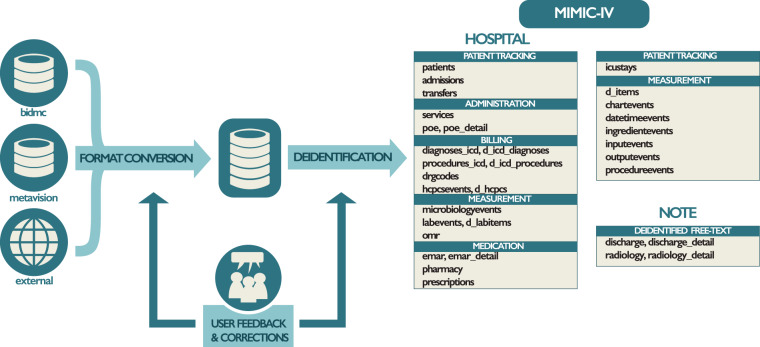
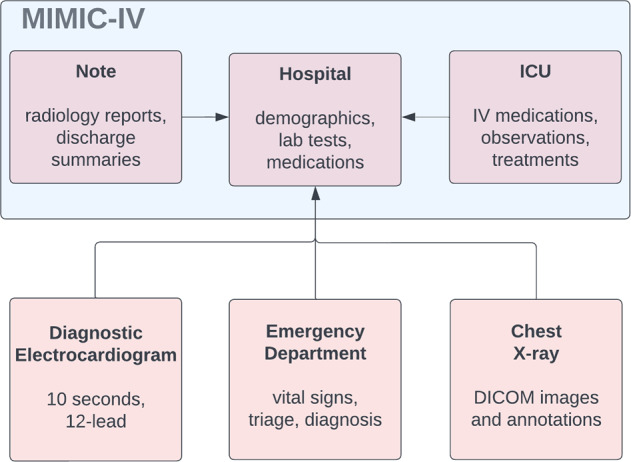
- MIMIC-IV was designed to be backward compatible with MIMIC-III while minimizing processing and organizing data into three modules: hosp, icu, and note.
## Methods
- Collaborative database construction from BIDMC clinical data, transformed and deidentified for release under IRB waiver and data use agreement; the process had three steps: acquisition, transformation, and deidentification.
- Sample/data: all patients admitted to the emergency department or an ICU at BIDMC between 2008–2019, excluding patients younger than 18 at first visit or on a protected list; external coding systems and Massachusetts death records were added.
- Main analysis/workflow: custom SQL scripts to restructure data into relational modules, plus custom linkage algorithms for out-of-hospital mortality and deidentification algorithms for HIPAA identifiers and free text; validation used integrity, consistency, and deidentification checks.
## Limitations
- The paper states that out-of-hospital mortality is only available through linkage to state death records, and deaths are censored at one year from last hospital discharge, so null death dates only indicate survival up to that point.
- The text makes evident that some data are incomplete or unevenly available across modules and time periods (for example, eMAR was deployed hospital-wide only by 2016, and the note module contains only discharge summaries and radiology reports); this is an evident coverage limitation from the text.
- The paper notes that clinical data are “sporadic and noisy,” reflecting routine care rather than research collection; this is a general data-quality limitation stated in the background.
Model-written summary. Check it against the paper before relying on it.
Integrity signals
Registry
Cites
Statistics
Figures
Verification
Claims the paper makes
13 Valid · 3 Not valid · 3 Not checked · 110 Own results and interpretations
Every source the paper cites for this claim was checked and supports it.
In the paper
“Finally, we combined two published algorithms for removing PHI from free-text17,18.”
§ MIMIC-IV, a freely accessible electronic health record dataset > Methods > Deidentification
What the sources say
- Supportedcites [17] Neamatullah I Automated de-identification of free-text medical records BMC medical informatics and decision making 2008 8 1 17 10.1186/1472-6947-8-32 18652655 PMC2526997 source
The Methods sections describe this paper's published algorithm for identifying and removing PHI from free-text medical records. The citing authors' statement that they combined two algorithms describes their own method; this citation identifies one of the algorithms. (LLM, conf=0.92)
- Supportedcites [18] Johnson, A. E. W., Bulgarelli, L. & Pollard, T. J. Deidentification of free-text medical records using pre-trained bidirectional transformers. In Proceedings of the ACM Conference on Health, Inference, and Learning, 214–221 (2020). PMC8330601 34350426 source
The Introduction (page not available in our copy) presents this paper’s BERT model for deidentifying free-text health records and describes measuring how much PHI it removes. The citation can therefore identify one of the two published algorithms; this source need not establish that the citing authors combined them. (LLM, conf=0.91)
plain- Asserted: passes — The authors put it forward as true.
- Checkable: passes — It can be checked against evidence.
- Load-bearing: passes — The paper’s conclusions depend on it.
- Based: passes — The paper gives a reason why it holds.
- Supported
Every source the paper cites for this claim was checked and supports it.
In the paper
“Due to data quality concerns regarding the Social Security Death Master File (SSDMF)13, we did not attempt to link patients to the SSDMF for determining out-of-hospital mortality.”
§ MIMIC-IV, a freely accessible electronic health record dataset > Methods > Acquisition
What the sources say
- Supportedcites [13] Levin MA Lin H-M Prabhakar G McCormick PJ Egorova NN Alive or dead: Validity of the social security administration death master file after 2011 Health Serv Res 2019 51 24 33 10.1111/1475-6773.13069 PMC6338290 30520023 source
The Discussion states that the Death Master File is no longer a reliable single source for mortality data, including out-of-hospital deaths. The decision not to link patients is the citing authors’ own methodological choice; the citation supports the data-quality concern motivating it. (LLM, conf=0.93)
plainstates a cause- Asserted: passes — The authors put it forward as true.
- Checkable: passes — It can be checked against evidence.
- Load-bearing: passes — The paper’s conclusions depend on it.
- Based: passes — The paper gives a reason why it holds.
- Supported
The cited sources support only part of this claim — read each source’s verdict below.
In the paper
“To support research that spans the periods of MIMIC-III (2002–2008) and MIMIC-IV (2008–2019), we have published the MIMIC-III Clinical Database CareVue subset22.”
§ MIMIC-IV, a freely accessible electronic health record dataset > Data Records > Building on earlier versions of MIMIC
What the sources say
- Partly supportedcites [22] Johnson AEW Pollard TJ Mark RG 2022 R. G. Mimic-iii clinical database carevue subset (version 1.4) PhysioNet 10.13026/8a4q-w170 sourceExperimental — accuracy not yet measured
The Abstract says the subset was provided to simplify combining MIMIC-III with MIMIC-IV, and the publication record identifies the released dataset. However, the Background and Methods give the CareVue period as 2001–2008, not the claim’s 2002–2008; the Background confirms MIMIC-IV’s 2008–2019 period. (LLM, conf=0.84)
plainstates a cause- Asserted: passes — The authors put it forward as true.
- Checkable: passes — It can be checked against evidence.
- Load-bearing: passes — The paper’s conclusions depend on it.
- Based: passes — The paper gives a reason why it holds.
- Partly supported
In the paper
“Access to MIMIC-IV is provided via PhysioNet19.”
§ MIMIC-IV, a freely accessible electronic health record dataset > Data Records
What the sources say
- Not checked — no full text of the sourcecites [19] Goldberger AL Physiobank, physiotoolkit, and physionet: components of a new research resource for complex physiologic signals circulation 2000 101 e215 e220 10.1161/01.CIR.101.23.e215 10851218 source
- Asserted: passes — The authors put it forward as true.
- Checkable: passes — It can be checked against evidence.
- Load-bearing: unclear — It is unclear whether the paper’s conclusions depend on it.
- Based: passes — The paper gives a reason why it holds.
A result the paper states — it cites no source for it, so there is none to check. The quote shows it is in the paper.
In the paper
“the d_icd_diagnoses and d_icd_procedures tables contain all codes which were valid at any point during the 2008–2019 time period.”
§ MIMIC-IV, a freely accessible electronic health record dataset > Data Records > Hospital module (hosp)
plain- Asserted: passes — The authors put it forward as true.
- Checkable: passes — It can be checked against evidence.
- Load-bearing: unclear — It is unclear whether the paper’s conclusions depend on it.
- Based: passes — The paper gives a reason why it holds.
29 more claims
Create a free account to see all 129 claims and every source verdict.
- Probably not a substantial claim. 84
- It may state two separate claims as one. 30
Claims other papers make about this one
Each is checked against this paper’s own text: does it say what the citing paper says it does?
The source backs part of the claim, not all of it — or backs it for a different population, condition or comparison.
In the citing paper
“We conducted a study using the publicly available MIMIC-IV dataset, which comprises 431,231 unique hospital admissions from 299,712 patients admitted to an ICU or the ED of the Beth Israel Deaconess Medical Center in Boston, Massachusetts27.”
From DRG-LLaMA : tuning LLaMA model to predict diagnosis-related group for hospitalized patients (2024) · cites this paper as [27]
Experimental — accuracy not yet measuredThe source backs part of the claim, not all of it — or backs it for a different population, condition or comparison.
In the citing paper
“For instance, the MIMIC-IV [148] includes a limited range of modalities, including clinical notes, medical images (chest x-ray Digital Imaging and Communications in Medicine [DICM] images), and time series (diagnostic electrocardiogram and patient records), making it a valuable but constrained resource for training medical M-LLMs.”
From Multimodal Large Language Models in Health Care: Applications, Challenges, and Future Outlook. (2024) · cites this paper as [148]
Experimental — accuracy not yet measuredThe source backs part of the claim, not all of it — or backs it for a different population, condition or comparison.
In the citing paper
“Existing multimodal medical data sets available for public use [84,85,148] are often relatively small in scale and demand the consolidation of numerous resources.”
From Multimodal Large Language Models in Health Care: Applications, Challenges, and Future Outlook. (2024) · cites this paper as [148]
Experimental — accuracy not yet measuredThe source backs part of the claim, not all of it — or backs it for a different population, condition or comparison.
In the citing paper
“- MIMIC-IV: A comprehensive, de-identified EHR dataset supporting tasks such as summarization, question answering, and document retrieval [17].”
From Retrieval-Augmented Generation (RAG) in Healthcare: A Comprehensive Review (2025) · cites this paper as [17]
Experimental — accuracy not yet measuredThe cited source says what the claim attributes to it.
In the citing paper
“In order to build agents that are grounded in medically relevant situations, we use a random sample of diagnostic questions from the US Medical Licensing Exam (USMLE), from deidentified electronic health records (MIMIC-IV)16, and from the New England Journal of Medicine (NEJM) case challenges.”
From AgentClinic: a multimodal benchmark for tool-using clinical AI agents (2026) · cites this paper as [16]
4 more claims about this paper
Create a free account to see every claim other papers make about this one.
Citations
Cites
Goldberger, A. L., Amaral, L. A. N., Glass, L., Hausdorff, J. M., Ivanov, P. C., Mark, R. G., Mietus, J. E., Moody, G. B., Peng, C.-K., & Stanley, H. E. (2000) · Circulation · doi:10.1161/01.cir.101.23.e215 · Cited by 14,809
Self-citationMIMIC-III, a freely accessible critical care database
Johnson, A. E. W., Pollard, T. J., Shen, L., Lehman, L.-W. H., Feng, M., Ghassemi, M., Moody, B., Szolovits, P., Anthony Celi, L., & Mark, R. G. (2016) · Scientific Data · doi:10.1038/sdata.2016.35 · Cited by 8,141 · cited 1×
“More recently, MIMIC-III was published in 2015 and significantly expanded MIMIC-II, containing data for over 40,000 patients 3 .”
MethodSelf-citationPollard, T. J., Johnson, A. E. W., Raffa, J. D., Celi, L. A., Mark, R. G., & Badawi, O. (2018) · Scientific Data · doi:10.1038/sdata.2018.178 · Cited by 1,993 · cited 2×
“0 comprises of 200,859 stays at ICUs and step-down units across 208 hospitals in the continental United States 4 .”
BackgroundSelf-citationSaeed, M., Villarroel, M., Reisner, A. T., Clifford, G., Lehman, L.-W., Moody, G., Heldt, T., Kyaw, T. H., Moody, B., & Mark, R. G. (2011) · Critical Care Medicine · doi:10.1097/ccm.0b013e31820a92c6 · Cited by 1,162
Self-citationBest Practices for Scientific Computing
Wilson, G., Aruliah, D. A., Brown, C. T., Chue Hong, N. P., Davis, M., Guy, R. T., Haddock, S. H. D., Huff, K. D., Mitchell, I. M., Plumbley, M. D., et al. (2014) · PLoS Biology · doi:10.1371/journal.pbio.1001745 · Cited by 723 · cited 1×
“The creation of MIMIC-IV followed best practices in scientific computing 23 .”
MethodJohnson, A., Bulgarelli, L., Pollard, T., Gow, B., Moody, B., Horng, S., Celi, L. A., & Mark, R. (2024) · PhysioNet · doi:10.13026/07hj-2a80 · Cited by 524
Self-citationJohnson, A., Bulgarelli, L., Pollard, T., Horng, S., Celi, L. A., & Mark, R. (2023) · PhysioNet · doi:10.13026/s6n6-xd98 · Cited by 524
Self-citationEarly prediction of circulatory failure in the intensive care unit using machine learning
Hyland, S. L., Faltys, M., Hüser, M., Lyu, X., Gumbsch, T., Esteban, C., Bock, C., Horn, M., Moor, M., Rieck, B., et al. (2020) · Nature Medicine · doi:10.1038/s41591-020-0789-4 · Cited by 477 · cited 1×
“The HiRID database contains high-resolution data for almost 34,000 admissions between 2008–2016 at Bern University Hospital in Switzerland 6,7 .”
BackgroundThe MIMIC Code Repository: enabling reproducibility in critical care research
Johnson, A. E. W., Stone, D. J., Celi, L. A., & Pollard, T. J. (2018) · Journal of the American Medical Informatics Association · doi:10.1093/jamia/ocx084 · Cited by 442 · cited 1×
“The MIMIC Code Repository was originally created for MIMIC-III to enable researchers to share and reuse code 24 .”
MethodSelf-citationAutomated de-identification of free-text medical records
Neamatullah, I., Douglass, M. M., Lehman, L.-W. H., Reisner, A., Villarroel, M., Long, W. J., Szolovits, P., Moody, G. B., Mark, R. G., & Clifford, G. D. (2008) · BMC Medical Informatics and Decision Making · doi:10.1186/1472-6947-8-32 · Cited by 413
Self-citation
Cited by
Items 1,901–2,000 of 3,269
Huang, S., Liang, W., Zhong, Y., Huang, S., Chen, L., Tang, D., Li, Y., Cui, S., Shen, L., Yan, B., et al. (2025) · Emergency Medicine International · doi:10.1155/emmi/5576804
Self-citationJang, W. S., Sultana, S., Yao, Z., Tran, H., Yang, Z., Kwon, S., & Yu, H. (2025) · doi:10.2196/preprints.75561
Zhang, K., Zhang, Z., Liang, Y., Wang, W., & Wang, X. (2025) · Communications in computer and information science · doi:10.1007/978-981-96-3752-2_14
Zhang, K., Zhang, Z., Liang, Y., et al. (2025) · doi:10.2196/preprints.74170
Schreiber, N., Eichlseder, M., Pannold, J., et al. (2025) · Journal of Critical Care · doi:10.1016/j.jcrc.2025.155091
Ren, R., Shi, Y., & Zhang, Y. (2025) · Egyptian Journal of Bronchology · doi:10.1186/s43168-025-00398-y
Development and validation of a nomogram for predicting survival in patients with cardiogenic shock
Fang, D., Chen, H., Geng, H., Chen, X., & Liu, M. (2025) · Frontiers in Cardiovascular Medicine · doi:10.3389/fcvm.2025.1538395
Decoding Natural Language Processing and Large Language Models in Kidney Health
Yetman, H. E., & Chan, L. (2025) · Clinical Journal of the American Society of Nephrology · doi:10.2215/cjn.0000000746
Ding, C., Chen, Y., Xu, Y., et al. (2025) · Journal of Atherosclerosis and Thrombosis · doi:10.5551/jat.65606
“…database covers detailed medical information of over 90,000 ICU patients collected from the Beth Israel Deaconess Medical Center (BIDMC) between 2008 and 2022, including demographic characteristics, vital signs, medical interventions, nursing records, imaging results, and discharge summaries 11) .”
Pang, F., Xu, W., Guo, L., et al. (2025) · The American Journal of the Medical Sciences · doi:10.1016/j.amjms.2025.05.001
Xiong, Y., Luo, X., Wang, J., et al. (2025) · Blood Purification · doi:10.1159/000546195
“0 (Medical Information Mart for Intensive Care IV version 3.0), a publicly accessible critical care database containing comprehensive clinical information of ICU patients admitted to Beth Israel Deaconess Medical Center (BIDMC) between 2008 and 2022 [14].”
InfluentialSi, Y., Sun, L., Chen, S., Fan, J., Pishgar, E., Alaei, K., Placencia, G., & Pishgar, M. (2026) · Informatics in Medicine Unlocked · doi:10.1016/j.imu.2026.101776 · Cited by 1
Tang, T., Thomas, A. M., Zhou, J., & Li, S. (2025) · Clinical Neurology and Neurosurgery · doi:10.1016/j.clineuro.2025.108958 · Cited by 1
Hu, H., Zhu, Y., Hu, R., Zhao, L., Zeng, X., Wu, X., Qiu, R., Nie, Y., Sharma, L., & Chang, D. (2025) · Frontiers in Pharmacology · doi:10.3389/fphar.2025.1597885
Liu, F., Li, M., Zhou, T., et al. (2025) · Research Square · doi:10.21203/rs.3.rs-6250161/v1
Ma, M., Liu, J., Li, C., Chen, Y., Jia, H., Hou, A., & Xu, H. (2025) · European Journal of Medical Research · doi:10.1186/s40001-025-02543-1
Xu, F., Yu, H., Su, Z., Zhang, P., & Wang, G. (2025) · Lecture notes in computer science · doi:10.1007/978-3-031-92741-6_13
Wang, W., Hu, H., Wu, Z., Wu, Y., Chen, Z., & Li, P. (2025) · Research Square · doi:10.21203/rs.3.rs-6373738/v1
Multi-VentNet: Multimodal Fusion Framework for Predicting Need for Mechanical Ventilation
Lee, Y. S., Lu, X., Miller, M., Lam, J. Y., Shashikumar, S. P., & Nemati, S. (2025) · IEEE International Symposium on Biomedical Imaging (ISBI) · doi:10.1109/isbi60581.2025.10980774
“2 database [14].”
Shen, T., Lv, X., Shen, Y., Zhou, W., Liu, X., Ma, Q., Sheng, S., & Zhu, F. (2025) · Research Square · doi:10.21203/rs.3.rs-6455319/v1
Huang, J., An, H., Cheng, L., et al. (2025) · Frontiers in Pharmacology · doi:10.3389/fphar.2025.1565312
Elevated TyG index outperforms TyG-BMI in predicting delirium among non-diabetic sepsis patientsPreprint
Zhao, S., Wang, F., Wang, G., et al. (2025) · Research Square · doi:10.21203/rs.3.rs-6568553/v1
Lange, M., Gogarty, E., Martyn, M., Braude, P., Fayez, F., Koutsouleris, N., Howes, O. D., Twumasi, R., & Carter, B. (2025) · BMC Digital Health · doi:10.1186/s44247-025-00170-8
“…to an antipsychotic that was identified by our model were evaluated using the Medical Information Mart for Intensive Care database (MIMIV-IV) [33]MIMIC-IV is a publicly available data-base containing deidentified electronic health records from over 300,000 patients admitted to the Beth…”
A Convolutional Transformer Network for Anomaly Detection in Wireless Body Area Networks
Bagadia, G., Bose, S., & Hota, C. (2025) · IEEE Journal of Selected Areas in Sensors · doi:10.1109/jsas.2025.3572860 · Cited by 1
“Medical Information Mart for Intensive Care (MIMIC-IV) is a publicly available clinical dataset containing anonymized health data from ICU patients, including vital signs, lab measurements, and other clinical parameters [21], [22].”
Qi, S., Huang, Y., Qi, S.-Y., & Zhai, G. (2025) · medRxiv · doi:10.1101/2025.05.20.25327987
Kang, J., & Yu, Y. (2025) · medRxiv · doi:10.1101/2025.05.26.25328362
Development of an Interpretable Early AKI Prediction Model in ICU Using the LightGBM
Wang, D., Zhao, X., Ji, Y., & Wang, H. (2025) · International Conference on Communication Networks and Machine Learning (CNML) · doi:10.1145/3728199.3728228
Li, C., Ao, T., Huang, Y., et al. (2025) · Research Square · doi:10.21203/rs.3.rs-6573275/v1
Xie, W., Walz, G., & Yakulov, T. A. (2025) · Heliyon · doi:10.1016/j.heliyon.2025.e43439
NeuroDiscovery AI database: Comprehensive EHR dataset for NeurologyPreprint
Selveshwari, S., Suri, S., Moodalagiri, S., Krishna, A., & Kasivajjala, N. C. (2025) · medRxiv · doi:10.1101/2025.06.01.25328302
“While large-scale real-world data (RWD) datasets based on electronic health records (EHR) exist for the general population (Carrigan et al., 2020; Johnson et al., 2023; Northwestern Medicine Enterprise Data Warehouse (NMEDW) ) and also in specific fields such as oncology ( Overview of the SEER…”
Chen, Y., Gu, Q., Zhao, M., Zhao, A., Hu, N., Kan, J., Xu, D., Qiao, Y., Chen, Y., Ren, H., et al. (2025) · doi:10.2196/preprints.78421
Wang, A., Chen, J., & Gao, J. (2025) · Medicine · doi:10.1097/md.0000000000042449
Chen, X., Zhou, X., Song, W., et al. (2025) · Hong Kong Journal of Emergency Medicine · doi:10.1002/hkj2.70016
Dong, Z., Xu, C., Yu, S., Zhang, X., Yuan, J., Tang, L., Xie, L., Zhang, J., Li, Q., & Wang, J. (2025) · Frontiers in Medicine · doi:10.3389/fmed.2025.1610681 · Cited by 2
Saleh, H., El-Rashidy, N. M., El–Sappagh, S., Lotfy, S. A., Zanaty, E. A., & Omran, N. F. (2025) · doi:10.1109/iceeng64546.2025.11031315 · Cited by 1
“1) Data description: In this study, the Medical Information Mart for Intensive Care III (MIMIC III) dataset [10] is used to make experimental results.”
Incident-induced attention-based deep learning model for early warning of sepsis onset
Yang, M., Gao, J., Xu, Y., Xie, J., Zhao, Y., Liu, J., Zhou, H., & Wu, J. Y. (2025) · Intelligent Medicine · doi:10.1016/j.imed.2024.11.004
Validating emergency department admission predictions based on local data through MIMIC-IV
Meimeti, F., Triantafyllopoulos, L., Sakagianni, A., Kaldis, V., Tzelves, L. I., Theodorakis, N., Paxinou, E., Feretzakis, G., Kalles, D., & Verykios, V. S. (2025) · Intelligent Decision Technologies · doi:10.1177/18724981251340355 · Cited by 1
“Secondly, it examines research employing the MIMIC database for predictive modelling in critical care and emergency settings, highlighting the value of MIMIC’s detailed clinical data and its applicability to high-risk patient scenarios.”
Zhang, W., Liu, Y., Feng, Z., Xiong, N., Tang, L., Chen, W., Zhu, X., Xue, J., Dai, W., & Yang, J. (2025) · Research Square · doi:10.21203/rs.3.rs-6824634/v1
Deng, J., & Zhao, L. (2025) · PLoS ONE · doi:10.1371/journal.pone.0325452 · Cited by 3
Chen, W., Yang, T.-M., Liu, Q., et al. (2025) · Research Square · doi:10.21203/rs.3.rs-6888159/v1
Yamamoto, S., Suzuki, G., Nishioka, S., Kobori, T., Masuyama, Y., Serizawa, H., Nakamichi, Y., & Honda, M. (2025) · Cureus · doi:10.7759/cureus.86834
“…study was conducted using the Medical Information Mart for Intensive Care - Version IV (MIMIC-IV) database, a publicly available, de-identified electronic health record dataset comprising adult patients admitted to the ICU at the Beth Israel Deaconess Medical Center between 2008 and 2019 [13].”
Xie, W., Franz, H., & Yakulov, T. A. (2025) · Journal of Clinical Medicine · doi:10.3390/jcm14134552
“The missing values for the included variables were imputed using multiple imputation by chained equations (MICE) prior to data analysis [13,14].”
Ehlers, S. F., Tranchellini, F., Farag, Y., Hahn, T., Jutzeler, C. R., & Meegahapola, L. (2025) · medRxiv · doi:10.1101/2025.06.26.25330281
Wei, S., Dong, Y., Su, Y., Chen, Y., Wang, X., Dong, H., Weng, D., Hu, Y., Guo, S., Mei, X., et al. (2025) · European journal of medical research · doi:10.1186/s40001-025-02711-3 · Cited by 1
“2 database [17].”
AI in Medicine Recent Progress Opportunities and Future Directions
Sodiqovna, I., & Park, J. C. (2024) · International Conference on Future Networks and Distributed Systems (ICFNDS) · doi:10.1145/3726122.3726267
Investigating Transformer-Based GANs for Realistic ECG Time-Series Data Generation
Moro, G. B., Assunção, J., Reinheimer, I. C., Poli‐de‐Figueiredo, C. E., & Silva, L. A. L. (2025) · Proceedings - IEEE Symposium on Computer-Based Medical Systems · doi:10.1109/cbms65348.2025.00038
Proios, D., Bornet, A., Yazdani, A., Junior, J. F. R., & Teodoro, D. (2025) · Proceedings - IEEE Symposium on Computer-Based Medical Systems · doi:10.1109/cbms65348.2025.00022 · Cited by 1
“For ICU-TSB, we used data from three publicly available ICU repositories (Johnson et al. 2023; Sadeghi et al. 2024; Pollard et al. 2018 ICD-9-CM and ICD-10 codes are available for each ICU stay in three datasets, enabling disease classification.”
STE-Model: Stack-Vote Ensemble Model for Predicting 30-Day Mortality in Sepsis Patients
Li, W., Wu, R., Liu, M., Li, J., Hou, Y., & Fan, Z. (2025) · Lecture notes in electrical engineering · doi:10.1007/978-981-96-2432-4_9
Lu, L., Ou, H., Wang, X., et al. (2025) · Journal of Clinical Neuroscience · doi:10.1016/j.jocn.2025.111463
Ding, H., Li, X., Li, J., Zhang, X., & Li, Q. (2025) · Research Square · doi:10.21203/rs.3.rs-6794102/v1
RetractedChen, J., Yang, Y., Liang, M., & Yanbo, L. I. U. (2025) · Research Square · doi:10.21203/rs.3.rs-7032952/v1
MediTHIM: Temporal Hierarchical Imputation Methods for Medical Time Series
Hashemolhosseiny, H., & Branco, P. (2025) · Lecture notes in computer science · doi:10.1007/978-981-96-8892-0_19
COMPARING CLASSIFIERS IN THE PRESENCE OF ERRORS IN TRUE LABEL ASSIGNMENT IN MEDICAL DATASETS
Angampally, V. V., & Pinsky, E. (2025) · Machine Learning and Applications An International Journal · doi:10.5121/mlaij.2025.12201
Fang, J., & Liao, L. (2025) · Apmis · doi:10.1111/apm.70042
“This study did not require ethical approval because all the data utilized came from publicly available databases (https:// mimic. physi onet. org/ about/ mimic/ ) [15].”
Gupta, P., Chandra, S., Behari, N., et al. (2025) · Research Square · doi:10.21203/rs.3.rs-7086958/v1
Yang, G., & Shi, Q. (2025) · HPB · doi:10.1016/j.hpb.2025.07.008
Optimal Vasopressin Initiation in Septic Shock
Gao, C. A., & Parker, W. F. (2025) · JAMA · doi:10.1001/jama.2025.8093
Jiang, H., Zhang, J., Han, C., Xu, H., & Xia, J. (2025) · Scientific Reports · doi:10.1038/s41598-025-11475-z
Wang, M., Yue, R., Liu, B., & Fang, Y. (2025) · Clinical and Experimental Nephrology · doi:10.1007/s10157-025-02739-z · Cited by 2
Liu, Z., Zou, Z., Li, Z., Wan, Q., & Yu, Y. (2025) · Health Science Reports · doi:10.1002/hsr2.71013 · Cited by 1
RMTrans: Robust Multimodal Transformers for Patient Prognosis under Backdoor Threats
Tang, T., Han, G., Luo, R., Ding, F., Yu, S., & Lee, I. (2026) · ACM Transactions on Intelligent Systems and Technology · doi:10.1145/3749989 · Cited by 1
Zhang, C., Lin, G., Chen, F., & Zhang, Q. (2025) · Research Square · doi:10.21203/rs.3.rs-6956502/v1
Yu, W., Luo, Y., Cai, Q., Yang, J., Deng, W., Dong, R., & Xie, X. (2025) · Frontiers in Cardiovascular Medicine · doi:10.3389/fcvm.2025.1596575 · Cited by 1
Lin, F., Xu, D., Tang, J., Huang, T., Zhang, J., Li, L., & Yang, Z. (2025) · Respiratory Medicine · doi:10.1016/j.rmed.2025.108273 · Cited by 1
Med-RAIK: Interpretable Medication Recommendation Model Augmented by Integrating Knowledge Graph
Wei, H., Zhou, S., & Zhang, C. (2025) · Communications in computer and information science · doi:10.1007/978-981-96-7178-6_7
AI-Assisted Image Assistants with Fuzzy Confidence Scores in Closed Networks
Akbulut, S., Çelebi, N., & Şimşek, F. E. (2025) · Lecture notes in networks and systems · doi:10.1007/978-3-031-97992-7_73
Multicenter Machine Learning-Based Prediction of Mortality in ICU Patients With Hypocalcemia
Xie, L., Jiang, L., Xiao, M., Sheng, J., Li, X., & Zhang, C. (2025) · Shock · doi:10.1097/shk.0000000000002680 · Cited by 1
Effects of non-HDL-C and statin therapy on mortality in ARDS: a retrospective cohort study
Hu, H., Jin, W., Zhao, L., Zhu, Y., Zhou, G., Zhao, A., & Chang, D. (2025) · Frontiers in Medicine · doi:10.3389/fmed.2025.1594164
Wang, Q. M., Zhang, M., Wu, X., Lv, Y., Ren, M., Wu, Y., Chai, X., Yin, L., Fan, Z., Li, J., et al. (2025) · SSRN Electronic Journal · doi:10.2139/ssrn.5370491
Xia, W., Liu, W., Su, H., Wen, C., Wang, D., Zhou, J., Zhang, J., & Zhao, Y. F. (2025) · International Journal of Clinical Practice · doi:10.1155/ijcp/8889780
“Te study utilized data from the MIMIC-IV (Version 2.2) [18, 19] and eICU-CRD (Version 2.0) [20].”
InfluentialCross-Validation for Longitudinal Datasets with Unstable Correlations
Krishnamoorthy, M., Sjoding, M. W., & Wiens, J. (2025) · ACM SIGKDD Conference on Knowledge Discovery and Data Mining (KDD) · doi:10.1145/3711896.3736898 · Cited by 1
Han, Y.-N., Xiong, C.-Y., Wang, Y., et al. (2025) · PLoS ONE · doi:10.1371/journal.pone.0329269
“This database contains a substantial number of top-quality healthcare accounts of ICU patients at Beth Israel Deaconess Medical Center between 2008 and 2022 [20].”
MedDiTPro: A Prompt-Guided Diffusion Transformer for Multimodal Longitudinal Medical Data Synthesis
Zhong, Y., Wang, X., Wang, J., Zhang, X., & Ma, F. (2025) · ACM SIGKDD Conference on Knowledge Discovery and Data Mining (KDD) · doi:10.1145/3711896.3737045 · Cited by 1
Kim, J., Lee, Y., Seo, J. H., et al. (2025) · Infection and Chemotherapy · doi:10.3947/ic.2025.0048
“This retrospective cohort study utilized data from the Medical Information Mart for Intensive Care IV (MIMIC-IV) database version 2.2 [15, 16].”
InfluentialYang, Z., Wang, X., Wang, J., et al. (2025) · doi:10.2196/preprints.80815
Liu, Z.-Q., Hao, Z., Chen, H.-S., Yu, F.-H., Pang, G.-Y., Zhou, W.-Q., Tang, J.-N., & Li, C.-J. (2025) · BMC Cardiovascular Disorders · doi:10.1186/s12872-025-05077-w
Cai, S., Huang, Q. B., Huang, M., Wang, J., & Li, S. (2025) · Respiratory Medicine · doi:10.1016/j.rmed.2025.108300
Lu, Z.-P., Wang, Y.-C., Fu, L., et al. (2025) · Research Square · doi:10.21203/rs.3.rs-7066034/v1
Wang, M., Hu, L., Zhang, D., Liu, Y., & Yang, F. (2025) · The American Journal of the Medical Sciences · doi:10.1016/j.amjms.2025.08.009
Liang, X., Sun, L., Jiang, N., Li, X., Li, T., Lyu, J., & Wang, Y. (2025) · Aging Clinical and Experimental Research · doi:10.1007/s40520-025-03152-y
Diagnostic Codes in AI prediction models and Label Leakage of Same-admission Clinical OutcomesPreprint
Ramadan, B., Liu, M.-C., Burkhart, M. C., et al. (2025) · medRxiv · doi:10.1101/2025.08.09.25333360
“However, thousands of papers have relied on data from the MIMIC database 13,14 for clinical prediction tasks, and a significant portion incorporate ICD codes to predict same-admission outcomes.”
A multi-view validation framework for LLM-generated knowledge graphs of chronic kidney disease
Kumar, A., Singh, D., Cypko, M. A., & Amft, O. (2025) · International Journal of Computer Assisted Radiology and Surgery · doi:10.1007/s11548-025-03495-x · Cited by 2
“2 dataset [21] was used for this study and a pre-processing pipeline developed by Gupta et al. [22] was utilized to extract a corpus of patients diagnosed with CKD, which we refer as the CKD cohort.”
Jeon, S. (2025) · medRxiv · doi:10.1101/2025.08.06.25333083
“This retrospective cohort study developed and validated NETWISE using the publicly available, de-identified Medical Information Mart for Intensive Care IV (MIMIC-IV) database [27].”
A Deep Learning Model for Predicting ICU Discharge Readiness and Estimating Excess ICU Stay Duration
Nabian, M., & Atallah, L. (2025) · IEEE Journal of Translational Engineering in Health and Medicine · doi:10.1109/jtehm.2025.3600110
“It is important to note that these studies predominantly utilized the MIMIC database [32], which originates from a single healthcare center, so their results are not validated across multiple health systems and generally involved a smaller patient cohort.”
Responsible Artificial Intelligence for Healthcare: Trends, Challenges, and Opportunities
Baker, S., & Ahn, E. (2025) · Springer eBooks · doi:10.1007/978-3-031-88024-7_1
Ding, X.-Y., Xu, H., Zhang, J., et al. (2025) · Research Square · doi:10.21203/rs.3.rs-7288238/v1
Pang, L., Xu, S., Wang, Y., Liu, Y., Huang, T., Xian, Q., Lin, W., Pang, H., Chen, Z., Zhong, B., et al. (2026) · Scientific Reports · doi:10.1038/s41598-026-61810-1
Drug Combination Recommendation Model for Systemic Lupus Erythematosus and Antiphospholipid Syndrome
Wang, L., Zhang, Z., Zhang, Z., Zhou, T. H., & Ryu, K. H. (2025) · Pharmaceuticals · doi:10.3390/ph18081224 · Cited by 2
“To further validate the robustness and generalizability of the proposed drug recommendation model, we applied the model to compare with the MIMIC-IV dataset [28].”
Multi-View Echocardiographic Embedding for Accessible AI DevelopmentPreprint
Tohyama, T., Han, A., Yoon, D., Paik, K., Gow, B. J., Izath, N., Kpodonu, J., & Celi, L. A. (2025) · medRxiv · doi:10.1101/2025.08.15.25333725 · Cited by 6
“This retrospective study utilized the MIMIC-IV and MIMIC-IV-ECHO datasets 15 – 17 , publicly available anonymized databases of echocardiographic examinations collected at Beth Israel Deaconess Medical Center.”
Self-citationJones, J. H., & Fleming, S. (2025) · Therapeutic Advances in Drug Safety · doi:10.1177/20420986251367509
“Medical Information Mart for Intensive Care (MIMIC-IV) includes data from 2008 to 2019 and described by the following statement 11–13 : MIMIC-IV is the result of a collaboration between Beth Israel Deaconess Medical Center (BIDMC) and Massachusetts Institute of Technology (MIT).”
Wrightson, J. G., Truong, L. K., Starcevich, C., Starcevich, C., McGrail, K. M., Truter, P., Khan, K. M., & Ardern, C. L. (2025) · medRxiv · doi:10.1101/2025.08.14.25333685
“MIMIC-ED is a database of ~425,000 de-identified admissions to the Beth Israel Deaconess Medical Center ED (Boston, USA) collected between 2011 and 2019 [27].”
Tabular Prior Data Fitted Network Predicts Acute Kidney Injury with Routine Clinical DataPreprint
Xu, Y. H., Xu, Z., Li, C., Xu, L., Wang, X., Guan, C., Jiang, S., Zhang, N., Gu, M., & Xin, Y. (2025) · SSRN Electronic Journal · doi:10.2139/ssrn.5397006
Bian, J., Wang, X., Chen, Y., Lu, G., Zhang, L., Tu, X., Wang, S., Huang, W., & Chen, C. (2025) · PLoS ONE · doi:10.1371/journal.pone.0330458
Altintepe, A., & Ozyoruk, K. B. (2025) · doi:10.2196/preprints.80569
Zhang, M., Zhang, P., Wang, L., et al. (2025) · Research Square · doi:10.21203/rs.3.rs-7446635/v1
Xu, H.-B., Xu, Y., He, Y., et al. (2025) · International Journal of Clinical Practice · doi:10.1155/ijcp/6519461
“MIMIC-IV is a real-world, publicly available clinical database that encompasses comprehensive information related to patients admitted to critical care units at the Beth Israel Deaconess Medical Center between 2008 and 2019 [17].”
The Long-Term Efficacy of Cephalosporin in Elderly Hip Fracture Patients: A Comprehensive Analysis
Pan, H., Wang, X., Ou, Q., Wang, J., & Ai, Z. (2025) · Journal of Clinical Medicine · doi:10.3390/jcm14176086
“This retrospective observational study utilized data from the Medical Information Mart for Intensive Care IV (MIMIC-IV) database, a publicly available critical care repository comprising over 60,000 ICU admissions at a U.S. tertiary academic medical center between 2009 and 2022 [17].”
Zhou, Z., Zhang, L., Zhang, D., et al. (2025) · Frontiers in Immunology · doi:10.3389/fimmu.2025.1574525
“The Medical Information Mart for Intensive Care IV (MIMIC-IV version 3.1) database was utilized to gather the data for this investigation (10).”
InfluentialXu, K., Nie, J., Chen, Y., Ban, Z., Liu, L., Li, K., Лю, Д., & Yin, R. (2025) · Springer series in design and innovation · doi:10.1007/978-981-95-0211-0_40
Metadata
- Authors
- Johnson, A. E. W., Bulgarelli, L., Shen, L., Gayles, A., Shammout, A., Horng, S., Pollard, T. J., Hao, S., Moody, B., Gow, B., Lehman, L.-W. H., Celi, L. A., & Mark, R. G.
- Affiliations
- Hospital for Sick Children (CA)
- Massachusetts Institute of Technology (US)
- Beth Israel Deaconess Medical Center (US)
- Corresponding author
- Johnson, Alistair E. W.
- ORCID
- Venue
- Scientific Data
- Published
- 2023-01-03
- Volume
- 10
- Issue
- 1
- Pages
- 1-1
- ISSN
- 2052-4463 (ISSN-L)
- PMC
- PMC9810617
- OpenAlex
- W4313439128
- Semantic Scholar
- 5425de16356015c2f26d2a50684c6c46d6998f51
- Cited by
- 3,401
- References
- 25
- Citations by year
- 2026: 1421 · 2025: 1175 · 2024: 649 · 2023: 154
- Type
- data paper
- Language
- en
- Update notices
- Open access
- gold
- doi.org
- Licence
- cc-by
- creativecommons.org/licenses/by/4.0 (tdm)
- creativecommons.org/licenses/by/4.0 (vor)
- Locations
- Scientific Data (publishedVersion, cc-by)
- PubMed Central (publishedVersion, cc-by)
- PubMed (publishedVersion)
- DOAJ (DOAJ: Directory of Open Access Journals) (submittedVersion, cc-by-sa)
- Funders
- U.S. Department of Health & Human Services | National Institutes of Health (NIH-R01-EB017205)
- Topics
- Physical Sciences › Computer Science › Artificial Intelligence › Machine Learning in Healthcare
- Health Sciences › Health Professions › Health Information Management › Electronic Health Records Systems
- Health Sciences › Health Professions › Health Information Management › Medical Coding and Health Information
- Keywords
- MIMIC-IV, electronic health records, clinical research data, hospital patient data, open data access, Beth Israel Deaconess Medical Center
- MeSH terms
- Hospitals, Humans, Databases, Factual, Electronic Health Records
About these checks
Registry, retraction, Cites and statistics results are computed, not judged, with one exception: a printed reference that no index lists is read once by a model before it counts as a citation error. Claims are extracted by a model and kept only when their quote appears verbatim in the text; each cited source is then checked, with a model’s help, for whether it says what the claim relies on. Those verdicts can be wrong — read the claim’s quote and the cited source before relying on one.
The claim verdicts this report counts are experimental: their accuracy is not yet measured.
A language model drew the claims from the paper on 2026-10-02, under version 3 of the claim definition (model deepseek-v4.1-flash, prompt extract-v3).
A second model labelled each claim on 2026-10-02 (model jev-1.13-20260917, definition revision gold-guideline-v0.2).
Cited sources are checked with a language model’s help (gpt-6-sol).
Statistics and arithmetic are recomputed, not judged.
Confidence bands are shown only for fields calibrated on our annotated test set. None is calibrated yet, so no band is shown.
What counts as a claim ›How we measure confidence ›How we check this ›
Are you an author, or do you see a problem with this page? Request a review
Data sources
Bibliographic data: Semantic Scholar, OpenAlex, Crossref.
Contains information from the Semantic Scholar Academic Graph Datasets, made available under the ODC Attribution License (ODC-BY 1.0).
Semantic Scholar’s data is described in: Kinney, R., et al. (2023). The Semantic Scholar Open Data Platform. arXiv:2301.10140.
