

A multimodal driver monitoring benchmark dataset for driver modeling in assisted driving automation
Open accessThe DOI matches its Crossref record; 63 of the 63 references it cites were found in a registry or an index.
Abstract
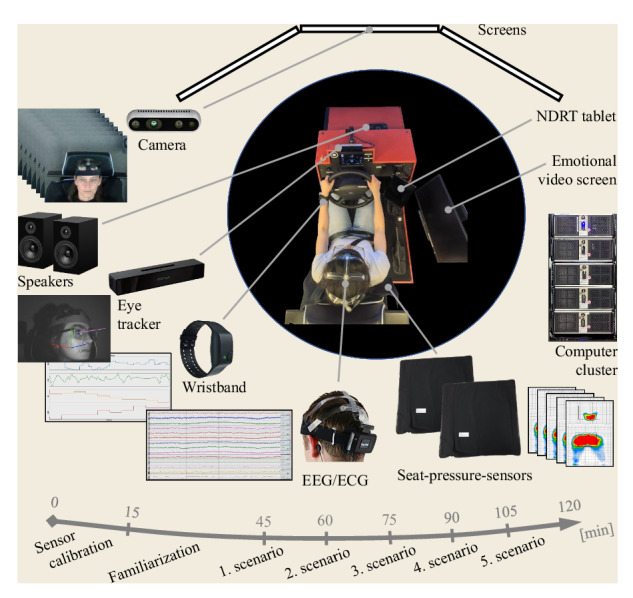
In driver monitoring various data types are collected from drivers and used for interpreting, modeling, and predicting driver behavior, and designing interactions. Aim of this contribution is to introduce manD 1.0, a multimodal dataset that can be used as a benchmark for driver monitoring in the context of automated driving. manD is the short form of human dimension in automated driving. manD 1.0 refers to a dataset that contains data from multiple driver monitoring sensors collected from 50 participants, gender-balanced, aged between 21 to 65 years. They drove through five different driving scenarios in a static driving simulator under controlled laboratory conditions. The automation level (SAE International, Standard J3016) ranged from SAE L0 (no automation, manual) to SAE L3 (conditional automation, temporal). To capture data reflecting various mental and physical states of the subjects, the scenarios encompassed a range of distinct driving events and conditions. manD 1.0 includes environmental data such as traffic and weather conditions, vehicle data like the SAE level and driving parameters, and driver state that covers physiology, body movements, activities, gaze, and facial information, all synchronized. This dataset supports applications like data-driven modeling, prediction of driver reactions, crafting of interaction strategies, and research into motion sickness.
Overview
The claims and statistics of this paper haven’t been checked yet.
Free: it reads the open-access text and checks the first 5 claims that cite a source we can check. Create a free account to check every claim.
Integrity signals
Registry
Cites
Statistics
Figures
Verification
Claims the paper makes
The claims and statistics of this paper haven’t been checked yet.
Free: it reads the open-access text and checks the first 5 claims that cite a source we can check. Create a free account to check every claim.
Self-check
Percentages, sums and reported differences re-computed from the paper’s own numbers.
The self-check needs the paper’s full text.
Citations
Cites
SciPy 1.0: fundamental algorithms for scientific computing in Python
Virtanen, P., Gommers, R., Oliphant, T. E., Haberland, M., Reddy, T., Cournapeau, D., Burovski, E., Peterson, P., Weckesser, W., Bright, J., et al. (2020) · Nature Methods · doi:10.1038/s41592-019-0686-2 · Cited by 38,430 · cited 1×
“This is achieved by identifying the peaks in the BVP using the scipy.signal package 36 , taking 240 BPM as the maximum acceptable HR .”
MethodSciPy 1.0: fundamental algorithms for scientific computing in Python
Virtanen, P., Gommers, R., Oliphant, T. E., Haberland, M., Reddy, T., Cournapeau, D., Burovski, E., Peterson, P., Weckesser, W., Bright, J., et al. (2019) · Apollo - University of Cambridge Repository · doi:10.17863/cam.64134 · Cited by 10,460
Measuring emotion: The self-assessment manikin and the semantic differential
Bradley, M. M., & Lang, P. J. (1994) · Journal of Behavior Therapy and Experimental Psychiatry · doi:10.1016/0005-7916(94)90063-9 · Cited by 9,538
Pearson, K. (1900) · The London, Edinburgh, and Dublin Philosophical Magazine and Journal of Science · doi:10.1080/14786440009463897 · Cited by 4,069
Detecting Stress During Real-World Driving Tasks Using Physiological Sensors
Healey, J. A., & Picard, R. W. (2005) · IEEE Transactions on Intelligent Transportation Systems · doi:10.1109/tits.2005.848368 · Cited by 2,207
The Atomic Components of Thought
Anderson, J. R., & Lebiere, C. J. (2014) · Psychology Press eBooks · doi:10.4324/9781315805696 · Cited by 2,173 · cited 2×
“Adaptive Control of Thought-Rational (ACT-R) 21 , Queueing Network-Model Human Processor (QN-MHP) 22 , and CLARION 23 are a few models recurrently employed for both qualitative and computational research 24 .”
BackgroundAge differences in short-term retention of rapidly changing information.
Kirchner, W. K. (1958) · Journal of Experimental Psychology · doi:10.1037/h0043688 · Cited by 1,798 · cited 1×
“Three activities are selected as NDRT: the auditory digit-span task 27 requested by the automated system during the experiment, the n-back game 28 , and the Subway Surfers game (co-developed by Kiloo and SYBO Games, released 2012), which are available on the fixed tablet for the driver at any time…”
MethodGorgolewski, K. J., Auer, T., Calhoun, V. D., Craddock, R. C., Das, S., Duff, E. P., Flandin, G., Ghosh, S. S., Glatard, T., Halchenko, Y. O., et al. (2016) · Scientific Data · doi:10.1038/sdata.2016.44 · Cited by 1,775
Working memory and language comprehension: A meta-analysis
Daneman, M., & Merikle, P. M. (1996) · Psychonomic Bulletin & Review · doi:10.3758/bf03214546 · Cited by 1,432
NeuroKit2: A Python toolbox for neurophysiological signal processing
Makowski, D., Pham, T., Lau, Z. J., Brammer, J. C., Lespinasse, F., Pham, H., Schölzel, C., & Chen, S. H. A. (2021) · Behavior Research Methods · doi:10.3758/s13428-020-01516-y · Cited by 1,388 · cited 1×
“The EDA data is then used to derive skin conductance level ( SCL ) and skin conductance response ( SCR ) values using the neurokit2 library 37 .”
MethodStudent (1908) · Biometrika · doi:10.1093/biomet/6.1.1 · Cited by 1,363
PsyToolkit: A Novel Web-Based Method for Running Online Questionnaires and Reaction-Time Experiments
Stoet, G. (2017) · Teaching of Psychology · doi:10.1177/0098628316677643 · Cited by 1,299
An exploratory study of musical emotions and psychophysiology.
Krumhansl, C. L. (1997) · Canadian Journal of Experimental Psychology / Revue canadienne de psychologie expérimentale · doi:10.1037/1196-1961.51.4.336 · Cited by 1,017 · cited 2×
“In addition, the music piece “Adagio for Organ and Strings in G Minor” plays during the first part of the drive until end of first car-following event, to help maintain the induced emotional state 33,34 .”
BackgroundSchaefer, A., Nils, F., Sanchez, X., & Philippot, P. (2010) · Cognition & Emotion · doi:10.1080/02699930903274322 · Cited by 875
Social signal processing: Survey of an emerging domain
Vinciarelli, A., Pantic, M., & Bourlard, H. (2009) · Image and Vision Computing · doi:10.1016/j.imavis.2008.11.007 · Cited by 842
Girden, E. (1992) · Sage eBooks · doi:10.4135/9781412983419 · Cited by 732
Driver Inattention Monitoring System for Intelligent Vehicles: A Review
Dong, Y., Hu, Z., Uchimura, K., & Murayama, N. (2011) · IEEE Transactions on Intelligent Transportation Systems · doi:10.1109/tits.2010.2092770 · Cited by 723
Ten Percent Electrode System for Topographic Studies of Spontaneous and Evoked EEG Activities
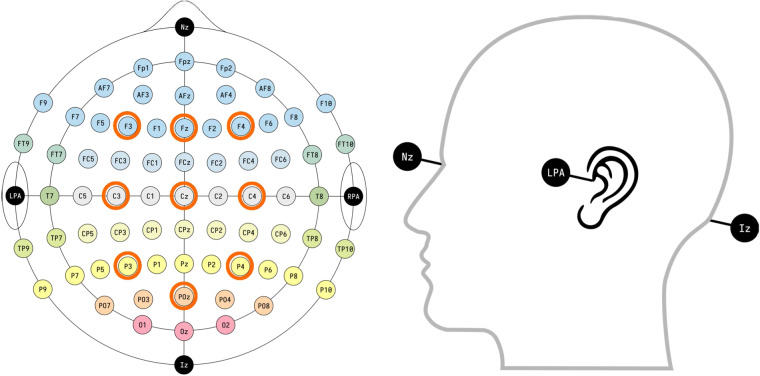
Chatrian, G. E., Lettich, E., & Nelson, P. L. (1985) · American Journal of EEG Technology · doi:10.1080/00029238.1985.11080163 · Cited by 681
Express saccades and visual attention
Fischer, B., & Weber, H. (1993) · Behavioral and Brain Sciences · doi:10.1017/s0140525x00031575 · Cited by 666
Stratified Randomization for Clinical Trials
Kernan, W. N., Viscoli, C. M., Makuch, R. W., Brass, L. M., & Horwitz, R. I. (1999) · Journal of Clinical Epidemiology · doi:10.1016/s0895-4356(98)00138-3 · Cited by 627 · cited 1×
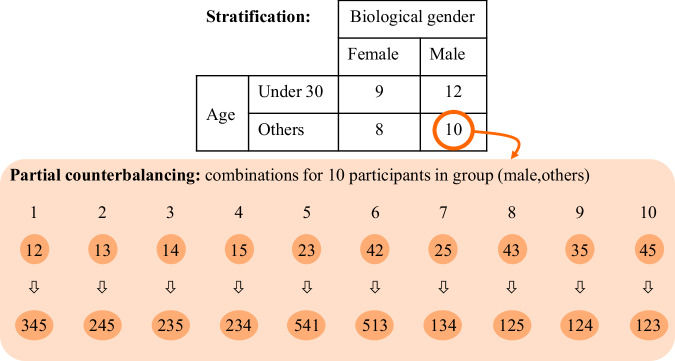
“Age and gender, as two characteristics of the participants are considered covariates and are addressed via stratification 30 .”
MethodMusic and emotion: perceptual determinants, immediacy, and isolation after brain damage
Peretz, I. (1998) · Cognition · doi:10.1016/s0010-0277(98)00043-2 · Cited by 580 · cited 1×
“In addition, the music piece “Adagio for Organ and Strings in G Minor” plays during the first part of the drive until end of first car-following event, to help maintain the induced emotional state 33,34 .”
BackgroundSensitivity of eye-movement measures to in-vehicle task difficulty
Victor, T. W., Harbluk, J. L., & Engström, J. A. (2005) · Transportation Research Part F: Traffic Psychology and Behaviour · doi:10.1016/j.trf.2005.04.014 · Cited by 492 · cited 1×
“It’s essential to consider not just data about the driver but also about the vehicle, its driving dynamics, and environment to capture a holistic understanding of both the driver and the driving situation 20 .”
BackgroundEEG-BIDS, an extension to the brain imaging data structure for electroencephalography
Pernet, C. R., Appelhoff, S., Gorgolewski, K. J., Flandin, G., Phillips, C., Delorme, A., & Oostenveld, R. (2019) · Scientific Data · doi:10.1038/s41597-019-0104-8 · Cited by 443 · cited 1×
“• “EEG-BIDS.7z” provides the EEG data gathered from all participants in a single brain imaging data structure (BIDS) 39,40 .”
BackgroundDriver Distraction Identification with an Ensemble of Convolutional Neural Networks
Eraqi, H. M., Abouelnaga, Y., Saad, M. H., & Moustafa, M. N. (2019) · Journal of Advanced Transportation · doi:10.1155/2019/4125865 · Cited by 305
Pupillary, heart rate, and skin resistance changes during a mental task.
Kahneman, D., Tursky, B., Shapiro, D., & Crider, A. (1969) · Journal of Experimental Psychology · doi:10.1037/h0026952 · Cited by 302
Review of Eye-related Measures of Drivers’ Mental Workload
Marquart, G., Cabrall, C., & de Winter, J. (2015) · Procedia Manufacturing · doi:10.1016/j.promfg.2015.07.783 · Cited by 292
DMD: A Large-Scale Multi-modal Driver Monitoring Dataset for Attention and Alertness Analysis
Ortega, J. D., Kose, N., Cañas, P. N., Chao, M.-A., Unnervik, A., Nieto, M., Otaegui, O., & Salgado, L. (2020) · Lecture notes in computer science · doi:10.1007/978-3-030-66823-5_23 · Cited by 220
Liu, Y., Feyen, R., & Tsimhoni, O. (2006) · ACM Transactions on Computer-Human Interaction · doi:10.1145/1143518.1143520 · Cited by 207
Mental Workload and Visual Impairment: Differences between Pupil, Blink, and Subjective Rating
Recarte, M. Á., Pérez, E., Conchillo, Á., & Nunes, L. M. (2008) · The Spanish Journal of Psychology · doi:10.1017/s1138741600004406 · Cited by 205
Drive&Act: A Multi-Modal Dataset for Fine-Grained Driver Behavior Recognition in Autonomous Vehicles
Martin, M., Roitberg, A., Haurilet, M., Horne, M., ReiB, S., Voit, M., & Stiefelhagen, R. (2019) · 2019 IEEE/CVF International Conference on Computer Vision (ICCV) · doi:10.1109/iccv.2019.00289 · Cited by 192 · cited 1×
“A significant distraction source while driving is preoccupation with a non-driving-related task (NDRT), leading some datasets to categorize driver activities during both manual and automated driving phases 11–14 .”
BackgroundClassifying driver workload using physiological and driving performance data: two field studies
Solovey, E. T., Zec, M., Garcia Perez, E. A., Reimer, B., & Mehler, B. (2014) · Proceedings of the SIGCHI Conference on Human Factors in Computing Systems · doi:10.1145/2556288.2557068 · Cited by 182
Wang, Y., Reimer, B., Dobres, J., & Mehler, B. (2014) · Transportation Research Part F: Traffic Psychology and Behaviour · doi:10.1016/j.trf.2014.08.003 · Cited by 152
Li, W., Cui, Y., Ma, Y., Chen, X., Li, G., Zeng, G., Guo, G., & Cao, D. (2021) · IEEE Transactions on Affective Computing · doi:10.1109/taffc.2021.3063387 · Cited by 134
A multimodal dataset for various forms of distracted driving
Taamneh, S., Tsiamyrtzis, P., Dcosta, M., Buddharaju, P., Khatri, A., Manser, M., Ferris, T., Wunderlich, R., & Pavlidis, I. (2017) · Scientific Data · doi:10.1038/sdata.2017.110 · Cited by 129
A novel public dataset for multimodal multiview and multispectral driver distraction analysis: 3MDAD
Jegham, I., Khalifa, A. B., Alouani, I., & Mahjoub, M. A. (2020) · Signal Processing Image Communication · doi:10.1016/j.image.2020.115960 · Cited by 104
Driver Anomaly Detection: A Dataset and Contrastive Learning Approach
Kopuklu, O., Zheng, J., Xu, H., & Rigoll, G. (2021) · 2021 IEEE Winter Conference on Applications of Computer Vision (WACV) · doi:10.1109/wacv48630.2021.00014 · Cited by 100
DriveAHead — A Large-Scale Driver Head Pose Dataset
Schwarz, A., Haurilet, M., Martínez, M., & Stiefelhagen, R. (2017) · IEEE/CVF Conference on Computer Vision and Pattern Recognition Workshops (CVPRW) · doi:10.1109/cvprw.2017.155 · Cited by 89
Hassib, M., Pfeiffer, M., Schneegass, S., Rohs, M., & Alt, F. (2017) · Proceedings of the 2017 CHI Conference on Human Factors in Computing Systems · doi:10.1145/3025453.3025953 · Cited by 72
Sun, R. (2016) · Oxford University Press eBooks · doi:10.1093/acprof:oso/9780199794553.001.0001 · Cited by 71
The Multimodal Driver Monitoring Database: A Naturalistic Corpus to Study Driver Attention
Jha, S., Marzban, M. F., Hu, T., Mahmoud, M. H., Al‐Dhahir, N., & Busso, C. (2021) · IEEE Transactions on Intelligent Transportation Systems · doi:10.1109/tits.2021.3095462 · Cited by 59
Yamakoshi, T., Yamakoshi, K.-I., Tanaka, S., Nogawa, M., Shibata, M., Sawada, Y., Rolfe, P. J., & Hirose, Y. (2007) · Conference proceedings · doi:10.1109/iembs.2007.4352392 · Cited by 50
Nonintrusive Biosignal Measurement System in a Vehicle
Lee, H. B., Choi, J. M., Kim, J. S., Kim, Y. S., Baek, H. J., Ryu, M. S., Sohn, R. H., & Park, K. S. (2007) · Conference proceedings · doi:10.1109/iembs.2007.4352786 · Cited by 46
Gable, T. M., Kun, A. L., Walker, B. N., & Winton, R. J. (2015) · International Conference on Automotive User Interfaces and Interactive Vehicular Applications (AutomotiveUI) · doi:10.1145/2809730.2809745 · Cited by 44
Nasri, I., Karrouchi, M., Snoussi, H., Kassmi, K., & Messaoudi, A. (2021) · Lecture notes in electrical engineering · doi:10.1007/978-981-33-6893-4_6 · Cited by 44 · cited 1×
“This shift recognized that driver state factors, such as fatigue, could profoundly influence behavior during manual driving 3–5 .”
BackgroundAll In One Network for Driver Attention Monitoring
Yang, D., Li, X., Dai, X., Zhang, R., Qi, L., Zhang, W., & Jiang, Z. (2020) · IEEE International Conference on Acoustics Speech and Signal Processing · doi:10.1109/icassp40776.2020.9053659 · Cited by 41
Park, J., & Zahabi, M. (2022) · Human Factors The Journal of the Human Factors and Ergonomics Society · doi:10.1177/00187208221132740 · Cited by 32 · cited 1×
“Adaptive Control of Thought-Rational (ACT-R) 21 , Queueing Network-Model Human Processor (QN-MHP) 22 , and CLARION 23 are a few models recurrently employed for both qualitative and computational research 24 .”
BackgroundUsing the Distribution of Eye Fixations to Assess Pilots' Mental Workload
Nocera, F. D., Camilli, M., & Terenzi, M. (2006) · Proceedings of the Human Factors and Ergonomics Society Annual Meeting · doi:10.1177/154193120605000114 · Cited by 28
DriverMVT: In-Cabin Dataset for Driver Monitoring including Video and Vehicle Telemetry Information
Othman, W., Kashevnik, A. M., Ali, A., & Shilov, N. G. (2022) · Data · doi:10.3390/data7050062 · Cited by 22 · cited 1×
“Beyond camera footage, physiological data from the driver can furnish further insights, particularly about their cognitive and emotional states 15–19 .”
BackgroundItoh, M. (2009) · International Conference on Mechatronics and Automation · doi:10.1109/icma.2009.5246188 · Cited by 21
Modeling driver-vehicle interaction in automated driving
Nobari, K. D., Albers, F., Bartsch, K., Braun, J., & Bertram, T. (2022) · Forschung im Ingenieurwesen · doi:10.1007/s10010-021-00576-6 · Cited by 16 · cited 2×
“Considering insights from all three models results in a driver model that underpins the selection of pertinent driver state factors 25 .”
BackgroundSelf-citationYawDD: Yawning Detection Dataset
Abtahi, S., Omidyeganeh, M., Shirmohammadi, S., & Hariri, B. (2020) · IEEE DataPort · doi:10.21227/e1qm-hb90 · Cited by 11
Warwick-JLR driver monitoring dataset (DMD)
Taylor, P. M., Griffiths, N., Bhalerao, A. H., Zhou, X., Gelencser, A., & Popham, T. (2015) · International Conference on Automotive User Interfaces and Interactive Vehicular Applications (AutomotiveUI) · doi:10.1145/2799250.2799286 · Cited by 8
Yüksel, A. S. (2019) · Data Archiving and Networked Services (DANS) · doi:10.17632/jj3tw8kj6h · Cited by 8
Yüksel, A. S. (2020) · Data Archiving and Networked Services (DANS) · doi:10.17632/jj3tw8kj6h.2 · Cited by 6 · cited 1×
“A significant distraction source while driving is preoccupation with a non-driving-related task (NDRT), leading some datasets to categorize driver activities during both manual and automated driving phases 11–14 .”
BackgroundSIMULATOR STUDY I: A Multimodal Dataset for Various Forms of Distracted DrivingPreprint
Dcosta, M. (2016) · OSF Preprints (OSF Preprints) · doi:10.17605/osf.io/c42cn · Cited by 5
A Driving Fatigue Dataset of Driver's Facial Features and Heart Rate Features
Li, L., & Zhang, W. (2020) · IEEE International Conference on Information Technology, Big Data and Artificial Intelligence (ICIBA) · doi:10.1109/iciba50161.2020.9277178 · Cited by 4
Zhang, Y., & Guo, Y. (2018) · IEEE DataPort · doi:10.21227/qzf7-sj04 · Cited by 4
Petrellis, N., Voros, N. S., Antonopoulos, C., Κεραμίδας, Γ., Christakos, P., & Mousouliotis, P. (2022) · IEEE DataPort · doi:10.21227/85xe-3f88 · Cited by 4
Generalized model for driver activity recognition in automated vehicles using pressure sensor array
Nobari, K. D., & Bertram, T. (2022) · AHFE international · doi:10.54941/ahfe1002733 · Cited by 2
Self-citationPhysiological and emotional states during virtual driving
Abril, J. D., Castillo-Castaneda, E., & Avilés, O. F. (2022) · IEEE DataPort · doi:10.21227/9fmc-nw22 · Cited by 2
Emotion induction strategies in driving simulator for validated experiments
Nobari, K. D., Velasquez, C., & Bertram, T. (2021) · AHFE international · doi:10.54941/ahfe1001156 · Cited by 1 · cited 2×
“For instance, the use of emotional video clips prior to the start of the drive, as well as the implementation of monotonous and even-driven methods during the drives, have been employed to trigger the desired emotional responses 31 .”
BackgroundMethodSelf-citationNobari, K. D., & Bertram, T. (2023) · Harvard Dataverse · doi:10.7910/dvn/sg9tmd · Cited by 1
Self-citationEzzouhri, A., Charouh, Z., Ghogho, M., & Guennoun, Z. (2021) · IEEE DataPort · doi:10.21227/f9z3-0438 · Cited by 1
Research works printed but not linked: 3
- Bradski G The OpenCV Library Dr. Dobb’s Journal: software tools for the professional programmer 2000 25 120 123
- Young K Regan M Driver distraction: a review of the literature Distracted driving 2007 2007 379 405
- Dargahi Nobari, K., Hugenroth, A. & Bertram, T. Position classification and in-vehicle activity detection using seat-pressure-sensor in automated driving. In AmE 2022-Automotive meets Electronics; 13. GMM-Symposium, 1–6 (VDE, 2022).
Cited by
Dual Radar: A Multi-modal Dataset with Dual 4D Radar for Autononous Driving
Zhang, X., Wang, L., Chen, J., Fang, C., Yang, G., Wang, Y., Yang, L., Song, Z., Liu, L., Zhang, X., et al. (2025) · Scientific Data · doi:10.1038/s41597-025-04698-2 · Cited by 82
Data set for UWB Cooperative Navigation and Positioning of UAV Cluster
Zhang, C., Tang, C., Wang, H., Lian, B., & Zhang, L. (2025) · Scientific Data · doi:10.1038/s41597-025-04808-0 · Cited by 19
Aravinth, S. S., Nagamani, G. M., Kumar, C. K., Lasisi, A., Naveed, Q. N., Bhowmik, A., & Khan, W. A. (2025) · Scientific Reports · doi:10.1038/s41598-025-92701-6 · Cited by 16
“Fatigue-specific driving patterns adapted in the system have also been considered by Dargahi Nobari et al. 45 and Xu et al. 20 , who forwarded EEG-based biometric systems toward fatigue detection.”
Chen, S., Peng, C., Yang, B., Lin, J., Zhou, L., Jiang, Z., Liu, Z., Liu, Y., & Tang, L. (2026) · npj Artificial Intelligence · doi:10.1038/s44387-026-00083-5 · Cited by 9
Alharasees, O., & Kale, U. (2025) · Journal of Transport & Health · doi:10.1016/j.jth.2025.102088 · Cited by 8
Metadata
- Authors
- Dargahi Nobari, K., & Bertram, T.
- Affiliations
- TU Dortmund University (DE)
- Venue
- Scientific Data
- Published
- 2024-03-30
- Volume
- 11
- Issue
- 1
- Pages
- 327-327
- ISSN
- 2052-4463 (ISSN-L)
- PMC
- PMC10981655
- OpenAlex
- W4393342802
- Semantic Scholar
- 4ce8b3fb6bfccf8025f1ef0f90204481139d5a7c
- Cited by
- 29
- References
- 62
- Citations by year
- 2026: 13 · 2025: 16
- Type
- data paper
- Language
- en
- Open access
- gold
- doi.org
- Licence
- cc-by
- creativecommons.org/licenses/by/4.0 (tdm)
- creativecommons.org/licenses/by/4.0 (vor)
- Locations
- Scientific Data (publishedVersion, cc-by)
- PubMed Central (publishedVersion, cc-by)
- PubMed (publishedVersion)
- DOAJ (DOAJ: Directory of Open Access Journals) (submittedVersion, cc-by-sa)
- Topics
- Social Sciences › Human Factors and Ergonomics › Human-Automation Interaction and Safety
- Physical Sciences › Engineering › Automotive Engineering › Autonomous Vehicle Technology and Safety
- Physical Sciences › Computer Science › Artificial Intelligence › Emotion and Mood Recognition
- Keywords
- driver monitoring, multimodal dataset, driver modeling, driving simulator, driver state, physiological signals, gaze tracking, facial analysis, body movement, motion sickness, SAE levels of driving automation
- MeSH terms
- Adult, Aged, Automation, Automobile Driving, Humans, Middle Aged, Young Adult
About these checks
Registry, retraction, Cites and statistics results are computed, not judged, with one exception: a printed reference that no index lists is read once by a model before it counts as a citation error. Claims are extracted by a model and kept only when their quote appears verbatim in the text; each cited source is then checked, with a model’s help, for whether it says what the claim relies on. Those verdicts can be wrong — read the claim’s quote and the cited source before relying on one.
Statistics and arithmetic are recomputed, not judged.
Confidence bands are shown only for fields calibrated on our annotated test set. None is calibrated yet, so no band is shown.
What counts as a claim ›How we measure confidence ›How we check this ›
Are you an author, or do you see a problem with this page? Request a review
Data sources
Bibliographic data: Semantic Scholar, OpenAlex, Crossref.
Contains information from the Semantic Scholar Academic Graph Datasets, made available under the ODC Attribution License (ODC-BY 1.0).
Semantic Scholar’s data is described in: Kinney, R., et al. (2023). The Semantic Scholar Open Data Platform. arXiv:2301.10140.
