

The Effect of Time, Roasting Temperature, and Grind Size on Caffeine and Chlorogenic Acid Concentrations in Cold Brew Coffee
Open accessThe DOI matches its Crossref record; 40 of the 41 references it cites were found in a registry or an index; 4 of the 20 sources its claims cite were checked for support.
Abstract
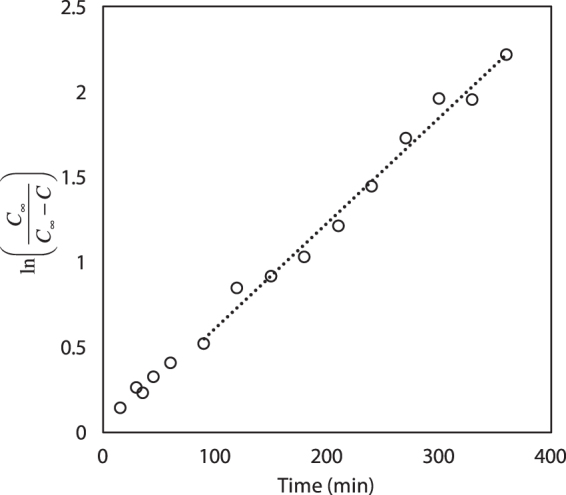
The extraction kinetics and equilibrium concentrations of caffeine and 3-chlorogenic acid (3-CGA) in cold brew coffee were investigated by brewing four coffee samples (dark roast/medium grind, dark roast/coarse grind, medium roast/medium grind, medium roast/coarse grind) using cold and hot methods. 3-CGA and caffeine were found at higher concentrations in cold brew coffee made with medium roast coffees, rather than dark roast. The grind size did not impact 3-CGA and caffeine concentrations of cold brew samples significantly, indicating that the rate determining step in extraction for these compounds did not depend on surface area. Caffeine concentrations in cold brew coarse grind samples were substantially higher than their hot brew counterparts. 3-CGA concentrations and pH were comparable between cold and hot brews. This work suggests that the difference in acidity of cold brew coffee is likely not due to 3-CGA or caffeine concentrations considering that most acids in coffee are highly soluble and extract quickly. It was determined that caffeine and 3-CGA concentrations reached equilibrium according to first order kinetics between 6 and 7 hours in all cold brew samples instead of 10 to 24 hours outlined in typical cold brew methods.
Overview
CoChat Summary
## TL;DR
This study compared cold and hot brewing of Kona Arabica coffee to see how roast level, grind size, and time affect caffeine, 3-chlorogenic acid (3-CGA), and pH. It found that both caffeine and 3-CGA reached equilibrium in cold brew by about 400 minutes (6.7 hours), medium roasts had higher concentrations than dark roasts, and grind size had little effect on equilibrium concentrations.
## Key findings
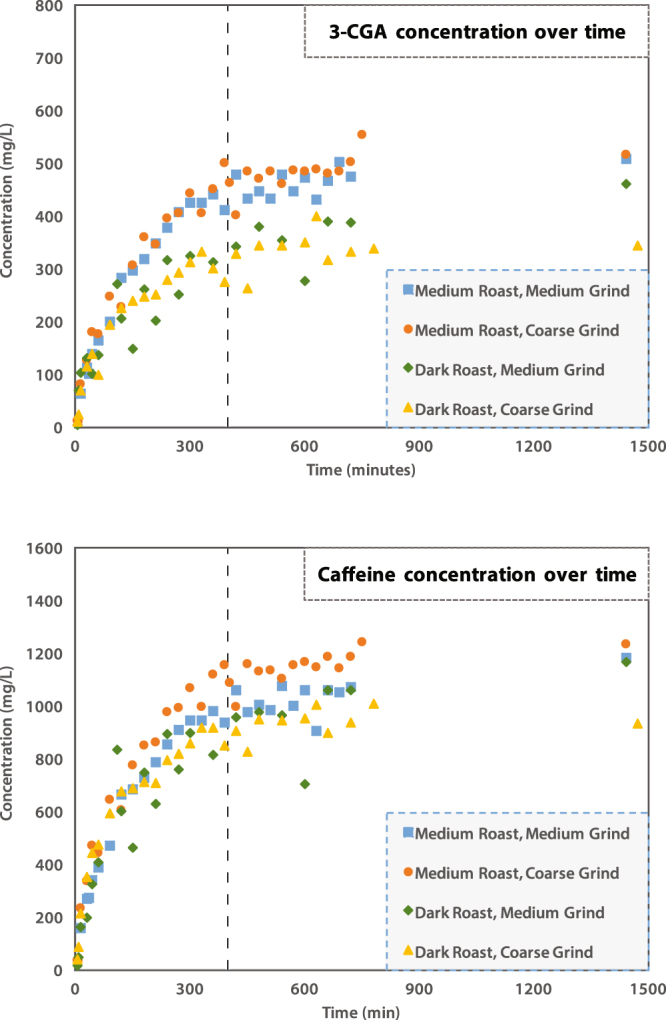
- In all cold brew samples, caffeine and 3-CGA followed first-order kinetics and reached nearly steady-state concentrations after about 400 minutes; the abstract says equilibrium was reached between 6 and 7 hours.
- Medium roast coffees had higher 3-CGA and caffeine concentrations than dark roast coffees.
- Grind size did not significantly impact 3-CGA or caffeine concentrations in cold brew; the paper says this suggests the rate-determining step did not depend on surface area.
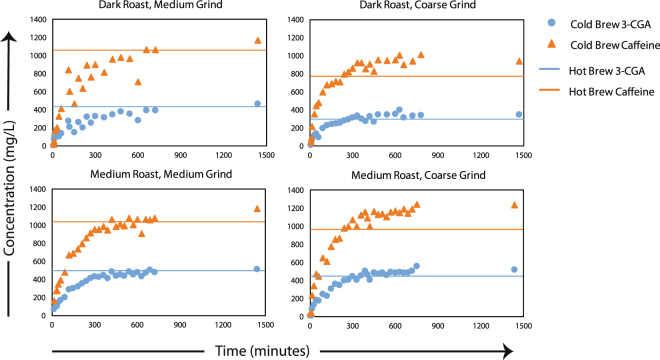
- For coarse grind samples, caffeine concentrations were substantially higher in cold brew than hot brew, while 3-CGA concentrations and pH were comparable between cold and hot brews.
- The measured pH ranged from 5.40 to 5.63, and the paper says this was not enough evidence to support a link between high 3-CGA and low pH.
## Methods
- Experimental comparison of four coffee conditions: dark roast/medium grind, dark roast/coarse grind, medium roast/medium grind, and medium roast/coarse grind; each was brewed by both cold and hot methods.
- Coffee source and setup: single-origin Arabica (Kona Typica) from Kona Joe Coffee; brewed at a 35.0 g coffee / 350 mL water ratio for cold brew, with hot brew at 98 °C for 6 minutes.
- Main analyses: HPLC measurement of caffeine and 3-CGA, pH measurement, sieve analysis for particle size distribution, and two-tailed t-tests and ANOVA for equilibrium comparisons.
## Limitations
- The paper states that grind size was not well controlled because it used commercially available coffee “without any size separation prior to extraction.”
- The authors note that high standard deviations were likely caused by heterogeneous grind size distributions and settling of finer particles during handling.
- Evidence from the text suggests limited generalizability beyond this setup: the study used one single-origin coffee and brewing conditions intended to mimic home brewing (this is evident from the text).
Model-written summary. Check it against the paper before relying on it.
Integrity signals
Registry
Cites
Statistics
Figures
Verification
Claims the paper makes
4 Valid · 0 Not valid · 9 Not checked · 47 Own results and interpretations
A result the paper reports from its own data — it cites no other source for it, so there is none to check. The quote shows it is in the paper.
In the paper
“The grind size did not impact 3-CGA and caffeine concentrations of cold brew samples significantly, indicating that the rate determining step in extraction for these compounds did not depend on surface area.”
- Also stated in: § Discussion and Conclusional Remarks · hedged
“Furthermore, our analysis indicates that the grind size does not have significant impact the observed equilibrium concentrations for both CGA and caffeine.”
§ The Effect of Time, Roasting Temperature, and Grind Size on Caffeine and Chlorogenic Acid Concentrations in Cold Brew Coffee > Abstract
hedgedn = 4- Asserted: passes — The authors put it forward as true.
- Checkable: passes — It can be checked against evidence.
- Load-bearing: passes — The paper’s conclusions depend on it.
- Based: passes — The paper gives a reason why it holds.
- Also stated in: § Discussion and Conclusional Remarks · hedged
A result the paper reports from its own data — it cites no other source for it, so there is none to check. The quote shows it is in the paper.
In the paper
“It was determined that caffeine and 3-CGA concentrations reached equilibrium according to first order kinetics between 6 and 7 hours in all cold brew samples instead of 10 to 24 hours outlined in typical cold brew methods.”
- Also stated in: § Kinetics of cold brew coffee extraction · plain
“Initial 3-CGA concentration increased rapidly over the first 180 minutes and slowed until reaching equilibrium at approximately 400 minutes for all coffee roasts and grinds (see Fig. 1).”
- Also stated in: § Kinetics of cold brew coffee extraction · hedged
“Similar to 3-CGA, caffeine also reaches nearly steady-state concentrations after 400 minutes (see Fig. 1).”
§ The Effect of Time, Roasting Temperature, and Grind Size on Caffeine and Chlorogenic Acid Concentrations in Cold Brew Coffee > Abstract
plainstates a causen = 4- Asserted: passes — The authors put it forward as true.
- Checkable: passes — It can be checked against evidence.
- Load-bearing: passes — The paper’s conclusions depend on it.
- Based: passes — The paper gives a reason why it holds.
- Also stated in: § Kinetics of cold brew coffee extraction · plain
A result the paper reports from its own data — it cites no other source for it, so there is none to check. The quote shows it is in the paper.
In the paper
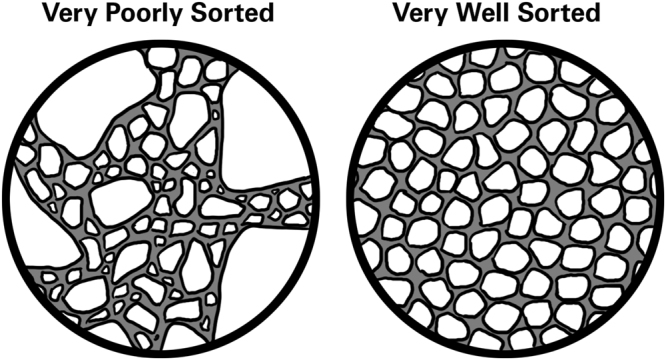
“The grain size distributions of the four samples show that the “medium” grind coffees had wider particle distributions, both containing about 5% of particles, by mass, that are larger than 3350 µm.”
§ The Effect of Time, Roasting Temperature, and Grind Size on Caffeine and Chlorogenic Acid Concentrations in Cold Brew Coffee > Results > Kinetics of cold brew coffee extraction
plainn = 4- Asserted: passes — The authors put it forward as true.
- Checkable: passes — It can be checked against evidence.
- Load-bearing: unclear — It is unclear whether the paper’s conclusions depend on it.
- Based: passes — The paper gives a reason why it holds.
A result the paper reports from its own data — it cites no other source for it, so there is none to check. The quote shows it is in the paper.
In the paper
“3-CGA concentrations and pH were comparable between cold and hot brews.”
- Also stated in: § Comparison of hot brew and cold brew coffee · plain
“In both hot and cold brew extractions, all samples show comparable average 3-CGA concentrations and pH, regardless of water temperature.”
- Also stated in: § Discussion and Conclusional Remarks · plain
“No significant differences were seen in CGA concentrations between cold and hot brews.”
§ The Effect of Time, Roasting Temperature, and Grind Size on Caffeine and Chlorogenic Acid Concentrations in Cold Brew Coffee > Abstract
plainn = 4- Asserted: passes — The authors put it forward as true.
- Checkable: passes — It can be checked against evidence.
- Load-bearing: passes — The paper’s conclusions depend on it.
- Based: passes — The paper gives a reason why it holds.
- Also stated in: § Comparison of hot brew and cold brew coffee · plain
A result the paper reports from its own data — it cites no other source for it, so there is none to check. The quote shows it is in the paper.
In the paper
“Caffeine concentrations in cold brew coarse grind samples were substantially higher than their hot brew counterparts.”
- Also stated in: § Caffeine · plain
“Coarse grain samples, both medium and dark roast, showed a considerable deviation in caffeine concentrations between hot and cold brew extractions (Table 3). In both samples, the cold brew coffee was found to have the higher concentration of caffeine.”
- Also stated in: § Discussion and Conclusional Remarks · plain
“Moreover, coarse grain samples, both medium and dark roast, showed a substantial increase in caffeine concentrations than their hot brew counterparts.”
§ The Effect of Time, Roasting Temperature, and Grind Size on Caffeine and Chlorogenic Acid Concentrations in Cold Brew Coffee > Abstract
plainstates an association- Asserted: passes — The authors put it forward as true.
- Checkable: passes — It can be checked against evidence.
- Load-bearing: passes — The paper’s conclusions depend on it.
- Based: passes — The paper gives a reason why it holds.
- Also stated in: § Caffeine · plain
31 more claims
Create a free account to see all 60 claims and every source verdict.
- Probably not a substantial claim. 12
- It may state two separate claims as one. 14
Claims other papers make about this one
Each is checked against this paper’s own text: does it say what the citing paper says it does?
The source backs part of the claim, not all of it — or backs it for a different population, condition or comparison.
In the citing paper
“The current general practice of cold brew falls between 12 to 24 h12,28,32,33.”
From Sensory analysis of the flavor profile of full immersion hot, room temperature, and cold brewed coffee over time (2024) · cites this paper as [33]
Experimental — accuracy not yet measuredThe source backs part of the claim, not all of it — or backs it for a different population, condition or comparison.
In the citing paper
“An exhaustive literature search returned only four peer-reviewed studies related to cold brew coffee29–32.”
From Acidity and Antioxidant Activity of Cold Brew Coffee (2018) · cites this paper as [32]
Experimental — accuracy not yet measured
Citations
Cites
Chlorogenic acid (CGA): A pharmacological review and call for further research
Naveed, M., Hejazi, V., Abbas, M., Kamboh, A. A., Khan, G. J., Shumzaid, M., Ahmad, F., Babazadeh, D., FangFang, X., Modarresi-Ghazani, F., et al. (2018) · Biomedicine & Pharmacotherapy · doi:10.1016/j.biopha.2017.10.064 · Cited by 1,586
In vitro and in vivo antioxidant properties of chlorogenic acid and caffeic acid
Sato, Y., Itagaki, S., Kurokawa, T., Ogura, J., Kobayashi, M., Hirano, T., Sugawara, M., & Iseki, K. (2011) · International Journal of Pharmaceutics · doi:10.1016/j.ijpharm.2010.09.035 · Cited by 965
Engineering plants with increased levels of the antioxidant chlorogenic acid
Niggeweg, R., Michael, A. J., & Martin, C. (2004) · Nature Biotechnology · doi:10.1038/nbt966 · Cited by 814
Effect of Roasting on the Formation of Chlorogenic Acid Lactones in Coffee
Farah, A., de Paulis, T., Trugo, L. C., & Martin, P. R. (2005) · Journal of Agricultural and Food Chemistry · doi:10.1021/jf048701t · Cited by 540
Effect of Roasting on the Antioxidant Activity of Coffee Brews
del Castillo, M. D., Ames, J. M., & Gordon, M. H. (2002) · Journal of Agricultural and Food Chemistry · doi:10.1021/jf011702q · Cited by 372
Coffee in Health and Disease Prevention
(2015) · Elsevier eBooks · doi:10.1016/c2012-0-06959-1 · Cited by 338
Hečimović, I., Belščak-Cvitanović, A., Horžić, D., & Komes, D. (2011) · Food Chemistry · doi:10.1016/j.foodchem.2011.05.059 · Cited by 334
Comparison of nine common coffee extraction methods: Instrumental and sensory analysis
Gloess, A. N., Schönbächler, B., Klopprogge, B., D`Ambrosio, L., Chatelain, K., Bongartz, A., Strittmatter, A., Rast, M., & Yeretzian, C. (2013) · European Food Research and Technology · doi:10.1007/s00217-013-1917-x · Cited by 311
Potent odorants of the roasted powder and brew of Arabica coffee
Blank, I., Sen, A., & Grosch, W. (1992) · Zeitschrift f�r Lebensmittel-Untersuchung und -Forschung · doi:10.1007/bf01202802 · Cited by 280
Chlorogenic acid and caffeine contents in various commercial brewed coffees
Fujioka, K., & Shibamoto, T. (2008) · Food Chemistry · doi:10.1016/j.foodchem.2007.05.091 · Cited by 258
Research works printed but not linked: 4
- Chu, Y.-F. Coffee: Emerging Health Effects and Disease Prevention. (John Wiley & Sons, 2012).
- Kim AR Kim JS Flavor Contributing Nonvolatile Chemical and Sensory Characterization of Cold Water Extraction-based Coffee by Different ExtractionMethods (Dripping vs Steeping) and Time Journal of The Korea Society for Coffee Industry 2014 3 1 9
- Budavari, S., O’Neil, M., Smith, A., Heckelman, P. & Obenchain, J. The Merck Index, Print Version, Twelfth Edition. (CRC Press, 1996).
- Spiro M Selwood RM The kinetics and mechanism of caffeine infusion from coffee: The effect of particle size J. Sci. Food Agric. 1984 35 915 924 10.1002/jsfa.2740350817 · DOI · Paper page
Cited by
Cordoba, N., Fernandez-Alduenda, M., Moreno, F. L., & Ruiz, Y. (2020) · Trends in Food Science & Technology · doi:10.1016/j.tifs.2019.12.004 · Cited by 271
Caffeine Consumption through Coffee: Content in the Beverage, Metabolism, Health Benefits and Risks
dePaula, J., & Farah, A. (2019) · Beverages · doi:10.3390/beverages5020037 · Cited by 222
Consumption of Chlorogenic Acids through Coffee and Health Implications
Farah, A., & de Paula Lima, J. (2019) · Beverages · doi:10.3390/beverages5010011 · Cited by 175
“0 [43] Arabica Hawaii 2 D 10 25 ◦C 24 hr Nr 36.”
BackgroundInfluentialAcids in coffee: A review of sensory measurements and meta-analysis of chemical composition
Yeager, S. E., Batali, M. E., Guinard, J.-X., & Ristenpart, W. D. (2023) · Critical Reviews in Food Science and Nutrition · doi:10.1080/10408398.2021.1957767 · Cited by 173
Seninde, D. R., & Chambers, E. (2020) · Beverages · doi:10.3390/beverages6030044 · Cited by 173
Cordoba, N., Pataquiva, L., Osorio, C., Moreno, F. L. M., & Ruiz, R. Y. (2019) · Scientific Reports · doi:10.1038/s41598-019-44886-w · Cited by 166
Acidity and Antioxidant Activity of Cold Brew Coffee
Rao, N. Z., & Fuller, M. (2018) · Scientific Reports · doi:10.1038/s41598-018-34392-w · Cited by 144
Self-citationAwwad, S. H., Issa, R. A., Alnsour, L., Albals, D., & Al-Momani, I. F. (2021) · Molecules · doi:10.3390/molecules26247502 · Cited by 177
“The concentration of caffeine in coffee varies depending on plant species, genetic traits, agricultural practices, storage conditions, roasting degree, and brewing method [9].”
InfluentialCharacterization of the Aroma Profile and Main Key Odorants of Espresso Coffee
Angeloni, S., Mustafa, A. M., Abouelenein, D., Alessandroni, L., Acquaticci, L., Nzekoue, F. K., Petrelli, R., Sagratini, G., Vittori, S., Torregiani, E., et al. (2021) · Molecules · doi:10.3390/molecules26133856 · Cited by 148
Acidri, R., Sawai, Y., Sugimoto, Y., Handa, T., Sasagawa, D., Masunaga, T., Yamamoto, S., & Nishihara, E. (2020) · Antioxidants · doi:10.3390/antiox9020093 · Cited by 153
“On the other hand, coffee taste is determined by caffeine, which is thermally stable, and phenolic derivatives from chlorogenic acid degradation into melanoidins [11].”
BackgroundInfluentialRao, N. Z., Fuller, M., & Grim, M. D. (2020) · Foods · doi:10.3390/foods9070902 · Cited by 113
“Rao and Fuller found that, for a variety of regions, medium roast hot brew coffees had higher TAC than their cold brew counterparts, as evaluated using the ABTS decolorization assay [10].”
BackgroundResultInfluentialSelf-citationCórdoba, N., Moreno, F. L., Osorio, C., Velásquez, S., & Ruiz, Y. (2021) · Food Research International · doi:10.1016/j.foodres.2021.110141 · Cited by 101
The Potential of Spent Coffee Grounds in Functional Food Development
Bevilacqua, E., Cruzat, V. F., Singh, I., Rose’Meyer, R. B., Panchal, S. K., & Brown, L. (2023) · Nutrients · doi:10.3390/nu15040994 · Cited by 134
“5–6 g to 100 g of dry coffee prior to the brewing process [36].”
BackgroundReview on factors affecting coffee volatiles: from seed to cup
Wang, X., Wang, Y., Hu, G., Hong, D., Guo, T., Li, J., Li, Z., & Qiu, M. (2021) · Journal of the Science of Food and Agriculture · doi:10.1002/jsfa.11647 · Cited by 121
Heo, J., Adhikari, K., Choi, K. S., & Lee, J. (2020) · Foods · doi:10.3390/foods9121746 · Cited by 93
“Fuller and Rao [18] analyzed the caffeine and 3-chlorogenic-acid (3-CGA) contents in coffee prepared from grounds with different degrees of roasting and granule sizes and reported that the roasting temperature could affect the 3-CGA content.”
BackgroundMineral Composition and Antioxidant Potential of Coffee Beverages Depending on the Brewing Method
Janda, K., Jakubczyk, K., Baranowska‐Bosiacka, I., Kapczuk, P., Kochman, J., Rębacz‐Maron, E., & Gutowska, I. (2020) · Foods · doi:10.3390/foods9020121 · Cited by 95
Consumer Choices and Habits Related to Coffee Consumption by Poles
Czarniecka‐Skubina, E., Pielak, M., Sałek, P., Korzeniowska-Ginter, R., & Owczarek, T. (2021) · International Journal of Environmental Research and Public Health · doi:10.3390/ijerph18083948 · Cited by 130
Analysis of Volatile Compounds in Coffee Prepared by Various Brewing and Roasting Methods
Yu, J.-M., Chu, M., Park, H., Park, J., & Lee, K. (2021) · Foods · doi:10.3390/foods10061347 · Cited by 85
“Further, aside from its more appealing and less-acidic taste, cold brew coffee can contain up to two-fold more caffeine than hot brew coffee [21].”
BackgroundMethodA study of chemical Composition, Antioxidants, and volatile compounds in roasted Arabic coffee
Alamri, E. S., Rozan, M. A., & Bayomy, H. M. (2022) · Saudi Journal of Biological Sciences · doi:10.1016/j.sjbs.2022.03.025 · Cited by 87
Muzykiewicz-Szymańska, A., Nowak, A., Wira, D., & Klimowicz, A. (2021) · Molecules · doi:10.3390/molecules26123681 · Cited by 86
Córdoba, N., Moreno, F. L., Osorio, C., Velásquez, S., Fernandez-Alduenda, M., & Ruiz-Pardo, Y. (2021) · LWT · doi:10.1016/j.lwt.2021.111363 · Cited by 62
Mechanisms of action of coffee bioactive compounds – a key to unveil the coffee paradox
Machado, F. D. S., Coimbra, M. A., del Castillo, M. D., & Coreta-Gomes, F. M. (2023) · Critical Reviews in Food Science and Nutrition · doi:10.1080/10408398.2023.2221734 · Cited by 79
“Considering CGA levels in Espresso coffee brews, it can range from 16-400 mg per cup (Angeloni et al. 2019; Ludwig, Mena, et al. 2014), and from 60-420 mg per cup in French press brews (150 mL) (Angeloni et al. 2019; Fuller and Rao 2017).”
Romualdo, G. R., Bartolomeu, A. R., Vinken, M., Cogliati, B., Moreno, F. S., García, M. Á., & Barbisan, L. F. (2019) · Food Research International · doi:10.1016/j.foodres.2019.05.029 · Cited by 73
Coffee constituents with antiadipogenic and antidiabetic potentials: A narrative review
Kusumah, J., & de Mejía, E. G. (2022) · Food and Chemical Toxicology · doi:10.1016/j.fct.2022.112821 · Cited by 64
Epigenome-wide association meta-analysis of DNA methylation with coffee and tea consumption
Karabegović, I., Portilla-Fernández, E., Li, Y., Ma, J., Maas, S. C. E., Sun, D., Hu, E. A., Kühnel, B., Zhang, Y., Ambatipudi, S., et al. (2021) · Nature Communications · doi:10.1038/s41467-021-22752-6 · Cited by 60
“When excluding the cohorts with different time points of collection between methylation and beverage intake data, the results of association between DNA methylation and coffee or tea consumption did not change substantially (Supplementary Table 7).”
Farag, M. A., Zayed, A., Sallam, I. E., Abdelwareth, A., & Wessjohann, L. A. (2022) · Foods · doi:10.3390/foods11060864 · Cited by 69
“Moreover, caffeine showed higher levels in cold brew of coarse grind samples (1130 ± 50 mg/L) than in their hot counterparts [86].”
BackgroundShoda, S., Lucquin, A., Sou, C. I., Nishida, Y., Sun, G., Kitano, H., Son, J., Nakamura, S., & Craig, O. E. (2018) · Scientific Reports · doi:10.1038/s41598-018-35227-4 · Cited by 62
Seninde, D. R., Chambers, E., & Chambers, D. (2020) · Food Research International · doi:10.1016/j.foodres.2020.109667 · Cited by 51
Zhai, X., Yang, M., Zhang, J., Zhang, L., Tian, Y., Li, C., Bao, L., Ma, C., & El‐Aty, A. M. A. (2022) · Frontiers in Nutrition · doi:10.3389/fnut.2022.849811 · Cited by 54
Portela, C. D. S., Almeida, I. F. D., Mori, A. L. B., Yamashita, F., & Benassi, M. D. T. (2021) · LWT · doi:10.1016/j.lwt.2021.111090 · Cited by 47
Ecological quality as a coffee quality enhancer. A review
Torrez, V., Benavides-Frías, C., Jacobi, J., & Speranza, C. I. (2023) · Agronomy for Sustainable Development · doi:10.1007/s13593-023-00874-z · Cited by 57
“2007), and that is not considered accept‐ able in terms of cup quality (Fischer et al. 2001; Fuller and Rao 2017).”
BackgroundInfluentialPotential Oral Health Care Agent from Coffee against Virulence Factor of Periodontitis
Tsou, S., Hu, S., Yang, J., Yan, M., & Lin, Y. (2019) · Nutrients · doi:10.3390/nu11092235 · Cited by 54
“However, some studies have revealed that the roast degree may influence the content of chlorogenic acid in the coffee extract [45,46].”
BackgroundBellumori, M., Angeloni, G., Guerrini, L., Masella, P., Calamai, L., Mulinacci, N., Parenti, A., & Innocenti, M. (2021) · LWT · doi:10.1016/j.lwt.2021.111043 · Cited by 47
Kim, C., Park, S. J., Yu, J. S., & Lee, D. Y. (2022) · Food Chemistry · doi:10.1016/j.foodchem.2022.133749 · Cited by 43
Effect of Basket Geometry on the Sensory Quality and Consumer Acceptance of Drip Brewed Coffee
Frost, S. C., Ristenpart, W. D., & Guinard, J. (2019) · Journal of Food Science · doi:10.1111/1750-3841.14696 · Cited by 37
Coffee consumption and breast cancer risk in the SUN project
Sánchez‐Quesada, C., Romanos-Nanclares, A., Navarro, A., Gea, A., Cervantes, S., Martínez‐González, M. Á., & Toledo, E. (2020) · European Journal of Nutrition · doi:10.1007/s00394-020-02180-w · Cited by 36
Bilge, G. (2020) · Journal of Food Science and Technology · doi:10.1007/s13197-020-04367-9 · Cited by 33
The Epigenetic Effects of Coffee
Ding, Q., Xu, Y., & Lau, A. T. Y. (2023) · Molecules · doi:10.3390/molecules28041770 · Cited by 44
Cai, Y., Xu, Z., Pan, X., Gao, M., Wu, M., Wu, J., & Lao, F. (2022) · Foods · doi:10.3390/foods11192968 · Cited by 31
“As for cold brew coffee, concentrations of 3caffeoylquinic acid and caffeine were described to be stable after 400 min [13].”
BackgroundMethodResultThe sensory properties and consumer acceptance of cold brew coffee
McCain‐Keefer, H. R., Meals, S., & Drake, M. (2020) · Journal of Sensory Studies · doi:10.1111/joss.12604 · Cited by 31
Abduh, M. Y., Nofitasari, D., Rahmawati, A., Eryanti, A. Y., & Rosmiati, M. (2023) · Food Chemistry Advances · doi:10.1016/j.focha.2023.100183 · Cited by 32
Wang, X., & Lim, L. (2023) · Applied Food Research · doi:10.1016/j.afres.2023.100334 · Cited by 38
Kang, D.-E., Lee, H.-U., Davaatseren, M., & Chung, M. (2019) · Food Science and Biotechnology · doi:10.1007/s10068-019-00644-2 · Cited by 35
Coffee Roasting and Extraction as a Factor in Cold Brew Coffee Quality
Maksimowski, D., Pachura, N., Oziembłowski, M., Nawirska‐Olszańska, A., & Szumny, A. J. (2022) · Applied Sciences · doi:10.3390/app12052582 · Cited by 38
“In another study, the authors Fuller and Rao [13] compared the chlorogenic acid content of coffee depending on the degree of roasting and grinding of coffee prepared for cold brew.”
BackgroundMoroney, K. M., O’Connell, K., Meikle-Janney, P., O’Brien, S. B. G., Walker, G., & Lee, W. T. (2019) · PLoS ONE · doi:10.1371/journal.pone.0219906 · Cited by 30
Extraction and physicochemical characteristics of high pressure-assisted cold brew coffee
Zhang, L., Wang, X., Manickavasagan, A., & Lim, L. (2022) · Future Foods · doi:10.1016/j.fufo.2022.100113 · Cited by 30
Wu, H., Viejo, C. G., Fuentes, S., Dunshea, F. R., & Suleria, H. A. R. (2023) · Fermentation · doi:10.3390/fermentation9010068 · Cited by 40
Portela, C. D. S., de Almeida, I. F., dos Reis, T. A. D., BÖGER, B. R., & Benassi, M. D. T. (2021) · Food Research International · doi:10.1016/j.foodres.2021.110860 · Cited by 33
Kwok, R., Lee, K. W. T., Schwarz, S., Claassen, L., & Lachenmeier, D. W. (2020) · Challenges · doi:10.3390/challe11020026 · Cited by 27
Várady, M., Tauchen, J., Klouček, P., & Popelka, P. (2022) · Fermentation · doi:10.3390/fermentation8080375 · Cited by 37
Comparison of Characterization of Cold Brew and Hot Brew Coffee Prepared at Various Roasting Degrees
Pan, L., Xiao, Y., Jiang, F., Jiang, T., Zhu, J. F., Tang, W., Liu, X., Zhou, Y., & Yu, L. M. (2023) · Journal of Food Processing and Preservation · doi:10.1155/2023/3175570 · Cited by 32
Yang, A., Zhang, Z., Jiang, K., Xu, K., Meng, F., Wu, W., Li, Z., & Wang, B. (2024) · Food Bioscience · doi:10.1016/j.fbio.2024.104455 · Cited by 27
Genovese, A., Vivo, A. D., Aprea, A., Tricarico, M. C., Sacchi, R., & Sarghini, F. (2021) · Food Chemistry · doi:10.1016/j.foodchem.2021.130037 · Cited by 22
Hyong, S., Chu, M., Park, H., Park, J., & Lee, K. (2021) · LWT · doi:10.1016/j.lwt.2021.112231 · Cited by 28
Han, J.-W., Boo, H., & Chung, M.-S. (2020) · Food Science and Biotechnology · doi:10.1007/s10068-020-00747-1 · Cited by 24
Wang, X., & Lim, L. (2021) · Journal of Food Process Engineering · doi:10.1111/jfpe.13748 · Cited by 22
Kyroglou, S., Thanasouli, K., & Vareltzis, P. K. (2021) · Journal of the Science of Food and Agriculture · doi:10.1002/jsfa.11125 · Cited by 24
Caffeine content and antioxidant activity of various brews of specialty grade coffee
Miłek, M., Młodecki, Ł., & Dżugan, M. (2021) · Acta Scientiarum Polonorum Technologia Alimentaria · doi:10.17306/j.afs.0890 · Cited by 31
Chongsrimsirisakhol, O., & Pirak, T. (2022) · International Journal of Food Properties · doi:10.1080/10942912.2022.2056197 · Cited by 21
“Cold brew process started by steeping the extra-course coffee ground at 20–25°C for 8–24 h before collecting the coffee beverage.([9]) The lack of heat in this brewing process was difficult for several polar compounds to be extracted into the coffee compared to hot brewing process resulted in difference bioactive comp…”
BackgroundRyu, J., Choi, Y., Hong, K.-H., Chung, Y. S., & Cho, S. K. (2020) · Foods · doi:10.3390/foods9091331 · Cited by 22
“The effects of cold brewing on the phenolic compounds and antioxidant activities in coffee and tea have been investigated [11,15,16].”
BackgroundCastañeda-Rodríguez, R., Mulík, S., & Ozuna, C. (2022) · Journal of Culinary Science & Technology · doi:10.1080/15428052.2020.1848683 · Cited by 19
“It is important to mention that there might not be differences between medium and coarse coffee grind in terms of extraction kinetics of some bioactive compounds, such as chlorogenic acids (Fuller & Rao, 2017).”
BackgroundMethodResultInfluentialTommerdahl, K. L., Hu, E. A., Selvin, E., Steffen, L. M., Coresh, J., Grams, M. E., Bjornstad, P., Rebholz, C. M., & Parikh, C. R. (2022) · Kidney International Reports · doi:10.1016/j.ekir.2022.04.091 · Cited by 20
Chen, S., Xiao, Y., Tang, W., Jiang, F., Zhu, J. F., Zhou, Y., & Ye, L. (2023) · Foods · doi:10.3390/foods12203857 · Cited by 22
“Fuller and Rao [27] reported that at the beginning, CGA was released rapidly, and over time, that is, by 400 min, CGA continued to exhibit an increasing trend.”
BackgroundQuality Attributes and Sensory Acceptance of Different Botanical Coffee Co-Products
Poláková, K., Bobková, A., Demianová, A., Bobko, M., Lidiková, J., Jurčaga, L., Belej, Ľ., Mesárošová, A., Korčok, M., & Tóth, T. (2023) · Foods · doi:10.3390/foods12142675 · Cited by 24
“A similar fact was observed by Rao and Fuller [70] and Basheer et al. [71].”
ResultKyroglou, S., Laskari, R., & Vareltzis, P. K. (2022) · Molecules · doi:10.3390/molecules27092971 · Cited by 21
“It is a low or room temperature extraction process that needs a considerable amount of time for completion, ranging from 8 to 24 h [8].”
BackgroundYust, B. G., Rao, N. Z., Schwarzmann, E. T., & Peoples, M. (2022) · Molecules · doi:10.3390/molecules27165124 · Cited by 21
“A variety of factors, such as extraction process and roasting temperature, impact the compound extraction yield and the composition of the extract [45,46].”
BackgroundSelf-citationPhenolic Acids and Derivatives: Description, Sources, Properties, and Applications
Santos‐Buelga, C., Gonzaléz‐Paramás, A. M., & González‐Manzano, S. (2023) · Springer eBooks · doi:10.1007/978-3-031-18587-8_3 · Cited by 26
Variables Affecting the Extraction of Antioxidants in Cold and Hot Brew Coffee: A Review
Yust, B. G., Wilkinson, F. H., & Rao, N. Z. (2023) · Antioxidants · doi:10.3390/antiox13010029 · Cited by 24
“Longer brewing times will lead to higher antioxidant levels or activity up to a point, typically following a first-order kinetic model and plateauing after a few hours [59,63].”
BackgroundMethodResultInfluentialSelf-citationKim, S., Chung, S. W., An, H. J., Lim, C. K., Jeon, M. K., & Jang, Y. J. (2022) · Journal of the Korean Society of Food Science and Nutrition · doi:10.3746/jkfn.2022.51.4.344 · Cited by 14
Chiu, S., Naliyadhara, N., Bucknall, M. P., Thomas, D. S., Smyth, H. E., Nadolny, J. M., Kalantar‐Zadeh, K., & Trujillo, F. J. (2024) · Ultrasonics Sonochemistry · doi:10.1016/j.ultsonch.2024.106885 · Cited by 13
“Cold brew coffee is mostly produced by steeping coffee grounds in water at temperatures equal to or lower than ambient for a period ranging from 12 to 24 h [7].”
BackgroundJeong, H., Yoon, S., Jo, S. M., Hong, S. J., Kim, Y. J., Kim, J. K., & Shin, E. (2023) · Journal of Food Science · doi:10.1111/1750-3841.16470 · Cited by 18
Production of instant coffee from cold brewed coffee; process characteristics and optimization
Vareltzis, P. K., Ζελεσκίδου, Μ., Kiroglou, S., & Gargali, I. (2020) · Food Science and Applied Biotechnology · doi:10.30721/fsab2020.v3.i1.92 · Cited by 14
“…on the combination of time and temperature, roasting results in unique flavour and aroma development, but also affects the final concentration of various components such as HMF, acrylamide, phenolic acids and other antioxidants (Aguiar et al. 2016; Fuller and Rao 2017; Rao and Fuller 2018).”
BackgroundResultIshwarya, S. P., & Nisha, P. (2020) · Food Hydrocolloids · doi:10.1016/j.foodhyd.2020.106354 · Cited by 14
Aroma volatiles, phenolic profile and hypoglycaemic activity of Ajuga iva L.
Khatteli, A., Benabderrahim, M. A., Triki, T., & Guasmi, F. (2020) · Food Bioscience · doi:10.1016/j.fbio.2020.100578 · Cited by 14
The Impact of Brewing Methods on the Quality of a Cup of Coffee
Genovese, A., Caporaso, N., & Baiano, A. (2025) · Beverages · doi:10.3390/beverages11050125 · Cited by 28
Ultrafast cold-brewing of coffee by picosecond-pulsed laser extraction
Ziefuß, A. R., Hupfeld, T., Meckelmann, S. W., Meyer, M., Schmitz, O. J., Kaziur-Cegla, W., Tintrop, L. K., Schmidt, T. C., Gökce, B., & Barcikowski, S. (2022) · npj Science of Food · doi:10.1038/s41538-022-00134-6 · Cited by 16
Non-target bioactive compound profiles of coffee roasts and preparations
Stiefel, C., Lindemann, B., & Morlock, G. E. (2022) · Food Chemistry · doi:10.1016/j.foodchem.2022.133263 · Cited by 19
Complex Profiling of Roasted Coffee Based on Origin and Production Scale
Simedru, D., & Becze, A. (2023) · Agriculture · doi:10.3390/agriculture13061146 · Cited by 11
Zakaria, N. H., Whanmek, K., Thangsiri, S., Chathiran, W., Srichamnong, W., Suttisansanee, U., & Santivarangkna, C. (2023) · Foods · doi:10.3390/foods12122412 · Cited by 10
“(2019) and Fuller and Rao (2017) also found that there was little difference in Brix and pH between CBC and hot brew coffee [4,27].”
BackgroundResultInfluentialKaragöz, M. F., Koçyiğit, E., Koçak, T., Özturan-Şirin, A., İçer, M. A., Ağagündüz, D., & Coreta-Gomes, F. M. (2024) · Comprehensive Reviews in Food Science and Food Safety · doi:10.1111/1541-4337.13414 · Cited by 14
Liu, H., Liu, D., Wang, W., Zhang, X., Tuly, J. A., Li, H., & Ma, H. (2024) · Ultrasonics Sonochemistry · doi:10.1016/j.ultsonch.2024.107118 · Cited by 14
“Coffee grind is steeped in water at low temperature for an extended time to produce cold brew coffee [3,4].”
Barroso, L. A., Macedo, A. S., Lemos, I. L., Neves, N. D. A., Schmiele, M. M., da Silveira, J. V. W., Amaral, T. N., & Fonte, P. (2022) · JSFA reports · doi:10.1002/jsf2.33 · Cited by 11
Shi, Q., Xiao, Y., Zhou, Y., Tang, W., Jiang, F., Zhou, X., & Lu, H. (2024) · Foods · doi:10.3390/foods13193119 · Cited by 12
“Previous research on coffee’s roast level has focused on comparing the extraction conditions, physicochemical characteristics, and sensory properties of hot and CB coffee [16–18].”
BackgroundPhysicochemical Analysis of Cold Brew and Hot Brew Peaberry Coffee
Schwarzmann, E. T., Washington, M. P., & Rao, N. Z. (2022) · Processes · doi:10.3390/pr10101989 · Cited by 13
Self-citationLiang, J., Batali, M. E., Routt, C., Ristenpart, W. D., & Guinard, J.-X. (2024) · Scientific Reports · doi:10.1038/s41598-024-69867-6 · Cited by 8
The role of fines in espresso extraction dynamics
Smrke, S., Eiermann, A., & Yeretzian, C. (2024) · Scientific Reports · doi:10.1038/s41598-024-55831-x · Cited by 12
Eshete, F. A., Tola, Y. B., Kuyu, C. G., Tolessa, K., Mulugeta, D., & Gure, S. (2024) · Heliyon · doi:10.1016/j.heliyon.2024.e29323 · Cited by 15
“The results of the present study agree with the finding of Fuller and Rao [47], who reported that the pH value of Ethiopian coffees ranges from 4.85 to 5.10, except for a small quantity of variation observed for Limu brands in which the pH range of 4.74 – 5.01 was recorded.”
ResultInfluentialThe influence of emotional cues and anthropomorphism on product temperature expectations
Escobar, F. B., Velasco, C., Byrne, D. V., & Wang, Q. J. (2024) · Food Quality and Preference · doi:10.1016/j.foodqual.2024.105387 · Cited by 9
Yildirim, S., Gök, İ., Demır, E., & Tokuşoğlu, Ö. (2022) · Journal of Food Processing and Preservation · doi:10.1111/jfpp.16626 · Cited by 12
Cifte, N. E., Taskin, E., Görgişen, G., Namlı, S., Yetgin, M. M., Gurleyik, A., Hosafci, E., & Öztop, M. H. (2024) · ACS Food Science & Technology · doi:10.1021/acsfoodscitech.4c00665 · Cited by 8
Quantitative Analysis of Caffeine in Roasted Coffee: A Comparison of Brewing Methods
Mystkowska, I. T., Dmitrowicz, A., & Sijko-Szpańska, M. (2024) · Applied Sciences · doi:10.3390/app142311395 · Cited by 8
Valorization of products from grounded-coffee beans
Gouws, S., & Muller, M. (2021) · Scientific Reports · doi:10.1038/s41598-021-99938-x · Cited by 7
Investigation of the factors affecting foamability and foam stability of cold brew coffee
Yu, D., Wang, X., & Lim, L. (2022) · Journal of the Science of Food and Agriculture · doi:10.1002/jsfa.11937 · Cited by 9
Celli, G. B., & de Camargo, A. C. (2019) · Journal of Food Bioactives · doi:10.31665/jfb.2019.6185 · Cited by 10
Caffeine content in filter coffee brews as a function of degree of roast and extraction yield
Lindsey, Z. R., Williams, J. R., Burgess, J. S., Moore, N. T., & Splichal, P. A. (2024) · Scientific Reports · doi:10.1038/s41598-024-80385-3 · Cited by 15
“In agreement with results from previous studies 9,23,24,28,29,53,54 , CGA concentrations in brewed samples showed drastic decreases as the degree of roast was increased.”
Cerca, N. F., DePaula, J., Calado, V. M. D. A., Miguel, M. A. L., & Farah, A. (2023) · Food Research International · doi:10.1016/j.foodres.2023.113667 · Cited by 6
Benefits of Coffee Consumption for Human Health: An Overview
Pereira, J. P. C., Pereira, F. A. C., & Pimenta, C. J. (2022) · Current Nutrition & Food Science · doi:10.2174/1573401318666220111151531 · Cited by 6
Putri, M. K., & Dellima, B. R. E. M. (2022) · Jurnal Sains dan Kesehatan · doi:10.25026/jsk.v4i6.1253 · Cited by 6
Maksimowski, D., Oziembłowski, M., Kolniak‐Ostek, J., Stach, M., Zubaidi, M. A., & Nawirska‐Olszańska, A. (2023) · Foods · doi:10.3390/foods12203840 · Cited by 9
“In a similar study [15], pH values ranged from 5.40 to 5.63, but it may be due to the different technological processing of the test samples and the different varieties of tested coffee.”
BackgroundInfluentialJeon, H., Park, H.-J., & Lee, K. (2025) · Food Chemistry · doi:10.1016/j.foodchem.2025.147509 · Cited by 7
Metadata
- Authors
- Fuller, M., & Rao, N. Z.
- Affiliations
- Thomas Jefferson University (US)
- Corresponding author
- Fuller, Megan
- Venue
- Scientific Reports
- Published
- 2017-12-21
- Volume
- 7
- Issue
- 1
- Pages
- 17979-17979
- ISSN
- 2045-2322 (ISSN-L)
- PMC
- PMC5740146
- OpenAlex
- W2771234797
- Semantic Scholar
- bcdb59ef1cd2c90ddde3179087b7f38bc751ddba
- Cited by
- 180
- References
- 41
- Citations by year
- 2026: 15 · 2025: 23 · 2024: 25 · 2023: 21 · 2022: 29 · 2021: 30 · 2020: 21 · 2019: 13 · 2018: 2 · 2017: 1
- FWCI
- 7.07
- Type
- journal article
- Language
- en
- Open access
- gold
- doi.org
- Licence
- cc-by
- creativecommons.org/licenses/by/4.0 (tdm)
- creativecommons.org/licenses/by/4.0 (vor)
- Locations
- Scientific Reports (publishedVersion, cc-by)
- Europe PMC (PubMed Central) (publishedVersion, cc-by)
- PubMed Central (publishedVersion, cc-by)
- PubMed (publishedVersion)
- The Medicine Forum (submittedVersion, cc-by)
- DOAJ (DOAJ: Directory of Open Access Journals) (submittedVersion)
- Funders
- Thomas Jefferson University
- Topics
- Health Sciences › Medicine › Pharmacology (medical) › Coffee research and impacts
- Life Sciences › Agricultural and Biological Sciences › Food Science › Food Chemistry and Fat Analysis
- Life Sciences › Agricultural and Biological Sciences › Food Science › Fermentation and Sensory Analysis
- Keywords
- cold brew coffee, caffeine, coffee roasting, grind size, extraction kinetics, equilibrium concentration, coffee acidity, brewing temperature, first-order kinetics
About these checks
Registry, retraction, Cites and statistics results are computed, not judged, with one exception: a printed reference that no index lists is read once by a model before it counts as a citation error. Claims are extracted by a model and kept only when their quote appears verbatim in the text; each cited source is then checked, with a model’s help, for whether it says what the claim relies on. Those verdicts can be wrong — read the claim’s quote and the cited source before relying on one.
The claim verdicts this report counts are experimental: their accuracy is not yet measured.
A language model drew the claims from the paper on 2026-10-10, under version 3 of the claim definition (model deepseek-v4.1-flash, prompt extract-v3).
A second model labelled each claim on 2026-10-10 (model jev-1.13-20260917, definition revision gold-guideline-v0.2).
Statistics and arithmetic are recomputed, not judged.
Confidence bands are shown only for fields calibrated on our annotated test set. None is calibrated yet, so no band is shown.
What counts as a claim ›How we measure confidence ›How we check this ›
Are you an author, or do you see a problem with this page? Request a review
Data sources
Bibliographic data: Semantic Scholar, OpenAlex, Crossref.
Contains information from the Semantic Scholar Academic Graph Datasets, made available under the ODC Attribution License (ODC-BY 1.0).
Semantic Scholar’s data is described in: Kinney, R., et al. (2023). The Semantic Scholar Open Data Platform. arXiv:2301.10140.
