

Long-term benefit of Microbiota Transfer Therapy on autism symptoms and gut microbiota
Open accessThe DOI matches its Crossref record; 54 of the 54 references it cites were found in a registry or an index.
Abstract
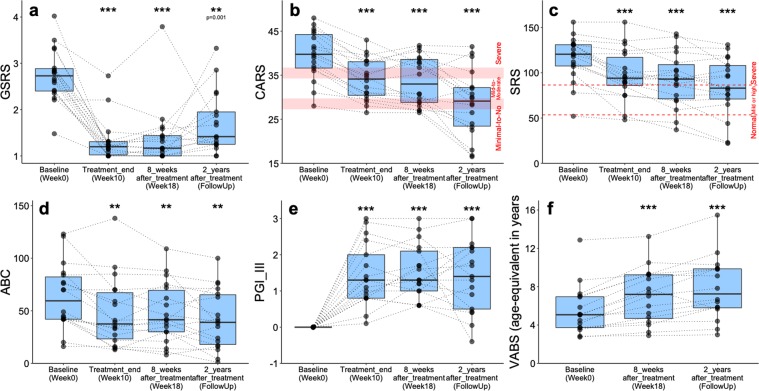
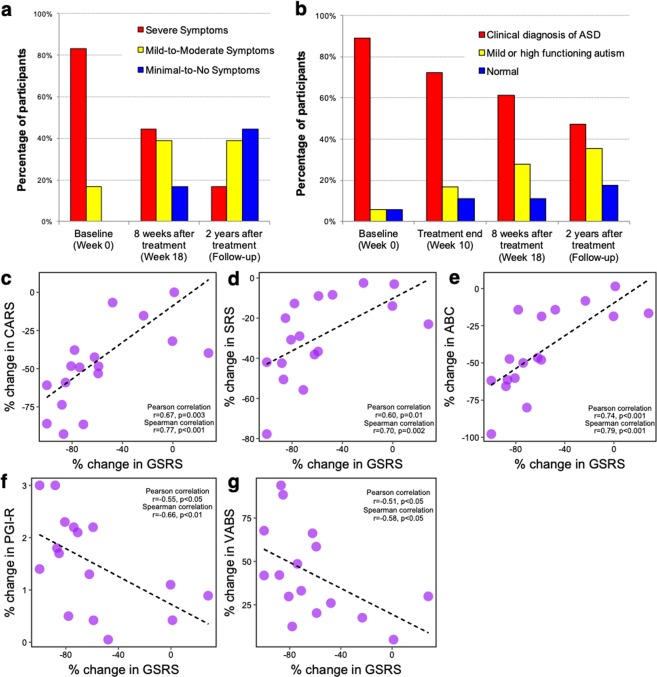
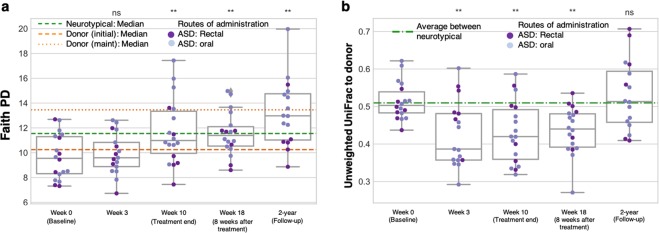
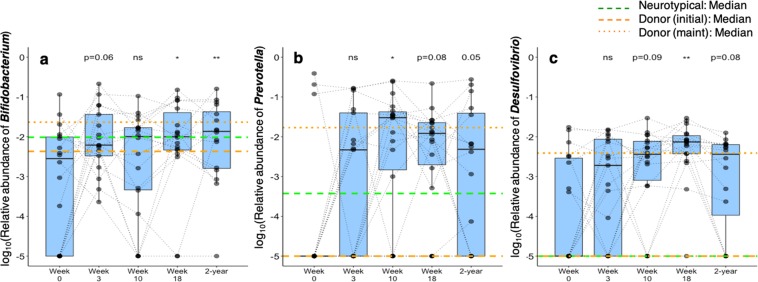
Many studies have reported abnormal gut microbiota in individuals with Autism Spectrum Disorders (ASD), suggesting a link between gut microbiome and autism-like behaviors. Modifying the gut microbiome is a potential route to improve gastrointestinal (GI) and behavioral symptoms in children with ASD, and fecal microbiota transplant could transform the dysbiotic gut microbiome toward a healthy one by delivering a large number of commensal microbes from a healthy donor. We previously performed an open-label trial of Microbiota Transfer Therapy (MTT) that combined antibiotics, a bowel cleanse, a stomach-acid suppressant, and fecal microbiota transplant, and observed significant improvements in GI symptoms, autism-related symptoms, and gut microbiota. Here, we report on a follow-up with the same 18 participants two years after treatment was completed. Notably, most improvements in GI symptoms were maintained, and autism-related symptoms improved even more after the end of treatment. Important changes in gut microbiota at the end of treatment remained at follow-up, including significant increases in bacterial diversity and relative abundances of Bifidobacteria and Prevotella . Our observations demonstrate the long-term safety and efficacy of MTT as a potential therapy to treat children with ASD who have GI problems, and warrant a double-blind, placebo-controlled trial in the future.
Overview
The claims and statistics of this paper haven’t been checked yet.
Free: it reads the open-access text and checks the first 5 claims that cite a source we can check. Create a free account to check every claim.
Integrity signals
Registry
Cites
Statistics
Figures
Verification
Claims the paper makes
The claims and statistics of this paper haven’t been checked yet.
Free: it reads the open-access text and checks the first 5 claims that cite a source we can check. Create a free account to check every claim.
Claims other papers make about this one
Each is checked against this paper’s own text: does it say what the citing paper says it does?
The cited source says what the claim attributes to it.
In the citing paper
“In a two-year follow-up study, Kang et al. further assessed the long-term effects of MTT in the same group of 18 children with ASD. The majority of GI symptom improvements were maintained, while autism-related behaviors continued to show positive progress after treatment. Significant gut microbiota changes observed at the end of treatment, including increased bacterial diversity and higher levels”
From The Gut–Brain–Microbiota Connection and Its Role in Autism Spectrum Disorders (2025) · cites this paper as [135]
In the citing paper
“Microbial therapeutics, including fecal microbiota transplants (FMTs), bacterial consortia, and probiotics, are increasingly being tested in patients with Clostridium difficile infections and other gastrointestinal (GI) disorders (Allegretti et al., 2019), including inflammatory bowel disease (IBD) and, more recently, non-GI indications such as autism (Kang et al., 2019) and cancer (Mullard, 2018)”
From Gut microbiome stability and dynamics in healthy donors and patients with non-gastrointestinal cancers (2021) · cites this paper as Kang et al., 2019
In the citing paper
“These findings highlight the long-term safety and efficacy of MTT as a potential therapeutic option for children with ASD experiencing GI issues [135].”
From The Gut–Brain–Microbiota Connection and Its Role in Autism Spectrum Disorders (2025) · cites this paper as [135]
In the citing paper
“Similarly, probiotic therapies and FMT have demonstrated efficacy in enhancing microbial diversity, reducing digestive issues, and improving behavioral functioning [134,135,145].”
From The Gut–Brain–Microbiota Connection and Its Role in Autism Spectrum Disorders (2025) · cites this paper as [135]
In the citing paper
“microbiota transfer therapy, which changes the intestinal microenvironment, has improved behavioral problems and gastrointestinal symptoms in children with ASD”
5 more claims about this paper
Create a free account to see every claim other papers make about this one.
Self-check
Percentages, sums and reported differences re-computed from the paper’s own numbers.
The self-check needs the paper’s full text.
Citations
Cites
1 retracted
Saad, K., Abdel‐Rahman, A. A., Elserogy, Y. M., Al‐Atram, A. A., El‐Houfey, A. A., Othman, H. A. K., Bjørklund, G., Jia, F., Urbina, M. A., Abo‐Elela, M. G. M., et al. (2018) · Journal of Child Psychology and Psychiatry · doi:10.1111/jcpp.12652 · Cited by 99
RetractedMAFFT Multiple Sequence Alignment Software Version 7: Improvements in Performance and Usability
Katoh, K., & Standley, D. M. (2013) · Molecular Biology and Evolution · doi:10.1093/molbev/mst010 · Cited by 46,209
DADA2: High–resolution sample inference from Illumina amplicon data
Callahan, B. J., McMurdie, P. J., Rosen, M. J., Han, A. W., Johnson, A. J. A., & Holmes, S. P. (2016) · Nature Methods · doi:10.1038/nmeth.3869 · Cited by 35,698
QIIME allows analysis of high-throughput community sequencing data
Caporaso, J. G., Kuczynski, J., Stombaugh, J., Bittinger, K., Bushman, F. D., Costello, E. K., Fierer, N., Peña, A. G., Goodrich, J. K., Gordon, J. I., et al. (2010) · Nature Methods · doi:10.1038/nmeth.f.303 · Cited by 34,887
Self-citationThe SILVA ribosomal RNA gene database project: improved data processing and web-based tools
Quast, C., Pruesse, E., Yilmaz, P., Gerken, J., Schweer, T., Yarza, P., Peplies, J., & Glöckner, F. O. (2012) · Nucleic Acids Research · doi:10.1093/nar/gks1219 · Cited by 33,055
FastTree 2 – Approximately Maximum-Likelihood Trees for Large Alignments
Price, M. N., Dehal, P. S., & Arkin, A. P. (2010) · PLoS ONE · doi:10.1371/journal.pone.0009490 · Cited by 14,894
VSEARCH: a versatile open source tool for metagenomics
(2016) · doi:10.7717/peerj.2584 · Cited by 10,773
Nucleic acid techniques in bacterial systematics
Stackebrandt, E. S., & Goodfellow, M. (1991) · Wiley eBooks · Cited by 9,460
Ultra-high-throughput microbial community analysis on the Illumina HiSeq and MiSeq platforms
Caporaso, J. G., Lauber, C. L., Walters, W. A., Berg-Lyons, D., Huntley, J., Fierer, N., Owens, S. M., Betley, J., Fraser, L., Bauer, M., et al. (2012) · The ISME Journal · doi:10.1038/ismej.2012.8 · Cited by 8,839
Self-citationUniFrac: a New Phylogenetic Method for Comparing Microbial Communities
Lozupone, C., & Knight, R. (2005) · Applied and Environmental Microbiology · doi:10.1128/aem.71.12.8228-8235.2005 · Cited by 8,227
Cited by
Items 201–300 of 867
Interaction of Heavy Metal Lead with Gut Microbiota: Implications for Autism Spectrum Disorder
Tizabi, Y., Bennani, S., Kouhen, N. E., Getachew, B., & Aschner, M. (2023) · Biomolecules · doi:10.3390/biom13101549 · Cited by 40
Troisi, J., Autio, R., Beopoulos, T., Bravaccio, C., Carraturo, F., Corrivetti, G., Cunningham, S., Devane, S., Fallin, M. D., Fetissov, S. O., et al. (2020) · Brain Sciences · doi:10.3390/brainsci10100743 · Cited by 39
“Currently, changes in gut microbiota of ASD patients with and without GI symptoms are well established [34–36], suggesting the potential beneficial effect of fecal transplantation [37,38].”
BackgroundThe Gut-Brain Axis in Autism Spectrum Disorder: A Focus on the Metalloproteases ADAM10 and ADAM17
Zheng, Y., Verhoeff, T. A., Perez‐Pardo, P., Garssen, J., & Kraneveld, A. D. (2020) · International Journal of Molecular Sciences · doi:10.3390/ijms22010118 · Cited by 40
“In recent years, alterations in the gut–brain axis have been presented as possible pathological causes of ASD, and targeting the intestinal microbes has been recognized as a promising treatment for ASD [8,16,178,209].”
BackgroundYadav, M., Kapoor, A., Verma, A., & Ambatipudi, K. (2022) · Journal of Agricultural and Food Chemistry · doi:10.1021/acs.jafc.2c00335 · Cited by 39
Microbiota intestinal: el órgano olvidado
Rivera, J. A. M., Pacheco, S. T., Greene, E. J. D., & Weber, F. L. R. (2021) · Acta Médica Grupo Ángeles · doi:10.35366/98577 · Cited by 41
Cai, J., Jing Hua, H. U., Qin, C., Li, L., Shen, D., Tian, G., Zou, X., Seeberger, P. H., & Yin, J. (2020) · Angewandte Chemie International Edition · doi:10.1002/anie.202007209 · Cited by 39
Kohn, N., Szopinska-Tokov, J., Llera, A., Beckmann, C. F., Vásquez, A. A., & Aarts, E. (2021) · Gut Microbes · doi:10.1080/19490976.2021.2006586 · Cited by 39
“For example, in autism spectrum disorder (ASD), which is characterized by atypical brain network organization (including DMN and ECN, as in component 1),(47) a higher relative abundance of Prevotella (and Bifidobacterium) has been linked with a beneficial effect of Microbiota Transfer Therapy.(48) Accordingly, lower r…”
BackgroundFecal Microbiota Transplantation in Autism Spectrum Disorder
Li, Y., Wang, Y., & Zhang, T. (2022) · Neuropsychiatric Disease and Treatment · doi:10.2147/ndt.s382571 · Cited by 38
“Significant changes in the gut microbiota of children who received FMT persisted 2 years after treatment, including a significant increase in microbial diversity and an increase in the relative abundance of Bifidobacteria and Prevotella, suggesting the long-term safety and efficacy of FMT in improving ASD symptoms.(68…”
BackgroundMicrobiota-directed biotherapeutics: considerations for quality and functional assessment
Fekete, E. E. F., Figeys, D., & Zhang, X. (2023) · Gut Microbes · doi:10.1080/19490976.2023.2186671 · Cited by 39
The link among microbiota, epigenetics, and disease development
El-Sayed, A., Aleya, L., & Kamel, M. S. (2021) · Environmental Science and Pollution Research · doi:10.1007/s11356-021-13862-1 · Cited by 39
The gut-immune-brain axis in neurodevelopment and neurological disorders
Park, J. C., & Im, S. (2022) · Microbiome Research Reports · doi:10.20517/mrr.2022.11 · Cited by 40
Gut Microbiota and Disorders of the Central Nervous System
Vuotto, C., Battistini, L., Caltagirone, C., & Borsellino, G. (2020) · The Neuroscientist · doi:10.1177/1073858420918826 · Cited by 37
Verma, H., Phian, S., Lakra, P., Kaur, J., Subudhi, S., Lal, R., & Rawat, C. D. (2020) · Indian Journal of Microbiology · doi:10.1007/s12088-020-00898-z · Cited by 38
Gonzales, J. A., Marchix, J., Aymeric, L., Berre‐Scoul, C. L., Zoppi, J., Bordron, P., Burel, M., Davidovic, L., Richard, J., Gaman, A., et al. (2021) · Microorganisms · doi:10.3390/microorganisms9081723 · Cited by 38
Interventions on Microbiota: Where Do We Stand on a Gut–Brain Link in Autism? A Systematic Review
Prosperi, M., Santocchi, E., Guiducci, L., Frinzi, J., Morales, M. A., Tancredi, R., Muratori, F., & Calderoni, S. (2022) · Nutrients · doi:10.3390/nu14030462 · Cited by 31
“In addition, immediate or short-term effects are examined, while few studies analyze whether the benefits are maintained even at follow-up [11,20,33].”
BackgroundInfluentialLee, J. J., Piras, E., Tamburini, S., Bu, K., Wallach, D. S., Remsen, B., Cantor, A., Kong, J., Goetz, D. M., Hoffman, K. W., et al. (2023) · Psychiatry Research · doi:10.1016/j.psychres.2023.115279 · Cited by 37
Palmer, J. K., van der Pols, J. C., Sullivan, K. A., Staudacher, H. M., & Byrne, R. (2024) · Journal of Autism and Developmental Disorders · doi:10.1007/s10803-024-06239-z · Cited by 36
The gut microbiota facilitate their host tolerance to extreme temperatures
Wang, Z., Wu, Y., Li, X., Ji, X., & Liu, W. (2024) · BMC Microbiology · doi:10.1186/s12866-024-03277-6 · Cited by 37
“Consistently, changes in the microbiota composition can lead to dysfunction of the microbiota, which consequently influences the health and disease of hosts [38, 39].”
BackgroundZhou, M., Niu, B., Ma, J., Ge, Y., Han, Y., Wu, W., & Yue, C. (2025) · Frontiers in Microbiology · doi:10.3389/fmicb.2025.1535455 · Cited by 36
Żebrowska-Różańska, P., Łaczmańska, I., & Łaczmański, Ł. (2021) · Frontiers in Cellular and Infection Microbiology · doi:10.3389/fcimb.2021.630052 · Cited by 36
Li, Y., Hu, W., Lin, B., Ma, T., Zhang, Z., Hu, W., Zhou, R., Kwok, L. Y., Sun, Z., Zhu, C., et al. (2024) · Gut Microbes · doi:10.1080/19490976.2024.2434675 · Cited by 35
A review of engraftment assessments following fecal microbiota transplant
Herman, C., Barker, B. M., Bartelli, T. F., Chandra, V., Krajmalnik‐Brown, R., Jewell, M., Li, L., Liao, C., McAllister, F. M., Nirmalkar, K., et al. (2025) · Gut Microbes · doi:10.1080/19490976.2025.2525478 · Cited by 36
Self-citationConceptual and methodological flaws undermine claims of a link between the gut microbiome and autism
Mitchell, K. J., Dahly, D. L., & Bishop, D. (2025) · Neuron · doi:10.1016/j.neuron.2025.10.006 · Cited by 35
Wang, R., Afzal, A., Jing, X.-Y., Zhou, Y., Feng, J.-X., Chen, Z., Cao, D., & Liu, X. (2026) · Acta Pharmacologica Sinica · doi:10.1038/s41401-025-01693-6 · Cited by 35
Psychobiotics as a novel strategy for alleviating anxiety and depression
Zou, R., Tian, P., Xu, M., Zhu, H., Zhao, J., Zhang, H., Chen, W., & Wang, G. (2021) · Journal of Functional Foods · doi:10.1016/j.jff.2021.104718 · Cited by 35
Prenatal Zinc Deficient Mice as a Model for Autism Spectrum Disorders
Sauer, A. K., Hagmeyer, S., & Grabrucker, A. M. (2022) · International Journal of Molecular Sciences · doi:10.3390/ijms23116082 · Cited by 35
Kim, Y., Sohn, K., & Kang, H. (2024) · The Korean Journal of Internal Medicine · doi:10.3904/kjim.2023.451 · Cited by 34
“…of fecal matter from a healthy donor to a recipient, has been demonstrated in randomized controlled trials for various conditions, including Clostridium difficile infections [93], inflammatory bowel disease [94], obesity [95], type-1 diabetes mellitus [26], and autism spectrum disorder [96].”
BackgroundGut–Brain Axis: Focus on Neurodegeneration and Mast Cells
Conte, C., Sichetti, M., & Traina, G. (2020) · Applied Sciences · doi:10.3390/app10051828 · Cited by 34
“Similarly, microbiota transplantation from healthy to ASD children proved effective in improving GI symptoms [87].”
BackgroundMoradi, K., Ashraf‐Ganjouei, A., Tavolinejad, H., Bagheri, S., & Akhondzadeh, S. (2020) · Progress in Neuro-Psychopharmacology and Biological Psychiatry · doi:10.1016/j.pnpbp.2020.110091 · Cited by 36
Prebiotics, probiotics and fecal microbiota transplantation in autism: A systematic review
Martínez‐González, A. E., & Andreo‐Martínez, P. (2020) · Revista de Psiquiatría y Salud Mental (English Edition) · doi:10.1016/j.rpsmen.2020.09.001 · Cited by 34
Vasiliu, O. (2022) · Current Medical Research and Opinion · doi:10.1080/03007995.2022.2124071 · Cited by 34
Dooling, S. W., Sgritta, M., Wang, I.-C., Duque, A. L. R. F., & Costa‐Mattioli, M. (2022) · mSystems · doi:10.1128/msystems.00358-22 · Cited by 34
Evolving interplay between natural products and gut microbiota
Zhang, N., Jiang, Z., Li, S., Yang, X. S., & Liu, E. (2023) · European Journal of Pharmacology · doi:10.1016/j.ejphar.2023.175557 · Cited by 34
Zheng, L., Jiao, Y., Zhong, H., Tan, Y., Yin, Y., Liu, Y., Liu, D., Wu, M., Wang, G., Huang, J., et al. (2024) · mSystems · doi:10.1128/msystems.00257-24 · Cited by 34
Prince, N., Marzal, L. N. P., Markidi, A., Ahmed, S., Adolfs, Y., Pasterkamp, R. J., Kumar, H., Roeselers, G., Garssen, J., Kraneveld, A. D., et al. (2024) · Acta Pharmacologica Sinica · doi:10.1038/s41401-024-01268-x · Cited by 33
The Gut-Microbiota-Brain Axis in Autism Spectrum Disorder
Wong, G. C., Montgomery, J. M., & Taylor, M. W. (2021) · Exon Publications eBooks · doi:10.36255/exonpublications.autismspectrumdisorders.2021.gutmicrobiota · Cited by 34
An anxious relationship between Autism Spectrum Disorder and Gut Microbiota: A tangled chemistry?
Vellingiri, B., Aishwarya, S. Y., Jancy, S. B., Abhishek, G. S., Babu, H. W. S., Vijayakumar, P., Narayanasamy, A., Mariappan, S., Sangeetha, R., Gopalakrishnan, A. V., et al. (2022) · Journal of Clinical Neuroscience · doi:10.1016/j.jocn.2022.03.003 · Cited by 34
Cristiano, C., Hoxha, E., Lippiello, P., Balbo, I., Russo, R., Tempia, F., & Miniaci, M. C. (2022) · Biomedicine & Pharmacotherapy · doi:10.1016/j.biopha.2022.113870 · Cited by 34
Inchingolo, A. M., Patano, A., Piras, F., Mancini, A., Inchingolo, A. D., Paduanelli, G., Inchingolo, F., Palermo, A., Dipalma, G., & Malcangi, G. (2023) · Microorganisms · doi:10.3390/microorganisms11061477 · Cited by 33
“Kang et al., 2019 [57] 18 MTT consisting of two-week vancomycin treatment followed by a bowel cleanse and then high dose FMT for 1–2 days and 7–8 weeks of daily maintenance doses.”
MethodResultInfluentialMazandarani, M., Lashkarbolouk, N., Ejtahed, H., & Qorbani, M. (2023) · Nutrition Journal · doi:10.1186/s12937-023-00893-2 · Cited by 33
Yu, R., Hafeez, R., Ibrahim, M. K., Alonazi, W. B., & Li, B. (2024) · Behavioural Brain Research · doi:10.1016/j.bbr.2024.115177 · Cited by 33
Gut Microbiota: A New Challenge in Mood Disorder Research
Marano, G., Rossi, S., Sfratta, G., Traversi, G., Lisci, F. M., Anesini, M. B., Pola, R., Gasbarrini, A., Gaetani, E., & Mazza, M. (2025) · Life · doi:10.3390/life15040593 · Cited by 31
“Notably, Kang et al. [165] demonstrated that approximately 50% of children with ASD experienced marked improvements in both gastrointestinal and behavioral symptoms following FMT, with some patients showing continued progress for up to two years post-treatment.”
Fecal Microbiota Transplantation in Gastrointestinal and Extraintestinal Disorders
Ianiro, G., Segal, J. P., Mullish, B. H., Quraishi, M. N., Porcari, S., Fabiani, G., Gasbarrini, A., & Cammarota, G. (2020) · Future Microbiology · doi:10.2217/fmb-2020-0061 · Cited by 31
Evidence for long‐lasting alterations in the fecal microbiota following prenatal alcohol exposure
Bodnar, T. S., Lee, C. S., Wong, A., Rubin, I. N., Parfrey, L. W., & Weinberg, J. (2022) · Alcoholism Clinical and Experimental Research · doi:10.1111/acer.14784 · Cited by 31
Culturomics, a potential approach paving the way toward bacteriotherapy
Matar, G. M., & Bilen, M. (2022) · Current Opinion in Microbiology · doi:10.1016/j.mib.2022.102194 · Cited by 31
Lactobacillus reuteri normalizes altered fear memory in male Cntnap4 knockout mice
Zhang, W., Huang, J., Gao, F., You, Q.-L., Ding, L., Gong, J., Zhang, M., Ma, R., Zheng, S., Sun, X., et al. (2022) · EBioMedicine · doi:10.1016/j.ebiom.2022.104323 · Cited by 31
Salia, S., Burke, F. F., Hinks, M., Randell, A. M., Matheson, M. A., Walling, S. G., & Swift‐Gallant, A. (2024) · Brain Behavior and Immunity · doi:10.1016/j.bbi.2024.10.030 · Cited by 31
“…the direction of alteration in Prevotellaceae abundance in ASD (Agarwala et al., 2021; Zou et al., 2020; Morton et al., 2023; Kang et al., 2017; Kang et al., 2019), it has been suggested that alterations in either direction of this microbe may be a diagnostic criterion for gut dysbiosis in ASD…”
Sulforaphane and Brain Health: From Pathways of Action to Effects on Specific Disorders
Fahey, J. W., Liu, H., Batt, H., Panjwani, A. A., & Tsuji, P. A. (2025) · Nutrients · doi:10.3390/nu17081353 · Cited by 31
“…particularly noteworthy example comes from Arizona State University, in which the delivery of a large bolus of commensal microbes from a healthy donor to 18 participants with ASD had beneficial effects on ASD symptoms, gut microbiota, and GI symptoms for more than 2 years following treatment [210].”
Living Therapeutics: The Next Frontier of Precision Medicine
Kelly, V. W., Liang, B. K., & Sirk, S. J. (2020) · ACS Synthetic Biology · doi:10.1021/acssynbio.0c00444 · Cited by 31
Lipták, R., Gromová, B., & Gardlík, R. (2021) · Frontiers in Medicine · doi:10.3389/fmed.2021.665520 · Cited by 30
Lee, A., Lee, J. Y., Jung, S.-W., Shin, S. Y., Ryu, H. S., Jang, S.-H., Kwon, J. G., & Kim, Y. S. (2023) · Korean Journal of Gastroenterology · doi:10.4166/kjg.2023.028 · Cited by 30
Olaguez-Gonzalez, J. M., Chaírez, I., Bretón‐Deval, L., & Alfaro-Ponce, M. (2023) · Biomedicines · doi:10.3390/biomedicines11102633 · Cited by 30
Fecal Microbiota Transplantation: Information for the Pediatrician
Oliva‐Hemker, M. M., Kahn, S. A., Steinbach, W. J., SECTION ON GASTROENTEROLOY, H., Cohen, M. B., Brumbaugh, D. E., Cole, C. R., Dotson, J. L., Harpavat, S., Lightdale, J. R., et al. (2023) · PEDIATRICS · doi:10.1542/peds.2023-062922 · Cited by 30
Rahim, F., Toguzbaeva, K., Qasim, N. H., Dzhusupov, K. O., Zhumagaliuly, A., & Khozhamkul, R. (2023) · Frontiers in Nutrition · doi:10.3389/fnut.2023.1294089 · Cited by 31
A Novel and Reliable Rat Model of Autism
Qi, Z., Lyu, M., Yang, L., Yuan, H., Cao, Y., Zhai, L., Dang, W., Liu, J., Yang, F., & Li, Y. (2021) · Frontiers in Psychiatry · doi:10.3389/fpsyt.2021.549810 · Cited by 30
“Regarding the prediction validity, numerous studies have reported that correcting the abnormality of gut microbiota can alleviate ASD animals (3, 50) or children (17, 18, 36).”
BackgroundMitchell, L. K., & Davies, P. S. W. (2021) · European Journal of Clinical Nutrition · doi:10.1038/s41430-021-01027-9 · Cited by 30
Review of Elevated Para-Cresol in Autism and Possible Impact on Symptoms
Flynn, C. K., Adams, J. B., Krajmalnik‐Brown, R., Khoruts, A., Sadowsky, M. J., Nirmalkar, K., Takyi, E., & Whiteley, P. (2025) · International Journal of Molecular Sciences · doi:10.3390/ijms26041513 · Cited by 29
“Kang et al. discovered 2.57-fold higher levels of pCS in fecal samples of ASD children with gastrointestinal disorders (constipation and/or diarrhea) when compared to typically developing children ( p = 0.08) [54].”
InfluentialSelf-citationVoigt, R. M., Zalta, A. K., Raeisi, S., Zhang, L., Brown, J. M., Forsyth, C. B., Boley, R. A., Held, P., Pollack, M. H., & Keshavarzian, A. (2022) · American Journal of Physiology-Gastrointestinal and Liver Physiology · doi:10.1152/ajpgi.00066.2022 · Cited by 29
Asperger Syndrome (AS): A Review Article
Motlani, V., Motlani, G., & Thool, A. R. (2022) · Cureus · doi:10.7759/cureus.31395 · Cited by 29
“Altering the gut microflora is potential way to assist in reducing gastrointestinal tract symptoms as well as behavioral problems in a child with AS [28].”
BackgroundVendrik, K. E. W., Chernova, V. O., Kuijper, E. J., Terveer, E. M., van Hilten, J. J., & Contarino, M. F. (2023) · BMJ Open · doi:10.1136/bmjopen-2023-071766 · Cited by 29
Yadav, S., & Raj, R. G. (2025) · Neuroscience · doi:10.1016/j.neuroscience.2025.07.003 · Cited by 28
Health Impact and Therapeutic Manipulation of the Gut Microbiome
Daliri, E. B., Ofosu, F. K., Chelliah, R., Lee, B. H., & Oh, D. (2020) · Microarrays · doi:10.3390/ht9030017 · Cited by 28
Emergencia de nuevos modelos industriales: Problemática del programa i internacional del GERPISA
Boyer, R., & Freyssenet, M. (1996) · Sociologia del trabajo/Sociología del trabajo · Cited by 28
Cui, J., Wang, W., Tang, Y., Feng, S., Liu, H., & Hao, Z. (2025) · Interdisciplinary medicine · doi:10.1002/inmd.20240041 · Cited by 27
Maternal-infant probiotic transmission mitigates early-life stress-induced autism in mice
Qing, L., Qian, X., Zhu, H., Wang, J., Sun, J., Jin, Z., Tang, X., Zhao, Y., Wang, G., Zhao, J., et al. (2025) · Gut Microbes · doi:10.1080/19490976.2025.2456584 · Cited by 27
A Healthy Gut for a Healthy Brain: Preclinical, Clinical and Regulatory Aspects
Petrella, C., Vecchioli, S. F., Cisale, G. Y., Strimpakos, G., Borg, J.-J., Ceccanti, M., Fiore, M., Monteleone, G., & Nisticò, R. (2020) · Current Neuropharmacology · doi:10.2174/1570159x18666200730111528 · Cited by 27
“Indeed, autistic-like features and associated GI symptoms were significantly improved and this effect persisted up to two years following treatment [172].”
BackgroundLynch, C. M. K., Nagpal, J. K., Clarke, G. A., & Cryan, J. F. (2021) · Current Opinion in Physiology · doi:10.1016/j.cophys.2021.100468 · Cited by 27
Jendraszak, M., Gałęcka, M., Kotwicka, M., Regdos, A., Pazgrat-Patan, M., & Andrusiewicz, M. (2021) · Scientific Reports · doi:10.1038/s41598-021-03794-8 · Cited by 28
Topi, S., Bottalico, L., Charitos, I. A., Colella, M., Domenico, M. D., Palmirotta, R., & Santacroce, L. (2022) · Pathophysiology · doi:10.3390/pathophysiology29030041 · Cited by 27
“However, FMT could cause problems, if the donor transfers opportunistic pathogens or silent infections to the recipients [190,191].”
BackgroundAutism gene variants disrupt enteric neuron migration and cause gastrointestinal dysmotility
McCluskey, K. E., Stovell, K. M., Law, K., Kostyanovskaya, E., Schmidt, J. D., Exner, C. R. T., Dea, J., Brimble, E., State, M. W., Willsey, A. J., et al. (2025) · Nature Communications · doi:10.1038/s41467-025-57342-3 · Cited by 28
Hetta, H. F., Alanazi, F. E., Alqifari, S. F., Ali, M. A. S., Albalwi, M. A., Albalawi, A. A., & Ramadan, Y. N. (2025) · Molecular Neurobiology · doi:10.1007/s12035-025-05321-6 · Cited by 28
“…fi dob ac t e r i a a nd P r e vo t e ll a , p e r s i s t e d , s uppo r ti ng t h e l ong - t e r m s a f e t y a nd e ffi cac y o f M TT [ 111 , 112 ] FMT has emerged as a promising strategy for modifying gut microbiota by transferring fecal microbiota from healthy donors to individuals with…”
Gastrointestinal disease in children with autism spectrum disorders: Etiology or consequence?
Krigsman, A., & Walker, S. J. (2021) · World Journal of Psychiatry · doi:10.5498/wjp.v11.i9.605 · Cited by 26
Fecal microbiota transplantation in childhood: past, present, and future
Gu, X., Chen, Z.-H., & Zhang, S. (2022) · World Journal of Pediatrics · doi:10.1007/s12519-022-00655-w · Cited by 26
“Gut flora and its metabolites play an important role in the pathophysiology of ASD [44–47].”
BackgroundResultInfluentialAndersen‐Civil, A. I. S., Sawale, R. A., & Vanwalleghem, G. C. (2023) · Brain Behavior and Immunity · doi:10.1016/j.bbi.2023.06.001 · Cited by 29
Fecal Microbiota Transplantation: Indications, Methods, and Challenges
Lee, J. Y., Kim, Y., Kim, J., & Kim, J. K. (2024) · The Journal of Microbiology · doi:10.1007/s12275-024-00184-3 · Cited by 27
“The same participants were followed two years after FMT treat-ment and maintained the improved gastrointestinal symptoms and further improvement of autism-related symptoms (Kang et al., 2019).”
Peripheral Routes to Neurodegeneration: Passing Through the Blood–Brain Barrier
Giannoni, P., Claeysen, S., Noè, F. M., & Marchi, N. (2020) · Frontiers in Aging Neuroscience · doi:10.3389/fnagi.2020.00003 · Cited by 28
Sun, Q., Cheng, L., Zhang, X., Wu, Z., & Weng, P. (2021) · Food & Function · doi:10.1039/d0fo02791j · Cited by 26
Zhang, Z., Kang, W., Mi, Y., Zhong, X., & He, Y. (2025) · Pathogens · doi:10.3390/pathogens14111145 · Cited by 27
Microbial influences on gut development and gut-brain communication
Ye, L., & Rawls, J. F. (2021) · Development · doi:10.1242/dev.194936 · Cited by 26
Could Candida Overgrowth Be Involved in the Pathophysiology of Autism?
Herman, A., & Herman, A. P. (2022) · Journal of Clinical Medicine · doi:10.3390/jcm11020442 · Cited by 25
Epigenetic Alterations of Brain Non-Neuronal Cells in Major Mental Diseases
Abdolmaleky, H. M., Martin, M., Zhou, J., & Thiagalingam, S. (2023) · Genes · doi:10.3390/genes14040896 · Cited by 25
Hrnčiarová, J., Kubelková, K., Boštíková, V., Rychlík, I., Karasová, D., Babák, V., Datkova, M., Simackova, K., & Macela, A. (2024) · Nutrients · doi:10.3390/nu16131988 · Cited by 25
“Micro-biota transfer therapy treatment protocol, consisting of the application of vancomycin, the laxative MoviPrep, SHGM (Standardized Human Gut Microbiota), and Prilosec (Omeprazole), reduced the rates of core ASD symptoms [5,64].”
BackgroundMore than just a number: the gut microbiota and brain function across the extremes of life
Nuzum, N. D., Deady, C., Kittel‐Schneider, S., Cryan, J. F., O’Mahony, S. M., & Clarke, G. A. (2024) · Gut Microbes · doi:10.1080/19490976.2024.2418988 · Cited by 25
Sales-Millán, A. D., Reyes-Ferreira, P., Garrido, J. F. A., Guillé, I. C., Barrientos-Ríos, R., & Velázquez-Aragón, J. A. (2024) · International Journal of Molecular Sciences · doi:10.3390/ijms25126701 · Cited by 24
Turriziani, L., Ricciardello, A., Cucinotta, F., Bellomo, F., Turturo, G., Boncoddo, M., Mirabelli, S., Scattoni, M. L., Rossi, M., & Persico, A. M. (2021) · Autism Research · doi:10.1002/aur.2639 · Cited by 25
“Sustained and progressive reductions in autism severity and increased adaptive behaviors were recorded in an open trial of 18 autistic children followed-up for two years after undergoing microbiota transfer therapy (Kang et al., 2017, 2019).”
BackgroundZhang, G., Ma, F., Zhang, Z., Qi, Z., Luo, M., & Yu, Y. (2022) · Environment International · doi:10.1016/j.envint.2023.107802 · Cited by 24
Transfer of Tumor-Bearing Mice Intestinal Flora Can Ameliorate Cognition in Alzheimer’s Disease Mice
Hang, Z., Cai, S., Lei, T., Zhang, X., Xiao, Z., Wang, D., Li, Y., Bi, W., Yang, Y., Deng, S., et al. (2022) · Journal of Alzheimer s Disease · doi:10.3233/jad-215495 · Cited by 24
The holobiont mind: A bridge between 4E cognition and the microbiome
Palacios-García, I., & Parada, F. J. (2021) · Adaptive Behavior · doi:10.1177/10597123211053071 · Cited by 25
Kurokawa, S., 野村, 健., Sanada, K., Miyaho, K., Ishii, C., Fukuda, S., Iwamoto, C., Naraoka, M., Yoneda, S., Imafuku, M., et al. (2024) · Journal of Child Psychology and Psychiatry · doi:10.1111/jcpp.13962 · Cited by 23
Neurodevelopment of Autism: Critical Periods, Stress and Nutrition
Ayoub, G. S. (2024) · Cells · doi:10.3390/cells13231968 · Cited by 23
“Additionally, fecal transplants have demonstrated effectiveness in improving communication symptoms in autistic children, highlighting the microbiome’s crucial role in metabolizing nutrients vital for typical neurodevelopment [7].”
Pandina, G., Ring, R. H., Bangerter, A., & Ness, S. L. (2020) · Psychiatric Clinics of North America · doi:10.1016/j.psc.2020.08.003 · Cited by 23
Tcherni‐Buzzeo, M. (2022) · Aggressive Behavior · doi:10.1002/ab.22050 · Cited by 24
Smith, C. J. W., Rendina, D. N., Kingsbury, M. A., Malacon, K. E., Nguyen, D. M., Tran, J. J., Devlin, B. A., Raju, R. M., Clark, M. J., Burgett, L. A., et al. (2023) · Molecular Psychiatry · doi:10.1038/s41380-023-02108-w · Cited by 23
A Gut Feeling: The Importance of the Intestinal Microbiota in Psychiatric Disorders
Ochoa‐Repáraz, J., Ramelow, C. C., & Kasper, L. H. (2020) · Frontiers in Immunology · doi:10.3389/fimmu.2020.510113 · Cited by 24
Microbiome First Medicine in Health and Safety
Dietert, R. R. (2021) · Biomedicines · doi:10.3390/biomedicines9091099 · Cited by 23
Microbiome science of human excrement composting
Meilander, J., & Caporaso, J. G. (2024) · The ISME Journal · doi:10.1093/ismejo/wrae228 · Cited by 24
Self-citationThe gut microbiome shapes social behaviour across animal species
Griffiths, J. A., Nirmalkar, K., Wu, W., Krajmalnik‐Brown, R., & Mazmanian, S. K. (2025) · Nature Reviews Microbiology · doi:10.1038/s41579-025-01262-y · Cited by 23
Self-citationAl‐Ali, D., Ahmed, A., Shafiq, A., McVeigh, C., Châari, A., Zakaria, D., & Bendriss, G. (2021) · Qatar medical journal · doi:10.5339/qmj.2021.5 · Cited by 22
Ye, C., Zhang, X., Jiaqu, C., Qiyi, C., Qin, H., Li, N., Du, Y., Xiaoxin, Z., Yang, R., Lu, J. B., et al. (2022) · BMJ Open · doi:10.1136/bmjopen-2021-051613 · Cited by 22
Dovgan, K. N., Gynegrowski, K., & Ferguson, B. J. (2022) · Journal of Autism and Developmental Disorders · doi:10.1007/s10803-022-05539-6 · Cited by 22
“Emerging evidence suggests that the microbiota-gut-brain axis plays an important role in the development and maintenance of GI problems in ASD (e.g., Srikantha & Mohajeri 2019; Kang et al., 2019).”
Metadata
- Authors
- Kang, D.-W., Adams, J. B., Coleman, D. M., Pollard, E. L., Maldonado, J., McDonough-Means, S., Caporaso, J. G., & Krajmalnik-Brown, R.
- Affiliations
- Arizona State University (US)
- Northern Arizona University (US)
- ORCID
- Venue
- Scientific Reports
- Published
- 2019-04-09
- Volume
- 9
- Issue
- 1
- Pages
- 5821-5821
- ISSN
- 2045-2322 (ISSN-L)
- PMC
- PMC6456593
- OpenAlex
- W2936474142
- Semantic Scholar
- 7ebabdb2344e27104d54862265ff12f0f6ed29c8
- Cited by
- 749
- References
- 54
- Citations by year
- 2026: 60 · 2025: 108 · 2024: 102 · 2023: 105 · 2022: 141 · 2021: 111 · 2020: 85 · 2019: 35
- FWCI
- 30.78
- Type
- journal article
- Language
- en
- Open access
- gold
- doi.org
- Licence
- cc-by
- creativecommons.org/licenses/by/4.0 (tdm)
- creativecommons.org/licenses/by/4.0 (vor)
- Locations
- Scientific Reports (publishedVersion, cc-by)
- Europe PMC (PubMed Central) (publishedVersion, cc-by)
- PubMed Central (publishedVersion, cc-by)
- PubMed (publishedVersion)
- DOAJ (DOAJ: Directory of Open Access Journals) (submittedVersion)
- Funders
- This work was supported by Finch Therapeutics and the Arizona Board of Regents.
- Topics
- Life Sciences › Biochemistry, Genetics and Molecular Biology › Molecular Biology › Gut microbiota and health
- Life Sciences › Neuroscience › Cognitive Neuroscience › Autism Spectrum Disorder Research
- Health Sciences › Medicine › Gastroenterology › Gastrointestinal motility and disorders
- Keywords
- autism spectrum disorder, fecal microbiota transplantation, gut microbiota, gastrointestinal symptoms, long-term follow-up, Bifidobacterium, Prevotella, bacterial diversity, children, antibiotic therapy, bowel preparation
- MeSH terms
- Gastrointestinal Microbiome, Fecal Microbiota Transplantation, Autistic Disorder, Bifidobacterium, Child, Female, Follow-Up Studies, Gastrointestinal Diseases, Humans, Male, Prevotella, Gastrointestinal Tract, Dysbiosis
About these checks
Registry, retraction, Cites and statistics results are computed, not judged, with one exception: a printed reference that no index lists is read once by a model before it counts as a citation error. Claims are extracted by a model and kept only when their quote appears verbatim in the text; each cited source is then checked, with a model’s help, for whether it says what the claim relies on. Those verdicts can be wrong — read the claim’s quote and the cited source before relying on one.
Statistics and arithmetic are recomputed, not judged.
Confidence bands are shown only for fields calibrated on our annotated test set. None is calibrated yet, so no band is shown.
What counts as a claim ›How we measure confidence ›How we check this ›
Are you an author, or do you see a problem with this page? Request a review
Data sources
Bibliographic data: Semantic Scholar, OpenAlex, Crossref.
Contains information from the Semantic Scholar Academic Graph Datasets, made available under the ODC Attribution License (ODC-BY 1.0).
Semantic Scholar’s data is described in: Kinney, R., et al. (2023). The Semantic Scholar Open Data Platform. arXiv:2301.10140.
