

Long-term benefit of Microbiota Transfer Therapy on autism symptoms and gut microbiota
Open accessThe DOI matches its Crossref record; 54 of the 54 references it cites were found in a registry or an index.
Abstract
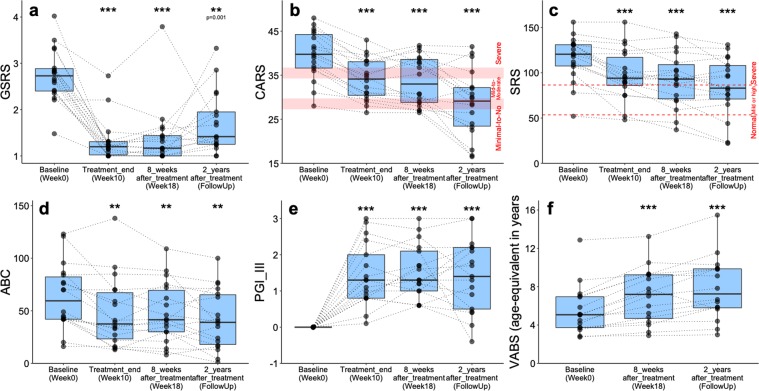
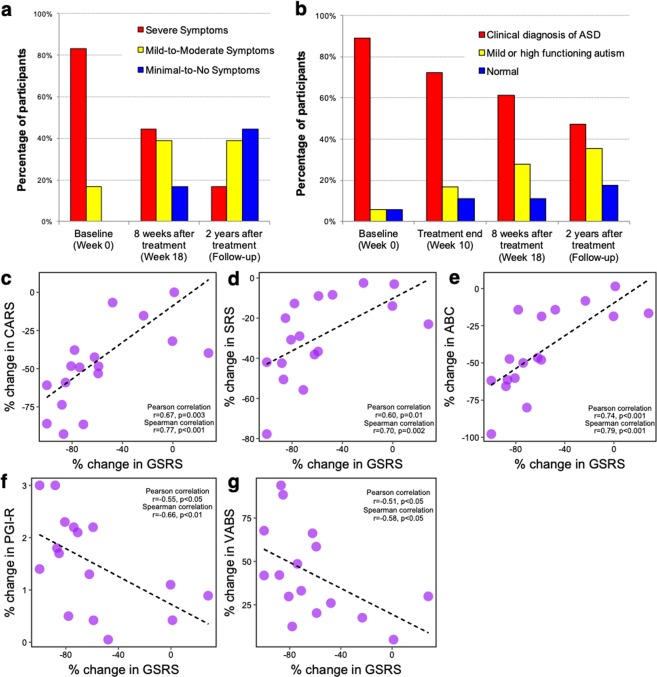
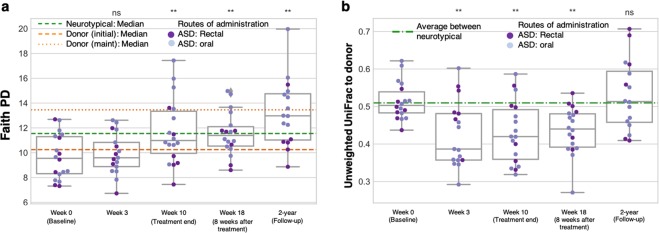
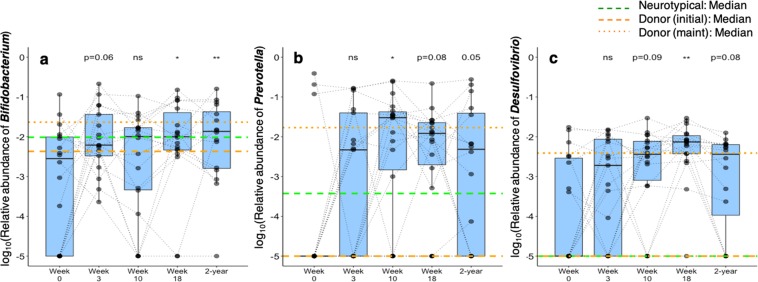
Many studies have reported abnormal gut microbiota in individuals with Autism Spectrum Disorders (ASD), suggesting a link between gut microbiome and autism-like behaviors. Modifying the gut microbiome is a potential route to improve gastrointestinal (GI) and behavioral symptoms in children with ASD, and fecal microbiota transplant could transform the dysbiotic gut microbiome toward a healthy one by delivering a large number of commensal microbes from a healthy donor. We previously performed an open-label trial of Microbiota Transfer Therapy (MTT) that combined antibiotics, a bowel cleanse, a stomach-acid suppressant, and fecal microbiota transplant, and observed significant improvements in GI symptoms, autism-related symptoms, and gut microbiota. Here, we report on a follow-up with the same 18 participants two years after treatment was completed. Notably, most improvements in GI symptoms were maintained, and autism-related symptoms improved even more after the end of treatment. Important changes in gut microbiota at the end of treatment remained at follow-up, including significant increases in bacterial diversity and relative abundances of Bifidobacteria and Prevotella . Our observations demonstrate the long-term safety and efficacy of MTT as a potential therapy to treat children with ASD who have GI problems, and warrant a double-blind, placebo-controlled trial in the future.
Overview
The claims and statistics of this paper haven’t been checked yet.
Free: it reads the open-access text and checks the first 5 claims that cite a source we can check. Create a free account to check every claim.
Integrity signals
Registry
Cites
Statistics
Figures
Verification
Claims the paper makes
The claims and statistics of this paper haven’t been checked yet.
Free: it reads the open-access text and checks the first 5 claims that cite a source we can check. Create a free account to check every claim.
Claims other papers make about this one
Each is checked against this paper’s own text: does it say what the citing paper says it does?
The cited source says what the claim attributes to it.
In the citing paper
“In a two-year follow-up study, Kang et al. further assessed the long-term effects of MTT in the same group of 18 children with ASD. The majority of GI symptom improvements were maintained, while autism-related behaviors continued to show positive progress after treatment. Significant gut microbiota changes observed at the end of treatment, including increased bacterial diversity and higher levels”
From The Gut–Brain–Microbiota Connection and Its Role in Autism Spectrum Disorders (2025) · cites this paper as [135]
In the citing paper
“Microbial therapeutics, including fecal microbiota transplants (FMTs), bacterial consortia, and probiotics, are increasingly being tested in patients with Clostridium difficile infections and other gastrointestinal (GI) disorders (Allegretti et al., 2019), including inflammatory bowel disease (IBD) and, more recently, non-GI indications such as autism (Kang et al., 2019) and cancer (Mullard, 2018)”
From Gut microbiome stability and dynamics in healthy donors and patients with non-gastrointestinal cancers (2021) · cites this paper as Kang et al., 2019
In the citing paper
“These findings highlight the long-term safety and efficacy of MTT as a potential therapeutic option for children with ASD experiencing GI issues [135].”
From The Gut–Brain–Microbiota Connection and Its Role in Autism Spectrum Disorders (2025) · cites this paper as [135]
In the citing paper
“Similarly, probiotic therapies and FMT have demonstrated efficacy in enhancing microbial diversity, reducing digestive issues, and improving behavioral functioning [134,135,145].”
From The Gut–Brain–Microbiota Connection and Its Role in Autism Spectrum Disorders (2025) · cites this paper as [135]
In the citing paper
“microbiota transfer therapy, which changes the intestinal microenvironment, has improved behavioral problems and gastrointestinal symptoms in children with ASD”
5 more claims about this paper
Create a free account to see every claim other papers make about this one.
Self-check
Percentages, sums and reported differences re-computed from the paper’s own numbers.
The self-check needs the paper’s full text.
Citations
Cites
1 retracted
Saad, K., Abdel‐Rahman, A. A., Elserogy, Y. M., Al‐Atram, A. A., El‐Houfey, A. A., Othman, H. A. K., Bjørklund, G., Jia, F., Urbina, M. A., Abo‐Elela, M. G. M., et al. (2018) · Journal of Child Psychology and Psychiatry · doi:10.1111/jcpp.12652 · Cited by 99
RetractedMAFFT Multiple Sequence Alignment Software Version 7: Improvements in Performance and Usability
Katoh, K., & Standley, D. M. (2013) · Molecular Biology and Evolution · doi:10.1093/molbev/mst010 · Cited by 46,209
DADA2: High–resolution sample inference from Illumina amplicon data
Callahan, B. J., McMurdie, P. J., Rosen, M. J., Han, A. W., Johnson, A. J. A., & Holmes, S. P. (2016) · Nature Methods · doi:10.1038/nmeth.3869 · Cited by 35,698
QIIME allows analysis of high-throughput community sequencing data
Caporaso, J. G., Kuczynski, J., Stombaugh, J., Bittinger, K., Bushman, F. D., Costello, E. K., Fierer, N., Peña, A. G., Goodrich, J. K., Gordon, J. I., et al. (2010) · Nature Methods · doi:10.1038/nmeth.f.303 · Cited by 34,887
Self-citationThe SILVA ribosomal RNA gene database project: improved data processing and web-based tools
Quast, C., Pruesse, E., Yilmaz, P., Gerken, J., Schweer, T., Yarza, P., Peplies, J., & Glöckner, F. O. (2012) · Nucleic Acids Research · doi:10.1093/nar/gks1219 · Cited by 33,055
FastTree 2 – Approximately Maximum-Likelihood Trees for Large Alignments
Price, M. N., Dehal, P. S., & Arkin, A. P. (2010) · PLoS ONE · doi:10.1371/journal.pone.0009490 · Cited by 14,894
VSEARCH: a versatile open source tool for metagenomics
(2016) · doi:10.7717/peerj.2584 · Cited by 10,773
Nucleic acid techniques in bacterial systematics
Stackebrandt, E. S., & Goodfellow, M. (1991) · Wiley eBooks · Cited by 9,460
Ultra-high-throughput microbial community analysis on the Illumina HiSeq and MiSeq platforms
Caporaso, J. G., Lauber, C. L., Walters, W. A., Berg-Lyons, D., Huntley, J., Fierer, N., Owens, S. M., Betley, J., Fraser, L., Bauer, M., et al. (2012) · The ISME Journal · doi:10.1038/ismej.2012.8 · Cited by 8,839
Self-citationUniFrac: a New Phylogenetic Method for Comparing Microbial Communities
Lozupone, C., & Knight, R. (2005) · Applied and Environmental Microbiology · doi:10.1128/aem.71.12.8228-8235.2005 · Cited by 8,227
Cited by
Items 101–200 of 867
Prochazkova, P., Roubalova, R., Dvorak, J., Tlaskalova-Hogenova, H., Cermakova, M., Tomasova, P., Sediva, B., Kuzma, M., Bulant, J., Bilej, M., et al. (2019) · Microorganisms · doi:10.3390/microorganisms7090338 · Cited by 93
“Except for rCDI, FMT was used to treat inflammatory bowel diseases (IBD) [22], diabetes mellitus [23], autistic spectrum disorders [24], obesity [16,25], and also to reduce symptoms of chronic intestinal pseudo-obstruction syndrome (CIPO) or small intestinal bacterial overgrowth syndrome (SIBO) [26,27].”
MethodZuffa, S., Schimmel, P., Gonzalez-Santana, A., Belzer, C., Knol, J., Bölte, S., Falck‐Ytter, T., Forssberg, H., Swann, J. R., & Heijtz, R. D. (2023) · Translational Psychiatry · doi:10.1038/s41398-023-02556-6 · Cited by 93
Dong, T. S., & Mayer, E. A. (2024) · Cellular and Molecular Gastroenterology and Hepatology · doi:10.1016/j.jcmgh.2024.01.024 · Cited by 93
Gastrointestinal Issues and Autism Spectrum Disorder
Madra, M., Ringel, R., & Margolis, K. G. (2021) · Psychiatric Clinics of North America · doi:10.1016/j.psc.2020.11.006 · Cited by 67
Alteration of Gut Microbiota: New Strategy for Treating Autism Spectrum Disorder
Liu, J., Gao, Z., Chuanqi, L., Liu, T., Gao, J., Cai, Y., & Fan, X. (2022) · Frontiers in Cell and Developmental Biology · doi:10.3389/fcell.2022.792490 · Cited by 87
Fecal Microbiota Transplantation: The Evolving Risk Landscape
Gupta, S., Mullish, B. H., & Allegretti, J. R. (2021) · The American Journal of Gastroenterology · doi:10.14309/ajg.0000000000001075 · Cited by 84
Kim, J. Y., Choi, M., Ha, S., Hwang, J., Koyanagi, A., Dragioti, E., Raduà, J., Smith, L., Jacob, L., de Pablo, G. S., et al. (2021) · Autism Research · doi:10.1002/aur.2656 · Cited by 83
“Although the cause-and-effect relationship between the gut microbiota and the two disorders is not yet clear, results from recent trials that fecal microbiota transplant therapy was associated with improvements in autism-related symptoms in individuals with ASD (Kang et al., 2019) and disease remission in individuals…”
ResultComparison of Metagenomics and Metatranscriptomics Tools: A Guide to Making the Right Choice
Terron-Camero, L. C., Gordillo-González, F., Salas‐Espejo, E., & Andrés‐León, E. (2022) · Genes · doi:10.3390/genes13122280 · Cited by 83
“Inflammatory and immune diseases have a strong relationship with microorganisms [38–44], as well as diabetes [44], neurodegenerative and neuropsychiatric disorders [44–46], cancer [47–50], cardiovascular susceptibility [51,52] and liver disease [53].”
In vitro fermentation of raffinose to unravel its potential as prebiotic ingredient
Amorim, C., Silvério, S. C., Cardoso, B. B., Alves, J. I., Pereira, M. A., & Rodrigues, L. R. (2020) · LWT · doi:10.1016/j.lwt.2020.109322 · Cited by 82
“disbyosis caused by antibiotics intake or food poisoning, has been the recent focus of increased research (Kang et al., 2019; Yeung, Mocan, & Atanasov, 2018).”
BackgroundFrom bugs to brain: unravelling the GABA signalling networks in the brain–gut–microbiome axis
Belelli, D., Lambert, J. J., Wan, M. L. Y., Monteiro, A. R., Nutt, D. J., & Swinny, J. D. (2024) · Brain · doi:10.1093/brain/awae413 · Cited by 83
“…is noteworthy that alterations in bacterially-derived GABA and/or the expression of GAD-system genes have been reported for a number of psychiatric and neurological disorders, including autism, 161,162 depression, 156,163,164 schizophrenia, 165 alcohol use disorder 166,167 and Alzheimer’s disease.”
Li, M., Liu, J., Zhu, J., Wang, H., Sun, C., Gao, N. L., Zhao, X.-M., & Chen, W.-H. (2023) · Gut Microbes · doi:10.1080/19490976.2023.2205386 · Cited by 66
“On the other hand, restoring the gut microbiota by transplanting feces from healthy donors to human recipients alleviated symptoms in diseases such as Clostridium Difficile Infection (CDI) 33 , Inflammatory Bowel Disease (IBD) 34 , and ASD 35 .”
BackgroundOral microbiota and autism spectrum disorder (ASD)
Olsen, I., & Hicks, S. D. (2019) · Journal of Oral Microbiology · doi:10.1080/20002297.2019.1702806 · Cited by 80
“sant, 18 individuals with ASD demonstrated significant improvements in GI symptoms, autism-related symptoms, and gut microbiota [108].”
BackgroundPhenolic Compounds Promote Diversity of Gut Microbiota and Maintain Colonic Health
Domínguez-Avila, J. A., Villa-Rodríguez, J. A., Montiel‐Herrera, M., Pacheco‐Ordaz, R., Roopchand, D. E., Venema, K., & González-Aguilar, G. A. (2020) · Digestive Diseases and Sciences · doi:10.1007/s10620-020-06676-7 · Cited by 79
“Diet-induced steatohepatitis [42], antibiotic and chemotherapy-induced dysbiosis [43], insulin resistance [44], autism spectrum disorder [45], and other conditions have also been reported to respond positively to an FMT.”
BackgroundEncapsulated Fecal Microbiota Transplantation: Development, Efficacy, and Clinical Application
Halaweish, H., Boatman, S. M., & Staley, C. M. (2022) · Frontiers in Cellular and Infection Microbiology · doi:10.3389/fcimb.2022.826114 · Cited by 78
Fecal Microbiota Transplantation and Other Gut Microbiota Manipulation Strategies
Quaranta, G., Guarnaccia, A., Fancello, G., Agrillo, C., Iannarelli, F., Sanguinetti, M., & Masucci, L. (2022) · Microorganisms · doi:10.3390/microorganisms10122424 · Cited by 79
“Stomachs lacking H. pylori are mainly populated by Streptococcus spp., Actinomyces spp., Prevotella spp., and Gemella spp., which are predominantly found in the throat, indicating that they may be transient residents originating there [5].”
BackgroundInfluentialBundgaard‐Nielsen, C., Lauritsen, M. B., Knudsen, J. K., Rold, L. S., Larsen, M. H., Hindersson, P., Villadsen, A. B., Leutscher, P. D. C., Hagstrøm, S., Nyegaard, M., et al. (2023) · Gut Microbes · doi:10.1080/19490976.2023.2211923 · Cited by 77
Marzal, L. N. P., Rojas-Velázquez, D., Rigters, D., Prince, N., Garssen, J., Kraneveld, A. D., Perez‐Pardo, P., & Lopez‐Rincon, A. (2024) · Scientific Reports · doi:10.1038/s41598-023-50601-7 · Cited by 77
The Impact of Gut Microbiota-Derived Metabolites in Autism Spectrum Disorders
Marzal, L. N. P., Prince, N., Bajić, D., Roussin, L., Naudon, L., Rabot, S., Garssen, J., Kraneveld, A. D., & Perez‐Pardo, P. (2021) · International Journal of Molecular Sciences · doi:10.3390/ijms221810052 · Cited by 78
Aljeradat, B., Kumar, D., Abdulmuizz, S., Kundu, M., Almealawy, Y. F., Batarseh, D. R., Atallah, O., Ennabe, M., Alsarafandi, M., Alan, A., et al. (2024) · Pathophysiology · doi:10.3390/pathophysiology31020019 · Cited by 78
“These changes were then noted to persist after 2 years of follow ‐ up, with ASD symptom improvement being even more pronounced than the initial 8 ‐ week change [84].”
BackgroundExploring the microbiota-gut-brain axis: impact on brain structure and function
Yassin, L. K., Nakhal, M. M., Alderei, A., Almehairbi, A., Mydeen, A. B., Akour, A. A., & Hamad, M. I. K. (2025) · Frontiers in Neuroanatomy · doi:10.3389/fnana.2025.1504065 · Cited by 74
“In a clinical trial with 18 children with ASD, 7–8 weeks of FMT significantly improved gastrointestinal problems and behavioural symptoms (Kang et al., 2019).”
Roussin, L., Prince, N., Perez‐Pardo, P., Kraneveld, A. D., Rabot, S., & Naudon, L. (2020) · Microorganisms · doi:10.3390/microorganisms8091369 · Cited by 75
The Gut-Brain-Immune Axis in Autism Spectrum Disorders: A State-of-Art Report
Puricelli, C., Rolla, R., Gigliotti, C. L., Boggio, E. M., Beltrami, E., Dianzani, U., & Keller, R. (2022) · Frontiers in Psychiatry · doi:10.3389/fpsyt.2021.755171 · Cited by 72
“Notably, these benefits were maintained and even improved after a 2-year follow-up of these subjects (181), suggesting the long-term effect this therapeutic strategy could have.”
BackgroundGut bacterial dysbiosis in children with intractable epilepsy
Lee, K., Kim, N., Shim, J. O., & Kim, G.-H. (2020) · Journal of Clinical Medicine · doi:10.3390/jcm10010005 · Cited by 70
“Recent studies have reported that changes in the gut microbiota are associated with diseases of the central nervous system, including autism spectrum disorder [1,2], multiple sclerosis [3], Parkinson’s disease [4,5], and Alzheimer’s disease [6].”
BackgroundLorente-Picón, M., & Laguna, A. (2021) · Biomolecules · doi:10.3390/biom11030433 · Cited by 69
“On the other hand, it has been shown that alterations in gut microbiota composition and function can lead to dysbiosis, which has been linked to the etiology of multiples GI [51] and non-GI diseases such as anxiety, depression [52], autism [53], spectrum disorders [54], AD [55], and for the interest of this review, PD…”
BackgroundBeversdorf, D. Q., Stevens, H. E., Margolis, K. G., & de Water, J. V. (2019) · Current Pharmaceutical Design · doi:10.2174/1381612825666191119093335 · Cited by 71
Duque, A. L. R. F., Demarqui, F. M., Santoni, M. M., Zanelli, C. F., Adorno, M. Â. T., Milenković, D., Mesa, V., & Sivieri, K. (2021) · Food Research International · doi:10.1016/j.foodres.2021.110657 · Cited by 70
Davies, C., Mishra, D., Eshraghi, R. S., Mittal, J., Sinha, R., Bulut, E., Mittal, R., & Eshraghi, A. A. (2021) · Neuroscience & Biobehavioral Reviews · doi:10.1016/j.neubiorev.2021.07.001 · Cited by 67
Laue, H. E., Korrick, S., Baker, E., Karagas, M. R., & Madan, J. C. (2020) · Scientific Reports · doi:10.1038/s41598-020-72386-9 · Cited by 68
Gut Microbiota and Neuroplasticity
Murciano-Brea, J., García-Montes, M. E., Geuna, S., & Herrera‐Rincon, C. (2021) · Cells · doi:10.3390/cells10082084 · Cited by 68
“It has been demonstrated that targeting the microbiota in ASD patients may significantly improve the symptomatology, such as through treatment with oral vancomycin for 8 weeks in ASD children [68] or with microbiota transfer therapy (MTT) [69], whose positive effects remained for two years after treatment [70].”
BackgroundByrd, A. L., Liu, M., Fujimura, K. E., Lyalina, S., Nagarkar, D. R., Charbit, B., Bergstedt, J., Patin, E., Harrison, O. J., Quintana-Murci, L., et al. (2021) · Journal of Experimental Medicine · doi:10.1084/jem.20200606 · Cited by 63
“, 2019), including inflammatory bowel disease (IBD) and, more recently, non-GI indications such as autism (Kang et al., 2019) and cancer (Mullard, 2018).”
BackgroundAbuaish, S., Al-Otaibi, N. M., Abujamel, T. S., Alzahrani, S. A., Alotaibi, S. M., Alshawakir, Y. A., Aabed, K., & El-Ansary, A. K. (2021) · Brain Sciences · doi:10.3390/brainsci11081038 · Cited by 63
“The production of short-chain fatty acids, such as propionic acid (PPA), by the gut Clostridia and Desulfovibrio, is suggested to play a role in developing ASD [19].”
BackgroundStability and dynamics of the human gut microbiome and its association with systemic immune traits
(2020) · doi:10.1101/2020.01.17.909853 · Cited by 63
Aberrant enteric neuromuscular system and dysbiosis in amyotrophic lateral sclerosis
Zhang, Y., Ogbu, D., Garrett, S., Xia, Y., & Sun, J. (2021) · Gut Microbes · doi:10.1080/19490976.2021.1996848 · Cited by 61
van de Wouw, M., Walsh, C. J., Vigano, G. M. D., Lyte, J. M., Boehme, M., Gual‐Grau, A., Crispie, F., Walsh, A. M., Clarke, G. A., Dinan, T. G., et al. (2021) · Brain Behavior and Immunity · doi:10.1016/j.bbi.2021.07.004 · Cited by 61
Fecal microbiota transplantation in non-communicable diseases: Recent advances and protocols
Hamamah, S., Gheorghita, R. E., Lobiuc, A., Sîrbu, I. O., & Covașă, M. (2022) · Frontiers in Medicine · doi:10.3389/fmed.2022.1060581 · Cited by 61
“Importantly, in a followup study of the same 18 children, the beneficial effects of FMT in improving behavioral symptoms associated with ASD lasted up to 2 years following treatment (78).”
BackgroundAlteration of Gut Microbiota in Autism Spectrum Disorder: An Overview
Oh, D., & Cheon, K.-A. A. (2020) · Journal of korean Academy of Child and Adolescent Psychiatry · doi:10.5765/jkacap.190039 · Cited by 60
Ávila, P. R. M., Fiorot, M., Michels, M., Dominguini, D., Abatti, M. R., Vieira, A. A. D. S., de Moura, A. B., Behenck, J. P., Borba, L. A., Botelho, M. E. M., et al. (2020) · Journal of Affective Disorders · doi:10.1016/j.jad.2020.08.013 · Cited by 60
Profiles of urine and blood metabolomics in autism spectrum disorders
Likhitweerawong, N., Thonusin, C., Boonchooduang, N., Louthrenoo, O., Nookaew, I., Chattipakorn, N., & Chattipakorn, S. C. (2021) · Metabolic Brain Disease · doi:10.1007/s11011-021-00788-3 · Cited by 60
Wadan, A.-H. S., El‐Aziz, M. K. A., & Ellakwa, D. E. (2025) · Naunyn-Schmiedeberg s Archives of Pharmacology · doi:10.1007/s00210-025-04155-2 · Cited by 61
“A. muciniphila enhances gut integrity and reduces systemic inflammation, potentially lowering cancer risk (Kang et al. 2019), while B. fragilis produces polysaccharide A, further reinforcing the gut barrier and modulating inflammation (Cheng et al. 2019a).”
Significance of Gut Microbiota and Short-Chain Fatty Acids in Heart Failure
Zhao, P., Zhao, S., Tian, J., & Liu, X. (2022) · Nutrients · doi:10.3390/nu14183758 · Cited by 57
“Apart from this, FMT has demonstrated potential therapeutic value in other diseases, including ulcerative colitis and autism [92,93].”
BackgroundHediyal, T. A., Vichitra, C., Anand, N., Bhaskaran, M., Essa, S. M., Kumar, P., Qoronfleh, M. W., Akbar, M. D., Kaul-Ghanekar, R., Mahalakshmi, A. M., et al. (2024) · Frontiers in Immunology · doi:10.3389/fimmu.2024.1324018 · Cited by 59
Current Trends and Challenges of Fecal Microbiota Transplantation—An Easy Method That Works for All?
Almeida, C., Oliveira, R., Baylina, P., Fernandes, R., Teixeira, F. G., & Barata, P. (2022) · Biomedicines · doi:10.3390/biomedicines10112742 · Cited by 60
“These findings demonstrate that FMT is a promising therapy for treating patients with ASD who have gastrointestinal problems [54].”
BackgroundNature Connection: Providing a Pathway from Personal to Planetary Health
Zelenski, J. M., Warber, S. L., Robinson, J. M., Logan, A. C., & Prescott, S. L. (2023) · Challenges · doi:10.3390/challe14010016 · Cited by 56
Chen, X., Zhang, W., Lin, Z., Zheng, C., Chen, S., Zhou, H., & Liu, Z. (2023) · Frontiers in Cellular and Infection Microbiology · doi:10.3389/fcimb.2023.1103189 · Cited by 55
“Notably, the abundance of Bifidobacteria and Prevotella was still significantly increased after the end of the follow-up (Kang et al., 2019).”
BackgroundThe human microbiome in clinical translation: from bench to bedside
Bautista, J., Echeverría, C. E., Maldonado-Noboa, I., Ojeda-Mosquera, S., Hidalgo-Tinoco, C., & López-Cortés, A. (2025) · Frontiers in Microbiology · doi:10.3389/fmicb.2025.1632435 · Cited by 55
Influence of the Microbiota-Gut-Brain Axis on Cognition in Alzheimer’s Disease
Escobar, Y.-N. H., O’Piela, D., Wold, L. E., & Mackos, A. R. (2022) · Journal of Alzheimer s Disease · doi:10.3233/jad-215290 · Cited by 55
A Gut Feeling in Amyotrophic Lateral Sclerosis: Microbiome of Mice and Men
Martin, S., Battistini, C., & Sun, J. (2022) · Frontiers in Cellular and Infection Microbiology · doi:10.3389/fcimb.2022.839526 · Cited by 54
Gut microbiota affects brain development and behavior
Kim, G.-H., & Shim, J. O. (2022) · Korean Journal of Pediatrics · doi:10.3345/cep.2021.01550 · Cited by 54
“…(2017)60) 18 ASD with GI symptoms (7–16) Bowel prep. with vancomycin + SHGM orally or rectally Open-label trial Improvements in ASD severity (↓ CARS, PGI-III, ABC, SRS) Kang et al. (2019)61) 18 ASD with GI symptoms (7–17) 2-Year follow-up after SHGM orally or rectally Open-label trial Only 17%…”
BackgroundInfluentialPrebióticos, probióticos y trasplante de microbiota fecal en el autismo: una revisión sistemática
Martínez‐González, A. E., & Andreo‐Martínez, P. (2020) · Revista de Psiquiatría y Salud Mental · doi:10.1016/j.rpsm.2020.06.002 · Cited by 55
An update on fecal microbiota transplantation for the treatment of gastrointestinal diseases
Waller, K. M. J., Leong, R. W. L., & Paramsothy, S. (2021) · Journal of Gastroenterology and Hepatology · doi:10.1111/jgh.15731 · Cited by 56
The gut microbiota in retinal diseases
Bringer, M.-A., Gabrielle, P., Bron, A. M., Creuzot-Garcher, C. P., & Acar, N. (2021) · Experimental Eye Research · doi:10.1016/j.exer.2021.108867 · Cited by 53
“These findings turned attention to the use of FMT for the treatment of other diseases associated with dysbiosis such as inflammatory bowel diseases, metabolic syndrome, or autism (Hazel and O'Connor, 2020; Kang et al., 2019; Kootte et al., 2017; Vrieze et al., 2012).”
BackgroundGerona, R. R. L., Reiter, J. L., Zakharevich, I., Proctor, C., Ying, J., Mesnage, R., Antoniou, M. N., & Winchester, P. (2022) · Environmental Health · doi:10.1186/s12940-022-00906-3 · Cited by 53
“Indirect causes of toxicity such as those linking GLY with altered microbiome and perhaps such adverse outcomes as autism spectrum disorder, are examples of potential harm, which have not been considered in regulatory agency decisions [29].”
BackgroundBendriss, G., MacDonald, R. S., & McVeigh, C. (2023) · International Journal of Molecular Sciences · doi:10.3390/ijms241511978 · Cited by 55
Okahara, K., Ishikawa, D., Nomura, K., Ito, S., Haga, K., Takahashi, M., Shibuya, T., Osada, T., & Nagahara, A. (2020) · Journal of Clinical Medicine · doi:10.3390/jcm9061650 · Cited by 53
“Fecal microbiota transplantation (FMT) has been proposed as a microbial therapy for a wide range of other dysbiosis-related diseases such as metabolic syndrome [6], irritable bowel syndrome [2], autism spectrum disorder [7], and inflammatory bowel disease (IBD), considering that the usefulness of FMT for Clostridioide…”
BackgroundGut microbiome and serum amino acid metabolome alterations in autism spectrum disorder
Chang, X., Zhang, Y., Chen, X., Li, S., Mei, H., Xiao, H., Ma, X., Liu, Z., & Li, R. (2024) · Scientific Reports · doi:10.1038/s41598-024-54717-2 · Cited by 53
“Kang et al. treated ASD children with microbial transfer therapy, and the gastrointestinal and behavioral symptoms of the children were significantly improved 8 weeks after treatment 17 , and the symptoms still improved two years after treatment 18 .”
BackgroundThe Role of Fecal Microbiota Transplantation in IBD
Fanizzi, F., D’Amico, F., Bombassaro, I., Zilli, A., Furfaro, F., Parigi, T. L., Cicerone, C., Fiorino, G., Peyrin‐Biroulet, L., Danese, S., et al. (2024) · Microorganisms · doi:10.3390/microorganisms12091755 · Cited by 52
“Conversely, protocols for IBD are less established and vary between studies [70,76,80,83–85, Up-to-date studies on FMT outlined its potentiality in autoimmune diseases, behavioral diseases, metabolic disorders, and organic diseases [103,104].”
Wang, D., Jiang, Y., Jiang, J. W., Pan, Y., Yang, Y., Fang, X., Liang, L., Li, H., Dong, Z., Fan, S., et al. (2025) · Cell Reports Medicine · doi:10.1016/j.xcrm.2024.101919 · Cited by 54
Gesù, C. M. D., Matz, L. M., & Buffington, S. A. (2021) · Neuroscience Research · doi:10.1016/j.neures.2021.05.003 · Cited by 53
Larroya, A., Pantoja, J., Codoñer‐Franch, P., & Cénit, M. C. (2021) · Frontiers in Pediatrics · doi:10.3389/fped.2021.705859 · Cited by 51
“One small-scale pilot study of microbiota-transfer therapy in patients with ASD also showed promising results (125).”
BackgroundKwak, M., Kim, S. H., Kim, H. H., Tanpure, R. S., Kim, J. I., Jeon, B., & Park, H. (2023) · Frontiers in Cellular and Infection Microbiology · doi:10.3389/fcimb.2023.1238005 · Cited by 52
“As it has been known that a colon-release capsule coated with acid-resistant hydroxypropyl cellulose is the best formulation for patients (Kang et al., 2019).”
BackgroundIntergenerational Metabolic Syndrome and Neuronal Network Hyperexcitability in Autism
Rivell, A., & Mattson, M. P. (2019) · Trends in Neurosciences · doi:10.1016/j.tins.2019.08.006 · Cited by 50
Recipient-independent, high-accuracy FMT-response prediction and optimization in mice and humans
Shtossel, O., Turjeman, S., Riumin, A., Goldberg, M. R., Elizur, A., Bekor, Y., Mor, H., Koren, O., & Louzoun, Y. (2023) · Microbiome · doi:10.1186/s40168-023-01623-w · Cited by 50
“Ongoing clinical research includes the following: improving the response to immunotherapy treatment [26], improving the quality-of-life of autistic children [27], maintaining weight loss [16], and even restoring the normal neonate microbiome after birth via cesarean section [28].”
Targeting epigenetic dysregulation in autism spectrum disorders
Herrera, M. L., Paraíso‐Luna, J., Bustos-Martínez, I., & Barco, Á. (2024) · Trends in Molecular Medicine · doi:10.1016/j.molmed.2024.06.004 · Cited by 51
Raghavan, K., Dedeepiya, V. D., Yamamoto, N., Ikewaki, N., Sonoda, T., Iwasaki, M., Kandaswamy, R. S., Senthilkumar, R., Preethy, S., & Abraham, S. J. (2022) · Journal of Alzheimer s Disease · doi:10.3233/jad-220388 · Cited by 51
Regulation of microglial physiology by the microbiota
Cook, J., & Prinz, M. (2022) · Gut Microbes · doi:10.1080/19490976.2022.2125739 · Cited by 49
“Despite this, the first trial of fecal microbiota transfer in ASD has reported promising outcomes.(132,133) Thus, the role of both the microbiota and microglia as targets for ASD are still somewhat controversial, but remain an active and promising area of research.”
BackgroundMicrobiota transplant therapy and autism: lessons for the clinic
Adams, J. B., Borody, T. J., Kang, D., Khoruts, A., Krajmalnik‐Brown, R., & Sadowsky, M. J. (2019) · Expert Review of Gastroenterology & Hepatology · doi:10.1080/17474124.2019.1687293 · Cited by 49
Self-citationGut instincts: vitamin D/vitamin D receptor and microbiome in neurodevelopment disorders
Ogbu, D., Xia, E., & Sun, J. (2020) · Open Biology · doi:10.1098/rsob.200063 · Cited by 52
“A follow-up of this cohort 2 years later showed that treatment subjects saw further improvement of GI and ASD symptoms [44].”
BackgroundAbujamel, T. S., Al-Otaibi, N. M., Abuaish, S., Alharbi, R. H., Assas, M. B., Alzahrani, S. A., Alotaibi, S. M., El-Ansary, A. K., & Aabed, K. (2022) · Nutrients · doi:10.3390/nu14030608 · Cited by 48
Nirmalkar, K., Qureshi, F. A., Kang, D., Hahn, J., Adams, J. B., & Krajmalnik‐Brown, R. (2022) · International Journal of Molecular Sciences · doi:10.3390/ijms232113481 · Cited by 48
“Institutional Review Board Statement: The study was conducted according to the guidelines of the Declaration of Helsinki, and approved by the Institutional Review Board (Arizona State University (ASU IRB Protocol #: 00001053 and # 00004890), as described in Kang et al., 2019 [11].”
BackgroundMethodResultSelf-citationMicrobiota and epigenetics: promising therapeutic approaches?
El-Sayed, A., Aleya, L., & Kamel, M. S. (2021) · Environmental Science and Pollution Research · doi:10.1007/s11356-021-15623-6 · Cited by 47
“Therefore, FMT therapy showed promising and safe therapeutic potency for children suffering from autism (Kang et al. 2019; Zhang et al. 2018).”
BackgroundBorsom, E. M., Conn, K. A., Keefe, C. R., Herman, C., Orsini, G. M., Hirsch, A. H., Avila, M. P., Testo, G., Jaramillo, S. A., Bolyen, E. K., et al. (2023) · Microbiology Spectrum · doi:10.1128/spectrum.03458-22 · Cited by 47
Self-citationRasmussen, T. S., Mentzel, C. M. J., Danielsen, M. R., Jakobsen, R. R., Zachariassen, L. F., Castro-Mejía, J. L., Brunse, A., Hansen, L. H., Hansen, C. H. F., Hansen, A. K., et al. (2023) · Gut Microbes · doi:10.1080/19490976.2023.2208504 · Cited by 46
Altered Gut Microbiota in Korean Children with Autism Spectrum Disorders
Ha, S., Oh, D., Lee, S., Park, J., Ahn, J., Choi, S., & Cheon, K.-A. A. (2021) · Nutrients · doi:10.3390/nu13103300 · Cited by 46
Wong, G. C., Montgomery, J. M., & Taylor, M. W. (2021) · Exon Publications eBooks · doi:10.36255/exonpublications.autismspectrumdisorders.2021 · Cited by 48
Béopoulos, A., Géa, M., Fasano, A., & Iris, F. (2021) · Nutrients · doi:10.3390/nu14010065 · Cited by 45
“However, there is one recent open-label trial where MTT is reported to result in an 80% reduction in gastrointestinal symptoms including significant improvement in constipation and abdominal pain [32,33] with prolonged duration [34].”
BackgroundPhan, J. L., Calvo, D. C., Nair, D., Jain, S., Montagne, T., Corbitt, J., Blanchard, K., Treadwell, S. M., Adams, J. B., & Krajmalnik‐Brown, R. (2024) · mSystems · doi:10.1128/msystems.00503-24 · Cited by 45
Self-citationTakyi, E., Nirmalkar, K., Adams, J. B., & Krajmalnik‐Brown, R. (2025) · Gut Microbes · doi:10.1080/19490976.2025.2499580 · Cited by 45
“31,73,170,171 This study demonstrated the potential of MTT as a therapeutic with long-term benefits for children with GI disorders.”
Self-citationDrug repositioning for psychiatric and neurological disorders through a network medicine approach
Dias, T. L., Schuch, V., Beltrão-Braga, P. C. B., Martins‐de‐Souza, D., Brentani, H., Franco, G. R., & Nakaya, H. I. (2020) · Translational Psychiatry · doi:10.1038/s41398-020-0827-5 · Cited by 46
Nettleton, J. E., Klančič, T., Schick, A., Choo, A. C., Cheng, N., Shearer, J., Borgland, S. L., Rho, J. M., & Reimer, R. A. (2021) · Microorganisms · doi:10.3390/microorganisms9091833 · Cited by 45
“Improvements in behavior and GI function were sustained two years following treatment, and gut microbiota diversity remained significantly higher compared to baseline [22].”
InfluentialQuan, L., Yi, J., Zhao, Y., Zhang, F., Shi, X.-T., Feng, Z., & Miller, H. L. (2020) · NeuroToxicology · doi:10.1016/j.neuro.2019.10.012 · Cited by 44
“, 2017), for example through microbiota transfer therapy (MTT) (Kang et al., 2019), can improve GI and behavioral symptoms of ASD.”
BackgroundBetween Dysbiosis, Maternal Immune Activation and Autism: Is There a Common Pathway?
Suprunowicz, M., Tomaszek, N., Urbaniak, A., Zackiewicz, K., Modzelewski, S., & Waszkiewicz, N. (2024) · Nutrients · doi:10.3390/nu16040549 · Cited by 44
“Two years after the MTT trial, the same participants were re-evaluated and researchers still observed higher gut microbiota diversity, increased Bifidobacteria and Prevotella , and improvement in behavioral symptoms [295].”
MethodDe Sales-Millán, A., Aguirre-Garrido, J. F., González-Cervantes, R. M., & Velázquez-Aragón, J. A. (2023) · doi:10.20944/preprints202305.1223.v1 · Cited by 44
The Gut–Brain–Microbiota Connection and Its Role in Autism Spectrum Disorders
Młynarska, E., Barszcz, E., Budny, E., Gajewska, A., Kopeć, K., Wasiak, J., Rysz, J., & Franczyk, B. (2025) · Nutrients · doi:10.3390/nu17071135 · Cited by 44
“These findings highlight the long-term safety and efficacy of MTT as a potential therapeutic option for children with ASD experiencing GI issues [135].”
Microglial contribution to the pathology of neurodevelopmental disorders in humans
Matulevičiūtė, R., Akinluyi, E. T., Muntslag, T. A. O., Dewing, J. M., Long, K. R., Vernon, A. C., Tremblay, M., & Menassa, D. A. (2023) · Acta Neuropathologica · doi:10.1007/s00401-023-02629-2 · Cited by 44
Consideration of Gut Microbiome in Murine Models of Diseases
Zhang, C., Franklin, C. L., & Ericsson, A. C. (2021) · Microorganisms · doi:10.3390/microorganisms9051062 · Cited by 45
Current and future applications of fecal microbiota transplantation for children
Chen, C.-C., & Chiu, C. (2021) · Biomedical Journal · doi:10.1016/j.bj.2021.11.004 · Cited by 44
“reported that they observed improvement in behaviors of autism related symptoms in most sub-categories [56,57].”
BackgroundInfluentialThe Many Faces of Microbiota-Gut-Brain Axis in Autism Spectrum Disorder
Gonçalves, C. L., Doifode, T., Rezende, V. L., Costa, M. A., Rhoads, J. M., & Soutullo, C. A. (2024) · Life Sciences · doi:10.1016/j.lfs.2023.122357 · Cited by 42
Microbes and mental health: Can the microbiome help explain clinical heterogeneity in psychiatry?
Hayes, C. L., Peters, B. J., & Foster, J. A. (2020) · Frontiers in Neuroendocrinology · doi:10.1016/j.yfrne.2020.100849 · Cited by 42
“In addition, differences in the oral microbiome have been documented in ASD (Qiao et al., 2018).”
InfluentialMonocyte mobilisation, microbiota & mental illness
van de Wouw, M., Boehme, M., Dinan, T. G., & Cryan, J. F. (2019) · Brain, Behavior, and Immunity · doi:10.1016/j.bbi.2019.07.019 · Cited by 41
Guzmán‐Salas, S., Weber, A., Malci, A., Lin, X., Herrera‐Molina, R., Cerpa, W. F., Dorador, C., Signorelli, J. R., & Zamorano, P. L. (2022) · Journal of Neurochemistry · doi:10.1111/jnc.15604 · Cited by 42
Caputi, V., Hill, L., Figueiredo, M., Popov, J., Hartung, E., Margolis, K. G., Baskaran, K., Joharapurkar, P., Moshkovich, M., & Pai, N. (2024) · Frontiers in Neuroscience · doi:10.3389/fnins.2024.1341656 · Cited by 41
Cao, T., Wang, S., Pan, Y., Guo, F., Wu, B., Zhang, Y., Wang, Y., Tian, J., Xing, Q., & Liu, X. (2023) · Frontiers in Microbiology · doi:10.3389/fmicb.2023.1182320 · Cited by 41
Healing autism spectrum disorder with cannabinoids: a neuroinflammatory story
Carbone, E., Manduca, A., Cacchione, C., Vicari, S., & Trezza, V. (2020) · Neuroscience & Biobehavioral Reviews · doi:10.1016/j.neubiorev.2020.12.009 · Cited by 43
Current Status and Future Therapeutic Options for Fecal Microbiota Transplantation
Ткач, С. М., Dorofeyev, A., Kuzenko, I., Boyko, N., Falalyeyeva, T. M., Boccuto, L., Scarpellini, E., Kobyliak, N. M., & Abenavoli, L. (2022) · Medicina · doi:10.3390/medicina58010084 · Cited by 41
Qu, Z., Tian, P., Yang, B. K., Zhao, J., Wang, G., & Chen, W. (2022) · Life Sciences · doi:10.1016/j.lfs.2022.120719 · Cited by 42
Ross, F. C., Mayer, D. E., Gupta, A., Gill, C. I. R., Rio, D. D., Cryan, J. F., Lavelle, A., Ross, R. P., Stanton, C., & Mayer, E. A. (2023) · Biological Psychiatry · doi:10.1016/j.biopsych.2023.10.018 · Cited by 41
Li, Y., Xiao, P. G., Cao, R., Le, J., Xu, Q., Xiao, F., Ye, L., Wang, X., Wang, Y., & Zhang, T. (2024) · Frontiers in Pediatrics · doi:10.3389/fped.2024.1369823 · Cited by 41
Leyrolle, Q., Decoeur, F., Brière, G., Amadieu, C., Quadros, A. R. A. D. A., Voytyuk, I., Lacabanne, C., Benmamar‐Badel, A., Bourel, J., Aubert, A., et al. (2020) · Neuropsychopharmacology · doi:10.1038/s41386-020-00793-7 · Cited by 40
“Moreover, increased levels of Prevotella following a fecal material transfer in autistic patients have been associated with improvements of autistic symptoms [136], while some studies report that Akkermansia levels are elevated in multiple sclerosis (MS) or Parkinson’s Disease patients’ [137–139].”
BackgroundQureshi, F. A., Adams, J. B., Hanagan, K., Kang, D., Krajmalnik‐Brown, R., & Hahn, J. (2020) · Journal of Personalized Medicine · doi:10.3390/jpm10040152 · Cited by 41
“demonstrated in an open-label study that through a modified FMT (called, Microbiota Transfer Therapy (MTT)), there was an 80% reduction in GI symptoms and a 24% initial reduction in core ASD symptoms, with greater improvement in ASD symptoms at a two-year follow-up [25,26].”
BackgroundSelf-citationDeidda, G., & Biazzo, M. (2021) · Frontiers in Neuroscience · doi:10.3389/fnins.2021.753915 · Cited by 41
Metadata
- Authors
- Kang, D.-W., Adams, J. B., Coleman, D. M., Pollard, E. L., Maldonado, J., McDonough-Means, S., Caporaso, J. G., & Krajmalnik-Brown, R.
- Affiliations
- Arizona State University (US)
- Northern Arizona University (US)
- ORCID
- Venue
- Scientific Reports
- Published
- 2019-04-09
- Volume
- 9
- Issue
- 1
- Pages
- 5821-5821
- ISSN
- 2045-2322 (ISSN-L)
- PMC
- PMC6456593
- OpenAlex
- W2936474142
- Semantic Scholar
- 7ebabdb2344e27104d54862265ff12f0f6ed29c8
- Cited by
- 749
- References
- 54
- Citations by year
- 2026: 60 · 2025: 108 · 2024: 102 · 2023: 105 · 2022: 141 · 2021: 111 · 2020: 85 · 2019: 35
- FWCI
- 30.78
- Type
- journal article
- Language
- en
- Open access
- gold
- doi.org
- Licence
- cc-by
- creativecommons.org/licenses/by/4.0 (tdm)
- creativecommons.org/licenses/by/4.0 (vor)
- Locations
- Scientific Reports (publishedVersion, cc-by)
- Europe PMC (PubMed Central) (publishedVersion, cc-by)
- PubMed Central (publishedVersion, cc-by)
- PubMed (publishedVersion)
- DOAJ (DOAJ: Directory of Open Access Journals) (submittedVersion)
- Funders
- This work was supported by Finch Therapeutics and the Arizona Board of Regents.
- Topics
- Life Sciences › Biochemistry, Genetics and Molecular Biology › Molecular Biology › Gut microbiota and health
- Life Sciences › Neuroscience › Cognitive Neuroscience › Autism Spectrum Disorder Research
- Health Sciences › Medicine › Gastroenterology › Gastrointestinal motility and disorders
- Keywords
- autism spectrum disorder, fecal microbiota transplantation, gut microbiota, gastrointestinal symptoms, long-term follow-up, Bifidobacterium, Prevotella, bacterial diversity, children, antibiotic therapy, bowel preparation
- MeSH terms
- Gastrointestinal Microbiome, Fecal Microbiota Transplantation, Autistic Disorder, Bifidobacterium, Child, Female, Follow-Up Studies, Gastrointestinal Diseases, Humans, Male, Prevotella, Gastrointestinal Tract, Dysbiosis
About these checks
Registry, retraction, Cites and statistics results are computed, not judged, with one exception: a printed reference that no index lists is read once by a model before it counts as a citation error. Claims are extracted by a model and kept only when their quote appears verbatim in the text; each cited source is then checked, with a model’s help, for whether it says what the claim relies on. Those verdicts can be wrong — read the claim’s quote and the cited source before relying on one.
Statistics and arithmetic are recomputed, not judged.
Confidence bands are shown only for fields calibrated on our annotated test set. None is calibrated yet, so no band is shown.
What counts as a claim ›How we measure confidence ›How we check this ›
Are you an author, or do you see a problem with this page? Request a review
Data sources
Bibliographic data: Semantic Scholar, OpenAlex, Crossref.
Contains information from the Semantic Scholar Academic Graph Datasets, made available under the ODC Attribution License (ODC-BY 1.0).
Semantic Scholar’s data is described in: Kinney, R., et al. (2023). The Semantic Scholar Open Data Platform. arXiv:2301.10140.
