

Long-term benefit of Microbiota Transfer Therapy on autism symptoms and gut microbiota
Open accessThe DOI matches its Crossref record; 54 of the 54 references it cites were found in a registry or an index.
Abstract
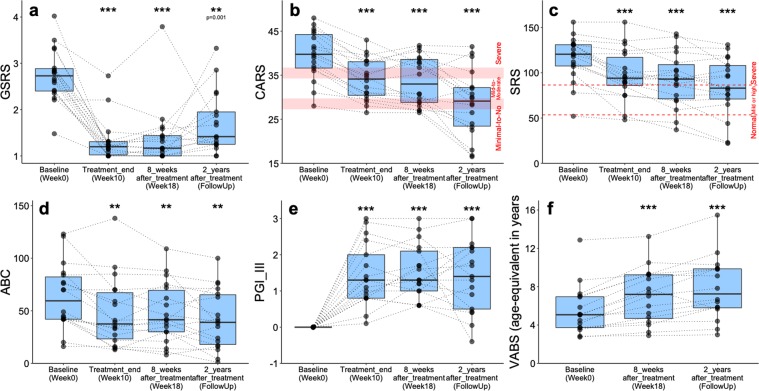
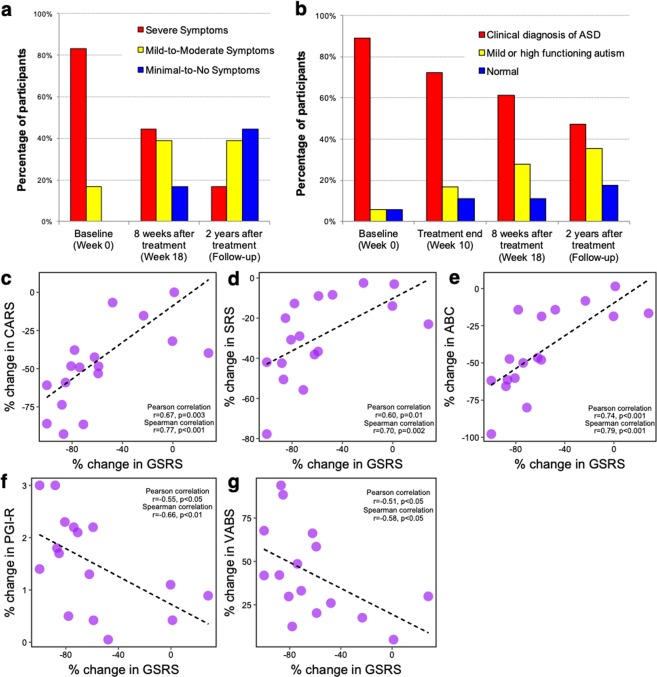
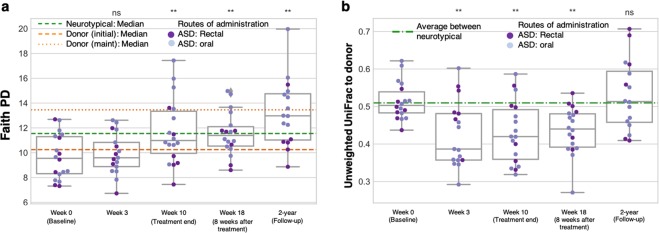
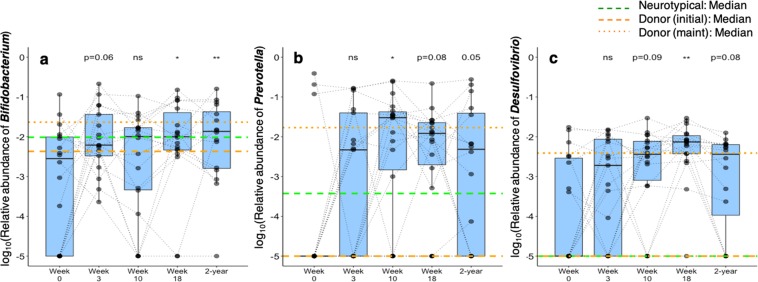
Many studies have reported abnormal gut microbiota in individuals with Autism Spectrum Disorders (ASD), suggesting a link between gut microbiome and autism-like behaviors. Modifying the gut microbiome is a potential route to improve gastrointestinal (GI) and behavioral symptoms in children with ASD, and fecal microbiota transplant could transform the dysbiotic gut microbiome toward a healthy one by delivering a large number of commensal microbes from a healthy donor. We previously performed an open-label trial of Microbiota Transfer Therapy (MTT) that combined antibiotics, a bowel cleanse, a stomach-acid suppressant, and fecal microbiota transplant, and observed significant improvements in GI symptoms, autism-related symptoms, and gut microbiota. Here, we report on a follow-up with the same 18 participants two years after treatment was completed. Notably, most improvements in GI symptoms were maintained, and autism-related symptoms improved even more after the end of treatment. Important changes in gut microbiota at the end of treatment remained at follow-up, including significant increases in bacterial diversity and relative abundances of Bifidobacteria and Prevotella . Our observations demonstrate the long-term safety and efficacy of MTT as a potential therapy to treat children with ASD who have GI problems, and warrant a double-blind, placebo-controlled trial in the future.
Overview
The claims and statistics of this paper haven’t been checked yet.
Free: it reads the open-access text and checks the first 5 claims that cite a source we can check. Create a free account to check every claim.
Integrity signals
Registry
Cites
Statistics
Figures
Verification
Claims the paper makes
The claims and statistics of this paper haven’t been checked yet.
Free: it reads the open-access text and checks the first 5 claims that cite a source we can check. Create a free account to check every claim.
Claims other papers make about this one
Each is checked against this paper’s own text: does it say what the citing paper says it does?
The cited source says what the claim attributes to it.
In the citing paper
“In a two-year follow-up study, Kang et al. further assessed the long-term effects of MTT in the same group of 18 children with ASD. The majority of GI symptom improvements were maintained, while autism-related behaviors continued to show positive progress after treatment. Significant gut microbiota changes observed at the end of treatment, including increased bacterial diversity and higher levels”
From The Gut–Brain–Microbiota Connection and Its Role in Autism Spectrum Disorders (2025) · cites this paper as [135]
In the citing paper
“Microbial therapeutics, including fecal microbiota transplants (FMTs), bacterial consortia, and probiotics, are increasingly being tested in patients with Clostridium difficile infections and other gastrointestinal (GI) disorders (Allegretti et al., 2019), including inflammatory bowel disease (IBD) and, more recently, non-GI indications such as autism (Kang et al., 2019) and cancer (Mullard, 2018)”
From Gut microbiome stability and dynamics in healthy donors and patients with non-gastrointestinal cancers (2021) · cites this paper as Kang et al., 2019
In the citing paper
“These findings highlight the long-term safety and efficacy of MTT as a potential therapeutic option for children with ASD experiencing GI issues [135].”
From The Gut–Brain–Microbiota Connection and Its Role in Autism Spectrum Disorders (2025) · cites this paper as [135]
In the citing paper
“Similarly, probiotic therapies and FMT have demonstrated efficacy in enhancing microbial diversity, reducing digestive issues, and improving behavioral functioning [134,135,145].”
From The Gut–Brain–Microbiota Connection and Its Role in Autism Spectrum Disorders (2025) · cites this paper as [135]
In the citing paper
“microbiota transfer therapy, which changes the intestinal microenvironment, has improved behavioral problems and gastrointestinal symptoms in children with ASD”
5 more claims about this paper
Create a free account to see every claim other papers make about this one.
Self-check
Percentages, sums and reported differences re-computed from the paper’s own numbers.
The self-check needs the paper’s full text.
Citations
Cites
1 retracted
Saad, K., Abdel‐Rahman, A. A., Elserogy, Y. M., Al‐Atram, A. A., El‐Houfey, A. A., Othman, H. A. K., Bjørklund, G., Jia, F., Urbina, M. A., Abo‐Elela, M. G. M., et al. (2018) · Journal of Child Psychology and Psychiatry · doi:10.1111/jcpp.12652 · Cited by 99
RetractedMAFFT Multiple Sequence Alignment Software Version 7: Improvements in Performance and Usability
Katoh, K., & Standley, D. M. (2013) · Molecular Biology and Evolution · doi:10.1093/molbev/mst010 · Cited by 46,209
DADA2: High–resolution sample inference from Illumina amplicon data
Callahan, B. J., McMurdie, P. J., Rosen, M. J., Han, A. W., Johnson, A. J. A., & Holmes, S. P. (2016) · Nature Methods · doi:10.1038/nmeth.3869 · Cited by 35,698
QIIME allows analysis of high-throughput community sequencing data
Caporaso, J. G., Kuczynski, J., Stombaugh, J., Bittinger, K., Bushman, F. D., Costello, E. K., Fierer, N., Peña, A. G., Goodrich, J. K., Gordon, J. I., et al. (2010) · Nature Methods · doi:10.1038/nmeth.f.303 · Cited by 34,887
Self-citationThe SILVA ribosomal RNA gene database project: improved data processing and web-based tools
Quast, C., Pruesse, E., Yilmaz, P., Gerken, J., Schweer, T., Yarza, P., Peplies, J., & Glöckner, F. O. (2012) · Nucleic Acids Research · doi:10.1093/nar/gks1219 · Cited by 33,055
FastTree 2 – Approximately Maximum-Likelihood Trees for Large Alignments
Price, M. N., Dehal, P. S., & Arkin, A. P. (2010) · PLoS ONE · doi:10.1371/journal.pone.0009490 · Cited by 14,894
VSEARCH: a versatile open source tool for metagenomics
(2016) · doi:10.7717/peerj.2584 · Cited by 10,773
Nucleic acid techniques in bacterial systematics
Stackebrandt, E. S., & Goodfellow, M. (1991) · Wiley eBooks · Cited by 9,460
Ultra-high-throughput microbial community analysis on the Illumina HiSeq and MiSeq platforms
Caporaso, J. G., Lauber, C. L., Walters, W. A., Berg-Lyons, D., Huntley, J., Fierer, N., Owens, S. M., Betley, J., Fraser, L., Bauer, M., et al. (2012) · The ISME Journal · doi:10.1038/ismej.2012.8 · Cited by 8,839
Self-citationUniFrac: a New Phylogenetic Method for Comparing Microbial Communities
Lozupone, C., & Knight, R. (2005) · Applied and Environmental Microbiology · doi:10.1128/aem.71.12.8228-8235.2005 · Cited by 8,227
Cited by
Items 601–700 of 867
Does pica potentiate autism?: developing a research agenda
Alexander, D. D. (2022) · Journal of Pediatrics & Neonatal Care · doi:10.15406/jpnc.2022.12.00459 · Cited by 2
Smith, D. A., Jheeta, S., Fuentes, H. V., Street, B., & Palacios-Pérez, M. (2022) · Gastrointestinal Disorders · doi:10.3390/gidisord4040028 · Cited by 2
IMPACTO DA ALIMENTAÇÃO NA MODULAÇÃO INTESTINAL
Costa, C. D. M., Martins, J. A., Pinheiro, K. S., Telles, P. V. N., Muratori, M. C. S., dos Santos, M. A. P., & Martins, M. D. C. D. C. E. (2022) · Editora Acadêmica Periodicojs eBooks · doi:10.51249/easn08.2022.953 · Cited by 2
Purkayastha, S., & Kwok, D. (2025) · Preprints.org · doi:10.20944/preprints202504.1388.v1 · Cited by 2
Roussin, L. (2023) · theses.fr (ABES) · doi:10.70675/998d3bd1z4618z400dz998cz89e524b35aef · Cited by 2
Trust your gut, lest thou be anxious
Lee, Y., & Huh, J. R. (2022) · Cell · doi:10.1016/j.cell.2022.03.035 · Cited by 1
Microbiome-Gut-Brain Interactions in Neurodevelopmental Disorders: Focus on Autism and Schizophrenia
Sandhu, K. V., Sherwin, E., Dinan, T. G., & Cryan, J. F. (2021) · Cambridge University Press eBooks · doi:10.1017/9781108539623.014 · Cited by 1
Microbiota-Gut-Brain Axis and ED
Mack, I., & Seitz, J. (2024) · Springer eBooks · doi:10.1007/978-3-030-97416-9_43-1 · Cited by 1
Anisman, H., Hayley, S. P., & Kusnecov, A. W. (2024) · Elsevier eBooks · doi:10.1016/b978-0-443-23565-8.00013-2 · Cited by 1
Gut-Brain Axis Microbiota in Stroke Pathogenesis
Suryanata, I. W., & Widyantara, I. W. (2024) · International Journal of Research and Review · doi:10.52403/ijrr.20241204 · Cited by 1
Chen, L., Wu, L., Yu, C., Xu, Z., & Huang, H. (2025) · Frontiers in Neuroscience · doi:10.3389/fnins.2025.1506566 · Cited by 1
“…GBA in the pathophysiology of several neurological disorders, including Alzheimer’s disease (Dissanayaka et al., 2024), autism spectrum disorder (Kang et al., 2019), multiple sclerosis (MS) (Parodi and Kerlero de Rosbo, 2021), Parkinson’s disease, and stroke (Zhao et al., 2021; Bogiatzi et al.,…”
Gut Microbiota Modulation Strategies
Hazra, R., Mallick, A., Chattopadhyay, S., Gayen, S., & Roy, S. (2025) · BENTHAM SCIENCE PUBLISHERS eBooks · doi:10.2174/9789815324549125010011 · Cited by 1
Lacticaseibacillus rhamnosus SL42 ameliorates Wistar rat autistic-like behavior
Ziar, H., Issaka, M. B. A., Warak, I., Amtout, L., Keddar, K., Belmadani, N., Douma-Bouthiba, Z., & Gérard, P. (2025) · Journal of Functional Foods · doi:10.1016/j.jff.2025.107056 · Cited by 1
Feng, S., Wang, J., Si, X., Lu, S., Lu, C., Gao, Z., Yang, J., Wu, J., He, X., & Wu, L. (2025) · Frontiers in Microbiology · doi:10.3389/fmicb.2025.1688325 · Cited by 1
Raghy, M.-A. E. E. R. E. E., Bakr, W., Ahmed, S. M., El-Meidany, W. M., & Omran, E. A. H. (2025) · Ain Shams Medical Journal · doi:10.21608/asmj.2025.368328.1411 · Cited by 1
Wilson, B. C., Tweedie‐Cullen, R. Y., Albert, B. B., Derraik, J. G. B., Ho, D., Depczynski, M., Creagh, C., Edwards, T., Gali, S., Thabrew, H., et al. (2025) · Nature Communications · doi:10.1038/s41467-025-67267-6 · Cited by 1
Chen, C., Yang, Z., Guo, J., Liu, Y., Yang, X., Deng, W., Yu, H., & Yang, S. (2025) · Medicine · doi:10.1097/md.0000000000046526 · Cited by 1
“[65] As a commensal microbe, it contributes to glucose metabolism and vitamin bio-synthesis.”
Towards treatments targeting the gut to improve behavioural outcomes in autism spectrum disorder
Munira, M. S., Stevens, J. E., Shahin, W., Wang, K., Franks, A. E., Perez, A. R. J., Scott, J. W., & Hill‐Yardin, E. L. (2026) · Journal of Neural Transmission · doi:10.1007/s00702-025-03061-4 · Cited by 1
Complementary and Alternative Treatments for Autism Spectrum Disorder: A Comprehensive Review
Demir, M. H. B. (2026) · Psikiyatride Guncel Yaklasimlar - Current Approaches in Psychiatry · doi:10.18863/pgy.1616996 · Cited by 1
Dysbiosis in the Family nucleus of Children Diagnosed With Autism Spectrumin Mexico City
Mendoza, A. D. G., Nuncio-Mora, L., Sánchez, V., González, V., & Nicolini, H. (2026) · Actas Españolas de Psiquiatría · doi:10.62641/aep.v54i1.1986 · Cited by 1
“The results indicated that MTT altered the gut ecosystem and improved gastrointestinal and autism-related symptoms [7,8].”
Li, T., & Zhong, C. (2026) · Research in Autism · doi:10.1016/j.reia.2026.202903 · Cited by 1
Kamiya, S., & Sasaki, T. (2024) · Institutional Repositories DataBase (IRDB) · Cited by 1
Elbeltagi, Y. M., Rasool, A. O. A. R. E., Elkashlan, A. M., & Al‐Beltagi, M. (2026) · World Journal of Clinical Pediatrics · doi:10.5409/wjcp.v15.i2.117274 · Cited by 1
Wu, R., Teng, X., Cai, Y., Liu, Y., Zhang, W., Li, Z., & Fan, J. (2026) · Journal of Translational Medicine · doi:10.1186/s12967-026-08217-8 · Cited by 1
Zambelli, G., Masetti, M., Rasmi, S., Addati, I., Bonacorsi, L., Diona, S., & Esposito, S. (2026) · Microorganisms · doi:10.3390/microorganisms14061241 · Cited by 1
“In an open-label study including children with ASD, Kang et al. reported significant improvements in both GI and behavioral symptoms following MTT, with sustained benefits observed at two-year follow-up, including increased microbial diversity and normalization of key bacterial taxa [107,108].”
Wang, X., Piao, Y., Xia, B., Chu, W., Yao, X., & Li, W. (2026) · Frontiers in Cellular and Infection Microbiology · doi:10.3389/fcimb.2026.1834069 · Cited by 1
Gut microbiota from health to disease: A role for biofilms?
Buret, A. G., & Allain, T. (2026) · Elsevier eBooks · doi:10.1016/b978-0-443-40306-4.00011-9 · Cited by 1
Quan, Y.-X., Chen, M., Cai, Y., Ling, L., Lao, Y., He, X., & Wu, L. (2026) · Frontiers in Cellular and Infection Microbiology · doi:10.3389/fcimb.2026.1823988 · Cited by 1
Wang, G., Liu, W., Chen, Y., & Zhang, X. (2026) · Translational Psychiatry · doi:10.1038/s41398-026-04158-4 · Cited by 1
Feng, S., Si, X., Lu, C., Gao, Z., Wang, J., Yang, Q., Lu, S., Su, T., Yang, J., He, X., et al. (2026) · Frontiers in Microbiology · doi:10.3389/fmicb.2026.1885281 · Cited by 1
Zeng, Y., Wang, F., Li, S., Liu, Q., Liu, L., & Song, B. (2026) · Frontiers in Neuroscience · doi:10.3389/fnins.2026.1873864 · Cited by 1
Research progress on the microbiota-gut-brain axis in autism spectrum disorder: a narrative review
Qin, S., Lin, Y., Chen, Y., Yao, S., Zhou, D., Zhang, C., Yan, J., He, Y., & Zhou, Y. (2026) · Frontiers in Microbiology · doi:10.3389/fmicb.2026.1824546
Fan, F., Wang, B., & Han, F. (2026) · Frontiers in Psychiatry · doi:10.3389/fpsyt.2026.1907757 · Cited by 1
Gutiérrez, L. G., Méndez-Tenorio, A., López-Luis, M. Á., Ávila-Huerta, S. A., León-Ávila, G., Castaño-Valencia, S., & Ibáñez-Cervantes, G. (2026) · Antibiotics · doi:10.3390/antibiotics15080804 · Cited by 1
Kleimaier, F., Klatte, C., Stange, R., & Koppold, D. A. (2019) · Bundesgesundheitsblatt - Gesundheitsforschung - Gesundheitsschutz · doi:10.1007/s00103-019-03030-9 · Cited by 1
Inhibition of Autism Spectrum Disorder Associated Bacteria and C. difficile by Polyols
Ml, C., Merchant, M., Kabat, W., Unruh, B., & Ramones, A. (2020) · Edelweiss Applied Science and Technology · doi:10.33805/2576-8484.176 · Cited by 1
Pokrovskaya, E. V., Sklyanik, I. A., Shestakova, E. A., & Shestakova, M. V. (2021) · Diabetes Mellitus · doi:10.14341/dm12716 · Cited by 1
Guseinova, R. M., & Shestakova, E. A. (2022) · Obesity and metabolism · doi:10.14341/omet12901 · Cited by 1
Tiburcio, Á., Ruiz, H., & Reyes-López, P. A. (2019) · Open Journal of Bacteriology · doi:10.17352/ojb.000010 · Cited by 1
Small talk: chemical conversations with bacteria
Kagle, J. (2020) · ChemTexts · doi:10.1007/s40828-020-0102-7 · Cited by 1
“As with metabolic disorders, altering the gut microbiota has been suggested as a potential treatment for several mental health conditions from anxiety and depression [86] to autism [90, 91].”
BackgroundHuman Gut Microbiota: Friend or Foe?
Pliszka, M., & Szablewski, L. (2020) · OBM Hepatology and Gastroenterology · doi:10.21926/obm.hg.2003050 · Cited by 1
The role of intestinal flora in autism and nutritional approaches
Ekmekçi, A. M. (2020) · Demiroglu Science University Florence Nightingale Transplantation Journal · doi:10.5606/dsufnjt.2020.017 · Cited by 1
“Stool material should be at least 150 grams and should be obtained six hours before application.[59-61] It was recommended to take a mild laxative such as magnesie calcinee the night before FMT was performed.”
BackgroundHuman Gut Microbiome Metabolism and Autism Spectrum Disorder
Noguera, M. (2020) · Journal of Agriculture & Life Sciences · doi:10.30845/jals.v7n2a3 · Cited by 1
Sept minutes pour comprendre le microbiote intestinal et son impact sur la santé
Dréan, M. E. L., Marchix, J., Neunlist, M., & Boudin, H. (2021) · Cairn.info · doi:10.1684/hpg.2021.2172 · Cited by 1
Blagonravova, A. S., Zhilyaeva, T. V., & Kvashnina, D. V. (2021) · Journal of microbiology epidemiology immunobiology · doi:10.36233/0372-9311-84 · Cited by 1
Malygina, D., Alexander, V., Olga, Z., Vorobyova, O., Dmitry, P., Daria, Z., & Anna, B. (2022) · Journal of Applied Pharmaceutical Science · doi:10.7324/japs.2021.120201 · Cited by 1
Smith, C. A., Rendina, D. N., Kingsbury, M. A., Malacon, K. E., Nguyen, D. M., Tran, J. J., Devlin, B. A., Clark, M. J., Raju, R. M., Burgett, L. A., et al. (2022) · Brain Behavior and Immunity · doi:10.1016/j.bbi.2022.07.031 · Cited by 1
Gastrointestinal Disturbances in Autism Spectrum Disorder
Gottesman-Katz, L., Miller, J. D., & Margolis, K. G. (2022) · Springer eBooks · doi:10.1007/978-3-031-15229-0_28 · Cited by 1
L’axe microbiote-intestin-cerveau, un ménage à trois
Marchix, J., Dréan, M. E. L., Neunlist, M., & Boudin, H. (2023) · Pratiques en nutrition · doi:10.1016/j.pranut.2023.05.003 · Cited by 1
El-Ansary, A. K., & AL-Ayadhi, L. Y. (2023) · Nutrients · doi:10.3390/nu15214564 · Cited by 1
Neubauer, J. C., Kaiser, A., & Hohmann, S. (2023) · Zeitschrift für Kinder- und Jugendpsychiatrie und Psychotherapie · doi:10.1024/1422-4917/a000962 · Cited by 1
Microbiota influence behavior—Work in animal models
Foster, J. A., & Clarke, G. A. (2024) · Elsevier eBooks · doi:10.1016/b978-0-12-814800-6.00002-9 · Cited by 1
FOOD INTOLERANCE IN AUTISM SPECTRUM DISORDERS
Dosti, D., Uzunoska, Z., & Knights, V. A. (2023) · Horizons - International Scientific Journal · doi:10.20544/horizons.1.1.23.p06 · Cited by 1
Amini, J., Roushan, Z. S., Mohammadalizadeh, O., & Bibak, B. (2023) · SRPH Journal of Medical Sciences and Healthcare Management · doi:10.47176/sjmshm.5.3.1 · Cited by 1
Schaepers-Cheu, M., Patel, M., Lien, G., & Arora, A. (2024) · Berkeley Pharma Tech Journal of Medicine · doi:10.52243/bptjm.v4i1.54 · Cited by 1
Barbero-Herranz, R., Garriga, M. J., Moreno‐Blanco, A., Palacios, E., Ruiz‐Sala, P., Vicente‐Santamaría, S., Stanescu, S., Bélanger-Quintana, A., Pintos‐Morell, G., Arconada-López, B., et al. (2024) · International Journal of Molecular Sciences · doi:10.3390/ijms25168856 · Cited by 2
Research advances in gut microbes and autism spectrum disorders
Lico, R. (2024) · doi:10.32948/ajsep.2024.11.25 · Cited by 1
The Gut-Brain Connection: Investigating the Correlation between Autism Disorder and Gut Bacterium
Manaf, W., Dileep, N., Manaf, H., Dileep, N., & Liyakath, A. (2025) · American Journal of Medical Science and Innovation · doi:10.54536/ajmsi.v4i1.3818 · Cited by 2
“(Kang et al. , 2019)research exploring the gut-brain axis in ASD has shown interest in microbiota transfer therapy (MTT), probiotics, and dietary interventions.”
Resistant starch: in vitro fecal fermentation characteristics and health implications
Xiong, W., Zhang, B., Bodjrenou, D. M., & Dhital, S. (2025) · Elsevier eBooks · doi:10.1016/b978-0-443-15700-4.00012-2 · Cited by 1
van der Eijk, J. A. J. (2019) · doi:10.18174/502550 · Cited by 1
Oyesiku-Blakemore, S. (2021) · Figshare · Cited by 1
Deciphering the role of microbially-derived metabolites on the microbiota-gut-brain axis
Spichak, S. (2021) · Arrow@dit (Dublin Institute of Technology) · Cited by 1
Palmer, J. K. (2022) · Queensland University of Technology · doi:10.5204/thesis.eprints.228686 · Cited by 1
Wang, D., Zhu, W., Pan, Y., Wang, T., Jiang, Y., Liang, L., Fan, S., Yan, H., Costa, C. D., Zhang, X., et al. (2022) · Research Square · doi:10.21203/rs.3.rs-1505710/v1 · Cited by 1
Earixson, D. Q. (2023) · Carolina Digital Repository (University of North Carolina at Chapel Hill) · doi:10.17615/7s3d-8m22 · Cited by 1
With a little help from their friends: Marine Invertebrate Microbiomes in the Face of Global Change
Brocco French, K. I. (2024) · eScholarship (California Digital Library) · Cited by 1
Simmons, S. D. (2024) · UCL Discovery (University College London) · Cited by 1
Rippe, G., & Bui, A. (2023) · HAL AMU · Cited by 1
The bidirectional relationship between gut bacteria and intravenous fentanyl self-administration
Ren, M. (2023) · eScholarship (California Digital Library) · Cited by 1
Zhang, X., & Liu, W. (2026) · bioRxiv (Cold Spring Harbor Laboratory) · doi:10.64898/2026.02.27.708652 · Cited by 1
Gonzales, J. A. (2020) · theses.fr (ABES) · doi:10.70675/4ccdfaa5z70caz46aez8413zac3224b64e9b · Cited by 1
Ismeurt, C. (2021) · theses.fr (ABES) · doi:10.70675/159d4638zb5f8z4580zb26fzd0419dba4d37 · Cited by 1
Ganguly, N. K., Kalra, S., Kapoor, N., Rao, P., & Bakshi, M. (2026) · Advances in Therapy · doi:10.1007/s12325-026-03577-5 · Cited by 1
“In autism spectrum disorder, reduced Prevotella has been associated with restrictive dietary patterns and lower fer-mentable fiber intake, with partial restoration observed following microbiota-targeted interventions [25, 26].”
Goyal, D., Mansab, F., Neil, J., & Miyan, J. A. (2019) · OBM Neurobiology · doi:10.21926/obm.neurobiol.1902031
Microbial Treatments for the Mind
Campbell, S. (2019) · IEEE Pulse · doi:10.1109/mpuls.2019.2923887
“FMT and autism This recent study, “Long-term benefit of Microbiota Transfer Therapy in Autism Symptoms and Gut Microbiota” [2], exemplifies the promise that the brain–gut microbiome fields holds, as well as some of the challenges in working in this area of research.”
BackgroundBarnhill, K. M., Barnhill, K. M., Gutierrez, A., Gutierrez, A., Potts, A., Potts, A., Devlin, M., Richardson, W., & Hewitson, L. C. (2020) · International Journal Of Nutrition · doi:10.14302/issn.2379-7835.ijn-20-3181
Simplification and control of microbial ecosystems in theory and experiment
Jones, E. W. (2020) · eScholarship (California Digital Library)
Autism Spectrum Disorder and Transplantation of Intestinal Microbiota
Tiburcio, Á. Z. (2020) · Gastroenterology Medicine & Research · doi:10.31031/gmr.2020.04.000589
“All of them deal with how (IM) acts by modulating neurological development [1-4].”
BackgroundEngineering a synthetic gut model to explore microbial infections
Hassall, J. (2026) · Warwick Research Archive Portal (University of Warwick) · doi:10.82444/warw.33819259
Gut Microbiota in Brain diseases
Salami, M. (2021) · Elsevier eBooks · doi:10.1016/b978-0-12-819265-8.00040-1
The relationship between gut microbiota and behavior
Šoltýsová, M., Tomova, A., & Ostatníková, D. (2021) · Psychiatrie pro praxi · doi:10.36290/psy.2021.018
特別支援教育における「腸内細菌叢」理解の重要性 : 自閉症スペクトラム障害との関連から
松田, 佳., まつだ, よ., & Yoshi-Taka, M. (2020) · Institutional Repositories DataBase (IRDB)
Еременко, И. И. (2021) · Естественные и Технические Науки · doi:10.37882/2223-2966.2021.08.08
“В исследовании с относительно небольшой выборкой авторы изучали эффективность применения пересадки микробиома от здорового донора детям, больных ау-тизмом [22].”
Despite flurry of findings, doubts dog gut microbes’ role in autism
Askham, A. V. (2021) · The Transmitter · doi:10.53053/nttn6434
The Probiotic Containing Foods in Military Dining
Kalgutkar, P., Ashmin, R., Kumar, D., Vasudevan, V., Gopalan, N., & Semwal, A. D. (2021) · Defence Life Science Journal · doi:10.14429/dlsj.6.16046
Социопсихологическое обеспечение законотворчества
Алексеевич, К. И. (2014) · Психопедагогика в правоохранительных органах
Probiotics and the gut-brain axis
Silveira, A. K., Gasparotto, J., & Moreira, J. C. F. (2022) · Elsevier eBooks · doi:10.1016/b978-0-323-85170-1.00001-4
Gut Microbes: Influencers of Human Brain
Anavkar, A., Patel, N., Ali, A., Rajan, W., & Alim, H. (2022) · Springer eBooks · doi:10.1007/978-981-16-1626-6_1
Maternal Microbiota as a Therapeutic Target
Saraçoğlu, F. (2022) · Wiley eBooks · doi:10.1002/9783527825462.ch9
Goyal, D., Mansab, F., Neil, J., & Miyan, J. A. (2019) · OBM Neurobiology · doi:10.21926/obm.neurobiol.1902
Anti-Depression a Systematic Review of Analytical methods in PharmaceuticalsPreprint
Perumal, D., Krishnan, M., & K.S, L. (2022) · Authorea · doi:10.22541/au.165658161.19930674/v1
القثامي, أ. م. س., & قطب, ن. ع. ا. (2022) · International Journal of Educational & Psychological Studies · doi:10.31559/eps2022.11.4.6
Ramos, J. P. Z., MACHADO, F. R., Leandro‐Merhi, V. A., & de Aquino, J. L. B. (2022) · doi:10.22533/at.ed.3202223082
Unlocking the mysterious interconnection between the gut microbiota and catestatin
González-Dávila, P. (2022) · University of Groningen research database (University of Groningen / Centre for Information Technology) · doi:10.33612/diss.225406017
Bundgaard‐Nielsen, C. (2021) · VBN Forskningsportal (Aalborg Universitet) · doi:10.54337/aau466210133
GERENCIAMENTO HOSPITALAR E O IMPACTO NAS AÇÕES DE ENFERMAGEM
Costa, D. E., & Elias, L. S. (2022) · Brazilian Journals Editora eBooks · doi:10.35587/brj.ed.0001764
REDUÇÃO DE DANOS: UM OLHAR INTEGRADO A PARTIR DA CLIENTELA, PROFISSIONAIS E GESTORES
Ximenes, A. F. C., Macêdo, C. C., Silva, L. P. S., Leite, L. R., Macêdo, M. E. C., Caldas, M. T., Ximenes, S. F. C., & Ueta, V. L. R. (2022) · Brazilian Journals Editora eBooks · doi:10.35587/brj.ed.0001765
Pinto, M. C., de Gonçalves, F. F., Castanheira, C. R., & Ferreira, K. A. (2022) · Brazilian Journals Editora eBooks · doi:10.35587/brj.ed.0001763
ANÁLISE DA EFETIVIDADE DA FISIOTERAPIA ATRAVÉS DA PSICOMOTRICIDADE EM IDOSOS INSTITUCIONALIZADOS
Banzatto, S., Alves, A. G. R. C., da Silva, C. M., Viana, M. D. O., Freitas, I. M. P., & de Menezes, J. N. R. (2022) · Brazilian Journals Editora eBooks · doi:10.35587/brj.ed.0001768
Merlo, B. F. C., da Silva, E. H. O., Merlo, V. F. C., Abreu, C. B., de Oliveira, S. K., da Costa, J. C., Medeiros, F. B., & Gonçalves, C. O. (2022) · Brazilian Journals Editora eBooks · doi:10.35587/brj.ed.0001758
Metadata
- Authors
- Kang, D.-W., Adams, J. B., Coleman, D. M., Pollard, E. L., Maldonado, J., McDonough-Means, S., Caporaso, J. G., & Krajmalnik-Brown, R.
- Affiliations
- Arizona State University (US)
- Northern Arizona University (US)
- ORCID
- Venue
- Scientific Reports
- Published
- 2019-04-09
- Volume
- 9
- Issue
- 1
- Pages
- 5821-5821
- ISSN
- 2045-2322 (ISSN-L)
- PMC
- PMC6456593
- OpenAlex
- W2936474142
- Semantic Scholar
- 7ebabdb2344e27104d54862265ff12f0f6ed29c8
- Cited by
- 749
- References
- 54
- Citations by year
- 2026: 60 · 2025: 108 · 2024: 102 · 2023: 105 · 2022: 141 · 2021: 111 · 2020: 85 · 2019: 35
- FWCI
- 30.78
- Type
- journal article
- Language
- en
- Open access
- gold
- doi.org
- Licence
- cc-by
- creativecommons.org/licenses/by/4.0 (tdm)
- creativecommons.org/licenses/by/4.0 (vor)
- Locations
- Scientific Reports (publishedVersion, cc-by)
- Europe PMC (PubMed Central) (publishedVersion, cc-by)
- PubMed Central (publishedVersion, cc-by)
- PubMed (publishedVersion)
- DOAJ (DOAJ: Directory of Open Access Journals) (submittedVersion)
- Funders
- This work was supported by Finch Therapeutics and the Arizona Board of Regents.
- Topics
- Life Sciences › Biochemistry, Genetics and Molecular Biology › Molecular Biology › Gut microbiota and health
- Life Sciences › Neuroscience › Cognitive Neuroscience › Autism Spectrum Disorder Research
- Health Sciences › Medicine › Gastroenterology › Gastrointestinal motility and disorders
- Keywords
- autism spectrum disorder, fecal microbiota transplantation, gut microbiota, gastrointestinal symptoms, long-term follow-up, Bifidobacterium, Prevotella, bacterial diversity, children, antibiotic therapy, bowel preparation
- MeSH terms
- Gastrointestinal Microbiome, Fecal Microbiota Transplantation, Autistic Disorder, Bifidobacterium, Child, Female, Follow-Up Studies, Gastrointestinal Diseases, Humans, Male, Prevotella, Gastrointestinal Tract, Dysbiosis
About these checks
Registry, retraction, Cites and statistics results are computed, not judged, with one exception: a printed reference that no index lists is read once by a model before it counts as a citation error. Claims are extracted by a model and kept only when their quote appears verbatim in the text; each cited source is then checked, with a model’s help, for whether it says what the claim relies on. Those verdicts can be wrong — read the claim’s quote and the cited source before relying on one.
Statistics and arithmetic are recomputed, not judged.
Confidence bands are shown only for fields calibrated on our annotated test set. None is calibrated yet, so no band is shown.
What counts as a claim ›How we measure confidence ›How we check this ›
Are you an author, or do you see a problem with this page? Request a review
Data sources
Bibliographic data: Semantic Scholar, OpenAlex, Crossref.
Contains information from the Semantic Scholar Academic Graph Datasets, made available under the ODC Attribution License (ODC-BY 1.0).
Semantic Scholar’s data is described in: Kinney, R., et al. (2023). The Semantic Scholar Open Data Platform. arXiv:2301.10140.
