

Long-term benefit of Microbiota Transfer Therapy on autism symptoms and gut microbiota
Open accessThe DOI matches its Crossref record; 54 of the 54 references it cites were found in a registry or an index.
Abstract
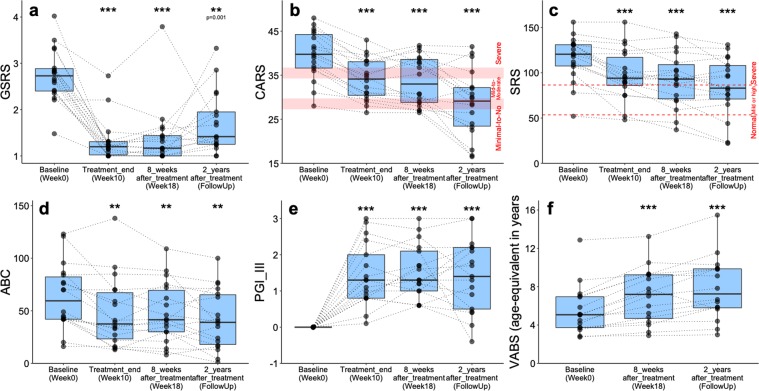
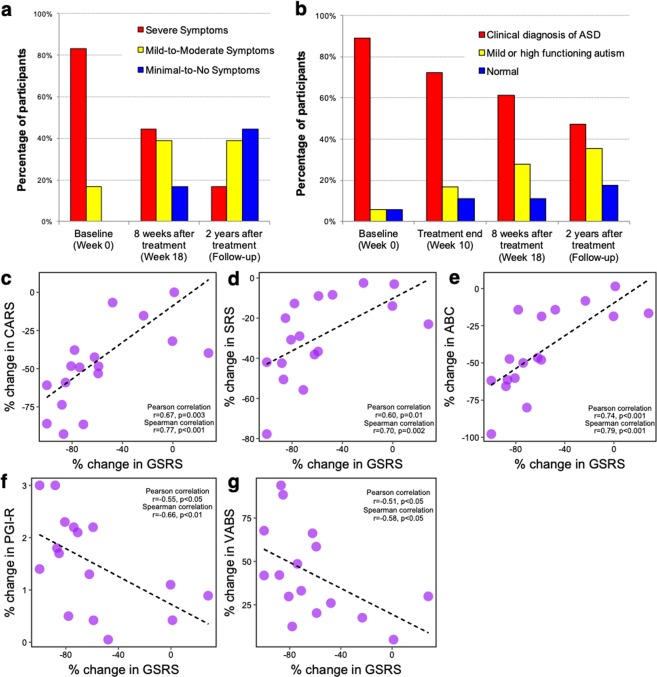
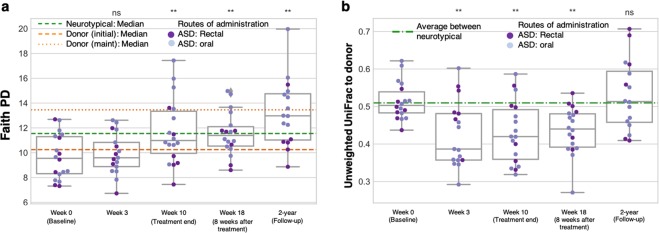
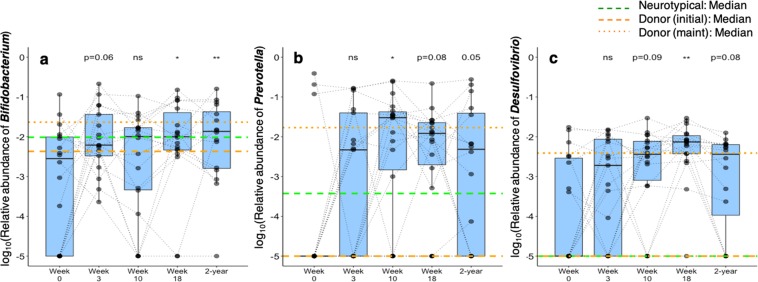
Many studies have reported abnormal gut microbiota in individuals with Autism Spectrum Disorders (ASD), suggesting a link between gut microbiome and autism-like behaviors. Modifying the gut microbiome is a potential route to improve gastrointestinal (GI) and behavioral symptoms in children with ASD, and fecal microbiota transplant could transform the dysbiotic gut microbiome toward a healthy one by delivering a large number of commensal microbes from a healthy donor. We previously performed an open-label trial of Microbiota Transfer Therapy (MTT) that combined antibiotics, a bowel cleanse, a stomach-acid suppressant, and fecal microbiota transplant, and observed significant improvements in GI symptoms, autism-related symptoms, and gut microbiota. Here, we report on a follow-up with the same 18 participants two years after treatment was completed. Notably, most improvements in GI symptoms were maintained, and autism-related symptoms improved even more after the end of treatment. Important changes in gut microbiota at the end of treatment remained at follow-up, including significant increases in bacterial diversity and relative abundances of Bifidobacteria and Prevotella . Our observations demonstrate the long-term safety and efficacy of MTT as a potential therapy to treat children with ASD who have GI problems, and warrant a double-blind, placebo-controlled trial in the future.
Overview
The claims and statistics of this paper haven’t been checked yet.
Free: it reads the open-access text and checks the first 5 claims that cite a source we can check. Create a free account to check every claim.
Integrity signals
Registry
Cites
Statistics
Figures
Verification
Claims the paper makes
The claims and statistics of this paper haven’t been checked yet.
Free: it reads the open-access text and checks the first 5 claims that cite a source we can check. Create a free account to check every claim.
Claims other papers make about this one
Each is checked against this paper’s own text: does it say what the citing paper says it does?
The cited source says what the claim attributes to it.
In the citing paper
“In a two-year follow-up study, Kang et al. further assessed the long-term effects of MTT in the same group of 18 children with ASD. The majority of GI symptom improvements were maintained, while autism-related behaviors continued to show positive progress after treatment. Significant gut microbiota changes observed at the end of treatment, including increased bacterial diversity and higher levels”
From The Gut–Brain–Microbiota Connection and Its Role in Autism Spectrum Disorders (2025) · cites this paper as [135]
In the citing paper
“Microbial therapeutics, including fecal microbiota transplants (FMTs), bacterial consortia, and probiotics, are increasingly being tested in patients with Clostridium difficile infections and other gastrointestinal (GI) disorders (Allegretti et al., 2019), including inflammatory bowel disease (IBD) and, more recently, non-GI indications such as autism (Kang et al., 2019) and cancer (Mullard, 2018)”
From Gut microbiome stability and dynamics in healthy donors and patients with non-gastrointestinal cancers (2021) · cites this paper as Kang et al., 2019
In the citing paper
“These findings highlight the long-term safety and efficacy of MTT as a potential therapeutic option for children with ASD experiencing GI issues [135].”
From The Gut–Brain–Microbiota Connection and Its Role in Autism Spectrum Disorders (2025) · cites this paper as [135]
In the citing paper
“Similarly, probiotic therapies and FMT have demonstrated efficacy in enhancing microbial diversity, reducing digestive issues, and improving behavioral functioning [134,135,145].”
From The Gut–Brain–Microbiota Connection and Its Role in Autism Spectrum Disorders (2025) · cites this paper as [135]
In the citing paper
“microbiota transfer therapy, which changes the intestinal microenvironment, has improved behavioral problems and gastrointestinal symptoms in children with ASD”
5 more claims about this paper
Create a free account to see every claim other papers make about this one.
Self-check
Percentages, sums and reported differences re-computed from the paper’s own numbers.
The self-check needs the paper’s full text.
Citations
Cites
1 retracted
Saad, K., Abdel‐Rahman, A. A., Elserogy, Y. M., Al‐Atram, A. A., El‐Houfey, A. A., Othman, H. A. K., Bjørklund, G., Jia, F., Urbina, M. A., Abo‐Elela, M. G. M., et al. (2018) · Journal of Child Psychology and Psychiatry · doi:10.1111/jcpp.12652 · Cited by 99
RetractedMAFFT Multiple Sequence Alignment Software Version 7: Improvements in Performance and Usability
Katoh, K., & Standley, D. M. (2013) · Molecular Biology and Evolution · doi:10.1093/molbev/mst010 · Cited by 46,209
DADA2: High–resolution sample inference from Illumina amplicon data
Callahan, B. J., McMurdie, P. J., Rosen, M. J., Han, A. W., Johnson, A. J. A., & Holmes, S. P. (2016) · Nature Methods · doi:10.1038/nmeth.3869 · Cited by 35,698
QIIME allows analysis of high-throughput community sequencing data
Caporaso, J. G., Kuczynski, J., Stombaugh, J., Bittinger, K., Bushman, F. D., Costello, E. K., Fierer, N., Peña, A. G., Goodrich, J. K., Gordon, J. I., et al. (2010) · Nature Methods · doi:10.1038/nmeth.f.303 · Cited by 34,887
Self-citationThe SILVA ribosomal RNA gene database project: improved data processing and web-based tools
Quast, C., Pruesse, E., Yilmaz, P., Gerken, J., Schweer, T., Yarza, P., Peplies, J., & Glöckner, F. O. (2012) · Nucleic Acids Research · doi:10.1093/nar/gks1219 · Cited by 33,055
FastTree 2 – Approximately Maximum-Likelihood Trees for Large Alignments
Price, M. N., Dehal, P. S., & Arkin, A. P. (2010) · PLoS ONE · doi:10.1371/journal.pone.0009490 · Cited by 14,894
VSEARCH: a versatile open source tool for metagenomics
(2016) · doi:10.7717/peerj.2584 · Cited by 10,773
Nucleic acid techniques in bacterial systematics
Stackebrandt, E. S., & Goodfellow, M. (1991) · Wiley eBooks · Cited by 9,460
Ultra-high-throughput microbial community analysis on the Illumina HiSeq and MiSeq platforms
Caporaso, J. G., Lauber, C. L., Walters, W. A., Berg-Lyons, D., Huntley, J., Fierer, N., Owens, S. M., Betley, J., Fraser, L., Bauer, M., et al. (2012) · The ISME Journal · doi:10.1038/ismej.2012.8 · Cited by 8,839
Self-citationUniFrac: a New Phylogenetic Method for Comparing Microbial Communities
Lozupone, C., & Knight, R. (2005) · Applied and Environmental Microbiology · doi:10.1128/aem.71.12.8228-8235.2005 · Cited by 8,227
Cited by
Items 401–500 of 867
Hoffman, K. L., & Cano-Ramírez, H. (2022) · Expert Opinion on Drug Discovery · doi:10.1080/17460441.2022.2074396 · Cited by 12
“At a two-year follow-up examination, ASD and gastrointestinal symptoms were decreased by 47% and 58% respectively, compared to pre-treatment [68].”
ResultCharacteristics of the Gut Microbiota in Young Adults with Autism Spectrum Disorder
Pang, X., Zhang, Q., Wang, Y., Zhan, Y., Guo, M., Chen, B., Quan, L., & Zheng, H. (2023) · Journal of Integrative Neuroscience · doi:10.31083/j.jin2206141 · Cited by 12
“Accordingly, fecal microbiota transplants (FMT) have demonstrated long-term efficacy in improving gastrointestinal (GI) and behavioral symptoms of ASD patients by modifying gut microbiota [ 16,17].”
Hazan, S., Haroon, J. M., Jordan, S., & Walker, S. J. (2024) · Journal of Medical Cases · doi:10.14740/jmc4209 · Cited by 12
“The authors reassessed this cohort of 18 subjects 2 years later and found that increased abundances of Bifido-bacterium and Prevotella persisted, ASD core symptoms had continued to improve, and the average total increase in developmental age was 2.5 years [23].”
BackgroundInfluentialPotential of Synbiotics and Probiotics as Chemopreventive Agent
Chin, K. W., Khoo, S. C., Paul, R. P. M., Luang‐In, V., Lam, S. D., & Ling, N. (2024) · Probiotics and Antimicrobial Proteins · doi:10.1007/s12602-024-10299-z · Cited by 12
“FMT has been successfully utilized to treat Clostridioides difficile infections (CDI) [126], inflammatory bowel disorders [127], autism [128], chronic kidney disease, metabolic syndrome [129], and alteration of hepatitis B virus infection [130].”
Creutzfeldt-Jakob Disease: Alterations of Gut Microbiota
Guo, Y., Xu, Y., Lin, X. M., Zhen, Z., Fang, Y., Guan, H., Shi, Q., Sun, W., Yang, A., Dong, X., et al. (2022) · Frontiers in Neurology · doi:10.3389/fneur.2022.832599 · Cited by 12
“Microbiota transfer therapy is shown to improve autism symptoms in children, and the long-term effects of this therapy have been confirmed (53).”
BackgroundJulián Herrera, M., Ramos‐Jiménez, A., Jiménez-Vega, F., Campos-Vega, R., González-Córdova, A. F., & Wall‐Medrano, A. (2022) · Nutrición Hospitalaria · doi:10.20960/nh.03898 · Cited by 13
Clostridioides difficile and neurological disorders: new perspectives
Biazzo, M., Allegra, M., & Deidda, G. (2022) · Frontiers in Neuroscience · doi:10.3389/fnins.2022.946601 · Cited by 11
Harigai, W., Mikami, K., Choudhury, M. E., Yamauchi, H., Yajima, C., Shimizu, S., Miyaue, N., Nagai, M., Kubo, M., Tanaka, J., et al. (2025) · Journal of Pharmacological Sciences · doi:10.1016/j.jphs.2025.01.007 · Cited by 11
Microbiome’s effect on white matter in autism
Canada, K., Evans, T. M., & Pelphrey, K. A. (2025) · Journal of Neurophysiology · doi:10.1152/jn.00607.2024 · Cited by 11
Biegańska, E. A., Kosinski, P. D., & Wolski, M. (2025) · Biomedicines · doi:10.3390/biomedicines13061393 · Cited by 11
“…them were open-label clinical trials without randomization, one was a retrospective study (both Level III-3 according to the NHMRC evidence level) [41–44], and one was an open-label, randomized waitlist-controlled trial (Level II), although only an abstract form of the last one is currently…”
InfluentialComposition, function, and detection methods of the intestinal barrier
Sun, N., Liu, W., Li, J., Zhang, D., Liu, X., Liu, J., & Hu, H. (2025) · The Journal of Nutritional Biochemistry · doi:10.1016/j.jnutbio.2025.110179 · Cited by 12
Gut microbiota and its metabolism in autism spectrum disorder: from pathogenesis to therapy
Bu, W., Chen, Z., Liu, B., & Jia, X. (2026) · Frontiers in Cellular and Infection Microbiology · doi:10.3389/fcimb.2025.1687691 · Cited by 12
Freguia, C. F., Marriott, A. L., Gill, D. A., & Kaleko, M. (2020) · Behavioural Brain Research · doi:10.1016/j.bbr.2020.112701 · Cited by 11
“The role of the microbiome in ASD is further supported by recent evidence showing an amelioration of ASD symptoms in children treated with fecal microbiota transplantation [4].”
Hu, D.-X., Lu, C.-M., Si, X.-Y., Wu, Q.-T., Wu, L.-H., Zhong, H.-J., & He, X.-X. (2025) · Frontiers in Pediatrics · doi:10.3389/fped.2025.1528167 · Cited by 10
Boller, A.-L., Ruland, T., Dantas, R. L., Michels, S., Dannlowski, U., Scheu, S., Baune, B. T., Culmsee, C., & Alferink, J. (2025) · Brain Behavior and Immunity · doi:10.1016/j.bbi.2025.07.004 · Cited by 10
“Microbiome-targeted interventions, including fecal transplants and nutritional supplements, have shown promise in improving certain behavioral symptoms in some individuals with ASD (Kang et al., 2019; Soleimanpour et al., 2024; Tan et al., 2021).”
Villagomez, P. E., Hinojosa-Figueroa, M. S., Vallejo, P., Pérez, F., Burneo, G., Villarreal, C., Rodas, J. A., & León-Rojas, J. E. (2026) · Frontiers in Neuroscience · doi:10.3389/fnins.2026.1728473 · Cited by 10
Gut Microbiota in Autism Spectrum Disorder: A Systematic Review
Mazouri, S. E., Aanniz, T., Bouyahya, A., Jaoudi, R. E., Rahmadi, M., Ardianto, C., & Ouadghiri, M. (2024) · Progress In Microbes & Molecular Biology · doi:10.36877/pmmb.a0000442 · Cited by 10
“Notably, one study included subjects who had taken a combination of antibiotics and other components for ten weeks before the sampling date [12] .”
BackgroundInfluentialDenys, M. E., Kozlova, E. V., Liu, R., Bishay, A. E., Do, E. A., Piamthai, V., Korde, Y. V., Luna, C. N., Lam, A. A., Hsiao, A., et al. (2024) · Archives of Toxicology · doi:10.1007/s00204-024-03882-4 · Cited by 10
“Mounting evidence has confirmed altered gut microbial composition in children suffering from ASD and manipulation of symptoms through probiotic intervention (Kang et al. 2019; Sivamaruthi et al. 2020).”
Meinel, M., Wang, J., Cox, E., Dennis, P., Torres, C. I., & Krajmalnik‐Brown, R. (2021) · Applied Microbiology and Biotechnology · doi:10.1007/s00253-021-11458-w · Cited by 10
Self-citationHow paediatric drug development and use could benefit from OMICs: A c4c expert group white paper
Neumann, E., Schreeck, F., Herberg, J. A., Jacqz-Aigrain, É., der Zee, A. H. M., Pérez‐Martínez, A., Hawcutt, D. B., Schaeffeler, E., Rane, A., de Wildt, S. N., et al. (2022) · British Journal of Clinical Pharmacology · doi:10.1111/bcp.15216 · Cited by 10
Wang, M., Xie, X., Zhao, S., Han, W., & Zhang, Y. (2022) · Frontiers in Microbiology · doi:10.3389/fmicb.2022.990800 · Cited by 10
“Considering that the top 10 most-cited references were published in an older time, we analyzed and summarized the top 20 most-cited references (DeFilipp et al., 2018, 2019; Gopalakrishnan et al., 2018; Halkjær et al., 2018; Ianiro et al., 2018a,b; Routy et al., 2018; Smillie et al., 2018; Suez et al., 2018; Taur et al…”
BackgroundBermudez-Martin, P., Becker, J. A. J., Caramello, N., Fernandez, S. P., Campos, R. C., Canaguier, J., Barbosa, S., Martinez-Gili, L., Myridakis, A., Dumas, M., et al. (2020) · bioRxiv (Cold Spring Harbor Laboratory) · doi:10.1101/2020.05.18.101147 · Cited by 10
Multi-omic analysis along the gut-brain axis points to a functional architecture of autismPreprint
Morton, J. T., Jin, D.-M., Mills, R. H., Shao, Y., Rahman, G., McDonald, D. T., Berding, K., Needham, B. D., Zurita, M. F., David, M. M., et al. (2022) · bioRxiv (Cold Spring Harbor Laboratory) · doi:10.1101/2022.02.25.482050 · Cited by 10
Chavira, A., Wang, E. H.-J., & Mills, R. H. (2022) · bioRxiv (Cold Spring Harbor Laboratory) · doi:10.1101/2022.03.18.484910 · Cited by 10
Reeves, K. D., Figuereo, Y. F., Weis, V. G., Hsu, F., Engevik, M. A., Krigsman, A., & Walker, S. J. (2024) · American Journal of Physiology-Gastrointestinal and Liver Physiology · doi:10.1152/ajpgi.00101.2024 · Cited by 9
Šoltýsová, M., Tomova, A., Paulinyova, M., Lakatošová, S., Trebatická, J., & Ostatníková, D. (2025) · Neuroscience · doi:10.1016/j.neuroscience.2025.08.020 · Cited by 9
Zhang, F., Xu, W., Tang, Q., & Huang, J. (2025) · Scientific Reports · doi:10.1038/s41598-025-15921-w · Cited by 9
Bryson, S., Sisson, Z., Nelson, B., Grove, J., Reister, E., Liachko, I., Auch, B., Graiziger, C. T., & Khoruts, A. (2025) · Gut Microbes · doi:10.1080/19490976.2025.2559019 · Cited by 9
Tian, C., Yang, M., Chen, K., Luo, D., Yue, N.-N., Zhao, H., Zhang, Y., Lu, J., Liang, Y.-J., Song, Y., et al. (2025) · Journal of Inflammation Research · doi:10.2147/jir.s514838 · Cited by 9
“195,199 Another study showed that mice transplanted with fecal flora from ASD patients showed changes in blood and fecal GM metabolites, and exhibited ASD-like behavioral deficits.”
Wei, J., Chen, J., Fang, X., Liu, T., Yuan, Y., & Zhang, J. (2023) · Frontiers in Microbiology · doi:10.3389/fmicb.2023.1236904 · Cited by 9
“used FMT in combination with antibiotics, omeprazole and Movi Prep therapeutic drinks, which increased the abundance of Bifidobacterium, Prevotella, and Desulfovibrio, leading to improvements in ASD and gastrointestinal symptoms that lasted for at least 8 weeks (Kang et al., 2019) which also led to changes in serum an…”
MethodThe Human Gut Microbiota: A Dynamic Biologic Factory
Minagar, A., & Jabbour, R. (2024) · Advances in biochemical engineering, biotechnology · doi:10.1007/10_2023_243 · Cited by 9
Gilbert, S. F. (2024) · Developmental Biology · doi:10.1016/j.ydbio.2024.07.003 · Cited by 9
Varia, J. C., Herbert, M. R., & Hooker, B. S. (2025) · Molecular Neurobiology · doi:10.1007/s12035-025-05589-8 · Cited by 10
AUTISMO E AS DESORDENS GASTRINTESTINAIS
Mariano, A. C. D. O., Alves, Â. M. P., Perles, J. V. C. M., & Defani, M. A. (2019) · Arquivos do Mudi · doi:10.4025/arqmudi.v23i3.51565 · Cited by 9
Kim, M., Chung, S., Yang, J.-C., Park, J., Nam, S. H., & Park, T. W. (2020) · Journal of korean Academy of Child and Adolescent Psychiatry · doi:10.5765/jkacap.200013 · Cited by 9
Microbiota-Immune System Interactions in Human Neurological Disorders
Huang, Q., Fang, Y., Liao, D., & Xia, J. (2020) · CNS & Neurological Disorders - Drug Targets · doi:10.2174/1871527319666200726222138 · Cited by 9
Adamkova, P., Hradická, P., Gancarčíková, S., Kassayová, M., Ambro, Ľ., Bertková, I., Marônek, M., Iannaccone, S. F., & Demečková, V. (2021) · Pathogens · doi:10.3390/pathogens10020152 · Cited by 9
Doenyas, C. (2021) · Cellular and Molecular Neurobiology · doi:10.1007/s10571-021-01167-3 · Cited by 9
“2019), ASD-related symptoms (Kang et al. 2019), and cognitive impairments in AD (Wang et al.”
BackgroundTataru, C. A., Martin, A., Dunlap, K., Peras, M., Chrisman, B., Rutherford, E. M., Deitzler, G. E., Phillips, A., Yin, X., Sabino, K., et al. (2021) · ISME Communications · doi:10.1038/s43705-021-00080-6 · Cited by 10
“In addition, fecal microbiota transplants in children with ASD demonstrated improvements in GI and ASD symptoms [12, 13].”
BackgroundCould Gut Modulation through Probiotic Supplementation Be Beneficial in Autism Spectrum Disorder?
Khatib, R. E., Karam‐Sarkis, D., Waligora‐Dupriet, A., & Butel, M. (2020) · IntechOpen eBooks · doi:10.5772/intechopen.89375 · Cited by 9
Meinel, M., Krajmalnik‐Brown, R., & Torres, C. I. (2020) · Environmental Science Water Research & Technology · doi:10.1039/d0ew00486c · Cited by 9
Self-citationMicrobiota and their Influence in the Human Body
Al-Judaibi, A. A. (2021) · Journal of Pure and Applied Microbiology · doi:10.22207/jpam.15.1.27 · Cited by 9
Qureshi, F. A., Adams, J. B., AUDHYA, T. K., & Hahn, J. (2022) · Journal of Personalized Medicine · doi:10.3390/jpm12060923 · Cited by 9
Self-citationBibliometric and visual analysis of fecal microbiota transplantation research from 2012 to 2021
Zhang, F., Yang, P., Chen, Y., Wang, R., Liu, B., Wang, J., Yuan, M., & Zhang, L. (2022) · Frontiers in Cellular and Infection Microbiology · doi:10.3389/fcimb.2022.1057492 · Cited by 9
Navigation and control of outcomes in a generalized Lotka-Volterra model of the microbiomePreprint
Jones, E. W., Shankin-Clarke, P., & Carlson, J. M. (2020) · arXiv (Cornell University) · doi:10.48550/arxiv.2003.12954 · Cited by 9
“regular FMT treatments for ten weeks, and this treatmenet caused lasting shifts to their microbiome compositions and reductions in their ASD symptoms [21].”
BackgroundSnyder, A. M., Abbott, J., Jensen, M. K., & Secrest, A. M. (2021) · World Journal of Dermatology · doi:10.5314/wjd.v9.i1.1 · Cited by 8
Camargo, L. O. S. (2025) · Jornal Brasileiro de Psiquiatria · doi:10.1590/0047-2085-2024-0044 · Cited by 8
Sivamaruthi, B. S., Kesika, P., Chaiyasut, C., & Varman, D. R. (2026) · Frontiers in Microbiology · doi:10.3389/fmicb.2026.1760635 · Cited by 9
Psychobiotics and the microbiota–gut–brain axis: Emerging paradigms in mental health modulation
Ghahari, A., Nourizadeh, M., SalekShahabi, M., Davari, S., & Mounesyar, S. M. (2026) · Experimental Physiology · doi:10.1113/ep093301 · Cited by 8
“…and durable reductions in GI complaints and core autism symptoms, sometimes maintained or further improved at 2 year follow-up, together with sustained increases in microbial diversity and enrichment of taxa such as Bifidobacteria and Prevotella (Kang et al., 2019; Zhang, Zhu, Wan, etal.,2023).”
The Microbiome in Child and Adolescent Psychiatry
Zimmermann-Rösner, A., & Prehn‐Kristensen, A. (2024) · Zeitschrift für Kinder- und Jugendpsychiatrie und Psychotherapie · doi:10.1024/1422-4917/a000965 · Cited by 8
Linnehan, B. K., Kodera, S. M., Allard, S. M., Brodie, E. C., Allaband, C., Knight, R. D., Lutz, H. L., Carroll, M. C., Meegan, J. M., Jensen, E. D., et al. (2024) · Journal of Applied Microbiology · doi:10.1093/jambio/lxae026 · Cited by 8
“…human medicine, there are a myriad of studies demonstrating the effectiveness of FMTs in treating various diseases, with beneficial effects ranging from improved immune function to improved cognitive and mental health (Choi and Cho 2016 , 2 Linnehan et al. Kang et al. 2019 , Hamamah et al. 2022 ).”
BackgroundMihailovich, M., Bajić, S. S., Dinić, M., Đokić, J., Živković, M., Radojević, D., & Golić, N. (2024) · International Journal of Molecular Sciences · doi:10.3390/ijms251810156 · Cited by 8
“To support the role of GM in ASDs, the authors reanalyzed data from a 2-year open-label fecal transplant study involving 18 children with ASDs [121].”
MethodBašić-Čičak, D., Telalović, J. H., & Pašić, L. (2024) · Diagnostics · doi:10.3390/diagnostics14222536 · Cited by 8
Sopel, A., Szczuciński, W., Gosiewski, T., & Salamon, D. (2024) · Gastroenterology Review · doi:10.5114/pg.2024.146118 · Cited by 7
Tagi, V. M., Tosi, M., Greco, I. P., Stucchi, E., Verduci, E., & Zuccotti, G. (2025) · Frontiers in Nutrition · doi:10.3389/fnut.2024.1477893 · Cited by 8
Wong, S. H., Xu, X., Xu, X., Zhou, R., Ng, S. K., Ng, S. K., Fan, X., & Subramaniam, M. (2025) · Nutrients · doi:10.3390/nu17111748 · Cited by 8
“In humans, microbiota transfer therapy has been found to mitigate symptoms of ASD [13].”
Brzóska‐Konkol, E., Remberk, B., & Papasz‐Siemieniuk, A. (2022) · Postępy Psychiatrii i Neurologii · doi:10.5114/ppn.2022.115244 · Cited by 8
“An open-label study found that autistic subjects significantly improved their symptoms when undergoing FMT from healthy persons, where this effect continued for 2 years after the therapy had been completed [24, 25].”
BackgroundHyman, M. A., & Bradley, E. (2022) · Physical Medicine and Rehabilitation Clinics of North America · doi:10.1016/j.pmr.2022.04.001 · Cited by 8
Tartaglione, A. M., Pazienza, V., Calamandrei, G., & Ricceri, L. (2023) · Neuroscience & Biobehavioral Reviews · doi:10.1016/j.neubiorev.2023.105105 · Cited by 8
de Castro, J., Insa, A., Collado‐Borrell, R., Escudero‐Vilaplana, V., Martínez‐Martí, A., Fernández, E., Sullivan, I., Arrabal, N., Carcedo, D., & Manzaneque, A. (2023) · BMC Pulmonary Medicine · doi:10.1186/s12890-023-02356-0 · Cited by 8
An Overview of Gastrointestinal Dysfunction in Parkinsonian Syndromes
Talman, L. S., & Safarpour, D. (2023) · Seminars in Neurology · doi:10.1055/s-0043-1771461 · Cited by 8
Gong, X.-R., You, X.-R., Guo, M.-R., Ding, X., & Ma, B. (2023) · Medicine · doi:10.1097/md.0000000000036794 · Cited by 8
“The clinical trials of Kang et al [21,44,45] have fig-ured out that fecal microbiota transplantation could restore the diversity and richness of intestinal bacteria in ASD participants, and the improvement of ASD core symptoms and gastrointestinal symptoms can still be observed after the end of…”
MethodAfzal, M. J., Tayyaba, S., Ashraf, M. W., Javaid, F., & Bălaş, V. E. (2019) · Elsevier eBooks · doi:10.1016/b978-0-12-819593-2.00003-0 · Cited by 8
Eitan, S., Madison, C. A., & Kuempel, J. (2021) · Neuroscience & Biobehavioral Reviews · doi:10.1016/j.neubiorev.2021.04.019 · Cited by 9
Gut Microbiome, Neuroinflammation, and Fetal Alcohol Spectrum Disorders: Insights from Rodent Models
Busayli, A. M., Xu, W., Raffah, G. A., & Chen, G. (2025) · Biology · doi:10.3390/biology14060593 · Cited by 7
“Human clinical of microbiome transfer in individuals with ASD, a condition that shares common features with FASD, have gained some success, leading to enhanced behavioral and gastrointestinal symptoms among those affected with ASD, which can last up to two years after intervention [100].”
Fan, Y., Xiao, B., Zhou, H., Liu, Z., Wang, L., Jin, W., Yin, Y., & Mao, X. (2025) · Pharmacological Research · doi:10.1016/j.phrs.2025.108031 · Cited by 7
Varnas, D., Kunevičius, A., Burokas, A., & Urbonas, V. (2025) · Medicina · doi:10.3390/medicina62010065 · Cited by 7
“These observations support the long-term benefits reported in the follow-up study by Kang et al. [85].”
Tweedie‐Cullen, R. Y., Leong, K. S. W., Wilson, B. C., Derraik, J. G. B., Albert, B. B., Monk, R., Vatanen, T., Creagh, C., Depczynski, M., Edwards, T., et al. (2024) · BMJ Open · doi:10.1136/bmjopen-2023-074625 · Cited by 8
Xiao, H., Zhu, H., Zeng, T.-A., Xu, F., Yu, S.-H., & Yang, C.-J. (2025) · Neuroscience · doi:10.1016/j.neuroscience.2025.01.010 · Cited by 7
Xiao, P. G., Li, Y., Li, X., Ge, T., Li, D., Xu, Q., Ruan, Y., Xiao, F., Xiao, Y., & Zhang, T. (2025) · BMC Microbiology · doi:10.1186/s12866-025-03858-z · Cited by 7
“Based on the well-known microbiota gut-brain axis, gut dysbiosis has been implicated in various neuropsychiatric disorders, including parkinsonism [16], autism spectrum disorders (ASD) [17], bipolar disorder [18] and anorexia nervosa [19].”
Emerging autism and Fragile X syndrome treatments
Parkhill, M., Salmaso, N., D’Angiulli, A., Lee, V., & Aguilar‐Valles, A. (2025) · Trends in Pharmacological Sciences · doi:10.1016/j.tips.2025.02.004 · Cited by 7
Flynn, C. K., Carr, K., Whiteley, P., Nirmalkar, K., Bellinghiere, A., Hahn, J., Liu, H., Arici, H., Hewitson, L. C., Devlin, M., et al. (2026) · Molecular Psychiatry · doi:10.1038/s41380-026-03620-5 · Cited by 8
Self-citationManokaran, R. K., & Gulati, S. (2021) · Elsevier eBooks · doi:10.1016/b978-0-12-823733-5.00017-9 · Cited by 7
Gastrointestinal Tract Symptomatology in Adults with Pica and Autism
Alexander, D. D., Lunde, S. E., & Berger, D. E. (2020) · Autism and Developmental Disorders · doi:10.17759/autdd.2020180401 · Cited by 7
“Microbiota Transfer Therapy produced significant improvements in GI symptoms, autism-related symptoms, and gut microbiota that persisted for at least two years for children with ASD and GI problems [22].”
BackgroundEnhancing Human Superorganism Ecosystem Resilience by Holistically ‘Managing Our Microbes’
Coleman, M. E., Dietert, R. R., North, D., & Stephenson, M. M. (2021) · Applied Microbiology · doi:10.3390/applmicrobiol1030031 · Cited by 7
“It is unclear if gut dysbiosis predisposes individuals to ASD and other neurodevelopmental disorders, or if gut dysbiosis develops as a consequence of initiation or progression of ASD [96].”
BackgroundOrganic carbon metabolism is a main determinant of hydrogen demand and dynamics in anaerobic soils
Meinel, M., Delgado, A. G., Ilhan, Z. E., Aguero, M. L., Aguiar, S., Krajmalnik‐Brown, R., & Torres, C. I. (2022) · Chemosphere · doi:10.1016/j.chemosphere.2022.134877 · Cited by 7
Self-citationThe interaction of gut microbiota, genetic variation, and diet in autism spectrum disorder
Liu, X. (2022) · mLife · doi:10.1002/mlf2.12024 · Cited by 7
The inhibition of NCS-1 binding to Ric8a rescues fragile X syndrome mice model phenotypes
Cogram, P., Fernández-Beltrán, L. C., Casarejos, M. J., Sánchez-Yepes, S., Rodríguez‐Martín, E., García‐Rubia, A., Sánchez-Barrena, M. J., Gil, C., Martínez, A., & Mansilla, A. (2022) · Frontiers in Neuroscience · doi:10.3389/fnins.2022.1007531 · Cited by 7
Transfer efficiency and impact on disease phenotype of differing methods of gut microbiota transfer
Zhang, C., Shi, Y., Burch, M., Olthoff, B., Ericsson, A. C., & Franklin, C. L. (2022) · Scientific Reports · doi:10.1038/s41598-022-24014-x · Cited by 7
Holistic Fitness: Microbiomes are Part of the Holobiont’s Fitness
ROSENBERG, E. B. (2021) · The microbiomes of humans, animals, plants, and the environment · doi:10.1007/978-3-030-65317-0_4 · Cited by 7
Evolutionary genomics predicts probiotic persistence in coralsPreprint
Xie, M., Xiang, N., Liao, T., Cheung, C. T., Xian, Z., Li, P., Lee, C. H., Tse, W. Y., Tsang, K. K., Xu, C., et al. (2025) · bioRxiv (Cold Spring Harbor Laboratory) · doi:10.1101/2025.06.16.659728 · Cited by 7
“A central goal of probiotic intervention aligns with microbial transfer therapy in human medical settings: introducing beneficial taxa to reset dysbiotic microbiomes and enhance resilience through targeted restructuring ( 20, 40 ).”
Relationships between Gut Microbiota and Autism Spectrum Disorders: Development and Treatment
Poupard, L., Page, G., Thoreau, V., & Kaouah, Z. (2024) · Clinical Psychopharmacology and Neuroscience · doi:10.9758/cpn.24.1179 · Cited by 6
“1) [73,74].”
Berbé, L., Machouart, M., Luc, A., Albuisson, É., Strazielle, C., & Bisson, C. (2025) · Frontiers in Microbiology · doi:10.3389/fmicb.2025.1552656 · Cited by 7
Maniscalco, I., Bartochowski, P., Priori, V., Iancau, S. P., Francesco, M. D., Innamorati, M., Jagodzinska, N., Giupponi, G., Masucci, L., Conca, A., et al. (2025) · Microorganisms · doi:10.3390/microorganisms13061290 · Cited by 6
“In a long-term follow-up study by Kang et al. (2019) [47], 18 patients showed that GI improvement was maintained and ASD symptoms even improved at 2 years after ending the intervention [47].”
Shin, M. K., Son, Y., Yon, D. K., & Lee, J. (2025) · World Journal of Pediatrics · doi:10.1007/s12519-025-00924-4 · Cited by 6
“Follow-up data from Kang et al. [45] revealed variability in long-term outcomes, with some participants experiencing diminished benefits in Personality and General Information (PGI)-III scores over time, indicating the potential need for maintenance treatments.”
Mavridou, M., Kyriazidi, M. A., Varlamis, S., Skepastianos, P., Mitka, S., Papaliagkas, V. T., & Chatzidimitriou, M. (2025) · Acta Microbiologica et Immunologica Hungarica · doi:10.1556/030.2025.02663 · Cited by 6
Gut: The gate and key to brain
Zhang, X., & Yang, Y. (2025) · Chinese Medical Journal · doi:10.1097/cm9.0000000000003767 · Cited by 6
“[157] Both AD and PD are accompanied with severe constipation symptoms that correlate with symptom severity in patients.”
Davoody, S., Mansouri, M., & Houri, H. (2025) · The Journal of Nutritional Biochemistry · doi:10.1016/j.jnutbio.2025.110143 · Cited by 6
Ziaka, M. (2025) · Pathogens · doi:10.3390/pathogens14121206 · Cited by 6
“Additionally, it shows promise for treating non-GI diseases, including neurological and psychiatric disorders, among others, acute ischemic stroke [87,140], autism [141,142], and Parkinson’s disease [143].”
Liu, G., Chen, L., Guan, M., & Xiao, N. (2026) · Frontiers in Neuroscience · doi:10.3389/fnins.2026.1607951 · Cited by 6
Alexander, J. L., Mullish, B. H., Thomas, L., Weersma, R. K., Sokol, H., Roberts, L. A., Edwards, L. A., Emmanuel, A. V., Gerasimidis, K., Hall, L. J., et al. (2026) · Gut · doi:10.1136/gutjnl-2026-338252 · Cited by 6
“120 121 A landmark open-label study of microbiota transfer therapy in children with ASD demonstrated durable improvements in both GI and core autistic symptoms at 2-year follow-up, with parallel microbiota normalisation, 122 123 and RCTs are now in progress.”
Treating autism spectrum disorder by intervening with gut microbiota
Tu, T., & Zhao, C. (2021) · Journal of Medical Microbiology · doi:10.1099/jmm.0.001469 · Cited by 7
Modify gut microbiome in autism: a promising strategy?
Demarquoy, J., Othman, H. E., & Demarquoy, C. (2023) · Exploration of neuroscience · doi:10.37349/en.2023.00018 · Cited by 6
Faysal, M. F., Zehravi, M., Amin, M. A., Rab, S. O., Jahnavi, P., Arjun, U. V. N. V., Gupta, J. K., Billah, A. A. M., Vodeti, R., Prasad, P. D., et al. (2025) · Pathology - Research and Practice · doi:10.1016/j.prp.2025.156090 · Cited by 7
Age of machine learning: new trends in autism spectrum disorder prediction
Xu, W., Li, H., Li, J., & Jin, M. (2025) · Frontiers in Microbiology · doi:10.3389/fmicb.2025.1492484 · Cited by 6
Wpływ mikrobiomu jelitowego na mózg i psychikę
Żakowicz, J., Bramorska, A., Zarzycka, W., Kovbasiuk, A., Kuć, K., & Brzezicka, A. (2020) · Kosmos · doi:10.36921/kos.2020_2634 · Cited by 6
Yuan, Q.-F., Wu, H.-Y., Chen, X.-Y., Zheng, Y.-M., Fu, S.-L., Wang, X., Zhu, J., Guo, J.-D., He, X., & Wu, L. (2023) · Gastroenterology Research and Practice · doi:10.1155/2023/7838601 · Cited by 6
Gut Microbes: The Gut Brain Connection
Lynch, C. M. K., O’Riordan, K. J., Clarke, G. A., & Cryan, J. F. (2023) · Springer eBooks · doi:10.1007/978-3-031-46712-7_4 · Cited by 6
Aldegheri, L., Kharrat, F., Conti, A., Monica, F., Busa, F., Campisciano, G., Zanotta, N., Cason, C., & Comar, M. (2024) · Microorganisms · doi:10.3390/microorganisms12081625 · Cited by 7
Fecal microbiota transplants in pediatric autism: opportunities and challenges
Wang, J., Yang, R., Zhong, H., & Liu, Y.-J. (2024) · World Journal of Pediatrics · doi:10.1007/s12519-024-00855-6 · Cited by 6
“Furthermore, no severe adverse effects were reported among the recipients within 2-year follow-up period after the microbiota transplantation [30].”
Metadata
- Authors
- Kang, D.-W., Adams, J. B., Coleman, D. M., Pollard, E. L., Maldonado, J., McDonough-Means, S., Caporaso, J. G., & Krajmalnik-Brown, R.
- Affiliations
- Arizona State University (US)
- Northern Arizona University (US)
- ORCID
- Venue
- Scientific Reports
- Published
- 2019-04-09
- Volume
- 9
- Issue
- 1
- Pages
- 5821-5821
- ISSN
- 2045-2322 (ISSN-L)
- PMC
- PMC6456593
- OpenAlex
- W2936474142
- Semantic Scholar
- 7ebabdb2344e27104d54862265ff12f0f6ed29c8
- Cited by
- 749
- References
- 54
- Citations by year
- 2026: 60 · 2025: 108 · 2024: 102 · 2023: 105 · 2022: 141 · 2021: 111 · 2020: 85 · 2019: 35
- FWCI
- 30.78
- Type
- journal article
- Language
- en
- Open access
- gold
- doi.org
- Licence
- cc-by
- creativecommons.org/licenses/by/4.0 (tdm)
- creativecommons.org/licenses/by/4.0 (vor)
- Locations
- Scientific Reports (publishedVersion, cc-by)
- Europe PMC (PubMed Central) (publishedVersion, cc-by)
- PubMed Central (publishedVersion, cc-by)
- PubMed (publishedVersion)
- DOAJ (DOAJ: Directory of Open Access Journals) (submittedVersion)
- Funders
- This work was supported by Finch Therapeutics and the Arizona Board of Regents.
- Topics
- Life Sciences › Biochemistry, Genetics and Molecular Biology › Molecular Biology › Gut microbiota and health
- Life Sciences › Neuroscience › Cognitive Neuroscience › Autism Spectrum Disorder Research
- Health Sciences › Medicine › Gastroenterology › Gastrointestinal motility and disorders
- Keywords
- autism spectrum disorder, fecal microbiota transplantation, gut microbiota, gastrointestinal symptoms, long-term follow-up, Bifidobacterium, Prevotella, bacterial diversity, children, antibiotic therapy, bowel preparation
- MeSH terms
- Gastrointestinal Microbiome, Fecal Microbiota Transplantation, Autistic Disorder, Bifidobacterium, Child, Female, Follow-Up Studies, Gastrointestinal Diseases, Humans, Male, Prevotella, Gastrointestinal Tract, Dysbiosis
About these checks
Registry, retraction, Cites and statistics results are computed, not judged, with one exception: a printed reference that no index lists is read once by a model before it counts as a citation error. Claims are extracted by a model and kept only when their quote appears verbatim in the text; each cited source is then checked, with a model’s help, for whether it says what the claim relies on. Those verdicts can be wrong — read the claim’s quote and the cited source before relying on one.
Statistics and arithmetic are recomputed, not judged.
Confidence bands are shown only for fields calibrated on our annotated test set. None is calibrated yet, so no band is shown.
What counts as a claim ›How we measure confidence ›How we check this ›
Are you an author, or do you see a problem with this page? Request a review
Data sources
Bibliographic data: Semantic Scholar, OpenAlex, Crossref.
Contains information from the Semantic Scholar Academic Graph Datasets, made available under the ODC Attribution License (ODC-BY 1.0).
Semantic Scholar’s data is described in: Kinney, R., et al. (2023). The Semantic Scholar Open Data Platform. arXiv:2301.10140.
