

Long-term benefit of Microbiota Transfer Therapy on autism symptoms and gut microbiota
Open accessThe DOI matches its Crossref record; 54 of the 54 references it cites were found in a registry or an index.
Abstract
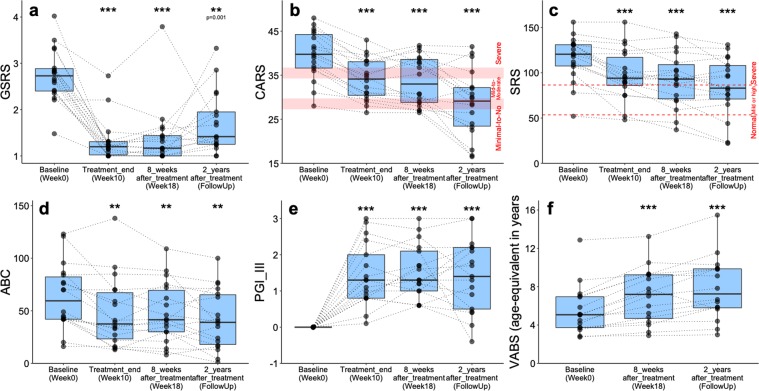
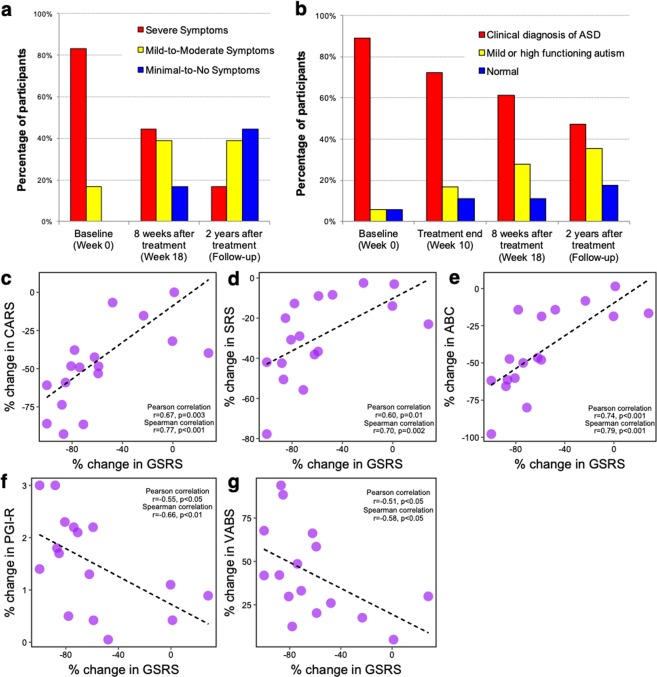
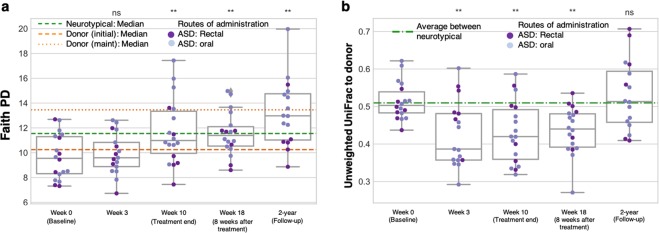
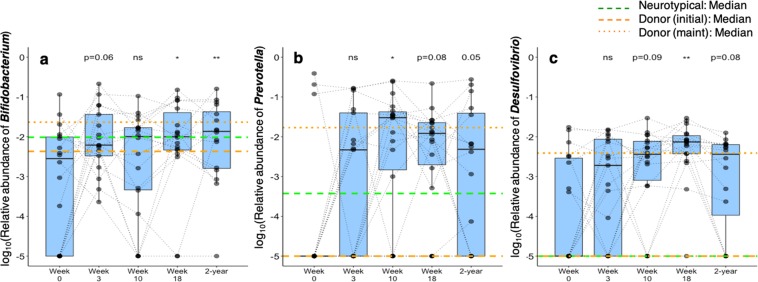
Many studies have reported abnormal gut microbiota in individuals with Autism Spectrum Disorders (ASD), suggesting a link between gut microbiome and autism-like behaviors. Modifying the gut microbiome is a potential route to improve gastrointestinal (GI) and behavioral symptoms in children with ASD, and fecal microbiota transplant could transform the dysbiotic gut microbiome toward a healthy one by delivering a large number of commensal microbes from a healthy donor. We previously performed an open-label trial of Microbiota Transfer Therapy (MTT) that combined antibiotics, a bowel cleanse, a stomach-acid suppressant, and fecal microbiota transplant, and observed significant improvements in GI symptoms, autism-related symptoms, and gut microbiota. Here, we report on a follow-up with the same 18 participants two years after treatment was completed. Notably, most improvements in GI symptoms were maintained, and autism-related symptoms improved even more after the end of treatment. Important changes in gut microbiota at the end of treatment remained at follow-up, including significant increases in bacterial diversity and relative abundances of Bifidobacteria and Prevotella . Our observations demonstrate the long-term safety and efficacy of MTT as a potential therapy to treat children with ASD who have GI problems, and warrant a double-blind, placebo-controlled trial in the future.
Overview
The claims and statistics of this paper haven’t been checked yet.
Free: it reads the open-access text and checks the first 5 claims that cite a source we can check. Create a free account to check every claim.
Integrity signals
Registry
Cites
Statistics
Figures
Verification
Claims the paper makes
The claims and statistics of this paper haven’t been checked yet.
Free: it reads the open-access text and checks the first 5 claims that cite a source we can check. Create a free account to check every claim.
Claims other papers make about this one
Each is checked against this paper’s own text: does it say what the citing paper says it does?
The cited source says what the claim attributes to it.
In the citing paper
“In a two-year follow-up study, Kang et al. further assessed the long-term effects of MTT in the same group of 18 children with ASD. The majority of GI symptom improvements were maintained, while autism-related behaviors continued to show positive progress after treatment. Significant gut microbiota changes observed at the end of treatment, including increased bacterial diversity and higher levels”
From The Gut–Brain–Microbiota Connection and Its Role in Autism Spectrum Disorders (2025) · cites this paper as [135]
In the citing paper
“Microbial therapeutics, including fecal microbiota transplants (FMTs), bacterial consortia, and probiotics, are increasingly being tested in patients with Clostridium difficile infections and other gastrointestinal (GI) disorders (Allegretti et al., 2019), including inflammatory bowel disease (IBD) and, more recently, non-GI indications such as autism (Kang et al., 2019) and cancer (Mullard, 2018)”
From Gut microbiome stability and dynamics in healthy donors and patients with non-gastrointestinal cancers (2021) · cites this paper as Kang et al., 2019
In the citing paper
“These findings highlight the long-term safety and efficacy of MTT as a potential therapeutic option for children with ASD experiencing GI issues [135].”
From The Gut–Brain–Microbiota Connection and Its Role in Autism Spectrum Disorders (2025) · cites this paper as [135]
In the citing paper
“Similarly, probiotic therapies and FMT have demonstrated efficacy in enhancing microbial diversity, reducing digestive issues, and improving behavioral functioning [134,135,145].”
From The Gut–Brain–Microbiota Connection and Its Role in Autism Spectrum Disorders (2025) · cites this paper as [135]
In the citing paper
“microbiota transfer therapy, which changes the intestinal microenvironment, has improved behavioral problems and gastrointestinal symptoms in children with ASD”
5 more claims about this paper
Create a free account to see every claim other papers make about this one.
Self-check
Percentages, sums and reported differences re-computed from the paper’s own numbers.
The self-check needs the paper’s full text.
Citations
Cites
1 retracted
Saad, K., Abdel‐Rahman, A. A., Elserogy, Y. M., Al‐Atram, A. A., El‐Houfey, A. A., Othman, H. A. K., Bjørklund, G., Jia, F., Urbina, M. A., Abo‐Elela, M. G. M., et al. (2018) · Journal of Child Psychology and Psychiatry · doi:10.1111/jcpp.12652 · Cited by 99
RetractedMAFFT Multiple Sequence Alignment Software Version 7: Improvements in Performance and Usability
Katoh, K., & Standley, D. M. (2013) · Molecular Biology and Evolution · doi:10.1093/molbev/mst010 · Cited by 46,209
DADA2: High–resolution sample inference from Illumina amplicon data
Callahan, B. J., McMurdie, P. J., Rosen, M. J., Han, A. W., Johnson, A. J. A., & Holmes, S. P. (2016) · Nature Methods · doi:10.1038/nmeth.3869 · Cited by 35,698
QIIME allows analysis of high-throughput community sequencing data
Caporaso, J. G., Kuczynski, J., Stombaugh, J., Bittinger, K., Bushman, F. D., Costello, E. K., Fierer, N., Peña, A. G., Goodrich, J. K., Gordon, J. I., et al. (2010) · Nature Methods · doi:10.1038/nmeth.f.303 · Cited by 34,887
Self-citationThe SILVA ribosomal RNA gene database project: improved data processing and web-based tools
Quast, C., Pruesse, E., Yilmaz, P., Gerken, J., Schweer, T., Yarza, P., Peplies, J., & Glöckner, F. O. (2012) · Nucleic Acids Research · doi:10.1093/nar/gks1219 · Cited by 33,055
FastTree 2 – Approximately Maximum-Likelihood Trees for Large Alignments
Price, M. N., Dehal, P. S., & Arkin, A. P. (2010) · PLoS ONE · doi:10.1371/journal.pone.0009490 · Cited by 14,894
VSEARCH: a versatile open source tool for metagenomics
(2016) · doi:10.7717/peerj.2584 · Cited by 10,773
Nucleic acid techniques in bacterial systematics
Stackebrandt, E. S., & Goodfellow, M. (1991) · Wiley eBooks · Cited by 9,460
Ultra-high-throughput microbial community analysis on the Illumina HiSeq and MiSeq platforms
Caporaso, J. G., Lauber, C. L., Walters, W. A., Berg-Lyons, D., Huntley, J., Fierer, N., Owens, S. M., Betley, J., Fraser, L., Bauer, M., et al. (2012) · The ISME Journal · doi:10.1038/ismej.2012.8 · Cited by 8,839
Self-citationUniFrac: a New Phylogenetic Method for Comparing Microbial Communities
Lozupone, C., & Knight, R. (2005) · Applied and Environmental Microbiology · doi:10.1128/aem.71.12.8228-8235.2005 · Cited by 8,227
Cited by
The gut microbiota–brain axis in behaviour and brain disorders
Morais, L. H., Schreiber, H. L., & Mazmanian, S. K. (2021) · Nature Reviews Microbiology · doi:10.1038/s41579-020-00460-0 · Cited by 2,149
The gut microbiome in neurological disorders
Cryan, J. F., O'Riordan, K. J., Sandhu, K., Peterson, V., & Dinan, T. G. (2020) · The Lancet Neurology · doi:10.1016/s1474-4422(19)30356-4 · Cited by 1,336
Chen, Y., Xu, J., & Chen, Y. (2021) · Nutrients · doi:10.3390/nu13062099 · Cited by 917
The Role of Microbiota-Gut-Brain Axis in Neuropsychiatric and Neurological Disorders
Socała, K., Doboszewska, U., Szopa, A., Serefko, A., Włodarczyk, M., Zielińska, A., Poleszak, E., Fichna, J., & Wlaź, P. (2021) · Pharmacological Research · doi:10.1016/j.phrs.2021.105840 · Cited by 857
A Comprehensive Review on the Role of the Gut Microbiome in Human Neurological Disorders
Sorboni, S. G., Moghaddam, H. S., Jafarzadeh-Esfehani, R., & Soleimanpour, S. (2022) · Clinical Microbiology Reviews · doi:10.1128/cmr.00338-20 · Cited by 522
Fecal Microbiota Transplantation in Neurological Disorders
Vendrik, K. E. W., Ooijevaar, R. E., de Jong, P. R. C., Laman, J. D., van Oosten, B. W., van Hilten, J. J., Ducarmon, Q. R., Keller, J. J., Kuijper, E. J., & Contarino, M. F. (2020) · Frontiers in Cellular and Infection Microbiology · doi:10.3389/fcimb.2020.00098 · Cited by 413
Gut microbiome diversity is associated with sleep physiology in humans
Smith, R. P., Easson, C., Lyle, S. M., Kapoor, R., Donnelly, C. P., Davidson, E. J., Parikh, E., Lopez, J. V., & Tartar, J. L. (2019) · PLOS ONE · doi:10.1371/journal.pone.0222394 · Cited by 390
Interaction of the microbiota with the human body in health and diseases
ALTVEŞ, S., YILDIZ, H. K., & VURAL, H. C. (2020) · Bioscience of Microbiota, Food and Health · doi:10.12938/bmfh.19-023 · Cited by 389
“found improvement in behavioral symptoms in autistic children when the children received transplanted commensal microbes from healthy donors [90].”
BackgroundSuganya, K., & Koo, B.-S. (2020) · International Journal of Molecular Sciences · doi:10.3390/ijms21207551 · Cited by 368
Peng, Z., Cheng, S., Kou, Y., Wang, Z., Jin, R., Hu, H., Zhang, X., Gong, J.-F., Li, J., Lu, M., et al. (2020) · Cancer Immunology Research · doi:10.1158/2326-6066.cir-19-1014 · Cited by 361
The evolution of the use of faecal microbiota transplantation and emerging therapeutic indications.
Allegretti, J. R., Mullish, B. H., Kelly, C., & Fischer, M. (2019) · The Lancet · doi:10.1016/s0140-6736(19)31266-8 · Cited by 358
The microbiota–gut–brain axis and neurodevelopmental disorders
Wang, Q., Yang, Q., & Liu, X. (2023) · Protein & Cell · doi:10.1093/procel/pwad026 · Cited by 355
Autism-related dietary preferences mediate autism-gut microbiome associations
Yap, C. X., Henders, A. K., Alvares, G. A., Wood, D. L. A., Krause, L., Tyson, G. W., Restuadi, R., Wallace, L., McLaren, T., Hansell, N. K., et al. (2021) · Cell · doi:10.1016/j.cell.2021.10.015 · Cited by 350
Microbiomes as sources of emergent host phenotypes
Lynch, J. B., & Hsiao, E. Y. (2019) · Science · doi:10.1126/science.aay0240 · Cited by 339
The gut microbiota-immune-brain axis: therapeutic implications
O’Riordan, K. J., Moloney, G. M., Keane, L., Clarke, G., & Cryan, J. F. (2025) · Cell Reports Medicine · doi:10.1016/j.xcrm.2025.101982 · Cited by 333
The role of gut dysbiosis in Parkinson’s disease: mechanistic insights and therapeutic options
Wang, Q., Luo, Y., Ray Chaudhuri, K., Reynolds, R., Tan, E.-K., & Pettersson, S. (2021) · Brain · doi:10.1093/brain/awab156 · Cited by 281
Signalling pathways in autism spectrum disorder: mechanisms and therapeutic implications
Jiang, C.-C., Lin, L.-S., Long, S., Ke, X.-Y., Fukunaga, K., Lu, Y.-M., & Han, F. (2022) · Signal Transduction and Targeted Therapy · doi:10.1038/s41392-022-01081-0 · Cited by 258
Gut microbiome composition and diversity are related to human personality traits
Johnson, K. V.-A. (2020) · Human Microbiome Journal · doi:10.1016/j.humic.2019.100069 · Cited by 240
“Interestingly, a trial of faecal microbiota transplantation in children with autism found that it improved not only gastrointestinal symptoms but also social behaviour and communication [47], including two years after completion of the treatment [48].”
BackgroundChakrabarti, A., Geurts, L., Hoyles, L., Iozzo, P., Kraneveld, A. D., La Fata, G., Miani, M., Patterson, E., Pot, B., Shortt, C., et al. (2022) · Cellular and Molecular Life Sciences · doi:10.1007/s00018-021-04060-w · Cited by 237
Sartori, S. B., & Singewald, N. (2019) · Pharmacology & Therapeutics · doi:10.1016/j.pharmthera.2019.107402 · Cited by 236
IL-6 and IL-8: An Overview of Their Roles in Healthy and Pathological Pregnancies
Vilotić, A., Nacka-Aleksić, M., Pirković, A., Bojić-Trbojević, Ž., Dekanski, D., & Jovanović Krivokuća, M. (2022) · International Journal of Molecular Sciences · doi:10.3390/ijms232314574 · Cited by 236
The microbiota-immune axis as a central mediator of gut-brain communication
Fung, T. C. (2020) · Neurobiology of Disease · doi:10.1016/j.nbd.2019.104714 · Cited by 230
Morton, J. T., Jin, D.-M., Mills, R. H., Shao, Y., Rahman, G., McDonald, D., Zhu, Q., Balaban, M., Jiang, Y., Cantrell, K., et al. (2023) · Nature Neuroscience · doi:10.1038/s41593-023-01361-0 · Cited by 221
Autism, Gastrointestinal Symptoms and Modulation of Gut Microbiota by Nutritional Interventions
Ristori, M. V., Quagliariello, A., Reddel, S., Ianiro, G., Vicari, S., Gasbarrini, A., & Putignani, L. (2019) · Nutrients · doi:10.3390/nu11112812 · Cited by 214
“We can assume that if the hypothesis of a connection between symptoms related to autism and gastrointestinal disorders was confirmed, the manipulation of the intestinal microbiota, with supplementation with probiotics and treatment with Fecal Microbiota Transplantation (FMT), could constitute a therapeutic approach fo…”
BackgroundLeveraging diet to engineer the gut microbiome
Wolter, M., Grant, E. T., Boudaud, M., Steimle, A., Pereira, G. V., Martens, E. C., & Desai, M. S. (2021) · Nature Reviews Gastroenterology & Hepatology · doi:10.1038/s41575-021-00512-7 · Cited by 211
The role of the microbiota-gut-brain axis in neuropsychiatric disorders
Generoso, J. S., Giridharan, V. V., Lee, J., Macedo, D., & Barichello, T. (2021) · Brazilian Journal of Psychiatry · doi:10.1590/1516-4446-2020-0987 · Cited by 211
Introduction to host microbiome symbiosis in health and disease
Malard, F., Dore, J., Gaugler, B., & Mohty, M. (2021) · Mucosal Immunology · doi:10.1038/s41385-020-00365-4 · Cited by 209
“Furthermore, a follow-up study, 2 years after treatment was completed, confirmed that most improvements in GI symptoms were maintained, and that autism-related symptoms improved even more after the end of treatment.(85) Several studies are ongoing to confirm this promising result (NCT03408886, NCT03829878).”
Gastrointestinal Symptoms in Autism Spectrum Disorder: A Systematic Review
Leader, G., Abberton, C., Cunningham, S., Gilmartin, K., Grudzien, M., Higgins, E., Joshi, L., Whelan, S., & Mannion, A. (2022) · Nutrients · doi:10.3390/nu14071471 · Cited by 156
“[38] report that these improvements were maintained two years after the treatment phase was completed.”
BackgroundInfluentialRole of Gut Microbiome in Autism Spectrum Disorder and Its Therapeutic Regulation
Taniya, M. A., Chung, H.-J., Al Mamun, A., Alam, S., Aziz, M. A., Emon, N. U., Islam, M. M., Hong, S.-T. S., Podder, B. R., Ara Mimi, A., et al. (2022) · Frontiers in Cellular and Infection Microbiology · doi:10.3389/fcimb.2022.915701 · Cited by 207
Chidambaram, S. B., Essa, M. M., Rathipriya, A. G., Bishir, M., Ray, B., Mahalakshmi, A. M., Tousif, A. H., Sakharkar, M. K., Kashyap, R. S., Friedland, R. P., et al. (2022) · Pharmacology & Therapeutics · doi:10.1016/j.pharmthera.2021.107988 · Cited by 204
Hazan, S. (2020) · Journal of International Medical Research · doi:10.1177/0300060520925930 · Cited by 200
“In an open-label study in 18 children with ASD, 2 weeks of vancomycin treatment followed by daily FMT infusions for 7 to 8 weeks resulted in significant improvements in core ASD symptoms, which persisted at the 2-year follow-up.(3) Furthermore, in a case series of three patients with MS and underlying gastrointestinal…”
BackgroundRole of diet and its effects on the gut microbiome in the pathophysiology of mental disorders
Horn, J., Mayer, D. E., Chen, S., & Mayer, E. A. (2022) · Translational Psychiatry · doi:10.1038/s41398-022-01922-0 · Cited by 193
“A study with ASD children undergoing MTT found a significant sustained decrease in both GI and ASD symptoms and confirmed favorable changes in the abundance of certain beneficial bacterial taxa, including Bifidobacteria, Prevotella, and Desulfovibrio [113, 122].”
BackgroundParkinson’s disease and gut microbiota: from clinical to mechanistic and therapeutic studies
Zhang, X., Tang, B., & Guo, J. (2023) · Translational Neurodegeneration · doi:10.1186/s40035-023-00392-8 · Cited by 187
Effect of ultra-processed diet on gut microbiota and thus its role in neurodegenerative diseases
Martínez Leo, E. E., & Segura Campos, M. R. (2020) · Nutrition · doi:10.1016/j.nut.2019.110609 · Cited by 184
Fecal Microbiota Transplantation as New Therapeutic Avenue for Human Diseases
Biazzo, M., & Deidda, G. (2022) · Journal of Clinical Medicine · doi:10.3390/jcm11144119 · Cited by 185
The Gut–Brain Axis and Its Relation to Parkinson’s Disease: A Review
Klann, E. M., Dissanayake, U., Gurrala, A., Farrer, M., Shukla, A. W., Ramirez-Zamora, A., Mai, V., & Vedam-Mai, V. (2022) · Frontiers in Aging Neuroscience · doi:10.3389/fnagi.2021.782082 · Cited by 182
Mhanna, A., Martini, N., Hmaydoosh, G., Hamwi, G., Jarjanazi, M., Zaifah, G., Kazzazo, R., Mohamad, A. H., & Alshehabi, Z. (2024) · Medicine · doi:10.1097/md.0000000000037114 · Cited by 180
“…involved in the mental disorders Impairment in the tryptophan to serotonin conversion pathway is plausibly linked to schizophrenia [9] Researchers suggest that d -serine could be associated with schizophrenia [54,57] The role of GABAergic transmission in schizophrenia has recently…”
BackgroundInfluentialCowan, C. S. M., Dinan, T. G., & Cryan, J. F. (2020) · Journal of Child Psychology and Psychiatry · doi:10.1111/jcpp.13156 · Cited by 176
The gut vascular barrier: a new player in the gut–liver–brain axis
Brescia, P., & Rescigno, M. (2021) · Trends in Molecular Medicine · doi:10.1016/j.molmed.2021.06.007 · Cited by 175
Dash, S., Syed, Y. A., & Khan, M. R. (2022) · Frontiers in Cell and Developmental Biology · doi:10.3389/fcell.2022.880544 · Cited by 171
The coral microbiome in sickness, in health and in a changing world
Voolstra, C. R., Raina, J.-B., Dörr, M., Cárdenas, A., Pogoreutz, C., Silveira, C. B., Mohamed, A. R., Bourne, D. G., Luo, H., Amin, S. A., et al. (2024) · Nature Reviews Microbiology · doi:10.1038/s41579-024-01015-3 · Cited by 170
“This is achieved, for instance, by rebooting the microbiome through provisioning of microbiome consortia (or specific isolates) from healthy donor colonies, mimicking a practice referred to as microbial transfer therapy in human medical settings 169 .”
Microglia and Neurodevelopmental Disorders
Lukens, J. R., & Eyo, U. B. (2022) · Annual Review of Neuroscience · doi:10.1146/annurev-neuro-110920-023056 · Cited by 169
Gut microbiota changes in patients with autism spectrum disorders
Ding, X., Xu, Y., Zhang, X., Zhang, L., Duan, G., Song, C., Li, Z., Yang, Y., Wang, Y., Wang, X., et al. (2020) · Journal of Psychiatric Research · doi:10.1016/j.jpsychires.2020.06.032 · Cited by 166
Infant microbes and metabolites point to childhood neurodevelopmental disorders
Ahrens, A. P., Hyötyläinen, T., Petrone, J. R., Igelström, K. M., George, C. D., Garrett, T. J., Orešič, M., Triplett, E. W., & Ludvigsson, J. (2024) · Cell · doi:10.1016/j.cell.2024.02.035 · Cited by 172
Exercise immunology: Future directions
Nieman, D. C., & Pence, B. D. (2020) · Journal of Sport and Health Science · doi:10.1016/j.jshs.2019.12.003 · Cited by 140
Autism Spectrum Disorder as a Brain-Gut-Microbiome Axis Disorder
Saurman, V., Margolis, K. G., & Luna, R. A. (2020) · Digestive Diseases and Sciences · doi:10.1007/s10620-020-06133-5 · Cited by 137
Bermudez-Martin, P., Becker, J. A. J., Caramello, N., Fernandez, S. P., Costa-Campos, R., Canaguier, J., Barbosa, S., Martinez-Gili, L., Myridakis, A., Dumas, M.-E., et al. (2021) · Microbiome · doi:10.1186/s40168-021-01103-z · Cited by 161
The Influence of Gut Dysbiosis in the Pathogenesis and Management of Ischemic Stroke
Chidambaram, S. B., Rathipriya, A. G., Mahalakshmi, A. M., Sharma, S., Hediyal, T. A., Ray, B., Sunanda, T., Rungratanawanich, W., Kashyap, R. S., Qoronfleh, M. W., et al. (2022) · Cells · doi:10.3390/cells11071239 · Cited by 160
Gastrointestinal Issues and Autism Spectrum Disorder
Madra, M., Ringel, R., & Margolis, K. G. (2020) · Child and Adolescent Psychiatric Clinics of North America · doi:10.1016/j.chc.2020.02.005 · Cited by 159
Kang, D.-W., Adams, J. B., Vargason, T., Santiago, M., Hahn, J., & Krajmalnik-Brown, R. (2020) · mSphere · doi:10.1128/msphere.00314-20 · Cited by 144
“This study reports comprehensive metabolite measurements from children who participated in our MTT study (28, 29), focusing on a univariate analysis of plasma and fecal metabolite data.”
BackgroundSelf-citationThe Role of Microbiome, Dietary Supplements, and Probiotics in Autism Spectrum Disorder
Sivamaruthi, B. S., Suganthy, N., Kesika, P., & Chaiyasut, C. (2020) · International Journal of Environmental Research and Public Health · doi:10.3390/ijerph17082647 · Cited by 123
“[48] reported the presence of low-level carbohydrate degrading/fermenting bacteria such as Prevotella, Coprococcus and Veillonellaceae in ASD, substantiating the link between gut microbiome and ASD.”
BackgroundRecipient factors in faecal microbiota transplantation: one stool does not fit all
Danne, C., Rolhion, N., & Sokol, H. (2021) · Nature Reviews Gastroenterology & Hepatology · doi:10.1038/s41575-021-00441-5 · Cited by 154
Li, Y., Luo, Z.-Y., Hu, Y.-Y., Bi, Y.-W., Yang, J.-M., Zou, W.-J., Song, Y.-L., Li, S., Shen, T., Li, S.-J., et al. (2020) · Microbiome · doi:10.1186/s40168-020-00884-z · Cited by 146
Role of the gut microbiome in three major psychiatric disorders
Borkent, J., Ioannou, M., Laman, J. D., Haarman, B. C. M., & Sommer, I. E. (2022) · Psychological Medicine · doi:10.1017/s0033291722000897 · Cited by 152
Huang, C., Yi, P., Zhu, M., Zhou, W., Zhang, B., Yi, X., Long, H., Zhang, G., Wu, H., Tsokos, G. C., et al. (2022) · Journal of Autoimmunity · doi:10.1016/j.jaut.2022.102844 · Cited by 150
The Gut Microbiome in Myalgic Encephalomyelitis (ME)/Chronic Fatigue Syndrome (CFS)
König, R. S., Albrich, W. C., Kahlert, C. R., Bahr, L. S., Löber, U., Vernazza, P., Scheibenbogen, C., & Forslund, S. K. (2022) · Frontiers in Immunology · doi:10.3389/fimmu.2021.628741 · Cited by 149
Revisiting Excitotoxicity in Traumatic Brain Injury: From Bench to Bedside
Baracaldo-Santamaría, D., Ariza-Salamanca, D. F., Corrales-Hernández, M. G., Pachón-Londoño, M. J., Hernández-Duarte, I., & Calderón‐Ospina, C. (2022) · Pharmaceutics · doi:10.3390/pharmaceutics14010152 · Cited by 150
Microbiota–neuroepithelial signalling across the gut–brain axis
Ohara, T. E., & Hsiao, E. Y. (2025) · Nature Reviews Microbiology · doi:10.1038/s41579-024-01136-9 · Cited by 147
“Importantly, microbiome-sensing receptors are enriched in L cells and EC cells of the distal intestine, where bacterial load is the highest and where microorganism–EEC signalling is mainly thought to occur.”
Bicknell, B. T., Liebert, A. D., Borody, T. J., Herkes, G., McLachlan, C. S., & Kiat, H. (2023) · International Journal of Molecular Sciences · doi:10.3390/ijms24119577 · Cited by 147
“Interestingly, the improvement in symptoms persisted and, in some cases, further improved at a 2-year follow-up, including the improvement in the microbiome [414].”
Tan, Q., Orsso, C. E., Deehan, E. C., Kung, J. Y. C., Tun, H. M., Wine, E., Madsen, K. L., Zwaigenbaum, L., & Haqq, A. M. (2021) · Autism Research · doi:10.1002/aur.2560 · Cited by 145
“Treatment duration varied between 3 weeks and 3 months, with only two studies reporting postintervention follow-up outcomes (Grimaldi et al., 2018; Kang et al., 2019).”
BackgroundResultInfluentialXiao, L., Yan, J., Yang, T., Zhu, J., Li, T., Wei, H., & Chen, J. (2021) · mSystems · doi:10.1128/msystems.01343-20 · Cited by 141
“Furthermore, microbiota transfer therapy, which changes the intestinal microenvironment, has improved behavioral problems and gastrointestinal symptoms in children with ASD (28).”
BackgroundMachine learning methods for microbiome studies
Namkung, J. (2020) · The Journal of Microbiology · doi:10.1007/s12275-020-0066-8 · Cited by 142
“…human gut microbiome studies revealed that microbiome profiles affect host traits including psychological symptoms such as autism spectrum disorder (Kang et al ., 2019; Bezawada et al ., 2020; Sharon et al ., 2019; Xu et al ., 2019), depression (Peirce and Alviña, 2019; Valles-Colomer et al .,…”
BackgroundThe Role of Microbiome in Brain Development and Neurodegenerative Diseases
Nandwana, V., Nandwana, N. K., Das, Y., Saito, M., Panda, T., Das, S., Almaguel, F. A., Hosmane, N. S., & Das, B. C. (2022) · Molecules · doi:10.3390/molecules27113402 · Cited by 140
“A two-year follow-up of this cohort revealed that treated patients had improved their GI and ASD symptoms [86].”
BackgroundBundgaard-Nielsen, C., Knudsen, J., Leutscher, P. D. C., Lauritsen, M. B., Nyegaard, M., Hagstrøm, S., & Sørensen, S. (2020) · Gut Microbes · doi:10.1080/19490976.2020.1748258 · Cited by 117
Fecal Microbiota Transplantation: Screening and Selection to Choose the Optimal Donor
Bibbò, S., Settanni, C. R., Porcari, S., Bocchino, E., Ianiro, G., Cammarota, G., & Gasbarrini, A. (2020) · Journal of Clinical Medicine · doi:10.3390/jcm9061757 · Cited by 142
Enteric nervous system and intestinal epithelial regulation of the gut-brain axis
Dowling, L. R. C., Strazzari, M. R., Keely, S., & Kaiko, G. E. (2022) · Journal of Allergy and Clinical Immunology · doi:10.1016/j.jaci.2022.07.015 · Cited by 135
Autism spectrum disorder: pathogenesis, biomarker, and intervention therapy
Zhuang, H., Liang, Z., Ma, G., Qureshi, A., Ran, X., Feng, C., Liu, X., Yan, X., & Shen, L. (2024) · MedComm · doi:10.1002/mco2.497 · Cited by 138
“440,443 However, due to the complexity of the intestinal microbiota, FMT therapies are still highly heterogeneous with respect to donor selection, material preparation, ideal dosing regimen, and cost-effectiveness, and are still a long way from clinical application.”
The role of the microbiome in the neurobiology of social behaviour
Sarkar, A., Harty, S., Johnson, K. V. ‐., Moeller, A. H., Carmody, R. N., Lehto, S. M., Erdman, S. E., Dunbar, R. I. M., & Burnet, P. W. J. (2020) · Biological Reviews · doi:10.1111/brv.12603 · Cited by 135
“…assessments conducted on these participants 2 years following the completion of the microbial transplant: most of the gastrointestinal and behavioural improvements had persisted through the intervening period, and several of the autism-related symptoms had improved even further (Kang et al., 2019).”
BackgroundResultInfluentialGarcía-Gutiérrez, E., Narbad, A., & Rodríguez, J. M. (2020) · Frontiers in Neuroscience · doi:10.3389/fnins.2020.578666 · Cited by 134
Ng, S. C., Kamm, M. A., Yeoh, Y. K., Chan, P. K. S., Zuo, T., Tang, W., Sood, A., Andoh, A., Ohmiya, N., Zhou, Y., et al. (2020) · Gut · doi:10.1136/gutjnl-2019-319407 · Cited by 120
Spichak, S., Bastiaanssen, T. F. S., Berding, K., Vlckova, K., Clarke, G., Dinan, T. G., & Cryan, J. F. (2021) · Neuroscience & Biobehavioral Reviews · doi:10.1016/j.neubiorev.2021.02.044 · Cited by 127
Inchingolo, F., Inchingolo, A. D., Palumbo, I., Trilli, I., Guglielmo, M., Mancini, A., Palermo, A., Inchingolo, A. M., & Dipalma, G. (2024) · International Journal of Molecular Sciences · doi:10.3390/ijms25021055 · Cited by 127
Fecal microbiota transplant as a potential treatment for Parkinson's disease – A case series
Segal, A., Zlotnik, Y., Moyal-Atias, K., Abuhasira, R., & Ifergane, G. (2021) · Clinical Neurology and Neurosurgery · doi:10.1016/j.clineuro.2021.106791 · Cited by 124
Restoration of dysbiotic human gut microbiome for homeostasis
Dixit, K. K., Chaudhari, D. S., Dhotre, D. P., Shouche, Y. S., & Saroj, S. D. (2021) · Life Sciences · doi:10.1016/j.lfs.2021.119622 · Cited by 126
Gut microbiota and Autism Spectrum Disorder: From pathogenesis to potential therapeutic perspectives
Mehra, A., Arora, G., Sahni, G., Kaur, M., Singh, H. B., Singh, B., & Kaur, S. (2022) · Journal of Traditional and Complementary Medicine · doi:10.1016/j.jtcme.2022.03.001 · Cited by 127
Lefter, R., Ciobica, A., Timofte, D., Stanciu, C., & Trifan, A. (2019) · Medicina · doi:10.3390/medicina56010011 · Cited by 120
“Remarkably, in a recent follow-up with the same 18 participants, two years after treatment, GI benefits were mostly maintained and autism-related symptoms improved even more [47].”
BackgroundCampbell, A. S., Needham, B. D., Meyer, C. R., Tan, J. H. J., Conrad, M. C., Preston, G. M., Bolognani, F., Rao, S. G., Heussler, H., Griffith, R., et al. (2022) · Nature Medicine · doi:10.1038/s41591-022-01683-9 · Cited by 122
Wang, Y., Zhang, S., Borody, T. J., & Zhang, F. (2022) · Chinese Medical Journal · doi:10.1097/cm9.0000000000002339 · Cited by 120
“According to Kang et al’s[12,83] study, behavioral ASD symptoms improved significantly and persisted 8 weeks and autism-related symptoms improved even more at a 2- year follow-up after FMT stopped.”
MethodMultikingdom and functional gut microbiota markers for autism spectrum disorder
Su, Q., Wong, O. W. H., Lu, W., Wan, Y., Zhang, L., Xu, W., Li, M., Liu, C., Cheung, C. P., Ching, J. Y., et al. (2024) · Nature Microbiology · doi:10.1038/s41564-024-01739-1 · Cited by 121
Mazzone, L., Dooling, S. W., Volpe, E., Uljarević, M., Waters, J. L., Sabatini, A., Arturi, L., Abate, R., Riccioni, A., Siracusano, M., et al. (2023) · Cell Host & Microbe · doi:10.1016/j.chom.2023.11.021 · Cited by 121
Butler, M., Mörkl, S., Sandhu, K. V., Cryan, J. F., & Dinan, T. G. (2019) · The Canadian Journal of Psychiatry · doi:10.1177/0706743719874168 · Cited by 119
“Significant improvements in gastrointestinal and behavioral symptoms were seen in patients following up to 8 weeks following microbiome transfer,(63) and notably, many of these improvements were maintained at follow-up 2 years later.(109)”
BackgroundSettanni, C. R., Ianiro, G., Bibbò, S., Cammarota, G., & Gasbarrini, A. (2021) · Progress in Neuro-Psychopharmacology and Biological Psychiatry · doi:10.1016/j.pnpbp.2021.110258 · Cited by 102
Role of Gut Microbiota in Neurological Disorders and Its Therapeutic Significance
Tiwari, P., Dwivedi, R., Bansal, M., Tripathi, M., & Dada, R. (2023) · Journal of Clinical Medicine · doi:10.3390/jcm12041650 · Cited by 117
“It has been observed that the FMT of healthy human microbiota show increased abundances of Bifidobacteria and Prevotella and improve the behavioral symptoms in ASD patients compared with their pre-transplant condition, but their immune association is unknown [69].”
Microbiota in Autism Spectrum Disorder: A Systematic Review
Lewandowska, Z., Figlerowicz, M., & Mazur‐Melewska, K. (2023) · International Journal of Molecular Sciences · doi:10.3390/ijms242316660 · Cited by 112
Microbiota–brain axis: Context and causality
Cryan, J. F., & Mazmanian, S. K. (2022) · Science · doi:10.1126/science.abo4442 · Cited by 103
Eltokhi, A., Janmaat, I. E., Genedi, M., Haarman, B. C. M., & Sommer, I. E. C. (2020) · Journal of Neuroscience Research · doi:10.1002/jnr.24616 · Cited by 98
“The follow-up on the same participants after 2 years of treatment revealed maintenance of the improvements in GI symptoms and ASD-related symptoms with significant increases in bacterial diversity and relative abundances of Bifidobacteria and Prevotella (Kang et al., 2019).”
BackgroundFecal Microbiota Transplantation: A New Therapeutic Attempt from the Gut to the Brain
Xu, H.-M., Huang, H.-L., Zhou, Y.-L., Zhao, H.-L., Xu, J., Shou, D.-W., Liu, Y.-D., Zhou, Y.-J., & Nie, Y.-Q. (2021) · Gastroenterology Research and Practice · doi:10.1155/2021/6699268 · Cited by 96
“In an open clinical trial on 18 children with ASD, FMT for 7 to 8 weeks could significantly improve digestive symptoms (abdominal pain, constipation, diarrhea, and indigestion) and the behavioral symptoms [32].”
BackgroundGut Microbiota, an Additional Hallmark of Human Aging and Neurodegeneration
Molinero, N., Antón‐Fernández, A., Hernández, F., Ávila, J., Bartolomé, B., & Moreno-Arribas, M. V. (2023) · Neuroscience · doi:10.1016/j.neuroscience.2023.02.014 · Cited by 110
Interactions between the microbiota and enteric nervous system during gut-brain disorders
Fried, S. G., Wemelle, E., Cani, P. D., & Knauf, C. (2021) · Neuropharmacology · doi:10.1016/j.neuropharm.2021.108721 · Cited by 102
Understanding autism spectrum disorders with animal models: Applications, insights, and perspectives
Li, Z., 昆明650500,中国, 云., Institute of Biomedical Research, Y. U., Zhu, Y.-X., Gu, L.-J., & Cheng, Y. (2021) · Zoological Research · doi:10.24272/j.issn.2095-8137.2021.251 · Cited by 68
The Brain-Gut-Microbiome System: Pathways and Implications for Autism Spectrum Disorder
Chernikova, M. A., Flores, G. D., Kilroy, E., Labus, J. S., Mayer, E. A., & Aziz-Zadeh, L. (2021) · Nutrients · doi:10.3390/nu13124497 · Cited by 85
“A majority of these changes were sustained and even improved two years after completion of the treatment [65].”
BackgroundP-cresol Alters Brain Dopamine Metabolism and Exacerbates Autism-Like Behaviors in the BTBR Mouse
Pascucci, T., Colamartino, M., Fiori, E., Sacco, R., Coviello, A., Ventura, R., Puglisi-Allegra, S., Turriziani, L., & Persico, A. M. (2020) · Brain Sciences · doi:10.3390/brainsci10040233 · Cited by 92
Damiani, F., Cornuti, S., & Tognini, P. (2023) · Neuropharmacology · doi:10.1016/j.neuropharm.2023.109491 · Cited by 100
Müller, H., Dagher, G., Loibner, M., Stumptner, C., Kungl, P., & Zatloukal, K. (2019) · Current Opinion in Biotechnology · doi:10.1016/j.copbio.2019.12.004 · Cited by 99
Gastrointestinal involvement of autism spectrum disorder: focus on gut microbiota
Settanni, C. R., Bibbò, S., Ianiro, G., Rinninella, E., Cintoni, M., Mele, M. C., Cammarota, G., & Gasbarrini, A. (2021) · Expert Review of Gastroenterology & Hepatology · doi:10.1080/17474124.2021.1869938 · Cited by 98
“Moreover, the gut microbiota remained almost unchanged at follow-up[160].”
BackgroundThe Promising Role of Probiotics in Managing the Altered Gut in Autism Spectrum Disorders
Abdellatif, B., McVeigh, C., Bendriss, G., & Chaari, A. (2020) · International Journal of Molecular Sciences · doi:10.3390/ijms21114159 · Cited by 84
Microbiota and Microglia Interactions in ASD
Davoli-Ferreira, M., Thomson, C. A., & McCoy, K. D. (2021) · Frontiers in Immunology · doi:10.3389/fimmu.2021.676255 · Cited by 88
Hung, L. Y., & Margolis, K. G. (2024) · Nature Reviews Gastroenterology & Hepatology · doi:10.1038/s41575-023-00857-1 · Cited by 96
“were recruited to participate in an open-label, non-placebo-controlled trial 215,216 .”
Bridging the Gap Between Physical Health and Autism Spectrum Disorder
Sala, R., Amet, L., Blagojevic-Stokic, N., Shattock, P., & Whiteley, P. (2020) · Neuropsychiatric Disease and Treatment · doi:10.2147/ndt.s251394 · Cited by 99
Review of microbiota gut brain axis and innate immunity in inflammatory and infective diseases
Yuan, C., He, Y., Xie, K., Feng, L., Gao, S., & Cai, L. (2023) · Frontiers in Cellular and Infection Microbiology · doi:10.3389/fcimb.2023.1282431 · Cited by 96
Metadata
- Authors
- Kang, D.-W., Adams, J. B., Coleman, D. M., Pollard, E. L., Maldonado, J., McDonough-Means, S., Caporaso, J. G., & Krajmalnik-Brown, R.
- Affiliations
- Arizona State University (US)
- Northern Arizona University (US)
- ORCID
- Venue
- Scientific Reports
- Published
- 2019-04-09
- Volume
- 9
- Issue
- 1
- Pages
- 5821-5821
- ISSN
- 2045-2322 (ISSN-L)
- PMC
- PMC6456593
- OpenAlex
- W2936474142
- Semantic Scholar
- 7ebabdb2344e27104d54862265ff12f0f6ed29c8
- Cited by
- 749
- References
- 54
- Citations by year
- 2026: 60 · 2025: 108 · 2024: 102 · 2023: 105 · 2022: 141 · 2021: 111 · 2020: 85 · 2019: 35
- FWCI
- 30.78
- Type
- journal article
- Language
- en
- Open access
- gold
- doi.org
- Licence
- cc-by
- creativecommons.org/licenses/by/4.0 (tdm)
- creativecommons.org/licenses/by/4.0 (vor)
- Locations
- Scientific Reports (publishedVersion, cc-by)
- Europe PMC (PubMed Central) (publishedVersion, cc-by)
- PubMed Central (publishedVersion, cc-by)
- PubMed (publishedVersion)
- DOAJ (DOAJ: Directory of Open Access Journals) (submittedVersion)
- Funders
- This work was supported by Finch Therapeutics and the Arizona Board of Regents.
- Topics
- Life Sciences › Biochemistry, Genetics and Molecular Biology › Molecular Biology › Gut microbiota and health
- Life Sciences › Neuroscience › Cognitive Neuroscience › Autism Spectrum Disorder Research
- Health Sciences › Medicine › Gastroenterology › Gastrointestinal motility and disorders
- Keywords
- autism spectrum disorder, fecal microbiota transplantation, gut microbiota, gastrointestinal symptoms, long-term follow-up, Bifidobacterium, Prevotella, bacterial diversity, children, antibiotic therapy, bowel preparation
- MeSH terms
- Gastrointestinal Microbiome, Fecal Microbiota Transplantation, Autistic Disorder, Bifidobacterium, Child, Female, Follow-Up Studies, Gastrointestinal Diseases, Humans, Male, Prevotella, Gastrointestinal Tract, Dysbiosis
About these checks
Registry, retraction, Cites and statistics results are computed, not judged, with one exception: a printed reference that no index lists is read once by a model before it counts as a citation error. Claims are extracted by a model and kept only when their quote appears verbatim in the text; each cited source is then checked, with a model’s help, for whether it says what the claim relies on. Those verdicts can be wrong — read the claim’s quote and the cited source before relying on one.
Statistics and arithmetic are recomputed, not judged.
Confidence bands are shown only for fields calibrated on our annotated test set. None is calibrated yet, so no band is shown.
What counts as a claim ›How we measure confidence ›How we check this ›
Are you an author, or do you see a problem with this page? Request a review
Data sources
Bibliographic data: Semantic Scholar, OpenAlex, Crossref.
Contains information from the Semantic Scholar Academic Graph Datasets, made available under the ODC Attribution License (ODC-BY 1.0).
Semantic Scholar’s data is described in: Kinney, R., et al. (2023). The Semantic Scholar Open Data Platform. arXiv:2301.10140.
