

Long-term benefit of Microbiota Transfer Therapy on autism symptoms and gut microbiota
Open accessThe DOI matches its Crossref record; 54 of the 54 references it cites were found in a registry or an index.
Abstract
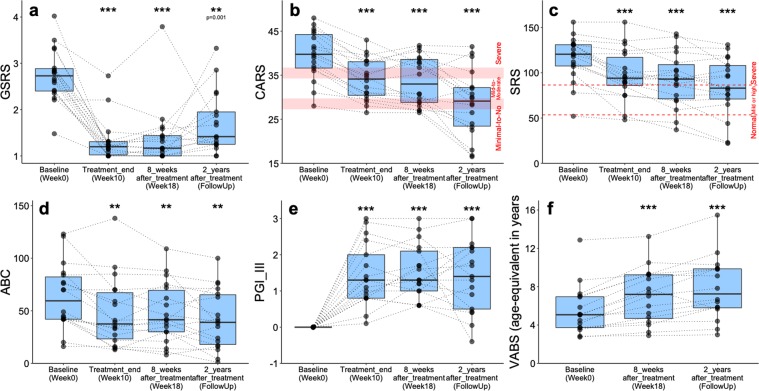
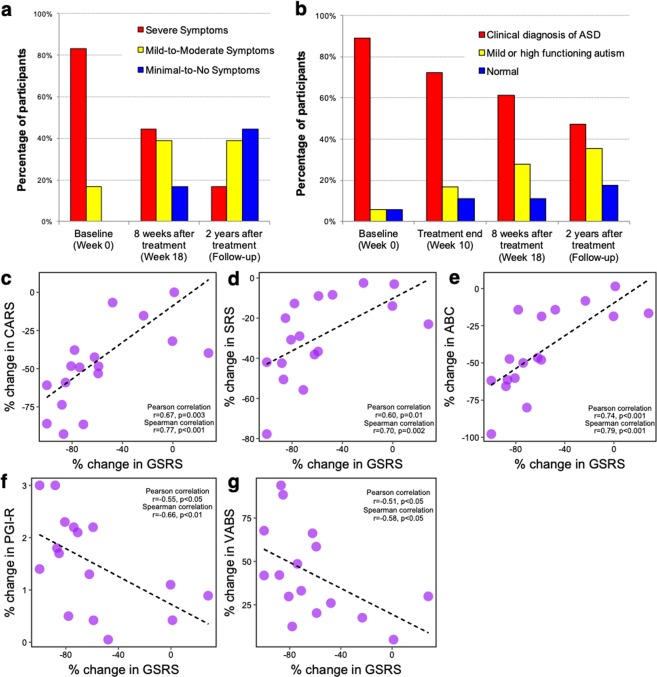
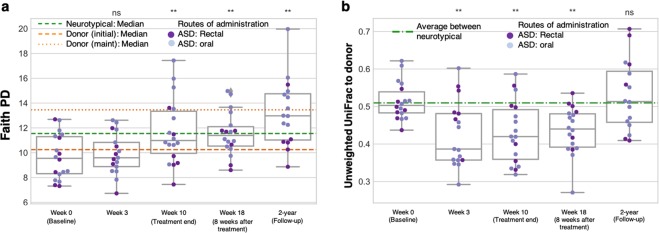
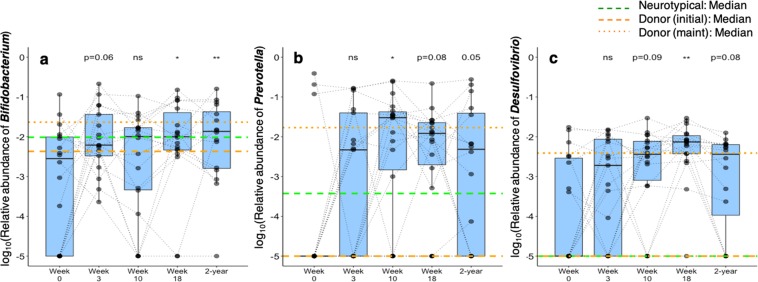
Many studies have reported abnormal gut microbiota in individuals with Autism Spectrum Disorders (ASD), suggesting a link between gut microbiome and autism-like behaviors. Modifying the gut microbiome is a potential route to improve gastrointestinal (GI) and behavioral symptoms in children with ASD, and fecal microbiota transplant could transform the dysbiotic gut microbiome toward a healthy one by delivering a large number of commensal microbes from a healthy donor. We previously performed an open-label trial of Microbiota Transfer Therapy (MTT) that combined antibiotics, a bowel cleanse, a stomach-acid suppressant, and fecal microbiota transplant, and observed significant improvements in GI symptoms, autism-related symptoms, and gut microbiota. Here, we report on a follow-up with the same 18 participants two years after treatment was completed. Notably, most improvements in GI symptoms were maintained, and autism-related symptoms improved even more after the end of treatment. Important changes in gut microbiota at the end of treatment remained at follow-up, including significant increases in bacterial diversity and relative abundances of Bifidobacteria and Prevotella . Our observations demonstrate the long-term safety and efficacy of MTT as a potential therapy to treat children with ASD who have GI problems, and warrant a double-blind, placebo-controlled trial in the future.
Overview
The claims and statistics of this paper haven’t been checked yet.
Free: it reads the open-access text and checks the first 5 claims that cite a source we can check. Create a free account to check every claim.
Integrity signals
Registry
Cites
Statistics
Figures
Verification
Claims the paper makes
The claims and statistics of this paper haven’t been checked yet.
Free: it reads the open-access text and checks the first 5 claims that cite a source we can check. Create a free account to check every claim.
Claims other papers make about this one
Each is checked against this paper’s own text: does it say what the citing paper says it does?
The cited source says what the claim attributes to it.
In the citing paper
“In a two-year follow-up study, Kang et al. further assessed the long-term effects of MTT in the same group of 18 children with ASD. The majority of GI symptom improvements were maintained, while autism-related behaviors continued to show positive progress after treatment. Significant gut microbiota changes observed at the end of treatment, including increased bacterial diversity and higher levels”
From The Gut–Brain–Microbiota Connection and Its Role in Autism Spectrum Disorders (2025) · cites this paper as [135]
In the citing paper
“Microbial therapeutics, including fecal microbiota transplants (FMTs), bacterial consortia, and probiotics, are increasingly being tested in patients with Clostridium difficile infections and other gastrointestinal (GI) disorders (Allegretti et al., 2019), including inflammatory bowel disease (IBD) and, more recently, non-GI indications such as autism (Kang et al., 2019) and cancer (Mullard, 2018)”
From Gut microbiome stability and dynamics in healthy donors and patients with non-gastrointestinal cancers (2021) · cites this paper as Kang et al., 2019
In the citing paper
“These findings highlight the long-term safety and efficacy of MTT as a potential therapeutic option for children with ASD experiencing GI issues [135].”
From The Gut–Brain–Microbiota Connection and Its Role in Autism Spectrum Disorders (2025) · cites this paper as [135]
In the citing paper
“Similarly, probiotic therapies and FMT have demonstrated efficacy in enhancing microbial diversity, reducing digestive issues, and improving behavioral functioning [134,135,145].”
From The Gut–Brain–Microbiota Connection and Its Role in Autism Spectrum Disorders (2025) · cites this paper as [135]
In the citing paper
“microbiota transfer therapy, which changes the intestinal microenvironment, has improved behavioral problems and gastrointestinal symptoms in children with ASD”
5 more claims about this paper
Create a free account to see every claim other papers make about this one.
Self-check
Percentages, sums and reported differences re-computed from the paper’s own numbers.
The self-check needs the paper’s full text.
Citations
Cites
1 retracted
Saad, K., Abdel‐Rahman, A. A., Elserogy, Y. M., Al‐Atram, A. A., El‐Houfey, A. A., Othman, H. A. K., Bjørklund, G., Jia, F., Urbina, M. A., Abo‐Elela, M. G. M., et al. (2018) · Journal of Child Psychology and Psychiatry · doi:10.1111/jcpp.12652 · Cited by 99
RetractedMAFFT Multiple Sequence Alignment Software Version 7: Improvements in Performance and Usability
Katoh, K., & Standley, D. M. (2013) · Molecular Biology and Evolution · doi:10.1093/molbev/mst010 · Cited by 46,209
DADA2: High–resolution sample inference from Illumina amplicon data
Callahan, B. J., McMurdie, P. J., Rosen, M. J., Han, A. W., Johnson, A. J. A., & Holmes, S. P. (2016) · Nature Methods · doi:10.1038/nmeth.3869 · Cited by 35,698
QIIME allows analysis of high-throughput community sequencing data
Caporaso, J. G., Kuczynski, J., Stombaugh, J., Bittinger, K., Bushman, F. D., Costello, E. K., Fierer, N., Peña, A. G., Goodrich, J. K., Gordon, J. I., et al. (2010) · Nature Methods · doi:10.1038/nmeth.f.303 · Cited by 34,887
Self-citationThe SILVA ribosomal RNA gene database project: improved data processing and web-based tools
Quast, C., Pruesse, E., Yilmaz, P., Gerken, J., Schweer, T., Yarza, P., Peplies, J., & Glöckner, F. O. (2012) · Nucleic Acids Research · doi:10.1093/nar/gks1219 · Cited by 33,055
FastTree 2 – Approximately Maximum-Likelihood Trees for Large Alignments
Price, M. N., Dehal, P. S., & Arkin, A. P. (2010) · PLoS ONE · doi:10.1371/journal.pone.0009490 · Cited by 14,894
VSEARCH: a versatile open source tool for metagenomics
(2016) · doi:10.7717/peerj.2584 · Cited by 10,773
Nucleic acid techniques in bacterial systematics
Stackebrandt, E. S., & Goodfellow, M. (1991) · Wiley eBooks · Cited by 9,460
Ultra-high-throughput microbial community analysis on the Illumina HiSeq and MiSeq platforms
Caporaso, J. G., Lauber, C. L., Walters, W. A., Berg-Lyons, D., Huntley, J., Fierer, N., Owens, S. M., Betley, J., Fraser, L., Bauer, M., et al. (2012) · The ISME Journal · doi:10.1038/ismej.2012.8 · Cited by 8,839
Self-citationUniFrac: a New Phylogenetic Method for Comparing Microbial Communities
Lozupone, C., & Knight, R. (2005) · Applied and Environmental Microbiology · doi:10.1128/aem.71.12.8228-8235.2005 · Cited by 8,227
Cited by
Items 501–600 of 867
Trinh, S., Keller, L., Herpertz‐Dahlmann, B., & Seitz, J. (2023) · Zeitschrift für Kinder- und Jugendpsychiatrie und Psychotherapie · doi:10.1024/1422-4917/a000928 · Cited by 5
Saliva FTIR Spectra and Machine Learning for Autism Spectrum Disorder Diagnosis—Preliminary Study
Pinto, M. M. V., Arisawa, E. Â. L. S., Raniero, L. J., & Bhattacharjee, T. (2025) · IEEE photonics journal · doi:10.1109/jphot.2025.3561020 · Cited by 5
Microbiome, Exposome, and Cognitive Development: The Known Unknowns
Aburto, M. R., Nagpal, J. K., Majumdar, A., O’Riordan, K. J., Clarke, G. A., & Cryan, J. F. (2025) · Annual Review of Developmental Psychology · doi:10.1146/annurev-devpsych-111323-120638 · Cited by 5
Siracusano, M., Arturi, L., Riccioni, A., Medoro, A., Savino, R., Scapagnini, G., Davinelli, S., & Mazzone, L. (2025) · Pharmacological Research · doi:10.1016/j.phrs.2025.108040 · Cited by 5
Applying biologically anchored subtypes to advance precision medicine in autism spectrum disorder
Choi, T.-Y., Gunawan, A., Seo, D., Park, J., Ahn, E. H., Suh, S. W., Fuccillo, M. V., & Choi, K. (2025) · Neurobiology of Disease · doi:10.1016/j.nbd.2025.107219 · Cited by 5
Zhang, Y., Chen, L., Jin, J., Xin, Y., Wang, J., & Zhang, A. (2025) · Experimental Neurology · doi:10.1016/j.expneurol.2025.115631 · Cited by 5
Yang, Z., Chen, X., Li, Y., Feng, Y., Lin, L., & Hou, X. (2026) · Brain Behavior & Immunity - Health · doi:10.1016/j.bbih.2026.101189 · Cited by 5
“Third, stratified analyses by sample type, age, and geography elucidate context-dependent variations in SCFA profiles, aligning with the recognition of ASD as a heterogeneous disorder requiring multi-factorial investigation (Jeste et al., 2014; Kang et al., 2020; Masi et al., 2017).”
Lin, H., Feng, Z., Tu, Q., Huizhen, L. I., Zhang, Y., Wei, X., Yi, Q., Zhang, H., Wang, Y., Li, X., et al. (2026) · Microbial Biotechnology · doi:10.1111/1751-7915.70323 · Cited by 5
AlKhaldi, S. S., Mohamed, M., Alyahya, R. A., Al-Azzawi, O. M., Karmy, H. M., Shehata, A. I., Alnefaie, R., Attia, O. A., Abdelmonaem, N., Mansour, R. M., et al. (2026) · World Academy of Sciences Journal · doi:10.3892/wasj.2026.464 · Cited by 5
“Further research is required on the complex asso‑ ciation between the gut and the brain in ASD (15).”
InfluentialAdvances and challenges in microbiome transplantation
Sen, P., Kaulmann, D., Youngster, I., Abdeen, S. K., & Elinav, E. (2026) · Cell Host & Microbe · doi:10.1016/j.chom.2026.06.006 · Cited by 5
Faecal microbiota transplantation - stool, a tool for wellness
Rejeesh, R., Beena, A. K., Tomar, S. K., Kadyan, S., Archana, C. M., & Kumar, A. P. (2023) · International Journal of Biology Sciences · doi:10.33545/26649926.2023.v5.i1c.160 · Cited by 5
Dietert, R. R., & Dietert, J. M. (2023) · American Journal of Biomedical Science & Research · doi:10.34297/ajbsr.2023.20.002708 · Cited by 5
Cannon, M. L., Toma, R., Ganeshan, S., Varela, E. Á., Vuyisich, M., & Banavar, G. S. (2024) · NeuroSci · doi:10.3390/neurosci5030022 · Cited by 5
“…shown that gut bacteria can significantly alter GABA levels, this enzyme’s effect on NAANs may be responsible for some of the expressions of autism [60]. shown that gut bacteria can significantly alter GABA levels, this enzyme’s NAANs may be responsible for some of the expressions of autism [60].”
BackgroundCurrent Applications and Future Prospects of Fecal Microbiota Transplantation
Ishikawa, D., Zhang, X., & Nagahara, A. (2025) · Juntendō Igaku/Juntendo igaku · doi:10.14789/ejmj.jmj24-0045-r · Cited by 5
“FMT has been reported to improve both behavioral and gastrointestinal symptoms in ASD by modulating the gut microbiota 49 ) .”
Damiani, F., Giuliano, M. G., Cornuti, S., Putignano, E., Tognozzi, A., Suckow, V., Kalscheuer, V. M., Pizzorusso, T., & Tognini, P. (2025) · Cell Reports · doi:10.1016/j.celrep.2025.115546 · Cited by 5
Assessing microbiome engraftment extent following fecal microbiota transplant with q2-fmt
Herman, C., Bolyen, E. K., Simard, A., Gehret, L., & Caporaso, J. G. (2025) · PLoS Computational Biology · doi:10.1371/journal.pcbi.1013299 · Cited by 5
Self-citationHuman-microbes symbiosis in health and disease, on earth and beyond planetary boundaries
Dore, J. M., & Ugalde, S. O. (2023) · Frontiers in Astronomy and Space Sciences · doi:10.3389/fspas.2023.1180522 · Cited by 5
Role of Gut Microbiota in Neuroinflammation and Neurological Disorders
Raj, K., Arora, N., Rohit, B. S. P., Awasthi, A., Patel, M., Chaudhary, A., Singh, S., & Gupta, G. D. (2024) · Frontiers in clinical drug research. CNS and neurological disorders · doi:10.2174/9789815179842124120005 · Cited by 5
Dietary diversity contributes to microbiome associations in autism
Johnson, A. J., & Howell, B. (2021) · Cell Metabolism · doi:10.1016/j.cmet.2021.11.008 · Cited by 5
Xu, X., Zhang, Y., & Zhang, X. (2023) · Iranian Journal of Psychiatry and Behavioral Sciences · doi:10.5812/ijpbs-126508 · Cited by 5
“However, some reported that children with ASD showed a depletion of Prevotella, and microbial metastasis therapy improved autism-related symptoms and the abundance of Prevotella (27, 28).”
BackgroundCan some microbes promote host stress and benefit evolutionarily from this strategy?
Aktipis, A., & Beltrán, D. G. (2020) · BioEssays · doi:10.1002/bies.202000188 · Cited by 5
“A promising clinical trial using fecal transplants for autistic children found a significant and lasting decrease in autism symptoms, and these changes were associated with increased levels of Bifdobacteria.”
BackgroundInfluentialNeurological disorders associated with impaired gut microbiota
Kanhere, H. S., Rahangdale, Y. U., Bodele, A. S., Wadhwani, D. I., Ghoshewar, A. R., & Karande, S. P. (2021) · GSC Biological and Pharmaceutical Sciences · doi:10.30574/gscbps.2021.15.2.0121 · Cited by 5
“Dysregulation of this axis has been linked to the pathophysiology of neurological conditions such as Alzheimer's disease [3], autism spectrum disorder [4, 5], Parkinson's disease [6, 7] and depression in the last 5 years [8,122].”
BackgroundSzablewski, L. (2021) · Elsevier eBooks · doi:10.1016/b978-0-12-819265-8.00065-6 · Cited by 5
Immunomodulatory effects of parasites on autoimmunity
Abdoli, A., Badirzadeh, A., Mojtabavi, N., Meamar, A. R., & Falak, R. (2022) · Elsevier eBooks · doi:10.1016/b978-0-12-824390-9.00005-0 · Cited by 5
Kohn, N., Szopinska-Tokov, J., Llera, A., Beckmann, C. F., Vásquez, A. A., & Aarts, E. (2020) · bioRxiv (Cold Spring Harbor Laboratory) · doi:10.1101/2020.08.25.266122 · Cited by 5
Nirmalkar, K., Qureshi, F. A., Kang, D., Muchapothula, M., Takyi, E., Dirks, B., Flynn, C. K., Hahn, J., Adams, J. B., & Krajmalnik‐Brown, R. (2024) · bioRxiv (Cold Spring Harbor Laboratory) · doi:10.1101/2024.12.16.628826 · Cited by 5
Self-citationGut Microbiota Influences Developmental Anesthetic Neurotoxicity in Neonatal Rats
Chaki, T., Horiguchi, Y., Tachibana, S., Sato, S., Hirahata, T., Nishihara, N., Kii, N., Yoshikawa, Y., Hayamizu, K., & Yamakage, M. (2025) · Anesthesia & Analgesia · doi:10.1213/ane.0000000000007410 · Cited by 4
Kumar, M., Mehan, S., Sharma, T., Kumar, A., Khan, Z., Sharma, A. K., Gupta, G. D., & Kumar, N. (2025) · Endocrine Metabolic & Immune Disorders - Drug Targets · doi:10.2174/0118715303369166250325110016 · Cited by 4
Wu, R., Teng, X., Guo, Y., Cai, Y., Lv, Y., Gao, H., Zhang, W., Shen, H., & Fan, J. (2025) · Frontiers in Pediatrics · doi:10.3389/fped.2025.1648471 · Cited by 4
Halverson, T., & Alagiakrishnan, K. (2025) · Journal of Integrative Neuroscience · doi:10.31083/jin36616 · Cited by 4
Chang, J.-C., Chen, Y.-C. D., Lin, H.-T., Chen, Y., & Gau, S. S. (2025) · Translational Psychiatry · doi:10.1038/s41398-025-03768-8 · Cited by 4
Shirotani, M., Shimizu, S., Kitamura, K., Mikawa, Y., Haruna, R., Kawai, Y., Koide, S., Mohri, I., Matsuzaki, H., Tsuchiya, K. J., et al. (2026) · Frontiers in Pediatrics · doi:10.3389/fped.2026.1767346 · Cited by 4
Li, X., Zhou, W., Yang, S., Huang, X., & Zheng, K. (2026) · Frontiers in Neuroscience · doi:10.3389/fnins.2026.1806532 · Cited by 4
“Clinical investigations of FMT in children with ASD have reported improvements in both gastrointestinal (GI) and behavioral symptoms, particularly in open-label and non-blinded trials (Kang et al., 2017; Kang et al., 2019).”
Lessons For Human Holobiont Medicine in The Era of SARS-Cov-2
Dietert, R. R. (2021) · American Journal of Biomedical Science & Research · doi:10.34297/ajbsr.2021.13.001849 · Cited by 4
“155 gastrointestinal and ASD symptoms as well as in fecal microbiota diversity [31].”
BackgroundAutism Spectrum Disorder: Latest Advances in Treatment
Szpernalowska, A., Matshaba, V. I., Mrugała, K., Choinka, M., Kalisiak, J., Mataczyńska, A., & Paprocki, M. (2024) · Quality in Sport · doi:10.12775/qs.2024.22.54744 · Cited by 4
Should the Faecal Microbiota Composition Be Determined to Certify a Faecal Donor?
Morales, C., Ballestero, L., del Río, P., Barbero-Herranz, R., Olavarrieta, L., Gomez-Artiguez, L., Galeano, J., Ortiz, J. A., Basterra, J., & del Campo, R. (2024) · Diagnostics · doi:10.3390/diagnostics14232635 · Cited by 4
“FMT utility has been explored in other pathologies, such as inflammatory bowel diseases [7], metabolic diseases [8], decolonisation of multidrug-resistant bacteria [9] or reduction in autism symptoms [10], without solid scientific evidence of its benefits [11].”
Verduci, E., Tosi, M., Dionisi‐Vici, C., & Spada, M. (2025) · Genes · doi:10.3390/genes16050502 · Cited by 4
Mishra, A. P., Marrelli, L. M., Bonner-Reid, F. T., Shekhawat, P., Toney, R., Benipal, I. K., Dias, H. A., Kandi, A., & Siddiqui, H. F. (2025) · Cureus · doi:10.7759/cureus.88579 · Cited by 4
de Diego‐Otero, Y., Bodoque-García, A., Quintero-Navarro, C., Medina, R. C., & Salgado-Cacho, J. M. (2025) · Psychiatry International · doi:10.3390/psychiatryint6030107 · Cited by 4
“Evidence suggests that dysbiosis may exacerbate gastrointestinal and behavioural symptoms in ASD, while microbiota-targeted interventions aim to alleviate these symptoms rather than ASD itself [25].”
InfluentialGut Microbiota and Pancreatobiliary System
Ryu, K.-H. (2020) · Korean Journal of Gastroenterology · doi:10.4166/kjg.2020.75.5.231 · Cited by 4
“염증성 장질환(inflammatory bowel disease), 만성 피로 증후군(chronic fatigue syndrome), 비만, 제2형 당뇨, 암과 같은 질환이나 자폐증, 파킨슨병(Parkinson’s disease)과 같은 정신·신경계 질환까지도 포함한 많은 질병들 과 연관이 있음이 보고되었다.(14-26) 그중 자폐증에 대한 연구는 2016년 Buffington 등(24)에 의하여 진행된 동물모델 실험 결과 로 많은 관심을 모았던 것이 2019년 Kang 등(25)에 의한 임상실”
Gut Microbial Regulation of Autism Spectrum Disorder Symptoms
Panzer, A. R., & Lynch, S. V. (2020) · Trends in Endocrinology and Metabolism · doi:10.1016/j.tem.2020.09.001 · Cited by 4
Béroule, D. (2020) · Frontiers in Cellular Neuroscience · doi:10.3389/fncel.2020.585395 · Cited by 4
O’Brien, K., & Blair, P. (2021) · Springer eBooks · doi:10.1007/978-3-030-78559-8_10 · Cited by 4
Neurobiology of Autism Spectrum Disorder
Casanova, M. F., Constantino, J. N., Ecker, C., Frye, R. E., Martínez‐Cerdeño, V., Rossignol, D. A., & Scherer, S. W. (2024) · Springer eBooks · doi:10.1007/978-3-030-51366-5_32 · Cited by 4
Nutritional Aspects in the Neurodevelopment of Autism: Folate, Stress, and Critical Periods
Ayoub, G. S. (2024) · Journal of Medicinal Food · doi:10.1089/jmf.2023.0180 · Cited by 4
The Effect of Probiotic Lactic Acid Bacteria on the Symptoms of Mental Disorders
Novikova, V. A., Bondarenko, K. D., Сазонов, А. Э., & Розанов, А. С. (2024) · Nanobiotechnology Reports · doi:10.1134/s2635167624602092 · Cited by 4
Gudka, R., & Nyinoh, I. W. (2023) · Frontiers in Microbiomes · doi:10.3389/frmbi.2023.1222089 · Cited by 4
Zheng, Y.-M., Wu, H.-Y., Ye, M.-M., Cai, J., Yu, Y., Xie, W.-R., Xu, J., Liu, T., He, X., & Wu, L. (2024) · Heliyon · doi:10.1016/j.heliyon.2024.e30310 · Cited by 4
Effect of Leech application in Prolapsed Thrombosed Hemorrhoid: A case study
Vieira, B., Vaz, A. D. C., Gonzaga, D., Matos, I. V., Soares, S., & Prior, C. (2016) · HUNAFA Jurnal Studia Islamika · doi:10.24239/jsi.v22i2.867 · Cited by 4
Overview of autism interventions
Kang, E., McDonald, R. G., & White, S. W. (2022) · Elsevier eBooks · doi:10.1016/b978-0-12-816393-1.00004-x · Cited by 4
Gonçalves, T. G., Guimarães, J. Q., Terra, L. S., Padovan, A. C. B., & Cardoso, E. J. R. (2023) · Arquivos de Ciências da Saúde da UNIPAR · doi:10.25110/arqsaude.v27i5.2023-077 · Cited by 5
Complementary and alternative treatments
Hartley-McAndrew, M. (2024) · Elsevier eBooks · doi:10.1016/b978-0-443-15682-3.00009-2 · Cited by 4
Telalović, J. H., Pašić, L., & Bašić-Čičak, D. (2021) · Communications in computer and information science · doi:10.1007/978-3-030-72805-2_6 · Cited by 4
Shilpa, R., Vinay, B. J. V. S., & Rajendra, A. B. (2025) · International Journal of Developmental Disabilities · doi:10.1080/20473869.2025.2563740 · Cited by 3
“Some studies have shown that shifting the gut bacteria through FMT can lead to improvements in both gut health and behaviour in children with ASD, which makes the gut-brain connection even more compelling (Kang et al. 2019).”
HUMAN MICROBIOTA AND DISEASES OF CIVILIZATION: SEARCHING WAY OUT
Saubenova, M., Oleinikova, Y., ЧИЖАЕВА, А. В., АЛЫБАЕВА, А. Ж., Aitzhanova, A., Amangeldi, A., & Potoroko, I. Y. (2022) · МИКРОБИОЛОГИЯ ЖӘНЕ ВИРУСОЛОГИЯ · doi:10.53729/mv-as.2022.03.01 · Cited by 3
An, S., Zhen, Z., Wang, S., Sang, M., & Zhang, S. (2023) · Molecular Neurobiology · doi:10.1007/s12035-023-03670-8 · Cited by 3
“Exogenous supplementation of the intestinal flora can improve the behavior of autistic patients and animals [46–48].”
Microbiota–Gut–Brain Axis in Neurodevelopmental Disorders
Agirman, G., & Hsiao, E. Y. (2024) · Elsevier eBooks · doi:10.1016/b978-0-323-99971-7.00020-5 · Cited by 3
Capacity of the Human Gut Microbiome in Metabolism of Drugs and Its Interaction with CYP450 Enzymes
Shayeganpour, A. (2024) · Biochemistry · doi:10.5772/intechopen.112940 · Cited by 3
The Impact of Gut Microbiota on Mental Health
Hefnawy, M. T., Elsamman, K., Abbas, A., & Hawas, Y. (2024) · Nutritional neurosciences · doi:10.1007/978-981-97-2681-3_7 · Cited by 3
Influential articles in autism and gut microbiota: bibliometric profile and research trends
Ying, J., Zhang, M. W., Wei, K., Wong, S. H., & Subramaniam, M. (2025) · Frontiers in Microbiology · doi:10.3389/fmicb.2024.1401597 · Cited by 3
Davis, T. L., Dirks, B., Carnero, E. Á., Corbin, K. D., Smith, S. R., Marcus, A. K., Krajmalnik‐Brown, R., & Rittmann, B. E. (2026) · PLoS ONE · doi:10.1371/journal.pone.0347668 · Cited by 3
Self-citationBrewer‐Smyth, K. (2022) · Springer eBooks · doi:10.1007/978-3-031-08801-8_12 · Cited by 3
Ткач, С. М., Dorofeyev, A., Kuzenko, I., Boyko, N., Falalyeyeva, T. M., & Kobyliak, N. M. (2023) · Advances in predictive, preventive and personalised medicine · doi:10.1007/978-3-031-19564-8_10 · Cited by 3
Niosi, A., Vo, N., Sundaramurthy, P., Welch, C. J., Penn, A., Yuldasheva, Y., Alfareh, A., Rausch, K., Amin-Rahbar, T., Cavanaugh, J., et al. (2024) · Biophysical Journal · doi:10.1016/j.bpj.2024.06.016 · Cited by 3
Pica and Autism/Pica in Developmental Disability – Ports of Entry
Alexander, D. D. (2024) · American Journal of Medical and Clinical Research & Reviews · doi:10.58372/2835-6276.1184 · Cited by 3
Oda, G., Kaya, D. E., Kaynar, T. B., Topçuoğlu, N., Coşkun, M., & Aren, G. (2024) · Research in Autism · doi:10.1016/j.rasd.2024.102480 · Cited by 3
Gut microbiota mediated regulation of vitamin B homeostasis in autism spectrum disorders
Farhat, E. K., Banjari, I., Džidić-Krivić, A., Ejubović, M., & Sher, E. K. (2025) · Brain Research · doi:10.1016/j.brainres.2025.149661 · Cited by 3
Manusha, S., Varsha, N., Varshini, R., Sivamani, Y., Pokkuluri, K. S., & Elayaperumal, S. (2025) · International review of neurobiology · doi:10.1016/bs.irn.2025.04.006 · Cited by 3
Fitger, R. (2021) · Der Merkurstab · doi:10.14271/dms-21333-de · Cited by 3
The Impacts of Probiotics on Microbiota in Patients With Autism Spectrum Disorder
Chen, H.-J., & Liu, Y.-W. (2021) · Elsevier eBooks · doi:10.1016/b978-0-12-819265-8.00101-7 · Cited by 3
Psychobiotics: Biotherapeutics for Positive Mental Health
Mörkl, S., Butler, M., Cichini, F., Cryan, J. F., & Dinan, T. G. (2020) · Oxford University Press eBooks · doi:10.1093/oxfordhb/9780190931544.013.7 · Cited by 3
Effects of cross-fostering experience on emotion in adolescent Kunming mice
Zhu, Y., Wang, Y., Wang, Y., Feng, Y., Wang, Q., Wang, Q., Tian, Y., Tai, F., & Jia, R. (2023) · Behaviour · doi:10.1163/1568539x-bja10200 · Cited by 3
Fecal Transplant: The Benefits and Harms of Fecal Microbiota Transplantation
Goldenberg, D., & Melmed, G. (2023) · Springer eBooks · doi:10.1007/978-3-031-46712-7_9 · Cited by 3
Gurbanov, R. (2020) · Arşiv Kaynak Tarama Dergisi · doi:10.17827/aktd.487677 · Cited by 3
Recent Advances in Genetic Engineering Tools for Metabolic Engineering
Naidoo, J., Fok, E. T., Grobler, L., Molaoa, R. R., Nxumalo, Z., Selvamani, P., Latha, S., & Raj, D. B. T. G. (2020) · Springer eBooks · doi:10.1007/978-981-15-2604-6_6 · Cited by 3
Biological therapies need definitive randomized controlled clinical trials
Califf, R. M., & Marks, P. W. (2023) · Science Translational Medicine · doi:10.1126/scitranslmed.adg2970 · Cited by 3
Multi-omics Integration of Microbiota Transplant Therapy in Children with Autism Spectrum DisordersPreprint
Mallick, H., Nirmalkar, K., Adams, J. B., & Krajmalnik‐Brown, R. (2025) · bioRxiv (Cold Spring Harbor Laboratory) · doi:10.1101/2025.10.10.681677 · Cited by 3
“Specifically, we conducted a successful Phase I open-label clinical trial of MTT at Arizona State University, where MTT reduced GI symptom severity by ~80% and ASD symptoms by ~24% by the end of treatment, with nearly a 50% reduction in ASD-related symptoms two years post-treatment 10,15 .”
InfluentialSelf-citationKaramanos, Y. (2024) · Biochemistry · doi:10.5772/intechopen.115570 · Cited by 2
Marizzoni, M., Tournier, B. B., Chevalier, C., Saleri, S., Lathuilière, A., Ceyzériat, K., Paquis, A., Park, R., Troesch, E., Cattaneo, A., et al. (2025) · Frontiers in Aging Neuroscience · doi:10.3389/fnagi.2025.1539067 · Cited by 2
The event of multiomics in metagenomics
Mallick, H., Bardhan, M., Dagli, C. S., Liu, Z., & Gao, J. (2025) · Elsevier eBooks · doi:10.1016/b978-0-443-22376-1.00010-6 · Cited by 2
Hatami, F., Aghelan, Z., Pouya, M., Moulaeian, M., Rastegari, A. A., Abtahi, S. H., & Hoseini, S. (2025) · Metabolic Brain Disease · doi:10.1007/s11011-025-01711-w · Cited by 2
Xiao, Y., Wei, L., Yu, J., & Liu, Y. (2025) · International Journal of General Medicine · doi:10.2147/ijgm.s548322 · Cited by 2
“27 Given the overlap in clinical features and pathophysiological mechanisms between ASD and ADHD, this provides a theoretical and empirical basis for exploring FMT as a potential intervention for ADHD.”
Advancement on the Association between Gut Microbiota and Autism Spectrum Disorder in Children
Abulaiti, A., Yu, H., Ma, J., Wuji, A., & Chi, H. (2025) · Annals of Nutrition and Metabolism · doi:10.1159/000549716 · Cited by 3
Short-Chain Fatty Acids: A Key Modulator of Sepsis-Associated Acute Respiratory Distress Syndrome
Sun, Y., He, M., Li, J., Wu, C., & Pan, S. (2026) · Journal of Inflammation Research · doi:10.2147/jir.s608128 · Cited by 2
Ziaka, M. (2026) · Pathogens · doi:10.3390/pathogens15070659 · Cited by 2
“…FMT has demonstrated notable effectiveness in treating other GI disorders, such as inflammatory bowel disease [257], and is also showing promise in addressing non-GI conditions, including neurological and psychiatric disorders like acute ischemic stroke [258,259], autism [260,261], and PD [262].”
Wang, L., Liu, Z. H., Fan, F., Zhang, L., & Li, J. (2026) · BMC Gastroenterology · doi:10.1186/s12876-026-05037-4 · Cited by 2
“…Clostridioides difficile infection (rCDI), auto-immune diseases (e.g., ulcerative colitis, type 1 diabetes mellitus) [6], neurological diseases [7], and graft versus host disease (GvHD) [8], but has only been strongly recommended by clinical guidelines on the treatment of multiple rCDI…”
Ganachaud, B., Mendoza-León, M. J., Marchix, J., Fernández-Tello, A., Berre‐Scoul, C. L., Opazo, M. C., Neunlist, M., Riedel, C. A., Caillaud, M., & Boudin, H. (2026) · Autism Research · doi:10.1002/aur.70328 · Cited by 2
“These findings suggest the long-term safety and potential efficacy of FMT in alleviating both GI and behavioral symptoms in individuals with ASD (Kang et al. 2019).”
Maternal and infant gut microbiome
Wang, H., Tin, F., Chen, H., Jiao, F., Wu, M., Sun, S., Lin, L., Li, D., Zheng, H., Niu, Z., et al. (2026) · iMeta · doi:10.1002/imt2.70151 · Cited by 3
Shah, F., & Dwivedi, M. (2022) · Springer eBooks · doi:10.1007/978-981-16-6760-2_4 · Cited by 2
Cai, J., Jing Hua, H. U., Qin, C., Li, L., Shen, D., Tian, G., Zou, X., Seeberger, P. H., & Yin, J. (2020) · Angewandte Chemie · doi:10.1002/ange.202007209 · Cited by 2
Role of the gut microbiome in the pathophysiology of brain disorders
Mayer, E. A., Horn, J. V., Mayer, E. D., & Chen, S. J. (2022) · Elsevier eBooks · doi:10.1016/b978-0-323-85654-6.00058-7 · Cited by 2
Impact of Gut Microbiota on Mental Health in Humans
Nag, S., Saini, A., Hazra, R., & Bora, J. (2023) · Wiley eBooks · doi:10.1002/9781119904786.ch14 · Cited by 2
Smirnova, G. I., Mulenkova, A. V., Susloparova, P. S., & Коrsunskiy, A. A. (2023) · Russian Pediatric Journal · doi:10.46563/1560-9561-2023-26-5-360-367 · Cited by 2
Belnap, N., Ramsey, K. M., Carvalho, S. T., Nearman, L., Haas, H., Huentelman, M. J., & Lee, K. (2024) · Brain Sciences · doi:10.3390/brainsci14111051 · Cited by 2
Metagenomics-guided reengineering of the gut microbiome
Dhotre, D. P., & Karmarkar, B. (2024) · Elsevier eBooks · doi:10.1016/b978-0-323-91631-8.00011-1 · Cited by 2
New perspectives on autism: two equations to describe a complex disorder and envisage new treatments
Suare, B., & Jeune, M.-A. (2025) · Obstetrics Gynecology and Reproduction · doi:10.17749/2313-7347/ob.gyn.rep.2024.526 · Cited by 2
Upcycling human excrement: the gut microbiome to soil microbiome axis
Meilander, J., Herman, C., Manley, A., Augustine, G., Birdsell, D. N., Bolyen, E. K., Celona, K. R., Coffey, H., Cocking, J. H., Donoghue, T., et al. (2025) · ISME Communications · doi:10.1093/ismeco/ycaf089 · Cited by 2
“FMTs are also being researched for various human health applications including enhancing cancer treatment outcomes[81] and digestive issues related to autism[82, 83].”
Self-citationNeff, A. S. (2020) · Clinical Therapeutics · doi:10.1016/j.clinthera.2020.02.002 · Cited by 2
Axes and Intestinal Microbiota
Zamudio-Tiburcio, Á., Bermúdez-Ruiz, H., Reyes-López, P. A., Aguirre‐García, M. M., Ávila‐Vanzzini, N., & López, S. A. (2019) · doi:10.36811/ijcgh.2019.110005 · Cited by 2
Microbiomes in Medicine and Agriculture
ROSENBERG, E. B. (2021) · The microbiomes of humans, animals, plants, and the environment · doi:10.1007/978-3-030-65317-0_10 · Cited by 2
Metadata
- Authors
- Kang, D.-W., Adams, J. B., Coleman, D. M., Pollard, E. L., Maldonado, J., McDonough-Means, S., Caporaso, J. G., & Krajmalnik-Brown, R.
- Affiliations
- Arizona State University (US)
- Northern Arizona University (US)
- ORCID
- Venue
- Scientific Reports
- Published
- 2019-04-09
- Volume
- 9
- Issue
- 1
- Pages
- 5821-5821
- ISSN
- 2045-2322 (ISSN-L)
- PMC
- PMC6456593
- OpenAlex
- W2936474142
- Semantic Scholar
- 7ebabdb2344e27104d54862265ff12f0f6ed29c8
- Cited by
- 749
- References
- 54
- Citations by year
- 2026: 60 · 2025: 108 · 2024: 102 · 2023: 105 · 2022: 141 · 2021: 111 · 2020: 85 · 2019: 35
- FWCI
- 30.78
- Type
- journal article
- Language
- en
- Open access
- gold
- doi.org
- Licence
- cc-by
- creativecommons.org/licenses/by/4.0 (tdm)
- creativecommons.org/licenses/by/4.0 (vor)
- Locations
- Scientific Reports (publishedVersion, cc-by)
- Europe PMC (PubMed Central) (publishedVersion, cc-by)
- PubMed Central (publishedVersion, cc-by)
- PubMed (publishedVersion)
- DOAJ (DOAJ: Directory of Open Access Journals) (submittedVersion)
- Funders
- This work was supported by Finch Therapeutics and the Arizona Board of Regents.
- Topics
- Life Sciences › Biochemistry, Genetics and Molecular Biology › Molecular Biology › Gut microbiota and health
- Life Sciences › Neuroscience › Cognitive Neuroscience › Autism Spectrum Disorder Research
- Health Sciences › Medicine › Gastroenterology › Gastrointestinal motility and disorders
- Keywords
- autism spectrum disorder, fecal microbiota transplantation, gut microbiota, gastrointestinal symptoms, long-term follow-up, Bifidobacterium, Prevotella, bacterial diversity, children, antibiotic therapy, bowel preparation
- MeSH terms
- Gastrointestinal Microbiome, Fecal Microbiota Transplantation, Autistic Disorder, Bifidobacterium, Child, Female, Follow-Up Studies, Gastrointestinal Diseases, Humans, Male, Prevotella, Gastrointestinal Tract, Dysbiosis
About these checks
Registry, retraction, Cites and statistics results are computed, not judged, with one exception: a printed reference that no index lists is read once by a model before it counts as a citation error. Claims are extracted by a model and kept only when their quote appears verbatim in the text; each cited source is then checked, with a model’s help, for whether it says what the claim relies on. Those verdicts can be wrong — read the claim’s quote and the cited source before relying on one.
Statistics and arithmetic are recomputed, not judged.
Confidence bands are shown only for fields calibrated on our annotated test set. None is calibrated yet, so no band is shown.
What counts as a claim ›How we measure confidence ›How we check this ›
Are you an author, or do you see a problem with this page? Request a review
Data sources
Bibliographic data: Semantic Scholar, OpenAlex, Crossref.
Contains information from the Semantic Scholar Academic Graph Datasets, made available under the ODC Attribution License (ODC-BY 1.0).
Semantic Scholar’s data is described in: Kinney, R., et al. (2023). The Semantic Scholar Open Data Platform. arXiv:2301.10140.
