

Long-term benefit of Microbiota Transfer Therapy on autism symptoms and gut microbiota
Open accessThe DOI matches its Crossref record; 54 of the 54 references it cites were found in a registry or an index.
Abstract
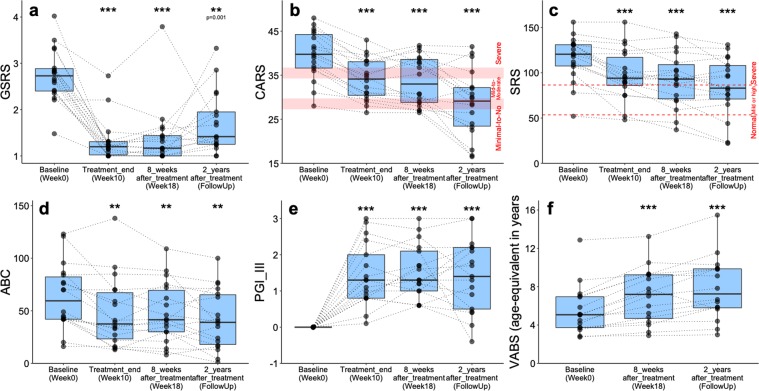
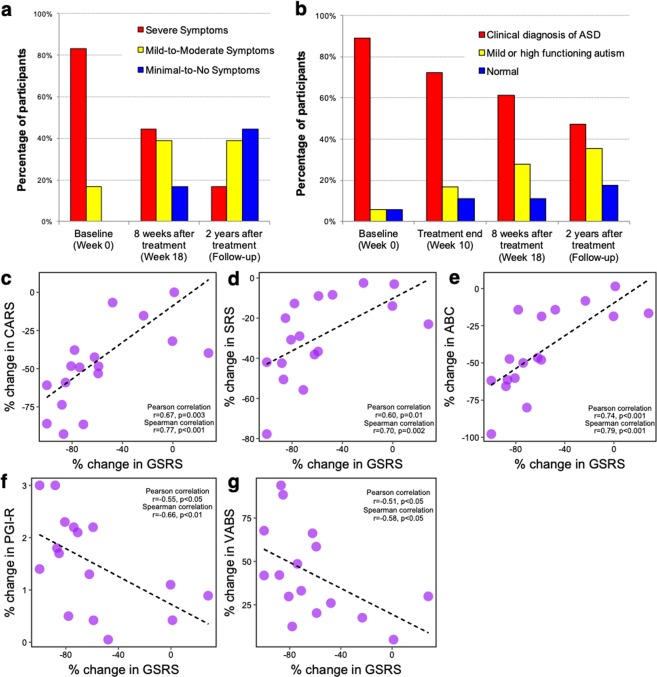
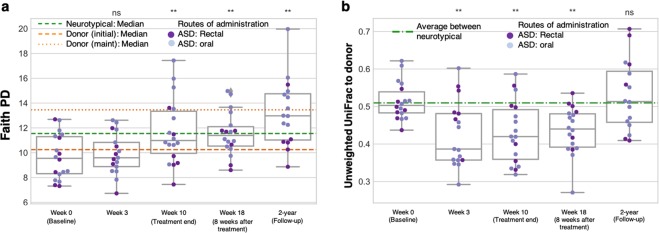
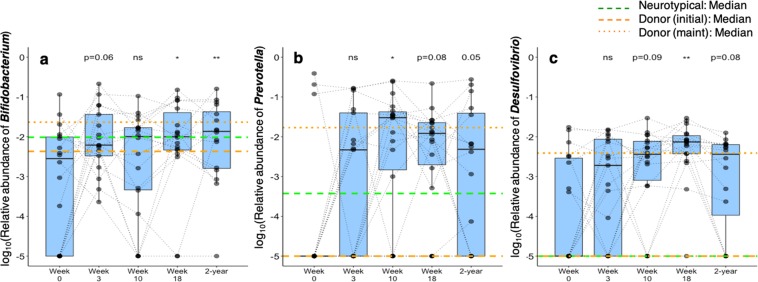
Many studies have reported abnormal gut microbiota in individuals with Autism Spectrum Disorders (ASD), suggesting a link between gut microbiome and autism-like behaviors. Modifying the gut microbiome is a potential route to improve gastrointestinal (GI) and behavioral symptoms in children with ASD, and fecal microbiota transplant could transform the dysbiotic gut microbiome toward a healthy one by delivering a large number of commensal microbes from a healthy donor. We previously performed an open-label trial of Microbiota Transfer Therapy (MTT) that combined antibiotics, a bowel cleanse, a stomach-acid suppressant, and fecal microbiota transplant, and observed significant improvements in GI symptoms, autism-related symptoms, and gut microbiota. Here, we report on a follow-up with the same 18 participants two years after treatment was completed. Notably, most improvements in GI symptoms were maintained, and autism-related symptoms improved even more after the end of treatment. Important changes in gut microbiota at the end of treatment remained at follow-up, including significant increases in bacterial diversity and relative abundances of Bifidobacteria and Prevotella . Our observations demonstrate the long-term safety and efficacy of MTT as a potential therapy to treat children with ASD who have GI problems, and warrant a double-blind, placebo-controlled trial in the future.
Overview
The claims and statistics of this paper haven’t been checked yet.
Free: it reads the open-access text and checks the first 5 claims that cite a source we can check. Create a free account to check every claim.
Integrity signals
Registry
Cites
Statistics
Figures
Verification
Claims the paper makes
The claims and statistics of this paper haven’t been checked yet.
Free: it reads the open-access text and checks the first 5 claims that cite a source we can check. Create a free account to check every claim.
Claims other papers make about this one
Each is checked against this paper’s own text: does it say what the citing paper says it does?
The cited source says what the claim attributes to it.
In the citing paper
“In a two-year follow-up study, Kang et al. further assessed the long-term effects of MTT in the same group of 18 children with ASD. The majority of GI symptom improvements were maintained, while autism-related behaviors continued to show positive progress after treatment. Significant gut microbiota changes observed at the end of treatment, including increased bacterial diversity and higher levels”
From The Gut–Brain–Microbiota Connection and Its Role in Autism Spectrum Disorders (2025) · cites this paper as [135]
In the citing paper
“Microbial therapeutics, including fecal microbiota transplants (FMTs), bacterial consortia, and probiotics, are increasingly being tested in patients with Clostridium difficile infections and other gastrointestinal (GI) disorders (Allegretti et al., 2019), including inflammatory bowel disease (IBD) and, more recently, non-GI indications such as autism (Kang et al., 2019) and cancer (Mullard, 2018)”
From Gut microbiome stability and dynamics in healthy donors and patients with non-gastrointestinal cancers (2021) · cites this paper as Kang et al., 2019
In the citing paper
“These findings highlight the long-term safety and efficacy of MTT as a potential therapeutic option for children with ASD experiencing GI issues [135].”
From The Gut–Brain–Microbiota Connection and Its Role in Autism Spectrum Disorders (2025) · cites this paper as [135]
In the citing paper
“Similarly, probiotic therapies and FMT have demonstrated efficacy in enhancing microbial diversity, reducing digestive issues, and improving behavioral functioning [134,135,145].”
From The Gut–Brain–Microbiota Connection and Its Role in Autism Spectrum Disorders (2025) · cites this paper as [135]
In the citing paper
“microbiota transfer therapy, which changes the intestinal microenvironment, has improved behavioral problems and gastrointestinal symptoms in children with ASD”
5 more claims about this paper
Create a free account to see every claim other papers make about this one.
Self-check
Percentages, sums and reported differences re-computed from the paper’s own numbers.
The self-check needs the paper’s full text.
Citations
Cites
1 retracted
Saad, K., Abdel‐Rahman, A. A., Elserogy, Y. M., Al‐Atram, A. A., El‐Houfey, A. A., Othman, H. A. K., Bjørklund, G., Jia, F., Urbina, M. A., Abo‐Elela, M. G. M., et al. (2018) · Journal of Child Psychology and Psychiatry · doi:10.1111/jcpp.12652 · Cited by 99
RetractedMAFFT Multiple Sequence Alignment Software Version 7: Improvements in Performance and Usability
Katoh, K., & Standley, D. M. (2013) · Molecular Biology and Evolution · doi:10.1093/molbev/mst010 · Cited by 46,209
DADA2: High–resolution sample inference from Illumina amplicon data
Callahan, B. J., McMurdie, P. J., Rosen, M. J., Han, A. W., Johnson, A. J. A., & Holmes, S. P. (2016) · Nature Methods · doi:10.1038/nmeth.3869 · Cited by 35,698
QIIME allows analysis of high-throughput community sequencing data
Caporaso, J. G., Kuczynski, J., Stombaugh, J., Bittinger, K., Bushman, F. D., Costello, E. K., Fierer, N., Peña, A. G., Goodrich, J. K., Gordon, J. I., et al. (2010) · Nature Methods · doi:10.1038/nmeth.f.303 · Cited by 34,887
Self-citationThe SILVA ribosomal RNA gene database project: improved data processing and web-based tools
Quast, C., Pruesse, E., Yilmaz, P., Gerken, J., Schweer, T., Yarza, P., Peplies, J., & Glöckner, F. O. (2012) · Nucleic Acids Research · doi:10.1093/nar/gks1219 · Cited by 33,055
FastTree 2 – Approximately Maximum-Likelihood Trees for Large Alignments
Price, M. N., Dehal, P. S., & Arkin, A. P. (2010) · PLoS ONE · doi:10.1371/journal.pone.0009490 · Cited by 14,894
VSEARCH: a versatile open source tool for metagenomics
(2016) · doi:10.7717/peerj.2584 · Cited by 10,773
Nucleic acid techniques in bacterial systematics
Stackebrandt, E. S., & Goodfellow, M. (1991) · Wiley eBooks · Cited by 9,460
Ultra-high-throughput microbial community analysis on the Illumina HiSeq and MiSeq platforms
Caporaso, J. G., Lauber, C. L., Walters, W. A., Berg-Lyons, D., Huntley, J., Fierer, N., Owens, S. M., Betley, J., Fraser, L., Bauer, M., et al. (2012) · The ISME Journal · doi:10.1038/ismej.2012.8 · Cited by 8,839
Self-citationUniFrac: a New Phylogenetic Method for Comparing Microbial Communities
Lozupone, C., & Knight, R. (2005) · Applied and Environmental Microbiology · doi:10.1128/aem.71.12.8228-8235.2005 · Cited by 8,227
Cited by
Items 301–400 of 867
Dossaji, Z., Khattak, A., Tun, K. M., Hsu, M., Batra, K., & Hong, A. S. (2023) · Microorganisms · doi:10.3390/microorganisms11030806 · Cited by 22
“In the same follow-up study, only 17% were rated as severe, 39% were in the mild to moderate range, and 44% of participants were below the ASD diagnostic cut-off scores [9].”
BackgroundInfluentialThe hidden threat: Environmental toxins and their effects on gut microbiota
Bhardwaj, G., Riadi, Y., Afzal, M., Bansal, P., Kaur, H., Deorari, M., Tonk, R. K., Almalki, W. H., Kazmi, I. A., Alzarea, S. I., et al. (2024) · Pathology - Research and Practice · doi:10.1016/j.prp.2024.155173 · Cited by 22
Jyonouchi, H. (2024) · Frontiers in Psychiatry · doi:10.3389/fpsyt.2024.1333717 · Cited by 22
The holobiont mind: A bridge between 4E-cognition and the microbiome
Palacios-Garcia, I., & Parada, F. J. (2021) · doi:10.31234/osf.io/thuvc · Cited by 21
Hassib, L., Kanashiro, A., Pedrazzi, J. F. C., Vercesi, B. F., Higa, S., Arruda, Í., Soares, Y., de Souza, A. P., Barichello, T., Guimarães, F. S., et al. (2025) · Progress in Neuro-Psychopharmacology and Biological Psychiatry · doi:10.1016/j.pnpbp.2025.111385 · Cited by 22
The microbiome-gut-brain axis in nutritional neuroscience
Schellekens, H., Ribeiro, G., Cuesta‐Marti, C., & Cryan, J. F. (2022) · Nutritional Neuroscience · doi:10.1080/1028415x.2022.2128007 · Cited by 21
“FMT in several neurological disorders [99,100], including autism spectrum disorder [101] and amyotrophic lateral sclerosis [100,102].”
Microbial metabolites regulate social novelty via CaMKII neurons in the BNST
Liou, C.-W., Cheng, S., Yao, T.-H., Lai, T.-T., Tsai, Y.-H., Chien, C.-W., Kuo, Y., Chou, S.-H., Hsu, C., & Wu, W. (2023) · Brain Behavior and Immunity · doi:10.1016/j.bbi.2023.06.029 · Cited by 21
Impact of captivity and natural habitats on gut microbiome in Epinephelus akaara across seasons
Sun, H., Chen, F., Zheng, W., Huang, Y., Peng, H., Hao, H., & Wang, K. (2024) · BMC Microbiology · doi:10.1186/s12866-024-03398-y · Cited by 21
An Update on Microbial Interventions in Autism Spectrum Disorder with Gastrointestinal Symptoms
Moreno, R. J., & Ashwood, P. (2024) · International Journal of Molecular Sciences · doi:10.3390/ijms252313078 · Cited by 21
Bendriss, G., Al‐Ali, D., Shafiq, A., Laswi, I., Mhaimeed, N., Salameh, M. A., Burney, Z. A., Pillai, K. V., Châari, A., Zakaria, D., et al. (2020) · Qatar medical journal · doi:10.5339/qmj.2020.47 · Cited by 21
“However, the clinical trial conducted by Kand et al.(21) revealed unprecedented results on the benefits of fecal transplants in autism, and the number of studies on the role of microbiota in Qatar and worldwide is increasing (Figure 1).”
Autism Spectrum Disorder Initiation by Inflammation-Facilitated Neurotoxin Transport
Roe, K. (2022) · Neurochemical Research · doi:10.1007/s11064-022-03527-x · Cited by 21
“It should also be added that multiple studies have used manipulation of the gut microbiota by fecal microbiota transplantation (FMT) to deliver a substantial number of commensal microbes from healthy donors as a promising therapy for the treatment of various diseases [26, 27].”
BackgroundInfluentialRole of oral and gut microbiota in childhood obesity
Wang, W., Yan, Y., Yu, F., Zhang, W., & Su, S. (2023) · Folia Microbiologica · doi:10.1007/s12223-023-01033-3 · Cited by 20
“In addition, FMT has also been gradually used in treating diseases such as systemic sclerosis and autism (Fretheim et al. 2020; Kang et al. 2019).”
MethodChatterjee, I., Getselter, D., Ghanayem, N., Harari, R., Davis, L., Bel, S., & Elliott, E. (2023) · Translational Psychiatry · doi:10.1038/s41398-023-02611-2 · Cited by 20
“Microbial transfer has also been found to alleviate certain autism-related symptoms in individuals with autism [40].”
BackgroundWu, Y., & Su, Q. (2024) · Nutrients · doi:10.3390/nu16152382 · Cited by 20
“Ac-cordingly, Kang et al. [92] conducted a follow-up study to evaluate the long-term efficacy of FMT.”
BackgroundChevalier, C., Tournier, B. B., Marizzoni, M., Park, R., Paquis, A., Ceyzériat, K., Badina, A. M., Lathuilière, A., Saleri, S., Cillis, F. D., et al. (2025) · Genes Brain & Behavior · doi:10.1111/gbb.70012 · Cited by 20
Impact of Early Feeding: Metagenomics Analysis of the Infant Gut Microbiome
Guglielmo, M. D. D., Franke, K., Robbins, A. K., & Crowgey, E. L. (2022) · Frontiers in Cellular and Infection Microbiology · doi:10.3389/fcimb.2022.816601 · Cited by 19
Mohamed, D. I., Nahas, H. H. A., Elshaer, A. M., El-Waseef, D. A. E.-D. A., El-Kharashi, O. A., Mohamed, S. M. Y., Sabry, Y. G., Almaimani, R. A., Almasmoum, H. A., Altamimi, A. S. A., et al. (2023) · Frontiers in Cellular Neuroscience · doi:10.3389/fncel.2023.1268126 · Cited by 19
Food, nutrition, and autism: from soil to fork
Maitin‐Shepard, M., O’Tierney-Ginn, P., Kraneveld, A. D., Lyall, K., Fallin, M. D., Arora, M., Fasano, A., Mueller, N. T., Wang, X., Caulfield, L. E., et al. (2024) · American Journal of Clinical Nutrition · doi:10.1016/j.ajcnut.2024.04.020 · Cited by 20
The early life exposome and autism risk: a role for the maternal microbiome?
Gesù, C. M. D., & Buffington, S. A. (2024) · Gut Microbes · doi:10.1080/19490976.2024.2385117 · Cited by 21
“A two-year follow-up study 137 aimed at assessing the long-term results of MTT showed significant improvements not only gastrointestinal symptoms but also in core autism symptoms for all 18 subjects.”
BackgroundThe Microbiome–Genetics Axis in Autism Spectrum Disorders: A Probiotic Perspective
Mihailovich, M., Tolinački, M., Bajić, S. S., Leštarević, S., Pejovic-Milovancevic, M., & Golić, N. (2024) · International Journal of Molecular Sciences · doi:10.3390/ijms252212407 · Cited by 20
Liber, A., & Więch, M. (2025) · Nutrients · doi:10.3390/nu17132250 · Cited by 20
“For the study by Kang et al., we identified two reports: one presenting results after the intervention [21] and the other with a two-year follow-up post-treatment [25].”
Davis, T. L., Dirks, B., Carnero, E. Á., Corbin, K. D., Krakoff, J., Parrington, S., Lee, D., Smith, S. R., Rittmann, B. E., Krajmalnik‐Brown, R., et al. (2020) · Journal of Nutrition · doi:10.1093/jn/nxaa321 · Cited by 19
Self-citationThe gut microbiota and nervous system: Age-defined and age-defying
Madison, A. A., & Kiecolt‐Glaser, J. K. (2021) · Seminars in Cell and Developmental Biology · doi:10.1016/j.semcdb.2020.12.009 · Cited by 19
“with autism, GI and autism symptoms significantly improved [128].”
BackgroundResource Competition and Host Feedbacks Underlie Regime Shifts in Gut Microbiota
Guittar, J. L., Koffel, T., Shade, A. L., Klausmeier, C. A., & Litchman, E. (2021) · The American Naturalist · doi:10.1086/714527 · Cited by 19
The importance of nutritional management and education in the treatment of autism
Mandecka, A., & Regulska−Ilow, B. (2022) · Roczniki Państwowego Zakładu Higieny · doi:10.32394/rpzh.2022.0218 · Cited by 19
Hot topics on fecal microbiota transplantation for the treatment of inflammatory bowel disease
Zhang, X., Ishikawa, D., Ohkusa, T., Fukuda, S., & Nagahara, A. (2022) · Frontiers in Medicine · doi:10.3389/fmed.2022.1068567 · Cited by 19
“Not only the transmission of pathogens can occur during FMT, as the impact of intestinal microbiota on patients with mental and endocrine diseases has been reported (9, 11).”
BackgroundGilbert, S. F. (2022) · Natural Sciences · doi:10.1002/ntls.20220041 · Cited by 19
Potential Benefits of Anthocyanins in Chronic Disorders of the Central Nervous System
Panchal, S. K., & Brown, L. (2022) · Molecules · doi:10.3390/molecules28010080 · Cited by 19
“The importance of the gut microbiota is shown by Microbiota Transfer Treatment as a potential therapy for ASD; in 18 children, follow-up after 2 years showed that improvements in gastro-intestinal symptoms were maintained while further improvements in autism-related symptoms were measured [45].”
BackgroundGuo, P., Yang, X., Guo, X., Yang, H., Pan, J., & Li, Y. (2023) · Brain Behavior and Immunity · doi:10.1016/j.bbi.2023.02.019 · Cited by 19
New insights on gut microbiome and autism
Wan, Y., Su, Q., & Ng, S. C. (2024) · Trends in Molecular Medicine · doi:10.1016/j.molmed.2024.06.010 · Cited by 18
The dynamics of the midgut microbiome in Aedes aegypti during digestion reveal putative symbionts
Salgado, J. F. M., Premkrishnan, B. N. V., Oliveira, E. L., Vettath, V. K., Goh, F. G., Hou, X., Drautz‐Moses, D. I., Cai, Y., Schuster, S. C., & Junqueira, A. C. M. (2024) · PNAS Nexus · doi:10.1093/pnasnexus/pgae317 · Cited by 18
Microbiome and Brain Development: A Tale of Two Systems
Cryan, J. F. (2025) · Annals of Nutrition and Metabolism · doi:10.1159/000544950 · Cited by 18
Mikami, K., Watanabe, N., Tochio, T., Kimoto, K., Akama, F., & Yamamoto, K. (2023) · Microorganisms · doi:10.3390/microorganisms11041008 · Cited by 18
“These same 18 patients were followed up with for 2 years after completion [86].”
BackgroundGut Microbiota and Brain Alterations after Refeeding in a Translational Anorexia Nervosa Rat Model
Trinh, S., Kogel, V., Kneisel, L., Müller-Limberger, E., Herpertz‐Dahlmann, B., Beyer, C., & Seitz, J. (2023) · International Journal of Molecular Sciences · doi:10.3390/ijms24119496 · Cited by 19
“Lately, associations between gut microbiota and psychiatric illnesses have been intensively studied and provided evidence for major perturbations in the microbial composition in, for example, patients with autism spectrum disorders [4] or major depression [5,6].”
BackgroundTargeted Biomedical Treatment for Autism Spectrum Disorders
Pacheva, I. H., & Ivanov, I. S. (2019) · Current Pharmaceutical Design · doi:10.2174/1381612825666191205091312 · Cited by 18
Pandina, G., Ring, R. H., Bangerter, A., & Ness, S. L. (2020) · Child and Adolescent Psychiatric Clinics of North America · doi:10.1016/j.chc.2019.12.004 · Cited by 18
Dias, P. A. R., Martins, E. R., Guazzelli, J. I., Póvoa, K. C. C., Silva, L. M. B. D., Araújo, L. B., Gois, M. G. D. A., Leite, M. D. P., Rodrigues, V. M. L., & Aguiar, M. V. A. (2021) · Revista Eletrônica Acervo Saúde · doi:10.25248/reas.e6582.2021 · Cited by 17
Topic modeling for multi-omic integration in the human gut microbiome and implications for Autism
Tataru, C. A., Peras, M., Rutherford, E. M., Dunlap, K., Yin, X., Chrisman, B., DeSantis, T. Z., Wall, D. P., Iwai, S., & David, M. M. (2023) · Scientific Reports · doi:10.1038/s41598-023-38228-0 · Cited by 17
“Fecal microbiota transplants in children with Autism have demonstrated some improvements in GI symptoms and a shift in Autism-associated behaviors Kang et al. ( 2017 , 2019).”
BackgroundYang, J., He, L., Dai, S. Y., Zheng, H., Cui, X., Ou, J., & Zhang, X. (2024) · Frontiers in Nutrition · doi:10.3389/fnut.2023.1294057 · Cited by 17
Prince, N., Marzal, L. N. P., Roussin, L., Monnoye, M., Philippe, C., Maximin, E., Ahmed, S., Salenius, K., Lin, J., Autio, R., et al. (2025) · Gut Microbes · doi:10.1080/19490976.2024.2447822 · Cited by 18
“8,9 Such evidence supports the theory that changes in gut microbial communities might play an important role in the pathophysiology of ASD.”
Ast, H. K., Hammer, M., Zhang, S., Bruton, A. M., Hatsu, I. E., Leung, B. M. Y., McClure, R., Srikanth, P., Farris, Y., Norby-Adams, L., et al. (2025) · Gut Microbes · doi:10.1080/19490976.2025.2463570 · Cited by 17
“28 In research on individuals with autism spectrum disorder (ASD), a neurodevelopmental condition which often co-occurs with ADHD, 29 symptom improvement occurred after interventions like probiotics, 30,31 fecal microbial transplant, 32 and dietary changes.”
Kushak, R. I., Sengupta, A., & Winter, H. S. (2021) · Developmental Medicine & Child Neurology · doi:10.1111/dmcn.15052 · Cited by 17
“This favorable effect of fecal transplant was observed even 2 years after treatment.(46) However, this study was singleblinded.”
BackgroundSerra, I., Manusama, O. R., Kaiser, F. M. P., Floriano, I. I., Wahl, L. F., van der Zalm, C., IJspeert, H., van Hagen, P. M., van Beveren, N. J. M., Arend, S. M., et al. (2021) · Brain Behavior & Immunity - Health · doi:10.1016/j.bbih.2021.100377 · Cited by 17
Wang, X., Xing, Y., Ji, Y., Xi, H., Liu, X., Yang, L., Lei, L., Han, W., & Gu, J. (2022) · Frontiers in Microbiology · doi:10.3389/fmicb.2022.944495 · Cited by 17
Gut microbiome dysbiosis drives metabolic dysfunction in Familial dysautonomia
Cheney, A. M., Costello, S. M., Pinkham, N. V., Waldum, A., Broadaway, S. C., Cotrina-Vidal, M. L., Mergy, M. A., Tripet, B., Kominsky, D. J., Grifka‐Walk, H. M., et al. (2023) · Nature Communications · doi:10.1038/s41467-023-35787-8 · Cited by 17
Zarezadeh, M., Mahmoudinezhad, M., Hosseini, B., Khorraminezhad, L., Razaghi, M., Alvandi, E., & Saedisomeolia, A. (2023) · Clinical Nutrition · doi:10.1016/j.clnu.2023.06.014 · Cited by 17
Gut microbiota and autism spectrum disorders: where do we stand?
Zyoud, S. H., Shakhshir, M. H., Abushanab, A. S., Koni, A. A., Shahwan, M. J., Jairoun, A. A., Taha, A. A., & Al‐Jabi, S. W. (2023) · Gut Pathogens · doi:10.1186/s13099-023-00575-8 · Cited by 17
Overall Rebalancing of Gut Microbiota Is Key to Autism Intervention
Lu, C. F., Rong, J., Fu, C., Wang, W., Xu, J. B., & Ju, X. (2022) · Frontiers in Psychology · doi:10.3389/fpsyg.2022.862719 · Cited by 18
Buitrago, M. V., Oliveira-Carvalho, R. D., Cardoso, V. N., Triviño-Valencia, J., Duque, L. M. S., Martínez-Díaz, V., Zabaleta, J., Galeano-Vanegas, N. F., & Galvis, C. A. N. (2025) · Pharmaceuticals · doi:10.3390/ph18091376 · Cited by 16
“This reduction may reflect a natural progression of dysbiosis in children with ASD over time, even in the absence of targeted intervention, consistent with previous reports describing microbiota instability in ASD cohorts [77,78].”
Taha, H. A., Issa, A., Muhanna, Z., Al-Shehab, M., Wadi, T., Awamleh, S., Ateiwi, Y. A., Abusido, M., & Berggren, V. (2025) · Frontiers in Microbiology · doi:10.3389/fmicb.2025.1648118 · Cited by 16
Suplementação de prebióticos e probióticos em crianças autistas: revisão integrativa
Brandão, T. L. S., Silva, J. C. L., Campos, S. É. D., & Francelino, J. O. (2022) · Research Society and Development · doi:10.33448/rsd-v11i1.24061 · Cited by 17
Dai, X.-C., Zhang, Y., Huang, Y., Wu, X., Fang, Y., Gao, Y., & Wang, F. (2022) · Experimental and Therapeutic Medicine · doi:10.3892/etm.2022.11758 · Cited by 16
Lu, X., Yang, R., Chen, Y., & Chen, D. (2024) · iScience · doi:10.1016/j.isci.2024.109174 · Cited by 16
Borrego-Ruiz, A., & Borrego, J. J. (2024) · SciBase neurology. · doi:10.52768/neurology/1018 · Cited by 16
“…10.7% to Multiple Sclerosis (MS) [64,72,80]; 7.1% to Alzheimer’s Dis - ease (AD) [73,78]; 7.1% to Autism Spectrum Disorder (ASD) [60,70]; 3.7% to amyotrophic lateral sclerosis (ALS) [86]; 3.7% to Anorexia Nervosa (AN) [67]; 3.7% to bipolar disorder [82]; 3.7% to epilepsy [59]; 3.7%…”
BackgroundInfluentialMamun, A. A., Geng, P., Wang, S., Shao, C., & Xiao, J. (2024) · Pharmacological Research · doi:10.1016/j.phrs.2024.107559 · Cited by 16
Bhusri, B., Sutheeworapong, S., Kittichotirat, W., Kusonmano, K., Thammarongtham, C., Lertampaiporn, S., Prommeenate, P., Praphanphoj, V., Kittitharaphan, W., Dulsawat, S., et al. (2025) · Scientific Reports · doi:10.1038/s41598-025-86740-2 · Cited by 16
LaPelusa, M. B., Donoviel, D. B., Branzini, S. E., Carlson, P. E., Culler, S. J., Cheema, A. K., Kaddurah‐Daouk, R., Kelly, D., de Cremoux, I., Knight, R. D., et al. (2021) · Microbiome · doi:10.1186/s40168-020-00951-5 · Cited by 16
Self-citationKarnachuk, O. V., Ikkert, O. P., Avakyan, M. R., Knyazev, Y. V., Volochaev, M. N., Zyusman, V. S., Panov, V. L., Kadnikov, V. V., Mardanov, A. V., & Ravin, N. V. (2021) · Microorganisms · doi:10.3390/microorganisms9122558 · Cited by 16
The effect of microbiome composition on impulsive and violent behavior: A systematic review
Langmajerová, M., Roubalová, R., Šebela, A., & Vevera, J. (2022) · Behavioural Brain Research · doi:10.1016/j.bbr.2022.114266 · Cited by 16
Ishikawa, D., Zhang, X., Nomura, K., Seki, N., Haraikawa, M., Haga, K., Shibuya, T., Kim, Y., & Nagahara, A. (2022) · Frontiers in Medicine · doi:10.3389/fmed.2022.779205 · Cited by 15
“As dysbiosis is correlated with neuropsychiatric disorders including depression and autism (gut-brain interaction) (33, 34), the Hamilton Depression Scale (HAMD) and Neuropsychiatric Inventory (NPI) will be used to assess psychiatric symptoms (Table 2A).”
MethodInter-kingdom communication and the sympoietic way of life
Gilbert, S. F. (2024) · Frontiers in Cell and Developmental Biology · doi:10.3389/fcell.2024.1427798 · Cited by 15
Troyer, E. A., Kohn, J. N., Ecklu-Mensah, G., Aleti, G., Rosenberg, D. R., & Hong, S. (2021) · Neuroscience & Biobehavioral Reviews · doi:10.1016/j.neubiorev.2021.02.034 · Cited by 15
Boeije‐Koppenol, E., Terveer, E. M., Vendrik, K. E. W., van Lingen, E., Verspaget, H. W., Keller, J. J., Kuijper, E. J., & Giltay, E. J. (2022) · Journal of Affective Disorders Reports · doi:10.1016/j.jadr.2022.100355 · Cited by 15
Lin, X., Zhou, R., Liang, D., Xia, L., Zeng, L., & Chen, X. (2022) · Frontiers in Psychiatry · doi:10.3389/fpsyt.2022.976827 · Cited by 15
“These changes were maintained 8 weeks after the end of the trial (46), and most of them were maintained after 2 years (47), indicating the long-term efficacy of MTT.”
BackgroundMicrobiota intestinal y trastornos del comportamiento mental
Guillot, C. C. (2020) · Revista cubana de pediatría · Cited by 15
Abdoli, A., & Ardakani, H. M. (2019) · Metabolic Brain Disease · doi:10.1007/s11011-019-00466-5 · Cited by 15
The role of the gut microbiota in the pathophysiology of mental and neurological disorders
Pusceddu, M. M., & Bas-Prior, J. M. D. (2020) · Psychiatric Genetics · doi:10.1097/ypg.0000000000000255 · Cited by 15
“To ascertain the long-lasting effects of MTT in ASD, the 18 participants to the open-label trial were reevaluated 2 years after (Kang et al., 2019).”
BackgroundA Sympoietic View of Life: Gaia as a Holobiont CommunityPreprint
Gilbert, S. F. (2023) · Preprints.org · doi:10.20944/preprints202309.1072.v1 · Cited by 15
Li, Y., Zhang, Y., Luo, X., Meng, Y., Zhong, Z., Zheng, H., & Yang, Y. (2023) · Frontiers in Microbiology · doi:10.3389/fmicb.2023.1278162 · Cited by 14
Association of gut dysbiosis with first‑episode psychosis (Review)
Theleritis, C. G., Stefanou, M., Demetriou, M., Alevyzakis, E., Τriantafyllou, Κ., Smyrnis, N., Spandidos, D. A., & Rizos, E. N. (2024) · Molecular Medicine Reports · doi:10.3892/mmr.2024.13254 · Cited by 14
“The treatment of psychosis could entail specific dietary interventions, along with the use of probiotics, prebiotics and fecal microbiota transplantation (10,11).”
BackgroundNeutrophils in the Focus: Impact on Neuroimmune Dynamics and the Gut–Brain Axis
Kršek, A., & Batičić, L. (2024) · Gastrointestinal Disorders · doi:10.3390/gidisord6030039 · Cited by 14
“Fecal transplantation has shown long-term beneficial effects on both intestinal and behavioral symptoms [483].”
BackgroundLu, H., Nguyen, N. T. K., Panwar, R., Lin, C., Cross, T.-W., & Lin, S. (2025) · Autism Research · doi:10.1002/aur.70091 · Cited by 14
Zhang, D., Zhou, M., Qiu, Y., Xu, H., Liu, H., Liu, Y., & Xie, L. (2025) · Frontiers in Aging Neuroscience · doi:10.3389/fnagi.2025.1642240 · Cited by 14
Hazan, S., Spradling‐Reeves, K. D., Papoutsis, A. J., & Walker, S. J. (2020) · Children · doi:10.3390/children7120255 · Cited by 14
Analyzing the Role of Gut Microbiota on the Onset of Autoimmune Diseases Using TNFΔARE Murine Model
Edwards, V., Smith, D., Meylan, F., Tiffany, L. J., Poncet, S., Wu, W. W., Phue, J., Santana-Quintero, L. V., Clouse, K. A., & Gabay, O. (2021) · Microorganisms · doi:10.3390/microorganisms10010073 · Cited by 14
Donor Screening Revisions of Fecal Microbiota Transplantation in Patients with Ulcerative Colitis
Zhang, X., Ishikawa, D., Nomura, K., Fukuda, N., Haraikawa, M., Haga, K., Shibuya, T., Mita, T., & Nagahara, A. (2022) · Journal of Clinical Medicine · doi:10.3390/jcm11041055 · Cited by 14
Liu, J., Liu, C., Gao, Z., Zhou, L., Gao, J., Luo, Y., Liu, T., & Fan, X. (2022) · Frontiers in Cellular and Infection Microbiology · doi:10.3389/fcimb.2022.911259 · Cited by 14
Maturation, Morphology, and Function: The Decisive Role of Intestinal Flora on Microglia: A Review
Liu, L., Tong, F., Li, H., Bin, Y., Ding, P., Peng, L., Liu, Z., & Dong, X. (2023) · Journal of Integrative Neuroscience · doi:10.31083/j.jin2203070 · Cited by 14
“Transplantation of fecal microbiota from the neurotypical control donors group into ASD patients significantly improved irritability, communication skills and sociability [92,93].”
BackgroundSignal Pathways and Intestinal Flora through Trimethylamine N-oxide in Alzheimer's Disease
Zhang, Y., & Jian, W. (2023) · Current Protein and Peptide Science · doi:10.2174/1389203724666230717125406 · Cited by 14
Biodiversity of Marine Ecosystems
El-Regal, M. A. A., & Satheesh, S. (2023) · Marine ecology · doi:10.2174/9789815051995123030003 · Cited by 14
He, X., Yang, Y., Zhou, S., Wei, Q., Zhou, H., Tao, J., Yang, G., & You, M. (2024) · Ecotoxicology and Environmental Safety · doi:10.1016/j.ecoenv.2024.117060 · Cited by 14
Autistic Disorder: A 20 Year Chronicle
Skinner, C. D., Pauly, R., Skinner, S. A., Schroer, R. J., Simensen, R. J., Taylor, H. A., Friez, M. J., DuPont, B. R., & Stevenson, R. E. (2020) · Journal of Autism and Developmental Disorders · doi:10.1007/s10803-020-04568-3 · Cited by 14
What is unknown in using microbiota as a therapeutic?
Sung, J. J. �., & Wong, S. H. (2021) · Journal of Gastroenterology and Hepatology · doi:10.1111/jgh.15716 · Cited by 14
Kurokawa, S., Nomura, K., Miyaho, K., Sanada, K., Iwamoto, C., Naraoka, M., Yoneda, S., Tomizawa, Y., Sawae, Y., Iwanaga, R., et al. (2021) · Autism Research · doi:10.1002/aur.2549 · Cited by 13
“…among children with ASD led to significant improvements in ABC scores, GI symptoms, autism-related symptoms, and gut microbiota including significant increases in bacterial diversity and relative abundances of Bifidobacteria and Prevotella, even after a 2-year followup (Kang et al., 2019).”
BackgroundLi, S., Zhang, N., Wang, L., Zhang, H.-L., & Wang, X. (2024) · World Journal of Psychiatry · doi:10.5498/wjp.v14.i7.1095 · Cited by 13
Gut microbiota mediates the beneficial effects of exercise on autism-like behaviors
Zhong, J., Zhu, B., Zou, Z., Li, Y., Feng, Y., Ke, W., & Hou, X. (2026) · BMC Microbiology · doi:10.1186/s12866-025-04632-x · Cited by 13
“Moreover, the results of the follow-up two years later showed that this improvement effect still persisted [10].”
Lipids from gut microbiota: pursuing a personalized treatment
Carneiro, P. V., Montenegro, N. D. A., Lana, A. J., Amato, A. A., & Santos, G. M. (2022) · Trends in Molecular Medicine · doi:10.1016/j.molmed.2022.06.001 · Cited by 13
Liang, S., Wang, L., Wu, X., Hu, X., Wang, T., & Jin, F. (2023) · Frontiers in Nutrition · doi:10.3389/fnut.2022.957688 · Cited by 14
Zhu, D., Jin, X., Guo, P., Sun, Y., Zhou, L., Yan, Q., Shen, W., & Ji, G. (2023) · Evidence-based Complementary and Alternative Medicine · doi:10.1155/2023/5993628 · Cited by 13
RetractedHolobiont Development: Embryology and Ecological Succession
Gilbert, S. F. (2023) · Human Development · doi:10.1159/000534203 · Cited by 13
Bu, L., Wang, C., Bai, J., Song, J., Zhang, Y., Chen, H., & Suo, H. (2024) · Food & Function · doi:10.1039/d3fo02307a · Cited by 13
Correlating the Gut Microbiome to Health and Disease
Marques, T. M., Mall, J. G., Forsgård, R. A., Wall, R., Brummer, R. J., & de Vos, W. M. (2024) · Elsevier eBooks · doi:10.1016/b978-0-323-99971-7.00010-2 · Cited by 13
Ahmadi, S., Hasani, A., Khabbaz, A., Poortahmasebi, V., Hosseini, S., Yasdchi, M., Mehdizadehfar, E., Mousavi, Z. B., Hasani, R., Nabizadeh, E., et al. (2024) · Biogerontology · doi:10.1007/s10522-024-10136-4 · Cited by 13
“Particular alterations in gut flora were also noted (Kang et al. 2017; Kang et al. 2019; Zhao et al. 2019; Ward et al. 2016; Urbonas and Cervinskiene 2018; Li et al. 2021) (Supplementary Table 2–4).”
Banerjee, A., Pradhan, L. K., Sahoo, P. K., Jena, K. K., Chauhan, N. R., Chauhan, S., & Das, S. K. (2021) · Archives of Microbiology · doi:10.1007/s00203-021-02276-9 · Cited by 14
Lombardi, M., & Troisi, J. (2021) · Nutrients · doi:10.3390/nu13103492 · Cited by 13
“Furthermore, the alterations in gut microbiome composition, with higher levels of Bifidobacterium and increased bacterial diversity, persisted after two years [70].”
BackgroundPascual, F., Camilli, S., Lockey, R. F., & Kolliputi, N. (2023) · American Journal of Physiology-Gastrointestinal and Liver Physiology · doi:10.1152/ajpgi.00221.2022 · Cited by 13
A reappraisal on amyloid cascade hypothesis: The role of chronic infection in Alzheimer’s disease
Phuna, Z. X., & Madhavan, P. (2023) · International Journal of Neuroscience · doi:10.1080/00207454.2022.2045290 · Cited by 12
“These findings suggest long-term safety and efficacy of MTT [186] The evidence above suggested the effectiveness and benefit of FMT against neurological disorders by ameliorating the gut dysbiosis.”
BackgroundYadav, A., Tadas, M., Kale, M. B., Wankhede, N. L., Umekar, M. J., Kotagale, N. R., & Taksande, B. G. (2025) · Physiology & Behavior · doi:10.1016/j.physbeh.2025.114989 · Cited by 13
Emerging roles for microglia and microbiota in the development of social circuits
Smith, C. J. W. (2021) · Brain Behavior & Immunity - Health · doi:10.1016/j.bbih.2021.100296 · Cited by 13
“This highlights the importance of identifying speci fi c bacterial taxa that might prove ef fi cacious in the amelioration of ASD symptoms.”
Influential
Metadata
- Authors
- Kang, D.-W., Adams, J. B., Coleman, D. M., Pollard, E. L., Maldonado, J., McDonough-Means, S., Caporaso, J. G., & Krajmalnik-Brown, R.
- Affiliations
- Arizona State University (US)
- Northern Arizona University (US)
- ORCID
- Venue
- Scientific Reports
- Published
- 2019-04-09
- Volume
- 9
- Issue
- 1
- Pages
- 5821-5821
- ISSN
- 2045-2322 (ISSN-L)
- PMC
- PMC6456593
- OpenAlex
- W2936474142
- Semantic Scholar
- 7ebabdb2344e27104d54862265ff12f0f6ed29c8
- Cited by
- 749
- References
- 54
- Citations by year
- 2026: 60 · 2025: 108 · 2024: 102 · 2023: 105 · 2022: 141 · 2021: 111 · 2020: 85 · 2019: 35
- FWCI
- 30.78
- Type
- journal article
- Language
- en
- Open access
- gold
- doi.org
- Licence
- cc-by
- creativecommons.org/licenses/by/4.0 (tdm)
- creativecommons.org/licenses/by/4.0 (vor)
- Locations
- Scientific Reports (publishedVersion, cc-by)
- Europe PMC (PubMed Central) (publishedVersion, cc-by)
- PubMed Central (publishedVersion, cc-by)
- PubMed (publishedVersion)
- DOAJ (DOAJ: Directory of Open Access Journals) (submittedVersion)
- Funders
- This work was supported by Finch Therapeutics and the Arizona Board of Regents.
- Topics
- Life Sciences › Biochemistry, Genetics and Molecular Biology › Molecular Biology › Gut microbiota and health
- Life Sciences › Neuroscience › Cognitive Neuroscience › Autism Spectrum Disorder Research
- Health Sciences › Medicine › Gastroenterology › Gastrointestinal motility and disorders
- Keywords
- autism spectrum disorder, fecal microbiota transplantation, gut microbiota, gastrointestinal symptoms, long-term follow-up, Bifidobacterium, Prevotella, bacterial diversity, children, antibiotic therapy, bowel preparation
- MeSH terms
- Gastrointestinal Microbiome, Fecal Microbiota Transplantation, Autistic Disorder, Bifidobacterium, Child, Female, Follow-Up Studies, Gastrointestinal Diseases, Humans, Male, Prevotella, Gastrointestinal Tract, Dysbiosis
About these checks
Registry, retraction, Cites and statistics results are computed, not judged, with one exception: a printed reference that no index lists is read once by a model before it counts as a citation error. Claims are extracted by a model and kept only when their quote appears verbatim in the text; each cited source is then checked, with a model’s help, for whether it says what the claim relies on. Those verdicts can be wrong — read the claim’s quote and the cited source before relying on one.
Statistics and arithmetic are recomputed, not judged.
Confidence bands are shown only for fields calibrated on our annotated test set. None is calibrated yet, so no band is shown.
What counts as a claim ›How we measure confidence ›How we check this ›
Are you an author, or do you see a problem with this page? Request a review
Data sources
Bibliographic data: Semantic Scholar, OpenAlex, Crossref.
Contains information from the Semantic Scholar Academic Graph Datasets, made available under the ODC Attribution License (ODC-BY 1.0).
Semantic Scholar’s data is described in: Kinney, R., et al. (2023). The Semantic Scholar Open Data Platform. arXiv:2301.10140.
