

Long-term benefit of Microbiota Transfer Therapy on autism symptoms and gut microbiota
Open accessThe DOI matches its Crossref record; 54 of the 54 references it cites were found in a registry or an index.
Abstract
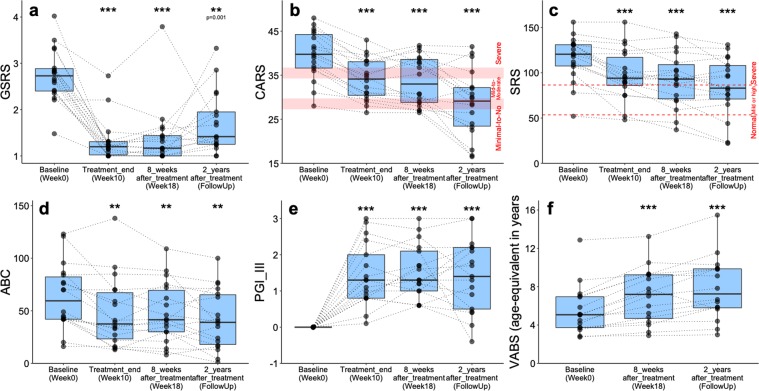
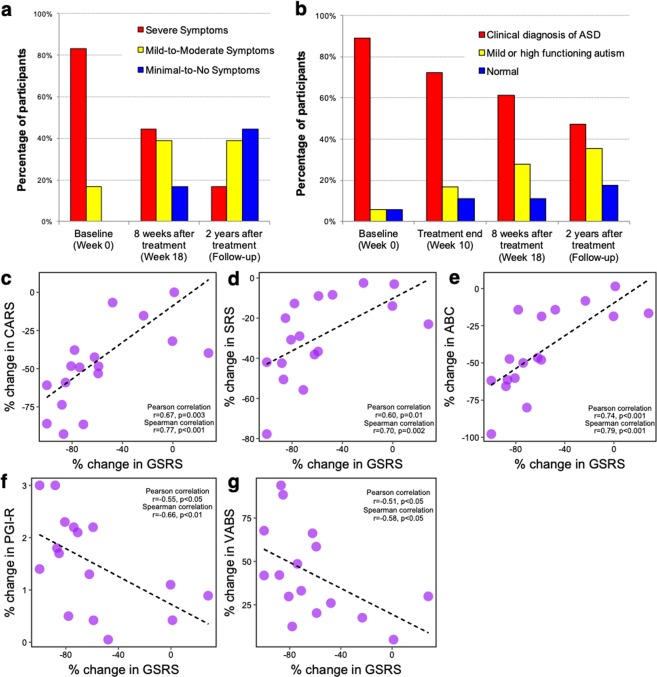
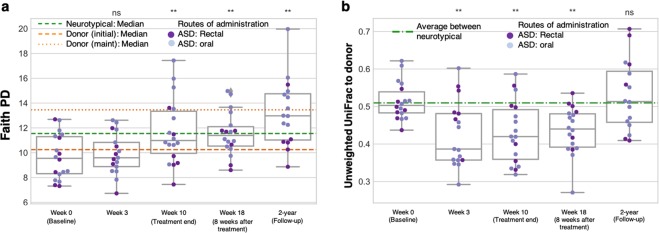
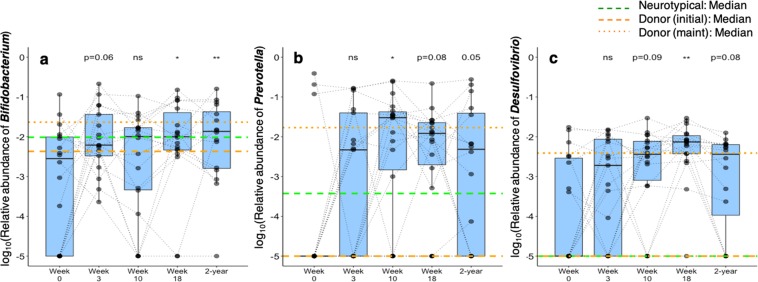
Many studies have reported abnormal gut microbiota in individuals with Autism Spectrum Disorders (ASD), suggesting a link between gut microbiome and autism-like behaviors. Modifying the gut microbiome is a potential route to improve gastrointestinal (GI) and behavioral symptoms in children with ASD, and fecal microbiota transplant could transform the dysbiotic gut microbiome toward a healthy one by delivering a large number of commensal microbes from a healthy donor. We previously performed an open-label trial of Microbiota Transfer Therapy (MTT) that combined antibiotics, a bowel cleanse, a stomach-acid suppressant, and fecal microbiota transplant, and observed significant improvements in GI symptoms, autism-related symptoms, and gut microbiota. Here, we report on a follow-up with the same 18 participants two years after treatment was completed. Notably, most improvements in GI symptoms were maintained, and autism-related symptoms improved even more after the end of treatment. Important changes in gut microbiota at the end of treatment remained at follow-up, including significant increases in bacterial diversity and relative abundances of Bifidobacteria and Prevotella . Our observations demonstrate the long-term safety and efficacy of MTT as a potential therapy to treat children with ASD who have GI problems, and warrant a double-blind, placebo-controlled trial in the future.
Overview
The claims and statistics of this paper haven’t been checked yet.
Free: it reads the open-access text and checks the first 5 claims that cite a source we can check. Create a free account to check every claim.
Integrity signals
Registry
Cites
Statistics
Figures
Verification
Claims the paper makes
The claims and statistics of this paper haven’t been checked yet.
Free: it reads the open-access text and checks the first 5 claims that cite a source we can check. Create a free account to check every claim.
Claims other papers make about this one
Each is checked against this paper’s own text: does it say what the citing paper says it does?
The cited source says what the claim attributes to it.
In the citing paper
“In a two-year follow-up study, Kang et al. further assessed the long-term effects of MTT in the same group of 18 children with ASD. The majority of GI symptom improvements were maintained, while autism-related behaviors continued to show positive progress after treatment. Significant gut microbiota changes observed at the end of treatment, including increased bacterial diversity and higher levels”
From The Gut–Brain–Microbiota Connection and Its Role in Autism Spectrum Disorders (2025) · cites this paper as [135]
In the citing paper
“Microbial therapeutics, including fecal microbiota transplants (FMTs), bacterial consortia, and probiotics, are increasingly being tested in patients with Clostridium difficile infections and other gastrointestinal (GI) disorders (Allegretti et al., 2019), including inflammatory bowel disease (IBD) and, more recently, non-GI indications such as autism (Kang et al., 2019) and cancer (Mullard, 2018)”
From Gut microbiome stability and dynamics in healthy donors and patients with non-gastrointestinal cancers (2021) · cites this paper as Kang et al., 2019
In the citing paper
“These findings highlight the long-term safety and efficacy of MTT as a potential therapeutic option for children with ASD experiencing GI issues [135].”
From The Gut–Brain–Microbiota Connection and Its Role in Autism Spectrum Disorders (2025) · cites this paper as [135]
In the citing paper
“Similarly, probiotic therapies and FMT have demonstrated efficacy in enhancing microbial diversity, reducing digestive issues, and improving behavioral functioning [134,135,145].”
From The Gut–Brain–Microbiota Connection and Its Role in Autism Spectrum Disorders (2025) · cites this paper as [135]
In the citing paper
“microbiota transfer therapy, which changes the intestinal microenvironment, has improved behavioral problems and gastrointestinal symptoms in children with ASD”
5 more claims about this paper
Create a free account to see every claim other papers make about this one.
Self-check
Percentages, sums and reported differences re-computed from the paper’s own numbers.
The self-check needs the paper’s full text.
Citations
Cites
1 retracted
Saad, K., Abdel‐Rahman, A. A., Elserogy, Y. M., Al‐Atram, A. A., El‐Houfey, A. A., Othman, H. A. K., Bjørklund, G., Jia, F., Urbina, M. A., Abo‐Elela, M. G. M., et al. (2018) · Journal of Child Psychology and Psychiatry · doi:10.1111/jcpp.12652 · Cited by 99
RetractedMAFFT Multiple Sequence Alignment Software Version 7: Improvements in Performance and Usability
Katoh, K., & Standley, D. M. (2013) · Molecular Biology and Evolution · doi:10.1093/molbev/mst010 · Cited by 46,209
DADA2: High–resolution sample inference from Illumina amplicon data
Callahan, B. J., McMurdie, P. J., Rosen, M. J., Han, A. W., Johnson, A. J. A., & Holmes, S. P. (2016) · Nature Methods · doi:10.1038/nmeth.3869 · Cited by 35,698
QIIME allows analysis of high-throughput community sequencing data
Caporaso, J. G., Kuczynski, J., Stombaugh, J., Bittinger, K., Bushman, F. D., Costello, E. K., Fierer, N., Peña, A. G., Goodrich, J. K., Gordon, J. I., et al. (2010) · Nature Methods · doi:10.1038/nmeth.f.303 · Cited by 34,887
Self-citationThe SILVA ribosomal RNA gene database project: improved data processing and web-based tools
Quast, C., Pruesse, E., Yilmaz, P., Gerken, J., Schweer, T., Yarza, P., Peplies, J., & Glöckner, F. O. (2012) · Nucleic Acids Research · doi:10.1093/nar/gks1219 · Cited by 33,055
FastTree 2 – Approximately Maximum-Likelihood Trees for Large Alignments
Price, M. N., Dehal, P. S., & Arkin, A. P. (2010) · PLoS ONE · doi:10.1371/journal.pone.0009490 · Cited by 14,894
VSEARCH: a versatile open source tool for metagenomics
(2016) · doi:10.7717/peerj.2584 · Cited by 10,773
Nucleic acid techniques in bacterial systematics
Stackebrandt, E. S., & Goodfellow, M. (1991) · Wiley eBooks · Cited by 9,460
Ultra-high-throughput microbial community analysis on the Illumina HiSeq and MiSeq platforms
Caporaso, J. G., Lauber, C. L., Walters, W. A., Berg-Lyons, D., Huntley, J., Fierer, N., Owens, S. M., Betley, J., Fraser, L., Bauer, M., et al. (2012) · The ISME Journal · doi:10.1038/ismej.2012.8 · Cited by 8,839
Self-citationUniFrac: a New Phylogenetic Method for Comparing Microbial Communities
Lozupone, C., & Knight, R. (2005) · Applied and Environmental Microbiology · doi:10.1128/aem.71.12.8228-8235.2005 · Cited by 8,227
Cited by
Items 801–867 of 867
Gabriel-Segard, T. (2023) · theses.fr (ABES) · doi:10.70675/2f469c9fz7a22z4f47z9e37zcf0e1f890660
Dréan, M. E. L. (2023) · theses.fr (ABES) · doi:10.70675/082c2ee8zd636z417ez9619z667a81475fb9
Toxic metabolites of aromatic amino acids in autism spectrum disorders
Larionov, G., Aleksandrenkova, A. A., Generalov, V. O., Klyushnik, T., Obodzinskaya, I. E., Mamedov, L. A., & Morozov, S. (2026) · Molekulyarnaya Meditsina (Molecular medicine) · doi:10.29296/24999490-2026-02-02
Wei, L., Adeyemi, O., Wiśniewska, K., Lombardi, S., & Hong, P. T. (2026) · International Journal of Autism · doi:10.22271/27103919.2026.v6.i3a.86
The Organism as Ecosystem: Symbiosis in Development and Evolution
Gilbert, S. F., & Pfennig, D. W. (2026) · Oxford University Press eBooks · doi:10.1093/oso/9780197664025.003.0006
Sun, M., Wang, X., Zhang, Q., Wang, Z., Luo, J., Xu, J., & Li, X. (2026) · Food & Function · doi:10.1039/d6fo01006g
Zhang, S., Liu, K., Shi, L., Yan, C., Wang, A., Liu, A. H., Guo, H., Xie, A., & Kong, X. (2026) · Nutrients · doi:10.3390/nu18111694
“Previous microbiome-based therapeutic studies have similarly reported that improvements in ASD-related behaviors are accompanied by measurable changes in microbial composition and metabolite profiles [78].”
Zou, Y., Liu, L., Chen, H., Luo, Z., Zhu, Z., Li, Z., 林百顯, Zhuang, Z., Li, W., Yang, Q., et al. (2026) · Frontiers in Microbiology · doi:10.3389/fmicb.2026.1829532 · Cited by 1
Carta, A., Riccio, M. P., Miola, A., Cavassa, V., Puci, M. V., Abbracciavento, G., Carucci, S., Sambataro, F., Bravaccio, C., & Sotgiu, S. (2026) · Frontiers in Child and Adolescent Psychiatry · doi:10.3389/frcha.2026.1835043
Microbial dial: How the gut microbiome tunes the severity of autism spectrum disorder
Nagamine, T. (2026) · World Journal of Psychiatry · doi:10.5498/wjp.116755
Al‐Beltagi, M., Saeed, N. K., & Elbeltagi, Y. M. (2026) · World Journal of Clinical Pediatrics · doi:10.5409/wjcp.121115
Filho, R. R. G., Aragão, C. A., Pereira, S. A., Coelho, A. D. F. R., Rodrigues, K. D. A., dos Santos, E. S., Santos, L. D. S., Scotti, A. A., Amorim, A. C. C. L. Á., & Ramos, P. R. (2026) · Revista Tópicos · doi:10.70773/revistatopicos/781235136
Wang, Y., Wang, L., cao, A., Yu, L., Guo, Y., Zhang, L., Zhu, M., Liu, Z., Zhao, Y., Liu, L., et al. (2026) · BMC Psychiatry · doi:10.1186/s12888-026-08547-3 · Cited by 1
“Importantly, the abundance of beneficial bacteria, including Bifidobacterium and Pre-votella , was increased and maintained up to two years [15].”
Gut microbiota-derived 5-HTP penetrates the host blood–brain barrier and ameliorates autism symptoms
Li, B., Yang, Q., Li, M., He, J., Zhang, Z., Wan, X., Mo, Z., Li, R., Li, S., Xu, W., et al. (2026) · Acta Pharmaceutica Sinica B · doi:10.1016/j.apsb.2026.06.025
“Notably, children with ASD show improvements in both ASD symptoms and GI symptoms following fecal microbiota transplantation (FMT) treatment 23-25 .”
InfluentialPeng, Z., Hu, Y., Wang, S., Liu, C., Zhou, Q., Xie, S., Huang, S., Liu, N., & Wang, Y. (2026) · Frontiers in Pediatrics · doi:10.3389/fped.2026.1847568
Wang, Q., Zheng, W., Zhang, C., Lv, S., Peng, L., Chen, J., & Lu, A. (2026) · Genes & Diseases · doi:10.1016/j.gendis.2026.102315
Yarbou, A. E., Mallah, R., Kozdroń, D. J., Nieścioruk, M. W., Raether, D., Andrzejewski, A., Szczepańska, P., Kowalski, J., Dutkiewicz, D., & Mikołajuk, A. (2026) · International Journal of Innovative Technologies in Social Science · doi:10.31435/ijitss.2(50).2026.5176
Fan, L., Wei, S., Yang, X., Ma, Y., Zhu, C., Su, T., Shi, D., & Song, K. (2026) · Nutrients · doi:10.3390/nu18132039
“In a study involving 18 children, two-year follow-up results demonstrated that improvements in gastrointestinal symptoms were sustained, with further improvements observed in autism-related symptoms [46].”
Aili, A., Yimin, Z., Maiming, N., Tuhongjiang, Y., Paerhati, J., Aini, X., Kelimu, A., & Maimaiti, R. (2026) · BMC Microbiology · doi:10.1186/s12866-026-05296-x
“(2017), who reported that Microbiota Transfer Therapy increased bacterial diversity and improved both GI and ASD symptoms in children with ASD [31, 32].”
Research Progress on Urinary Biomarkers for Autism Spectrum Disorders
Wang, M., Liang, Z., Su, M., Chen, H., Yuan, Y., Sun, Y., & Shen, L. (2026) · Scientia Sinica Vitae · doi:10.1360/ssv-2025-0325
The gut microbiota, neurodevelopment and autism spectrum disorder: A close connection
Guo, Y., Liu, A., Hao, X., Cao, X., Li, Y., & Liu, X. (2026) · Progress in Neuro-Psychopharmacology and Biological Psychiatry · doi:10.1016/j.pnpbp.2026.111811
The Gut Microbiome and the Effects of Probiotics on Neurotransmitters
Ural, K., Özalp, T., Erdoğan, H., Paşa, S., ERDOĞAN, S., & Kizilkanat, A. İ. (2026) · DergiPark
de Azevedo, O. G. R., de Vasconcelos, P. R. L., Rosa, P. N. S., Ciurleo, G. C. V., Warren, C. A., & Oriá, R. B. (2026) · Frontiers in Pharmacology · doi:10.3389/fphar.2026.1775104
Nirmalkar, K., Adams, J., Takyi, E., Muchapothula, M., Kirby, J. K., Robles, C., Fongenyam, E., Bellinghiere, A., Close, R., Mallick, H., et al. (2026) · Research Square · doi:10.21203/rs.3.rs-9930475/v1
Self-citationWright, S., Joslin, M., Kim, Y., Olson, M. J., Hall, A., Peter, B., & Whisner, C. M. (2026) · PLoS ONE · doi:10.1371/journal.pone.0353463
Varman, D. R., & Jayakumar, F. A. (2026) · Microbes & Immunity · doi:10.36922/mi026100024
Zhao, D., Guo, J., Zhang, Y., Lan, Y., Zhao, T., Xu, Y., Yang, Q., & Ye, H. (2026) · Genes · doi:10.3390/genes17080874
O’Brien, K., & Blair, P. (2026) · Springer eBooks · doi:10.1007/978-3-032-14521-5_10
Kabrah, A. M., Alghamdi, S. A., Khan, A. A., & Kabrah, S. M. (2026) · Journal of Disability Research · doi:10.57197/jdr-2026-0956
Cruz-García, R., & Ortiz-Nieto, F. (2026) · doi:10.64092/nctx1284
Fan, Q., Zhu, L., Li, X., Wu, Z., Shi, X., Yang, T., Zhang, Y., & Chen, L. (2026) · Journal of Translational Medicine · doi:10.1186/s12967-026-08831-6
Lee, H.-Y., Chang, Y.-C., Chen, C., Ko, S.-H., Huang, Y.-L., Shen, S., Hsu, Y., Lee, W.-Y., & Lin, H.-C. (2026) · Pharmaceutics · doi:10.3390/pharmaceutics18091088
“…family income was associated with increased ASD but reduced ADHD risk, whereas lower urbanization levels were associated with lower risks of both disorders, findings that agree with previous reports demonstrating socioeconomic and geographic disparities in neurodevelopmental diagnoses [15,45–48].”
InfluentialEl-Ansary, A. K., Alfawaz, H., Dewedar, A., Bhat, R. S., Bjørklund, G., & AL-Ayadhi, L. Y. (2026) · Metabolic Brain Disease · doi:10.1007/s11011-026-01965-y
“…(Matta et al. 2019 ). microbiota dysbiosis (Hsiao et al. 2013 ; Sharon et al. 2019 ), dysregulated immunological responses (Rossignol and Frye 2012 ; Roussin et al. 2020 ; DiStasio et al. 2019 ) and gastro-intestinal abnormalities (Ferguson et al. 2019 ; Ding et al. 2017 ; Kang et al. 2019 ).”
井上, 文. (2021) · Institutional Repositories DataBase (IRDB) · doi:10.69181/3193
Li, Q., Ding, X., Zhang, S., & Zhang, F. (2026) · Microbiota Medicine Research · doi:10.1002/mmr3.70013
The gut microbiota as a new therapeutic target in the treatment of neuropsychiatric disorders
Shtemberg, L. V., & Selimova, R. (2026) · Vrach · doi:10.29296/25877305-2026-08-04
Kong, W., Qiu, H., Jiang, Y., Ge, H., Wu, W., Huang, L., Chu, L., & Ge, L. (2026) · Biomolecules · doi:10.3390/biom16091321
“Further studies have shown that FMT re-models plasma and fecal metabolic profiles [117], modulates serum chemokines to alleviate systemic inflammation [118], and sustains behavioral improvements for at least two years of follow-up, indicating durable therapeutic effects [119].”
Bodziony, K., Pszonka, A., Gajewski, M., Grobelny, A., Wodziak, D., Filip, K., Dudek, J., Sochań, G., Tyniec, M., & Morshed, K. (2026) · Biuletyn Głównej Biblioteki Lekarskiej · doi:10.2478/bgbl-2026-0013
“A two-year follow-up described persistent gastro - intestinal and behavioral improvements in the same cohort [29].”
del Castillo, N. G., Otaegui-Chivite, A., Gorostidi-Aicua, M., & Muñoz‐Culla, M. (2026) · EKAIA Euskal Herriko Unibertsitateko Zientzi eta Teknologi Aldizkaria · doi:10.1387/ekaia.28696
Mahajan, G. (2026) · Frontiers in Microbiomes · doi:10.3389/frmbi.2026.1901989
Li, Y., Yu, W., Liu, R., Xiao, P., Li, X., & Zhang, T. (2026) · Advances in Therapy · doi:10.1007/s12325-026-03797-9
I CONGRESSO BRASILEIRO MULTIDISCIPLINAR SOBRE DEFICIÊNCIAS E AUTISMO
Editorial, E. (2021) · REVISTA SAÚDE & CIÊNCIA · doi:10.35572/rsc.v9i2.453
Common Feeding and Nutritional Problems in Neurodevelopmental Disorders
Köroğlu, G., & İslamoğlu, A. H. (2026) · Journal of Health Sciences and Management
Fecal microbiota transplantation: an update on the advances in the treatment of complex diseases
Letizia, C. (2023) · Nutrimentum et Curae
Domińczak, O. (2022) · Niepełnosprawność
S. Murugesan, T. A., Arunprakash, T., Yogitha, P. S., & Suchitra, M. R. (2025) · South Eastern European Journal of Public Health
Almeida, T. J. U., Arteaga, C. H. T., & Molina, P. V. M. (2026) · Polo del Conocimiento · doi:10.23857/pc.v11i1.11022
Muhammed, R. L., & Surchi, S. Q. (2026) · Ninevah Journal of Public Health & Nursing · doi:10.64554/njphn.2026.192026
“[20] also reported that educational interventions could be effective in terms of decreasing parental dependence on dietary myths that are not proven and consequently minimizing the risk of nutritionally unbalanced self-directed diets.”
Stawikowska, A. (2025) · ReIn UW (University of Warsaw)
The Gut–Brain Axis in Psychiatric Disorders: Emerging Evidence and Therapeutic Perspectives
Ridha, A. H. A. (2026) · GPH-International Journal of Biological & Medicine Science · doi:10.5281/zenodo.23389763
Santiago, C. R. B., Rodrigues, C. G. D. F., Barreiro, M. F., de Lima, B. H. A., Lima, H. T. S., Leão, V. I. N., Freire, T. P. D. L., Salvino, C. G. D. S., de Oliveira, R. F., Laborda, A. B., et al. (2026) · International Health Sciences Review · doi:10.70164/ihsr.v2i5.257
Centeio, R. C. (2021) · Portuguese National Funding Agency for Science, Research and Technology (RCAAP Project by FCT)
Мирджураева, Н. (2026) · Международный журнал научной педиатрии · doi:10.56121/2181-2926-2026-5-5-1470-1477
Decoding the Gut-Brain Axis: Implications for Neurodegenerative Disease Therapies
Holsinger, R. M. D. (2026) · Frontiers research topics · doi:10.3389/978-2-8325-8753-9
Jose, J., Devassy, S. M., Ravi, A., Saidumohamed, B. E., Pramod, A. V., Benny, I. J., Pereira, M. D. L., & Anjos, M. (2026) · Nutritional Neuroscience · doi:10.1080/1028415x.2026.2747374
Pai, N., Nicholson, M. R., Rich, S., & Conrad, M. A. (2026) · Journal of Pediatric Gastroenterology and Nutrition · doi:10.1002/jpn3.70633
Shateri, A. (2026) · Journal of Neurology Research · doi:10.14740/jnr1142
González, J. M. O. (2025) · Repositorio del Tecnológico de Monterrey (Tecnológico de Monterrey)
Suh, Y. P., Wilson, R. J., Breese, N. M., Lein, P. J., Lehmler, H., & Cui, J. Y. (2026) · bioRxiv (Cold Spring Harbor Laboratory) · doi:10.64898/2026.11.05.764721
Wang, X., Xing, Y., Ji, Y., Xi, H., Liu, X., Yang, L., Lei, L., Han, W., & Gu, J. (2022) · doi:10.3389/fmicb.2022.944495.s001
Guglielmo, M. D. D., Franke, K. R., Robbins, A., & Crowgey, E. L. (2022) · doi:10.3389/fcimb.2022.816601.s001
Yang, J., He, L., Dai, S., Zheng, H., Cui, X., Ou, J., & Zhang, X. (2024) · doi:10.3389/fnut.2023.1294057.s001
Rahim, F., Toguzbaeva, K., Qasim, N. H., Dzhusupov, K. O., Zhumagaliuly, A., & Khozhamkul, R. (2023) · doi:10.3389/fnut.2023.1294089.s001
Metadata
- Authors
- Kang, D.-W., Adams, J. B., Coleman, D. M., Pollard, E. L., Maldonado, J., McDonough-Means, S., Caporaso, J. G., & Krajmalnik-Brown, R.
- Affiliations
- Arizona State University (US)
- Northern Arizona University (US)
- ORCID
- Venue
- Scientific Reports
- Published
- 2019-04-09
- Volume
- 9
- Issue
- 1
- Pages
- 5821-5821
- ISSN
- 2045-2322 (ISSN-L)
- PMC
- PMC6456593
- OpenAlex
- W2936474142
- Semantic Scholar
- 7ebabdb2344e27104d54862265ff12f0f6ed29c8
- Cited by
- 749
- References
- 54
- Citations by year
- 2026: 60 · 2025: 108 · 2024: 102 · 2023: 105 · 2022: 141 · 2021: 111 · 2020: 85 · 2019: 35
- FWCI
- 30.78
- Type
- journal article
- Language
- en
- Open access
- gold
- doi.org
- Licence
- cc-by
- creativecommons.org/licenses/by/4.0 (tdm)
- creativecommons.org/licenses/by/4.0 (vor)
- Locations
- Scientific Reports (publishedVersion, cc-by)
- Europe PMC (PubMed Central) (publishedVersion, cc-by)
- PubMed Central (publishedVersion, cc-by)
- PubMed (publishedVersion)
- DOAJ (DOAJ: Directory of Open Access Journals) (submittedVersion)
- Funders
- This work was supported by Finch Therapeutics and the Arizona Board of Regents.
- Topics
- Life Sciences › Biochemistry, Genetics and Molecular Biology › Molecular Biology › Gut microbiota and health
- Life Sciences › Neuroscience › Cognitive Neuroscience › Autism Spectrum Disorder Research
- Health Sciences › Medicine › Gastroenterology › Gastrointestinal motility and disorders
- Keywords
- autism spectrum disorder, fecal microbiota transplantation, gut microbiota, gastrointestinal symptoms, long-term follow-up, Bifidobacterium, Prevotella, bacterial diversity, children, antibiotic therapy, bowel preparation
- MeSH terms
- Gastrointestinal Microbiome, Fecal Microbiota Transplantation, Autistic Disorder, Bifidobacterium, Child, Female, Follow-Up Studies, Gastrointestinal Diseases, Humans, Male, Prevotella, Gastrointestinal Tract, Dysbiosis
About these checks
Registry, retraction, Cites and statistics results are computed, not judged, with one exception: a printed reference that no index lists is read once by a model before it counts as a citation error. Claims are extracted by a model and kept only when their quote appears verbatim in the text; each cited source is then checked, with a model’s help, for whether it says what the claim relies on. Those verdicts can be wrong — read the claim’s quote and the cited source before relying on one.
Statistics and arithmetic are recomputed, not judged.
Confidence bands are shown only for fields calibrated on our annotated test set. None is calibrated yet, so no band is shown.
What counts as a claim ›How we measure confidence ›How we check this ›
Are you an author, or do you see a problem with this page? Request a review
Data sources
Bibliographic data: Semantic Scholar, OpenAlex, Crossref.
Contains information from the Semantic Scholar Academic Graph Datasets, made available under the ODC Attribution License (ODC-BY 1.0).
Semantic Scholar’s data is described in: Kinney, R., et al. (2023). The Semantic Scholar Open Data Platform. arXiv:2301.10140.
