

Effects of l-theanine–caffeine combination on sustained attention and inhibitory control among children with ADHD: a proof-of-concept neuroimaging RCT
Open accessThe DOI matches its Crossref record; 87 of the 87 references it cites were found in a registry or an index; 20 of the 65 sources its claims cite were checked for support.
Abstract
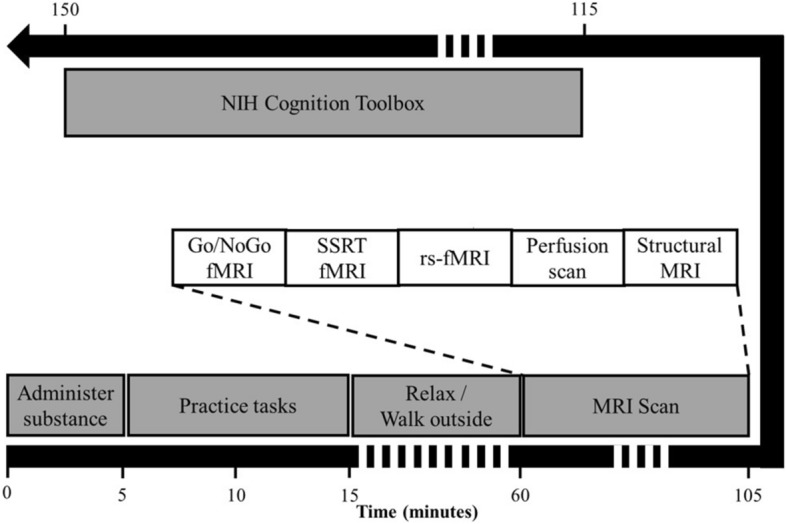
We examined the acute effects of l-theanine, caffeine and their combination on sustained attention, inhibitory control and overall cognition in boys with attention deficit hyperactivity disorder (ADHD). l-Theanine (2.5 mg/kg), caffeine (2.0 mg/kg), their combination and a placebo were administered in a randomized four-way repeated-measures crossover with washout, to five boys (8–15 years) with ADHD. Functional magnetic resonance imaging (fMRI) was performed during a Go/NoGo task and a Stop-signal task ~ 1 h post-dose. NIH Cognition Toolbox was administered ~ 2 h post-dose. Treatment vs. placebo effects were examined in multi-level mixed-effects models. l-Theanine improved total cognition composite in NIH Cognition Toolbox (p = 0.040) vs. placebo. Caffeine worsened and l-theanine had a trend of worsening inhibitory control (i.e. increased Stop-signal reaction time; p = 0.031 and p = 0.053 respectively). l-Theanine–caffeine combination improved total cognition composite (p = 0.041), d-prime in the Go/NoGo task (p = 0.033) and showed a trend of improvement of inhibitory control (p = 0.080). l-Theanine–caffeine combination was associated with decreased task-related reactivity of a brain network associated with mind wandering (i.e. default mode network). l-Theanine–caffeine combination may be a potential therapeutic option for ADHD-associated impairments in sustained attention, inhibitory control and overall cognitive performance.
Overview
CoChat Summary
TL;DR
In a proof-of-concept randomized crossover fMRI trial in five boys with ADHD, acute l-theanine–caffeine combination improved overall cognition and sustained attention, with a trend toward improved inhibitory control. The combination also reduced task-related default mode network reactivity, suggesting decreased mind wandering.
Key findings
- l-Theanine improved NIH Cognition Toolbox total cognition composite vs placebo by 11.5 points (p = 0.040, d = 1.041); the l-theanine–caffeine combination improved it by 11.4 points (p = 0.041, d = 1.034).
- The combination improved Go/NoGo d-prime (β = 0.65, p = 0.033, d = 1.077) and showed a trend toward improved inhibitory control via reduced Stop-signal reaction time (β = −0.04, p = 0.080, d = 0.894).
- Caffeine worsened inhibitory control (increased Stop-signal reaction time, β = 0.05, p = 0.031), and l-theanine showed a trend of worsening it (β = 0.04, p = 0.053).
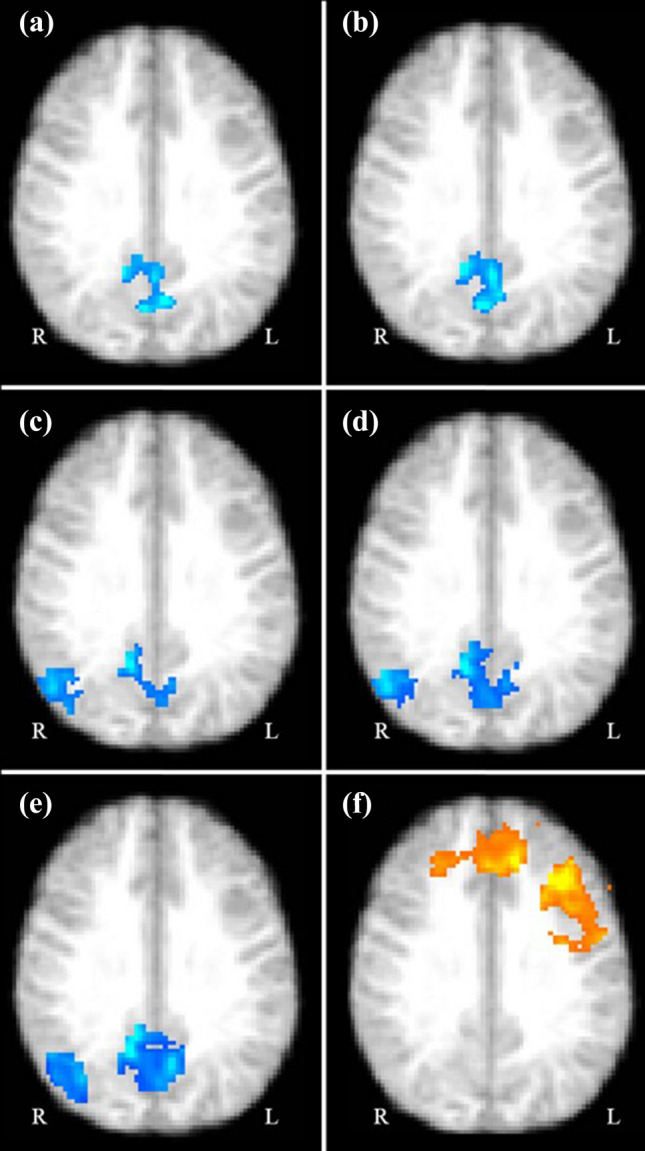
- l-Theanine, caffeine, and their combination all improved Go/NoGo hit rate (p < 0.001 for each vs placebo); l-theanine and caffeine decreased posterior DMN reactivity during Go/NoGo (p = 0.034 and p = 0.026), and the combination decreased DMN and CEN reactivity during Stop-signal response inhibition (p = 0.002 and p = 0.007).
Methods
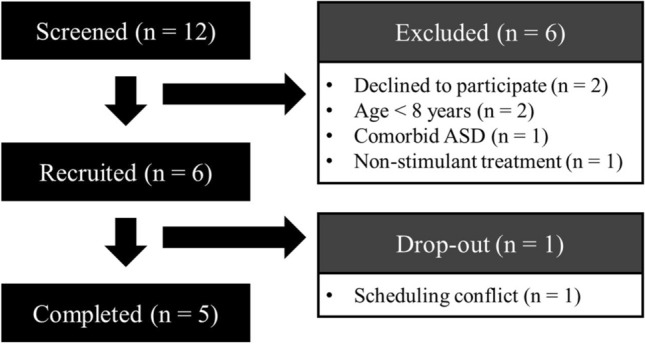
- Randomized, placebo-controlled, four-way repeated-measures crossover with washout; five male children with ADHD completed the study (mean age 11.87 ± 2.26 years; 20 total measurements per outcome).
- Doses were 2.5 mg/kg l-theanine, 2.0 mg/kg caffeine, their combination, or placebo; fMRI was performed during Go/NoGo and Stop-signal tasks ~1 h post-dose, and NIH Cognition Toolbox was administered ~2 h post-dose.
- Behavioral outcomes were analyzed with two-level mixed-effects models (visits nested within subjects), controlling for testing visit; fMRI contrasts were compared against placebo within DMN and CEN using permutation-based cluster thresholding.
Limitations
- The paper states the study was underpowered to detect significant inhibitory-control improvement with the combination, had a small sample, included only male children with ADHD who responded to stimulants, had broad age and BMI ranges, used single/partial blinding, and could not fully rule out practice, diet/hunger, or cerebrovascular effects.
- The text also notes data collection ended due to expiration of funding, and one consented participant declined before the first test dose, leaving only five completers.
- The authors state the preliminary results are not sufficient to generalize benefits to all children with ADHD and require replication in larger controlled trials.
Model-written summary. Check it against the paper before relying on it.
Integrity signals
Registry
Cites
Statistics
Figures
Verification
Claims the paper makes
12 Valid · 3 Not valid · 17 Not checked · 80 Own results and interpretations
The cited sources support only part of this claim — read each source’s verdict below.
In the paper
“Impaired sustained attention and inhibitory control in patients with ADHD is associated with increased task-associated mind wandering8–12.”
§ Effects of l-theanine–caffeine combination on sustained attention and inhibitory control among children with ADHD: a proof-of-concept neuroimaging RCT > Introduction
What the sources say
- Partly supportedcites [8] Helfer B The effects of emotional lability, mind wandering and sleep quality on ADHD symptom severity in adults with ADHD Eur. Psychiatry 2019 55 45 51 30384113 sourceExperimental — accuracy not yet measured
Section 1.2 (page not provided) reports that people with a childhood ADHD diagnosis had more task-unrelated thoughts and that spontaneous mind wandering is associated with ADHD symptom severity. It does not establish an association specifically between impaired sustained attention or inhibitory control and increased mind wandering; it also describes the wandering thoughts as task-unrelated, not task-associated. (LLM, conf=0.86)
- Partly supportedcites [9] Mowlem FD Validation of the mind excessively wandering scale and the relationship of mind wandering to impairment in adult ADHD J. Atten. Disord. 2019 23 624 634 27255536 PMC6429624 sourceExperimental — accuracy not yet measured
The Introduction (page not provided) reports increased spontaneous task-unrelated thoughts during an attention task in students with a childhood history of ADHD, and describes related findings in clinical samples. The Discussion (page not provided) links mind wandering to sustained-attention and inhibition-task deficits in healthy controls, but says that extending this link to impairment in ADHD remains speculative. It does not establish the claimed association between impaired sustained attention and inhibitory control and increased mind wandering in patients with ADHD. (LLM, conf=0.84)
- Not checked yetcites [10] Fox KC Spreng RN Ellamil M Andrews-Hanna JR Christoff K The wandering brain: Meta-analysis of functional neuroimaging studies of mind-wandering and related spontaneous thought processes Neuroimage 2015 111 611 621 25725466 source
Checked before — its earlier verdict is held back until a new check runs.
- Partly supportedcites [11] Christakou A Disorder-specific functional abnormalities during sustained attention in youth with attention deficit hyperactivity disorder (ADHD) and with autism Mol. Psychiatry 2013 18 236 22290121 PMC3554878 sourceExperimental — accuracy not yet measured
The Discussion (page unavailable) reports impaired sustained-attention performance in boys with ADHD and abnormal suppression of a default-mode region associated with self-referential thoughts and attention lapses. It does not report measuring task-associated mind wandering or establish an association involving impaired inhibitory control. (LLM, conf=0.86)
- Partly supportedcites [12] Sakai H Uchiyama Y Shin D Hayashi MJ Sadato N Neural activity changes associated with impulsive responding in the sustained attention to response task PLoS ONE 2013 8 1 PMC3692459 23825657 sourceExperimental — accuracy not yet measured
The Introduction (page unavailable) reports that patients with difficulty sustaining attention made more NoGo errors than controls, which supports the attention and inhibitory-response portion of the claim. It does not link those patients’ performance to increased task-associated mind wandering. The study’s participants were healthy adults, as stated in Materials and Methods (page unavailable). (LLM, conf=0.84)
plainstates an association- Asserted: passes — The authors put it forward as true.
- Checkable: passes — It can be checked against evidence.
- Load-bearing: passes — The paper’s conclusions depend on it.
- Based: passes — The paper gives a reason why it holds.
- Partly supported
The cited sources support only part of this claim — read each source’s verdict below.
In the paper
“Caffeine has been known for decades to improve sustained attention in healthy adults (e.g. Refs.25–27, animal models with ADHD28 and even individuals with ADHD29,30.”
§ Effects of l-theanine–caffeine combination on sustained attention and inhibitory control among children with ADHD: a proof-of-concept neuroimaging RCT > Introduction
What the sources say
- Partly supportedcites [25] Kelly SP Gomez-Ramirez M Montesi JL Foxe JJ l-Theanine and caffeine in combination affect human cognition as evidenced by oscillatory alpha-band activity and attention task performance J. Nutr. 2008 138 1572S 1577S 18641209 sourceExperimental — accuracy not yet measured
The Results (page not provided) report that caffeine alone improved target discriminability in neurologically normal adults, but did not significantly improve hit rate or reaction time. The Methods describe a cued visuospatial attention task, not a specific test of sustained attention, so the sustained-attention claim is broader than the reported finding. (LLM, conf=0.82)
- Not checked — no full text of the sourcecites [26] Kahathuduwa CN Dassanayake TL Amarakoon AT Weerasinghe VS Acute effects of theanine, caffeine and theanine–caffeine combination on attention Nutr. Neurosci. 2016 1 1 9 26869148 source
- Not checked — no full text of the sourcecites [27] Haskell CF Kennedy DO Milne AL Wesnes KA Scholey AB The effects of l-theanine, caffeine and their combination on cognition and mood Biol. Psychol. 2008 77 113 122 18006208 source
boostedstates a cause- Asserted: passes — The authors put it forward as true.
- Checkable: passes — It can be checked against evidence.
- Load-bearing: passes — The paper’s conclusions depend on it.
- Based: passes — The paper gives a reason why it holds.
- Partly supported
The cited sources support only part of this claim — read each source’s verdict below.
In the paper
“Our prior studies conducted on healthy adults26,33, corroborate the findings of others34,37 to suggest that l-theanine–caffeine combination improves sustained attention in healthy adults, yet the relative contribution of l-theanine and caffeine to the improvements appear to largely depend on the task demands”
§ Effects of l-theanine–caffeine combination on sustained attention and inhibitory control among children with ADHD: a proof-of-concept neuroimaging RCT > Introduction
What the sources say
- Not checked — no full text of the sourcecites [26] Kahathuduwa CN Dassanayake TL Amarakoon AT Weerasinghe VS Acute effects of theanine, caffeine and theanine–caffeine combination on attention Nutr. Neurosci. 2016 1 1 9 26869148 source
- Not checked — no full text of the sourcecites [33] Kahathuduwa CN l-Theanine and caffeine improve target-specific attention to visual stimuli by decreasing mind wandering: a human functional magnetic resonance imaging study Nutr. Res. 2018 49 67 78 29420994 source
- Not checked — no full text of the sourcecites [34] Foxe JJ Assessing the effects of caffeine and theanine on the maintenance of vigilance during a sustained attention task Neuropharmacology 2012 62 2320 2327 22326943 source
- Partly supportedcites [37] Higashiyama A Htay HH Ozeki M Juneja LR Kapoor MP Effects of l-theanine on attention and reaction time response J. Funct. Foods 2011 3 171 178 sourceExperimental — accuracy not yet measured
The Introduction reports that l-theanine–caffeine combinations have benefited attention in earlier studies, but it does not establish an improvement in sustained attention specifically. The Procedural details show that this paper's own healthy-adult experiment compared l-theanine alone with placebo, not the combination. (LLM, conf=0.84)
hedgedstates a cause- Asserted: passes — The authors put it forward as true.
- Checkable: passes — It can be checked against evidence.
- Load-bearing: passes — The paper’s conclusions depend on it.
- Based: passes — The paper gives a reason why it holds.
The cited sources support only part of this claim — read each source’s verdict below.
In the paper
“In addition, functional neuroimaging surrogates of impaired inhibitory control in ADHD include decreased reactivity of several regions of a network known as the central executive network (CEN) (e.g. bilateral dorsolateral prefrontal cortex and inferior frontal gyrus)13–15”
§ Effects of l-theanine–caffeine combination on sustained attention and inhibitory control among children with ADHD: a proof-of-concept neuroimaging RCT > Introduction
What the sources say
- Partly supportedcites [13] D. Van Rooij et al., Neural activation patterns in inferior frontal areas during response inhibition distinguish adolescents with ADHD, their unaffected siblings, and healthy controls. Am. J. Psychiatry, (2014). PMC4490085 25615565 sourceExperimental — accuracy not yet measured
The Results and Discussion report reduced activation in frontal regions during response inhibition in adolescents with ADHD, including the left inferior and superior frontal gyri. However, the Discussion explicitly says there was no right-sided inferior frontal hypoactivation, so this paper does not support decreased reactivity in the bilateral inferior frontal gyrus. It describes frontal-striatal and frontal-parietal networks rather than identifying the affected regions as the central executive network. Page numbers are unavailable in our copy. (LLM, conf=0.88)
- Not checked — no full text of the sourcecites [14] Aron AR Poldrack RA The cognitive neuroscience of response inhibition: relevance for genetic research in attention-deficit/hyperactivity disorder Biol. Psychiatry 2005 57 1285 1292 15950000 source
- Not checked — no full text of the sourcecites [15] Rubia K Smith AB Brammer MJ Toone B Taylor E Abnormal brain activation during inhibition and error detection in medication-naive adolescents with ADHD Am. J. Psychiatry 2005 162 1067 1075 15930054 source
plainstates an association- Asserted: passes — The authors put it forward as true.
- Checkable: passes — It can be checked against evidence.
- Load-bearing: passes — The paper’s conclusions depend on it.
- Based: passes — The paper gives a reason why it holds.
- Partly supported
Every source the paper cites for this claim was checked and supports it.
In the paper
“Comparison of fMRI brain reactivity neurotypical vs. ADHD children while engaged in a sustained attention task revealed that children with ADHD show increased task-related reactivity of the posterior DMN11.”
§ Effects of l-theanine–caffeine combination on sustained attention and inhibitory control among children with ADHD: a proof-of-concept neuroimaging RCT > Introduction
What the sources say
- Supportedcites [11] Christakou A Disorder-specific functional abnormalities during sustained attention in youth with attention deficit hyperactivity disorder (ADHD) and with autism Mol. Psychiatry 2013 18 236 22290121 PMC3554878 source
The Abstract and Discussion (page numbers not provided) report greater precuneus activation in boys with ADHD than in healthy controls during a sustained-attention task. The Discussion identifies the precuneus as part of the posterior default mode network and reports that it became more activated as attention load increased in patients, while controls deactivated it. (LLM, conf=0.93)
plainstates an association- Asserted: passes — The authors put it forward as true.
- Checkable: passes — It can be checked against evidence.
- Load-bearing: passes — The paper’s conclusions depend on it.
- Based: passes — The paper gives a reason why it holds.
- Supported
66 more claims · 2 with their cited sources checked
Create a free account to see all 112 claims and to verify the 3 references still open.
- Probably not a substantial claim. 27
- It may state two separate claims as one. 21
- The quote only partly states this claim. 1
Claims other papers make about this one
Each is checked against this paper’s own text: does it say what the citing paper says it does?
The cited source says what the claim attributes to it.
In the citing paper
“Individual studies have, however, suggested that co-ingestion of caffeine and L-theanine may have an additive effect, with additional benefits noted compared to when each is administered in isolation (20–27), although such findings have been somewhat inconsistent (28, 29) and would benefit from further behavioral and mechanistic evaluation.”
From Effects of L-theanine on cognition, mood and sleep: evidence from human trials (2026) · cites this paper as [23]
Citations
Cites
Diagnostic and Statistical Manual of Mental Disorders
American Psychiatric Association (2013) · doi:10.1176/appi.books.9780890425596 · Cited by 116,369
Cortical Surface-Based Analysis
Dale, A. M., Fischl, B., & Sereno, M. I. (1999) · NeuroImage · doi:10.1006/nimg.1998.0395 · Cited by 10,910
Cook, R. J., Dickens, B. M., & Fathalla, M. F. (2003) · Reproductive Health and Human Rights · doi:10.1093/acprof:oso/9780199241323.003.0025 · Cited by 10,769
Detection Theory: A User's Guide
Macmillan, N. A., & Creelman, C. D. (1991) · Cited by 5,415
Willcutt, E. G., Doyle, A. E., Nigg, J. T., Faraone, S. V., & Pennington, B. F. (2005) · Biological Psychiatry · doi:10.1016/j.biopsych.2005.02.006 · Cited by 3,568
Christiane, Druml, Wolzt, & Pleiner (2001) · Acta Scientiarum Naturalium Universitatis Sunyatseni · Cited by 3,419
Fredholm, B. B., Bättig, K., Holmén, J., Nehlig, A., & Zvartau, E. E. (1999) · Pharmacological Reviews · doi:10.1016/s0031-6997(24)01396-6 · Cited by 2,624
Ethical principles for medical research involving human subjects
(2003) · Manual for Research Ethics Committees · doi:10.1017/cbo9780511550089.027 · Cited by 2,585
Can cognitive processes be inferred from neuroimaging data?
POLDRACK, R. (2006) · Trends in Cognitive Sciences · doi:10.1016/j.tics.2005.12.004 · Cited by 2,249
Sequence-independent segmentation of magnetic resonance images
Fischl, B., Salat, D. H., van der Kouwe, A. J. W., Makris, N., Ségonne, F., Quinn, B. T., & Dale, A. M. (2004) · NeuroImage · doi:10.1016/j.neuroimage.2004.07.016 · Cited by 2,109
A decision-making theory of visual detection.
Tanner, W. P., & Swets, J. A. (1954) · Psychological Review · doi:10.1037/h0058700 · Cited by 1,317
Speed-accuracy tradeoff and information processing dynamics
Wickelgren, W. A. (1977) · Acta Psychologica · doi:10.1016/0001-6918(77)90012-9 · Cited by 1,304
Macmillan, N. A., & Creelman, C. D. (2004) · doi:10.4324/9781410611147 · Cited by 1,269
Coffee and Health: A Review of Recent Human Research
Higdon, J. V., & Frei, B. (2006) · Critical Reviews in Food Science and Nutrition · doi:10.1080/10408390500400009 · Cited by 1,090
II. NIH TOOLBOX COGNITION BATTERY (CB): MEASURING EXECUTIVE FUNCTION AND ATTENTION
Zelazo, P. D., Anderson, J. E., Richler, J., Wallner-Allen, K., Beaumont, J. L., & Weintraub, S. (2013) · Monographs of the Society for Research in Child Development · doi:10.1111/mono.12032 · Cited by 823
Fox, K. C. R., Spreng, R. N., Ellamil, M., Andrews-Hanna, J. R., & Christoff, K. (2015) · NeuroImage · doi:10.1016/j.neuroimage.2015.02.039 · Cited by 690
Horse-race model simulations of the stop-signal procedure
Band, G. P. H., van der Molen, M. W., & Logan, G. D. (2003) · Acta Psychologica · doi:10.1016/s0001-6918(02)00079-3 · Cited by 687
Aron, A. R., & Poldrack, R. A. (2005) · Biological Psychiatry · doi:10.1016/j.biopsych.2004.10.026 · Cited by 602
Lijffijt, M., Kenemans, J. L., Verbaten, M. N., & van Engeland, H. (2005) · Journal of Abnormal Psychology · doi:10.1037/0021-843x.114.2.216 · Cited by 592
Barkley, R. A. (1997) · Psychological Bulletin · doi:10.1037//0033-2909.121.1.65 · Cited by 580
Rubia, K., Smith, A. B., Brammer, M. J., Toone, B., & Taylor, E. (2005) · American Journal of Psychiatry · doi:10.1176/appi.ajp.162.6.1067 · Cited by 537
Rubia, K. (2011) · Biological Psychiatry · doi:10.1016/j.biopsych.2010.09.023 · Cited by 440
Academic Underachievement and Attention-Deficit/Hyperactivity Disorder
Barry, T. D., Lyman, R. D., & Klinger, L. G. (2002) · Journal of School Psychology · doi:10.1016/s0022-4405(02)00100-0 · Cited by 360
NIH Toolbox Cognition Battery (CB): Validation of Executive Function Measures in Adults
Zelazo, P. D., Anderson, J. E., Richler, J., Wallner-Allen, K., Beaumont, J. L., Conway, K. P., Gershon, R., & Weintraub, S. (2014) · Journal of the International Neuropsychological Society · doi:10.1017/s1355617714000472 · Cited by 350
Akshoomoff, N., Beaumont, J. L., Bauer, P. J., Dikmen, S. S., Gershon, R. C., Mungas, D., Slotkin, J., Tulsky, D., Weintraub, S., Zelazo, P. D., et al. (2013) · Monographs of the Society for Research in Child Development · doi:10.1111/mono.12038 · Cited by 299
MRC AIMS consortium, Christakou, A., Murphy, C. M., Chantiluke, K., Cubillo, A. I., Smith, A. B., Giampietro, V, Daly, E., Ecker, C., Robertson, D., et al. (2013) · Molecular Psychiatry · doi:10.1038/mp.2011.185 · Cited by 293
The Effects of L-Theanine, Caffeine and Their Combination on Cognition and Mood
Haskell, C. F., Kennedy, D. O., Milne, A. L., Wesnes, K. A., & Scholey, A. B. (2008) · Biological Psychology · doi:10.1016/j.biopsycho.2007.09.008 · Cited by 280
Chevrier, A. D., Noseworthy, M. D., & Schachar, R. (2007) · Human Brain Mapping · doi:10.1002/hbm.20355 · Cited by 277
Peterson, B. S., Potenza, M. N., Wang, Z., Zhu, H., Martin, A., Marsh, R., Plessen, K. J., & Yu, S. (2009) · American Journal of Psychiatry · doi:10.1176/appi.ajp.2009.08050724 · Cited by 261
Johnson, K. A., Robertson, I. H., Kelly, S. P., Silk, T. J., Barry, E., Dáibhis, A., Watchorn, A., Keavey, M., Fitzgerald, M., Gallagher, L., et al. (2007) · Neuropsychologia · doi:10.1016/j.neuropsychologia.2007.02.019 · Cited by 259
Update on caffeine consumption, disposition and action
Mandel, H. G. (2002) · Food and Chemical Toxicology · doi:10.1016/s0278-6915(02)00093-5 · Cited by 240
Faraone, S. V., Rostain, A. L., Montano, C. B., Mason, O., Antshel, K. M., & Newcorn, J. H. (2020) · Journal of the American Academy of Child & Adolescent Psychiatry · doi:10.1016/j.jaac.2019.06.012 · Cited by 225
Gershon, R. C., Slotkin, J., Manly, J. J., Blitz, D. L., Beaumont, J. L., Schnipke, D., Wallner-Allen, K., Golinkoff, R. M., Gleason, J. B., Hirsh-Pasek, K., et al. (2013) · Monographs of the Society for Research in Child Development · doi:10.1111/mono.12034 · Cited by 157
Mowlem, F. D., Skirrow, C., Reid, P., Maltezos, S., Nijjar, S. K., Merwood, A., Barker, E., Cooper, R., Kuntsi, J., & Asherson, P. (2019) · Journal of Attention Disorders · doi:10.1177/1087054716651927 · Cited by 156
Camfield, D. A., Stough, C., Farrimond, J., & Scholey, A. B. (2014) · Nutrition Reviews · doi:10.1111/nure.12120 · Cited by 155
V. NIH TOOLBOX COGNITION BATTERY (CB): MEASURING WORKING MEMORY
Tulsky, D. S., Carlozzi, N. E., Chevalier, N., Espy, K. A., Beaumont, J. L., & Mungas, D. (2013) · Monographs of the Society for Research in Child Development · doi:10.1111/mono.12035 · Cited by 146
III. NIH toolbox cognition battery (CB): measuring episodic memory
Bauer, P. J., Dikmen, S. S., Heaton, R. K., Mungas, D., Slotkin, J., & Beaumont, J. L. (2013) · Monographs of the Society for Research in Child Development · doi:10.1111/mono.12033 · Cited by 128
Kelly, S. P., Gomez-Ramirez, M., Montesi, J. L., & Foxe, J. J. (2008) · The Journal of Nutrition · doi:10.1093/jn/138.8.1572s · Cited by 119
Schweren, L., de Zeeuw, P., & Durston, S. (2012) · European Neuropsychopharmacology · doi:10.1016/j.euroneuro.2012.10.014 · Cited by 116
Metabolism of Theanine, γ-Glutamylethylamide, in Rats
Unno, T., Suzuki, Y., Kakuda, T., Hayakawa, T., & Tsuge, H. (1999) · Journal of Agricultural and Food Chemistry · doi:10.1021/jf981113t · Cited by 109
McLoughlin, G., Albrecht, B., Banaschewski, T., Rothenberger, A., Brandeis, D., Asherson, P., & Kuntsi, J. (2010) · Behavioral and Brain Functions · doi:10.1186/1744-9081-6-66 · Cited by 106
Foxe, J. J., Morie, K. P., Laud, P. J., Rowson, M. J., de Bruin, E. A., & Kelly, S. P. (2012) · Neuropharmacology · doi:10.1016/j.neuropharm.2012.01.020 · Cited by 106
van Rooij, D., Hoekstra, P. J., Mennes, M., von Rhein, D., Thissen, A. J. A. M., Heslenfeld, D., Zwiers, M. P., Faraone, S. V., Oosterlaan, J., Franke, B., et al. (2015) · American Journal of Psychiatry · doi:10.1176/appi.ajp.2014.13121635 · Cited by 100
Acute effects of caffeine in normal prepubertal boys
(1981) · American Journal of Psychiatry · doi:10.1176/ajp.138.2.178 · Cited by 98
Gomez-Ramirez, M., Higgins, B. A., Rycroft, J. A., Owen, G. N., Mahoney, J., Shpaner, M., & Foxe, J. J. (2007) · Clinical Neuropharmacology · doi:10.1097/01.wnf.0000240940.13876.17 · Cited by 96
Rapoport, J. L. (1984) · Archives of General Psychiatry · doi:10.1001/archpsyc.1983.01790220063010 · Cited by 94
Gomez-Ramirez, M., Kelly, S. P., Montesi, J. L., & Foxe, J. J. (2009) · Brain Topography · doi:10.1007/s10548-008-0068-z · Cited by 90
Seymour, K. E., Reinblatt, S. P., Benson, L., & Carnell, S. (2015) · CNS Spectrums · doi:10.1017/s1092852915000383 · Cited by 85
Acute effects of tea consumption on attention and mood
Einöther, S. J. L., & Martens, V. E. G. (2013) · American Journal of Clinical Nutrition · doi:10.3945/ajcn.113.058248 · Cited by 84
Cerebrovascular injury in cryptococcal meningitis
Mishra, A. K., Arvind, V. H., Muliyil, D., Kuriakose, C. K., George, A. A., Karuppusami, R., Benton Carey, R. A., Mani, S., & Hansdak, S. G. (2018) · International Journal of Stroke · doi:10.1177/1747493017706240 · Cited by 82
Heinz, A. J., de Wit, H., Lilje, T. C., & Kassel, J. D. (2013) · Experimental and Clinical Psychopharmacology · doi:10.1037/a0032337 · Cited by 78
(2011) · PubMed · Cited by 77
VI. NIH toolbox cognition battery (CB): measuring processing speed
Carlozzi, N. E., Tulsky, D. S., Kail, R. V., & Beaumont, J. L. (2013) · Monographs of the Society for Research in Child Development · doi:10.1111/mono.12036 · Cited by 76
Acute Effects of Theanine, Caffeine and Theanine–Caffeine Combination on Attention
Kahathuduwa, C. N., Dassanayake, T. L., Amarakoon, A. M. T., & Weerasinghe, V. S. (2017) · Nutritional Neuroscience · doi:10.1080/1028415x.2016.1144845 · Cited by 71
Self-citationImpulsivity and overeating in children in the absence and presence of hunger
Nederkoorn, C., Dassen, F. C. M., Franken, L., Resch, C., & Houben, K. (2015) · Appetite · doi:10.1016/j.appet.2015.03.032 · Cited by 68
Human disposition of L-theanine in tea or aqueous solution
van der Pijl, P. C., Chen, L., & Mulder, T. P. J. (2010) · Journal of Functional Foods · doi:10.1016/j.jff.2010.08.001 · Cited by 66
Kitaoka, S., Hayashi, H., Yokogoshi, H., & Suzuki, Y. (1996) · Bioscience, Biotechnology, and Biochemistry · doi:10.1271/bbb.60.1768 · Cited by 63
Einöther, S. J. L., Martens, V. E. G., Rycroft, J. A., & De Bruin, E. A. (2010) · Appetite · doi:10.1016/j.appet.2010.01.003 · Cited by 62
Zelazo, P. D., & Patricia, J. (2013) · Cited by 61
Some Recent Observations on the Pathogenesis of Anorexia Nervosa
Garfinkel, P. E. (1981) · The Canadian Journal of Psychiatry · doi:10.1177/070674378102600403 · Cited by 56
Fox, N. A. (2013) · Monographs of the Society for Research in Child Development · doi:10.1111/mono.12044 · Cited by 52
Yoo, J. H., Kim, D., Choi, J., & Jeong, B. (2017) · Brain Imaging and Behavior · doi:10.1007/s11682-017-9713-z · Cited by 52
Effects of l-theanine on attention and reaction time response
Higashiyama, A., Htay, H. H., Ozeki, M., Juneja, L. R., & Kapoor, M. P. (2011) · Journal of Functional Foods · doi:10.1016/j.jff.2011.03.009 · Cited by 50
L-theanine partially counteracts caffeine-induced sleep disturbances in rats
Jang, H.-S., Jung, J. Y., Jang, I.-S., Jang, K.-H., Kim, S.-H., Ha, J.-H., Suk, K., & Lee, M.-G. (2012) · Pharmacology Biochemistry and Behavior · doi:10.1016/j.pbb.2012.01.011 · Cited by 50
Kahathuduwa, C. N., Dhanasekara, C. S., Chin, S.-H., Davis, T., Weerasinghe, V. S., Dassanayake, T. L., & Binks, M. (2018) · Nutrition Research · doi:10.1016/j.nutres.2017.11.002 · Cited by 46
Self-citationCaffeine Use by Children: The Quest for Enhancement
Bramstedt, K. A. (2007) · Substance Use & Misuse · doi:10.1080/10826080701208962 · Cited by 44
Barry, D. G., Christopher, D. W., & Sloman, L. (1981) · The Canadian Journal of Psychiatry · doi:10.1177/070674378102600602 · Cited by 43
The effects of caffeine on reaction time in hyperkinetic and normal children
(1977) · American Journal of Psychiatry · doi:10.1176/ajp.134.2.144 · Cited by 41
Caballero, M., Núñez, F., Ahern, S., Cuffí, M. L., Carbonell, L., Sánchez, S., Fernández‐Dueñas, V., & Ciruela, F. (2011) · Neuroscience Letters · doi:10.1016/j.neulet.2011.02.050 · Cited by 39
Leffa, D. T., Ferreira, S. G., Machado, N. J., Souza, C. M., Rosa, F. D., de Carvalho, C., Kincheski, G. C., Takahashi, R. N., Porciúncula, L. O., Souza, D. O., et al. (2019) · European Journal of Neuroscience · doi:10.1111/ejn.14348 · Cited by 39
McLoughlin, G., Asherson, P., Albrecht, B., Banaschewski, T., Rothenberger, A., Brandeis, D., & Kuntsi, J. (2011) · Behavioral and Brain Functions · doi:10.1186/1744-9081-7-26 · Cited by 38
Caffeine in the Treatment of Children With Minimal Brain Dysfunction or Hyperkinetic Syndrome
Gross, M. D. (1975) · Psychosomatics · doi:10.1016/s0033-3182(75)71230-6 · Cited by 34
Bradley, J. R., & Petree, A. D. (1990) · Journal of Drug Education · doi:10.2190/r64x-uemw-he3y-uuna · Cited by 34
Spotlight on Atomoxetine in Attention-Deficit Hyperactivity Disorder in Children and Adolescents†
Garnock-Jones, K. P., & Keating, G. M. (2010) · CNS Drugs · doi:10.2165/11203670-000000000-00000 · Cited by 32
Hanna, D. B., Buchacz, K. A., Gebo, K. A., et al. (2013) · PLoS ONE · doi:10.1371/journal.pone.0078952 · Cited by 32
Helfer, B., Cooper, R. E., Bozhilova, N., Maltezos, S., Kuntsi, J., & Asherson, P. (2019) · European Psychiatry · doi:10.1016/j.eurpsy.2018.09.006 · Cited by 32
Pediatric ADHD medication exposures reported to US poison control centers
King, S. A., Casavant, M. J., Spiller, H. A., Hodges, N. L., Chounthirath, T., & Smith, G. A. (2018) · Pediatrics · doi:10.1542/peds.2017-3872 · Cited by 30
Nunes, F., Pochmann, D., Almeida, A. S., Marques, D. M., & Porciúncula, L. D. O. (2018) · Molecular Neurobiology · doi:10.1007/s12035-018-1000-5 · Cited by 26
A study of auditory reaction time in different phases of the normal menstrual cycle.
(2010) · PubMed · Cited by 21
Sakai, H., Uchiyama, Y., Shin, D., Hayashi, M. J., & Sadato, N. (2013) · PLoS ONE · doi:10.1371/journal.pone.0067391 · Cited by 20
Prasad, C. (1998) · Nutritional Neuroscience · doi:10.1080/1028415x.1998.11747207 · Cited by 16
Chin, S.-H., Kahathuduwa, C. N., Stearns, M. B., Davis, T. H., & Binks, M. (2017) · Appetite · doi:10.1016/j.appet.2017.09.012 · Cited by 14
Self-citationFrança, A. P., Takahashi, R. N., Cunha, R. A., & Prediger, R. D. (2018) · Journal of Caffeine and Adenosine Research · doi:10.1089/caff.2018.0016 · Cited by 14
Kahathuduwa, C. N., West, B. D., & Mastergeorge, A. M. (2019) · Journal of Autism and Developmental Disorders · doi:10.1007/s10803-019-04187-7 · Cited by 10
Self-citationFairman, K. A., Davis, L. E., Peckham, A. M., & Sclar, D. A. (2018) · Drugs - Real World Outcomes · doi:10.1007/s40801-017-0129-2 · Cited by 5
Zelazo, P. D., Anderson, J. E., Richler, J. J., Wallner‐Allen, K., Beaumont, J. L., Conway, K. P., Gershon, R. C., & Weıntraub, S. (2014) · PsycTESTS Dataset · doi:10.1037/t63843-000 · Cited by 4
(2001) · PubMed Central
Research works printed but not linked: 2
- Hechtman L Considerations in selecting pharmacological treatments for attention deficit hyperactivity disorder Acute Pain 2019 10 00
- Rorden C dcm2nii DICOM to NIfTI conversion 2009 The source for neuroimaging MRIcoron
Cited by
Li, M.-Y., Liu, H.-Y., Wu, D.-T., Kenaan, A., Geng, F., Li, H.-B., Gunaratne, A., Li, H., & Gan, R.-Y. (2022) · Frontiers in Nutrition · doi:10.3389/fnut.2022.853846 · Cited by 128
“Furthermore, five boys (8–15 years old) with attention deficit hyperactivity disorder (ADHD) were treated with L-theanine and caffeine, and the result showed that L-theanine combined with caffeine could effectively treat ADHD-related injuries in sustained attention, inhibitory control, and overall cognitive performanc…”
Hu, S., Hu, C., Luo, L., Zhang, H., Zhao, S., Liu, Z., & Zeng, L. (2022) · Food Chemistry · doi:10.1016/j.foodchem.2022.133500 · Cited by 47
The cognitive-enhancing outcomes of caffeine and L-theanine: a systematic review
Anas Sohail, A., Ortiz, F., Varghese, T., Fabara, S. P., Batth, A. S., Sandesara, D. P., Sabir, A., Khurana, M., Datta, S., & Patel, U. K. (2021) · Cureus · doi:10.7759/cureus.20828 · Cited by 23
“Overall, these clinical trials of caffeine, L-theanine, and their combination showed various functional outcomes related to attention, inhibitory control, mind-wandering, cognition, and mood [10-14].”
BackgroundMethodResultInfluentialA Novel Knowledge Distillation-Based Feature Selection for the Classification of ADHD
Khan, N. A., Waheeb, S. A., Riaz, A., & Shang, X. (2021) · Biomolecules · doi:10.3390/biom11081093 · Cited by 29
Hu, S., Luo, L., & Zeng, L. (2022) · Critical Reviews in Food Science and Nutrition · doi:10.1080/10408398.2022.2040945 · Cited by 22
Metadata
- Authors
- Kahathuduwa, C. N., Wakefield, S., West, B. D., Blume, J., Dassanayake, T. L., Weerasinghe, V. S., & Mastergeorge, A.
- Affiliations
- Texas Tech University (US)
- University of Peradeniya (LK)
- Corresponding author
- Kahathuduwa, Chanaka N.
- ORCID
- Venue
- Scientific Reports
- Published
- 2020-08-04
- Volume
- 10
- Issue
- 1
- Pages
- 13072-13072
- ISSN
- 2045-2322 (ISSN-L)
- PMC
- PMC7403383
- OpenAlex
- W3047333498
- Semantic Scholar
- 43fe2bd4509e8ac647b8169de761f8a31f513895
- Cited by
- 45
- References
- 87
- Citations by year
- 2026: 8 · 2025: 11 · 2024: 11 · 2023: 6 · 2022: 5 · 2021: 4
- FWCI
- 2.50
- Type
- journal article
- Language
- en
- Open access
- gold
- doi.org
- Licence
- cc-by
- creativecommons.org/licenses/by/4.0 (tdm)
- creativecommons.org/licenses/by/4.0 (vor)
- Locations
- Scientific Reports (publishedVersion, cc-by)
- PubMed Central (publishedVersion, cc-by)
- PubMed (publishedVersion)
- Figshare (submittedVersion, cc-by)
- ThinkTech (Texas Tech University) (submittedVersion, cc-by)
- NOVA (University of Newcastle Australia) (submittedVersion, cc-by)
- Funders
- Texas Tech Neuroimaging Institute
- Texas Tech University Health Sciences Center - School of Health Professions
- Topics
- Health Sciences › Medicine › Psychiatry and Mental health › Attention Deficit Hyperactivity Disorder
- Health Sciences › Medicine › Pharmacology (medical) › Coffee research and impacts
- Life Sciences › Neuroscience › Cellular and Molecular Neuroscience › Neurotransmitter Receptor Influence on Behavior
- Keywords
- theanine, caffeine, attention deficit hyperactivity disorder, sustained attention, inhibitory control, children, go/no-go task, stop-signal task, default mode network, mind wandering, cognitive performance, neuroimaging
- MeSH terms
- Adolescent, Attention, Attention Deficit Disorder with Hyperactivity, Brain, Caffeine, Child, Cognition, Drug Interactions, Female, Glutamates, Humans, Inhibition, Psychological, Magnetic Resonance Imaging, Male, Neuroimaging
About these checks
Registry, retraction, Cites and statistics results are computed, not judged, with one exception: a printed reference that no index lists is read once by a model before it counts as a citation error. Claims are extracted by a model and kept only when their quote appears verbatim in the text; each cited source is then checked, with a model’s help, for whether it says what the claim relies on. Those verdicts can be wrong — read the claim’s quote and the cited source before relying on one.
The claim verdicts this report counts are experimental: their accuracy is not yet measured.
A language model drew the claims from the paper on 2026-10-05, under version 3 of the claim definition (model deepseek-v4.1-flash, prompt extract-v3).
A second model labelled each claim on 2026-10-05 (model jev-1.13-20260917, definition revision gold-guideline-v0.2).
Cited sources are checked with a language model’s help (gpt-6-sol).
Statistics and arithmetic are recomputed, not judged.
Confidence bands are shown only for fields calibrated on our annotated test set. None is calibrated yet, so no band is shown.
What counts as a claim ›How we measure confidence ›How we check this ›
Are you an author, or do you see a problem with this page? Request a review
Data sources
Bibliographic data: Semantic Scholar, OpenAlex, Crossref.
Contains information from the Semantic Scholar Academic Graph Datasets, made available under the ODC Attribution License (ODC-BY 1.0).
Semantic Scholar’s data is described in: Kinney, R., et al. (2023). The Semantic Scholar Open Data Platform. arXiv:2301.10140.
