

Bifidobacterium adolescentis as a key member of the human gut microbiota in the production of GABA
Open accessThe DOI matches its Crossref record; 40 of the 40 references it cites were found in a registry or an index.
Abstract
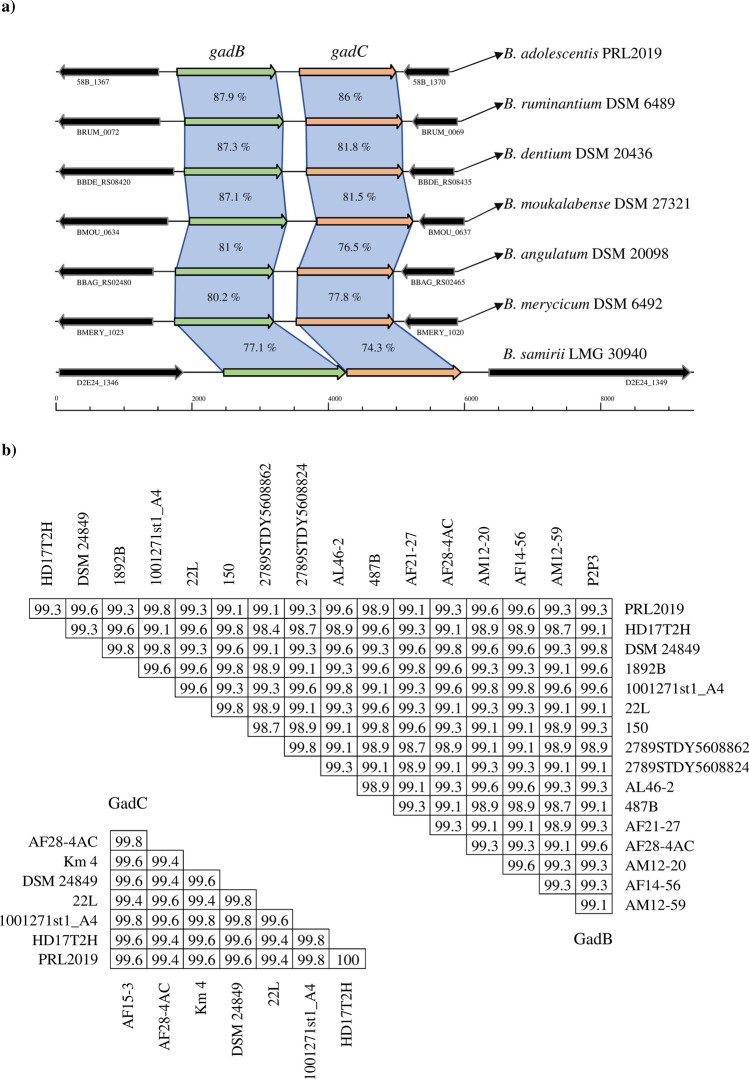
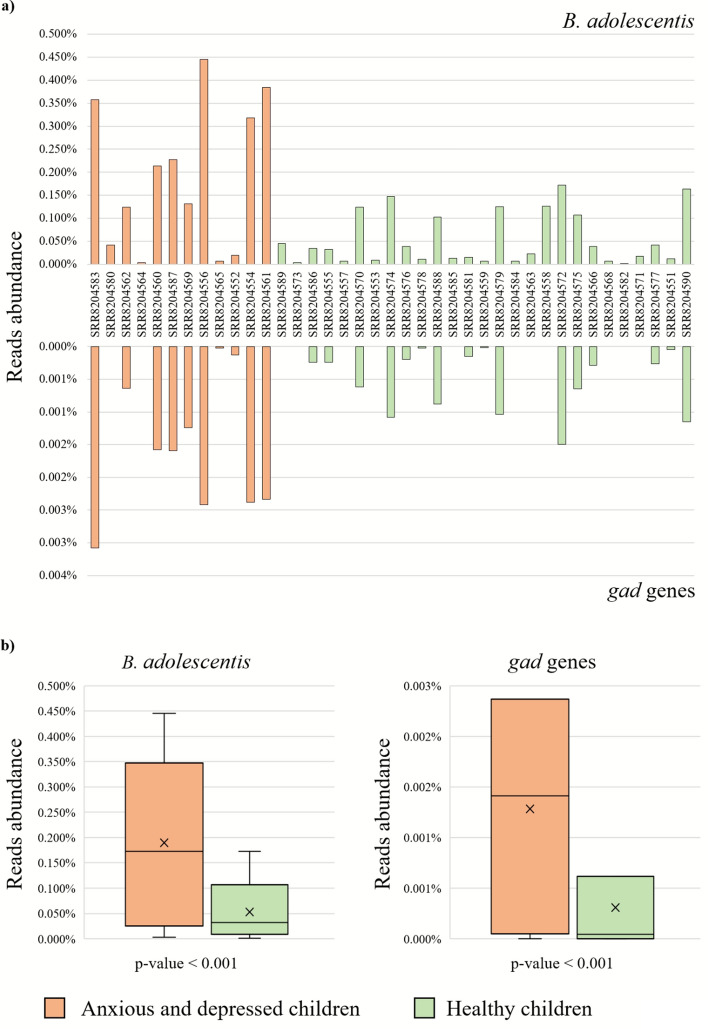
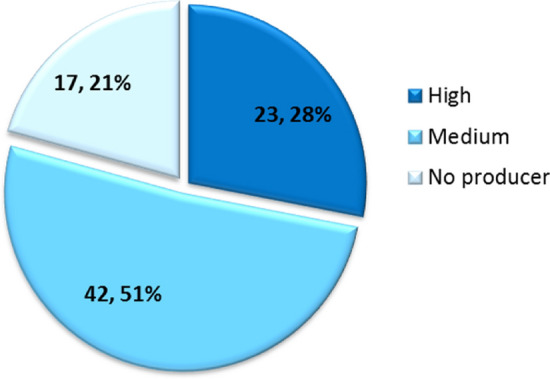
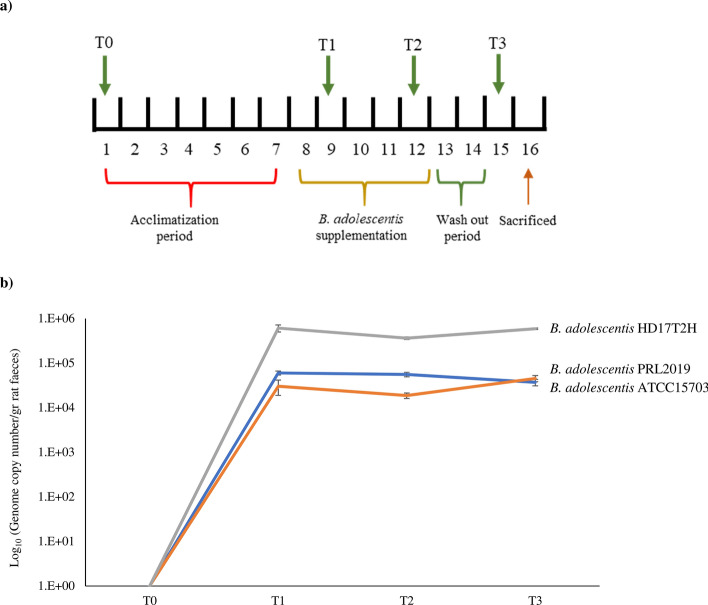
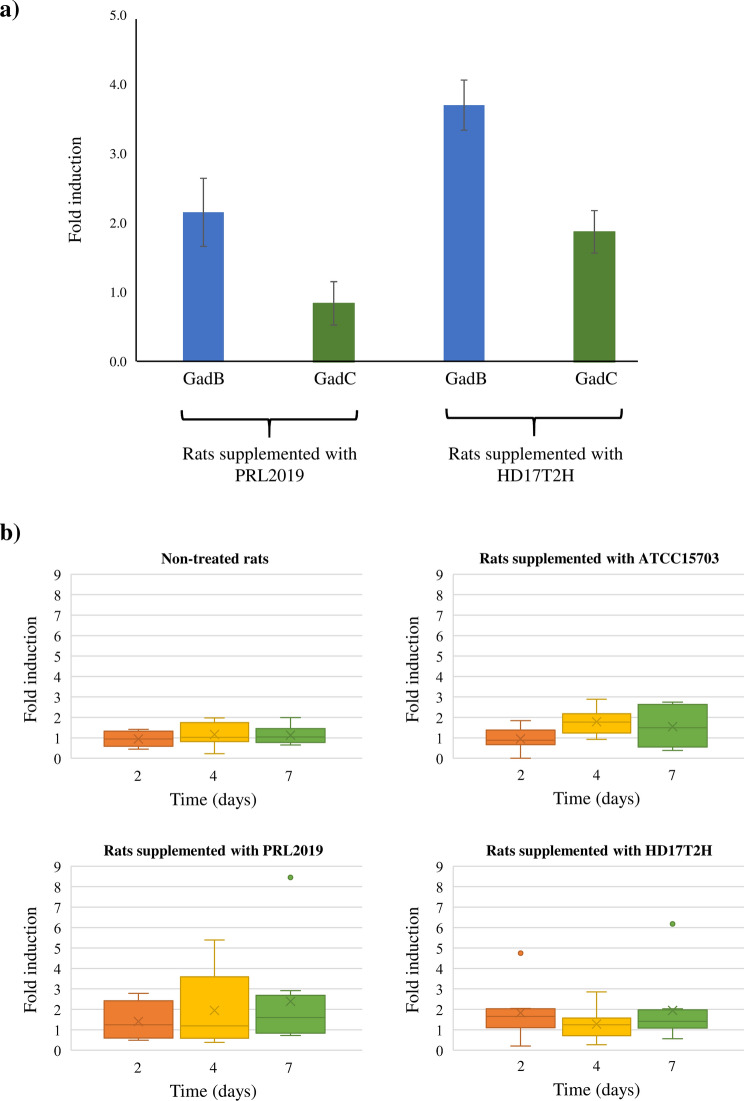
Gamma aminobutyric acid (GABA) is the principal inhibitory neurotransmitter playing a key role in anxiety and depression disorders in mammals. Recent studies revealed that members of the gut microbiota are able to produce GABA modulating the gut-brain axis response. Among members of the human gut microbiota, bifidobacteria are well known to establish many metabolic and physiologic interactions with the host. In this study, we performed genome analyses of more than 1,000 bifidobacterial strains publicly available revealing that Bifidobacterium adolescentis taxon might represent a model GABA producer in human gastrointestinal tract. Moreover, the in silico screening of human/animal metagenomic datasets showed an intriguing association/correlation between B. adolescentis load and mental disorders such as depression and anxiety. Interestingly, in vitro screening of 82 B. adolescentis strains allowed identifying two high GABA producers, i.e. B. adolescentis PRL2019 and B. adolescentis HD17T2H, which were employed in an in vivo trial in rats. Feeding Groningen rats with a supplementation of B. adolescentis strains, confirmed the ability of these microorganisms to stimulate the in vivo production of GABA highlighting their potential implication in gut-brain axis interactions.
Overview
The claims and statistics of this paper haven’t been checked yet.
Free: it reads the open-access text and checks the first 5 claims that cite a source we can check. Create a free account to check every claim.
Integrity signals
Registry
Cites
Statistics
Figures
Verification
Claims the paper makes
The claims and statistics of this paper haven’t been checked yet.
Free: it reads the open-access text and checks the first 5 claims that cite a source we can check. Create a free account to check every claim.
Claims other papers make about this one
Each is checked against this paper’s own text: does it say what the citing paper says it does?
The source backs part of the claim, not all of it — or backs it for a different population, condition or comparison.
In the citing paper
“in vitro trials of 82 Bifidobacterium adolescentis strains allowed to recognize two, which are superior GABA producers (i.e., PRL2019 and HD17T2H) and thus confirmed the ability of these bacteria to influence the CNS function via the gut-brain axis signaling [140].”
From The Role of Microbiota-Gut-Brain Axis in Neuropsychiatric and Neurological Disorders (2021) · cites this paper as [140]
Experimental — accuracy not yet measuredIn the citing paper
“In silico screening of animal and human metagenomic datasets prepared by Duranti et al. [140] indicated a puzzling dependence between Bifidobacterium adolescentis amount in the gut microbiota and mental disorders such as depression and anxiety.”
From The Role of Microbiota-Gut-Brain Axis in Neuropsychiatric and Neurological Disorders (2021) · cites this paper as [140]
Self-check
Percentages, sums and reported differences re-computed from the paper’s own numbers.
The self-check needs the paper’s full text.
Citations
Cites
The Sequence Alignment/Map format and SAMtools
Li, H., Handsaker, B., Wysoker, A., Fennell, T., Ruan, J., Homer, N., Marth, G., Abecasis, G., Durbin, R., & 1000 Genome Project Data Processing Subgroup (2009) · Bioinformatics · doi:10.1093/bioinformatics/btp352 · Cited by 62,041
Fast and accurate short read alignment with Burrows-Wheeler transform
Li, H., & Durbin, R. (2009) · Bioinformatics · doi:10.1093/bioinformatics/btp324 · Cited by 58,607
Fast gapped-read alignment with Bowtie 2
Langmead, B., & Salzberg, S. L. (2012) · Nature Methods · doi:10.1038/nmeth.1923 · Cited by 56,400
SPAdes: A New Genome Assembly Algorithm and Its Applications to Single-Cell Sequencing
Bankevich, A., Nurk, S., Antipov, D., Gurevich, A. A., Dvorkin, M., Kulikov, A. S., Lesin, V. M., Nikolenko, S. I., Pham, S., Prjibelski, A. D., et al. (2012) · Journal of Computational Biology · doi:10.1089/cmb.2012.0021 · Cited by 25,987
HTSeq—a Python framework to work with high-throughput sequencing data
Anders, S., Pyl, P. T., & Huber, W. (2015) · Bioinformatics · doi:10.1093/bioinformatics/btu638 · Cited by 21,464
Prodigal: prokaryotic gene recognition and translation initiation site identification
Hyatt, D., Chen, G.-L., LoCascio, P. F., Land, M. L., Larimer, F. W., & Hauser, L. J. (2010) · BMC Bioinformatics · doi:10.1186/1471-2105-11-119 · Cited by 12,587
Milani, C., Duranti, S., Bottacini, F., Casey, E., Turroni, F., Mahony, J., Belzer, C., Delgado Palacio, S., Arboleya Montes, S., Mancabelli, L., et al. (2017) · Microbiology and Molecular Biology Reviews · doi:10.1128/mmbr.00036-17 · Cited by 1,950
Self-citationAssembling Single-Cell Genomes and Mini-Metagenomes From Chimeric MDA Products
Nurk, S., Bankevich, A., Antipov, D., Gurevich, A. A., Korobeynikov, A., Lapidus, A., Prjibelski, A. D., Pyshkin, A., Sirotkin, A., Sirotkin, Y., et al. (2013) · Journal of Computational Biology · doi:10.1089/cmb.2013.0084 · Cited by 1,327
γ-Aminobutyric acid production by culturable bacteria from the human intestine
Barrett, E., Ross, R. P., O'Toole, P. W., Fitzgerald, G. F., & Stanton, C. (2012) · Journal of Applied Microbiology · doi:10.1111/j.1365-2672.2012.05344.x · Cited by 1,156
Bridging the cleft at GABA synapses in the brain
Mody, I., De Koninck, Y., Otis, T. S., & Soltesz, I. (1994) · Trends in Neurosciences · doi:10.1016/0166-2236(94)90155-4 · Cited by 620
Cited by
Items 301–342 of 342
Levine, B. A., Lynch, A. J., Bailey, M. T., & Loman, B. R. (2025) · The Journal of Nutritional Biochemistry · doi:10.1016/j.jnutbio.2025.110234 · Cited by 1
MUC2 shifts the metabolic profiles of commensal bacteria in defined microbial communities
Chard, E., Horvath, A. E., Grozis, M., do Nascimento, R. R., Baker, P. R. S., Gorti, S. K. K., Proos, R., Horvath, T. D., & Engevik, M. A. (2026) · Microbiome Research Reports · doi:10.20517/mrr.2025.91
Early-life microbiota disruption-induced deficits in the social brain are sensitive to diet
Ratsika, A., Bergmann, C. A., Valderrama, B., Bastiaanssen, T. F. S., Sharvin, B. L., Renes, I. B., Knol, J., Gunnigle, E., Clarke, G. A., & Cryan, J. F. (2026) · iScience · doi:10.1016/j.isci.2026.114968
Functional Dairy Products and Their Health Benefits
Elsherbeni, A. I., & El-Hack, M. E. A. (2026) · Springer eBooks · doi:10.1007/978-3-032-15798-0_5
Sonkar, R. M., Gade, P. S., & Bhatt, P. (2026) · Archives of Microbiology · doi:10.1007/s00203-026-04755-3
“The beneficial bacteria in the Gut also produce GABA and participate in the Gut-brain axis for maintaining the overall homeostasis of the host (Duranti et al. 2020 ).”
Nicolas, S., & Nolan, Y. M. (2026) · Elsevier eBooks · doi:10.1016/b978-0-443-27340-7.00003-6
Homscheid, A., Moors, K. A., Nap, B., Lieb, W., Franke, A., Laudes, M., Thiele, I., Kaleta, C., & Μαρίνος, Γ. (2026) · Scientific Reports · doi:10.1038/s41598-026-43006-9
“Several in silico and in vitro studies have shown that among all gut bacteria, lactic acid bacteria like bifidobacteria can produce GABA 7,11,12 .”
InfluentialGut-brain axis in metabolic control
Singh, S. P., Ghosh, S., Singh, K. K., & Sinha, J. K. (2026) · Elsevier eBooks · doi:10.1016/b978-0-443-32848-0.00024-8
Jung, Y., Yeo, S., Kim, R.-H., Seo, C. H., Joo, S. Y., Shin, J.-H., & Cho, Y. S. (2026) · Burns · doi:10.1016/j.burns.2026.108005
Horvath, A. E., Grozis, M., Baker, P. R. S., Gorti, S. K. K., Proos, R., Imran, A., Brim, H., Horvath, T. D., Engevik, M. A., & Ashktorab, H. (2026) · Food Science & Nutrition · doi:10.1002/fsn3.71694 · Cited by 1
Kadandelu, M., Periya, S., Rekha, P. D., & Raghu, S. V. (2026) · Reviews in the Neurosciences · doi:10.1515/revneuro-2025-0144
“…supported by studies showing the presence of neurotransmitters, especially GABA-producing genes in Bi fi dobacterium and L. sps. which can modulate the neuro-transmitter production in the gut through the gut-brain axis (Bravo et al. 2011; Duranti et al. 2020; Liang et al. 2017; Yunes et al. 2016).”
Lap, C. R., van Houten, M., Bogaert, D., & Biesbroek, G. (2026) · Frontiers in Immunology · doi:10.3389/fimmu.2026.1794596
“The depletion of B. adolescentis has therefore been linked to increased anxiety (227).”
The Microbiome-Body Connection: Unraveling the Gut-Brain Axis
Islam, M. M., Mahbub, N. U., & Islam, M. A. (2026) · Springer eBooks · doi:10.1007/978-981-95-7494-0_1 · Cited by 1
Matta, T., Bishnoi, M., Chopra, K., & Kondepudi, K. K. (2026) · International review of neurobiology · doi:10.1016/bs.irn.2026.05.007
Atighetchi, S., Pilgrim, T., Yilmaz, B., Suc, G., Ureña, M., Döring, Y., & Chong-Nguyen, C. (2026) · Biology of Sex Differences · doi:10.1186/s13293-026-00932-7 · Cited by 1
“…v i t a m i n ( B 9 ) , I n d o l e l a c t i c a c i d - p r o d u c t i o n o f G A B A - r e d u c t i o n o f T M A O p r o d u c t i o n [ 93 , 94 , 95 ] R u m i n o c o cc u s - d e g r a d a t i o n a n d f e r m e n t a t i o n o f c o m p l e x c a r b o h y d r a t e s - p r o d u c t i…”
Ahmad, R., Zobel, G., Hannaford, R., Maclean, P., Olson, T., Hurst, C., Bracegirdle, J., Young, W., Rettedal, E., Anderson, R. C., et al. (2026) · Brain Behavior & Immunity - Health · doi:10.1016/j.bbih.2026.101284
“…have also shown an association with Bifidobacterium and beneficial effects on mental health (Huang and Liu, 2024; Li et al., 2023; Tamayo et al., 2025) and some Bifidobacterium species can produce gamma aminobutyric acid (GABA), an important inhibitory neurotransmitter (Duranti et al., 2020).”
Heidrich, V., Fackelmann, G., Ricci, L., Spadazzi, R., Baldanzi, G., Punčochář, M., Catassi, G. N., Marchi, P., Modesto, M., Piccinno, G., et al. (2026) · Cell Press Blue · doi:10.1016/j.cpblue.2026.100034 · Cited by 2
The Role of Gut Microbiome in Mental Health: A Systematic Review with Narrative SynthesisPreprint
Sharmeen, S., Biswas, S., Akter, K., Sheherin, S., Abdullah, R., Mia, M. J., & Chandra, B. (2026) · Research Square · doi:10.21203/rs.3.rs-9672071/v1
Das, K., Khatun, R., Begum, S., Bhattacharyya, K., Datta, M., Saha, D., Sarma, A., Mehta, P., & Das, B. K. (2026) · Metabolic Brain Disease · doi:10.1007/s11011-026-01922-9
“Treatment involving β-nicotinamide mononucleotide combined with probiotics and prebiotics led to a significant reduction, over 60–67%, in amyloid beta aggregation in both the cortical and hippocampal regions (Conn et al. 2024; Duranti et al. 2020).”
Altaib, H., Suzuki, T., Morioka, T., Abe, M., & Badr, Y. (2026) · Frontiers in Bioscience-Elite · doi:10.31083/fbe44158
Wu, R., Peng, J., Zhang, M., He, Q. J., Luo, J., Long, Q., Xiao, X., Li, S. B., & Wan, L. (2026) · Chinese Medicine · doi:10.1186/s13020-026-01464-3
“Specifically, the intestinal microbiota influences amino acid metabolism to supply precursors for the synthesis of DA and other neurotransmitters, while also normalizing the bile acid profile to enhance the metabolic environment conducive to the absorption of precursors [33, 44].”
Intestino irritable: una enfermedad orgánica en 2026
Díaz, J. A. U., Fernández, H. M., Ordoñez, J. S. F., Cheng, H. G. C., Espinoza‐Ríos, J., Parra, L. O., & Regino, W. O. (2026) · Revista de Gastroenterología del Perú · doi:10.47892/rgp.2026.462.2262 · Cited by 1
Gut microbiome signatures associate with DNA methylation-based biological aging
Kunihiro, B. P., Yamamoto, B. Y., Juárez, R., & Maunakea, A. K. (2026) · Scientific Reports · doi:10.1038/s41598-026-52974-x · Cited by 1
Supplementation of γ-Aminobutyric Acid as a Functional Nutrient
Lu, W.-Y. (2026) · Nutrients · doi:10.3390/nu18142389
“Multiple commensal taxa, including species within Bacteroides , Lactobacillus , and Bifidobacterium , possess glutamate decarboxylase systems capable of converting glutamate to GABA [8,9].”
Mental health and gut-brain crosstalk: implications for depression and Alzheimer's disease
Skourti, K., Katsaitis, F., Pavlidi, P., Anesti, M., Balla, J., Emvalomatis, A., Kokras, N., Dalla, C., & Sotiropoulos, I. (2026) · Neuroscience Applied · doi:10.1016/j.nsa.2026.107023
“…the principal inhibitory neurotransmitter, is shown to be produced by a great variety of bacteria strains, such as Bifidobacterium adolescentis (Duranti et al., 2020) , Blautia (Zhuang et al., 2020) , Limo-silactobacillus fermentum L18 (Kaur et al., 2023) , Lactobacillus brevis and…”
Ungphaiboon, S., Wichienchot, S., Tampanna, N., Yupanqui, C. T., Mittraparp‐arthorn, P., Kaewdech, A., & Srichana, T. (2026) · International Journal of Molecular Sciences · doi:10.3390/ijms27156700
“This suggests that curcum-inoids suppress glutamate decarboxylase activity in GABA-producing bacteria, notably Lactobacillus spp., Bifidobacterium spp., and Bacteroides spp. [52,53].”
Li, T., Chang, Y., Tang, S., Chen, Y., Li, X., & Wang, Y. (2026) · Brain Research Bulletin · doi:10.1016/j.brainresbull.2026.112062
Biosignature reservoirs in the Rozel Point tar seeps at Great Salt Lake, Utah
Martin, C., Sanchez, M. L., Baxter, J., Parrott, D. L., & Baxter, B. K. (2026) · Frontiers in Microbiology · doi:10.3389/fmicb.2026.1832944
“…that are associated with mammalian intestinal microbiome or enteric pathogens: Bacteroides fragilis (Sears, 2001), Bifidobacterium adolescentis (Duranti et al., 2020), Blautia producta (Liu et al., 2021), Catenibacterium mitsuokai (Kageyama and Benno, 2000), Faecalibacterium prausnitzii (…”
Bile acids as mediators of microbiota signaling in entero-hepatic disorders
Fiorucci, S., Marchianò, S., Giorgio, C. D., Urbani, G., Monti, M. C., Zampella, A., Distrutti, E., & Biagioli, M. (2026) · Biochemical Pharmacology · doi:10.1016/j.bcp.2026.118341 · Cited by 1
Advances in the Study of Mechanisms Underlying the Role of Gut Microbiota in Depressive Disorders
张, 慧. (2026) · Advances in Clinical Medicine · doi:10.12677/acm.2026.1682895
Kamrani, F., Jafari, S., Karbasi, S., & Khorasanchi, Z. (2026) · Health Science Reports · doi:10.1002/hsr2.73067
“This particular strain plays a crucial role in the production of GABA, which is essential for sleep health [45, 46].”
Yu, A., Luo, W., Pu, X., Huang, Z., Che, C., Zhang, M., Gu, J., Jia, H., & Shi, L. (2026) · BMC Oral Health · doi:10.21203/rs.3.rs-10333458/v1
Kim, N.-E., Cho, B., Kim, Y., Kim, G., Yie, G.-E., 김하언, Park, J., Kim, H., Jeong, C., Lee, M., et al. (2026) · Experimental & Molecular Medicine · doi:10.1038/s12276-026-01828-7
Zhu, L., Wang, F., Dai, Y., Yang, X., & Wang, X. (2026) · Frontiers in Psychiatry · doi:10.3389/fpsyt.2026.1812091
“The incorporation of GABA-producing probiotics has led to an elevation in GABA concentrations both in the gut and the brain, which is correlated with an alleviation of depressive and anxiety-like behaviors in animals (30 – 32).”
Das, D., Dasgupta, S. B., Banik, S. P., & Bagchi, D. (2026) · Nutrients · doi:10.3390/nu18183016
Shao, Y., Zhang, R. F., Wang, Z., Gan, J., Jiang, X. J., & Yang, L. (2026) · Molecular Neurobiology · doi:10.1007/s12035-026-06213-z
“For example, L. plantarum L5 has been shown to increase cerebellar GABA levels, while L. brevis Lbr-6108™ can enhance GABA production by 2.5-fold [206].”
InfluentialBifidobacteria: biogeography, host adaptation and ecological functions
Tarracchini, C., Milani, C., Jones, C. N. L., Turroni, F., Burgess, G., Mahony, J., Hall, L. J., Ventura, M., & van Sinderen, D. (2026) · Nature Reviews Microbiology · doi:10.1038/s41579-026-01367-y
Self-citationZaghloul, E. H. (2026) · World Journal of Microbiology and Biotechnology · doi:10.1007/s11274-026-05275-4
“GABA is present in several prokaryotic and eukaryotic species (Duranti et al. 2020).”
Food for thought: Functional foods and microbial metabolites in diet-microbiome-brain communication
Tutu, C. O., Asiedu, B. K., Akonor, P. T., Acheampong, R., Obeng, R., Owusu-Bempah, J., Mahama, S., Wiafe‐Kwagyan, M., Nartey, J., Antwi, B., et al. (2026) · Journal of Functional Foods · doi:10.1016/j.jff.2026.107529 · Cited by 1
Alkay, Z., Buzrul, S., Dertli, E., Lindemann, S. R., & Tunçil, Y. E. (2026) · Probiotics and Antimicrobial Proteins · doi:10.1007/s12602-026-11260-y
Mishra, P., Bhoi, S. K., Uday, K., Satish, V., & Ramadass, B. (2026) · The Indian Journal of Medical Research · doi:10.25259/ijmr_3094_2025
Metadata
- Authors
- Duranti, S., Ruiz, L., Lugli, G. A., Tames, H., Milani, C., Mancabelli, L., Mancino, W., Longhi, G., Carnevali, L., Sgoifo, A., Margolles, A., Ventura, M., Ruas-Madiedo, P., & Turroni, F.
- Affiliations
- University of Parma (IT)
- Corresponding author
- Turroni, Francesca
- ORCID
- Venue
- Scientific Reports
- Published
- 2020-08-24
- Volume
- 10
- Issue
- 1
- Pages
- 14112-14112
- ISSN
- 2045-2322 (ISSN-L)
- PMC
- PMC7445748
- OpenAlex
- W3080129625
- Semantic Scholar
- 4adb9ac05baee0621b6ab100b624a531095e0e9d
- Cited by
- 341
- References
- 40
- Citations by year
- 2026: 61 · 2025: 67 · 2024: 76 · 2023: 50 · 2022: 62 · 2021: 22 · 2020: 1
- FWCI
- 11.03
- Type
- journal article
- Language
- en
- Open access
- gold
- doi.org
- Licence
- cc-by
- creativecommons.org/licenses/by/4.0 (tdm)
- creativecommons.org/licenses/by/4.0 (vor)
- Locations
- Scientific Reports (publishedVersion, cc-by)
- PubMed Central (publishedVersion, cc-by)
- PubMed (publishedVersion)
- DIGITAL.CSIC (Spanish National Research Council (CSIC)) (submittedVersion, cc-by)
- Funders
- “Severo Ochoa” Research grant
- MCIU/AEI/FEDER, UE (RTI2018-096339-B-I00)
- PCTI Govierno Principado de Asturias / FEDER (IDI_2018_000236)
- EU Joint Programming Initiative – A Healthy Diet for a Healthy Life
- MIUR, Italy
- Topics
- Life Sciences › Biochemistry, Genetics and Molecular Biology › Molecular Biology › Gut microbiota and health
- Life Sciences › Agricultural and Biological Sciences › Food Science › Probiotics and Fermented Foods
- Life Sciences › Agricultural and Biological Sciences › Plant Science › GABA and Rice Research
- Keywords
- Bifidobacterium adolescentis, GABA, GABA production, gut microbiota, gut-brain axis, depression, anxiety, metagenomics, probiotic supplementation, neurotransmitter synthesis
- MeSH terms
- Gastrointestinal Microbiome, Bifidobacterium adolescentis, Animals, Anxiety, Depression, gamma-Aminobutyric Acid, Humans, Male, Probiotics, Models, Animal, Gastrointestinal Tract, Rats, Bacterial Load
About these checks
Registry, retraction, Cites and statistics results are computed, not judged, with one exception: a printed reference that no index lists is read once by a model before it counts as a citation error. Claims are extracted by a model and kept only when their quote appears verbatim in the text; each cited source is then checked, with a model’s help, for whether it says what the claim relies on. Those verdicts can be wrong — read the claim’s quote and the cited source before relying on one.
Statistics and arithmetic are recomputed, not judged.
Confidence bands are shown only for fields calibrated on our annotated test set. None is calibrated yet, so no band is shown.
What counts as a claim ›How we measure confidence ›How we check this ›
Are you an author, or do you see a problem with this page? Request a review
Data sources
Bibliographic data: Semantic Scholar, OpenAlex, Crossref.
Contains information from the Semantic Scholar Academic Graph Datasets, made available under the ODC Attribution License (ODC-BY 1.0).
Semantic Scholar’s data is described in: Kinney, R., et al. (2023). The Semantic Scholar Open Data Platform. arXiv:2301.10140.
