

Memories for third-person experiences in immersive virtual reality
Open accessThe DOI matches its Crossref record; 44 of the 44 references it cites were found in a registry or an index.
Abstract
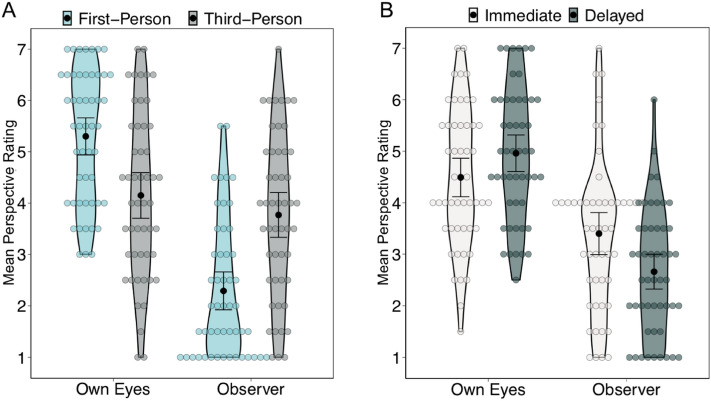
We typically experience the world from a first-person perspective (1PP) but can sometimes experience events from a third-person perspective (3PP) much as an observer might see us. Little is known about how visual perspective influences the formation of memories for events. We developed an immersive virtual reality paradigm to examine how visual perspective during encoding influences memories. Across two studies, participants explored immersive virtual environments from first-person and third-person avatar perspectives while wearing an Oculus Rift headset. Memory was tested immediately (Study One and Study Two) and following a one-week delay (Study Two). We assessed the accuracy of visual memory using cued recall questions and spatial memory by asking participants to draw maps of the layout of each environment (Study One and Study Two). Additional phenomenological ratings were included to assess visual perspective during remembering (Study Two). There were no differences in the accuracy of visual information across the two studies, but 3PP experiences were found to increase spatial memory accuracy due to their wider camera field of view when compared to 1PP experiences. Our results also demonstrate that 3PP experiences create 3PP memories, as reflected by an increase in subjective ratings of observer-like perspectives during remembering. In sum, visual perspective during memory formation influences the accuracy of spatial but not visual information, and the vantage point of memories during remembering.
Overview
The claims and statistics of this paper haven’t been checked yet.
Free: it reads the open-access text and checks the first 5 claims that cite a source we can check. Create a free account to check every claim.
Integrity signals
Registry
Cites
Statistics
Figures
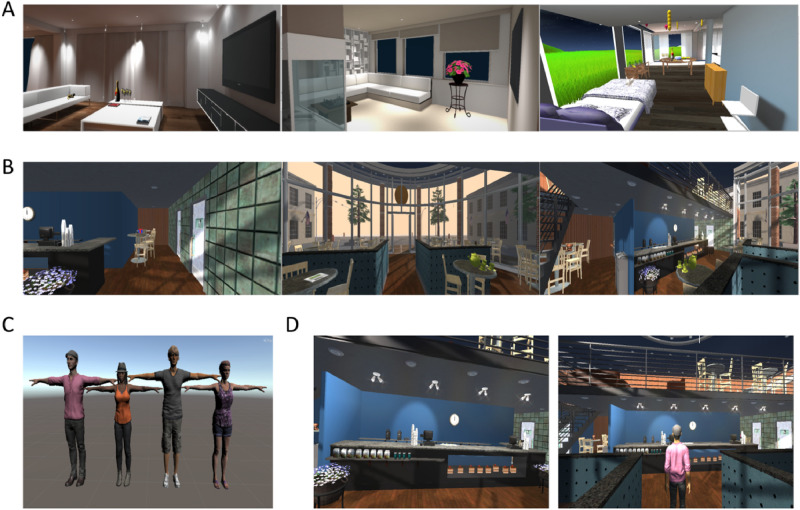
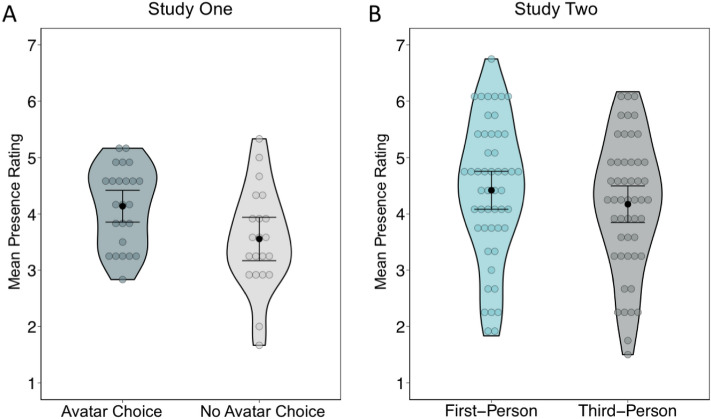
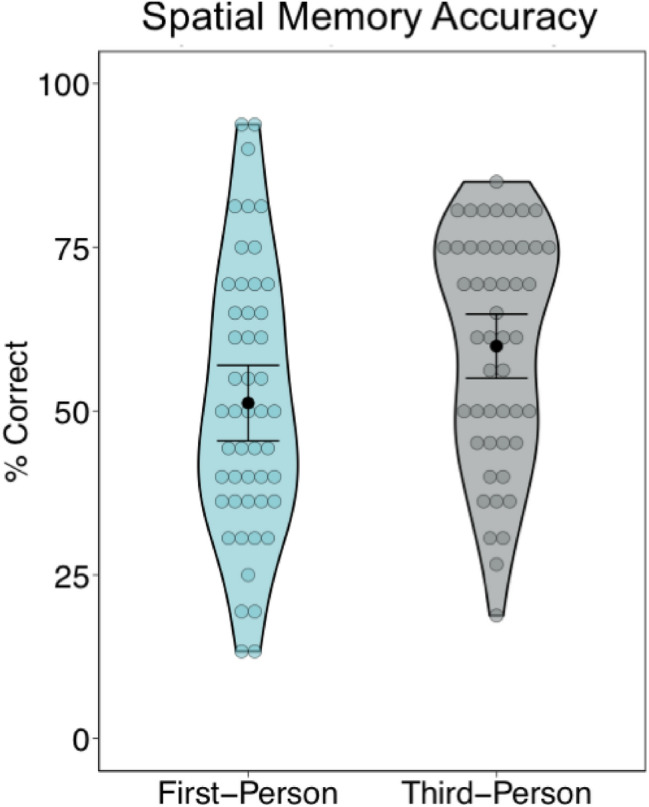
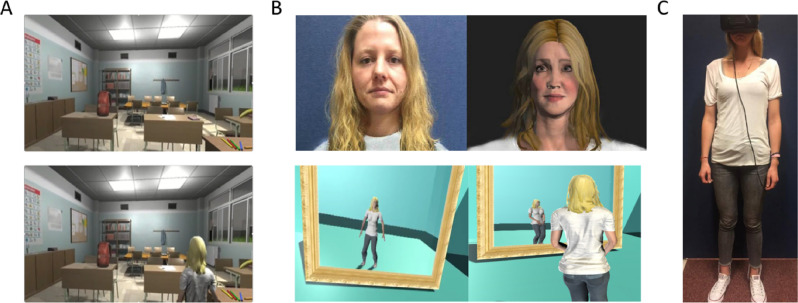
Verification
Claims the paper makes
The claims and statistics of this paper haven’t been checked yet.
Free: it reads the open-access text and checks the first 5 claims that cite a source we can check. Create a free account to check every claim.
Claims other papers make about this one
Each is checked against this paper’s own text: does it say what the citing paper says it does?
The cited source doesn’t support the claim as written.
In the citing paper
“Iriye and St. Jacques (2021) demonstrated that encoding events from a third-person avatar perspective produces measurably less vivid, less accurate, and less spatially rich memories, with effects persisting after a one-week delay.”
From Mediating memory through immersive technologies and artificial intelligence: revisiting individual and collectively co-created pasts and futures (2026) · cites this paper as Iriye and St. Jacques (2021)
Checked by a reasoning model — may be wrong.
Experimental — accuracy not yet measured
Self-check
Percentages, sums and reported differences re-computed from the paper’s own numbers.
The self-check needs the paper’s full text.
Citations
Cites
From presence to consciousness through virtual reality.
Sanchez-Vives, M. V., & Slater, M. (2005) · Nature reviews. Neuroscience · doi:10.1038/nrn1651 · Cited by 1,831
Video ergo sum: manipulating bodily self-consciousness
Lenggenhager, B., Tadi, T., Metzinger, T., & Blanke, O. (2007) · Science · doi:10.1126/science.1143439 · Cited by 1,265
First person experience of body transfer in virtual reality
Slater, M., Spanlang, B., Sanchez-Vives, M. V., & Blanke, O. (2010) · PLoS ONE · doi:10.1371/journal.pone.0010564 · Cited by 1,090
Using Presence Questionnaires in Reality
Usoh, M., Catena, E., Arman, S., & Slater, M. (2000) · Presence: Teleoperators and Virtual Environments · doi:10.1162/105474600566989 · Cited by 980
The experimental induction of out-of-body experiences
Ehrsson, H. H. (2007) · Science · doi:10.1126/science.1142175 · Cited by 959
Point of view in personal memories
Nigro, G., & Neisser, U. (1983) · Cognitive Psychology · doi:10.1016/0010-0285(83)90016-6 · Cited by 827 · cited 1×
“In the first empirical investigation of visual perspective in autobiographical memory, Nigro and Neisser (1983) suggested that “it is also possible to have observer experiences [i.e., 3PP experiences] . . . not all observer memories are produced by mnemonic distortion; some may accurately represent…”
BackgroundVirtual memory palaces: immersion aids recall
Krokos, E., Plaisant, C., & Varshney, A. (2019) · Virtual Reality · doi:10.1007/s10055-018-0346-3 · Cited by 585
Rubin, D. C., Berntsen, D., & Bohni, M. K. (2008) · Psychological Review · doi:10.1037/a0013397 · Cited by 489 · cited 1×
“There was a main effect of avatar choice, F (1,43) = 4.”
BackgroundEvent memory: A theory of memory for laboratory, autobiographical, and fictional events.
Rubin, D. C., & Umanath, S. (2015) · Psychological Review · doi:10.1037/a0037907 · Cited by 379
Petkova, V. I., Khoshnevis, M., & Ehrsson, H. H. (2011) · Frontiers in Psychology · doi:10.3389/fpsyg.2011.00035 · Cited by 311
Research works printed but not linked: 3
- Denisova, A. & Cairns, P. in Proceedings of the 33rd Annual ACM Conference on Human Factors in Computing Systems 145–148 (Association for Computing Machinery, Seoul, Republic of Korea, 2015).
- Medeiros, D. et al. in Proceedings of the 24th ACM Symposium on Virtual Reality Software and Technology Article 16 (Association for Computing Machinery, Tokyo, Japan, 2018).
- Salamin, P., Thalmann, D. & Vexo, F. in Proceedings of the ACM symposium on Virtual reality software and technology 27–30 (Association for Computing Machinery, Limassol, Cyprus, 2006).
Cited by
Virtual Reality as a Reflection Technique for Public Speaking Training
Hangyu, Z., Fujimoto, Y., Kanbara, M., & Kato, H. (2021) · Applied Sciences · doi:10.3390/app11093988 · Cited by 40
Feeling the News? The Differential Effects of Immersive Journalism on Emotional Response
Greber, H., Lecheler, S. K., Aaldering, L., de Haan, Y., Kruikemeier, S., Goutier, N., & de Bruin, K. (2023) · Digital Journalism · doi:10.1080/21670811.2022.2155205 · Cited by 79
Iriye, H., & Ehrsson, H. H. (2021) · iScience · doi:10.1016/j.isci.2021.103584 · Cited by 38
Self-citationMetacognitive Awareness and the Subjective Experience of Remembering in Aphantasia
Siena, M. J., & Simons, J. S. (2024) · Journal of Cognitive Neuroscience · doi:10.1162/jocn_a_02120 · Cited by 55
“Despite benefitting spatial memory accuracy (Iriye & St. Jacques, 2021), third-person recall was predicted be rated as less vivid in general than first-person recall (Rice & Rubin, 2009; Robinson & Swanson, 1993; Nigro & Neisser, 1983).”
BackgroundResultVisualizing recycling: Promoting recycling through mental simulation
Zhang, J., Zhao, L., & Hu, S. (2021) · Resources Conservation and Recycling · doi:10.1016/j.resconrec.2021.105783 · Cited by 26
Penaud, S., Jebara, N., Zaoui, M., Orriols, E., Berthoz, A., & Piolino, P. (2022) · Journal of Environmental Psychology · doi:10.1016/j.jenvp.2022.101801 · Cited by 25
Küçüktaş, S., & Jacques, P. L. S. (2022) · Frontiers in Human Neuroscience · doi:10.3389/fnhum.2022.928583 · Cited by 24
Embodiment in episodic memory through premotor-hippocampal coupling
Meyer, N. H., Gauthier, B., Stampacchia, S., Boscheron, J., Babo-Rebelo, M., Potheegadoo, J., Herbelin, B., Lance, F., Alvarez, V., Franc, E., et al. (2024) · Communications Biology · doi:10.1038/s42003-024-06757-7 · Cited by 24
“The VR paradigm and the visual stimuli were inspired and adapted from formerworksonEMresearchusingimmersiveVR 50,57,59 .”
Personal Memories and Bodily-Cues Influence Our Sense of Self
Bréchet, L. (2022) · Frontiers in Psychology · doi:10.3389/fpsyg.2022.855450 · Cited by 19
Kapsetaki, M. E., Militaru, I. E., Sanguino, I., Boccanera, M., Zaara, N., Zaman, A., Loreto, F., Malhotra, P., & Russell, C. (2021) · Journal of Cognitive Psychology · doi:10.1080/20445911.2021.1922417 · Cited by 15
Tell me why: the missing w in episodic memory’s what, where, and when
Morales-Calva, F., & Leal, S. L. (2024) · Cognitive Affective & Behavioral Neuroscience · doi:10.3758/s13415-024-01234-4 · Cited by 17
“…as people of diverse racial and ethnic makeups (Mannion et al., 2023), the use of technological advancements, such as virtual and augmented reality (Iriye & St. Jacques, 2021; Penaud et al., 2023), and the use of real-world neural recordings in freely moving participants (Topalovic et al., 2023)…”
Otsubo, H., Marquardt, A., Steininger, M., Lehnort, M., Dollack, F., Hirao, Y., Perusquía-Hernández, M., Uchiyama, H., Kruijff, E., Riecke, B. E., et al. (2024) · INTERNATIONAL CONFERENCE ON MULTIMODAL INTERACTION · doi:10.1145/3678957.3685753 · Cited by 10
Lenormand, D., Fauvel, B., & Piolino, P. (2024) · Frontiers in Psychology · doi:10.3389/fpsyg.2024.1355343 · Cited by 12
Fade In, Fade Out: Do Shifts in Visual Perspective Predict the Consistency of Real-World Memories?
Wardell, V., Jameson, T., Bontkes, O., Le, M. L., Duan, T.-Y., Jacques, P. L. S., Madan, C. R., & Palombo, D. J. (2023) · Psychological Science · doi:10.1177/09567976231180588 · Cited by 11
“…have been adopted to elucidate the relationship between perspective and accuracy, including reviewing photographs of staged events from different perspectives (Marcotti & St. Jacques, 2022) and manipulating perspective at the time of encoding via virtual reality (Iriye & St. Jacques, 2021).”
MethodThe effect of visual perspective on episodic memory in aging: A virtual reality study
Serino, S., Bieler-Aeschlimann, M., Guevara, A. B., Démonet, J., & Serino, A. (2023) · Consciousness and Cognition · doi:10.1016/j.concog.2023.103603 · Cited by 12
“The key element of the study was the manipulation of the visual perspective by changing the camera location in the virtual environment, as Iriye and St. Jacques did (2021).”
Multimodality: Exploring Sensibility and Sense-Making Beyond the Metaverse
Young, G. W., & Dawkins, O. (2023) · Lecture notes in computer science · doi:10.1007/978-3-031-35634-6_22 · Cited by 9
InteRecon: Towards Reconstructing Interactivity of Personal Memorable Items in Mixed Reality
Li, Z., Li, J., Xiong, Z., Zhang, S., Faruqi, F., Mueller, S., Liang, C., Ma, X., & Fan, M. (2025) · CHI Conference on Human Factors in Computing Systems · doi:10.1145/3706598.3713882 · Cited by 16
“Immersive technologies, typically built upon AR and VR platforms, play an important role in assisting memory reconstruction in different stages [37, 55, 91].”
Johnsdorf, M., Kisker, J., Sagehorn, M., Gruber, T., & Schöne, B. (2025) · Virtual Reality · doi:10.1007/s10055-025-01205-1 · Cited by 8
“…with previous VR studies showing that in contrast to conventional 2D paradigms, different mechanisms are employed to encode (Bréchet et al. 2019; Iriye and St. Jacques 2021; Johnsdorf et al. 2023a, b; Kisker et al. 2024; Kourtesis et al. 2021) and to retrieve content in immersive environments…”
Iriye, H., & Jacques, P. L. S. (2025) · Imaging Neuroscience · doi:10.1162/imag.a.93 · Cited by 9
“Iriye and St. Jacques (2021) found that the durability of out- of-body perspective ratings decreased over the course of a week, further suggesting that memory traces for out- of-body events are less stable over time.”
InfluentialSelf-citationBodily perception links memory and self: A case study of an amnesic patient
Meyer, N. H., Babo-Rebelo, M., Potheegadoo, J., Thanh, L. D. P., Boscheron, J., Herbelin, B., Vuarnesson, L., Stampacchia, S., Toye, I. M., Esposito, F., et al. (2025) · Cortex · doi:10.1016/j.cortex.2025.07.015 · Cited by 6
Doulou, F., Piolino, P., & Angeard, N. (2025) · Frontiers in Psychology · doi:10.3389/fpsyg.2025.1583052 · Cited by 11
The interwoven nature of spatial presence and virtual embodiment: a comprehensive perspective
Halbig, A., & Latoschik, M. E. (2025) · Frontiers in Virtual Reality · doi:10.3389/frvir.2025.1616662 · Cited by 11
Latgé-Tovar, S., Bertrand, E., Piolino, P., & Mograbi, D. C. (2024) · Frontiers in Aging Neuroscience · doi:10.3389/fnagi.2024.1376413 · Cited by 4
“It is also important to consider that the 1PP and 3PP may behave as independent variables and their related manipulation in virtual tasks might need to be assessed and quantified through separate scales (Iriye and St. Jacques, 2021).”
BackgroundMethodInfluentialMizuho, T., Takenaka, S., Narumi, T., & Kuzuoka, H. (2024) · IEEE Transactions on Visualization and Computer Graphics · doi:10.1109/tvcg.2024.3433498 · Cited by 8
“While manipulating the self-avatar in the third-person perspective is common in video games, it has been suggested that the first-person perspective promotes greater presence and embodiment [52].”
Sense of Agency during Encoding Predicts Subjective Reliving
Meyer, N. H., Gauthier, B., Potheegadoo, J., Boscheron, J., Franc, E., Lance, F., & Blanke, O. (2024) · eNeuro · doi:10.1523/eneuro.0256-24.2024 · Cited by 6
Constructing a Wider View on Memory
Peeters, A., Cosentino, E., & Werning, M. (2022) · Routledge eBooks · doi:10.4324/9781003153429-11 · Cited by 7
Virtual reality as a main basis for forming modern educational technologies
Timokhin, A., & Khoronko, L. (2021) · E3S Web of Conferences · doi:10.1051/e3sconf/202127312076 · Cited by 4
Jacques, P. L. S., & Marcotti, P. (2020) · PsyArXiv (OSF Preprints) · doi:10.31234/osf.io/x6uzp · Cited by 3
Metacognitive Awareness and the Subjective Experience of Remembering in AphantasiaPreprint
Siena, M. J., & Simons, J. S. (2023) · doi:10.31234/osf.io/gx4yw · Cited by 3
Jacques, P. L. S. (2026) · Journal of Cognitive Neuroscience · doi:10.1162/jocn.a.2403 · Cited by 3
Yang, Y., Peng, M., Yi, L., Duo, J., Pei, Y., & Fan, Z. (2026) · Journal of Environmental Psychology · doi:10.1016/j.jenvp.2026.103009 · Cited by 3
Putting things into perspective
Jacques, P. L. S., & Iriye, H. (2022) · Journal of Cognitive Psychology · doi:10.1080/20445911.2021.2024837 · Cited by 3
“Consistent with Iriye and St. Jacques (2021), they found that memories formed from an out-of-body perspective were later remembered from an observer-like perspective.”
BackgroundSelf-citationFade in, fade out: Do shifts in visual perspective predict the consistency of real-world memories?Preprint
Wardell, V., Jameson, T., Bontkes, O., Le, M. L., Duan, T.-Y., Jacques, P. L. S., Madan, C. R., & Palombo, D. J. (2022) · doi:10.31234/osf.io/j2kbv · Cited by 2
Yeh, D., Mam-Lam-Fook, C., Penaud, S., Santos, M. D., Martínez, G., Bourgin, J., Lucarini, V., Orriols, É., Berthoz, A., Krebs, M., et al. (2025) · Journal of Environmental Psychology · doi:10.1016/j.jenvp.2025.102712 · Cited by 1
“…prior research demonstrating the benefits of self-related processing on EM formation, in both traditional laboratory tasks (Klein, 2012; Rogers et al., 1977) and naturalistic VR paradigms that manipulated self-perspective (Bergouignan et al., 2014; Iriye & St. Jacques, 2021; Serino et al., 2023).”
Mai, Z., Gao, B., Tu, H., Zheng, H., & Duh, H. B. (2025) · Proceedings - International Symposium on Mixed and Augmented Reality, ISMAR · doi:10.1109/ismar67309.2025.00063 · Cited by 1
“First, previous work [23, 25] indicated that the third-person perspective could reduce adverse feelings and create third-person memory from an observer’s viewpoint, which is helpful for VR psychotherapy.”
Simulating the situated-self drives hippocampo-cortical engagement during inner narration of events
Bergouignan, L., & Paz‐Alonso, P. M. (2022) · Cerebral Cortex · doi:10.1093/cercor/bhac047 · Cited by 2
Perspective Matters: When Visual Perspective Reshapes Autobiographical MemoriesPreprint
Jacques, P. L. S. (2023) · doi:10.31234/osf.io/x6eq8 · Cited by 1
Kapur, A., & Sora-Domenjó, C. (2026) · Frontiers in Human Dynamics · doi:10.3389/fhumd.2026.1891875
The effect of video content creation strategy on the evaluation of vicarious tourism experiencePreprint
Luo, Z., Xu, J., & Wu, Y. (2023) · Authorea · doi:10.22541/au.168116404.46263631/v1
Can Correlates of a Memory be Transferred Between Human Subjects? A New False Memory Paradigm.
Rotondo-Valentine, J., Falandays, J. B., Spivey, M. J., & Wilson, J. (2023) · UC Merced Undergraduate Research Journal · doi:10.5070/m415160810
McCarroll, C. J., & Sutton, J. (2023) · Springer eBooks · doi:10.1007/978-3-030-93789-8_47-1
Role of the parietal cortex in memory
Siena, M. J., & Simons, J. S. (2024) · Elsevier eBooks · doi:10.1016/b978-0-443-15754-7.00010-9
Virtual Reality and Augmented Reality
Fujimoto, Y. (2025) · Springer eBooks · doi:10.1007/978-981-96-1313-7_9
Effects of Head-Mounted VR and MR-CAVE in Nursing Laboratory Teaching: A Comparative Study
Li, K., Xu, W., & Jin, X. (2025) · Interdisciplinary Nursing Research · doi:10.1097/nr9.0000000000000096
Naturalistic Movements Enrich Episodic Memories But Not Their Spatiotemporal Structure
Sabharwal-Siddiqi, S., McAvan, A. S., Robinson, E. M., Starrett, M. J., Garren, J. D., Zheng, J., Grilli, M. D., Isham, E. A., & Ekstrom, A. D. (2025) · Cognition · doi:10.1016/j.cognition.2025.106358 · Cited by 1
He, E. M., Suen, A. M. Y., Liu, P., Zuniga‐Hernandez, M., Feng, R., Gardner, K., Jackson, C., Rodríguez, S., Wang, E., & Caruso, T. J. (2026) · Games for Health Journal · doi:10.1177/2161783x261421429
“44,45 Third-person VR experiences are also associated with a lower risk of simulator-induced nausea, a common barrier to VR adoption in clinical populations.”
Evaluating Replay Techniques for Asynchronous Task Handover in Immersive Analytics
Gou, Z., Long, J., Lu, T., Zhao, J., & Yang, Y. (2026) · IEEE Conference on Virtual Reality and 3D User Interfaces (VR) · doi:10.1109/vr67842.2026.00065 · Cited by 1
“This finding resonates with literature suggesting that individual differences can moderate performance in virtual environments [26].”
InfluentialBalancing Accuracy and Embodiment: A Hybrid Perspective for Complex Visuomotor Tasks in VR
Dietz, D., Walz, S., Mayer, S., Butz, A. M., & Hoppe, M. (2026) · CHI Conference on Human Factors in Computing Systems · doi:10.1145/3772318.3791472
VR Builds Lasting Empathy & Compassion: Observation Edges Embodiment in Adolescents
Ohu, E. A., Olarinde, O., Adetunji, S., Ogbitse, A., & Odumbo, D. (2026) · IEEE Conference on Virtual Reality and 3D User Interfaces Abstracts and Workshops (VRW) · doi:10.1109/vrw70859.2026.00105
“This interpretation aligns with Iriye and St. Jacques [10] who found that third-person VR experiences reduced subjective emotional recollection compared to first-person experiences.”
Metadata
- Authors
- Iriye, H., & St. Jacques, P. L.
- Affiliations
- University of Sussex (GB)
- ORCID
- Iriye, Heather
- Venue
- Scientific Reports
- Published
- 2021-02-25
- Volume
- 11
- Issue
- 1
- Pages
- 4667-4667
- ISSN
- 2045-2322 (ISSN-L)
- PMC
- PMC7907329
- OpenAlex
- W3130396767
- Semantic Scholar
- 0520e8abc47571164330a488359f17e07c09258c
- Cited by
- 49
- References
- 44
- Citations by year
- 2026: 6 · 2025: 12 · 2024: 9 · 2023: 9 · 2022: 7 · 2021: 5
- FWCI
- 4.60
- Type
- journal article
- Language
- en
- Open access
- gold
- doi.org
- Licence
- cc-by
- creativecommons.org/licenses/by/4.0 (tdm)
- creativecommons.org/licenses/by/4.0 (vor)
- Locations
- Scientific Reports (publishedVersion, cc-by)
- PubMed Central (publishedVersion, cc-by)
- PubMed (publishedVersion)
- DOAJ (DOAJ: Directory of Open Access Journals) (submittedVersion, cc-by-sa)
- Funders
- University of Sussex
- Topics
- Physical Sciences › Computer Science › Human-Computer Interaction › Virtual Reality Applications and Impacts
- Life Sciences › Neuroscience › Cognitive Neuroscience › Memory Processes and Influences
- Life Sciences › Neuroscience › Cognitive Neuroscience › Memory and Neural Mechanisms
- Keywords
- third-person perspective, first-person perspective, visual perspective, memory encoding, spatial memory, visual memory, immersive virtual reality, long-term memory retention, field of view
- MeSH terms
- Virtual Reality, Female, Humans, Male, Memory, Young Adult
About these checks
Registry, retraction, Cites and statistics results are computed, not judged, with one exception: a printed reference that no index lists is read once by a model before it counts as a citation error. Claims are extracted by a model and kept only when their quote appears verbatim in the text; each cited source is then checked, with a model’s help, for whether it says what the claim relies on. Those verdicts can be wrong — read the claim’s quote and the cited source before relying on one.
Statistics and arithmetic are recomputed, not judged.
Confidence bands are shown only for fields calibrated on our annotated test set. None is calibrated yet, so no band is shown.
What counts as a claim ›How we measure confidence ›How we check this ›
Are you an author, or do you see a problem with this page? Request a review
Data sources
Bibliographic data: Semantic Scholar, OpenAlex, Crossref.
Contains information from the Semantic Scholar Academic Graph Datasets, made available under the ODC Attribution License (ODC-BY 1.0).
Semantic Scholar’s data is described in: Kinney, R., et al. (2023). The Semantic Scholar Open Data Platform. arXiv:2301.10140.
