

Lateral hypothalamus involvement in control of stress response by bed nucleus of the stria terminalis endocannabinoid neurotransmission in male rats
Open accessThe DOI matches its Crossref record; 74 of the 74 references it cites were found in a registry or an index.
Abstract
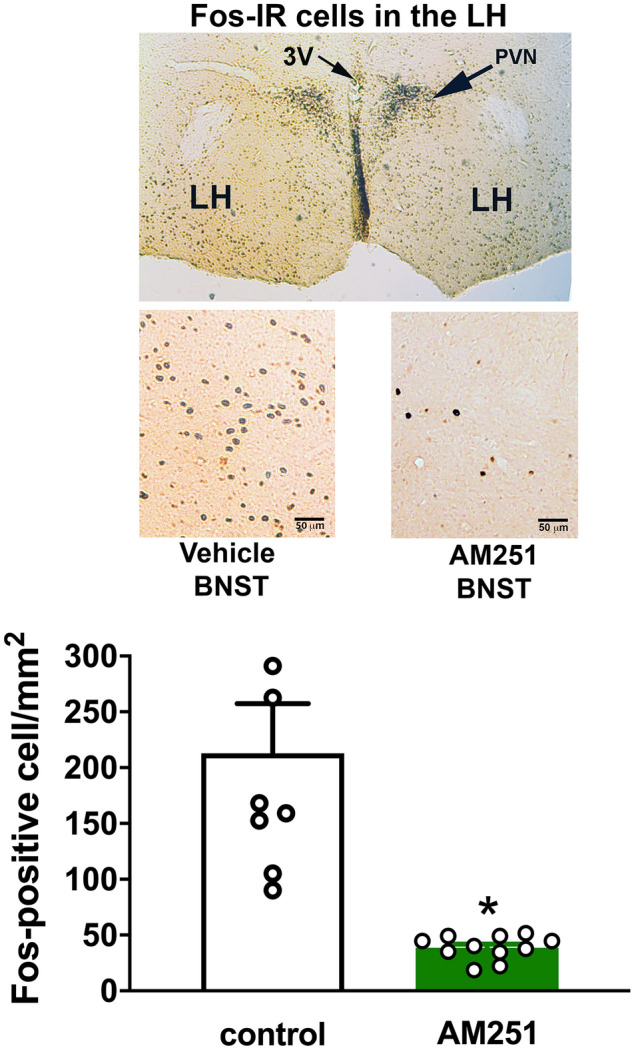
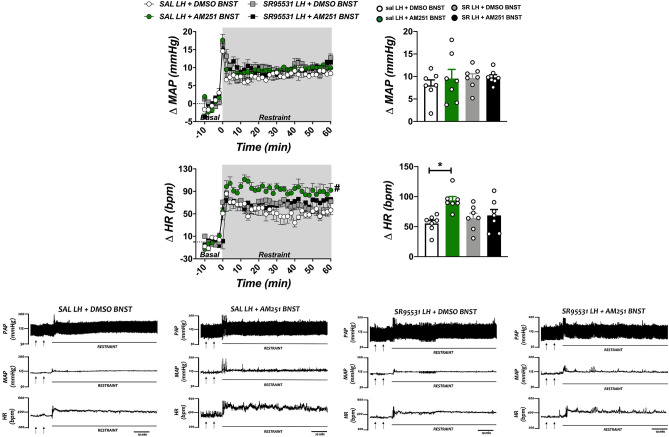
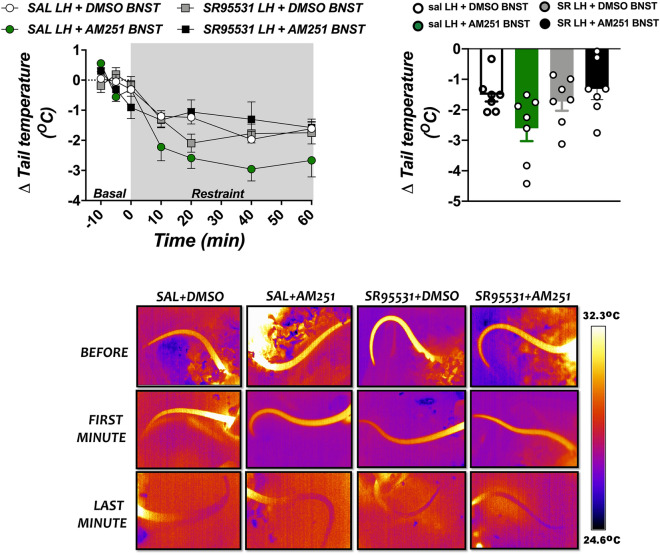
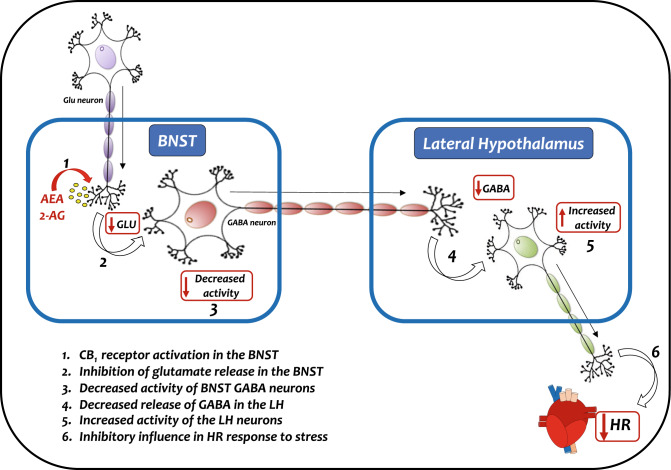
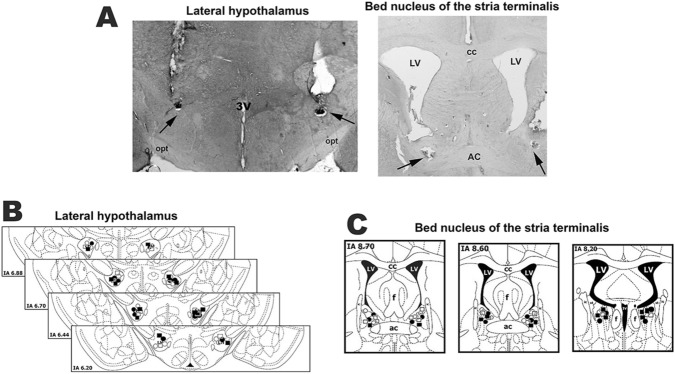
The endocannabinoid neurotransmission acting via local CB 1 receptor in the bed nucleus of the stria terminalis (BNST) has been implicated in behavioral and physiological responses to emotional stress. However, the neural network related to this control is poorly understood. In this sense, the lateral hypothalamus (LH) is involved in stress responses, and BNST GABAergic neurons densely innervate this hypothalamic nucleus. However, a role of BNST projections to the LH in physiological responses to stress is unknown. Therefore, using male rats, we investigated the role of LH GABAergic neurotransmission in the regulation of cardiovascular responses to stress by CB 1 receptors within the BNST. We observed that microinjection of the selective CB 1 receptor antagonist AM251 into the BNST decreased the number of Fos-immunoreactive cells within the LH of rats submitted to acute restraint stress. Treatment of the BNST with AM251 also enhanced restraint-evoked tachycardia. Nevertheless, arterial pressure increase and sympathetically-mediated cutaneous vasoconstriction to restraint was not affected by CB 1 receptor antagonism within the BNST. The effect of AM251 in the BNST on restraint-evoked tachycardia was abolished in animals pretreated with the selective GABA A receptor antagonist SR95531 in the LH. These results indicate that regulation of cardiovascular responses to stress by CB 1 receptors in the BNST is mediated by GABAergic neurotransmission in the LH. Present data also provide evidence of the BNST endocannabinoid neurotransmission as a mechanism involved in LH neuronal activation during stressful events.
Overview
The claims and statistics of this paper haven’t been checked yet.
Free: it reads the open-access text and checks the first 5 claims that cite a source we can check. Create a free account to check every claim.
Integrity signals
Registry
Cites
Statistics
Figures
Verification
Claims the paper makes
The claims and statistics of this paper haven’t been checked yet.
Free: it reads the open-access text and checks the first 5 claims that cite a source we can check. Create a free account to check every claim.
Claims other papers make about this one
Each is checked against this paper’s own text: does it say what the citing paper says it does?
The source backs part of the claim, not all of it — or backs it for a different population, condition or comparison.
In the citing paper
“Similarly, regions of the hypothalamus, including the PVH, LH and ARH, are activated by chronic stress in rodents47–51”
From Central regulation of stress-evoked peripheral immune responses (2023) · cites this paper as [49]
Experimental — accuracy not yet measured
Self-check
Percentages, sums and reported differences re-computed from the paper’s own numbers.
The self-check needs the paper’s full text.
Citations
Cites
The Rat Brain in Stereotaxic Coordinates
(1982) · Elsevier eBooks · doi:10.1016/c2009-0-63235-9 · Cited by 51,963
The rat brain in stereotaxic coordinates
Palkovits, M. (1983) · Neuropeptides · doi:10.1016/0143-4179(83)90049-5 · Cited by 28,831
AChE-stained horizontal sections of the rat brain in stereotaxic coordinates
Paxinos, G., Watson, C. R. R., & Emson, P. C. (1980) · Journal of Neuroscience Methods · doi:10.1016/0165-0270(80)90021-7 · Cited by 4,497
Immunohistochemical distribution of cannabinoid CB1 receptors in the rat central nervous system
Tsou, K., Brown, S., Sañudo-Peña, M. C., Mackie, K., & Walker, J. M. (1998) · Neuroscience · doi:10.1016/s0306-4522(97)00436-3 · Cited by 1,586
LeDoux, J., Iwata, J., Cicchetti, P., & Reis, D. (1988) · The Journal of Neuroscience · doi:10.1523/jneurosci.08-07-02517.1988 · Cited by 1,580
The endocannabinoid system and the brain.
Mechoulam, R., & Parker, L. A. (2013) · Annual Review of Psychology · doi:10.1146/annurev-psych-113011-143739 · Cited by 1,090
Diverging neural pathways assemble a behavioural state from separable features in anxiety
Kim, S.-Y., Adhikari, A., Lee, S. Y., Marshel, J. H., Kim, C. K., Mallory, C. S., Lo, M., Pak, S., Mattis, J., Lim, B. K., et al. (2013) · Nature · doi:10.1038/nature12018 · Cited by 666
Localization of cannabinoid receptor mRNA in rat brain
Matsuda, L. A., Bonner, T. I., & Lolait, S. J. (1993) · Journal of Comparative Neurology · doi:10.1002/cne.903270406 · Cited by 631
Multiple Functions of Endocannabinoid Signaling in the Brain
Katona, I., & Freund, T. F. (2012) · Annual Review of Neuroscience · doi:10.1146/annurev-neuro-062111-150420 · Cited by 630
Gulyas, A. I., Cravatt, B. F., Bracey, M. H., Dinh, T. P., Piomelli, D., Boscia, F., & Freund, T. F. (2004) · European Journal of Neuroscience · doi:10.1111/j.1460-9568.2004.03428.x · Cited by 561
Cullinan, W. E., Herman, J. P., & Watson, S. J. (1993) · Journal of Comparative Neurology · doi:10.1002/cne.903320102 · Cited by 541
The Inhibitory Circuit Architecture of the Lateral Hypothalamus Orchestrates Feeding
Jennings, J. H., Rizzi, G., Stamatakis, A. M., Ung, R. L., & Stuber, G. D. (2013) · Science · doi:10.1126/science.1241812 · Cited by 493
Luiten, P. G. M., ter Horst, G. J., & Steffens, A. B. (1987) · Progress in Neurobiology · doi:10.1016/0301-0082(87)90004-9 · Cited by 390
BÜTTNER‐ENNEVER, J. (1997) · Journal of Anatomy · doi:10.1046/j.1469-7580.1997.191203153.x · Cited by 359
Attenuated defense response and low basal blood pressure in orexin knockout mice
Kayaba, Y., Nakamura, A., Kasuya, Y., Ohuchi, T., Yanagisawa, M., Komuro, I., Fukuda, Y., & Kuwaki, T. (2003) · American Journal of Physiology-Regulatory, Integrative and Comparative Physiology · doi:10.1152/ajpregu.00671.2002 · Cited by 337
Changes in cutaneous and body temperature during and after conditioned fear to context in the rat
Vianna, D. M. L., & Carrive, P. (2005) · European Journal of Neuroscience · doi:10.1111/j.1460-9568.2005.04073.x · Cited by 327
Dong, H.-W., & Swanson, L. W. (2006) · The Journal of Comparative Neurology · doi:10.1002/cne.20788 · Cited by 290
Radley, J. J., Gosselink, K. L., & Sawchenko, P. E. (2009) · The Journal of Neuroscience · doi:10.1523/jneurosci.5924-08.2009 · Cited by 268
Crestani, C., Alves, F., Gomes, F., Resstel, L., Correa, F., & Herman, J. (2013) · Current Neuropharmacology · doi:10.2174/1570159x11311020002 · Cited by 249
Self-citationSynaptic functions of endocannabinoid signaling in health and disease
Araque, A., Castillo, P. E., Manzoni, O. J., & Tonini, R. (2017) · Neuropharmacology · doi:10.1016/j.neuropharm.2017.06.017 · Cited by 243
The Locus Ceruleus Is Involved in the Successful Retrieval of Emotional Memories in Humans
Sterpenich, V., D’Argembeau, A., Desseilles, M., Balteau, E., Albouy, G., Vandewalle, G., Degueldre, C., Luxen, A., Collette, F., & Maquet, P. (2006) · The Journal of Neuroscience · doi:10.1523/jneurosci.1001-06.2006 · Cited by 227
Orexin, stress, and anxiety/panic states
Johnson, P. L., Molosh, A., Fitz, S. D., Truitt, W. A., & Shekhar, A. (2012) · Progress in Brain Research · doi:10.1016/b978-0-444-59489-1.00009-4 · Cited by 216
Awake dynamics and brain-wide direct inputs of hypothalamic MCH and orexin networks
González, J. A., Iordanidou, P., Strom, M., Adamantidis, A., & Burdakov, D. (2016) · Nature Communications · doi:10.1038/ncomms11395 · Cited by 197
Descending pathways from hypothalamus to dorsal motor vagus and ambiguus nuclei in the rat
ter Horst, G. J., Luiten, P. G. M., & Kuipers, F. (1984) · Journal of the Autonomic Nervous System · doi:10.1016/0165-1838(84)90008-0 · Cited by 182
Gritti, I., Mainville, L., & Jones, B. E. (1994) · Journal of Comparative Neurology · doi:10.1002/cne.903390206 · Cited by 179
Kudo, T., Uchigashima, M., Miyazaki, T., Konno, K., Yamasaki, M., Yanagawa, Y., Minami, M., & Watanabe, M. (2012) · The Journal of Neuroscience · doi:10.1523/jneurosci.4057-12.2012 · Cited by 177
Polymodal activation of the endocannabinoid system in the extended amygdala
Puente, N., Cui, Y., Lassalle, O., Lafourcade, M., Georges, F., Venance, L., Grandes, P., & Manzoni, O. J. (2011) · Nature Neuroscience · doi:10.1038/nn.2974 · Cited by 173
Hypocretin /orexin contributes to the expression of some but not all forms of stress and arousal
Furlong, T. M., Vianna, D. M. L., Liu, L., & Carrive, P. (2009) · European Journal of Neuroscience · doi:10.1111/j.1460-9568.2009.06952.x · Cited by 163
Lower Brainstem Pathways Regulating Sympathetically Mediated Changes in Cutaneous Blood Flow
Blessing, W. W. (2003) · Cellular and Molecular Neurobiology · doi:10.1023/a:1025020029037 · Cited by 158
Myers, B., Mark Dolgas, C., Kasckow, J., Cullinan, W. E., & Herman, J. P. (2014) · Brain Structure and Function · doi:10.1007/s00429-013-0566-y · Cited by 146
Neuroanatomical characterization of endogenous opioids in the bed nucleus of the stria terminalis
Poulin, J.-F., Arbour, D., Laforest, S., & Drolet, G. (2009) · Progress in Neuro-Psychopharmacology and Biological Psychiatry · doi:10.1016/j.pnpbp.2009.06.021 · Cited by 145
The intersection of stress and reward: BNST modulation of aversive and appetitive states
Ch'ng, S., Fu, J., Brown, R. M., McDougall, S. J., & Lawrence, A. J. (2018) · Progress in Neuro-Psychopharmacology and Biological Psychiatry · doi:10.1016/j.pnpbp.2018.01.005 · Cited by 112
Iwata, J., Ledoux, J. E., & Reis, D. J. (1986) · Brain Research · doi:10.1016/0006-8993(86)91055-3 · Cited by 108
Resstel, L. B. M., Alves, F. H. F., Reis, D. G., Crestani, C. C., Corrêa, F. M. A., & Guimarães, F. S. (2008) · Neuroscience · doi:10.1016/j.neuroscience.2008.04.007 · Cited by 107
Self-citationCorticolimbic regulation of cardiovascular responses to stress
Myers, B. (2016) · Physiology & Behavior · doi:10.1016/j.physbeh.2016.10.015 · Cited by 106
A limbic circuitry involved in emotional stress-induced grooming
Mu, M.-D., Geng, H.-Y., Rong, K.-L., Peng, R.-C., Wang, S.-T., Geng, L.-T., Qian, Z.-M., Yung, W.-H., & Ke, Y. (2020) · Nature Communications · doi:10.1038/s41467-020-16203-x · Cited by 104
Crestani, C. C., Alves, F. H. F., Tavares, R. F., & Corrêa, F. M. A. (2009) · Stress · doi:10.1080/10253890802331477 · Cited by 92
Self-citationLange, M. D., Daldrup, T., Remmers, F., Szkudlarek, H. J., Lesting, J., Guggenhuber, S., Ruehle, S., Jüngling, K., Seidenbecher, T., Lutz, B., et al. (2016) · Molecular Psychiatry · doi:10.1038/mp.2016.156 · Cited by 68
Sanders, B. J., Wirtz-Nole, C., DeFord, S. M., & Erling, B. F. (1994) · Physiology & Behavior · doi:10.1016/0031-9384(94)90231-3 · Cited by 66
Orexin as a modulator of fear-related behavior: Hypothalamic control of noradrenaline circuit
Soya, S., & Sakurai, T. (2018) · Brain Research · doi:10.1016/j.brainres.2018.11.032 · Cited by 65
Radley, J. J., & Johnson, S. B. (2017) · Psychoneuroendocrinology · doi:10.1016/j.psyneuen.2017.12.005 · Cited by 64
Puente, N., Elezgarai, I., Lafourcade, M., Reguero, L., Marsicano, G., Georges, F., Manzoni, O. J., & Grandes, P. (2010) · PLoS ONE · doi:10.1371/journal.pone.0008869 · Cited by 56
Newsom, R. J., Osterlund, C., Masini, C. V., Day, H. E., Spencer, R. L., & Campeau, S. (2012) · Neuroscience · doi:10.1016/j.neuroscience.2011.11.043 · Cited by 54
Liu, J., Hu, T., Zhang, M.-Q., Xu, C.-Y., Yuan, M.-Y., & Li, R.-X. (2021) · Neuroscience Letters · doi:10.1016/j.neulet.2020.135621 · Cited by 52
Almeida, J., Duarte, J. O., de Oliveira, L. L., & Crestani, C. C. (2015) · Stress · doi:10.3109/10253890.2015.1038993 · Cited by 48
Self-citationFerreira, W. C., Vieira, J. O., Almeida, J., Gomes‐de‐Souza, L., & Crestani, C. C. (2016) · Frontiers in Pharmacology · doi:10.3389/fphar.2016.00262 · Cited by 48
Self-citationSartor, G. C., & Aston‐Jones, G. (2012) · European Journal of Neuroscience · doi:10.1111/j.1460-9568.2012.08277.x · Cited by 47
The medial amygdaloid nucleus modulates cardiovascular responses to acute restraint in rats
Fortaleza, E. A. T., Tavares, R. F., & Corrêa, F. M. D. A. (2009) · Neuroscience · doi:10.1016/j.neuroscience.2009.01.003 · Cited by 47
Hosoya, Y., & Matsushita, M. (1980) · Neuroscience Letters · doi:10.1016/0304-3940(80)90290-6 · Cited by 45
Duarte, J. O., Cruz, F. C., Leão, R. M., Planeta, C. S., & Crestani, C. C. (2015) · Psychosomatic Medicine · doi:10.1097/psy.0000000000000141 · Cited by 42
Self-citationBusnardo, C., Crestani, C. C., Scopinho, A. A., Packard, B. A., Resstel, L. B. M., Corrêa, F. M. D. A., & Herman, J. P. (2018) · Progress in Neuro-Psychopharmacology and Biological Psychiatry · doi:10.1016/j.pnpbp.2018.11.001 · Cited by 36
Self-citationBenini, R., de Oliveira, L. L., Gomes‐de‐Souza, L., & Crestani, C. C. (2019) · Stress · doi:10.1080/10253890.2018.1532992 · Cited by 36
Self-citationBeig, M. I., Dampney, B. W., & Carrive, P. (2014) · Neuropharmacology · doi:10.1016/j.neuropharm.2014.09.012 · Cited by 33
Orexin, Stress and Central Cardiovascular Control. A Link with Hypertension?
Carrive, P. (2016) · Neuroscience & Biobehavioral Reviews · doi:10.1016/j.neubiorev.2016.06.044 · Cited by 33
Kim, S.-R., & Kim, S. (2021) · Molecules and Cells · doi:10.14348/molcells.2021.0006 · Cited by 32
Benini, R., de Oliveira, L. L., Gomes‐de‐Souza, L., Rodrigues, B., & Crestani, C. C. (2020) · Journal of Experimental Biology · doi:10.1242/jeb.219501 · Cited by 27
Self-citationdos Santos, C. E. M., Benini, R., & Crestani, C. C. (2020) · Pflügers Archiv - European Journal of Physiology · doi:10.1007/s00424-020-02451-9 · Cited by 27
Self-citationGomes‐de‐Souza, L., de Oliveira, L. L., Benini, R., Rodella, P., Ferreira, W. C., & Crestani, C. C. (2016) · British Journal of Pharmacology · doi:10.1111/bph.13560 · Cited by 26
Self-citationGomes‐de‐Souza, L., Bianchi, P., Ferreira, W. C., Tomeo, R. A., Cruz, F. C., & Crestani, C. C. (2021) · Progress in Neuro-Psychopharmacology and Biological Psychiatry · doi:10.1016/j.pnpbp.2021.110284 · Cited by 23
Self-citationDeolindo, M. V., dos Reis, D. G., Crestani, C. C., Tavares, R. F., Resstel, L. B. M., & Corrêa, F. M. D. A. (2013) · European Journal of Neuroscience · doi:10.1111/ejn.12246 · Cited by 22
Self-citationAdami, M. B., Barretto‐de‐Souza, L., Duarte, J. O., Almeida, J., & Crestani, C. C. (2017) · Journal of Psychopharmacology · doi:10.1177/0269881117691468 · Cited by 20
Self-citationBedse, G., Centanni, S. W., Winder, D. G., & Patel, S. (2019) · Alcoholism Clinical and Experimental Research · doi:10.1111/acer.14159 · Cited by 20
The bed nucleus of the stria terminalis modulates exercise‐evoked cardiovascular responses in rats
Crestani, C. C., Alves, F. H. F., Resstel, L. B. M., & Corrêa, F. M. D. A. (2009) · Experimental Physiology · doi:10.1113/expphysiol.2009.049056 · Cited by 18
Self-citationBarretto‐de‐Souza, L., Benini, R., Reis‐Silva, L. L., & Crestani, C. C. (2020) · Brain Research Bulletin · doi:10.1016/j.brainresbull.2020.11.010 · Cited by 18
Self-citationGomes‐de‐Souza, L., Benini, R., Ferreira, W. C., & Crestani, C. C. (2019) · European Neuropsychopharmacology · doi:10.1016/j.euroneuro.2019.03.001 · Cited by 16
Self-citationde Oliveira, L. L., Gomes‐de‐Souza, L., Benini, R., & Crestani, C. C. (2018) · Psychoneuroendocrinology · doi:10.1016/j.psyneuen.2018.01.010 · Cited by 15
Self-citationBarretto‐de‐Souza, L., Adami, M. B., Benini, R., & Crestani, C. C. (2018) · British Journal of Pharmacology · doi:10.1111/bph.14447 · Cited by 14
Self-citationFerreira, W. C., Gomes‐de‐Souza, L., & Crestani, C. C. (2021) · European Journal of Neuroscience · doi:10.1111/ejn.15094 · Cited by 14
Self-citationLimbic connections to the lateral preoptic area: A horseradish peroxidase study in the rat
Wayner, M. J., Barone, F. C., Scharoun, S. L., Guevara-Aguilar, R., & Aguilar-Baturoni, H. U. (1983) · Neuroscience & Biobehavioral Reviews · doi:10.1016/0149-7634(83)90042-8 · Cited by 11
Almeida, J., de Oliveira, L. L., Benini, R., & Crestani, C. C. (2019) · Nitric Oxide · doi:10.1016/j.niox.2019.11.004 · Cited by 11
Self-citationNewsom, R. J., Garcia, R. J., Stafford, J., Osterlund, C., O’Neill, C. E., Day, H. E. W., & Campeau, S. (2019) · Psychoneuroendocrinology · doi:10.1016/j.psyneuen.2019.104549 · Cited by 11
Duarte, J. O., Gomes, K. S., Nunes‐de‐Souza, R. L., & Crestani, C. C. (2017) · Physiology & Behavior · doi:10.1016/j.physbeh.2017.03.030 · Cited by 8
Self-citationGomes‐de‐Souza, L., Ferreira, W. C., de Oliveira, L. L., Benini, R., & Crestani, C. C. (2020) · Journal of Psychopharmacology · doi:10.1177/0269881119897556 · Cited by 8
Self-citationFerreira, W. C., Gomes‐de‐Souza, L., & Crestani, C. C. (2019) · Pflügers Archiv - European Journal of Physiology · doi:10.1007/s00424-019-02301-3 · Cited by 7
Self-citation
Cited by
Central regulation of stress-evoked peripheral immune responses
Chan, K. L., Poller, W. C., Swirski, F. K., & Russo, S. J. (2023) · Nature Reviews Neuroscience · doi:10.1038/s41583-023-00729-2 · Cited by 207
Feng, X., Jia, M., Cai, M., Zhu, T., Hashimoto, K., & Yang, J. (2025) · Molecular Psychiatry · doi:10.1038/s41380-025-03085-y · Cited by 156
Weresa, J., Pędzińska‐Betiuk, A., Mińczuk, K., Malinowska, B., & Schlicker, E. (2022) · Cells · doi:10.3390/cells11071142 · Cited by 37
Cerebellar Prediction and Feeding Behaviour
Iosif, C. I., Bashir, Z. I., Apps, R., & Pickford, J. (2022) · The Cerebellum · doi:10.1007/s12311-022-01476-3 · Cited by 32
Barretto‐de‐Souza, L., Benini, R., Reis‐Silva, L. L., & Crestani, C. C. (2022) · Neuropharmacology · doi:10.1016/j.neuropharm.2022.109061 · Cited by 26
Self-citation
Metadata
- Authors
- Gomes-de-Souza, L., Costa-Ferreira, W., Mendonça, M. M., Xavier, C. H., & Crestani, C. C.
- Affiliations
- Universidade Federal de Goiás (BR)
- Universidade Federal de São Carlos (BR)
- Corresponding author
- Crestani, Carlos C.
- Venue
- Scientific Reports
- Published
- 2021-08-09
- Volume
- 11
- Issue
- 1
- Pages
- 16133-16133
- ISSN
- 2045-2322 (ISSN-L)
- PMC
- PMC8352993
- OpenAlex
- W3189581176
- Cited by
- 23
- References
- 74
- Citations by year
- 2026: 3 · 2025: 8 · 2024: 1 · 2023: 5 · 2022: 6
- FWCI
- 1.75
- Type
- journal article
- Language
- en
- Open access
- gold
- doi.org
- Licence
- cc-by
- creativecommons.org/licenses/by/4.0 (tdm)
- creativecommons.org/licenses/by/4.0 (vor)
- Locations
- Scientific Reports (publishedVersion, cc-by)
- PubMed Central (publishedVersion, cc-by)
- PubMed (publishedVersion)
- DOAJ (DOAJ: Directory of Open Access Journals) (submittedVersion, cc-by-sa)
- LA Referencia (Red Federada de Repositorios Institucionales de Publicaciones Científicas) (submittedVersion, other-oa)
- Funders
- Conselho Nacional de Desenvolvimento Científico e Tecnológico (406393/2018-4, 431339/2018-0, 304108/2018-9)
- Fundação de Amparo à Pesquisa do Estado de São Paulo (2017/19249-0, 2019/24478-3)
- Topics
- Health Sciences › Medicine › Pharmacology (medical) › Cannabis and Cannabinoid Research
- Life Sciences › Neuroscience › Behavioral Neuroscience › Stress Responses and Cortisol
- Life Sciences › Neuroscience › Cellular and Molecular Neuroscience › Neuropeptides and Animal Physiology
- Keywords
- lateral hypothalamus, bed nucleus of the stria terminalis, CB1 receptor, GABAergic neurotransmission, stress response, restraint stress, cardiovascular responses to stress, tachycardia, arterial pressure, cutaneous vasoconstriction, Fos-like immunoreactivity, AM251, SR95531, GABAA receptor
- MeSH terms
- Psychological Distress, Animals, Heart Rate, Hypothalamic Area, Lateral, Male, Models, Neurological, Synaptic Transmission, Piperidines, Pyrazoles, Pyridazines, Septal Nuclei, Stress, Psychological, Tachycardia, Rats, Wistar, GABA Antagonists, Rats, GABAergic Neurons, Cannabinoid Receptor Antagonists, Endocannabinoids
About these checks
Registry, retraction, Cites and statistics results are computed, not judged, with one exception: a printed reference that no index lists is read once by a model before it counts as a citation error. Claims are extracted by a model and kept only when their quote appears verbatim in the text; each cited source is then checked, with a model’s help, for whether it says what the claim relies on. Those verdicts can be wrong — read the claim’s quote and the cited source before relying on one.
Statistics and arithmetic are recomputed, not judged.
Confidence bands are shown only for fields calibrated on our annotated test set. None is calibrated yet, so no band is shown.
What counts as a claim ›How we measure confidence ›How we check this ›
Are you an author, or do you see a problem with this page? Request a review
Data sources
Bibliographic data: Semantic Scholar, OpenAlex, Crossref.
Contains information from the Semantic Scholar Academic Graph Datasets, made available under the ODC Attribution License (ODC-BY 1.0).
Semantic Scholar’s data is described in: Kinney, R., et al. (2023). The Semantic Scholar Open Data Platform. arXiv:2301.10140.
