

Introducing the comparative weighting evaluation based on the best criteria method: a multi-fuzzy framework for aviation fuel efficiency
Open accessThe DOI matches its Crossref record; 59 of the 60 references it cites were found in a registry or an index; 18 of the 54 sources its claims cite were checked for support.
Abstract
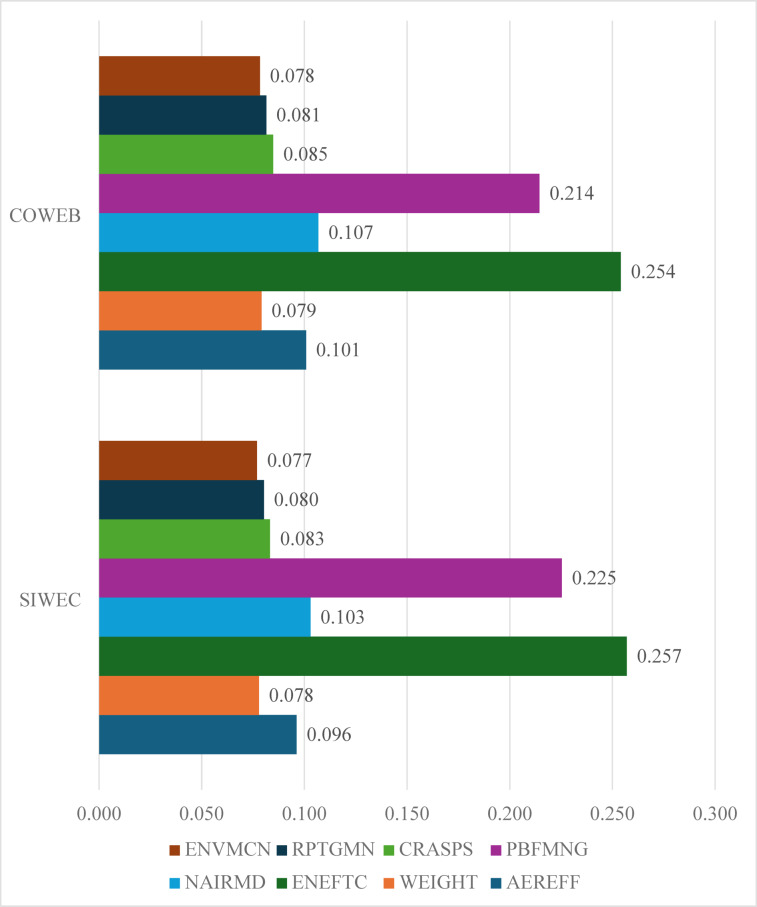
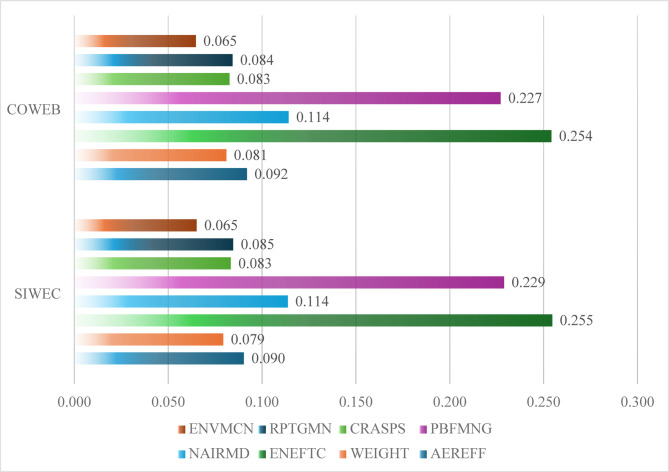
Fuel consumption in the aviation industry is one of the most critical cost items in terms of both economic and environmental sustainability. Although numerous studies have examined the determinants of aircraft fuel efficiency, there remains no consensus in the literature regarding which factors are most influential. This lack of clarity creates a major research gap that limits the ability of airlines to allocate resources effectively, make strategic plans, and implement operational improvements. To address this gap, the present study introduces the Comparative Weighting Evaluation based on the Best Criteria (COWEB) method - a novel multi-fuzzy decision-making framework designed to identify and prioritize the most critical factors influencing aircraft fuel consumption. The distinct originality of the COWEB model lies in its comparative structure, which evaluates all criteria relative to the most significant one, thereby reducing cognitive load and enhancing consistency. Moreover, the integration of Triangular, Pythagorean, and Fermatean fuzzy environments enables comprehensive modeling of expert uncertainty across multiple dimensions. According to the results, "engine efficiency and technology" and "pilot behavior and flight management" are the two most influential criteria, with respective weights of 0.254 and 0.227. While the COWEB technique yields stable results under all fuzzy environments, the comparative SIWEC analysis reveals minor inconsistencies, confirming the superior stability and reliability of the proposed model. By minimizing the number of required comparisons, the COWEB method improves expert consistency, reduces evaluation time, and provides a clearer differentiation among closely related factors.
Overview
CoChat Summary
## TL;DR
This paper proposes COWEB, a new comparative weighting method for multi-criteria decision-making, and applies it in triangular, Pythagorean, and Fermatean fuzzy settings to rank factors affecting aircraft fuel consumption. Across all settings, the top criteria are “engine efficiency and technology” and “pilot behavior and flight management,” with the paper reporting them as the most influential and showing stable rankings versus SIWEC.
## Key findings
- In the abstract, the two most influential criteria are reported as engine efficiency and technology (0.254) and pilot behavior and flight management (0.227).
- In the analysis with real numbers, the same two criteria are top-ranked with weights 0.254 and 0.214, and the correlation between COWEB and SIWEC is 0.999.
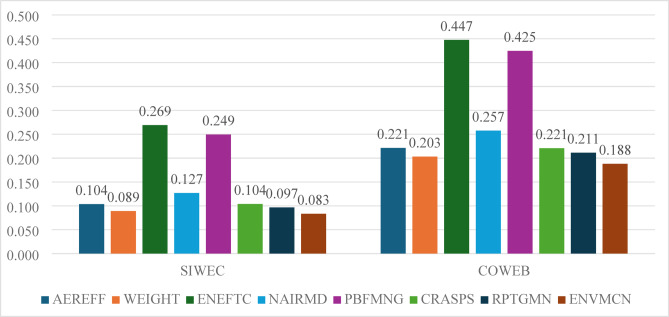
- With triangular fuzzy numbers, the top criteria are reported as engine efficiency and technology (0.447) and pilot behavior and flight management (0.425); the paper says the criterion order is similar to SIWEC, with only the 4th and 5th priorities reversed.
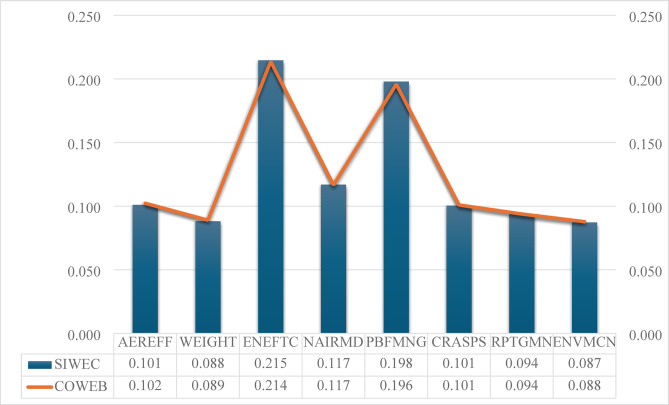
- With Pythagorean and Fermatean fuzzy numbers, the same two criteria remain top-ranked; the paper reports weights of 0.214 and 0.196 for Pythagorean and 0.254 and 0.227 for Fermatean, and says the correlation with SIWEC is 1 in both cases.
- The sensitivity analysis used 10 scenarios and reports that the criteria priorities remained completely unchanged across all scenarios.
## Methods
- The study develops COWEB (Comparative Weighting Evaluation based on the Best Criteria), where each expert selects the most important criterion and evaluates other criteria relative to it.
- The empirical application uses 8 criteria for aircraft fuel consumption: aerodynamic efficiency, weight, engine efficiency and technology, new aircraft types and modernization, pilot behavior and flight management, cruise altitude and speed selection, route planning/taxiing/ground maneuvers, and environmental and meteorological conditions.
- Data come from 10 decision makers with at least 15 years of experience; half were pilots and half were airline managers/operations managers/engineers.
- The paper compares COWEB against SIWEC, and also includes a numerical example comparing AHP, BWM, and COWEB; it reports 10 sensitivity scenarios with different expert weights.
## Limitations
- The paper states that COWEB only calculates criteria weights and does not rank alternatives; this is an explicit limitation in the conclusion.
- It also states that the method does not produce a traditional consistency ratio/index because it does not use a full pairwise comparison matrix.
- The paper says the model’s applicability is currently limited to the aviation sector and suggests testing it in other sectors for generalizability.
- Evident from the text: the study relies on 10 expert evaluators and the paper does not report a broader sample beyond these decision makers.
Model-written summary. Check it against the paper before relying on it.
Integrity signals
Registry
Cites
Statistics
Figures
Verification
Claims the paper makes
12 Valid · 10 Not valid · 21 Not checked · 88 Own results and interpretations
The cited sources that could be checked couldn’t confirm or dispute this claim.
In the paper
“Although numerous studies have examined the determinants of aircraft fuel efficiency, there remains no consensus in the literature regarding which factors are most influential.”
- Also stated in: § Introduction Fuel consumption in aircraft is one of the most important issues in aviation. The amount of fuel consumed is a significant cost component in aircraft. Consequently, this has a significant negative impact on the financial performance of companies1. If the necessary measures are not taken, this situation leads to a number of significant financial problems2. As a result, airlines lose their economic competitiveness. Furthermore, excessive fuel consumption leads to the release of more carbon dioxide gas into the atmosphere. This is considered one of the most significant causes of global warming. Therefore, reducing aircraft fuel consumption is crucial to reduce environmental pollution. Many different factors affect aircraft fuel consumption. The air resistance an aircraft experiences while moving through the air is related to aerodynamic efficiency3. Less resistance means the engine consumes less power, which directly leads to fuel savings. Furthermore, the use of new aircraft types can also have an impact on fuel consumption. New aircraft models are generally lighter, quieter, and more efficient. This makes a significant difference in both environmental and economic terms. In addition, the heavier the aircraft, the more thrust it requires to generate lift. This causes the engine to use more fuel. Technological advancements are another important factor in this process4. Newer-generation engines consume significantly less fuel than older models. Finally, fuel consumption in aircraft is also affected by flight altitude. The higher the aircraft flies, the lower the air density. This allows the engine to maintain the same speed while consuming less power. Numerous factors influence aircraft fuel costs. However, it is not appropriate to assign equal importance to all of them. For businesses to effectively utilize their limited resources, it’s essential to identify the most critical factors. This is crucial for strategic planning and operational efficiency. Identifying the most important criteria allows businesses to develop concrete strategies that can be implemented in the short term. Numerous studies exist in the literature examining the factors affecting aircraft fuel consumption5. However, most of these studies address factors at a general level and fail to reveal their relative importance6. The limited number of studies identifying the most critical factors is considered a significant “missing gap” in the aviation field7. This deficiency creates uncertainty both theoretically and practically8. Airline companies lack clear guidance on which factors to prioritize. This leads to consequences such as increased costs, resource waste, and a departure from sustainability goals. Furthermore, the lack of systematic identification of fuel efficiency-focused strategic priorities in the academic literature creates a significant theoretical gap9. Therefore, the need for a new and comprehensive priority analysis is increasingly necessary. Such an analysis will both support the strategic decision-making processes of airline companies and make a significant scientific contribution by filling the existing gap in the literature. This study aims to define essential indicators of aircraft fuel consumption. The study is motivated by the need for airlines to reduce fuel costs, achieve sustainability goals, and optimize strategic resource utilization. As a result of the literature review, eight key criteria affecting fuel consumption are identified. A unique decision-making model is developed to identify the most critical of these criteria. The proposed model, called comparative weighting evaluation based on the best criteria (COWEB), is based on a multi-criteria decision-making approach. The unique feature of the model is its comparative evaluation principle and its integration with various fuzzy sets. To achieve this, the COWEB technique is applied in conjunction with triangular, Pythagorean, and Fermatean fuzzy set structures. This integrated structure enables more realistic modeling of uncertainties and more effective evaluation of expert opinions in the decision-making process. In addition, to test the validity and reliability of the proposed method, a comparative analysis is conducted with the SIWEC approach. The study not only develops a theoretical model but also demonstrates the practical applicability of the proposed approach. In this direction, the research seeks to answer the following fundamental questions: (1) Which are the most critical factors affecting aircraft fuel consumption? (2) To what extent is the COWEB model an effective method in determining the importance levels of these factors? (3) Does the integration of Triangular, Pythagorean, and Fermatean fuzzy sets increase the accuracy and consistency of the decision-making process? (4) Does the proposed COWEB approach provide more reliable and flexible results than the existing SIWEC method? This study contributes to the aviation sustainability and decision-making literature by developing a new comparative weighting model designed to identify and prioritize the key factors influencing aircraft fuel consumption. The research introduces the COWEB method, which represents a methodological advancement by integrating multiple fuzzy environments (Triangular, Pythagorean, and Fermatean) to capture expert uncertainty more comprehensively. The novelty of the developed model is evident in both the structure of the weighting technique and the integration of the fuzzy sets used. In this respect, the study distinguishes itself from existing methods in the literature, both methodologically and practically. (1) This study develops a new weighting technique called COWEB. Various criticisms of existing weighting methods were considered in the development of this new technique10. In pairwise comparison-based methods such as AHP and DEMATEL, the large number of questions reduces the consistency of experts and compromises the reliability of the data11. In objective weighting methods such as LOPCOW and Entropy, alternatives must be determined in advance to calculate criterion weights. This makes it difficult to use these techniques when analysis is aimed at criteria only12. In methods like CIMAS, experts cannot fully reflect the relative importance of important criteria because they lack a reference value. Considering these shortcomings, the COWEB technique was developed. In the COWEB approach, the most important criterion is first determined, and other factors are compared based on this criterion. Thus, the model provides a more concrete and reliable basis for comparison. In this respect, COWEB offers several key advantages over existing methods: it has higher reliability, enables a clearer separation of criteria with similar importance levels, and significantly reduces data collection time. While AHP collects evaluations for each criterion pair, COWEB only constructs pairs with the most important criterion13. This requires collecting more evaluations in expert systems. In other words, this means the evaluation form is longer14. In BWM, however, the best and worst criteria must be determined. This requires evaluators to rank each criterion twice. This complicates the creation of the form and the collection of evaluations. (2) To enable a more comprehensive and flexible analysis, the COWEB technique is implemented in conjunction with Triangular, Pythagorean, and Fermatean fuzzy set structures15. This integration allows the model to manage uncertainties more effectively. The Triangular fuzzy set al.lows for a simple and intuitive expression of uncertainties in expert opinions. The Pythagorean fuzzy set al.lows for a more flexible definition of membership and dissenting membership degrees, thus improving the accuracy of the evaluation process. The Fermatean fuzzy set is a more generalized version of this structure, allowing experts to reflect their uncertainty perceptions within a broader framework16. Using these three structures together contributes to holistic modeling of the decision-making process. Furthermore, a comparative analysis is conducted with the SIWEC approach, widely used in the literature, to assess the validity and reliability of the proposed method. This comparison demonstrates that the COWEB technique offers higher reliability and success not only theoretically but also in practice. Thus, the proposed model represents a superior alternative to existing methods in the literature in terms of both accuracy and applicability. The organization of the manuscript is explained below. Section “Literature review” underlines the missing gap in the literature. Section “Methodology” indicates the details of the proposed model. Section “Comparative weighting evaluation based the best criteria (COWEB)” denotes the main results of this model. Section “COWEB with triangular fuzzy sets” makes a comprehensive discussion based on the analysis results. Section “COWEB with pythagorean fuzzy sets” focuses on the main conclusions and limitations. · plain
“However, most of these studies address factors at a general level and fail to reveal their relative importance6.”
- Also stated in: § Introduction Fuel consumption in aircraft is one of the most important issues in aviation. The amount of fuel consumed is a significant cost component in aircraft. Consequently, this has a significant negative impact on the financial performance of companies1. If the necessary measures are not taken, this situation leads to a number of significant financial problems2. As a result, airlines lose their economic competitiveness. Furthermore, excessive fuel consumption leads to the release of more carbon dioxide gas into the atmosphere. This is considered one of the most significant causes of global warming. Therefore, reducing aircraft fuel consumption is crucial to reduce environmental pollution. Many different factors affect aircraft fuel consumption. The air resistance an aircraft experiences while moving through the air is related to aerodynamic efficiency3. Less resistance means the engine consumes less power, which directly leads to fuel savings. Furthermore, the use of new aircraft types can also have an impact on fuel consumption. New aircraft models are generally lighter, quieter, and more efficient. This makes a significant difference in both environmental and economic terms. In addition, the heavier the aircraft, the more thrust it requires to generate lift. This causes the engine to use more fuel. Technological advancements are another important factor in this process4. Newer-generation engines consume significantly less fuel than older models. Finally, fuel consumption in aircraft is also affected by flight altitude. The higher the aircraft flies, the lower the air density. This allows the engine to maintain the same speed while consuming less power. Numerous factors influence aircraft fuel costs. However, it is not appropriate to assign equal importance to all of them. For businesses to effectively utilize their limited resources, it’s essential to identify the most critical factors. This is crucial for strategic planning and operational efficiency. Identifying the most important criteria allows businesses to develop concrete strategies that can be implemented in the short term. Numerous studies exist in the literature examining the factors affecting aircraft fuel consumption5. However, most of these studies address factors at a general level and fail to reveal their relative importance6. The limited number of studies identifying the most critical factors is considered a significant “missing gap” in the aviation field7. This deficiency creates uncertainty both theoretically and practically8. Airline companies lack clear guidance on which factors to prioritize. This leads to consequences such as increased costs, resource waste, and a departure from sustainability goals. Furthermore, the lack of systematic identification of fuel efficiency-focused strategic priorities in the academic literature creates a significant theoretical gap9. Therefore, the need for a new and comprehensive priority analysis is increasingly necessary. Such an analysis will both support the strategic decision-making processes of airline companies and make a significant scientific contribution by filling the existing gap in the literature. This study aims to define essential indicators of aircraft fuel consumption. The study is motivated by the need for airlines to reduce fuel costs, achieve sustainability goals, and optimize strategic resource utilization. As a result of the literature review, eight key criteria affecting fuel consumption are identified. A unique decision-making model is developed to identify the most critical of these criteria. The proposed model, called comparative weighting evaluation based on the best criteria (COWEB), is based on a multi-criteria decision-making approach. The unique feature of the model is its comparative evaluation principle and its integration with various fuzzy sets. To achieve this, the COWEB technique is applied in conjunction with triangular, Pythagorean, and Fermatean fuzzy set structures. This integrated structure enables more realistic modeling of uncertainties and more effective evaluation of expert opinions in the decision-making process. In addition, to test the validity and reliability of the proposed method, a comparative analysis is conducted with the SIWEC approach. The study not only develops a theoretical model but also demonstrates the practical applicability of the proposed approach. In this direction, the research seeks to answer the following fundamental questions: (1) Which are the most critical factors affecting aircraft fuel consumption? (2) To what extent is the COWEB model an effective method in determining the importance levels of these factors? (3) Does the integration of Triangular, Pythagorean, and Fermatean fuzzy sets increase the accuracy and consistency of the decision-making process? (4) Does the proposed COWEB approach provide more reliable and flexible results than the existing SIWEC method? This study contributes to the aviation sustainability and decision-making literature by developing a new comparative weighting model designed to identify and prioritize the key factors influencing aircraft fuel consumption. The research introduces the COWEB method, which represents a methodological advancement by integrating multiple fuzzy environments (Triangular, Pythagorean, and Fermatean) to capture expert uncertainty more comprehensively. The novelty of the developed model is evident in both the structure of the weighting technique and the integration of the fuzzy sets used. In this respect, the study distinguishes itself from existing methods in the literature, both methodologically and practically. (1) This study develops a new weighting technique called COWEB. Various criticisms of existing weighting methods were considered in the development of this new technique10. In pairwise comparison-based methods such as AHP and DEMATEL, the large number of questions reduces the consistency of experts and compromises the reliability of the data11. In objective weighting methods such as LOPCOW and Entropy, alternatives must be determined in advance to calculate criterion weights. This makes it difficult to use these techniques when analysis is aimed at criteria only12. In methods like CIMAS, experts cannot fully reflect the relative importance of important criteria because they lack a reference value. Considering these shortcomings, the COWEB technique was developed. In the COWEB approach, the most important criterion is first determined, and other factors are compared based on this criterion. Thus, the model provides a more concrete and reliable basis for comparison. In this respect, COWEB offers several key advantages over existing methods: it has higher reliability, enables a clearer separation of criteria with similar importance levels, and significantly reduces data collection time. While AHP collects evaluations for each criterion pair, COWEB only constructs pairs with the most important criterion13. This requires collecting more evaluations in expert systems. In other words, this means the evaluation form is longer14. In BWM, however, the best and worst criteria must be determined. This requires evaluators to rank each criterion twice. This complicates the creation of the form and the collection of evaluations. (2) To enable a more comprehensive and flexible analysis, the COWEB technique is implemented in conjunction with Triangular, Pythagorean, and Fermatean fuzzy set structures15. This integration allows the model to manage uncertainties more effectively. The Triangular fuzzy set al.lows for a simple and intuitive expression of uncertainties in expert opinions. The Pythagorean fuzzy set al.lows for a more flexible definition of membership and dissenting membership degrees, thus improving the accuracy of the evaluation process. The Fermatean fuzzy set is a more generalized version of this structure, allowing experts to reflect their uncertainty perceptions within a broader framework16. Using these three structures together contributes to holistic modeling of the decision-making process. Furthermore, a comparative analysis is conducted with the SIWEC approach, widely used in the literature, to assess the validity and reliability of the proposed method. This comparison demonstrates that the COWEB technique offers higher reliability and success not only theoretically but also in practice. Thus, the proposed model represents a superior alternative to existing methods in the literature in terms of both accuracy and applicability. The organization of the manuscript is explained below. Section “Literature review” underlines the missing gap in the literature. Section “Methodology” indicates the details of the proposed model. Section “Comparative weighting evaluation based the best criteria (COWEB)” denotes the main results of this model. Section “COWEB with triangular fuzzy sets” makes a comprehensive discussion based on the analysis results. Section “COWEB with pythagorean fuzzy sets” focuses on the main conclusions and limitations. · plain
“The limited number of studies identifying the most critical factors is considered a significant “missing gap” in the aviation field7.”
§ Introducing the comparative weighting evaluation based on the best criteria method: a multi-fuzzy framework for aviation fuel efficiency > Abstract Fuel consumption in the aviation industry is one of the most critical cost items in terms of both economic and environmental sustainability. Although numerous studies have examined the determinants of aircraft fuel efficiency, there remains no consensus in the literature regarding which factors are most influential. This lack of clarity creates a major research gap that limits the ability of airlines to allocate resources effectively, make strategic plans, and implement operational improvements. To address this gap, the present study introduces the Comparative Weighting Evaluation based on the Best Criteria (COWEB) method — a novel multi-fuzzy decision-making framework designed to identify and prioritize the most critical factors influencing aircraft fuel consumption. The distinct originality of the COWEB model lies in its comparative structure, which evaluates all criteria relative to the most significant one, thereby reducing cognitive load and enhancing consistency. Moreover, the integration of Triangular, Pythagorean, and Fermatean fuzzy environments enables comprehensive modeling of expert uncertainty across multiple dimensions. According to the results, “engine efficiency and technology” and “pilot behavior and flight management” are the two most influential criteria, with respective weights of 0.254 and 0.227. While the COWEB technique yields stable results under all fuzzy environments, the comparative SIWEC analysis reveals minor inconsistencies, confirming the superior stability and reliability of the proposed model. By minimizing the number of required comparisons, the COWEB method improves expert consistency, reduces evaluation time, and provides a clearer differentiation among closely related factors.
What the sources say
- Not checked — no full text of the sourcecites [6] Hileman, J. I., Spakovszky, Z. S., Drela, M., Sargeant, M. A. & Jones, A. Airframe design for silent fuel-efficient aircraft. J. Aircr. 47 (3), 956–969 (2010). source
- Could not verifycites [7] Babikian, R., Lukachko, S. P. & Waitz, I. A. The historical fuel efficiency characteristics of regional aircraft from technological, operational, and cost perspectives. J. Air Transp. Manage. 8 (6), 389–400 (2002). sourceExperimental — accuracy not yet measured
Our copy of this DOI is only the MIT DSpace repository record for Babikian's 2001 S.M. thesis (landing page plus abstract), not the article/thesis body: repeated searches ('no consensus in the literature', 'determinants of aircraft fuel efficiency', 'many studies have examined fuel efficiency', 'literature review technological operational cost') returned only the same five abstract-level passages. None of them characterises the state of the prior literature or claims disagreement over which factors dominate, so the citing sentence's assertion of 'no consensus' is not addressed here. The abstract does state this thesis's own conclusion that 'fuel efficiency differences can largely be explained by distinctions in aircraft operations', but that is a summary of its findings rather than any statement about consensus across studies — neither support nor contradiction. (LLM, conf=0.70)
plain- Asserted: passes — The authors put it forward as true.
- Checkable: passes — It can be checked against evidence.
- Load-bearing: passes — The paper’s conclusions depend on it.
- Based: passes — The paper gives a reason why it holds.
- Also stated in: § Introduction Fuel consumption in aircraft is one of the most important issues in aviation. The amount of fuel consumed is a significant cost component in aircraft. Consequently, this has a significant negative impact on the financial performance of companies1. If the necessary measures are not taken, this situation leads to a number of significant financial problems2. As a result, airlines lose their economic competitiveness. Furthermore, excessive fuel consumption leads to the release of more carbon dioxide gas into the atmosphere. This is considered one of the most significant causes of global warming. Therefore, reducing aircraft fuel consumption is crucial to reduce environmental pollution. Many different factors affect aircraft fuel consumption. The air resistance an aircraft experiences while moving through the air is related to aerodynamic efficiency3. Less resistance means the engine consumes less power, which directly leads to fuel savings. Furthermore, the use of new aircraft types can also have an impact on fuel consumption. New aircraft models are generally lighter, quieter, and more efficient. This makes a significant difference in both environmental and economic terms. In addition, the heavier the aircraft, the more thrust it requires to generate lift. This causes the engine to use more fuel. Technological advancements are another important factor in this process4. Newer-generation engines consume significantly less fuel than older models. Finally, fuel consumption in aircraft is also affected by flight altitude. The higher the aircraft flies, the lower the air density. This allows the engine to maintain the same speed while consuming less power. Numerous factors influence aircraft fuel costs. However, it is not appropriate to assign equal importance to all of them. For businesses to effectively utilize their limited resources, it’s essential to identify the most critical factors. This is crucial for strategic planning and operational efficiency. Identifying the most important criteria allows businesses to develop concrete strategies that can be implemented in the short term. Numerous studies exist in the literature examining the factors affecting aircraft fuel consumption5. However, most of these studies address factors at a general level and fail to reveal their relative importance6. The limited number of studies identifying the most critical factors is considered a significant “missing gap” in the aviation field7. This deficiency creates uncertainty both theoretically and practically8. Airline companies lack clear guidance on which factors to prioritize. This leads to consequences such as increased costs, resource waste, and a departure from sustainability goals. Furthermore, the lack of systematic identification of fuel efficiency-focused strategic priorities in the academic literature creates a significant theoretical gap9. Therefore, the need for a new and comprehensive priority analysis is increasingly necessary. Such an analysis will both support the strategic decision-making processes of airline companies and make a significant scientific contribution by filling the existing gap in the literature. This study aims to define essential indicators of aircraft fuel consumption. The study is motivated by the need for airlines to reduce fuel costs, achieve sustainability goals, and optimize strategic resource utilization. As a result of the literature review, eight key criteria affecting fuel consumption are identified. A unique decision-making model is developed to identify the most critical of these criteria. The proposed model, called comparative weighting evaluation based on the best criteria (COWEB), is based on a multi-criteria decision-making approach. The unique feature of the model is its comparative evaluation principle and its integration with various fuzzy sets. To achieve this, the COWEB technique is applied in conjunction with triangular, Pythagorean, and Fermatean fuzzy set structures. This integrated structure enables more realistic modeling of uncertainties and more effective evaluation of expert opinions in the decision-making process. In addition, to test the validity and reliability of the proposed method, a comparative analysis is conducted with the SIWEC approach. The study not only develops a theoretical model but also demonstrates the practical applicability of the proposed approach. In this direction, the research seeks to answer the following fundamental questions: (1) Which are the most critical factors affecting aircraft fuel consumption? (2) To what extent is the COWEB model an effective method in determining the importance levels of these factors? (3) Does the integration of Triangular, Pythagorean, and Fermatean fuzzy sets increase the accuracy and consistency of the decision-making process? (4) Does the proposed COWEB approach provide more reliable and flexible results than the existing SIWEC method? This study contributes to the aviation sustainability and decision-making literature by developing a new comparative weighting model designed to identify and prioritize the key factors influencing aircraft fuel consumption. The research introduces the COWEB method, which represents a methodological advancement by integrating multiple fuzzy environments (Triangular, Pythagorean, and Fermatean) to capture expert uncertainty more comprehensively. The novelty of the developed model is evident in both the structure of the weighting technique and the integration of the fuzzy sets used. In this respect, the study distinguishes itself from existing methods in the literature, both methodologically and practically. (1) This study develops a new weighting technique called COWEB. Various criticisms of existing weighting methods were considered in the development of this new technique10. In pairwise comparison-based methods such as AHP and DEMATEL, the large number of questions reduces the consistency of experts and compromises the reliability of the data11. In objective weighting methods such as LOPCOW and Entropy, alternatives must be determined in advance to calculate criterion weights. This makes it difficult to use these techniques when analysis is aimed at criteria only12. In methods like CIMAS, experts cannot fully reflect the relative importance of important criteria because they lack a reference value. Considering these shortcomings, the COWEB technique was developed. In the COWEB approach, the most important criterion is first determined, and other factors are compared based on this criterion. Thus, the model provides a more concrete and reliable basis for comparison. In this respect, COWEB offers several key advantages over existing methods: it has higher reliability, enables a clearer separation of criteria with similar importance levels, and significantly reduces data collection time. While AHP collects evaluations for each criterion pair, COWEB only constructs pairs with the most important criterion13. This requires collecting more evaluations in expert systems. In other words, this means the evaluation form is longer14. In BWM, however, the best and worst criteria must be determined. This requires evaluators to rank each criterion twice. This complicates the creation of the form and the collection of evaluations. (2) To enable a more comprehensive and flexible analysis, the COWEB technique is implemented in conjunction with Triangular, Pythagorean, and Fermatean fuzzy set structures15. This integration allows the model to manage uncertainties more effectively. The Triangular fuzzy set al.lows for a simple and intuitive expression of uncertainties in expert opinions. The Pythagorean fuzzy set al.lows for a more flexible definition of membership and dissenting membership degrees, thus improving the accuracy of the evaluation process. The Fermatean fuzzy set is a more generalized version of this structure, allowing experts to reflect their uncertainty perceptions within a broader framework16. Using these three structures together contributes to holistic modeling of the decision-making process. Furthermore, a comparative analysis is conducted with the SIWEC approach, widely used in the literature, to assess the validity and reliability of the proposed method. This comparison demonstrates that the COWEB technique offers higher reliability and success not only theoretically but also in practice. Thus, the proposed model represents a superior alternative to existing methods in the literature in terms of both accuracy and applicability. The organization of the manuscript is explained below. Section “Literature review” underlines the missing gap in the literature. Section “Methodology” indicates the details of the proposed model. Section “Comparative weighting evaluation based the best criteria (COWEB)” denotes the main results of this model. Section “COWEB with triangular fuzzy sets” makes a comprehensive discussion based on the analysis results. Section “COWEB with pythagorean fuzzy sets” focuses on the main conclusions and limitations. · plain
The cited sources that could be checked couldn’t confirm or dispute this claim.
In the paper
“Furthermore, optimizing route planning, taxi times, and ground maneuvers improve operational efficiency, while meteorological conditions—particularly wind direction and strength—have a decisive impact on fuel consumption and emissions43,44.”
§ Introducing the comparative weighting evaluation based on the best criteria method: a multi-fuzzy framework for aviation fuel efficiency > Literature review
What the sources say
- Not checked — no full text of the sourcecites [43] Kilic, U. A comparison of the environmental impact of turboprop and turbofan-powered aircraft. Aircr. Eng. Aerosp. Technol. 95 (7), 1092–1098 (2023a). source
- Could not verifycites [44] Kılıç, U. A detailed emission analysis between regional jet and narrow-body passenger aircraft. Int. J. Energy Stud. 8 (2), 201–213 (2023b). sourceExperimental — accuracy not yet measured
Our full copy of Kılıç (2023) contains no passage on meteorological or wind effects: searches for 'wind direction and strength / meteorological conditions', 'weather conditions, route planning, taxi times', 'atmospheric conditions, temperature, aircraft performance' and 'route optimization, continuous descent, taxiing' returned only the LTO/CCD framework (p. 205), Material and Methods (p. 202), Results and Discussion (fuel-flow figures per phase), the IMPACT/BADA-AEM description (Table 3) and the Conclusion/Contribution sections, none of which state that wind direction or strength decisively affects fuel burn or emissions. The closest content is the modelling assumption that flights 'vary according to the seasons and days [29]' and that a fixed 302.41 nm Erzincan–Ankara trajectory at 39,000 ft cruise was modelled (p. 207), i.e. weather is held out of the analysis rather than shown to drive emissions. Since our copy simply does not address the claim's point (and does not contradict it either), the attribution cannot be checked against this source. (LLM, conf=0.70)
boostedstates a cause- Asserted: passes — The authors put it forward as true.
- Checkable: passes — It can be checked against evidence.
- Load-bearing: unclear — It is unclear whether the paper’s conclusions depend on it.
- Based: passes — The paper gives a reason why it holds.
A result the paper reports from its own data — it cites no other source for it, so there is none to check. The quote shows it is in the paper.
In the paper
“While the COWEB technique yields stable results under all fuzzy environments, the comparative SIWEC analysis reveals minor inconsistencies, confirming the superior stability and reliability of the proposed model.”
§ Introducing the comparative weighting evaluation based on the best criteria method: a multi-fuzzy framework for aviation fuel efficiency > Abstract Fuel consumption in the aviation industry is one of the most critical cost items in terms of both economic and environmental sustainability. Although numerous studies have examined the determinants of aircraft fuel efficiency, there remains no consensus in the literature regarding which factors are most influential. This lack of clarity creates a major research gap that limits the ability of airlines to allocate resources effectively, make strategic plans, and implement operational improvements. To address this gap, the present study introduces the Comparative Weighting Evaluation based on the Best Criteria (COWEB) method — a novel multi-fuzzy decision-making framework designed to identify and prioritize the most critical factors influencing aircraft fuel consumption. The distinct originality of the COWEB model lies in its comparative structure, which evaluates all criteria relative to the most significant one, thereby reducing cognitive load and enhancing consistency. Moreover, the integration of Triangular, Pythagorean, and Fermatean fuzzy environments enables comprehensive modeling of expert uncertainty across multiple dimensions. According to the results, “engine efficiency and technology” and “pilot behavior and flight management” are the two most influential criteria, with respective weights of 0.254 and 0.227. While the COWEB technique yields stable results under all fuzzy environments, the comparative SIWEC analysis reveals minor inconsistencies, confirming the superior stability and reliability of the proposed model. By minimizing the number of required comparisons, the COWEB method improves expert consistency, reduces evaluation time, and provides a clearer differentiation among closely related factors.
plain- Asserted: passes — The authors put it forward as true.
- Checkable: passes — It can be checked against evidence.
- Load-bearing: passes — The paper’s conclusions depend on it.
- Based: passes — The paper gives a reason why it holds.
A result the paper reports from its own data — it cites no other source for it, so there is none to check. The quote shows it is in the paper.
In the paper
“According to the results, “engine efficiency and technology” and “pilot behavior and flight management” are the two most influential criteria, with respective weights of 0.254 and 0.227.”
§ Introducing the comparative weighting evaluation based on the best criteria method: a multi-fuzzy framework for aviation fuel efficiency > Abstract Fuel consumption in the aviation industry is one of the most critical cost items in terms of both economic and environmental sustainability. Although numerous studies have examined the determinants of aircraft fuel efficiency, there remains no consensus in the literature regarding which factors are most influential. This lack of clarity creates a major research gap that limits the ability of airlines to allocate resources effectively, make strategic plans, and implement operational improvements. To address this gap, the present study introduces the Comparative Weighting Evaluation based on the Best Criteria (COWEB) method — a novel multi-fuzzy decision-making framework designed to identify and prioritize the most critical factors influencing aircraft fuel consumption. The distinct originality of the COWEB model lies in its comparative structure, which evaluates all criteria relative to the most significant one, thereby reducing cognitive load and enhancing consistency. Moreover, the integration of Triangular, Pythagorean, and Fermatean fuzzy environments enables comprehensive modeling of expert uncertainty across multiple dimensions. According to the results, “engine efficiency and technology” and “pilot behavior and flight management” are the two most influential criteria, with respective weights of 0.254 and 0.227. While the COWEB technique yields stable results under all fuzzy environments, the comparative SIWEC analysis reveals minor inconsistencies, confirming the superior stability and reliability of the proposed model. By minimizing the number of required comparisons, the COWEB method improves expert consistency, reduces evaluation time, and provides a clearer differentiation among closely related factors.
plainstates an association- Asserted: passes — The authors put it forward as true.
- Checkable: passes — It can be checked against evidence.
- Load-bearing: passes — The paper’s conclusions depend on it.
- Based: passes — The paper gives a reason why it holds.
A result the paper reports from its own data — it cites no other source for it, so there is none to check. The quote shows it is in the paper.
In the paper
“While the COWEB technique yields stable results under all fuzzy environments, the comparative SIWEC analysis reveals minor inconsistencies, confirming the superior stability and reliability of the proposed model.”
§ Introducing the comparative weighting evaluation based on the best criteria method: a multi-fuzzy framework for aviation fuel efficiency > Abstract Fuel consumption in the aviation industry is one of the most critical cost items in terms of both economic and environmental sustainability. Although numerous studies have examined the determinants of aircraft fuel efficiency, there remains no consensus in the literature regarding which factors are most influential. This lack of clarity creates a major research gap that limits the ability of airlines to allocate resources effectively, make strategic plans, and implement operational improvements. To address this gap, the present study introduces the Comparative Weighting Evaluation based on the Best Criteria (COWEB) method — a novel multi-fuzzy decision-making framework designed to identify and prioritize the most critical factors influencing aircraft fuel consumption. The distinct originality of the COWEB model lies in its comparative structure, which evaluates all criteria relative to the most significant one, thereby reducing cognitive load and enhancing consistency. Moreover, the integration of Triangular, Pythagorean, and Fermatean fuzzy environments enables comprehensive modeling of expert uncertainty across multiple dimensions. According to the results, “engine efficiency and technology” and “pilot behavior and flight management” are the two most influential criteria, with respective weights of 0.254 and 0.227. While the COWEB technique yields stable results under all fuzzy environments, the comparative SIWEC analysis reveals minor inconsistencies, confirming the superior stability and reliability of the proposed model. By minimizing the number of required comparisons, the COWEB method improves expert consistency, reduces evaluation time, and provides a clearer differentiation among closely related factors.
plain- Asserted: passes — The authors put it forward as true.
- Checkable: passes — It can be checked against evidence.
- Load-bearing: passes — The paper’s conclusions depend on it.
- Based: passes — The paper gives a reason why it holds.
66 more claims
Create a free account to see all 131 claims and to verify the 13 references still open.
- Probably not a substantial claim. 38
- It may state two separate claims as one. 32
Citations
Cites
Babikian, R., Lukachko, S. P., & Waitz, I. A. (2002) · Journal of Air Transport Management · doi:10.1016/s0969-6997(02)00020-0 · Cited by 194
Moslem, S. (2024) · Engineering Applications of Artificial Intelligence · doi:10.1016/j.engappai.2023.107447 · Cited by 193
Airframe Design for Silent Fuel-Efficient Aircraft
Hileman, J. I., Spakovszky, Z. S., Drela, M., Sargeant, M. A., & Jones, A. (2010) · Journal of Aircraft · doi:10.2514/1.46545 · Cited by 113
An integrated fuzzy SWARA and fuzzy AD approach for outsourcing provider selection
Perçin, S. (2019) · Journal of Manufacturing Technology Management · doi:10.1108/jmtm-08-2018-0247 · Cited by 101
Moslem, S. (2025) · Applied Soft Computing · doi:10.1016/j.asoc.2025.112918 · Cited by 72
Gonzales, G. G., Costan, F. C., Suladay, D., Gonzales, R. R., Enriquez, L., Costan, E., Atibing, N. M., Aro, J. L., Evangelista, S. S., Maturan, F., et al. (2022) · Applied Sciences · doi:10.3390/app12020689 · Cited by 62
Fermatean fuzzy sets and its extensions: a systematic literature review
Büyüközkan, G., Uztürk, D., & Ilıcak, Ö. (2024) · Artificial Intelligence Review · doi:10.1007/s10462-024-10761-y · Cited by 60
Alternative Fuel Selection Framework toward Decarbonizing Maritime Deep-Sea Shipping
Moshiul, A. M., Mohammad, R., & Hira, F. A. (2023) · Sustainability · doi:10.3390/su15065571 · Cited by 55 · cited 1×
“For instance, AHP and TOPSIS have been widely used to evaluate fuel-saving strategies and aircraft selection alternatives by considering economic, environmental, and operational factors 38,39 .”
Xu, Z., Shi, W., Wang, M., Zhong, S., Zhou, Y., Pei, J., Shao, L., Pan, K., & Song, Y. (2025) · Sustainable Energy Technologies and Assessments · doi:10.1016/j.seta.2025.104210 · Cited by 43
Agricultural land suitability of Manimutha Nadhi watershed using AHP and GIS techniques
Sathiyamurthi, S., Saravanan, S., Karuppannan, S., Balakumbahan, R., Sivasakthi, M., Kumar, S. P., Ramya, M., Hussain, S., & Tariq, A. (2024) · Discover Sustainability · doi:10.1007/s43621-024-00471-4 · Cited by 38
The Group Decision-Making Using Pythagorean Fuzzy Entropy and the Complex Proportional Assessment
Thakur, P., Kizielewicz, B., Gandotra, N., Shekhovtsov, A., Saini, N., & Sałabun, W. (2022) · Sensors · doi:10.3390/s22134879 · Cited by 31
Causse, M., Mercier, M., Lefrançois, O., & Matton, N. (2025) · Applied Ergonomics · doi:10.1016/j.apergo.2024.104456 · Cited by 30 · cited 1×
“Simulation-based training can increase fuel consumption awareness and foster more efficient flying habits 59 .”
Review on the development status and performance deign of adaptive cycle engines
Chen, M., Deng, L., Zhang, J., & Tang, H. (2025) · Propulsion and Power Research · doi:10.1016/j.jppr.2025.02.006 · Cited by 27 · cited 2×
“Chen et al. 33 examined the effects of aircraft taxiway optimization on fuel consumption.”
Kretov, A. S., & Tiniakov, D. (2022) · Aerospace · doi:10.3390/aerospace9090497 · Cited by 26 · cited 1×
“Kretov and Tiniakov 20 highlight the potential of high-span wings to increase aerodynamic efficiency, particularly in passenger aircraft designed with composite materials and featuring foldable flight wings.”
Raj, P., Bhaduri, E., Moeckel, R., & Goswami, A. K. (2022) · Transportation in Developing Economies · doi:10.1007/s40890-022-00172-5 · Cited by 26
Ekici, S., Ayar, M., Orhan, I., & Karakoc, T. H. (2024) · Energy · doi:10.1016/j.energy.2024.130989 · Cited by 26 · cited 1×
“Ekici et al. 31 comprehensively examined the effects of different cruising altitudes on fuel consumption and emissions in different commercial aircraft types.”
Does fuzzification of pairwise comparisons in analytic hierarchy process add any value?
Ahmed, F., & Kilic, K. (2024) · Soft Computing · doi:10.1007/s00500-023-09593-9 · Cited by 25
Low-carbon benefits of aircraft adopting continuous descent operations
Xue, D., Du, S., Wang, B., Shang, W., Avogadro, N., & Ochieng, W. Y. (2025) · Applied Energy · doi:10.1016/j.apenergy.2025.125390 · Cited by 24
Zou, R., Wang, B., Wang, K., Shang, W., Xue, D., & Ochieng, W. Y. (2025) · Energy · doi:10.1016/j.energy.2025.135074 · Cited by 23
Impact of emerging sustainable aircraft technologies on the existing operating ecosystem
Babuder, D., Lapko, Y., Trucco, P., & Taghavi, R. (2024) · Journal of Air Transport Management · doi:10.1016/j.jairtraman.2023.102524 · Cited by 22 · cited 1×
“Babuder et al. 26 , examining the impact of sustainable aviation technologies on the current operational ecosystem, indicated that new aircraft types provide significant improvements in fuel consumption.”
A reliable predict-then-optimize approach for minimizing aircraft fuel consumption
Wang, Z., Xue, D., Wu, L., & Yan, R. (2025) · Transportation Research Part D: Transport and Environment · doi:10.1016/j.trd.2025.104693 · Cited by 22
Raj, A., Dan, A., Vrinda, & Kumar, P. (2022) · Transportation in Developing Economies · doi:10.1007/s40890-022-00171-6 · Cited by 21
Oliveira, A. V. M., Caliari, T., & Narcizo, R. R. (2022) · Research in Transportation Business & Management · doi:10.1016/j.rtbm.2021.100704 · Cited by 20 · cited 1×
“Oliveira et al. 27 , focusing on fleet modernization in the Brazilian airline industry over a two-decade period, concluded that the adoption of new-generation aircraft reduces operating costs, improves service quality, and reduces emissions.”
Ekici, S., Ayar, M., Kılıç, U., & Karakoç, T. H. (2022) · Journal of Air Transport Management · doi:10.1016/j.jairtraman.2022.102357 · Cited by 17
Naz, S., Butt, S. A., ul Hassan, M. M., Escorcia-Gutierrez, J., Fatima, A., & ul Ain, F. (2025) · Neurocomputing · doi:10.1016/j.neucom.2024.128615 · Cited by 17
Şöhret, Y., Ekici, S., & Dinc, A. (2025) · Energy Sources, Part A: Recovery, Utilization, and Environmental Effects · doi:10.1080/15567036.2021.2017513 · Cited by 17
Ganie, A. H., Gheith, N. E. M., Al-Qudah, Y., Ganie, A. H., Sharma, S. K., Aqlan, A. M., & Khalaf, M. M. (2024) · IEEE Access · doi:10.1109/access.2023.3348780 · Cited by 16
Eliciting personalized AHP scale from verbal pairwise comparisons
Dutta, B., Labella, Á., Ishizaka, A., & Martínez, L. M. (2024) · Journal of the Operational Research Society · doi:10.1080/01605682.2024.2376033 · Cited by 16
Sadeq, A. M., Homod, R. Z., Hasan, H. A., Alhasnawi, B. N., Hussein, A. K., Jahangiri, A., Togun, H., Dehghani-Soufi, M., & Abbas, S. (2025) · Energy Conversion and Management: X · doi:10.1016/j.ecmx.2025.100964 · Cited by 13 · cited 1×
“Sadeq et al. 24 comprehensively examined next-generation combustion technologies developed to increase the fuel efficiency of modern aircraft engines.”
Aldemir, M., Gürbüz, H., & Öztürk, M. (2025) · Renewable Energy · doi:10.1016/j.renene.2025.123650 · Cited by 13 · cited 1×
“Optimizing periodic engine maintenance processes in existing fleets, digitizing engine performance monitoring systems, and supporting them with AI-powered predictive maintenance applications will also increase fuel efficiency 57 .”
Xiong, J., Zou, C., Wan, Y., Sun, Y., & Yu, G. (2025) · Sustainability · doi:10.3390/su17083358 · Cited by 13
Nguyen, C. H., Shihua, J. M., & Liem, R. P. (2025) · Communications in Transportation Research · doi:10.1016/j.commtr.2025.100165 · Cited by 12 · cited 1×
“Nguyen et al. 9 used deep reinforcement learning methods to examine takeoff routes that minimize both fuel consumption and noise impacts.”
Kusumawardhana, R. H., Eitiveni, I., Yaziji, W., & Adriani, Z. A. (2024) · Journal of Cases on Information Technology · doi:10.4018/jcit.337389 · Cited by 11
A comprehensive framework for estimating aircraft fuel consumption based on flight trajectories
Zhang, L., Bian, L., Jiang, C., & Wu, L. (2025) · Transportation Research Part E: Logistics and Transportation Review · doi:10.1016/j.tre.2025.104339 · Cited by 10 · cited 1×
“Zhang et al. 21 developed a comprehensive mathematical framework that provides high-precision and high-resolution fuel calculation methods by establishing a link between flight dynamics and fuel consumption.”
Saadaoui, F., Kobibi, Y. I. D., Boumediene, B. S., Mammar, K., & Gasbaoui, B. (2025) · Journal of Power Sources · doi:10.1016/j.jpowsour.2025.238321 · Cited by 10
Xie, X., Zhou, Y., Jiang, X., Xu, S., Zhang, J., Yang, C., & Ji, M. (2025) · Safety Science · doi:10.1016/j.ssci.2025.106833 · Cited by 9
Haghshenas, S. S., Astarita, V., Haghshenas, S. S., & Guido, G. (2024) · 2024 10th International Conference on Control, Decision and Information Technologies (CoDIT) · doi:10.1109/codit62066.2024.10708512 · Cited by 8 · cited 1×
“However, these methods typically require large numbers of pairwise comparisons or rely on pre-defined alternatives, which may reduce the consistency of expert evaluation 42 .”
Chen, Y., Quan, L., & Yu, J. (2024) · Energies · doi:10.3390/en17112692 · Cited by 7 · cited 1×
“Chen et al. 33 examined the effects of aircraft taxiway optimization on fuel consumption.”
Multidisciplinary Optimization of Aircraft Aerodynamics for Distributed Propulsion Configurations
Luo, S., Eng, T., Tang, Z., Ma, Q., Su, J., & Bugeda, G. (2024) · Applied Sciences · doi:10.3390/app14177781 · Cited by 7 · cited 1×
“Luo et al. 18 addressed the multidisciplinary optimization of aircraft aerodynamics using distributed propulsion systems (DP).”
Analyzing Engine Performance and Combustor Performance to Assess Sustainable Aviation Fuel Blends
Liu, Z., & Yang, X. (2024) · Aerospace · doi:10.3390/aerospace11121053 · Cited by 7 · cited 2×
“Liu and Yang 25 , while studying the effects of Fischer–Tropsch fuel mixtures on engine performance, conclude that the compatibility between fuel composition and engine-discharge/design control laws, especially those directly related to engine technology, is a critical element affecting fuel…”
Anderson, A., Alharbi, S. A., Chinnathambi, A., J, R. R. P., & Gavurová, B. (2025) · Journal of the Taiwan Institute of Chemical Engineers · doi:10.1016/j.jtice.2025.106104 · Cited by 7
The impact of new aircraft on carbon emissions
Bernardo, V., & Fageda, X. (2025) · Transportation Research Part D Transport and Environment · doi:10.1016/j.trd.2025.104949 · Cited by 7 · cited 1×
“Bernardo and Fageda’s 54 study, while examining the impact of new aircraft on CO₂ emissions, explains the need to balance lower fuel consumption with sectoral expansion.”
Aerodynamic-driven morphing aircraft and its overall design
GUO, T., ZHU, C., FENG, L., DUAN, Y., & CHEN, H. (2025) · Chinese Journal of Aeronautics · doi:10.1016/j.cja.2024.11.032 · Cited by 6 · cited 1×
“In the literature, Guo et al. 17 addressed the relationship between aerodynamic drag and fuel efficiency, emphasizing the importance of aerodynamic shape modification in optimizing aircraft performance.”
Zhao, Y., Wang, Z., Wang, X., Song, Y., & Han, Y. (2025) · Scientific Reports · doi:10.1038/s41598-025-11941-8 · Cited by 6 · cited 2×
“Zhao et al. 22 modeled the effects of meteorological variables (e.g., wind, outside air temperature) on fuel efficiency during the landing approach phase.”
Yalçın, G. C., Kara, K., Özekenci, E. K., Simic, V., & Pamucar, D. (2025) · Applied Soft Computing · doi:10.1016/j.asoc.2025.113934 · Cited by 6 · cited 1×
“Because methods like SIWEC and CIMAS evaluate criteria individually, they cannot fully reveal the distinction when the difference in importance between criteria is small 45 .”
Andriichuk, O., Kadenko, S., & Tsyganok, V. (2024) · Journal of Multi-Criteria Decision Analysis · doi:10.1002/mcda.1830 · Cited by 5
Sirtori, G., Aigner, B., Wehrle, E., Riboldi, C. E. D., & Trainelli, L. (2025) · Aerospace · doi:10.3390/aerospace12030240 · Cited by 5 · cited 1×
“New-generation turbofan engines and hybrid electric propulsion systems provide fuel savings of up to 10% by increasing thermodynamic efficiency 53 .”
A Study on Pilots’ Behavior on Decision of Maneuvering Aircraft for Fuel Efficient Flight Operation
Yoo, K. E., & Jeon, S. J. (2019) · Journal of the Korean Society for Aviation and Aeronautics · doi:10.12985/ksaa.2019.27.4.096 · Cited by 4 · cited 1×
“Yoo and Jeon 30 investigated the behaviors pilots exhibit during maneuvers and the effects of these behaviors on fuel consumption.”
A comparison of the environmental impact of turboprop and turbofan-powered aircraft
Kilic, U. (2023) · Aircraft Engineering and Aerospace Technology · doi:10.1108/aeat-10-2022-0296 · Cited by 4 · cited 1×
“Furthermore, optimizing route planning, taxi times, and ground maneuvers improve operational efficiency, while meteorological conditions—particularly wind direction and strength—have a decisive impact on fuel consumption and emissions 43,44 .”
A detailed emission analysis between regional jet and narrow-body passenger aircraft
Kılıç, U. (2023) · International Journal of Energy Studies · doi:10.58559/ijes.1270530 · Cited by 4 · cited 1×
“Furthermore, optimizing route planning, taxi times, and ground maneuvers improve operational efficiency, while meteorological conditions—particularly wind direction and strength—have a decisive impact on fuel consumption and emissions 43,44 .”
Jang, S., Yoon, S., & Yoo, J. L. (2024) · Aerospace · doi:10.3390/aerospace11080665 · Cited by 4 · cited 2×
“Jang et al. 19 compared the fuel efficiency of the Airbus A380 and A350, finding that the A350 is approximately twice as efficient with the same load, and that the economic sustainability of the A380 is directly related to the balance between revenue and cost.”
Gao, S., Bai, Y., Hong, R., & Wang, L. (2025) · Safety Science · doi:10.1016/j.ssci.2025.106858 · Cited by 4 · cited 1×
“This finding is frequently emphasized in the literature 58 .”
Özdemir, Ü., Yazir, D., & Balaman, D. (2026) · Proceedings of the Institution of Mechanical Engineers, Part M: Journal of Engineering for the Maritime Environment · doi:10.1177/14750902251339272 · Cited by 3 · cited 1×
“Some studies have also adopted DEMATEL and SWARA to determine the causal relationships among criteria affecting fuel consumption and to derive expert-based weights for technical parameters 40,41 .”
GALANT, M., KURZAWSKA, P., MACIEJEWSKA, M., & KARDACH, M. (2019) · Combustion Engines · doi:10.19206/ce-2019-415 · Cited by 2 · cited 1×
“Galant et al. 37 analyzed the effects of wind on fuel consumption and harmful exhaust gas emissions on specific flight routes.”
Wunderli, J. M., Meister, J., Boyer, J., Gerber, M., Bauer, T., & Abdelmoula, F. (2024) · Aerospace · doi:10.3390/aerospace11060450 · Cited by 2 · cited 1×
“Wunderli et al. 28 examined the effectiveness of pilot assistance systems in reducing fuel consumption during energy-efficient landings.”
Zu, W., Li, P., Tian, C., Li, Q., Li, W., Zu, Y., Li, H., & Jiao, J. (2025) · Lecture Notes in Electrical Engineering · doi:10.1007/978-981-96-1852-1_10 · Cited by 1
Analysis Of Fuel Consumption For Cruising Flight Of Cessna 172 Based On Speed Variations
Madjid, A. G. M., Arifin, M., & Julizar, A. (2025) · Jurnal Teknologi Kedirgantaraan · doi:10.35894/jtk.v10i1.243 · Cited by 1 · cited 1×
“Madjid et al. 32 examined the effects of different cruising speeds on fuel consumption in a Cessna 172 aircraft.”
The Impact of the Wind Component on the Aircraft Fuel Consumption and Pricing
Némethová, H., & Vagner, J. (2023) · Acta Avionica Journal · doi:10.35116/aa.2023.0016 · Cited by 1 · cited 1×
“Némethová and Vagner 36 , in their comprehensive study of wind effects on aircraft fuel consumption and costs, revealed that headwind conditions increase fuel consumption, while tailwind conditions contribute to fuel savings.”
Energy-Efficient Path Planning for Commercial Aircraft Formation Flights
Curtis, O., Xie, Y., Liang, M., & Bil, C. (2025) · 2nd International Conference on Green Aviation (ICGA 2024) · doi:10.3390/engproc2024080015 · Cited by 1 · cited 1×
“Curtis et al. 35 examined the effects of planning energy-efficient flight paths on busy routes on fuel consumption.”
Sadeq, A. M., Homod, R. Z., Hasan, H. A., Alhasnawi, B. N., Hussein, A. K., Jahangiri, A., Togun, H., Dehghani-Soufi, M., & Abbas, S. (2026) · Energy Conversion and Management: X · doi:10.1016/j.ecmx.2025.101517
Research works printed but not linked: 1
- Edemeka, U. U. Improved Fuel Consumption Measures and Emissions Inventorying for Local Aircraft Fleets Using Airline Information Management System (AIMS) Data (Doctoral dissertation, University of Leeds). (2025).
Cited by
Çetinkaya, H., Eti, S., Yuksel, S., et al. (2026) · Journal of International Migration and Integration / Revue de l integration et de la migration internationale · doi:10.1007/s12134-026-01388-9 · Cited by 1
Self-citationA fuzzy decision framework for prioritizing wake effect mitigation strategies in wind farms
Aslıyüce, S. Z., Eti, S., Yüksel, S., et al. (2026) · Results in Engineering · doi:10.1016/j.rineng.2026.112400
Self-citationAcar, P., Yüksel, S., Eti, S., et al. (2026) · Array · doi:10.1016/j.array.2026.101171
Self-citation
Metadata
- Authors
- Eti, S., Karaman, F., Yüksel, S., Dinçer, H., & Yaylalı, İ.
- Affiliations
- Istanbul Medipol University (TR)
- Khazar University (AZ)
- Corresponding author
- Dinçer, Hasan
- Venue
- Scientific Reports
- Published
- 2025-12-24
- Volume
- 16
- Issue
- 1
- Pages
- 3101-3101
- ISSN
- 2045-2322 (ISSN-L)
- PMC
- PMC12830602
- OpenAlex
- W7117119569
- Semantic Scholar
- 19bf291dad2a2c2f8eeda438f1b9156e4dc8a853
- Cited by
- 3
- References
- 52
- Citations by year
- 2026: 3
- FWCI
- 2.31
- Type
- journal article
- Language
- en
- Open access
- gold
- doi.org
- Licence
- cc-by-nc-nd
- creativecommons.org/licenses/by-nc-nd/4.0 (tdm)
- creativecommons.org/licenses/by-nc-nd/4.0 (vor, 30 d)
- Locations
- Scientific Reports (publishedVersion, cc-by-nc-nd)
- PubMed (publishedVersion)
- PubMed Central (publishedVersion, cc-by-nc-nd)
- DOAJ (DOAJ: Directory of Open Access Journals) (submittedVersion, cc-by-sa)
- Topics
- Social Sciences › Decision Sciences › Management Science and Operations Research › Multi-Criteria Decision Making
- Social Sciences › Decision Sciences › Management Science and Operations Research › Evaluation Methods in Various Fields
- Physical Sciences › Engineering › Aerospace Engineering › Air Traffic Management and Optimization
- Keywords
- aircraft fuel efficiency, aviation fuel consumption, triangular fuzzy numbers, Pythagorean fuzzy numbers, Fermatean fuzzy numbers, criteria weighting, engine efficiency, pilot behavior, flight management, expert uncertainty
About these checks
Registry, retraction, Cites and statistics results are computed, not judged, with one exception: a printed reference that no index lists is read once by a model before it counts as a citation error. Claims are extracted by a model and kept only when their quote appears verbatim in the text; each cited source is then checked, with a model’s help, for whether it says what the claim relies on. Those verdicts can be wrong — read the claim’s quote and the cited source before relying on one.
The claim verdicts this report counts are experimental: their accuracy is not yet measured.
A language model drew the claims from the paper on 2026-10-10, under version 3 of the claim definition (model deepseek-v4.1-flash, prompt extract-v3).
A second model labelled each claim on 2026-10-10 (model jev-1.13-20260917, definition revision gold-guideline-v0.2).
Cited sources are checked with a language model’s help (qwen3.8-omni-flash).
Statistics and arithmetic are recomputed, not judged.
Confidence bands are shown only for fields calibrated on our annotated test set. None is calibrated yet, so no band is shown.
What counts as a claim ›How we measure confidence ›How we check this ›
Are you an author, or do you see a problem with this page? Request a review
Data sources
Bibliographic data: Semantic Scholar, OpenAlex, Crossref.
Contains information from the Semantic Scholar Academic Graph Datasets, made available under the ODC Attribution License (ODC-BY 1.0).
Semantic Scholar’s data is described in: Kinney, R., et al. (2023). The Semantic Scholar Open Data Platform. arXiv:2301.10140.
