

Scalable and accurate deep learning with electronic health records
Open accessThe DOI matches its Crossref record; 75 of the 75 references it cites were found in a registry or an index; 8 of the 19 sources its claims cite were checked for support.
Abstract
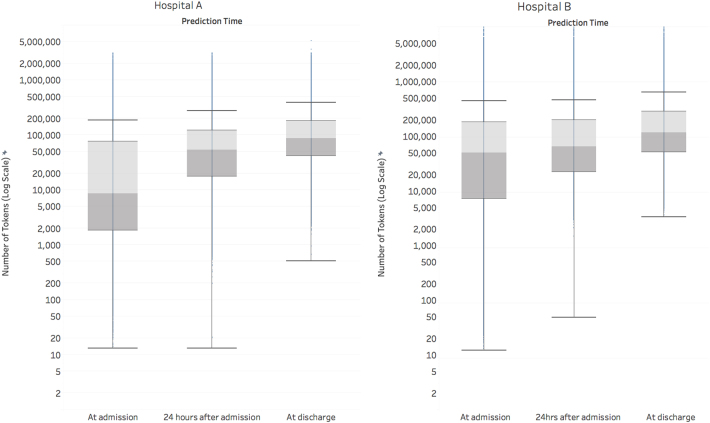
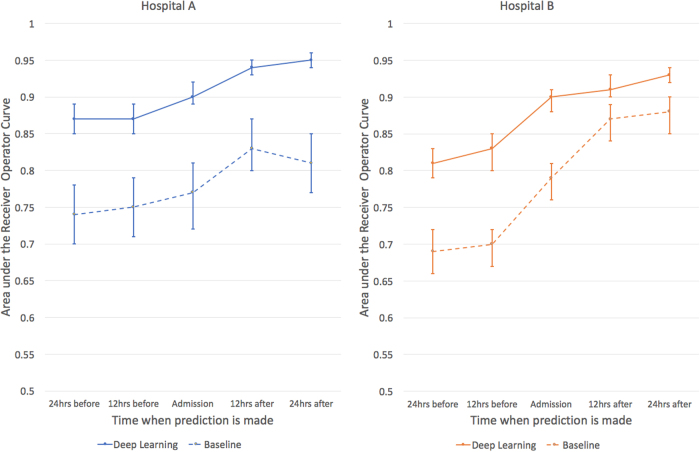
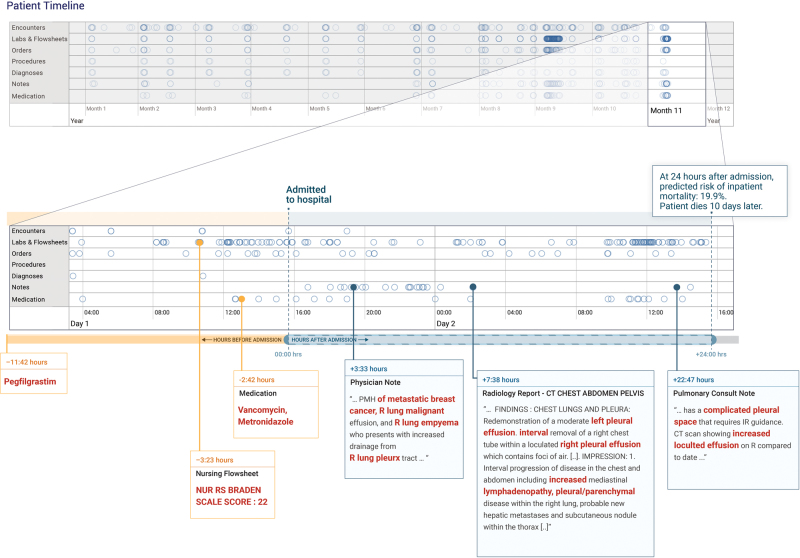
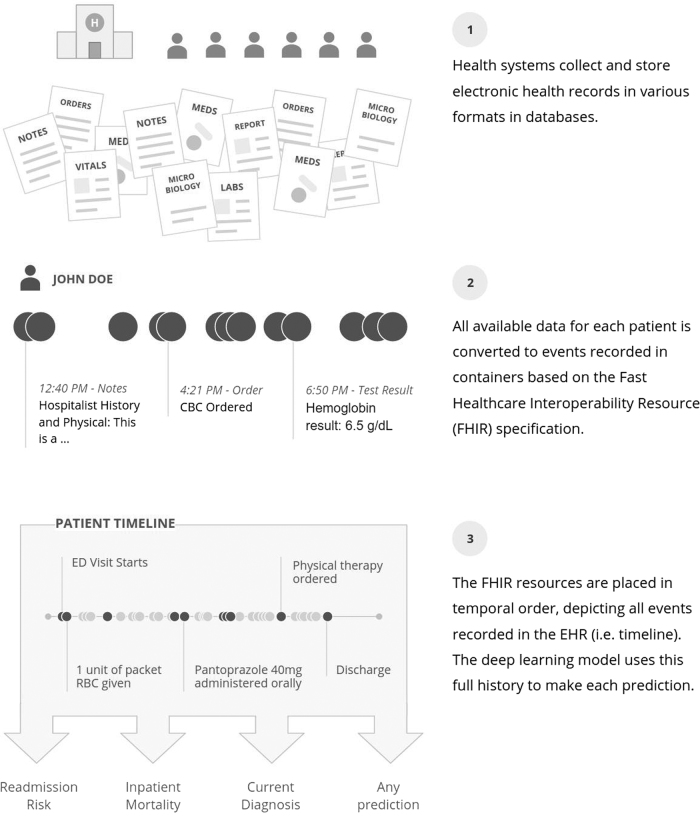
Predictive modeling with electronic health record (EHR) data is anticipated to drive personalized medicine and improve healthcare quality. Constructing predictive statistical models typically requires extraction of curated predictor variables from normalized EHR data, a labor-intensive process that discards the vast majority of information in each patient's record. We propose a representation of patients' entire raw EHR records based on the Fast Healthcare Interoperability Resources (FHIR) format. We demonstrate that deep learning methods using this representation are capable of accurately predicting multiple medical events from multiple centers without site-specific data harmonization. We validated our approach using de-identified EHR data from two US academic medical centers with 216,221 adult patients hospitalized for at least 24 h. In the sequential format we propose, this volume of EHR data unrolled into a total of 46,864,534,945 data points, including clinical notes. Deep learning models achieved high accuracy for tasks such as predicting: in-hospital mortality (area under the receiver operator curve [AUROC] across sites 0.93-0.94), 30-day unplanned readmission (AUROC 0.75-0.76), prolonged length of stay (AUROC 0.85-0.86), and all of a patient's final discharge diagnoses (frequency-weighted AUROC 0.90). These models outperformed traditional, clinically-used predictive models in all cases. We believe that this approach can be used to create accurate and scalable predictions for a variety of clinical scenarios. In a case study of a particular prediction, we demonstrate that neural networks can be used to identify relevant information from the patient's chart.
Overview
CoChat Summary
## TL;DR
This retrospective study shows that a single deep learning pipeline using raw EHR data in FHIR format can predict multiple outcomes across two academic hospitals without site-specific feature harmonization. The models outperformed traditional baselines for inpatient mortality, 30-day readmission, long length of stay, and discharge diagnosis prediction.
## Key findings
- The study included 216,221 hospitalizations from 114,003 unique patients; in-hospital death occurred in 2.3% (4,930/216,221), unplanned 30-day readmission in 12.9% (27,918/216,221), and long length of stay in 23.9%.
- For inpatient mortality at 24 h after admission, AUROC was 0.95 at Hospital A and 0.93 at Hospital B, versus 0.85 and 0.86 for the augmented Early Warning Score baseline.
- For 30-day readmission at discharge, AUROC was 0.77 at Hospital A and 0.76 at Hospital B, versus 0.70 and 0.68 for the modified HOSPITAL baseline; for long length of stay at 24 h, AUROC was 0.86 and 0.85, versus 0.76 and 0.74 for the modified Liu baseline.
- For predicting all discharge diagnoses (14,025 ICD-9 codes), weighted AUROC was 0.87/0.86 at admission and 0.90 at discharge for both hospitals; micro-F1 at discharge was 0.41 (Hospital A) and 0.40 (Hospital B).
## Methods
- Design: Retrospective study comparing deep learning models to traditional predictive models across two hospitals, with separate results reported for each site.
- Data/sample: De-identified EHR data from UCSF (2012–2016) and UCM (2009–2016), including adults 18+ with hospitalizations of 24 h or longer; UCM also included free-text notes.
- Analysis: Raw EHR data were converted into time-ordered FHIR-based token sequences and used to train three model types (LSTM, attention-based TANN, and boosted time-based decision stumps), with outputs ensembled; data were split 80/10/10 into development/validation/test sets and evaluated using AUROC, calibration curves, work-up-to-detection ratio, and micro-F1.
## Limitations
- The authors state it is a retrospective study, with “all of the usual limitations.”
- They state that prospective trials are needed to show that accurate predictions improve care.
- They note their approach does not harmonize data between sites, limiting transfer to new sites/cohorts; they also say the methods are computationally intensive and require specialized expertise.
- Evident from the text: the study’s diagnosis task is restricted to ICD-9 codes, and the authors caution that AUROC differences between hospitals, especially regarding notes, cannot be attributed solely to notes because the cohorts differed.
Model-written summary. Check it against the paper before relying on it.
Integrity signals
Registry
Cites
Statistics
Figures
Verification
Claims the paper makes
7 Valid · 0 Not valid · 6 Not checked · 33 Own results and interpretations
The cited sources support only part of this claim — read each source’s verdict below.
In the paper
“We are not aware of a study that predicts as many ICD codes as this study, but our micro-F1 score exceeds that shown on the smaller MIMIC-III dataset when predicting fewer diagnoses (0.40 vs 0.28).68”
§ Scalable and accurate deep learning with electronic health records > Discussion
What the sources say
- Partly supportedcites [68] Perotte A Diagnosis code assignment: models and evaluation metrics J. Am. Med. Inform. Assoc. 2014 21 231 237 10.1136/amiajnl-2013-002159 24296907 PMC3932472 sourceExperimental — accuracy not yet measured
The Results > Prediction models section reports a 27.6% F-measure for the flat SVM, consistent with the cited 0.28 after rounding. But Materials and methods > Datasets identifies the dataset as MIMIC II, not MIMIC-III; the Results also report a higher 39.5% F-measure for this paper’s hierarchy-based model. No page numbers are available in our copy. (LLM, conf=0.89)
hedged- Asserted: passes — The authors put it forward as true.
- Checkable: passes — It can be checked against evidence.
- Load-bearing: passes — The paper’s conclusions depend on it.
- Based: passes — The paper gives a reason why it holds.
- Rests on an assumption not shown here.
- Partly supported
The cited sources support only part of this claim — read each source’s verdict below.
In the paper
“A major challenge in using more of the data available for each patient has been the lack of standards and semantic interoperability of health data from multiple sites.25”
§ Scalable and accurate deep learning with electronic health records > Introduction > Related work
What the sources say
- Partly supportedcites [25] Sun H Semantic processing of EHR data for clinical research J. Biomed. Inform. 2015 58 247 259 10.1016/j.jbi.2015.10.009 26515501 sourceExperimental — accuracy not yet measured
The Introduction (p.1) and Conclusion (Section 5) of our copy clearly support the semantic-interoperability half of the claim: 'the semantic interoperability between different standards remains a challenge', and 'there is no single standard that could serve as the interoperability hub for all the existing clinical data sources and clinical applications', with the Abstract framing the whole paper as responding to 'a growing need to semantically process and integrate clinical data from different sources for clinical research' (multi-site sources are illustrated in Section 4.1.1: a German hospital Oracle database and an Italian regional IHE QED registry). However, the claim's 'lack of standards' is not what this paper says: the Introduction states that standards such as HL7, openEHR and ISO 13606 HAVE been developed to tackle storage and exchange of clinical data, and the residual problem is interoperability AMONG them plus the absence of one unifying hub standard, not an absence of standards. The claim also generalises the source's specific concern (secondary use/reuse of EHR data for clinical research applications) to 'using more of the data available for each patient'. (LLM, conf=0.70)
plainstates a cause- Asserted: passes — The authors put it forward as true.
- Checkable: passes — It can be checked against evidence.
- Load-bearing: passes — The paper’s conclusions depend on it.
- Based: passes — The paper gives a reason why it holds.
- Partly supported
Every source the paper cites for this claim was checked and supports it.
In the paper
“In the current study, we caution that the differences in AUROC across the two hospitals (one with and one without notes) cannot be ascribed to the presence or absence of notes given the difference in cohorts.45”
§ Scalable and accurate deep learning with electronic health records > Discussion
What the sources say
- Supportedcites [45] Walsh C Hripcsak G The effects of data sources, cohort selection, and outcome definition on a predictive model of risk of thirty-day hospital readmissions J. Biomed. Inform. 2014 52 418 426 10.1016/j.jbi.2014.08.006 25182868 PMC4261028 source
The Discussion states that cohort selection affects discriminatory performance and that comparing performance across studies requires the cohorts to be the same. This supports the citing authors’ caution against attributing their two hospitals’ AUROC difference to the presence or absence of notes when the cohorts also differ; the two-hospital comparison is their own study, not a result attributed to this source. (LLM, conf=0.90)
plain- Asserted: passes — The authors put it forward as true.
- Checkable: passes — It can be checked against evidence.
- Load-bearing: passes — The paper’s conclusions depend on it.
- Based: passes — The paper gives a reason why it holds.
- Supported
A result the paper reports from its own data — it cites no other source for it, so there is none to check. The quote shows it is in the paper.
In the paper
“For classifying all diagnosis codes, the weighted AUROCs at admission were 0.87 for Hospital A and 0.86 for Hospital B.”
§ Scalable and accurate deep learning with electronic health records > Results > Inferring discharge diagnoses
plain- Asserted: passes — The authors put it forward as true.
- Checkable: passes — It can be checked against evidence.
- Load-bearing: passes — The paper’s conclusions depend on it.
- Based: passes — The paper gives a reason why it holds.
- Rests on 2 assumptions not shown here.
A result the paper reports from its own data — it cites no other source for it, so there is none to check. The quote shows it is in the paper.
In the paper
“For predicting long length of stay, the AUROCs at 24 h after admission were 0.86 (95% CI 0.86–0.87) for Hospital A and 0.85 (95% CI 0.84–0.86) for Hospital B.”
§ Scalable and accurate deep learning with electronic health records > Results > Long length of stay
plain- Asserted: passes — The authors put it forward as true.
- Checkable: passes — It can be checked against evidence.
- Load-bearing: passes — The paper’s conclusions depend on it.
- Based: passes — The paper gives a reason why it holds.
- Rests on an assumption not shown here.
18 more claims
Create a free account to see all 46 claims and to verify the 2 references still open.
- It may state two separate claims as one. 16
- Probably not a substantial claim. 10
Claims other papers make about this one
Each is checked against this paper’s own text: does it say what the citing paper says it does?
The source backs part of the claim, not all of it — or backs it for a different population, condition or comparison.
In the citing paper
“The most important difference is that the study included co-morbidities, which have been proven to enable better predictions of disease progression trends and treatment outcomes.25,26”
From Development and validation of a screening tool for sepsis without laboratory results in the emergency department: a machine learning study (2025) · cites this paper as [26]
Experimental — accuracy not yet measuredThe source backs part of the claim, not all of it — or backs it for a different population, condition or comparison.
In the citing paper
“For both structured codes and unstructured notes, standardized vocabularies including FHIR [6] and UMLS CUIs [62,63] are introduced to transfer raw tokens into unique phrases to reduce the sparsity of the input data.”
From Deep representation learning of patient data from Electronic Health Records (EHR): A systematic review (2021) · cites this paper as [6]
Experimental — accuracy not yet measuredThe source backs part of the claim, not all of it — or backs it for a different population, condition or comparison.
In the citing paper
“Some FEMRs have tackled this problem by combining unstructured EHR data (i.e., text) with structured EMR data to boost performance on specific phenotyping and prediction tasks69,70.”
From The shaky foundations of large language models and foundation models for electronic health records (2023) · cites this paper as [69]
Experimental — accuracy not yet measuredThe cited source says what the claim attributes to it.
In the citing paper
“To improve performance and provide a degree of interpretability to the model, an attention mechanism is adopted in 13 studies [6,14,27,31,43,57,64,72,76–78,80,88].”
From Deep representation learning of patient data from Electronic Health Records (EHR): A systematic review (2021) · cites this paper as [6]
The cited source says what the claim attributes to it.
In the citing paper
“Advances in artificial intelligence (AI) are driving a revolution across science, enabling exciting new results across chemistry,80–82 biology,83,84 and medicine.85–88”
From Artificial Intelligence and Early Detection of Pancreatic Cancer: 2020 Summative Review (2021) · cites this paper as [85]
8 more claims about this paper
Create a free account to see every claim other papers make about this one.
Citations
Cites
Hochreiter, S., & Schmidhuber, J. (1997) · Neural Computation · doi:10.1162/neco.1997.9.8.1735 · Cited by 102,318 · cited 9×
“Patient records vary significantly in length and density of data-points (e.g. vital sign measurements in an intensive care unit vs outpatient clinic), so we formulated three deep learning neural-network model architectures that take advantage of such data in different ways: one based on recurrent neural networks (LSTM)…”
MethodInfluentialLeCun, Y., Bengio, Y., & Hinton, G. (2015) · Nature · doi:10.1038/nature14539 · Cited by 84,126
Scikit-learn: Machine Learning in Python
Pedregosa, F., Varoquaux, G., Gramfort, A., Michel, V., Thirion, B., Grisel, O., Blondel, M., Müller, A., Nothman, J., Louppe, G., et al. (2012) · arXiv · doi:10.48550/arxiv.1201.0490 · Cited by 71,016
APACHE II: A severity of disease classification system
KNAUS, W. A., DRAPER, E. A., WAGNER, D. P., & ZIMMERMAN, J. E. (1985) · Critical Care Medicine · doi:10.1097/00003246-198510000-00009 · Cited by 13,664
Representation Learning: A Review and New Perspectives
Bengio, Y., Courville, A., & Vincent, P. (2013) · IEEE Transactions on Pattern Analysis and Machine Intelligence · doi:10.1109/tpami.2013.50 · Cited by 13,001 · cited 1×
“Our central insight is that rather than explicitly harmonizing EHR data, mapping it into a highly curated set of structured predictors variables and then feeding those variables into a statistical model, we can instead learn to simultaneously harmonize inputs and predict medical events through direct feature learning…”
BackgroundMIMIC-III, a freely accessible critical care database
Johnson, A. E. W., Pollard, T. J., Shen, L., Lehman, L.-W. H., Feng, M., Ghassemi, M., Moody, B., Szolovits, P., Anthony Celi, L., & Mark, R. G. (2016) · Scientific Data · doi:10.1038/sdata.2016.35 · Cited by 8,141 · cited 1×
“ecord, which includes clinical free-text notes as well as large amounts of structured and semi-structured data. Because of the availability of Medical Information Mart for Intensive Care (MIMIC) data [48], many prior studies also have focused on ICU patients from a single center [92, 41]; other single-center studies h…”
MethodGulshan, V., Peng, L., Coram, M., Stumpe, M. C., Wu, D., Narayanaswamy, A., Venugopalan, S., Widner, K., Madams, T., Cuadros, J., et al. (2016) · JAMA · doi:10.1001/jama.2016.17216 · Cited by 7,697 · cited 1×
“Deep learning emerged as the preferred machine learning approach in machine perception problems ranging from computer vision to speech recognition, but has more recently proven useful in natural language processing, sequence prediction, and mixed modality data settings([36, 16, 21, 56]).”
BackgroundMandell, L. A., Wunderink, R. G., Anzueto, A., Bartlett, J. G., Campbell, G. D., Dean, N. C., Dowell, S. F., File, T. M., Musher, D. M., Niederman, M. S., et al. (2007) · Clinical Infectious Diseases · doi:10.1086/511159 · Cited by 6,202 · cited 1×
“of only 27 variables, rely on traditional generalized linear models, and are built using data at a single center. In clinical practice, simpler models are most commonly deployed, such as the CURB-65 [68, 60], which is a 5-factor model, or single-parameter warning scores [20, 45]. A major challenge in using more of the…”
MethodAPACHE II: a severity of disease classification system.
Knaus, W. A., Draper, E. S., Wagner, D. P., & Zimmerman, J. E. (1985) · PubMed · Cited by 6,034
Predicting the future - big data, machine learning, and clinical medicine
Obermeyer, Z., & Emanuel, E. J. (2016) · New England Journal of Medicine · doi:10.1056/nejmp1606181 · Cited by 3,652 · cited 1×
“In our case study, the model identified elements of the patient’s history and radiology findings to render its prediction, which are critical data-points that a clinician would also use [41].”
Method
Research works printed but not linked: 5
- Wu, Y. et al. Google’s neural machine translation system: bridging the gap between human and machine translation. arXiv [cs.CL] (2016).
- Aczon, M. et al. Dynamic mortality risk predictions in pediatric critical care using recurrent neural networks. arXiv [stat.ML] (2017).
- Suresh, H. et al. Clinical intervention prediction and understanding using deep networks. arXiv [cs.LG] (PMLR, Los Angeles, CA, USA, 2017).
- Razavian, N., Marcus, J. & Sontag, D. Multi-task prediction of disease onsets from longitudinal laboratory tests. In Proceedings of the 1st Machine Learning for Healthcare Conference, (eds F. Doshi-Velez, J. Fackler, D. Kale and B. Wallace, J. Wiens) Vol. 56, pp 73–100 (PMLR, Los Angeles, CA, 2016).
- Bahdanau, D., Cho, K. & Bengio, Y. Neural machine translation by jointly learning to align and translate. arXiv [cs.CL] (2014).
Cited by
Items 2,001–2,100 of 2,601
Ghantasala, G. S. P., Kumari, N. V., Rajesh Sharma, R., Vidyullatha, P., Sungheetha, A., & Bathool, S. (2024) · IEEE Delhi Section Conference (DELCON) · doi:10.1109/delcon64804.2024.10866424
Fan, L., Tong, Q., Fang, H., Wei, Z., Tam, W. C., & Liang, T. (2025) · Fire Technology · doi:10.1007/s10694-025-01713-1
Kalanouria, D., & Garg, V. K. (2025) · Lecture notes in networks and systems · doi:10.1007/978-981-97-7178-3_5
Incremental Learning with Pseudo Labels for Enhanced Glomeruli Segmentation Using SAM
Liu, X., Peng, B., Zhu, X., Iwasaki, T., Sato, A., Kazama, J. J., & Huang, J. (2024) · IEEE International Conference on e-Health Networking, Applications and Services (Healthcom) · doi:10.1109/healthcom60970.2024.10880797
“Medical image annotation is labor intensive and demands significant expertise from pathologists [4].”
Self-citationRisk Analysis And Premium Calculation For Health Insurance
Verma, R., Raj, S., Tauqir, Z., et al. (2024) · doi:10.1109/icac2n63387.2024.10894986
KI-unterstützte Krankheitsvorhersage in der visualisierten Medizin
Du, J., Huang, M., & Liu, L. (2025) · Springer eBooks · doi:10.1007/978-981-97-9693-9_6
Innovating Health Records: The Path of AI
WagleVenkatesha, A., & Naik, H. (2025) · Journal of Research in Science and Engineering · doi:10.53469/jrse.2025.07(02).07
“(17) The data that is used to train AI algorithm must be diverse and representative and regularly audited for bias to mitigate this particular challenge.”
Alfatlawi, H. A. (2025) · Lecture notes in networks and systems · doi:10.1007/978-3-031-82377-0_13 · Cited by 1
Exploring the Use of Social Robots as a Game Associate in the Health Sector: A Systematic Review
Pande, A., Mishra, D., Bhuthegowda, B. N., & İnal, Y. (2025) · Communications in computer and information science · doi:10.1007/978-3-031-83793-7_13
A Study on Revolution of Healthcare Industry with Transformational Artificial Intelligence Tool
Ghosh, N., Kumar, S., & Khanna, S. (2025) · Communications in computer and information science · doi:10.1007/978-3-031-84397-6_2
Venkataraman, P., Sunantha, D., & Lakshmi, S. (2025) · Wiley eBooks · doi:10.1002/9781394249312.ch11
AI in Medicine: CNN Techniques for Pneumonia and Pandemic Pathogen Identification
Ramanjaiah, G., Yamsani, N., Das, S., Maram, B., Rudrubati, A. B., & Rao, K. V. (2024) · International Conference on Advanced Computing & Communication Technologies (ICACCTech) · doi:10.1109/icacctech65084.2024.00142
Harnessing AI and Data Analytics for Smarter Healthcare SolutionsPreprint
Machireddy, J. R. (2025) · SSRN Electronic Journal · doi:10.2139/ssrn.5159750
Machine Learning Models for Heart Disease Prediction: Balancing Accuracy and Transparency
Gupta, S., Tripathi, A., & Srivastava, C. (2024) · International Conference on IoT, Communication and Automation Technology (ICICAT) · doi:10.1109/icicat62666.2024.10922965
“Their work showcased the superior performance of these models compared to traditional methods [14].”
Transforming Healthcare: Exploring the Potential of Futuristic Healthcare Delivery System
Garg, V., Malhotra, C., Kumar, H., Bhardwaj, A., Bansal, R., & Saini, S. (2025) · Springer eBooks · doi:10.1007/978-981-97-0244-2_2
Proof of Learning Using Zero-Knowledge Proof
Miyaji, H., & Yamamoto, H. (2025) · International Conference on Consumer Electronics · doi:10.1109/icce63647.2025.10930087
“Since machine learning can be applied to various services, including medical diagnosis and sales data analysis, it is considered a crucial technology [2], [3].”
Cardiac Disease Detection using Machine Learning
Kaariniya, S. A., & Praneesh, M. (2025) · International Journal of Advanced Research in Science Communication and Technology · doi:10.48175/ijarsct-24946
New analytical approaches to life course epidemiology
Börnhorst, C., Wright, M. N., & Didelez, V. (2025) · Oxford University Press eBooks · doi:10.1093/oso/9780198895961.003.0005
Shaikh, Z. M. (2025) · International Journal of Health Sciences and Pharmacy · doi:10.47992/ijhsp.2581.6411.0129 · Cited by 3
Dou, Y., Cui, J., & Wu, X. (2025) · IEEE Information Technology and Mechatronics Engineering Conference (ITOEC) · doi:10.1109/itoec63606.2025.10967616 · Cited by 1
“For instance, a study published in Nature indicates that deep learning models outperform traditional statistical methods in heart disease prediction tasks, with an approximately 10% increase in accuracy [7].”
A Novel Reconstruction Method for Irregularly Sampled Observation Sequences for Digital Twin
Jiang, H., Zhao, Y., Zhu, Q., & Cai, Y. (2025) · Applied Sciences · doi:10.3390/app15094706 · Cited by 1
Biomedical Scientist, M., Bobis, G., Liakou, C. I., Tzamaria, D., Science, M. B., Plytas, M., & Papadakis, M. (2025) · International Journal of Innovative Research in Computer and Communication Engineering · doi:10.15680/ijircce.2025.1304006 · Cited by 3
Li, H., Yao, H., Gao, Y., Luo, H., Cai, C., Zhou, Z., Yuan, M., & Jiang, W. (2025) · JMIR Formative Research · doi:10.2196/66189
“This is enabled by the abundance of real-world longitudinal datasets derived from the extensive integration of electronic health record (EHR) [9-11].”
Artificial Intelligence in Healthcare: Opportunities, challenges, and secure implementation
Bompally, S. D. (2025) · Global Journal of Engineering and Technology Advances · doi:10.30574/gjeta.2025.23.1.0135
“…clinical value by detecting cardiac anomalies with 97.5% accuracy and predicting exacerbations in chronic pulmonary conditions an average of 5.2 days before clinical symptoms become apparent, enabling earlier interventions that reduced hospital admissions by 52.3% in a study of 8,376 patients [4].”
InfluentialRecent Advancements in Health Monitoring and Early Warning Systems using IoT and Machine LearningPreprint
Mishra, T., & Mittal, S. (2025) · SSRN Electronic Journal · doi:10.2139/ssrn.5240008 · Cited by 2
Li, T., Still, J. M., Zuo, L., Liu, Y., Krishnan, A. R., Sandler, K. L., Maldonado, F., Lasko, T. A., & Landman, B. A. (2025) · medRxiv · doi:10.1101/2025.05.09.25327341 · Cited by 1
Malik, S., Nafis, M. T., Ahad, M. A., Tanweer, S., & Tauhid, S. F. (2024) · ShodhKosh Journal of Visual and Performing Arts · doi:10.29121/shodhkosh.v5.i1.2024.5167
Randhawa, S., Shojaee, A., Sorrentino, E., Li, Y., Abouzied, A., & Shasha, D. E. (2025) · Algorithms · doi:10.3390/a18060311
Exploring Disease Prediction Techniques Through Data Mining: A Comprehensive Overview
Chugh, M. (2025) · Springer eBooks · doi:10.1007/978-981-96-4241-0_7
Navigating the Ethical Terrain: Principles and Practices in Machine Learning
Lovrić, M. (2025) · Springer eBooks · doi:10.1007/978-3-662-69359-9_408
HealthTech Horizons: Promoting Sustainable Healthcare in Developing Nations
Bhamidi, V. B., Kanani, Y., Dash, Y., et al. (2025) · Lecture notes in networks and systems · doi:10.1007/978-3-031-78937-3_9
Kumari, N. (2024) · INTERNATIONAL JOURNAL OF ADVANCED RESEARCH IN ENGINEERING & TECHNOLOGY · doi:10.34218/ijaret_15_06_007
Improving Healthcare Outcomes: Doctor Classification and Performance Prediction via ML
M, V. T. R. P. K., Galib, S. C., Likhith, K., Keerthi, M., Ramya, N., & Rajesh, K. (2025) · International Conference on Augmented Intelligence and Sustainable Systems (ICAISS) · doi:10.1109/icaiss61471.2025.11041702
“Early work by Shickel et al. [1] surveyed deep learning techniques for EHR analysis, demonstrating their ability to extract insights from unstructured data, while Rajkomar et al. [2] highlighted the scalability of deep learning models in predictive analytics.”
InfluentialPredictive modeling of telemedicine implementation in central Asia using neural networks
Abdrakhmanova, Z., Демесинов, Т. Ж., JAPAROVA, K., Kulisz, M., BAYTIKENOVA, G., Карипова, A., & ERSAINOVA, Z. (2025) · Applied Computer Science · doi:10.35784/acs_7418
A Survey on AI-Powered Ophthalmology: A Revolution in Eye Care and Disease Management
Schweisthal, B., Bonciog, D.-D., Lascu, M. R., & Ordodi, V. L. (2025) · International Conference on Bio-engineering for Smart Technologies (BioSMART) · doi:10.1109/biosmart66413.2025.11046181
“AI relies on machine learning(ML) and deep learning (DL) algorithms that sift through massive databases in medicine to identify anomalies and offer precise predictions [2].”
Predictive Analytics in Healthcare: Leveraging Machine Learning through Salesforce’s Einstein Studio
Bollina, G. (2025) · European Journal of Computer Science and Information Technology · doi:10.37745/ejcsit.2013/vol13n47158171
Machine learning approaches for predicting heart failure readmissions
Pikatza-Huerga, A., Almeida, A., López, R. Q., Larrea, N., Legarreta, M. J., Zulaika, U., García, R., & García‐Gutiérrez, S. (2025) · Postgraduate Medical Journal · doi:10.1093/postmj/qgaf102 · Cited by 2
Simplifying Medical Report: A Novel Approach to Medical Reporting Using OCR Technology
Verma, R., Pandey, S., Awasthi, S., & Shukla, S. (2025) · International Conference on Communication, Security and Artificial Intelligence (ICCSAI) · doi:10.1109/iccsai64074.2025.11064715 · Cited by 1
“Comprehensive reviews by Ramadan et al. [9] and Rajkomar et al. [10] underline the importance of scalable, accurate systems for medical data analysis.”
Enhanced Advanced Deep Learning Techniques for Data Analysis in Electronic Health Records (EHRs)
Karthik, D., & Sahayadhas, A. (2025) · Algorithms for intelligent systems · doi:10.1007/978-981-97-9532-1_14
LLMs in Healthcare: Exploring Language Models for Dental, Medical, and Mental Health with LangChain
Krishnaveni, S., Jothi, B., Sivamohan, S., Brijesh, G., Aiswarya, S., Allen, L., & Fiaz, S. F. (2025) · Lecture notes in networks and systems · doi:10.1007/978-981-96-3942-7_29
Ruseva, V., Dobrev, S., Getova-Kolarova, V., et al. (2025) · Pharmacia · doi:10.3897/pharmacia.72.e160997
Pariyawala, P., & Desai, P. Y. (2025) · Lecture notes in networks and systems · doi:10.1007/978-981-96-4145-1_16
The Magic of Artificial Intelligence-2
Khurshid, S., Basharat, S., & Afzal, S. (2025) · Springer eBooks · doi:10.1007/978-981-96-8176-1_2 · Cited by 1
Jeon, S. (2025) · medRxiv · doi:10.1101/2025.08.06.25333083
“While established practices for handling missing data in EHRs include univariate methods like median substitution for laboratory parameters and forward-fill imputation for temporal vital signs [9,10,19,28], these approaches have limitations in capturing complex clinical relationships.”
Development of Microcontroller-Based AI Robot Tour Guide Utilizing Custom Language Models
Jackson, I. S., Ballard, A. W., Hefeida, M., Srivastava, A. K., & Gyawali, P. (2025) · IEEE World AI IoT Congress (AIIoT) · doi:10.1109/aiiot65859.2025.11105214 · Cited by 1
“1: AI Robot System Diagram care and legal services [2], by leveraging tailored datasets.”
IOT-based system for healthcare data analysis using deep federated learning
Kudakala, S. K., Kaloori, R. K., Kommanaboina, S., Jalagari, K., Erukali, P., & Perumalla, V. R. (2025) · AIP conference proceedings · doi:10.1063/5.0261452
Artificial Intelligence in Laparoscopic Surgery
Weiss, B. P., & Rosenthal, R. J. (2025) · Springer eBooks · doi:10.1007/978-3-031-96321-6_22 · Cited by 1
Source-Free Domain Adaptation with complex distribution considerations for time series data
Shang, J., Chen, Z., Xiao, Z., Wu, Z., Zhang, Y., & Wang, J. (2025) · Data & Knowledge Engineering · doi:10.1016/j.datak.2025.102501 · Cited by 1
Self-citationSantamaria, T. (2025) · Primary Care Clinics in Office Practice · doi:10.1016/j.pop.2025.07.006
Azu, O. O., Edagha, I. A., Jegede, A. I., Salihu, M., Mankan, A. K., Thatai, P., Saini, K. S., & Dlamini, Z. (2025) · Elsevier eBooks · doi:10.1016/b978-0-443-45495-0.00012-7
AI is already being used in healthcare. But not all of it is ‘medical grade’
Verspoor, K. M., Hansen, D. E., & Coiera, E. W. (2023) · doi:10.64628/aa.sv9yh6vy9
Silva, L. C., Constantino, C. S., Teixeira, R. J. V., Castanheira, J. C., Oliveira, F. P. M., & Costa, D. C. (2025) · Journal of Imaging Informatics in Medicine · doi:10.1007/s10278-025-01638-9
“…span multiple data modalities and involve a range of tasks—most commonly classification and regression (e.g. disease diagnosis [7, 8] and risk prediction [9]), but also, increasingly, segmentation [10] and various forms of image reconstruction or enhancement [11], particularly in medical imaging.”
Artificial Intelligence in Leukemia Diagnostics: Challenges, and Future Directions
Achir, A., Battas, I., Debbarh, I., Moutaouakkil, F., & Medromi, H. (2025) · Lecture notes in networks and systems · doi:10.1007/978-3-031-94623-3_7
Chang, W.-S., Hsiao, K.-Y., Lin, L., et al. (2025) · doi:10.2196/preprints.83120
Chain-Linked Multiple Matrix Integration via Embedding Alignment
Zheng, R., & Tang, M. (2025) · Journal of the American Statistical Association · doi:10.1080/01621459.2025.2550677 · Cited by 4
“However, due to the lack of interoperability across health-care systems (Rajkomar et al. 2018), different EHR data often involve non-identical concepts with limited overlap, resulting in substantial differences among their PMI matrices.”
Enhancing healthcare analytics with prompt based probabilistic graphical model
Zhuang, Y., Zhang, J., Liu, S., Wei, B., Zheng, L., Gao, J., Zeng, Z., Xu, J., & He, K. (2025) · iScience · doi:10.1016/j.isci.2025.113417
Advanced biosignal processing and emotion recognition through artificial intelligence
Begum, A. Y., Lawrence, E. E., Saravanan, M., Ravivarman, G., Latha, B., & Babu, L. G. (2025) · Elsevier eBooks · doi:10.1016/b978-0-443-33514-3.00006-x
Garg, S., Kumar, H., Taluja, A., Khan, I. R., & Sood, S. (2025) · Lecture notes in networks and systems · doi:10.1007/978-981-96-5535-9_39
Yapay Zeka ve Derin Öğrenmenin Sağlık Bilişimi Üzerine Etkisi: Literatür Tabanlı Bir İnceleme
Çelik, Ö., & Tüfekçi, N. (2025) · Türkiye Sağlık Bilimleri ve Araştırmaları Dergisi · doi:10.51536/tusbad.1702172 · Cited by 4
Development of A Machine Learning Model for Multiple Disease Prediction
Ashishie, D. U., Egete, D. O., & Ele, B. (2025) · International Journal of Latest Technology in Engineering Management & Applied Science · doi:10.51583/ijltemas.2025.1408000058
Early Disease Diagnosis using Cloud Computing-Powered Machine Learning on Health Records
Chunawala, H., Behera, P., Yadav, L., et al. (2025) · doi:10.1109/isac364032.2025.11156231
“The early detection of diseases proves essential for improving patient results alongside decreasing healthcare expenses and producing better care quality [2].”
Analyzing and Predicting Employee Turnover in the Restaurant Industry
Zhang, X., Kayembe, S., Ma, F., Song, Y., & Zuo, F. (2025) · IEEE/ACIS International Conference on Software Engineering Research, Management and Applications (SERA) · doi:10.1109/sera65747.2025.11154561
“For instance, recent studies have shown how deep learning can enhance the accuracy of medical event predictions through the analysis of electronic health records, demonstrating the potential for these technologies to improve patient care and operational efficiencies within medical institutions [9].”
Neves, B. D., Cerejo, J., Gonçalves, S., Mota, I., Moreira, J. M., Silva, N. A., Leite, F., Wornow, M., & Silva, M. J. (2025) · medRxiv · doi:10.1101/2025.09.08.25335368
“We implemented count-based fea-turization as a competitive baseline following established best practices (Rajkomar et al., 2018).”
Developing Explainable AI Models for Personalized Treatment Recommendations Using LLMs and EHR Data
Korkanti, S. (2025) · 2025 International Conference on Computing Technologies & Data Communication (ICCTDC) · doi:10.1109/icctdc64446.2025.11158747
“Various machine learning algorithms for predictive analytics in healthcare have already been tried with different degrees of success [10].”
Singh, R., Pandey, P., Kumar, A., & Mishra, M. K. (2025) · Current Bioinformatics · doi:10.2174/0115748936370246250903052830
Mitra, U., Mondal, S., Mullick, M. S. H., & Karmakar, S. R. (2025) · Lecture notes in networks and systems · doi:10.1007/978-981-96-5723-0_30
Predicting Drug Dosage with Machine Learning: An Empirical Study Using Ceftaroline
Frasca, M., Gazzaniga, G., Graziosi, A., Nicolò, V. D., Giacomo, C. D., Martinelli, S., Senatore, M., Romandini, A., Moretti, C., Pattarino, G. A. C., et al. (2025) · Lecture notes in networks and systems · doi:10.1007/978-3-031-99025-0_1
Guo, S. (2025) · Balneo and PRM Research Journal · doi:10.12680/balneo.2025.879
The Cutting Edge of AI in Medicine: Data Science Transforming Diagnosis and Treatment
Takahashi, A., & Kawakami, E. (2025) · Nihon Kikan Shokudoka Gakkai Kaiho · doi:10.2468/jbes.76.247
Hasan, N., Rasel, I. H., Rahman, M. A., Islam, M. K., Arman, M., & Jahan, N. (2022) · International Journal of Computational and Experimental Science and Engineering · doi:10.22399/ijcesen.3987 · Cited by 26
Zhang, H., An, Y., Song, M. J., et al. (2025) · BMC Medical Informatics and Decision Making · doi:10.1186/s12911-025-03213-2
Luo, J., Yang, L., Nie, X., Lan, L., Huang, S., Wan, X., & Zhou, X. (2025) · Information Fusion · doi:10.1016/j.inffus.2025.103866 · Cited by 3
A survey on clinical practice assisted by artificial intelligence in cardiovascular medicine
Liang, C., Zhang, Y., & Shi, J. (2025) · Asian Heart Journal · doi:10.1097/ah9.0000000000000019
Self-citationNatural language processing for intelligent healthcare systems
Rakshit, P., Mitra, D., & Bhattacharya, J. (2025) · Elsevier eBooks · doi:10.1016/b978-0-443-14061-7.00012-9
Hagos, Z. (2025) · Karnataka Medical Journal · doi:10.25259/kmj_22_2025
Hu, X., Gu, X., Jin, Y., Liang, F., Wang, J., Wang, H., & Tang, D. (2025) · Shock · doi:10.1097/shk.0000000000002744
“They have been shown to markedly enhance the precision of early sepsis recognition and mortality risk prediction (13,14).”
Lin, H., Zhang, X., Hong, Y., Zhong, J., Lin, Y., & Xu, D. (2025) · Innovation and Emerging Technologies · doi:10.1142/s2737599425500379
ARTIFICIAL INTELLIGENCE IN PRIMARY CARE - THREAT OR SUPPORT FOR THE GENERAL PRACTITIONER?
Mączka, E., Strużek, K., Kwiatkowska, A., Tracz, W., Świercz, P., Teper, K., Khiralla-Gawlik, S., Strzelecka, A. A., Basak, A. E., & Jarosz, J. G. (2025) · International Journal of Innovative Technologies in Social Science · doi:10.31435/ijitss.3(47).2025.3684
“Machine learning-based systems are a type of artificial intelligence that can learn from data, without the need for humans to program each value [8].”
Using Relative Risk Rankings to Understand Information Differences in Multimodal Prediction ModelsPreprint
Kim, C., Yoon, W., Lee, H., Lee, J.-O., Afshar, M., Kang, J., & Miller, T. A. (2025) · medRxiv · doi:10.1101/2025.10.30.25339162
Development of a virtual assistant to support nurses in managing work tasks
Kimi, M. (2025) · Annals of Nursing · doi:10.5937/annnur3-57874
Applying Transfer Learning to Cloud-Based Medical Imaging for Accelerated Diagnostics
Manjunath Kamath, K., Meena, S. G., Thipperudra, A., Malathy, V., Ravi., G., & Balamurugan, V. (2025) · International Conference on Intelligent Algorithms for Computational Intelligence Systems (IACIS) · doi:10.1109/iacis65746.2025.11210926
“This paradigm not only accelerates diagnostics but also democratizes access to advanced imaging tools, especially in resource-constrained settings [5][6].”
Understanding AI and Machine Learning for Public Health
Leung, R. (2025) · Springer eBooks · doi:10.1007/978-3-032-08677-8_2
Leung, R. (2025) · Springer eBooks · doi:10.1007/978-3-032-08677-8_6
Supervised Learning II: Regression Models
Leung, R. (2025) · Springer eBooks · doi:10.1007/978-3-032-08677-8_5
Trustworthy AI for Early Dementia Detection: Robust Feature Masking and Clinical Interpretability
Georgiou, K., Liu, L. J., Qi, H., & Zhao, X. (2025) · IEEE/ACM Conference on Connected Health: Applications, Systems and Engineering Technologies · doi:10.1145/3721201.3721410
“However, RNN-based methods may struggle when visit intervals are highly inconsistent, a frequent occurrence in real-world clinical data [10].”
InfluentialOzyurt, H. S. (2025) · International Artificial Intelligence and Data Processing Symposium (IDAP) · doi:10.1109/idap68205.2025.11222201
Ethical Considerations in AI Agents
Ramachandran, M. (2025) · Springer eBooks · doi:10.1007/978-981-95-2909-4_17 · Cited by 1
Enhancing Time Series Classification with Diversity-Driven Neural Network Ensembles
Abdullayev, J., Devanne, M., Meyer, C., Ismail-Fawaz, A., Weber, J., & Forestier, G. (2025) · International Joint Conference on Neural Networks (IJCNN) · doi:10.1109/ijcnn64981.2025.11228372 · Cited by 2
“Time Series Classification (TSC) is a fundamental problem in machine learning with applications across various domains including healthcare [1], human activity recognition [2], social security [3], remote sensing [4], etc..”
Long, Z., & Tong, S. (2025) · Research Square · doi:10.21203/rs.3.rs-8067228/v1
Uzoechina, G., & Osajiuba, T. (2025) · Research Square · doi:10.21203/rs.3.rs-7876598/v1 · Cited by 1
Long, Z., & Tong, S. (2025) · Research Square · doi:10.21203/rs.3.rs-8038714/v1
Hospital Readmission Risk Predictor for Diabetic Patients Using XGBoost
Reddy, N. K. S., Anirudh, T., Varshitha, T., Kumar, B. C., Kumar, N., & Jabbar, M. A. (2025) · World Conference on Communication & Computing (WCONF) · doi:10.1109/wconf64849.2025.11233431 · Cited by 1
“Finally Rajkomar et al. [33] have presented a framework for healthcare applications completely based on deep learning, which is trained on 200,000 patient data which are stored in electronic health records (EHR) and which has shown recognizable performance on multiple predictive tasks, including…”
Bayesian Machine Learning for Decision Support in Healthcare Operations Management
Kumar, A., Jha, P., Kole, I. B., Shete, M. G., Brar, V., Jha, C. K., & Gavali, P. R. (2025) · World Conference on Communication & Computing (WCONF) · doi:10.1109/wconf64849.2025.11233684 · Cited by 1
“[3], [4] conventional machine learning methods typically provide point estimates without quantifying prediction uncertainty, which is crucial for risk-sensitive healthcare decisions.”
Mixture of experts based medication recommendation for multimorbidity
Xu, J., Sun, C., Qian, W., Tian, Z., Tang, J., Zhang, J., Zheng, Y., Li, S., & Li, H. (2026) · Expert Systems with Applications · doi:10.1016/j.eswa.2026.133374
Deng, J., Deng, T., Zhang, Y., Zhao, N., Liu, K., Wang, C., Zhang, Z., Ma, J., Wang, H., Lv, L.-P., et al. (2025) · npj Digital Medicine · doi:10.1038/s41746-025-02072-5 · Cited by 3
Self-citationNovel Artificial Intelligence Applications in Heart Transplantation
Richter, I., Raikhelkar, J., Clerkin, K. J., DeFilippis, E. M., Estrin, D. L., Lotan, D., ELAD, B., Sayer, G. T., & Uriel, N. (2025) · Canadian Journal of Cardiology · doi:10.1016/j.cjca.2025.11.012 · Cited by 3
Leveraging environmental information for enhanced prediction of cardiac readmissions
Zhai, Y., Li, Y., He, L., Li, X., & Luo, W. (2025) · iScience · doi:10.1016/j.isci.2025.114104 · Cited by 1
“On the contrary, the continuous strategy 22–24 regards the variation of first-hitting times as a continuous variable, thereby avoiding the aforementioned problem.”
Milić, M. K., Sinanović, Š., Kilibarda, T., & Bubanj, S. (2025) · AFMN Biomedicine · doi:10.5937/afmnai42-55697 · Cited by 1
Saidkhodjaev, A., Gupta, M., Tiglao, N. M. C., DellaVecchia, T., & Miller, G. (2025) · International Symposium on Networks, Computers and Communications (ISNCC) · doi:10.1109/isncc66965.2025.11250510
“Rajkomar et al. [8] demonstrated deep learning models predicting in-hospital mortality, unplanned readmission, and length of stay from EHR data.”
Metadata
- Authors
- Rajkomar, A., Oren, E., Chen, K., Dai, A. M., Hajaj, N., Hardt, M., Liu, P. J., Liu, X., Marcus, J., Sun, M., Sundberg, P., Yee, H., Zhang, K., Zhang, Y., Flores, G., Duggan, G. E., Irvine, J., Le, Q., Litsch, K., Mossin, A., Tansuwan, J., Wang, D., Wexler, J., Wilson, J., Ludwig, D., Volchenboum, S. L., Chou, K., Pearson, M., Madabushi, S., Shah, N. H., Butte, A. J., Howell, M. D., Cui, C., Corrado, G. S., & Dean, J.
- Affiliations
- Google (United States) (US)
- University of California, San Francisco (US)
- University of Chicago (US)
- Stanford University (US)
- Corresponding author
- Rajkomar, Alvin
- Venue
- npj Digital Medicine
- Published
- 2018-05-08
- Volume
- 1
- Issue
- 1
- Pages
- 18-18
- ISSN
- 2398-6352 (ISSN-L)
- PMC
- PMC6550175
- OpenAlex
- W2784499877
- Cited by
- 2,648
- References
- 72
- Citations by year
- 2026: 494 · 2025: 457 · 2024: 370 · 2023: 280 · 2022: 228 · 2021: 304 · 2020: 275 · 2019: 186 · 2018: 54
- FWCI
- 115.37
- Type
- journal article
- Language
- en
- Open access
- gold
- doi.org
- Licence
- cc-by
- creativecommons.org/licenses/by/4.0 (tdm)
- creativecommons.org/licenses/by/4.0 (vor)
- Locations
- npj Digital Medicine (publishedVersion, cc-by)
- arXiv (Cornell University) (publishedVersion)
- Europe PMC (PubMed Central) (publishedVersion, cc-by)
- PubMed Central (publishedVersion, cc-by)
- PubMed (publishedVersion)
- DOAJ (DOAJ: Directory of Open Access Journals) (submittedVersion, cc-by-sa)
- eScholarship (California Digital Library) (submittedVersion, cc-by)
- arXiv (Cornell University)
- Topics
- Physical Sciences › Computer Science › Artificial Intelligence › Machine Learning in Healthcare
- Health Sciences › Health Professions › Health Information Management › Electronic Health Records Systems
- Health Sciences › Health Professions › Health Information Management › Artificial Intelligence in Healthcare
- Keywords
- electronic health records, FHIR, deep learning, in-hospital mortality prediction, unplanned hospital readmission, length of hospital stay, hospital discharge diagnoses, clinical notes, data harmonization
About these checks
Registry, retraction, Cites and statistics results are computed, not judged, with one exception: a printed reference that no index lists is read once by a model before it counts as a citation error. Claims are extracted by a model and kept only when their quote appears verbatim in the text; each cited source is then checked, with a model’s help, for whether it says what the claim relies on. Those verdicts can be wrong — read the claim’s quote and the cited source before relying on one.
The claim verdicts this report counts are experimental: their accuracy is not yet measured.
A language model drew the claims from the paper on 2026-10-10, under version 3 of the claim definition (model deepseek-v4.1-flash, prompt extract-v3).
A second model labelled each claim on 2026-10-10 (model jev-1.13-20260917, definition revision gold-guideline-v0.2).
Cited sources are checked with a language model’s help (gpt-6-sol and qwen3.8-omni-flash).
Statistics and arithmetic are recomputed, not judged.
Confidence bands are shown only for fields calibrated on our annotated test set. None is calibrated yet, so no band is shown.
What counts as a claim ›How we measure confidence ›How we check this ›
Are you an author, or do you see a problem with this page? Request a review
Data sources
Bibliographic data: Semantic Scholar, OpenAlex, Crossref.
Contains information from the Semantic Scholar Academic Graph Datasets, made available under the ODC Attribution License (ODC-BY 1.0).
Semantic Scholar’s data is described in: Kinney, R., et al. (2023). The Semantic Scholar Open Data Platform. arXiv:2301.10140.
