

Scalable and accurate deep learning with electronic health records
Open accessThe DOI matches its Crossref record; 75 of the 75 references it cites were found in a registry or an index; 8 of the 19 sources its claims cite were checked for support.
Abstract
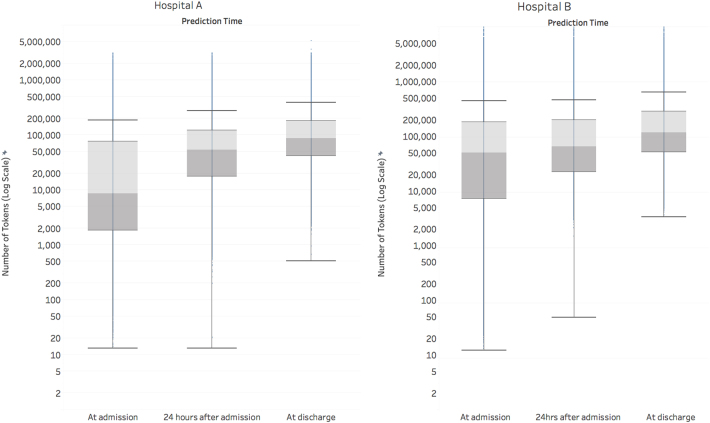
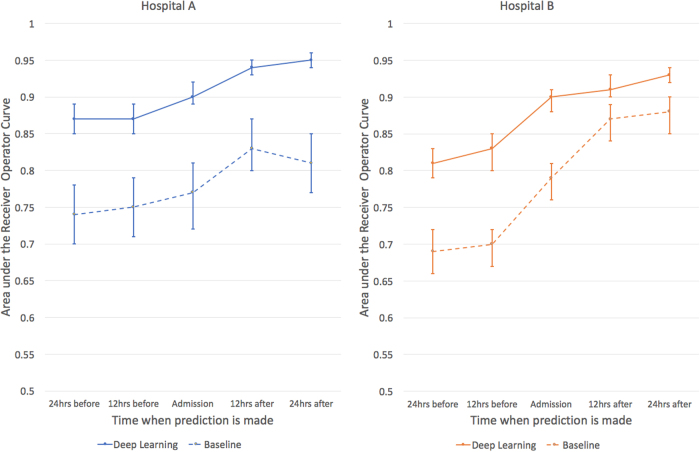
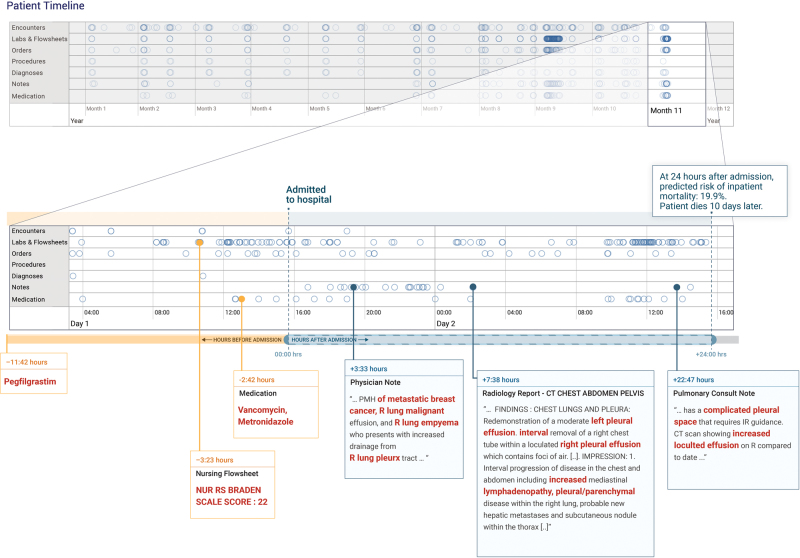
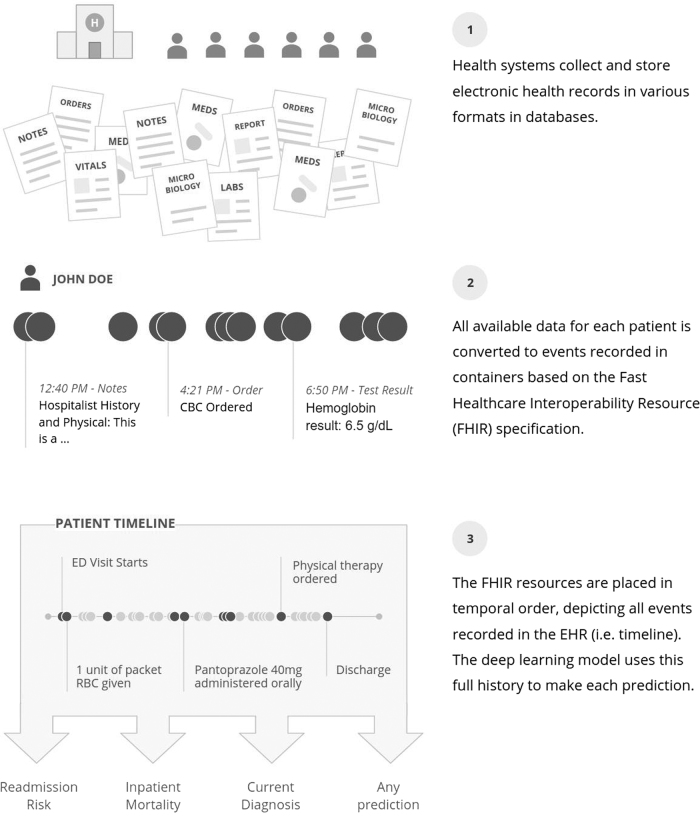
Predictive modeling with electronic health record (EHR) data is anticipated to drive personalized medicine and improve healthcare quality. Constructing predictive statistical models typically requires extraction of curated predictor variables from normalized EHR data, a labor-intensive process that discards the vast majority of information in each patient's record. We propose a representation of patients' entire raw EHR records based on the Fast Healthcare Interoperability Resources (FHIR) format. We demonstrate that deep learning methods using this representation are capable of accurately predicting multiple medical events from multiple centers without site-specific data harmonization. We validated our approach using de-identified EHR data from two US academic medical centers with 216,221 adult patients hospitalized for at least 24 h. In the sequential format we propose, this volume of EHR data unrolled into a total of 46,864,534,945 data points, including clinical notes. Deep learning models achieved high accuracy for tasks such as predicting: in-hospital mortality (area under the receiver operator curve [AUROC] across sites 0.93-0.94), 30-day unplanned readmission (AUROC 0.75-0.76), prolonged length of stay (AUROC 0.85-0.86), and all of a patient's final discharge diagnoses (frequency-weighted AUROC 0.90). These models outperformed traditional, clinically-used predictive models in all cases. We believe that this approach can be used to create accurate and scalable predictions for a variety of clinical scenarios. In a case study of a particular prediction, we demonstrate that neural networks can be used to identify relevant information from the patient's chart.
Overview
CoChat Summary
## TL;DR
This retrospective study shows that a single deep learning pipeline using raw EHR data in FHIR format can predict multiple outcomes across two academic hospitals without site-specific feature harmonization. The models outperformed traditional baselines for inpatient mortality, 30-day readmission, long length of stay, and discharge diagnosis prediction.
## Key findings
- The study included 216,221 hospitalizations from 114,003 unique patients; in-hospital death occurred in 2.3% (4,930/216,221), unplanned 30-day readmission in 12.9% (27,918/216,221), and long length of stay in 23.9%.
- For inpatient mortality at 24 h after admission, AUROC was 0.95 at Hospital A and 0.93 at Hospital B, versus 0.85 and 0.86 for the augmented Early Warning Score baseline.
- For 30-day readmission at discharge, AUROC was 0.77 at Hospital A and 0.76 at Hospital B, versus 0.70 and 0.68 for the modified HOSPITAL baseline; for long length of stay at 24 h, AUROC was 0.86 and 0.85, versus 0.76 and 0.74 for the modified Liu baseline.
- For predicting all discharge diagnoses (14,025 ICD-9 codes), weighted AUROC was 0.87/0.86 at admission and 0.90 at discharge for both hospitals; micro-F1 at discharge was 0.41 (Hospital A) and 0.40 (Hospital B).
## Methods
- Design: Retrospective study comparing deep learning models to traditional predictive models across two hospitals, with separate results reported for each site.
- Data/sample: De-identified EHR data from UCSF (2012–2016) and UCM (2009–2016), including adults 18+ with hospitalizations of 24 h or longer; UCM also included free-text notes.
- Analysis: Raw EHR data were converted into time-ordered FHIR-based token sequences and used to train three model types (LSTM, attention-based TANN, and boosted time-based decision stumps), with outputs ensembled; data were split 80/10/10 into development/validation/test sets and evaluated using AUROC, calibration curves, work-up-to-detection ratio, and micro-F1.
## Limitations
- The authors state it is a retrospective study, with “all of the usual limitations.”
- They state that prospective trials are needed to show that accurate predictions improve care.
- They note their approach does not harmonize data between sites, limiting transfer to new sites/cohorts; they also say the methods are computationally intensive and require specialized expertise.
- Evident from the text: the study’s diagnosis task is restricted to ICD-9 codes, and the authors caution that AUROC differences between hospitals, especially regarding notes, cannot be attributed solely to notes because the cohorts differed.
Model-written summary. Check it against the paper before relying on it.
Integrity signals
Registry
Cites
Statistics
Figures
Verification
Claims the paper makes
7 Valid · 0 Not valid · 6 Not checked · 33 Own results and interpretations
The cited sources support only part of this claim — read each source’s verdict below.
In the paper
“We are not aware of a study that predicts as many ICD codes as this study, but our micro-F1 score exceeds that shown on the smaller MIMIC-III dataset when predicting fewer diagnoses (0.40 vs 0.28).68”
§ Scalable and accurate deep learning with electronic health records > Discussion
What the sources say
- Partly supportedcites [68] Perotte A Diagnosis code assignment: models and evaluation metrics J. Am. Med. Inform. Assoc. 2014 21 231 237 10.1136/amiajnl-2013-002159 24296907 PMC3932472 sourceExperimental — accuracy not yet measured
The Results > Prediction models section reports a 27.6% F-measure for the flat SVM, consistent with the cited 0.28 after rounding. But Materials and methods > Datasets identifies the dataset as MIMIC II, not MIMIC-III; the Results also report a higher 39.5% F-measure for this paper’s hierarchy-based model. No page numbers are available in our copy. (LLM, conf=0.89)
hedged- Asserted: passes — The authors put it forward as true.
- Checkable: passes — It can be checked against evidence.
- Load-bearing: passes — The paper’s conclusions depend on it.
- Based: passes — The paper gives a reason why it holds.
- Rests on an assumption not shown here.
- Partly supported
The cited sources support only part of this claim — read each source’s verdict below.
In the paper
“A major challenge in using more of the data available for each patient has been the lack of standards and semantic interoperability of health data from multiple sites.25”
§ Scalable and accurate deep learning with electronic health records > Introduction > Related work
What the sources say
- Partly supportedcites [25] Sun H Semantic processing of EHR data for clinical research J. Biomed. Inform. 2015 58 247 259 10.1016/j.jbi.2015.10.009 26515501 sourceExperimental — accuracy not yet measured
The Introduction (p.1) and Conclusion (Section 5) of our copy clearly support the semantic-interoperability half of the claim: 'the semantic interoperability between different standards remains a challenge', and 'there is no single standard that could serve as the interoperability hub for all the existing clinical data sources and clinical applications', with the Abstract framing the whole paper as responding to 'a growing need to semantically process and integrate clinical data from different sources for clinical research' (multi-site sources are illustrated in Section 4.1.1: a German hospital Oracle database and an Italian regional IHE QED registry). However, the claim's 'lack of standards' is not what this paper says: the Introduction states that standards such as HL7, openEHR and ISO 13606 HAVE been developed to tackle storage and exchange of clinical data, and the residual problem is interoperability AMONG them plus the absence of one unifying hub standard, not an absence of standards. The claim also generalises the source's specific concern (secondary use/reuse of EHR data for clinical research applications) to 'using more of the data available for each patient'. (LLM, conf=0.70)
plainstates a cause- Asserted: passes — The authors put it forward as true.
- Checkable: passes — It can be checked against evidence.
- Load-bearing: passes — The paper’s conclusions depend on it.
- Based: passes — The paper gives a reason why it holds.
- Partly supported
Every source the paper cites for this claim was checked and supports it.
In the paper
“In the current study, we caution that the differences in AUROC across the two hospitals (one with and one without notes) cannot be ascribed to the presence or absence of notes given the difference in cohorts.45”
§ Scalable and accurate deep learning with electronic health records > Discussion
What the sources say
- Supportedcites [45] Walsh C Hripcsak G The effects of data sources, cohort selection, and outcome definition on a predictive model of risk of thirty-day hospital readmissions J. Biomed. Inform. 2014 52 418 426 10.1016/j.jbi.2014.08.006 25182868 PMC4261028 source
The Discussion states that cohort selection affects discriminatory performance and that comparing performance across studies requires the cohorts to be the same. This supports the citing authors’ caution against attributing their two hospitals’ AUROC difference to the presence or absence of notes when the cohorts also differ; the two-hospital comparison is their own study, not a result attributed to this source. (LLM, conf=0.90)
plain- Asserted: passes — The authors put it forward as true.
- Checkable: passes — It can be checked against evidence.
- Load-bearing: passes — The paper’s conclusions depend on it.
- Based: passes — The paper gives a reason why it holds.
- Supported
A result the paper reports from its own data — it cites no other source for it, so there is none to check. The quote shows it is in the paper.
In the paper
“For classifying all diagnosis codes, the weighted AUROCs at admission were 0.87 for Hospital A and 0.86 for Hospital B.”
§ Scalable and accurate deep learning with electronic health records > Results > Inferring discharge diagnoses
plain- Asserted: passes — The authors put it forward as true.
- Checkable: passes — It can be checked against evidence.
- Load-bearing: passes — The paper’s conclusions depend on it.
- Based: passes — The paper gives a reason why it holds.
- Rests on 2 assumptions not shown here.
A result the paper reports from its own data — it cites no other source for it, so there is none to check. The quote shows it is in the paper.
In the paper
“For predicting long length of stay, the AUROCs at 24 h after admission were 0.86 (95% CI 0.86–0.87) for Hospital A and 0.85 (95% CI 0.84–0.86) for Hospital B.”
§ Scalable and accurate deep learning with electronic health records > Results > Long length of stay
plain- Asserted: passes — The authors put it forward as true.
- Checkable: passes — It can be checked against evidence.
- Load-bearing: passes — The paper’s conclusions depend on it.
- Based: passes — The paper gives a reason why it holds.
- Rests on an assumption not shown here.
18 more claims
Create a free account to see all 46 claims and to verify the 2 references still open.
- It may state two separate claims as one. 16
- Probably not a substantial claim. 10
Claims other papers make about this one
Each is checked against this paper’s own text: does it say what the citing paper says it does?
The source backs part of the claim, not all of it — or backs it for a different population, condition or comparison.
In the citing paper
“The most important difference is that the study included co-morbidities, which have been proven to enable better predictions of disease progression trends and treatment outcomes.25,26”
From Development and validation of a screening tool for sepsis without laboratory results in the emergency department: a machine learning study (2025) · cites this paper as [26]
Experimental — accuracy not yet measuredThe source backs part of the claim, not all of it — or backs it for a different population, condition or comparison.
In the citing paper
“For both structured codes and unstructured notes, standardized vocabularies including FHIR [6] and UMLS CUIs [62,63] are introduced to transfer raw tokens into unique phrases to reduce the sparsity of the input data.”
From Deep representation learning of patient data from Electronic Health Records (EHR): A systematic review (2021) · cites this paper as [6]
Experimental — accuracy not yet measuredThe source backs part of the claim, not all of it — or backs it for a different population, condition or comparison.
In the citing paper
“Some FEMRs have tackled this problem by combining unstructured EHR data (i.e., text) with structured EMR data to boost performance on specific phenotyping and prediction tasks69,70.”
From The shaky foundations of large language models and foundation models for electronic health records (2023) · cites this paper as [69]
Experimental — accuracy not yet measuredThe cited source says what the claim attributes to it.
In the citing paper
“To improve performance and provide a degree of interpretability to the model, an attention mechanism is adopted in 13 studies [6,14,27,31,43,57,64,72,76–78,80,88].”
From Deep representation learning of patient data from Electronic Health Records (EHR): A systematic review (2021) · cites this paper as [6]
The cited source says what the claim attributes to it.
In the citing paper
“Advances in artificial intelligence (AI) are driving a revolution across science, enabling exciting new results across chemistry,80–82 biology,83,84 and medicine.85–88”
From Artificial Intelligence and Early Detection of Pancreatic Cancer: 2020 Summative Review (2021) · cites this paper as [85]
8 more claims about this paper
Create a free account to see every claim other papers make about this one.
Citations
Cites
Hochreiter, S., & Schmidhuber, J. (1997) · Neural Computation · doi:10.1162/neco.1997.9.8.1735 · Cited by 102,318 · cited 9×
“Patient records vary significantly in length and density of data-points (e.g. vital sign measurements in an intensive care unit vs outpatient clinic), so we formulated three deep learning neural-network model architectures that take advantage of such data in different ways: one based on recurrent neural networks (LSTM)…”
MethodInfluentialLeCun, Y., Bengio, Y., & Hinton, G. (2015) · Nature · doi:10.1038/nature14539 · Cited by 84,126
Scikit-learn: Machine Learning in Python
Pedregosa, F., Varoquaux, G., Gramfort, A., Michel, V., Thirion, B., Grisel, O., Blondel, M., Müller, A., Nothman, J., Louppe, G., et al. (2012) · arXiv · doi:10.48550/arxiv.1201.0490 · Cited by 71,016
APACHE II: A severity of disease classification system
KNAUS, W. A., DRAPER, E. A., WAGNER, D. P., & ZIMMERMAN, J. E. (1985) · Critical Care Medicine · doi:10.1097/00003246-198510000-00009 · Cited by 13,664
Representation Learning: A Review and New Perspectives
Bengio, Y., Courville, A., & Vincent, P. (2013) · IEEE Transactions on Pattern Analysis and Machine Intelligence · doi:10.1109/tpami.2013.50 · Cited by 13,001 · cited 1×
“Our central insight is that rather than explicitly harmonizing EHR data, mapping it into a highly curated set of structured predictors variables and then feeding those variables into a statistical model, we can instead learn to simultaneously harmonize inputs and predict medical events through direct feature learning…”
BackgroundMIMIC-III, a freely accessible critical care database
Johnson, A. E. W., Pollard, T. J., Shen, L., Lehman, L.-W. H., Feng, M., Ghassemi, M., Moody, B., Szolovits, P., Anthony Celi, L., & Mark, R. G. (2016) · Scientific Data · doi:10.1038/sdata.2016.35 · Cited by 8,141 · cited 1×
“ecord, which includes clinical free-text notes as well as large amounts of structured and semi-structured data. Because of the availability of Medical Information Mart for Intensive Care (MIMIC) data [48], many prior studies also have focused on ICU patients from a single center [92, 41]; other single-center studies h…”
MethodGulshan, V., Peng, L., Coram, M., Stumpe, M. C., Wu, D., Narayanaswamy, A., Venugopalan, S., Widner, K., Madams, T., Cuadros, J., et al. (2016) · JAMA · doi:10.1001/jama.2016.17216 · Cited by 7,697 · cited 1×
“Deep learning emerged as the preferred machine learning approach in machine perception problems ranging from computer vision to speech recognition, but has more recently proven useful in natural language processing, sequence prediction, and mixed modality data settings([36, 16, 21, 56]).”
BackgroundMandell, L. A., Wunderink, R. G., Anzueto, A., Bartlett, J. G., Campbell, G. D., Dean, N. C., Dowell, S. F., File, T. M., Musher, D. M., Niederman, M. S., et al. (2007) · Clinical Infectious Diseases · doi:10.1086/511159 · Cited by 6,202 · cited 1×
“of only 27 variables, rely on traditional generalized linear models, and are built using data at a single center. In clinical practice, simpler models are most commonly deployed, such as the CURB-65 [68, 60], which is a 5-factor model, or single-parameter warning scores [20, 45]. A major challenge in using more of the…”
MethodAPACHE II: a severity of disease classification system.
Knaus, W. A., Draper, E. S., Wagner, D. P., & Zimmerman, J. E. (1985) · PubMed · Cited by 6,034
Predicting the future - big data, machine learning, and clinical medicine
Obermeyer, Z., & Emanuel, E. J. (2016) · New England Journal of Medicine · doi:10.1056/nejmp1606181 · Cited by 3,652 · cited 1×
“In our case study, the model identified elements of the patient’s history and radiology findings to render its prediction, which are critical data-points that a clinician would also use [41].”
Method
Research works printed but not linked: 5
- Wu, Y. et al. Google’s neural machine translation system: bridging the gap between human and machine translation. arXiv [cs.CL] (2016).
- Aczon, M. et al. Dynamic mortality risk predictions in pediatric critical care using recurrent neural networks. arXiv [stat.ML] (2017).
- Suresh, H. et al. Clinical intervention prediction and understanding using deep networks. arXiv [cs.LG] (PMLR, Los Angeles, CA, USA, 2017).
- Razavian, N., Marcus, J. & Sontag, D. Multi-task prediction of disease onsets from longitudinal laboratory tests. In Proceedings of the 1st Machine Learning for Healthcare Conference, (eds F. Doshi-Velez, J. Fackler, D. Kale and B. Wallace, J. Wiens) Vol. 56, pp 73–100 (PMLR, Los Angeles, CA, 2016).
- Bahdanau, D., Cho, K. & Bengio, Y. Neural machine translation by jointly learning to align and translate. arXiv [cs.CL] (2014).
Cited by
Items 2,301–2,400 of 2,601
Revolutionizing genomic medicine with artificial intelligence and data analytics
Patra, P. P. (2026) · Elsevier eBooks · doi:10.1016/b978-0-443-27638-5.00013-4
Ma, J., Yang, Y., Zhao, L., Chen, C., Cui, K., & Lin, X. (2025) · International Conference on Industrial Automation, Robotics and Control Engineering (IARCE) · doi:10.1109/iarce68366.2025.11485740
“Deep learning methods, particularly Recurrent Neural Networks (RNNs) and Long Short-Term Memory networks (LSTMs), have demonstrated advantages in temporal medical data modeling [8], [9], yet still face challenges regarding insufficient interpretability.”
Role of artificial intelligence in health sector: review of literature
Sharma, K., & Sharma, R. L. (2026) · International Journal of Community Medicine and Public Health · doi:10.18203/2394-6040.ijcmph20261451
Enhancing Emergency Care Through Machine Learning-Based Admission Prioritization
Narayana, C. V. L., Revathy.K, D, K., Sree.P, U., Sunil.M, & Kumar.S, M. (2026) · IEEE International Conference on Emerging Computing and Intelligent Technologies (ICoECIT) · doi:10.1109/icoecit68303.2026.11497149
Al-Omari, O. M., Alshboul, Y., Mahafdah, R., et al. (2025) · International Conference on Decision Aid Sciences and Applications (DASA) · doi:10.1109/dasa68193.2025.11498906
“Machine learning and explainable AI have been applied to modeling the progression of chronic illnesses in recent years; however, the issue of accuracy versus explainability remains in most studies [7], [8].”
Ensemble-Based Multi-Disease Detection from Blood Samples Using Machine Learning Techniques
Ahad, S. A., Hossain, M. S., Hasan, M. H., Rahman, A., & Azgar, A. (2025) · International Conference on Computer and Information Technology (ICCIT) · doi:10.1109/iccit68739.2025.11490279
“Trained using Adam optimizer (lr=0.001), cross-entropy loss, batch size 32, and early stopping (patience=10) [11], [12].”
InfluentialExplainable AI for Heart Failure on AWS: A Scalable Big Data Approach
Jayawardhena, D. D. R. M., Peiris, A., Ranaweera, J. P., Perera, W. W. D. G. A., & Aponso, A. C. (2026) · International Research Conference on Smart Computing and Systems Engineering (SCSE) · doi:10.1109/scse70081.2026.11499938
“However, conventional statistical models and small-scale machine learning models are not capable of dynamic scaling and handling large heterogeneous healthcare datasets [3].”
Causal reinforcement learning to optimise hospital bed allocation under surge conditions
Kumar, A. (2026) · NexusTech · doi:10.31893/tech.2026006
Smart Healthcare Framework: An ML Approach
Subrahmanyam, C. S., Chilakarao, M., Prasad, K. B. V. V., Jayanth, L., Naik, L. O., & Yuvaraj, K. (2026) · Smart innovation, systems and technologies · doi:10.1007/978-3-032-20121-8_35
ML-based Medical Diagnostics System for Infectious Diseases (Case Study: COVID-19)
Manda, S., Vinnakota, S., Adapa, M., et al. (2026) · 2020 IEEE International Systems Conference (SysCon) · doi:10.1109/syscon66367.2026.11503514
“[4] later presented a unified DL system capable of achieving state-of-the-art performance across multiple clinical prediction tasks - highlighting the feasibility of structured-data ML in health-care environments.”
Chebbawi, S., Tabaa, M., & Badir, H. (2026) · IEEE International Multidisciplinary Conference on Engineering Technology (IMCET) · doi:10.1109/imcet69180.2026.11503771
“Benchmarking of predictive models of mortality, sepsis, and LoS has been demonstrated using large de-identified repositories [1], although fewer investigations have applied this to ICU mental health outcomes [2]; [10].”
InfluentialReddy, C. S., & Annamalai, M. (2026) · International Conference on Recent Advances in Electrical, Electronics, Ubiquitous Communication, and Computational Intelligence (RAEEUCCI) · doi:10.1109/raeeucci67649.2026.11504859
“Research always finds plasma glucose level, body mass index (BMI), age, and insulin level to be the dominant predictive characteristics [13].”
Shaffi, S. M., & Vengathattil, S. (2025) · International Conference on Business Intelligence for Technology Innovation (ICBITI) · doi:10.1109/icbiti65527.2025.11500857
“In medical datasets, information of some populations like, minority, get missing or., this ultimately leads to worse performance of NLP models for this particular group [11].”
Rodrigues, C. C., & Rebello, S. D. (2026) · medRxiv · doi:10.64898/2026.05.07.26352635
A deep learning model for automated identification of age-related macular degeneration atrophy
Avram, O., Shwartz, Y., Green, A., Bloom, R., Corradetti, G., Wu, A., Chen, Z. J., Eshkoly-Lior, T., Durmus, B., Rudas, Á., et al. (2026) · Graefe s Archive for Clinical and Experimental Ophthalmology · doi:10.1007/s00417-026-07205-4 · Cited by 1
Babli, S. A., Gairola, P., Ogbu, C. E., Longa, F. A., Rautaray, A., Alamu, O. S., & Rizvi, S. F. H. (2026) · Cureus · doi:10.7759/cureus.108550
“External validation on eICU confirmed the ranking of preprocessing methods, with absolute AUROC values 0.02-0.04 lower across all approaches, consistent with expected cross-institutional generalization [8].”
InfluentialAutomated Radiology Report Generation from Chest X-rays using DenseNet-121 and LSTM
Patil, K. R., Inamdar, M., Kudalagi, R., Gadad, A., Kulkarni, U., & Gani, P. (2026) · 2026 IEEE International Conference for Convergence in Computing Technology (I3CTCON) · doi:10.1109/i3ctcon68242.2026.11507993 · Cited by 1
“Instead of passing features forward only once, this pattern allows low-and mid-level information to be reused extensively, which improves gradient flow and reduces the need to relearn similar features in deeper layers [34] [35].”
Machine Learning Models for Predicting Post-Hepatectomy Liver Failure: A Systematic Review
Muntean, C., Gaborean, V., Vonica, R. C., Ştefănigă, S.-A., Faur, A. M., & Feier, C. V. I. (2026) · AI · doi:10.3390/ai7050166
“…attempted to quantify parenchymal heterogeneity beyond routine laboratory tests, while temporal perioperative architectures [37,40–42] and broader EHR-linked deep-learning paradigms [51] used evolving perioperative trajectories in a manner closer to continuously updated clinical monitoring.”
Rouhollahi, A., & Nezami, F. R. (2026) · bioRxiv (Cold Spring Harbor Laboratory) · doi:10.64898/2026.05.06.722409
“XGBoost [2] has remained the formidable default baseline on tabular clinical prediction; system-181 atic comparisons confirm that tree-based models outperform deep learning on purely tabular data when features are carefully engineered [13, 14, 15].”
Aljaf, Y., Zahir, M., Naser, W., Sowan, A., & Dhou, S. (2026) · IEEE Access · doi:10.1109/access.2026.3692114 · Cited by 1
“These systems can use a variety of data sources, including wearable sensor data [25], electronic health records [26], and other medical data, to identify potential health issues and provide personalized recommendations for treatment.”
AI-Powered Liver Disease Prediction Using Random Forest and Kolmogorov-Arnold Networks (KAN)
Kumar, S., Yadav, A. K., & Pajila, P. J. B. (2026) · International Conference on Smart Futuristic Technology (SMARTTECH) · doi:10.1109/icsft66733.2026.11506732
“Recent advances in web technologies and asynchronous Python frameworks enable real-time prediction systems that meet the strict performance requirements of clinical workflows [4].”
Deep Learning for Emerging Applications: Innovations and Challenges
Mzili, T., Benlalia, Z., Waga, A., Arya, A. K., & Mijwil, M. M. (2026) · Advances in computational intelligence and robotics book series · doi:10.4018/979-8-2600-0888-1.ch001
Ramanjulu, R., & Thota, R. S. (2026) · Indian Journal of Palliative Care · doi:10.25259/ijpc_151_2026
“[1,2] In overburdened systems, particularly in low-resource settings, such tools may appear to offer scalability and efficiency.”
Artificial intelligence in diabetes care: Toward precision diagnosis and personalized management
Aburjai, T. A., Agha, A. S. A. A., Abuhilaleh, Y., Miqdad, A., Aburjai, A., Alzweiri, M. H., & Khassawna, T. E. (2026) · Journal of Investigative Medicine · doi:10.1177/10815589261452671
A physiology-guided temporal graph learning approach for intensive care mortality prediction
Joseph, J., & Judy, M. V. (2026) · Healthcare Analytics · doi:10.1016/j.health.2026.100467 · Cited by 1
Akinrinwa, S. P. (2026) · Contributions to environmental sciences & innovative business technology · doi:10.1007/978-981-95-8473-4_6
Transforming healthcare service experiences through AI: Capabilities, ecosystems, and implications
Scheepers, R., Ewing, M. T., Reddy, S., & Cybulski, J. L. (2026) · Business Horizons · doi:10.1016/j.bushor.2026.05.008
Mai, X., Liu, Y., Ning, Y., Wacker, D. A., Lin, M., Liu, N., Puskarich, M. A., & Xie, F. (2026) · Research Square · doi:10.21203/rs.3.rs-9161309/v1
Boukallal, I., Bouti, N., Ouba, A., et al. (2026) · Green energy and technology · doi:10.1007/978-3-031-99001-4_23
Beyond accuracy: advancing LLM evaluation in clinical neurology toward real-world decision support
Shankar, R., & Xu, Q. (2026) · Neurological Sciences · doi:10.1007/s10072-026-09125-x
“Natural language processing (NLP) tools that extract structured clinical features from unstructured electronic health records are rapidly maturing [ 4 ], and their integration with diagnostic LLMs could create more com - plete and standardized inputs for AI-supported reasoning.”
Wu, Y., Zhao, K., Huang, J., Huang, W. Q., Li, Y. M., Pan, H. Y., & Yu, J. (2026) · Research Square · doi:10.21203/rs.3.rs-9534904/v1
Alzakari, S. A., Eid, M. M., Alhussan, A. A., & Towfek, S. K. (2026) · Scientific Reports · doi:10.1038/s41598-026-53812-w · Cited by 1
Ouedrhiri, O., Tabbaa, H., Houfi, A. E., Karzouz, S., Lambrass, Y., Malyari, A. E., & Lachgar, M. (2026) · International Conference on Global Aeronautical Engineering and Satellite Technology (GAST) · doi:10.1109/gast67799.2026.11523264
“IBM Watson Health [6], Google Cloud Healthcare API [7], and Nuance solutions [8] require cloud connectivity, creating compliance challenges for institutions with strict data localization requirements [9].”
Zhang, X., Hu, Y., Li, Y., et al. (2026) · Research Square · doi:10.21203/rs.3.rs-9370559/v1
Leveraging Machine Learning to Assess Post-COVID-19 Glycemic Control in Diabetic Patients
Lluberes-Contreras, M., Figueroa-Santiago, E., Kohan‐Ghadr, H., Ortiz-Ortega, A., & Roche-Lima, A. (2026) · International Journal of Environmental Research and Public Health · doi:10.3390/ijerph23050644
“Prior studies have demonstrated the effectiveness of ensemble and deep learning approaches in capturing complex, nonlinear relationships in high-dimensional clinical datasets, often outperforming traditional statistical models [14,15].”
Early Sepsis Detection from ICU Data Using Multimodal Deep Learning
Shamkuwar, A. S., Bhardwaj, P., Kumar, N., & Singh, M. (2026) · International Conference on Intelligent Processing, Hardware, Electronics, and Radio Systems (CIPHER) · doi:10.1109/cipher70417.2026.11523895
“Due to the sequential, non-stationary dynamics of physiological signals in critically ill patients RNNs and gated versions are better suited for the early sepsis detection [13].”
Park, S., Woo, S., Park, J.-H., Park, B., & Lee, M. (2026) · Digital Health · doi:10.1177/20552076261440650
“26 In the medical field, machine learning analysis techniques are currently utilized for accurate diagnosis, severity risk prediction, and prognosis prediction; however, there is a lack of verification of mortality prediction, which implies patient survival.”
Rajendran, A., Annushiya, K., Harini, P., et al. (2026) · International Conference on Artificial Intelligence and Machine Learning Applications Theme: Healthcare and Internet of Things (AIMLA) · doi:10.1109/aimla67915.2026.11522413
AI-Driven Consciousness Assessment, Recovery Forecasting & Hydration Management for Coma Patients
Titus, T. J., Reenasri, S., Sadhana, L., & Sujaaya, J. (2026) · International Conference on Artificial Intelligence and Machine Learning Applications Theme: Healthcare and Internet of Things (AIMLA) · doi:10.1109/aimla67915.2026.11522400
Azure-Based Healthcare Risk Analytics with Machine Learning and Power BI
Saikiran, N., Dharani, G., Naik, S. A., Khan, P. A. A., Dadapeer, S., & Ravikumar, G. (2026) · International Conference on Artificial Intelligence and Machine Learning Applications Theme: Healthcare and Internet of Things (AIMLA) · doi:10.1109/aimla67915.2026.11522325
“…on the deterioration of the patients and risk prediction through machine learning have been increasing rapidly, in which nonlinear predictors of adverse outcomes through vital signs have been learned by using gradient-boosted trees, recurrent neural networks and ensemble techniques [10], [12], [7].”
Heart Disease Prediction Using Hybrid Quantum-Classical Machine Learning Models
Pavan Reddy, T., Vishwachetan, D., & Rajarajeswari, S. (2026) · International Conference on Knowledge Engineering and Communication Systems (ICKECS) · doi:10.1109/ickecs70176.2026.11527728
Hsieh, C.-H., Qiao, C., Zhang, Z., Shang, W., Zhuang, S., & Chen, J. (2026) · doi:10.1109/icnlp69856.2026.11528101
“It can automatically extract key information from medical texts and provide support for clinical decision-making [4].”
Siwingwa, M., Mutale, W., Munsaka, S. M., Kayamba, V., Heimburger, D. C., Hazelhurst, S., Sivile, S., Mweemba, A., Mbewe, N., Mulenga, L., et al. (2026) · BMC Medical Informatics and Decision Making · doi:10.1186/s12911-026-03589-9
“This enhances scalability within routine HIV programmes, although formal evaluation of feasibility, cost-effectiveness, and workflow integration will be required before clinical deployment [37, 38].”
Glass, G. F., Ang, C.-S., Weiss, M., Fan, X., Cleland, J., & Manski-Nankervis, J.-A. E. (2026) · BMJ Open · doi:10.1136/bmjopen-2026-118394 · Cited by 1
Scalable and Privacy-Aware Relational Data Synthesis
Kapenekakis, A., Dell'Aglio, D., Bøgsted, M., Garofalakis, M., & Hose, K. (2026) · Springer eBooks · doi:10.1007/978-3-032-18765-9_3
Next-Generation Multimodal AI for Early Oral Cancer Prediction and Patient- Specific Treatment
Hajare, D. S., & Patil, S. V. (2026) · Lecture notes in networks and systems · doi:10.1007/978-3-032-26908-9_17
Lu, Y., Li, T., Ge, L., Wei, Y., Li, Y., Huang, S., Jiang, T., Chen, Y., & Xiang, Z. (2026) · Frontiers in Public Health · doi:10.3389/fpubh.2026.1793361
Kang, Y., Song, S. M., Kim, J. E., Kim, H. J., Cho, E. J., Kwon, Y. J., & Kang, M. W. (2026) · The Journal of Supercomputing · doi:10.1007/s11227-026-08627-x
“Scalable EHR deep learning studies have also emphasized the need for computationally efficient model training and inference pipelines in large clinical datasets [18].”
Aspiration to architecture: multi-omics, AI, digital twins, and blockchain for P4 medicine
Mohr, A. E., Bajnath, A., King, G., Ichim, T. E., & Jasbi, P. (2026) · Journal of Translational Medicine · doi:10.1186/s12967-026-08346-0 · Cited by 1
“Deep learning on electronic health records has demonstrated prediction of in-hospital mortality (area under the receiver operating characteristic curve [AUROC] 0.95), readmission, and disease onset across hundreds of thousands of patients [32].”
InfluentialBaxter, W., Nicholson, C., Badal, T., Strange, G. A., & Celermajer, D. S. (2026) · Research Square · doi:10.21203/rs.3.rs-9753063/v1
Krishnamoorthy, U. (2026) · Nutrition Research · doi:10.1016/j.nutres.2026.05.009
DynaGraph-FL: Dynamic Federated Graph Learning with Privacy, Robustness, and Drift Handling
Sathishkumar, B., & Abinaya, M. (2026) · doi:10.1109/ic-icns68863.2026.11537737
“Potential areas of application include privacy-preserving learning on healthcare networks [46], [47], smart-city and IoT infrastructures [48], and financial transaction graphs for fraud detection [49], [50].”
Predictive Analytics for Proactive Patient Outcomes Prediction Using Multi-Modal Deep Learning
Asghar, M. N. (2026) · IEEE International Conference on Computing and Machine Intelligence (ICMI) · doi:10.1109/icmi68585.2026.11539900
“In the research [14], the authors proposed an approach employing deep learning to simulate patients’ complete un-structured Electronic Health Records (EHR), encompassing medical records, by utilizing the FHIR format for data representation.”
Shashikala, K. S., Umamaheswaran, S., Prajwal, H. N., Naik, O. M., & Divakar (2026) · International Conference on Trends in Electronics and Informatics (ICOEI) · doi:10.1109/icoei68323.2026.11542203
Deng, X., Xia, J., Liang, Z., & Luo, C. (2026) · Frontiers in Medicine · doi:10.3389/fmed.2026.1855223
“Nevertheless, traditional logistic regression models are limited to capturing nonlinear relationships and complex interactions among variables, and their predictive performance is limited when dealing with high-dimensional clinical data (12).”
Ramu, M., Reddy, P. C., Harika, T., Kulsum, U. F., Masumbee, S., & Manoja, M. Y. (2026) · International Conference on Trends in Electronics and Informatics (ICOEI) · doi:10.1109/icoei68323.2026.11541766
“However, model performance is often influenced by how features are represented and optimized, especially when medical datasets are complex or heterogeneous [5], [6].”
Statistical Methods for Longitudinal Cardiovascular Disease Research Design: A Narrative Review
Chen, Y., Wei, Y., Yang, Y., Li, C., (341591), X. W., Xue, T., Ruan, Y., Feng, G., & (43681), T. Z. (2026) · Cardiovascular Innovations and Applications · doi:10.15212/cvia.2026.0015
Risk-Aware and Explainable Machine Learning Model for Hospital Readmission Forecasting
Tripathi, A., Kumar, D. R., Koranga, R. S., & Koranga, P. (2026) · International Conference on Intelligent Systems in Engineering, Secured Systems and Cybersecurity (ICISESSC) · doi:10.1109/icisessc68634.2026.11542613
Pai, R. R., Pandey, B., & Prasad, S. N. (2026) · International Conference on Computing and Data Engineering (ICCDE) · doi:10.1145/3801839.3801855
Yang¹, M., Yang¹, Z., Huang², G., Li², D., Zhang², Y., & Qian², K. (2026) · Research Square · doi:10.21203/rs.3.rs-9547206/v1
Self-citationAkalai, N., Doudach, L., Benba, A., & Belfkih, S. (2026) · International Conference on Innovative Research in Applied Science, Engineering and Technology (IRASET) · doi:10.1109/iraset68627.2026.11538491
Ahmed, M., Ahmed, F., Mow, S. M., Taha, P. A., Barua, S., Rahman, M. M., Rafy, A., Mondol, S. M., & Faisal, M. I. (2026) · medRxiv · doi:10.64898/2026.06.08.26355217
First‑Day Glycemic Exposure and 28‑Day Mortality in the ICU: A Multicohort StudyPreprint
Odera, J. O., Achic, B. G. B., Cha, J., Montgomery, A. H., Ojwang, A. A., Masenga, S. K., Odera, E. O., Osazuwa-Peters, N., Yalamanchi, A., Han, D., et al. (2026) · Research Square · doi:10.21203/rs.3.rs-9710742/v1
“30 Beyond point estimates of accuracy, GlucoSurvAI preserved interpretability via SHAP, allowing clinicians to visualize how exposure bins and treatment covariates contribute to predicted risk at the bedside.”
Arage, F. G., Alemu, G. G., Yismaw, G. A., Getahun, H. A., Abuhay, H. W., Aweke, M. N., Alemayehu, M. A., Derseh, N. M., Tsegaw, T. K., Birhan, T. Y., et al. (2026) · Discover Artificial Intelligence · doi:10.1007/s44163-026-01440-8
“Furthermore, model validation in local populations is rarely conducted, raising concerns about generalizability and fairness [22].”
Olaniran, O. R., Kunle, S. A., Alzahrani, A., Alharbi, M. H., Alharbi, N. M., & Alzahrani, A. A. (2026) · Mathematics · doi:10.3390/math14122084 · Cited by 1
Shaw, L., & Lyons, K. (2026) · Health Policy and Technology · doi:10.1016/j.hlpt.2026.101272
Predicting Sepsis Onset in ICUs: A Graph Neural Network Framework with Uncertainty Estimation
Furtney, I., Bradley, R. M., & Kabuka, M. R. (2026) · ACM Transactions on Computing for Healthcare · doi:10.1145/3820761
“Although sequential models such as recurrent neural networks can effectively capture temporal dependencies, they often treat clinical data as strictly ordered time series [30, 39, 49].”
Closing the Loop in Precision Oncology: A Digital Twin‐Driven Paradigm for Dynamic Decision‐Making
Zhu, J., Yang, M., Ouyang, C., & Zhang, L. (2026) · iMetaMed · doi:10.1002/imm3.70044 · Cited by 1
Deep neural networks for early detection of chronic diseases using multi-modal health data
Kumar, D. (2026) · Neural Computing and Applications · doi:10.1007/s00521-026-12253-2 · Cited by 1
“EHRs hold extensive records over time but usually experience problems with missing values, inconsistent structures, and varying coding systems across health systems [11].”
Alecu, A. A. (2026) · Bioengineering · doi:10.3390/bioengineering13060683
“Related concerns involving fairness, demographic bias, and clinical equity are also becoming increasingly important as biomedical machine-learning systems are deployed across heterogeneous populations and healthcare environments [43,85].”
InfluentialNursing Process Data for Health Care Cost Prediction Using Machine Learning: Longitudinal Study
González‐Chordá, V. M., & Orts‐Cortés, M. I. (2026) · JMIR Nursing · doi:10.2196/93638
“For example, in mortality prediction, they achieve AUC values ranging from 0.92 to 0.94, compared with 0.91 for classical models, and in the prediction of hospital readmissions, performance improves from 0.69 to 0.75-0.76 [43].”
InfluentialFrom Realism to Relevance: Rethinking Simulator Fidelity in the Era of Generative AI
Schoenherr, J. R. (2026) · IEEE Transactions on Technology and Society · doi:10.1109/tts.2026.3693463
The Impact and Integration of AI: From Research to Realization in Clinical Trials
Bidarkund, N., Das, D., & Khanna, S. (2026) · IGI Global eBooks · doi:10.4018/979-8-3373-1509-6.ch009
Trofimov, Y. V., Алексеев, А. К., & Shevchenko, A. (2026) · International Conference on Industrial Engineering, Applications and Manufacturing (ICIEAM) · doi:10.1109/icieam69213.2026.11549627
“[11, 14, 15], as does secure continual learning – including monitoring of explanation quality degradation independently from accuracy, incremental ontology updates without knowledge loss, and information-theoretic measures of causal graph changes [16, 17, 18].”
Chen, L., Yu, T., Pan, Y., et al. (2026) · Frontiers in Oncology · doi:10.3389/fonc.2026.1858988
Machine learning‐based early warning model for adolescent mental health risk using the p factor
Li, Y., Bian, W., Wen, X., Fang, Y., Wang, Y., & Li, H. (2026) · Journal of Child Psychology and Psychiatry · doi:10.1111/jcpp.70194 · Cited by 1
Artificial intelligence: A catalyst for the modernization of traditional Chinese medicine
董介正, Li, S., Chen, S., & Qiu, L. (2026) · Intelligence-Based Medicine · doi:10.1016/j.ibmed.2026.100415
Tanhaei, M. (2026) · Machine Learning with Applications · doi:10.1016/j.mlwa.2026.100935
Mehal, K., Pielich, W. M., Siusta, N., Gałan, K., Kuczyńska, S., & Balicka-Dworczak, N. (2026) · International Journal of Innovative Technologies in Social Science · doi:10.31435/ijitss.2(50).2026.5908
Shah-Mohammadi, F., Millar, A., Facelli, J. C., & Gouripeddi, R. (2026) · JAMIA Open · doi:10.1093/jamiaopen/ooag108 · Cited by 3
“18,19 Moreover, ML systems typically fail to provide clinicians with calibrated, case-level uncertainty estimates, making it difficult to determine when predictions are trustworthy.”
da Rosa, V. M. V., Inocêncio, G. N., & Martina, J. E. (2026) · doi:10.5753/sbcas.2026.21679
“…the sequential nature of this data, Recurrent Neural Networks (RNNs) such as Long Short-Term Memory (LSTM) and Gated Recurrent Units (GRU) have become the dominant architectures, as confirmed by large-scale clinical studies [Rajkomar et al. 2018] and recent systematic reviews [Morid et al. 2023].”
Modern Era in Personalized Medicine of Dual Antiplatelet Therapy After Myocardial Revascularization
Dehghan, A., Javadi, N., Allaqaband, S. Q., & Jan, M. F. (2026) · Journal of Clinical Medicine · doi:10.3390/jcm15134870
“Further, integrating wearable-derived data, such as continuous heart rate and physical activity levels, into AI models offers the potential for proactive personalization, detecting physiological shifts before clinical events occur [96].”
Trustworthy AI for Unbalanced Industrial Data Classification
Yousefimehr, B., & Ghatee, M. (2026) · International Biennial Conference on Advances in Artificial Intelligence and Data Science (IBAAIDS) · doi:10.1109/ibaaids66771.2026.11567391
An LLM-based multi-agent system for patient discharge assessment
Gebreab, S. A., Musamih, A., & Salah, K. (2026) · Computer Methods and Programs in Biomedicine Update · doi:10.1016/j.cmpbup.2026.100261
Sardar, T. H., Thahniyath, G., Pal, D., & Santhosh, S. (2026) · Elsevier eBooks · doi:10.1016/b978-0-443-45875-0.00015-6
Hasan, A. M., Najm, S. M., Alkhalid, F. F., Nasser, A. R., Al-Araji, A. P. D. A. S., & Humaidi, A. J. (2026) · Discover Computing · doi:10.1007/s10791-026-10286-8
Zuo, Q., Zhao, L., & Tao, G. (2026) · Research Square · doi:10.21203/rs.3.rs-9693461/v1
Laingen, B. E., Iobst, W., Dobbins, J., Johnson, J. W., Cambronero, G. E., Neff, L. P., & Bosley, M. E. (2026) · Research Square · doi:10.21203/rs.3.rs-10028364/v1
Leveraging Real-World Data for Clinical Decision Making in Geriatric Oncology
González-Serrano, A., Jean, C., Baldini, C., & Soto‐Pérez‐de‐Celis, E. (2026) · Drugs & Aging · doi:10.1007/s40266-026-01314-9
“…processing, emerging data-management technologies, including deep-learning models, AI-based natural language processing, and large language models, have shown strong potential for retrieving, structuring, standardizing, and curating information from unstructured electronic medical records [74–76].”
Deep sequence learning with multi-task supervision for scalable population health monitoring
Ashraf, I., Nasir, I. M., Awais, M., Bouchelligua, W., Mansour, S., Alyounis, E., & Nawaz, M. (2026) · Frontiers in Public Health · doi:10.3389/fpubh.2026.1837769
Bogdan, P. M., Salim, C., Goroftei, E. R. B., Pleșea-Condratovici, A., Guțu, C., Buzea, C. G., Costăchescu, B., Duceac, L. D., Arbune, M., Vlase, C.-M., et al. (2026) · Journal of Clinical Medicine · doi:10.3390/jcm15135056
“…ML approaches that incorporate time-series data—vital signs, laboratory values, and ventilatory parameters measured repeatedly over time—have been shown to outperform static models for predicting outcomes such as 90-day mortality, ICU length of stay, and risk of clinical deterioration [10,14–16].”
Xie, F., Xiong, X., Mai, X., Zhou, S. H. E. N. G. H., Liu, Y., Yu, K., Xu, X., Lin, M., Zhang, R., & Puskarich, M. A. (2026) · Research Square · doi:10.21203/rs.3.rs-10020548/v1
Dani, D. D. P. D., Kamatchi, K., Hussain, D. S. S. N., et al. (2026) · International Conference on Inventive Computing and Informatics (ICICI) · doi:10.1109/icici68773.2026.11580628
“Rather than following rigid rule-based logic, machine learning models learn directly from data, adapt to variability, and develop discriminative capabilities that strengthen predictive performance [7].”
CHaRT: An Autoregressive Transformer for Joint Forecasting of Clinical Events and Continuous Values
Walz, M., & Byrd, T. F. (2026) · Informatics · doi:10.3390/informatics13070099
Al-Driven Precision Medicine: Current Trends and Future Prospects
Balaram, A., Vakkalanka, V. S., Valaboju, S., et al. (2026) · doi:10.1109/ci2a69097.2026.11576856
Multimodal clinical data integration for prognosis of pulmonary embolism: A comparative study
Paolo, D., Soda, P., Tortora, M., Bria, A., & Sicilia, R. (2026) · Computerized Medical Imaging and Graphics · doi:10.1016/j.compmedimag.2026.102794
Supporting Hospital Operational Decision-Making Through Early Prediction of Length of Stay
Sousa, M. D., Lopes, J., Guimarães, T. A. S., Barbosa, A., & Santos, M. F. (2026) · Lecture notes in computer science · doi:10.1007/978-3-032-30527-5_41
AI-Empowered Biology for Sustainable Health, Agriculture, and Environment
Banu, A. S., Kesavardhini, K., Nisha, R., Sindhuja, S., Suroor, S. S., & Saranraj, P. (2026) · Advances in computational intelligence and robotics book series · doi:10.4018/979-8-2600-2691-5.ch005
Multi-Modal Deep Learning for Early Disease Prediction Using Clinical and Diagnostic Data
Wagh, K., Navale, G. J., Ghuse, S., Dargude, M., & Gangurde, K. (2026) · International Conference on Computing, Communication and Green Engineering (CCGE) · doi:10.1109/ccge67142.2026.11581831
“As the deep learning technology rapidly is being developed, more advanced models have been presented that counteract these limitations [8], [13].”
Priyadharshini, U., & Vijayan, R. (2026) · Frontiers in Artificial Intelligence · doi:10.3389/frai.2026.1844707 · Cited by 1
“This study demonstrated large-scale deep learning on EHR data for disease prediction (Rajkomar et al., 2018).”
Metadata
- Authors
- Rajkomar, A., Oren, E., Chen, K., Dai, A. M., Hajaj, N., Hardt, M., Liu, P. J., Liu, X., Marcus, J., Sun, M., Sundberg, P., Yee, H., Zhang, K., Zhang, Y., Flores, G., Duggan, G. E., Irvine, J., Le, Q., Litsch, K., Mossin, A., Tansuwan, J., Wang, D., Wexler, J., Wilson, J., Ludwig, D., Volchenboum, S. L., Chou, K., Pearson, M., Madabushi, S., Shah, N. H., Butte, A. J., Howell, M. D., Cui, C., Corrado, G. S., & Dean, J.
- Affiliations
- Google (United States) (US)
- University of California, San Francisco (US)
- University of Chicago (US)
- Stanford University (US)
- Corresponding author
- Rajkomar, Alvin
- Venue
- npj Digital Medicine
- Published
- 2018-05-08
- Volume
- 1
- Issue
- 1
- Pages
- 18-18
- ISSN
- 2398-6352 (ISSN-L)
- PMC
- PMC6550175
- OpenAlex
- W2784499877
- Cited by
- 2,648
- References
- 72
- Citations by year
- 2026: 494 · 2025: 457 · 2024: 370 · 2023: 280 · 2022: 228 · 2021: 304 · 2020: 275 · 2019: 186 · 2018: 54
- FWCI
- 115.37
- Type
- journal article
- Language
- en
- Open access
- gold
- doi.org
- Licence
- cc-by
- creativecommons.org/licenses/by/4.0 (tdm)
- creativecommons.org/licenses/by/4.0 (vor)
- Locations
- npj Digital Medicine (publishedVersion, cc-by)
- arXiv (Cornell University) (publishedVersion)
- Europe PMC (PubMed Central) (publishedVersion, cc-by)
- PubMed Central (publishedVersion, cc-by)
- PubMed (publishedVersion)
- DOAJ (DOAJ: Directory of Open Access Journals) (submittedVersion, cc-by-sa)
- eScholarship (California Digital Library) (submittedVersion, cc-by)
- arXiv (Cornell University)
- Topics
- Physical Sciences › Computer Science › Artificial Intelligence › Machine Learning in Healthcare
- Health Sciences › Health Professions › Health Information Management › Electronic Health Records Systems
- Health Sciences › Health Professions › Health Information Management › Artificial Intelligence in Healthcare
- Keywords
- electronic health records, FHIR, deep learning, in-hospital mortality prediction, unplanned hospital readmission, length of hospital stay, hospital discharge diagnoses, clinical notes, data harmonization
About these checks
Registry, retraction, Cites and statistics results are computed, not judged, with one exception: a printed reference that no index lists is read once by a model before it counts as a citation error. Claims are extracted by a model and kept only when their quote appears verbatim in the text; each cited source is then checked, with a model’s help, for whether it says what the claim relies on. Those verdicts can be wrong — read the claim’s quote and the cited source before relying on one.
The claim verdicts this report counts are experimental: their accuracy is not yet measured.
A language model drew the claims from the paper on 2026-10-10, under version 3 of the claim definition (model deepseek-v4.1-flash, prompt extract-v3).
A second model labelled each claim on 2026-10-10 (model jev-1.13-20260917, definition revision gold-guideline-v0.2).
Cited sources are checked with a language model’s help (gpt-6-sol and qwen3.8-omni-flash).
Statistics and arithmetic are recomputed, not judged.
Confidence bands are shown only for fields calibrated on our annotated test set. None is calibrated yet, so no band is shown.
What counts as a claim ›How we measure confidence ›How we check this ›
Are you an author, or do you see a problem with this page? Request a review
Data sources
Bibliographic data: Semantic Scholar, OpenAlex, Crossref.
Contains information from the Semantic Scholar Academic Graph Datasets, made available under the ODC Attribution License (ODC-BY 1.0).
Semantic Scholar’s data is described in: Kinney, R., et al. (2023). The Semantic Scholar Open Data Platform. arXiv:2301.10140.
